



The world of home audio has changed dramatically over the past few years. Gone are the days when you needed separate components for streaming, amplification, and source switching. Today's integrated network amplifiers combine the convenience of wireless streaming with serious amplification power, giving you access to your entire music library without sacrificing sound quality.
Two standout products in this category are the Marantz Model M1 and the Denon PMA-900HNE. Both were released in 2022 and 2024 respectively, representing the latest thinking in how modern amplifiers should work. But they take very different approaches to solving the same basic problem: how do you get great sound from both digital streaming services and traditional sources in today's connected home?
Before diving into the specifics, it's worth understanding what these products actually do. An integrated network amplifier combines three main functions: it amplifies audio signals to drive your speakers, it connects to your home network to stream music from services like Spotify and Tidal, and it manages multiple input sources like CD players or turntables.
The "network" part means these amplifiers can connect to your Wi-Fi and stream music directly from the internet or your local music files. This is huge because it means you don't need a separate streaming device – everything happens in one box. Both the Marantz Model M1 and Denon PMA-900HNE use a platform called HEOS (which stands for Home Entertainment Operating System) to handle streaming duties.
When shopping for products like these, the main considerations are power output (how loud they can drive your speakers), input flexibility (how many different sources you can connect), streaming capabilities, and overall sound quality. Your choice will largely depend on your specific setup needs and listening preferences.
The Marantz Model M1 and Denon PMA-900HNE represent fundamentally different approaches to modern amplification, even though they're made by related companies (Denon owns Marantz, but the brands maintain distinct engineering philosophies).
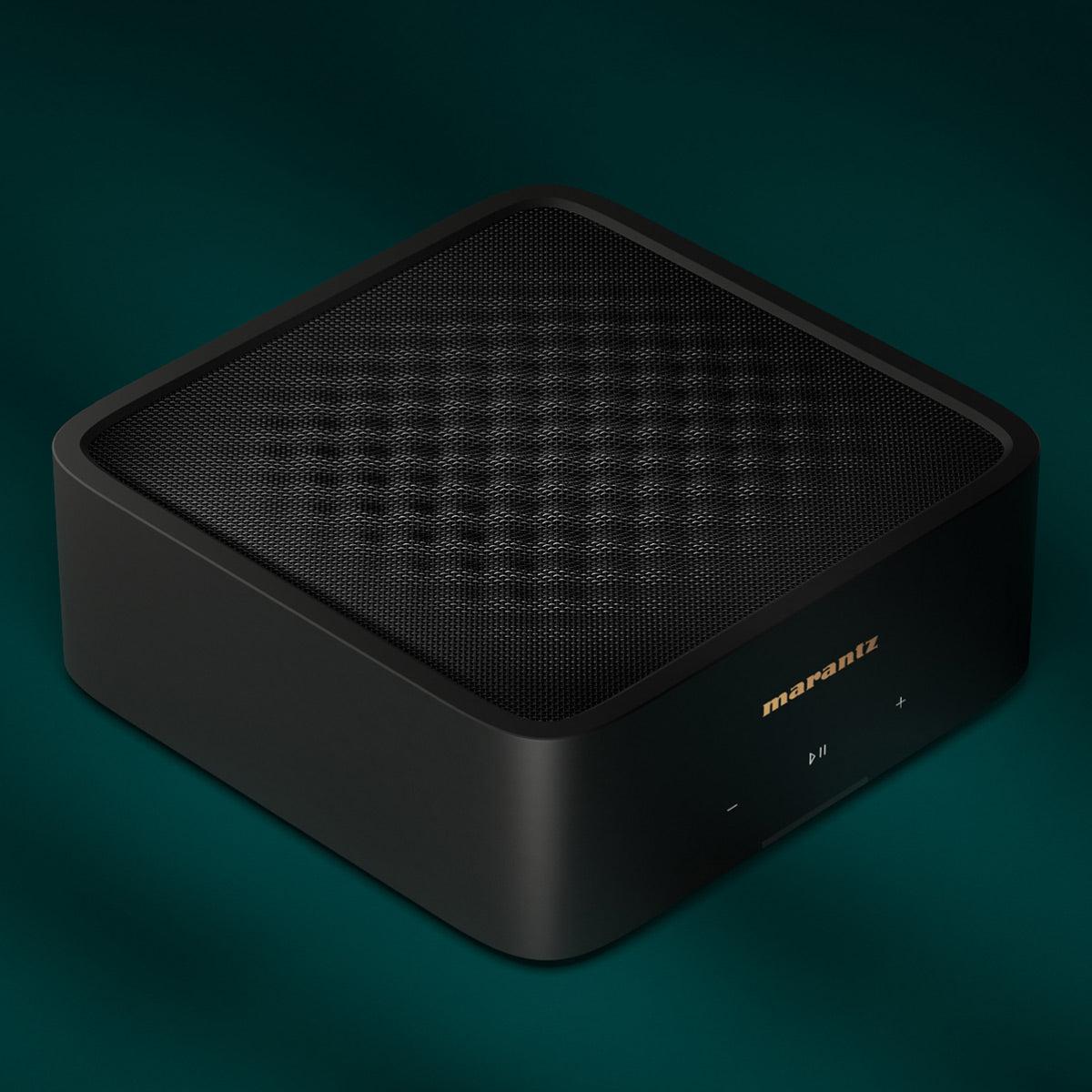
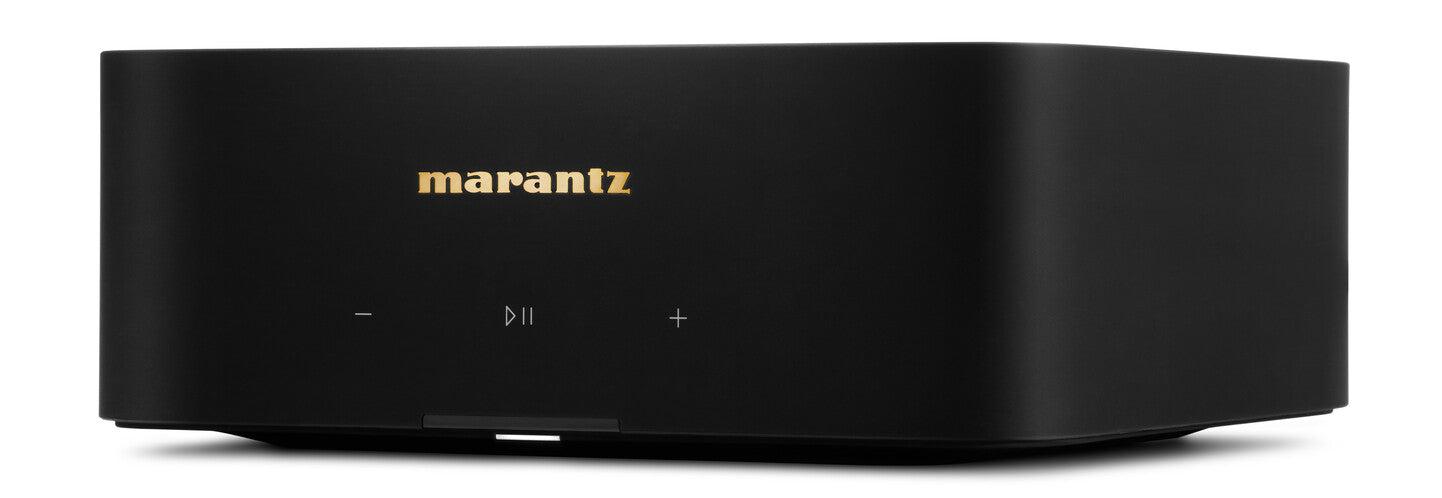
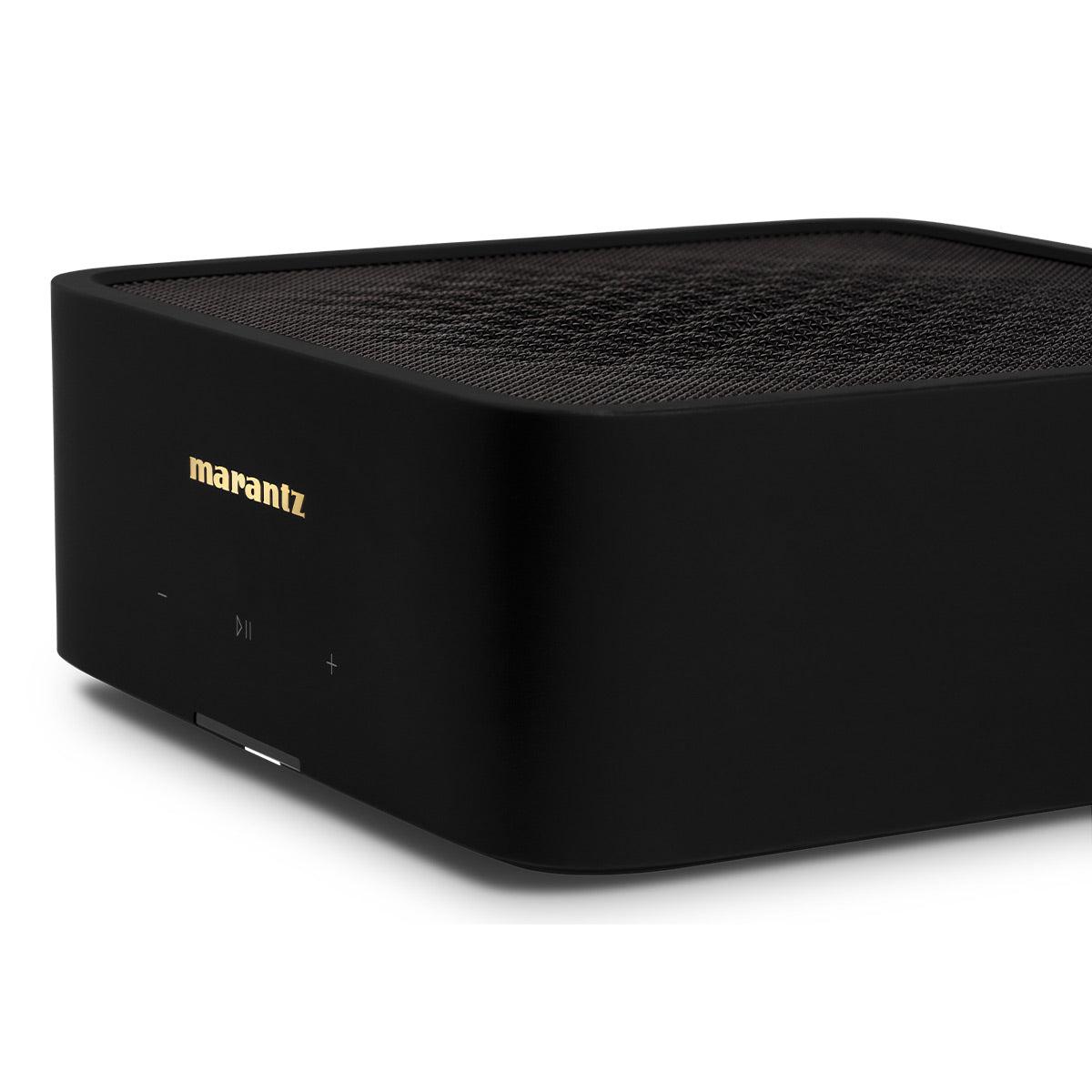
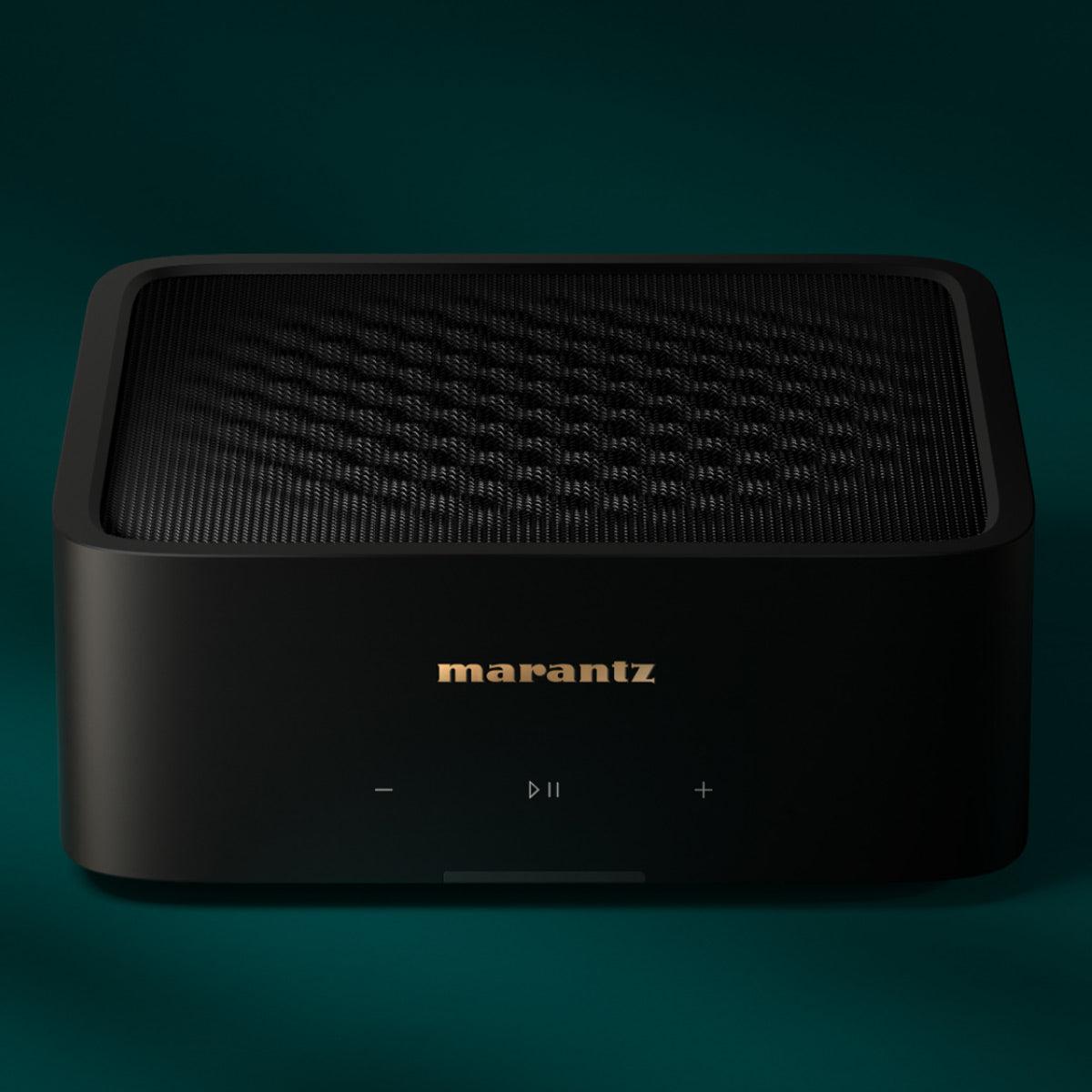
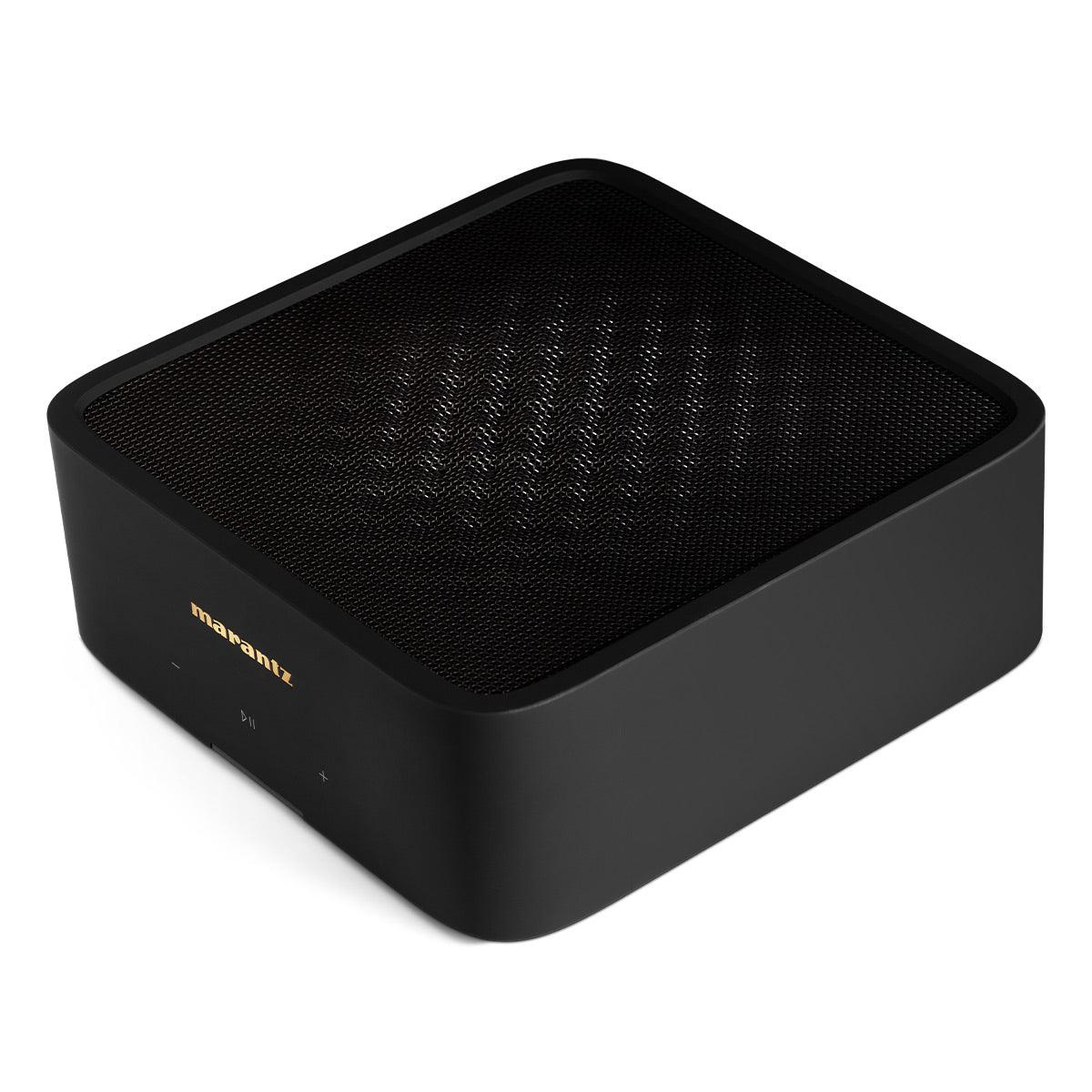
The Marantz Model M1 is what I'd call a "digital-first" amplifier. It's incredibly compact – about the size of a large paperback book – and uses Class D amplification technology. Class D amplifiers work by rapidly switching the power on and off thousands of times per second, which makes them very efficient and allows them to run cool while delivering substantial power. The M1 can output 100 watts per channel into typical 8-ohm speakers, which is impressive for something so small.
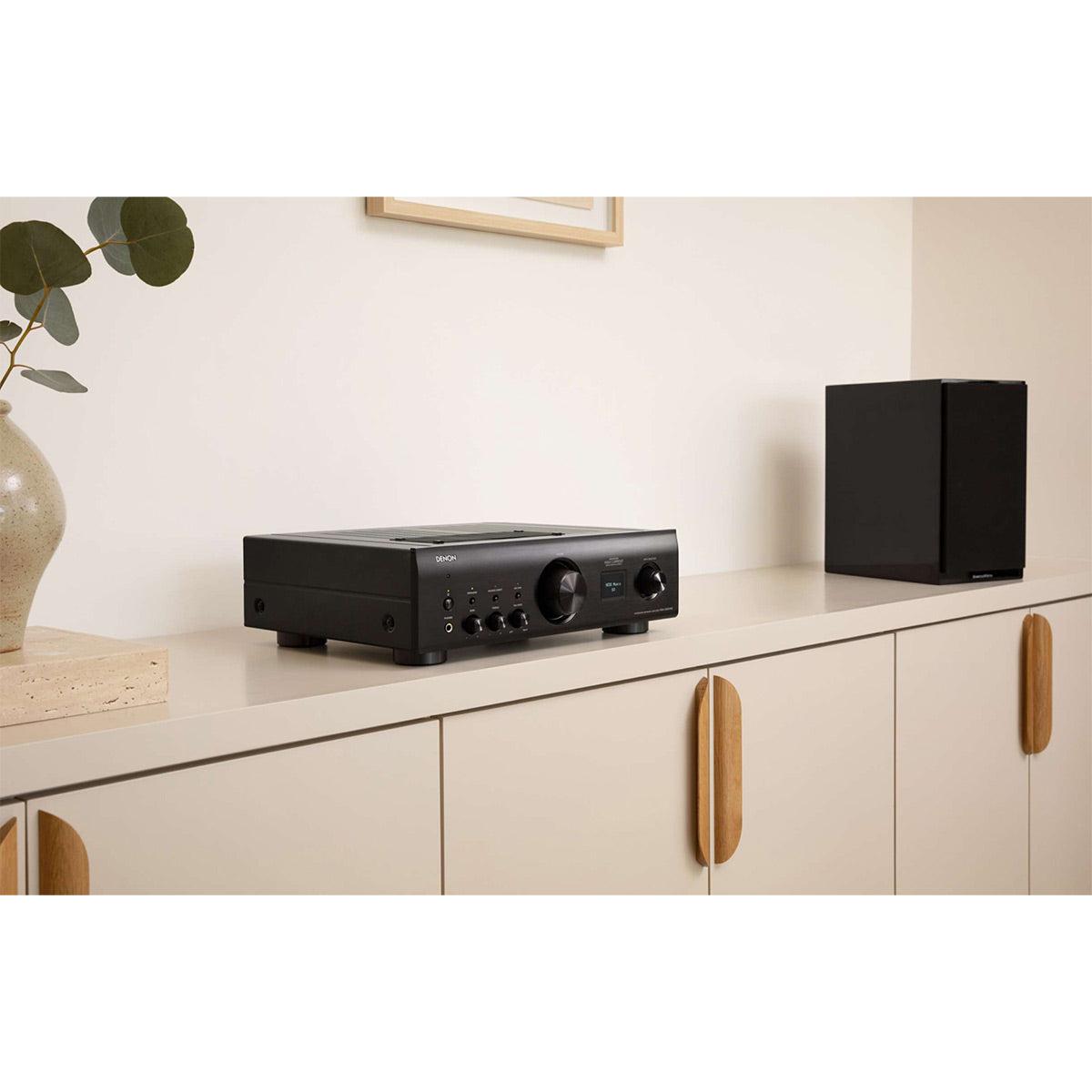
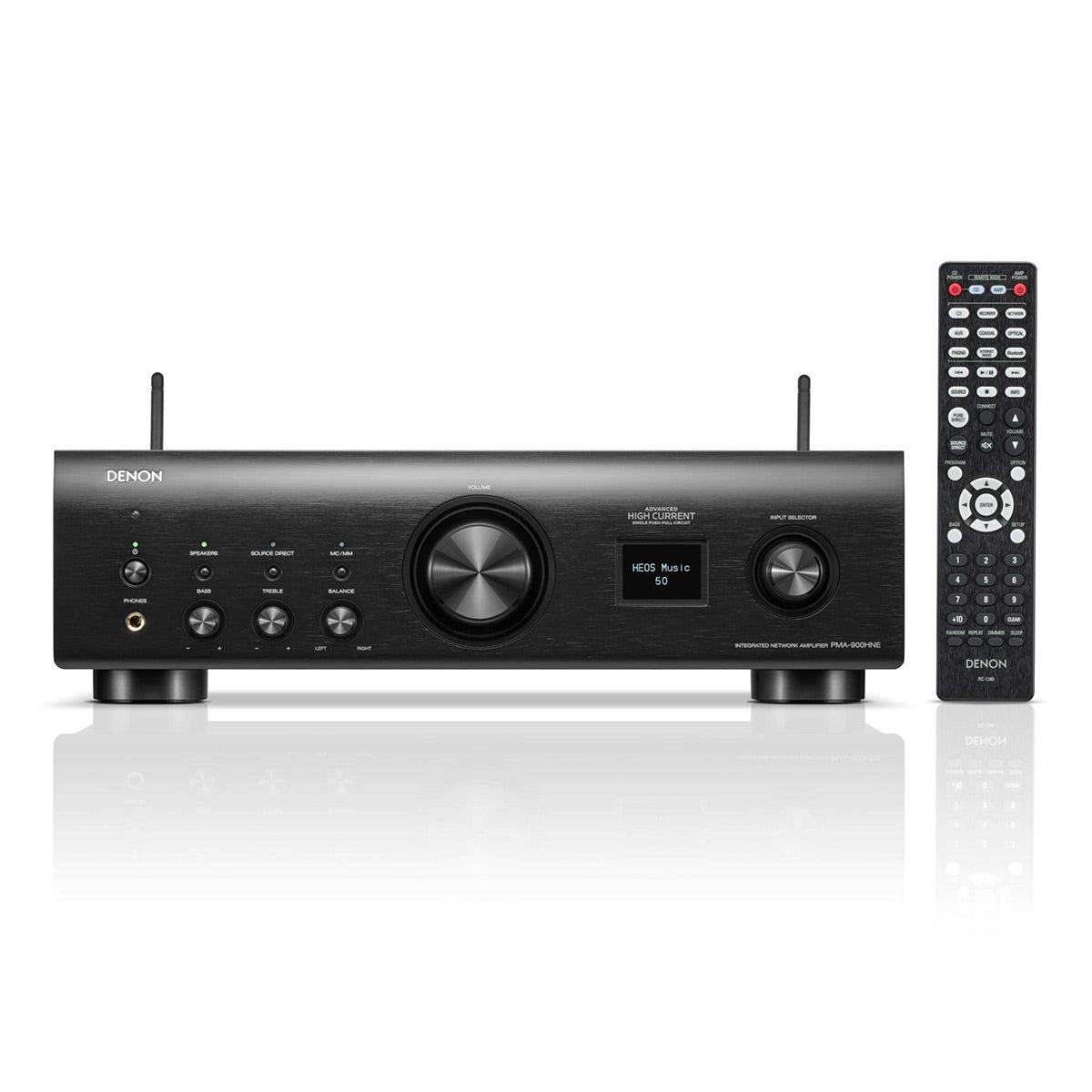
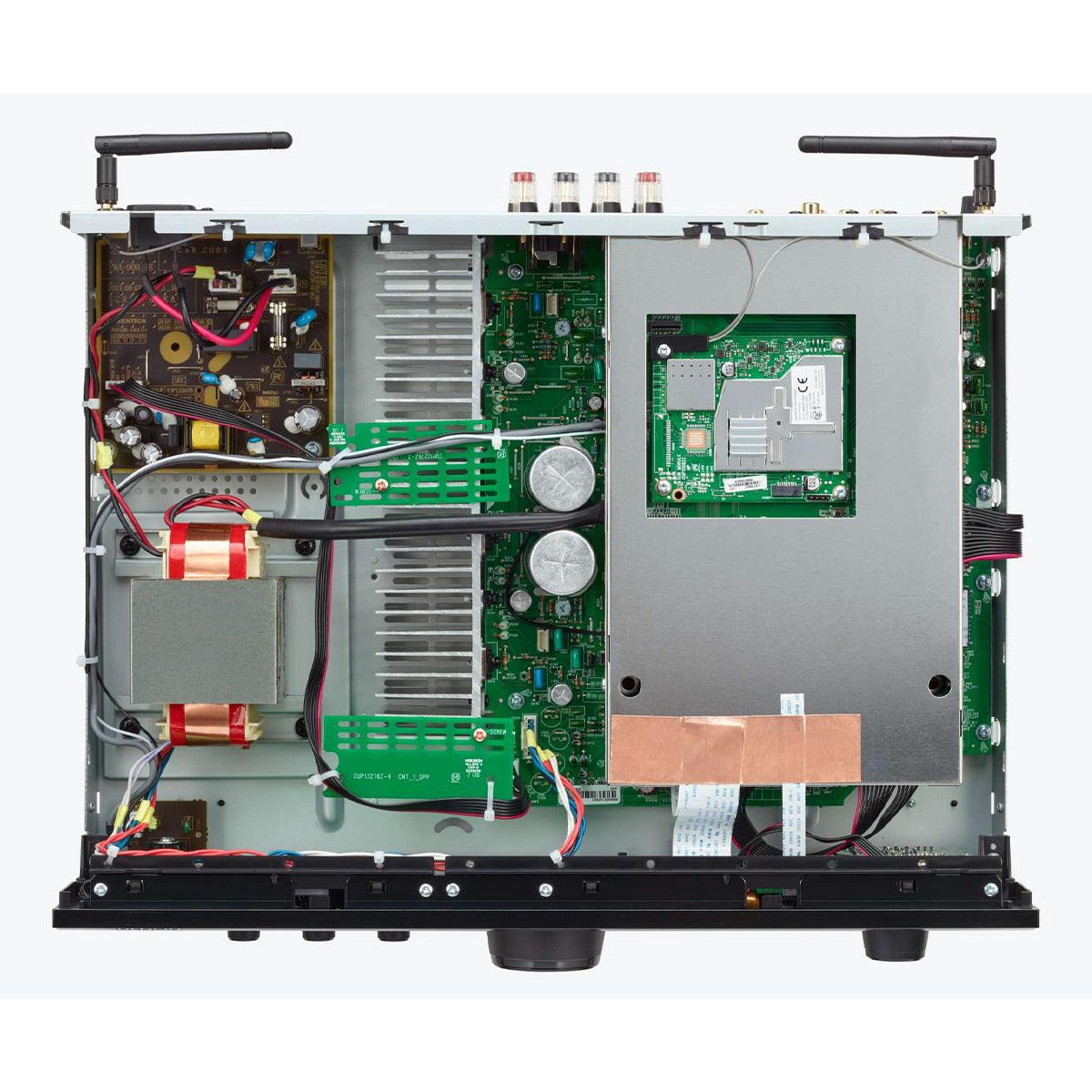
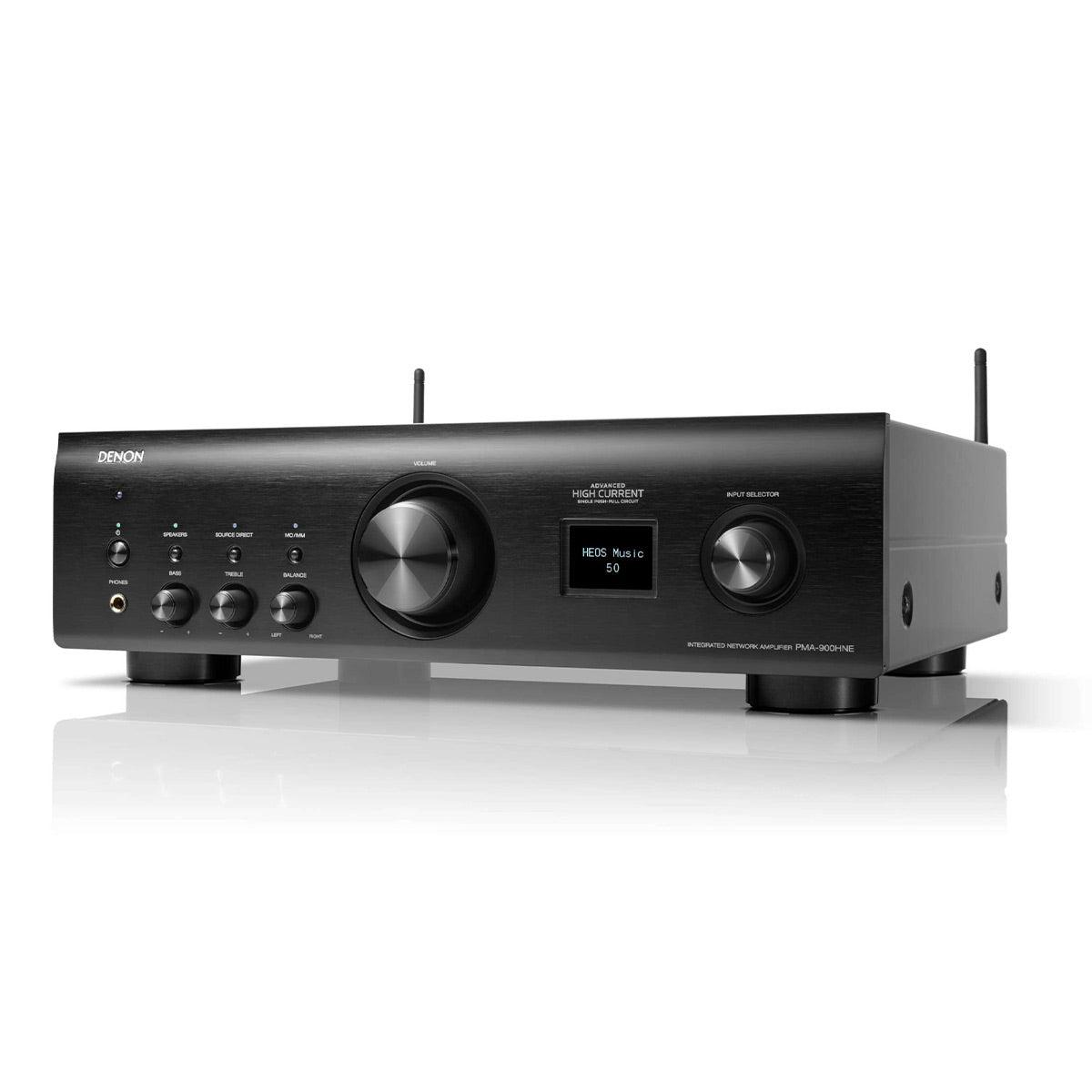
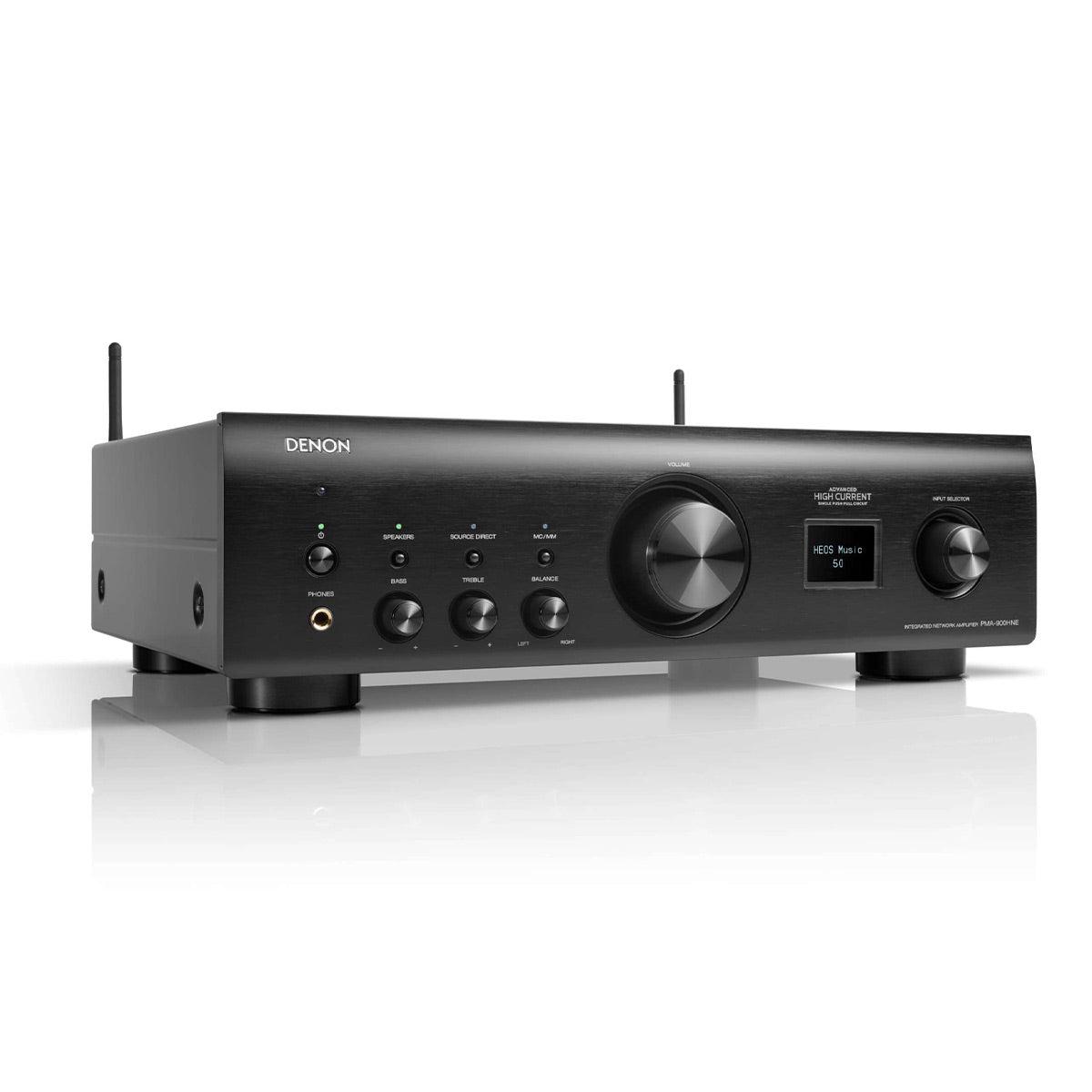
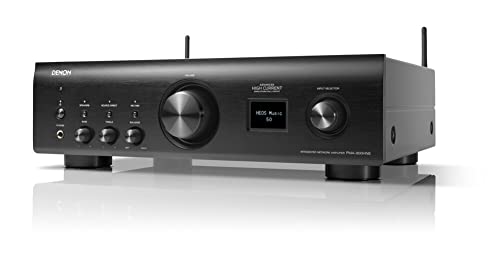
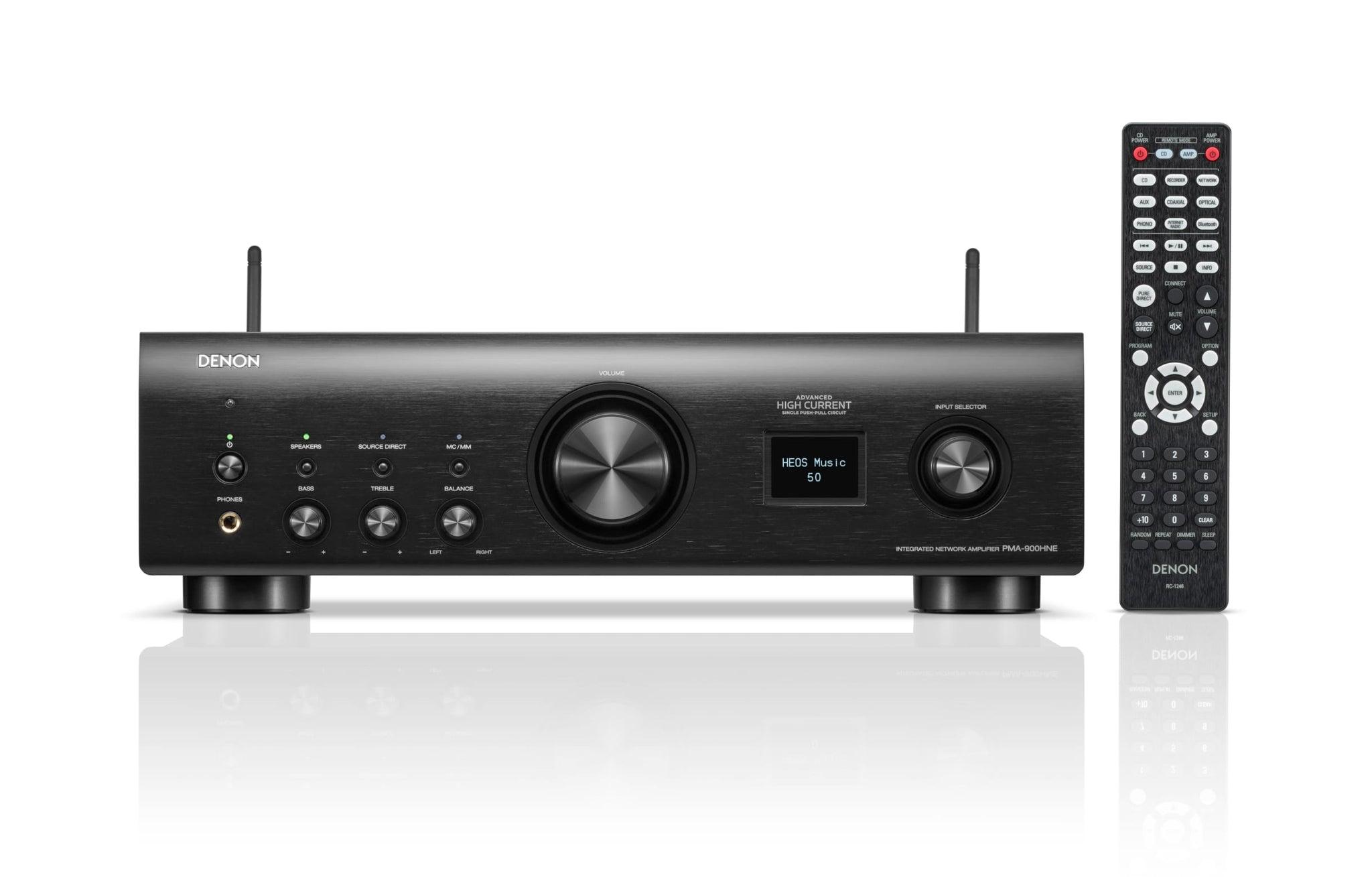
The Denon PMA-900HNE, on the other hand, follows a more traditional approach. It's a full-sized component that uses Class AB amplification – the same basic technology that's been refined in high-end audio for decades. Class AB amplifiers keep the output transistors partially "on" all the time, which many audiophiles believe sounds more natural, though it requires more power and generates more heat. The Denon delivers 50 watts per channel, which might seem like less than the Marantz, but watt ratings don't tell the whole story about real-world performance.
When it comes to power output, the Marantz Model M1 clearly wins on paper with its 100-watt rating versus the Denon PMA-900HNE's 50 watts. But power ratings can be misleading. The Denon uses what they call Advanced High Current (AHC) technology, which means it can deliver large amounts of current when speakers demand it during dynamic musical passages. This is often more important than raw wattage for driving speakers effectively.
In practice, both amplifiers will drive most home speakers to satisfying volume levels. The Marantz Model M1's extra power headroom becomes valuable if you have inefficient speakers (those that need more power to get loud) or if you listen at high volumes. The Denon PMA-900HNE's current delivery capability shines with speakers that have challenging impedance characteristics – some speakers become harder to drive at certain frequencies, and high current capability helps maintain control.
From our research into user and expert reviews, both amplifiers deliver excellent sound quality, but with different characters. The Marantz Model M1 is consistently described as having powerful, controlled bass response and a very clean, detailed presentation. Its digital processing includes something called Marantz Musical Digital Filtering (MMDF), which lets you choose between two different digital filter settings to tune the sound to your preference.
The Denon PMA-900HNE gets praise for its rich, balanced sound signature typical of quality Class AB amplification. Reviewers consistently mention its excellent midrange detail and natural tonality. The Denon uses Signal Level Divided Construction (SLDC), which means different parts of the circuitry are physically isolated to reduce interference between components.
Both amplifiers use identical HEOS streaming platforms, so you get access to the same services: Spotify Connect, Apple Music, Tidal, Qobuz, and many others. They both support high-resolution audio files up to 24-bit/192kHz, which is far higher quality than CD (16-bit/44.1kHz). They also support DSD files, a different digital format favored by some audiophiles.
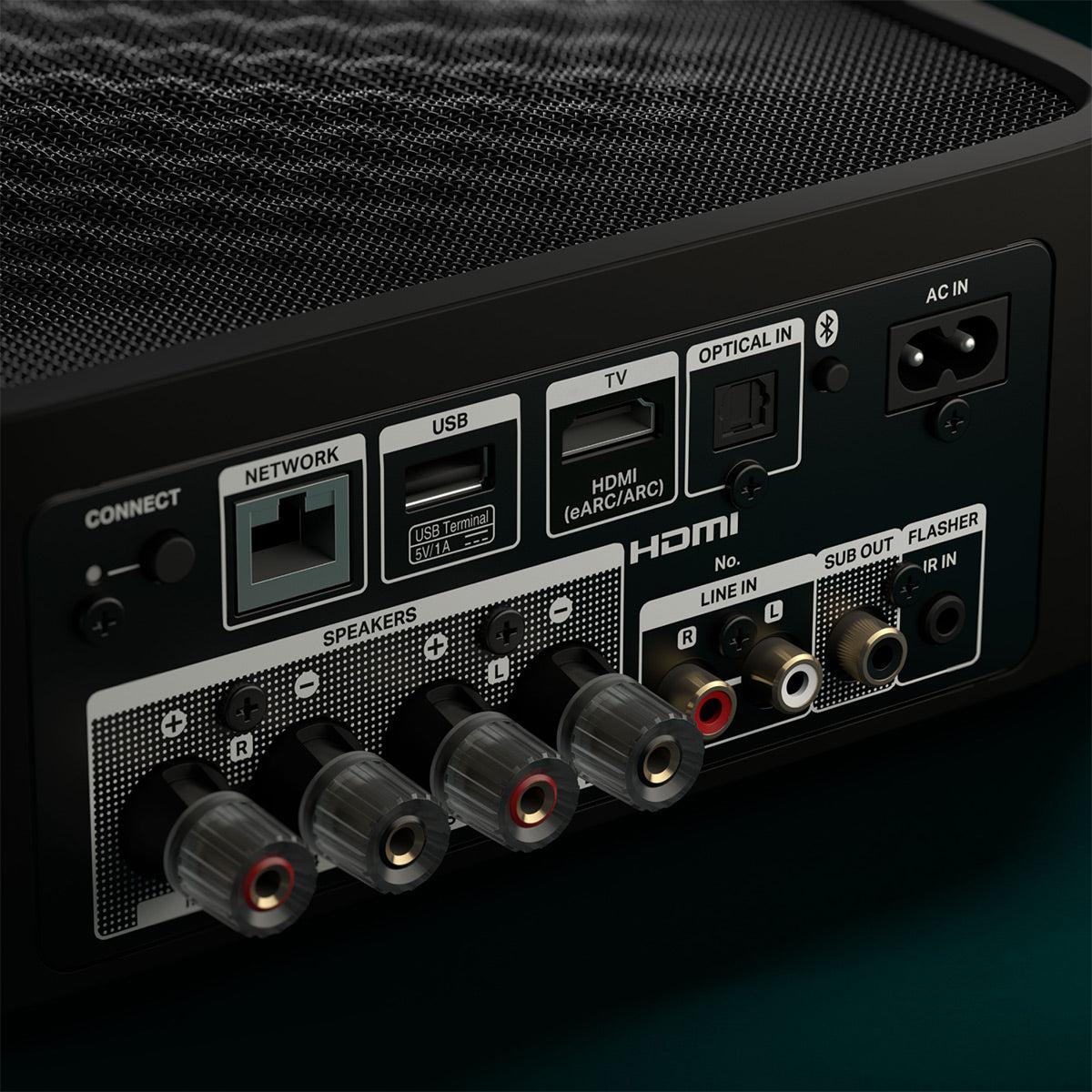
Where they differ significantly is in digital input options and modern connectivity. The Marantz Model M1 includes an HDMI eARC (enhanced Audio Return Channel) input, which is a game-changer for home theater integration. This means you can connect it directly to your TV and get high-quality audio from all your TV sources – streaming apps, cable boxes, gaming consoles – without needing additional cables or setup complexity. The M1 also includes Dolby Digital+ decoding, so it can handle surround sound formats from your TV and present them as optimized stereo.
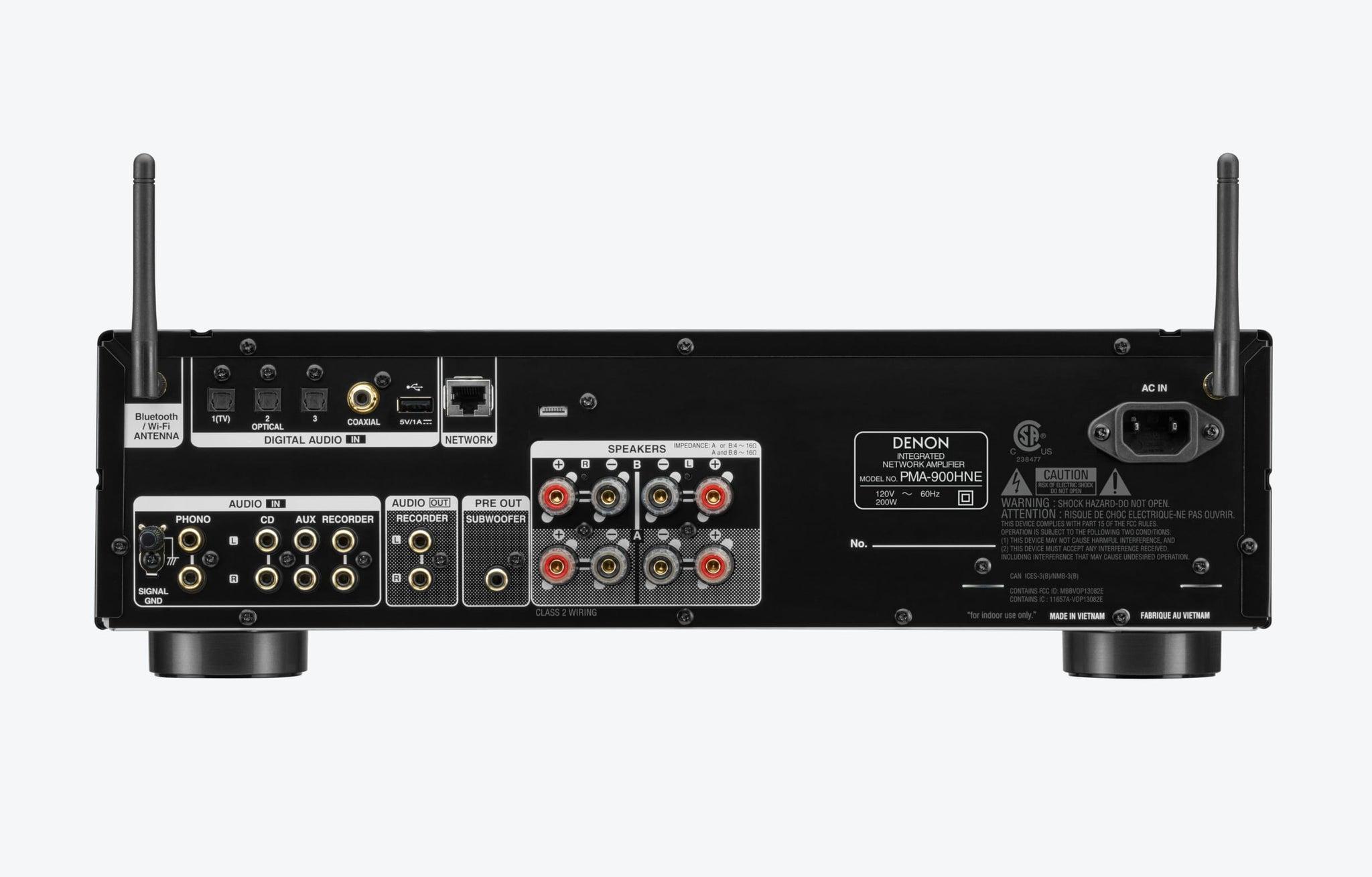
The Denon PMA-900HNE takes a more traditional approach with three optical digital inputs and one coaxial input. This gives you more flexibility for connecting multiple digital sources like CD players, streamers, or gaming consoles, but it lacks the seamless TV integration of the Marantz.
Both support voice control through Amazon Alexa and Google Assistant, and both can work as Roon endpoints if you use Roon's music management software (though you'll need a separate Roon Core and subscription).
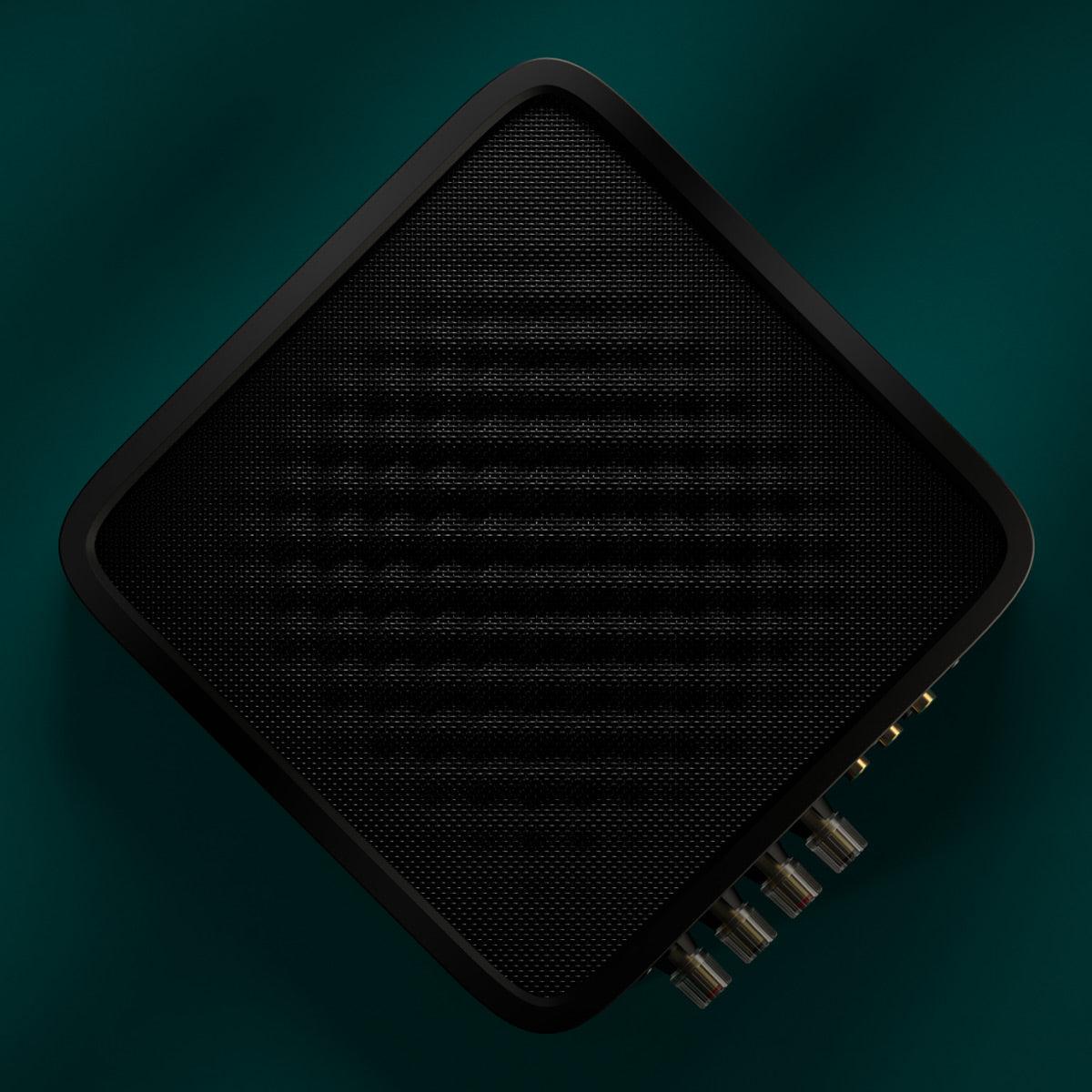
This is where the two amplifiers diverge most significantly. The Marantz Model M1 has minimal analog connectivity – just one stereo RCA input. If you have a turntable, you'll need a separate phono preamp. If you have multiple analog sources, you'll need an external switcher.
The Denon PMA-900HNE is the opposite: it includes three stereo RCA inputs plus a dedicated phono input that works with both moving magnet (MM) and moving coil (MC) cartridges. This built-in phono stage is a significant value-add – a good external phono preamp can cost several hundred dollars. The Denon also includes A/B speaker switching (you can connect two pairs of speakers and switch between them) and a recording output for connecting a tape deck or digital recorder.
If you're primarily streaming music and maybe have one analog source, the Marantz Model M1 is perfectly adequate. But if you have a turntable, multiple analog sources, or want the flexibility to expand your system, the Denon PMA-900HNE is much more accommodating.
The size difference between these amplifiers is dramatic. The Marantz Model M1 weighs less than 5 pounds and can fit almost anywhere – on a bookshelf, mounted under a desk, or in a media cabinet with limited ventilation. Its Class D design runs cool, so heat buildup isn't a concern.
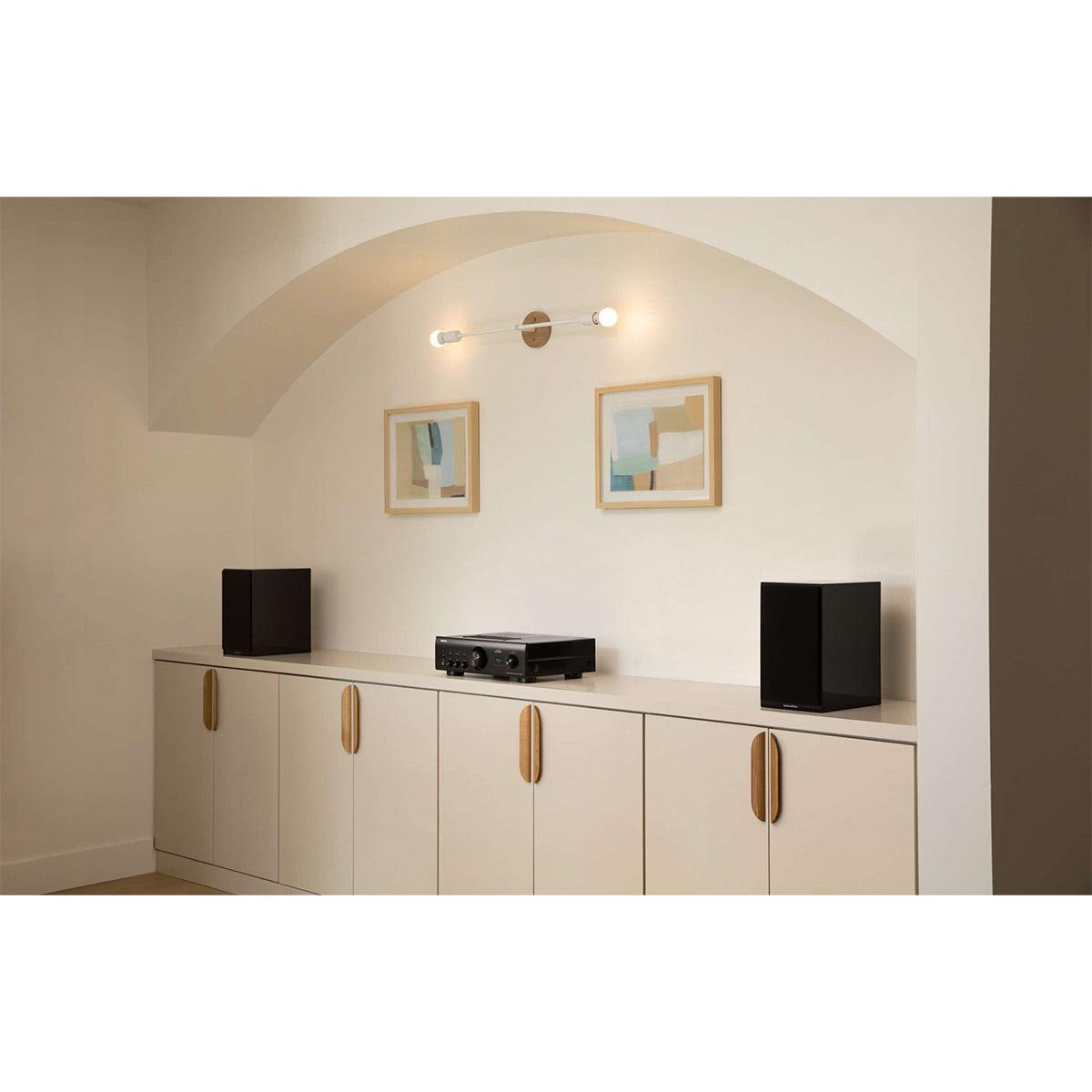
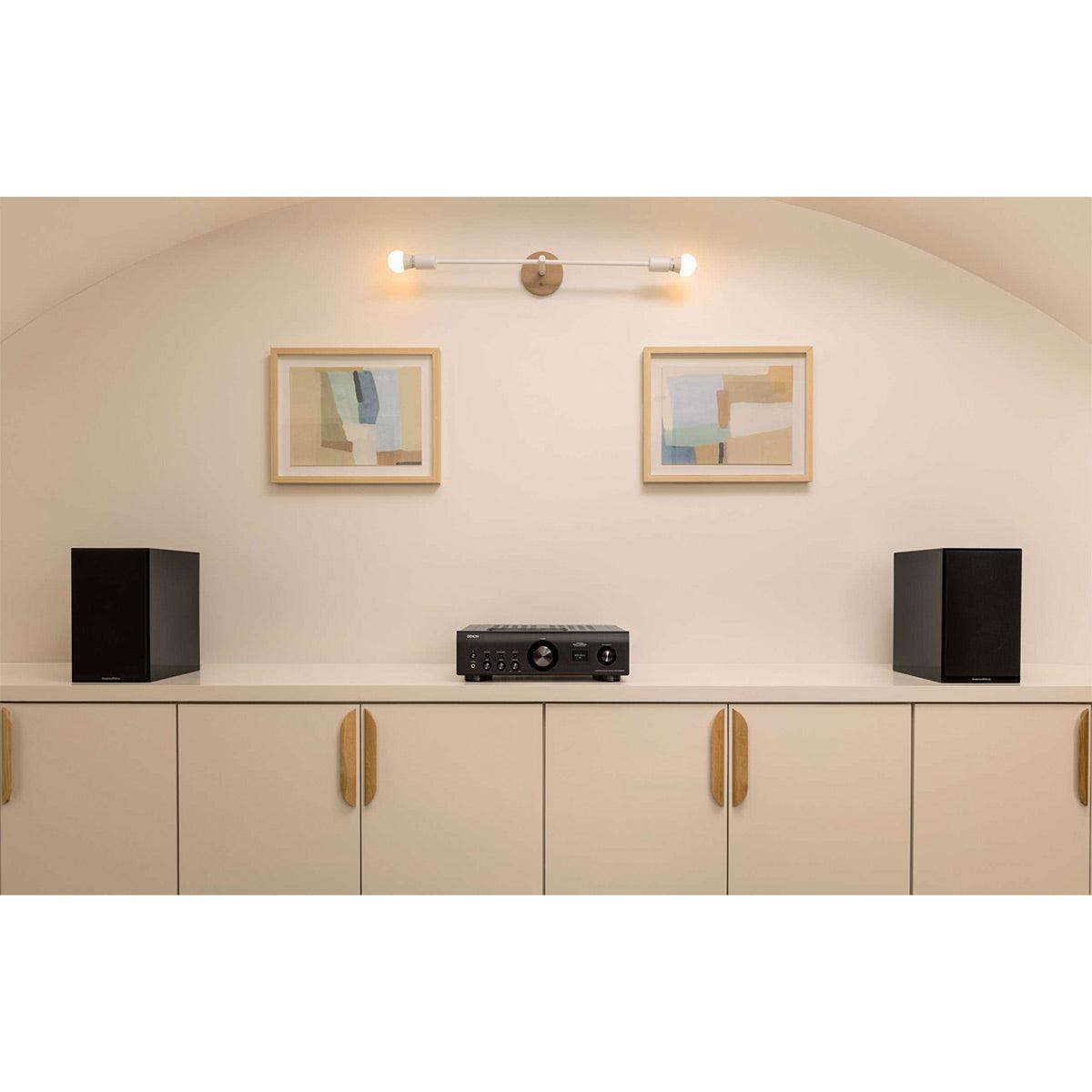
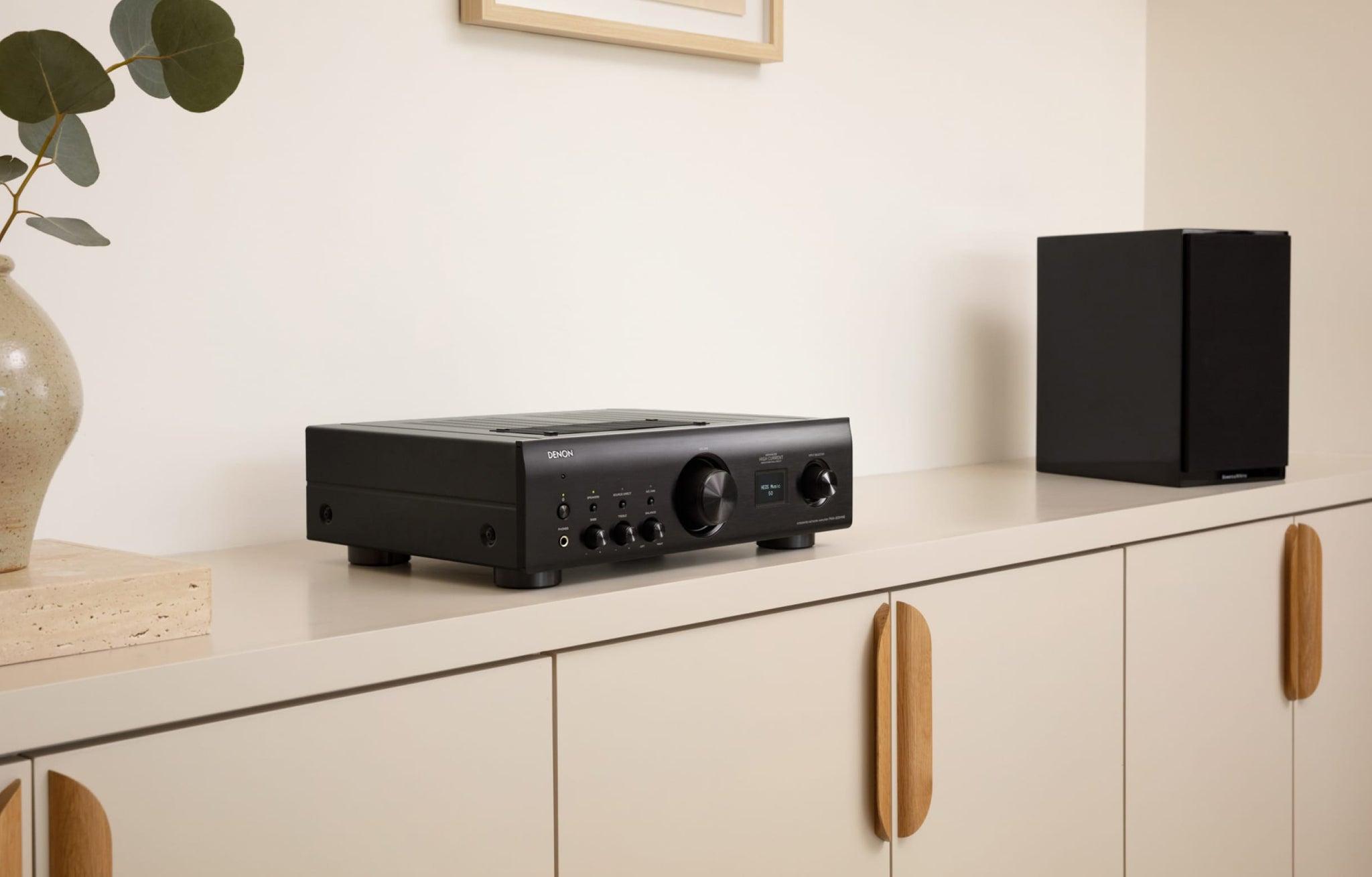
The Denon PMA-900HNE is a traditional full-width component weighing over 18 pounds. It needs adequate shelf space and ventilation, like any conventional amplifier. However, many people prefer this substantial build quality – there's something satisfying about the heft and feel of traditional hi-fi components.
For installation flexibility, the Marantz Model M1 is clearly superior. It includes mounting points for custom installations and can work in spaces where the Denon simply won't fit. This makes it particularly attractive for multi-room audio systems where you might want amplifiers in closets, under counters, or other unconventional locations.
This is where the Marantz Model M1's HDMI eARC input becomes genuinely valuable. In a typical home theater setup, you might have a TV with various streaming apps, a cable box, gaming console, and Blu-ray player. Traditionally, you'd need an AV receiver to handle all these sources and decode surround sound formats.
The Marantz Model M1 offers a simpler approach: connect everything to your TV, then use a single HDMI cable to get audio to the amplifier. The M1 can decode common surround formats and present them as stereo, plus it can manage a subwoofer with adjustable crossover settings. This gives you much better sound than TV speakers without the complexity of a full surround system.
The Denon PMA-900HNE can certainly work in a home theater, but you'd need to connect sources individually to its digital inputs or rely on your TV's optical output. This works, but it's less elegant than the Marantz's approach.
Both amplifiers include subwoofer outputs, but the Marantz Model M1 has more sophisticated bass management. It can apply high-pass filtering to your main speakers (removing low bass that's handled by the subwoofer) and low-pass filtering to the subwoofer output. You can adjust these crossover points to optimize the integration between your speakers and subwoofer.
The Denon PMA-900HNE has a simpler fixed crossover on its subwoofer output. This works fine for many setups, but the Marantz's flexibility is valuable if you're serious about optimizing your system's bass response.
Both amplifiers rely heavily on the HEOS app for control, which has pros and cons. The app provides access to all streaming services and system settings, but some users find it less intuitive than dedicated remotes or physical controls.
The Denon PMA-900HNE includes more traditional front-panel controls – physical knobs for bass, treble, and balance, plus input selection buttons. The Marantz Model M1 is more minimalist, with basic playback controls but most functions handled through the app.
For custom installations, both support IR learning and integration with control systems like Crestron and Control4. The Marantz includes a 12V trigger output, which can automatically turn on other components when the amplifier powers up.
At the time of writing, these amplifiers are priced competitively with each other, though the Marantz Model M1 typically commands a slight premium. However, value isn't just about initial cost – you need to consider what additional equipment you might need.
If you have a turntable, the Denon PMA-900HNE's built-in phono stage could save you the cost of a separate phono preamp, which can range from a hundred dollars for basic units to several hundred for quality options. On the other hand, if you're building a home theater system, the Marantz Model M1's HDMI eARC capability could eliminate the need for an AV receiver for simple stereo or 2.1 setups.
The Marantz Model M1 also includes a notably longer warranty period, which adds value and peace of mind.
Based on our research and analysis of these products, here's my take on who should choose which amplifier:
Choose the Marantz Model M1 if you prioritize compact size, high power output, modern TV integration, or need multiple units for a whole-home audio system. Its digital-first approach makes it ideal for users who primarily stream music and want the convenience of HDMI eARC for TV audio. The M1 is particularly compelling if you're building a simple home theater system and prefer stereo or 2.1 presentation over full surround sound.
Choose the Denon PMA-900HNE if you have a turntable, multiple analog sources, or prefer traditional amplifier design and operation. The built-in phono stage alone makes it attractive for vinyl enthusiasts, and its comprehensive input selection accommodates complex systems. It's also the better choice if you want physical controls and don't mind the larger footprint.
Both amplifiers represent excellent engineering and will deliver years of satisfying performance. The Marantz Model M1 pushes the boundaries of what's possible in a compact form factor, while the Denon PMA-900HNE proves that traditional amplifier design still has tremendous merit in the streaming age.
Your choice ultimately comes down to your specific needs and preferences. If you're building a modern, minimalist system focused on streaming and TV integration, the Marantz makes compelling sense. If you have diverse sources and want the flexibility of traditional hi-fi design, the Denon is the more accommodating choice.
Either way, you're getting a sophisticated amplifier that bridges the gap between classic hi-fi values and modern convenience – exactly what the best products in this category should deliver.
| Marantz Model M1 Wireless Streaming Amplifier | Denon PMA-900HNE Integrated Network Amplifier |
|---|---|
| Power Output - More watts means louder volumes and better speaker control | |
| 100W per channel (8Ω), 125W per channel (4Ω) | 50W per channel (8Ω), 85W per channel (4Ω) |
| Amplifier Type - Different technologies affect sound character and efficiency | |
| Class D digital (highly efficient, runs cool, compact) | Class AB (traditional audiophile preference, warmer sound) |
| Physical Size - Critical for placement flexibility and aesthetics | |
| Compact: 8.6" x 3.4" x 9.9", weighs 4.8 lbs | Full-size: 17.1" x 5.1" x 15.4", weighs 18.3 lbs |
| Analog Inputs - Determines how many sources you can connect directly | |
| 1 stereo RCA input (minimal connectivity) | 3 stereo RCA inputs plus dedicated phono input |
| Phono Stage - Essential for connecting turntables without external preamp | |
| None (requires separate phono preamp for turntables) | Built-in MM/MC phono stage (saves $200-500 on external preamp) |
| Digital Inputs - For connecting CD players, streamers, and other digital sources | |
| 1 optical, 1 HDMI eARC | 3 optical, 1 coaxial (more source flexibility) |
| TV Integration - Modern convenience for home theater setups | |
| HDMI eARC with Dolby Digital+ (seamless TV audio) | No HDMI (requires optical connection to TV) |
| Subwoofer Management - Important for optimizing bass in 2.1 systems | |
| Advanced: adjustable crossover filters (40-250Hz high-pass, 40-120Hz low-pass) | Basic: fixed crossover on subwoofer output |
| Streaming Platform - Both use identical HEOS system | |
| HEOS Built-in, AirPlay 2, Bluetooth, Spotify Connect | HEOS Built-in, AirPlay 2, Bluetooth, Spotify Connect |
| High-Resolution Audio Support - For audiophile-quality digital files | |
| Up to 24-bit/192kHz PCM, DSD up to 5.6MHz | Up to 24-bit/192kHz PCM, DSD support |
| Control Options - How you operate the amplifier day-to-day | |
| Primarily app-controlled (minimal physical controls) | Traditional knobs plus app control (bass, treble, input selection) |
| Installation Flexibility - Important for custom setups and multi-room systems | |
| Rack-mountable, cool operation, 12V trigger, IR learning | Desktop placement, requires ventilation, IR learning |
| Warranty Coverage - Protection for your investment | |
| 5 years parts and labor | 3 years parts and labor |
| Best Use Cases - Who should choose each product | |
| Compact systems, TV integration, streaming-focused, multi-room audio | Vinyl enthusiasts, multiple sources, traditional hi-fi setups |
The Marantz Model M1 delivers significantly more power with 100 watts per channel into 8-ohm speakers and 125 watts into 4-ohm speakers. The Denon PMA-900HNE outputs 50 watts per channel into 8-ohm speakers and 85 watts into 4-ohm speakers. However, the Denon's Advanced High Current design can still drive most speakers effectively despite the lower wattage rating.
Only the Denon PMA-900HNE includes a built-in phono stage that supports both moving magnet (MM) and moving coil (MC) cartridges, allowing direct turntable connection. The Marantz Model M1 lacks a phono input, so you'll need a separate phono preamp to connect a turntable.
The Marantz Model M1 excels for TV integration with its HDMI eARC input and Dolby Digital+ decoding, providing seamless connection to modern TVs with a single cable. The Denon PMA-900HNE can connect to TVs through optical digital inputs but lacks the convenience and advanced audio processing of HDMI eARC.
Yes, both the Marantz Model M1 and Denon PMA-900HNE use identical HEOS streaming platforms, supporting Spotify Connect, Apple Music, TIDAL, Qobuz, AirPlay 2, and Bluetooth connectivity. They both handle high-resolution audio files up to 24-bit/192kHz and DSD formats.
The Marantz Model M1 is dramatically more compact, measuring just 8.6" wide and weighing under 5 pounds. It's rack-mountable and fits almost anywhere. The Denon PMA-900HNE is a traditional full-width component at 17.1" wide and over 18 pounds, requiring standard hi-fi shelf space.
The Denon PMA-900HNE offers much more connectivity with three stereo RCA inputs, a phono input, three optical inputs, and one coaxial input. The Marantz Model M1 has minimal inputs with just one stereo RCA input, one optical input, and HDMI eARC, focusing primarily on streaming and TV audio.
The Marantz Model M1 is superior for home theater applications thanks to its HDMI eARC connection, Dolby Digital+ processing, and advanced subwoofer management with adjustable crossovers. This makes it ideal for stereo or 2.1 TV audio systems without needing a full AV receiver.
Both amplifiers include subwoofer outputs, but the Marantz Model M1 offers more sophisticated bass management with adjustable high-pass and low-pass filters. The Denon PMA-900HNE has a basic subwoofer output with fixed crossover settings.
Both deliver excellent sound quality but with different characters. The Marantz Model M1 provides clean, detailed sound with powerful bass control and proprietary digital filtering options. The Denon PMA-900HNE offers the rich, natural sound signature typical of quality Class AB amplification with excellent midrange detail.
Both rely heavily on the HEOS smartphone app for streaming and advanced functions. However, the Denon PMA-900HNE includes traditional physical controls for bass, treble, input selection, and volume on the front panel. The Marantz Model M1 has minimal physical controls and depends more on app operation.
Value depends on your needs. The Denon PMA-900HNE typically costs less initially and includes a built-in phono stage that could save hundreds on a separate preamp. The Marantz Model M1 offers more power and modern features like HDMI eARC, plus comes with a longer 5-year warranty versus the Denon's 3-year coverage.
Both amplifiers support multi-room audio through HEOS, but the Marantz Model M1 is better suited for distributed audio systems due to its compact size, cool operation, and mounting flexibility. Multiple Model M1 units can be installed in closets, under counters, or other unconventional locations throughout your home.
We've done our best to create useful and informative comparisons to help you decide what product to buy. Our research uses advanced automated methods to create this comparison and perfection is not possible - please contact us for corrections or questions. These are the sites we've researched in the creation of this article: bestbuy.com - crutchfield.com - audioadvisor.com - youtube.com - soundstagesimplifi.com - marantz.com - marantz.com - audioadvice.com - whathifi.com - manuals.marantz.com - audiosciencereview.com - youtube.com - marantz.com - sweetwater.com - audiosciencereview.com - accessories4less.com - crutchfield.com - e-catalog.com - theaudiotailor.com.au - extremehifi.com - whathifi.com - speakerdecision.com - youtube.com - audiosciencereview.com - sound-advice.online - crutchfield.com - crutchfield.com - sweetwater.com - watthifi.com - youtube.com - accessories4less.com - soundstageaccess.com - icav.us - safeandsoundhq.com - listenup.com - accessories4less.com - audiosciencereview.com

Privacy Policy
Terms and Conditions - Affiliate Policy
Home Security
© Copyright 2008-2026.
11816 Inwood Rd #1211, Dallas, TX 75244