

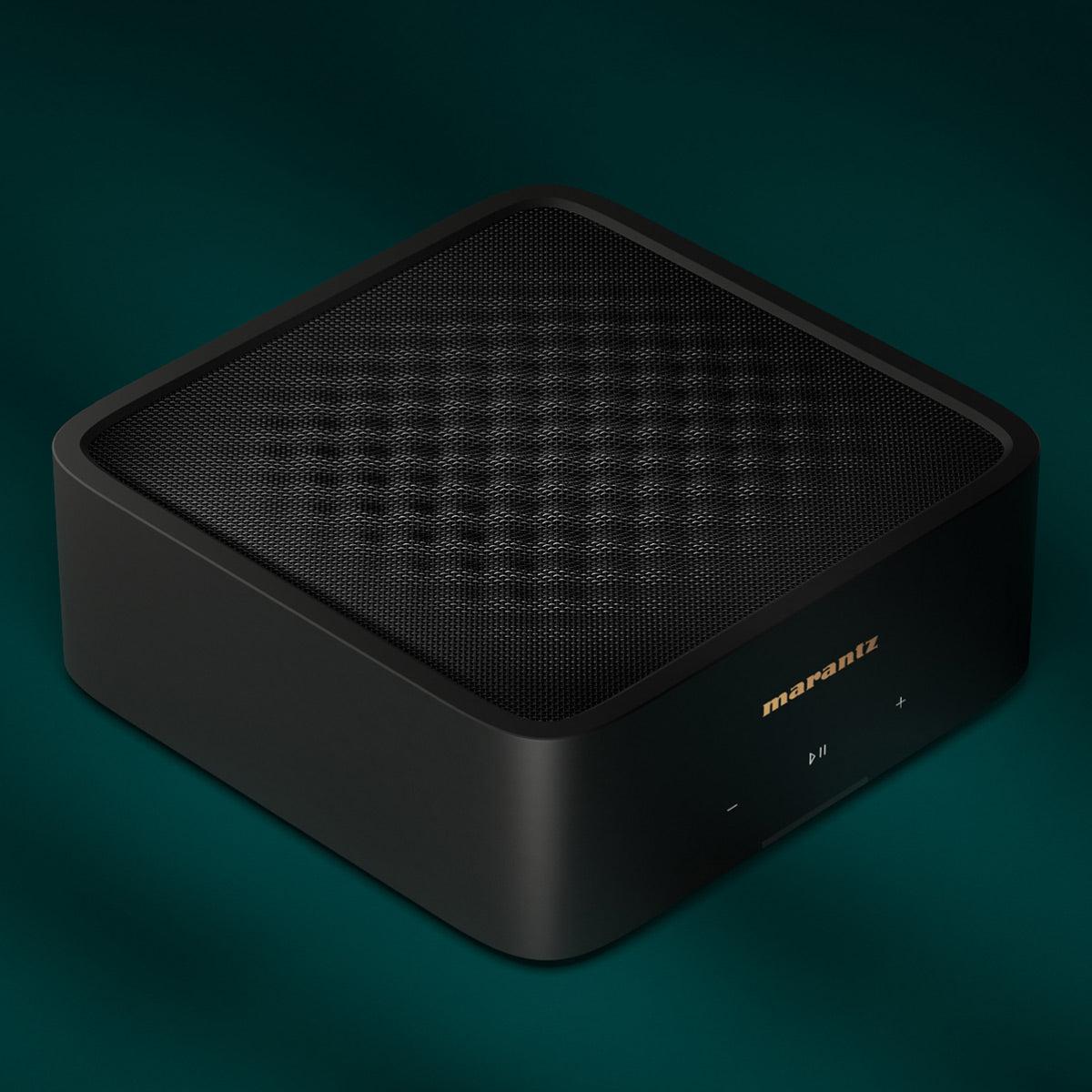
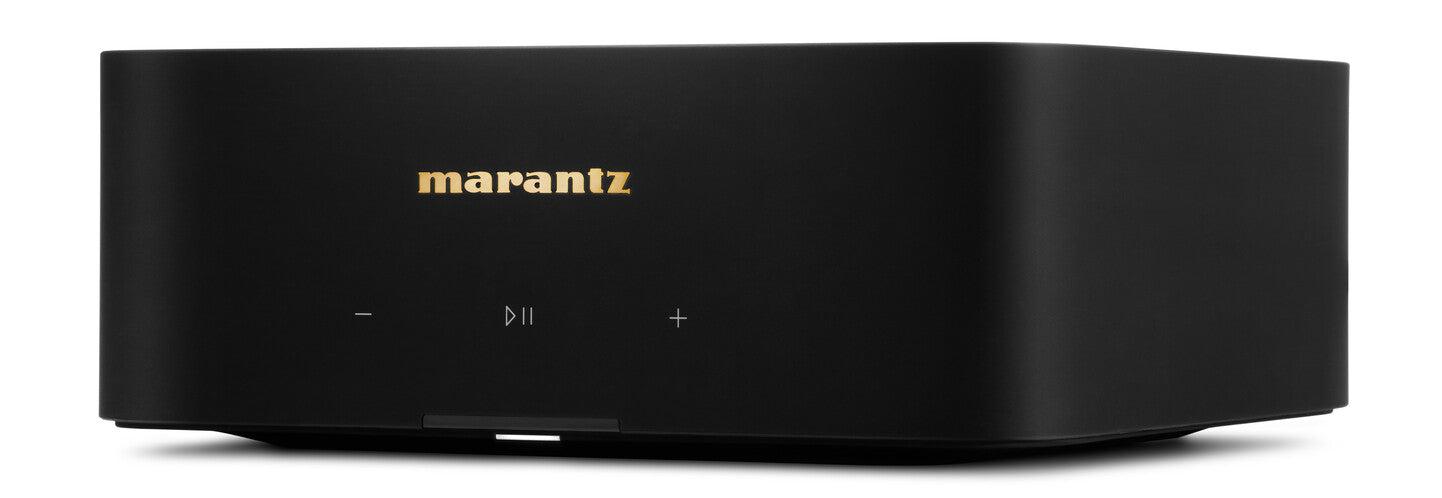
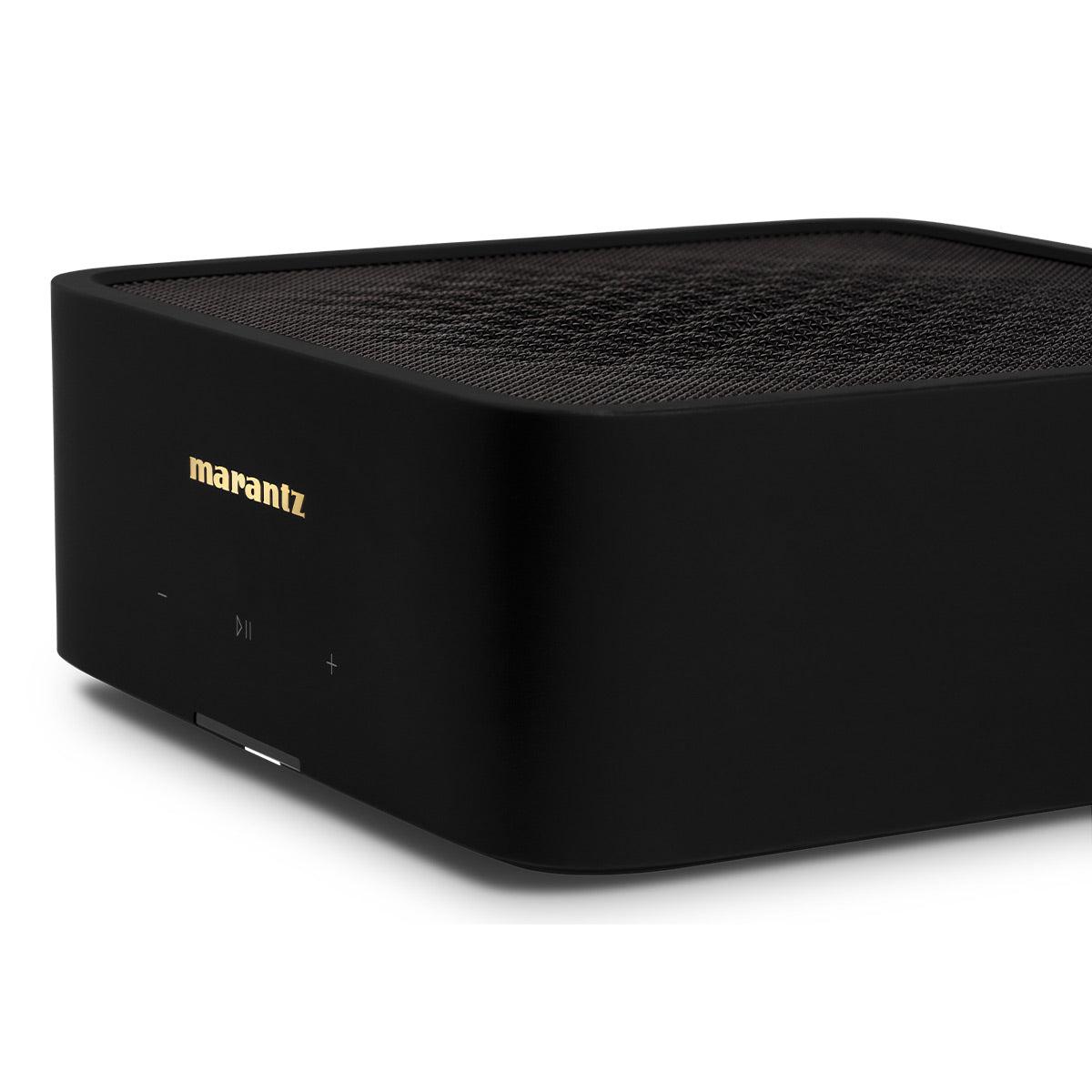
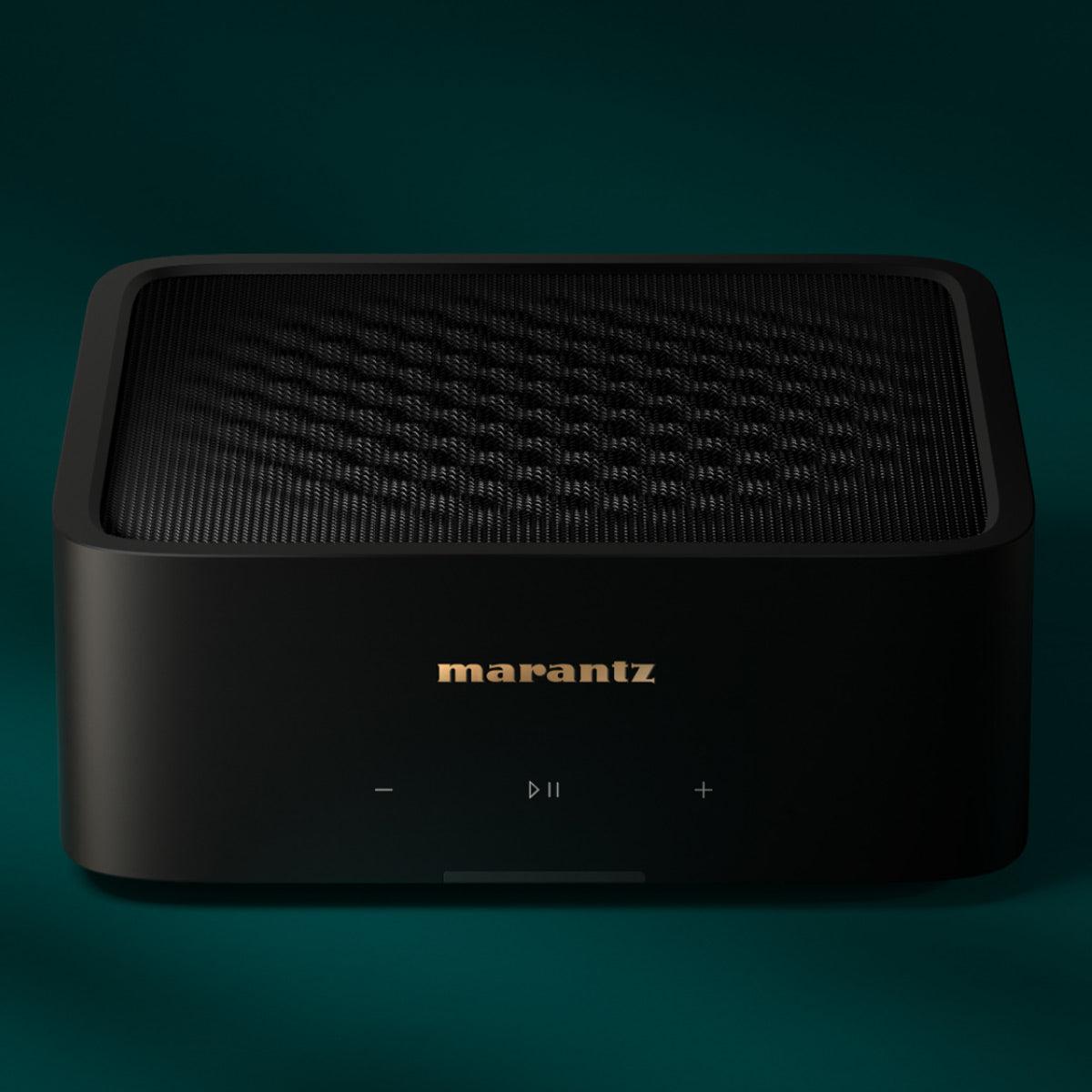
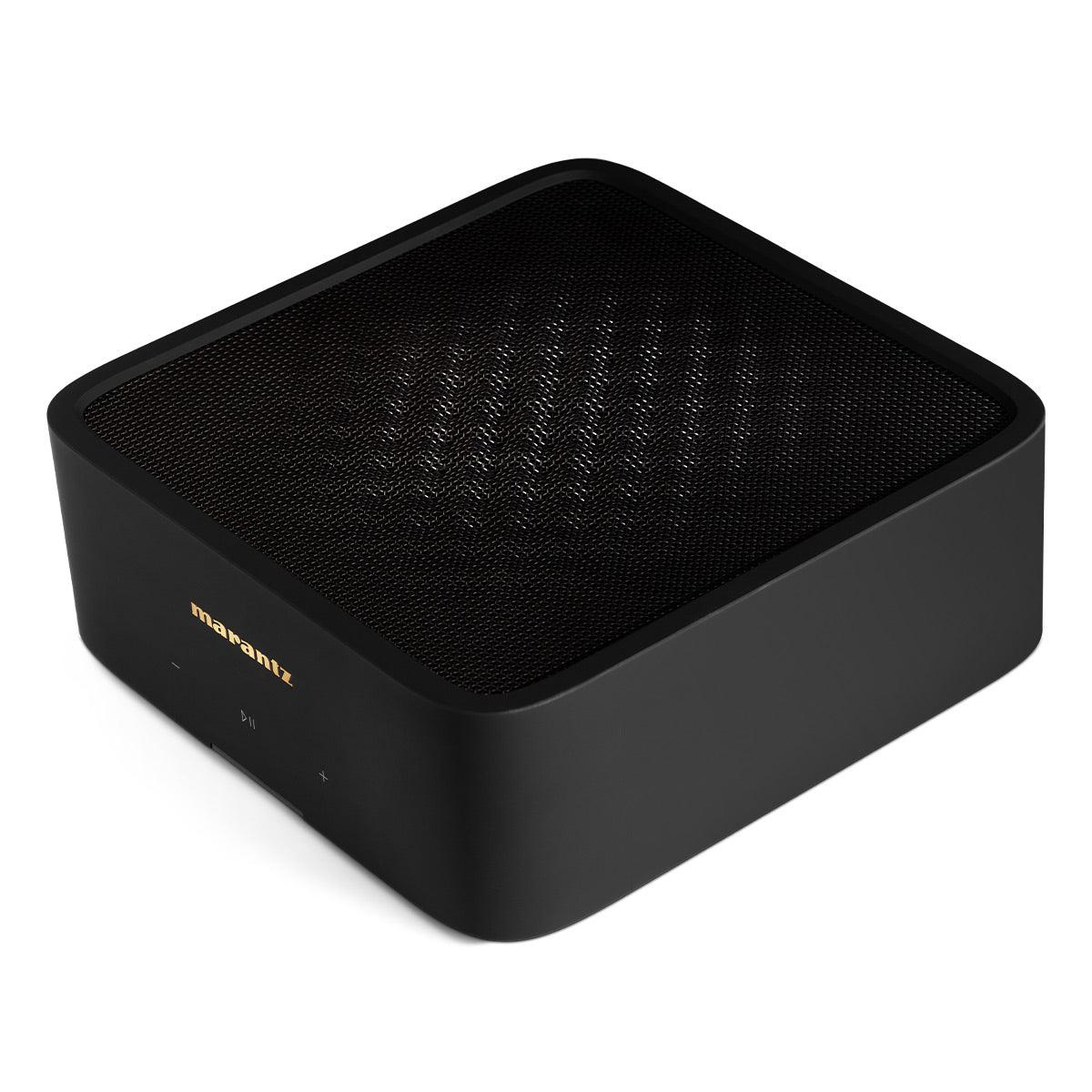
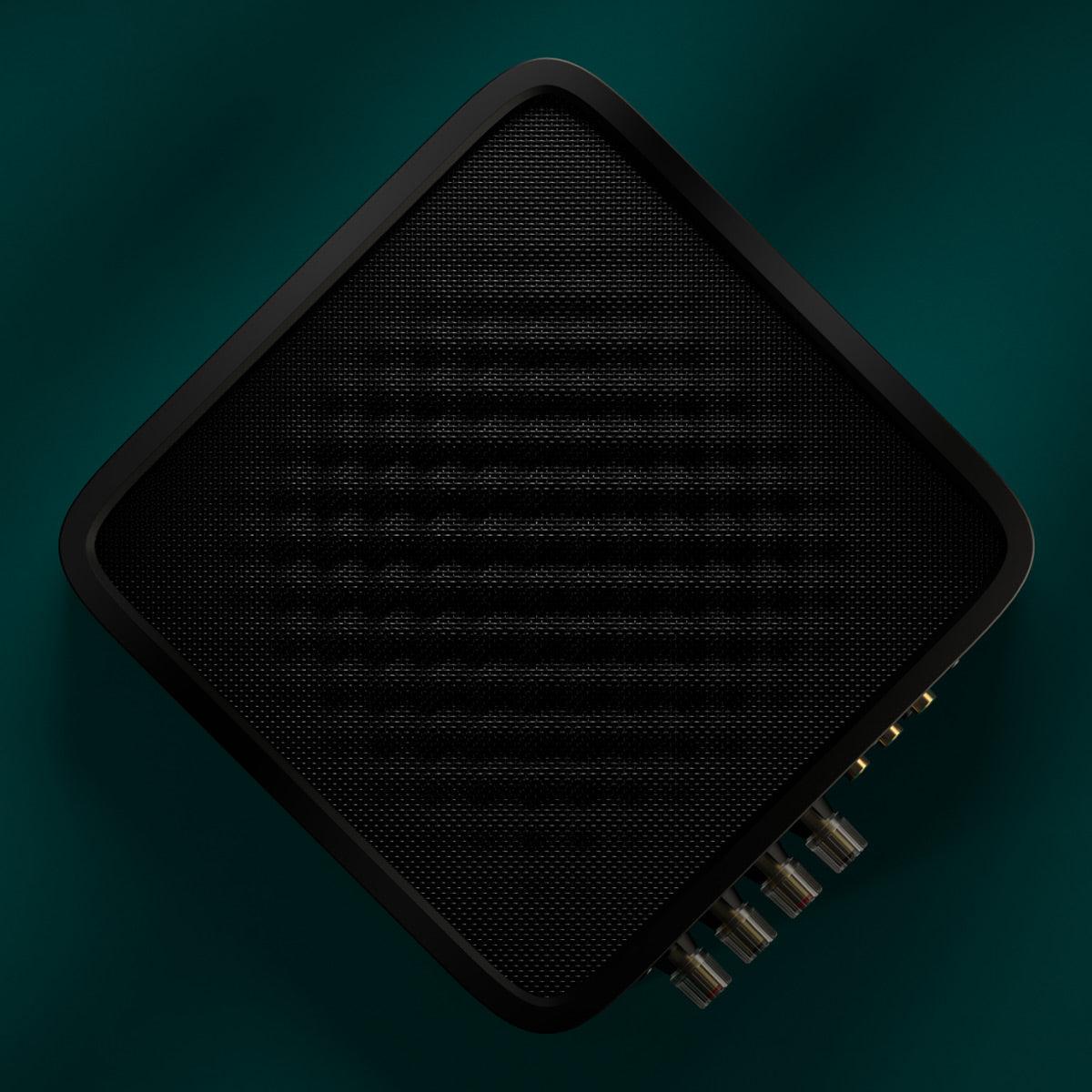


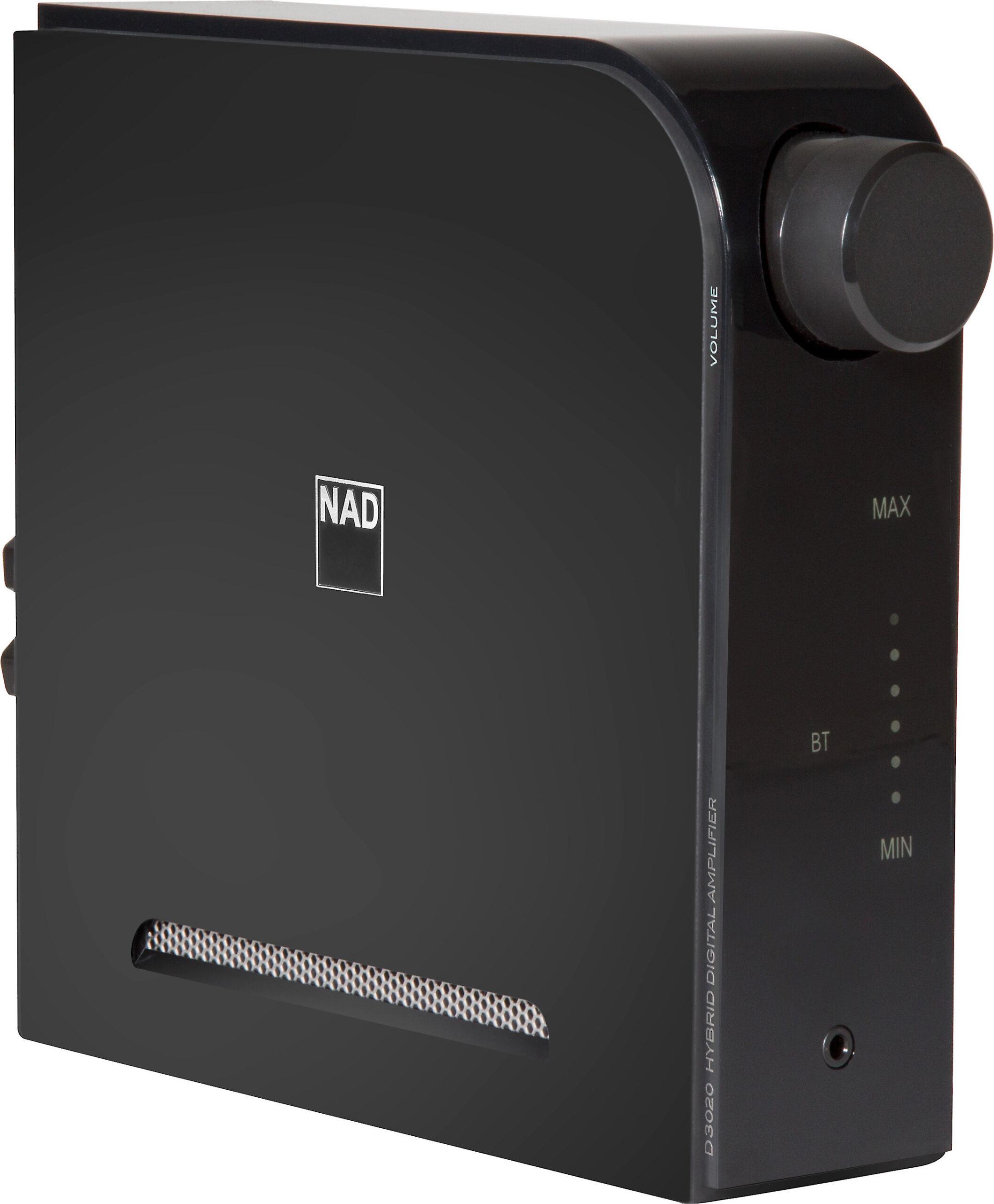
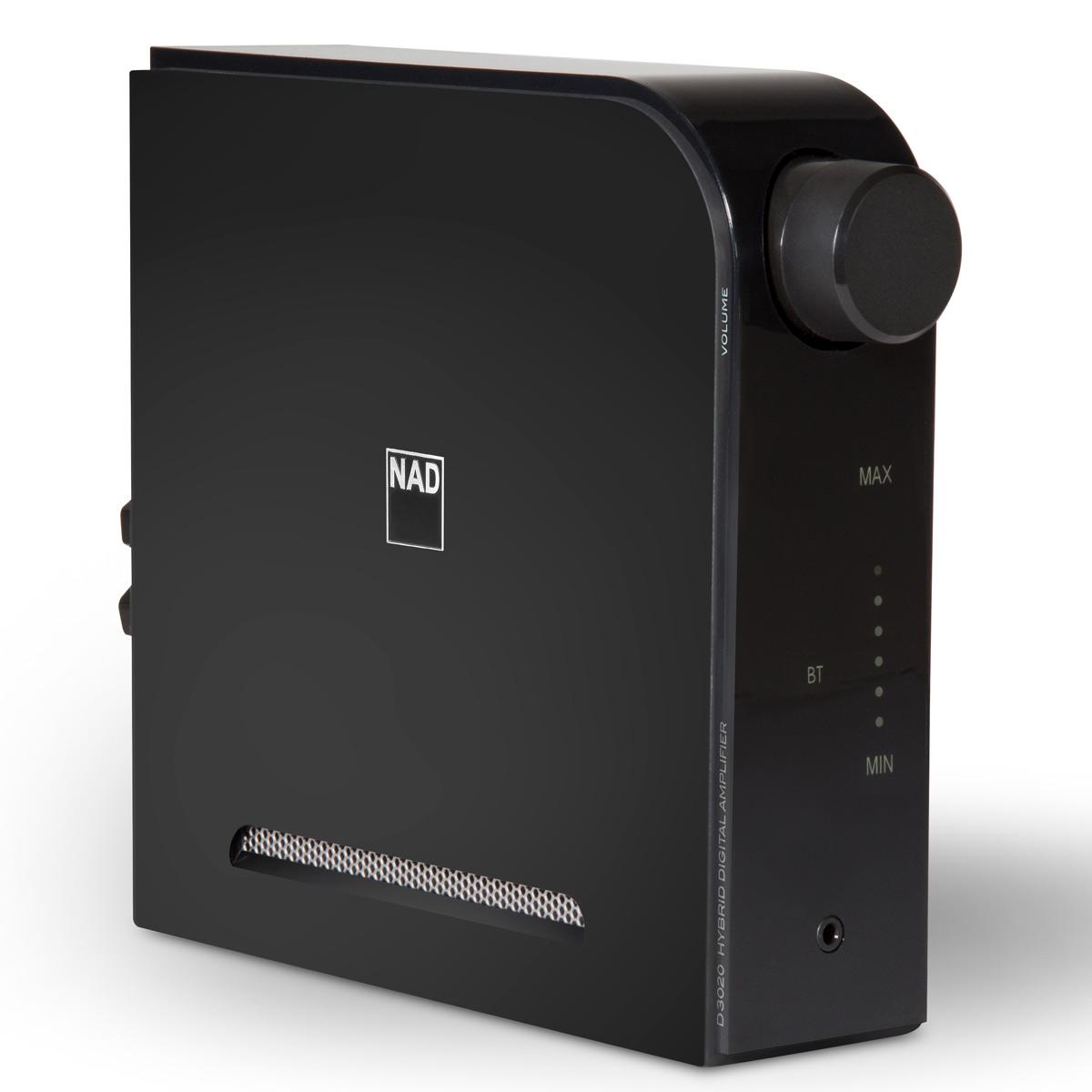
When shopping for an integrated amplifier in 2024, you're essentially choosing between two different philosophies of what modern audio should be. The Marantz Model M1 represents the "smart home streaming hub" approach, while the NAD D 3020 V2 embodies the "traditional hi-fi with modern touches" philosophy. Both were released around 2024 and 2016 respectively, but they've aged very differently as the audio landscape has evolved.
An integrated amplifier combines a preamplifier (which controls volume and switches between sources) with a power amplifier (which drives your speakers) in one box. Think of it as the central command center for your audio system. What makes these modern versions special is how they handle digital sources alongside traditional analog inputs like turntables and CD players.
The key considerations when choosing between these approaches come down to power needs, source flexibility, streaming priorities, and value expectations. At the time of writing, these products sit in different price tiers – the Marantz M1 commands a premium price for its comprehensive feature set, while the NAD D 3020 V2 offers proven performance at a more accessible price point.
Here's where things get interesting from a technical standpoint. The Marantz M1 delivers 100 watts per channel into 8-ohm speakers and 125 watts into 4-ohm speakers using a Class D digital amplifier design. Class D amplifiers work by rapidly switching the audio signal on and off thousands of times per second, which makes them incredibly efficient and generates very little heat.
The NAD D 3020 V2, meanwhile, puts out just 30 watts per channel continuously into both 8-ohm and 4-ohm loads. But here's where NAD's engineering philosophy shines – their PowerDrive technology can deliver up to 150 watts into 2-ohm loads when the music demands it. This dynamic power capability means the amplifier can handle sudden peaks in the music (like a drum hit or orchestral crescendo) with much more authority than its modest continuous rating suggests.
From our research into user experiences, the power difference matters most if you're driving inefficient speakers or listening in larger rooms. The Marantz M1 consistently gets praise for its ability to drive demanding bookshelf speakers like the Bowers & Wilkins 700 series with confidence, while the NAD D 3020 V2 works best with efficient speakers in smaller to medium-sized spaces.
The most important performance metric here isn't just peak power – it's how cleanly the amplifier delivers that power. Both use sophisticated protection circuits, but they handle clipping (when the amplifier runs out of headroom) differently. The Marantz M1 uses digital limiting, while the NAD D 3020 V2 employs soft clipping that gradually compresses the signal to prevent speaker damage.
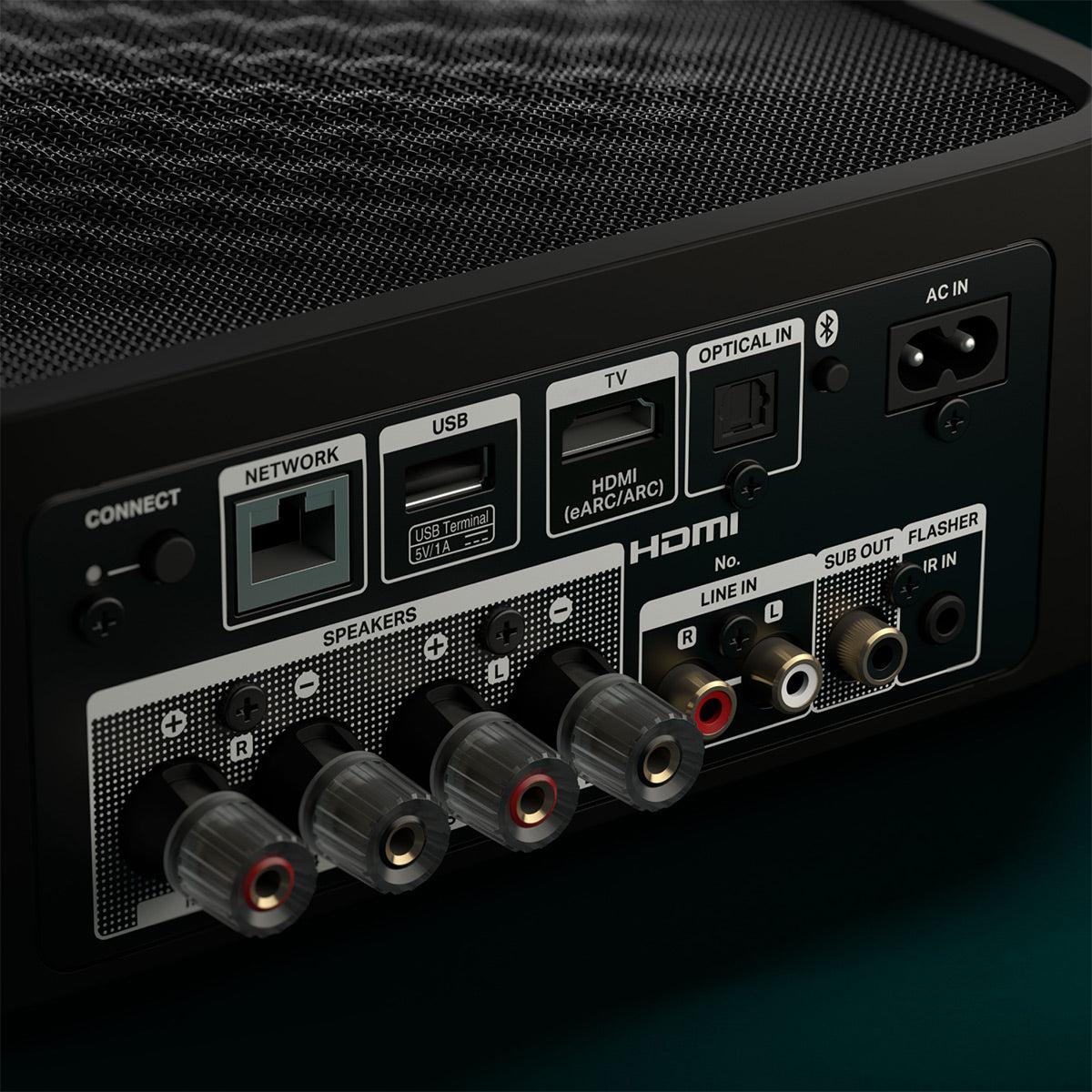
This is where the fundamental difference between these amplifiers becomes crystal clear. The Marantz M1 is essentially a streaming computer with a high-quality amplifier attached. It includes HEOS streaming (Marantz's multi-room platform), built-in Wi-Fi, HDMI eARC for TV connection, AirPlay 2, Spotify Connect, and support for high-resolution streaming services like TIDAL and Qobuz.
The technical implementation is impressive – the M1 can handle 24-bit/192kHz PCM audio files and even DSD (Direct Stream Digital) files up to 5.6MHz, which is the format used for Super Audio CDs. This means if you're streaming high-resolution audio from services like Amazon Music HD or have a collection of audiophile downloads, the Marantz M1 can play them at full quality.
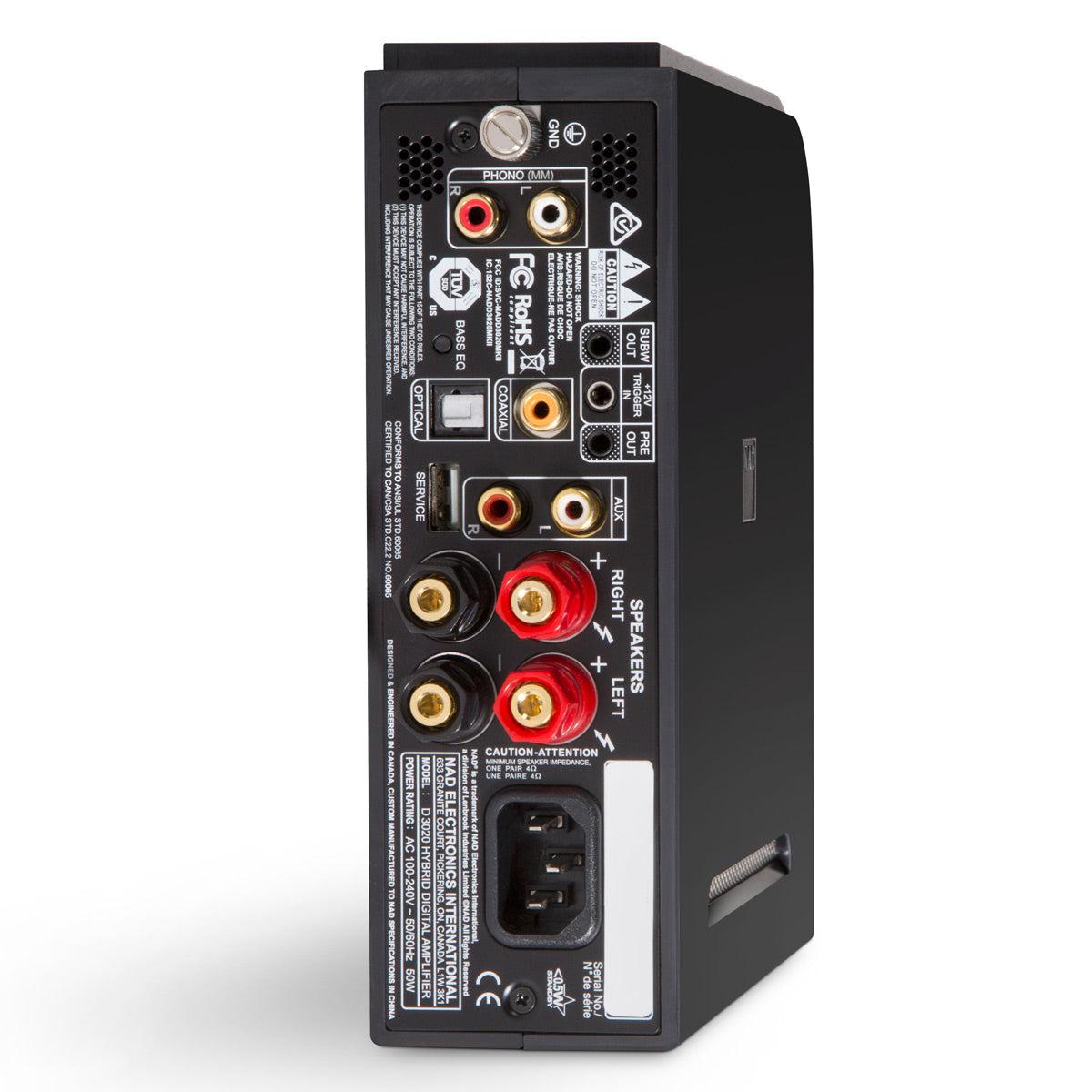
The NAD D 3020 V2 takes a completely different approach. It includes a built-in phono stage for connecting turntables directly, plus multiple analog inputs for traditional sources. Its digital capabilities are more focused – Bluetooth with aptX (a higher-quality Bluetooth codec that reduces compression), plus optical and coaxial digital inputs that support up to 24-bit/192kHz audio.
From user feedback we've analyzed, this difference in approach has real-world implications. If you're building a system around streaming and want everything controlled from your phone, the Marantz M1 excels. But if you have a turntable, CD player, or other analog sources, the NAD D 3020 V2 offers much more flexibility without needing additional equipment.
Sound quality assessment requires looking beyond specifications to understand how these different approaches affect what you actually hear. The Marantz M1 uses an all-digital signal path with their proprietary Musical Digital Filtering (MMDF). This technology offers two selectable filter characteristics that subtly change how the digital-to-analog conversion handles the audio signal, theoretically allowing you to tune the sound to your preferences.
However, our research into user and professional reviews reveals mixed reactions to the M1's sound quality. Some listeners find it precise but lacking in warmth, while others appreciate its clean, detailed presentation. The all-digital approach can sometimes sound clinical compared to amplifiers that maintain analog signal paths.
The NAD D 3020 V2 receives more consistent praise for its musical engagement. NAD's hybrid digital design maintains analog volume control and signal routing, only converting to digital when necessary. Users frequently describe the sound as warm, engaging, and fatigue-free during long listening sessions. The PowerDrive technology also contributes to better dynamics – the sudden changes in volume that make music feel alive.
The most important performance characteristics here are total harmonic distortion (THD), signal-to-noise ratio, and dynamic range. THD measures how much the amplifier changes the original signal – lower is better. The NAD D 3020 V2 achieves less than 0.01% THD, while the Marantz M1 specifies 0.05% THD. Signal-to-noise ratio measures how quiet the amplifier is when no music is playing – both achieve excellent specifications over 98dB, meaning background noise is essentially inaudible.
The streaming capability gap between these amplifiers is enormous. The Marantz M1 is essentially a high-end network streamer with amplification built in. It connects to your home Wi-Fi network and gives you direct access to dozens of streaming services through the HEOS app. The implementation includes support for multi-room audio, meaning you can have multiple HEOS-compatible devices throughout your home playing synchronized music.
The technical sophistication extends to format support – beyond standard streaming quality, the Marantz M1 can stream MQA (Master Quality Authenticated) files from TIDAL, high-resolution FLAC files from Qobuz, and even handle locally stored DSD files via USB or network sharing. For serious digital music listeners, this comprehensive support eliminates the need for a separate streamer.
The NAD D 3020 V2 keeps digital connectivity simple but well-executed. The Bluetooth implementation with aptX provides surprisingly good sound quality for wireless streaming from phones and tablets. The built-in DAC (digital-to-analog converter) uses a quality Cirrus Logic chip in dual-differential configuration, which reduces noise and improves precision compared to basic DAC implementations.
For home theater use, this difference becomes crucial. The Marantz M1 includes HDMI eARC (enhanced Audio Return Channel), allowing it to receive high-quality audio directly from your TV. It can decode Dolby Digital+ soundtracks and even includes dialogue enhancement and virtual surround modes. The NAD D 3020 V2 requires connecting your TV's optical output, which limits it to basic stereo or compressed surround formats.
Each amplifier includes engineering innovations that set it apart. The Marantz M1's Musical Digital Filtering represents a sophisticated approach to digital signal processing. Instead of using a single filter characteristic, it allows switching between two different digital filters that affect the frequency response and phase behavior differently. This gives users some control over the sonic character without traditional tone controls.
The M1 also includes adjustable crossover filters for subwoofer integration. You can set high-pass filters (40-250Hz) for your main speakers and low-pass filters (40-120Hz) for a connected subwoofer, creating a properly integrated 2.1 system. This level of bass management is typically found in much more expensive equipment.
The NAD D 3020 V2's PowerDrive technology deserves deeper explanation. Traditional amplifiers maintain constant power output regardless of speaker impedance, but real speakers don't maintain constant impedance across all frequencies. PowerDrive monitors the speaker load and adjusts power delivery accordingly, providing more current when speakers present lower impedance (typically in the bass frequencies). This results in tighter bass control and better overall dynamics.
NAD also includes an innovative Bass EQ circuit specifically designed for small speakers. It provides a gentle 6dB boost at 80Hz while implementing protection algorithms to prevent driver damage. This allows bookshelf speakers to sound fuller without risking the woofers.
At the time of writing, these amplifiers occupy different value territories. The Marantz M1 commands a premium price that reflects its comprehensive streaming integration and Japanese build quality from Shirakawa Audio Works. You're paying for convenience, features, and the engineering that makes everything work seamlessly together.
The NAD D 3020 V2 represents a more traditional value approach – focused on core amplification quality at a more accessible price point. NAD's reputation for honest power specifications and musical performance has been built over decades, and the D 3020 V2 continues that tradition.
From our analysis of long-term user experiences, the value equation depends heavily on your priorities. Users who embrace the Marantz M1's streaming ecosystem and use features like multi-room audio consistently report high satisfaction despite the premium price. However, users who expected it to significantly outperform less expensive alternatives in pure sound quality often feel disappointed.
The NAD D 3020 V2 consistently exceeds expectations for its price tier. Users frequently report being surprised by its ability to drive speakers they expected would need more power, and the built-in phono stage often outperforms separate phono preamps costing as much as the entire amplifier.
For home theater use, the Marantz M1 clearly leads with its HDMI eARC connection and Dolby Digital+ decoding. This allows seamless integration where the amplifier automatically switches to TV audio when you turn on your television, and you can use your TV remote to control volume. The dialogue enhancement and virtual surround modes add value for movie watching.
However, both amplifiers are fundamentally designed for stereo music reproduction. If you're planning a serious home theater system, you'd typically want a dedicated AV receiver with multiple channels for surround sound. These amplifiers work best for TV audio when you want better sound than TV speakers but don't need full surround sound.
The Marantz M1 makes sense if you're building a modern, streaming-focused system and value comprehensive integration over absolute performance per dollar. It's ideal for users who want to control everything from their phone, stream high-resolution audio regularly, and appreciate having TV audio integration. The multi-room capabilities make it attractive for whole-home audio installations.
Choose the NAD D 3020 V2 if you have analog sources (especially vinyl), prefer traditional hi-fi flexibility, or want proven amplification performance at a more reasonable price. It's particularly appealing for desktop systems, smaller rooms, or as part of a traditional component system where you might add a separate streamer later.
The decision often comes down to whether you want an all-in-one streaming solution or a high-quality amplifier with modern conveniences added thoughtfully. Both approaches have merit, but they serve different types of listeners and different system-building philosophies.
In my experience evaluating audio equipment, the NAD D 3020 V2 represents better pure value for most listeners, while the Marantz M1 justifies its premium for users who fully embrace its streaming ecosystem and integration features. Your choice should align with how you actually listen to music and what sources matter most to your enjoyment.
| Marantz Model M1 Wireless Streaming Amplifier | NAD D 3020 V2 Integrated Amplifier |
|---|---|
| Power Output - Determines how loud you can play music and which speakers you can drive | |
| 100W × 2 (8Ω), 125W × 2 (4Ω) - Enough for demanding speakers and larger rooms | 30W × 2 continuous, 150W × 2 dynamic (2Ω) - Best with efficient speakers in smaller spaces |
| Amplifier Type - Affects sound character and efficiency | |
| Class D digital end-to-end with MMDF filtering - Very efficient, runs cool, precise sound | Hybrid Class D with PowerDrive technology - Combines efficiency with NAD's musical approach |
| Streaming Capabilities - How you'll access your music in the modern era | |
| HEOS built-in, Wi-Fi, AirPlay 2, Spotify Connect, TIDAL, Qobuz, Roon Ready - Complete streaming hub | Bluetooth with aptX only - Simple but limited wireless streaming |
| Digital Inputs - Connecting modern sources like TV, streamers, and CD players | |
| HDMI eARC, Optical, USB-A - TV integration and high-res file playback | Optical, Coaxial, no HDMI - Basic digital connectivity |
| Analog Inputs - Connecting traditional sources like turntables and CD players | |
| Single RCA line input - Very limited analog flexibility | RCA line input plus MM phono stage - Perfect for vinyl enthusiasts |
| High-Resolution Audio Support - Important for audiophile streaming and files | |
| Up to 24-bit/192kHz PCM, DSD up to 5.6MHz - Handles all high-res formats | Up to 24-bit/192kHz PCM - Covers most high-res needs |
| Multi-Room Audio - Playing music throughout your home | |
| Full HEOS multi-room system support - Can sync with other HEOS devices | None - Single room use only |
| Subwoofer Integration - Adding bass extension to your system | |
| Dedicated sub output with adjustable crossovers (40-250Hz high-pass, 40-120Hz low-pass) | Basic sub output - Limited bass management |
| TV Audio Integration - Using with your television | |
| HDMI eARC with Dolby Digital+ decoding, dialogue enhancement - Seamless TV audio | Optical input only - Basic TV connection |
| Physical Controls - Operating without a phone app | |
| App-dependent control via HEOS - No physical remote included | Physical volume control and remote - Traditional operation |
| Build Quality and Origin - Affects reliability and resale value | |
| Designed and built in Shirakawa, Japan - Premium construction | NAD engineering with focus on performance per dollar |
| Power Consumption - Running costs and heat generation | |
| Class D efficiency, low standby power - Runs cool | <0.5W standby, highly efficient - Minimal energy use |
| Warranty Coverage - Protection for your investment | |
| 5-year parts and labor warranty - Premium support | Standard warranty - Varies by region |
The Marantz Model M1 delivers significantly more power with 100 watts per channel into 8-ohm speakers and 125 watts into 4-ohm speakers. The NAD D 3020 V2 provides 30 watts per channel continuously, though its PowerDrive technology can deliver up to 150 watts dynamically into 2-ohm loads. For most users with demanding speakers or larger rooms, the Marantz Model M1 offers better power reserves.
Only the NAD D 3020 V2 includes a built-in phono stage for connecting turntables with moving magnet cartridges directly. The Marantz Model M1 lacks a phono input, so you'd need a separate phono preamp to use a turntable. For vinyl enthusiasts, the NAD D 3020 V2 provides much better value and convenience.
The Marantz Model M1 excels for TV integration with its HDMI eARC connection, Dolby Digital+ decoding, and dialogue enhancement features. It can receive high-quality audio directly from your TV and be controlled with your TV remote. The NAD D 3020 V2 only offers optical input for TV connection, limiting it to basic stereo audio from television sources.
Yes, but very differently. The Marantz Model M1 includes comprehensive streaming with HEOS built-in, supporting Spotify Connect, TIDAL, Qobuz, Amazon Music HD, and many other services directly through Wi-Fi. The NAD D 3020 V2 only offers Bluetooth streaming from your phone or tablet, with no built-in streaming services or Wi-Fi connectivity.
The NAD D 3020 V2 typically offers better pure audio value, focusing on core amplification performance at a more accessible price point. The Marantz Model M1 commands a premium for its comprehensive streaming features, TV integration, and Japanese build quality. Your choice depends on whether you prioritize streaming convenience or traditional hi-fi value.
The Marantz Model M1 excels at multi-room audio through its built-in HEOS platform, allowing you to sync music across multiple HEOS-compatible devices throughout your home. The NAD D 3020 V2 is designed for single-room use only, with no multi-room capabilities or network connectivity for whole-home audio systems.
Both amplifiers work well in small spaces due to their compact size and efficient Class D design. The NAD D 3020 V2 is particularly suited for desktop or bookshelf use with its vertical design and lower power output that matches smaller speakers. The Marantz Model M1 works in small spaces too but provides more power than typically needed for near-field listening.
Both support high-resolution audio, but the Marantz Model M1 goes further with support for 24-bit/192kHz PCM files plus DSD formats up to 5.6MHz through USB and streaming services. The NAD D 3020 V2 handles 24-bit/192kHz PCM through its digital inputs, which covers most high-resolution audio needs but doesn't support DSD formats.
The NAD D 3020 V2 offers more input flexibility with multiple analog inputs (including phono), optical, coaxial digital inputs, and Bluetooth. The Marantz Model M1 has fewer physical inputs but compensates with extensive streaming capabilities, HDMI eARC, and network connectivity that essentially provides unlimited digital sources.
The Marantz Model M1 provides superior bass management with dedicated subwoofer output and adjustable crossover filters for both speakers and subwoofer. The NAD D 3020 V2 includes a basic subwoofer output and innovative Bass EQ circuit for small speakers, but lacks the sophisticated crossover controls of the Marantz Model M1.
The NAD D 3020 V2 offers traditional operation with physical volume controls and an included remote control. The Marantz Model M1 relies primarily on smartphone app control through HEOS, which provides more features but requires using your phone for most functions. Traditional users may prefer the NAD D 3020 V2's straightforward approach.
The Marantz Model M1 works much better for home theater applications with HDMI eARC connectivity, Dolby Digital+ decoding, and dialogue enhancement features for movie watching. The NAD D 3020 V2 can handle TV audio through optical input but lacks the advanced features and seamless integration that make the Marantz Model M1 better suited for home theater use.
We've done our best to create useful and informative comparisons to help you decide what product to buy. Our research uses advanced automated methods to create this comparison and perfection is not possible - please contact us for corrections or questions. These are the sites we've researched in the creation of this article: bestbuy.com - crutchfield.com - audioadvisor.com - youtube.com - soundstagesimplifi.com - marantz.com - marantz.com - audioadvice.com - whathifi.com - manuals.marantz.com - audiosciencereview.com - youtube.com - marantz.com - sweetwater.com - audiosciencereview.com - accessories4less.com - hifinews.com - youtube.com - forum.psaudio.com - crutchfield.com - forum.audiogon.com - crutchfield.com - iiwireviews.com - crutchfield.ca - audiosciencereview.com - soundstagesimplifi.com - nadelectronics.com - hifiheaven.net - crutchfield.com - projectorscreen.com - upscaleaudio.com - dedicatedaudio.com - twitteringmachines.com - nadelectronics.com

Privacy Policy
Terms and Conditions - Affiliate Policy
Home Security
© Copyright 2008-2026.
11816 Inwood Rd #1211, Dallas, TX 75244