

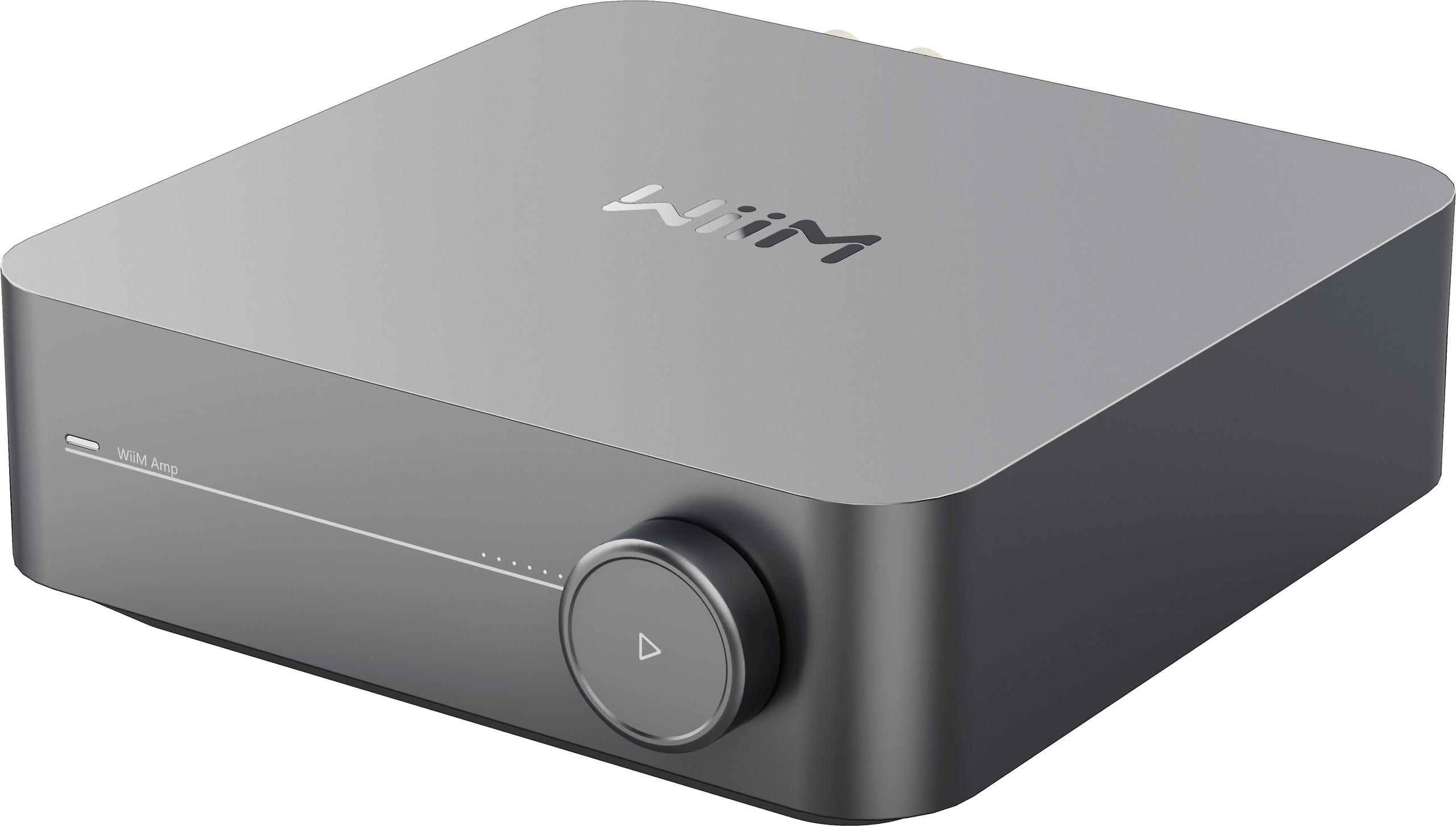
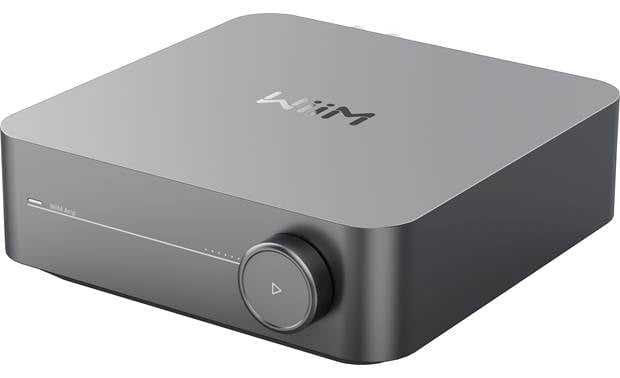
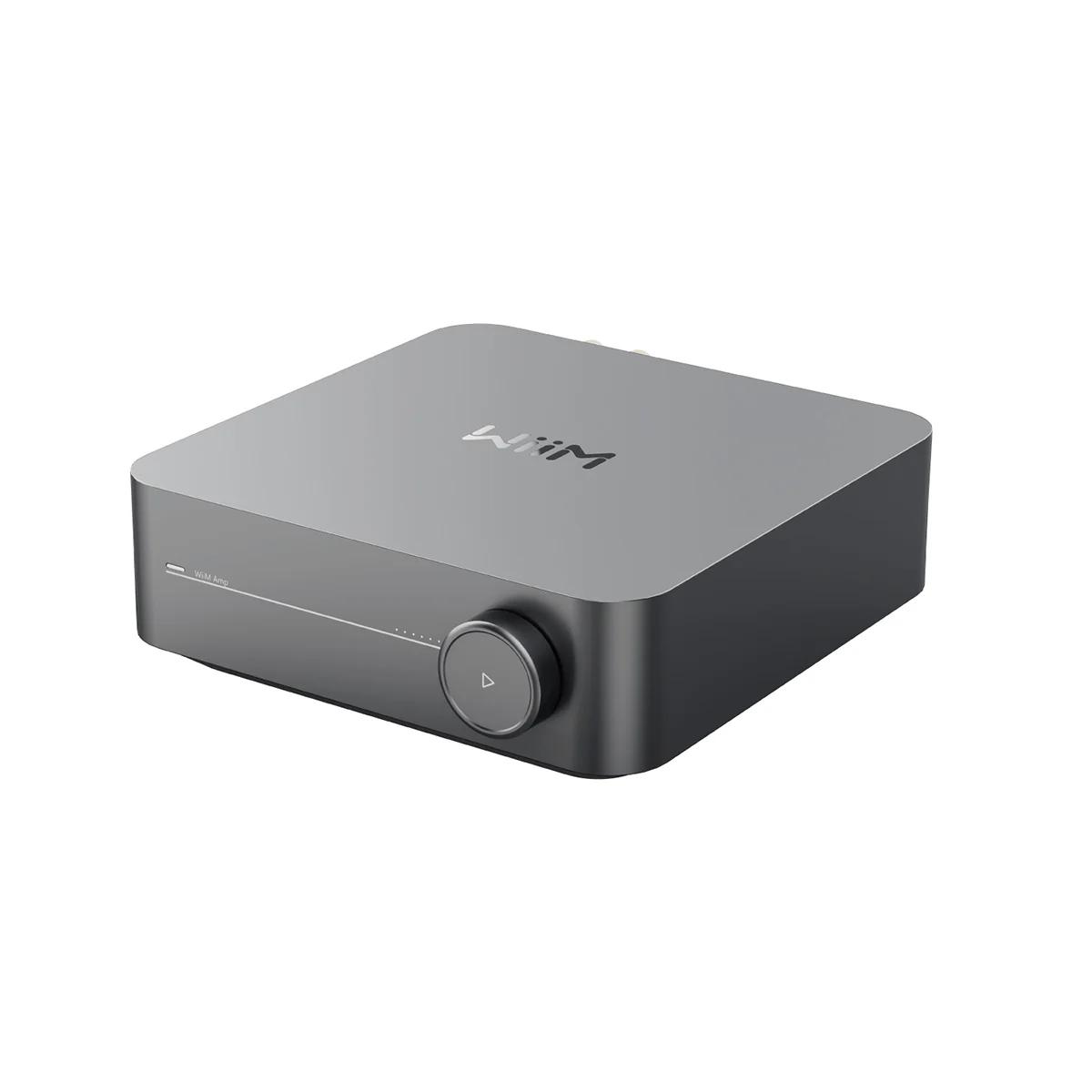
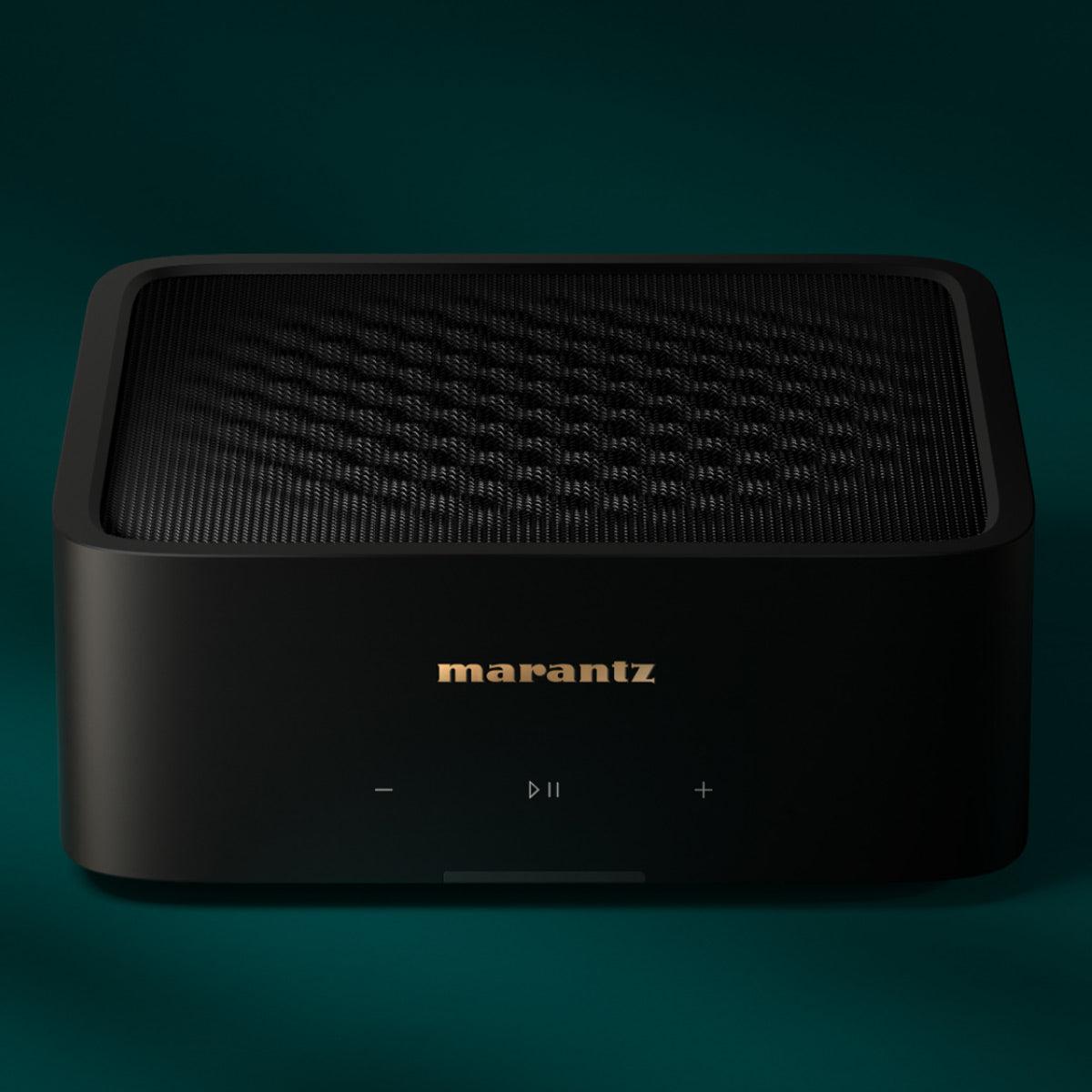
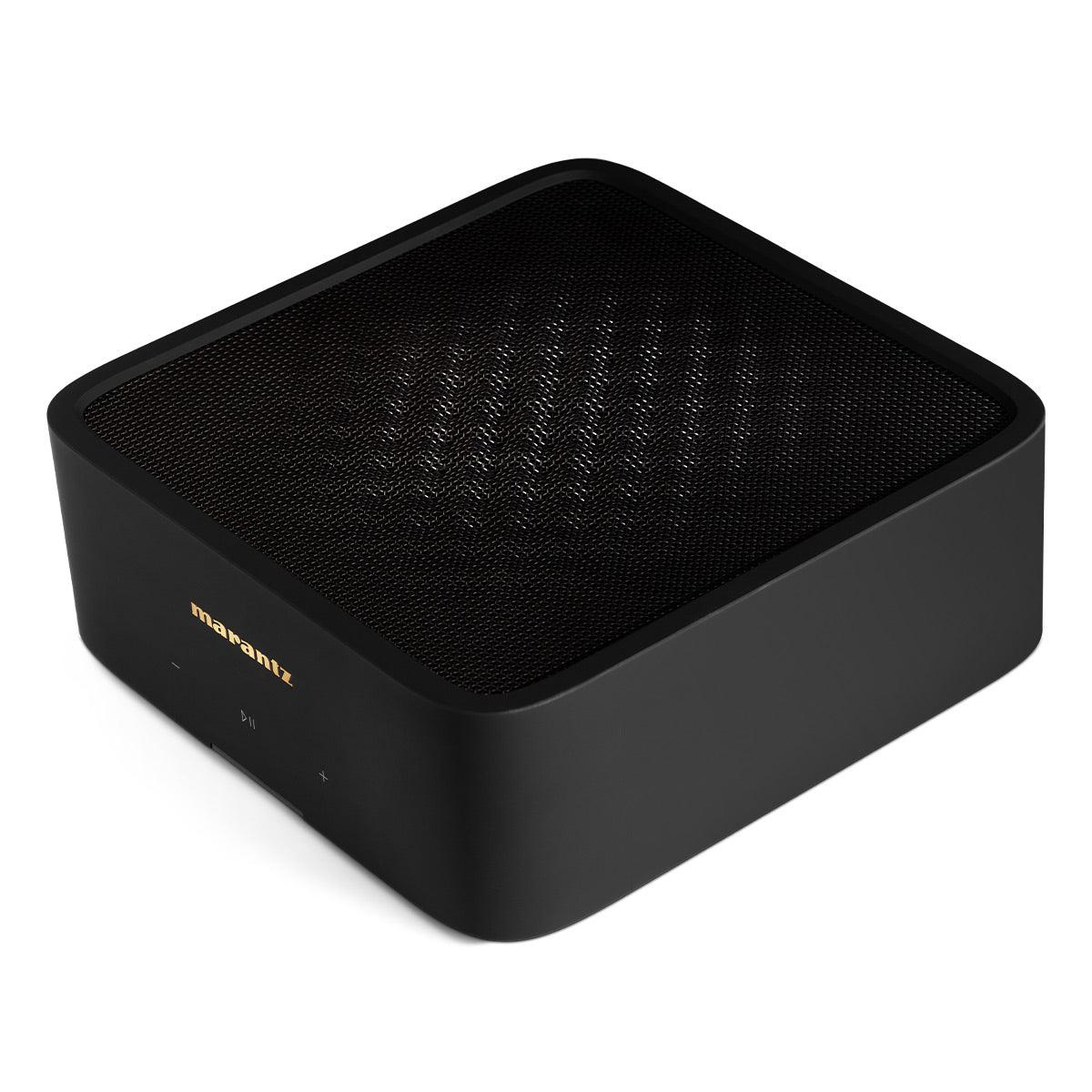


The world of home audio has transformed dramatically over the past few years. Gone are the days when you needed a separate streamer, DAC, and amplifier to get great digital sound. Today's streaming amplifiers pack all that functionality into a single box, making high-quality audio more accessible than ever. Two products that perfectly illustrate this evolution are the WiiM Amp and the Marantz Model M1 – but they take very different approaches to solving the same problem.
Think of a streaming amplifier as the Swiss Army knife of audio equipment. It combines a power amplifier (which makes your speakers loud), a digital-to-analog converter or DAC (which turns digital music files into analog signals your speakers can use), and wireless streaming capabilities all in one compact unit. This eliminates the cable mess and complexity of separate components while often delivering better performance than you'd expect.
The key considerations when shopping for a streaming amplifier boil down to a few critical areas: how much power you need to drive your speakers properly, the quality of the digital processing, what streaming services and protocols are supported, connectivity options for your existing gear, and of course, how much value you're getting for your money.
Both the WiiM Amp and Marantz Model M1 excel in different areas, making them appealing to different types of listeners. The WiiM Amp, released in 2024, represents the budget-conscious approach that doesn't skimp on features. The Marantz Model M1, also from 2024, takes the premium route with Japanese engineering and high-end materials.
When it comes to amplifier power, the Marantz Model M1 clearly takes the lead with 100 watts per channel into 8-ohm speakers compared to the WiiM Amp's 60 watts. But here's where it gets interesting – that 67% power advantage translates to only about 2.2 decibels more volume capability. While that might not sound like much, those extra watts provide crucial headroom for dynamic music passages and demanding speakers.
The real-world impact depends entirely on your speakers and listening habits. If you have efficient bookshelf speakers and listen at moderate volumes, the WiiM Amp's 60 watts will be plenty. But if you're driving larger floor-standing speakers or like your music loud, the Marantz Model M1's extra power becomes genuinely useful.
Both amplifiers use Class D technology, which is essentially a high-efficiency digital switching design that generates less heat and uses less power than traditional analog amplifiers. The WiiM Amp employs a Texas Instruments TPA3255 chip that's widely respected in the audio community, while the Marantz Model M1 uses a proprietary digital end-to-end design developed at their Japanese facility.
This is where things get technical, but it's worth understanding because it directly affects how your music sounds. The WiiM Amp features an ESS Sabre ES9018K2M DAC, which is considered excellent in this price range. The specifications are impressive: 98dB signal-to-noise ratio and just 0.0025% total harmonic distortion plus noise (THD+N). In plain English, this means the amp adds virtually no unwanted noise or distortion to your music.
The Marantz Model M1 takes a different approach. While it doesn't specify its DAC chip, it implements something called Marantz Musical Digital Filtering (MMDF). This proprietary technology lets you choose between two different digital filter characteristics, essentially allowing you to subtly adjust how the music sounds. Think of it as having two different sonic personalities you can switch between depending on your mood or the type of music you're playing.
Both units support high-resolution audio up to 24-bit/192kHz, which is far beyond CD quality and can reveal details in well-recorded music that you might never have heard before. The Marantz Model M1 goes a step further by supporting DSD files up to 5.6MHz – a format used for super-high-quality recordings that some audiophiles swear by.
Here's where the fundamental philosophical differences between these two products really show. The WiiM Amp is designed to work with everything. It supports AirPlay 2 for Apple users, Chromecast for Google fans, Spotify Connect, TIDAL Connect, and even works as a Roon endpoint for serious audiophiles. Most impressively, it can group with Amazon Echo speakers, Google Nest devices, and Apple HomePods for multi-room audio – something that's usually impossible across different ecosystems.
The Marantz Model M1 focuses more narrowly on the HEOS ecosystem, which is Marantz and Denon's proprietary multi-room platform. While HEOS supports all the major streaming services and sounds great, it's primarily designed to work with other Marantz and Denon products. This makes it perfect if you're building a whole-home audio system with these brands, but less flexible if you want to mix and match with other manufacturers.
Both products handle the WiiM Home app and HEOS app respectively, and from our research of user feedback, the WiiM app gets praise for being intuitive and frequently updated, while HEOS is more mature but sometimes feels less modern in comparison.
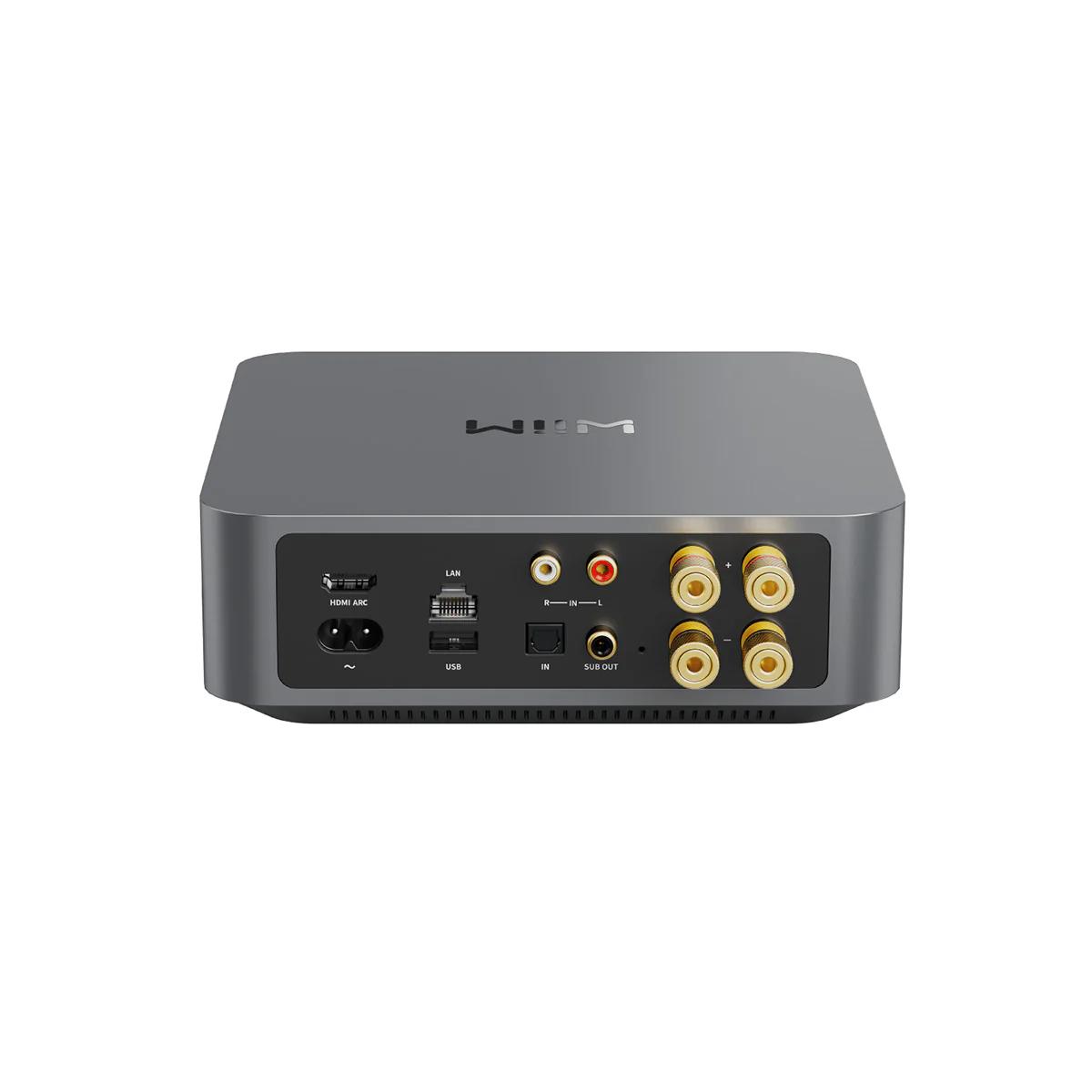
The WiiM Amp covers the basics well with HDMI ARC (which lets you connect to your TV), optical digital input, analog RCA inputs, and a subwoofer output with adjustable crossover. There's also a unique USB audio output that lets you record or process your audio signal further – something you rarely see in this category.
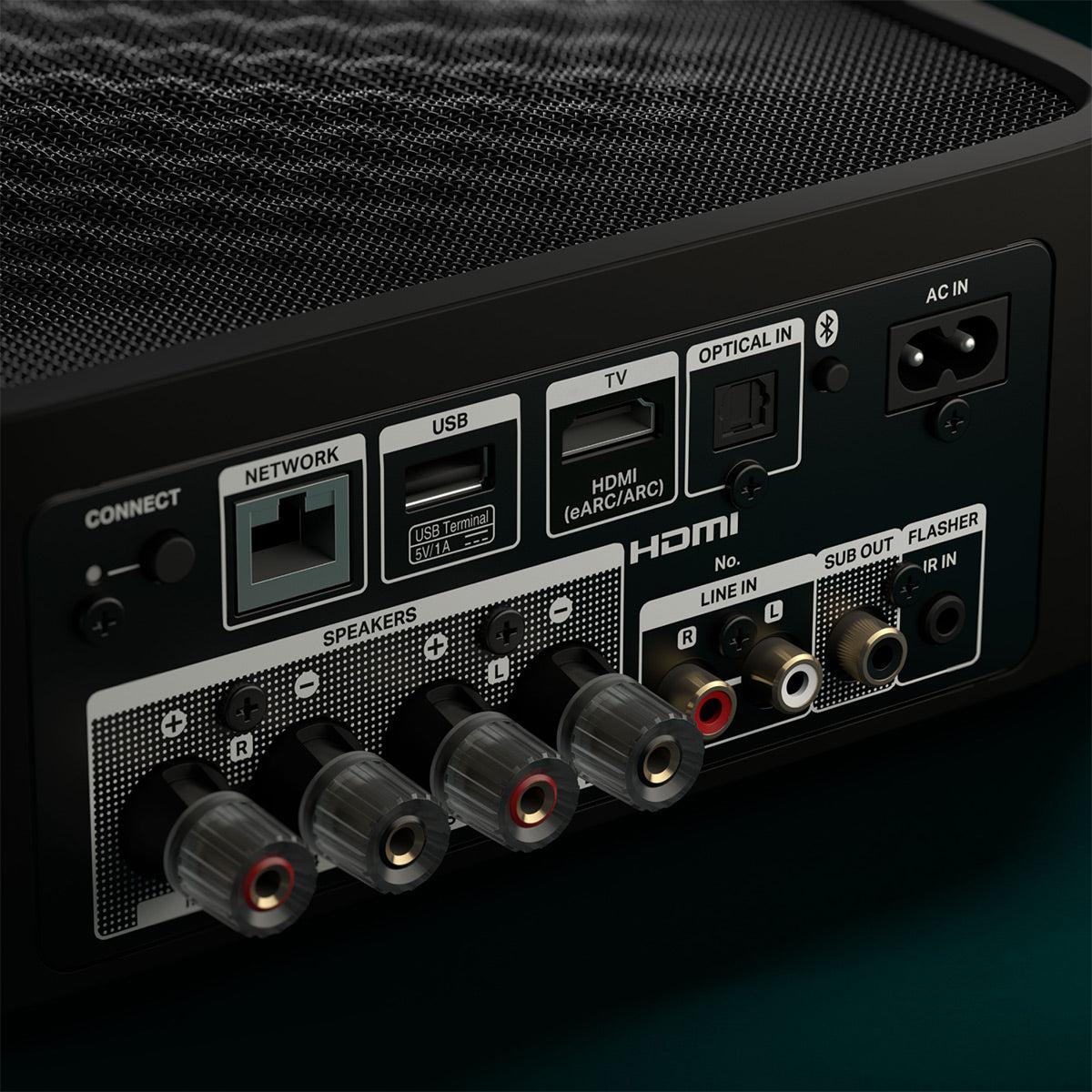
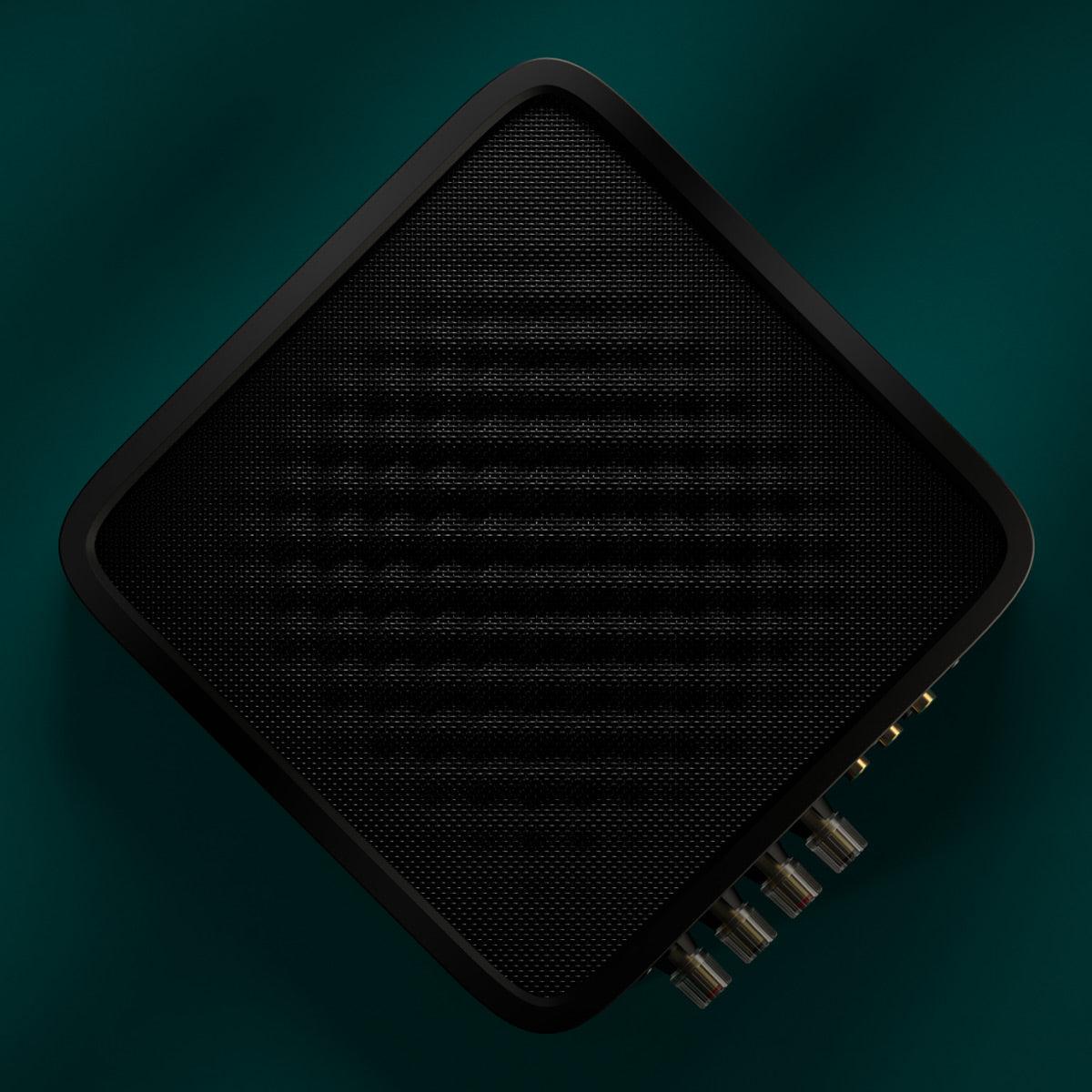
The Marantz Model M1 steps things up with HDMI eARC (the enhanced version that supports higher-quality audio formats), built-in Dolby Digital+ decoding, IR input for custom installations, and a 12V trigger output. These features make it much better suited for home theater applications and professional installations.
For TV integration, this difference is crucial. The WiiM Amp can only handle stereo PCM audio from your TV, which means regular stereo sound. The Marantz Model M1 can decode Dolby Digital+ from streaming services and Blu-ray players, giving you much better sound from movies and TV shows.
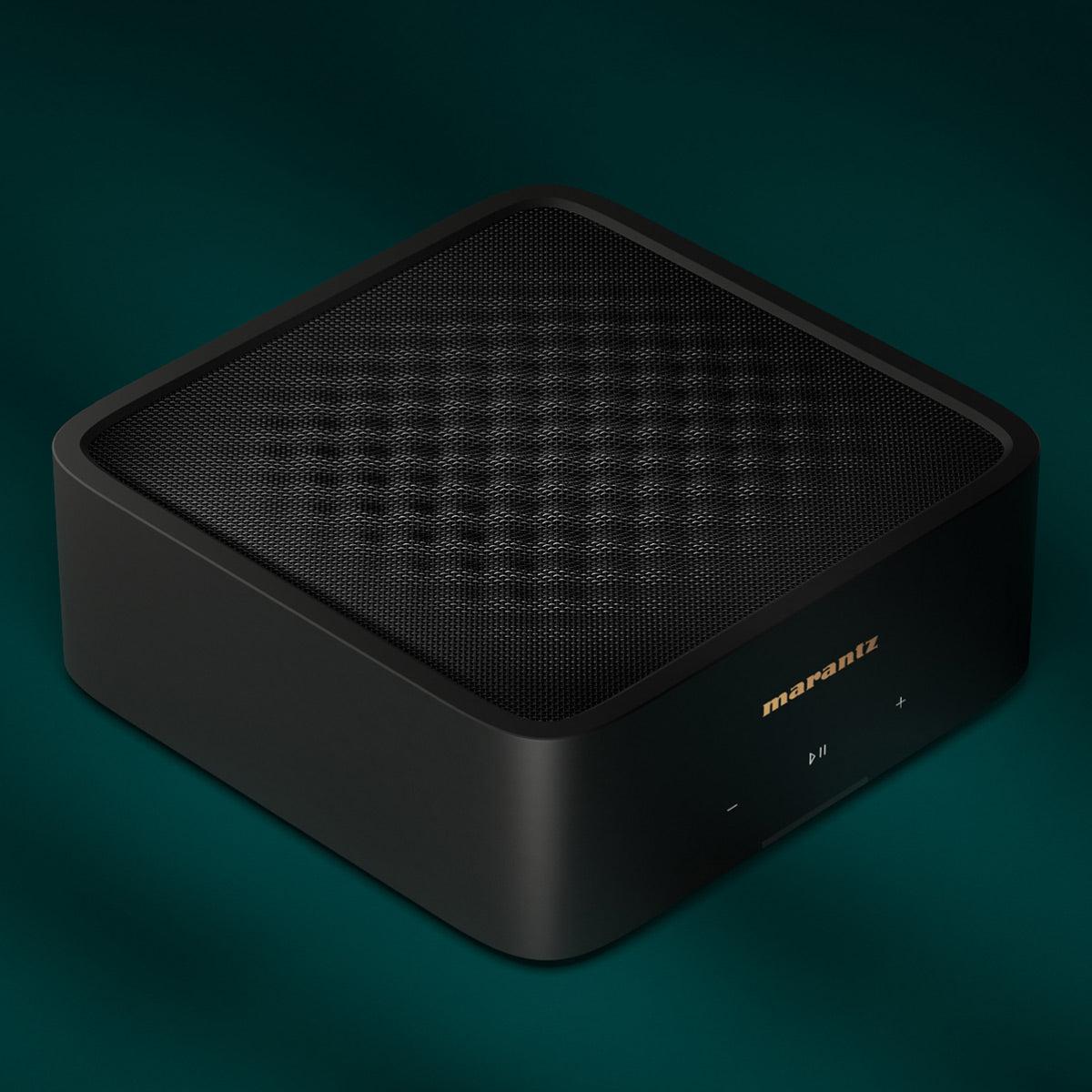
The WiiM Amp is housed in a compact aluminum chassis that measures just 7.5 inches square and 2.5 inches tall. It's well-built for the price point, with a clean, functional design that prioritizes value over luxury. The unit runs cool and quiet, which is exactly what you want from a modern Class D amplifier.
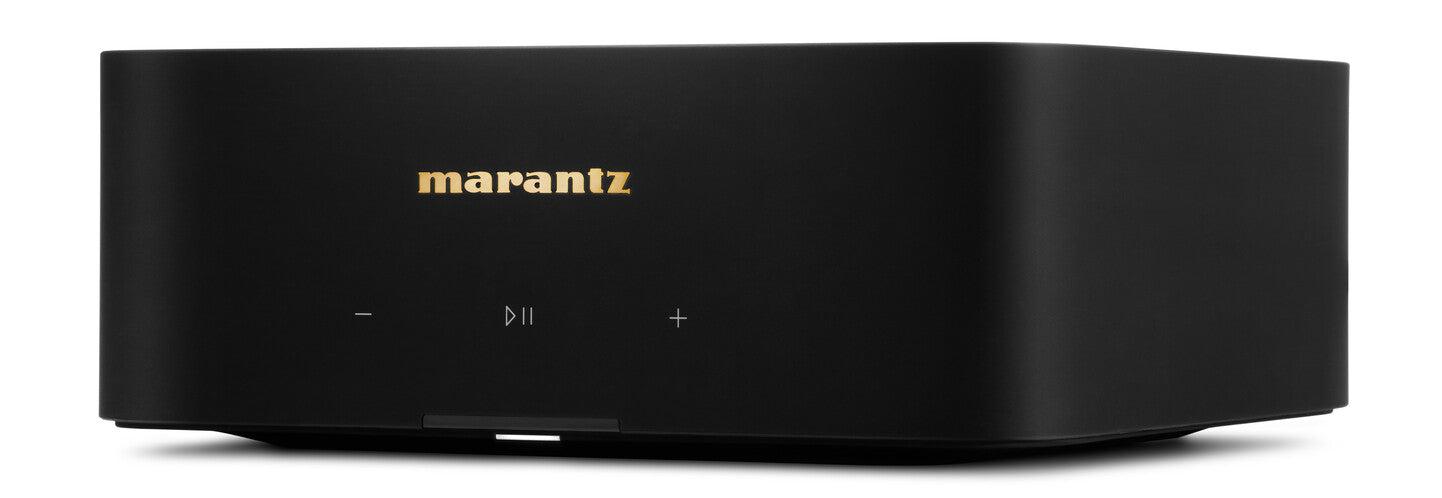
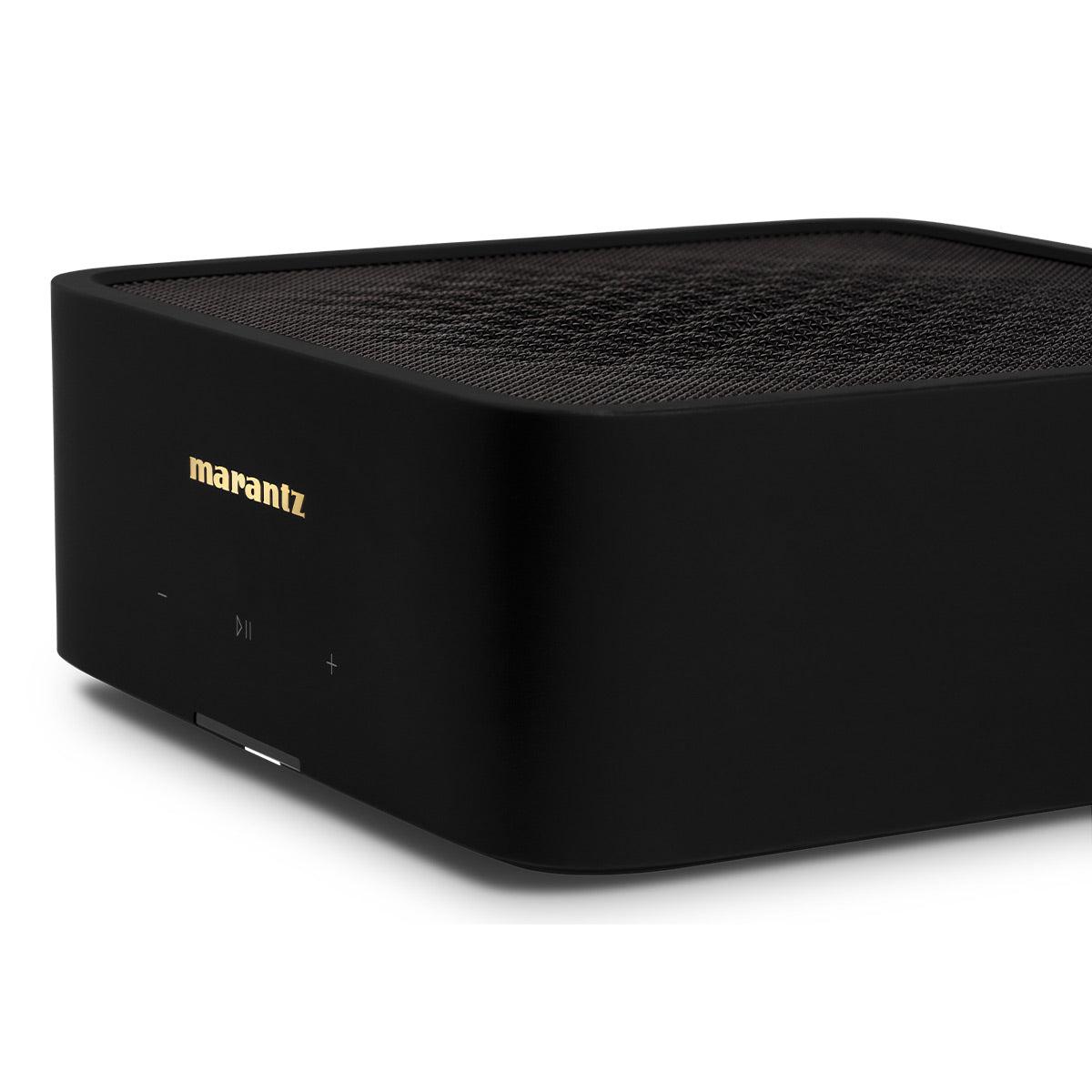
The Marantz Model M1 is larger and more substantial, reflecting its premium positioning. Built at Marantz's Shirakawa Audio Works facility in Japan, it features higher-end materials and more sophisticated internal construction. The thermal management is more advanced, which helps maintain performance during extended listening sessions.
Perhaps more importantly, the Marantz Model M1 comes with a five-year warranty compared to the WiiM Amp's one-year coverage. This reflects both the manufacturer's confidence in the product and the expected service life.
The WiiM Amp includes something genuinely innovative: automatic room correction using your smartphone's microphone. This feature analyzes your room's acoustics and adjusts the sound accordingly – something that would typically require expensive separate equipment. It's not perfect, but it's surprisingly effective at taming common room problems like boomy bass or harsh treble.
The Marantz Model M1 counters with its MMDF technology and what Marantz calls "Sound Master Tuning." This involves extensive listening tests and adjustments by their engineers to achieve what they consider the most musical sound. While more subjective than room correction, many users appreciate having sonic options to match their preferences.
At the time of writing, the WiiM Amp represents extraordinary value in the streaming amplifier market. You're getting features and performance that would have cost several times more just a few years ago. The room correction alone would typically add hundreds to the cost of a system, making this a compelling choice for budget-conscious buyers who don't want to compromise on features.
The Marantz Model M1 costs roughly three times as much, which initially seems steep. However, the value proposition shifts when you consider the superior power output, premium construction, extended warranty, and better home theater integration. For someone building a long-term, high-quality system, the additional cost might be justified.
If you plan to use your streaming amplifier with a TV, the differences become more pronounced. The WiiM Amp works fine for casual TV watching, but you'll only get stereo sound from your TV sources. For many people, this is perfectly adequate, especially if you're primarily interested in music streaming.
The Marantz Model M1 is genuinely better for home theater use. The HDMI eARC connection and Dolby Digital+ decoding mean you'll hear much better sound from Netflix, Amazon Prime, and other streaming services that use surround sound encoding. You'll also get better dialogue clarity and more immersive sound effects, even though you're still limited to two speakers plus a subwoofer.
Based on our analysis of professional reviews and user feedback, several performance characteristics stand out as most important:
Power delivery consistency is crucial – both amplifiers maintain their rated output across the frequency range, but the Marantz Model M1's extra headroom becomes apparent with demanding musical passages or inefficient speakers.
Noise floor performance favors the WiiM Amp on paper, but real-world listening suggests both are essentially silent during normal use.
Dynamic range and transient response – how well the amplifier handles sudden volume changes – receives praise for both products, though the Marantz Model M1 edges ahead with complex orchestral pieces or electronic music with deep bass.
Streaming stability and connectivity are areas where the WiiM Amp excels, with fewer reported dropouts and broader compatibility across different network setups.
Since both products launched in 2024, they represent current technology rather than having a long update history. However, the WiiM Amp has received several firmware updates that have improved performance and added features – a benefit of the company's software-focused approach.
The streaming amplifier category itself has evolved rapidly over the past few years. Early products often suffered from limited streaming protocol support, poor apps, or compromised audio quality. Both of these current products show how far the technology has advanced, offering features that would have been impossible or prohibitively expensive just a few years ago.
The WiiM Amp makes the most sense if you're primarily interested in music streaming, want excellent value for money, and appreciate having room correction built-in. It's perfect for someone setting up their first serious audio system or upgrading from a basic setup without spending a fortune. The broad ecosystem compatibility means it'll work well regardless of whether you use Apple, Google, or Amazon devices.
The Marantz Model M1 is the better choice if you need more power for demanding speakers, want premium build quality that'll last for years, or plan to use the amplifier for both music and TV audio. The five-year warranty and Japanese construction suggest this is a buy-once, use-for-years kind of product.
For home theater applications, the Marantz Model M1 is clearly superior due to its HDMI eARC and Dolby Digital+ support. But if you're building a dedicated two-channel music system, either could work depending on your power needs and budget.
Both streaming amplifiers represent excellent examples of how technology has democratized high-quality audio. The WiiM Amp proves that you don't need to spend a fortune to get genuinely good sound and modern features, while the Marantz Model M1 shows what's possible when you're willing to pay for premium engineering and construction.
Your choice ultimately comes down to your priorities: maximum value and flexibility versus premium construction and home theater capabilities. Either way, you're getting a product that would have been considered remarkable just a few years ago – a testament to how far streaming amplifier technology has advanced.
| WiiM Amp Streaming Amplifier | Marantz Model M1 Wireless Streaming Amplifier |
|---|---|
| Power Output - Critical for driving speakers properly | |
| 60W @ 8Ω, 120W @ 4Ω (adequate for most bookshelf speakers) | 100W @ 8Ω, 125W @ 4Ω (better for demanding speakers and larger rooms) |
| Audio Quality Specs - Lower distortion means cleaner sound | |
| 0.0025% THD+N, 98dB SNR (excellent measured performance) | 0.05% THD+N, 105dB SNR (good performance with higher power delivery) |
| Digital Audio Processing - Affects sound character and customization | |
| ESS Sabre ES9018K2M DAC with room correction | Marantz Musical Digital Filtering (MMDF) with selectable characteristics |
| TV Integration - Important for home theater use | |
| HDMI ARC, stereo PCM only (basic TV audio) | HDMI eARC with Dolby Digital+ decoding (superior TV audio quality) |
| Streaming Ecosystem - Determines what services and devices work | |
| Cross-platform (AirPlay 2, Chromecast, groups with Echo/Nest/HomePod) | HEOS ecosystem (optimized for Marantz/Denon multi-room systems) |
| Build Quality and Warranty - Indicates long-term value | |
| Aluminum chassis, 1-year warranty (functional design prioritizing value) | Japanese engineering at Shirakawa facility, 5-year warranty (premium construction) |
| Special Features - Unique capabilities that add value | |
| Automatic room correction via smartphone mic, USB audio output | Custom installation features (IR input, 12V trigger), MMDF sound tuning |
| Connectivity Options - Flexibility for different setups | |
| HDMI ARC, optical, RCA, USB, subwoofer out with crossover | HDMI eARC, optical, RCA, USB, subwoofer out, IR input, 12V trigger |
| Size and Installation - Physical requirements | |
| Compact 7.5" x 7.5" x 2.5", fits almost anywhere | Larger 8.56" x 9.94" x 3.38", rack-mountable with premium aesthetics |
| Value Proposition - Performance per dollar spent | |
| Exceptional value with high-end features at budget price | Premium pricing justified by superior power, build quality, and warranty |
The WiiM Amp Streaming Amplifier is generally better for beginners due to its straightforward setup, intuitive app, and built-in room correction that automatically optimizes sound. The WiiM Amp also works with more streaming services and smart home devices out of the box, making it easier to integrate into existing setups without technical knowledge.
The primary difference is power and build quality. The Marantz Model M1 delivers significantly more power (100W vs 60W per channel) and features premium Japanese construction with a 5-year warranty. The WiiM Amp focuses on value and versatility, offering excellent features at a much lower price point with broader streaming compatibility.
The Marantz Model M1 Wireless Streaming Amplifier is superior for home theater use. It features HDMI eARC and built-in Dolby Digital+ decoding, providing much better sound quality from TVs and streaming services. The WiiM Amp only supports basic stereo audio from TV sources, making it less ideal for movie watching.
For most bookshelf speakers and moderate listening volumes, the WiiM Amp's 60 watts per channel is sufficient. However, if you have larger floor-standing speakers, listen at high volumes, or want maximum headroom for dynamic music, the Marantz Model M1's 100 watts per channel provides noticeable benefits and better control over demanding speakers.
Both offer excellent audio quality but in different ways. The WiiM Amp has superior measured specifications with lower distortion (0.0025% vs 0.05%) and includes room correction. The Marantz Model M1 features proprietary MMDF filtering technology and premium components that many users find more musically engaging, despite higher measured distortion.
Yes, both the WiiM Amp and Marantz Model M1 work with any passive speakers. The WiiM Amp is better suited for efficient bookshelf speakers, while the Marantz Model M1 can drive more demanding speakers thanks to its higher power output. Both include subwoofer outputs for 2.1 system configurations.
The WiiM Amp offers more flexibility for multi-room setups because it can group with Amazon Echo, Google Nest, and Apple HomePod speakers across different brands. The Marantz Model M1 works best within the HEOS ecosystem with other Marantz and Denon products, making it ideal if you're building an all-Marantz system.
Both amplifiers support major streaming services like Spotify, TIDAL, and Amazon Music. The WiiM Amp offers broader compatibility with AirPlay 2, Chromecast, and Roon Ready support. The Marantz Model M1 uses the HEOS platform and works well with most popular services but has fewer protocol options than the WiiM Amp.
The WiiM Amp offers exceptional value, providing features typically found in much more expensive products, including room correction and extensive streaming compatibility. The Marantz Model M1 costs significantly more but justifies the premium through superior power output, Japanese build quality, and a 5-year warranty for long-term reliability.
Room correction can significantly improve sound quality by compensating for acoustic problems in your listening space. The WiiM Amp's built-in room correction using your smartphone microphone is surprisingly effective and would typically cost hundreds as a separate component. The Marantz Model M1 relies on manual EQ adjustments instead.
For desktop or small room use, the WiiM Amp is ideal due to its compact size, excellent streaming compatibility, and room correction that optimizes sound for near-field listening. The Marantz Model M1 might be overkill for close-range listening unless you need the extra power or premium build quality.
The Marantz Model M1 likely offers better long-term reliability with its 5-year warranty, premium construction, and established service network. The WiiM Amp comes with a 1-year warranty but benefits from frequent firmware updates that add features and improve performance over time. Both represent solid choices for different reliability priorities.
We've done our best to create useful and informative comparisons to help you decide what product to buy. Our research uses advanced automated methods to create this comparison and perfection is not possible - please contact us for corrections or questions. These are the sites we've researched in the creation of this article: audiosciencereview.com - faq.wiimhome.com - av-export.com - sound-advice.online - av.com - whathifi.com - youtube.com - forum.wiimhome.com - erinsaudiocorner.com - audacityaustralia.com.au - stereophile.com - audiosciencereview.com - audioadvice.com - smarthomesounds.co.uk - bestbuy.com - crutchfield.com - audioadvisor.com - youtube.com - soundstagesimplifi.com - marantz.com - marantz.com - audioadvice.com - whathifi.com - manuals.marantz.com - audiosciencereview.com - youtube.com - marantz.com - sweetwater.com - audiosciencereview.com - accessories4less.com

Privacy Policy
Terms and Conditions - Affiliate Policy
Home Security
© Copyright 2008-2026.
11816 Inwood Rd #1211, Dallas, TX 75244