







If you're looking to upgrade from traditional stereo receivers or replace multiple audio components with a single modern solution, streaming amplifiers have become the go-to choice for music lovers in 2024. These clever devices combine high-quality amplification with wireless streaming capabilities, eliminating the need for separate streamers, digital-to-analog converters (DACs), and amplifiers cluttering your entertainment center.
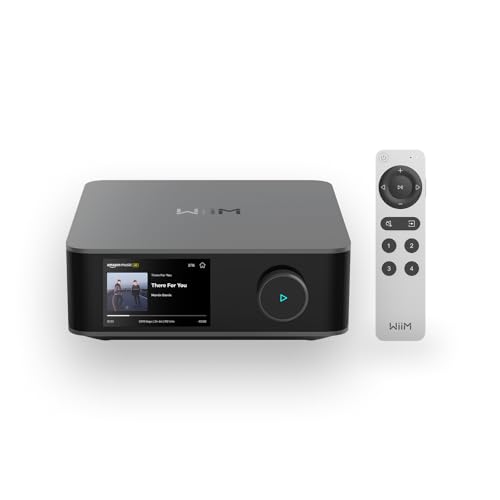
Today we're comparing two compelling options that represent very different philosophies in this space: the tech-forward WiiM Amp Ultra and the traditionally-tuned Marantz Model M1. Both deliver 100 watts per channel and comprehensive streaming features, but their approaches to achieving great sound couldn't be more different.
Before diving into specifics, it's worth understanding what separates good streaming amplifiers from great ones. Unlike traditional receivers that focus primarily on amplification, these modern units must excel at three core functions: receiving and processing digital audio streams, converting those digital signals to analog (the DAC's job), and amplifying the result to drive your speakers.
The most important performance characteristics include power output across different speaker impedances (measured in ohms - lower numbers mean harder-to-drive speakers), signal-to-noise ratio (how quiet the background noise is), total harmonic distortion or THD (how accurately the amp reproduces the original signal), and frequency response (how evenly it handles different pitches from bass to treble).
What makes streaming amplifiers particularly challenging to design well is thermal management. All that digital processing and amplification generates heat, and excessive heat degrades both performance and longevity. The best units incorporate sophisticated cooling systems to maintain consistent performance even during demanding listening sessions.
The WiiM Amp Ultra, released in late 2024, represents WiiM's fourth integrated amplifier in just two years - a rapid development pace that reflects their Silicon Valley approach to audio innovation. At the time of writing, it's positioned as a premium value option, typically costing significantly less than comparable audiophile-branded alternatives while offering cutting-edge features.
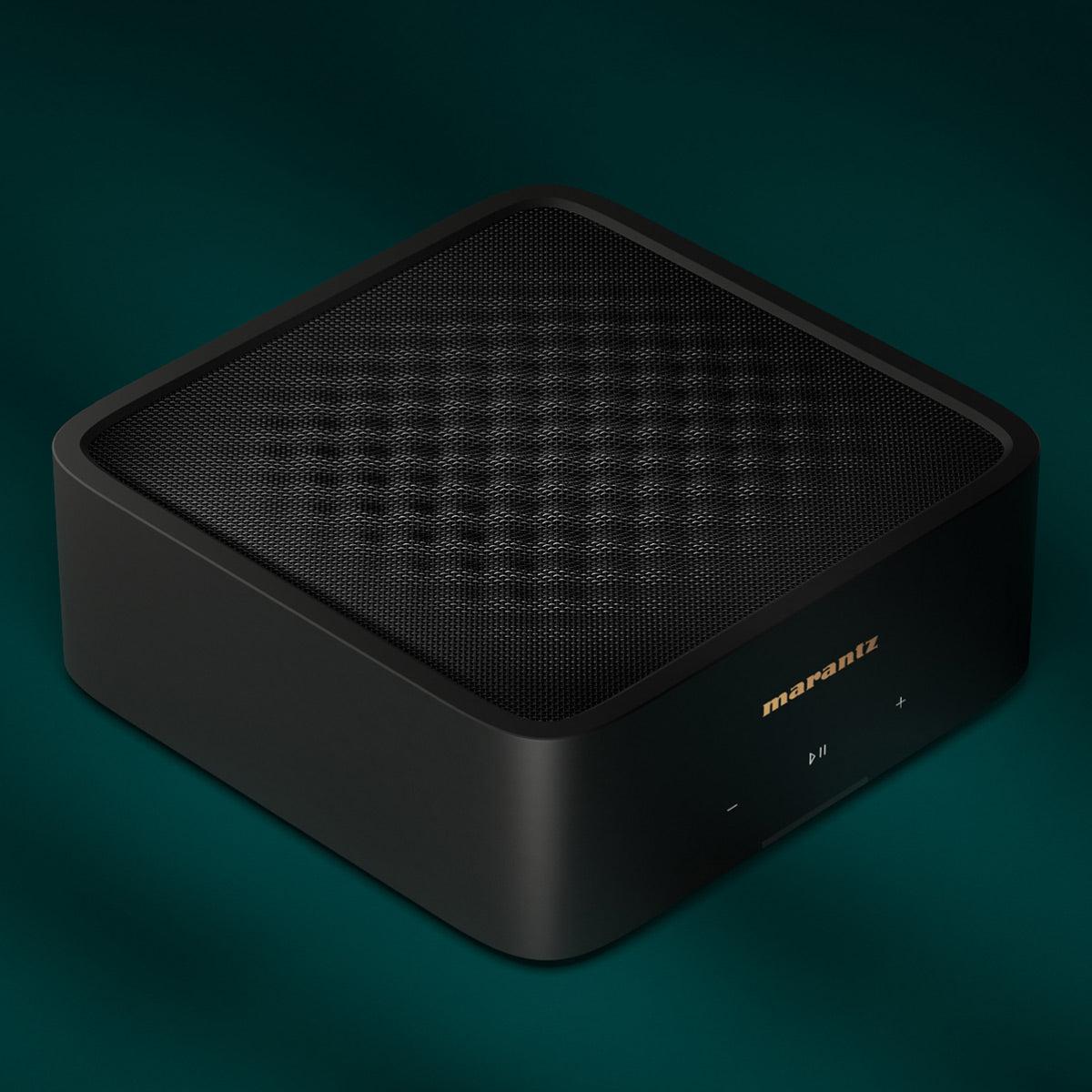
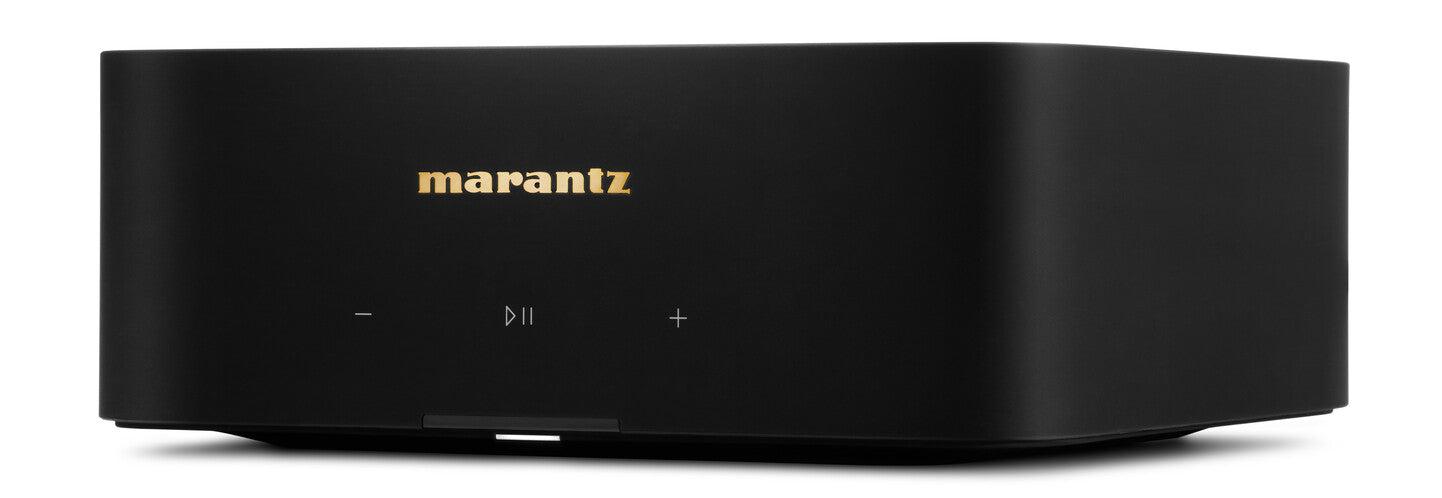
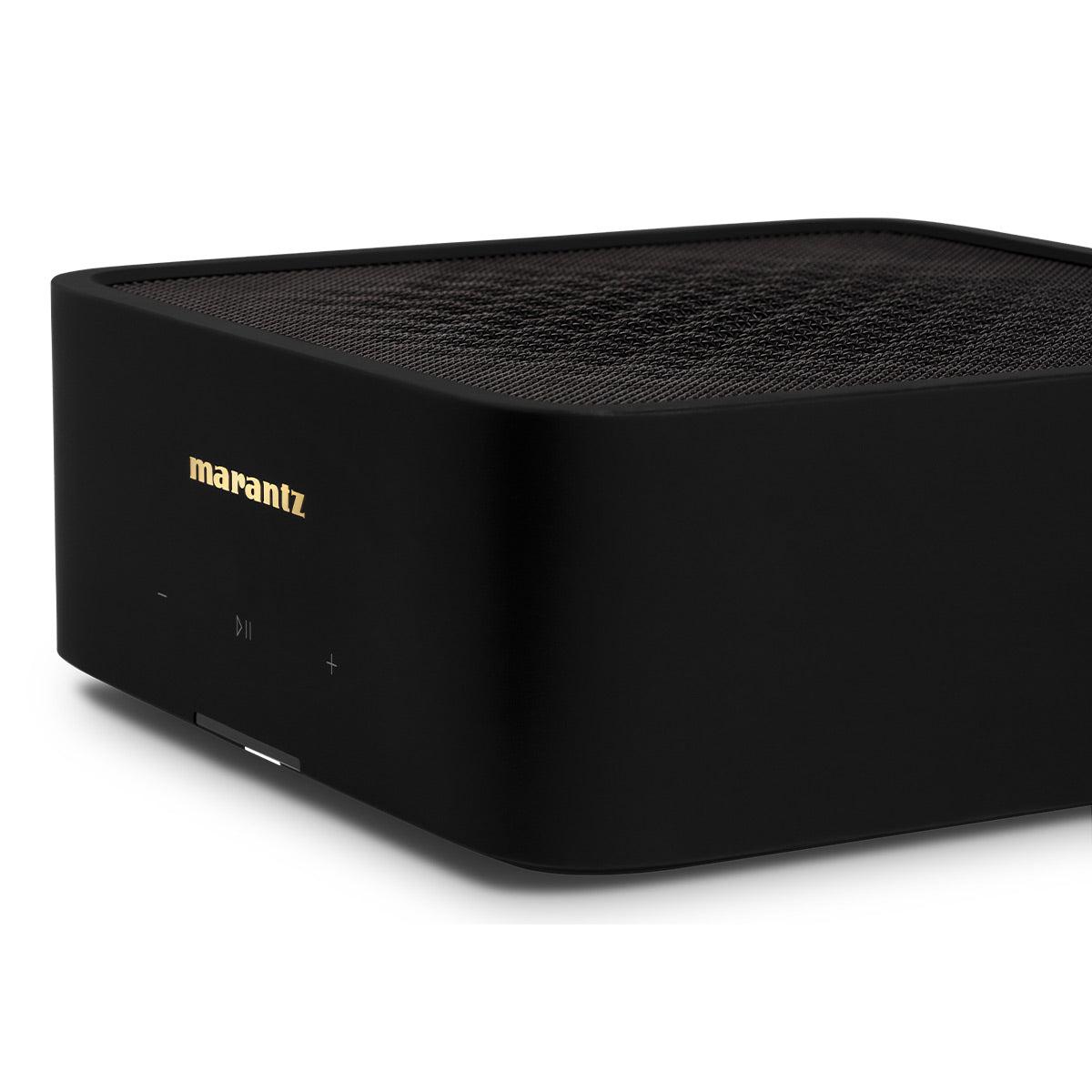
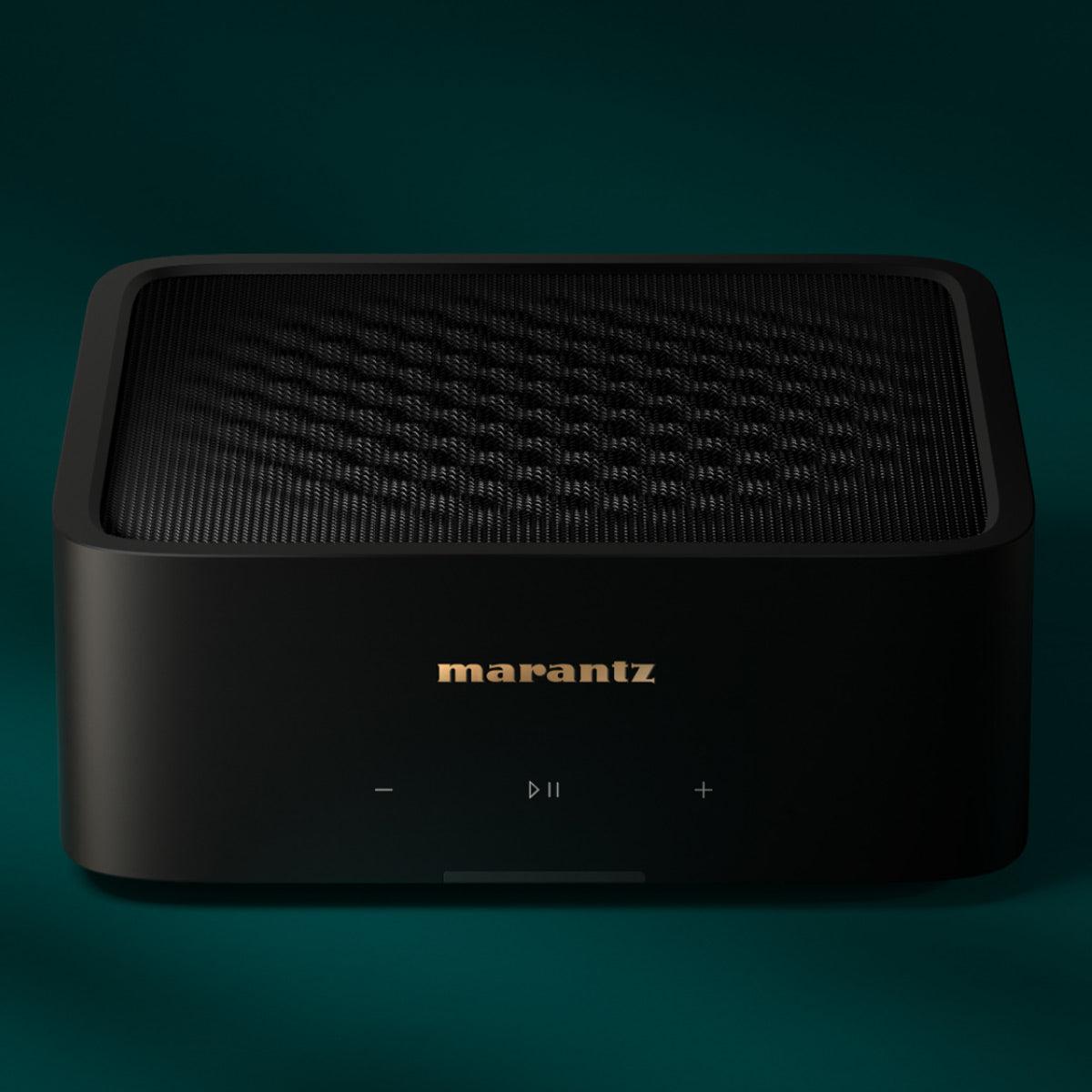
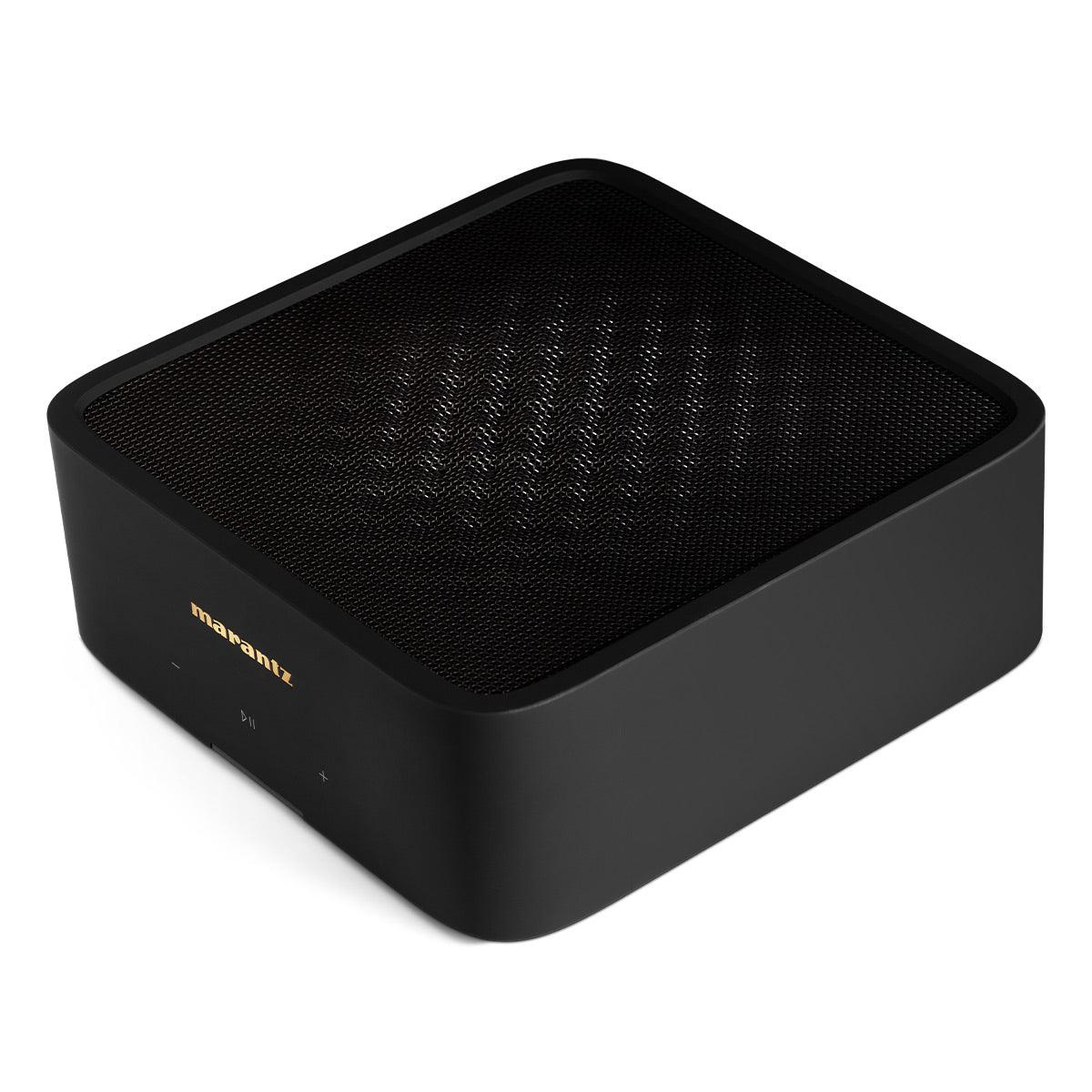
The Marantz Model M1, introduced in mid-2024, marks the legendary Japanese manufacturer's entry into the affordable streaming amplifier market. Designed and built at Marantz's Shirakawa Audio Works facility in Japan, it carries the premium pricing you'd expect from a brand with over 70 years of audiophile heritage.
Both amplifiers use modern Class D amplification, which offers excellent efficiency and compact size compared to traditional analog amplifiers. However, their implementations reveal important differences in target audiences and design priorities.
The WiiM Amp Ultra employs dual Texas Instruments TPA3255 amplifier chips - widely regarded as among the best Class D designs available. More importantly, it incorporates WiiM's proprietary Post-Filter Feedback (PFFB) technology, which continuously monitors and adjusts for changes in speaker impedance. This matters because real-world speakers don't present constant impedance - their electrical resistance varies with frequency and volume. PFFB helps maintain consistent frequency response regardless of these variations, resulting in more accurate sound reproduction across different speaker types.
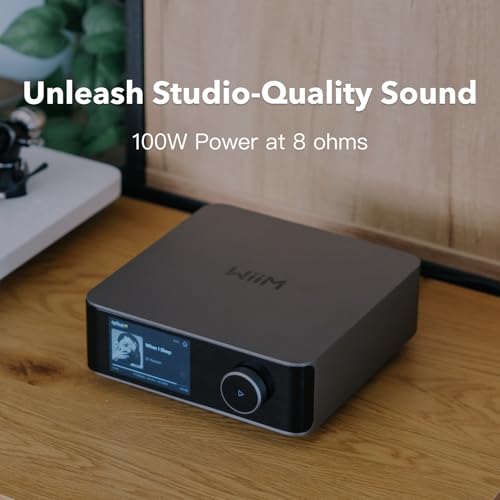
The power specifications tell an interesting story. While both deliver 100 watts per channel into 8-ohm speakers (the most common impedance), the WiiM provides 200 watts per channel into 4-ohm loads versus just 125 watts from the Marantz. This 60% power advantage with lower-impedance speakers makes the WiiM significantly more versatile with difficult-to-drive speakers like many tower speakers and high-end bookshelf models.
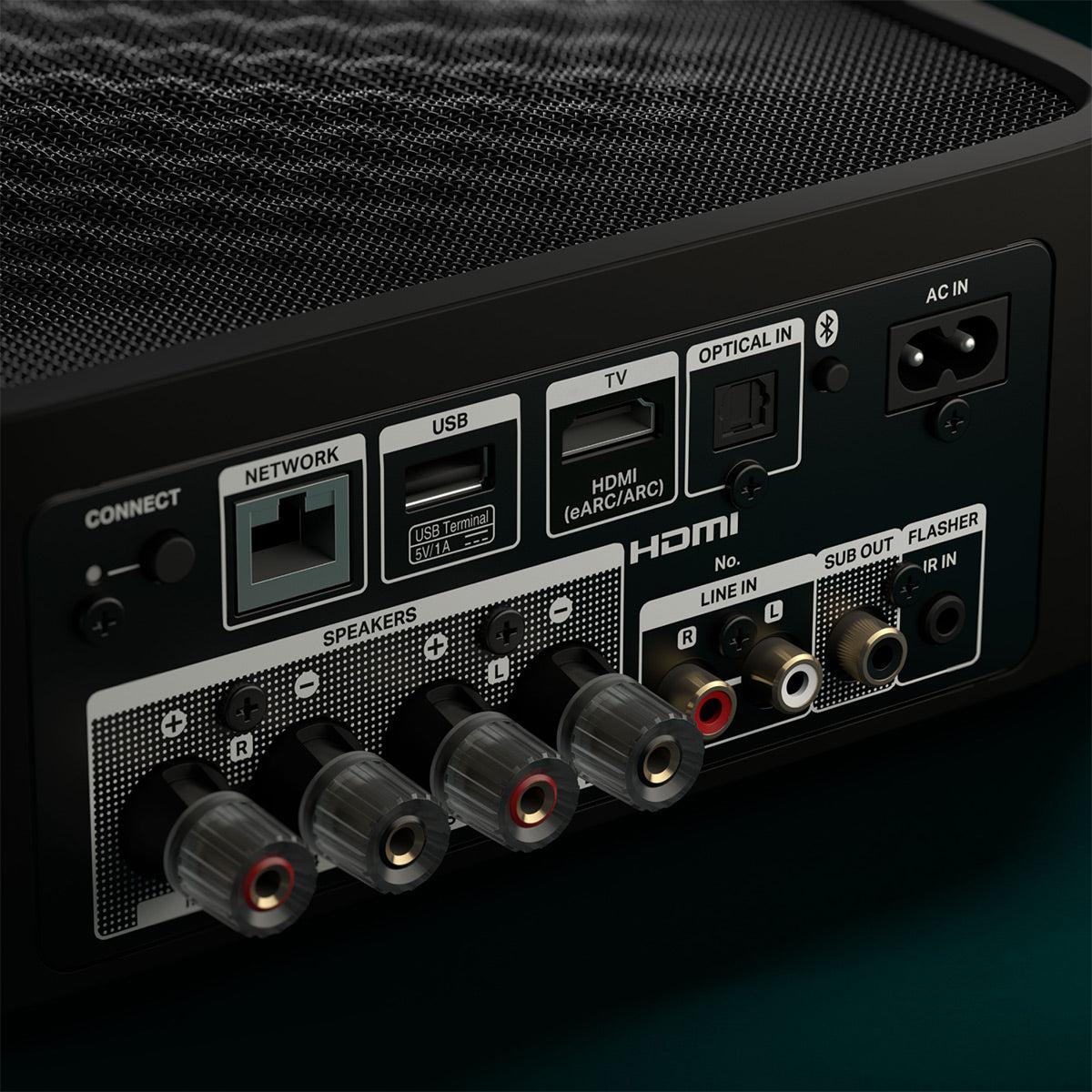
Perhaps more telling, the WiiM Amp Ultra maintains stability down to 2-ohm loads - something typically seen only in high-end separate amplifiers. The Marantz Model M1 specifies a 4-ohm minimum, which could limit speaker compatibility with some demanding models.
From a pure measurements perspective, the WiiM demonstrates superior specifications: total harmonic distortion of just 0.005% compared to 0.05% for the Marantz, and a signal-to-noise ratio exceeding 120dB. These aren't just numbers on a spec sheet - lower distortion and higher signal-to-noise ratios translate directly to cleaner, more detailed sound reproduction.
However, the Marantz counters with something specifications can't capture: Sound Master tuning by Marantz engineers and their proprietary Musical Digital Filtering (MMDF). This sophisticated digital signal processing offers two selectable filter algorithms designed to enhance musical engagement rather than pursuing perfect measurements. It's the classic engineering versus artistry debate that divides the audio world.
The digital-to-analog conversion stage often determines the ultimate sound quality of streaming amplifiers, and here the differences become stark. The WiiM Amp Ultra incorporates an ESS ES9039Q2M SABRE DAC - a premium component typically found in much more expensive separate DACs. This 32-bit/384kHz converter is paired with six Texas Instruments OPA1612 operational amplifiers, creating a signal path that rivals dedicated audiophile DACs costing hundreds of dollars on their own.
The Marantz Model M1 doesn't specify its DAC implementation, focusing instead on the end result. Both units support high-resolution audio up to 24-bit/192kHz, but the WiiM's superior DAC components suggest better potential for reproducing the subtle details that separate good digital audio from great digital audio.
What sets modern streaming amplifiers apart from older receivers is their sophisticated digital signal processing (DSP) capabilities. This is where the philosophical differences between our contenders become most apparent.
Perhaps no feature better illustrates the gap between old-school and new-school audio thinking than room correction. Your listening room dramatically affects what you hear - hard surfaces reflect sound waves while soft furnishings absorb them, creating peaks and nulls at different frequencies that color the music.
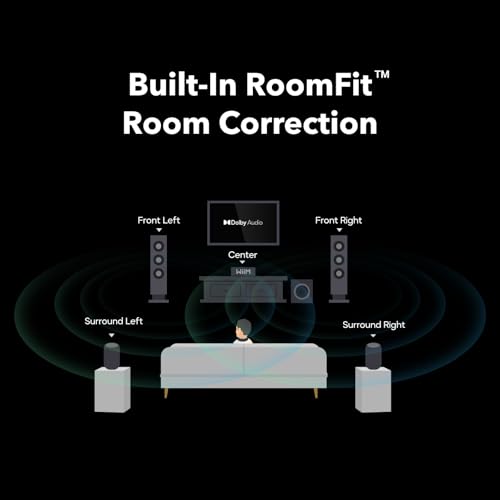
The WiiM Amp Ultra addresses this with its RoomFit system, which uses your smartphone's microphone to measure your room's acoustic properties and automatically apply corrective equalization. The process takes just minutes and can dramatically improve sound quality, especially in challenging rooms or with subwoofer integration.
Beyond automatic correction, the WiiM offers 10-band parametric equalization with independent settings for each input, plus 24 preset sound profiles. This level of customization was unthinkable in affordable audio equipment just a few years ago.
The Marantz Model M1 takes a more traditional approach with manual bass and treble controls offering ±5dB adjustment, plus several preset sound modes including Dialog Enhancer and Night Mode for TV viewing. While less sophisticated than automatic room correction, these controls provide the kind of straightforward adjustment many audiophiles prefer.
For subwoofer integration - increasingly important as more listeners adopt 2.1 systems - both units include dedicated subwoofer outputs. The WiiM goes further with automatic delay calibration to synchronize the subwoofer timing with your main speakers, while the Marantz offers manual crossover adjustments with separate high-pass and low-pass filters.
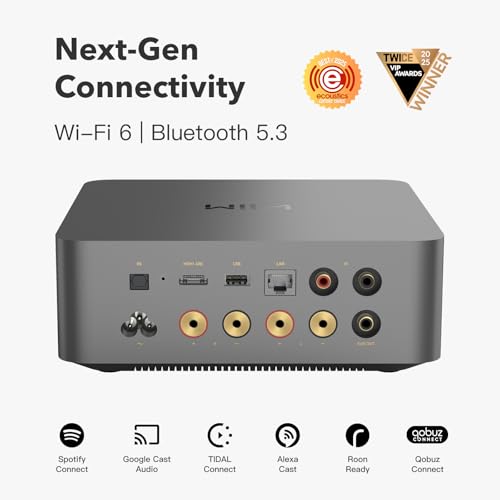
Both amplifiers excel at wireless streaming, but their platform support reveals different target audiences. The WiiM Amp Ultra supports Google Cast, Spotify Connect, TIDAL Connect, Qobuz, and numerous other services through its comprehensive WiiM Home app. It's also Roon Ready certified (in progress as of late 2024), appealing to serious digital music collectors.
However, the WiiM has one glaring omission: no Apple AirPlay support. This is a significant limitation for households invested in the Apple ecosystem, where AirPlay provides seamless streaming from iPhones, iPads, and Macs.
The Marantz Model M1 addresses this directly with full Apple AirPlay 2 support, plus integration with the HEOS multi-room audio platform. HEOS enables sophisticated whole-home audio systems where multiple Marantz units can play synchronized music throughout the house - a compelling feature for larger homes or serious music lovers.
From a technical connectivity standpoint, the WiiM offers more advanced wireless technology with Wi-Fi 6E tri-band support and Bluetooth 5.3 with Low Energy Audio, versus the Marantz's dual-band Wi-Fi and Bluetooth 4.2. These newer wireless standards provide better range, lower latency, and more stable connections - particularly important in homes with many connected devices.
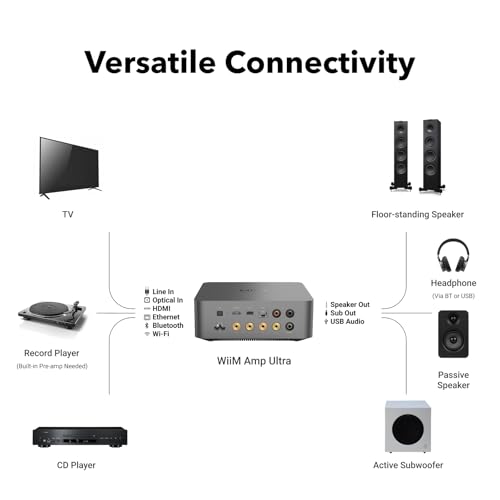
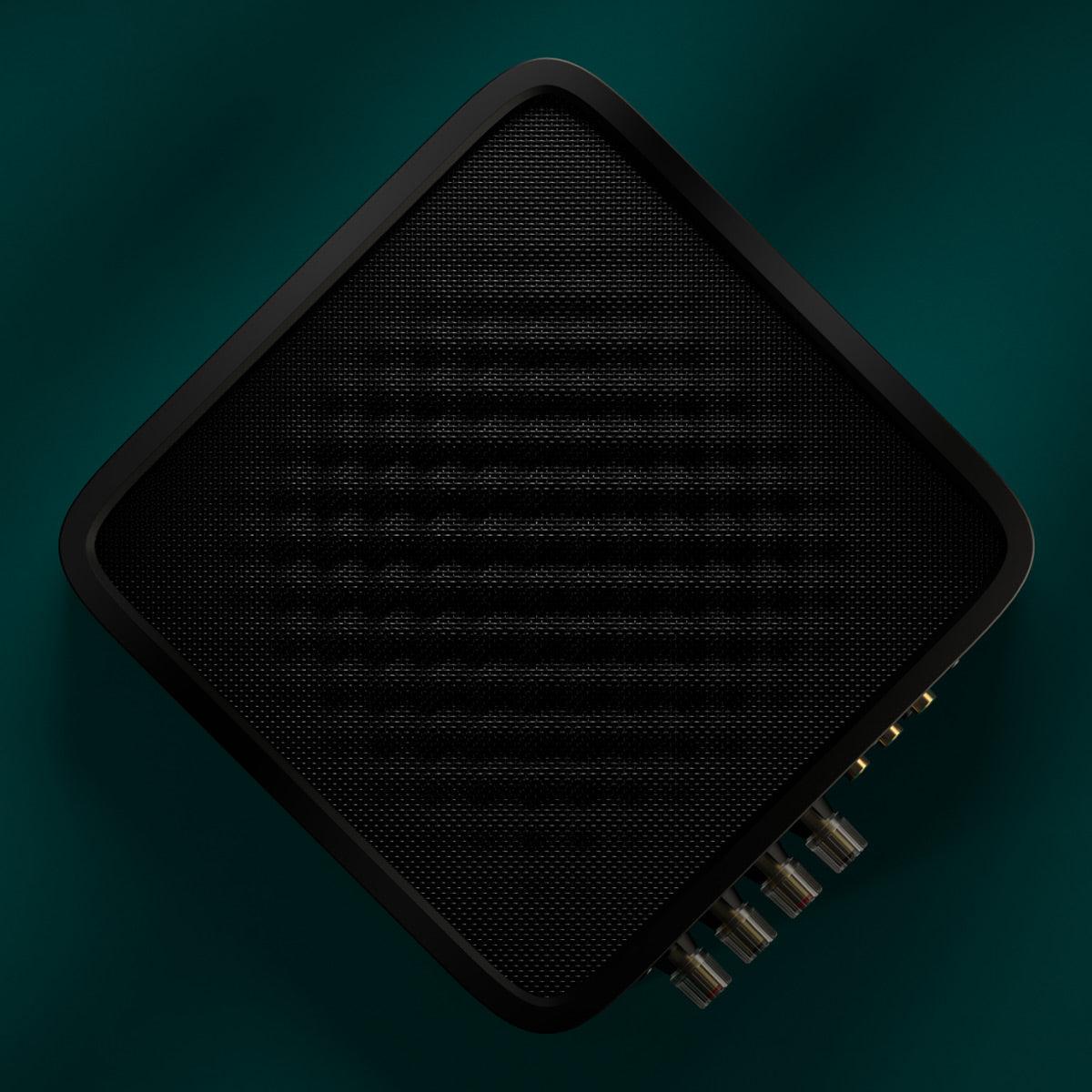
Both units include HDMI ARC connections for TV integration, optical digital inputs, analog RCA inputs, and USB ports for local music playback. The Marantz adds professional installation features like IR learning, 12V trigger output, and compatibility with custom control systems - valuable for integrated home automation but unnecessary for most users.
Daily interaction with your streaming amplifier significantly impacts long-term satisfaction, and here the units diverge dramatically. The WiiM Amp Ultra features a gorgeous 3.5-inch color touchscreen displaying album artwork, VU meters showing audio levels, input selection, and basic controls. There's something satisfying about having immediate visual feedback and direct control without reaching for your phone.
The touchscreen includes Smart Preset buttons for instant access to favorite stations or playlists, plus Recently Played sections that make rediscovering music effortless. While you'll still need the WiiM Home app for detailed browsing and setup, the touchscreen handles most daily operations elegantly.
The Marantz Model M1 takes the opposite approach - no display beyond basic LED indicators, relying entirely on the HEOS smartphone app for control. This maintains a clean, minimalist aesthetic that many prefer, but means you're dependent on your phone or tablet for every interaction.
Both approaches have merit. The touchscreen appeals to users who want immediate, visual control and don't want to hunt for their phone every time they want to change the volume. The app-only approach appeals to those who prefer uncluttered design and don't mind smartphone dependency.
Physical construction reflects each manufacturer's priorities and target market. The WiiM Amp Ultra features an aluminum unibody chassis with sophisticated thermal management including copper heat pipes and intelligent temperature control. Despite its compact size, it runs remarkably cool even during demanding playback sessions.
The Marantz Model M1 reflects traditional Japanese manufacturing quality with premium materials and construction. At the time of writing, Marantz offers a comprehensive 5-year warranty on both parts and labor - exceptional coverage that reflects confidence in long-term reliability.
Both units are compact enough for discreet placement, though the WiiM's smaller footprint offers more flexibility in tight spaces. The Marantz includes threaded mounting points for custom installations, while the WiiM focuses on tabletop or shelf placement.
Modern streaming amplifiers must excel at both music and TV audio, and both units handle this dual role competently. The HDMI ARC connections enable direct TV integration with automatic input switching and volume control through your TV remote.
The Marantz Model M1 includes Dolby Digital+ decoding for enhanced TV audio, while both units offer dialog enhancement modes for clearer speech reproduction. For viewers who find modern TV and movie soundtracks difficult to understand - a common complaint with today's wide dynamic range content - these features provide real value.
The subwoofer integration capabilities make both units suitable for 2.1 home theater systems, though the WiiM's automatic calibration simplifies setup considerably compared to manual adjustment.
At the time of writing, the WiiM Amp Ultra typically costs significantly less than the Marantz Model M1 - often 35-40% less for comparable power and features. This pricing difference is substantial enough to influence most buying decisions, especially when the WiiM offers superior technical specifications and more advanced features at the lower price point.
The Marantz premium buys you brand heritage, Japanese manufacturing quality, Apple AirPlay support, and professional installation features. Whether these justify the higher cost depends entirely on your priorities and budget.
For most buyers focused on performance per dollar, the WiiM represents exceptional value. The superior DAC components, advanced room correction, higher power output with demanding speakers, and comprehensive feature set would typically cost much more from traditional audiophile brands.
The decision ultimately comes down to your specific needs, preferences, and budget. Choose the WiiM Amp Ultra if you want cutting-edge features, superior technical performance, significant cost savings, and don't mind the lack of AirPlay support. It's particularly compelling if you have difficult-to-drive speakers, challenging room acoustics, or appreciate having direct touchscreen control.
The WiiM also makes sense if you're tech-forward and enjoy having the latest features with regular firmware updates. WiiM's rapid development pace means you'll likely see new capabilities added over time.
Choose the Marantz Model M1 if Apple AirPlay support is essential, you prefer traditional audiophile brand heritage, need professional installation features, or are building a multi-room HEOS system. The Marantz approach appeals to users who want proven reliability, conservative engineering, and don't need extensive customization options.
The Marantz also makes sense if you value simplicity and prefer manual control over automatic optimization, or if the premium cost isn't a significant factor in your decision.
Both streaming amplifiers deliver excellent sound quality and comprehensive streaming features, but they represent fundamentally different approaches to modern audio. The WiiM Amp Ultra pushes technology boundaries with advanced features and superior specifications at an aggressive price point. The Marantz Model M1 offers traditional audiophile values with premium construction and proven reliability at a corresponding premium price.
For most buyers, the WiiM provides substantially more capability per dollar spent, making it our pick for those prioritizing performance and value. However, if Apple integration or brand heritage matter more than technical specifications, the Marantz serves those specific needs well.
The streaming amplifier category continues evolving rapidly, with both manufacturers likely to introduce improved models in coming years. But based on current offerings and market positioning, these two represent the extremes of the modern streaming amplifier spectrum - cutting-edge value versus traditional premium positioning.
| WiiM Amp Ultra | Marantz Model M1 |
|---|---|
| Power Output (8Ω) - Basic power for most speakers | |
| 100W per channel | 100W per channel |
| Power Output (4Ω) - Critical for demanding speakers | |
| 200W per channel (60% more power) | 125W per channel |
| Minimum Speaker Impedance - Determines speaker compatibility | |
| 2Ω stable (works with virtually any speaker) | 4Ω minimum (limits some high-end speakers) |
| Total Harmonic Distortion - Audio accuracy measurement | |
| ≤0.005% (10x cleaner than Marantz) | 0.05% |
| Digital-to-Analog Converter - Heart of digital audio quality | |
| ESS ES9039Q2M SABRE with 6x TI op-amps (premium components) | Unspecified DAC implementation |
| Room Correction - Automatically optimizes sound for your space | |
| Advanced RoomFit with smartphone measurement | Manual bass/treble controls only |
| Equalization Options - Sound customization capabilities | |
| 10-band parametric EQ per input + 24 presets | Basic ±5dB bass/treble adjustment |
| Display Interface - Daily control experience | |
| 3.5" color touchscreen with album art | No display (app control only) |
| Apple AirPlay Support - Essential for iPhone/iPad users | |
| Not supported (major limitation for Apple users) | Full AirPlay 2 support |
| Wireless Technology - Connection stability and speed | |
| Wi-Fi 6E tri-band + Bluetooth 5.3 LE Audio | Wi-Fi dual-band + Bluetooth 4.2 |
| Multi-Room Audio Platform | |
| WiiM ecosystem (newer, growing platform) | HEOS Built-in (established, mature system) |
| Professional Installation Features | |
| Basic connectivity | IR learning, 12V trigger, control system integration |
| Manufacturing Origin - Build quality indicator | |
| Consumer electronics approach | Japanese audiophile craftsmanship |
| Warranty Coverage | |
| Standard consumer warranty | 5 years parts and labor |
The WiiM Amp Ultra focuses on advanced technology and room correction features at a lower price point, while the Marantz Model M1 emphasizes traditional audiophile sound tuning and premium build quality. The WiiM offers more power with difficult speakers (200W vs 125W at 4 ohms) and includes a touchscreen interface, whereas the Marantz supports Apple AirPlay and integrates with the HEOS multi-room system.
Both deliver 100W per channel into standard 8-ohm speakers, but the WiiM Amp Ultra provides significantly more power with demanding 4-ohm speakers (200W vs 125W). The WiiM also remains stable down to 2-ohm loads, making it compatible with virtually any speaker, while the Marantz Model M1 requires 4-ohm minimum impedance.
No - this is a major difference. The Marantz Model M1 includes full Apple AirPlay 2 support for seamless iPhone, iPad, and Mac integration. The WiiM Amp Ultra does not support AirPlay, which is a significant limitation for Apple ecosystem users who rely on this feature for wireless streaming.
The WiiM Amp Ultra offers sophisticated automatic room correction through its RoomFit system, which uses your smartphone to measure room acoustics and applies corrective EQ automatically. It also includes 10-band parametric EQ with independent settings per input. The Marantz Model M1 provides only manual bass/treble controls and preset sound modes.
The WiiM Amp Ultra features a 3.5-inch color touchscreen displaying album artwork, VU meters, and direct controls, plus comprehensive app control. The Marantz Model M1 has no display and relies entirely on smartphone app control through the HEOS platform, maintaining a cleaner physical appearance but requiring your phone for all interactions.
The WiiM Amp Ultra typically costs significantly less while offering superior technical specifications, more advanced features, and higher power output with demanding speakers. The Marantz Model M1 commands a premium for brand heritage, Japanese manufacturing, and Apple compatibility - whether this justifies the higher cost depends on your specific needs and budget.
Yes, both work well for TV audio. Both include HDMI ARC connections and dialog enhancement modes. The Marantz Model M1 includes Dolby Digital+ decoding for enhanced TV sound processing. The WiiM Amp Ultra offers more sophisticated subwoofer integration with automatic delay calibration, making 2.1 home theater setups easier to optimize.
The WiiM Amp Ultra supports more streaming platforms including Google Cast, Spotify Connect, TIDAL Connect, Qobuz, and is Roon Ready certified. The Marantz Model M1 covers major services through HEOS and includes Spotify Connect and Roon Ready support, but has fewer total platform options than the WiiM.
The Marantz Model M1 integrates with the established HEOS multi-room ecosystem, allowing synchronized playback across multiple Marantz and Denon devices throughout your home. The WiiM Amp Ultra works within the newer WiiM multi-room system, which is growing but less mature than HEOS.
The Marantz Model M1 is designed and manufactured in Japan with traditional audiophile attention to materials and construction, backed by a comprehensive 5-year warranty. The WiiM Amp Ultra features solid aluminum construction with advanced thermal management but follows more typical consumer electronics manufacturing approaches.
Yes, both handle high-resolution audio up to 24-bit/192kHz. The WiiM Amp Ultra uses premium ESS SABRE DAC components typically found in much more expensive equipment, while the Marantz Model M1 includes DSD support and proprietary Musical Digital Filtering for enhanced sound character.
Choose the WiiM Amp Ultra if you want advanced features, superior technical performance, room correction capabilities, and significant cost savings - especially with difficult-to-drive speakers. Pick the Marantz Model M1 if Apple AirPlay is essential, you prefer traditional audiophile brands, need multi-room HEOS integration, or the premium cost isn't a major factor in your decision.
We've done our best to create useful and informative comparisons to help you decide what product to buy. Our research uses advanced automated methods to create this comparison and perfection is not possible - please contact us for corrections or questions. These are the sites we've researched in the creation of this article: ecoustics.com - audacityaustralia.com.au - forum.wiimhome.com - erinsaudiocorner.com - forum.wiimhome.com - stevehuffphoto.com - darko.audio - bryanruby.com - youtube.com - audiosciencereview.com - ecoustics.com - smarthomesounds.co.uk - socpub.com - audio-2g.com - hifihut.ie - bestbuy.com - crutchfield.com - audioadvisor.com - youtube.com - soundstagesimplifi.com - marantz.com - marantz.com - audioadvice.com - whathifi.com - manuals.marantz.com - audiosciencereview.com - youtube.com - marantz.com - sweetwater.com - audiosciencereview.com - accessories4less.com

Privacy Policy
Terms and Conditions - Affiliate Policy
Home Security
© Copyright 2008-2026.
11816 Inwood Rd #1211, Dallas, TX 75244