

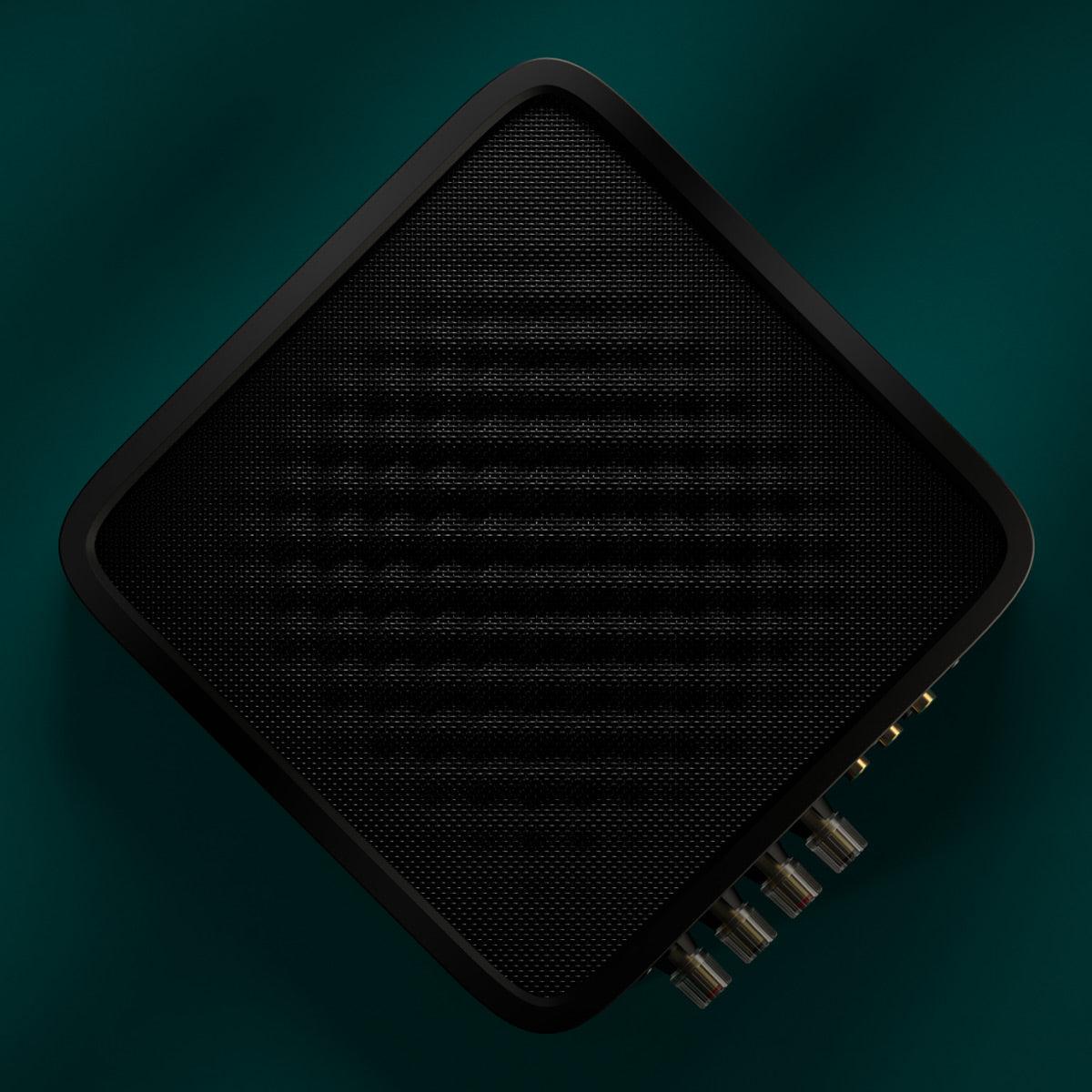


When shopping for a stereo amplifier today, you're essentially choosing between two very different philosophies of home audio. The Dayton Audio HTA200 represents the "best of both worlds" approach—combining the warm, musical sound of vacuum tubes with modern digital connectivity. The Marantz Model M1, on the other hand, embodies the streaming-first mentality that's reshaping how we listen to music at home.
Both amplifiers can power your bookshelf or floor-standing speakers effectively, but they'll take you down completely different paths in terms of sound character, user experience, and long-term flexibility. Understanding these differences is crucial because the amplifier you choose will likely stay in your system for many years.
An integrated amplifier combines a preamplifier (which handles input switching and volume control) with a power amplifier (which actually drives your speakers) in a single box. This setup is perfect for most home listeners who want excellent sound without the complexity and expense of separate components.
The most important considerations when choosing an integrated amplifier are power output, sound quality, connectivity options, build quality, and how the unit fits into your listening habits. Power output determines how loud your system can play and how well it controls your speakers. Sound quality encompasses everything from clarity and detail to tonal balance and musical engagement. Connectivity determines what sources you can use, while build quality affects reliability and longevity.
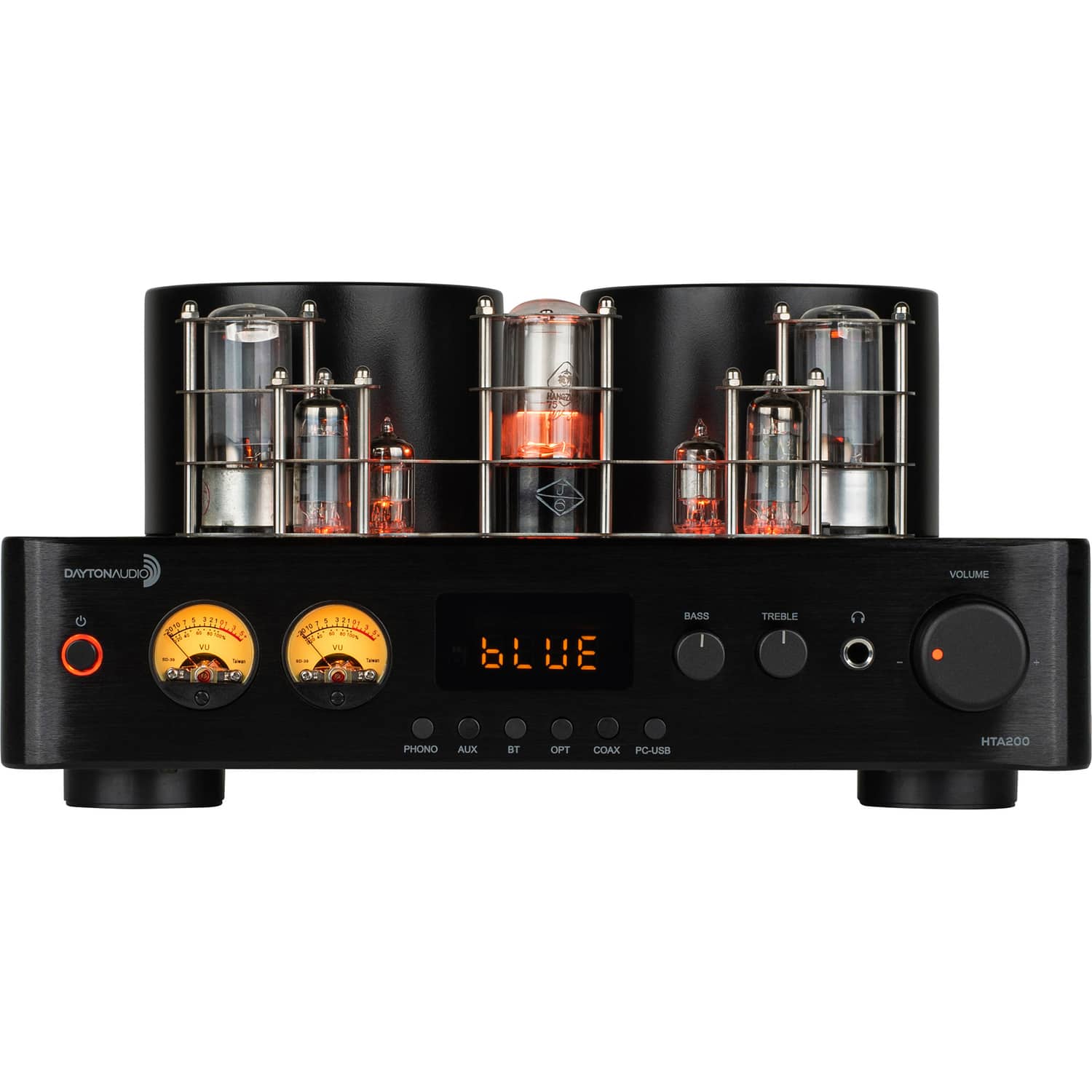
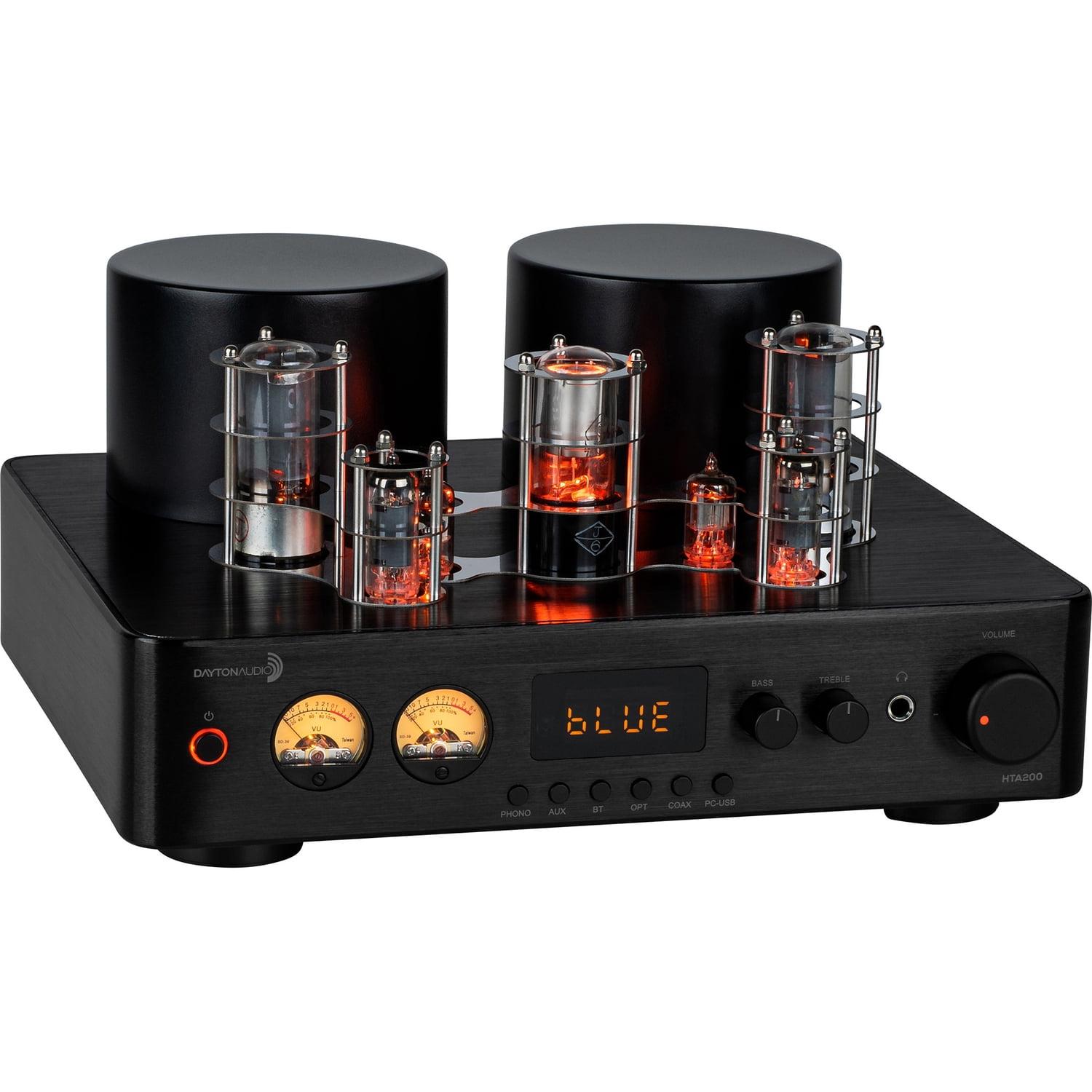
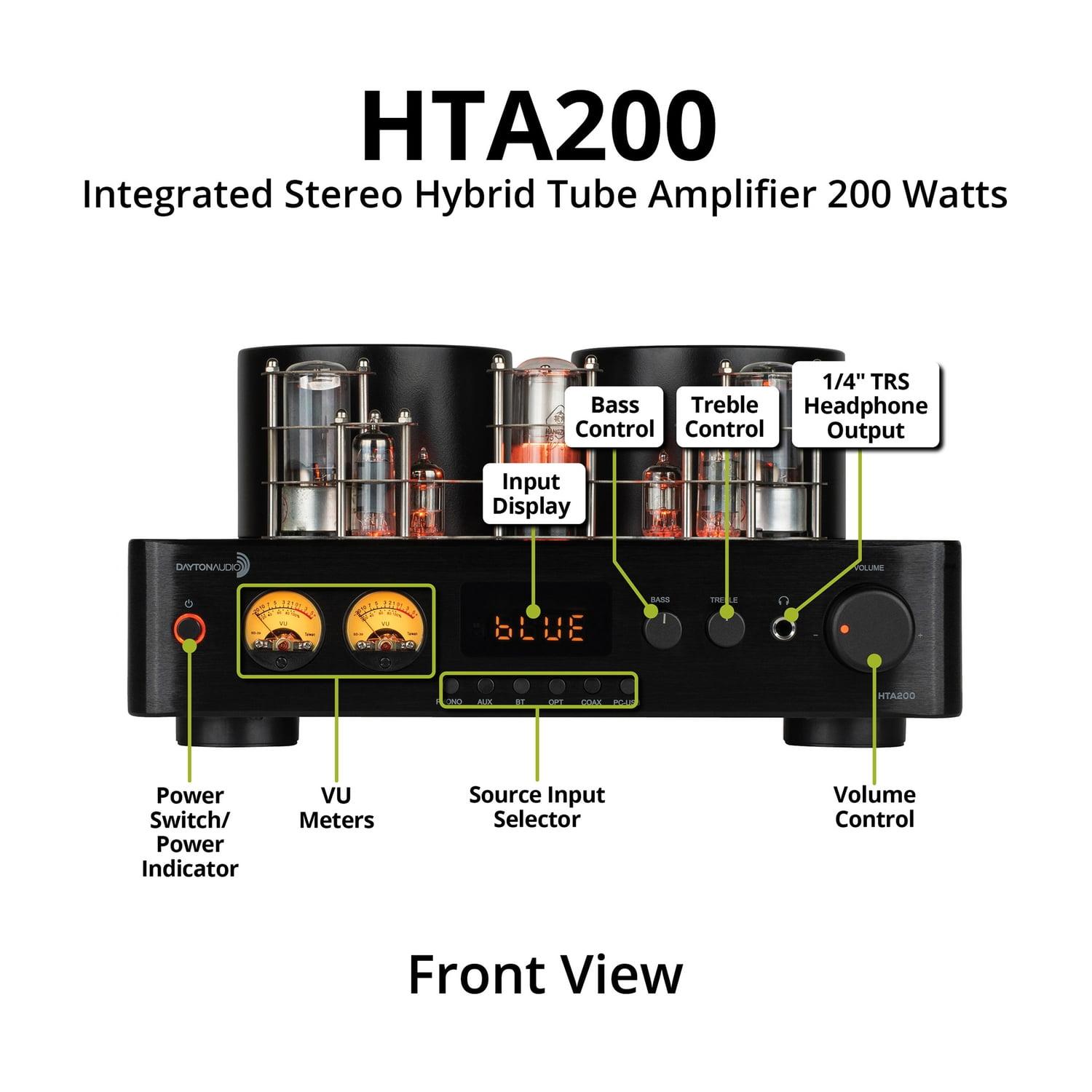
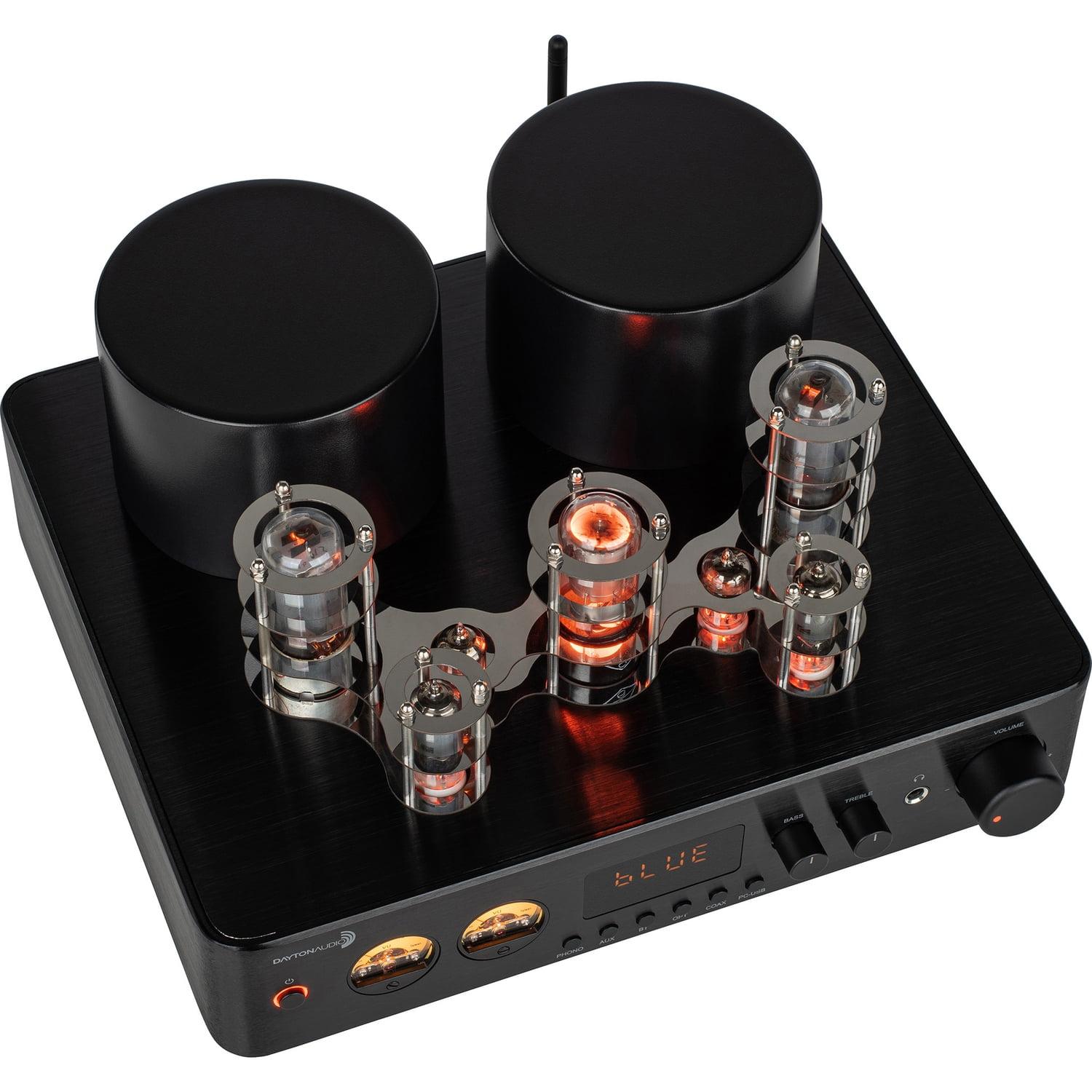
Released in 2019, the Dayton Audio HTA200 represents what's called a hybrid design. This means it uses vacuum tubes in the preamplifier section—the part that handles your music before it gets amplified—while using solid-state transistors for the actual power amplification. The tubes (specifically amber-tinted models for visual appeal) add harmonic coloration that many listeners find more natural and engaging than pure solid-state designs.
The tube preamp section uses several different tube types: 13P1P, 6H2, 6A2, and a WY3P stabilivolt tube. Each contributes to the overall sound signature, adding subtle warmth and richness that tubes are famous for. The power amplification section uses Class A/B topology, which means it operates in Class A (where both output transistors conduct simultaneously) for the first few watts, then switches to Class B (where transistors alternate) for higher power levels. This combination provides both the sonic benefits of Class A and the efficiency of Class B.
Since its release, the streaming and digital audio landscape has evolved significantly, but the HTA200 has remained relevant because it covers both traditional and modern sources effectively.
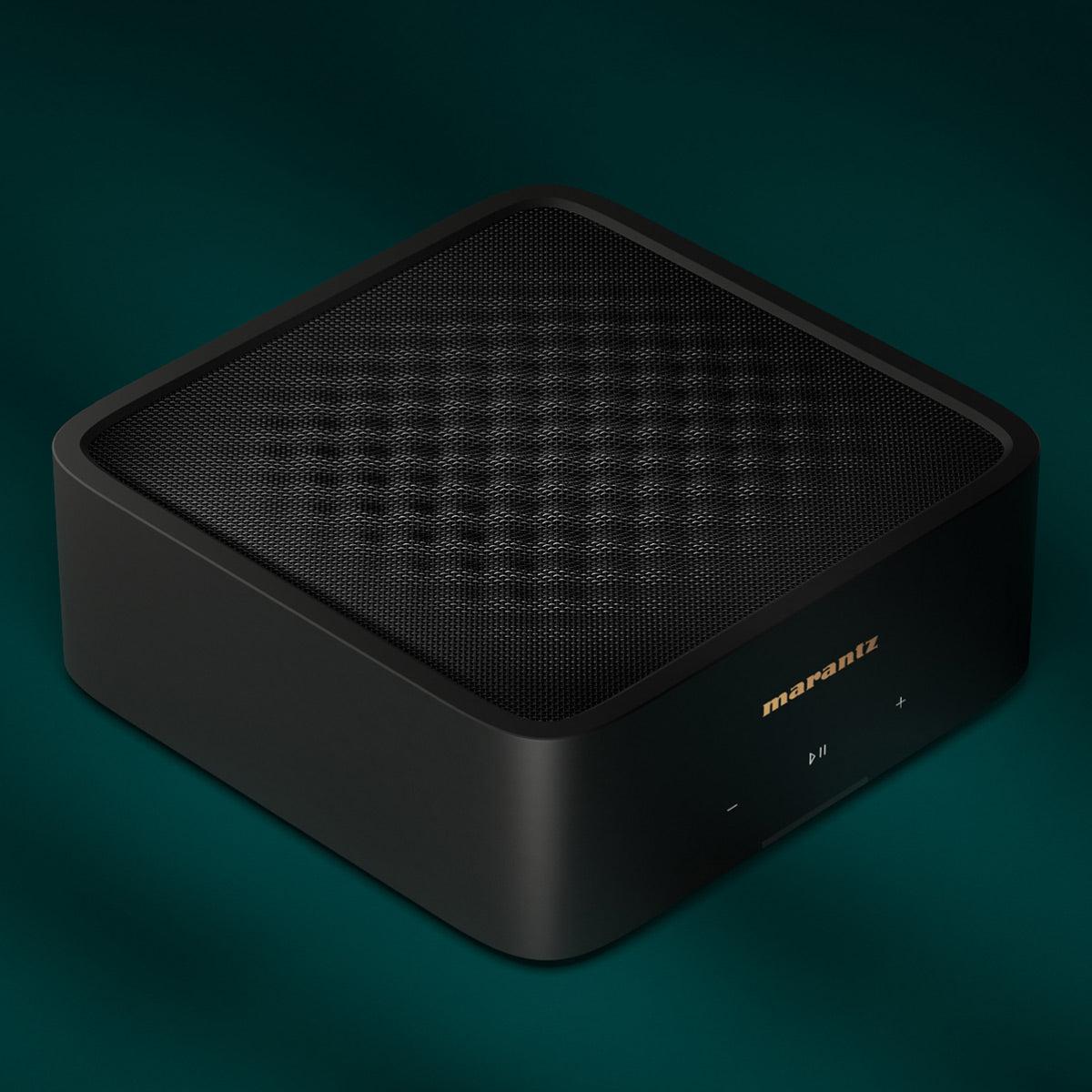
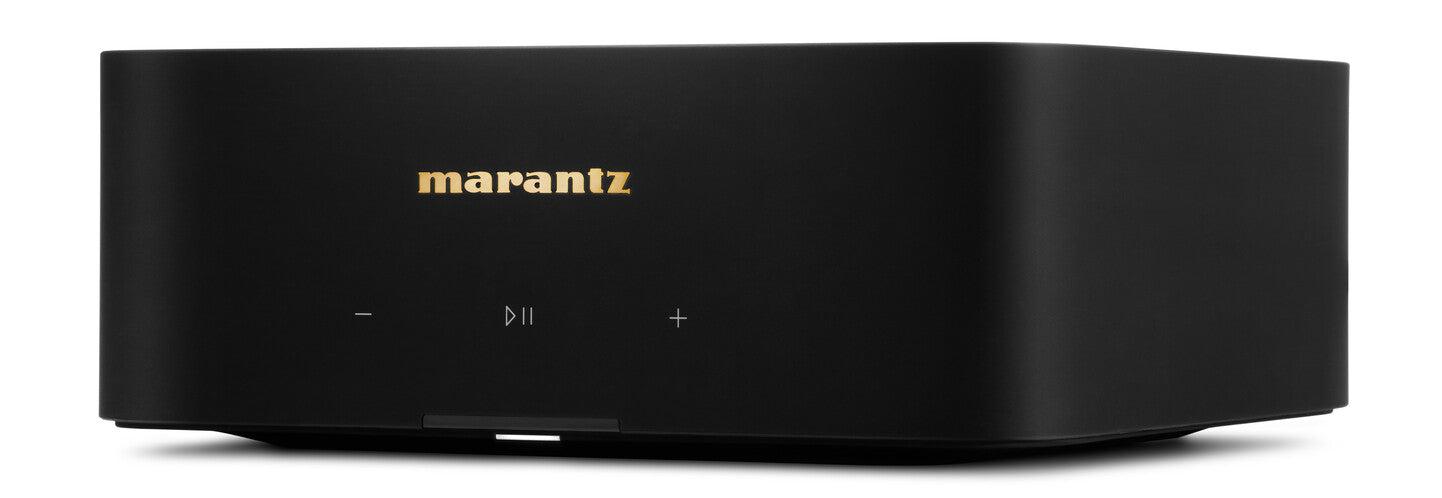
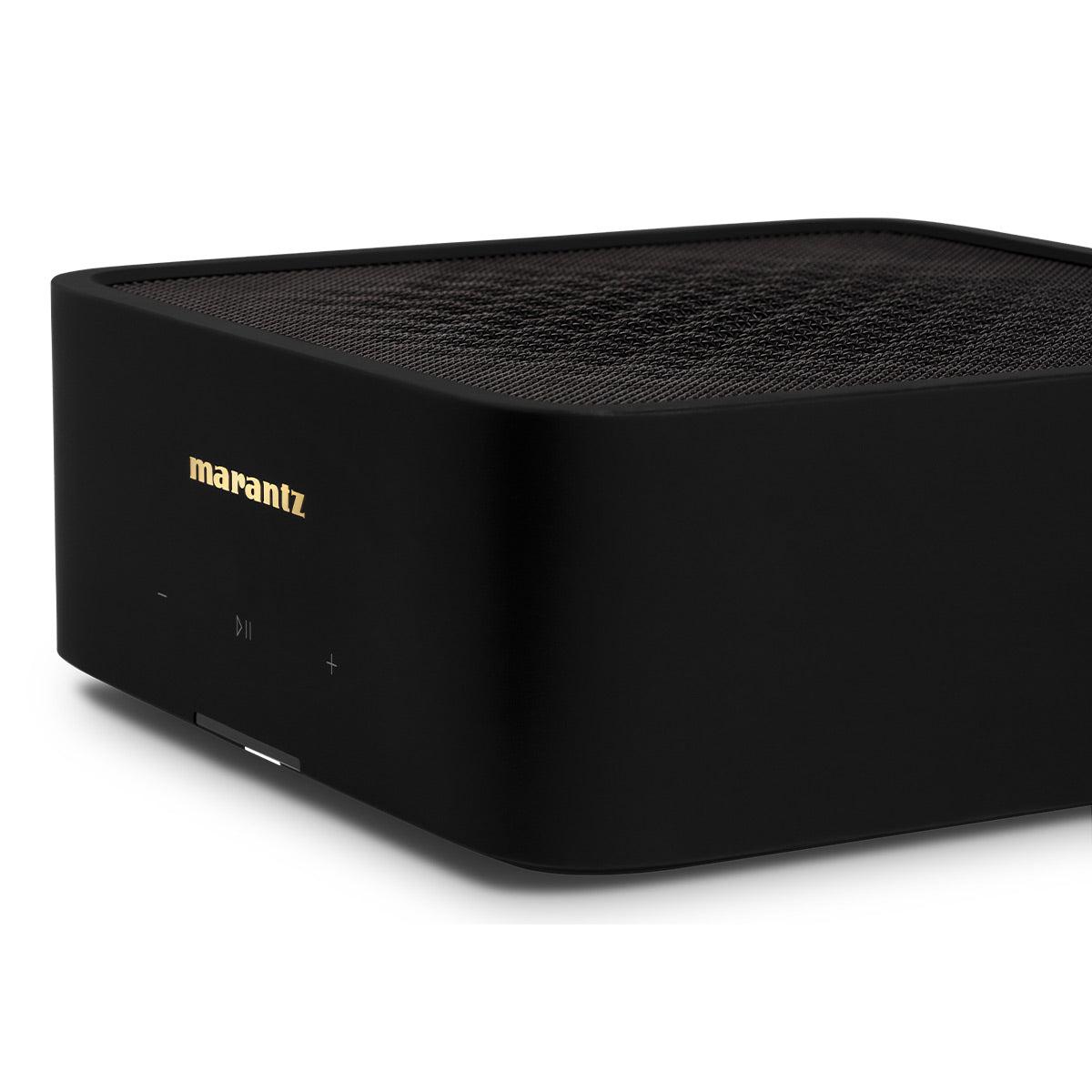
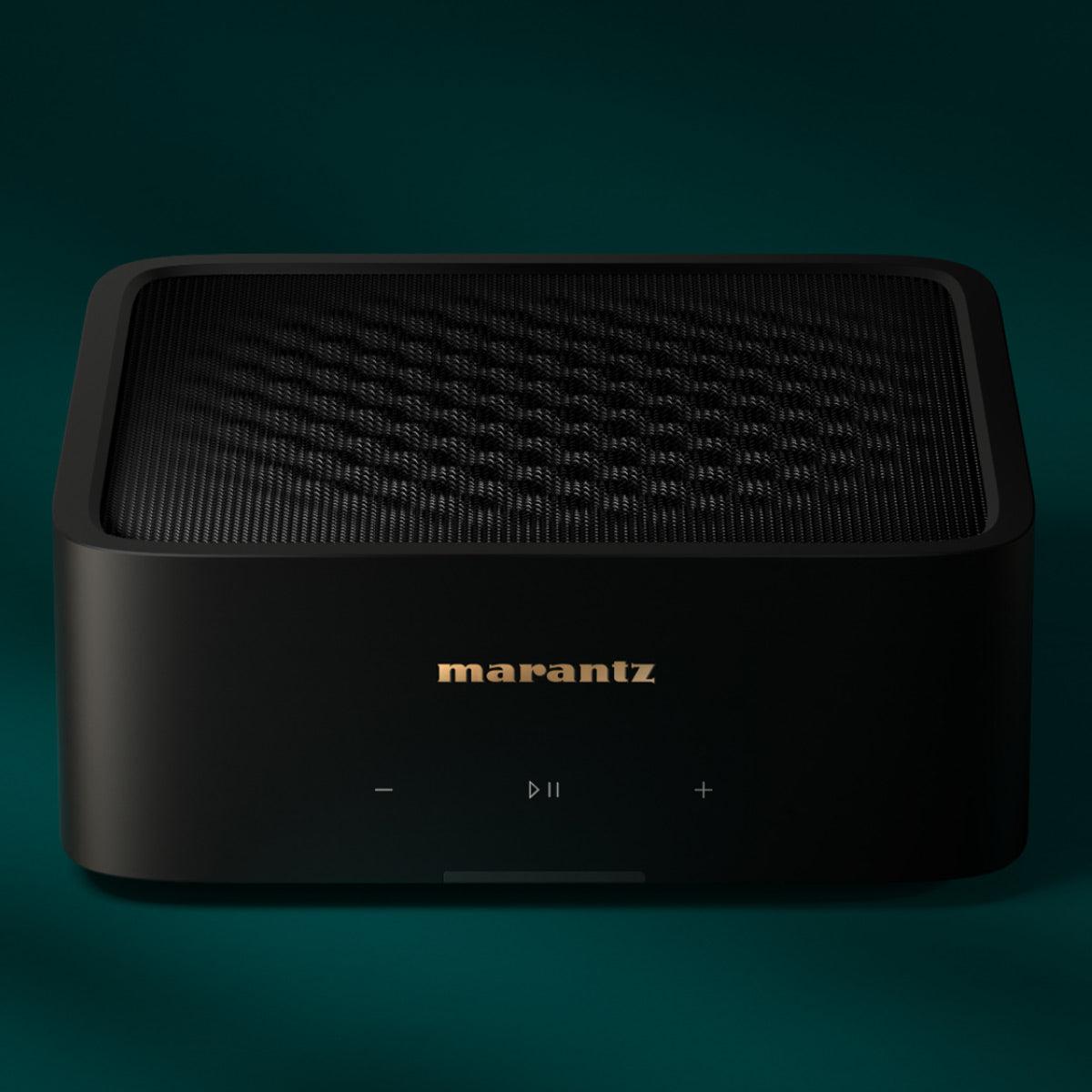
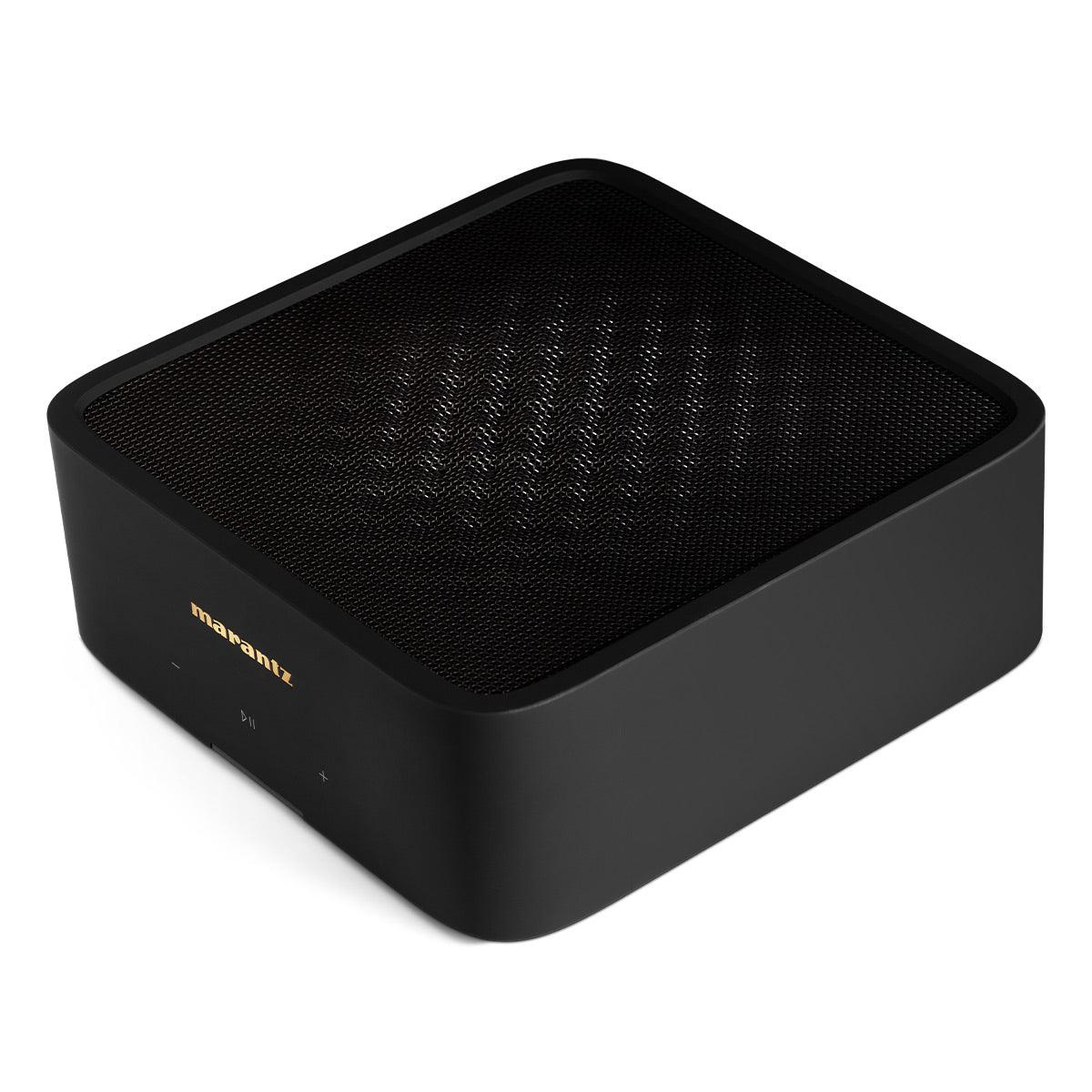
The Marantz Model M1, released in 2024, takes a completely different approach. It's built around HEOS (Home Entertainment Operating System), Denon's wireless streaming platform that connects to virtually every major streaming service. The amplifier uses what Marantz calls a "digital end-to-end" design with Class D amplification.
Class D amplifiers work by rapidly switching the output transistors on and off (thousands of times per second), with the duty cycle determining the output level. This makes them extremely efficient—they waste very little energy as heat—and allows for much more compact designs. The "digital end-to-end" aspect means digital signals stay digital throughout most of the signal path, theoretically preserving more of the original recording's information.
The Model M1 also features Marantz Musical Digital Filtering (MMDF), which lets you choose between different digital filter characteristics to fine-tune the sound to your preference. This kind of digital signal processing capability has become much more sophisticated since streaming amplifiers first appeared a decade ago.
When examining power specifications, the numbers tell an interesting story. The HTA200 delivers 100 watts per channel into 4-ohm speakers and 50 watts per channel into 8-ohm speakers. The Model M1 provides 125 watts into 4 ohms and 100 watts into 8 ohms—seemingly making it more powerful on paper.
However, power specifications don't tell the whole story. The HTA200's Class A/B design typically provides better current delivery and speaker control, especially with difficult loads. Class A/B amplifiers maintain good performance even when speakers present challenging impedance curves (where the electrical resistance varies with frequency). This becomes particularly important with speakers that dip below 4 ohms or have steep phase angles.
The Model M1's Class D design offers excellent efficiency but may not grip speakers quite as firmly during demanding musical passages. That said, modern Class D amplifiers have improved dramatically, and the difference is often subtle in real-world use.
For most bookshelf speakers and moderately sensitive floor-standing models, both amplifiers provide adequate power. The HTA200 might have a slight edge with power-hungry or difficult speakers, while the Model M1 offers more peak power for dynamic music at higher volumes.
This is where these amplifiers diverge most significantly, and where your personal preferences become crucial.
The HTA200's hybrid design creates what many describe as a more "musical" presentation. The vacuum tubes in the preamp section add even-order harmonics—additional frequencies that are mathematically related to the original signal. These harmonics occur naturally in acoustic instruments and human voices, so adding them back (in small amounts) can make digital sources sound more natural and engaging.
Users consistently report that the HTA200 makes music sound warmer, with better midrange texture and more three-dimensional imaging. Vocals tend to sound more present and human, while instruments have more body and weight. The Class A/B output stage maintains good control and dynamics, so you don't sacrifice punch or detail for that tube warmth.
The trade-off is that this coloration, while usually pleasant, isn't perfectly accurate to the original recording. Some critical listeners prefer the uncolored truth of solid-state amplification.
The Model M1 takes the opposite approach, aiming for accuracy and detail retrieval. Users describe its sound as clean, balanced, and revealing—it lets you hear deeper into recordings without adding its own sonic signature. The digital processing and Class D amplification maintain tight control across the frequency spectrum.
The MMDF (Marantz Musical Digital Filtering) gives you some control over the presentation. You can choose between filter settings that emphasize different aspects of the sound—one might prioritize detail and clarity, while another provides slightly more warmth and body.
The M1 also includes several sound modes: Stereo (straight amplification), Direct (bypassing tone controls), Virtual (creating spaciousness from stereo speakers), Dialog Enhancer (for TV content), and Night Mode (for late-night listening with compressed dynamics).
Here's where the different philosophies really show themselves.
The HTA200 excels at accommodating virtually any audio source you might have. It includes a built-in phono preamplifier for turntables (specifically for moving-magnet cartridges), which alone saves you $100-300 compared to buying a separate phono stage. There are RCA analog inputs for CD players or other line-level sources, plus optical and coaxial digital inputs for connecting modern sources.
The USB DAC input lets you connect a computer directly, supporting up to 16-bit/48kHz digital audio—adequate for most purposes, though not cutting-edge by today's standards. Bluetooth 5.0 with SBC and AAC codec support provides wireless connectivity from phones and tablets.
The HTA200 also includes a dedicated subwoofer output and a headphone jack, making it genuinely versatile for different listening scenarios.
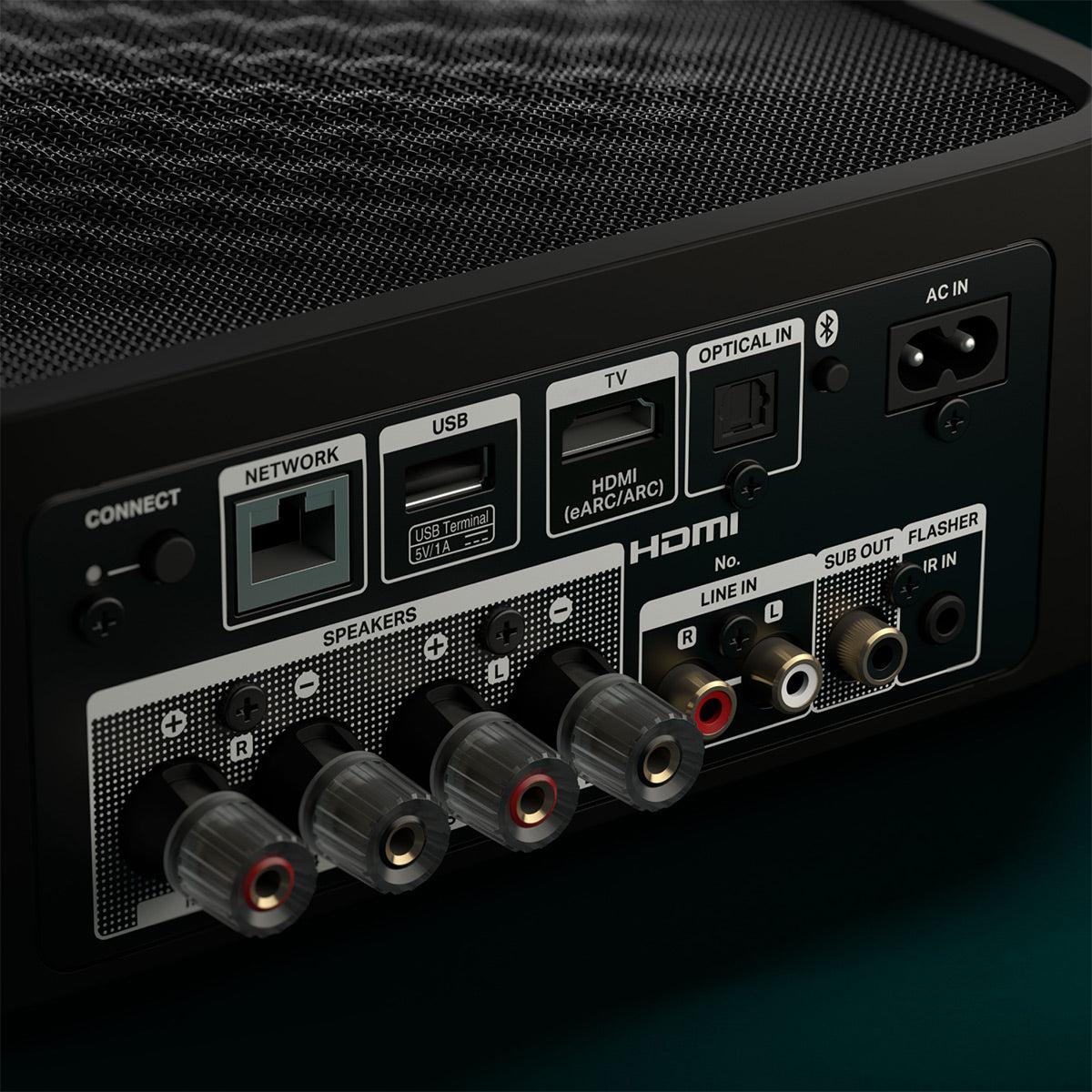
The Model M1 prioritizes wireless streaming above all else. The built-in HEOS platform connects directly to Spotify, TIDAL, Amazon Music HD, Deezer, Pandora, and other major services. AirPlay 2 support means seamless integration with Apple devices, while Bluetooth handles quick connections from any smartphone.
The real strength here is multi-room capability. You can use multiple M1 units throughout your home, controlling them all from a single app and even playing synchronized music across different rooms. This kind of whole-home audio integration is virtually impossible with traditional amplifiers.
For TV integration, the Model M1 includes HDMI eARC (enhanced Audio Return Channel) input, which can handle high-quality audio from your TV, including Dolby Digital+ soundtracks. This makes it genuinely useful as part of a simple home theater setup.
The limitations? Only one analog RCA input and one optical input for traditional sources. No built-in phono preamp, so turntable users need a separate preamp.
How you actually use these amplifiers day-to-day differs substantially.
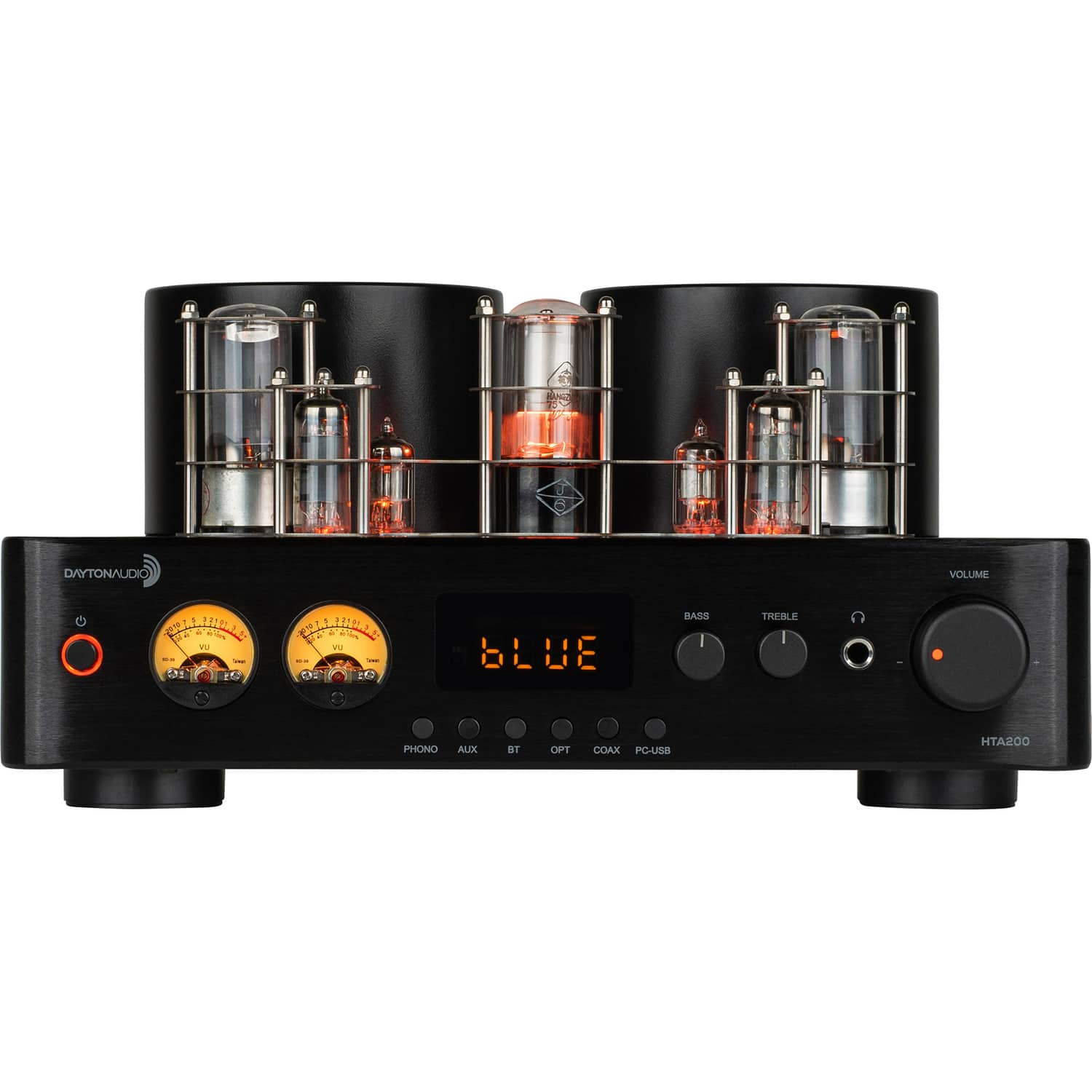
The HTA200 operates like a traditional hi-fi component. Physical knobs control volume, bass, and treble. Input selection happens via buttons or the included remote control. The motorized volume knob can be controlled remotely, and the backlit VU meters and glowing tubes create an engaging visual experience. It's immediately familiar to anyone who's used audio equipment before.
The Model M1 expects you to control it primarily through the HEOS smartphone app. This provides access to all streaming services, equalizer settings, and multi-room functions, but it means you need your phone nearby to change volume or switch inputs. Some users find this liberating—everything's controllable from the couch. Others miss having physical controls, especially for basic functions like volume.
For home theater use, the M1 can be controlled via HDMI CEC (Consumer Electronics Control), so your TV remote can handle basic functions. This integration is surprisingly seamless when it works properly.
When evaluating amplifier performance, several technical measurements provide insight into real-world behavior:
Total Harmonic Distortion (THD) measures how much the amplifier changes the original signal. The HTA200 specifies less than 1% THD at full power, while the Model M1 achieves 0.05% THD. Lower is generally better, but below certain thresholds (around 1%), most people can't hear the difference.
Signal-to-Noise Ratio (SNR) indicates how quiet the background noise is compared to the music signal. The HTA200 achieves over 80 dB SNR, while the Model M1 reaches 105 dB. Both are adequate, but the M1's higher figure suggests a quieter background.
Frequency Response shows how evenly the amplifier treats different frequencies. The HTA200 covers 15 Hz to 20 kHz (±1 dB), while the Model M1 extends from 20 Hz to 40 kHz (±3 dB). The extended high-frequency response of the M1 accommodates high-resolution audio files, though most people can't hear above 16-20 kHz anyway.
While both amplifiers are primarily designed for stereo music listening, they can work in home theater contexts with some limitations.
The HTA200 functions as a traditional stereo amplifier in a home theater setup. You'd connect it to the front left and right preamp outputs of an AV receiver, using it to drive your main speakers while the receiver handles the center channel, surrounds, and subwoofer. The tube character can make movie dialogue more natural and engaging.
The Model M1 offers more direct integration through its HDMI eARC input. Connected directly to your TV, it can handle stereo or Dolby Digital+ soundtracks while providing the convenience of a single-remote operation. The Dialog Enhancer mode specifically improves speech clarity in movies and TV shows. While you're limited to 2.1 channels (stereo plus subwoofer), this setup works well for smaller rooms or apartment living where a full surround system isn't practical.
You own vinyl records or plan to start collecting them. The built-in phono preamp saves money and rack space while providing excellent sound quality. You appreciate traditional hi-fi aesthetics and want your amplifier to be a visual focal point. The glowing tubes and VU meters create an engaging experience that many find relaxing and satisfying.
You prefer physical controls and traditional operation. If you like adjusting bass and treble by ear, switching inputs with buttons, and controlling volume with a knob, the HTA200 feels natural and intuitive.
You want maximum connectivity options at a reasonable price point. The combination of analog, digital, USB, and Bluetooth inputs accommodates virtually any source, current or future.
You're drawn to the tube sound character but want modern reliability. Hybrid designs give you most of the tube magic without the maintenance, heat, and expense of full tube amplification.
You primarily stream music from services like Spotify, Apple Music, or TIDAL. The direct integration and high-quality streaming capabilities make this effortless and enjoyable.
You're building or expanding a multi-room audio system. The HEOS platform excels at synchronized playback across multiple zones and integrates with other HEOS-enabled Marantz and Denon products.
You need TV integration in a compact package. The HDMI eARC input and Dolby Digital+ processing make this a genuine home theater component despite its small size.
You prefer app-based control and modern convenience features. If you're comfortable managing your music library and system settings through smartphone apps, the M1 offers sophisticated control and customization.
You value premium build quality and brand heritage. Marantz's Japanese manufacturing and Sound Master tuning represent a step up in quality and attention to detail.
At the time of writing, these amplifiers occupy different price tiers, with the HTA200 positioned as exceptional value for its feature set, while the Model M1 commands a premium for its streaming capabilities and build quality.
The HTA200 delivers remarkable performance and features for its price point. The combination of hybrid tube design, comprehensive connectivity, built-in phono preamp, and 5-year warranty makes it genuinely difficult to match for value-conscious buyers. It's a complete solution that handles virtually any source you might want to connect.
The Model M1 costs significantly more but justifies the premium through premium materials, advanced streaming integration, and ongoing software updates that add new features and services over time. It's essentially future-proof in a way that traditional amplifiers aren't.
For long-term ownership, consider how your listening habits might evolve. The HTA200 provides a stable platform that's unlikely to become obsolete, but it won't gain new capabilities over time. The Model M1 will continue improving through software updates but relies on network connectivity and app support that could theoretically become outdated years from now.
The choice between these amplifiers ultimately comes down to your priorities and listening habits. If you value the romance and engagement of tube sound, comprehensive connectivity, and traditional hi-fi operation, the Dayton Audio HTA200 provides exceptional value and long-term satisfaction. It's particularly compelling for vinyl enthusiasts and anyone who appreciates tactile, physical controls.
If you live primarily in the streaming world and want a sophisticated, compact amplifier that integrates seamlessly with modern smart home ecosystems, the Marantz Model M1 represents the current state of the art. It's ideal for users who prioritize convenience, multi-room capability, and premium build quality.
Both amplifiers excel at their intended purposes, but they're designed for different types of listeners. Consider your current sources, your aesthetic preferences, your comfort with app-based versus traditional controls, and your budget. Either choice will provide years of musical enjoyment—they just take very different approaches to getting there.
| Dayton Audio HTA200 | Marantz Model M1 |
|---|---|
| Power Output - Determines how loud you can play and speaker compatibility | |
| 100W @ 4Ω, 50W @ 8Ω (Class A/B provides excellent speaker control) | 125W @ 4Ω, 100W @ 8Ω (Class D offers higher peak power but less current delivery) |
| Sound Character - The most important difference between these amplifiers | |
| Warm, musical tube coloration with harmonic richness | Clean, neutral, detailed presentation with digital precision |
| Amplifier Technology - Affects reliability, heat, and sound quality | |
| Hybrid: Tube preamp + Class A/B power amp (best of both worlds) | Class D digital end-to-end (compact, efficient, cool running) |
| Streaming Capabilities - Critical for modern music consumption | |
| Basic Bluetooth 5.0 only (SBC/AAC codecs) | Full HEOS platform: Spotify, TIDAL, AirPlay 2, multi-room audio |
| Traditional Inputs - Important for vinyl, CD players, and existing gear | |
| Excellent: Built-in phono preamp, RCA, optical, coaxial, USB DAC | Limited: 1 RCA input, 1 optical (no phono preamp included) |
| TV Integration - Matters if you want to improve TV audio | |
| None (requires separate connection through AV receiver) | HDMI eARC with Dolby Digital+ decoding (direct TV connection) |
| User Interface - How you control the amplifier daily | |
| Physical knobs, buttons, remote control (traditional hi-fi operation) | Smartphone app required for most functions (modern but phone-dependent) |
| Size and Aesthetics - Impacts placement and visual appeal | |
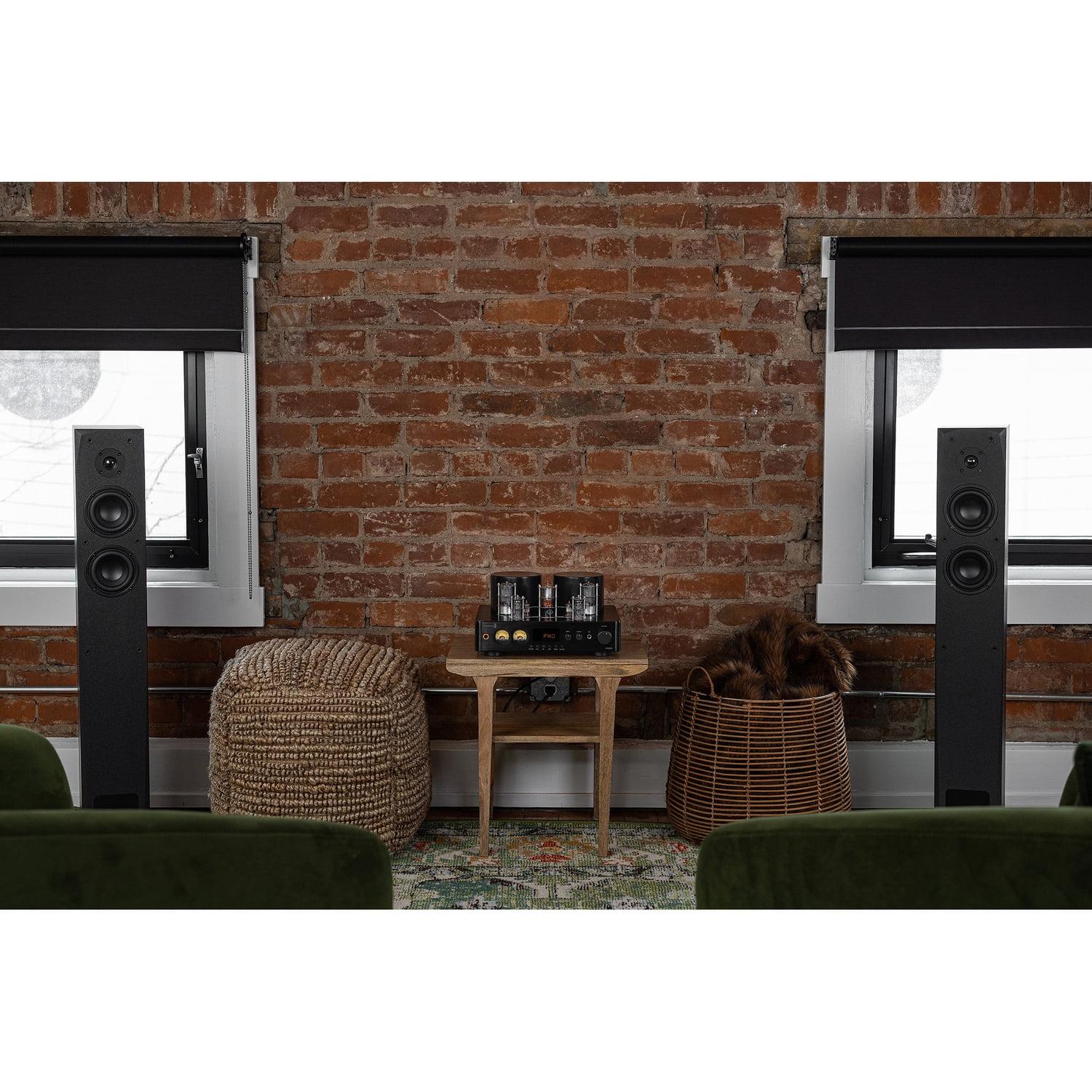
| Larger with exposed glowing tubes and VU meters (vintage statement piece) | Compact and discrete (disappears into modern decor) |
| Build Quality and Warranty - Indicates long-term reliability | |
| Good build with 5-year warranty (exceptional for price point) | Premium Japanese construction with typical Marantz warranty |
| Digital Audio Support - Important for high-resolution music files | |
| USB DAC up to 16-bit/48kHz (adequate but not cutting-edge) | Up to 24-bit/192kHz PCM and DSD support (future-proof) |
| Subwoofer Integration - Useful for fuller bass response | |
| Full-range preamp output (basic but functional) | Dedicated sub output with adjustable crossover filters (more sophisticated) |
| Multi-Room Capability - Valuable for whole-home audio systems | |
| None (single-room amplifier only) | Full HEOS multi-room with synchronized playback across zones |
The Dayton Audio HTA200 is more beginner-friendly due to its traditional physical controls and comprehensive connectivity. You can connect virtually any audio source without needing smartphone apps or network setup. The Marantz Model M1 requires more technical knowledge for initial setup and relies heavily on app-based control, which some beginners find intimidating.
The Dayton Audio HTA200 produces a warmer, more musical sound thanks to its vacuum tube preamp section, which adds pleasant harmonic coloration. The Marantz Model M1 delivers a cleaner, more neutral sound that reproduces recordings accurately without adding character. Choose the HTA200 for engaging, romantic sound or the M1 for precise, detailed reproduction.
The Marantz Model M1 excels at streaming with built-in HEOS platform support for Spotify, TIDAL, Amazon Music, and others, plus AirPlay 2 and high-quality Bluetooth. The Dayton Audio HTA200 only offers basic Bluetooth streaming, requiring you to use your phone or computer as the source for streaming services.
The Dayton Audio HTA200 includes a built-in phono preamp, so you can connect any moving-magnet turntable directly. The Marantz Model M1 requires a separate phono preamp for turntables, adding cost and complexity. For vinyl enthusiasts, the HTA200 is the clear winner.
The Marantz Model M1 produces more power on paper (125W vs 100W at 4 ohms), but the Dayton Audio HTA200 uses Class A/B amplification that typically provides better speaker control and dynamics. For most home speakers, both provide adequate power, though the HTA200 may handle difficult speakers better.
The Marantz Model M1 works well for simple home theater setups with its HDMI eARC input and Dolby Digital+ decoding, connecting directly to your TV. The Dayton Audio HTA200 can enhance home theater systems when connected to an AV receiver's preamp outputs, but lacks direct TV connectivity features.
The Dayton Audio HTA200 provides more traditional connectivity with phono input, multiple digital inputs, USB DAC, and analog inputs. The Marantz Model M1 focuses on wireless connectivity and TV integration but has limited analog inputs. Choose based on whether you prioritize traditional sources (HTA200) or modern streaming (M1).
Both amplifiers can work in larger rooms, but the Dayton Audio HTA200 may have an advantage due to its Class A/B amplification providing better speaker control at higher volumes. The Marantz Model M1 offers slightly more peak power but may not maintain the same control during demanding passages in large spaces.
The Marantz Model M1 requires virtually no maintenance as a solid-state design. The Dayton Audio HTA200 uses vacuum tubes in the preamp section, which may eventually need replacement after many years of use, though hybrid designs are generally more reliable than full tube amplifiers.
The Dayton Audio HTA200 includes a traditional infrared remote control for volume, input selection, and basic functions. The Marantz Model M1 relies primarily on smartphone app control through HEOS, though it can respond to TV remotes via HDMI CEC when connected to compatible televisions.
The Dayton Audio HTA200 provides exceptional value with its hybrid tube design, comprehensive inputs, built-in phono preamp, and robust build quality at its price point. The Marantz Model M1 costs significantly more but justifies the premium through advanced streaming features, premium build quality, and multi-room capabilities.
Only the Marantz Model M1 supports multi-room audio through the HEOS platform, allowing you to sync music across multiple rooms and zones. The Dayton Audio HTA200 is designed as a single-room amplifier without wireless multi-room capabilities, though you could use multiple units independently in different rooms.
We've done our best to create useful and informative comparisons to help you decide what product to buy. Our research uses advanced automated methods to create this comparison and perfection is not possible - please contact us for corrections or questions. These are the sites we've researched in the creation of this article: daytonaudio.com - audiosciencereview.com - daytonaudio.com - audioholics.com - soundstageaccess.com - youtube.com - avsforum.com - solen.ca - daytonaudio.com - soundstagenetwork.com - parts-express.com - homedepot.com - device.report - soundstagenetwork.com - petra.com - manualslib.com - audiophonics.fr - manualshelf.com - bestbuy.com - crutchfield.com - audioadvisor.com - youtube.com - soundstagesimplifi.com - marantz.com - marantz.com - audioadvice.com - whathifi.com - manuals.marantz.com - audiosciencereview.com - youtube.com - marantz.com - sweetwater.com - audiosciencereview.com - accessories4less.com

Privacy Policy
Terms and Conditions - Affiliate Policy
Home Security
© Copyright 2008-2026.
11816 Inwood Rd #1211, Dallas, TX 75244