

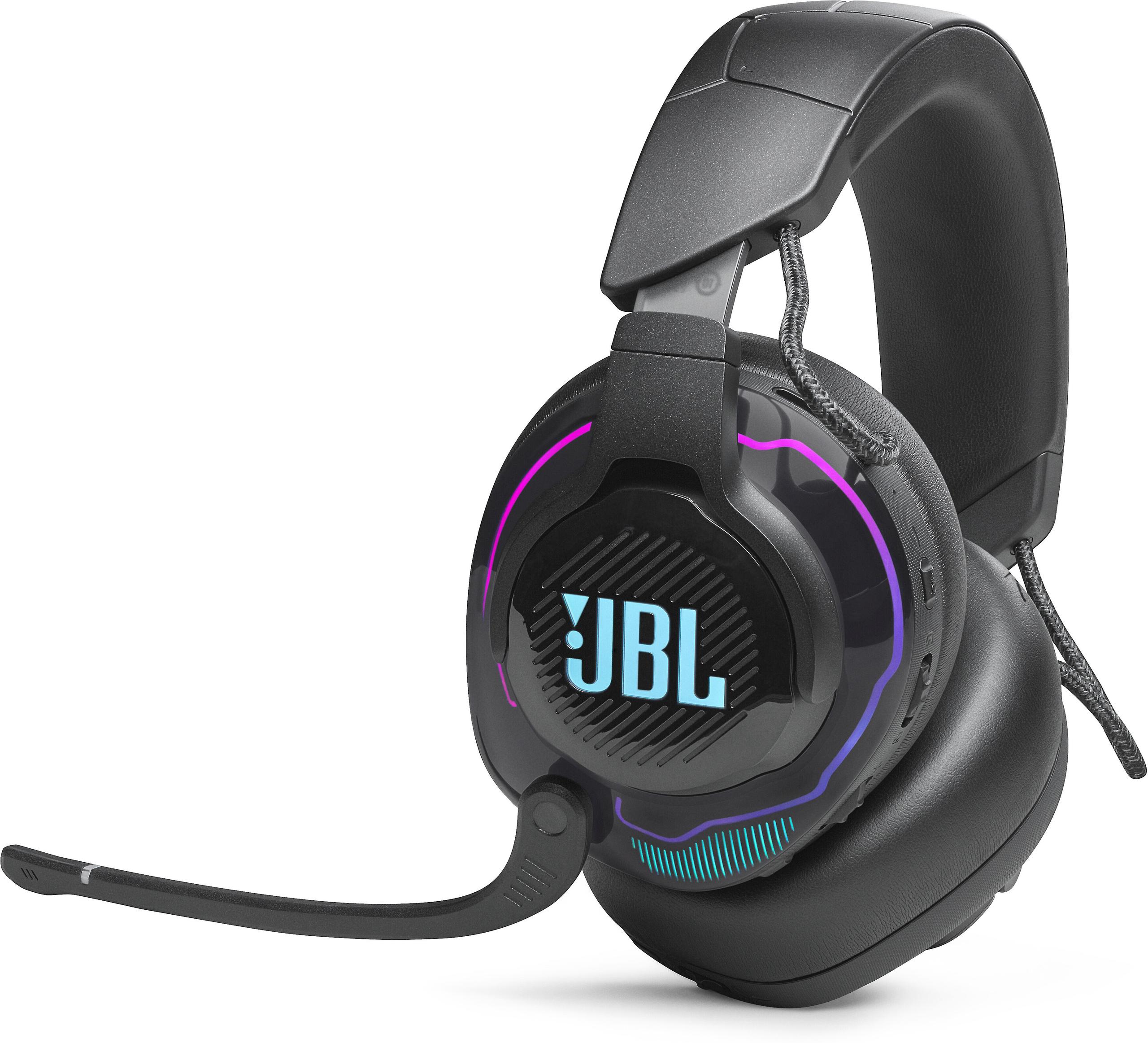
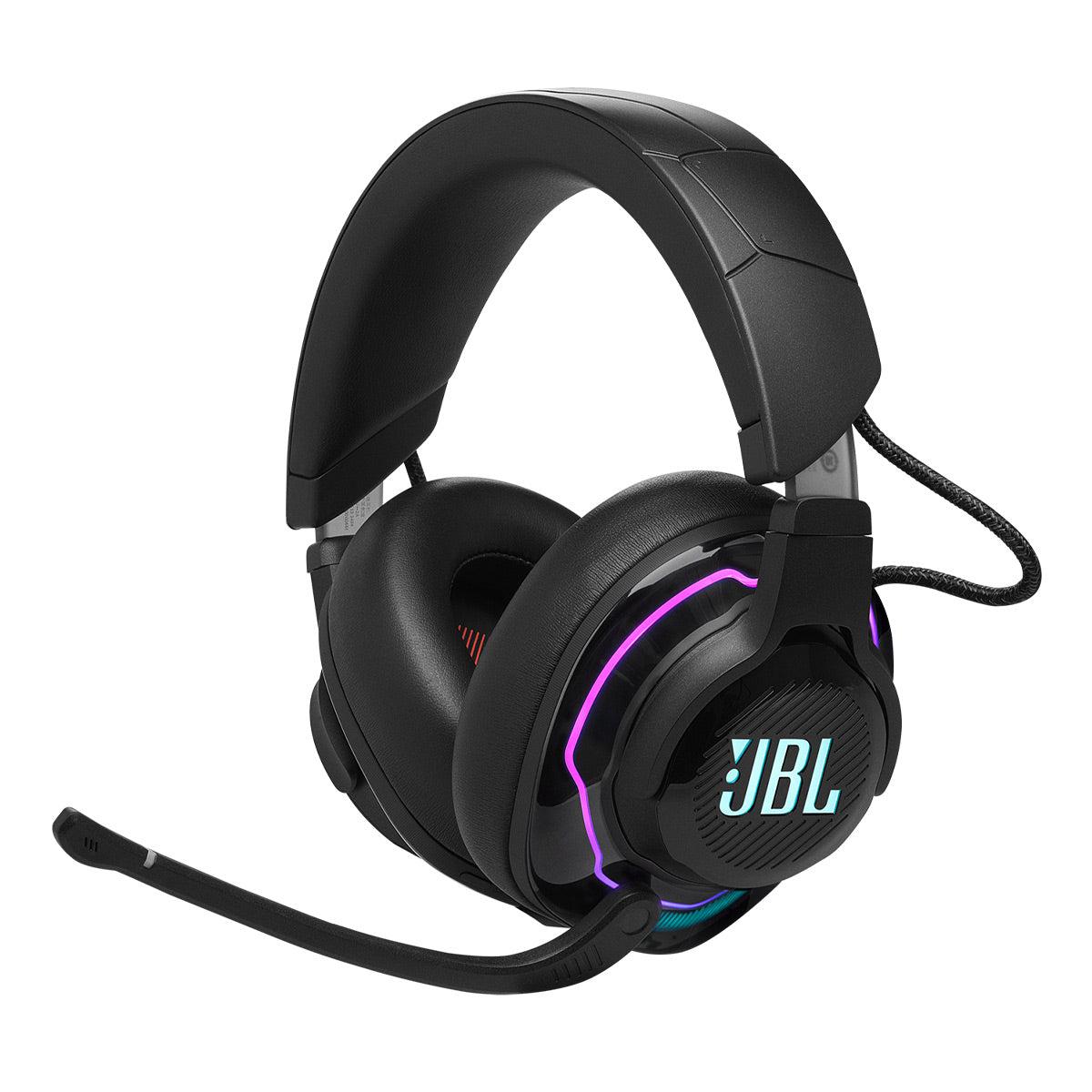
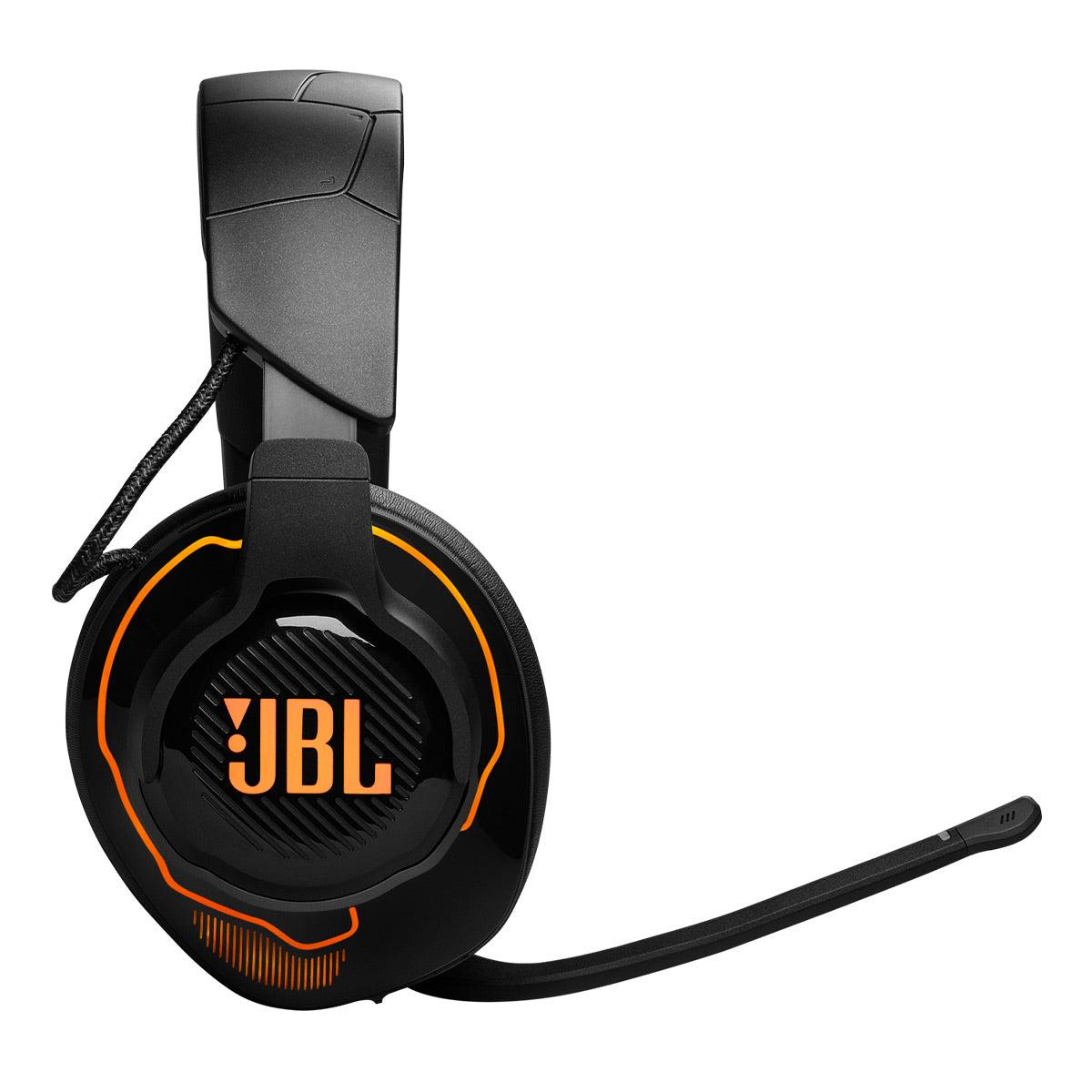
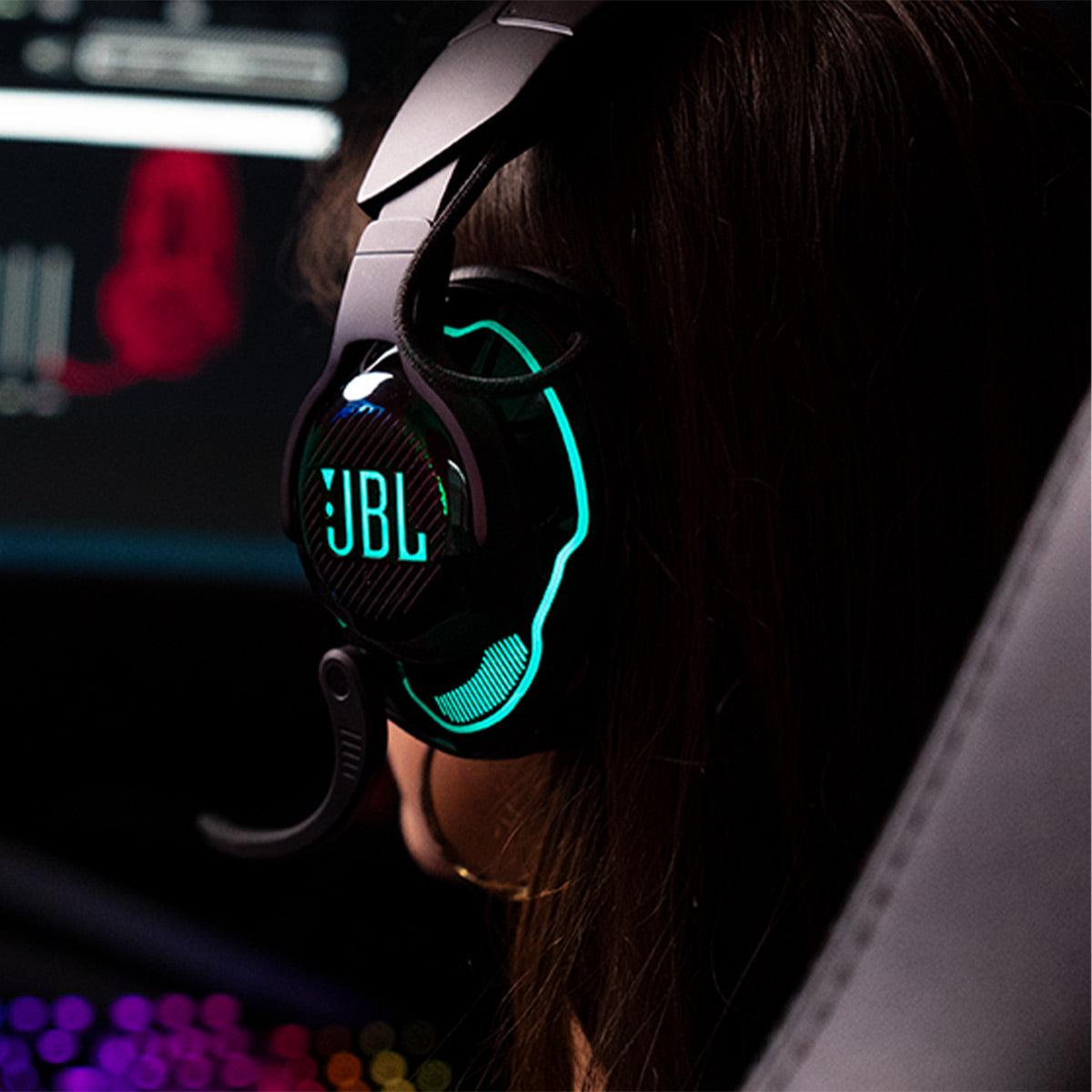
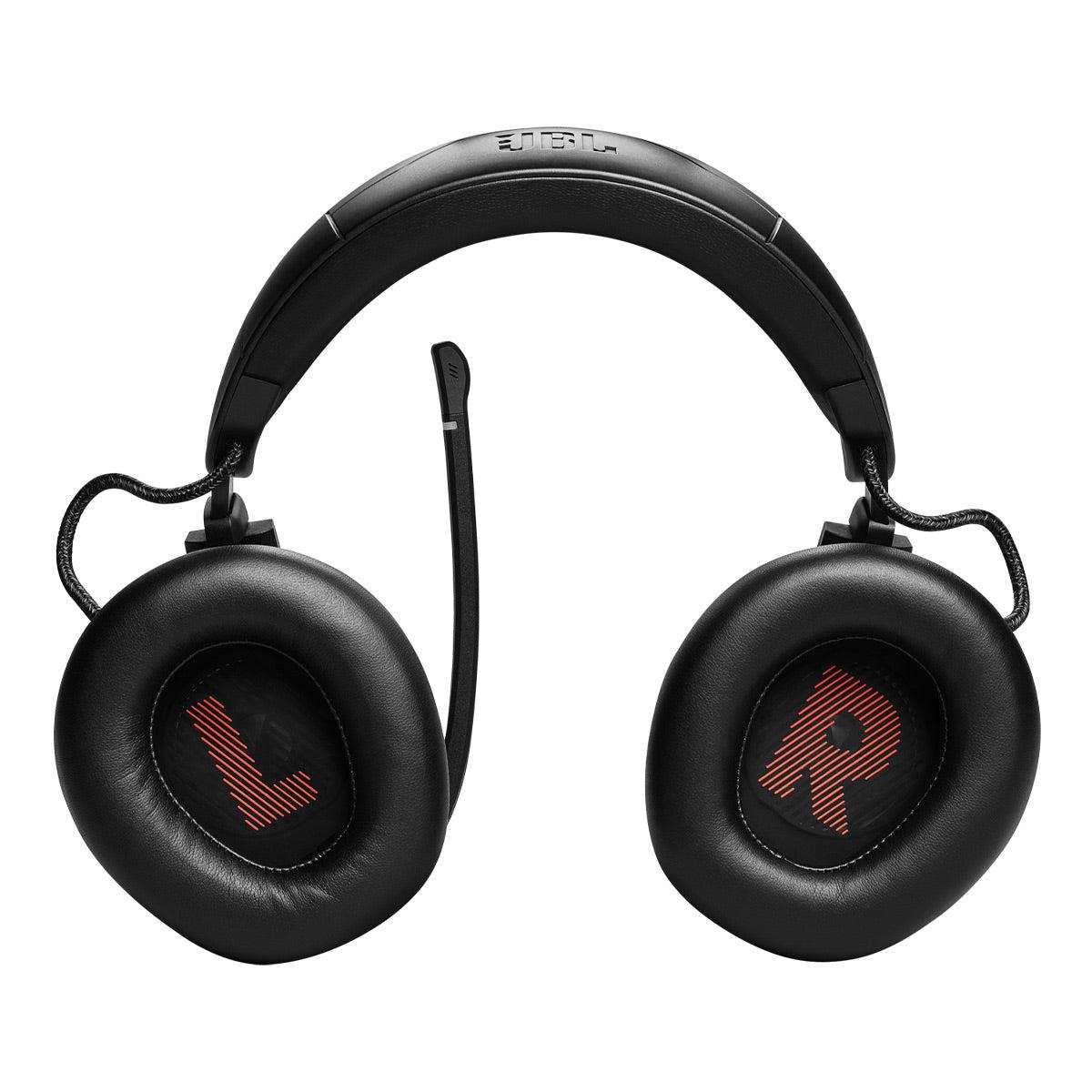


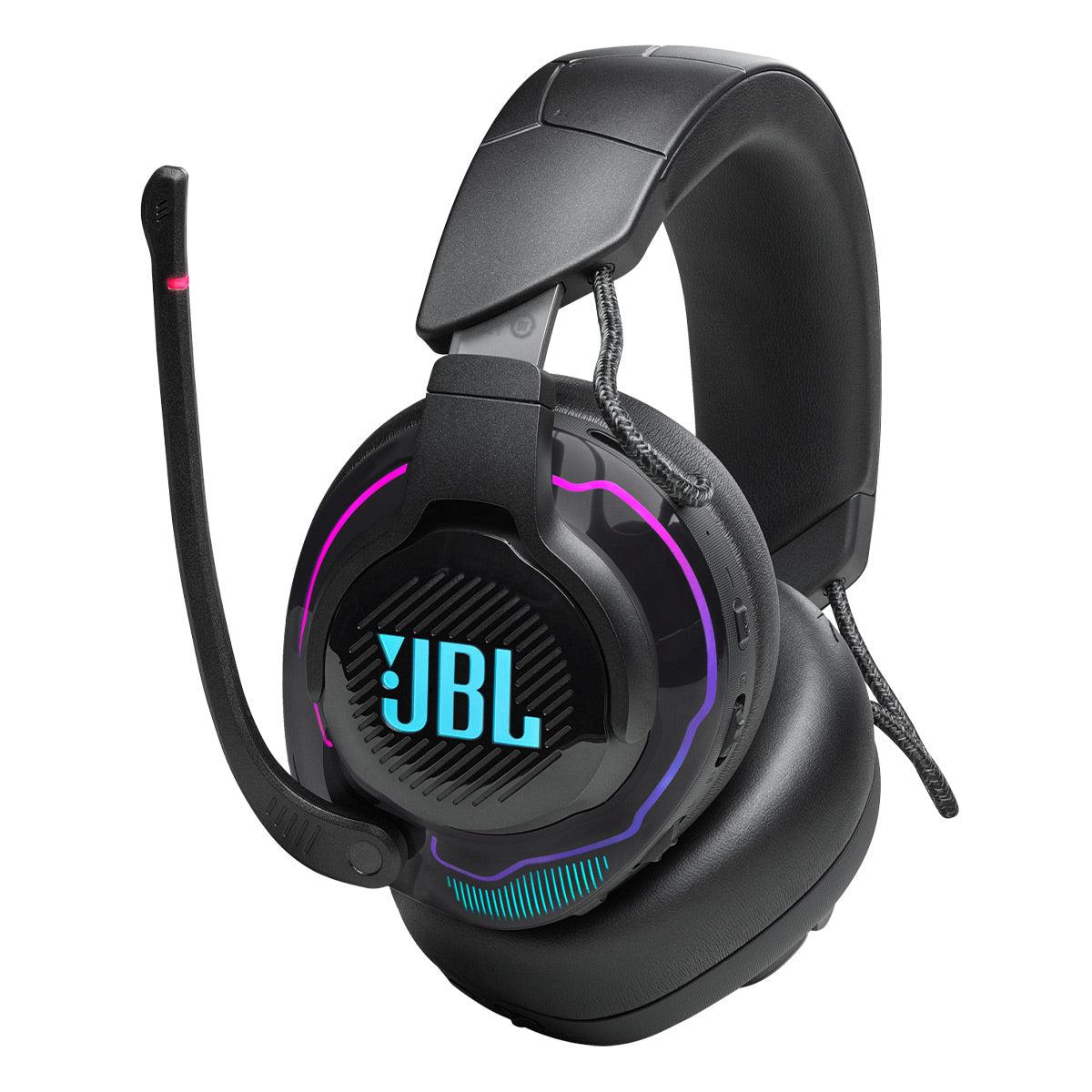
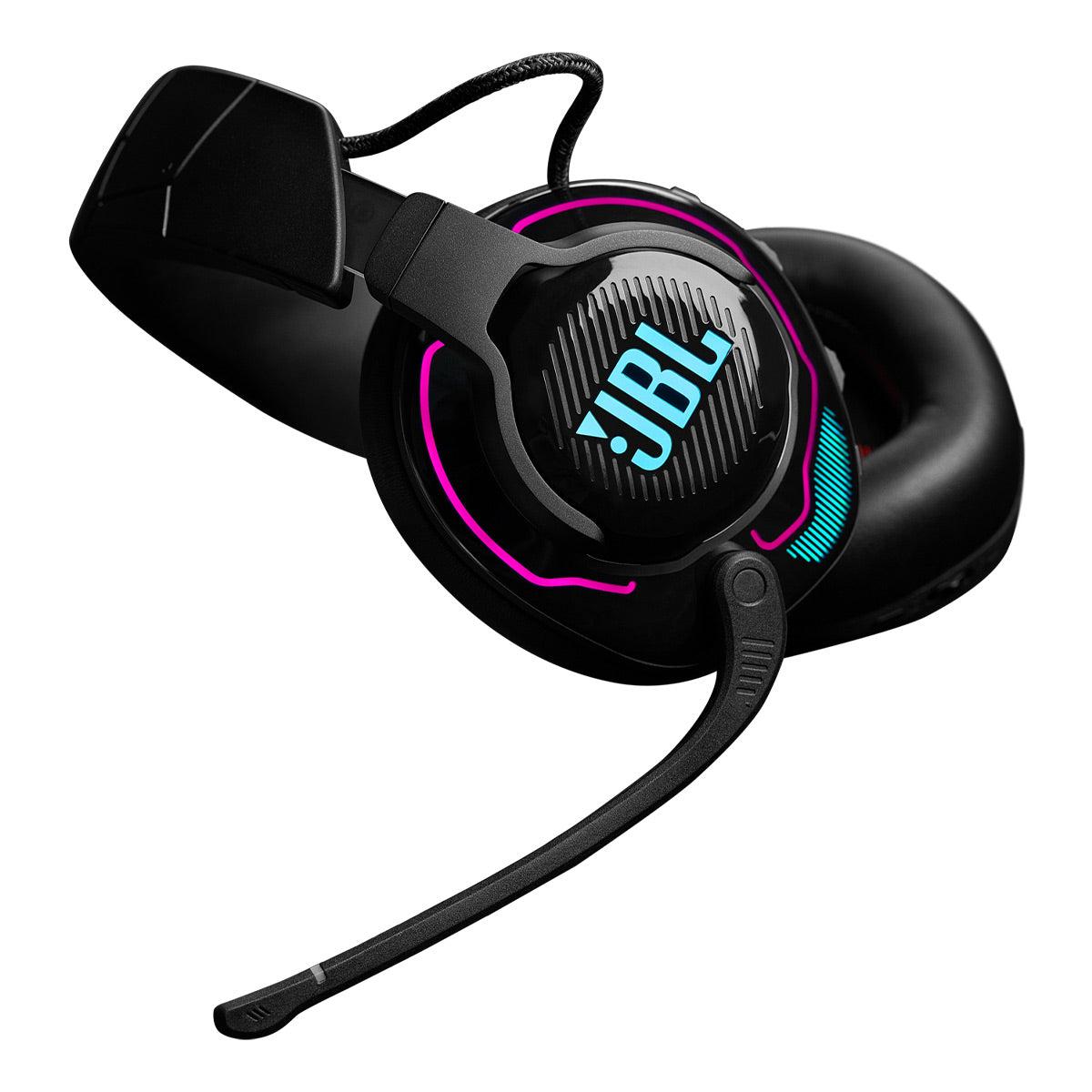
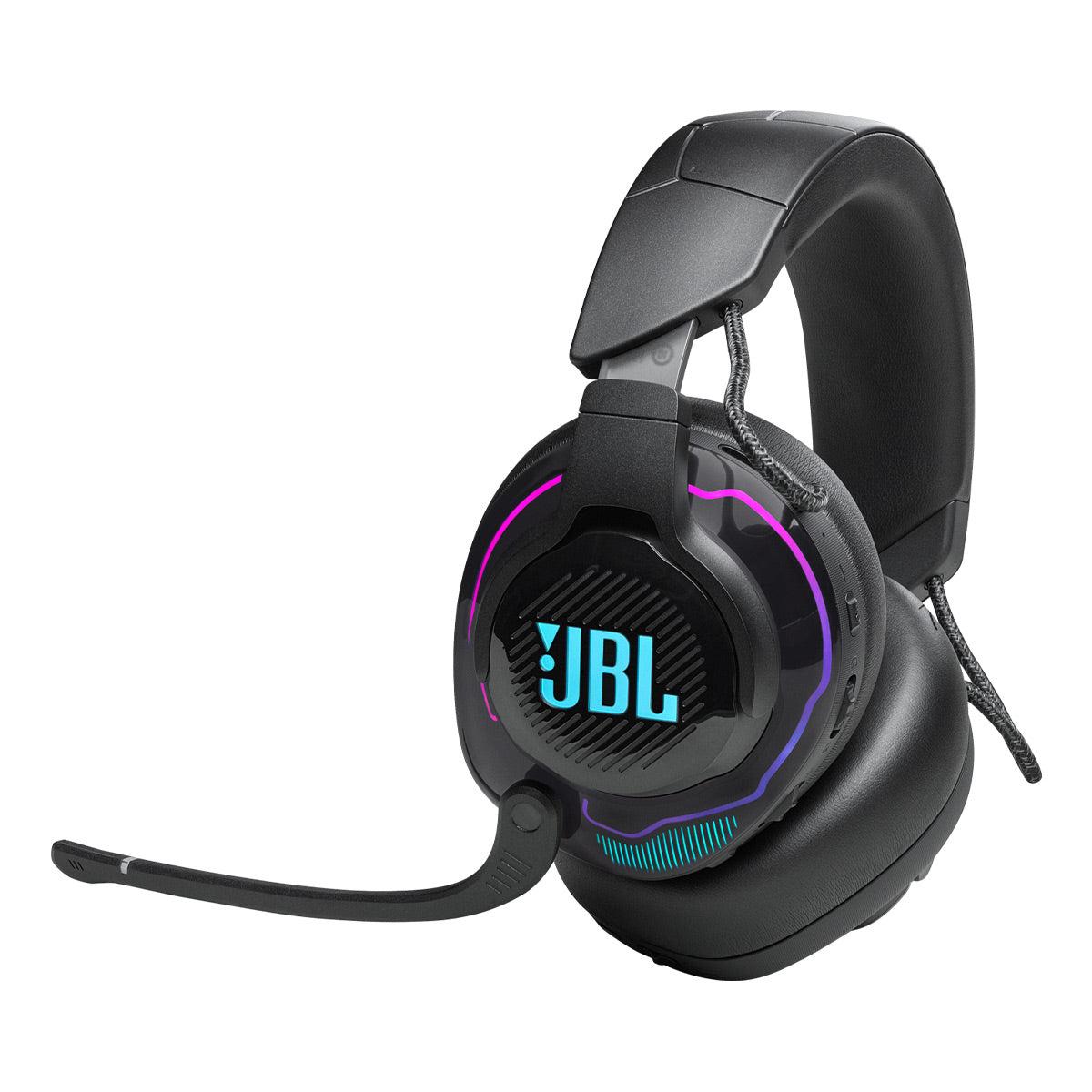
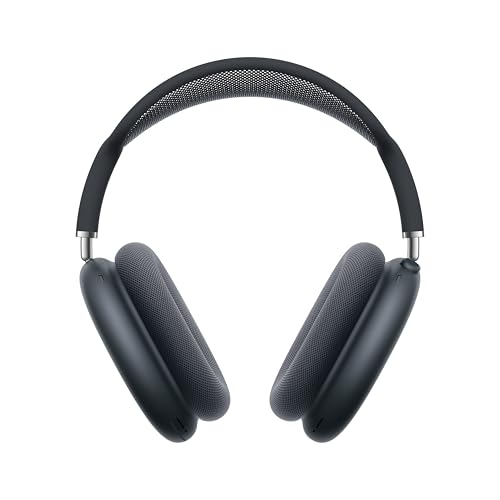
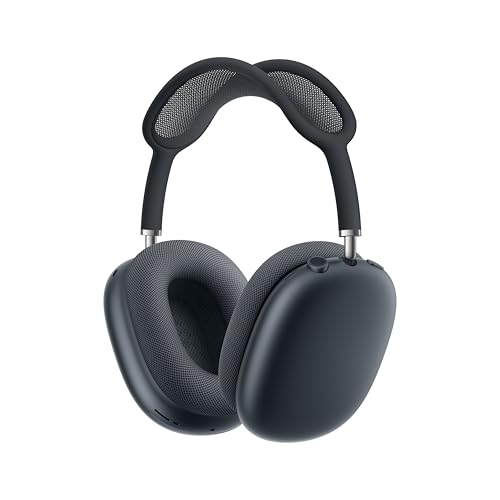
When you're shopping for premium over-ear headphones, you'll quickly discover that not all expensive headphones are created equal. The JBL Quantum 910 and Apple AirPods Max represent two completely different philosophies in headphone design, despite both carrying premium price tags. At the time of writing, both models sit in similar price ranges, but they're built for entirely different purposes.
The JBL Quantum 910, released in 2022, focuses laser-sharp attention on gaming performance with features like ultra-low latency wireless connections and spatial audio processing designed specifically for competitive gaming. Meanwhile, the Apple AirPods Max, launched in 2020 and updated in 2024, prioritizes luxury materials, industry-leading noise cancellation, and seamless integration within Apple's ecosystem.
Understanding these fundamental differences is crucial because choosing the wrong one could leave you with an expensive headset that doesn't match your actual needs.
Most people think of over-ear headphones as one category, but that's increasingly misleading. Gaming headsets and premium audio headphones have evolved into distinct product categories with different priorities, technologies, and design philosophies.
Gaming headsets like the JBL Quantum 910 prioritize features that directly impact gaming performance: ultra-low latency connections (delays under 40 milliseconds), spatial audio processing that helps you pinpoint enemy footsteps, professional-grade microphones for team communication, and extensive battery life for marathon gaming sessions. These headsets also need broad compatibility across gaming platforms like PC, PlayStation, Xbox, and Nintendo Switch.
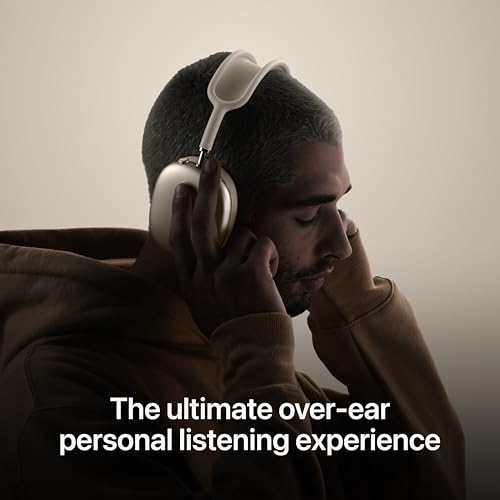
Premium audio headphones like the Apple AirPods Max focus on different priorities: exceptional sound quality for music and media, advanced noise cancellation for distraction-free listening, premium materials that feel luxurious, and seamless integration with your existing devices. They're designed for commuting, working, traveling, and casual media consumption rather than competitive gaming.
The key consideration here is that gaming performance and general audio excellence require different technical approaches. A headset optimized for hearing enemy movements in a first-person shooter needs different audio tuning than headphones designed for enjoying classical music or podcasts.
The JBL Quantum 910 uses 50mm neodymium drivers – larger speakers that can move more air and typically produce more powerful bass. JBL has tuned these specifically for gaming scenarios using what they call "QuantumSOUND Signature." This isn't just marketing speak; it means they've adjusted the frequency response to emphasize the audio ranges where important gaming information lives.
For example, footsteps in most games occur in specific frequency ranges around 1-4 kHz, while explosions and gunfire happen in both low frequencies (bass) and higher frequencies (treble). The JBL Quantum 910 boosts these ranges to make these sounds more prominent and easier to locate in three-dimensional space.
The headset also includes multiple audio processing technologies that sound complicated but serve clear purposes. DTS Headphone:X v2.0 is a technology that simulates surround sound through stereo headphones, making it easier to tell whether sounds are coming from your left, right, behind, or in front of you. QuantumSPHERE 360 goes further by using head tracking – sensors that detect when you turn your head – to create even more realistic spatial positioning.
The Apple AirPods Max takes a completely different approach focused on accurate music reproduction. Apple designed custom dynamic drivers (they don't specify the size) that prioritize ultra-low distortion across the entire audible frequency range. Instead of emphasizing specific gaming frequencies, they aim for balanced, neutral sound that reproduces music exactly as the artist intended.
The standout feature here is Adaptive EQ – a system that automatically adjusts the sound based on how the headphones fit your specific ears. Internal microphones measure what you're actually hearing and make real-time adjustments to compensate for variations in ear shape, hair, glasses, or how tightly the headphones seal against your head. This is sophisticated technology that gaming headsets typically don't include.
For music listening, our research consistently shows the Apple AirPods Max delivering superior performance. The midrange clarity is exceptional, making vocals sound natural and present. Classical music, jazz, and acoustic genres particularly benefit from this balanced approach. However, this same neutral tuning can make gaming audio feel less exciting and impactful compared to the JBL Quantum 910's more aggressive tuning.
This is where the fundamental differences become most apparent, and why choosing the right category matters so much.
Audio latency – the delay between when something happens on screen and when you hear it – is absolutely critical for gaming but barely matters for music listening. The JBL Quantum 910 uses a dedicated 2.4GHz wireless connection that achieves latency under 40 milliseconds, which is essentially imperceptible during gaming. This low-latency connection is separate from Bluetooth and requires a USB dongle plugged into your gaming device.
The Apple AirPods Max relies entirely on Bluetooth, which typically introduces 100-200 milliseconds of delay. For music listening, this delay is irrelevant. For gaming, it creates a noticeable disconnect between visual action and audio feedback that can seriously impact competitive performance. You'll hear footsteps or gunshots a fraction of a second after they appear on screen, which throws off your timing and spatial awareness.
Gaming requires clear communication with teammates, and this is where dedicated boom microphones shine. The JBL Quantum 910 includes a detachable boom microphone that positions directly in front of your mouth for optimal voice pickup. The unidirectional design means it focuses on your voice while rejecting background noise from your room.
The flip-to-mute feature provides instant, visual confirmation when you're muted – crucial during intense gaming moments when you need to quickly silence your microphone. The boom microphone also offers superior voice clarity compared to integrated solutions because it's positioned consistently near your mouth.
The Apple AirPods Max uses an array of nine built-in microphones that rely on beamforming technology to isolate your voice. While this works well for phone calls and video conferences, it doesn't match the clarity and consistency of a dedicated boom microphone for gaming communication. You also lack visual muting confirmation, which can lead to awkward moments when you think you're muted but aren't.
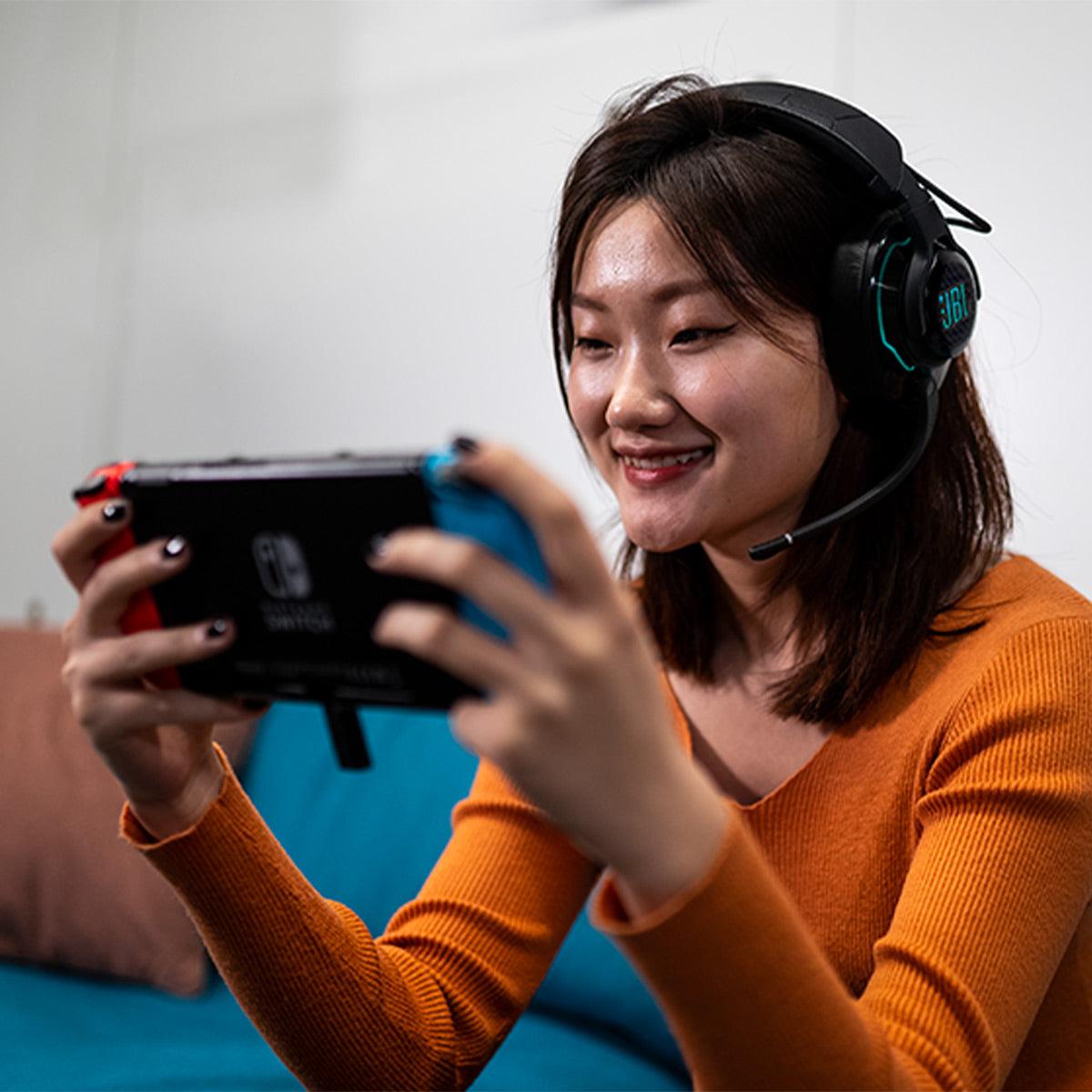
Modern gaming happens across multiple platforms, and the JBL Quantum 910 is built for this reality. The low-latency wireless connection works with PC, PlayStation 5/4, and Nintendo Switch (when docked). For Xbox compatibility, you'd need the specialized Quantum 910X variant. The headset also includes a 3.5mm cable for universal wired compatibility with any device that has a headphone jack.
The Apple AirPods Max works with gaming consoles only through Bluetooth, which brings back the latency issues mentioned earlier. More importantly, many gaming-specific features like spatial audio processing and seamless device switching only work with Apple devices. If you game primarily on PlayStation, Xbox, or PC, you're not getting the full value from these premium headphones.
Both headphones include active noise cancellation (ANC), but they're tuned for different purposes, and the performance gap is significant.
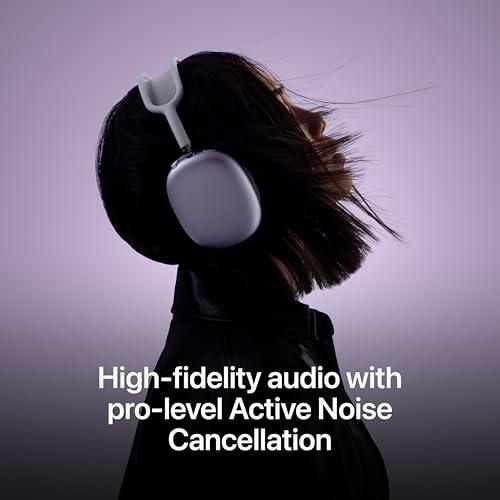
The Apple AirPods Max features industry-leading noise cancellation that consistently ranks among the best available. Eight dedicated microphones continuously monitor environmental noise and generate "anti-noise" to cancel it out. The system is particularly effective against low-frequency, constant noise like airplane engines, air conditioning, or traffic.
This exceptional ANC makes the Apple AirPods Max ideal for travel, working in noisy offices, or any situation where you need to block out distractions completely. The transparency mode is equally impressive, using those same external microphones to let ambient sound through naturally when you need to hear your surroundings.
The JBL Quantum 910 includes ANC, but it's tuned differently for gaming environments. Rather than maximum noise reduction, it aims to eliminate distracting background noise while preserving important gaming audio cues. This approach prevents the headset from canceling out subtle game sounds that might be crucial for competitive play.
For pure noise cancellation performance, the Apple AirPods Max is significantly superior. However, for gaming in typical home environments, the JBL Quantum 910's more selective approach can actually be more appropriate.
Battery performance reveals another fundamental difference in design priorities. The JBL Quantum 910 delivers up to 39 hours of continuous use with RGB lighting disabled, extending to nearly 47 hours under optimal conditions. This marathon battery life supports extended gaming sessions without interruption and reduces the frequency of charging cycles.
The Apple AirPods Max provides 20 hours of listening time with ANC enabled, which is respectable but roughly half the JBL's capacity. For most music listening and commuting scenarios, 20 hours is perfectly adequate. For all-day gaming or situations where you frequently forget to charge your devices, the JBL's longer battery life provides valuable peace of mind.
Both headphones support fast charging, but with different approaches. The JBL Quantum 910 allows "play and charge" functionality, meaning you can continue gaming while connected to power. The Apple AirPods Max provides 1.5 hours of listening from a 5-minute charge, which is convenient for quick top-ups between uses.
The construction quality difference is immediately apparent when handling both headphones. The Apple AirPods Max uses premium materials including a stainless steel frame, aluminum ear cups, and a distinctive mesh canopy headband. These materials feel substantial and luxurious, justifying the premium positioning. The telescoping adjustment mechanism is smooth and precise, and the overall design aesthetic is unmistakably premium.
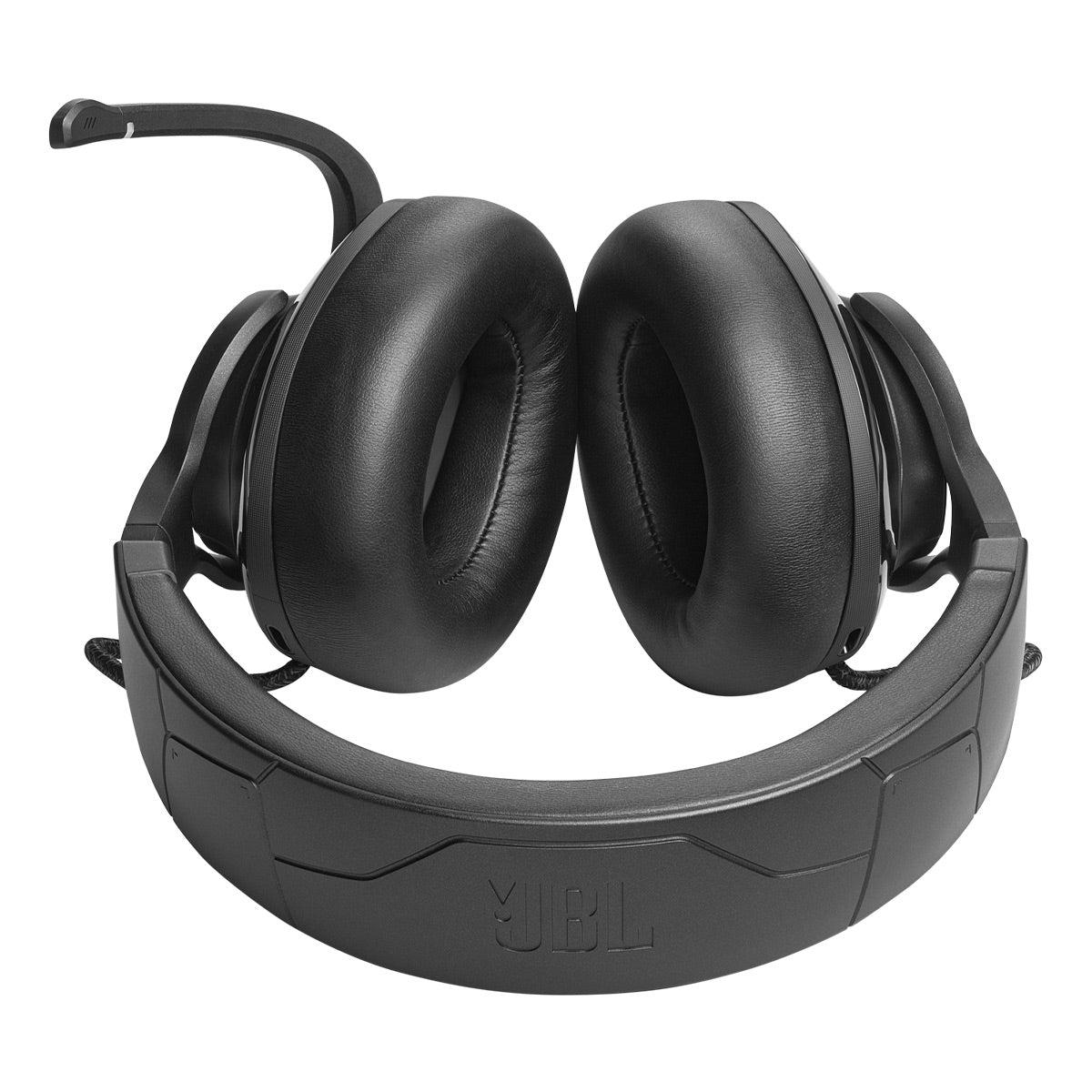
The JBL Quantum 910 uses high-quality plastic construction with leather-wrapped memory foam ear cushions. While not as premium-feeling as the Apple's metal construction, the materials are durable and appropriate for gaming use. The RGB lighting elements add visual appeal for gaming setups, though they contribute to the higher power consumption.
Weight distribution affects long-term comfort significantly. Despite being heavier at 420g compared to the Apple AirPods Max's 384.8g, the JBL Quantum 910 can feel more fatiguing during extended use. The Apple AirPods Max distributes weight more effectively through its engineered headband design, though both headphones are comfortable for reasonable listening sessions.
The connectivity approaches highlight each product's target audience perfectly. The JBL Quantum 910 offers maximum flexibility with dual wireless connectivity – you can maintain a low-latency 2.4GHz connection for gaming while simultaneously connecting to your phone via Bluetooth for chat or music. This dual-connection capability is particularly valuable for content creators or gamers who need to monitor multiple audio sources.
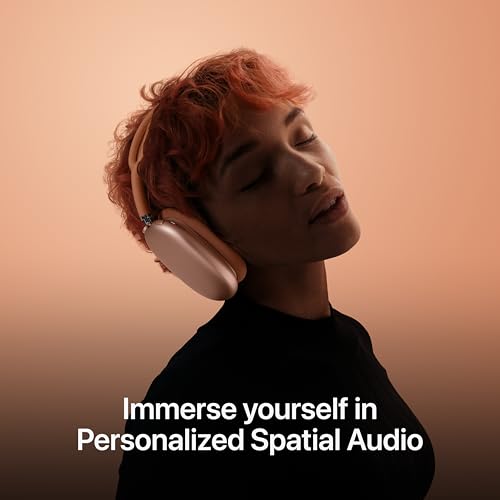
The Apple AirPods Max focuses on seamless integration within Apple's ecosystem. If you own multiple Apple devices, the automatic switching between iPhone, iPad, and Mac is genuinely convenient. Spatial Audio with dynamic head tracking works beautifully for movies and Apple Music content, creating an immersive, theater-like experience.
However, this ecosystem integration comes with limitations. Outside Apple's ecosystem, the AirPods Max functions as basic Bluetooth headphones without access to advanced features like Spatial Audio or automatic device switching.
For home theater use, both headphones offer distinct advantages depending on your setup and preferences.
The Apple AirPods Max excels with Apple TV and other Apple devices, providing Spatial Audio that creates a convincing surround sound experience for movies and shows. The dynamic head tracking makes the sound feel anchored to your TV screen, even as you move your head. For late-night movie watching or situations where you need to avoid disturbing others, the superior noise cancellation also prevents external distractions.
The JBL Quantum 910 works well for gaming on large screens and can provide an immersive experience for action movies through its spatial audio processing. However, it lacks the refined movie-watching features of the Apple AirPods Max and doesn't integrate as seamlessly with most home theater systems.
For dedicated home theater use, the Apple AirPods Max is generally the better choice, particularly in Apple-based entertainment systems.
At the time of writing, both headphones occupy similar price ranges in the premium category, but they deliver value in completely different ways.
The JBL Quantum 910 provides exceptional value for gamers, offering professional-grade features like ultra-low latency wireless, spatial audio processing, professional microphones, and marathon battery life. For someone who games regularly across multiple platforms, these features justify the premium price by directly improving the gaming experience.
The Apple AirPods Max delivers value through premium materials, industry-leading noise cancellation, and exceptional integration with Apple devices. For Apple ecosystem users who prioritize music quality and travel-friendly noise cancellation, the premium pricing reflects genuine technological advantages and luxury materials.
Choose the JBL Quantum 910 if gaming is your primary use case, you need compatibility across multiple gaming platforms, you value extended battery life for long sessions, or you require professional-quality voice communication for team gaming or content creation. The headset also makes sense if you prefer having dedicated gaming equipment with visual elements like RGB lighting.
Choose the Apple AirPods Max if you're invested in Apple's ecosystem, music listening quality is your top priority, you travel frequently and need exceptional noise cancellation, or you value premium materials and luxury construction. They're also the better choice for general media consumption and video calls.
The decision ultimately comes down to primary use case and ecosystem preference. Both headphones excel in their intended roles, but choosing the wrong one for your needs would leave you with expensive equipment that doesn't deliver its full value. Consider your main activities, device ecosystem, and whether specialized gaming features or premium general-use capabilities better match your actual usage patterns.
| JBL Quantum 910 Wireless Gaming Headset | Apple AirPods Max Wireless Over-Ear Headphones |
|---|---|
| Primary Use Case - Determines which features you'll actually use | |
| Gaming-focused with low-latency wireless and professional microphone | Premium audio and noise cancellation for music, calls, and media |
| Audio Latency - Critical for competitive gaming, irrelevant for music | |
| Sub-40ms via 2.4GHz wireless (imperceptible for gaming) | 100-200ms via Bluetooth only (noticeable delay in games) |
| Active Noise Cancellation - Essential for travel and noisy environments | |
| Gaming-tuned ANC (moderate noise reduction) | Industry-leading ANC with 8 microphones (exceptional performance) |
| Battery Life - Impacts how often you need to charge | |
| Up to 39 hours (47 hours optimal conditions) | 20 hours with ANC enabled |
| Microphone Quality - Crucial for gaming communication and calls | |
| Detachable boom mic with flip-to-mute (professional gaming quality) | 9 built-in mics with beamforming (good for calls, limited for gaming) |
| Platform Compatibility - Determines which devices work with full features | |
| PC, PlayStation 5/4, Nintendo Switch, mobile via multiple connections | Apple ecosystem optimized, basic Bluetooth for others |
| Connectivity Options - Flexibility for different use scenarios | |
| Dual wireless (2.4GHz + Bluetooth), 3.5mm wired included | Bluetooth 5.0 only, wired requires separate adapter |
| Build Materials - Affects durability and premium feel | |
| Durable plastic with leather-wrapped memory foam | Stainless steel frame, aluminum ear cups, premium materials |
| Weight - Impacts comfort during extended use | |
| 420g (heavier, can cause fatigue) | 384.8g (lighter with better weight distribution) |
| Audio Processing - Enhances specific types of content | |
| DTS:X, QuantumSPHERE 360, QuantumSPATIAL 360 for gaming | Adaptive EQ, Spatial Audio with head tracking for Apple content |
| Ecosystem Integration - Seamless device switching and features | |
| Multi-platform gaming focus with JBL software | Deep Apple integration with automatic device switching |
| Best Value Proposition - Who gets the most for their money | |
| Gamers needing professional features across multiple platforms | Apple users prioritizing premium audio and noise cancellation |
The JBL Quantum 910 is significantly better for gaming due to its ultra-low latency 2.4GHz wireless connection, dedicated boom microphone, and gaming-optimized spatial audio processing. The Apple AirPods Max relies on Bluetooth which introduces noticeable audio delay that can hurt gaming performance, especially in competitive scenarios.
The Apple AirPods Max delivers superior sound quality for music with balanced, audiophile-tuned drivers and Adaptive EQ technology. The JBL Quantum 910 uses gaming-optimized tuning that emphasizes frequencies important for spatial awareness and game audio cues, making it less ideal for music listening but better for gaming scenarios.
The Apple AirPods Max has industry-leading active noise cancellation that significantly outperforms the JBL Quantum 910. Apple uses eight dedicated microphones for exceptional noise reduction, while JBL's ANC is gaming-tuned and provides more moderate noise cancellation that preserves important game audio.
The JBL Quantum 910 offers much longer battery life with up to 39 hours of use (47 hours in optimal conditions), nearly double the Apple AirPods Max's 20 hours. For extended gaming sessions or heavy daily use, the JBL provides significantly more time between charges.
The JBL Quantum 910 offers superior multi-platform compatibility with PC, PlayStation, Nintendo Switch, and mobile devices through multiple connection types. The Apple AirPods Max works best within Apple's ecosystem and has limited functionality when used with non-Apple devices like gaming consoles or PCs.
Both offer good comfort, but the Apple AirPods Max has better weight distribution despite similar overall weight, thanks to its engineered headband design. The JBL Quantum 910 is slightly heavier at 420g and may cause more fatigue during very long gaming sessions, though both feature quality padding.
The JBL Quantum 910 has superior microphone quality for gaming communication with its dedicated boom microphone that offers clear voice pickup and flip-to-mute functionality. The Apple AirPods Max uses built-in microphones that work well for phone calls but don't match the clarity and gaming-specific features of a boom mic.
The Apple AirPods Max is better for home theater use, especially with Apple TV, offering Spatial Audio with head tracking for an immersive movie experience. The JBL Quantum 910 can work for home theater but lacks the refined movie-watching features and doesn't integrate as seamlessly with most entertainment systems.
Value depends on your primary use case. The JBL Quantum 910 offers better value for gamers with its gaming-specific features, longer battery life, and multi-platform compatibility. The Apple AirPods Max provides better value for Apple users prioritizing premium materials, superior noise cancellation, and music quality.
The JBL Quantum 910 offers more connectivity flexibility with dual wireless (2.4GHz + Bluetooth), included 3.5mm cable, and USB dongle for low-latency gaming. The Apple AirPods Max uses Bluetooth 5.0 only and requires a separate adapter for wired connections, limiting its versatility.
The Apple AirPods Max is superior for music listening with its balanced sound signature, Adaptive EQ that adjusts to your ear shape, and exceptional clarity across all frequencies. The JBL Quantum 910 is tuned specifically for gaming audio and may sound less balanced for music genres like classical, jazz, or acoustic content.
Choose the JBL Quantum 910 if gaming is your primary use, you need multi-platform compatibility, or you want longer battery life and professional gaming features. Choose the Apple AirPods Max if you're in Apple's ecosystem, prioritize music quality and noise cancellation, or want premium build materials and luxury construction.
We've done our best to create useful and informative comparisons to help you decide what product to buy. Our research uses advanced automated methods to create this comparison and perfection is not possible - please contact us for corrections or questions. These are the sites we've researched in the creation of this article: techradar.com - stereoguide.com - ausdroid.net - majorhifi.com - ign.com - youtube.com - soundguys.com - versus.com - impulsegamer.com - versus.com - jbl.com - jbl.com.tw - crutchfield.com - th.jbl.com - harmanaudio.com - jbl.com - jbl.com - youtube.com - bestbuy.com - harmanaudio.com - jbl.com - th.jbl.com - bhphotovideo.com - recordingnow.com - t3.com - telegraph.co.uk - soundguys.com - youtube.com - forums.macrumors.com - youtube.com - youtube.com - apple.com - support.apple.com - idownloadblog.com - media.distrelec.com - en.wikipedia.org - apple.com - apple.com - support.apple.com - rtings.com

Privacy Policy
Terms and Conditions - Affiliate Policy
Home Security
© Copyright 2008-2026.
11816 Inwood Rd #1211, Dallas, TX 75244