

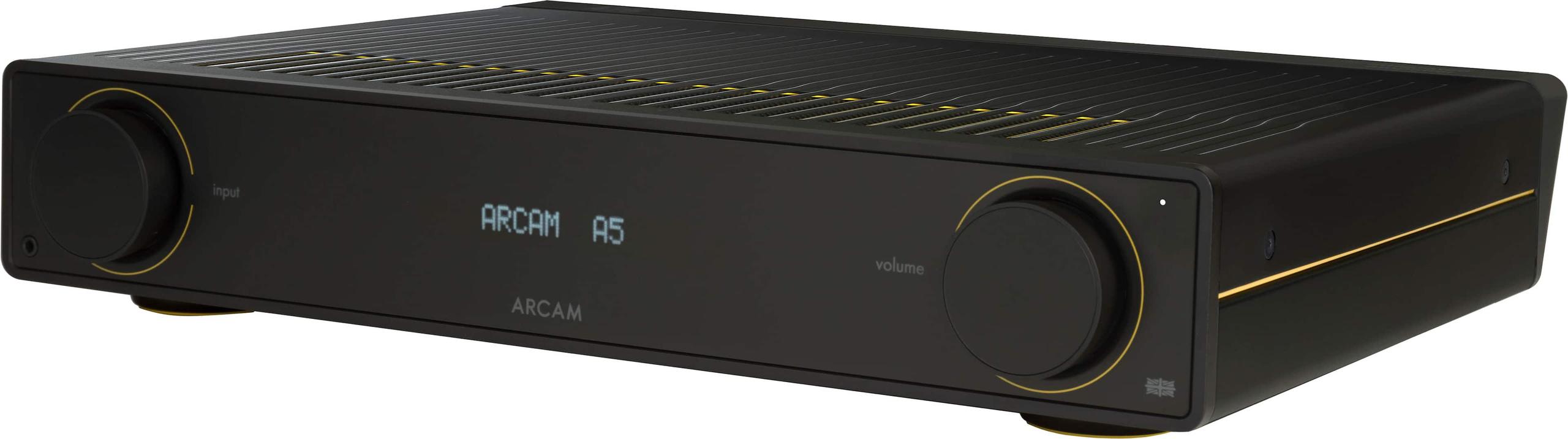
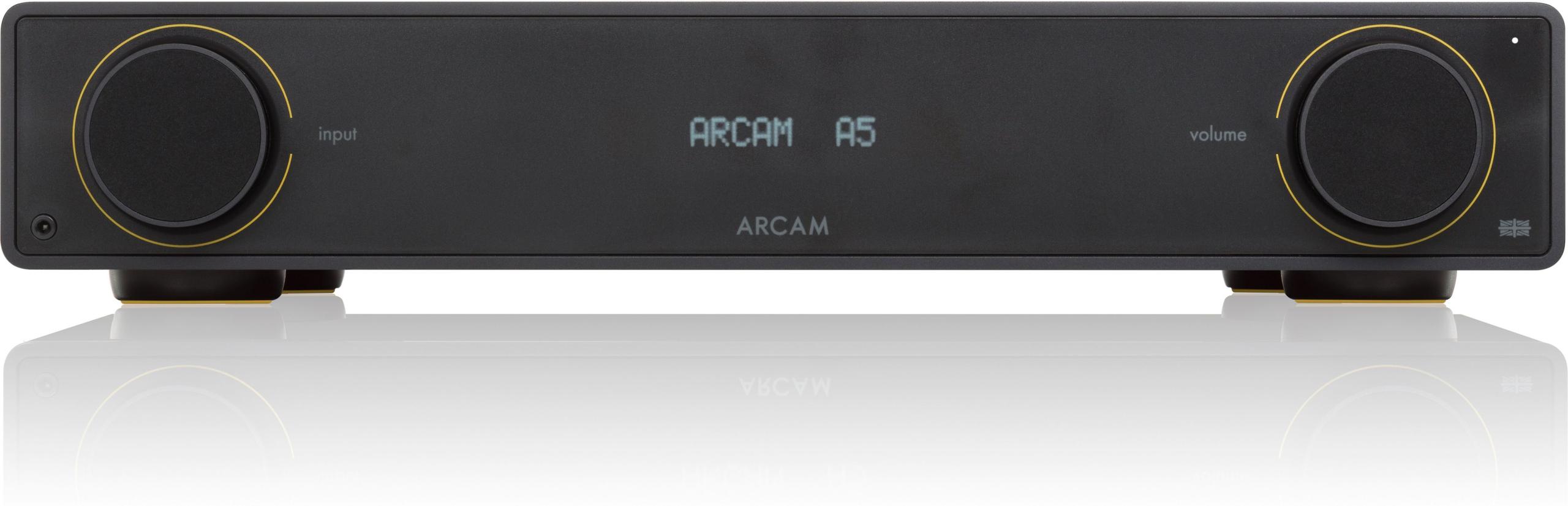
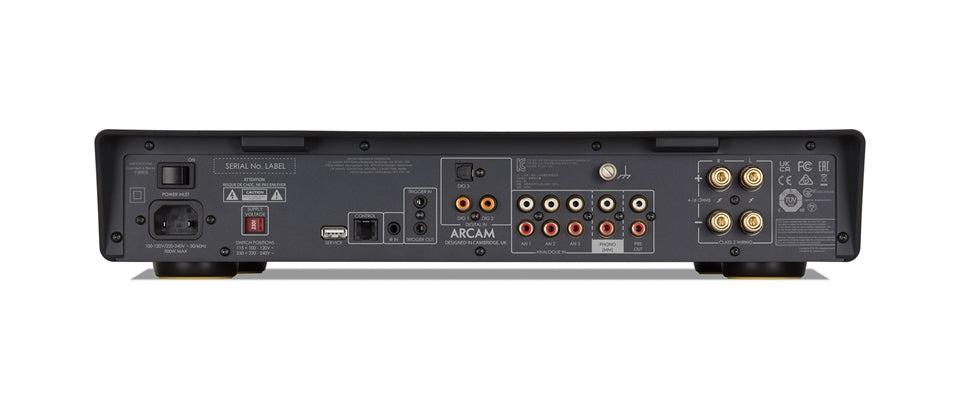
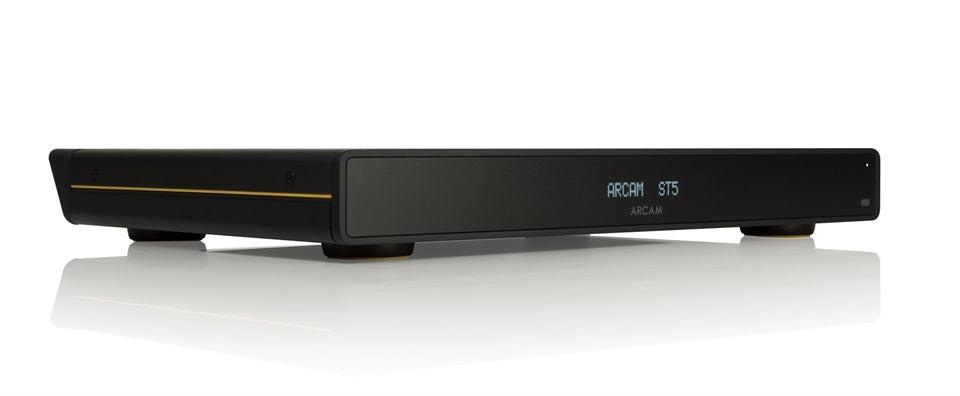
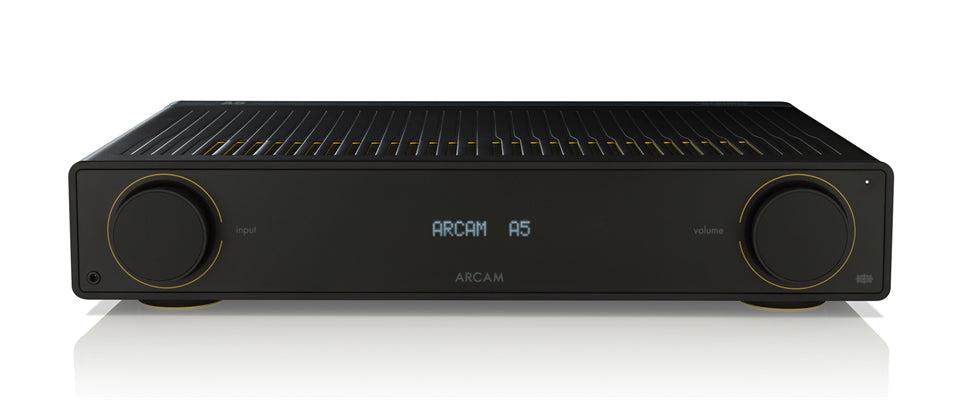
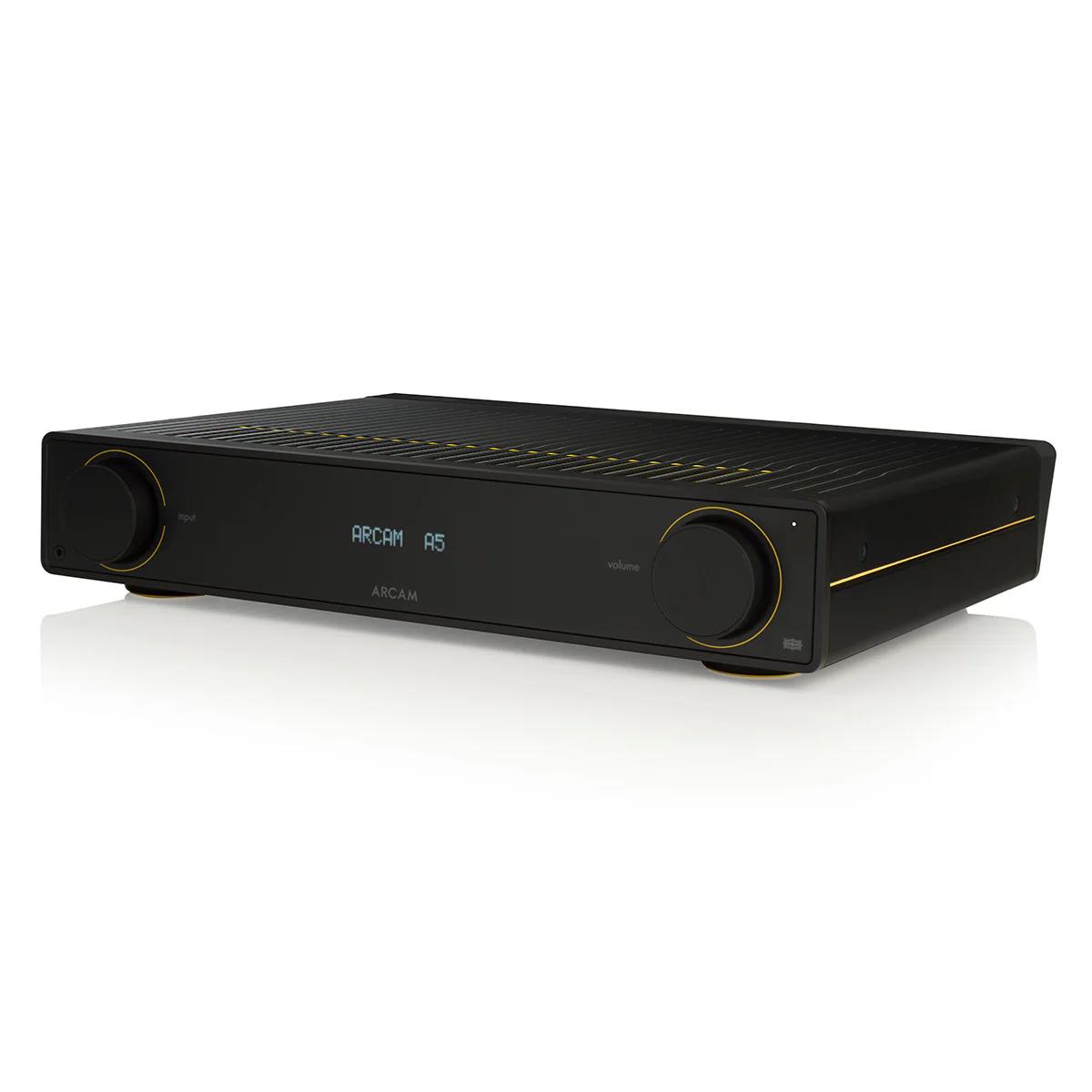
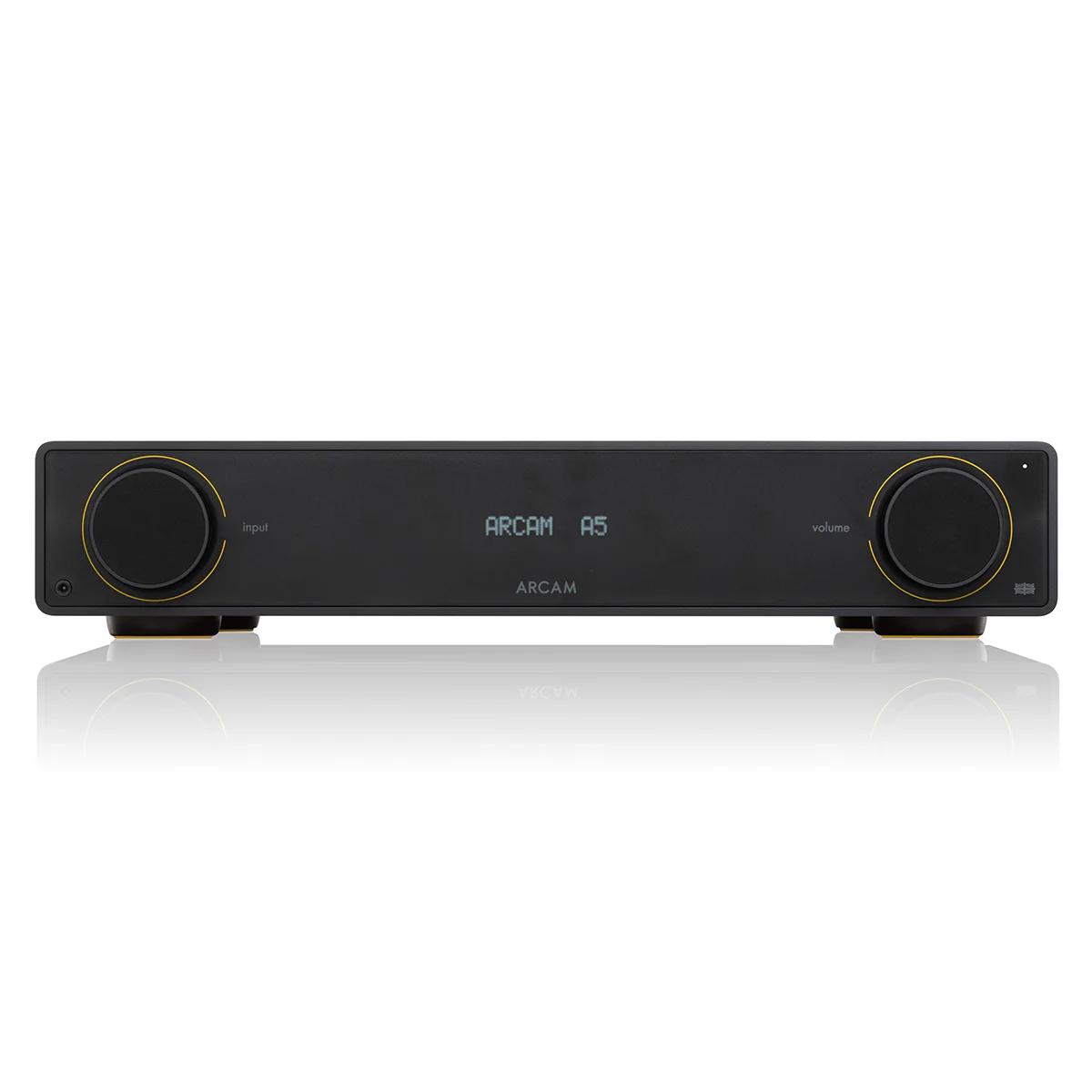
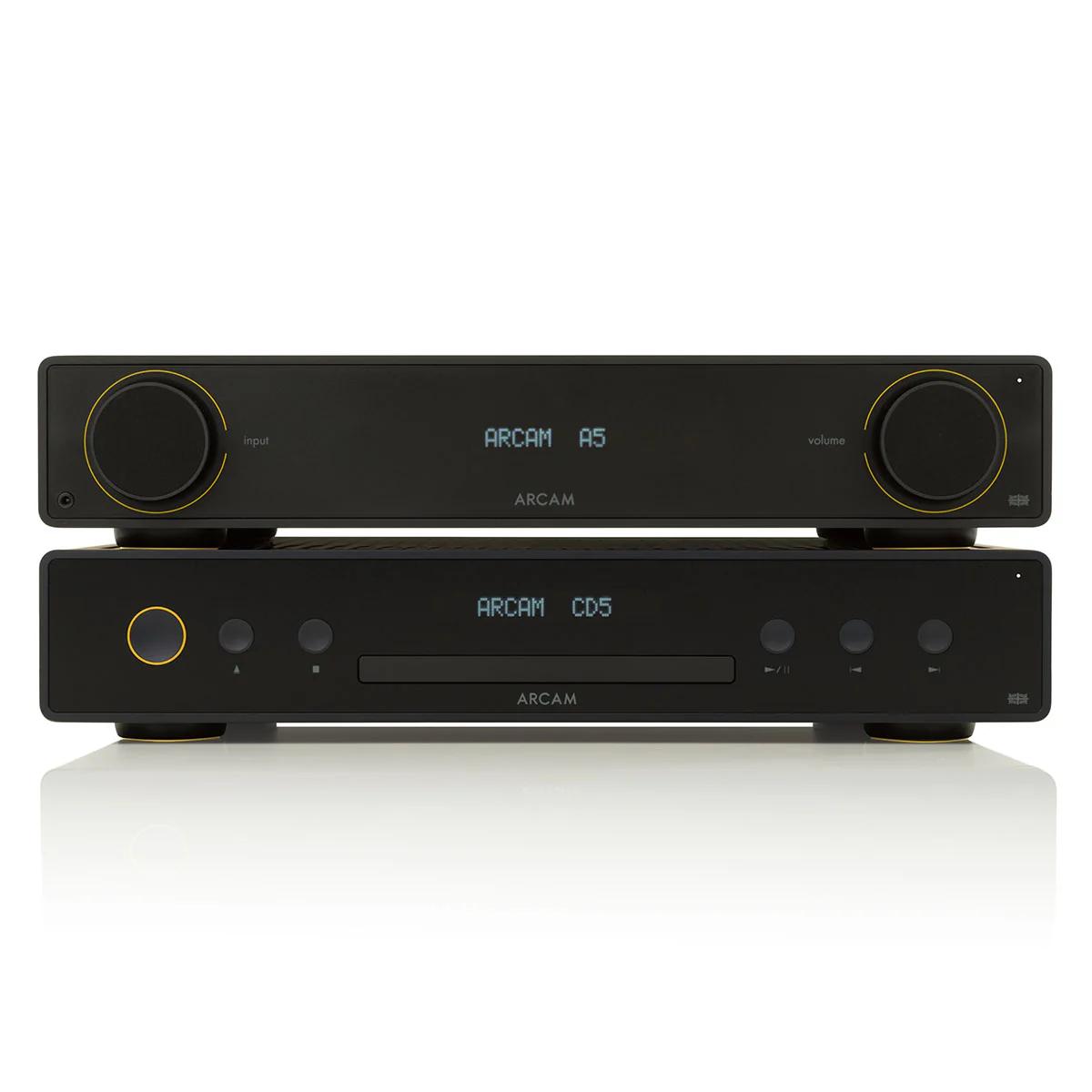
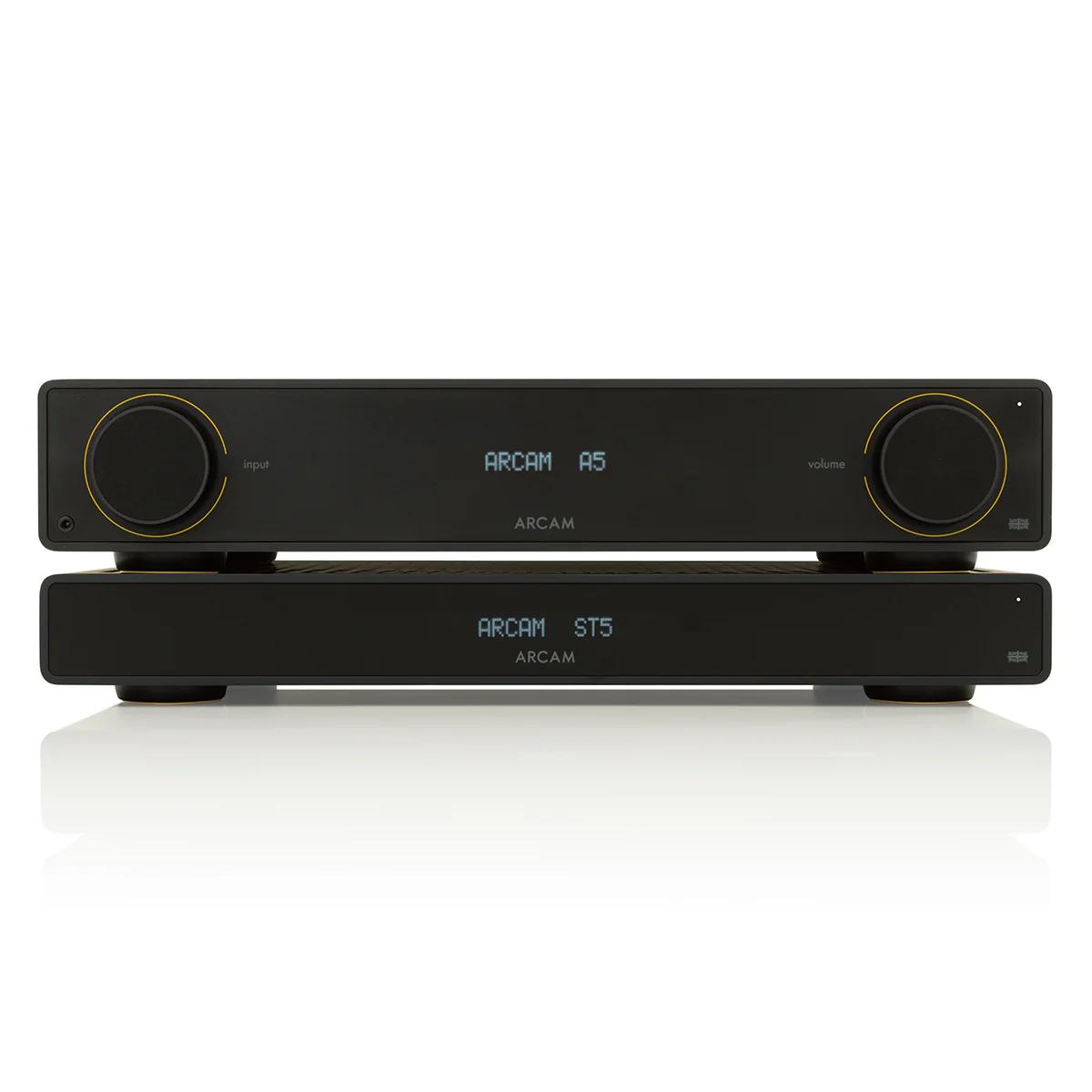
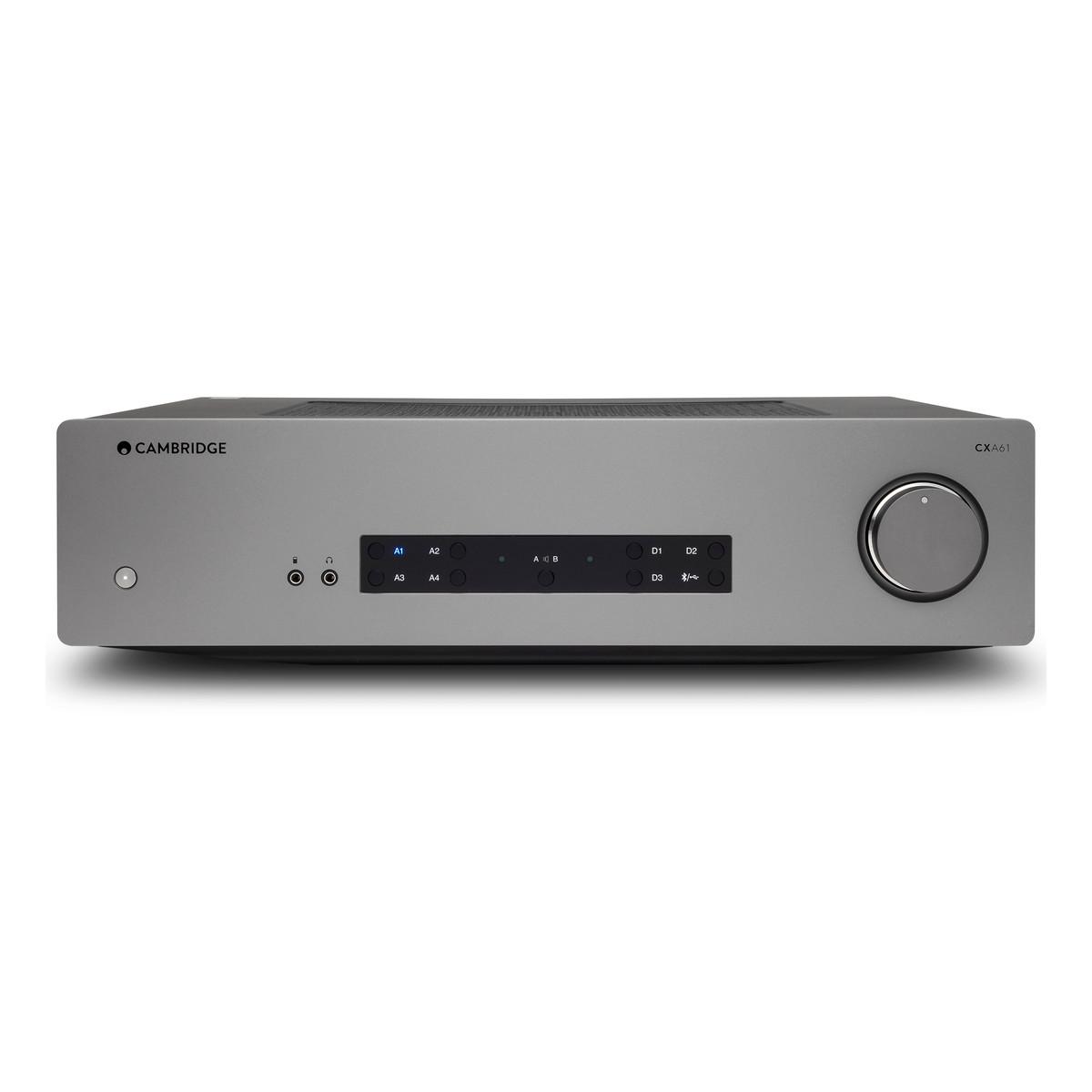
When you're building a serious stereo system, the integrated amplifier serves as the command center – it's the component that takes all your music sources, controls the volume, and delivers clean power to your speakers. Think of it as the conductor of your audio orchestra. Today we're comparing two excellent options that approach this job quite differently: the newer Arcam Radia A5 and the established Cambridge Audio CXA61.
At the time of writing, these amplifiers sit in different price brackets, with the Arcam A5 positioned as the more premium option while the Cambridge CXA61 focuses on delivering exceptional value. Both use Class AB amplification – a design that balances the efficiency of Class B with the sound quality of Class A – but their personalities and strengths differ significantly.
Before diving into specifics, let's establish what matters most in an integrated amplifier. The "integrated" part means it combines a preamplifier (which handles source switching and volume control) with a power amplifier (which drives your speakers) in one box. This is more convenient and often more cost-effective than separate components.
The key performance factors include power output (measured in watts per channel), which determines how loud your system can play and how well it controls demanding speakers. Total Harmonic Distortion (THD) tells us how clean the amplification is – lower numbers mean less coloration of your music. Signal-to-noise ratio indicates how quiet the background is when no music is playing. And the damping factor shows how well the amplifier controls speaker cone movement, affecting bass precision and overall clarity.
Modern integrated amplifiers also need excellent digital-to-analog converters (DACs) since most of our music comes from digital sources. The quality of this conversion process significantly impacts how detailed and natural your digital music sounds.
Released in 2024, the Arcam Radia A5 represents the latest thinking from a company that's been making amplifiers for nearly five decades. Arcam has always prioritized refinement and accuracy, and the A5 continues this tradition while adding thoroughly modern features.
The A5 delivers 50 watts per channel into 8-ohm speakers (the standard measurement) and 75 watts into 4-ohm loads. While these aren't huge numbers, Arcam has focused on making every watt count. The amplifier uses an advanced Class AB design with extremely low distortion – just 0.003% at normal listening levels. This translates to incredibly clean, precise sound reproduction.
What sets the Arcam A5 apart is its premium ESS Sabre ES9018 DAC chip. This is the same DAC technology found in amplifiers costing significantly more. It supports high-resolution audio up to 24-bit/192kHz, which means it can handle studio-quality recordings with all their detail intact. The difference between a mediocre DAC and a great one is like the difference between looking through a dirty window versus crystal-clear glass – everything becomes more defined and natural.
The A5 also includes a high-quality moving magnet phono stage built right in. For vinyl enthusiasts, this is huge – you can connect a turntable directly without needing an external phono preamp. The phono stage has been carefully tuned with the proper input impedance (47kΩ + 100pF for those keeping track) and RIAA equalization curve to make records sound their best.
Perhaps most impressively, the Arcam A5 features two-way Bluetooth 5.2 with Qualcomm's aptX Adaptive technology. Most amplifiers can only receive Bluetooth audio, but the A5 can also transmit. This means you can send music from your system to Bluetooth headphones or wireless speakers – incredibly useful for late-night listening or multi-room setups.
The Cambridge Audio CXA61, which has been available since around 2019, takes a different approach. Cambridge Audio has built their reputation on making amplifiers that simply make music sound engaging and fun. The CXA61 exemplifies this philosophy.
With 60 watts per channel into 8-ohm speakers and a robust 90 watts into 4-ohm loads, the Cambridge CXA61 offers more raw power than the Arcam. This extra headroom means it can drive demanding speakers more easily and maintain composure during dynamic musical passages. The amplifier's oversized toroidal transformer – essentially a very efficient, low-noise power supply – ensures consistent power delivery even when the music gets complex.
The CXA61 uses an ESS Sabre ES9010K2M DAC, which while not quite as premium as the Arcam's chip, still delivers excellent digital audio performance. It actually supports even higher sample rates than the Arcam – up to 32-bit/384kHz PCM and DSD256 – though in practical terms, most music doesn't exceed the Arcam's capabilities.
Where the Cambridge CXA61 really shines is in its sound character. Our research into user and expert reviews consistently highlights its engaging, dynamic presentation. This isn't about adding artificial excitement – it's about the amplifier's ability to preserve the energy and emotion in recordings. Music feels immediate and alive through the CXA61 in a way that more analytical amplifiers sometimes miss.
The CXA61 also offers more comprehensive connectivity. It includes a dedicated subwoofer output (filtered at 3kHz), which is essential for home theater integration or full-range music systems. The dual speaker terminal sets (A and B) allow for bi-wiring speakers or running a second pair in another room.
When comparing power specifications, the numbers tell only part of the story. The Cambridge CXA61's 60-watt rating versus the Arcam A5's 50-watt output might seem significant, but in reality, you'd need to double the power to achieve a noticeable 3dB increase in volume. Both amplifiers will drive most bookshelf and floor-standing speakers to satisfying levels in typical rooms.
The more important difference lies in current delivery – how well the amplifier handles difficult speaker loads. The Cambridge's robust power supply and higher 4-ohm power rating (90W vs 75W) suggest it's better equipped for speakers that present challenging impedance curves. This translates to better bass control and dynamic range with demanding speakers.
However, the Arcam A5 compensates with superior refinement. Its extremely low distortion specification and careful circuit design mean it maintains clarity and detail even at higher volumes. For moderately sensitive speakers in smaller to medium rooms, the difference in raw power becomes less relevant than the quality of that power.
Since most of our music comes from digital sources – streaming services, CDs, or computer audio – the quality of digital-to-analog conversion is crucial. Both amplifiers handle this well, but with different strengths.
The Arcam A5's ESS Sabre ES9018 DAC is genuinely impressive for an integrated amplifier at this price level. It delivers the kind of detail retrieval and natural presentation typically found in dedicated DACs costing hundreds of dollars. High-resolution recordings reveal subtle details in instrument textures and spatial information that lesser DACs miss or blur together.
The Cambridge CXA61's DAC, while capable, represents more of a competent implementation than a standout feature. It handles all common digital formats well and supports impressively high sample rates, but it doesn't have quite the same refinement as the Arcam's converter. In practical terms, this means the Cambridge might not extract every last bit of detail from high-resolution recordings, though it still sounds excellent with standard CD-quality material.
For Bluetooth audio, both amplifiers support high-quality codecs, but the Arcam A5 takes a clear lead with its aptX Adaptive technology. This newer standard can adapt to network conditions and deliver up to 24-bit quality wirelessly – essentially CD quality over Bluetooth. The Cambridge's aptX HD is still very good, but the Arcam's implementation is more advanced and future-proof.
The feature differences between these amplifiers often determine which is better for specific users. The Arcam A5 includes that built-in phono stage, which saves vinyl enthusiasts from buying a separate component. Good external phono preamps cost $200-500, so this inclusion adds significant value for turntable users.
The Cambridge CXA61 counters with more comprehensive output options. The subwoofer output makes it ideal for home theater integration or users who want full-range sound. The A/B speaker terminals are also useful – you might run bookshelf speakers in your main room and outdoor speakers on your deck, switching between them as needed.
For connectivity, the Cambridge offers more digital inputs overall, including a USB-B port for direct computer connection. This is particularly valuable for computer audio enthusiasts who want to bypass their computer's potentially noisy built-in sound card.
Here's where personal preference becomes crucial. Based on our research of expert and user reviews, these amplifiers have distinctly different personalities despite similar technical capabilities.
The Arcam A5 tends toward precision and accuracy. It's the amplifier for listeners who want to hear exactly what's in their recordings without editorial comment from the electronics. Imaging is precise, tonal balance is neutral, and detail retrieval is excellent. This makes it ideal for jazz, classical, and acoustic music where subtle details matter enormously.
The Cambridge CXA61 prioritizes musical engagement over clinical accuracy. It has a slightly warmer tonal balance and excels at conveying the rhythm and energy in music. Rock, pop, and electronic music come alive through the Cambridge in a way that more analytical amplifiers sometimes struggle to match. The soundstage tends to be wider and more enveloping, though perhaps less precisely defined than the Arcam's presentation.
Neither approach is inherently better – it depends on your priorities and musical preferences. If you're the type who enjoys dissecting recordings and hearing every studio detail, the Arcam's approach will likely appeal more. If you want your system to make you tap your feet and get lost in the music, the Cambridge's engaging character might be preferable.
For users planning to integrate their stereo system with home theater, the Cambridge CXA61 offers clear advantages. The dedicated subwoofer output simplifies integration with surround sound processors or AV receivers. You can run stereo through the Cambridge for music listening, then engage the subwoofer for movies.
The Arcam A5 lacks a subwoofer output, making home theater integration more complex. You'd need to use speaker-level connections or external crossover solutions. However, if you're building a dedicated two-channel music system, this isn't a concern.
At the time of writing, these amplifiers occupy different value propositions. The Cambridge CXA61 offers more watts per dollar and has established itself as exceptional value in the mid-range amplifier market. It's the choice for buyers who want proven performance and comprehensive features without paying premium prices.
The Arcam A5 justifies its higher cost with genuinely premium components – particularly that excellent DAC – and advanced features like two-way Bluetooth. For buyers who prioritize having the latest technology and don't mind paying for refinement, it represents solid value at its price point.
Both amplifiers should provide years of reliable service. Arcam backs the A5 with a five-year warranty, demonstrating confidence in its build quality. Cambridge Audio has a strong reputation for reliability, and the CXA61 has been in the market long enough to establish a track record of dependable performance.
Choose the Arcam Radia A5 if you're building a premium stereo system where sound quality takes priority over features. It's ideal for vinyl enthusiasts who want that built-in phono stage, listeners who prioritize wireless audio quality, or anyone who simply wants the latest amplifier technology in a compact, attractive package. The A5 works best with efficient speakers in smaller to medium-sized rooms where its 50-watt output is sufficient.
The Cambridge Audio CXA61 makes more sense for buyers who want maximum value and engaging sound. Choose it if you need more power output, plan to integrate a subwoofer, or simply want an amplifier that makes music sound exciting and fun. It's also the better choice for home theater integration or larger rooms where the extra power matters.
Both amplifiers represent excellent engineering and will serve their owners well for years. The decision ultimately comes down to your priorities: premium components and features with the Arcam, or maximum value and musical engagement with the Cambridge. Either way, you'll end up with an amplifier that brings your music to life in ways that lesser components simply cannot match.
| Arcam Radia A5 | Cambridge Audio CXA61 |
|---|---|
| Power Output - Determines how loud your system can play and speaker compatibility | |
| 50W/8Ω, 75W/4Ω (sufficient for most bookshelf speakers) | 60W/8Ω, 90W/4Ω (better headroom for demanding speakers) |
| DAC Quality - Critical for digital music from streaming, CDs, and computers | |
| Premium ESS Sabre ES9018 (exceptional detail retrieval) | ESS Sabre ES9010K2M (good but less refined) |
| Digital Resolution Support - Future-proofing for high-res audio files | |
| Up to 24-bit/192kHz PCM | Up to 32-bit/384kHz PCM, DSD256 |
| Bluetooth Technology - Wireless streaming quality and features | |
| Bluetooth 5.2 with aptX Adaptive (up to 24-bit, two-way capable) | Bluetooth 4.2 with aptX HD (CD-quality, receive only) |
| Phono Stage - Essential for vinyl enthusiasts | |
| Built-in MM phono stage (saves $200-500 on external preamp) | None (requires separate phono preamp for turntables) |
| Subwoofer Output - Important for home theater integration | |
| None (complicates subwoofer integration) | Dedicated mono output filtered at 3kHz |
| Speaker Outputs - Flexibility for multiple room setups | |
| Single pair of binding posts | A/B speaker terminals (can drive two pairs) |
| Digital Inputs - Connection options for various sources | |
| 2x coaxial, 1x optical | 2x optical, 1x coaxial, 1x USB-B |
| Sound Character - Subjective but important for long-term satisfaction | |
| Precise, analytical, detailed presentation | Engaging, dynamic, musical presentation |
| Dimensions - Space considerations for your audio rack | |
| 17" x 13.5" x 3.2" (more compact) | 16.9" x 13.4" x 4.5" (slightly taller) |
| Total Harmonic Distortion - Lower is better for clean sound | |
| 0.003% at 80% power (exceptionally clean) | <0.002% at 1kHz (also excellent) |
| Warranty - Peace of mind for long-term ownership | |
| 5 years (demonstrates manufacturer confidence) | Standard warranty (varies by region) |
The Cambridge Audio CXA61 is generally better for beginners due to its more engaging sound character and comprehensive connectivity options. It offers more power output (60W vs 50W) and includes features like subwoofer output that make system building easier. The Arcam Radia A5 is more refined but requires more careful speaker matching due to its lower power output.
The Arcam Radia A5 delivers precise, analytical sound with exceptional detail retrieval, making it ideal for critical listening of jazz and classical music. The Cambridge Audio CXA61 offers a more engaging, dynamic presentation that makes rock, pop, and electronic music sound exciting and fun. Both are excellent but serve different listening preferences.
The Arcam Radia A5 has superior digital audio quality thanks to its premium ESS Sabre ES9018 DAC chip, which provides exceptional detail and natural sound reproduction. While the Cambridge Audio CXA61 uses a capable ES9010K2M DAC, it doesn't match the refinement of the Arcam's converter for high-resolution digital sources.
Only the Arcam Radia A5 includes a built-in moving magnet phono stage, allowing direct turntable connection without additional equipment. The Cambridge Audio CXA61 requires a separate phono preamp for vinyl playback, which adds cost and complexity for turntable users.
The Cambridge Audio CXA61 is significantly better for home theater integration because it includes a dedicated subwoofer output and dual speaker terminals (A/B). The Arcam Radia A5 lacks subwoofer output, making it more challenging to integrate with surround sound systems or add bass extension.
The Arcam Radia A5 offers superior Bluetooth with version 5.2 and aptX Adaptive technology, supporting up to 24-bit wireless audio and unique two-way functionality. The Cambridge Audio CXA61 uses Bluetooth 4.2 with aptX HD, which is still excellent but less advanced than the Arcam's implementation.
The Cambridge Audio CXA61 typically offers better value, providing more power output, comprehensive connectivity, and proven performance at a lower price point. The Arcam Radia A5 costs more but justifies this with premium components like its high-end DAC and advanced Bluetooth technology.
The Cambridge Audio CXA61 works well with a wider range of speakers due to its higher power output (60W/90W into 8Ω/4Ω) and robust current delivery. The Arcam Radia A5 is better suited to efficient bookshelf speakers or moderate-sensitivity floor-standing speakers in smaller to medium rooms.
The Arcam Radia A5 is slightly more compact at 17" x 13.5" x 3.2" compared to the Cambridge Audio CXA61 at 16.9" x 13.4" x 4.5". Both are reasonably sized for modern audio racks, but the Arcam takes up less vertical space.
Yes, both the Arcam Radia A5 and Cambridge Audio CXA61 include front-panel 3.5mm headphone outputs. The Arcam also offers unique Bluetooth headphone streaming capability, allowing wireless connection to Bluetooth headphones directly from the amplifier.
The Cambridge Audio CXA61 offers more digital connectivity with two optical inputs, one coaxial input, and a USB-B port for computer audio. The Arcam Radia A5 provides two coaxial and one optical input, which covers most needs but offers fewer total connections.
Both amplifiers offer excellent build quality and reliability. The Arcam Radia A5 comes with a generous 5-year warranty, demonstrating manufacturer confidence in its construction. The Cambridge Audio CXA61 has been available since 2019 and has established a strong track record for dependable performance among users and reviewers.
We've done our best to create useful and informative comparisons to help you decide what product to buy. Our research uses advanced automated methods to create this comparison and perfection is not possible - please contact us for corrections or questions. These are the sites we've researched in the creation of this article: whathifi.com - upscaleaudio.com - hifiverse.io - theaudiotailor.com.au - crutchfield.com - musicdirect.com - crutchfield.com - listenup.com - audioadvice.com - houseofstereo.com - skybygramophone.com - arcam.co.uk - fidelity-magazine.com - arcam.co.uk - sweetwater.com - skybygramophone.com - themasterswitch.com - theaudiophileman.com - youtube.com - forums.whathifi.com - crutchfield.com - youtube.com - youtube.com - hifihaven.org - crutchfield.com - audioguru.com - listenup.com - forums.whathifi.com - manuals.cambridgeaudio.com - alpha-audio.net - hifichoice.com - cambridgeaudio.com - the-ear.net - speakerdecision.com

Privacy Policy
Terms and Conditions - Affiliate Policy
Home Security
© Copyright 2008-2026.
11816 Inwood Rd #1211, Dallas, TX 75244