

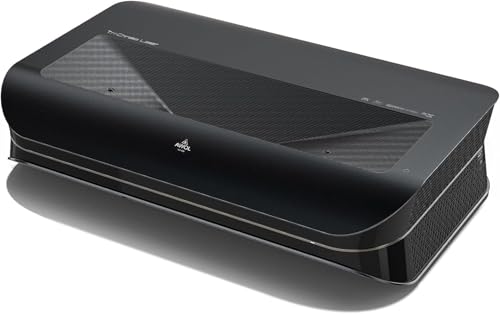
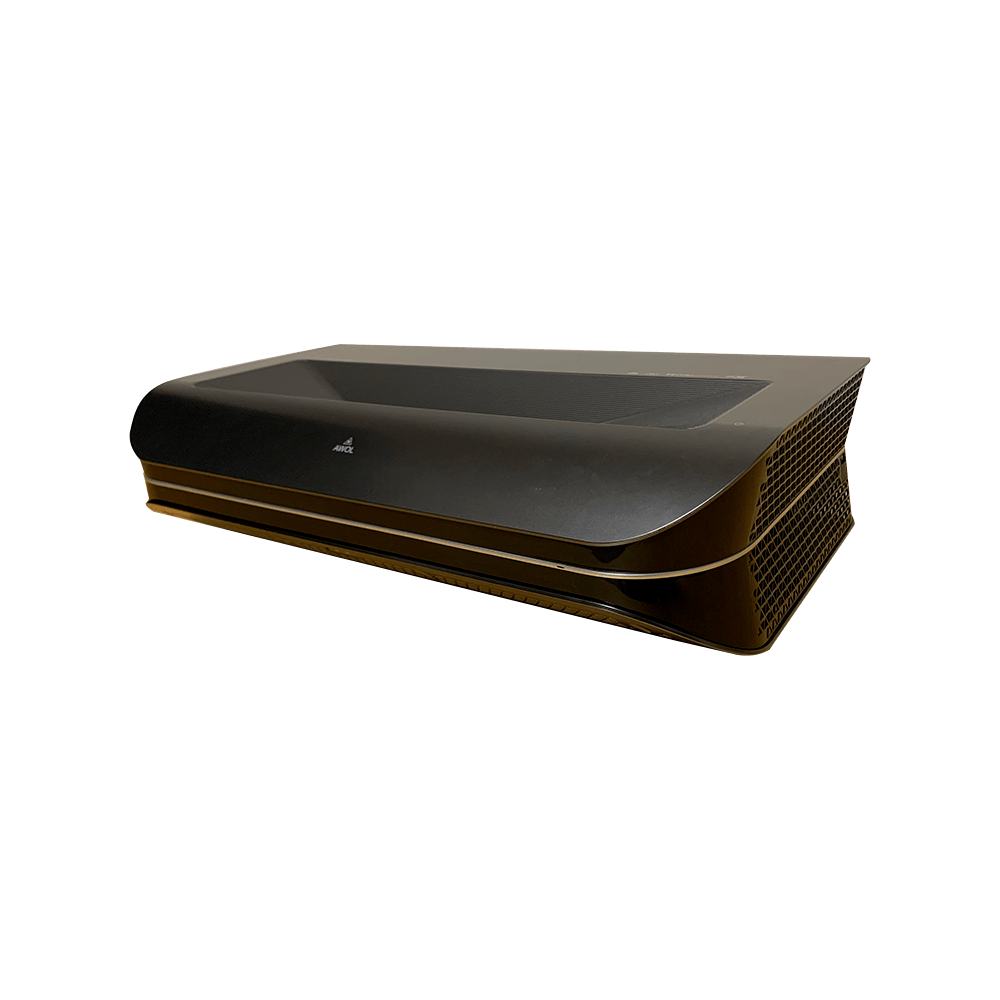
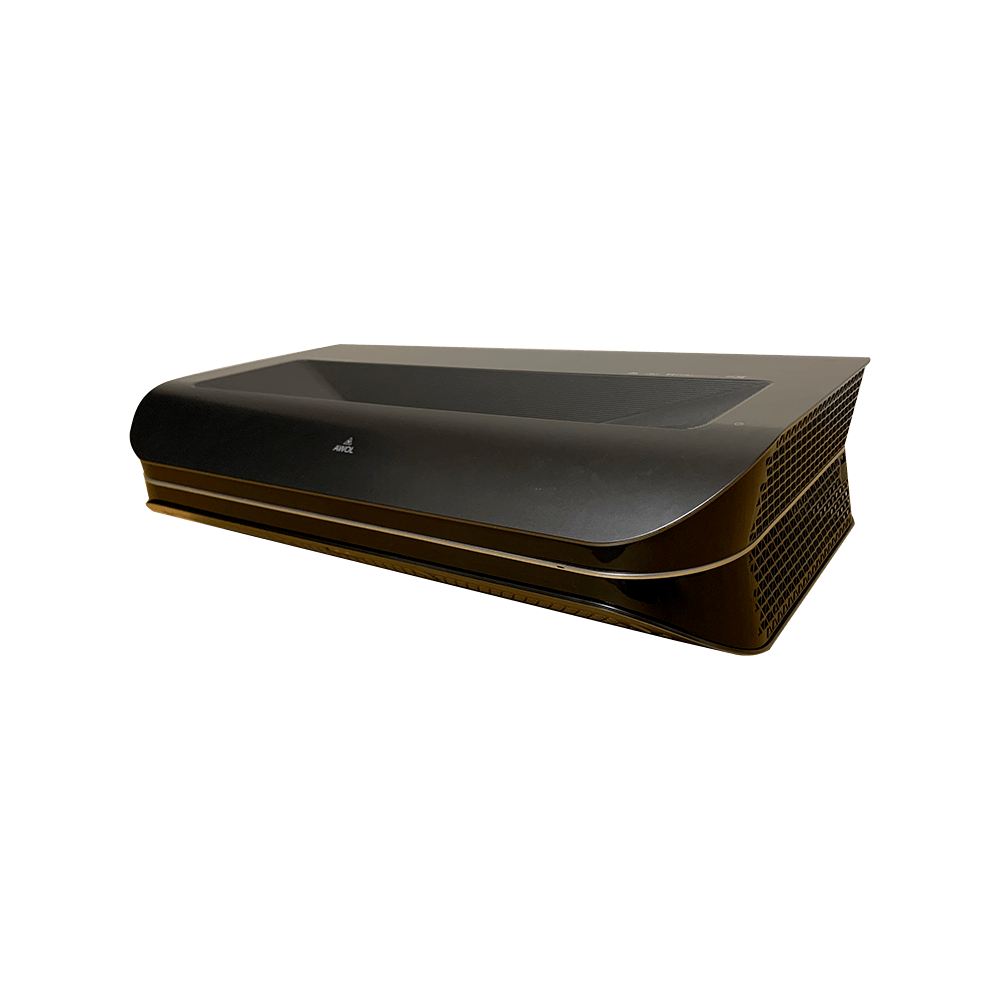
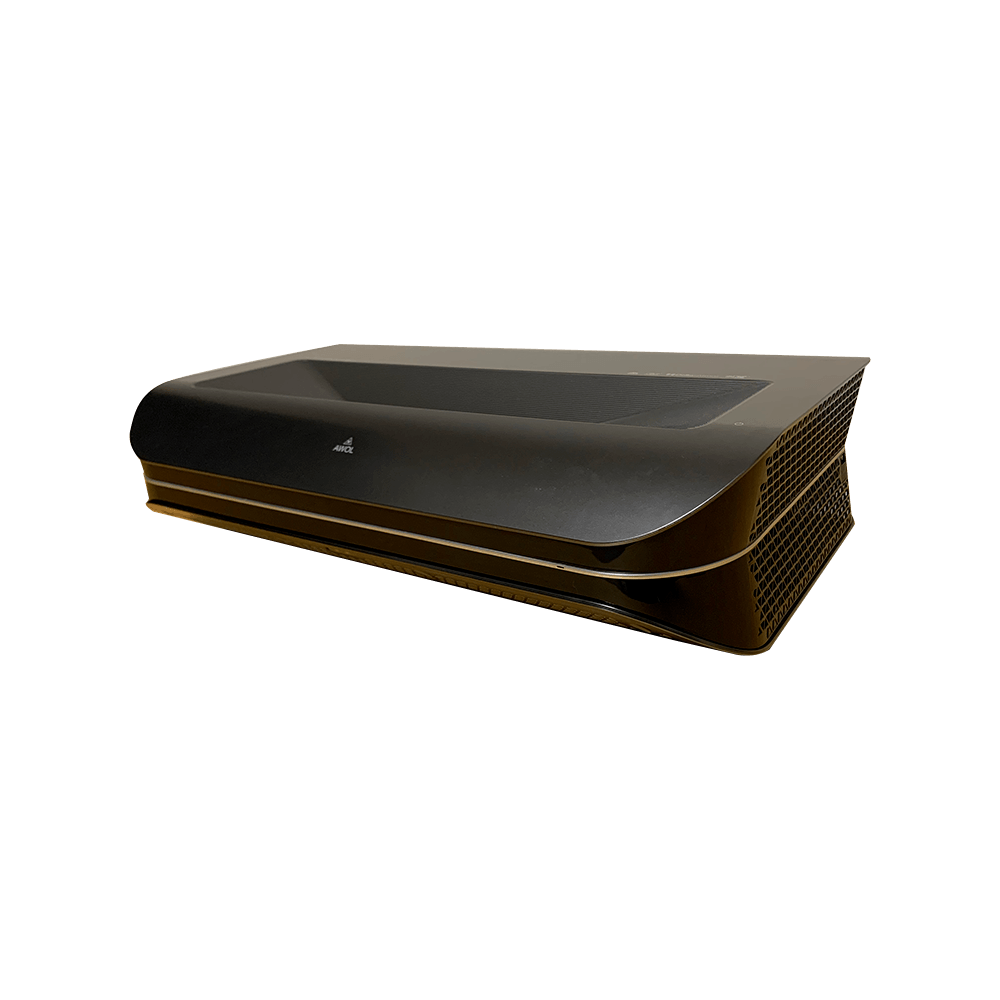

If you've been dreaming of turning your living room into a home theater without mounting anything on the ceiling or dealing with long cable runs, ultra short throw (UST) projectors might be exactly what you're looking for. These clever devices sit just inches from your wall and beam massive 100+ inch images that would make your neighbors' 75-inch TV look tiny. Today we're diving deep into two popular models from AWOL Vision: the LTV-3000 Pro and the LTV-2500.
Before we jump into the comparison, let's talk about what makes UST projectors different from traditional projectors. Traditional projectors need to be mounted far from the screen—sometimes 10+ feet away—which creates shadows when people walk by and requires ceiling mounting or long HDMI cables. Ultra short throw projectors flip this concept on its head.
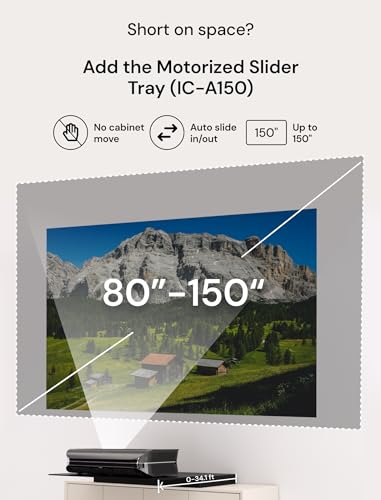
These projectors use specialized wide-angle lenses and mirrors to project large images from extremely close distances. The "throw ratio" of 0.25:1 means that for every 0.25 feet the projector sits from the wall, you get 1 foot of screen width. In practical terms, both the LTV-3000 Pro and LTV-2500 can create a 100-inch diagonal image while sitting less than two feet from your wall.
This setup eliminates shadows completely—you can walk right in front of the screen without blocking the image. It also means the projector can sit on a TV stand or low cabinet, looking more like a soundbar than traditional home theater equipment.
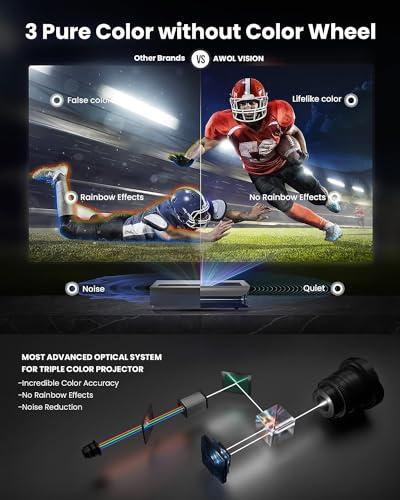
Both projectors share AWOL's core technology philosophy, which centers around RGB laser light sources. This might sound technical, but it's actually a big deal for picture quality. Traditional projectors often use single-color laser or LED light sources with spinning color wheels to create different colors. This approach, while cheaper, can cause "rainbow artifacts" (brief color separation effects) and limits color accuracy.
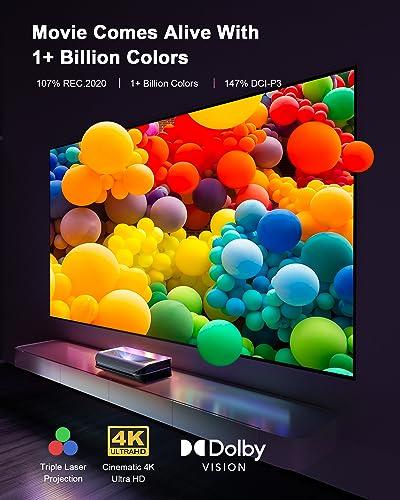
RGB laser systems use three separate lasers—red, green, and blue—that combine to create every color you see on screen. This tri-chroma approach eliminates color wheels entirely and delivers what AWOL claims is 107% coverage of the BT.2020 color space. That's marketing speak for "really vibrant, accurate colors that look better than most TVs."
The laser light source also lasts an impressive 25,000 hours—that's about 17 years of typical use before you'd need any maintenance. Compare that to traditional lamp-based projectors that need bulb replacements every 2-3 years.
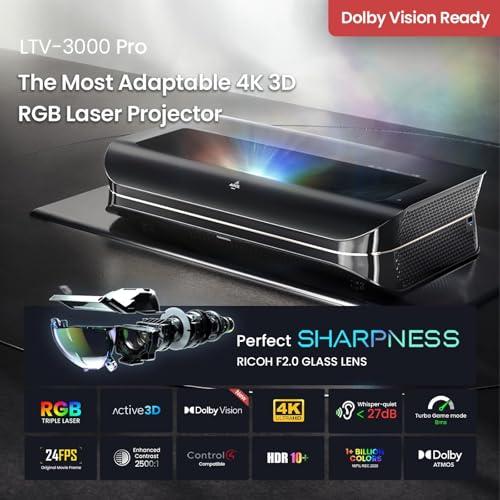
Released in 2023, the LTV-3000 Pro represents AWOL's mid-tier offering (they also make an even brighter LTV-3500 model). The key selling point here is brightness: 2,000 ISO lumens with peaks up to 3,000 lumens. In our research of professional reviews, the actual measured brightness often exceeds AWOL's claims, with some testers recording over 2,500 ANSI lumens.
Why does brightness matter so much? In the projector world, lumens are like horsepower in cars—more is almost always better. Higher brightness means you can watch in rooms with ambient light, use larger screens, and get vibrant colors even in challenging conditions. The LTV-3000 Pro excels in mixed lighting situations where you might not want to completely darken the room.
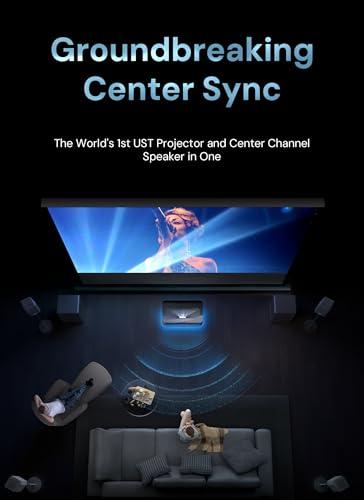
The audio system deserves mention too. The 36-watt stereo speakers (18 watts per channel) with Dolby Atmos support are genuinely impressive for built-in projector speakers. While they won't replace a dedicated sound system, they're clear enough for dialogue and have enough power to fill a medium-sized room.
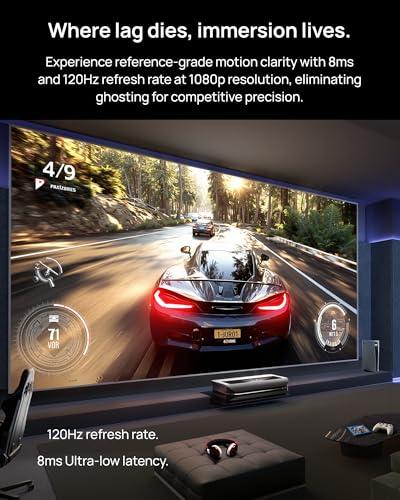
Gaming performance is another highlight. With verified input lag of just 15 milliseconds at 4K/60Hz and an impressive 8ms at 1080p/120Hz, the LTV-3000 Pro can handle console gaming without the delay that makes fast-paced games frustrating.
The LTV-2500 takes the same core technology platform and optimizes it for cost-conscious buyers. At 1,700 ISO lumens (2,600 peak), it's noticeably dimmer than its bigger sibling, but still bright enough for controlled lighting conditions.
What's interesting is how little else changes. Both projectors use the same high-quality Ricoh F2.0 glass lens assembly, the same 0.47-inch DLP chip, and identical RGB laser technology. The LTV-2500 even includes the same comprehensive HDR support, including the relatively rare Dolby Vision format that many competing projectors lack.
Where the LTV-2500 particularly shines, based on user reviews we've analyzed, is 3D performance. The combination of laser brightness and active 3D support creates what many users describe as exceptional 3D movie experiences. Since 3D glasses typically dim the image by about 50%, having a bright projector helps maintain image quality during 3D viewing.
The 300-400 lumen difference between these models might not sound dramatic, but it translates to meaningful real-world differences. Our research suggests the LTV-3000 Pro maintains good image quality in rooms with moderate ambient light—think family room with some lamps on—while the LTV-2500 really wants darker conditions to look its best.
For screen size, both handle 100-120 inch images excellently in their ideal conditions. Push beyond 130 inches, and the LTV-3000 Pro's extra brightness becomes more valuable, especially if your room isn't perfectly dark.
Here's where we need to be honest: both projectors struggle with out-of-the-box color accuracy. Despite the impressive laser technology, the default color settings tend toward oversaturation, particularly with standard dynamic range (SDR) content. Professional reviewers consistently note that both models benefit significantly from calibration.
The LTV-3000 Pro seems particularly challenging to calibrate, with some reviewers reporting the need for multiple factory resets to achieve good results. This suggests that if color accuracy matters to you, budget for professional calibration (typically $300-500) or be prepared to spend time with test patterns and measurement tools.
HDR content fares better on both models. The tone mapping—how the projector translates high dynamic range information to what you see—is genuinely impressive. Dark scenes retain detail without crushing blacks completely, and bright scenes maintain punch without looking overexposed.
Both projectors include surprisingly capable audio systems. The LTV-3000 Pro's 36-watt system has more power, but even the LTV-2500's speakers earn praise for clear dialogue reproduction. Multiple review sources mention eliminating the "what did he say?" problem that plagues many built-in TV speakers.
That said, neither replaces a proper sound system for serious home theater use. Think of the built-in audio as a excellent starting point that might satisfy casual viewers but will leave audio enthusiasts wanting more.
Both projectors run Android 9.0 and include Amazon Fire TV Stick 4K Max for streaming. This dual-interface approach can feel clunky—you're essentially managing two separate smart platforms—but ensures broad app compatibility.
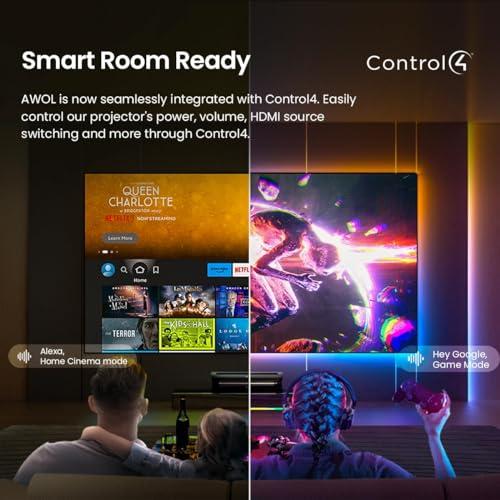
The LTV-3000 Pro distinguishes itself with professional integration capabilities. IP control support for systems like Control4, Crestron, and PJLink matters if you're building a serious home theater with automation. The LTV-2500 lacks these features, limiting it to basic remote control operation.
One area where the LTV-2500 receives particular praise is 3D movie viewing. User reviews consistently highlight the 3D experience as exceptional, with the projector's brightness helping overcome the typical dimming effect of 3D glasses.
Both models support active 3D using DLP-Link technology, which synchronizes with compatible 3D glasses. The LTV-2500 even includes glasses, making it ready for 3D viewing out of the box. While 3D content has become less common since its peak popularity around 2010-2015, enthusiasts still treasure their 3D movie collections, and these projectors deliver excellent performance for that niche.
Both projectors share identical installation requirements thanks to the same 0.25:1 throw ratio. You'll need a stable surface about 8-20 inches from your wall or screen, depending on desired image size. The 21-pound weight means most TV stands or dedicated projector tables work fine.
Focus adjustment is motorized on both models, and 8-point keystone correction helps fine-tune geometry if your placement isn't perfectly aligned. The electric focus is particularly helpful since UST projectors are sensitive to positioning—moving the projector even slightly can affect focus uniformity.
One important consideration: both projectors benefit significantly from ambient light rejecting (ALR) screens. These specialized screens, which cost $300-800 depending on size, help maintain contrast by reflecting overhead lighting away from viewers while preserving the projected image. While not strictly necessary, ALR screens transform performance in rooms that aren't perfectly dark.
Pricing for both models has fluctuated since release, but the LTV-3000 Pro typically commands a premium of $800-1,200 over the LTV-2500. Whether that premium makes sense depends on your specific needs.
The LTV-3000 Pro delivers roughly 20% more brightness, verified gaming specifications, and professional integration features. If you need those capabilities, the premium feels justified. If you're primarily watching in light-controlled conditions on screens under 120 inches, the LTV-2500 delivers 90% of the experience at a better price point.
You're setting up in a multi-use family room where complete darkness isn't always possible. The extra brightness makes a real difference for daytime viewing or when you want some ambient lighting during movies.
Gaming matters to you. The verified low input lag specifications make this a solid choice for console gaming, though both projectors likely perform similarly in practice.
You're building a sophisticated home theater system. The IP control capabilities matter for professional installation and automation systems.
You want maximum flexibility for future changes. Higher brightness gives you more options for room changes, larger screens, or different ambient light conditions.
You have a dedicated theater room or can control lighting effectively. In dark conditions, the brightness difference becomes much less noticeable.
You're interested in 3D movies. User reviews consistently praise this model's 3D performance, and it includes the glasses you'll need.
Value matters more than peak performance. The LTV-2500 delivers excellent image quality in appropriate conditions while leaving more budget for screens, seating, or audio upgrades.
You want straightforward operation. Without IP control complexities, this model focuses on core projection performance.
Both projectors represent solid choices in the competitive UST market, sharing impressive laser technology and comprehensive feature sets. The decision ultimately comes down to brightness needs versus budget considerations.
The LTV-3000 Pro justifies its premium primarily through brighter output and smart home integration features. If you need that brightness for ambient light rejection or large screens, the extra cost makes sense. The LTV-2500 offers remarkable value, delivering nearly identical image quality in controlled conditions while leaving more budget for other home theater components.
Either choice will transform your viewing experience compared to traditional TVs, offering that magical "theater at home" feeling that makes movies feel special again. The question is whether you need the extra brightness headroom of the LTV-3000 Pro or can achieve your goals with the excellent value proposition of the LTV-2500.
| AWOL Vision LTV-3000 Pro | AWOL Vision LTV-2500 |
|---|---|
| Brightness - Critical for daytime viewing and large screens | |
| 2,000 ISO lumens / 3,000 peak lumens (excellent ambient light performance) | 1,700 ISO lumens / 2,600 peak lumens (requires controlled lighting) |
| Light Source Technology - Determines color accuracy and lifespan | |
| RGB Triple Laser (25,000 hour lifespan, no color wheel) | RGB Triple Laser (25,000 hour lifespan, no color wheel) |
| Resolution & Display | |
| 4K UHD (3840×2160) via 0.47" DLP chip | 4K UHD (3840×2160) via 0.47" DLP chip |
| HDR Support - Essential for modern streaming content | |
| Dolby Vision, HDR10+, HDR10, HLG (rare Dolby Vision support) | Dolby Vision, HDR10+, HDR10, HLG (rare Dolby Vision support) |
| Gaming Performance - Input lag matters for console gaming | |
| 15ms at 4K/60Hz, 8ms at 1080p/120Hz (verified specs) | Gaming capable but specs unverified |
| Audio System - Built-in sound quality | |
| 36W stereo (18W × 2) with Dolby Atmos | Clear dialogue, multiple sound modes including Atmos |
| Smart Home Integration - Professional installation features | |
| IP control (PJLink, Control4, Crestron, Savant) | Basic remote control only |
| 3D Capability - For 3D movie enthusiasts | |
| Active 3D support via DLP-Link | Active 3D support with included glasses (praised by users) |
| Throw Distance - Space requirements | |
| 0.25:1 ratio (100" image from ~20" distance) | 0.25:1 ratio (100" image from ~20" distance) |
| Power Consumption | |
| 185W (higher due to increased brightness) | 175W (slightly more efficient) |
| Color Accuracy - Out-of-box performance | |
| Poor calibration, requires professional setup | Poor calibration, but better for casual users |
| Best Screen Size Range | |
| 100-150" (brightness supports larger screens well) | 100-120" (optimal performance range) |
| Ideal Room Conditions | |
| Mixed lighting acceptable, family rooms | Light-controlled spaces, dedicated theaters |
| Target User | |
| Bright room setups, gamers, smart home enthusiasts | Budget-conscious buyers, 3D fans, controlled lighting |
The primary difference is brightness output. The AWOL Vision LTV-3000 Pro delivers 2,000 ISO lumens compared to the LTV-2500's 1,700 ISO lumens. This 300-lumen advantage makes the LTV-3000 Pro better for rooms with ambient light and larger screen sizes above 120 inches.
The AWOL Vision LTV-3000 Pro is definitively better for bright rooms. Its higher brightness output allows for comfortable daytime viewing and performance in family rooms with some ambient lighting. The LTV-2500 requires more controlled lighting conditions to look its best.
Yes, both the AWOL Vision LTV-3000 Pro and LTV-2500 feature identical 4K UHD resolution and comprehensive HDR support including Dolby Vision, HDR10+, and HDR10. They use the same core display technology with RGB triple laser light sources.
The AWOL Vision LTV-3000 Pro has verified gaming specifications with 15ms input lag at 4K/60Hz and 8ms at 1080p/120Hz. While the LTV-2500 likely offers similar performance, the LTV-3000 Pro has confirmed low-latency specs that matter for competitive gaming.
Both projectors support active 3D viewing, but the AWOL Vision LTV-2500 receives particular praise for 3D performance and includes 3D glasses. The LTV-3000 Pro also supports 3D but doesn't include glasses in the package.
Both the AWOL Vision LTV-3000 Pro and LTV-2500 use identical 0.25:1 throw ratios, meaning they can create a 100-inch image from approximately 20 inches away from the wall. Installation requirements are essentially the same for both models.
The AWOL Vision LTV-2500 typically offers better value for buyers with light-controlled rooms and screens under 120 inches. The LTV-3000 Pro justifies its premium price primarily through higher brightness and smart home integration features.
Only the AWOL Vision LTV-3000 Pro includes IP control capabilities for professional smart home systems like Control4, Crestron, and PJLink. The LTV-2500 lacks these integration features and relies on basic remote control operation.
Both the AWOL Vision LTV-3000 Pro and LTV-2500 use RGB laser technology rated for 25,000 hours of operation. This translates to approximately 17 years of typical home use before requiring any maintenance or replacement.
The AWOL Vision LTV-3000 Pro features a more powerful 36W stereo system with Dolby Atmos support. The LTV-2500 also includes capable built-in speakers with clear dialogue reproduction, though with less specified power output than the LTV-3000 Pro.
For dedicated home theaters with controlled lighting, the AWOL Vision LTV-2500 delivers excellent performance at better value. However, if you plan screens larger than 120 inches or want maximum brightness flexibility, the LTV-3000 Pro provides additional headroom.
Both the AWOL Vision LTV-3000 Pro and LTV-2500 share similar color accuracy challenges, with oversaturated out-of-box settings that benefit from calibration. The LTV-3000 Pro is reportedly more difficult to calibrate, while the LTV-2500 may be more forgiving for casual users.
We've done our best to create useful and informative comparisons to help you decide what product to buy. Our research uses advanced automated methods to create this comparison and perfection is not possible - please contact us for corrections or questions. These are the sites we've researched in the creation of this article: bestbuy.com - projectorcentral.com - rtings.com - techaeris.com - hometechnologyreview.com - awolvision.de - androidcentral.com - awolvision.com - projectorreviews.com - dreamediaav.com - bestbuy.com - youtube.com - youtube.com - awolvisionpro.com - awolvision.com - awolvision.com - projectorjunkies.com - dreamediaav.com - projectorjunkies.com - avsforum.com - nothingprojector.com - projectorreviews.com - vividstorm.eu - projectorcentral.com - projectorcentral.com - projectorcentral.com - avsforum.com

Privacy Policy
Terms and Conditions - Affiliate Policy
Home Security
© Copyright 2008-2026.
11816 Inwood Rd #1211, Dallas, TX 75244