

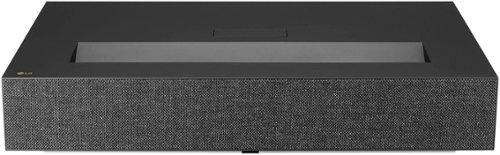
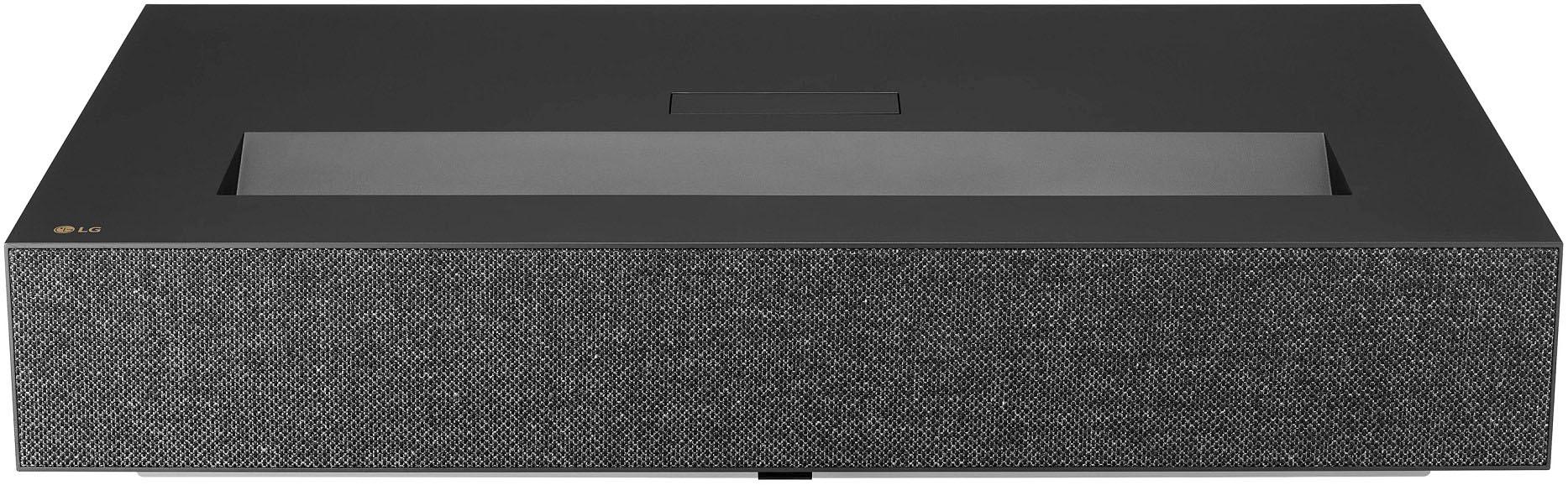
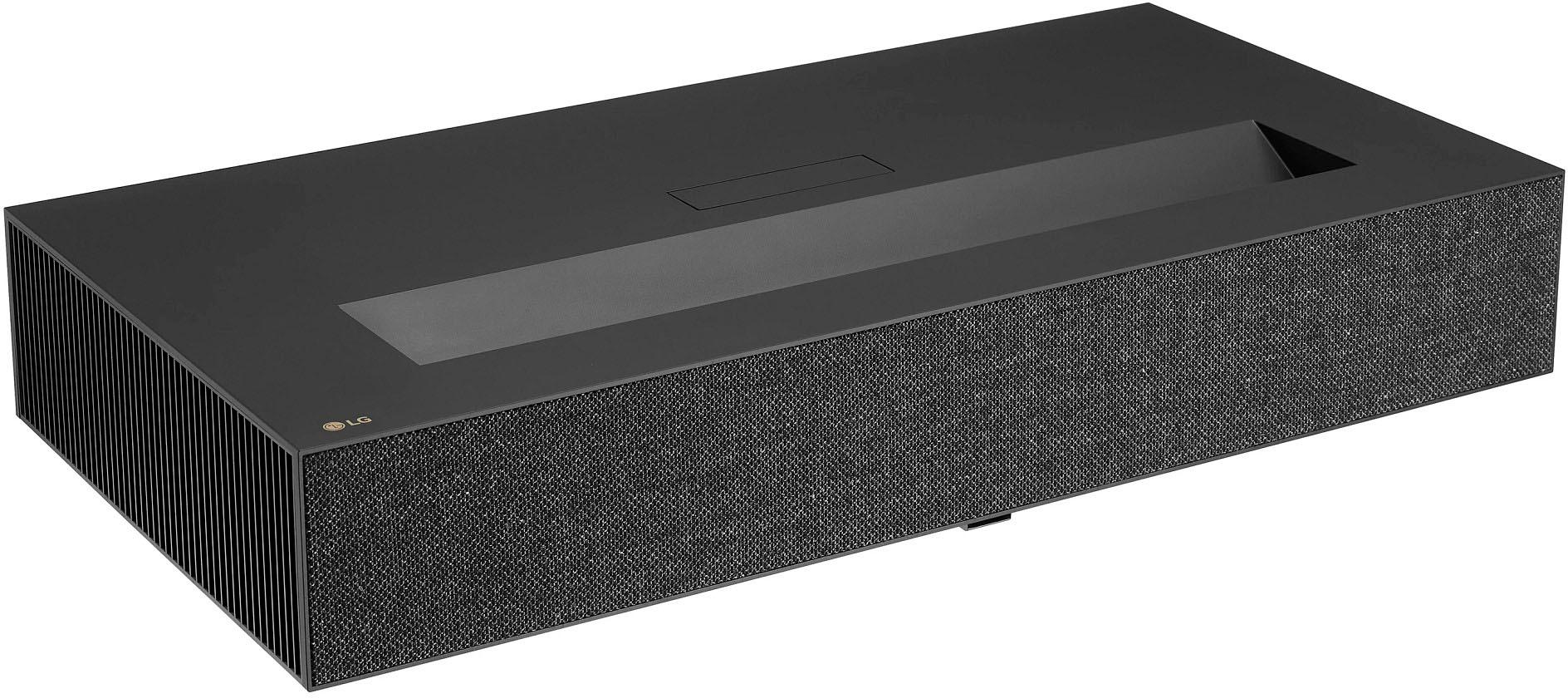
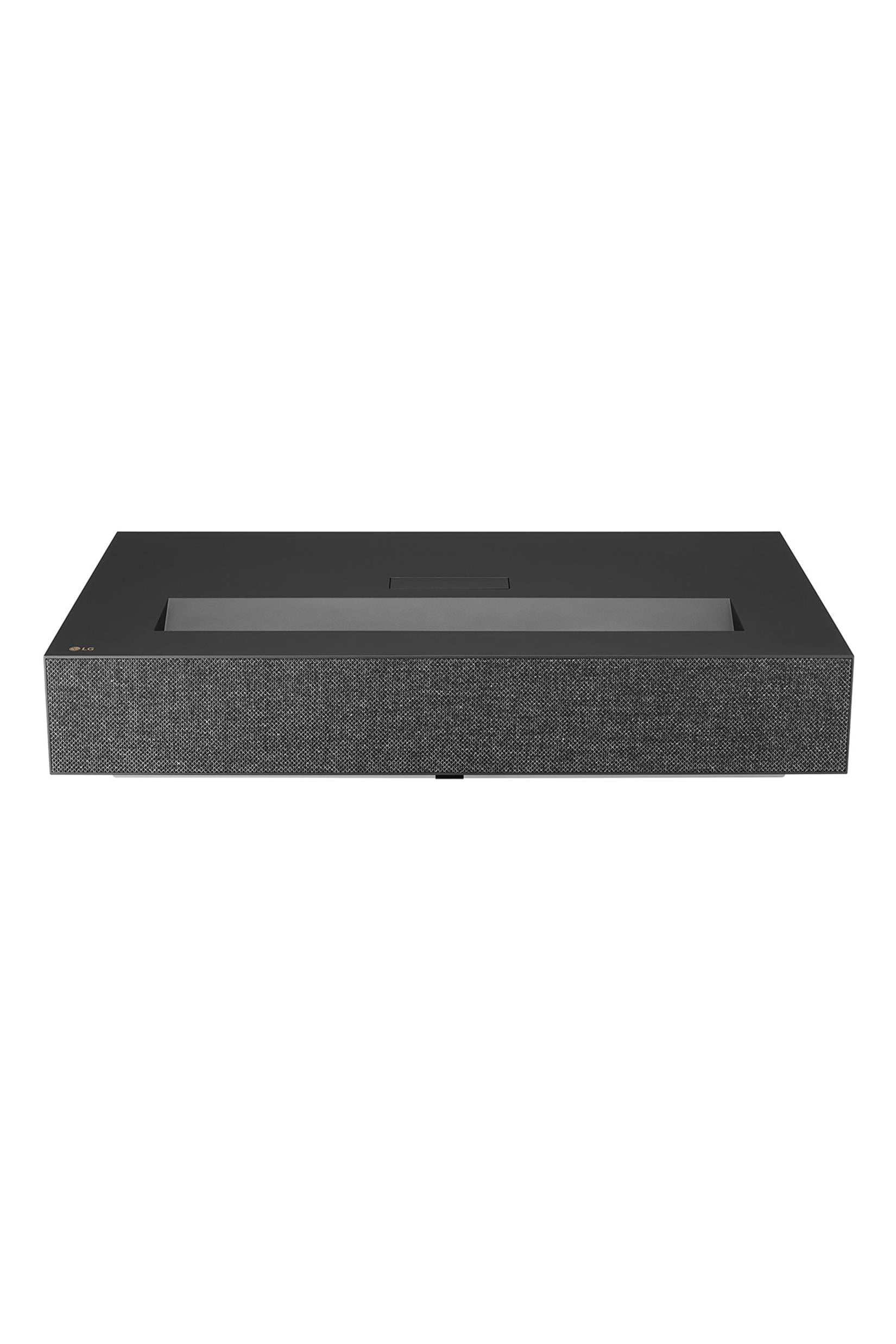
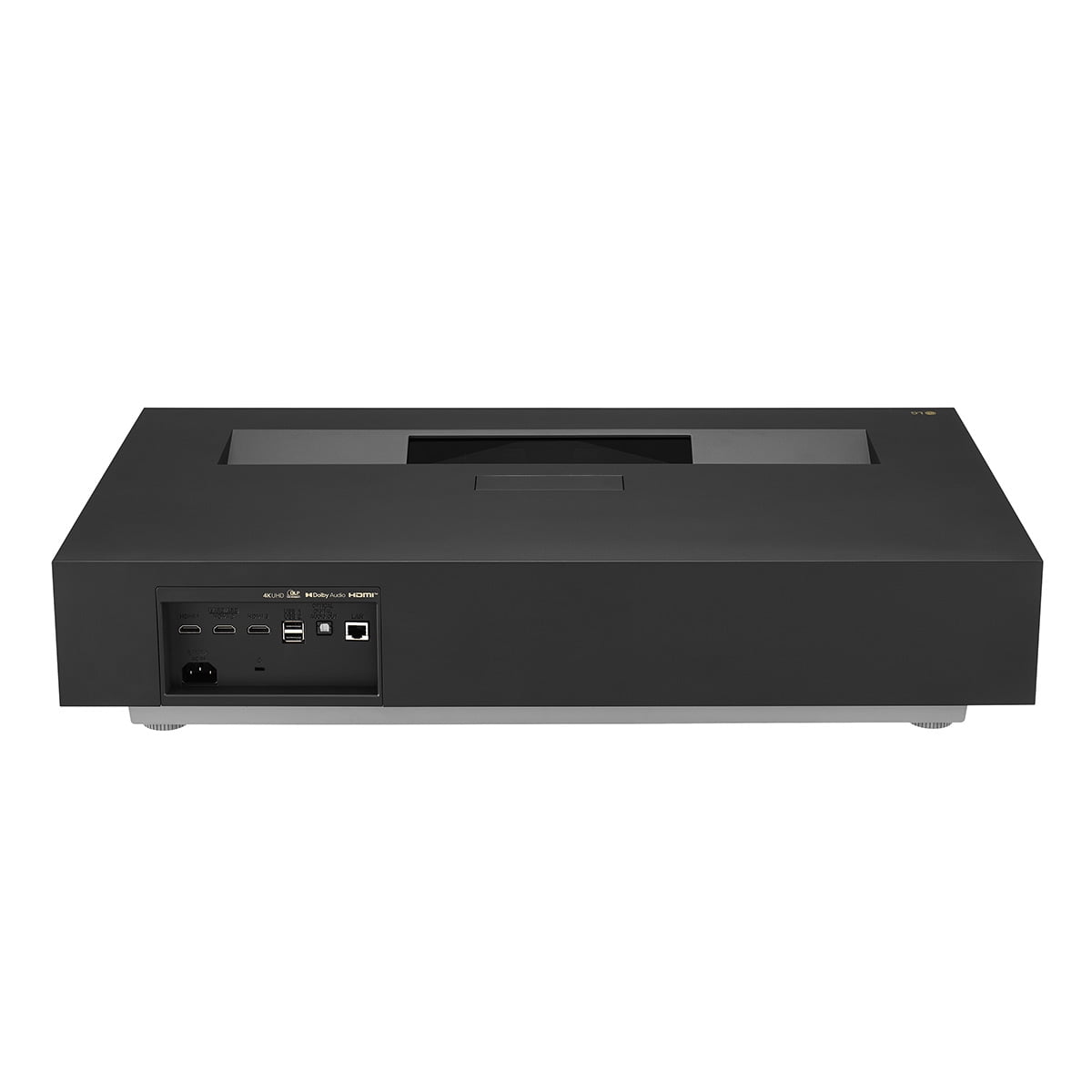
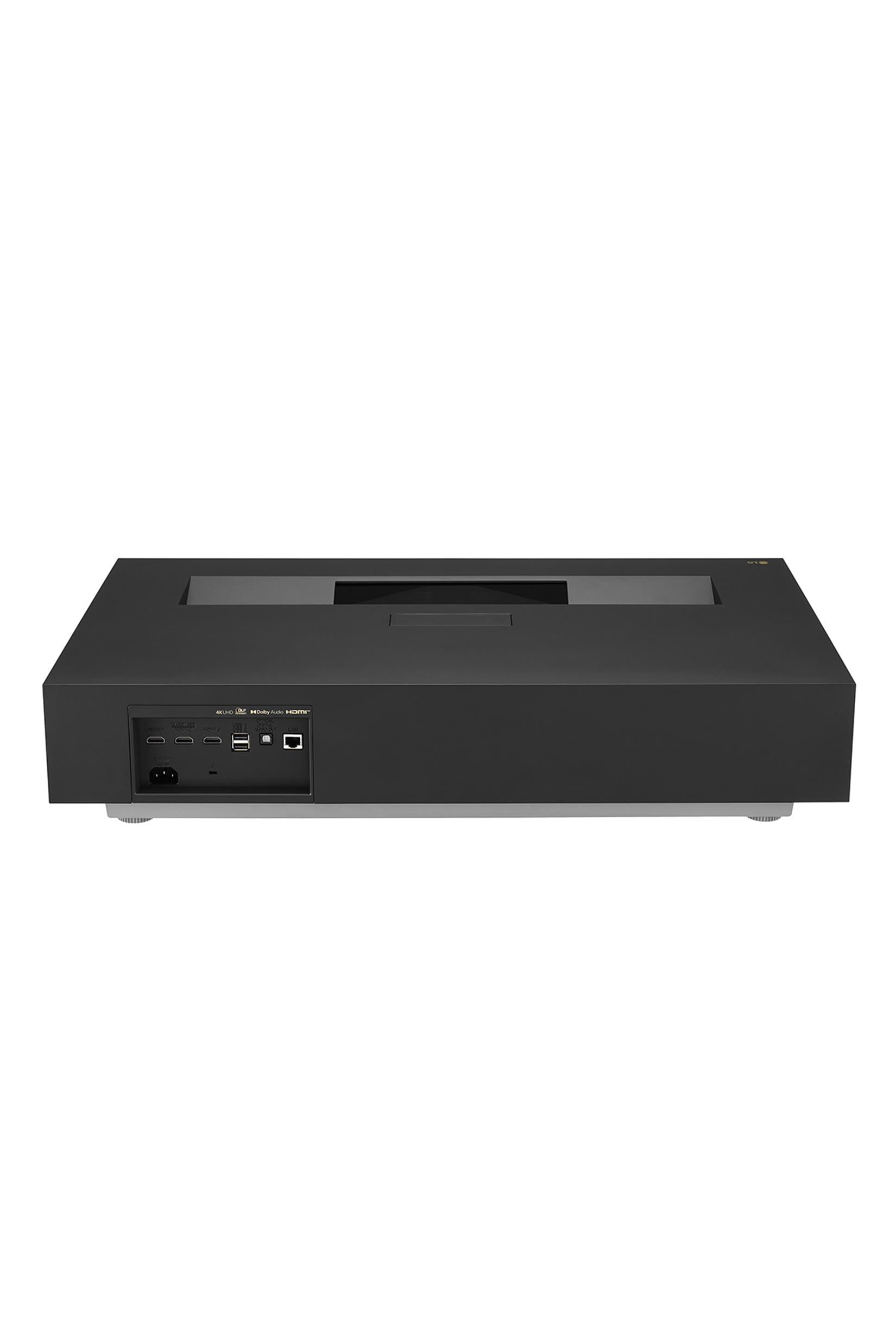
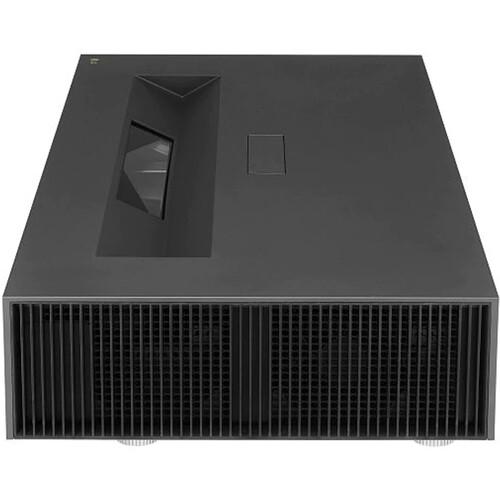
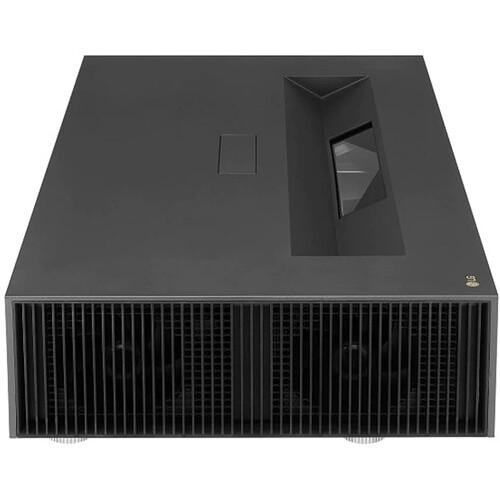
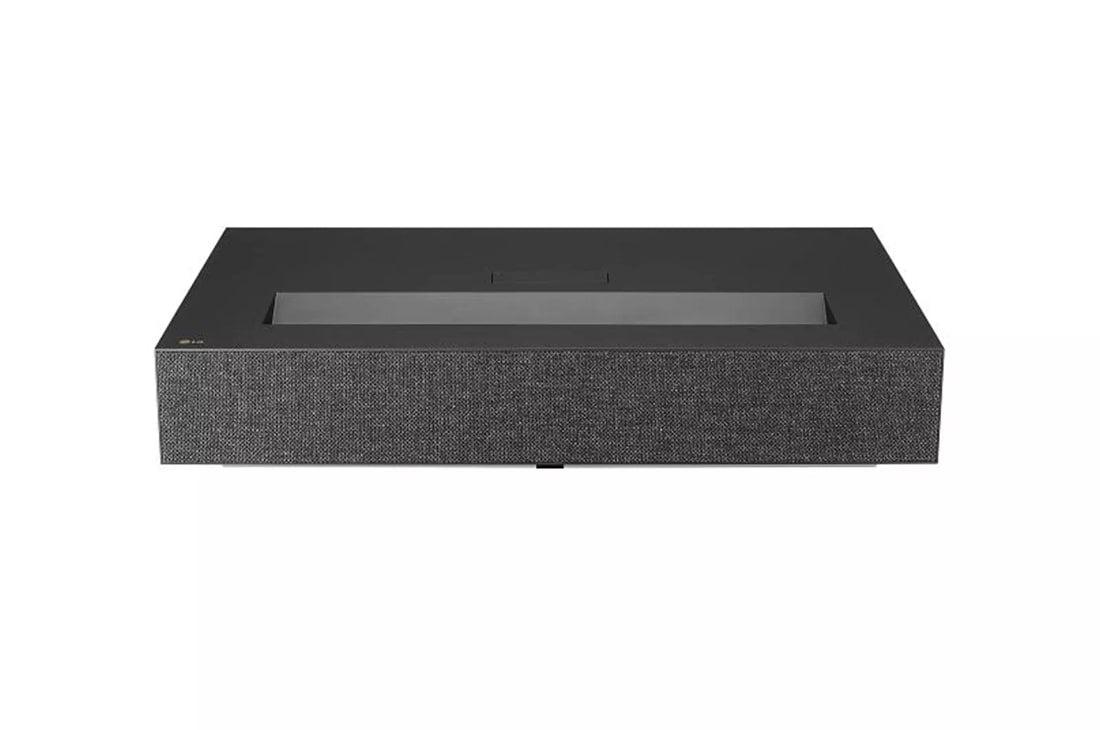
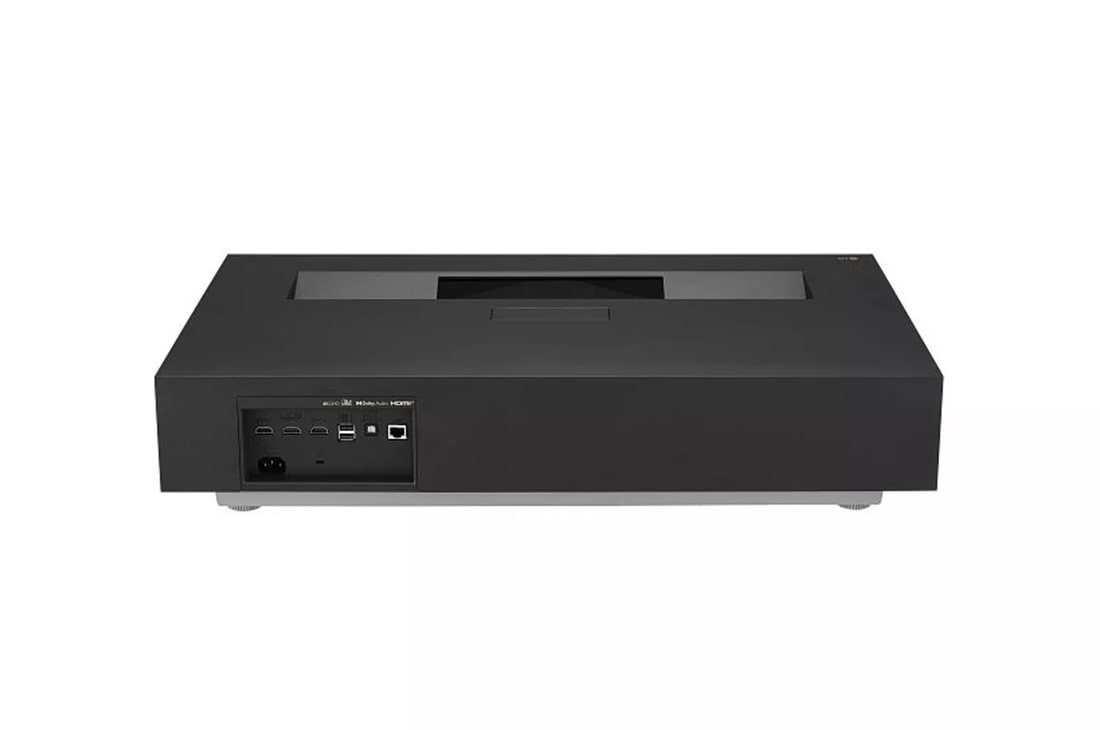
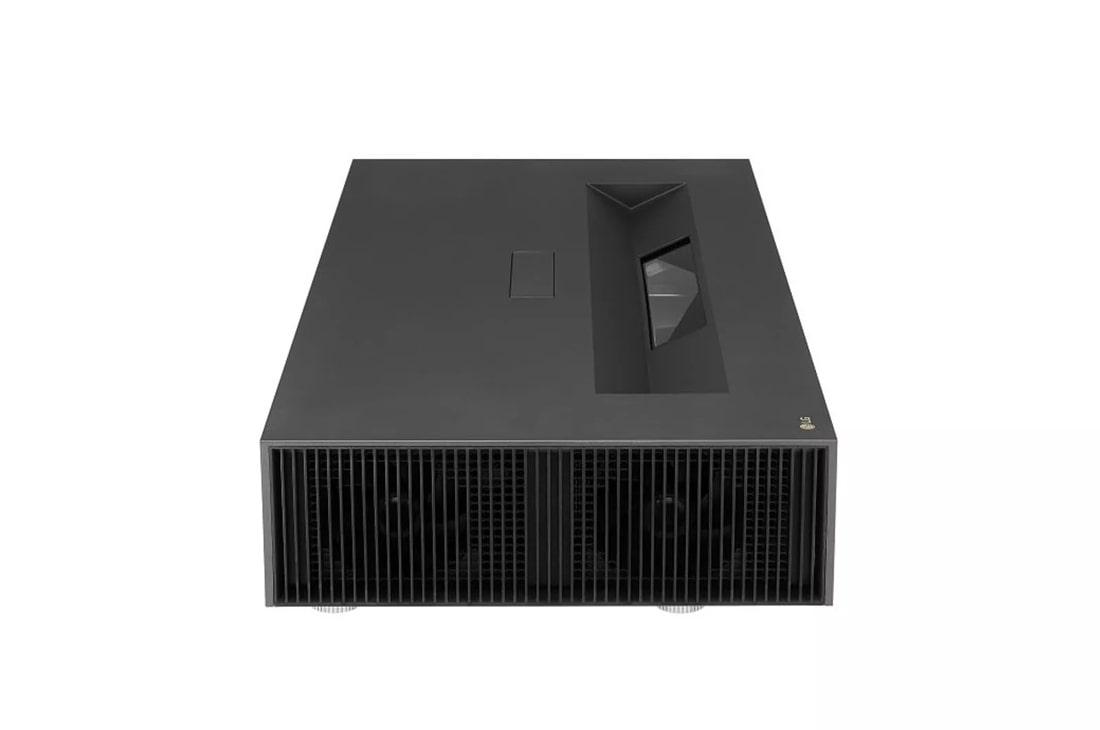
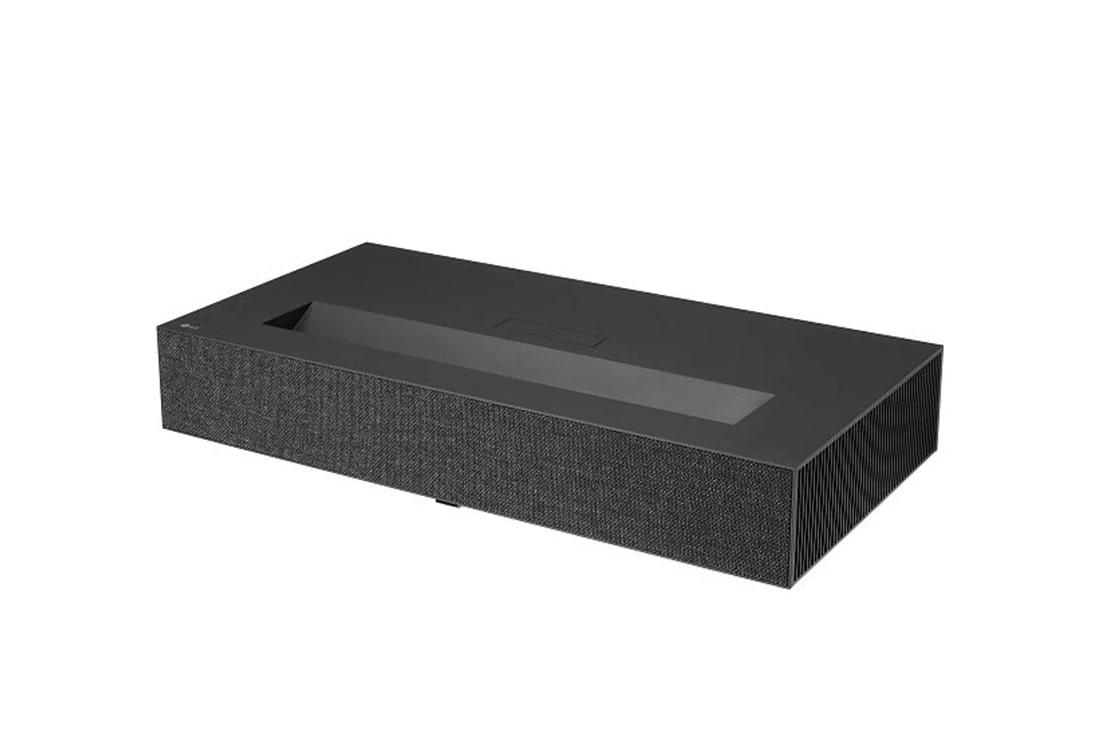
Picture this: you want a massive 100-inch screen in your living room, but you don't have space for a traditional projector setup with ceiling mounts and long cable runs. That's where ultra short throw (UST) laser projectors come in—they sit just inches from your wall and create cinema-sized images that would make your local movie theater jealous.
The AWOL Vision LTV-3000 Pro and LG CineBeam HU915QB represent two compelling approaches to this technology, but they couldn't be more different in philosophy. One prioritizes cutting-edge laser technology at an accessible price point, while the other focuses on premium build quality and user convenience. At the time of writing, there's a significant price gap between them that makes the decision even more interesting.
Before diving into the comparison, let's clarify what makes UST projectors special. Traditional projectors need to be mounted far from the screen—often 8-12 feet away for a 100-inch image. Ultra short throw projectors flip this concept entirely, using specialized optics to project huge images from just inches away from the wall.
The "throw ratio" is the key specification here—it's the distance from projector to wall divided by the image width. A 0.25:1 throw ratio means the projector sits one-quarter of the screen width away from the wall. For a 100-inch screen, that's roughly 10 inches. This proximity eliminates shadows when people walk by, reduces cable runs, and makes installation dramatically simpler.
Both the AWOL Vision LTV-3000 Pro and LG CineBeam HU915QB use laser light sources instead of traditional bulbs. Lasers last 20,000-25,000 hours (compared to 2,000-4,000 for bulbs), produce more accurate colors, and maintain consistent brightness throughout their lifespan. However, the two projectors use fundamentally different laser technologies, which explains much of their performance differences.
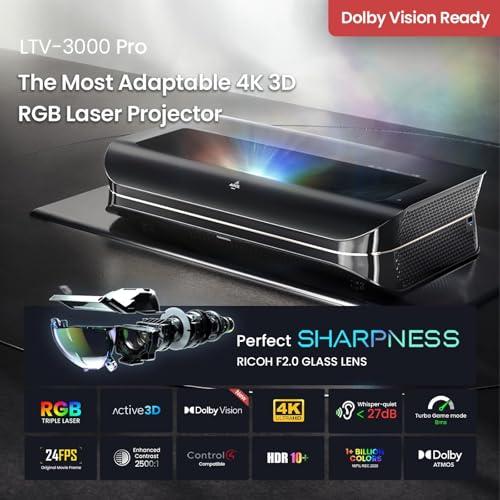
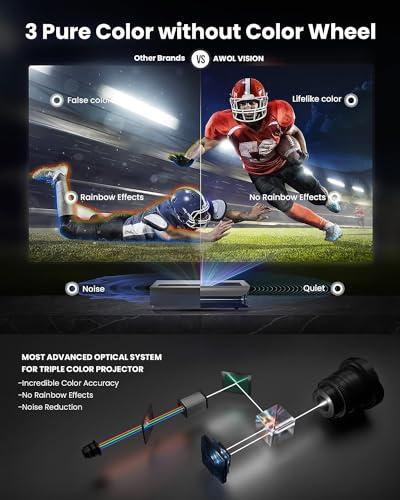
The most fascinating technical difference between these projectors lies in their laser implementations. The AWOL Vision LTV-3000 Pro uses what's called "RGB triple laser" technology—separate red, green, and blue lasers that directly produce each color. Think of it like having three perfectly tuned spotlights, each producing pure color without any filtering or conversion.
The LG CineBeam HU915QB takes a different approach with "3-channel laser phosphor" technology. It uses blue lasers to excite phosphor materials that then produce red and green light, while some blue light passes through directly. This is more like using a blue spotlight to make special materials glow in different colors.
Why does this matter? The RGB approach in the AWOL projector theoretically produces purer colors and eliminates something called "rainbow artifacts"—brief flashes of red, green, and blue that some people see with traditional projector color wheels. However, it also makes the projector more complex to manufacture and calibrate properly.
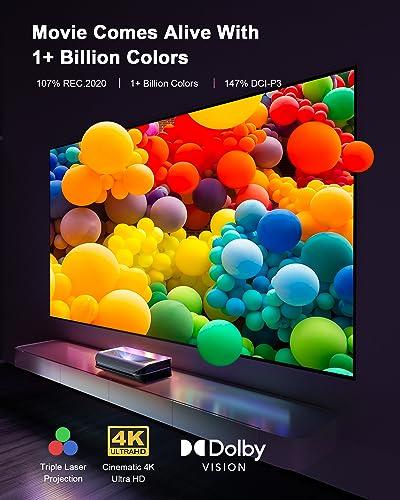
Based on our research into expert reviews, the AWOL Vision LTV-3000 Pro delivers an exceptionally wide color gamut, covering 107% of the BT.2020 color space. That's technical speak for "it can show more colors than most displays," resulting in more vibrant and lifelike images. The trade-off? It apparently ships with terrible color calibration that requires professional adjustment to unlock its potential.
For UST projectors, brightness often determines success or failure in real-world use. These projectors compete directly with large TVs, and unlike traditional projectors used in dark rooms, they need to perform in normal living room lighting.
The LG CineBeam HU915QB delivers 3,000 ANSI lumens compared to the AWOL's 2,000 ISO lumens. While these measurements aren't directly comparable (ANSI and ISO use different testing methods), the LG is clearly brighter—roughly 50% more light output based on expert comparisons.
This brightness difference is significant for practical use. The LG projector can maintain good image quality with windows open during daytime, while the AWOL performs best in controlled lighting conditions. If your projector will live in a family room with lots of ambient light, that extra brightness from the LG becomes essential.
However, brightness isn't just about peak output—it's also about how evenly that light spreads across the screen. User reviews consistently praise the AWOL Vision LTV-3000 Pro for excellent brightness uniformity, meaning the image stays equally bright from center to edges even on large 120+ inch screens. This uniformity can sometimes matter more than raw brightness numbers.
Gaming on projectors has traditionally been frustrating due to input lag—the delay between pressing a button and seeing the action on screen. Modern UST projectors have largely solved this problem, but not equally.
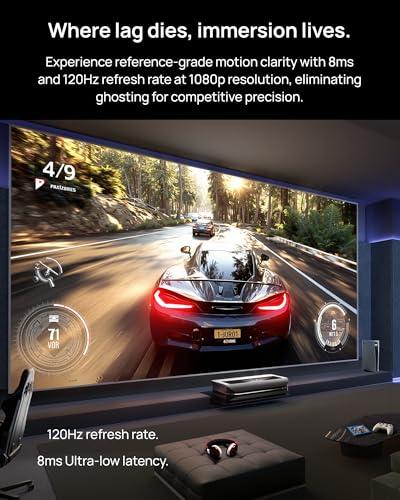
The AWOL Vision LTV-3000 Pro excels here with measured input lag of just 15 milliseconds at 4K/60Hz and an impressive 8 milliseconds at 1080p/120Hz in its gaming mode. For context, anything under 20ms is considered excellent for gaming, and 8ms rivals high-end gaming monitors.
The LG CineBeam HU915QB takes a different approach, focusing on next-generation console features rather than raw speed. It includes HDMI 2.1 ports with full 24Gbps bandwidth, ALLM (Auto Low Latency Mode) that automatically switches to gaming mode, and HGiG (HDR Gaming Interest Group) support for optimized HDR gaming. These features ensure compatibility with PlayStation 5 and Xbox Series X advanced capabilities.
Based on review consensus, serious gamers—especially those playing competitive titles—will prefer the AWOL projector's superior lag performance. Console gamers who prioritize HDR gaming and automatic optimization might lean toward the LG, despite potentially higher input lag.
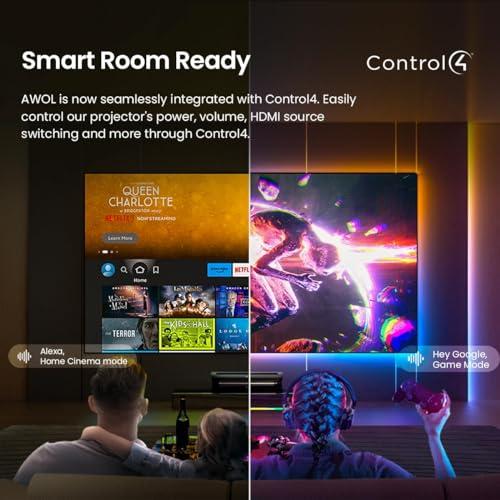
This is where the philosophy difference between these projectors becomes most apparent. The LG CineBeam HU915QB includes a full webOS smart TV platform—the same system found in LG's premium OLED TVs. This means Netflix, Disney+, Amazon Prime, and other streaming apps work directly without any external devices.
The AWOL Vision LTV-3000 Pro ships with a Fire TV Stick 4K Max, which provides access to the same streaming services but creates a more complex user experience. You'll navigate between the projector's menu system and the Fire TV interface, which expert reviews describe as somewhat clunky.
For most users, the LG's integrated approach is simply more convenient. The webOS interface is polished, responsive, and familiar to anyone who's used a modern smart TV. However, the AWOL's approach offers more flexibility—you could easily swap the Fire TV Stick for an Apple TV, Nvidia Shield, or any other streaming device without losing functionality.
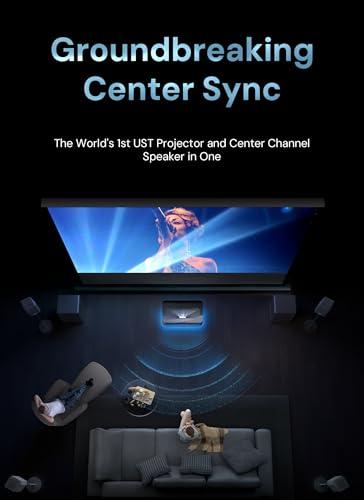
Both projectors include substantial built-in audio systems, which is important since UST projectors often replace TVs rather than complement existing home theater setups. The AWOL Vision LTV-3000 Pro features a 36-watt stereo system with Dolby Atmos processing, while the LG CineBeam HU915QB ups the ante with a 40-watt 2.2-channel system that includes dedicated woofers.
Based on user feedback, both systems produce surprisingly good sound for projectors—certainly better than most TVs. The LG's additional power and dedicated bass drivers give it an edge for casual viewing, though serious home theater enthusiasts will likely connect external sound systems regardless.
One practical consideration: the AWOL projector runs quieter at 27dB compared to the LG's 30dB fan noise. In a quiet room, this difference becomes noticeable during dialogue-heavy content.
The LG CineBeam HU915QB offers the shortest throw ratio at 0.19:1, meaning it can sit closer to the wall than the AWOL's 0.25:1 ratio. For a 100-inch image, that's about a 3-inch difference—the LG needs roughly 7.5 inches from the wall while the AWOL needs about 10.5 inches.
This might seem minor, but it matters in tight spaces. If you're mounting the projector in a custom cabinet or have limited room depth, those few inches can determine whether installation is possible.
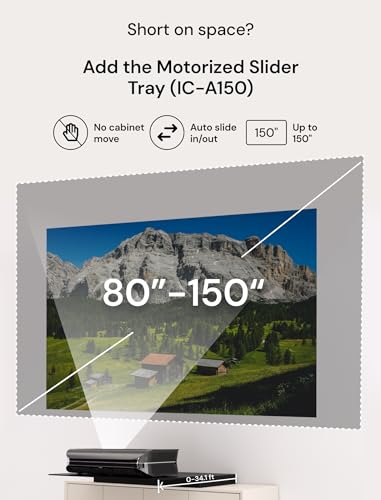
However, the AWOL Vision LTV-3000 Pro offers much more flexibility in image sizes, supporting screens from 80 to 150 inches compared to the LG's 90-120 inch range. If you want a truly massive screen—say 130+ inches—the AWOL is your only option between these two.
The LG CineBeam HU915QB, released in 2022, represents LG's premium positioning with robust construction and professional-grade components. At nearly 27 pounds, it's significantly heavier than the AWOL's 21 pounds, typically indicating more substantial internal components and better heat management.
The AWOL Vision LTV-3000 Pro, launched in 2023, takes an efficiency-focused approach. Its RGB laser system is rated for 25,000+ hours compared to the LG's 20,000 hours—a 25% longer lifespan. It also consumes considerably less power at 185 watts versus the LG's 350 watts, which translates to lower electricity costs and less heat generation over time.
Both projectors include comprehensive warranties, though the AWOL provides two years compared to the LG's one year coverage.
Here's where things get complicated for the AWOL Vision LTV-3000 Pro. Despite its advanced RGB laser technology, expert reviews consistently criticize its out-of-box color accuracy. The projector apparently ships with poor default calibration that makes colors look unnatural until professionally adjusted.
Professional calibration typically costs $300-500 and requires specialized equipment. The process is reportedly difficult even for experts, sometimes requiring multiple factory resets. This creates a frustrating situation where the AWOL projector has superior color technology but requires additional investment to realize its potential.
The LG CineBeam HU915QB ships with much better default calibration. While it may not achieve the AWOL's ultimate color accuracy potential, it delivers good color performance immediately after setup. For most users, this convenience outweighs theoretical advantages they'll never access.
At the time of writing, the AWOL Vision LTV-3000 Pro costs significantly less than the LG CineBeam HU915QB—roughly 40% less based on current street prices. This creates an interesting value equation.
The AWOL projector offers premium RGB laser technology, excellent gaming performance, longer laser life, and lower power consumption at a mainstream price point. However, you'll likely need professional calibration to achieve optimal image quality, adding to the total cost.
The LG projector commands a substantial premium but delivers superior brightness, better out-of-box color accuracy, comprehensive smart features, and premium build quality. For users who want the best possible plug-and-play experience, the extra cost may be justified.
The AWOL Vision LTV-3000 Pro makes sense for several specific groups. Serious gamers will appreciate its industry-leading input lag performance. Home theater enthusiasts willing to invest in professional calibration can unlock exceptional color accuracy that rivals projectors costing twice as much. Budget-conscious buyers get access to advanced RGB laser technology without breaking the bank.
The LG CineBeam HU915QB targets a different audience. Families wanting a TV replacement that works great immediately after setup will appreciate its superior brightness and integrated smart features. Users in bright rooms need that extra light output for comfortable daytime viewing. Those prioritizing build quality and brand support get a premium product with professional-grade construction.
Both projectors deliver outstanding 4K UST performance, but they serve different needs and budgets. The AWOL Vision LTV-3000 Pro offers exceptional value and cutting-edge technology for enthusiasts willing to invest in proper setup. The LG CineBeam HU915QB provides a premium, hassle-free experience that justifies its higher cost for users prioritizing convenience and brightness.
Your decision ultimately depends on your room conditions, budget, and patience for optimization. If you have a dedicated theater room and enjoy tweaking settings, the AWOL can deliver superior performance per dollar. If you want a TV replacement that works brilliantly out of the box in a bright living room, the LG is worth the premium.
Either way, you're getting access to technology that was unimaginable just a few years ago—cinema-sized images from a device that sits on your TV stand. The future of home entertainment is remarkably bright, regardless of which projector illuminates it.
| AWOL Vision LTV-3000 Pro | LG CineBeam HU915QB |
|---|---|
| Brightness - Most critical spec for daytime viewing and bright rooms | |
| 2,000 ISO lumens (requires controlled lighting) | 3,000 ANSI lumens (excellent for bright rooms) |
| Laser Technology - Affects color accuracy and rainbow artifacts | |
| RGB Triple Laser (pure color, no color wheel) | 3-Channel Laser Phosphor (proven reliability) |
| Throw Ratio - Determines how close projector sits to wall | |
| 0.25:1 (needs ~10.5" from wall for 100" image) | 0.19:1 (needs ~7.5" from wall for 100" image) |
| Gaming Input Lag - Critical for responsive gaming experience | |
| 15ms at 4K/60Hz, 8ms at 1080p/120Hz (excellent) | Not specified (likely higher, but has HDMI 2.1) |
| Color Gamut Coverage - How vibrant and accurate colors appear | |
| 107% BT.2020 (exceptional range, poor out-of-box calibration) | 100% DCI-P3 (very good, better default calibration) |
| Image Size Range - Flexibility for different room sizes | |
| 80" - 150" (more versatile for various spaces) | 90" - 120" (limited but covers most common sizes) |
| Smart Platform - Built-in streaming and app support | |
| Android 9.0 + Fire TV Stick 4K Max included | Full webOS with Netflix and major apps built-in |
| Audio System - Built-in sound quality and power | |
| 36W stereo with Dolby Atmos (quieter at 27dB) | 40W 2.2-channel with woofers (louder at 30dB) |
| Power Consumption - Ongoing electricity costs and heat generation | |
| 185W (energy efficient, less heat) | 350W (nearly double power consumption) |
| Laser Lifespan - Long-term maintenance and replacement costs | |
| 25,000+ hours (25% longer than competitor) | 20,000 hours (still excellent longevity) |
| Weight and Build - Installation ease and build quality indicators | |
| 21 lbs (easier installation, efficient design) | 26.9 lbs (premium construction, more robust) |
| HDR Support - Enhanced contrast and color in compatible content | |
| Dolby Vision, HDR10+, HDR10, HLG | HDR10, HLG, HGiG (gaming optimized) |
| HDMI Connectivity - Future-proofing for gaming consoles | |
| 3x HDMI 2.0 with eARC | 3x HDMI including HDMI 2.1 with 24Gbps bandwidth |
| Warranty Coverage - Protection and manufacturer confidence | |
| 2 years (longer coverage period) | 1 year (standard premium projector warranty) |
The LG CineBeam HU915QB is significantly brighter at 3,000 ANSI lumens compared to the AWOL Vision LTV-3000 Pro's 2,000 ISO lumens. This makes the LG projector better suited for rooms with windows or ambient lighting, while the AWOL Vision LTV-3000 Pro works best in controlled lighting conditions like dedicated home theaters.
The AWOL Vision LTV-3000 Pro excels in gaming with just 15ms input lag at 4K/60Hz and 8ms at 1080p/120Hz, making it ideal for competitive gaming. The LG CineBeam HU915QB focuses on next-gen console features like HDMI 2.1, ALLM, and HGiG support for PlayStation 5 and Xbox Series X compatibility, though it likely has higher input lag.
The AWOL Vision LTV-3000 Pro offers exceptional value with premium RGB laser technology at a significantly lower price point. However, the LG CineBeam HU915QB provides better out-of-box performance and integrated smart features that may justify its premium pricing for users wanting a plug-and-play experience.
The LG CineBeam HU915QB has a shorter 0.19:1 throw ratio, allowing it to sit about 7.5 inches from the wall for a 100-inch image. The AWOL Vision LTV-3000 Pro needs approximately 10.5 inches with its 0.25:1 throw ratio, though this difference is minimal for most installations.
The LG CineBeam HU915QB includes a full webOS smart platform with Netflix and major streaming apps built-in. The AWOL Vision LTV-3000 Pro uses Android 9.0 and includes a Fire TV Stick 4K Max, but requires navigating between two different interface systems, making the LG projector more user-friendly.
The AWOL Vision LTV-3000 Pro uses advanced RGB triple laser technology covering 107% of BT.2020 color space, potentially delivering superior color accuracy. However, it ships with poor default calibration requiring professional adjustment. The LG CineBeam HU915QB offers very good color coverage with much better out-of-box calibration.
For dedicated home theaters with controlled lighting, the AWOL Vision LTV-3000 Pro can deliver exceptional performance once properly calibrated, with superior color technology and quieter operation. For multi-purpose rooms or bright spaces, the LG CineBeam HU915QB is more practical with its higher brightness and integrated smart features.
The LG CineBeam HU915QB features a more powerful 40W 2.2-channel system with dedicated woofers, while the AWOL Vision LTV-3000 Pro offers 36W stereo with Dolby Atmos support. Both provide surprisingly good sound for projectors, though the AWOL projector runs quieter during operation.
The AWOL Vision LTV-3000 Pro has a longer-rated laser lifespan at 25,000+ hours compared to the LG CineBeam HU915QB's 20,000 hours. The AWOL projector also consumes less power at 185W versus 350W for the LG model, resulting in lower operating costs over time.
The AWOL Vision LTV-3000 Pro offers more flexibility with screen sizes from 80 to 150 inches, making it suitable for various room sizes. The LG CineBeam HU915QB supports 90 to 120 inches, which covers most common home theater applications but limits options for very large installations.
The LG CineBeam HU915QB is much easier to set up with good out-of-box color calibration and integrated smart features. The AWOL Vision LTV-3000 Pro typically requires professional calibration to achieve optimal image quality, adding complexity and cost to the initial setup process.
Choose the AWOL Vision LTV-3000 Pro if you prioritize gaming performance, want advanced laser technology at a lower cost, and don't mind professional calibration. Select the LG CineBeam HU915QB if you need maximum brightness for bright rooms, want excellent out-of-box performance, and prefer integrated smart TV features without additional setup complexity.
We've done our best to create useful and informative comparisons to help you decide what product to buy. Our research uses advanced automated methods to create this comparison and perfection is not possible - please contact us for corrections or questions. These are the sites we've researched in the creation of this article: bestbuy.com - projectorcentral.com - rtings.com - techaeris.com - hometechnologyreview.com - awolvision.de - androidcentral.com - awolvision.com - projectorreviews.com - dreamediaav.com - bestbuy.com - youtube.com - youtube.com - awolvisionpro.com - awolvision.com - awolvision.com - projectorreviews.com - bestbuy.com - techradar.com - hometheaterforum.com - projectorcentral.com - projectorcentral.com - vividstorm.eu - lg.com - billsmith.com - queencityonline.com - projectorscreen.com

Privacy Policy
Terms and Conditions - Affiliate Policy
Home Security
© Copyright 2008-2026.
11816 Inwood Rd #1211, Dallas, TX 75244