

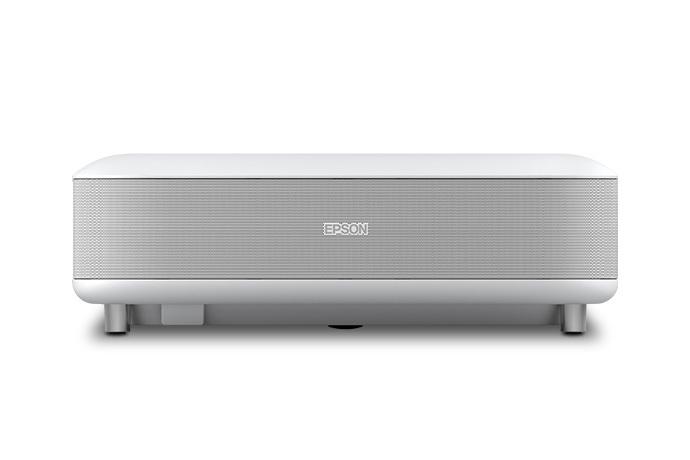
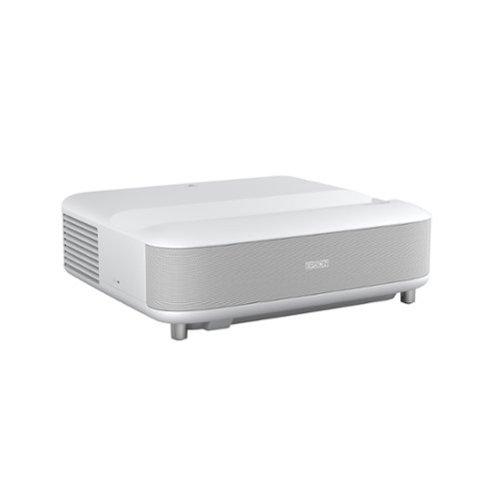


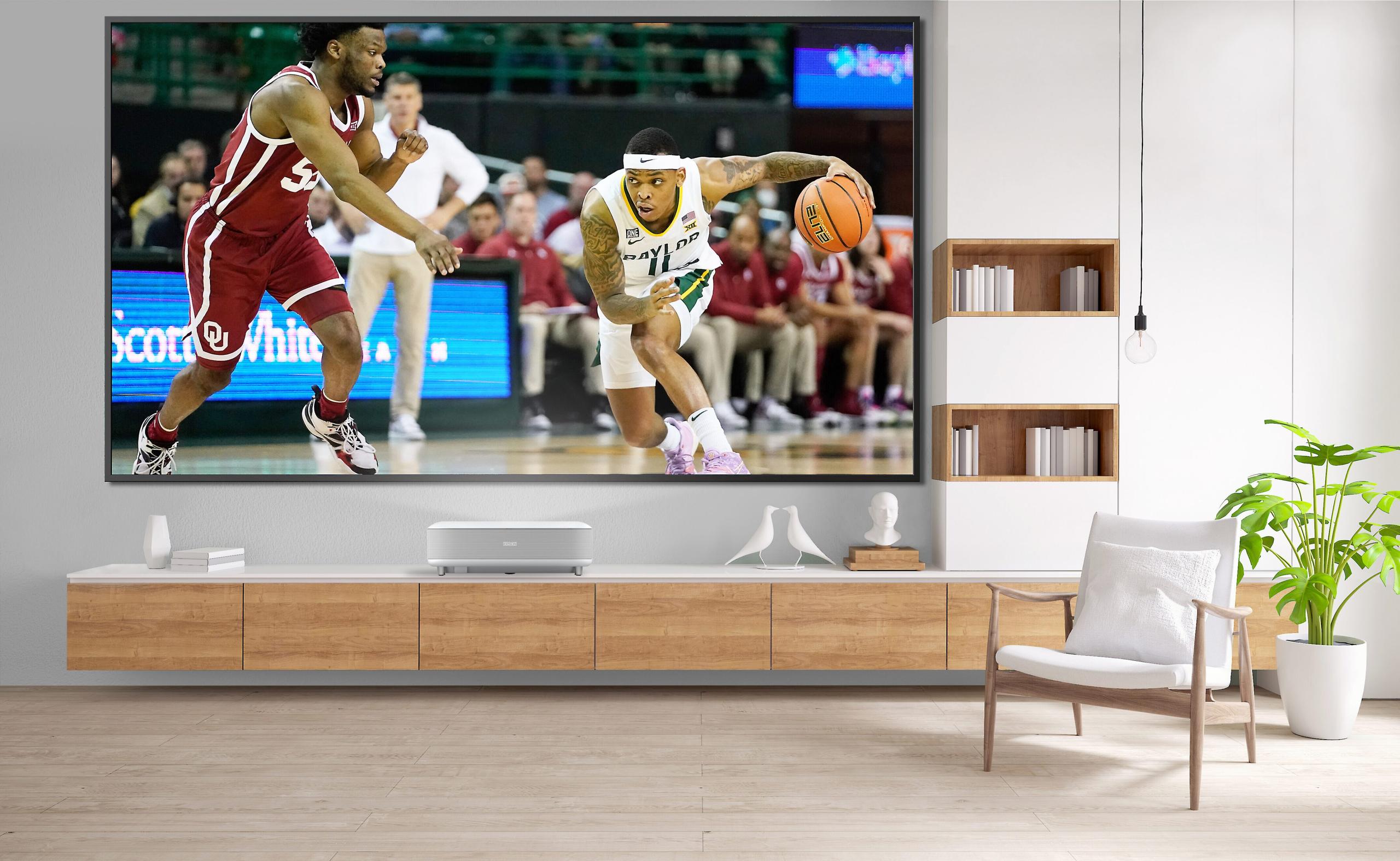
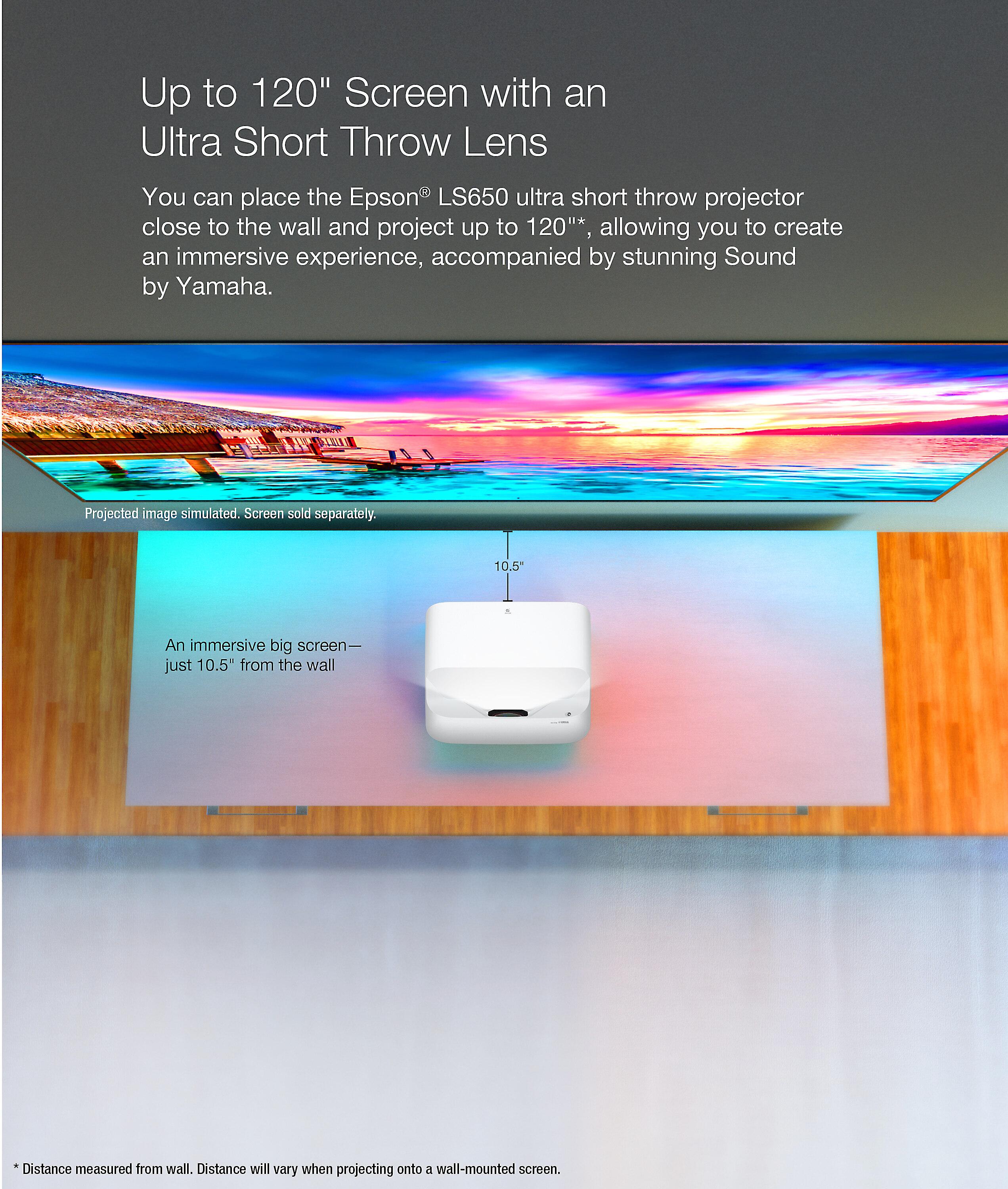
Ultra short throw projectors have completely changed how we think about big-screen entertainment at home. Instead of mounting a projector on your ceiling and running cables across the room, these clever devices sit just inches from your wall and beam massive images—we're talking 100+ inches—right onto it. It's like having a movie theater in your living room, but without the installation headache.
Both the AWOL Vision LTV-3000 Pro and Epson EpiqVision Ultra LS650 represent excellent examples of this technology, but they take very different approaches to solving the same problem. The AWOL Vision launched in 2023 as a premium option targeting home theater enthusiasts and gamers, while the Epson arrived later that same year focusing on mainstream users who want maximum brightness and reliable performance.
Before diving into the comparison, let's talk about the key technologies that separate good ultra short throw projectors from great ones.
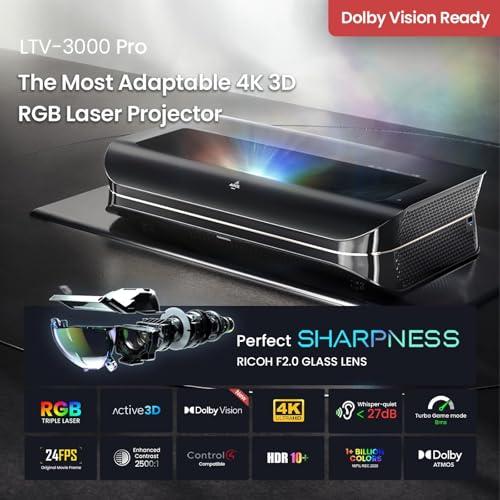
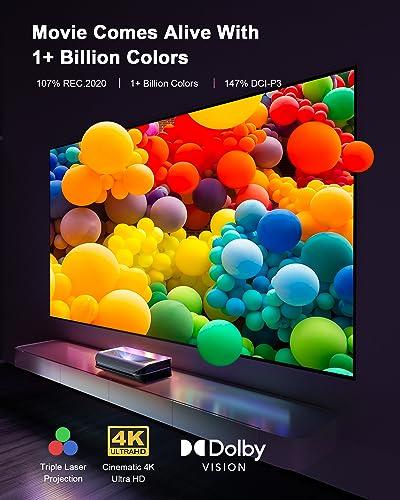
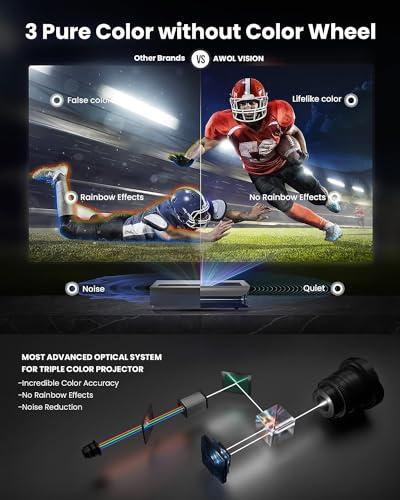
Display technology is probably the most important factor. The AWOL Vision LTV-3000 Pro uses what's called "true 4K" with a DLP (Digital Light Processing) chip that actually creates 3840×2160 individual pixels—the same resolution as your premium TV. It also uses something called "triple RGB laser" technology, which means it has three separate lasers (red, green, and blue) creating the light instead of a single white light source with a spinning color wheel. This eliminates what's known as the "rainbow effect"—those brief flashes of color some people see with traditional projectors.
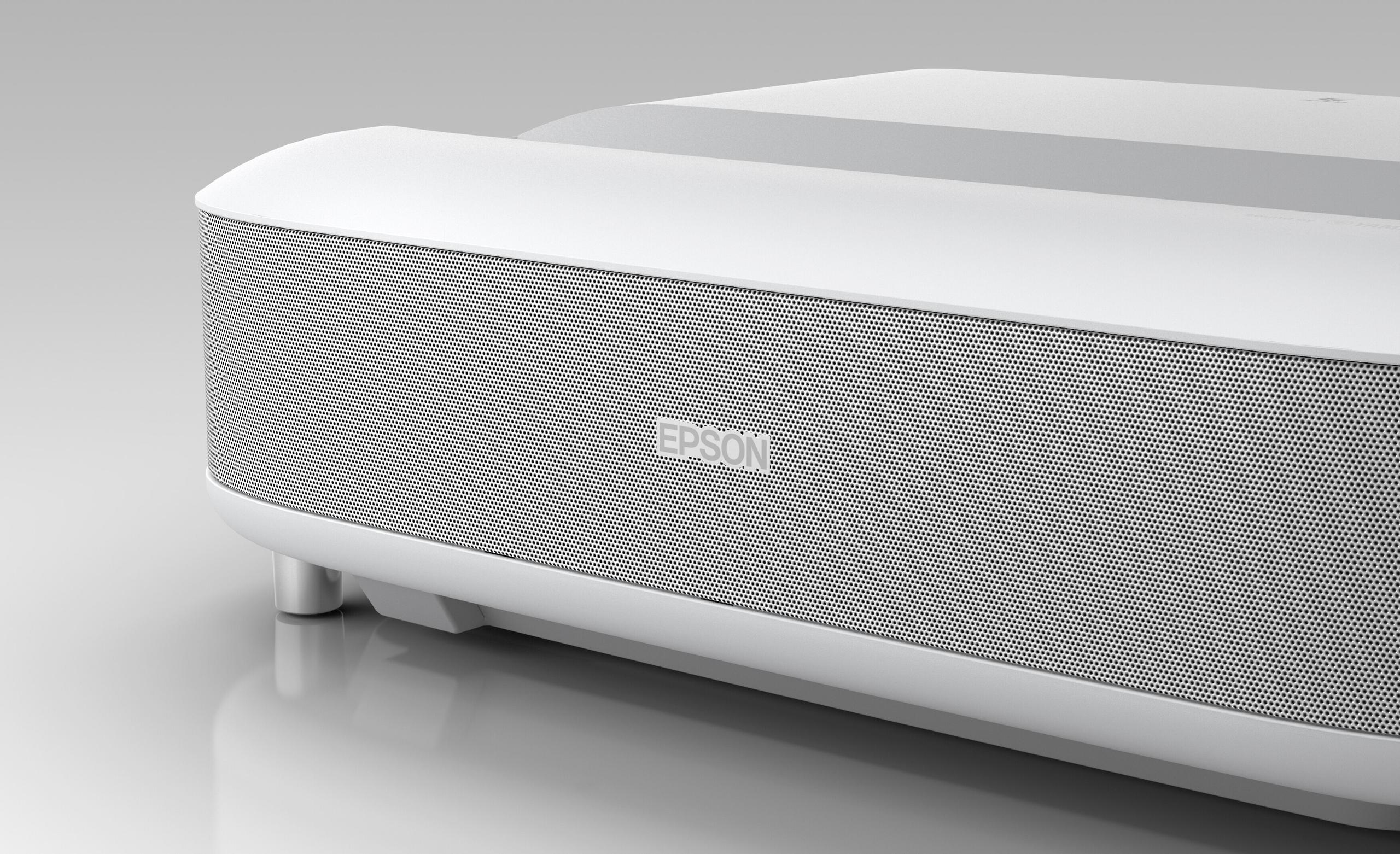
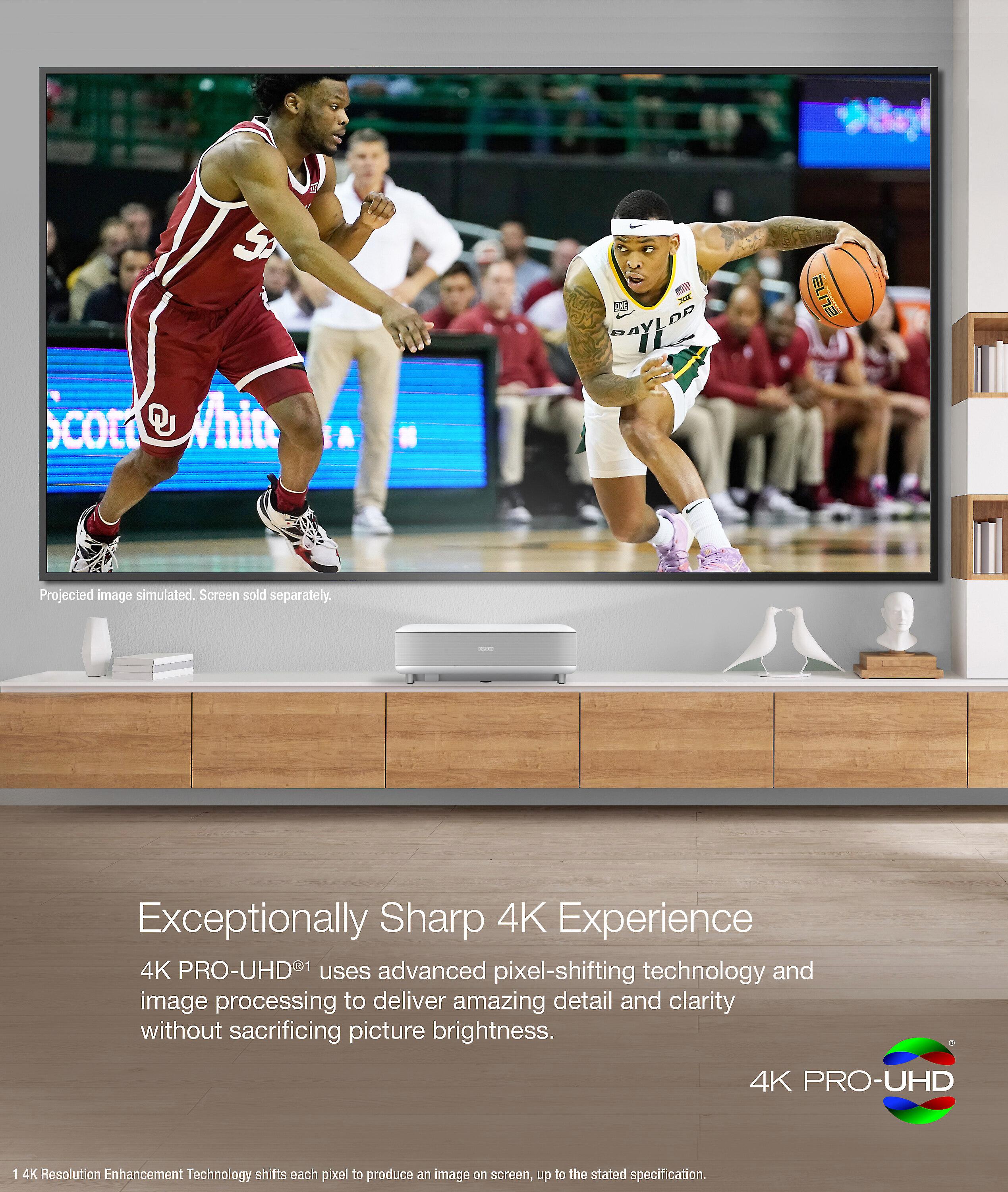
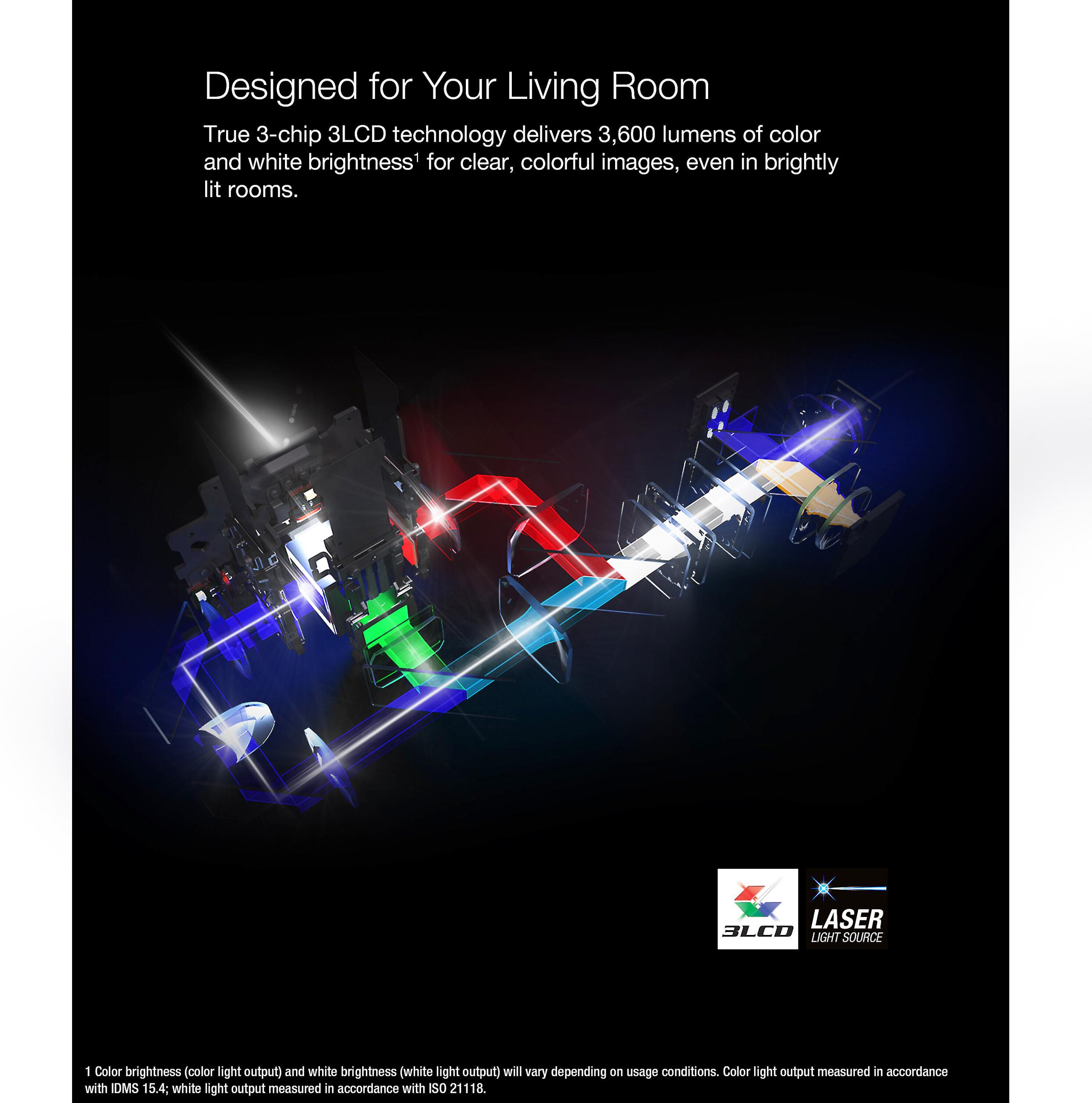
The Epson LS650, on the other hand, uses 3LCD technology with "pixel shifting." This means it starts with 1920×1080 panels (standard HD resolution) but shifts each pixel slightly to create additional detail, resulting in what Epson calls "4K PRO-UHD." While not technically true 4K, this approach can look surprisingly sharp and has the advantage of Epson's mature 3LCD system, which ensures that colors and white light are equally bright—something that's historically been a challenge with single-chip projectors.
Brightness matters more than you might think. Unlike TVs that create their own light, projectors have to overcome whatever ambient light exists in your room. Both projectors use laser light sources instead of traditional lamps, which means they'll last 20,000+ hours without replacement and maintain consistent brightness over time.
Here's where things get interesting. The AWOL Vision delivers genuinely sharp 4K images that maintain their detail even when you're projecting a massive 150-inch screen. Our research into professional reviews consistently shows that the image remains crisp right to the edges, which is impressive for any projector, let alone one sitting so close to the screen.
However, brightness is where the Epson LS650 really shines—literally. At 3,600 lumens, it's significantly brighter than the AWOL's 2,000 ISO lumens. In practical terms, this means the Epson can handle rooms with more ambient light. If you're someone who watches TV during the day with blinds open, or if your living room has lots of windows, the extra brightness makes a noticeable difference.
The trade-off comes down to resolution versus brightness. The AWOL Vision gives you pixel-perfect detail that's especially noticeable with high-quality 4K content like Ultra HD Blu-rays or high-bitrate streaming. The Epson delivers a bright, punchy image that looks great in challenging lighting conditions but won't quite match the fine detail of true 4K.
Color performance tells an interesting story too. The AWOL's RGB laser system can reproduce over 107% of the Rec.2020 color space, which is the wide color standard for premium 4K content. However, reviews suggest that while it can display these wide colors, the actual color-light output is somewhat limited, meaning colors might not appear as vibrant as you'd expect in bright scenes.
The Epson's 3LCD technology ensures that colors are consistently bright and vibrant. This system displays white light and colored light equally, avoiding the color brightness limitations that can plague some DLP projectors. For everyday TV watching, this often translates to more satisfying color reproduction.
Contrast ratio—the difference between the brightest whites and darkest blacks—is where these projectors really diverge. The Epson LS650 boasts an impressive 2,500,000:1 dynamic contrast ratio, while the AWOL Vision manages 2,500:1 native contrast. This massive difference is immediately visible in dark scenes and mixed lighting content.
In practice, this means the Epson can produce much deeper blacks and more dramatic transitions between light and dark areas of the image. If you're watching a movie with lots of dark scenes—think something like "Blade Runner 2049" or "The Dark Knight"—the Epson will give you that inky black depth that makes the bright elements really pop.
The AWOL Vision fights back with superior HDR (High Dynamic Range) support. It's one of the few ultra short throw projectors that supports Dolby Vision, which is the premium HDR format used by Netflix, Apple TV+, and Ultra HD Blu-rays. Dolby Vision provides scene-by-scene optimization of brightness and color, potentially delivering better HDR performance than standard HDR10.
The Epson supports HDR10 and HLG but lacks Dolby Vision. For HDR content, this means you'll get enhanced brightness and color range, but without the sophisticated scene-by-scene optimization that Dolby Vision provides.
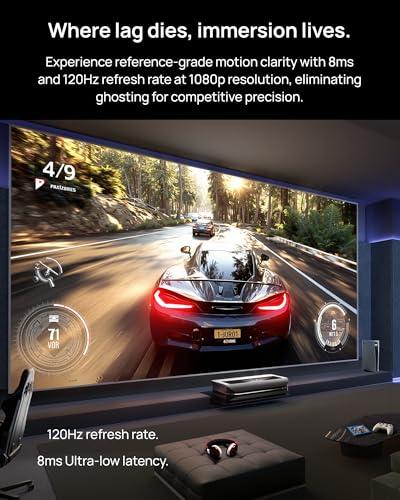
If gaming is important to you, the AWOL Vision LTV-3000 Pro is the obvious choice. Input lag—the delay between when you press a button and when the action appears on screen—measures just 15 milliseconds at 4K resolution and an exceptional 8ms at 1080p with a high refresh rate. These numbers put it in the same ballpark as dedicated gaming monitors.
The Epson LS650 shows 24ms input lag for both 4K and 1080p gaming. While this is acceptable for casual gaming, serious gamers will notice the difference, especially in fast-paced competitive games where every millisecond matters.
The AWOL also includes features like MEMC (Motion Estimation, Motion Compensation) technology, which smooths out motion in fast-moving content, and dedicated low-latency gaming modes. If you're planning to use your projector for PlayStation 5 or Xbox Series X gaming, the AWOL Vision provides a noticeably more responsive experience.
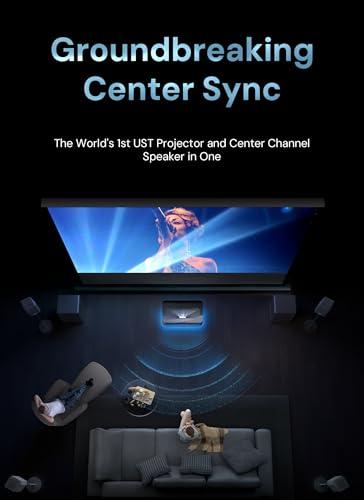
Both projectors include integrated audio systems, which is crucial for ultra short throw setups where you might not have space for a traditional sound system. The AWOL Vision packs more power with its 36-watt stereo system that supports Dolby Atmos—a surround sound format that creates the illusion of sound moving around and above you.
The Epson LS650 uses a Yamaha-designed audio system with less total power but smart processing. Despite being rated at just 10 watts total, reviews suggest it delivers surprisingly good audio quality with virtual surround sound processing that creates a wider soundstage than you'd expect from built-in projector speakers.
For casual viewing, either system will work well. If you're planning a dedicated home theater setup, you'll probably want to add a soundbar or AV receiver anyway, but it's nice to know both projectors can deliver decent audio right out of the box.
Modern projectors need to handle streaming just like smart TVs, and both take different approaches. The AWOL Vision includes both Android 9.0 built into the projector and a separate Amazon Fire TV Stick 4K Max. This dual approach means maximum app compatibility—if something doesn't work on one platform, it probably works on the other.
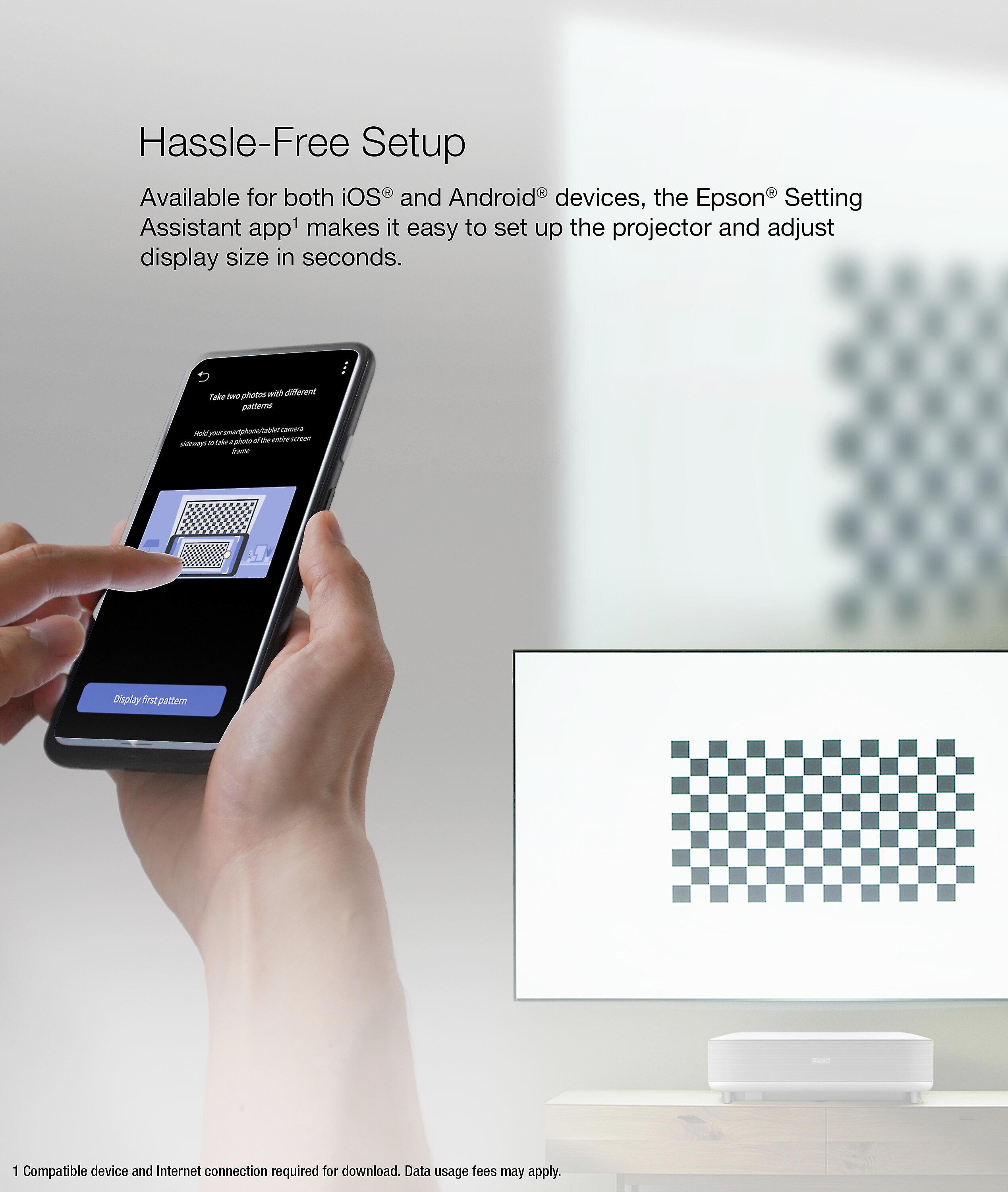
The Epson LS650 relies primarily on built-in Android TV with Google Assistant support. It's simpler to navigate since you're only dealing with one interface, and Epson includes a helpful Setting Assistant app that makes initial setup easier.
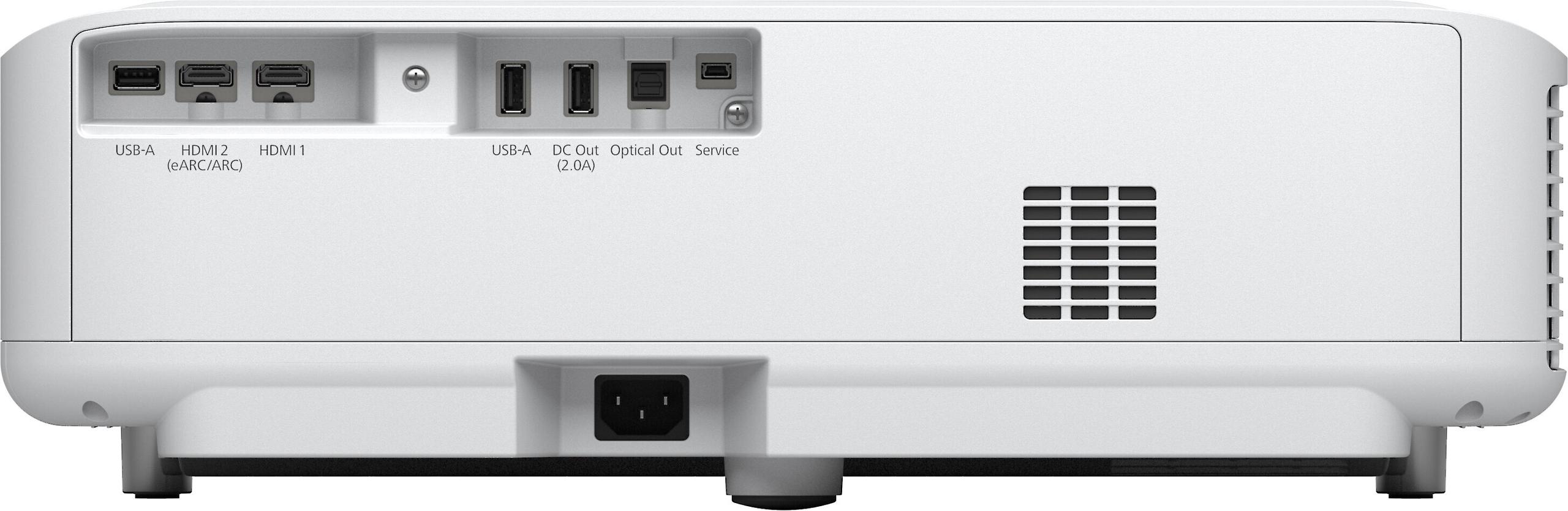
Connectivity-wise, the AWOL Vision offers more flexibility with three HDMI ports compared to the Epson's two. If you're connecting multiple devices—game consoles, streaming devices, cable boxes—the extra port eliminates the need for an HDMI switcher.
Both projectors support eARC (Enhanced Audio Return Channel), which lets you send high-quality audio from the projector back to a soundbar or AV receiver. This is essential for modern home theater setups where you want the best possible audio quality.
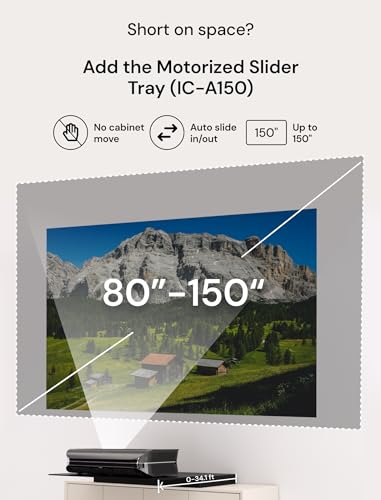
Ultra short throw projectors promise easy installation, but reality is more nuanced. The AWOL Vision can project from 80 inches all the way up to 150 inches, giving you more flexibility for different room sizes. However, it requires more manual adjustment and fine-tuning to get the image perfectly aligned.
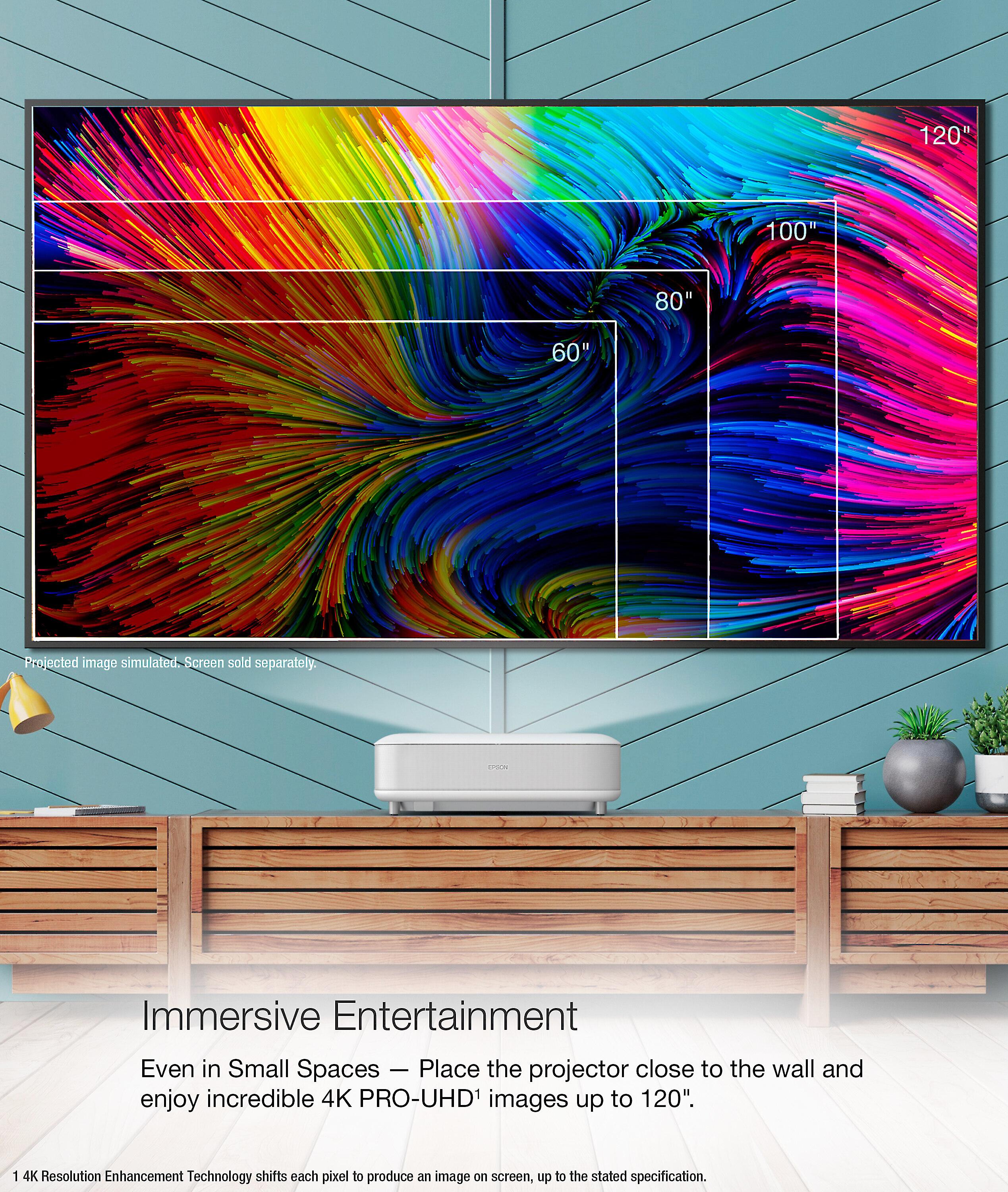
The Epson LS650 covers 60 to 120 inches and includes helpful setup apps, but some reviews suggest it can be finicky about precise positioning. Both projectors benefit significantly from using an ALR (Ambient Light Rejecting) screen, which can cost several hundred dollars but dramatically improves contrast and color in rooms with ambient light.
Noise levels matter when you're sitting close to the projector. The AWOL Vision runs quieter at 27 decibels, while the Epson can get louder at 36 decibels when running at full brightness (dropping to 23 decibels in eco mode). In a quiet room, the difference is noticeable.
At the time of writing, the Epson LS650 offers better value for mainstream users. Its significantly lower price point, combined with superior brightness and contrast performance, makes it an excellent choice for most living rooms. The proven reliability of Epson's 3LCD technology and widespread service network add to its appeal.
The AWOL Vision LTV-3000 Pro commands a premium price but delivers premium features. True 4K resolution, exceptional gaming performance, Dolby Vision support, and extensive smart home integration justify the higher cost for enthusiasts who want the best possible image quality and features.
Both projectors use laser light sources rated for 20,000+ hours of use, meaning you won't need to replace expensive lamps. The AWOL's RGB laser system is rated for 25,000 hours compared to the Epson's 20,000 hours, potentially offering better long-term value despite the higher upfront cost.
After extensive research into professional reviews and user experiences, here's how I'd approach the decision:
Choose the AWOL Vision LTV-3000 Pro if you're building a dedicated home theater space where you can control ambient light. Its true 4K resolution really shines with high-quality content, and the gaming performance is exceptional. The Dolby Vision support future-proofs your setup for premium streaming content. However, you'll need to budget for professional calibration or spend time tweaking settings to get optimal color performance.
The Epson EpiqVision Ultra LS650 makes more sense for most living rooms where ambient light is a factor. Its superior brightness and contrast performance mean you'll get consistently good results without extensive tweaking. The mature 3LCD technology delivers reliable, vibrant colors right out of the box, and the lower price leaves room in your budget for a good ALR screen.
For families who watch a mix of streaming content, sports, and occasional gaming, the Epson provides better overall satisfaction. For serious movie enthusiasts and gamers who want the absolute best image quality and don't mind paying extra for it, the AWOL Vision delivers premium performance that justifies its premium price.
Both represent excellent examples of how ultra short throw projector technology has matured. The fact that we're debating between true 4K and exceptional brightness rather than basic functionality shows how far this category has come. Either projector will transform your living room into an impressive entertainment space—the question is whether you prioritize ultimate image quality or maximum versatility and value.
| AWOL Vision LTV-3000 Pro | Epson EpiqVision Ultra LS650 |
|---|---|
| Resolution Technology - Determines image sharpness and detail quality | |
| True native 4K (3840×2160) with 0.47" DLP chip | 4K PRO-UHD via pixel shifting from 1080p panels |
| Display Technology - Affects color accuracy and brightness consistency | |
| Single-chip DLP with triple RGB laser (no color wheel) | 3-chip 3LCD with laser phosphor light source |
| Brightness - Critical for daytime viewing and ambient light tolerance | |
| 2,000 ISO lumens / 3,000 peak lumens | 3,600 ANSI lumens (equal white and color brightness) |
| Contrast Ratio - Determines depth of blacks and overall dynamic range | |
| 2,500:1 native contrast | 2,500,000:1 dynamic contrast ratio |
| HDR Support - Enhanced color and brightness range for premium content | |
| Dolby Vision, HDR10+, HDR10, HLG | HDR10, HLG (no Dolby Vision) |
| Gaming Performance - Input lag affects responsiveness for gaming | |
| 15ms (4K/60Hz), 8ms (1080p/120Hz) - excellent for gaming | 24ms (both 4K and 1080p) - adequate for casual gaming |
| Screen Size Range - Flexibility for different room sizes | |
| 80" to 150" diagonal projection | 60" to 120" diagonal projection |
| Audio System - Built-in sound quality and power | |
| 36W stereo with Dolby Atmos support | 10W Yamaha-designed 2.1 system with virtual surround |
| Connectivity - Number of inputs for multiple devices | |
| 3 HDMI ports (1 with eARC), 2 USB, Ethernet | 2 HDMI ports (1 with eARC), 3 USB, Ethernet |
| Smart TV Platform - Streaming capabilities and app access | |
| Android 9.0 + bundled Fire TV Stick 4K Max | Built-in Android TV with Google Assistant |
| Laser Life - Long-term maintenance and replacement costs | |
| 25,000 hours rated lifespan | 20,000 hours rated lifespan |
| Operating Noise - Important when projector sits close to seating | |
| 27 dB (quieter operation) | 36 dB max / 23 dB eco mode |
| Weight and Size - Installation and placement considerations | |
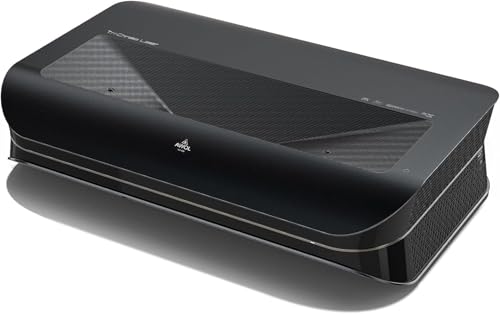
| 21 lbs, 5.7" × 23.6" × 13.9" | 16.3 lbs, 18.4" × 15.7" × 6.2" |
| Color Gamut Coverage - Affects color vibrancy and accuracy | |
| 107% Rec.2020 coverage with wide color support | Standard Rec.709 with 3LCD color consistency |
| 3D Support - Bonus feature for 3D content enthusiasts | |
| Active 3D with DLP-Link glasses compatibility | Not supported |
The Epson EpiqVision Ultra LS650 is significantly better for bright rooms with its 3,600 lumens of brightness compared to the AWOL Vision LTV-3000 Pro's 2,000 ISO lumens. The Epson's superior brightness allows it to maintain image quality even with windows open during daytime viewing, while the AWOL Vision performs best in controlled lighting environments.
The AWOL Vision LTV-3000 Pro delivers true native 4K resolution with 3840×2160 pixels, providing genuine 4K detail. The Epson LS650 uses pixel shifting technology called "4K PRO-UHD" that enhances 1080p to near-4K quality. While both look sharp, the AWOL Vision offers authentic 4K pixel density for the finest image detail.
The AWOL Vision LTV-3000 Pro is superior for gaming with exceptional input lag of just 8ms at 1080p/120Hz and 15ms at 4K/60Hz. The Epson LS650 has 24ms input lag for both resolutions, which is adequate for casual gaming but the AWOL Vision provides a more responsive experience for serious gamers.
The AWOL Vision LTV-3000 Pro can project images from 80 inches up to 150 inches, offering more flexibility for large rooms. The Epson EpiqVision Ultra LS650 supports screen sizes from 60 inches to 120 inches. Both projectors sit just inches from the wall to create these massive images.
The Epson LS650 dramatically outperforms with a 2,500,000:1 dynamic contrast ratio compared to the AWOL Vision's 2,500:1 native contrast. This means the Epson produces much deeper blacks and more dramatic differences between light and dark areas of the image, especially noticeable in movie scenes.
The AWOL Vision LTV-3000 Pro features a more powerful 36W stereo system with Dolby Atmos support for immersive sound. The Epson LS650 uses a Yamaha-designed 10W system that delivers quality audio despite lower wattage. Both provide decent sound for casual viewing, though dedicated audio systems will sound better.
The AWOL Vision LTV-3000 Pro supports premium HDR formats including Dolby Vision, HDR10+, HDR10, and HLG, making it one of the few ultra short throw projectors with Dolby Vision capability. The Epson LS650 supports HDR10 and HLG but lacks the advanced Dolby Vision processing found on premium streaming content.
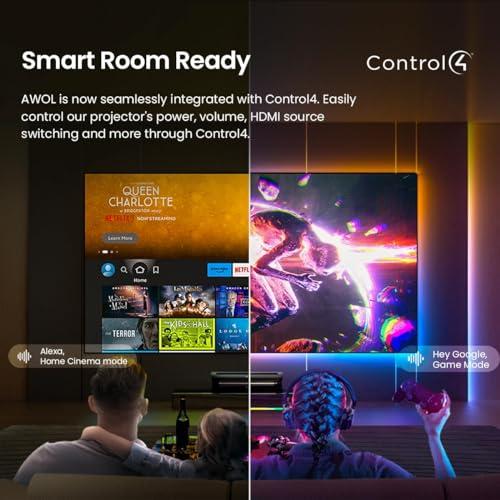
The AWOL Vision LTV-3000 Pro includes both built-in Android 9.0 and a bundled Fire TV Stick 4K Max for maximum app compatibility. The Epson EpiqVision Ultra LS650 relies on built-in Android TV with Google Assistant, offering a simpler single-interface experience with easier setup through Epson's Setting Assistant app.
The AWOL Vision LTV-3000 Pro provides more connectivity with 3 HDMI ports compared to the Epson LS650's 2 HDMI ports. Both include eARC support for high-quality audio return, but the extra HDMI port on the AWOL Vision eliminates the need for additional switchers when connecting multiple devices.
The AWOL Vision LTV-3000 Pro operates quieter at 27 decibels, while the Epson LS650 can reach 36 decibels at maximum brightness (dropping to 23 decibels in eco mode). The difference is noticeable in quiet rooms where the projector sits close to your seating area.
The Epson EpiqVision Ultra LS650 typically offers better upfront value with superior brightness and contrast performance. The AWOL Vision LTV-3000 Pro commands a premium but includes a longer 25,000-hour laser life versus the Epson's 20,000 hours, plus true 4K resolution and advanced gaming features that may justify the higher cost for enthusiasts.
For a dedicated home theater where you can control lighting, the AWOL Vision LTV-3000 Pro excels with true 4K resolution, Dolby Vision support, and quieter operation. For multi-purpose living rooms with ambient light, the Epson LS650 performs better with superior brightness and contrast that handles various lighting conditions more effectively.
We've done our best to create useful and informative comparisons to help you decide what product to buy. Our research uses advanced automated methods to create this comparison and perfection is not possible - please contact us for corrections or questions. These are the sites we've researched in the creation of this article: bestbuy.com - projectorcentral.com - rtings.com - techaeris.com - hometechnologyreview.com - awolvision.de - androidcentral.com - awolvision.com - projectorreviews.com - dreamediaav.com - bestbuy.com - youtube.com - youtube.com - awolvisionpro.com - awolvision.com - awolvision.com - techradar.com - youtube.com - projectorscreen.com - news.epson.com - projectorcentral.com - projectorreviews.com - avsforum.com - projectorcentral.com - news.epson.com - audiogeneral.com

Privacy Policy
Terms and Conditions - Affiliate Policy
Home Security
© Copyright 2008-2026.
11816 Inwood Rd #1211, Dallas, TX 75244