

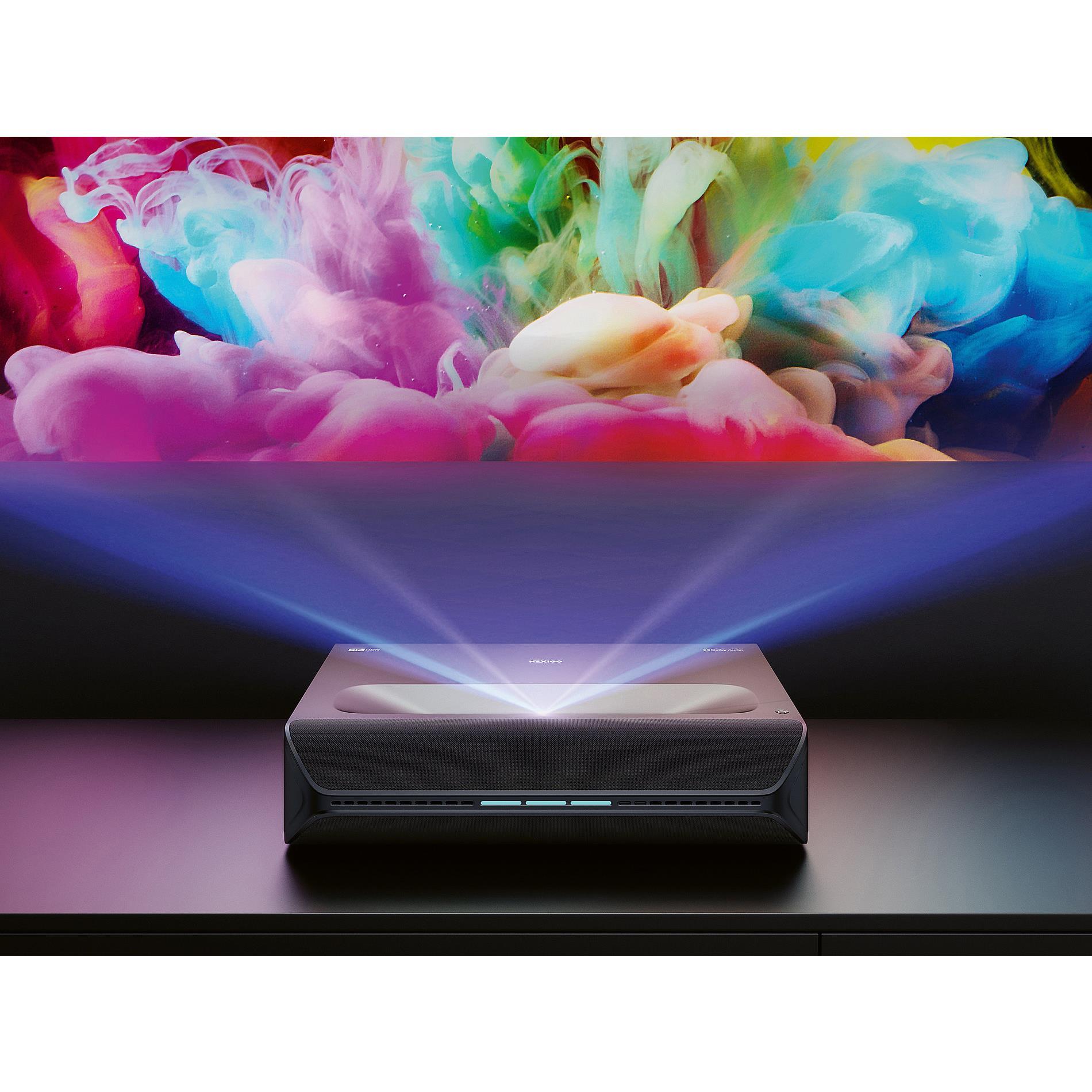
Picture this: you walk into your living room, flip a switch, and suddenly your wall transforms into a massive 120-inch cinema screen. No ceiling-mounted projector, no snaking cables across the room, no need to dim all the lights. This is the promise of ultra short throw (UST) projectors, and it's why they've become the hottest trend in home entertainment.
Two standout models released in 2023 have caught our attention: the AWOL Vision LTV-3000 Pro and the NexiGo Aurora Pro. Both represent significant advances in laser projector technology, but they take notably different approaches to achieving that big-screen magic. After extensive research into user experiences and expert evaluations, we've found that choosing between them comes down to whether you prioritize refined performance or maximum bang for your buck.
Before diving into the comparison, let's understand what makes these projectors special. Traditional projectors need to be positioned several feet away from your screen—sometimes across the entire room. Ultra short throw projectors flip this concept on its head using specialized optics that create massive images while sitting just inches from your wall or screen.
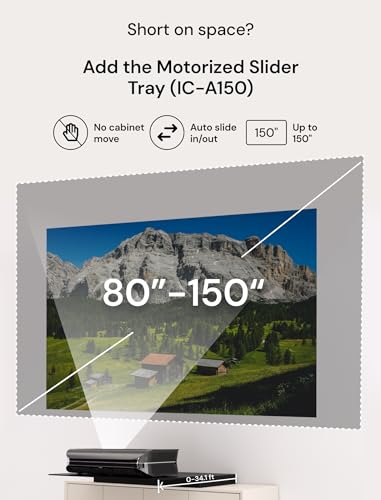
Think of it like this: imagine trying to create a shadow puppet on the wall. Normally, you'd need to move your hand far from the wall to make a big shadow. UST projectors use complex lens systems and mirrors to "fold" the light path, creating that same large image from an incredibly short distance. The throw ratio—the distance needed to create a certain image size—is typically around 0.25:1, meaning you need less than 10 inches to create a 100-inch image.
This positioning offers huge advantages. You can't accidentally walk in front of the beam and cast shadows on the screen. There's no complicated ceiling mounting or long cable runs. The projector becomes more like a soundbar sitting on your TV stand, except it's creating a screen that would cost tens of thousands of dollars as a traditional flat panel.
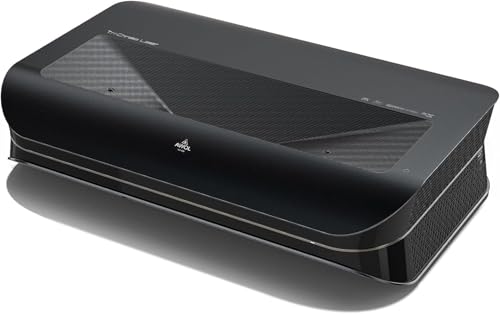
Released in late 2023, the AWOL Vision LTV-3000 Pro represents AWOL's refined approach to UST projection. At the time of writing, it's positioned as a premium option that costs several hundred dollars more than many competitors, but that price difference reflects some genuinely impressive engineering choices.
The most striking feature is its brightness uniformity—how evenly the light spreads across your screen. Many projectors, especially at larger sizes, suffer from "hotspots" where the center is noticeably brighter than the edges. Through our research into user experiences, the AWOL Vision LTV-3000 Pro consistently receives praise for maintaining even brightness across its entire 150-inch maximum image size. This might not sound exciting, but it's the difference between a professional-looking image and one that constantly reminds you you're watching a projector.
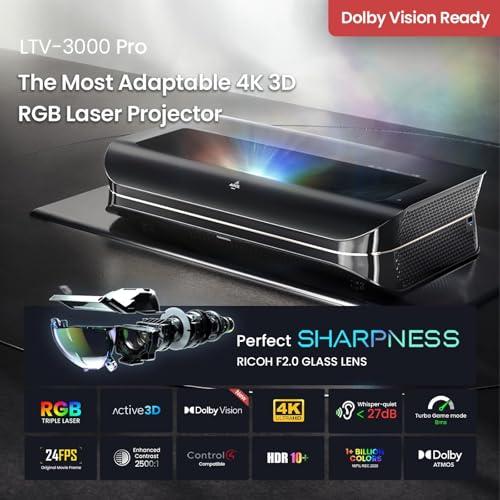
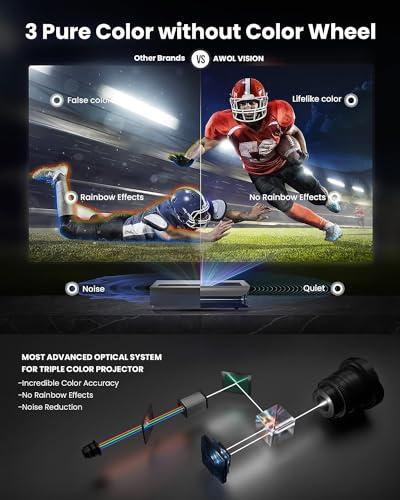
The projector uses RGB triple laser technology, which means it creates red, green, and blue light using three separate lasers instead of filtering white light through a color wheel. This approach eliminates the rainbow effect (brief flashes of red, green, and blue that some people see with traditional DLP projectors) and provides more accurate colors. The laser light source is rated for 25,000 hours—roughly 10 years of typical use—with no maintenance required.
Power efficiency is another standout feature. At just 185 watts, the AWOL Vision LTV-3000 Pro consumes about half the power of many competing models while still delivering 2,000 ISO lumens of brightness. For context, ISO lumens is a more standardized measurement than ANSI lumens, typically resulting in slightly lower but more accurate numbers.
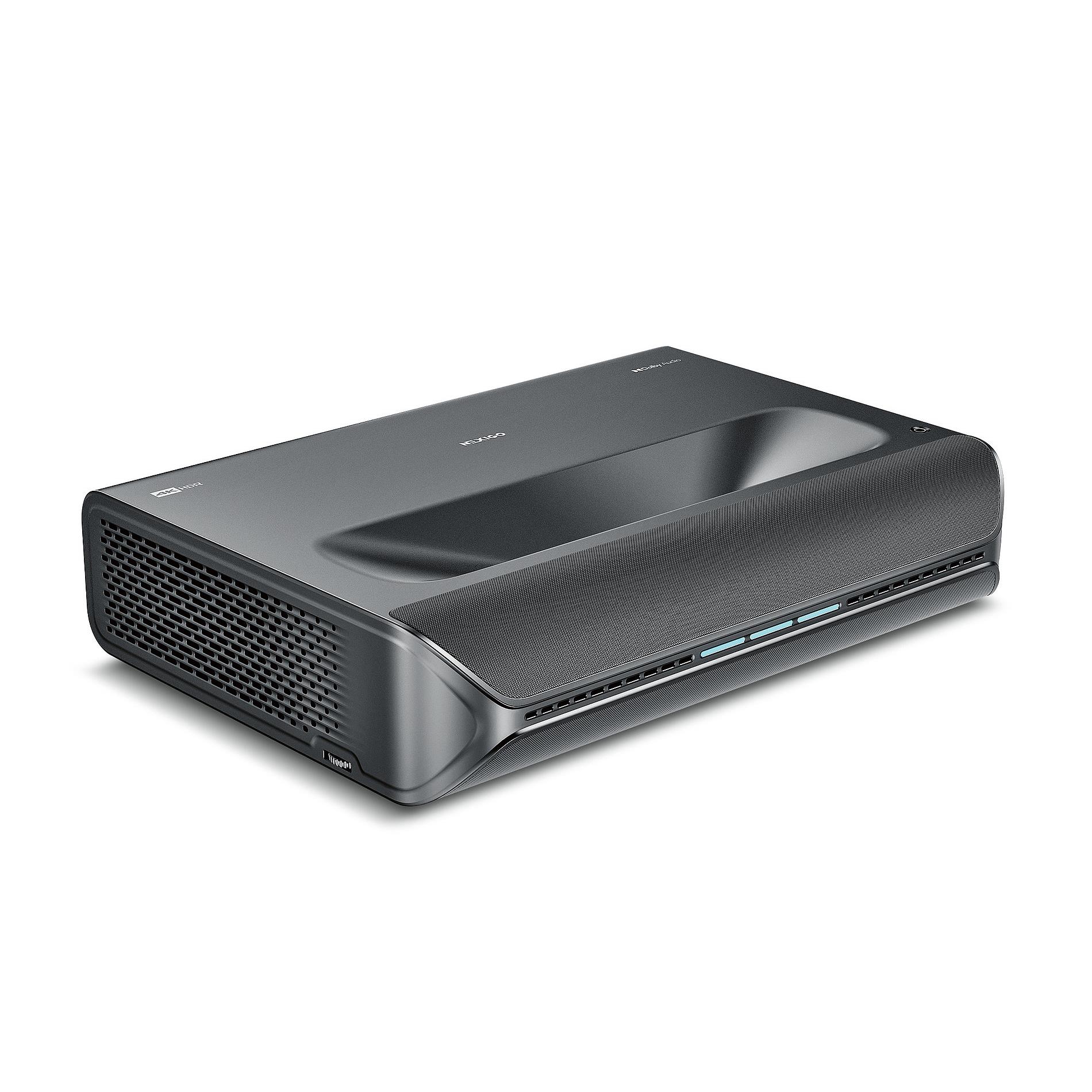
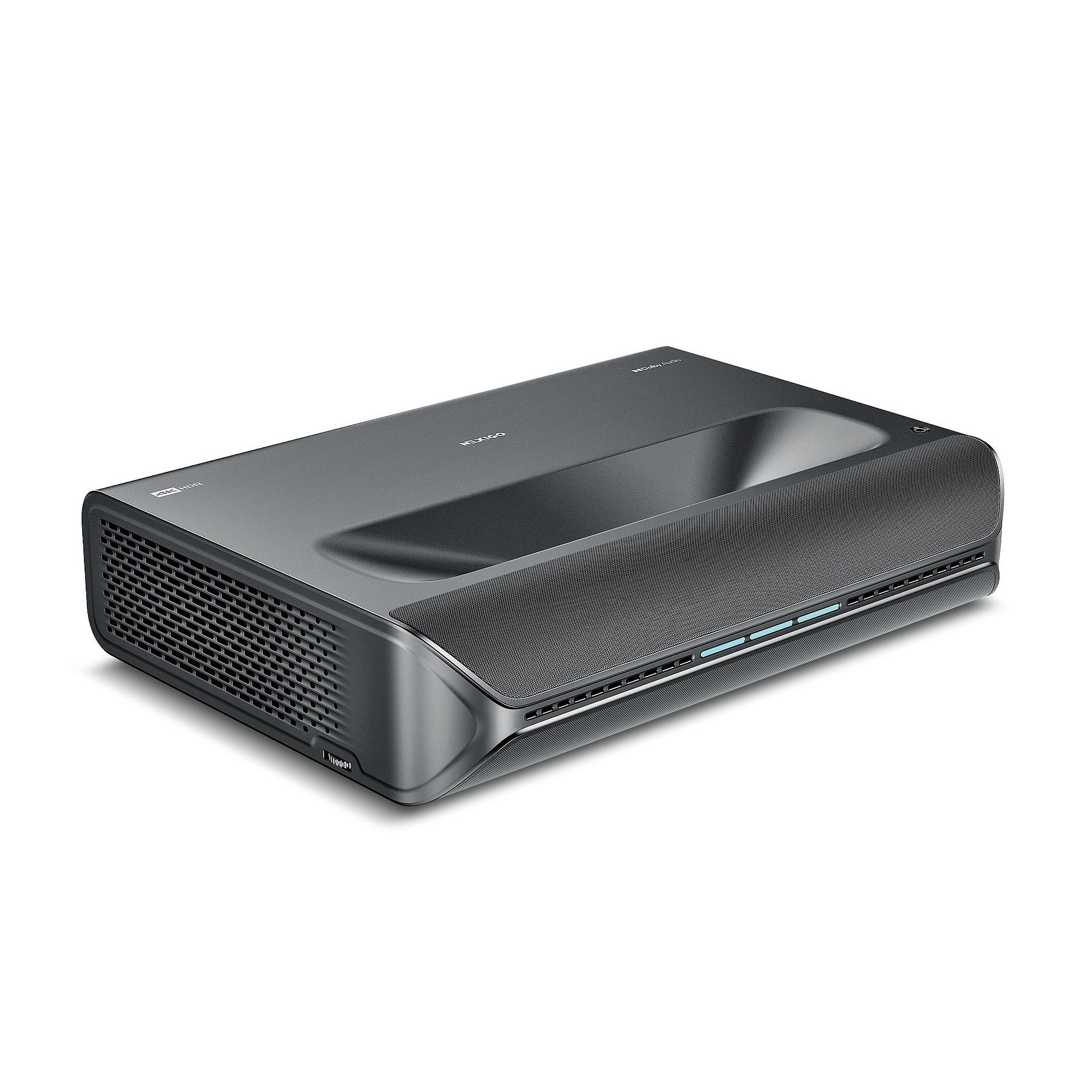
The NexiGo Aurora Pro, also released in 2023, takes a different approach. Rather than focusing on refinement, NexiGo packed maximum performance into a more affordable package. At the time of writing, it's priced notably below the AWOL Vision LTV-3000 Pro, making it one of the best values in premium UST projection.
The headline feature is brightness—2,400 ANSI lumens compared to the AWOL's 2,000 ISO lumens. This roughly 15-20% brightness advantage might not sound like much, but it's the difference between watchable daytime viewing and truly comfortable bright-room performance. The NexiGo Aurora Pro also features dynamic laser dimming, which can boost contrast to 6,000:1 by dimming the lasers during dark scenes.
Audio is where the NexiGo Aurora Pro really shines. Instead of the typical stereo setup, it features four speakers totaling 60 watts: two 15-watt woofers and two 15-watt tweeters. The system supports Dolby Atmos, creating a surprisingly immersive surround sound experience. After reviewing user feedback, many owners report being genuinely surprised by the audio quality—something rare with projector built-in speakers.
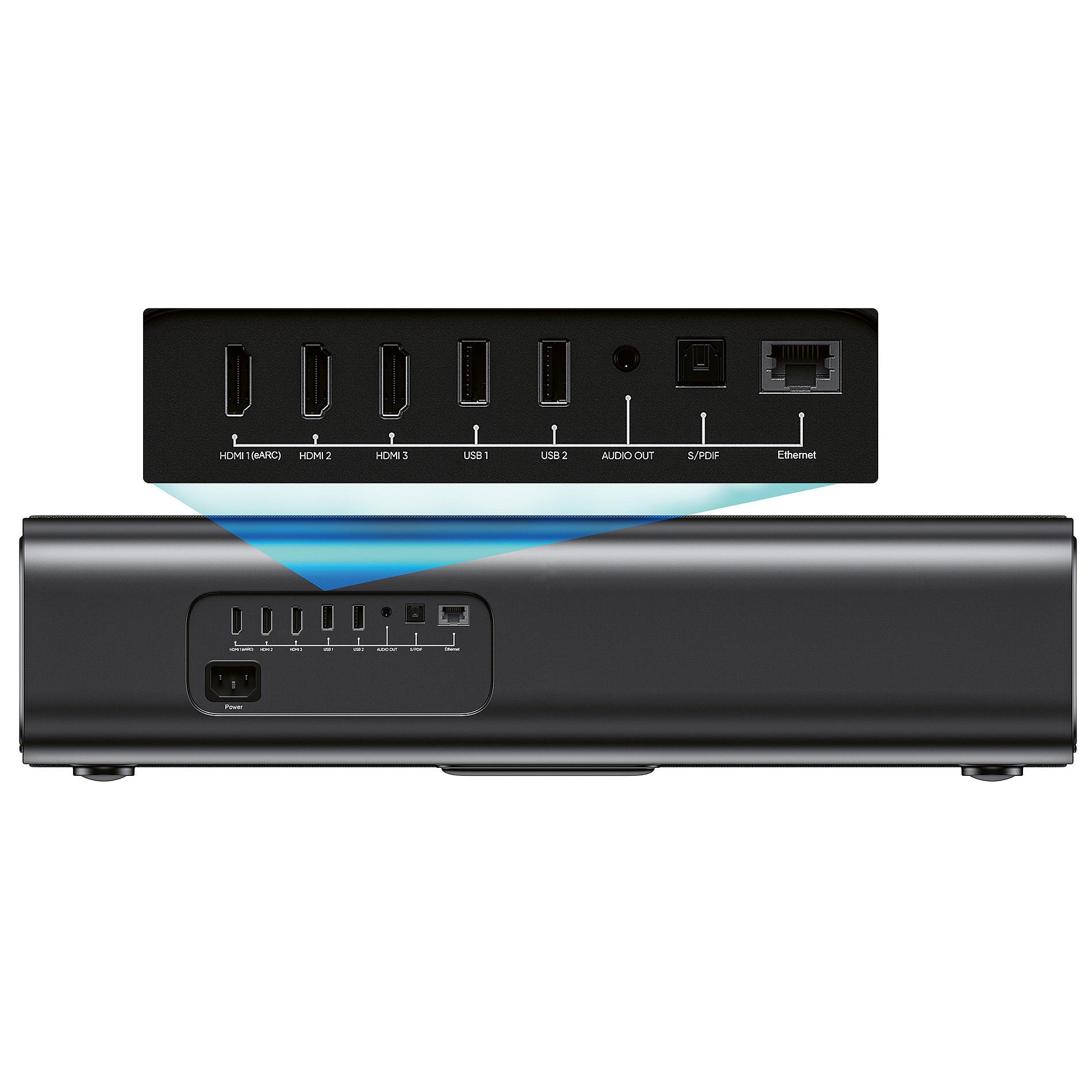
The projector also includes three HDMI 2.1 ports, future-proofing it for next-generation gaming consoles and high-refresh-rate content. While most current content doesn't require HDMI 2.1, having it means the projector won't become obsolete as quickly.
Brightness determines whether your projector works in your actual living space or forces you to create a dedicated dark room. Both projectors are bright enough for evening viewing in normal lighting, but daytime performance differs significantly.
The NexiGo Aurora Pro's higher brightness rating translates to real-world advantages in bright rooms. Based on user experiences we've analyzed, it maintains good contrast and color saturation even with windows open during the day, especially when paired with an ambient light rejecting (ALR) screen. These specialized screens are designed to reflect room lighting away while preserving the projector's image.
The AWOL Vision LTV-3000 Pro, while slightly dimmer, excels in brightness consistency. User reports consistently praise how the edges of large screens remain as bright as the center, something that becomes increasingly important as screen sizes grow past 120 inches. This uniformity means you're not constantly aware of brightness variations that can distract from immersion.
For most users, both projectors provide adequate brightness for mixed lighting conditions. The choice comes down to whether you prioritize peak brightness for the brightest rooms or consistent brightness for the most immersive experience.
Both projectors use similar 0.47-inch DLP chips with pixel-shifting technology to achieve 4K resolution. This means they start with a 1080p chip and rapidly shift pixels to create additional detail—a technique that works remarkably well in practice, though not quite matching native 4K displays.
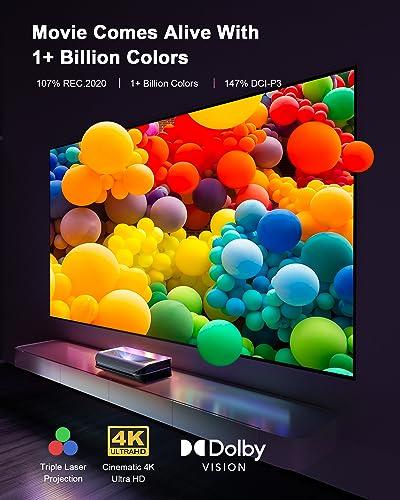
Color performance is where the RGB laser technology in both projectors really shines. Unlike lamp-based projectors or those using traditional laser-phosphor systems, RGB lasers can produce incredibly wide color gamuts. Both models cover over 100% of the BT.2020 color space, meaning they can display colors that most TVs simply can't reproduce.
The AWOL Vision LTV-3000 Pro includes Dolby Vision support, which is relatively rare in the UST projector category. Dolby Vision is an advanced HDR format that provides scene-by-scene optimization of brightness and color, creating more realistic images than standard HDR10. While content availability is still growing, having Dolby Vision support future-proofs the projector for premium streaming content.
Contrast ratio tells an interesting story. The NexiGo Aurora Pro claims higher numbers—3,000:1 native and 6,000:1 dynamic versus the AWOL's 2,500:1. However, user experiences suggest that while the NexiGo can achieve deeper blacks in optimal conditions, the AWOL Vision LTV-3000 Pro maintains more consistent contrast across different content types and viewing conditions.
Gaming performance has become increasingly important as projectors move into living rooms where gaming consoles reside. Both projectors offer impressive gaming capabilities, but with different strengths.
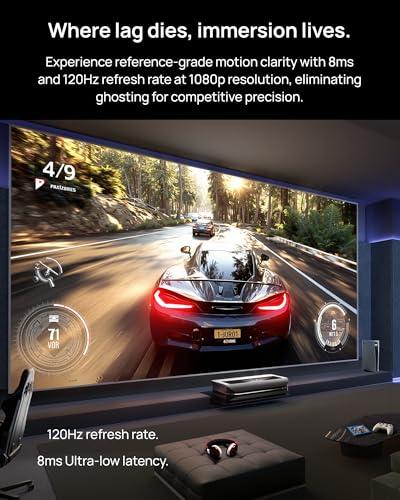
Input lag—the delay between when you press a button and when the action appears on screen—is crucial for competitive gaming. The AWOL Vision LTV-3000 Pro achieves slightly lower input lag: 15ms at 4K/60Hz compared to the NexiGo Aurora Pro's 17.8ms. While both are excellent for gaming, the few milliseconds difference might matter for serious competitive players.
The NexiGo Aurora Pro counters with broader gaming support, including 1080p at 240Hz through its HDMI 2.1 connections. This high refresh rate support is particularly valuable for PC gaming and future console generations that may support higher frame rates.
Both projectors handle motion well, with MEMC (Motion Estimation, Motion Compensation) technology that reduces judder in fast-moving scenes. This feature is particularly noticeable in sports content and action games.
Built-in audio quality significantly impacts the overall experience, especially since many users initially skip external sound systems. This is where the NexiGo Aurora Pro establishes a clear advantage.
The four-speaker, 60-watt system in the NexiGo Aurora Pro provides genuinely impressive audio for a projector. The dedicated woofers and tweeters create fuller sound than typical projector speakers, with enough bass response to handle action movies without immediate need for a subwoofer. Dolby Atmos processing adds spatial effects that work surprisingly well, creating the impression of sound coming from different directions.
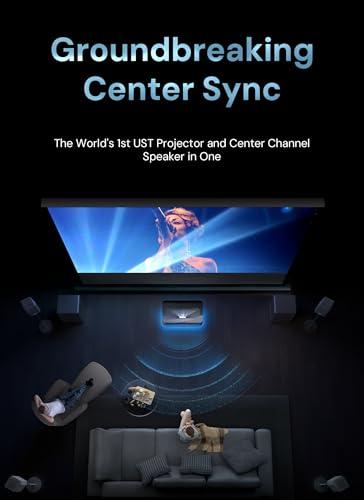
The AWOL Vision LTV-3000 Pro's 36-watt stereo system is adequate but not exceptional. It's clean and clear, perfect for dialogue and casual viewing, but lacks the impact needed for immersive movie experiences. Most users upgrading to external audio sooner rather than later.
At the time of writing, the NexiGo Aurora Pro costs several hundred dollars less than the AWOL Vision LTV-3000 Pro, making value comparison complex. The NexiGo offers higher peak brightness, better audio, and HDMI 2.1 connectivity at a lower price—seemingly an easy choice.
However, the AWOL Vision LTV-3000 Pro justifies its premium through refinement and efficiency. The superior brightness uniformity means better performance at maximum screen sizes. Lower power consumption saves roughly $50 annually in electricity costs, adding up over the projector's lifetime. The more compact design and premium build quality appeal to users installing projectors in upscale living spaces where aesthetics matter.
Long-term value considerations favor both projectors equally. The 25,000-hour laser life spans mean neither requires expensive lamp replacements, a major advantage over traditional projectors. Both companies provide similar warranty coverage and customer support experiences based on user feedback we've analyzed.
After extensive research into user experiences and expert evaluations, clear usage patterns emerge for each projector.
Choose the NexiGo Aurora Pro if you're maximizing performance per dollar. Its higher brightness handles brighter rooms better, the superior audio system eliminates immediate need for external speakers, and HDMI 2.1 connectivity future-proofs your investment. It's ideal for families who want big-screen entertainment without complex installations or significant compromises in bright living spaces.
The AWOL Vision LTV-3000 Pro appeals to users prioritizing refinement and long-term satisfaction. If you're planning maximum screen sizes (130+ inches), the superior brightness uniformity becomes crucial. The lower power consumption, more compact design, and Dolby Vision support create a more premium ownership experience that justifies the higher initial cost.
Both projectors require ALR screens for optimal performance—budget an additional few hundred dollars for a quality ambient light rejecting screen. Professional calibration, while not strictly necessary, optimizes color accuracy and can cost a few hundred dollars but significantly improves image quality.
The ultra short throw projector category has matured significantly since these models launched in 2023. Both the AWOL Vision LTV-3000 Pro and NexiGo Aurora Pro represent excellent choices that eliminate many traditional projector compromises.
For most users, the NexiGo Aurora Pro provides better overall value with its combination of high brightness, impressive audio, and competitive pricing. It's the projector we'd recommend for someone wanting to dive into UST projection without major compromises.
The AWOL Vision LTV-3000 Pro earns its premium through superior engineering and refinement. If budget allows and you value consistency over peak performance, its advantages in brightness uniformity and efficiency create a more satisfying long-term ownership experience.
Either choice transforms your living room into a cinema, but understanding these differences ensures you choose the projector that best matches your specific needs and viewing environment.
| AWOL Vision LTV-3000 Pro | NexiGo Aurora Pro |
|---|---|
| Brightness - Critical for daytime viewing and bright living rooms | |
| 2,000 ISO lumens (excellent evening performance, good daytime with ALR screen) | 2,400 ANSI lumens (superior bright room performance, more forgiving lighting conditions) |
| Contrast Ratio - Determines black level depth and image pop | |
| 2,500:1 native (good blacks, consistent across content types) | 3,000:1 native, 6,000:1 dynamic (deeper blacks, more dramatic contrast) |
| Brightness Uniformity - Edge-to-edge consistency across large screens | |
| Exceptional uniformity, no hotspots even at 150" (premium engineering advantage) | Good uniformity but not class-leading (typical for the price point) |
| Audio System - Built-in sound quality and power | |
| 36W stereo (adequate for casual use, external speakers recommended for movies) | 60W Dolby Atmos, 4 speakers (surprisingly good, delays need for soundbar) |
| Power Consumption - Long-term operating costs | |
| 185W (energy efficient, ~$50/year savings vs competitors) | 280W (higher consumption but justified by brightness output) |
| Gaming Performance - Input lag for responsive gaming | |
| 15ms at 4K/60Hz, 8ms at 1080p/120Hz (excellent for competitive gaming) | 17.8ms at 4K/60Hz, 9ms at 1080p/240Hz (very good, future-proofed) |
| HDMI Connectivity - Future-proofing and device compatibility | |
| 3x HDMI 2.0 with eARC (adequate for current needs) | 3x HDMI 2.1 with eARC (better for next-gen consoles and high refresh gaming) |
| HDR Support - Enhanced contrast and color in compatible content | |
| HDR10, HDR10+, HLG, Dolby Vision (rare Dolby Vision support in UST category) | HDR10, HDR10+, HLG (comprehensive but no Dolby Vision) |
| Physical Design - Installation flexibility and living room aesthetics | |
| 21 lbs, compact dimensions (easier placement, premium build quality) | 22 lbs, slightly larger (sturdy build, less refined aesthetics) |
| Color Gamut - Richness and accuracy of color reproduction | |
| 107% BT.2020 coverage (excellent color range, may need calibration) | 107% BT.2020 coverage (vibrant out-of-box colors, wide gamut) |
| Laser Life - Long-term reliability and maintenance | |
| 25,000 hours RGB laser (10+ years typical use, no maintenance) | 25,000 hours RGB laser (10+ years typical use, no maintenance) |
| Value Positioning - Price-to-performance ratio | |
| Premium pricing justified by uniformity and efficiency | Best-in-class value with higher brightness and better audio |
The NexiGo Aurora Pro is significantly brighter at 2,400 ANSI lumens compared to the AWOL Vision LTV-3000 Pro's 2,000 ISO lumens. This 15-20% brightness advantage makes the NexiGo Aurora Pro better suited for bright living rooms and daytime viewing, especially when paired with an ambient light rejecting screen.
Both the AWOL Vision LTV-3000 Pro and NexiGo Aurora Pro deliver excellent 4K images using RGB triple laser technology. The NexiGo Aurora Pro offers higher contrast (3,000:1 vs 2,500:1) for deeper blacks, while the AWOL Vision LTV-3000 Pro provides superior brightness uniformity across large screens and includes rare Dolby Vision HDR support.
The NexiGo Aurora Pro has significantly better audio with its 60W Dolby Atmos system featuring four speakers (two woofers and two tweeters). The AWOL Vision LTV-3000 Pro has a basic 36W stereo system that's adequate for casual viewing but will likely require external speakers for a true home theater experience.
Both projectors excel at gaming. The AWOL Vision LTV-3000 Pro has slightly lower input lag (15ms vs 17.8ms at 4K/60Hz), making it marginally better for competitive gaming. However, the NexiGo Aurora Pro offers HDMI 2.1 connectivity and supports higher refresh rates up to 1080p/240Hz for future-proofing.
Both the AWOL Vision LTV-3000 Pro and NexiGo Aurora Pro are ultra short throw projectors that can create a 100-inch image from approximately 8-10 inches away from the wall. The AWOL Vision LTV-3000 Pro has a slightly better throw ratio of 0.25:1 compared to 0.23:1 for the NexiGo Aurora Pro.
The NexiGo Aurora Pro typically offers better overall value, providing higher brightness, superior audio, and HDMI 2.1 connectivity at a lower price point. The AWOL Vision LTV-3000 Pro commands a premium for its superior brightness uniformity, energy efficiency, and more refined build quality.
Both projectors can handle moderately bright rooms, but the NexiGo Aurora Pro performs better in challenging lighting conditions due to its higher brightness output. For optimal performance in bright rooms, either projector should be paired with an ambient light rejecting (ALR) screen that helps maintain contrast and color accuracy.
The AWOL Vision LTV-3000 Pro is much more energy efficient at 185W compared to the NexiGo Aurora Pro's 280W consumption. This translates to approximately $50 per year in energy savings, making the AWOL Vision LTV-3000 Pro more cost-effective for long-term operation despite its higher initial purchase price.
Both the AWOL Vision LTV-3000 Pro and NexiGo Aurora Pro feature RGB laser light sources rated for 25,000 hours of operation. This equals roughly 10+ years of typical home use with no maintenance required, making both projectors excellent long-term investments compared to traditional lamp-based projectors.
The AWOL Vision LTV-3000 Pro is better suited for very large screens due to its exceptional brightness uniformity. While the NexiGo Aurora Pro has higher peak brightness, the AWOL Vision LTV-3000 Pro maintains consistent brightness and sharpness from edge to edge, which becomes increasingly important as screen sizes exceed 120 inches.
While both the AWOL Vision LTV-3000 Pro and NexiGo Aurora Pro can project onto plain white walls, they perform significantly better with specialized ALR (Ambient Light Rejecting) screens. These screens enhance contrast and color accuracy, especially in rooms with ambient lighting, making them essential for optimal home theater performance.
Both projectors operate relatively quietly, with the AWOL Vision LTV-3000 Pro rated at 27dB and the NexiGo Aurora Pro at similar noise levels. The AWOL Vision LTV-3000 Pro's lower power consumption may result in slightly quieter fan operation during extended use, but both are suitable for quiet home theater environments.
We've done our best to create useful and informative comparisons to help you decide what product to buy. Our research uses advanced automated methods to create this comparison and perfection is not possible - please contact us for corrections or questions. These are the sites we've researched in the creation of this article: bestbuy.com - projectorcentral.com - rtings.com - techaeris.com - hometechnologyreview.com - awolvision.de - androidcentral.com - awolvision.com - projectorreviews.com - dreamediaav.com - bestbuy.com - youtube.com - youtube.com - awolvisionpro.com - awolvision.com - awolvision.com - projectorreviews.com - thesmarthomehookup.com - nexigo.com - projectorscreen.com - avsforum.com - rtings.com - projectorcentral.com - youtube.com - rtings.com - avsforum.com - avsforum.com

Privacy Policy
Terms and Conditions - Affiliate Policy
Home Security
© Copyright 2008-2026.
11816 Inwood Rd #1211, Dallas, TX 75244