

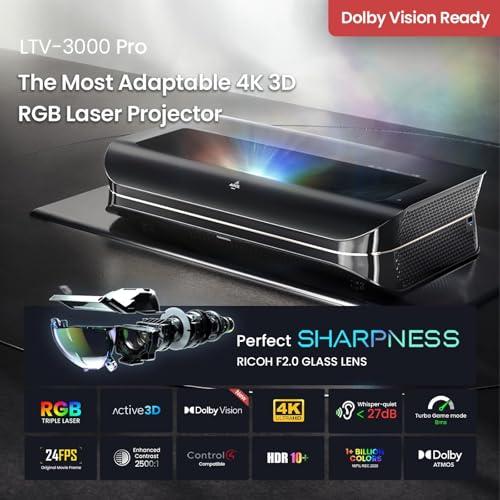
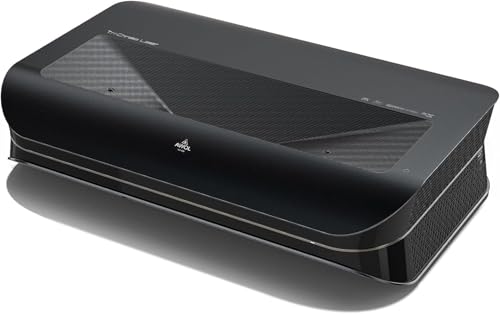
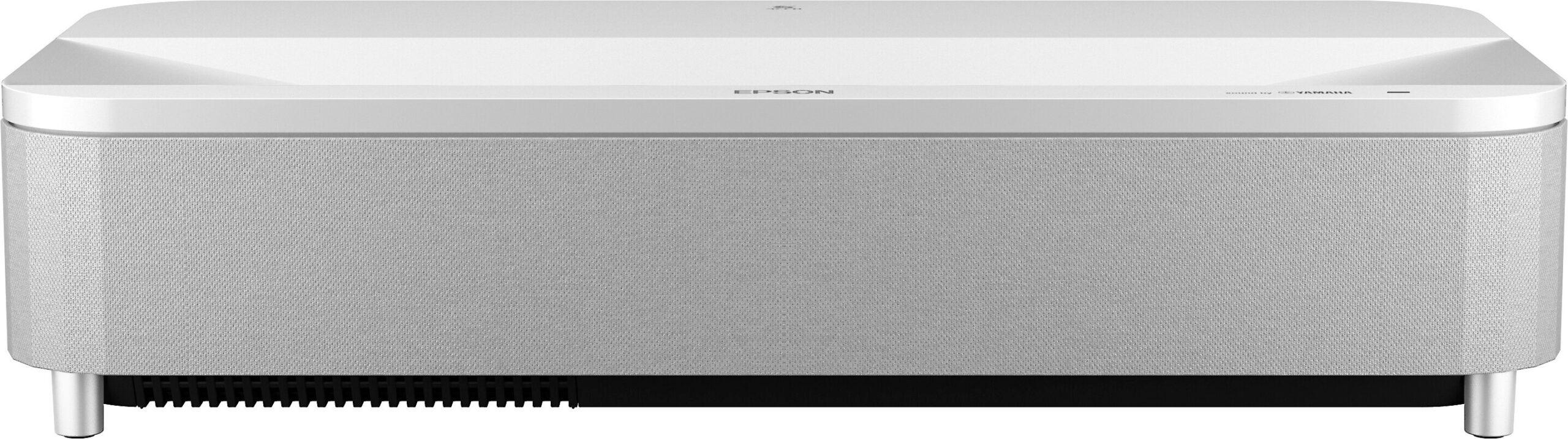
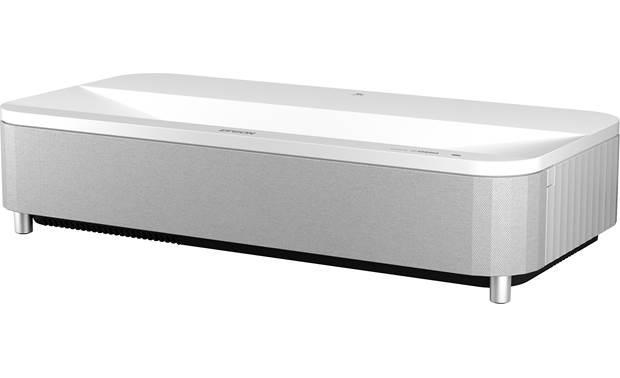
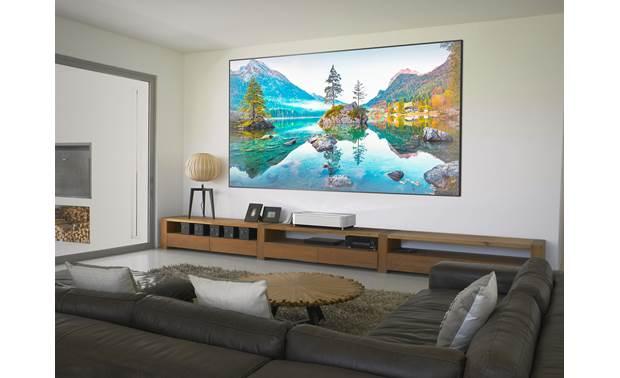
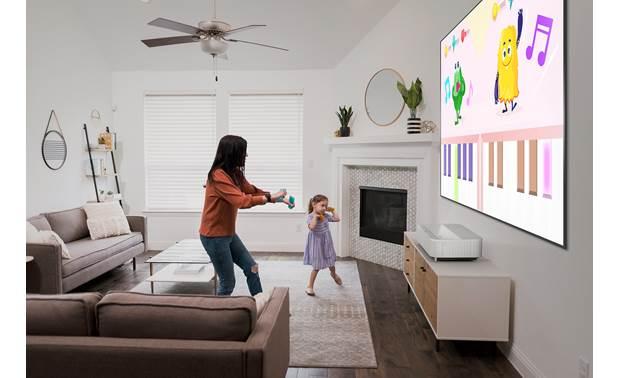
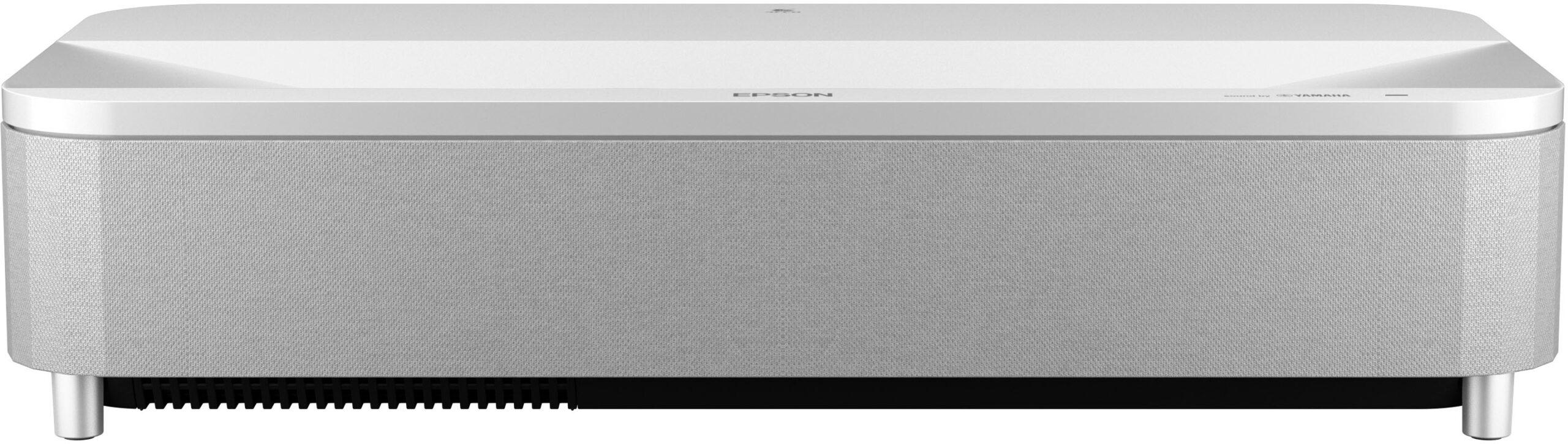

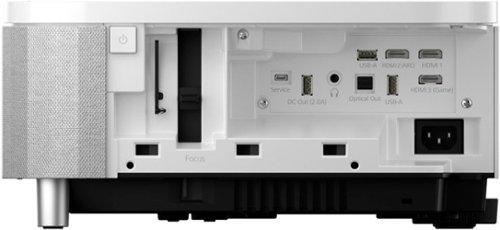
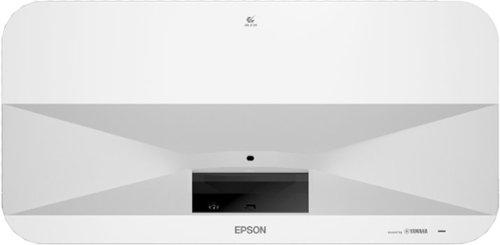
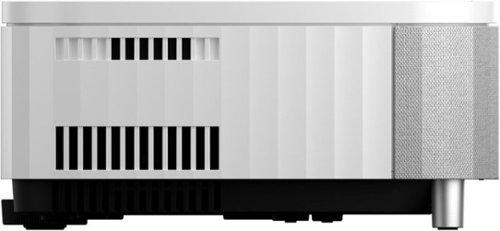
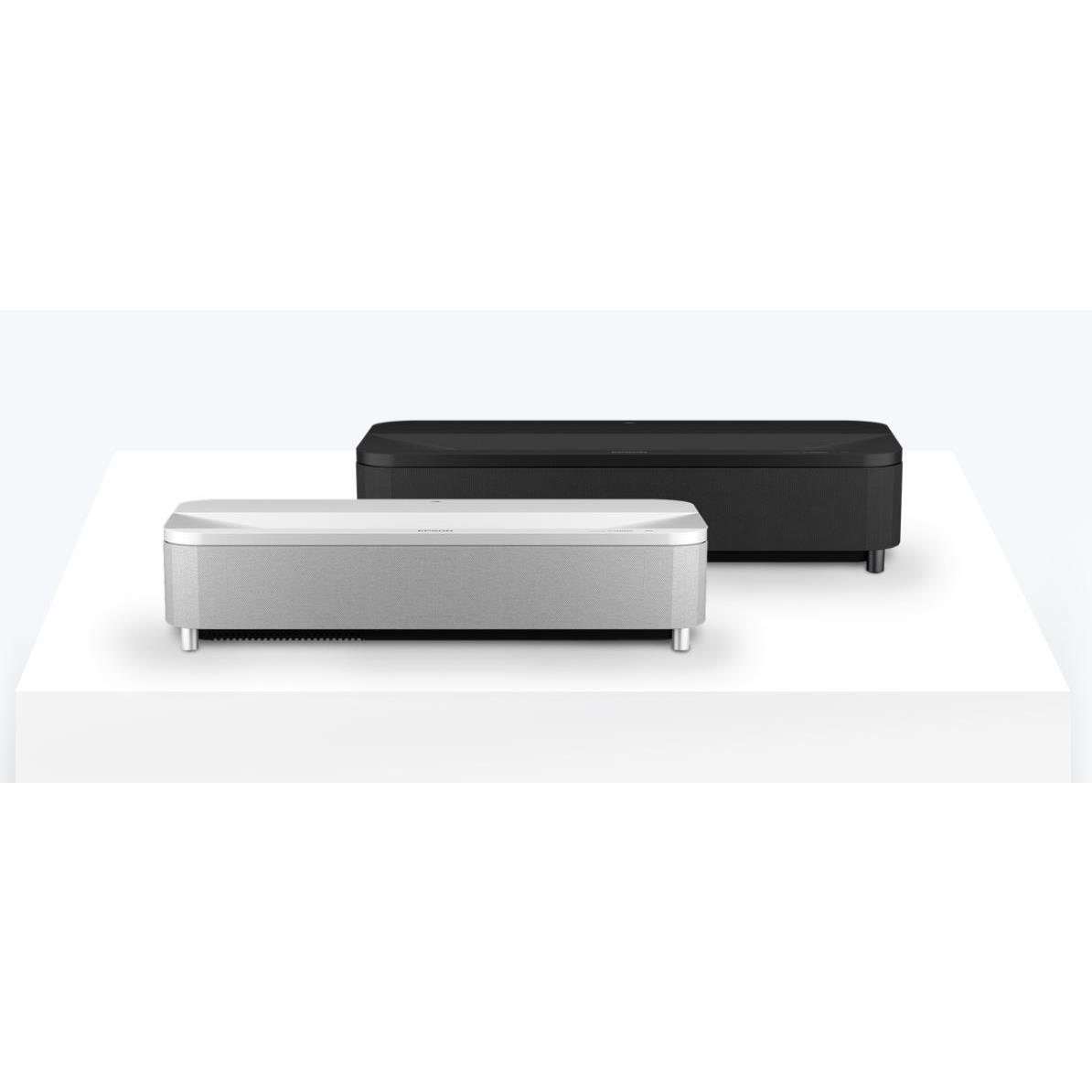
If you've ever dreamed of turning your living room into a movie theater without the hassle of ceiling mounts or threading cables through walls, ultra short throw (UST) projectors might just be your answer. These remarkable devices can create massive 100-150 inch images while sitting just inches from your wall – imagine the convenience of placing what looks like a fancy soundbar on your TV stand and getting a screen bigger than any television money can buy.
The ultra short throw projector market has exploded in recent years, with manufacturers racing to perfect the technology that makes this magic possible. Today, we're comparing two standout models that represent different philosophies in projector design: the AWOL Vision LTV-3000 Pro, released in 2023 with cutting-edge RGB laser technology, and the Epson EpiqVision Ultra LS800, which launched in 2022 using proven 3LCD technology with impressive brightness levels.
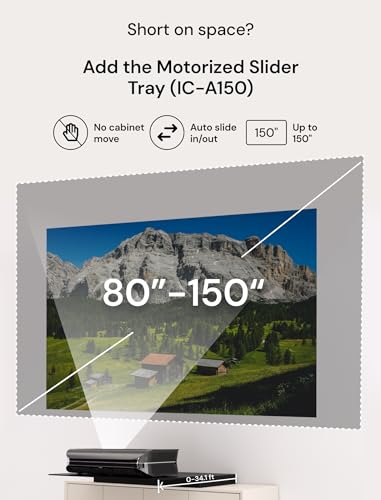
Before diving into the specifics, let's talk about what makes ultra short throw projectors unique. Traditional projectors need to be mounted far from the screen – typically 8-12 feet for a 100-inch image. UST projectors achieve the same screen size from just 6-12 inches away using specialized ultra-wide angle lenses and advanced optical engineering.
The "throw ratio" is the key metric here – it tells you how far the projector needs to be from the wall relative to the screen width. The AWOL Vision LTV-3000 Pro has a 0.25:1 throw ratio, while the Epson LS800 manages an even tighter 0.17:1. This means for a 100-inch screen, the AWOL needs about 21 inches from the wall, while the Epson can work from just 14 inches away.
Both projectors use laser light sources instead of traditional bulbs, which is a game-changer. Lasers last 20,000-25,000 hours (that's over a decade of regular use), maintain consistent brightness over time, and turn on instantly without warm-up periods. No more planning movie nights around bulb replacements or dealing with dimming images.
Here's where things get interesting – these projectors use fundamentally different display technologies, each with distinct advantages.
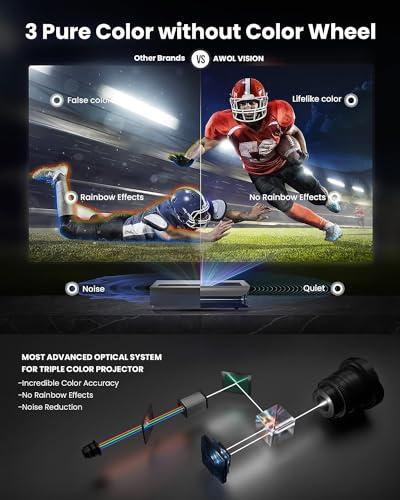
The AWOL Vision LTV-3000 Pro employs DLP (Digital Light Processing) technology with a revolutionary RGB laser setup. DLP uses millions of tiny mirrors on a chip to create images, and traditionally requires a spinning color wheel to produce different colors. AWOL's RGB laser system eliminates this color wheel entirely, using separate red, green, and blue lasers to illuminate the DLP chip directly. This should theoretically result in better color accuracy, no "rainbow effect" (brief color flashes some people notice with DLP), and wider color reproduction.
The Epson LS800, meanwhile, uses 3LCD technology with laser-phosphor illumination. This system uses three separate LCD panels – one each for red, green, and blue light – that work simultaneously to create the final image. Epson's approach uses blue lasers to excite phosphor materials that produce the other colors. While this might sound less advanced than AWOL's pure RGB approach, 3LCD technology has been refined over decades and offers excellent color accuracy and uniformity.
The practical difference? The AWOL projector delivers true native 4K resolution (3840x2160) without any pixel manipulation, while the Epson uses "4K enhancement" – taking a native 1080p image and using pixel-shifting technology to approximate 4K resolution. Both look sharp, but pixel-shifted 4K can sometimes show subtle artifacts with fine text or detailed patterns.
If there's one specification that can make or break your projector experience, it's brightness, measured in lumens. This is especially crucial for UST projectors since they're designed for living rooms where you can't always control the lighting like you would in a dedicated theater.
The Epson LS800 absolutely dominates here with 4,000 lumens of brightness – that's genuinely impressive for any projector, let alone a consumer model. The AWOL LTV-3000 Pro produces 2,000 ISO lumens, which is respectable but notably dimmer.
What does this mean in real-world use? The Epson can handle significant ambient light without the image looking washed out. You can watch daytime TV, have some lights on during evening viewing, and generally use it more like a traditional television. The AWOL, while still usable in moderate lighting, really shines (pun intended) in darker environments where its superior contrast and color technology can show their strengths.
Based on our research into user experiences, the brightness difference is immediately noticeable when comparing the two side-by-side in the same room. The Epson's image remains vibrant and punchy even with curtains open during the day, while the AWOL benefits significantly from light control or an ambient light rejecting (ALR) screen.
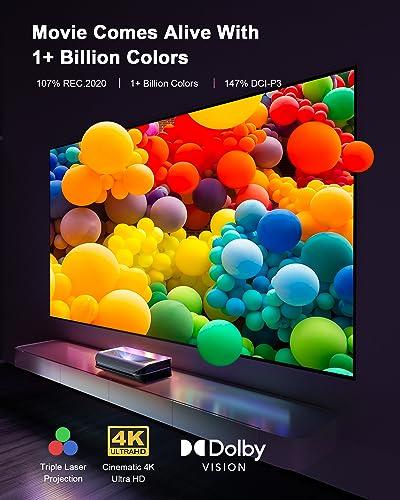
Color reproduction is where these projectors' different approaches become most apparent. The AWOL LTV-3000 Pro covers an impressive 107% of the BT.2020 color space – that's the next-generation color standard that enables over a billion possible colors. On paper, this should deliver incredibly vivid, lifelike images that surpass what most displays can achieve.
However, our research into professional reviews reveals a significant caveat: the AWOL struggles with color accuracy out of the box. Multiple expert reviews note that achieving good color requires extensive calibration, and some reviewers had to perform factory resets multiple times to get acceptable results. This is disappointing given the projector's advanced laser technology.
The Epson LS800, conversely, delivers much more consistent color performance right from setup. While it may not achieve the theoretical color gamut of the AWOL, its 3LCD technology ensures equal white and color brightness – a key advantage. Many single-chip DLP projectors suffer from reduced color brightness compared to white brightness, but the Epson maintains vibrant colors even in bright scenes.
For HDR (High Dynamic Range) content, the AWOL supports more formats, including the premium Dolby Vision standard that provides scene-by-scene optimization. The Epson handles HDR10 and HLG well but lacks Dolby Vision support. However, given the AWOL's calibration issues, the practical HDR experience might not live up to the specification advantages.
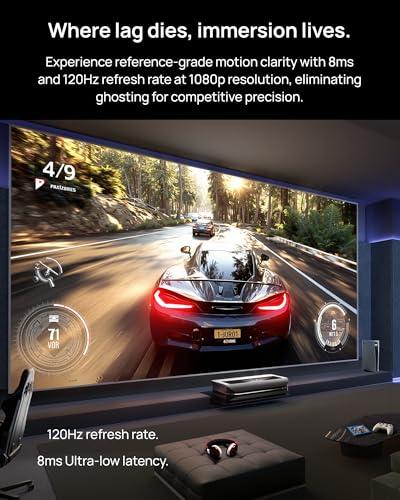
Both projectors cater to gamers with impressively low input lag – the delay between your controller input and seeing the action on screen. The AWOL LTV-3000 Pro achieves 15ms at 4K/60Hz and drops to just 8ms at 1080p/120Hz, while the Epson LS800 measures 16.7ms. These numbers are excellent for projectors and well below the 20ms threshold where most people notice lag.
The AWOL has a slight edge for competitive gaming, particularly with its 120Hz support for smoother motion in fast-paced games. However, the difference is minimal for most gaming scenarios. The Epson's superior brightness might actually provide an advantage for gaming in brighter rooms where you can better see dark areas and enemy movements.
Both projectors support the latest gaming console features, including 4K/60Hz from PlayStation 5 and Xbox Series X. The large screen size these projectors provide creates an incredibly immersive gaming experience that's hard to replicate with traditional TVs.
One often-overlooked advantage of UST projectors is their built-in audio systems. Since these devices sit in your living room rather than mounted on the ceiling, they can incorporate more substantial speakers than traditional projectors.
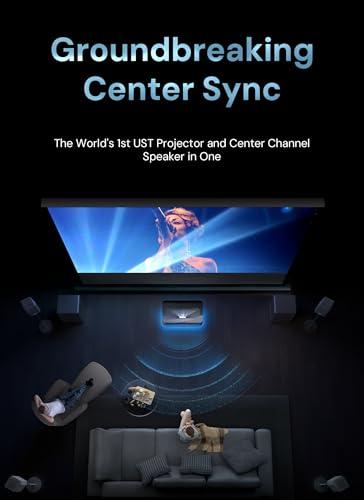
The AWOL LTV-3000 Pro features a robust 36W stereo system with Dolby Atmos support, delivering room-filling sound that's genuinely impressive for a projector. The speakers provide clear dialogue and decent dynamic range, though they lack deep bass response.
The Epson LS800 takes a different approach with a Yamaha-designed 20W 2.1 system that includes a built-in subwoofer. While the total power is lower, the dedicated subwoofer provides better bass response for movies and music. Yamaha's audio expertise shows in the balanced sound signature that works well for various content types.
For most users, either system provides acceptable audio for casual viewing, but serious home theater enthusiasts will likely want to add a dedicated sound system. The convenience of good built-in audio shouldn't be underestimated, though – it's one less component to set up and one fewer remote to juggle.
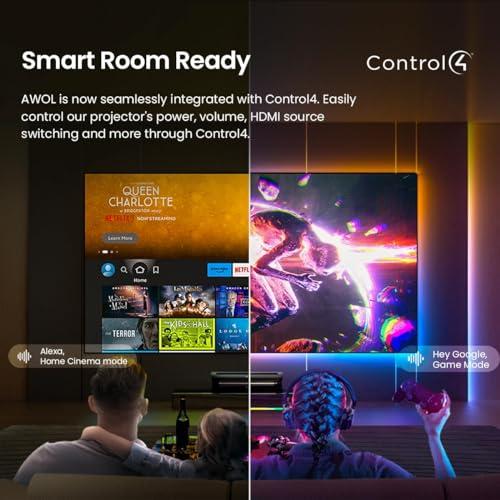
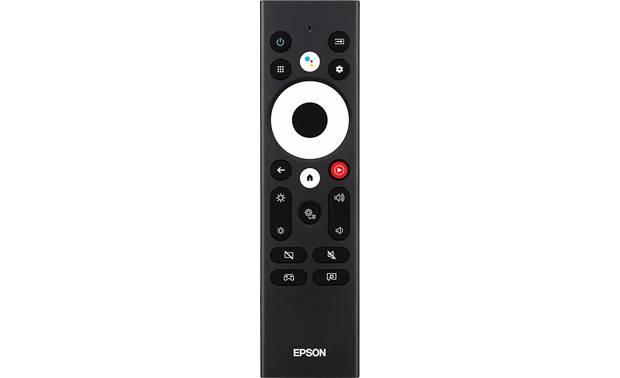
The smart TV experience differs significantly between these projectors. The Epson LS800 includes Android TV 11 built-in, providing direct access to streaming services, Google Assistant voice control, and Chromecast functionality. The interface is polished, responsive, and integrates seamlessly with the projector's settings.
The AWOL LTV-3000 Pro takes a different approach, including a Fire TV Stick 4K Max in the box. While this provides access to the same streaming content, it creates a more complex user experience with separate interfaces for projector settings and streaming content. Some users find this setup cumbersome, though others prefer the flexibility of upgrading the streaming device independently.
Both projectors are designed for easy installation, but there are important differences. The Epson LS800 can be placed closer to the wall thanks to its shorter throw ratio, making it easier to fit into existing furniture arrangements. It's also more forgiving of precise placement – small adjustments in position don't dramatically affect the image.
The AWOL LTV-3000 Pro requires more careful positioning but includes powered focus and 8-point keystone correction to help with setup. However, our research suggests that achieving the best image quality requires more attention to placement and potentially professional calibration.
At the time of writing, the AWOL LTV-3000 Pro typically sells for several hundred dollars less than the Epson LS800, making it appear to offer better value on paper. However, the real value equation depends on your specific needs and room conditions.
The AWOL offers cutting-edge technology with true 4K resolution and advanced laser design, but requires more setup effort and performs best in controlled lighting conditions. It's targeted at enthusiasts who want the latest display technology and are willing to invest time in optimization.
The Epson costs more but delivers a more polished, reliable experience with superior brightness and better out-of-box performance. It's designed for mainstream users who want excellent performance without the complexity.
Choose the AWOL Vision LTV-3000 Pro if you have a dedicated home theater room with good light control, prioritize having the latest display technology, and don't mind spending time on setup and calibration. It's also the better choice if you frequently watch HDR content and want support for premium formats like Dolby Vision. The lower operating costs due to reduced power consumption add to its long-term value.
Choose the Epson EpiqVision Ultra LS800 if you're setting up in a multi-purpose living room where you can't always control lighting, want reliable performance right out of the box, or prefer a more integrated smart TV experience. The superior brightness makes it more versatile for different viewing conditions, and the mature 3LCD technology offers predictable, consistent performance.
For most buyers, the Epson LS800 represents the better overall value despite its higher price. The brightness advantage alone makes it suitable for a wider range of installations, and the proven technology reduces the risk of setup frustrations or performance issues.
However, if you're building a dedicated home theater and want to be at the cutting edge of projector technology, the AWOL LTV-3000 Pro offers genuine advantages that justify its complexity. The true 4K resolution and advanced laser system point to the future of projection technology, even if the current implementation has some rough edges.
Both projectors represent significant steps forward in making large-screen entertainment accessible to regular homeowners. The choice between them ultimately comes down to whether you prioritize convenience and reliability (Epson) or cutting-edge technology and maximum image quality potential (AWOL).
| AWOL Vision LTV-3000 Pro | Epson EpiqVision Ultra LS800 |
|---|---|
| Brightness - Most critical spec for daytime viewing and ambient light performance | |
| 2,000 ISO lumens (requires controlled lighting or ALR screen) | 4,000 lumens (excellent for bright rooms and daytime viewing) |
| Resolution Technology - Affects image sharpness and detail quality | |
| True native 4K (3840x2160) with DLP chip | 1080p enhanced to 4K via pixel-shifting technology |
| Display Technology - Impacts color accuracy and uniformity | |
| DLP with RGB laser (no color wheel, wide color gamut) | 3-chip 3LCD with laser-phosphor (proven reliability) |
| Throw Ratio - Determines how close to wall you can place the projector | |
| 0.25:1 (21 inches from wall for 100" screen) | 0.17:1 (14 inches from wall for 100" screen) |
| Color Performance - Critical for vibrant, accurate images | |
| 107% BT.2020 coverage but requires extensive calibration | Excellent out-of-box accuracy with equal white/color brightness |
| HDR Support - Important for premium streaming and 4K Blu-ray content | |
| Dolby Vision, HDR10+, HDR10, HLG (most comprehensive) | HDR10, HLG (no Dolby Vision support) |
| Gaming Performance - Key for console and PC gaming | |
| 15ms input lag (4K), 8ms (1080p/120Hz) | 16.7ms input lag (excellent for gaming) |
| Audio System - Built-in sound quality and power | |
| 36W stereo with Dolby Atmos support | 20W Yamaha 2.1 system with dedicated subwoofer |
| Smart TV Features - Streaming and user interface experience | |
| Includes Fire TV Stick 4K Max (dual interface setup) | Built-in Android TV 11 with Google Assistant |
| Laser Life - Long-term reliability and maintenance costs | |
| 25,000 hours (slightly longer lifespan) | 20,000 hours (industry standard) |
| Power Consumption - Operating costs and heat generation | |
| 185W (energy efficient) | 350W (higher operating costs) |
| Weight - Installation and portability considerations | |
| 21 lbs (easier to handle and position) | 27.6 lbs (more substantial build) |
| Setup Complexity - Ease of installation and optimization | |
| Requires careful calibration for best results | Plug-and-play with excellent out-of-box performance |
| Best Use Case - Ideal room and user scenarios | |
| Dedicated theater rooms with enthusiast users | Multi-purpose living rooms with casual to serious users |
The Epson EpiqVision Ultra LS800 is significantly brighter at 4,000 lumens compared to the AWOL Vision LTV-3000 Pro's 2,000 lumens. This makes the Epson LS800 much better for rooms with ambient light or daytime viewing, while the AWOL LTV-3000 Pro performs best in darker, controlled environments.
The AWOL Vision LTV-3000 Pro offers true native 4K resolution (3840x2160) without any processing tricks, delivering genuinely sharp detail. The Epson EpiqVision Ultra LS800 uses pixel-shifting technology to enhance its native 1080p resolution to approximate 4K. Both look good, but the AWOL projector provides technically superior resolution.
The Epson EpiqVision Ultra LS800 has a shorter throw ratio of 0.17:1, allowing placement just 14 inches from the wall for a 100-inch screen. The AWOL Vision LTV-3000 Pro needs about 21 inches from the wall with its 0.25:1 throw ratio. The Epson LS800 offers more flexibility for tight spaces.
Both projectors excel for gaming with low input lag. The AWOL Vision LTV-3000 Pro achieves 15ms at 4K and 8ms at 1080p/120Hz, while the Epson EpiqVision Ultra LS800 measures 16.7ms. Both are well below the 20ms threshold for responsive gaming, making either projector or projector excellent choices for consoles.
The AWOL Vision LTV-3000 Pro features a more powerful 36W stereo system with Dolby Atmos support, while the Epson EpiqVision Ultra LS800 offers a 20W Yamaha 2.1 system with a built-in subwoofer. The AWOL provides more power and surround features, but the Epson delivers better bass response.
The Epson EpiqVision Ultra LS800 includes built-in Android TV 11 for direct streaming access. The AWOL Vision LTV-3000 Pro comes with a Fire TV Stick 4K Max but requires managing two separate interfaces. The Epson LS800 offers a more seamless smart TV experience.
The AWOL Vision LTV-3000 Pro theoretically covers 107% of the BT.2020 color space but requires extensive calibration for accurate colors. The Epson EpiqVision Ultra LS800 delivers excellent color accuracy right out of the box. For most users, the Epson LS800 provides better real-world color performance without setup hassles.
The AWOL Vision LTV-3000 Pro supports premium Dolby Vision along with HDR10+ and HDR10, offering the most comprehensive HDR compatibility. The Epson EpiqVision Ultra LS800 handles HDR10 and HLG but lacks Dolby Vision support. The AWOL projector has an advantage for premium streaming content.
The AWOL Vision LTV-3000 Pro offers a 25,000-hour laser lifespan, while the Epson EpiqVision Ultra LS800 provides 20,000 hours. Both far exceed traditional lamp projectors and represent over a decade of regular use. The AWOL LTV-3000 Pro has a slight longevity advantage.
The AWOL Vision LTV-3000 Pro consumes 185W compared to the Epson EpiqVision Ultra LS800's 350W power draw. The AWOL projector is significantly more energy-efficient, resulting in lower electricity bills over time, though the Epson LS800 uses that extra power to achieve much higher brightness.
Both work well for home theaters, but with different strengths. The AWOL Vision LTV-3000 Pro excels in dedicated theater rooms with controlled lighting, offering true 4K and wide color gamut. The Epson EpiqVision Ultra LS800 works better in multi-purpose rooms due to its superior brightness and easier setup.
The Epson EpiqVision Ultra LS800 typically provides better value for most buyers despite costing more, offering superior brightness, proven reliability, and excellent out-of-box performance. The AWOL Vision LTV-3000 Pro appeals to enthusiasts wanting cutting-edge technology and true 4K resolution, but requires more setup effort to achieve its full potential.
We've done our best to create useful and informative comparisons to help you decide what product to buy. Our research uses advanced automated methods to create this comparison and perfection is not possible - please contact us for corrections or questions. These are the sites we've researched in the creation of this article: bestbuy.com - projectorcentral.com - rtings.com - techaeris.com - hometechnologyreview.com - awolvision.de - androidcentral.com - awolvision.com - projectorreviews.com - dreamediaav.com - bestbuy.com - youtube.com - youtube.com - awolvisionpro.com - awolvision.com - awolvision.com - techradar.com - danamic.org - projectorscreen.com - projectorcentral.com - epson.com - dreamediaav.com - dell.com - rtings.com - avsforum.com - audiogeneral.com - news.epson.com - projectorcentral.com

Privacy Policy
Terms and Conditions - Affiliate Policy
Home Security
© Copyright 2008-2026.
11816 Inwood Rd #1211, Dallas, TX 75244