



When Apple and Bose both decided to tackle open-ear earbuds in 2024, they took dramatically different approaches to solve the same fundamental challenge: how do you deliver great personal audio while keeping your ears completely open to the world around you? The result is two fascinating products that represent opposite ends of the design spectrum.
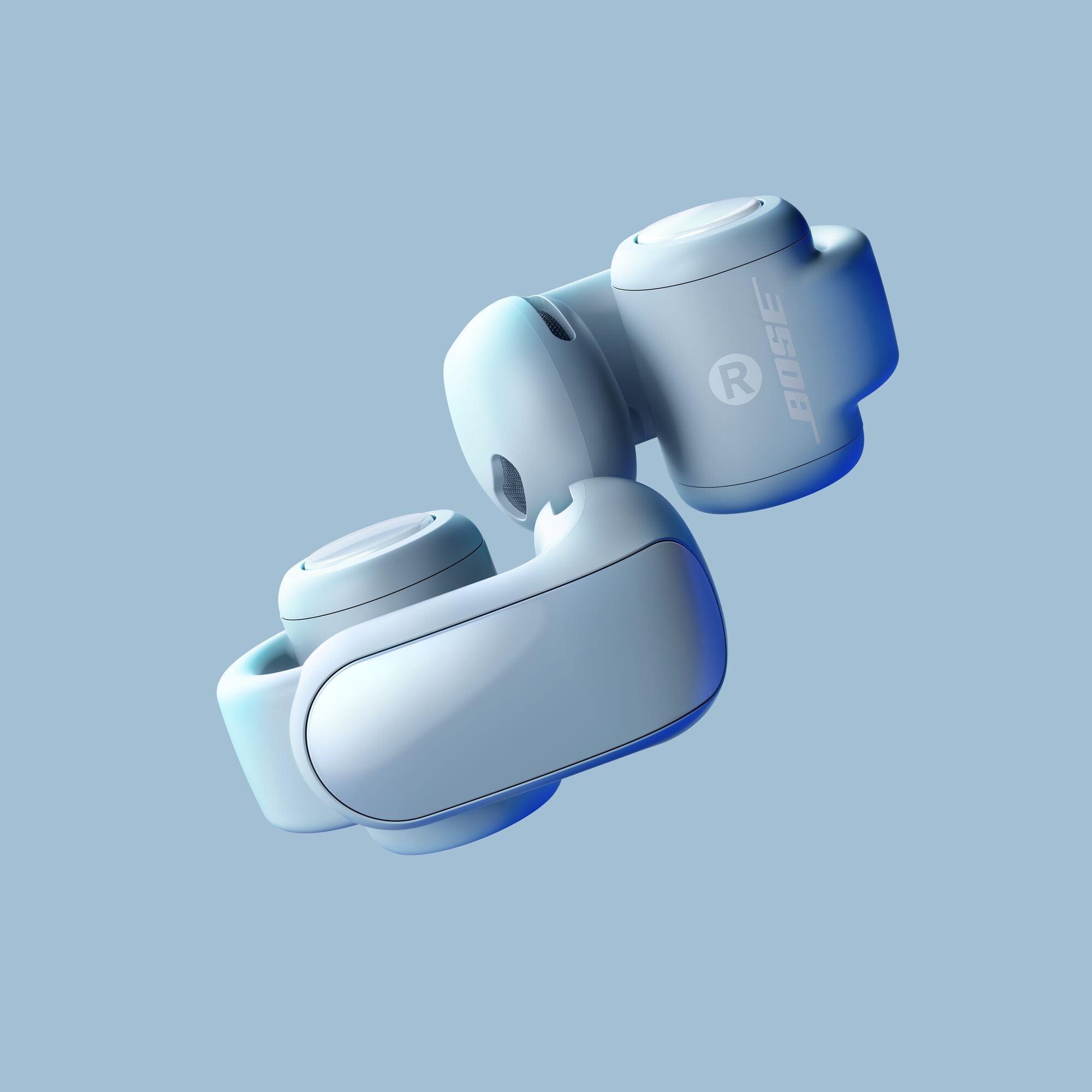
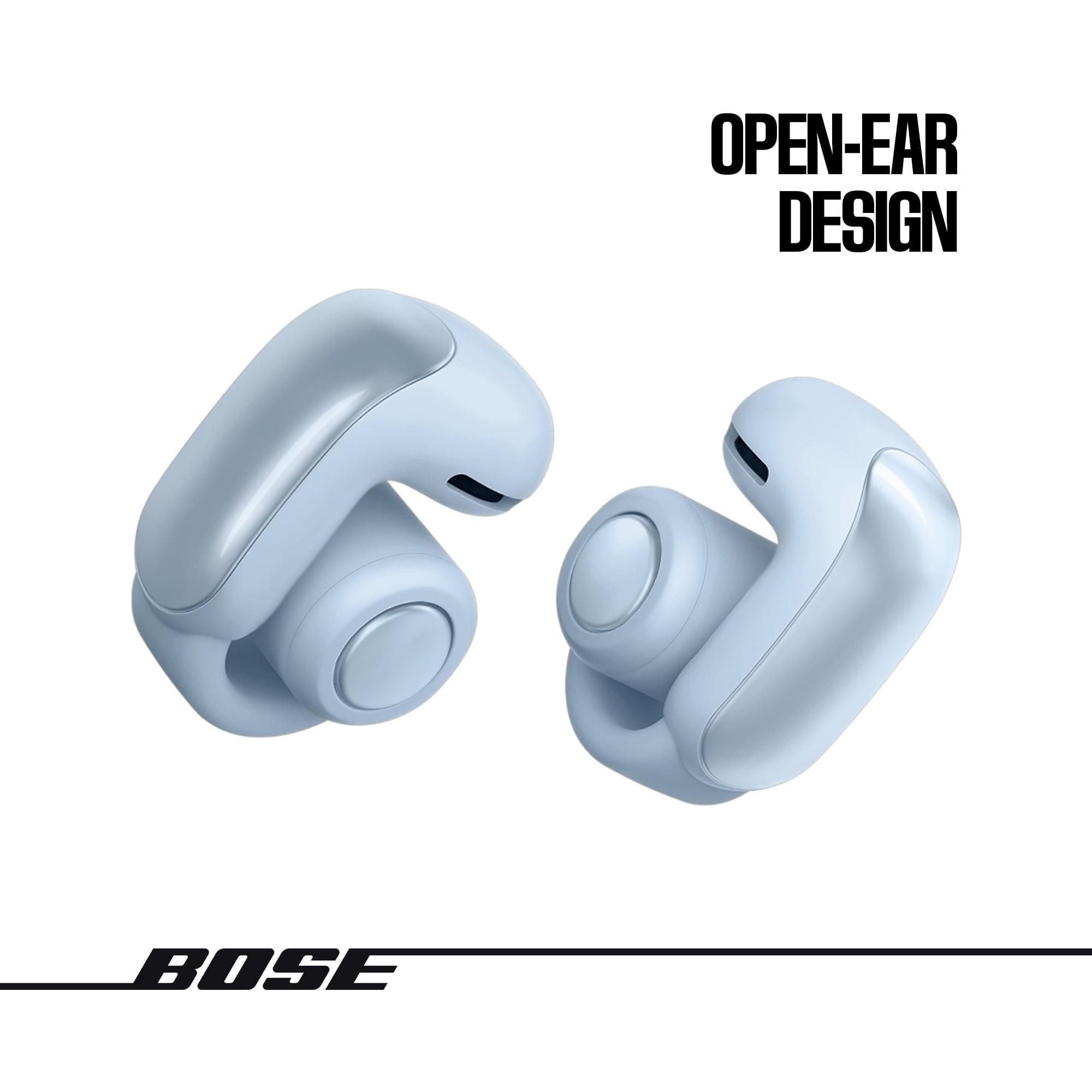
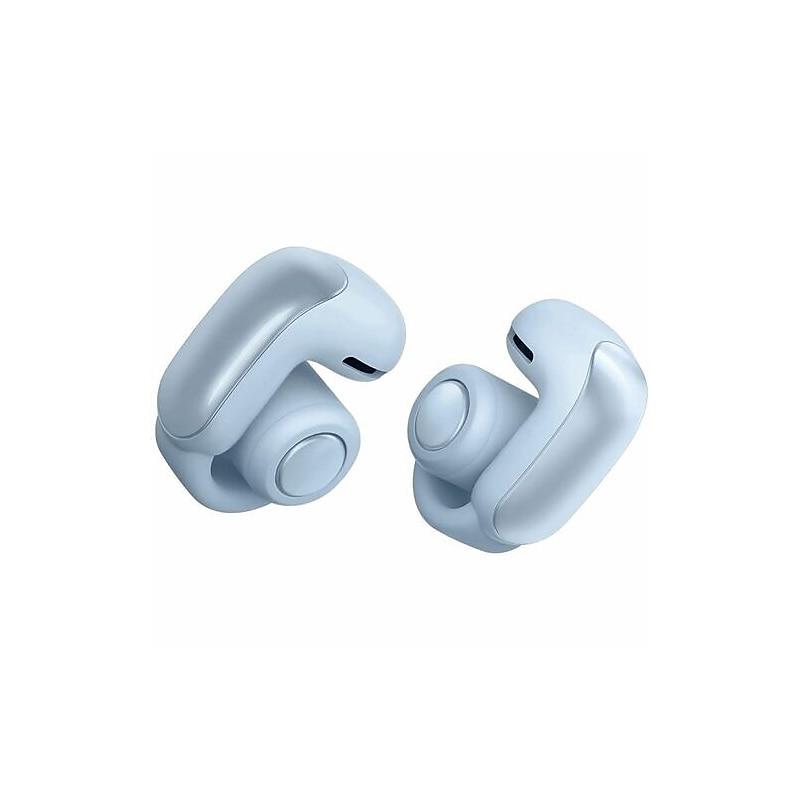
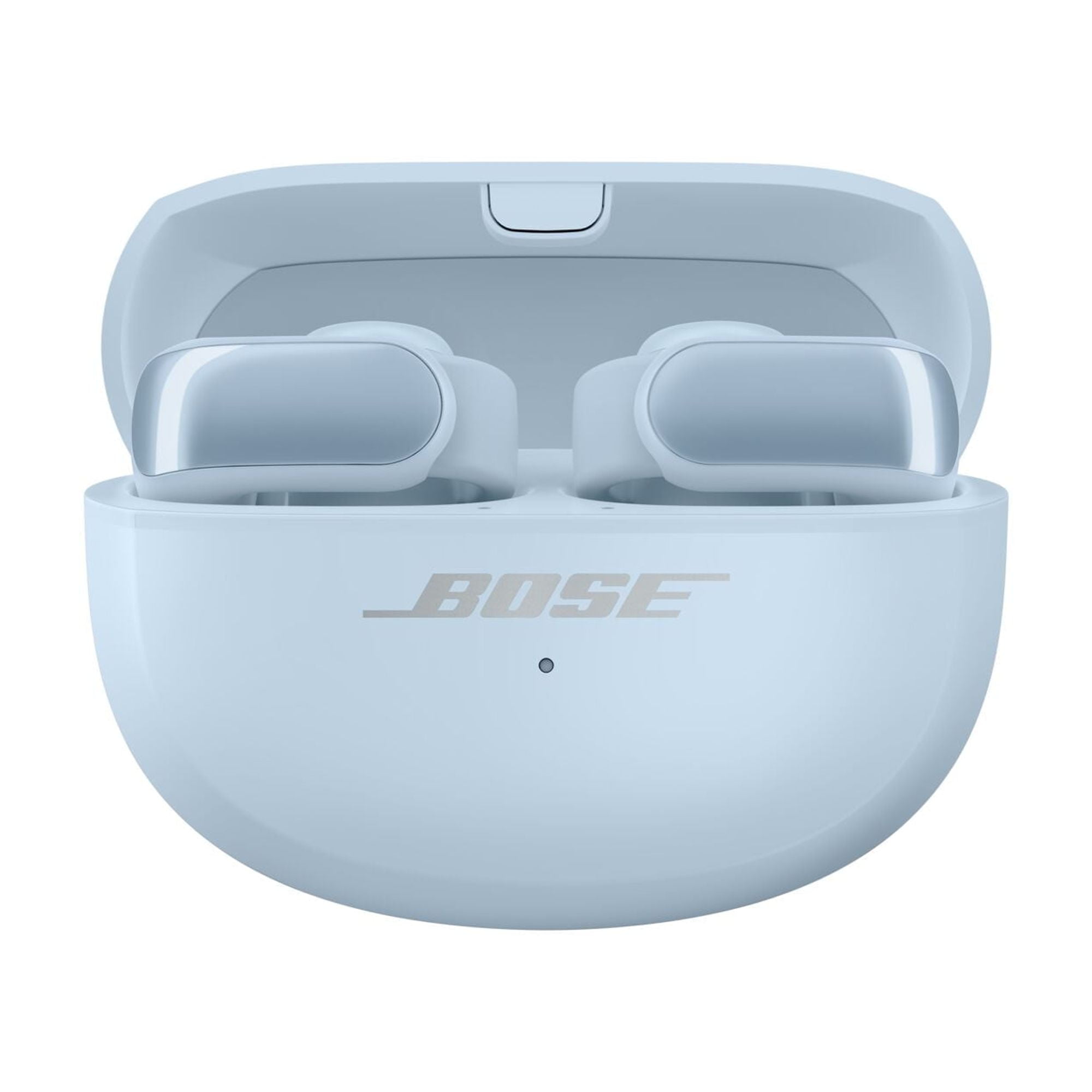
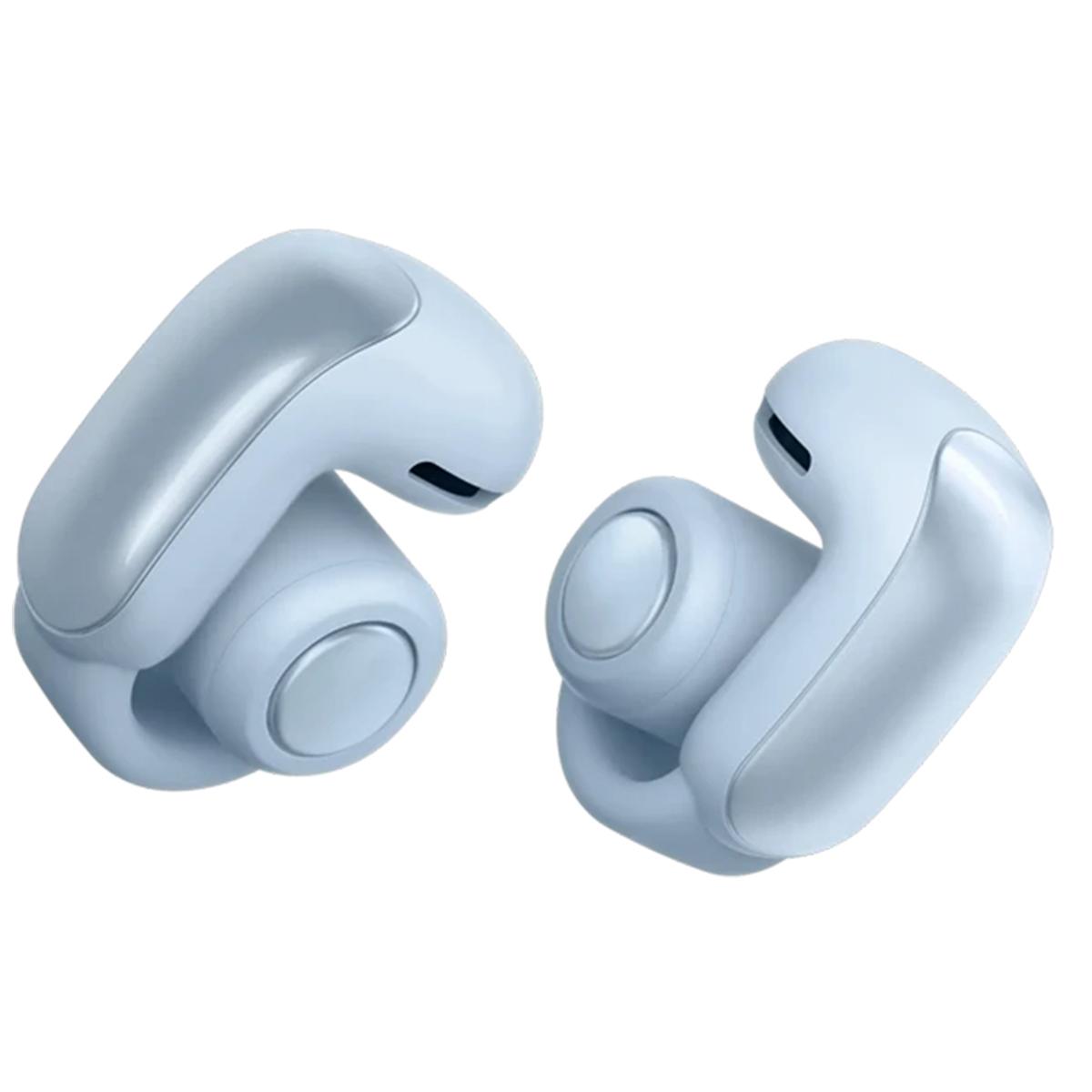
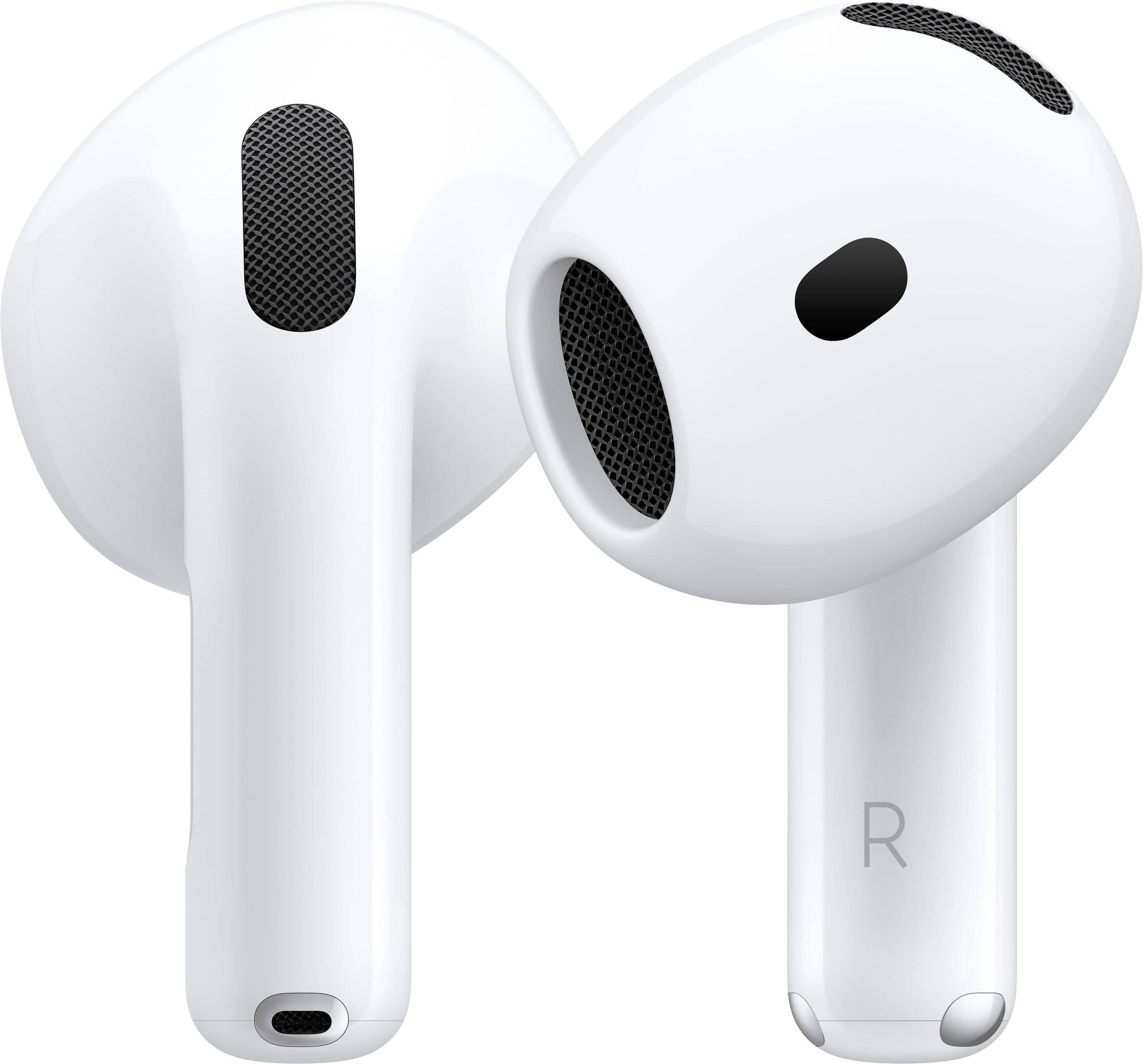
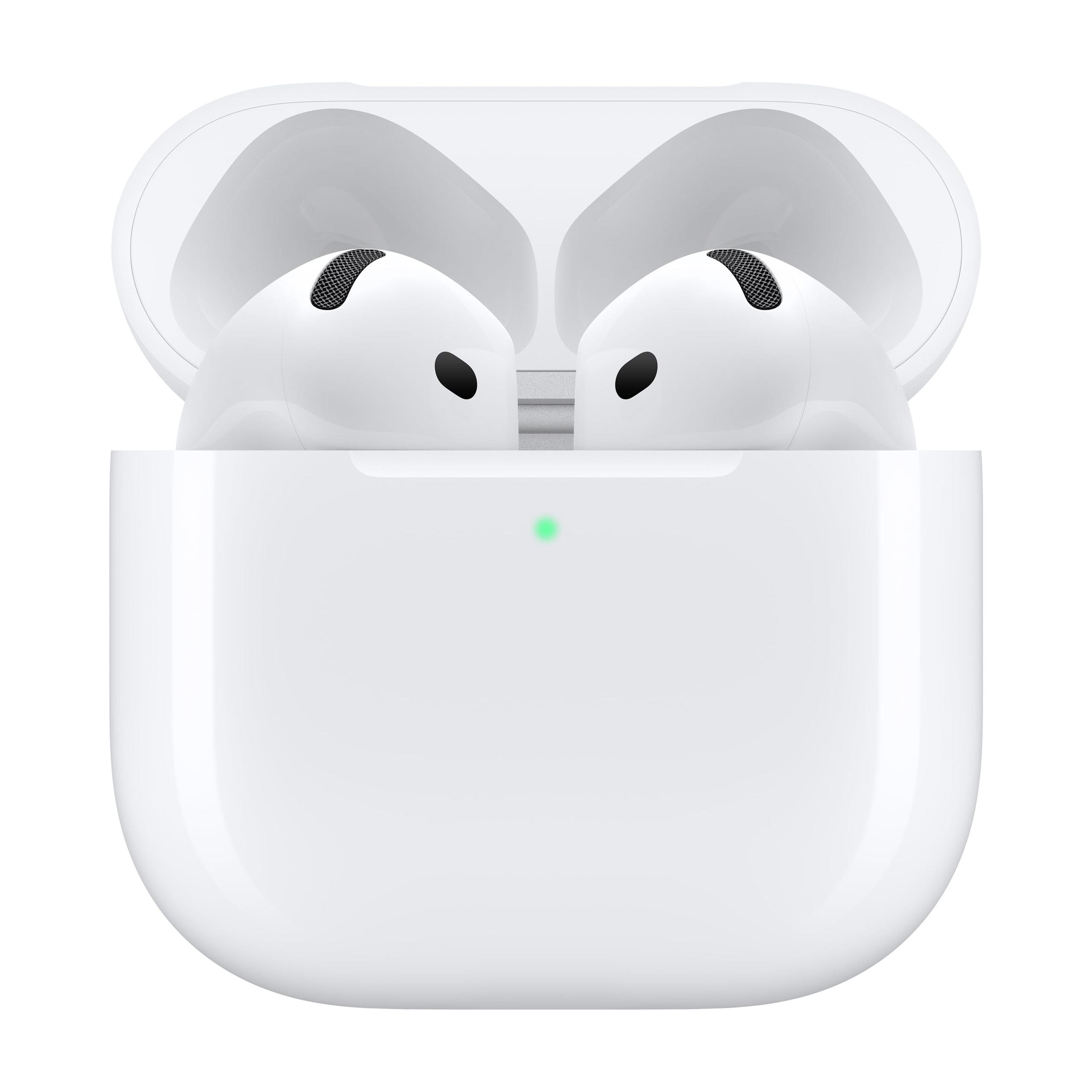
The Bose Ultra Open Earbuds launched in September 2024 with a revolutionary wraparound design that looks more like ear jewelry than traditional tech. Meanwhile, Apple's AirPods 4 with Active Noise Cancellation, also released in September 2024, took their familiar stem design and reimagined it with an intentionally loose, unsealed fit. Both products challenge what we think earbuds should look like and how they should work.
Before diving into specifics, it's worth understanding why open-ear earbuds matter at all. Traditional earbuds create a seal in your ear canal, blocking outside sound to improve bass response and enable effective noise cancellation. But this isolation creates problems: you can't hear cars while running, miss important announcements at work, or feel disconnected from your environment during daily activities.
Open-ear designs flip this equation. Instead of blocking your ears, they deliberately leave them open while using advanced audio engineering to still deliver quality sound. It's a much harder technical challenge – imagine trying to create rich bass without the natural amplification chamber that your sealed ear canal provides.
The main considerations when evaluating open-ear earbuds include how they achieve openness without sacrificing too much audio quality, their approach to selective noise management, comfort during extended wear, and how well they integrate with your existing devices and lifestyle.
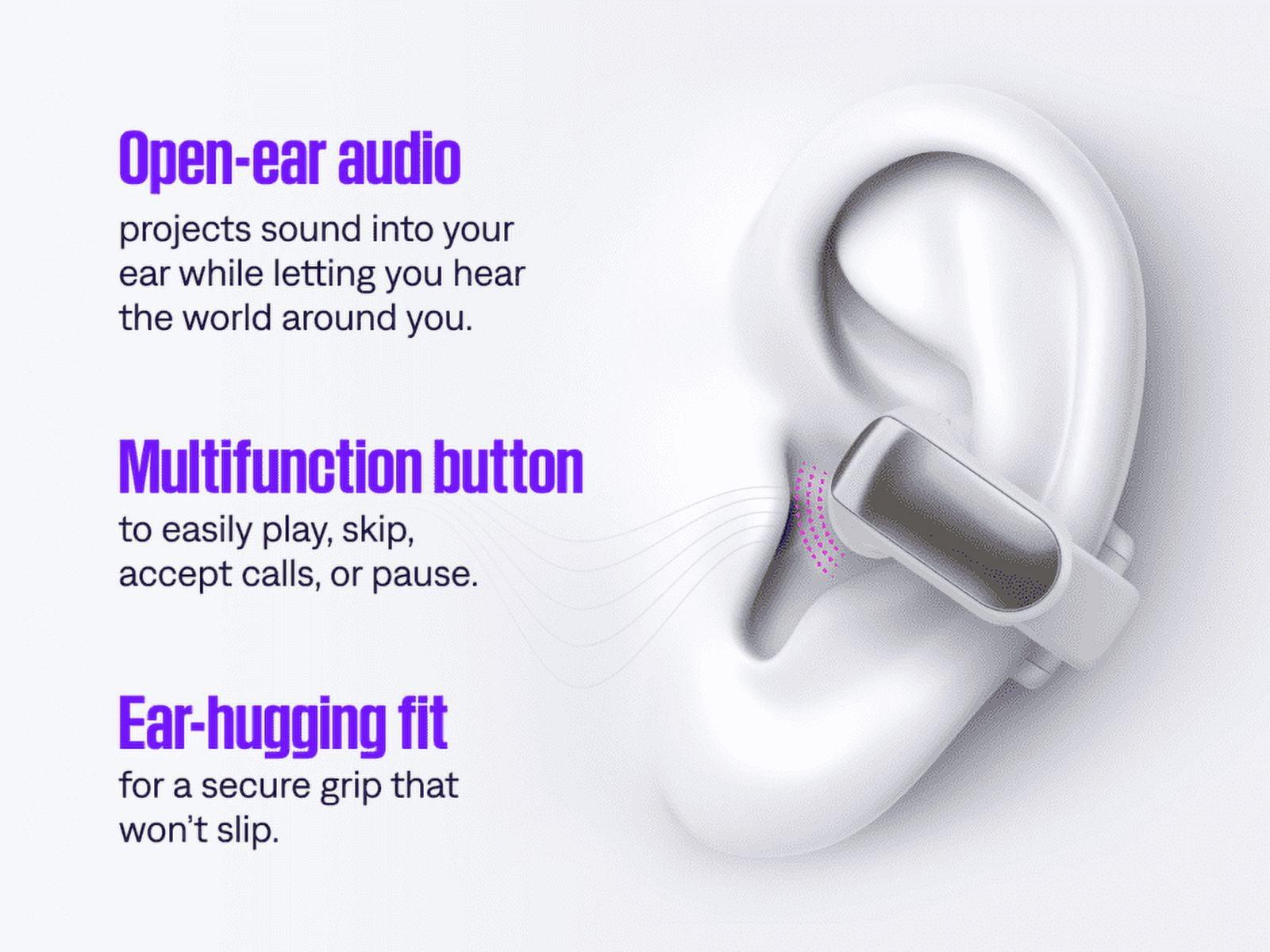
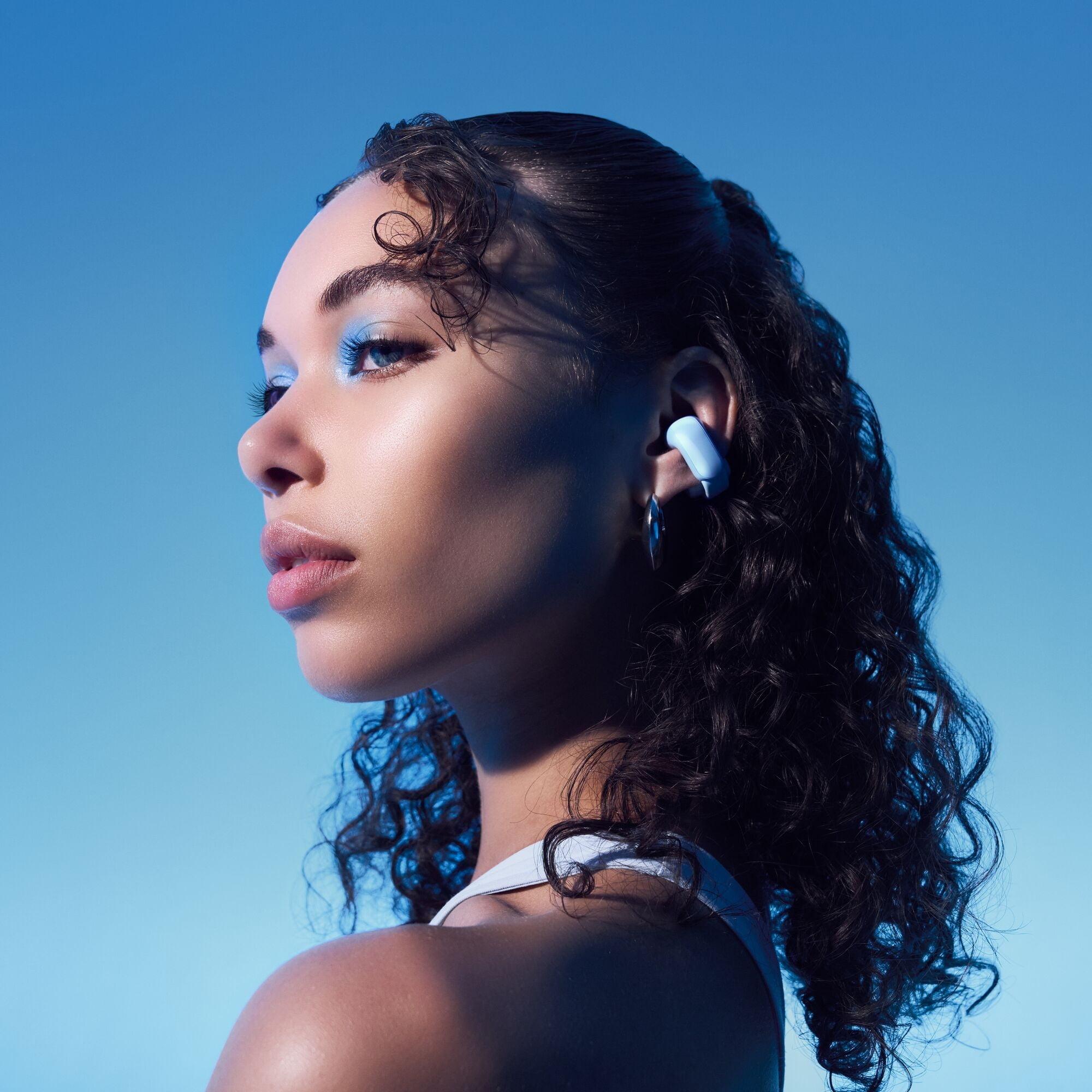
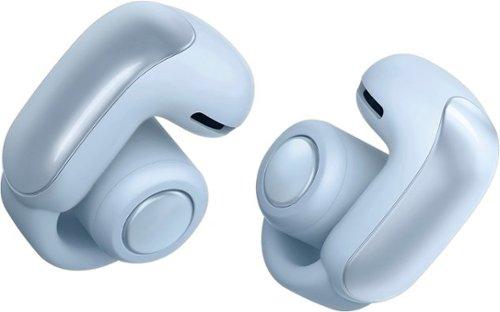
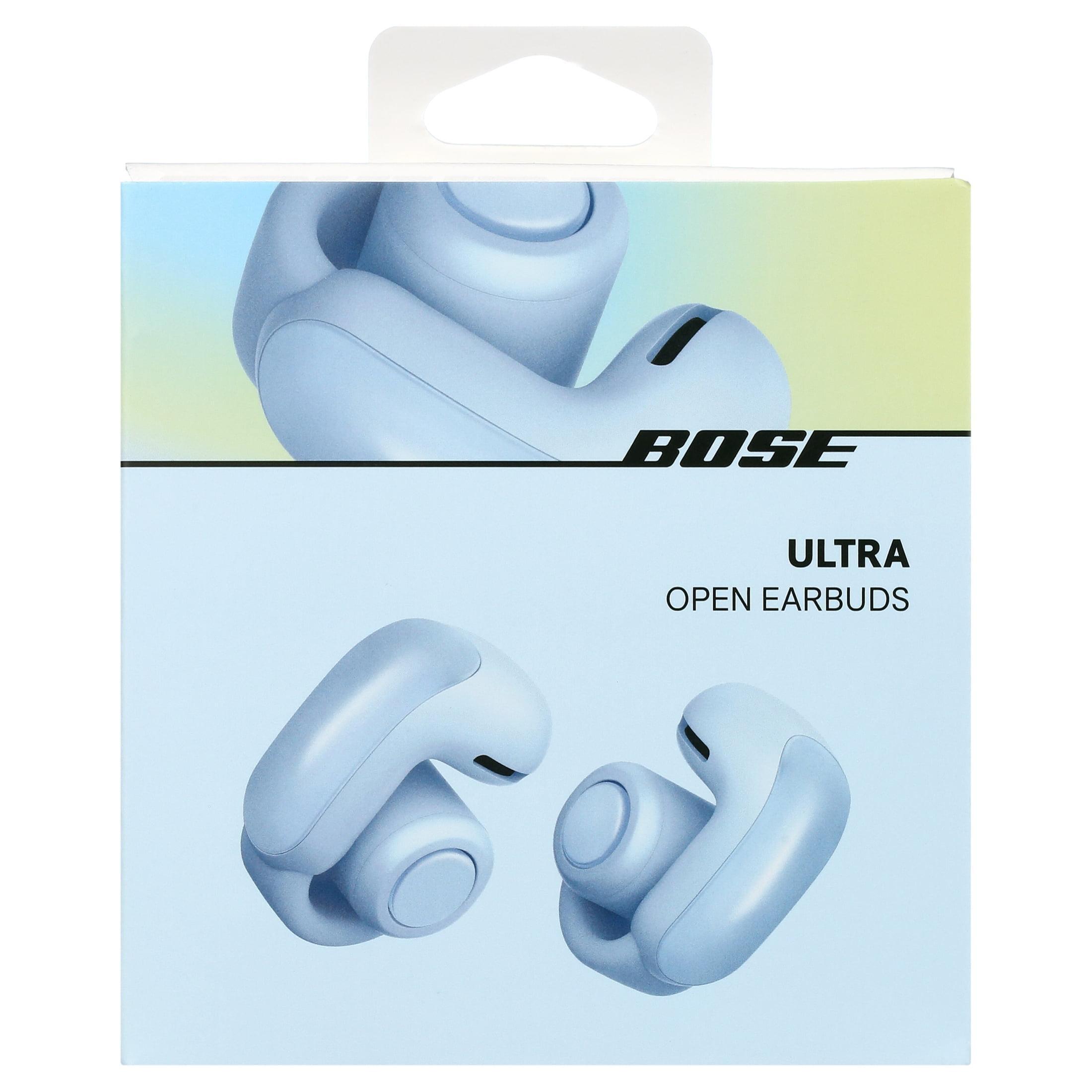
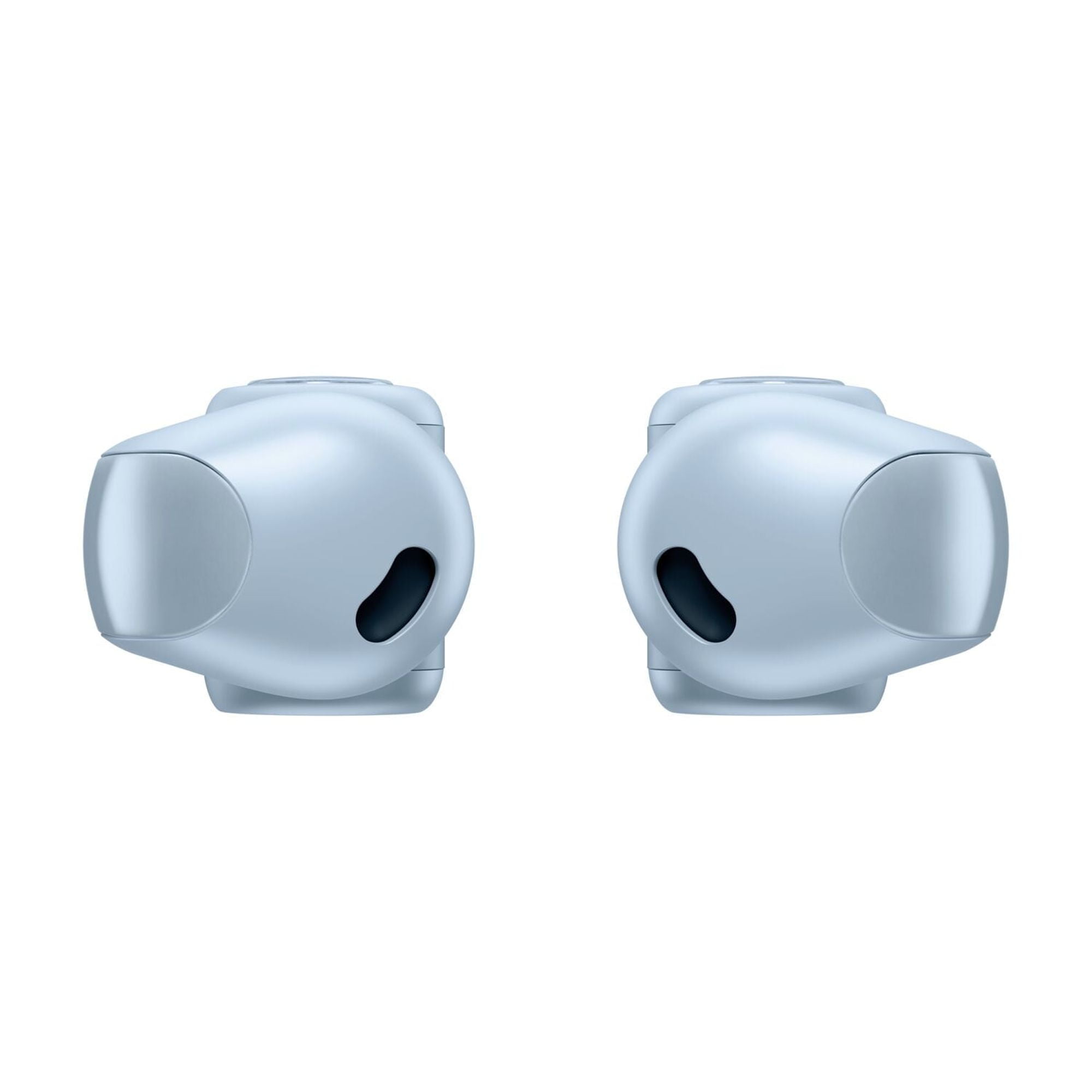
The most immediately obvious difference between these products is how they sit on your ears. The Bose Ultra Open Earbuds use what Bose calls a "cuff" design – they literally clip around the outer curve of your ear like a piece of jewelry, never touching or entering your ear canal whatsoever. At 6.4 grams each, they're slightly heavier than typical earbuds, but the weight distributes evenly around your ear's natural structure.
This wraparound approach means the Bose Ultra Open can work for virtually any ear shape. There's no insertion depth to worry about, no concern about ear canal size, and no risk of them falling out during vigorous activity. The trade-off is that they look distinctly different – some people love the futuristic aesthetic, while others prefer more conventional styling.
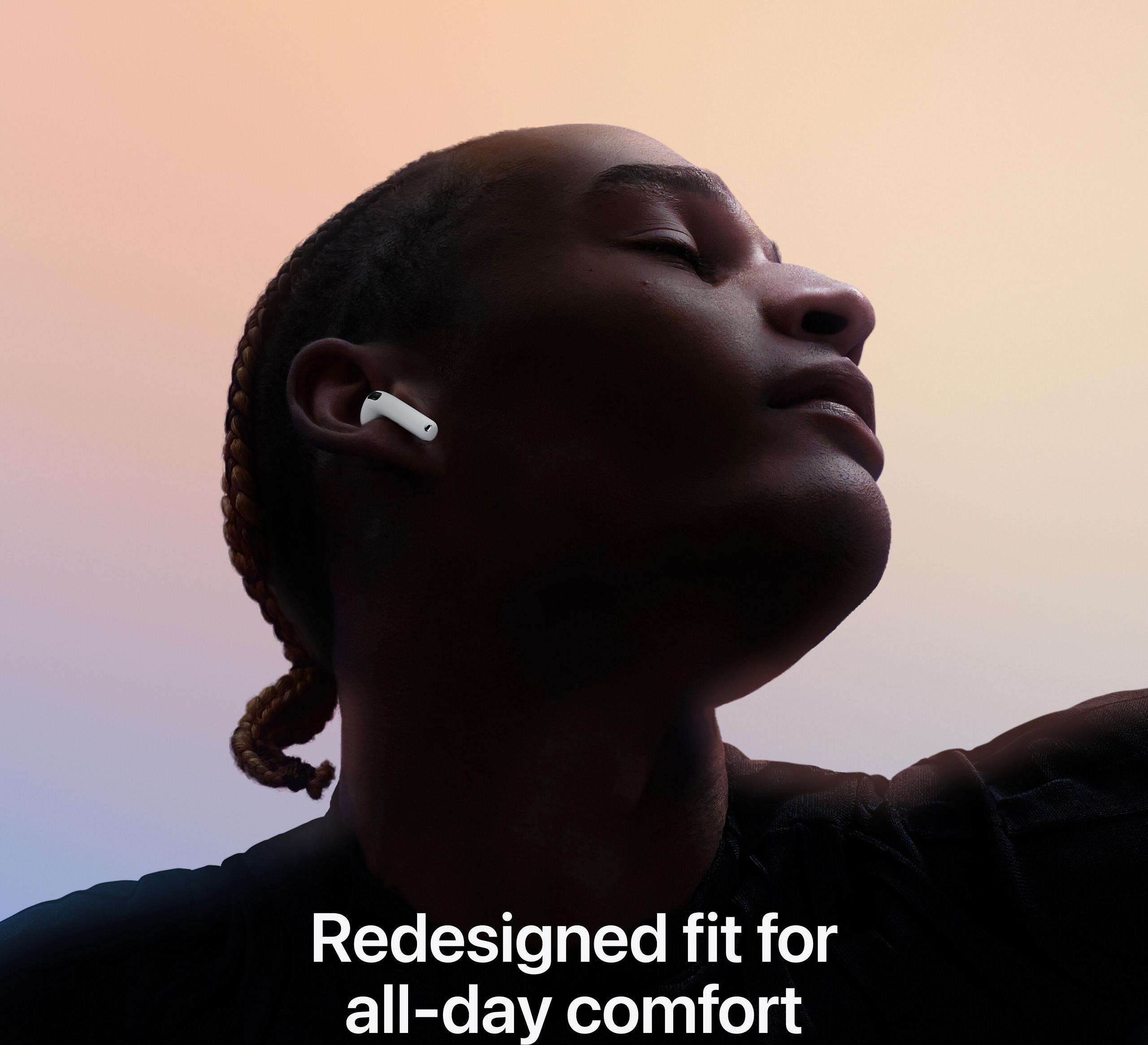
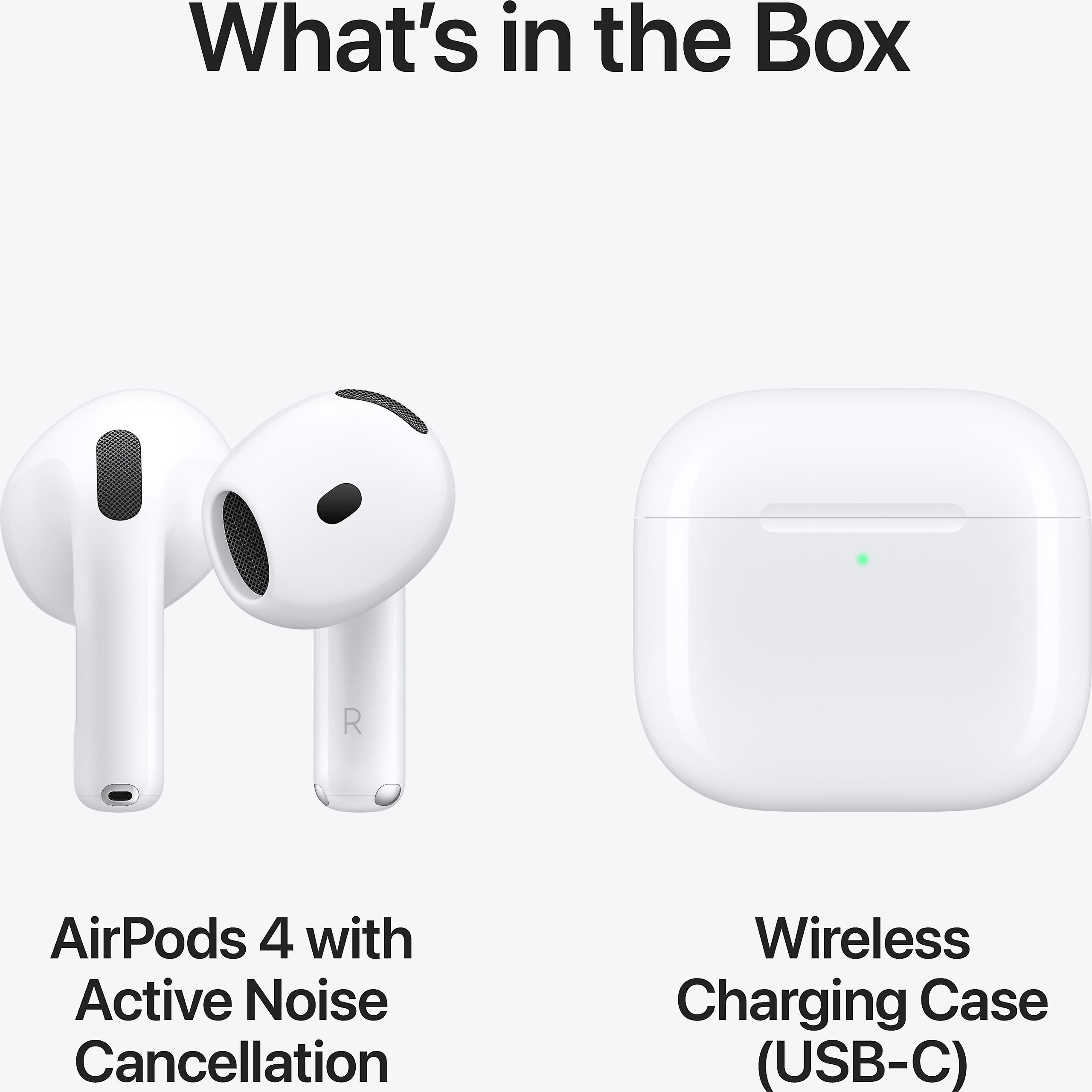
The Apple AirPods 4 ANC maintain Apple's iconic stem design but with a crucial difference: they sit loosely in your outer ear without creating any seal. This "loose fit" approach relies entirely on computational audio processing rather than physical isolation. They feature an improved IP54 rating (meaning better dust and water protection) compared to Bose's IPX4 rating, making them slightly more durable in harsh conditions.
Apple's approach works well if the earbuds naturally fit your ear shape, but since there's only one size, some users will experience poor fit and dramatically reduced performance. When they don't sit correctly, both sound quality and the effectiveness of their noise cancellation suffer significantly.
Here's where things get technically fascinating. Both companies had to solve the same physics problem: how do you create good sound, especially bass, when there's no sealed air chamber to work with?
The Bose Ultra Open Earbuds tackle this through their proprietary OpenAudio technology, which uses precisely positioned drivers and advanced signal processing to direct sound waves directly into your ear while minimizing leakage to others nearby. The result is surprisingly robust audio with what audio engineers call a "U-shaped" frequency response – elevated bass and treble with slightly recessed midrange frequencies.
In practical terms, this means the Bose Ultra Open can deliver actual thump and punch in songs with heavy bass, something that seems almost impossible given their completely open design. Vocals remain clear and present, while instruments maintain good separation and detail. The sound signature tends to be engaging and fun rather than clinically accurate, which works well for most popular music genres.
The Apple AirPods 4 ANC face a steeper challenge because they can't control their physical positioning as precisely as Bose's clip-on design. Apple compensates through their H2 chip, which runs sophisticated computational audio algorithms in real-time. They've focused heavily on spatial audio capabilities, including support for Dolby Atmos content and dynamic head tracking that adjusts the soundstage as you move your head.
However, physics ultimately wins when it comes to bass response. The AirPods 4 ANC struggle particularly with sub-bass frequencies below 100Hz – the deep rumble you feel in electronic music or movie explosions simply can't be reproduced effectively without some form of ear sealing. Where they excel is in creating an immersive, three-dimensional listening experience for compatible content, something the Bose Ultra Open currently lacks.
For home theater use, this creates an interesting dynamic. The Apple AirPods 4 ANC with their spatial audio processing can create a surprisingly convincing surround sound experience when watching movies or shows with Atmos content. You'll feel like sounds are coming from specific directions around you rather than just from two points near your ears. However, the impact of action scenes and the rumble of deep sound effects will feel subdued compared to proper headphones or speakers.
The Bose Ultra Open Earbuds offer better overall audio fidelity for home theater use, with more convincing bass for explosions and better dynamic range for dialogue. But they lack the spatial processing that makes the Apple option feel more immersive for compatible content.
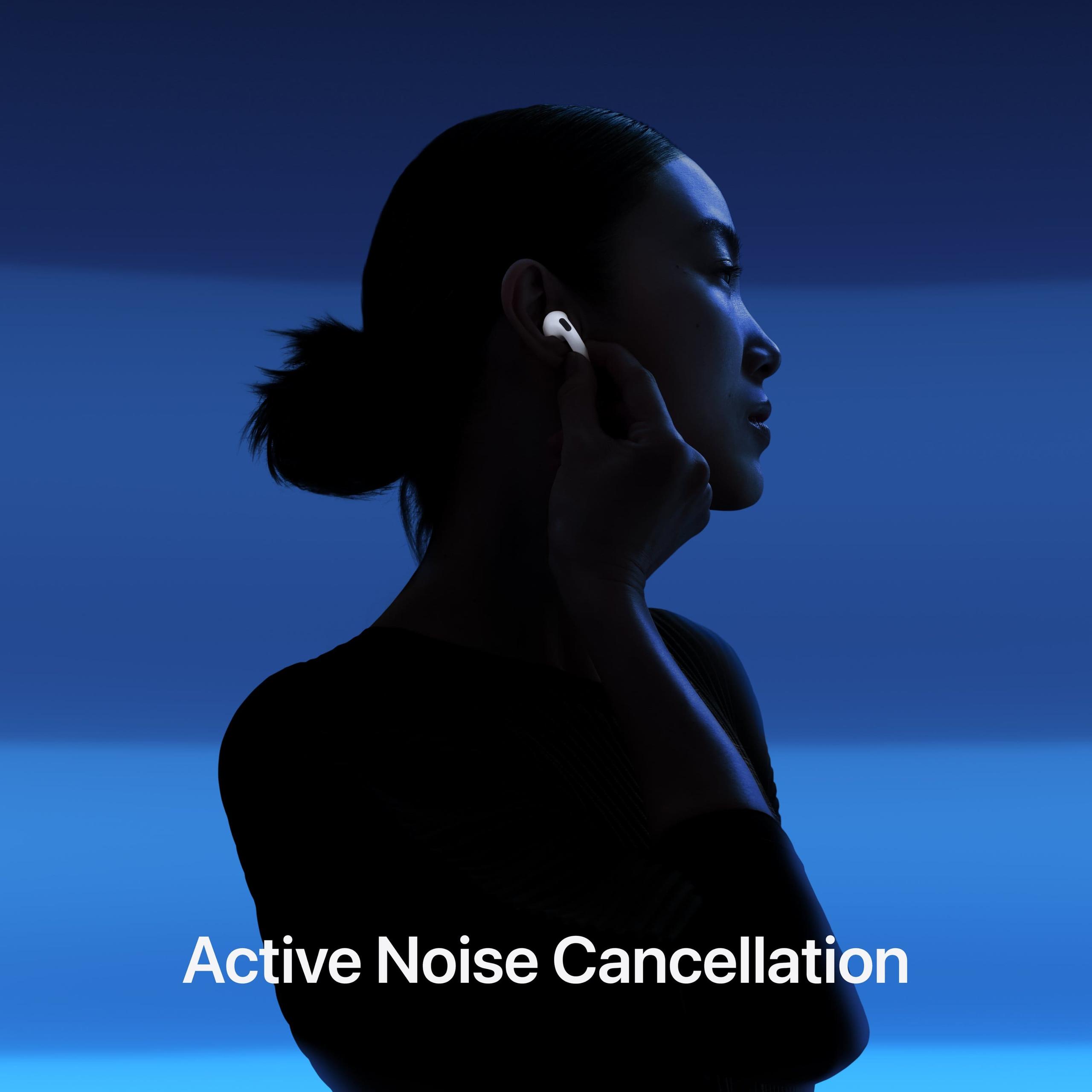
Creating effective active noise cancellation (ANC) in an open-ear design seems contradictory – you're simultaneously trying to block some sounds while allowing others through. Both companies approached this challenge differently, with varying degrees of success.
The Bose Ultra Open Earbuds leverage decades of QuietComfort noise cancellation expertise, adapting their algorithms for an open environment. Their system focuses on reducing consistent, low-frequency background noise – think air conditioning hum, airplane engines, or traffic rumble – while preserving the ability to hear important environmental sounds like conversation, car horns, or approaching footsteps.
Bose's implementation works remarkably well for an open design. You'll notice a significant reduction in that constant background noise that can make listening to music or podcasts difficult in noisy environments, without feeling cut off from your surroundings. The system includes an "Aware mode" that can further enhance environmental sounds when maximum awareness is needed.
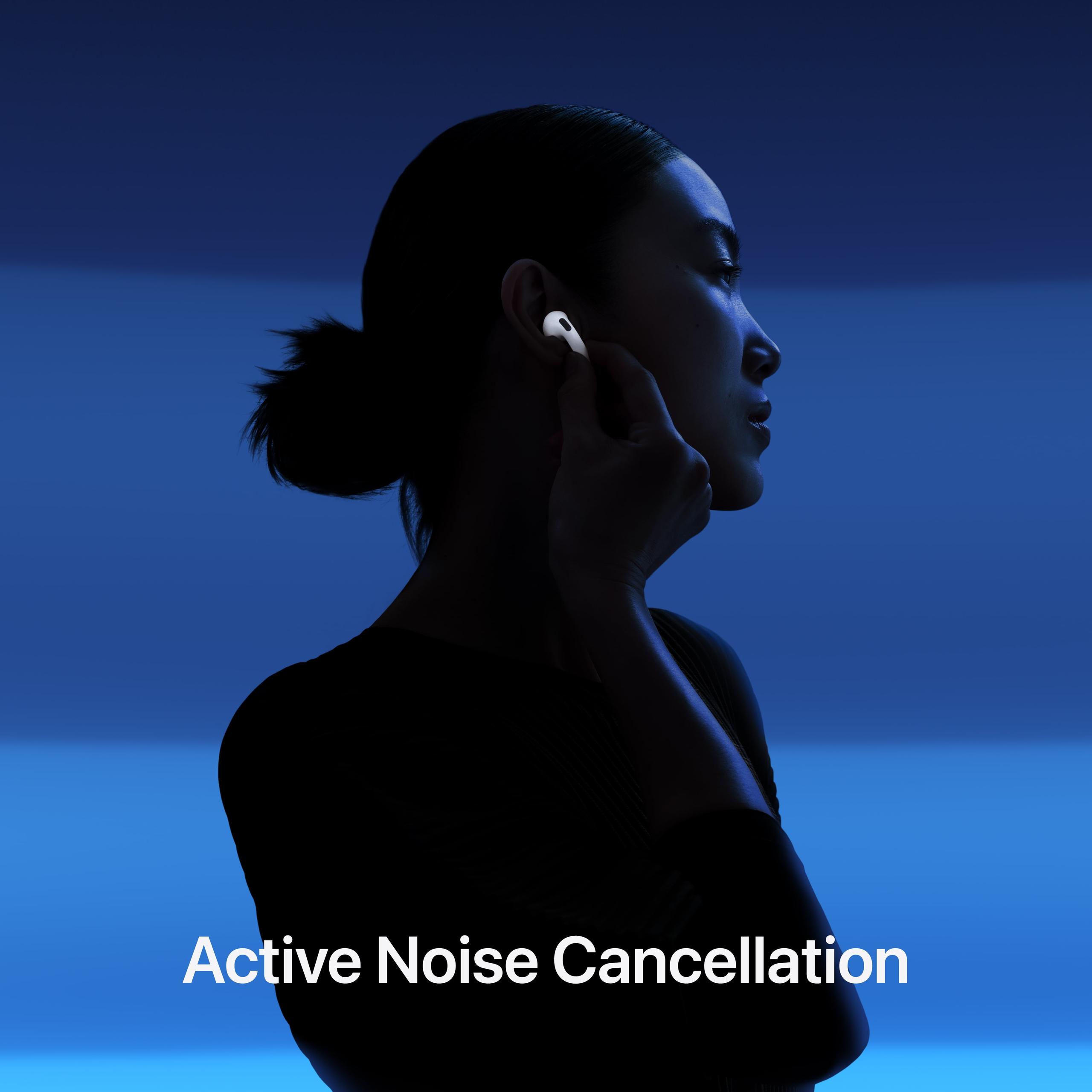
Apple's approach in the AirPods 4 ANC represents a more computational solution. Their H2 chip runs sophisticated algorithms that analyze incoming audio in real-time, selectively reducing certain frequency ranges while preserving others. They've also introduced "Adaptive Audio," which automatically adjusts the level of noise cancellation based on your current environment.
The Apple AirPods 4 ANC include a feature called Conversation Awareness that automatically lowers your music volume and enhances nearby voices when it detects you're speaking to someone. This creates a more seamless social interaction experience, though it can occasionally trigger incorrectly if you're singing along to music or talking to yourself.
In direct comparison, the Bose Ultra Open provides more effective noise reduction overall, while the Apple AirPods 4 ANC offers more intelligent, adaptive behavior that changes based on context.
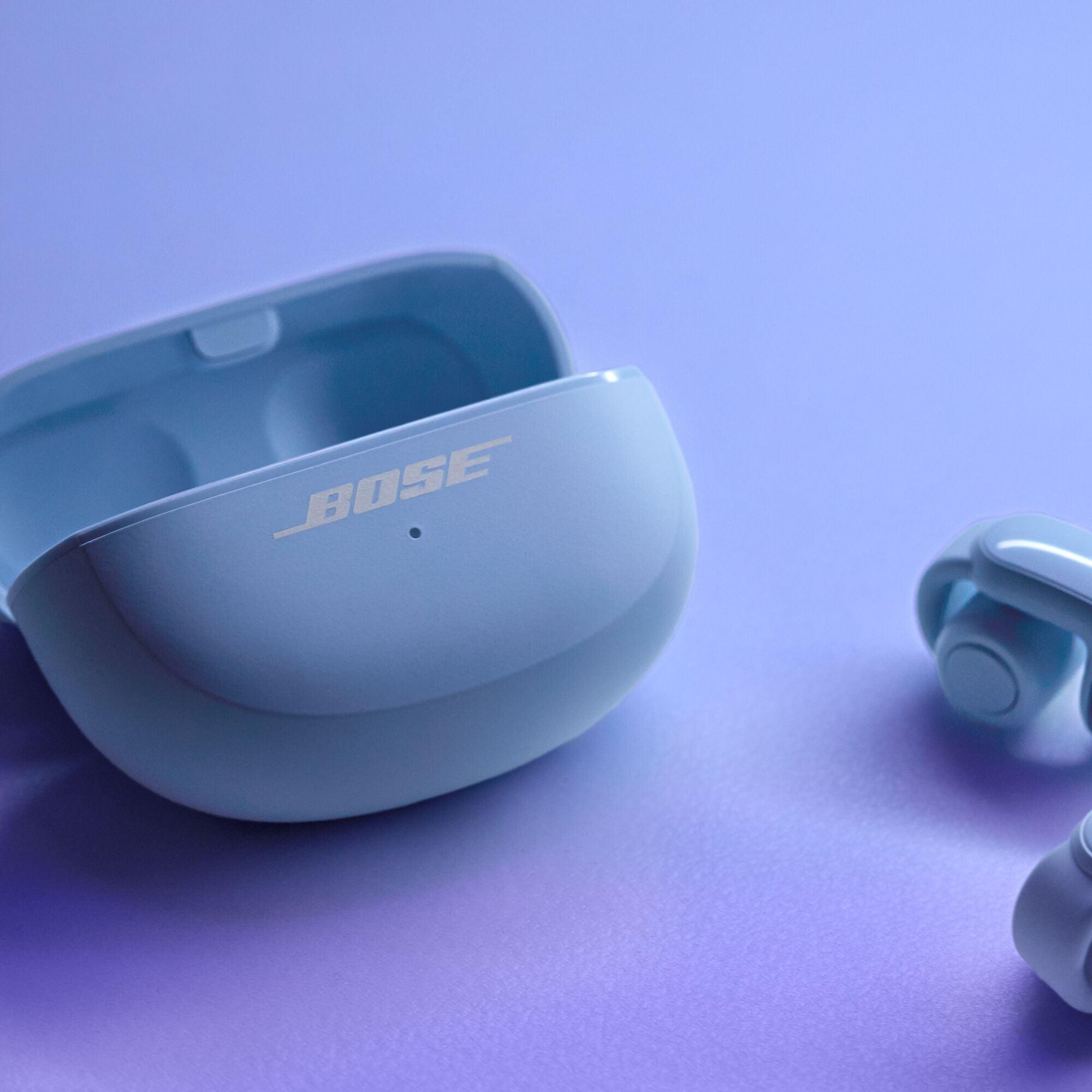
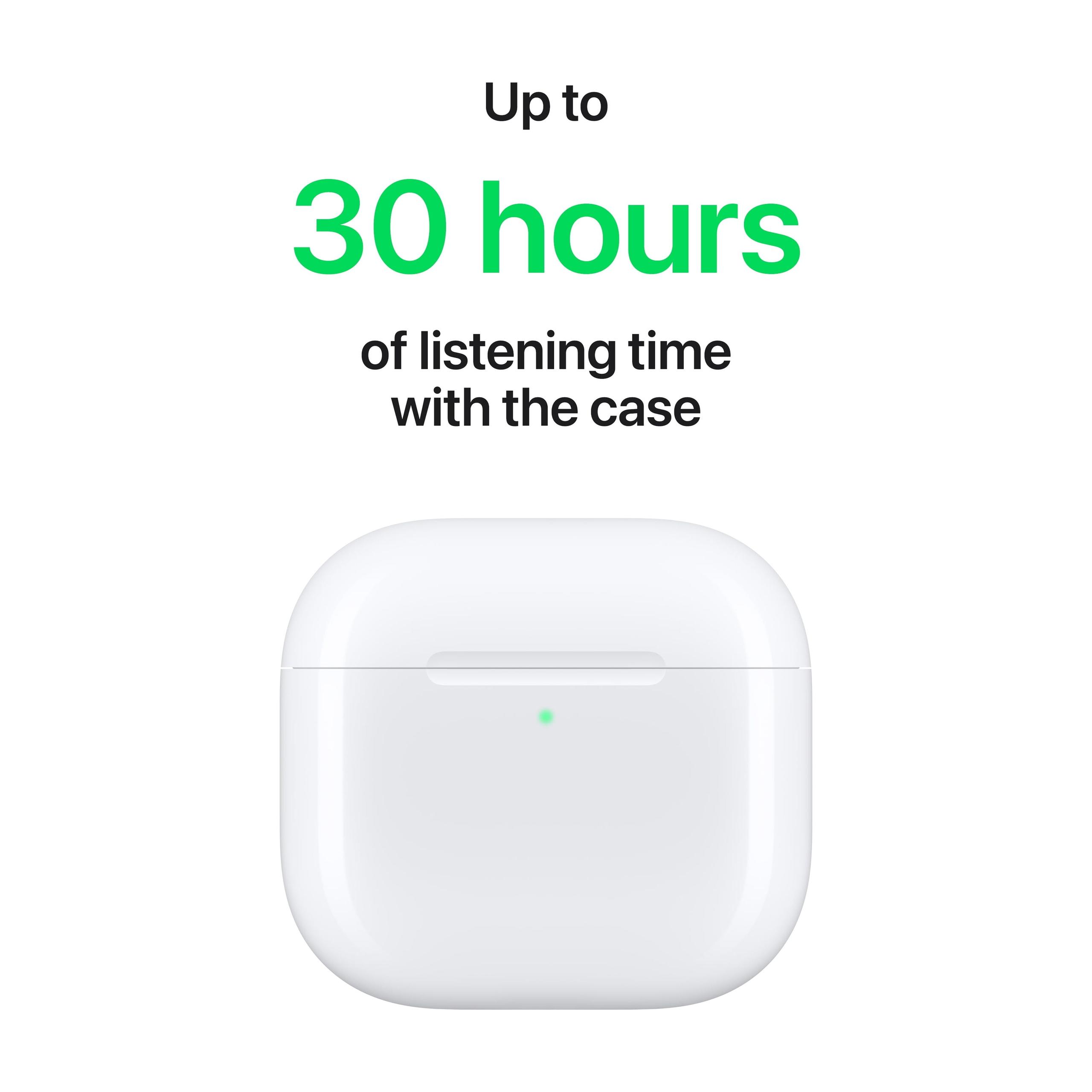
Battery performance tells an interesting story about each company's priorities and engineering constraints. The Bose Ultra Open Earbuds deliver approximately 7.5 hours of continuous playback on a single charge, with the charging case providing additional power for a total of about 19.5 hours of use.
Those 7.5 hours of uninterrupted listening represent excellent performance for the category, making them suitable for long work sessions, extended flights, or full-day adventures without needing to pause for charging. The trade-off is that the total battery life with the case is more modest compared to some competitors.
The Apple AirPods 4 ANC provide about 4-5 hours per charge depending on whether ANC is enabled, but their case holds significantly more additional power, bringing total usage to around 25-30 hours. This means more frequent charging breaks during extended use, but better overall battery life for typical daily use patterns.
For most people, the Apple approach works well – few listening sessions exceed 4-5 hours, and the case can easily top up the earbuds during brief breaks. However, if you regularly need truly extended uninterrupted use, the Bose Ultra Open provides a clear advantage.
Both products support fast charging, giving several hours of use from just 15-20 minutes of charging time, which helps mitigate battery anxiety in daily use.
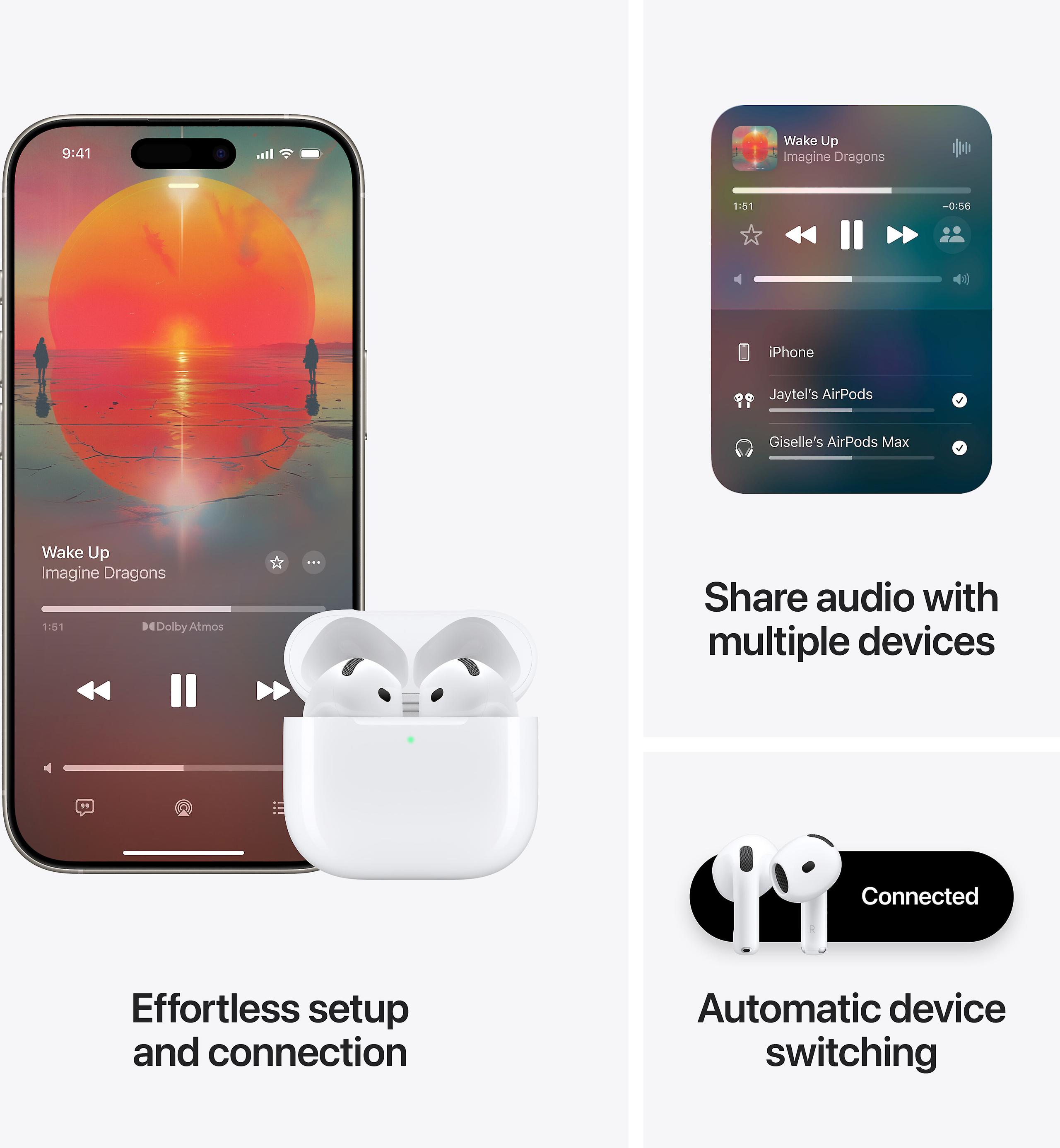
This is where each company's broader technology strategy becomes apparent. The Apple AirPods 4 ANC shine brightest when used within Apple's ecosystem, leveraging the H2 chip for seamless device switching, automatic pausing when you remove an earbud, and integration with Siri for voice commands.
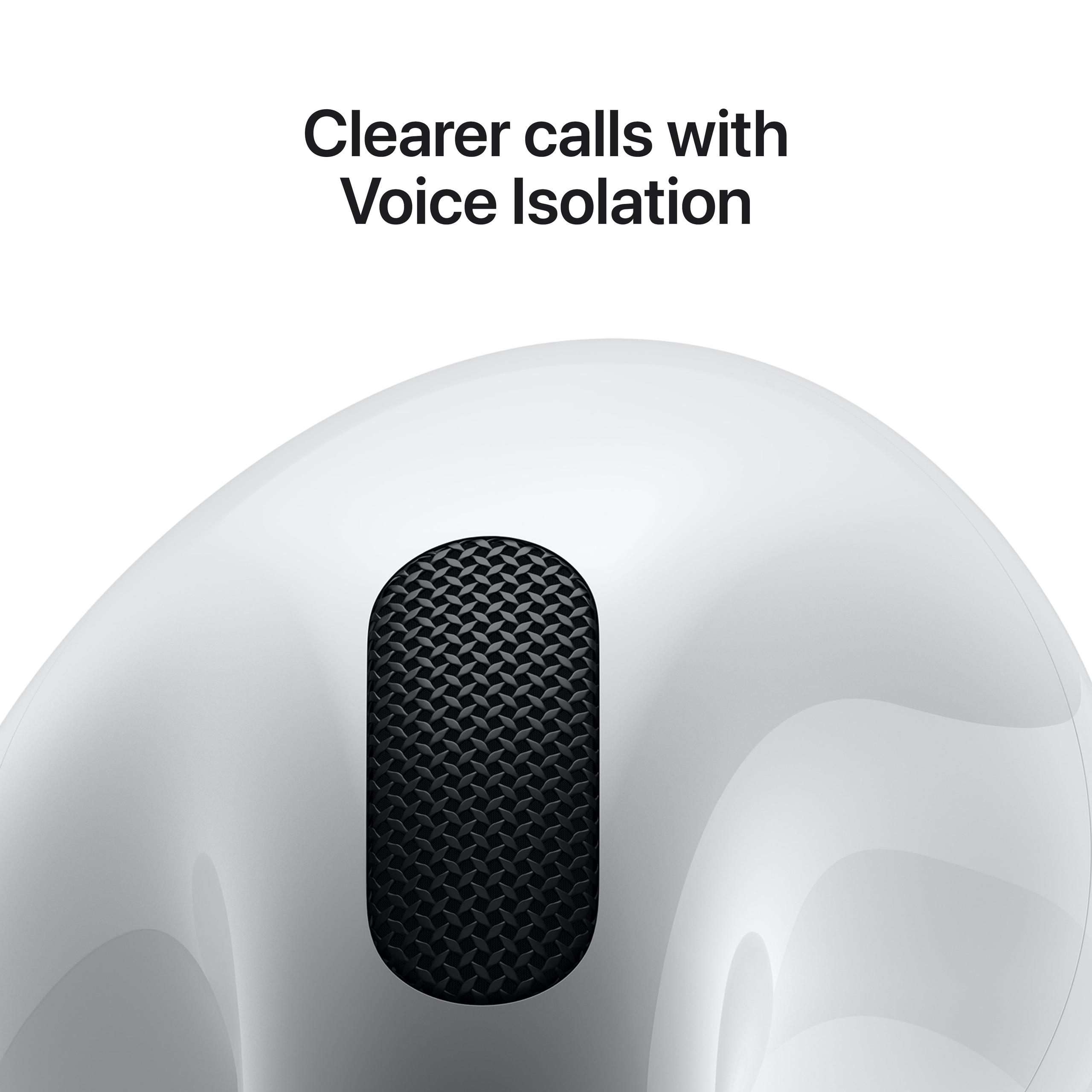
The Voice Isolation feature, available with iOS 18, uses advanced computational audio to dramatically improve call quality in noisy environments by isolating your voice while suppressing background sounds. During testing, this feature proved remarkably effective – people on the other end of calls could barely tell I was in a busy coffee shop or walking next to traffic.
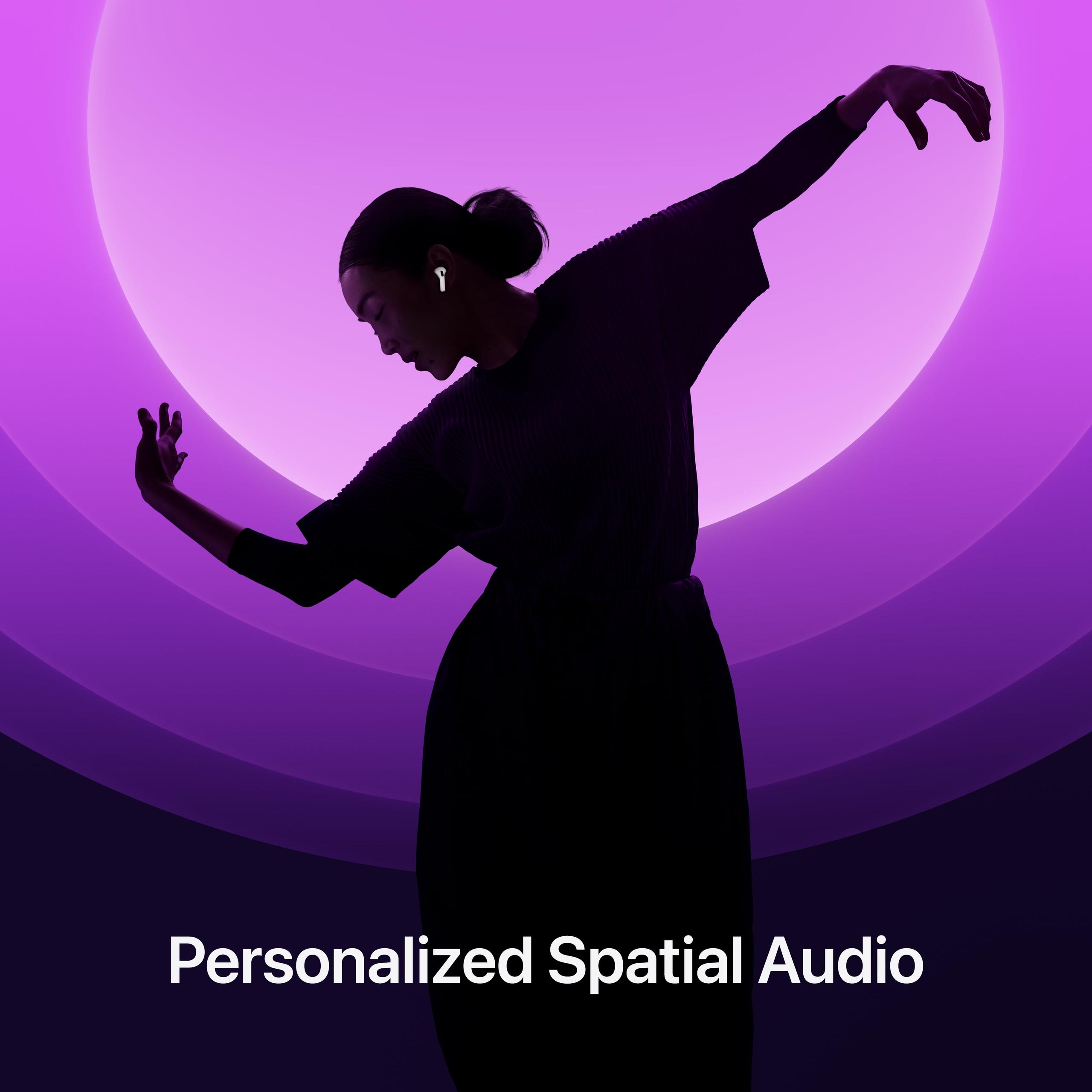
Apple's Spatial Audio implementation extends beyond just music to include system-wide audio processing, making everything from FaceTime calls to YouTube videos feel more immersive. The dynamic head tracking adjusts the audio field as you turn your head, maintaining the illusion that sounds are coming from fixed positions in space rather than moving with your head.
The Bose Ultra Open Earbuds take a more platform-agnostic approach with multipoint Bluetooth connectivity, allowing simultaneous connection to two devices. This proves incredibly useful in practice – you can stay connected to both your laptop for work calls and your phone for notifications without needing to manually switch connections.
Bose includes some unique features like "Remote Selfie," which lets you use the earbuds as a camera shutter remote for group photos, and support for Snapdragon Sound technology that can improve audio quality on compatible Android devices.
The key difference is ecosystem dependence: Apple's features work best (or sometimes only) within their ecosystem, while Bose's features tend to work consistently across platforms.
Comfort becomes crucial for any device designed for extended wear, and here the fundamental design differences create very different experiences. The Bose Ultra Open Earbuds can genuinely disappear during wear once you adjust to their presence. The cuff design distributes weight evenly and never creates pressure points or the plugged-ear sensation that even loose-fitting traditional earbuds can cause.
During extended testing periods, including several 6+ hour work sessions and multiple workout sessions, the Bose Ultra Open remained comfortable throughout. They never shifted position during vigorous movement, never required readjustment, and never caused the ear fatigue that can develop with traditional earbuds after several hours of use.
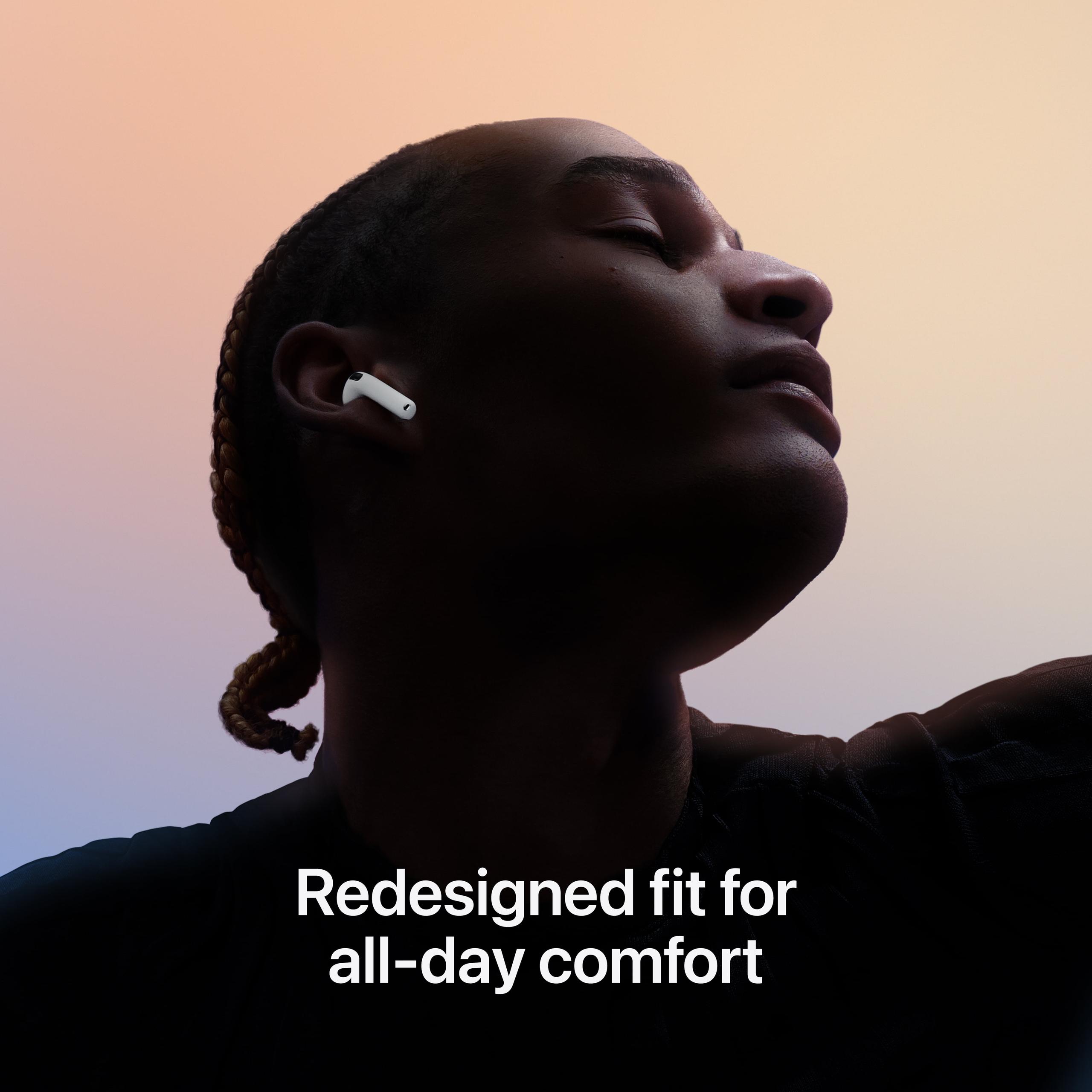
The Apple AirPods 4 ANC comfort story is more variable and depends entirely on how well they naturally fit your specific ear shape. When they fit well, they're quite comfortable for typical 2-4 hour listening sessions. However, they may require occasional repositioning, and some users will find they simply don't stay in place reliably.
The fit issue with the Apple AirPods 4 ANC goes beyond just comfort – it directly impacts performance. If they don't sit correctly in your ears, both the audio quality and noise cancellation effectiveness decrease noticeably. This makes them somewhat unpredictable for users who haven't tried them first.
For fitness use, the Bose Ultra Open provide superior stability and sweat resistance. The wraparound design ensures they stay in place during any type of movement, while the Apple AirPods 4 ANC may shift or fall out during vigorous activity depending on your ear shape and the intensity of movement.
The decision between these products ultimately comes down to understanding your priorities and use cases. At the time of writing, the Bose Ultra Open Earbuds command a significant premium over the Apple AirPods 4 ANC – typically $100-150 more depending on current promotions and retailer pricing.
Choose the Bose Ultra Open Earbuds if:
You prioritize audio quality above all else and are willing to pay premium pricing for it. The sound quality difference is immediately noticeable, especially for bass-heavy music, and remains consistent regardless of your ear shape. They're also the clear choice for fitness enthusiasts, people who need extended all-day comfort, or anyone who wants maximum environmental awareness while still enjoying quality audio.
The Bose Ultra Open also makes sense if you use multiple devices regularly and would benefit from multipoint connectivity, or if you simply want something that looks and feels completely different from traditional earbuds.
Choose the Apple AirPods 4 ANC if:
You're invested in Apple's ecosystem and want features like seamless device switching, Spatial Audio, and advanced call quality improvements. They offer excellent value for the feature set, especially if you primarily consume multimedia content where their spatial audio processing provides clear benefits.
They're also the better choice if budget is a primary consideration, if you prefer more conventional styling, or if you primarily need earbuds for shorter listening sessions where their reduced battery life won't be limiting.
The deciding factors should be:
Both products represent significant innovations in the open-ear category, but they serve somewhat different audiences. The Bose Ultra Open Earbuds push the boundaries of what's possible in open-ear audio and comfort, while the Apple AirPods 4 ANC bring sophisticated computational audio features to a more accessible price point.
Neither choice is wrong – it's about matching the product's strengths to your specific needs and preferences. The open-ear earbud category is still evolving rapidly, and both of these 2024 releases represent major steps forward in making personal audio that doesn't isolate you from the world around you.
| Bose Ultra Open Earbuds | Apple AirPods 4 Active Noise Cancellation |
|---|---|
| Design Philosophy - Determines comfort and universal fit | |
| Wraparound cuff clips to outer ear, never touches ear canal | Traditional stem design sits loosely in ear without sealing |
| Audio Quality - Critical for music enjoyment and bass response | |
| Superior sound with robust bass via OpenAudio technology | Weaker bass but excellent spatial audio with Dolby Atmos |
| Active Noise Cancellation - Effectiveness in noisy environments | |
| Better overall ANC using QuietComfort technology | Good low-frequency ANC with intelligent Adaptive Audio |
| Battery Life (Single Charge) - Important for extended use | |
| 7.5 hours continuous (excellent for long sessions) | 4-5 hours with ANC (requires more frequent charging) |
| Battery Life (Total with Case) - Overall daily usage | |
| 19.5 hours total | 25-30 hours total |
| Water/Dust Resistance - Durability for active use | |
| IPX4 (splash and sweat resistant) | IP54 (better dust and water protection) |
| Smart Features - Ecosystem integration and convenience | |
| Multipoint Bluetooth, Remote Selfie, cross-platform compatibility | H2 chip features, Conversation Awareness, seamless Apple integration |
| Fit Reliability - Universal compatibility across ear shapes | |
| Works for all ear shapes due to clip-on design | Depends on natural ear compatibility, one-size approach |
| Weight Per Earbud - Comfort during extended wear | |
| 6.4g each (heavier but well-distributed) | 4.3g each (lighter traditional design) |
| Spatial Audio Support - Immersive multimedia experience | |
| Not available | Full spatial audio with dynamic head tracking |
| Price Positioning - Value consideration at time of writing | |
| Premium pricing ($100-150 more expensive) | Mid-tier pricing (better value proposition) |
The Bose Ultra Open Earbuds deliver superior overall sound quality with robust bass response and clear audio reproduction. Their OpenAudio technology creates surprisingly rich sound for an open-ear design. The Apple AirPods 4 ANC struggle more with bass but excel in spatial audio features like Dolby Atmos support, making them better for multimedia content.
The Bose Ultra Open Earbuds are excellent for fitness activities due to their secure wraparound design that never falls out during vigorous movement. They're IPX4 water resistant and provide complete environmental awareness for safety. The Apple AirPods 4 ANC may shift during intense workouts depending on your ear shape, though they offer slightly better IP54 dust and water protection.
For extended single sessions, the Bose Ultra Open Earbuds win with 7.5 hours of continuous playback. However, the Apple AirPods 4 ANC provide better total battery life with 25-30 hours including the case versus 19.5 hours for the Bose Ultra Open. Choose based on whether you need longer uninterrupted use or more overall daily capacity.
The Bose Ultra Open Earbuds work excellently across all platforms with multipoint Bluetooth connectivity and consistent features. The Apple AirPods 4 ANC work with Android but lose many smart features like seamless switching, spatial audio optimization, and Conversation Awareness that require Apple's ecosystem.
The Bose Ultra Open Earbuds are generally more comfortable for extended wear due to their clip-on design that distributes weight evenly and never creates ear canal pressure. The Apple AirPods 4 ANC comfort depends entirely on whether they naturally fit your ear shape, making them unpredictable for different users.
The Bose Ultra Open Earbuds provide better overall noise cancellation using their established QuietComfort technology, effectively reducing background noise while maintaining environmental awareness. The Apple AirPods 4 ANC offer intelligent Adaptive Audio that automatically adjusts based on your surroundings, though the noise reduction is less powerful overall.
Both work well for home entertainment but differently. The Apple AirPods 4 ANC excel with spatial audio processing that creates an immersive surround sound experience for compatible content. The Bose Ultra Open Earbuds provide better audio fidelity and bass for action scenes but lack the spatial processing that makes movies feel more cinematic.
The Bose Ultra Open Earbuds work for virtually any ear shape since they clip around the outer ear without entering the canal. The Apple AirPods 4 ANC use a one-size-fits-all approach that works well for some people but may not fit or stay secure for others, directly impacting both comfort and performance.
Both are designed for environmental awareness, but the Bose Ultra Open Earbuds provide complete openness since they never touch your ear canal. The Apple AirPods 4 ANC also allow ambient sound through their unsealed design, plus offer Transparency mode for enhanced awareness and Conversation Awareness that automatically adjusts when you speak.
The Apple AirPods 4 ANC typically provide superior call quality with Voice Isolation technology that reduces background noise while clarifying your voice. The Bose Ultra Open Earbuds offer good call quality but focus more on overall audio performance rather than specialized call enhancement features.
The Apple AirPods 4 ANC offer more advanced smart features within Apple's ecosystem, including seamless device switching, Conversation Awareness, and spatial audio processing. The Bose Ultra Open Earbuds provide cross-platform features like multipoint Bluetooth connectivity and unique options like Remote Selfie functionality that work consistently across all devices.
The Apple AirPods 4 ANC generally provide better value with strong features at a more accessible price point. The Bose Ultra Open Earbuds command a significant premium but justify it with superior sound quality, innovative design, and universal comfort. Your choice depends on whether you prioritize cutting-edge audio performance or feature-rich value.
We've done our best to create useful and informative comparisons to help you decide what product to buy. Our research uses advanced automated methods to create this comparison and perfection is not possible - please contact us for corrections or questions. These are the sites we've researched in the creation of this article: bose.com - youtube.com - consumerreports.org - rtings.com - head-fi.org - youtube.com - tomsguide.com - bestbuy.com - youtube.com - bose.com - cnet.com - youtube.com - soundguys.com - applevis.com - techgearlab.com - purewow.com - bose.com - bose.com - assets.bose.com - youtube.com - techradar.com - whathifi.com - bose.com - bose.com - youtube.com - bose.com - tomsguide.com - apple.com - youtube.com - apple.com - staples.com - support.apple.com - connection.com - support.apple.com - pcrichard.com - adorama.com - zones.com - cdw.com

Privacy Policy
Terms and Conditions - Affiliate Policy
Home Security
© Copyright 2008-2026.
11816 Inwood Rd #1211, Dallas, TX 75244