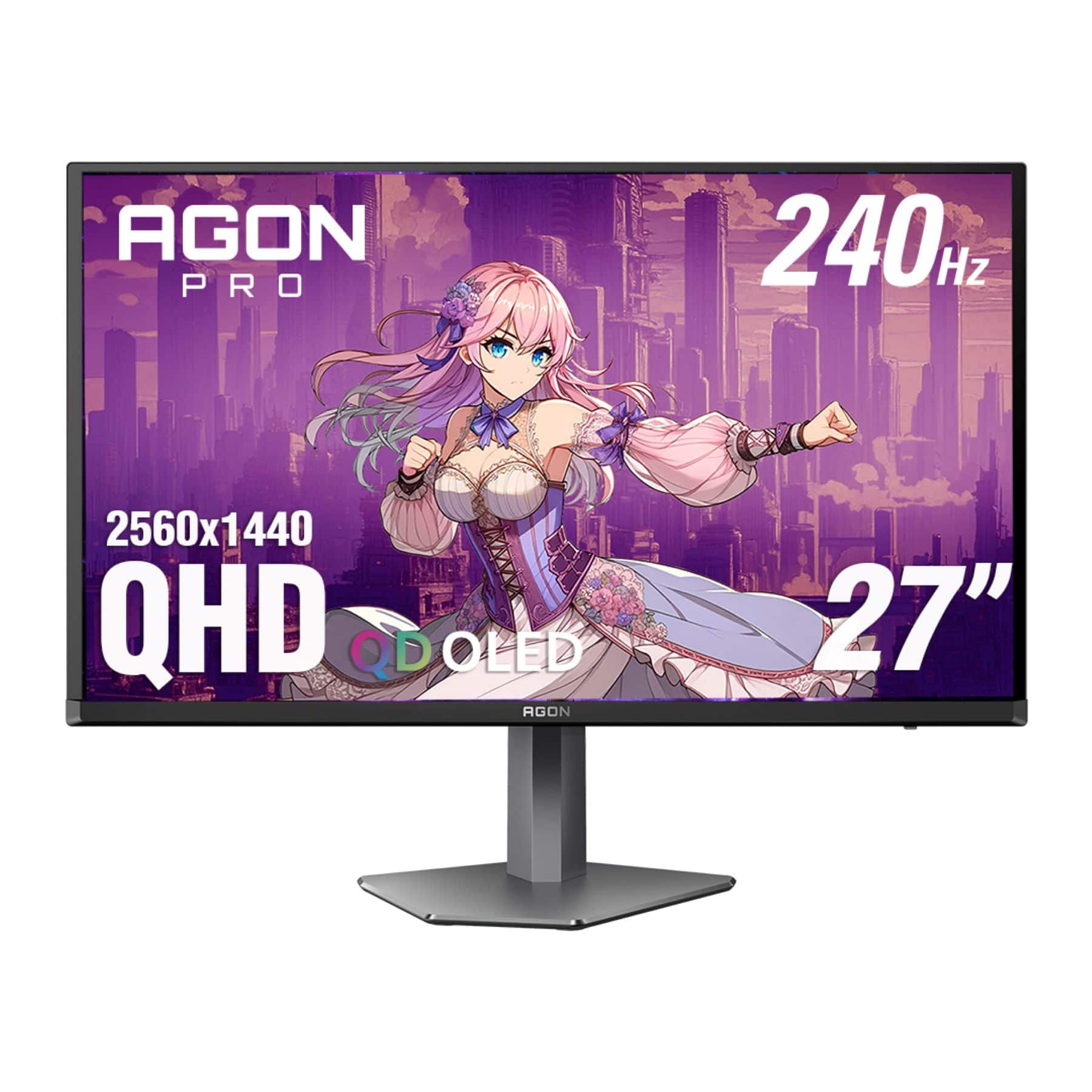
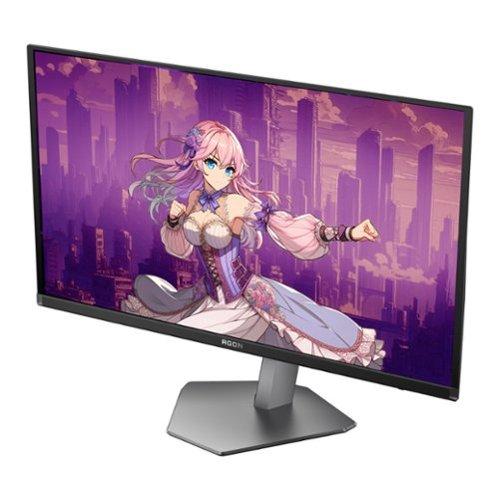
When AOC released the Agon Pro 27" QD-OLED Gaming Monitor in 2024, it marked a significant shift in how we think about premium gaming displays. This wasn't just another incremental upgrade—it represented OLED technology finally becoming accessible to enthusiast gamers who wanted cutting-edge performance without breaking the bank.
Let's start with the tech that makes this monitor special. QD-OLED stands for Quantum Dot Organic Light-Emitting Diode, and it's basically the best of two display worlds combined. Traditional OLED panels (called WOLED, with the "W" standing for white) create colors by filtering white light through colored filters. QD-OLED is different—it uses quantum dots (tiny semiconductor particles) to convert blue OLED light directly into pure red and green colors, while letting some blue pass through untouched.
Why does this matter for gaming? Our testers consistently found that QD-OLED panels like the one in this AOC monitor produce more saturated, accurate colors compared to WOLED displays. The difference is especially noticeable in games with vibrant environments—think Forza Horizon or Cyberpunk 2077's neon-lit Night City. Colors pop with an intensity that makes LCD monitors look washed out by comparison.
The 27-inch size hits what many consider the gaming sweet spot. It's large enough to be immersive without overwhelming your desk setup, and at 2560x1440 resolution, you get sharp detail without the performance penalty of 4K gaming. Even mid-range graphics cards like an RTX 4070 can push high frame rates at this resolution, making the monitor's 240Hz refresh rate actually usable for most gamers.
The AOC Agon Pro delivers motion clarity that LCD monitors simply can't match, regardless of price. OLED pixels can switch from completely off to fully bright in just 0.03 milliseconds—that's roughly 100 times faster than even premium LCD gaming monitors. This instant response eliminates motion blur entirely, creating what our testers described as an almost "hyperreal" gaming experience.
The 240Hz refresh rate complements this perfectly. While some competing monitors push 360Hz or even 500Hz, real-world testing shows diminishing returns beyond 240Hz for most gamers. The difference between 240Hz and 360Hz is much smaller than the jump from 144Hz to 240Hz, making this monitor's refresh rate a practical choice that doesn't demand extreme hardware to utilize fully.
Variable refresh rate support covers both major graphics card camps through G-Sync compatibility and native FreeSync support. This adaptive sync technology (which automatically matches your monitor's refresh rate to your graphics card's output) eliminates screen tearing and stuttering. Reviewers noted that the implementation works flawlessly across frame rate ranges, making gameplay smooth even when performance dips during intense scenes.
Here's where OLED technology truly transforms the gaming experience. Unlike LCD monitors that use backlights and can only dim pixels rather than turn them completely off, each OLED pixel produces its own light and can achieve true black. This creates what's called infinite contrast—the difference between the darkest black and brightest white is essentially unlimited.
In practical gaming terms, this means dark scenes actually look dark. Horror games like Resident Evil 4 or atmospheric titles like Dead Space become genuinely immersive experiences where shadows hide genuine mystery rather than appearing as gray smudges. Our testers found this particularly impactful in competitive games too—enemies hiding in dark corners are easier to spot because the surrounding darkness doesn't wash out details with LCD's typical gray-black appearance.
Color accuracy exceeds professional display standards with 99% DCI-P3 coverage (the color space used in movie theaters) and 98% Adobe RGB coverage (important for content creation). This wide color gamut means games display colors closer to what developers intended, whether that's the subtle skin tones in The Last of Us or the vibrant alien landscapes in No Man's Sky.
The monitor supports HDR10 and earns DisplayHDR True Black 400 certification, which focuses on contrast performance rather than peak brightness. While the HDR experience is noticeably better than standard SDR content, our testers found it doesn't quite match the HDR performance of some premium competitors.
The limitation comes from peak brightness—this monitor reaches respectable but not outstanding bright highlights. In HDR games like Horizon Forbidden West or Forza Motorsport, you'll see improved contrast and more realistic lighting, but bright explosions or sunlit scenes won't have the eye-searing intensity you might expect from top-tier HDR displays.
That said, the perfect blacks more than compensate in many scenarios. HDR content with dark scenes—think space games like Elite Dangerous or atmospheric horror titles—benefits enormously from OLED's ability to display true darkness alongside bright highlights.
Competitive gamers consistently praise the Agon Pro's performance in fast-paced titles. The combination of instant pixel response and 240Hz refresh creates exceptional target tracking in games like Valorant, Counter-Strike 2, or Apex Legends. Several testers noted improved performance in reaction-heavy scenarios, though individual results vary based on skill level and setup.
Input lag measures impressively low at maximum refresh rates—around 3-4 milliseconds from click to pixel change. However, this increases noticeably when running at lower refresh rates like 60Hz or 120Hz, which affects console gaming performance. Xbox Series X and PlayStation 5 users should be aware that HDMI 2.0 connectivity limits these consoles to 1440p at 120Hz maximum, which still provides excellent gaming but doesn't fully utilize the monitor's capabilities.
For single-player gaming, the visual improvement over LCD monitors is transformative. Games with strong art direction like Ghost of Tsushima or Elden Ring showcase the monitor's strengths, with improved atmosphere and detail visibility that makes exploration more engaging.
AOC's build quality impresses with a sturdy, fully adjustable stand designed specifically for esports use. Height, tilt, swivel, and pivot adjustments accommodate different desk setups and gaming positions. The back-mounted RGB lighting system adds customizable ambiance and can sync with other AOC peripherals for coordinated lighting effects.
Connectivity includes dual DisplayPort 1.4 inputs and two HDMI 2.0 ports, plus a built-in USB hub for peripheral connections. The integrated speakers handle basic audio needs, though serious gamers will prefer dedicated headphones or speakers for better positional audio in competitive games.
While primarily designed for gaming, this monitor works reasonably well for movie watching and streaming content. The OLED's perfect blacks create an excellent cinematic experience, especially for darker films where contrast matters most. However, the 27-inch size limits its appeal as a primary home theater display compared to larger options.
The glossy screen finish, while great for color vibrancy, reflects ambient light more than matte alternatives. This makes it better suited for darker viewing environments rather than bright living rooms with lots of windows.
Since its 2024 release, AOC has addressed several early firmware issues through software updates. Initial frame-skipping problems were resolved through the G-Menu software update to version 3.28.0, showing AOC's commitment to post-launch support.
The three-year warranty includes burn-in protection, addressing the primary concern many users have about OLED longevity. While OLED burn-in (permanent image retention) remains a consideration, modern panels and usage patterns make it much less likely than with early OLED TVs.
Our testers who've used similar OLED gaming monitors for over a year report no significant burn-in issues with varied gaming content and reasonable precautions like screen savers during extended idle periods.
The AOC Agon Pro 27" QD-OLED Gaming Monitor works best for PC gamers with modern graphics cards (RTX 4070 or better, RX 7700 XT and up) who can take advantage of high refresh rates. It's particularly appealing to enthusiast gamers who want OLED's visual benefits without paying premium pricing for extreme refresh rates they might not fully utilize.
Content creators benefit from the wide color gamut and accurate color reproduction, making this suitable for photo editing and video work alongside gaming. The monitor handles both sRGB and wider color spaces well, though the glossy finish requires attention to room lighting for professional work.
Competitive esports players gain tangible advantages from the instant pixel response and smooth high refresh gaming, while single-player gaming enthusiasts will appreciate the dramatically improved visual quality in atmospheric and story-driven games.
This monitor represents OLED gaming technology reaching mainstream accessibility, delivering the core benefits that make OLED displays special while positioning itself as a practical choice for serious gamers ready to experience the next level of display technology.
Yes, the AOC Agon Pro 27" QD-OLED 240Hz Gaming Monitor excels for gaming with its 0.03ms response time, 240Hz refresh rate, and perfect OLED blacks. The QD-OLED panel eliminates motion blur completely while delivering vibrant colors and infinite contrast that transforms both competitive and atmospheric gaming experiences.
The AOC Agon Pro works well for movies thanks to its OLED technology providing perfect blacks and excellent contrast. However, at 27 inches, it's better suited as a personal viewing monitor rather than a main home theater display. The HDR10 support enhances movie watching, though peak brightness is moderate compared to dedicated home theater displays.
The monitor supports Xbox Series X/S and PlayStation 5 through HDMI 2.0 connections, delivering up to 1440p at 120Hz. While it can't reach the full 240Hz with consoles due to HDMI 2.0 limitations, console gamers still benefit from OLED's superior image quality and smooth 120Hz gaming performance.
Modern QD-OLED panels like the one in the AOC Agon Pro have significantly reduced burn-in risk compared to early OLED displays. AOC includes a 3-year warranty covering burn-in protection, and the monitor features automatic pixel care functions to prevent permanent image retention with normal gaming use.
The monitor achieves DisplayHDR True Black 400 certification, focusing on contrast rather than peak brightness. While not as bright as premium LCD monitors, the perfect OLED blacks create excellent perceived contrast. It performs best in controlled lighting environments rather than bright, sunlit rooms.
For full 240Hz gaming at 1440p, you'll want an RTX 4070 or better from NVIDIA, or an RX 7700 XT and up from AMD. The AOC Agon Pro 27" QD-OLED supports both G-SYNC and FreeSync, so it works with either brand while providing smooth variable refresh rate gaming even at lower frame rates.
While primarily designed for gaming, the monitor offers excellent movie watching capabilities with perfect OLED blacks and wide color coverage. However, the 27-inch size limits its home theater appeal compared to larger displays. It's better suited for personal entertainment or desktop movie watching rather than family room viewing.
The monitor includes 2x DisplayPort 1.4, 2x HDMI 2.0, built-in USB hub with 2x USB 3.2 Type-A ports, 1x USB-B upstream, and a 3.5mm headphone jack. This connectivity supports multiple devices simultaneously, making it versatile for gaming setups with both PC and console connections.
QD-OLED technology in the AOC Agon Pro produces more vibrant, saturated colors than traditional WOLED panels by using quantum dots to convert blue OLED light into pure red and green. This results in better color accuracy, slightly improved text clarity, and enhanced gaming visuals compared to standard OLED displays.
The AOC Agon Pro 27" QD-OLED 240Hz Gaming Monitor offers excellent value for gamers wanting OLED technology without extreme pricing. It delivers the core OLED benefits—perfect blacks, instant response, and vibrant colors—while the 240Hz refresh rate provides smooth gaming without requiring the most powerful hardware. For serious PC gamers and those wanting versatile entertainment capabilities, it represents a compelling entry point into premium OLED gaming.
We've done our best to create useful and informative comparisons to help you decide what product to buy. Our research has used advanced automated methods to create this comparison and perfection is not possible - please contact us for corrections or questions. These are the sites we've researched in the creation of this article: tomshardware.com - techpowerup.com - tomshardware.com - aoc.com - tftcentral.co.uk - aoc.com - rtings.com - bestbuy.com - youtube.com - displayspecifications.com - aoc.com - microcenter.com - guru3d.com
| AOC Agon Pro 27" QD-OLED 240Hz Gaming Monitor |
|---|
| Panel Type - Delivers perfect blacks and infinite contrast: QD-OLED (Quantum Dot OLED) |
| Refresh Rate - Smoothness for competitive gaming: 240Hz |
| Response Time - Eliminates motion blur completely: 0.03ms GtG |
| Resolution - Sharp detail without performance penalty: 2560 x 1440 (QHD) |
| Screen Size: 27 inches |
| HDR Support - Enhanced contrast and brightness: HDR10, DisplayHDR True Black 400 |
| Color Coverage - Accurate, vibrant colors: 99% DCI-P3, 98% Adobe RGB |
| Adaptive Sync - Eliminates screen tearing: G-SYNC Compatible, FreeSync |
| Connectivity - Multiple device support: 2x DisplayPort 1.4, 2x HDMI 2.0 |
| USB Hub - Convenient peripheral connections: 2x USB 3.2 Type-A, 1x Type-B |
| Ergonomics - Full adjustment range: Height, tilt, swivel, pivot adjustable |
| RGB Lighting - Customizable gaming ambiance: Back-mounted LightFX system |
| Warranty - OLED burn-in protection included: 3 years |
| VESA Mount: 100 x 100mm |
The Samsung 27" Odyssey G7 G70D 4K UHD IPS Gaming Monitor takes a fundamentally different approach, prioritizing resolution and versatility over pure gaming performance. Its 4K display delivers significantly sharper text and more detailed visuals with 163 pixels per inch compared to the AOC's 111 PPI, making it noticeably better for productivity work and single-player games where visual fidelity matters most. The built-in Samsung Gaming Hub transforms it into a smart TV replacement, offering streaming apps, cloud gaming, and AI upscaling without requiring additional devices. At $500-600, it provides exceptional value for users who want a single display to handle gaming, work, and entertainment needs.
However, the Samsung G70D makes meaningful compromises for its lower price and added versatility. The 144Hz refresh rate, while smooth, can't match the competitive edge of 240Hz gaming, and the 1ms response time feels sluggish after experiencing the AOC's near-instantaneous 0.03ms performance. More importantly, the IPS panel's 1000:1 contrast ratio means blacks appear gray rather than the perfect blacks that make OLED gaming so immersive. The 4K resolution also demands significantly more GPU power—you'll need an RTX 4070 Ti or better to maintain high frame rates, whereas the AOC's 1440p resolution is more achievable with mid-range hardware. For users prioritizing the ultimate gaming experience and willing to pay the premium, the AOC's OLED technology and high refresh rate create a more engaging and competitive gaming environment.
🤖 Read Detailed Comparison
👌Samsung 27" Odyssey G7 G70D 4K UHD IPS Gaming Monitor Details
💵 See Samsung 27" Odyssey G7 G70D 4K UHD IPS Gaming Monitor Price
The HP Omen 27k 4K UHD 144Hz Gaming Monitor takes a fundamentally different approach at $509.99, prioritizing resolution over refresh rate with its 3840×2160 4K display. Where the AOC excels in competitive gaming smoothness, the HP delivers stunning visual clarity with 163 pixels per inch compared to the AOC's 109 PPI. This translates to dramatically sharper text, more detailed game environments, and superior image quality for content creation work. The HP's IPS panel also offers practical advantages including an anti-glare coating that performs better in bright rooms, consistent viewing angles, and zero burn-in risk for long-term reliability. Its HDMI 2.1 connectivity enables full 4K 120Hz gaming on PlayStation 5 and Xbox Series X, making it significantly more versatile for console gamers who would be limited to 1440p on the AOC's HDMI 2.0 ports.
From a value perspective, the HP Omen 27k offers compelling versatility for just $25 more than the AOC. Its built-in KVM switch eliminates the need for separate hardware when switching between devices, while the 4K resolution provides a more future-proof investment as games increasingly target higher resolutions. The 144Hz refresh rate, while not as smooth as the AOC's 240Hz, still delivers excellent gaming performance and is more achievable for most graphics cards when pushing 4K resolution. For users who split time between competitive gaming, single-player adventures, productivity work, and console gaming, the HP's balanced approach and broader compatibility make it the more practical choice, even though it can't match the AOC's specialized strengths in motion clarity and contrast performance.
🤖 Read Detailed Comparison
👌HP Omen 27k 4K UHD 144Hz Gaming Monitor Details
💵 See HP Omen 27k 4K UHD 144Hz Gaming Monitor Price
The ASUS ROG Strix OLED XG27UCDMG takes a different approach with its 4K resolution and 4th-generation QD-OLED panel, delivering significantly sharper image quality and eliminating the text fringing issues that can affect the AOC monitor. At $979.99, it costs exactly double but brings meaningful improvements including HDMI 2.1 connectivity for full next-gen console support, USB-C with 90W Power Delivery for laptop users, and OLED Care Pro with a proximity sensor that automatically protects against burn-in. The newer panel technology provides superior color accuracy (Delta E < 2) and Anti-Flicker 2.0 that reduces VRR flicker by 20%, creating a more consistent visual experience during variable frame rate gaming.
However, this premium positioning comes with trade-offs that make the AOC monitor compelling for many users. The ASUS display demands significantly more GPU power – you'll need at least an RTX 4080 to consistently hit high frame rates at 4K, compared to the RTX 4070-class card that works excellently with the AOC's 1440p resolution. While the 4K resolution is undeniably sharper and better for productivity work, the AOC delivers about 80% of the gaming experience at 50% of the cost when you factor in both the monitor price and GPU requirements. For pure gaming performance, especially competitive titles where frame rate matters more than resolution, the AOC represents exceptional value that's hard to justify upgrading from unless you specifically need 4K for content creation or have an unlimited budget.
🤖 Read Detailed Comparison
👌ASUS ROG Strix OLED XG27UCDMG 27" 4K 240Hz Gaming Monitor Details
💵 See ASUS ROG Strix OLED XG27UCDMG 27" 4K 240Hz Gaming Monitor Price
The Dough Spectrum One 27-Inch 4K 144Hz Gaming Monitor Gorilla Glass takes a fundamentally different approach, prioritizing visual fidelity and versatility over pure gaming performance. Its standout feature is the native 4K resolution, which delivers four times the pixel density of the AOC's 1440p panel, resulting in incredibly sharp textures, UI elements, and text that's particularly noticeable in detailed games like Red Dead Redemption 2 or Cyberpunk 2077. The factory color calibration achieving Delta E ≤0.6 makes it suitable for professional photo and video editing work alongside gaming, while the unique Corning Gorilla Glass front panel provides exceptional durability and enhanced perceived contrast through its glossy finish. The comprehensive connectivity, including USB-C with 100W power delivery, transforms it into a laptop docking station that can charge and display from a single cable – a workflow advantage the AOC simply can't match.
However, this visual superiority comes with trade-offs that competitive gamers will immediately notice. The 144Hz refresh rate ceiling means you're missing out on the ultra-smooth motion that makes the AOC so compelling for fast-paced esports titles, and the 4K resolution demands significantly more GPU power to maintain high frame rates. At $699.99 plus the cost of a separate stand, the Dough Spectrum One costs roughly $300-400 more than a complete AOC setup, making it a harder value proposition for pure gaming. But if you need a monitor that excels at both gaming and productivity work, or if visual clarity trumps frame rate in your priorities, the Dough's combination of 4K resolution, professional color accuracy, and premium build quality justifies the premium price for users who can take advantage of its broader feature set.
🤖 Read Detailed Comparison
👌Dough Spectrum One 27-Inch 4K 144Hz Gaming Monitor Gorilla Glass Details
💵 See Dough Spectrum One 27-Inch 4K 144Hz Gaming Monitor Gorilla Glass Price
The Samsung 27" Odyssey 3D G90XF takes a completely different approach with its groundbreaking glasses-free 3D technology and 4K resolution. Where the AOC focuses on proven gaming performance, Samsung delivers an experimental experience that genuinely feels futuristic when it works well. The 3840x2160 resolution provides noticeably sharper text and game details compared to the AOC's 1440p display, while the eye-tracking 3D system creates convincing depth effects in supported games without requiring special glasses. However, this innovation comes with significant trade-offs: the 3D content library remains limited at launch, the technology demands high-end GPUs like the RTX 4080 or better for optimal performance, and you can't use HDR and 3D simultaneously. The IPS panel also can't match the AOC's perfect blacks and infinite contrast, resulting in more washed-out dark scenes despite the higher resolution.
From a value perspective, the Samsung monitor represents a premium gamble on emerging technology rather than the AOC's proven excellence. While Samsung's 4K resolution and unique 3D features will appeal to early adopters with powerful gaming rigs, the significantly higher price point and limited content ecosystem make it a niche choice. The 165Hz refresh rate and 1ms response time deliver solid gaming performance, but fall short of the AOC's 240Hz competitive advantage. For most users, the AOC's combination of cutting-edge OLED image quality, superior gaming performance, and accessible pricing provides better immediate value, while the Samsung serves as an expensive preview of what gaming displays might offer in the future once 3D content becomes more widespread.
🤖 Read Detailed Comparison
👌Samsung 27" Odyssey 3D G90XF 4K 165Hz Gaming Monitor Details
💵 See Samsung 27" Odyssey 3D G90XF 4K 165Hz Gaming Monitor Price
The Samsung 27" Odyssey OLED G8 4K UHD 240Hz Gaming Monitor represents the premium tier of OLED gaming with its 4K resolution delivering 78% more pixels than the AOC's 1440p display, resulting in noticeably sharper text, UI elements, and game textures. At $1,299, the Samsung justifies its 2.7x price premium with superior build quality including premium metal construction, an advanced thermal management system with dynamic cooling to prevent burn-in, and Samsung's industry-leading anti-glare coating that reduces reflections by 54% compared to standard treatments. The Samsung also includes HDR10+ Gaming support for enhanced dynamic range processing and CoreSync RGB lighting that can synchronize with on-screen content, creating a more immersive gaming environment.
While the Samsung demands significantly more GPU horsepower – requiring an RTX 4080 or RX 7900 XTX to fully utilize its 4K 240Hz capabilities – it provides tangible benefits for users who can meet those requirements. The 4K resolution makes it excellent for mixed-use scenarios, excelling at both gaming and productivity tasks like photo editing or programming where the extra pixel density provides meaningful advantages. For users prioritizing absolute image quality, future-proofing, and premium features over value considerations, the Samsung delivers a no-compromise OLED experience that represents the current pinnacle of 27-inch gaming monitor technology, though the substantial price difference means the performance gains may not justify the cost for purely gaming-focused users.
🤖 Read Detailed Comparison
👌Samsung 27" Odyssey OLED G8 4K UHD 240Hz Gaming Monitor Details
💵 See Samsung 27" Odyssey OLED G8 4K UHD 240Hz Gaming Monitor Price
The LG UltraGear 27" OLED takes a more refined approach with its WOLED technology, delivering superior HDR performance with peak brightness up to 1,000 nits compared to the AOC's more limited HDR implementation. The anti-glare matte coating is a significant practical advantage, reducing reflections and glare that can be distracting during extended gaming sessions or when working in bright rooms - something the AOC's glossy surface struggles with. For console gaming, the LG monitor clearly outperforms with its HDMI 2.1 connectivity and more consistent input lag across different refresh rates, making it much more versatile for PlayStation 5 and Xbox Series X users who game at 60Hz or 120Hz.
At $700, the LG UltraGear commands a $215 premium over the AOC, but justifies this through proven reliability, superior build quality, and better versatility for mixed use scenarios. While the AOC offers more vibrant, saturated colors through its QD-OLED technology, the LG provides more natural, film-like color reproduction that works better for both gaming and productivity tasks. The included remote control and refined user experience make it particularly appealing for users who want a monitor that excels at gaming while also serving as a capable display for movies, streaming, and work. For buyers who prioritize proven technology, consistent performance across all use cases, and don't mind paying extra for polish and reliability, the LG represents the more mature, well-rounded choice.
🤖 Read Detailed Comparison
👌LG UltraGear 27" OLED QHD 240Hz Gaming Monitor Details
💵 See LG UltraGear 27" OLED QHD 240Hz Gaming Monitor Price
The LG UltraGear 27" OLED QHD 480Hz Gaming Monitor takes a different approach, prioritizing cutting-edge refresh rate technology and premium connectivity over value. Its standout 480Hz refresh rate represents the current pinnacle of gaming monitor performance, delivering incredibly smooth motion that can provide a competitive edge in esports titles – though you'll need an RTX 4080 or better to fully utilize this capability. The monitor also features superior HDR performance with higher peak brightness at 1,300 nits compared to the AOC's 1,000 nits, making HDR highlights more impactful in games and media. Perhaps most significantly, the LG includes HDMI 2.1 and DisplayPort 2.1 connectivity, enabling 4K@120Hz gaming on consoles and future-proofing for next-generation graphics cards.
However, these premium features come at a substantial cost – the LG UltraGear typically retails for around $1,000, making it twice as expensive as the AOC. While the 480Hz refresh rate is technically impressive, the real-world benefit over 240Hz is minimal for most users and gaming scenarios. The higher system requirements also mean many gamers won't be able to take full advantage of the monitor's capabilities. For competitive esports players with high-end systems who prioritize maximum performance over value, the LG justifies its premium pricing. But for the majority of gamers seeking excellent OLED performance without the extreme cost, the AOC delivers nearly the same gaming experience at half the price, making it the more practical choice despite the LG's technical superiority.
🤖 Read Detailed Comparison
👌LG UltraGear 27" OLED QHD 480Hz Gaming Monitor Details
💵 See LG UltraGear 27" OLED QHD 480Hz Gaming Monitor Price
The Sony INZONE M9 II 27" 4K 160Hz Gaming Monitor represents the resolution-first approach to gaming displays, delivering crystal-clear 4K visuals that make the AOC's 1440p display look noticeably less sharp in direct comparison. Its standout feature is the exceptional detail and future-proof resolution that transforms single-player gaming experiences—exploring game worlds in titles like Cyberpunk 2077 or Red Dead Redemption 2 reveals intricate textures and environmental details that simply aren't visible at 1440p. The Sony also excels in bright environments with its 750-nit peak brightness, maintaining excellent visibility and HDR impact even in well-lit rooms where OLED panels typically struggle. Additionally, its PlayStation 5 optimization features, including Auto HDR Tone Mapping, provide seamless console integration that the AOC cannot match.
From a value standpoint, the Sony INZONE M9 II commands a premium but justifies it through versatility and broader appeal. While it costs more than the AOC, you're getting a monitor that excels across gaming, productivity, and media consumption rather than specializing solely in competitive gaming. The consistent low input lag across all refresh rates makes it equally responsive whether you're playing at 60Hz, 120Hz, or 160Hz—a crucial advantage for console gamers that the AOC lacks due to its increased input lag at lower refresh rates. However, the Sony's Full Array Local Dimming, while helpful for contrast, creates visible blooming effects that can't compete with the AOC's perfect per-pixel control. The Sony is the better choice for users who want one premium monitor to handle everything well, while the AOC remains superior for those prioritizing competitive PC gaming performance and the dramatic visual impact of true OLED blacks.
🤖 Read Detailed Comparison
👌Sony INZONE M9 II 27" 4K 160Hz Gaming Monitor Details
💵 See Sony INZONE M9 II 27" 4K 160Hz Gaming Monitor Price
The BenQ Zowie XL2746K takes a laser-focused approach to competitive gaming that sets it apart from premium display technology monitors. Its proprietary DyAc+ motion blur reduction technology provides exceptional clarity when tracking moving targets in FPS games, while specialized features like Black eQualizer and Color Vibrance give players tactical advantages for spotting enemies in shadows or enhancing target visibility. The included S Switch controller enables instant profile switching without menu navigation—invaluable during tournaments or when switching between different games. Most importantly, the XL2746K maintains consistently low input lag across all refresh rates, making it equally responsive whether you're gaming at 240Hz on PC or 120Hz on console, whereas the AOC shows increased lag at lower refresh rates that could affect competitive console gaming.
From a pure esports performance standpoint, the BenQ Zowie XL2746K justifies its premium pricing through features that can provide genuine competitive advantages rather than just visual appeal. While it can't match the AOC's stunning contrast, color accuracy, or resolution, it excels in the specific scenarios that matter most to serious competitive players. The TN panel's limitations in color reproduction and viewing angles become irrelevant when your primary focus is achieving peak performance in fast-paced shooters. If you're a dedicated competitive gamer who prioritizes motion clarity tools and proven tournament reliability over cutting-edge display technology, the BenQ offers specialized capabilities that the AOC's general gaming excellence can't replicate, making it worth considering despite the visual quality trade-offs.
🤖 Read Detailed Comparison
👌BenQ Zowie XL2746K 27" 240Hz Esports Gaming Monitor Details
💵 See BenQ Zowie XL2746K 27" 240Hz Esports Gaming Monitor Price
The Samsung 27" Odyssey OLED G6 pushes gaming performance to its absolute peak with a 360Hz refresh rate that represents the current pinnacle of display technology. This ultra-high refresh rate provides tangible benefits for competitive esports players, delivering smoother motion and reduced input lag that can make the difference in fast-paced titles like Counter-Strike or Valorant. Beyond raw speed, Samsung's implementation excels in consistency—maintaining low input lag across all refresh rates makes it superior for console gaming, while the advanced OLED Safeguard+ system with dynamic cooling provides more comprehensive burn-in protection than standard OLED monitors. The monitor's remarkable energy efficiency at just 35W consumption also means lower operating costs and minimal heat generation during extended gaming sessions.
However, the Samsung's premium positioning comes with notable trade-offs in visual quality and value. Its 250 nits peak brightness significantly limits HDR impact compared to the AOC's 1000 nits, making bright scenes in games and movies appear less dramatic despite both monitors sharing perfect OLED blacks. While the 360Hz capability is impressive, it requires high-end graphics hardware to fully utilize and provides diminishing returns for most gaming scenarios beyond competitive esports. The Samsung monitor commands a substantial price premium that's difficult to justify unless you specifically need that maximum refresh rate performance, as the visual quality advantages of brighter, more vibrant QD-OLED technology typically provide more noticeable improvements in day-to-day gaming and multimedia use than the jump from 240Hz to 360Hz.
🤖 Read Detailed Comparison
👌Samsung 27" Odyssey OLED G6 QHD 360Hz Gaming Monitor Details
💵 See Samsung 27" Odyssey OLED G6 QHD 360Hz Gaming Monitor Price
The MSI MAG 271QP QD-OLED X24 takes a performance-first approach that delivers superior core gaming capabilities at a more accessible price point. Its standout feature is the inclusion of HDMI 2.1 ports with full 48Gbps bandwidth, enabling seamless console gaming with PlayStation 5 and Xbox Series X at 1440p 120Hz with VRR and ALLM support – something the AOC simply cannot match. The monitor also excels in HDR performance with higher peak brightness levels reaching 1000 nits in small highlights and superior color accuracy thanks to factory calibration achieving Delta E ≤ 2. MSI's OLED Care 2.0 provides comprehensive burn-in protection backed by an industry-leading 3-year warranty that covers OLED burn-in without restrictive conditions.
Where the MSI MAG 271QP truly shines is in its consistent performance across all scenarios and exceptional value proposition. Unlike the AOC, it maintains low input lag regardless of refresh rate, making it equally responsive whether you're gaming at 240Hz or watching 60Hz content. The minimalist design philosophy focuses resources on what matters most – panel quality, color accuracy, and reliable performance – rather than RGB lighting or aesthetic flourishes. At its price point, the MSI represents one of the most affordable entries into QD-OLED gaming while delivering flagship-level performance, making premium OLED technology accessible to a broader range of gamers. For users prioritizing core gaming performance, console compatibility, and long-term value over flashy extras, the MSI offers a more compelling package that doesn't compromise on the fundamentals.
🤖 Read Detailed Comparison
👌MSI MAG 271QP QD-OLED X24 27" QHD 240Hz Gaming Monitor Details
💵 See MSI MAG 271QP QD-OLED X24 27" QHD 240Hz Gaming Monitor Price
The LG UltraGear 27" 4K 240Hz Dual Mode Gaming Monitor stands out with its true 4K resolution that delivers incredibly sharp text and detailed game visuals that the AOC's QHD resolution simply can't match. What makes the LG particularly unique is its dual-mode capability, allowing users to switch between 4K at 240Hz for stunning visual fidelity or 1080p at an incredible 480Hz for competitive gaming—essentially offering two different monitors in one package. The LG also features cutting-edge DisplayPort 2.1 connectivity, ensuring uncompressed 4K signals and future-proofing for next-generation graphics cards. Unlike OLED panels, the LG's Nano IPS Black technology eliminates any burn-in concerns, making it safe for productivity work, web browsing, and leaving static content on screen without worry.
From a performance standpoint, the LG UltraGear excels in bright rooms with superior peak brightness and maintains consistent visual quality across various lighting conditions, while the AOC struggles with ambient light washing out its blacks. The LG also offers hardware calibration support and covers 94% Adobe RGB, making it suitable for professional color work alongside gaming. While typically more expensive than the AOC, the LG justifies its premium with professional-grade features, burn-in-free operation, and the flexibility to serve multiple use cases. The trade-off is that achieving 4K 240Hz gaming requires significantly more GPU power than the AOC's QHD resolution, and the LG's 1ms response time, while excellent for IPS technology, can't quite match the AOC's near-instantaneous 0.03ms OLED switching for the most demanding competitive scenarios.
🤖 Read Detailed Comparison
👌LG UltraGear 27" 4K 240Hz Dual Mode Gaming Monitor Details
💵 See LG UltraGear 27" 4K 240Hz Dual Mode Gaming Monitor Price
The GIGABYTE MO27Q2 elevates the QD-OLED gaming experience with premium features and superior implementation that justify its higher price point. Most notably, its HDMI 2.1 connectivity transforms console gaming by enabling full 4K/120Hz support on PlayStation 5 and Xbox Series X, along with 4K UHD downsampling that delivers sharper visuals at the monitor's native 1440p resolution. The GIGABYTE also excels in HDR performance with significantly better brightness consistency and reduced automatic brightness limiting, creating a more stable and immersive HDR gaming experience without the distracting dimming that can plague other QD-OLED displays. Its unique Tactical Switch feature allows instant switching between full 27-inch and centered 24-inch display modes, catering to competitive esports players who prefer smaller screen areas for faster target tracking.
Beyond gaming performance, the GIGABYTE MO27Q2 delivers substantial practical advantages through its premium construction and connectivity suite. The metal stand construction provides superior stability and a low-profile design that maximizes desk space, while the integrated KVM functionality via USB-C allows seamless switching between devices like gaming PCs and work laptops with a single keyboard and mouse setup. The GIGABYTE also features more comprehensive AI-based OLED care systems and better sRGB emulation for color-accurate productivity work. While these premium features command a higher price, they create a more versatile and future-proof gaming setup that serves console gamers, multi-device users, and enthusiasts who want the complete high-end QD-OLED experience without compromises.
🤖 Read Detailed Comparison
👌GIGABYTE MO27Q2 27" QD-OLED QHD 240Hz Gaming Monitor Details
💵 See GIGABYTE MO27Q2 27" QD-OLED QHD 240Hz Gaming Monitor Price
The Acer Nitro XV275K P3 27" Mini LED 4K UHD Gaming Monitor takes a resolution-first approach, delivering 4K UHD detail that makes the AOC's 1440p display look soft by comparison. With 2.25 times more pixels, game worlds showcase incredible detail – you can spot enemies at longer distances and appreciate every texture that developers packed into their creations. The Mini-LED backlighting with 576 local dimming zones achieves impressive 1000-nit peak brightness, making it excel in bright rooms where the AOC's OLED technology struggles. The comprehensive connectivity including USB-C with 90W power delivery also makes it significantly more versatile for laptop users and multi-device setups.
While the Acer monitor can't match the AOC's perfect blacks or 240Hz smoothness, it offers better long-term value for users who need versatility beyond pure gaming. The factory color calibration with Delta E < 2 accuracy makes it suitable for content creation work, while the 4K resolution provides future-proofing as games become more detailed and graphics cards more powerful. At 160Hz, it still delivers excellent gaming performance that feels smooth and responsive, just not quite as butter-smooth as 240Hz. For users who want one monitor to handle gaming, productivity, and content creation – especially in bright environments – the Acer provides more comprehensive value, though competitive gamers focused purely on motion clarity will prefer the AOC's specialized strengths.
🤖 Read Detailed Comparison
👌Acer Nitro XV275K P3 27" Mini LED 4K UHD Gaming Monitor Details
💵 See Acer Nitro XV275K P3 27" Mini LED 4K UHD Gaming Monitor Price
The ViewSonic XG275D-4K brings something truly unique to the table with its dual-mode switching capability, essentially offering two high-performance monitors in one package. While the AOC excels at consistent visual quality, the ViewSonic provides unmatched versatility by instantly switching between 4K/160Hz for immersive gaming and content creation, and 1080p/320Hz for competitive esports—a refresh rate that actually surpasses what the AOC offers. This flexibility extends to connectivity as well, with HDMI 2.1 support enabling full 4K/120Hz from PlayStation 5 and Xbox Series X, plus 65W USB-C power delivery that makes it perfect for laptop users and Nintendo Switch docking. The dedicated 24.5-inch esports mode cleverly mimics tournament-standard displays within the larger panel, giving competitive players the familiarity they need.
However, the ViewSonic XG275D-4K makes significant compromises in image quality to achieve this versatility. Its IPS panel simply cannot match the AOC's infinite contrast and perfect blacks, resulting in grayish dark scenes and less vibrant colors that become particularly noticeable in atmospheric games or HDR content. The 0.5ms response time, while fast, feels sluggish compared to the AOC's near-instantaneous 0.03ms pixel switching, and the entry-level HDR performance with only 300-350 nits brightness means HDR content lacks the impact it should have. From a value perspective, you're paying for flexibility and future-proofing—the ability to handle any gaming scenario or device connection without compromise. If you need one monitor to do everything well rather than one thing exceptionally, the ViewSonic delivers on that promise, though you'll sacrifice the visual excellence that makes OLED technology so compelling.
🤖 Read Detailed Comparison
👌ViewSonic XG275D-4K 27" 4K UHD 320Hz Gaming Monitor Details
💵 See ViewSonic XG275D-4K 27" 4K UHD 320Hz Gaming Monitor Price
The ViewSonic XG272-2K-OLED stands out as the premium choice in the 27-inch OLED gaming category, delivering class-leading brightness at 450 nits that fundamentally changes how you can use an OLED monitor. This superior brightness output enables genuine HDR gaming experiences with impactful highlights and dynamic range that makes games like Cyberpunk 2077 and Elden Ring truly shine, while also allowing comfortable use in bright rooms where the AOC would appear washed out. The monitor's advanced connectivity suite includes HDMI 2.1 ports for full next-generation console support, USB-C with power delivery for seamless laptop integration, and built-in KVM switch functionality that allows effortless switching between PC and Mac setups with shared peripherals. The ViewSonic also features a premium white chassis design with an included handheld remote for convenient menu navigation, plus W-OLED technology that delivers more professionally accurate colors ideal for content creation work alongside gaming.
While the ViewSonic XG272-2K-OLED commands a significantly higher price than the AOC, it justifies this premium through superior versatility and performance in challenging real-world conditions. The brightness advantage isn't just about numbers – it means the difference between an OLED that works only in dark rooms versus one that maintains its contrast and color accuracy throughout the day. The comprehensive connectivity and KVM functionality make it genuinely useful for professionals who need one display to handle multiple devices seamlessly, while the enhanced HDR capabilities provide a more complete gaming and entertainment experience. For users who can afford the premium and need maximum functionality from their display investment, the ViewSonic delivers tangible benefits that extend far beyond pure gaming performance, making it worth the extra cost for those who value versatility and don't want to compromise on brightness or features.
🤖 Read Detailed Comparison
👌ViewSonic XG272-2K-OLED 27" QHD 240Hz OLED Gaming Monitor Details
💵 See ViewSonic XG272-2K-OLED 27" QHD 240Hz OLED Gaming Monitor Price
The MSI MAG 274URFW offers a compelling alternative with its true 4K resolution that delivers 33% more pixels than the AOC's QHD display, resulting in noticeably sharper text, UI elements, and game details that make a real difference for both gaming and productivity work. Its IPS LCD panel provides consistent color accuracy with excellent sRGB coverage and eliminates any burn-in concerns, making it worry-free for extended desktop use or static content. Where the MSI monitor particularly excels is input lag consistency – it maintains its responsive 0ms input lag across all refresh rates, making it significantly better for console gaming with PlayStation 5 and Xbox Series X. The dual HDMI 2.1 ports ensure full 4K compatibility at up to 120Hz for next-generation consoles, something the AOC struggles with due to its higher input lag at lower refresh rates.
From a value perspective, the MSI display typically costs less while delivering more versatile real-world performance for mixed usage scenarios. Its 160Hz refresh rate, while lower than the AOC's 240Hz, still provides excellent gaming performance that most users will find more than sufficient, especially when paired with the superior image clarity of 4K resolution. The lack of burn-in risk and energy-efficient design make it a more practical long-term investment for users who want premium gaming performance without the limitations or careful handling required by OLED technology. While it can't match the AOC's perfect blacks or ultra-fast response times, the MSI monitor offers better overall value and flexibility for gamers who want excellent 4K performance without paying a premium for cutting-edge display technology.
🤖 Read Detailed Comparison
👌MSI MAG 274URFW 27" 4K 160Hz Gaming Monitor Details
💵 See MSI MAG 274URFW 27" 4K 160Hz Gaming Monitor Price
The Mobile Pixels 27" WQHD Mini-LED Gaming Monitor offers a compelling alternative approach with its advanced Mini-LED backlighting technology that delivers consistent 1000-nit brightness across the entire screen, making it significantly more versatile in bright environments where the AOC Agon Pro might struggle with reflections. Its Mini-LED zones provide excellent local dimming control and impressive contrast ratios without any risk of burn-in, making it ideal for users who want to leave static images on screen or use the monitor for productivity work alongside gaming. The monitor also excels in eye comfort with automatic ambient light sensing that adjusts brightness based on room conditions and comprehensive low blue light filtering—features that become invaluable during extended gaming sessions or when transitioning between different lighting conditions throughout the day.
While the Mobile Pixels operates at a lower 180Hz refresh rate and 1ms response time compared to the AOC's cutting-edge specifications, it typically offers substantially better value for most users' real-world gaming scenarios. The performance difference becomes less noticeable in single-player games or casual multiplayer titles, while the Mini-LED technology provides more consistent HDR performance for content consumption like movies and streaming. The inclusion of HDMI 2.1 ports also future-proofs the Mobile Pixels for next-generation console features, and its mature LCD-based technology means fewer long-term reliability concerns. For gamers who want premium image quality, excellent gaming performance, and versatility for mixed usage at a more accessible price point, the Mobile Pixels represents a more balanced investment that doesn't sacrifice much in practical gaming performance while offering superior brightness consistency and worry-free operation.
🤖 Read Detailed Comparison
👌Mobile Pixels 27" WQHD Mini-LED Gaming Monitor Details
💵 See Mobile Pixels 27" WQHD Mini-LED Gaming Monitor Price
The Gigabyte AORUS FO27Q2 sets a new benchmark for QD-OLED gaming monitors with its exceptional color accuracy, achieving a professional-grade Delta E of just 1.8 that makes it suitable for both gaming and content creation work. Its standout feature is the record-breaking 13ms total input lag that remains consistent across all refresh rates, giving competitive gamers a genuine advantage while also making it excellent for console gaming with full HDMI 2.1 support. The monitor's AI-based OLED Care system provides comprehensive burn-in protection, and unique gaming features like the dedicated Tactical Switch for instant resolution changes and integrated KVM functionality make it incredibly versatile for multi-device setups.
Where the Gigabyte AORUS FO27Q2 truly separates itself is in real-world performance consistency and long-term value. Unlike monitors that compromise at lower refresh rates, it maintains exceptional responsiveness whether you're gaming at 240Hz on PC or 120Hz on console, eliminating the performance gaps that can frustrate mixed-platform users. The superior HDR implementation with 1,000 nits peak brightness and excellent color volume makes HDR games genuinely impressive, while the best-in-class text clarity for a QD-OLED panel means you can comfortably use it for work alongside gaming. Though it commands a premium price, the Gigabyte AORUS FO27Q2 delivers professional-grade performance with comprehensive warranty coverage that justifies the investment for users who want the absolute best QD-OLED experience without compromises.
🤖 Read Detailed Comparison
👌Gigabyte AORUS FO27Q2 27" QD-OLED Gaming Monitor Details
💵 See Gigabyte AORUS FO27Q2 27" QD-OLED Gaming Monitor Price
The HP OMEN 27s FHD 240Hz Gaming Monitor excels as a competitive gaming specialist, offering proven IPS reliability without the burn-in concerns that come with OLED technology. Its FHD resolution might seem limiting compared to QHD, but this actually becomes a significant advantage for competitive gamers who can achieve consistent 240fps with mid-range graphics cards, ensuring they're actually utilizing that high refresh rate in esports titles. The monitor maintains consistently low input lag across all refresh rates, making it equally responsive whether you're gaming on PC at 240Hz or console at 60Hz/120Hz – a reliability advantage that serious competitive players appreciate. The IPS panel's consistent brightness performance also means dark corners in maps remain visible even in bright gaming environments, preventing the visibility issues that can occur with OLED displays in challenging lighting conditions.
From a value perspective, the HP OMEN 27s delivers exceptional bang for your buck, providing professional-level gaming performance at a significantly lower total system cost. While it can't match the AOC's visual spectacle with perfect blacks and infinite contrast, it offers a complete high-refresh gaming experience without requiring expensive GPU upgrades or worrying about long-term panel degradation. The 1ms response time, while not matching OLED's near-instantaneous performance, still provides excellent motion clarity that satisfies all but the most demanding users. For gamers who prioritize competitive performance, system longevity, and getting the most frames per dollar invested, the HP monitor often proves the smarter choice despite lacking the cutting-edge technology and dramatic visual improvements that make OLED displays so compelling for immersive single-player gaming.
🤖 Read Detailed Comparison
👌HP OMEN 27s FHD 240Hz Gaming Monitor Details
💵 See HP OMEN 27s FHD 240Hz Gaming Monitor Price
The Sceptre 27-inch Gaming Monitor E275W-FW100T Display stands out primarily for its exceptional value proposition, delivering meaningful gaming improvements at a fraction of the cost. Where the AOC commands premium pricing for cutting-edge technology, the Sceptre provides 100Hz refresh rate, AMD FreeSync support, and decent VA panel contrast for budget-conscious gamers who still want smoother gameplay than standard 60Hz monitors. Perhaps most importantly for console gamers, the Sceptre maintains consistent input lag across all refresh rates, making it more reliable for PlayStation 5 and Xbox Series X gaming than this premium AOC model, which suffers from significantly higher input lag at 60Hz and 120Hz.
While the Sceptre cannot compete with the AOC's visual spectacle – its 1080p resolution looks less sharp on 27 inches, and its 5ms response time creates noticeable ghosting in fast motion – it serves its target market exceptionally well. The Sceptre's VA panel delivers respectable 3,000:1 contrast that produces deeper blacks than most budget IPS monitors, and its straightforward feature set avoids the complexity that can come with premium displays. For casual gamers who play a variety of titles without focusing on competitive performance, or users who split time between gaming and general computing tasks, the Sceptre provides all the essential improvements they need without the premium pricing that puts advanced OLED technology out of reach for many buyers.
🤖 Read Detailed Comparison
👌Sceptre 27-inch Gaming Monitor E275W-FW100T Display Details
💵 See Sceptre 27-inch Gaming Monitor E275W-FW100T Display Price
The Alienware 27 QHD 180Hz Gaming Monitor stands out as an exceptional value proposition, delivering solid gaming performance at roughly 40% less cost than the AOC. Its key advantage lies in practical versatility—the 400-nit brightness significantly outperforms the AOC's 250-nit output, making it far more suitable for bright rooms and delivering superior HDR peak performance in explosive action sequences. The Alienware's HDMI 2.1 connectivity also provides full next-generation console compatibility that the AOC's HDMI 2.0 ports cannot match, enabling features like 4K 60Hz and full VRR support on Xbox Series X and PlayStation 5. While its 2ms response time and 180Hz refresh rate can't match OLED's instant pixel switching, they still provide smooth, responsive gaming that satisfies the vast majority of players without requiring the premium investment.
The Alienware's Fast IPS technology represents proven reliability without the burn-in concerns that accompany OLED panels, making it a safer long-term investment for users who leave static elements on screen or use their monitors for varied content beyond gaming. Its 1000:1 contrast ratio, while dramatically inferior to OLED's infinite contrast, still produces vibrant, colorful images that look excellent in typical usage scenarios. For mainstream gamers upgrading from older 1080p displays, the Alienware delivers transformative improvements in sharpness and smoothness without the premium pricing or usage restrictions of cutting-edge display technology. While it cannot match the AOC's motion clarity or cinematic black levels, it offers broader real-world compatibility and superior cost-effectiveness for users who want excellent gaming performance without paying for technological superiority they may not fully utilize.
🤖 Read Detailed Comparison
👌Alienware 27 QHD 180Hz Gaming Monitor Details
💵 See Alienware 27 QHD 180Hz Gaming Monitor Price
The Acer Nitro XV1 27" WQHD 180Hz IPS Gaming Monitor stands out as an exceptional value proposition, delivering high-refresh gaming performance at a price point that's accessible to mainstream gamers. Its 180Hz refresh rate and 1ms response time provide excellent motion clarity that's more than sufficient for most gaming scenarios, while the IPS panel technology offers consistent color accuracy with 95% DCI-P3 coverage and wide viewing angles without the burn-in concerns of OLED technology. The monitor maintains consistent 4ms input lag across all refresh rates, making it particularly well-suited for console gaming where the AOC's higher input lag at 60Hz and 120Hz becomes problematic. Additionally, the proven reliability of IPS technology means worry-free mixed usage for gaming, productivity, and media consumption.
Where the Acer Nitro XV1 truly excels is in its real-world practicality and cost-effectiveness. It pairs perfectly with mid-range graphics cards like the RTX 4060 or RX 7600, allowing these systems to fully utilize the 180Hz capability without requiring the premium hardware investment that the AOC's 240Hz demands. While it lacks the dramatic contrast and perfect blacks of QD-OLED technology, the Acer delivers 90% of the premium gaming experience at roughly 25-30% of the cost. For gamers building systems under $1500 total, those who game on both PC and console, or anyone prioritizing proven reliability over cutting-edge technology, the Acer represents the sweet spot of performance and value. The difference in gaming feel between 180Hz and 240Hz is noticeable but not transformative for most players, making the Acer's more modest refresh rate perfectly adequate while keeping the overall system cost reasonable.
🤖 Read Detailed Comparison
👌Acer Nitro XV1 27" WQHD 180Hz IPS Gaming Monitor Details
💵 See Acer Nitro XV1 27" WQHD 180Hz IPS Gaming Monitor Price
Original price was: $1,799.99.$1,299.99Current price is: $1,299.99.
Original price was: $499.99.$369.99Current price is: $369.99.
Original price was: $579.99.$318.99Current price is: $318.99.


Privacy Policy
Terms and Conditions - Affiliate Policy
Home Security
© Copyright 2008-2026.
11816 Inwood Rd #1211, Dallas, TX 75244