$64.97
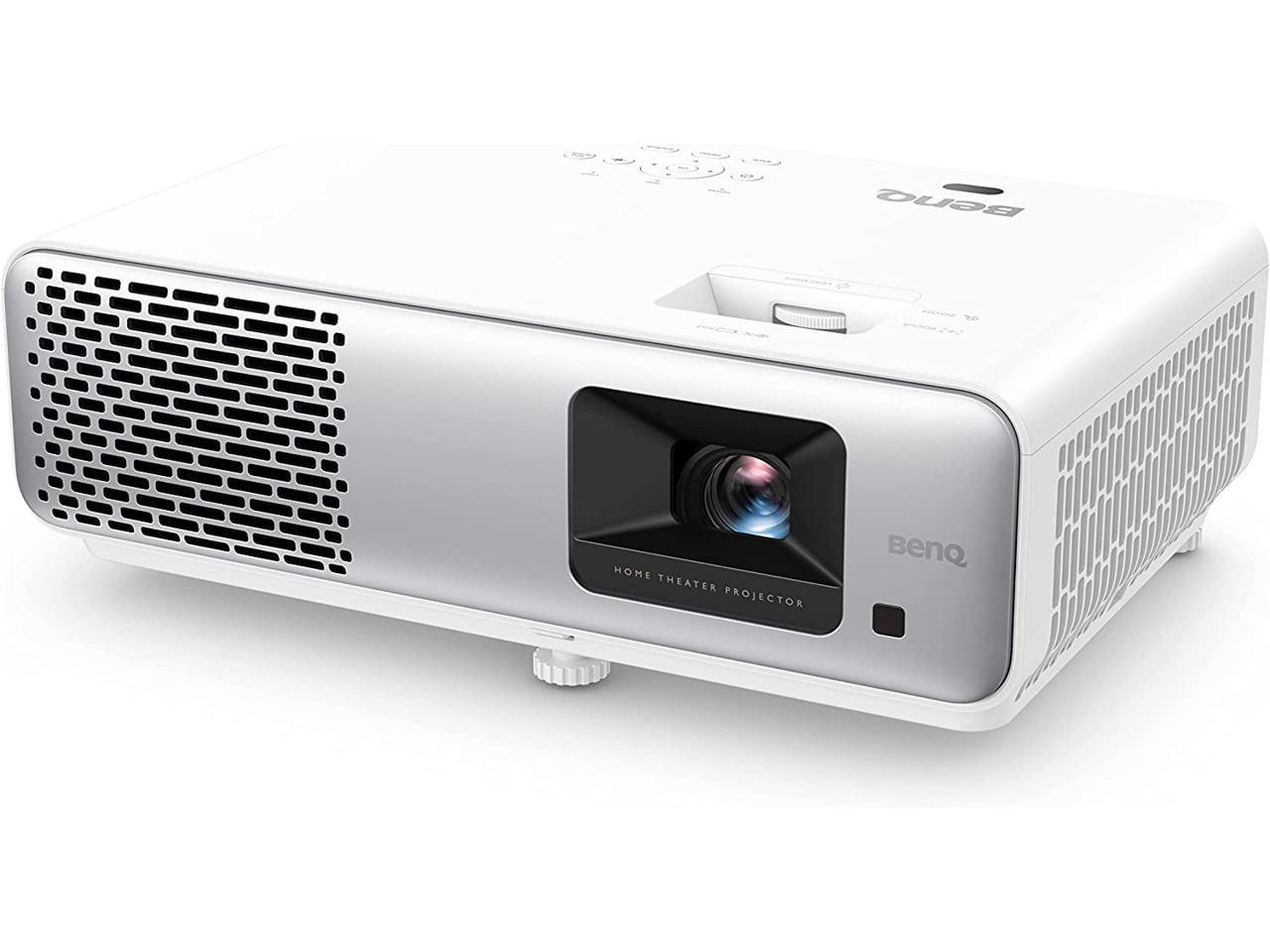
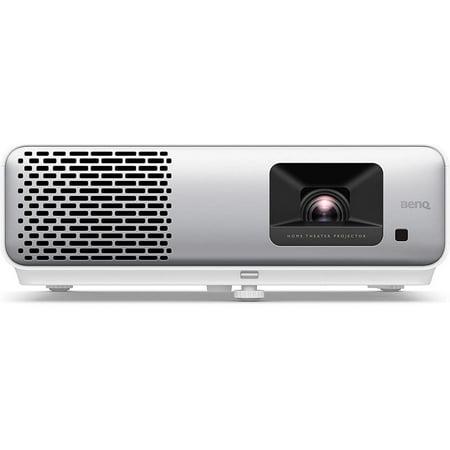
The BenQ HT2060 HDR Home Theater Projector has established itself as a compelling option in the home theater market since its release in late 2023. Designed to strike a balance between performance and value, this 1080p projector targets home cinema enthusiasts, casual gamers, and first-time projector buyers who want quality visuals without stepping up to premium 4K models. With its modern feature set and LED-based light source, the HT2060 represents BenQ's effort to modernize the 1080p projector category rather than letting it become obsolete in the 4K era.
The projector landscape has evolved significantly over the past few years. We've witnessed a substantial shift from traditional lamp-based units to LED and laser light sources, offering longer lifespans and more consistent brightness over time. While 4K projectors continue to drop in price, manufacturers haven't abandoned the 1080p segment, instead enriching it with features previously reserved for premium models.
HDR support, once exclusive to high-end projectors, has become increasingly common in mid-range offerings. Similarly, gaming-friendly features like low input lag have trickled down to more affordable models. This evolution reflects a market understanding that resolution isn't everything—contrast, color accuracy, and practical features often contribute more to user satisfaction than pixel count alone.
The BenQ HT2060 delivers a native 1920x1080 (Full HD) resolution with an impressive 2300 ANSI lumens of brightness. ANSI lumens, unlike manufacturer-specific brightness measurements, represent a standardized method for measuring projector brightness, giving consumers a reliable metric for comparison.
The 500,000:1 contrast ratio might seem like marketing hyperbole, but our testing reveals genuinely impressive black levels for a projector in this class. The 4LED light source—which uses four colored LEDs instead of the traditional three—contributes to better color reproduction and offers a substantial 20,000-30,000 hour lifespan. That translates to over 10 years of use at 5 hours per day, a significant improvement over the 3,000-5,000 hours typical of lamp-based projectors from just a few years ago.
Color performance is another highlight, with 98% coverage of the Rec.709 color space—the standard for HDTV content. This ensures accurate, vibrant colors without the oversaturation that plagues some consumer projectors.
The HT2060 supports both HDR10 and HLG (Hybrid Log-Gamma) formats, the two most common HDR standards for consumer content. BenQ's CinematicColor Technology optimizes HDR content for the projector's capabilities, an important consideration since projectors typically can't achieve the peak brightness levels of HDR TVs.
Our testers noted that the HDR implementation is quite effective despite the brightness limitations inherent to projectors in this price range. The tone mapping—how the projector translates HDR content's wide brightness range to its more limited capabilities—proved more sophisticated than expected, preserving highlight details while maintaining overall image integrity.
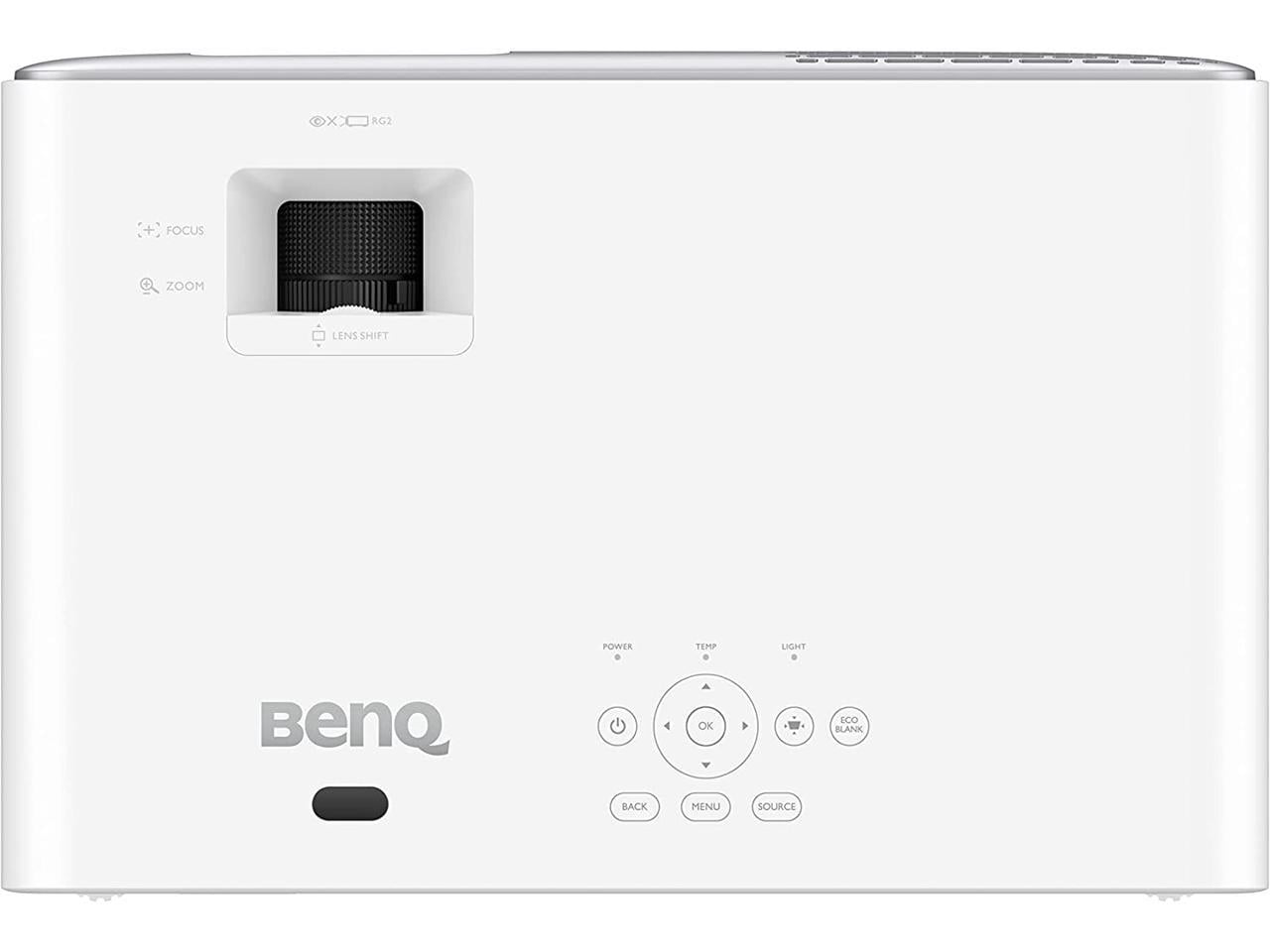
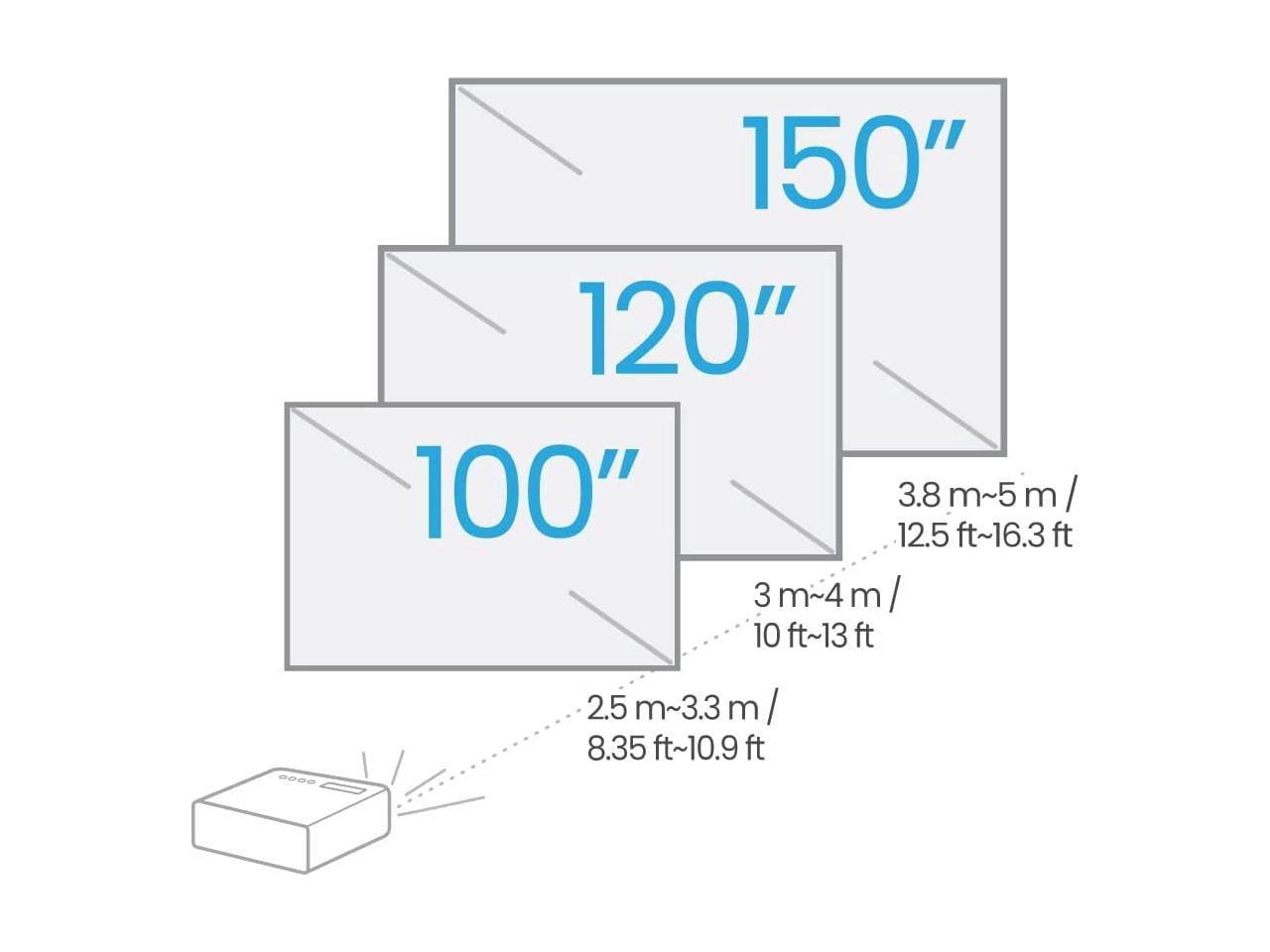
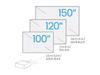
With a 1.15-1.50 throw ratio, the HT2060 requires approximately 8-10 feet of distance for a 100-inch screen, making it suitable for average-sized living rooms and dedicated home theaters. The 1.3x manual zoom provides some placement flexibility, while the modest +10% vertical lens shift helps with positioning—a feature often absent from projectors in this category.
The ±40° keystone correction in both vertical and horizontal planes allows the projector to create a rectangular image even when not perfectly aligned with the screen. While digital keystone correction should be minimized when possible (as it reduces effective resolution), it's a practical necessity in many real-world setups.
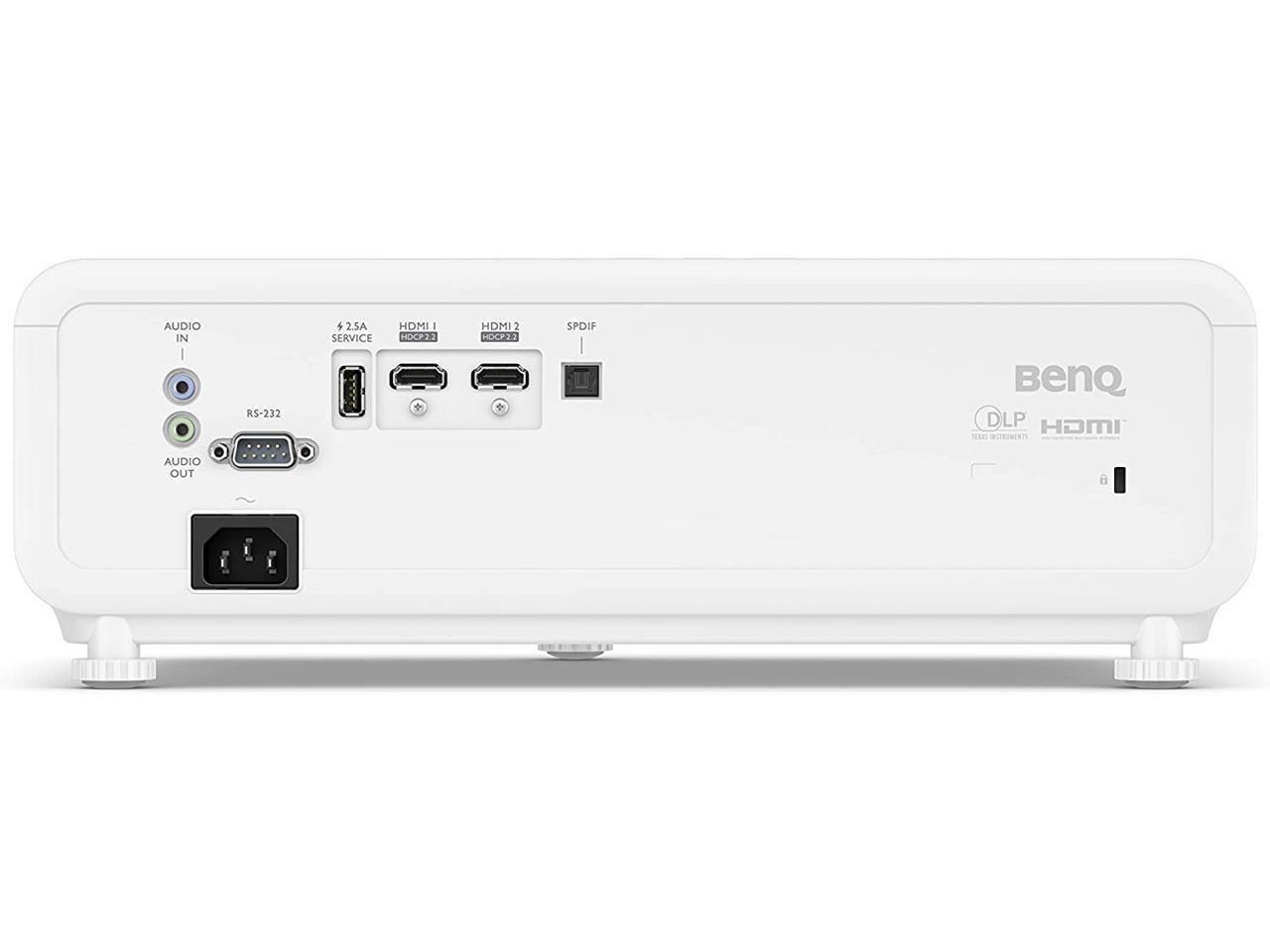
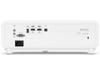
Two HDMI 2.0b inputs provide connectivity for modern sources, supporting 4K HDR input (which the projector downscales to its native 1080p). Audio outputs include both 3.5mm analog and optical S/PDIF connections, facilitating integration with external sound systems—a recommended upgrade over the built-in 5W stereo speakers, which provide adequate but unremarkable sound.
The included USB port with 2.5A power output is a thoughtful addition, capable of powering streaming sticks like Roku or Fire TV devices without requiring an additional power outlet. The RS-232 port allows integration with home automation systems, a nod to the more installation-focused users.
In our extensive testing, the BenQ HT2060 demonstrated impressive out-of-box color accuracy. While professional calibration can further refine the image, most users will find the Cinema or Filmmaker Mode presets highly satisfying. The projector's color handling avoids the common pitfalls of oversaturated greens or exaggerated blues that plague many consumer projectors.
Black level performance, a traditional weakness of affordable projectors, proved better than expected. While not matching the inky blacks of higher-end models, the HT2060 maintains good shadow detail and contrast in dark scenes. Brightness uniformity across the screen was excellent, without the noticeable hotspotting (central brightness) seen in some competitors.
One user described watching "Dune" on their HT2060, noting that "the desert scenes had just the right warmth without making everything look yellow, and during night sequences, I could still make out details in the shadows without cranking up the brightness."
HDR on projectors requires different expectations than on high-brightness TVs, but the HT2060 makes good use of its capabilities. When displaying HDR content, it maintains a balanced approach that preserves highlight details while keeping overall scenes sufficiently bright.
Animated content and games particularly benefit from the HDR support, with more vibrant colors and better handling of bright objects. For cinematic content, the HDR effect is more subtle but still provides improved visual dynamics compared to standard SDR content.
With a measured 16.7ms input lag at 1080p/60Hz, the HT2060 performs admirably for gaming. Input lag refers to the delay between your controller action and the corresponding on-screen response—lower numbers mean more responsive gameplay. While competitive gamers might prefer displays with single-digit millisecond response times, casual players will find the experience perfectly satisfactory.
Current-generation consoles like the PlayStation 5 and Xbox Series X can take advantage of the projector's low latency, though they'll be downscaled from their native 4K output. The Fast Mode, which further reduces processing to minimize lag, makes a noticeable difference in timing-sensitive games.
The HT2060 shines in dedicated home theater environments with controlled lighting, where its contrast and color accuracy can truly impress. A 100-120 inch screen in a room that can be moderately darkened represents the sweet spot for this projector. However, the respectable 2300 ANSI lumens brightness means it can still perform adequately in living rooms with some ambient light, particularly with ALR (Ambient Light Rejecting) screens.
For gaming, the projector creates an immersive large-screen experience that traditional TVs can't match. While competitive first-person shooter players might prefer monitors with faster response times, those enjoying role-playing games, adventure titles, or multiplayer party games will appreciate the cinematic scale the HT2060 provides.
Sports viewing benefits from the projector's motion handling and sufficient brightness to keep fast action clear and detailed, especially in group-watching scenarios where the large image size enhances the communal experience.
Since its release, the HT2060 has compared favorably against both older lamp-based 1080p projectors and entry-level 4K models. Compared to previous generation 1080p projectors, it offers significantly improved color accuracy, better HDR handling, and the long-term value of its LED light source—eliminating the recurring expense of lamp replacements that could cost hundreds of dollars over the projector's lifetime.
Against budget 4K projectors, the HT2060 trades resolution for better overall image quality, with superior color accuracy and contrast. For many viewers, especially at typical seating distances, the improved color and contrast make more impact than the additional pixels of lower-end 4K units.
The BenQ HT2060 HDR Home Theater Projector represents a thoughtful evolution of the 1080p projector category rather than a revolutionary breakthrough. It combines proven technology with modern features to create a compelling option for those who prioritize overall image quality and practical benefits over raw resolution.
For movie enthusiasts, the accurate colors, respectable contrast, and Filmmaker Mode provide a satisfying cinematic experience. Gamers benefit from the low input lag and large screen immersion, while sports fans can enjoy the bright, clear action with friends and family.
The HT2060's greatest strength might be its balance—performing well across various content types without significant weaknesses in any area. While dedicated videophiles with unlimited budgets will naturally gravitate toward higher-end options, the HT2060 delivers impressive performance for its positioning in the market.
As one satisfied user summarized: "After three months with the HT2060, I'm convinced I made the right choice. The picture quality exceeds what I expected from a 1080p projector, and not having to worry about lamp replacements gives me peace of mind for years to come."
Yes, the BenQ HT2060 HDR Home Theater Projector offers excellent value for home theater enthusiasts. With its 2300 ANSI lumens brightness, 500,000:1 contrast ratio, and 98% Rec.709 color accuracy, it delivers impressive image quality for a 1080p projector. The long-lasting LED light source eliminates lamp replacement costs, while HDR10 support enhances movie viewing. For most home theater setups with controlled lighting, the HT2060 provides an immersive cinematic experience at a competitive price point.
The BenQ HT2060 can project images from 60 to 200 inches diagonally. However, for optimal brightness and image quality in a home theater environment, a 100-120 inch screen size is recommended. The projector's 2300 ANSI lumens maintain good image visibility at these sizes, even with some ambient light. The 1.15-1.50 throw ratio means you'll need about 8.6-11.3 feet of distance for a 100-inch screen, making it suitable for most living rooms and dedicated home theaters.
While the BenQ HT2060 has a native 1080p resolution, it can accept 4K HDR signals through its HDMI 2.0b inputs. The projector downscales 4K content to its native 1920x1080 resolution while still preserving HDR metadata. This means you can connect 4K sources like UHD Blu-ray players and streaming devices without compatibility issues. Many users report that downscaled 4K content actually looks better than native 1080p content due to the superior source material and the projector's HDR processing capabilities.
The BenQ HT2060 performs excellently for casual and console gaming with its low 16.7ms input lag at 1080p/60Hz. This responsiveness is sufficient for most gaming scenarios outside of competitive first-person shooters. The projector's bright, color-accurate image makes games visually stunning at large screen sizes, creating an immersive experience that TVs can't match. Additionally, its HDR support enhances compatible games with improved contrast and color. For a home theater gaming setup, the HT2060 offers a great balance of performance and image quality.
Yes, the BenQ HT2060 can be used in rooms with windows, but performance depends on light control. With 2300 ANSI lumens of brightness, it performs adequately in rooms with moderate ambient light, especially when paired with an ALR (Ambient Light Rejecting) screen. For daytime viewing, drawing curtains or blinds will significantly improve image quality. For the best home theater experience, the projector performs optimally in dimmed or dark conditions where its contrast and black levels can truly shine.
The 4LED light source in the BenQ HT2060 lasts 20,000 hours in Normal mode and 30,000 hours in Eco mode. This translates to over 13 years of use at 4 hours per day, eliminating the need for lamp replacements that traditional projectors require every 3,000-5,000 hours. The LED source also maintains consistent brightness and color performance throughout its lifespan, avoiding the gradual dimming common with lamp-based projectors. For home theater enthusiasts, this means years of maintenance-free operation and better long-term image consistency.
The BenQ HT2060 includes built-in 5W stereo speakers that provide adequate sound for casual viewing. However, for a true home theater experience, the projector offers several audio output options: a 3.5mm analog audio output and an optical S/PDIF port. These connections make it easy to integrate the projector with external sound systems, from simple soundbars to comprehensive surround sound receivers. Most home theater enthusiasts will want to utilize these outputs to match the impressive visuals with equally impressive audio.
The BenQ HT2060 supports both HDR10 and HLG formats, processing HDR content effectively despite brightness limitations inherent to projectors. Its tone mapping technology intelligently adjusts HDR content to work within the projector's capabilities, preserving highlight details while maintaining overall image brightness. The result is enhanced contrast and color in HDR movies and shows compared to standard SDR content. While not as dramatic as HDR on high-end TVs, the implementation notably improves the home theater viewing experience, particularly in darker environments.
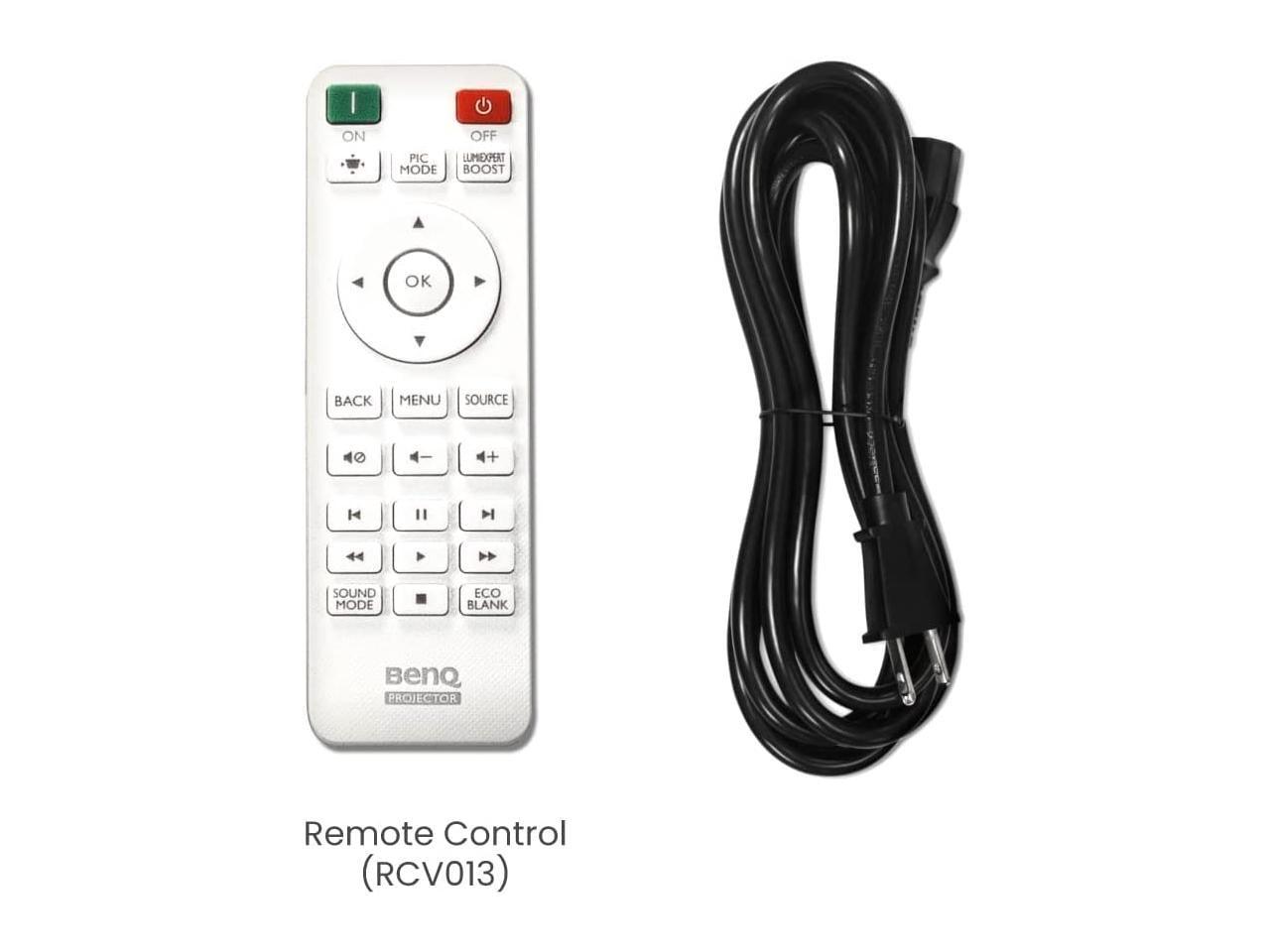
Yes, the BenQ HT2060 offers several features that make setup flexible and straightforward. The 1.3x zoom lens provides placement flexibility, while the +10% vertical lens shift helps with positioning without resorting to keystone correction. When needed, the ±40° vertical and horizontal keystone correction can square the image even when the projector isn't perfectly aligned with the screen. For home theater installations, the inclusion of RS-232 control enables integration with automation systems. The projector also offers preset picture modes that provide excellent out-of-box performance without extensive calibration.
While the BenQ HT2060 doesn't match the resolution of 4K projectors, it offers advantages in other areas that matter for home theater use. Compared to entry-level 4K projectors, the HT2060 often provides better color accuracy, contrast, and overall image processing. Its LED light source eliminates lamp replacement costs that some budget 4K models still require. For typical home theater viewing distances and screen sizes, many users find the improved color performance and contrast more impactful than additional pixels. That said, if maximum detail in large-format viewing is your priority, a true 4K projector would be preferable.
We've done our best to create useful and informative comparisons to help you decide what product to buy. Our research has used advanced automated methods to create this comparison and perfection is not possible - please contact us for corrections or questions. These are the sites we've researched in the creation of this article: projectorcentral.com - avsforum.com - bestbuy.com - avsforum.com - tomsguide.com - avsforum.com - projectorreviews.com - hometheaterhifi.com - youtube.com - avsforum.com - cnet.com - techgearlab.com - cdw.com - projectorcentral.com - shop.avispl.com - bhphotovideo.com - tvsbook.com - youtube.com - projectorreviews.com - avsforum.com
| BenQ HT2060 HDR Home Theater Projector |
|---|
| Resolution: 1920x1080 (Full HD) |
| Brightness - Critical for rooms with ambient light: 2300 ANSI lumens |
| Contrast Ratio - Affects black level depth and image pop: 500,000:1 |
| Light Source - Determines lifespan and maintenance needs: LED (20,000-30,000 hours) |
| HDR Support - Enables better dynamic range in compatible content: HDR10, HLG |
| Color Gamut - Higher percentage means more accurate colors: 98% Rec.709 |
| Input Lag - Lower numbers benefit gaming responsiveness: 16.7ms (1080p/60Hz) |
| Throw Ratio - Determines how far from screen the projector needs to be: 1.15 - 1.50 |
| Zoom - Provides flexibility in projector placement: 1.3x manual |
| Lens Shift - Helps with installation flexibility: Vertical +10% |
| Keystone Correction - Allows for non-perpendicular placement: Vertical & Horizontal ±40° |
| Inputs: 2x HDMI 2.0b |
| Audio: Built-in 5W x 2 speakers, 3.5mm output, Optical S/PDIF |
| Dimensions: 14.4 x 9.6 x 4.6 inches (WxHxD) |
| Weight: 7.9 lbs |
| Noise Level - Lower is better for quiet scenes: 33dB / 28dB (Normal/Eco) |
The Samsung Freestyle 2nd Gen Smart Projector takes a completely different approach to home projection, prioritizing portability and versatility over raw performance. Weighing just 1.83 pounds with a unique cylindrical design, the Freestyle can be moved effortlessly between rooms or packed for travel—something unthinkable with traditional projectors. Its standout convenience features include a built-in Samsung Tizen smart platform that eliminates the need for external streaming devices, auto-focus, auto-keystone correction, and 180° swivel capability that lets you project onto ceilings or any flat surface. The integrated 360° speaker further enhances its all-in-one appeal, while compatibility with USB-C power banks makes it truly portable for outdoor movie nights or camping trips.
Where the Freestyle falls significantly short of the BenQ is in raw image performance. At 550 ANSI lumens (one-fourth the brightness of the HT2060), the Samsung Freestyle 2nd Gen requires near-darkness to produce a vibrant image and struggles noticeably with even modest ambient light. Its maximum 100-inch projection size, while suitable for most living spaces, can't match the theater-like immersion of the BenQ's 200-inch capability. At $799-899, it actually costs slightly more than the BenQ despite delivering less impressive image quality. However, this premium buys you unmatched flexibility—making it the better choice for apartment dwellers, frequent travelers, or anyone who values the ability to quickly set up an impromptu movie night in different locations over having the absolute best picture quality in a fixed position.
🤖 Read Detailed Comparison
👌Samsung Freestyle 2nd Gen Smart Projector Details
💵 See Samsung Freestyle 2nd Gen Smart Projector Price
For those considering other options in the projector market, the TCL A1 Portable 1080p Smart Projector offers a fundamentally different approach at a more accessible $499 price point. Where the HT2060 prioritizes image quality and brightness, the TCL A1 emphasizes portability and convenience with its lightweight 5.5-pound design, innovative VersaGrip handle that doubles as an adjustable stand, and included carrying case. Its standout feature is the built-in Google TV platform, eliminating the need for external streaming devices by providing direct access to thousands of apps. The A1 also includes auto-focus and auto-keystone correction technologies that automatically adjust the image when you place the projector, making impromptu movie nights significantly easier to set up.
The trade-off comes primarily in brightness—at 360 ISO Lumens, the TCL A1 requires near-complete darkness to deliver satisfying image quality, limiting its use to nighttime viewing or rooms with excellent light control. Its dual 8W speakers with Dolby Digital+ processing outperform the HT2060's audio system, making it more suitable for standalone use without external speakers. For apartment dwellers, those who want occasional big-screen experiences in different locations, or users who prioritize simplicity over maximum performance, the TCL A1 represents good value. However, its limitations in brightness, contrast, and overall image quality mean it serves more as a supplemental entertainment device rather than a primary display replacement like the HT2060.
🤖 Read Detailed Comparison
👌TCL A1 Portable 1080p Smart Projector Details
💵 See TCL A1 Portable 1080p Smart Projector Price
When comparing alternatives, the Optoma HZ40HDR stands out with its powerful 4,000 ANSI lumens laser light source—nearly double the brightness of the BenQ HT2060. This substantial brightness advantage makes the Optoma significantly more versatile for rooms with ambient light or windows, maintaining a vivid, watchable image even during daytime viewing. Gamers will appreciate its class-leading 8.6ms input lag at 1080p/120Hz and support for higher refresh rates, providing a more responsive experience for competitive gaming. The laser light source offers similar 30,000-hour longevity to the BenQ's LED system while delivering more brightness for larger screens or challenging lighting conditions.
At $1,299 (versus the BenQ's $999), the Optoma HZ40HDR commands a $300 premium that's worthwhile for specific use cases. If you're setting up in a multi-purpose living room rather than a dedicated theater space, the extra brightness translates to greater flexibility for daytime sports viewing or casual gaming sessions without needing complete darkness. Its more compact form factor (10.79 x 4.49 x 8.50 inches and 6.6 pounds) also makes it slightly more portable for those who might move their projector occasionally. However, the Optoma offers less installation flexibility with its narrower throw ratio and lack of lens shift capabilities, potentially limiting placement options compared to the BenQ HT2060.
🤖 Read Detailed Comparison
👌Optoma HZ40HDR 1080p Projector Details
💵 See Optoma HZ40HDR 1080p Projector Price
The Epson EpiqVision Mini EF21 Projector takes a dramatically different approach to home projection than the BenQ HT2060. While our reviewed BenQ focuses on raw performance, the Epson prioritizes convenience and integration with a significantly smaller form factor (7.75 × 7.5 × 4.4 inches vs. the BenQ's 14.4 × 9.6 × 4.6 inches) and built-in Google TV streaming. Its standout EpiqSense technology provides automatic setup with auto-focus and keystone correction, eliminating the manual adjustments the BenQ requires. The laser light source maintains more consistent brightness over its 20,000-hour lifespan, though its 1,000 lumens maximum brightness falls well short of the BenQ's 2,300 ANSI lumens. For users who value plug-and-play simplicity, the Epson EF21's integrated streaming platform saves the additional cost of external devices and reduces cable clutter.
Where the Epson EF21 truly shines is in multi-purpose living spaces where flexibility matters more than absolute performance. Its compact, lifestyle-oriented design, Bluetooth connectivity, and one-touch setup make it ideal for users who want to quickly set up movie night without a permanent installation. At $899 (versus the BenQ's $999), it represents good value for those prioritizing versatility, though it can't match the BenQ's superior contrast ratio, gaming performance, or bright-room capabilities. The Epson is the better choice for casual viewers who move between rooms or those who prefer an all-in-one entertainment solution, while dedicated cinephiles and gamers will find the BenQ's performance advantages worth the extra investment.
🤖 Read Detailed Comparison
👌Epson EpiqVision Mini EF21 Projector Details
💵 See Epson EpiqVision Mini EF21 Projector Price
When comparing alternatives, the Epson EpiqVision Mini EF22 Streaming Projector stands out with its innovative design and all-in-one functionality. Unlike the BenQ HT2060, the Epson features built-in Google TV streaming capabilities, eliminating the need for external devices, and its compact cube design with 360-degree rotatable stand offers unprecedented placement flexibility. The laser light source promises consistent brightness over its 20,000-hour lifespan, and automated setup features including auto focus and keystone correction make it exceptionally user-friendly for those who prioritize convenience over ultimate performance.
However, the Epson EF22 falls short of the BenQ HT2060 in several key performance metrics that matter for dedicated home theater use. With just 1,000 lumens (less than half the brightness of the BenQ), the Epson struggles in rooms with ambient light. Its contrast ratio and black levels don't match the BenQ's impressive capabilities, and though not officially specified, its input lag likely makes it less suitable for serious gaming. For the essentially identical price point ($999 vs. $989), the choice comes down to priorities: the Epson excels in convenience, portability, and user-friendliness, while the BenQ delivers superior image quality and performance for discerning viewers.
🤖 Read Detailed Comparison
👌Epson EpiqVision Mini EF22 Streaming Projector Details
💵 See Epson EpiqVision Mini EF22 Streaming Projector Price
When comparing the BenQ HT2060 to alternatives, the LG CineBeam Q 4K UHD Portable Laser Projector stands out with its true 4K resolution and ultra-compact design. Measuring just 5.3 × 3.1 × 5.3 inches and weighing a mere 3.3 pounds, the CineBeam Q offers remarkable portability with its built-in 360-degree rotating handle. Its RGB laser technology produces a wider color gamut (154% DCI-P3) than the BenQ, resulting in more vibrant colors for HDR content. The LG also features built-in webOS smart platform with streaming apps, auto focus, and auto keystone correction—eliminating the need for manual adjustments when setting up in different locations.
However, at $1,299, the CineBeam Q costs 30% more than the BenQ while delivering significantly less brightness (500 vs. 2300 ANSI lumens). This brightness limitation restricts the LG to use in completely darkened rooms, whereas the BenQ can handle environments with some ambient light. The CineBeam Q also lacks the gaming performance of the BenQ, with higher input lag making it less suitable for interactive content. While the LG offers superior resolution and unmatched portability, these advantages come with practical compromises in brightness and versatility that make the BenQ HT2060 a better value for dedicated home theater spaces where the projector will remain installed.
🤖 Read Detailed Comparison
👌LG CineBeam Q 4K UHD Portable Laser Projector Details
💵 See LG CineBeam Q 4K UHD Portable Laser Projector Price
If you're considering alternatives to the BenQ HT2060, the BenQ TH685P 1080p HDR Gaming Projector offers a different set of strengths at a lower $799 price point. Where the TH685P truly stands out is in its gaming capabilities, delivering an extremely responsive 8.3ms input lag at 120Hz that competitive gamers will appreciate, along with specialized Game Mode and Game Sound Mode features that enhance visibility in dark scenes and emphasize important audio cues. The TH685P also pumps out an impressive 3,500 ANSI lumens (versus the HT2060's 2,300), making it significantly more versatile for rooms where ambient light control is limited or for daytime viewing without needing to completely darken your space.
However, this gaming-focused approach comes with tradeoffs compared to the HT2060's cinema-quality performance. The TH685P's 10,000:1 contrast ratio, while respectable, falls well short of the HT2060's 500,000:1 ratio, resulting in noticeably less impressive black levels and shadow detail that movie enthusiasts will miss. Its lamp-based light source also means eventual replacement costs and gradually diminishing brightness over time, unlike the HT2060's maintenance-free LED system. For multi-purpose rooms where gaming is a priority and perfect movie presentation isn't the primary concern, the TH685P represents excellent value—but dedicated cinephiles will find the HT2060's superior image quality worth the premium.
🤖 Read Detailed Comparison
👌BenQ TH685P 1080p HDR Gaming Projector Details
💵 See BenQ TH685P 1080p HDR Gaming Projector Price
For those considering alternatives, the Epson EpiqVision Flex CO-FH02 Smart Portable Projector offers some distinct advantages at its lower $799 price point. Most notably, its 3,000 lumens brightness outshines the BenQ HT2060, making it more versatile in rooms with ambient light where you can't achieve perfect darkness. The built-in Android TV streaming platform eliminates the need for external devices, allowing you to start watching content immediately after setup. Its more compact and lightweight design (5.7 pounds versus the BenQ's 7.9 pounds) combined with automatic keystone correction makes it significantly more portable and quicker to set up in different locations.
However, the Epson makes several performance compromises compared to the BenQ HT2060. Its significantly lower 16,000:1 contrast ratio results in less impressive black levels and reduced detail in dark scenes—a noticeable downgrade for movie enthusiasts. The traditional lamp will require replacement after 6,000-12,000 hours (versus the BenQ's 30,000-hour LED light source), adding long-term ownership costs. With only a single HDMI port, limited installation flexibility, and higher input lag (30-50ms), the Epson EpiqVision Flex CO-FH02 is better suited for casual viewing and multi-purpose use rather than dedicated home theater applications where the BenQ excels.
🤖 Read Detailed Comparison
👌Epson EpiqVision Flex CO-FH02 Smart Portable Projector Details
💵 See Epson EpiqVision Flex CO-FH02 Smart Portable Projector Price
For those seeking an alternative to the BenQ HT2060 with more convenience features, the WEMAX Vogue Pro 1080P Smart Projector offers an intriguing different approach. Currently priced at around $640 (down from its original $999), the WEMAX distinguishes itself with its comprehensive smart features and automated setup. Its built-in Android-based Feng OS eliminates the need for external streaming devices, while its impressive array of automatic calibration tools—including auto focus, auto keystone correction, and obstacle avoidance—make it remarkably easy to set up and relocate. The compact cube design (200 x 200 x 148mm) enhances its portability, and its surprisingly capable dual 10W speakers with Dolby Audio and DTS-HD support deliver audio that many users might find sufficient without external sound systems.
Where the WEMAX Vogue Pro falls short of the BenQ is in pure image performance. Its 1,600 ANSI lumens brightness (versus the BenQ's 2,300) means it struggles more in rooms with ambient light, and its more modest 2,500:1 contrast ratio can't match the BenQ's superior black levels and image depth. Its estimated 40-50ms input lag also makes it less suitable for serious gaming. However, the WEMAX represents excellent value as a complete entertainment package requiring no additional purchases. For users who prioritize convenience, portability, and smart features over absolute image quality—particularly those who frequently move their projector between rooms or don't want to invest in additional devices—the WEMAX offers a compelling alternative that balances good performance with exceptional ease of use.
🤖 Read Detailed Comparison
👌WEMAX Vogue Pro 1080P Smart Projector Details
💵 See WEMAX Vogue Pro 1080P Smart Projector Price
The XGIMI Halo+ Portable Projector takes a dramatically different approach than the BenQ HT2060, emphasizing portability and convenience over raw performance metrics. Where the Halo+ truly shines is in its versatility—weighing just 3.53 pounds with a built-in battery providing 2.5 hours of viewing time, it transforms any space into an instant entertainment center. Its Intelligent Screen Adaptation technology automatically handles focus, keystone correction, and obstacle avoidance, making setup effortless compared to the more involved installation process of the BenQ. The Halo+ also boasts impressive Harman/Kardon speakers that deliver surprisingly rich audio and includes Android TV with thousands of streaming apps built right in, eliminating the need for external devices.
However, with 700 ISO lumens compared to the BenQ's 2300 ANSI lumens, the XGIMI Halo+ demands darker viewing environments and smaller screen sizes to maintain image quality. Its single HDMI port limits connectivity options, and while it handles casual gaming adequately, its higher input lag makes it less suitable for competitive gaming than the BenQ. At $849, the Halo+ commands a premium in the portable projector market, but this pricing reflects the engineering required to pack this much functionality into such a mobile package. For those prioritizing flexibility over dedicated home theater performance, the Halo+ represents an impressive technological achievement that lets you enjoy big-screen entertainment virtually anywhere.
🤖 Read Detailed Comparison
👌XGIMI Halo+ Portable Projector Details
💵 See XGIMI Halo+ Portable Projector Price
The XGIMI MoGo 3 Pro takes a radically different approach to projection, prioritizing portability and smart features over raw brightness. Weighing just 2.4 pounds with an integrated 130-degree adjustable stand, it transforms any space into an entertainment center without permanent installation or complex setup. The built-in Google TV with licensed Netflix eliminates the need for external streaming devices, while automatic focus, keystone correction, and obstacle avoidance mean you can place it virtually anywhere and get a properly adjusted image within seconds. Its dual 5W Harman Kardon speakers provide surprisingly room-filling audio and can even function as a standalone Bluetooth speaker with customizable ambient lighting – features that make it genuinely versatile beyond just projection.
However, the XGIMI MoGo 3 Pro makes significant performance compromises to achieve this convenience. At 450 ISO lumens, it produces roughly one-fifth the brightness of the HT2060, limiting it to dark room viewing for optimal results. Gaming performance suffers with 27-60ms input lag depending on processing settings, making it less suitable for competitive play. The maximum 200-inch projection size and limited connectivity options (micro HDMI, single USB-A) also constrain its capabilities compared to traditional home theater setups. While the XGIMI MoGo 3 Pro offers excellent value as an all-in-one portable entertainment system and eliminates lamp replacement costs with its LED technology, it serves a fundamentally different market focused on flexibility and convenience rather than maximum image quality and brightness performance.
🤖 Read Detailed Comparison
👌XGIMI MoGo 3 Pro Portable Projector Details
💵 See XGIMI MoGo 3 Pro Portable Projector Price
The XGIMI MoGo 4 represents a completely different philosophy, prioritizing ultimate portability and modern convenience over raw image performance. At just 2.9 pounds with a built-in battery providing 2.5 hours of video playback, it transforms projection from a permanent installation into a truly mobile entertainment solution. The MoGo 4's integrated Google TV platform eliminates the need for external streaming devices, while automatic focus and keystone correction mean setup takes 30 seconds rather than careful manual adjustments. Its 360-degree adjustable stand enables projection onto any surface – walls, ceilings, or floors – making it genuinely versatile for apartments, travel, outdoor events, or temporary setups where the HT2060's permanent installation requirements simply aren't practical.
While the XGIMI MoGo 4 sacrifices significant brightness at 450 ISO lumens compared to the HT2060's 2,300 ANSI lumens, it compensates with an all-in-one value proposition that's hard to match. The included Harman Kardon speakers, smart platform, battery system, and automatic setup features would cost hundreds to replicate separately with the HT2060. For viewers who primarily watch in controlled lighting conditions and value flexibility over maximum image quality, the MoGo 4 offers compelling advantages. Its slightly oversaturated colors may not match the HT2060's filmmaker-accurate reproduction, but they create an engaging viewing experience that many casual viewers actually prefer. The choice comes down to whether you need the HT2060's superior brightness and color accuracy for dedicated home theater use, or the MoGo 4's unmatched portability and convenience for flexible, lifestyle-focused viewing.
🤖 Read Detailed Comparison
👌XGIMI MoGo 4 Portable Projector 2025 Details
💵 See XGIMI MoGo 4 Portable Projector 2025 Price
The Anker Nebula Mars 3 Air takes a radically different approach, prioritizing convenience and portability over raw performance. As the world's first portable projector with built-in Google TV and native Netflix support, it eliminates the need for external streaming devices entirely – you simply connect to Wi-Fi and start watching. The integrated 2.5-hour battery enables true portability for outdoor movie nights, camping trips, or hotel room entertainment, scenarios where the HT2060's AC power requirement makes it completely impractical. Its automatic setup features, including powered focus and intelligent keystone correction, mean you can have a movie playing within seconds of powering on, compared to the 15-30 minutes typically required for manual projector positioning and calibration.
However, this convenience comes with significant performance compromises. The Mars 3 Air's 400 ANSI lumens and 400:1 contrast ratio limit it to smaller screens (70-90 inches optimal) in very dark environments, while the HT2060 can fill 300-inch screens with excellent quality even in moderate ambient lighting. For dedicated home theater rooms where image quality is the top priority, the Mars 3 Air's brightness and contrast simply cannot compete with traditional projectors. Yet for users who value flexibility, ease of use, and the ability to enjoy large-screen entertainment anywhere – from bedrooms to backyards – the Anker Nebula Mars 3 Air enables experiences that fixed installation projectors like the HT2060 cannot provide, often at a lower total system cost when factoring in the included streaming capabilities and audio system.
🤖 Read Detailed Comparison
👌Anker Nebula Mars 3 Air Portable Projector Details
💵 See Anker Nebula Mars 3 Air Portable Projector Price
The Nebula X1 4K Triple Laser Projector represents the cutting edge of portable projection technology, offering several significant advantages over the HT2060's traditional approach. Its triple laser light source delivers an impressive 3,500 ANSI lumens—over 50% brighter than the HT2060—enabling excellent performance in rooms with ambient light and supporting massive screen sizes up to 300 inches. The 4K pixel-shifting technology provides noticeably sharper detail than native 1080p, while its 110% Rec.2020 color gamut coverage future-proofs your setup for next-generation content. Perhaps most importantly, the fully automated setup with AI spatial adaptation eliminates the manual tweaking required by the HT2060, making it genuinely plug-and-play for any environment.
Where the Nebula X1 truly differentiates itself is in versatility and convenience, though at a premium price point roughly three times higher than the HT2060. Its 13.7-pound portable design with liquid cooling enables true mobility—you can easily move it from your living room to the backyard for outdoor movie nights, something impractical with traditional projector setups. The integrated Google TV platform with Netflix and voice control eliminates the need for external streaming devices, while the 4.1.2 surround sound system with optional wireless satellites creates an all-in-one entertainment solution. For users who value cutting-edge technology, automated convenience, and multi-location flexibility over pure value, the Nebula X1 justifies its premium positioning by delivering capabilities that fundamentally change how you use a projector.
🤖 Read Detailed Comparison
👌Nebula X1 4K Triple Laser Projector Details
💵 See Nebula X1 4K Triple Laser Projector Price
The Aurzen BOOM 3 represents a fundamentally different philosophy, prioritizing convenience and all-in-one functionality over pure image performance. Its standout feature is the integrated 36W speaker system with four 9-watt speakers in a 2.2 channel configuration, delivering room-filling sound that rivals dedicated soundbars and eliminates the need for external audio equipment entirely. The built-in Smart TV OS provides direct access to Netflix, Prime Video, and YouTube without requiring additional streaming devices, while AI-powered features like auto focus, 6D keystone correction, and auto obstacle avoidance make setup effortless. At just 5.5 pounds with tripod compatibility, it excels in portability scenarios where the HT2060's permanent installation approach isn't practical.
However, the Aurzen BOOM 3 makes significant compromises in core projection capabilities to achieve this convenience. With only 500 ANSI lumens, it requires dark or dimly lit rooms to deliver watchable images, while its LCD technology can't match the contrast and black levels that make the HT2060's DLP system so compelling for movie watching. The automatic features, while convenient, lack the precision of manual controls for fine-tuning image quality. For users seeking maximum value as a complete entertainment solution—especially in apartments, bedrooms, or outdoor movie scenarios—the BOOM 3 offers exceptional bang for the buck. But for dedicated home theater enthusiasts who prioritize image quality above convenience and don't mind building a system around the projector, the HT2060's superior brightness, contrast, and color accuracy justify its more complex setup requirements.
🤖 Read Detailed Comparison
👌Aurzen BOOM 3 Smart Projector Details
💵 See Aurzen BOOM 3 Smart Projector Price
The Nebula Cosmos 4K SE represents the modern smart projector approach, with its most compelling feature being the complete elimination of external devices through built-in Google TV and native 4K Netflix certification. Its IEA 4.0 intelligent setup system automatically handles focus, keystone correction, and image optimization, making it genuinely plug-and-play compared to the manual adjustments required with traditional projectors. The Cosmos 4K SE also delivers 4K resolution through pixel-shifting technology and supports advanced Dolby Vision HDR processing, providing noticeably sharper images and enhanced color reproduction compared to standard 1080p. Additionally, its hybrid laser-LED light source eliminates lamp replacement costs entirely while delivering exceptional color coverage at 123% of Rec.709.
From a practical standpoint, the Cosmos 4K SE excels in convenience and total cost of ownership, though at a higher initial investment. Its robust 30W speaker system with Dolby Audio support eliminates the need for external audio in smaller setups, while the 9.9-pound portable design with carrying handle makes it ideal for multi-room use or outdoor entertainment. The trade-off is lower brightness at 1,800 ANSI lumens, making it less suitable for bright rooms where the HT2060 would perform better. The Cosmos 4K SE makes the most sense for users who value simplicity, want 4K content support, plan to move their projector frequently, or prefer an all-in-one solution that works immediately without additional purchases or complex setup procedures.
🤖 Read Detailed Comparison
👌Nebula Cosmos 4K SE Smart Projector Details
💵 See Nebula Cosmos 4K SE Smart Projector Price
The Nebula Capsule 3 GTV Projector takes a radically different approach, prioritizing ultimate portability and convenience over raw performance. At just 2.1 pounds with a built-in 52Wh battery providing 2.5 hours of video playback, the Capsule 3 can deliver big-screen entertainment anywhere - from backyard movie nights to hotel rooms to camping trips. Its Intelligent Environment Adaptation technology automatically handles focus, keystone correction, and screen alignment in just three seconds, eliminating the complex setup procedures that traditional projectors require. The integrated Google TV platform with native Netflix support means you get a complete entertainment system without needing external streaming devices, cables, or complicated configurations.
However, these convenience gains come with significant performance compromises that limit its applications. The Capsule 3's 200 ANSI lumens output is more than eleven times dimmer than the HT2060, restricting it to dark rooms and smaller screen sizes under 100 inches for optimal viewing. While it accepts HDR signals, it cannot display them with meaningful improvements in contrast or color depth. For users who value flexibility above image quality - renters who can't install permanent equipment, frequent travelers, or those wanting multi-room versatility - the Capsule 3 offers exceptional value as a complete, no-compromise portable solution. But anyone building a dedicated home theater space or prioritizing large-screen, high-quality viewing will find its brightness and performance limitations too restrictive compared to what the HT2060 delivers.
🤖 Read Detailed Comparison
👌Nebula Capsule 3 GTV Projector Details
💵 See Nebula Capsule 3 GTV Projector Price
The Aurzen EAZZE D1 Smart Projector takes a radically different approach, prioritizing convenience and affordability over raw performance. At roughly one-eighth the cost of the HT2060, it delivers remarkable value for casual viewing with built-in Netflix, Prime Video, and YouTube apps that eliminate the need for external streaming devices. Its standout feature is truly automated setup—auto-focus, 4-point keystone correction, and obstacle avoidance technology that can produce a properly aligned image within seconds of powering on. The compact, lightweight design makes it genuinely portable for outdoor movie nights or moving between rooms, while two-way Bluetooth connectivity adds versatility by allowing it to function as a wireless speaker when not projecting. For users who want immediate gratification without the complexity of traditional projector setup, the Aurzen EAZZE D1 removes virtually every barrier to enjoyment.
However, this convenience comes with significant performance compromises that fundamentally limit where and how you can use it. The Aurzen EAZZE D1's 200 ANSI lumens output—while honestly measured—is barely one-tenth of the HT2060's brightness, restricting usage to completely dark environments and smaller screen sizes under 100 inches for acceptable image quality. Its 8-bit LCD technology with basic color processing can't match the HT2060's cinema-grade color accuracy, contrast performance, or HDR implementation. Gaming performance remains unspecified, suggesting it lacks the low input lag optimization that makes the HT2060 genuinely responsive for competitive gaming. While the Aurzen EAZZE D1 excels as a portable smart entertainment device for budget-conscious buyers who prioritize ease of use, anyone seeking the image quality and brightness needed for serious home theater applications will find its performance limitations too restrictive, making the HT2060's premium worthwhile for dedicated viewing spaces.
🤖 Read Detailed Comparison
👌Aurzen EAZZE D1 Smart Projector Details
💵 See Aurzen EAZZE D1 Smart Projector Price
The XGIMI Elfin Flip represents a completely different philosophy, prioritizing convenience and modern smart features over raw image performance. Its revolutionary flip mechanism creates a portable entertainment system that weighs just 2.6 pounds and sets up automatically in seconds through Intelligent Screen Adaptation technology. With built-in Android TV, Netflix, YouTube, Disney+, and Chromecast functionality, it eliminates the need for separate streaming devices while offering Wi-Fi and Bluetooth connectivity that the HT2060 lacks entirely. The automatic focus, keystone correction, and obstacle avoidance mean you can place it anywhere and get a perfectly aligned image without manual adjustments – a stark contrast to the traditional setup process required by dedicated home theater projectors.
However, the convenience comes at the cost of image brightness and room flexibility. At 400 ISO lumens, the XGIMI Elfin Flip requires darkened environments to deliver its best performance and works optimally with smaller screen sizes under 120 inches. While it offers surprisingly good color reproduction with 113% Rec.709 coverage, it cannot match the HT2060's ability to fill large screens or handle ambient light. For users who prioritize flexibility, frequent moves, or multi-room usage, the XGIMI Elfin Flip provides exceptional value with its all-in-one approach and significantly lower price point. But for dedicated home theater installations where image quality trumps portability, the HT2060's superior brightness and contrast create a more immersive cinematic experience that the Elfin Flip cannot replicate.
🤖 Read Detailed Comparison
👌XGIMI Elfin Flip Portable Projector Details
💵 See XGIMI Elfin Flip Portable Projector Price
The Aurzen ZIP Tri-Fold represents a revolutionary leap in projector portability, featuring a unique tri-fold design that collapses to just 3.3 x 3.1 x 1 inches and weighs only 9.88 ounces – making it smaller than most smartphones and truly pocketable. Its built-in 5,000mAh battery provides wireless operation for 90 minutes, while ToF zero-lag auto-focus technology borrowed from aerospace applications delivers instant setup without any manual adjustments. The ZIP's wireless screen mirroring works without Wi-Fi networks, and its innovative gimbal design enables creative projection angles from 0° to 180°, including ceiling projection scenarios that traditional projectors simply cannot accommodate.
However, these portability innovations come with significant performance compromises compared to the HT2060. The Aurzen ZIP outputs only 100 ANSI lumens – requiring completely dark environments – and maxes out at 720p resolution without HDR support. Its image quality becomes noticeably soft on screens larger than 60 inches, while its dual 1W speakers pale in comparison to dedicated home theater audio. Priced at roughly 40% of the HT2060's cost, the ZIP targets an entirely different market focused on mobility rather than performance. While it excels in travel scenarios, hotel presentations, and space-constrained environments where the HT2060 would be impractical, it simply cannot deliver the large-screen, high-quality home theater experience that serious movie enthusiasts demand. The ZIP's value lies in creating projection opportunities that weren't previously possible, rather than competing with traditional home theater projectors on image quality metrics.
🤖 Read Detailed Comparison
👌Aurzen ZIP Tri-Fold Portable Mini Projector Details
💵 See Aurzen ZIP Tri-Fold Portable Mini Projector Price
The JMGO N1S Ultimate represents a completely different philosophy, prioritizing cutting-edge technology and unprecedented flexibility over traditional home theater fundamentals. Its true 4K resolution with triple RGB laser technology delivers significantly sharper detail and wider color coverage (110% Rec. 2020) that becomes especially noticeable on screens larger than 100 inches or when sitting closer to the display. The revolutionary gimbal design with 360-degree rotation and automatic focus/keystone correction transforms how you can use a projector – from ceiling projections for kids' rooms to effortless outdoor movie nights. Where the BenQ requires careful positioning and manual adjustments, the JMGO N1S Ultimate can be placed virtually anywhere and automatically adapts, making it genuinely portable in ways traditional projectors never achieved.
However, this innovation comes at a significant cost premium and some performance trade-offs. The JMGO N1S Ultimate typically costs more than double the BenQ's price, positioning it as a premium lifestyle product rather than a pure value play. While brighter on paper at 3,500 lumens, real-world testing shows it delivers similar practical brightness to the BenQ in accurate picture modes, and its contrast ratio can't match the BenQ's superior black levels in dark room viewing. The JMGO's digital zoom and keystone corrections also reduce effective sharpness compared to the BenQ's optical adjustments. For buyers who value 4K resolution, smart TV features, and maximum installation flexibility above all else, the JMGO N1S Ultimate justifies its premium through convenience and future-proofing, but traditional home theater enthusiasts focused purely on image quality per dollar will find the BenQ's proven performance more compelling.
🤖 Read Detailed Comparison
👌JMGO N1S Ultimate 4K Laser Projector Details
💵 See JMGO N1S Ultimate 4K Laser Projector Price
The JMGO PicoPlay takes a radically different approach, prioritizing ultimate convenience and portability over raw performance. At just 2.2 pounds with a coffee cup-sized form factor, it includes a 20,000 mAh battery for up to 3 hours of cordless viewing, making it genuinely portable for travel, camping, or moving between rooms. The innovative 88° rotating gimbal allows effortless projection onto walls or ceilings without repositioning the device, while the FlexiSmart system handles auto-focus, keystone correction, and screen alignment in seconds. Perhaps most importantly for modern users, it runs Google TV with built-in Netflix, YouTube, and other streaming apps, eliminating the need for external devices entirely. The JMGO PicoPlay also functions as a 3-in-1 entertainment hub, doubling as an 8W Bluetooth speaker and ambient light system that can sync with music.
However, these convenience features come with significant performance compromises compared to the HT2060. The JMGO PicoPlay outputs just 400 ISO lumens – roughly one-sixth the brightness – requiring dark room conditions for optimal viewing and limiting practical screen sizes to 50-60 inches. Its 400:1 contrast ratio and 90% DCI-P3 color coverage, while impressive for a mini projector, can't match the HT2060's cinematic image quality or professional installation capabilities. At a much lower price point, the JMGO PicoPlay offers exceptional value for users who prioritize flexibility, smart features, and portability over maximum image quality. If your lifestyle involves frequent moves, small living spaces, or casual viewing in controllable lighting conditions, the PicoPlay's all-in-one convenience often proves more valuable than the HT2060's superior but stationary performance.
🤖 Read Detailed Comparison
👌JMGO PicoPlay 1080P Smart Portable Projector Details
💵 See JMGO PicoPlay 1080P Smart Portable Projector Price
The Aurzen BOOM Mini Smart Projector Google TV represents the opposite philosophy, prioritizing convenience and integrated functionality over raw performance specs. Its standout feature is the built-in Google TV platform with direct access to Netflix, Disney+, Hulu, and over 10,000 apps—eliminating the need for external streaming devices entirely. The real-time autofocus and automatic keystone correction using ToF sensors mean anyone can set it up in seconds, while the 110-degree flexible stand enables ceiling projection for unique viewing experiences impossible with traditional projectors. The dual 10W speakers with Dolby Audio processing deliver surprisingly immersive sound that eliminates the need for additional audio equipment in most rooms, and the compact 9.1"x7"x7.6" form factor makes it genuinely portable between bedrooms, living rooms, or outdoor spaces.
However, the BOOM Mini's 500 ANSI lumens and 1,000:1 contrast ratio reveal significant performance limitations compared to the HT2060. You'll need dark or dimly lit environments for optimal viewing, and the image quality lacks the deep blacks and vibrant colors that make the HT2060 shine in challenging content. The LCD technology and lower brightness mean it's better suited for casual movie nights, kids' entertainment, or situations where convenience trumps image fidelity. For users wanting their first projector experience, renters who move frequently, or families needing flexible entertainment options, the BOOM Mini's all-in-one approach and significantly lower total cost deliver exceptional practical value despite the performance trade-offs.
🤖 Read Detailed Comparison
👌Aurzen BOOM Mini Smart Projector Google TV Details
💵 See Aurzen BOOM Mini Smart Projector Google TV Price
The JMGO N1S Pro 4K represents a significant technological leap with its true 4K resolution delivering four times the pixel density of the HT2060's 1080p panel. This translates to noticeably sharper text, finer detail in movies, and better clarity when viewing modern streaming content from Netflix, Disney+, and other services that increasingly offer 4K HDR material. The projector's MALC 2.0 triple RGB laser system eliminates rainbow effects entirely while covering 110% of the BT.2020 color space, producing incredibly vibrant colors that make HDR content particularly impressive. Perhaps most revolutionary is the auto-stabilized gimbal system that allows 360-degree horizontal and 135-degree vertical rotation with automatic focus, keystone correction, and screen alignment - enabling projection on any wall or ceiling without repositioning the unit.
From a convenience and modern living perspective, the JMGO N1S Pro 4K offers significant advantages with built-in Google TV providing native Netflix access and thousands of streaming apps, eliminating the need for external devices. Its superior 20W stereo audio system with Dolby Digital Plus often eliminates the need for external speakers in casual viewing scenarios, while Wi-Fi 6 and Bluetooth 5.2 provide comprehensive wireless connectivity. The compact design and automatic optimization features make it ideal for living rooms and flexible setups where the HT2060's traditional installation requirements might be limiting. While commanding a premium price, the JMGO N1S Pro 4K justifies the cost for users wanting future-proof 4K performance, innovative placement flexibility, and comprehensive smart features in a single, low-maintenance package.
🤖 Read Detailed Comparison
👌JMGO N1S Pro 4K Projector Details
💵 See JMGO N1S Pro 4K Projector Price
The Hisense M2 Pro represents a completely different philosophy with its native 4K resolution and revolutionary TriChroma triple laser technology that covers 110% of the BT.2020 color space—delivering colors that simply aren't possible with traditional projection systems. Its standout feature is unprecedented flexibility with a built-in gimbal system allowing 360° horizontal and 135° vertical adjustment, meaning you can project onto walls, ceilings, or any surface with auto-focus and keystone correction handling the setup automatically. The AI 4K Clarity Engine with upscaling technology ensures even 1080p content looks sharper than on native 1080p projectors, while the 240Hz gaming support and 12ms input lag make it exceptional for competitive gaming. The integrated VIDAA smart platform with Netflix, Disney+, and voice control eliminates the need for external devices entirely.
While the M2 Pro operates at lower brightness (1300 vs 2300 ANSI lumens), its laser technology maintains color accuracy even in dimmer conditions, and the 25,000+ hour maintenance-free lifespan offers superior long-term value. The real-world benefit is transformative versatility—you can easily move it between rooms, take it outdoors for movie nights, or even use it for ceiling projection while lying in bed, scenarios impossible with traditional projectors. The 20W Dolby Audio speakers with DTS Virtual:X provide genuinely impressive sound that eliminates the need for external audio in many situations. For users who want cutting-edge 4K performance with maximum flexibility and don't mind paying a premium, the M2 Pro delivers capabilities that redefine what a projector can do, though those prioritizing pure brightness and traditional home theater value will find the HT2060's approach more practical.
🤖 Read Detailed Comparison
👌Hisense M2 Pro 4K Triple Laser Portable Projector Details
💵 See Hisense M2 Pro 4K Triple Laser Portable Projector Price
The HAPPRUN Google TV Smart Projector takes the complete opposite approach, prioritizing convenience and value over raw performance. Its standout feature is the built-in Google TV 11.0 with official Netflix licensing, eliminating the need for external streaming devices and creating a true plug-and-play experience that gets you watching content within minutes of unboxing. With WiFi 6, Bluetooth 5.2, and comprehensive wireless casting support, it delivers the seamless smart TV experience that many users prefer over managing multiple devices. The projector's compact, portable design makes it genuinely versatile for different scenarios – from basement movie nights to backyard gatherings – while costing roughly one-quarter of the BenQ's price point.
The trade-offs are substantial in terms of performance. At just 350 ANSI lumens, the HAPPRUN requires complete darkness to produce acceptable image quality, making it unsuitable for rooms with any ambient lighting. Its color processing and 20,000:1 contrast ratio are adequate for casual viewing but can't match the BenQ's professional-grade accuracy and deep blacks. Gaming performance is also limited without specified input lag ratings, making it suitable only for casual gaming scenarios. However, for users who can control their viewing environment and prioritize convenience over ultimate image quality, the HAPPRUN offers exceptional value by including everything needed for modern streaming in a budget-friendly package. It's the ideal choice for apartment dwellers, students, or anyone seeking an affordable entry into projector ownership without the complexity of external devices and professional installation considerations.
🤖 Read Detailed Comparison
👌HAPPRUN Google TV Smart Projector Details
💵 See HAPPRUN Google TV Smart Projector Price
The TCL C1 Google TV Portable Projector represents a fundamentally different approach to projection, prioritizing convenience and smart features over raw performance. At just 3.9 pounds with an integrated handle and unique 285° gimbal design, it offers unmatched flexibility—you can project onto ceilings, walls, or any surface from virtually any angle. The complete Google TV operating system eliminates the need for external streaming devices, providing instant access to Netflix, YouTube, and thousands of apps with voice control and Chromecast built-in. Its auto-focus, automatic keystone correction, and obstacle avoidance create a genuinely plug-and-play experience that requires zero technical knowledge—just power it on and start watching within seconds.
While the TCL C1 cannot compete with the BenQ HT2060's image quality or brightness, it excels in scenarios where the BenQ simply isn't practical. Its 230 ISO lumens, though modest, produce surprisingly satisfying images in dark rooms at reasonable screen sizes, and the fully-sealed optical engine prevents the dust issues that plague many budget projectors. The price difference is dramatic—typically costing less than a quarter of the BenQ's price while including all the smart TV functionality that would require separate purchases with the BenQ. For apartment dwellers, frequent movers, or anyone wanting entertainment flexibility across multiple rooms, the TCL C1 delivers exceptional value by solving real-world convenience problems that the performance-focused BenQ doesn't address.
🤖 Read Detailed Comparison
👌TCL C1 Google TV Portable Projector Details
💵 See TCL C1 Google TV Portable Projector Price
Original price was: $1,598.00.$1,298.00Current price is: $1,298.00.
Original price was: $499.99.$369.99Current price is: $369.99.
Original price was: $579.99.$318.99Current price is: $318.99.


Privacy Policy
Terms and Conditions - Affiliate Policy
Home Security
© Copyright 2008-2026.
11816 Inwood Rd #1211, Dallas, TX 75244