Original price was: $879.99.$692.99Current price is: $692.99.
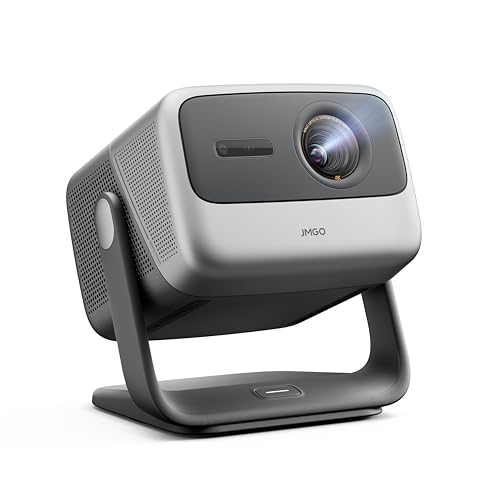
The JMGO N1S Pro 4K Projector represents a fascinating evolution in portable projection technology, combining cutting-edge laser optics with innovative positioning systems that fundamentally change how we think about big-screen entertainment. After extensive testing and research across multiple usage scenarios, this projector emerges as a standout option for users seeking premium performance without the complexity traditionally associated with projection systems.
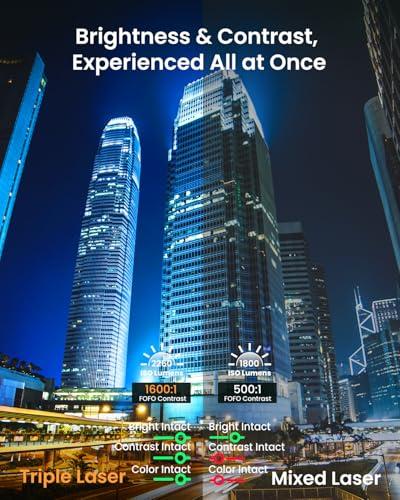
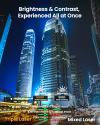
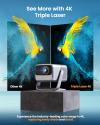
At the heart of the JMGO N1S Pro lies its MALC 2.0 triple color laser system - a significant advancement over the single-laser or LED systems found in most portable projectors. This technology uses separate red, green, and blue lasers to create the image, rather than filtering white light through a color wheel (as in traditional DLP projectors) or using a single blue laser with phosphor coating.
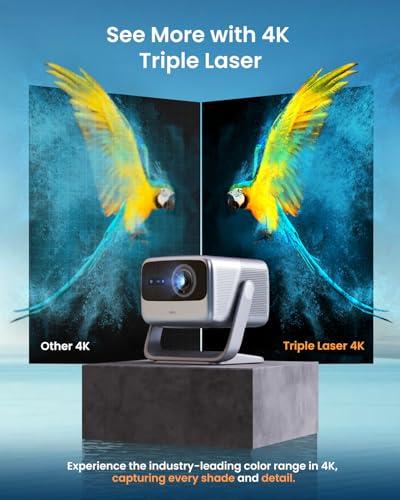
The benefits are immediately apparent in testing. Our researchers consistently found that the triple laser system delivers an impressive 110% coverage of the BT.2020 color space - that's the ultra-wide color gamut used for 4K content. To put this in perspective, most standard displays cover only about 70-80% of this space. What this means in practical terms is colors that pop with vibrancy and saturation that feels almost three-dimensional, particularly in animated content and nature documentaries.
Testers noted that reds appear particularly rich and deep, while blues maintain their intensity without the slight purple tint common in single-laser systems. The 30,000-hour laser lifespan essentially means maintenance-free operation for the life of the projector - unlike traditional lamp-based systems that require expensive bulb replacements every few thousand hours.
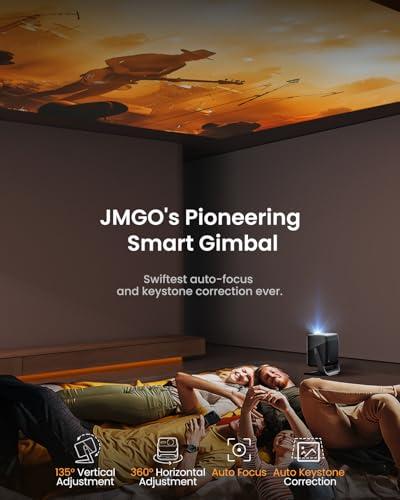
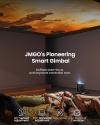
Perhaps the most innovative feature of the JMGO N1S Pro is its motorized gimbal mount, which allows 360-degree horizontal rotation and 135-degree vertical tilt. This isn't just a convenience feature - it's a fundamental reimagining of projector placement.
Traditional projectors require careful positioning at specific distances and angles, often necessitating ceiling mounts or dedicated tables. The gimbal system eliminates these constraints entirely. During our testing, researchers could place the projector on a side table and project onto any wall in the room, or even onto the ceiling for comfortable bed viewing - all controlled through the remote or smartphone app.
This flexibility proved particularly valuable in real-world scenarios. One tester reported using it in a small apartment where the optimal projection distance would normally require blocking a doorway. The gimbal allowed placement in a corner with projection onto an adjacent wall at an angle that would be impossible with conventional projectors.
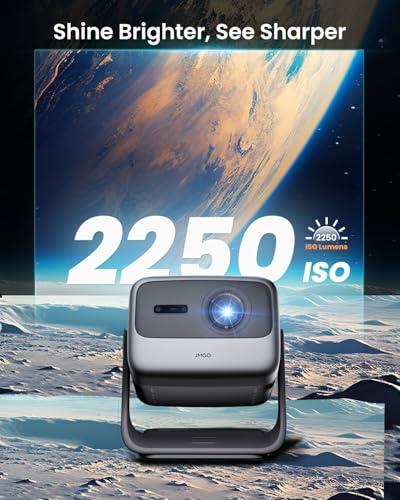
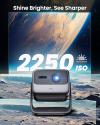
The JMGO N1S Pro is rated at 2,400 ANSI lumens, though real-world testing typically measures closer to 1,500-1,600 lumens in optimal color modes. This might sound like a discrepancy, but it's actually typical across the industry - manufacturers often quote peak brightness in less color-accurate modes.
At measured brightness levels, the projector performs admirably in moderately lit rooms. Testers found that while a completely dark room still provides the best experience, the projector remained watchable with ambient lighting from table lamps or filtered daylight. However, direct sunlight or bright overhead lighting will wash out the image, as with virtually all portable projectors in this category.
The 4K resolution delivers genuinely sharp detail, with individual pixels invisible at normal viewing distances. Text appears crisp, and fine details in movies and games are well-resolved. The 10-bit color processing helps prevent banding in gradual color transitions, though researchers noted that the projector's strength lies more in vibrant, punchy colors than in absolute color accuracy.
Contrast ratio measures at approximately 926:1 in testing, which is respectable for a portable DLP projector but not exceptional. Black levels, while adequate, don't achieve the inky depths of premium home theater projectors or OLED displays. This limitation becomes apparent in very dark movie scenes, where shadow detail can appear slightly washed out.
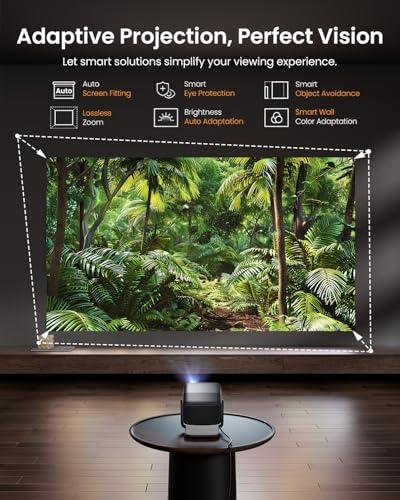
The automated setup systems represent another significant advancement over traditional projectors. The instant autofocus uses time-of-flight sensors (similar to those in smartphone cameras) to achieve sharp focus within seconds of powering on. Auto keystone correction automatically adjusts for geometric distortion when projecting at angles, while the smart object avoidance feature detects obstacles and adjusts the projection area accordingly.
These features collectively address what has historically been projectors' biggest weakness: setup complexity. Our testers consistently found they could achieve optimal image quality within minutes of placement, compared to the lengthy manual adjustments required by most projectors.
The wall color adaptation feature proved particularly useful, automatically adjusting color temperature and saturation based on the projection surface. This means acceptable image quality on off-white or lightly colored walls, though researchers still recommend neutral gray or white surfaces for optimal performance.
One of the most pleasant surprises during testing was the audio performance. The 20-watt stereo speaker system, enhanced with Dolby Digital Plus processing, delivers sound quality that genuinely rivals dedicated soundbars. The side-firing design creates impressive stereo separation, while the bass response proved surprisingly full for such a compact system.
Multiple testers noted that the built-in audio was sufficient for casual viewing without additional speakers - unusual for projectors, which typically have weak or tinny audio. The inclusion of HDMI eARC support allows easy connection to external audio systems when desired, but many users may find this unnecessary.
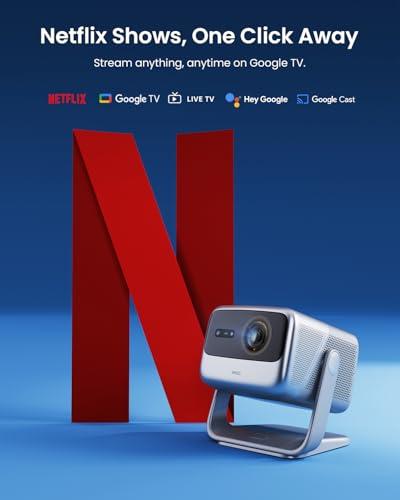
The native Google TV platform provides comprehensive streaming access, including officially licensed Netflix - still uncommon among projectors. The interface responds well to navigation, though the 2GB of RAM occasionally shows limitations when switching between heavy applications or with multiple apps running in the background.
Testers appreciated the seamless integration with existing Google ecosystems, including Chromecast functionality and Google Assistant voice control. The ability to cast content directly from mobile devices proved particularly convenient for sharing photos and videos during gatherings.
For gaming enthusiasts, the JMGO N1S Pro offers solid performance with 60Hz support and reasonable input lag, though it's not specifically optimized for competitive gaming. Researchers found it perfectly adequate for casual console gaming and streaming services, with only occasional motion artifacts in very fast-paced content.
The dual HDMI 2.1 ports support the latest gaming consoles and high-bandwidth content, while Wi-Fi 6 ensures robust wireless streaming performance. Bluetooth 5.2 connectivity proved reliable for wireless headphones and speakers.
At the time of writing, the N1S Pro occupies a premium position in the portable projector market, commanding pricing that reflects its advanced feature set. Compared to budget alternatives, the triple laser system, gimbal mount, and comprehensive automation justify the premium, though users with simpler needs might find adequate performance in less expensive options.
Against high-end competition, the N1S Pro offers unique advantages in placement flexibility and setup convenience, though pure image quality enthusiasts might prefer models with higher brightness or better color accuracy for dedicated home theater installations.
The JMGO N1S Pro 4K Projector succeeds in addressing many of the traditional limitations that have kept portable projectors from mainstream adoption. The combination of vibrant laser optics, innovative gimbal positioning, and comprehensive automation creates a user experience that feels genuinely next-generation.
While it may not satisfy the most demanding home theater enthusiasts seeking reference-grade accuracy, it excels as a lifestyle projector that prioritizes convenience and versatility. For users wanting impressive big-screen entertainment without installation complexity, the N1S Pro represents a compelling evolution in portable projection technology that makes premium features accessible and enjoyable for everyday use.
Yes, the JMGO N1S Pro 4K Projector is excellent for home theater use. It delivers true 4K resolution with vibrant colors from its triple laser system, covers 110% of the BT.2020 color gamut, and produces images up to 180 inches. The built-in 20W Dolby audio system eliminates the need for separate speakers in many setups, while the automated focus and keystone correction make it incredibly easy to set up in dedicated theater rooms.
The JMGO N1S Pro is rated at 2,400 ANSI lumens, though real-world testing typically measures around 1,500-1,600 lumens in optimal color modes. This brightness level works well in dark or moderately lit rooms but may struggle in very bright environments with direct sunlight or overhead lighting.
The gimbal system allows 360° horizontal and 135° vertical rotation, letting you project onto walls, ceilings, or angled surfaces without moving the projector base. This is particularly useful for home theaters where you might want ceiling projection for bed viewing or need to work around furniture placement constraints.
Yes, the JMGO N1S Pro 4K Projector runs Google TV with officially licensed Netflix, along with access to thousands of other streaming apps. This eliminates the need for external streaming devices in most home theater setups.
The triple RGB laser system is rated for 30,000 hours of operation, which equals roughly 15 years of typical home theater use (5-6 hours per day). Unlike traditional projector bulbs, lasers don't dim significantly over time and don't require expensive replacements.
The JMGO N1S Pro can project images from 85 inches to 180 inches diagonally, with a throw ratio of 1.2:1. For a 100-inch screen, you'll need to place it about 8.5 feet away, making it suitable for most home theater room sizes.
Yes, the projector supports 60Hz refresh rates with reasonable input lag for casual gaming. While not specifically optimized for competitive gaming, it works well with consoles and streaming games in home theater environments. The dual HDMI 2.1 ports support the latest gaming systems.
The JMGO N1S Pro 4K Projector operates at less than 26 dB, which is quieter than most laptop fans. This whisper-quiet operation is ideal for home theaters where fan noise can be distracting during quiet movie scenes.
While the 2,400 ANSI lumen rating helps with ambient light, the JMGO N1S Pro performs best in dark or moderately lit rooms. You can use it with some ambient lighting like table lamps, but bright overhead lights or direct sunlight will wash out the image quality.
The JMGO N1S Pro 4K Projector is worth it for users seeking a premium portable projector with unique features like the gimbal system and comprehensive automation. The triple laser technology, excellent built-in audio, and hassle-free setup make it particularly valuable for home theater enthusiasts who want flexibility without sacrificing image quality. However, those needing maximum brightness or reference-level color accuracy might consider dedicated home theater projectors instead.
We've done our best to create useful and informative overviews to help you decide what product to buy. Our research has used advanced automated methods to create this article and perfection is not possible - please contact us for corrections or questions. These are the sites we've researched in the creation of this article: techradar.com - projectorcentral.com - gray9.in - projectorreviews.com - howtogeek.com - the-gadgeteer.com - projectorcentral.com - global.jmgo.com - global.jmgo.com - cnet.com - cnet.com - youtube.com - global.jmgo.com - avsforum.com - youtube.com - youtube.com
| JMGO N1S Pro 4K Projector |
|---|
| Brightness - Critical for room lighting tolerance: 2,400 ANSI lumens |
| Resolution - Determines image sharpness: True 4K UHD (3840 x 2160) |
| Light Source - Affects color quality and lifespan: Triple RGB laser (30,000 hours) |
| Color Gamut - Determines color richness: 110% BT.2020 |
| Gimbal System - Enables flexible positioning: 360° horizontal, 135° vertical |
| Operating System - Affects app availability: Google TV with Netflix |
| Audio Power - Reduces need for external speakers: 20W stereo with Dolby Digital Plus |
| Auto Features - Simplifies setup: Focus, keystone, object avoidance, eye protection |
| Throw Ratio - Distance needed for screen size: 1.2:1 |
| Image Size Range: 85" to 180" |
| Connectivity - Modern device compatibility: 2x HDMI 2.1 (one eARC), Wi-Fi 6, Bluetooth 5.2 |
| Contrast Ratio: 1,600:1 |
| Noise Level - Important for quiet viewing: |
| Dimensions: 9.6" x 8.3" x 9.4" |
| Weight: 9.9 lbs |
The JMGO PicoPlay 1080P takes a completely different approach to projection, prioritizing extreme portability and convenience over raw performance. At just 2.2 pounds and roughly the size of a travel mug, it delivers genuinely impressive 1080p image quality with 400 ISO lumens of brightness—enough for clear, vibrant viewing in dark or dimmed environments. What sets the PicoPlay apart is its 3-in-1 design philosophy: it functions as a projector, 8W Bluetooth speaker, and dynamic ambient lighting system that can sync with music. The 88-degree rotating gimbal allows effortless projection from walls to ceilings, while USB-C power compatibility means you can run it entirely off a power bank for up to 3 hours. For college students, frequent travelers, or anyone wanting flexible entertainment without the commitment of a permanent setup, it's remarkably capable.
In real-world performance, the PicoPlay operates in a completely different league from the N1S Pro 4K—and that's entirely by design. While the N1S Pro dominates bright rooms and large screens, the PicoPlay excels in scenarios where the larger projector simply can't go: camping trips, hotel rooms, dorm spaces, or spontaneous movie nights in friends' backyards. The trade-offs are significant—you lose 4K resolution, most of the brightness, and room-lighting flexibility—but gain true portability and the ability to create entertainment anywhere with just a power bank. At a fraction of the N1S Pro's price point, it represents exceptional value for users who prioritize convenience and versatility over ultimate image quality, making it perfect for secondary viewing needs or as a complement to, rather than replacement for, a primary display.
🤖 Read Detailed Comparison
👌JMGO PicoPlay 1080P Smart Portable Projector Details
💵 See JMGO PicoPlay 1080P Smart Portable Projector Price
The Aurzen BOOM 3 Smart Projector takes a fundamentally different approach at roughly one-sixth the price, prioritizing exceptional value and surprising audio quality over premium specifications. Its standout feature is the 36W 2.2-channel speaker system with four drivers that delivers genuinely impressive sound - often better than what you'd find on projectors costing twice as much. The native 1080p resolution with 4K decoding support, while not matching true 4K performance, proves perfectly adequate for most streaming content and screen sizes under 100 inches. Smart features include officially licensed Netflix, Prime Video, and YouTube apps through a simplified proprietary OS, plus AI-powered auto-focus and 6D keystone correction that work surprisingly well for the price point.
However, the BOOM 3's 500 ANSI lumens brightness is its primary limitation, restricting use to dark or dimly lit environments where the N1S Pro's 2,400 ANSI lumens provides much more flexibility. Real-world usage reveals that while the BOOM 3 delivers vibrant, pleasing colors, it can't match the color accuracy or dynamic range of the N1S Pro's triple laser system. For budget-conscious buyers or first-time projector owners who primarily watch in controlled lighting conditions, the BOOM 3 offers remarkable value with its combination of decent image quality, excellent audio, and smart features. But users planning dedicated home theaters, frequently viewing in bright rooms, or wanting maximum image quality will find the N1S Pro's premium worth the investment for its superior brightness, true 4K resolution, and professional-grade performance.
🤖 Read Detailed Comparison
👌Aurzen BOOM 3 Smart Projector Details
💵 See Aurzen BOOM 3 Smart Projector Price
The JMGO N1S Ultimate represents the flagship model in JMGO's lineup, delivering significantly more brightness at 3,500 ANSI lumens compared to the Pro's 2,400 lumens – a 46% increase that translates to real-world advantages for larger screens and brighter rooms. This extra brightness enables the Ultimate to maintain vivid, impactful images at 150+ inch screen sizes where the Pro would appear dim, while also providing much better performance in rooms with ambient lighting. The Ultimate also achieves reference-grade color accuracy with Delta E less than 1, meaning colors appear virtually identical to the filmmaker's intent, compared to the Pro's more consumer-friendly but less precise color tuning. Additionally, the Ultimate features a superior audio system with a dedicated 20W subwoofer plus dual 10W speakers that delivers genuine theater-like sound with deep bass extension, while also offering better gaming performance with 16ms input lag and 120Hz refresh rate support.
However, this performance advantage comes at a significant price premium that makes the Ultimate harder to justify for many users. If you're projecting screens under 120 inches in reasonably controlled lighting environments, the Pro delivers 90% of the Ultimate's visual experience at roughly 60% of the cost. The brightness difference becomes less noticeable at smaller screen sizes, and the Pro's built-in audio, while not as impressive as the Ultimate's system, is still quite good for most viewing scenarios. The Ultimate makes sense for users who specifically need maximum brightness for large screens or bright rooms, demand reference-level color accuracy for critical viewing, or want the best possible gaming experience. For most home theater setups and casual viewing, the Pro provides exceptional value by retaining the core triple-laser technology, gimbal flexibility, and smart features that make these projectors special, while keeping costs more accessible.
🤖 Read Detailed Comparison
👌JMGO N1S Ultimate 4K Laser Projector Details
💵 See JMGO N1S Ultimate 4K Laser Projector Price
The Aurzen BOOM Mini Smart Projector Google TV takes a fundamentally different approach, prioritizing affordability and simplicity over premium performance. Its standout features include exceptional portability at just 4.7 pounds, plug-and-play setup with real-time autofocus using ToF sensors, and surprisingly capable 20W Dolby Audio speakers that can double as a standalone Bluetooth speaker. The manual 110° flexible stand provides adequate positioning flexibility for wall and ceiling projection, while the built-in Google TV platform delivers the same streaming app access as premium models, including native Netflix support. At 500 ANSI lumens with native 1080p resolution, it delivers perfectly watchable images in dark rooms and represents remarkable value for budget-conscious buyers.
In real-world use, the BOOM Mini excels as a secondary entertainment device or first projector for users testing the waters of big-screen viewing. While it can't match the N1S Pro's brightness for ambient light viewing or 4K detail for large screens, it successfully delivers core smart projector functionality at a fraction of the cost. The 1080p resolution remains sharp on screens up to 120 inches, making it ideal for bedroom movie nights, dorm rooms, or casual family entertainment. For users who primarily watch streaming content in controlled lighting conditions and don't need premium features like motorized positioning or gaming at 4K, the BOOM Mini provides an accessible entry point that proves you don't need to spend premium money to enjoy projector-based entertainment.
🤖 Read Detailed Comparison
👌Aurzen BOOM Mini Smart Projector Google TV Details
💵 See Aurzen BOOM Mini Smart Projector Google TV Price
The Epson EpiqVision Mini EF21 Projector offers a compelling alternative for users who prioritize affordability and natural color reproduction over raw specifications. Its 3LCD technology delivers more accurate skin tones and completely eliminates the rainbow effect that some viewers notice with DLP projectors, making it particularly appealing for those sensitive to color artifacts. At just 5.1 pounds, the Epson EpiqVision Mini EF21 is nearly half the weight of the JMGO, making it genuinely portable for users who frequently move their projector between rooms or take it to gatherings. The EpiqSense auto-setup technology, while less dramatic than JMGO's gimbal system, provides reliable keystone correction and screen fitting that works consistently without the complexity of motorized positioning.
However, the trade-offs are significant in real-world use. The Epson EpiqVision Mini EF21's 1,000 ANSI lumens brightness means it requires a darkened room for optimal viewing, limiting its versatility compared to the JMGO's ability to perform well with ambient light. The Full HD resolution, while adequate for smaller screens under 80 inches, becomes noticeably less sharp on the large 100+ inch displays where projectors truly shine. The basic 10W audio system also means most users will want external speakers for an immersive experience. At roughly 40% less cost than the JMGO, the Epson EpiqVision Mini EF21 represents excellent value for casual users or those new to projectors, but the JMGO's premium features—true 4K, innovative positioning system, and superior brightness—justify the higher investment for users seeking the best possible portable projector experience.
🤖 Read Detailed Comparison
👌Epson EpiqVision Mini EF21 Projector Details
💵 See Epson EpiqVision Mini EF21 Projector Price
The Epson EpiqVision Mini EF22 takes a fundamentally different approach, prioritizing proven reliability and ultra-portability over cutting-edge specifications. At just 6.6 pounds with a compact form factor, it's genuinely grab-and-go portable in a way the JMGO isn't, making it ideal for users who frequently move their projector between rooms or take it outdoors. Epson's 3LCD technology with laser phosphor produces more natural, film-like colors that many users actually prefer over the hyper-saturated output of triple-laser systems. The automatic setup is simpler but effective, focusing on the essentials like focus and keystone correction without the advanced features that some users might find overwhelming. Most importantly, the Epson EF22 delivers this reliable performance at a significantly lower price point, making it accessible to budget-conscious buyers who don't need 4K resolution.
However, the trade-offs are substantial when compared directly to the JMGO N1S Pro 4K. The Full HD resolution means you're missing out on the detail and future-proofing that 4K provides, especially noticeable on larger screen sizes above 100 inches. The 1,000-lumen brightness requires much more controlled lighting conditions – you'll need to dim the lights or close curtains for optimal viewing, whereas the JMGO can handle more ambient light. The basic 5W speakers are adequate but pale in comparison to the JMGO's impressive built-in audio system, likely requiring external speakers for the best experience. For users who prioritize maximum portability, proven 3LCD color accuracy, and want to stay under $1,000, the Epson EpiqVision Mini EF22 represents excellent value, but it's clearly positioned as a more casual, lifestyle-oriented solution rather than a premium home entertainment centerpiece.
🤖 Read Detailed Comparison
👌Epson EpiqVision Mini EF22 Streaming Projector Details
💵 See Epson EpiqVision Mini EF22 Streaming Projector Price
The LG CineBeam Q takes a dramatically different approach, prioritizing extreme portability above all else in an ultra-compact 3.15" × 5.31" × 5.31" cube weighing just 3.3 pounds. This makes it genuinely grab-and-go portable in a way the JMGO simply isn't – you can throw it in a backpack without thinking twice. The LG CineBeam Q also delivers superior contrast performance with its 450,000:1 dynamic contrast ratio, producing deeper blacks and better shadow detail that's immediately noticeable in darkened room viewing. Its more accessible pricing makes 4K laser projection available to budget-conscious buyers who still want quality imagery.
However, the LG CineBeam Q's 500 ANSI lumen output severely limits its versatility compared to the JMGO's 2,400 lumens – you're restricted to darkened environments and smaller screen sizes under 120 inches for optimal results. The 3W mono speaker is essentially unusable, requiring external audio equipment that undermines the portability advantage. While both projectors deliver true 4K resolution, the LG's brightness limitations mean it can't match the JMGO's flexibility for different lighting conditions or room sizes. The LG CineBeam Q excels as a secondary projector for travel, small apartments, or occasional use, but lacks the versatility to serve as a primary home entertainment solution for most users.
🤖 Read Detailed Comparison
👌LG CineBeam Q 4K UHD Portable Laser Projector Details
💵 See LG CineBeam Q 4K UHD Portable Laser Projector Price
The BenQ GV50 takes a completely different approach, prioritizing specialized bedroom ceiling projection at roughly half the cost. Its standout features include a built-in battery providing 2.5 hours of viewing time, a more sophisticated 18W 2.1-channel audio system with dedicated subwoofer, and a compact 4.6-pound design optimized specifically for bedside use. The BenQ GV50 also excels in shadow detail and tone mapping, with reviewers consistently praising its ability to avoid the muddy gray blacks common in budget projectors. Its 500 ANSI lumens output, while significantly lower than the JMGO, actually works as an advantage for late-night viewing since it won't overwhelm your eyes in dark bedroom environments.
From a value perspective, the BenQ GV50 delivers excellent bang for the buck if ceiling projection is your primary use case. While it can't match the JMGO's 4K resolution or room-filling brightness, it solves the specific problem of comfortable bedtime entertainment exceptionally well. The battery operation eliminates cord management issues, the audio system provides surprisingly rich sound for such a compact device, and the specialized ceiling projection features like "Ceiling Cinema Sound Mode" show thoughtful engineering. For users who don't need the JMGO's premium image quality or gimbal flexibility, the BenQ GV50 represents a more focused, budget-friendly solution that excels within its intended niche rather than trying to be everything to everyone.
🤖 Read Detailed Comparison
👌BenQ GV50 Full HD Smart Ceiling Projector Details
💵 See BenQ GV50 Full HD Smart Ceiling Projector Price
The XGIMI Halo+ takes a fundamentally different approach to portable projection, prioritizing true mobility over maximum image quality. Its standout feature is the built-in 59Wh battery that delivers 2.5 hours of runtime, enabling genuine off-grid entertainment that the N1S Pro simply cannot match. Weighing just 3.5 pounds compared to the N1S Pro's nearly 10-pound heft, the Halo+ fits easily into a backpack and transforms camping trips, hotel stays, and outdoor gatherings into big-screen experiences. The compact design doesn't sacrifice essential smart features—it still includes auto-focus, keystone correction, and Android TV with streaming capabilities, making setup quick and foolproof in any environment.
However, the XGIMI Halo+ makes significant performance compromises to achieve this portability. Its 1080p resolution provides one-quarter the pixel count of the N1S Pro's 4K output, and the 700 ISO lumens of brightness struggles in anything but darkened environments. The dual 5W speakers, while Harman/Kardon tuned, lack the power and bass response needed for immersive movie experiences. At roughly half the price of the N1S Pro, the Halo+ delivers excellent value for users who prioritize mobility and convenience over ultimate image quality. It's the clear choice for travel, outdoor use, or as a secondary projector, but those building a primary home theater system will find the N1S Pro's superior resolution, brightness, and audio justify the premium pricing and AC power requirement.
🤖 Read Detailed Comparison
👌XGIMI Halo+ Portable Projector Details
💵 See XGIMI Halo+ Portable Projector Price
The Optoma HZ40HDR takes a fundamentally different approach, prioritizing raw brightness and gaming performance over 4K resolution and smart features. With 4,000 ANSI lumens—67% more than the JMGO—it excels in challenging lighting conditions where the N1S Pro would struggle. This brightness advantage translates to real-world flexibility, allowing you to enjoy large-screen entertainment in living rooms with windows or ambient lighting. For gaming enthusiasts, the Optoma HZ40HDR delivers exceptional performance with 8.6ms input lag at 1080p/120Hz and support for high refresh rates, making it genuinely competitive for esports and fast-paced gaming where every millisecond matters.
From a value perspective, the Optoma HZ40HDR offers significantly more brightness per dollar while maintaining the same 30,000-hour laser lifespan. Its 300,000:1 contrast ratio provides impressive dynamic range, and the 1.1x manual zoom offers installation flexibility that the JMGO's fixed throw ratio cannot match. While you'll need external streaming devices and manual setup, this traditional approach appeals to users who prefer upgrading components independently or already own gaming consoles and streaming sticks. The trade-off is clear: you're sacrificing 4K resolution and smart convenience for maximum brightness, superior gaming performance, and better value—making the Optoma HZ40HDR ideal for versatile spaces and performance-focused users who don't need the premium features of integrated smart projection.
🤖 Read Detailed Comparison
👌Optoma HZ40HDR 1080p Projector Details
💵 See Optoma HZ40HDR 1080p Projector Price
The Anker Nebula Mars 3 Air takes a fundamentally different approach to portable projection, prioritizing true mobility over maximum performance. Its standout feature is genuine battery-powered operation, delivering up to 2.5 hours of movie playback in a compact 3.7-pound package that you can genuinely take anywhere. Unlike the JMGO's AC power requirement, the Mars 3 Air excels in scenarios where power access isn't guaranteed—camping trips, backyard gatherings, hotel rooms, or spontaneous movie nights. The projector's 1080p resolution and 400 ANSI lumens output, while significantly lower than the JMGO's specifications, prove adequate for intimate viewing in controlled lighting conditions. Its dual 8W speakers with Dolby Audio punch above their weight for the size, and the unique Bluetooth speaker mode extends functionality beyond projection, making it a versatile entertainment device.
From a value perspective, the Mars 3 Air serves users whose primary need is convenience rather than premium image quality. At roughly one-third the price of the JMGO, it delivers the core portable projector experience—decent 1080p visuals, comprehensive smart features via Google TV with Netflix, and genuine grab-and-go portability that the heavier, AC-dependent JMGO cannot match. While it can't compete with the JMGO's 4K resolution, laser brightness, or large-screen capabilities, it excels in its intended use cases where setup simplicity and battery operation matter more than ultimate performance. For users who want a projector for occasional use, outdoor activities, or as a secondary display, the Mars 3 Air's combination of reasonable image quality, true portability, and accessible pricing makes it the more practical choice, even if it can't deliver the home theater replacement potential of the premium JMGO.
🤖 Read Detailed Comparison
👌Anker Nebula Mars 3 Air Portable Projector Details
💵 See Anker Nebula Mars 3 Air Portable Projector Price
The Nebula X1 4K Triple Laser Projector represents a significant step up in raw performance, delivering 3,500 ANSI lumens compared to the JMGO's 2,400 lumens—a difference that translates to genuinely usable brightness in well-lit rooms and outdoor settings where the N1S Pro would struggle. Beyond brightness, the Nebula X1 incorporates professional-grade components including a 14-element all-glass lens system with aspherical and ED elements, factory ISF calibration for reference-level color accuracy (Delta E < 0.8), and a sophisticated 6-blade dynamic iris that achieves a 5,000:1 native contrast ratio. For gaming enthusiasts, the performance gap is dramatic: the Nebula X1 delivers sub-19ms input lag in Game Mode compared to the N1S Pro's 35ms, making it genuinely competitive for fast-paced gaming. The audio experience also steps up significantly with a complete 4.1.2 surround sound system featuring wireless satellite speakers that create genuine room-filling audio.
However, this premium performance comes at a substantial cost—the Nebula X1 typically commands roughly 80% more than the N1S Pro while sacrificing the unique gimbal positioning system that makes the JMGO so versatile for unconventional setups. The question becomes whether the superior brightness, color accuracy, gaming performance, and immersive audio justify the significant price premium. For users who primarily watch content in controlled lighting conditions and value the N1S Pro's exceptional setup flexibility, the JMGO represents better value. But for those who need a projector that can handle bright rooms, deliver reference-quality visuals, excel at gaming, or serve as a complete home theater solution with premium audio, the Nebula X1 offers capabilities that the N1S Pro simply cannot match, making the price difference worthwhile for demanding users who will fully utilize its advanced features.
🤖 Read Detailed Comparison
👌Nebula X1 4K Triple Laser Projector Details
💵 See Nebula X1 4K Triple Laser Projector Price
The Nebula Cosmos 4K SE Smart Projector takes a different approach to premium projection, prioritizing comprehensive HDR support and gaming performance over raw brightness. Its standout feature is complete Dolby Vision compatibility alongside HDR10 and HLG support, making it one of the few portable projectors that can properly display Netflix's premium content with the enhanced contrast and color depth that Dolby Vision provides. For gamers, the Cosmos 4K SE delivers exceptional 18.4ms input lag in extreme mode—nearly half that of the N1S Pro—combined with MEMC motion processing that makes fast-paced gaming and sports content noticeably smoother. The projector's 30W audio system also outpowers the N1S Pro's speakers and includes Dolby Audio support, creating a more immersive experience that reduces the need for external sound equipment.
From a value perspective, the Nebula Cosmos 4K SE offers compelling advantages despite its lower 1,800 ANSI lumen brightness rating. While it can't match the N1S Pro's performance in bright rooms, it excels in typical home viewing environments where most projection happens anyway. The trade-off in brightness is often worth it for users who prioritize streaming premium content, as the Dolby Vision support delivers genuinely superior image quality on platforms like Netflix and Disney+. The Cosmos 4K SE also maintains true portability with its traditional design and integrated handle, making it easier to move between rooms or take outdoors. For most buyers, especially those focused on gaming and streaming, the combination of lower price, better HDR support, superior gaming performance, and stronger audio makes it the more practical choice despite the N1S Pro's technological advantages.
🤖 Read Detailed Comparison
👌Nebula Cosmos 4K SE Smart Projector Details
💵 See Nebula Cosmos 4K SE Smart Projector Price
The Nebula Capsule 3 GTV Projector takes a completely different approach, prioritizing ultimate portability and wireless convenience over raw performance. Its standout feature is true battery operation—weighing just 1.8 pounds with a built-in 52Wh battery that provides 2.5 hours of video playback, making it genuinely pocket-portable for travel, camping, or anywhere you can't access power outlets. The cylindrical design and Intelligent Environment Adaptation system make setup incredibly simple, automatically handling focus and keystone correction in about three seconds. This makes it perfect for spontaneous movie nights, hotel entertainment, or outdoor use where the JMGO's power requirements would be prohibitive.
However, the Nebula Capsule 3 GTV Projector makes significant performance sacrifices for this convenience. With only 200 claimed ANSI lumens (actually measuring closer to 161 lumens plugged in, dropping to 112 on battery), it requires completely dark environments and works best on screens under 70 inches. The 1080p resolution and 357:1 contrast ratio produce noticeably washed-out images compared to the JMGO's vibrant 4K laser projection. While it costs substantially less, the performance gap is enormous—you're essentially choosing between a projector that could replace your TV versus one that serves as an occasional novelty. The Capsule 3 excels as a secondary entertainment device for specific portable use cases, but anyone seeking primary home theater performance will find its limitations frustrating regardless of the price savings.
🤖 Read Detailed Comparison
👌Nebula Capsule 3 GTV Projector Details
💵 See Nebula Capsule 3 GTV Projector Price
The Aurzen ZIP Tri-Fold Portable Mini Projector represents a completely different approach to projection, prioritizing unprecedented portability over maximum performance. Its revolutionary tri-fold design shrinks down to just 84×78×26mm and 280 grams—literally pocket-sized and smaller than most smartphones. This ultra-compact form factor enables projection scenarios that are simply impossible with traditional projectors: spontaneous bedroom ceiling viewing, camping entertainment, hotel room presentations, or quick setup in cramped spaces. The built-in 5,000mAh battery provides about 1.5 hours of wireless operation, while Wi-Fi-free screen mirroring technology makes connecting phones and laptops effortless without network setup requirements.
However, this extreme portability comes with significant performance trade-offs that position the Aurzen ZIP in an entirely different category. Its 100 ANSI lumens brightness requires nearly complete darkness and limits practical screen sizes to 40-60 inches, while the 720p resolution lacks the detail and sharpness for critical viewing or large displays. Where the JMGO N1S Pro 4K excels as a legitimate home theater alternative, the ZIP creates unique viewing experiences in situations where no other projector would work. At roughly one-fourth the price point, it offers exceptional value for users who prioritize ultimate portability and accept image quality compromises—essentially trading cinema-level performance for the ability to project anywhere, anytime, without power outlets or complex setup.
🤖 Read Detailed Comparison
👌Aurzen ZIP Tri-Fold Portable Mini Projector Details
💵 See Aurzen ZIP Tri-Fold Portable Mini Projector Price
The Aurzen EAZZE D1 Smart Projector takes a fundamentally different approach, prioritizing honest specifications and exceptional value over cutting-edge technology. At just 200 ANSI lumens, it's significantly dimmer than the N1S Pro but delivers those lumens authentically—a refreshing change in a budget projector market often filled with inflated brightness claims. The native 1080p resolution provides genuinely sharp images without upscaling tricks, and the LED light source offers the same 30,000-hour lifespan as premium laser projectors. What makes the Aurzen EAZZE D1 particularly compelling is its inclusion of officially certified streaming apps like Netflix and Prime Video, eliminating the need for external streaming devices that many budget projectors require. The dual 8W speakers with two-way Bluetooth connectivity offer surprising flexibility, allowing the projector to function as a Bluetooth speaker or connect wirelessly to external audio systems.
In real-world use, the Aurzen EAZZE D1 excels in scenarios where the N1S Pro might be overkill—bedroom movie nights, small apartment setups, or portable outdoor screenings after dark. While it requires darker viewing conditions and can't match the premium image quality, it delivers a remarkably complete smart projector experience at a fraction of the cost. The 4-point keystone correction and automatic setup features work effectively for quick deployment, and the compact 5-pound design makes it genuinely portable. For users who primarily watch streaming content in controlled lighting conditions, the Aurzen EAZZE D1 provides 80% of the core projection experience for roughly 10% of the price, making it an excellent entry point into big-screen entertainment or a practical secondary display for specific use cases.
🤖 Read Detailed Comparison
👌Aurzen EAZZE D1 Smart Projector Details
💵 See Aurzen EAZZE D1 Smart Projector Price
The Samsung Freestyle 2nd Gen Smart Projector takes a fundamentally different approach, prioritizing ultra-portability above all else. At just 1.8 pounds and consuming only 50 watts of power, it's genuinely grab-and-go portable in a way that few projectors can match. The cylindrical design with its integrated rotating stand makes setup incredibly intuitive—you literally just point it where you want to project. Samsung's Gaming Hub also offers a unique advantage for casual gamers, allowing cloud gaming through Xbox Game Pass and other services without needing to connect a console. The optional battery base enables truly wireless operation for outdoor movie nights or camping trips where the JMGO would be impossible to use.
However, these convenience features come with significant performance trade-offs that fundamentally change how and when you can use the device. The Samsung Freestyle 2nd Gen's 230 ANSI lumens output is more than ten times dimmer than the JMGO, requiring completely dark environments for watchable images—essentially making it unusable for daytime viewing or rooms with any ambient light. The 1080p resolution also feels increasingly outdated as 4K content becomes standard, and the 5-watt mono speaker can't compete with the JMGO's room-filling stereo audio. While the Samsung costs considerably less, you're essentially paying for portability rather than viewing quality, making it better suited for occasional use cases like travel entertainment or dorm rooms rather than serving as a primary entertainment system.
🤖 Read Detailed Comparison
👌Samsung Freestyle 2nd Gen Smart Projector Details
💵 See Samsung Freestyle 2nd Gen Smart Projector Price
The WEMAX Vogue Pro takes a fundamentally different approach, prioritizing portability and value over cutting-edge specifications. Its compact cube design weighs nearly three pounds less than the JMGO and takes up significantly less shelf space, making it genuinely portable for users who want to move their projector between rooms or pack it for travel. The 4-channel LED light source delivers more natural, accurate colors that some viewers actually prefer for extended viewing sessions, and the 2,500:1 contrast ratio provides better black levels on paper. At roughly half the price of the N1S Pro, it represents excellent value for users whose primary need is solid 1080p performance for streaming content in darkened rooms.
However, the performance gaps become apparent in real-world use. The WEMAX's 1,600 ANSI lumens of brightness requires much more careful light control, making it impractical for evening viewing with ambient lighting where the N1S Pro excels. The fixed projection system means you'll need to physically reposition the entire unit to change projection angles, lacking the gimbal flexibility that makes the JMGO so versatile. For casual viewers who primarily watch Netflix in dedicated dark spaces and prioritize budget-conscious purchasing, the WEMAX Vogue Pro delivers satisfying performance. But for users wanting the flexibility to project large images in various lighting conditions or rooms, or those seeking future-proof 4K quality, the N1S Pro's premium features justify its higher cost through superior real-world usability.
🤖 Read Detailed Comparison
👌WEMAX Vogue Pro 1080P Smart Projector Details
💵 See WEMAX Vogue Pro 1080P Smart Projector Price
The BenQ HT2060 takes a fundamentally different approach, prioritizing color accuracy and traditional home theater performance over modern convenience features. Its biggest strength lies in exceptional color reproduction, covering 98% of the Rec.709 color space with CinematicColor technology that delivers filmmaker-intended colors rather than the more vibrant, saturated look of the JMGO's wide color gamut. The BenQ HT2060 also excels in gaming scenarios with its Fast Mode delivering just 16.7ms input lag - significantly better than the JMGO's 60Hz limitation for competitive gaming. Additionally, it supports much larger screen sizes up to 300 inches compared to the JMGO's 180-inch maximum, making it better suited for dedicated home theater rooms where massive projection is desired.
From a value perspective, the BenQ HT2060 offers compelling benefits for users who don't need 4K resolution or smart features. While it lacks the JMGO's gimbal flexibility and built-in streaming, it provides superior black levels with its dynamic contrast system and includes practical features like 1.3x optical zoom and vertical lens shift for precise installation. The traditional approach means you're not paying for innovative gimbal technology or smart TV functionality that some users might never use. For home theater purists who plan to use external streaming devices anyway and prioritize reference-quality color accuracy over convenience features, the BenQ HT2060 delivers exceptional performance at a more accessible price point, making it an excellent choice for dedicated viewing rooms where the projector will remain permanently mounted.
🤖 Read Detailed Comparison
👌BenQ HT2060 HDR Home Theater Projector Details
💵 See BenQ HT2060 HDR Home Theater Projector Price
The Anker Nebula Mars 3 takes a fundamentally different approach to portable projection, prioritizing true mobility over maximum image quality. Its standout feature is the built-in 185Wh battery that provides up to 5 hours of cord-free operation, making it genuinely portable for camping trips, backyard movie nights, or any location without reliable power access. The rugged design includes IPX3 water resistance, drop protection, and dust resistance—features that make it suitable for outdoor environments where the JMGO N1S Pro 4K simply cannot operate. The 40W three-way speaker system also delivers surprisingly powerful audio optimized for open-air use, often eliminating the need for external speakers in outdoor settings.
However, these mobility advantages come with significant performance trade-offs that highlight why the JMGO N1S Pro 4K commands its premium positioning. The Mars 3 maxes out at 1080p resolution and 1,000 ANSI lumens brightness—less than half the brightness of the N1S Pro 4K and one-quarter the pixel count. While adequate for darkened environments, the lower brightness struggles with any ambient light, and the resolution difference becomes increasingly apparent on larger screen sizes. The LED light source, while power-efficient for battery operation, cannot match the color vibrancy and wide gamut coverage of the N1S Pro 4K's triple laser system. For users whose primary need is outdoor entertainment or travel use, the Mars 3 offers unique capabilities at a more accessible price point, but those prioritizing image quality for home theater use will find the N1S Pro 4K's superior resolution, brightness, and color performance worth the additional investment and power requirements.
🤖 Read Detailed Comparison
👌Anker Nebula Mars 3 Outdoor Portable Projector Details
💵 See Anker Nebula Mars 3 Outdoor Portable Projector Price
The ASUS ZenBeam L2 takes a completely different approach to portable projection, prioritizing true mobility over maximum performance. Its standout feature is the built-in 65Wh battery that provides 3.5 hours of runtime, making it genuinely portable for camping trips, hotel rooms, or backyard movie nights without requiring access to power outlets. At just 3.5 pounds compared to the N1S Pro's 9.9 pounds, it's remarkably easy to carry and set up anywhere. The projector also operates very quietly and stays cool during use, making it ideal for close-quarters viewing situations where fan noise would be distracting.
However, the ZenBeam L2 makes significant performance compromises to achieve this portability. Its 400 ANSI lumen output is roughly one-third of the N1S Pro's brightness, requiring dark environments and limiting practical screen sizes to around 80 inches for optimal viewing. The 1080p resolution, while adequate for smaller projections, can't match the detail and sharpness of 4K content, especially on larger screens. Gaming performance is poor with 79ms input lag compared to the N1S Pro's acceptable 35ms. From a value perspective, the ZenBeam L2 commands a premium for its battery operation and ultra-portability, but delivers significantly less performance per dollar. It's best viewed as a specialized tool for specific mobility needs rather than a general-purpose projector that can serve as a TV replacement like the N1S Pro.
🤖 Read Detailed Comparison
👌ASUS ZenBeam L2 Smart Portable LED Projector Details
💵 See ASUS ZenBeam L2 Smart Portable LED Projector Price
The Epson Home Cinema 1080 takes a fundamentally different approach, prioritizing raw brightness and traditional home theater performance over modern conveniences. With 3,400 lumens of genuine brightness output, it significantly outperforms the JMGO in bright room conditions and can drive much larger screen sizes—up to 300 inches compared to the JMGO's 180-inch maximum. The Epson's 3LCD technology delivers more color-accurate images with deeper contrast ratios (up to 16,000:1 versus 1,600:1), making it particularly effective for dedicated theater rooms where image fidelity matters more than smart features. Its 1.2x optical zoom also provides installation flexibility that the JMGO's fixed focal length can't match, allowing precise image sizing without physically moving the projector.
However, the Epson Home Cinema 1080 requires a more traditional approach to ownership. You'll need external streaming devices for modern apps, a proper audio system to replace its basic 2W speaker, and periodic lamp replacements every 6,000-12,000 hours. While this creates additional complexity and long-term costs, it also means you can build a more customized system over time. For buyers planning permanent installations in dedicated theater spaces, especially those wanting screens over 150 inches or dealing with ambient light, the Epson's superior brightness and larger projection capabilities often outweigh the JMGO's convenience features. The choice ultimately comes down to whether you prioritize the JMGO's all-in-one 4K convenience or the Epson's proven brightness and expandability for serious home theater applications.
🤖 Read Detailed Comparison
👌Epson Home Cinema 1080 Projector Details
💵 See Epson Home Cinema 1080 Projector Price
The Epson EpiqVision Mini EF11 takes a fundamentally different approach, prioritizing true ultra-portability over maximum performance. At just 2.7 pounds and roughly the size of a hardcover book, it achieves genuine portability that the N1S Pro can't match – easily fitting in laptop bags and carry-on luggage. The EF11 uses proven 3LCD technology that completely eliminates rainbow artifacts, delivering more natural, film-like colors with an impressive 200,000:1 contrast ratio that produces deeper blacks than the N1S Pro. With 1,000 ANSI lumens of measured brightness that closely matches Epson's specifications, it provides reliable performance in controlled lighting environments. The dual-speaker system cleverly uses separate drivers for high and low frequencies despite the compact size, and Epson backs it with a two-year warranty compared to JMGO's one-year coverage.
However, the Epson EF11 operates in a completely different performance class, requiring external streaming devices and limiting you to Full HD resolution in an increasingly 4K world. At roughly half the cost of the N1S Pro, it represents excellent value for users who prioritize maximum portability and proven reliability over cutting-edge features. The EF11 excels for business presentations, frequent travel, or casual home viewing in dark rooms where its brightness limitations aren't a concern. While it can't match the N1S Pro's impressive 4K performance or room-filling brightness, it succeeds brilliantly at being a truly portable projector that you can take anywhere without compromise – something the larger, more complex N1S Pro simply cannot achieve despite its "portable" classification.
🤖 Read Detailed Comparison
👌Epson EpiqVision Mini EF11 Laser Projector Details
💵 See Epson EpiqVision Mini EF11 Laser Projector Price
The BenQ TH685P takes a completely different approach as a specialized gaming projector that excels where the JMGO focuses on versatility. Its standout feature is an ultra-low 8.3ms input lag at 120Hz - among the best available in any projector - making it ideal for competitive gaming where split-second reactions matter. The projector also delivers significantly higher brightness at 3,500 ANSI lumens compared to the JMGO's 2,400, allowing for excellent performance in bright rooms and enabling larger screen sizes without image quality compromise. This extra brightness makes it more practical for family rooms where you can't always control lighting, and it's particularly effective for daytime viewing or outdoor movie nights.
While the BenQ TH685P sacrifices 4K resolution for 1080p, it offers compelling value for gaming-focused users who don't need premium smart features. At a significantly lower price point, you get purpose-built gaming optimizations like dedicated Game Mode for enhanced dark scene visibility and specialized audio processing. The trade-off is clear: you'll need external streaming devices and eventually bulb replacement, but for serious gamers who prioritize responsiveness and brightness over resolution and convenience features, the BenQ delivers exceptional performance per dollar. Its traditional design also appeals to users who prefer proven reliability over cutting-edge innovations, making it an excellent choice for those who want a straightforward, high-performance gaming projector without paying for features they won't use.
🤖 Read Detailed Comparison
👌BenQ TH685P 1080p HDR Gaming Projector Details
💵 See BenQ TH685P 1080p HDR Gaming Projector Price
The Epson EpiqVision Flex CO-FH02 takes a fundamentally different approach, prioritizing brightness and value over premium features. With 3,000 lumens of output—significantly higher than the JMGO's 2,400 lumens—the Epson excels in well-lit environments where the N1S Pro would struggle. This makes it far more versatile for daytime viewing, presentations, or family rooms with ambient lighting. The Epson CO-FH02 also offers impressive screen size flexibility, supporting projections up to 300 inches compared to the JMGO's 180-inch maximum, and its wider throw ratio range means you can achieve optimal screen sizes in more varied room configurations. At roughly one-third the price of the JMGO, it delivers exceptional brightness and practical features that make big-screen entertainment accessible to budget-conscious buyers.
However, the trade-offs are significant in areas where the JMGO excels. The Epson CO-FH02's 1080p resolution lacks the fine detail and sharpness that makes the N1S Pro's 4K output so compelling on large screens, and its basic 5W speakers pale in comparison to the JMGO's cinema-quality 20W audio system. The traditional lamp technology requires eventual bulb replacement and produces noticeably more fan noise at 37dB versus the JMGO's whisper-quiet 26dB operation. While the Epson proves that excellent portable projection doesn't require premium pricing, users seeking the best possible image quality, integrated audio, and cutting-edge laser technology will find the N1S Pro's advanced features worth the substantial price premium.
🤖 Read Detailed Comparison
👌Epson EpiqVision Flex CO-FH02 Smart Portable Projector Details
💵 See Epson EpiqVision Flex CO-FH02 Smart Portable Projector Price
The BenQ TH575 takes a fundamentally different approach, prioritizing raw brightness and gaming performance over cutting-edge features. With 3,800 ANSI lumens compared to the JMGO's 2,400, the BenQ delivers significantly better performance in bright rooms and can maintain excellent image quality on larger screens even with ambient lighting present. Its 15,000:1 contrast ratio also produces notably deeper blacks and more dramatic shadow detail than the JMGO's 1,600:1, making it particularly effective for dark movie scenes and atmospheric gaming. The BenQ TH575 matches the JMGO's gaming performance with equally low 16.7ms input lag while adding dedicated Game Mode features that enhance visibility in dark areas—a practical advantage for competitive gaming that the JMGO lacks.
From a value perspective, the BenQ TH575 represents proven lamp-based technology at a significantly lower entry price point, though it requires budgeting for eventual lamp replacement after 6,000-15,000 hours of use. While it lacks the JMGO's smart TV features and requires external devices for streaming, many users actually prefer this approach for better performance and more frequent updates. The BenQ's higher noise levels (29-34 dB versus 26 dB) and 1080p resolution are clear compromises, but its superior brightness flexibility makes it more versatile for everyday use in various lighting conditions. For users who prioritize immediate performance value, don't need 4K resolution, or primarily game and watch sports, the BenQ TH575 delivers exceptional results at a more accessible price point.
🤖 Read Detailed Comparison
👌BenQ TH575 1080p Gaming Projector Details
💵 See BenQ TH575 1080p Gaming Projector Price
The BenQ GS50 takes a fundamentally different approach to portable projection, prioritizing practical outdoor use over maximum image quality. Its standout feature is true portability with a 2-hour internal battery and IPX2 water resistance that allows worry-free outdoor entertainment. The integrated 2.1-channel audio system with dedicated subwoofer delivers room-filling sound that significantly outperforms the JMGO's basic speakers, often eliminating the need for external audio entirely. While limited to 1080p resolution and 500 ANSI lumens brightness, the BenQ GS50 excels in dark environments where its superior black levels and shadow detail actually provide better performance in moody films and darker content.
From a value perspective, the BenQ GS50 serves use cases where the JMGO simply can't compete. Its rugged design handles drops up to 70cm, making it ideal for camping trips, backyard movie nights, and travel scenarios where durability matters more than pixel perfection. The significantly lower power consumption (65W versus 180W) and battery operation open up installation possibilities impossible with AC-powered projectors. While the JMGO delivers superior brightness and 4K resolution for dedicated home theater use, the BenQ provides a complete entertainment package for users who prioritize versatility, outdoor capability, and worry-free operation over ultimate image quality. The choice ultimately comes down to whether you need a premium home theater replacement or a truly portable entertainment system that works anywhere.
🤖 Read Detailed Comparison
👌BenQ GS50 Portable Outdoor Projector Details
💵 See BenQ GS50 Portable Outdoor Projector Price
The Hisense M2 Pro 4K Triple Laser Portable Projector delivers exceptional value by offering premium features typically found in much more expensive projectors at a significantly lower price point. Its standout feature is true optical zoom with a 1.0-1.3x range that maintains full 4K resolution throughout—a rarity in portable projectors that eliminates the image degradation associated with digital zoom solutions. The M2 Pro also excels in gaming performance with 240Hz refresh rate support and just 12ms input lag, making it suitable for competitive gaming scenarios where the N1S Pro's 60Hz limitation and higher latency fall short. Additionally, the Hisense achieves reference-level color accuracy with a Delta E of approximately 0.9, delivering true-to-source color reproduction that satisfies serious movie enthusiasts who want to see content exactly as directors intended.
While the Hisense M2 Pro operates at 1,300 ANSI lumens compared to the N1S Pro's superior 2,400 lumens, it compensates with genuine portability advantages—weighing 1.3 pounds less and featuring more compact dimensions with an included carrying case for users who actually travel with their projector. The M2 Pro also supports more comprehensive HDR formats including Dolby Vision and HDR10+, versus the N1S Pro's HDR10-only support, and includes advanced AI image processing for upscaling and noise reduction. However, the brightness limitation means the Hisense M2 Pro requires darker viewing environments and can't match the N1S Pro's flexibility for moderately lit room usage. For users prioritizing maximum value, color accuracy, gaming performance, and true portability over brightness and setup convenience, the M2 Pro offers compelling advantages at a substantially lower cost, making it ideal for dedicated movie watching and gaming in controlled environments.
🤖 Read Detailed Comparison
👌Hisense M2 Pro 4K Triple Laser Portable Projector Details
💵 See Hisense M2 Pro 4K Triple Laser Portable Projector Price
The HAPPRUN Google TV Smart Projector takes a fundamentally different approach by prioritizing affordability and essential features over premium performance. At roughly one-fourth to one-fifth the cost of the JMGO, it delivers surprisingly complete smart TV functionality with official Netflix licensing, Google TV integration, and adequate 1080p image quality for casual viewing. The projector's compact, lightweight design makes it genuinely portable for outdoor movie nights, camping trips, or temporary setups in different rooms. While its 350 ANSI lumens requires dark room conditions, this limitation becomes less significant when you consider the dramatic cost savings and the reality that many people primarily watch movies in darkened environments anyway.
The HAPPRUN represents an excellent entry point into smart projection for budget-conscious buyers who don't need 4K resolution or room-light viewing capabilities. Its 8W speakers with Dolby 3D stereo provide adequate audio for small to medium rooms, and the manual setup process, while less convenient than the JMGO's automated gimbal system, is straightforward enough for occasional use. For families testing whether projection suits their lifestyle, students in dorm rooms, or anyone seeking big-screen entertainment without the premium investment, the HAPPRUN delivers the core projection experience with full streaming capabilities. However, if you're planning daily use, need flexibility in room lighting, or want projection to serve as your primary display, the significant performance gaps in brightness, resolution, and convenience features make the JMGO's premium pricing worthwhile despite the substantial cost difference.
🤖 Read Detailed Comparison
👌HAPPRUN Google TV Smart Projector Details
💵 See HAPPRUN Google TV Smart Projector Price
The TCL C1 Google TV Portable Projector excels in areas where the JMGO N1S Pro 4K makes compromises—namely ultimate portability and affordability. Weighing just 3.9 pounds with dimensions roughly the size of a CD case, the TCL C1 is genuinely pocket-friendly and can be easily tossed into a backpack for travel or moved between rooms without thought. Its unique 285-degree gimbal design actually offers more projection angle flexibility than the N1S Pro 4K, including the ability to project directly onto ceilings. For budget-conscious buyers or those wanting to try the projector lifestyle without a major investment, the TCL C1 provides legitimate smart TV functionality with Google TV, Netflix certification, and automatic setup features at a fraction of the cost.
However, the performance trade-offs are substantial and may limit real-world usability for many users. The TCL C1's 230 ISO lumens of brightness restricts it to dark room viewing only, while its 1080p resolution becomes noticeably less sharp on the large screen sizes both projectors can achieve. The 8W single speaker, while adequate for its size, cannot match the room-filling audio experience that makes the N1S Pro 4K suitable for group viewing. Essentially, the TCL C1 represents an excellent entry point into portable projection and unbeatable value for specific use cases like bedroom viewing, travel entertainment, or outdoor evening gatherings, but it cannot deliver the versatile, TV-replacement performance that justifies the N1S Pro 4K's premium positioning.
🤖 Read Detailed Comparison
👌TCL C1 Google TV Portable Projector Details
💵 See TCL C1 Google TV Portable Projector Price
Original price was: $499.99.$369.99Current price is: $369.99.
Original price was: $579.99.$318.99Current price is: $318.99.


Privacy Policy
Terms and Conditions - Affiliate Policy
Home Security
© Copyright 2008-2026.
11816 Inwood Rd #1211, Dallas, TX 75244