

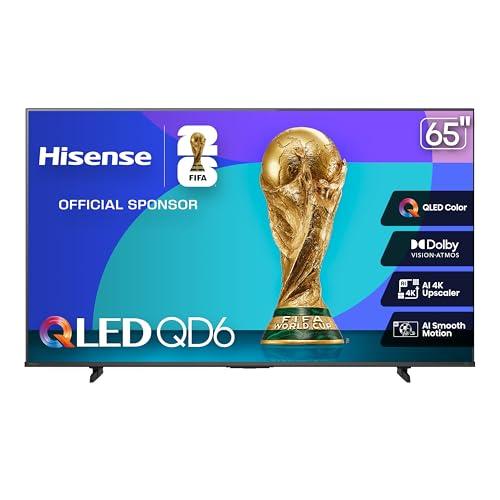


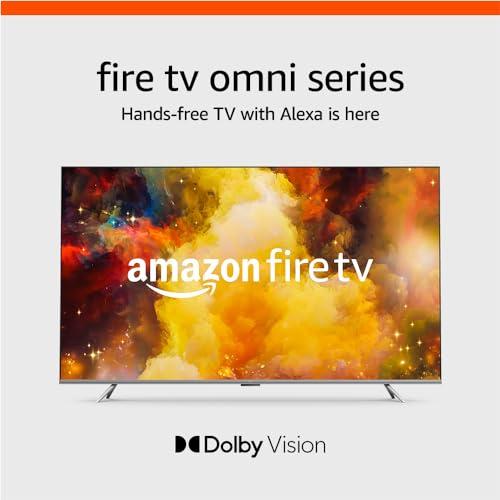
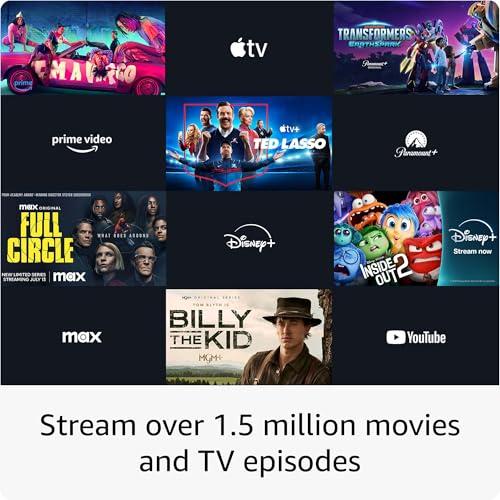
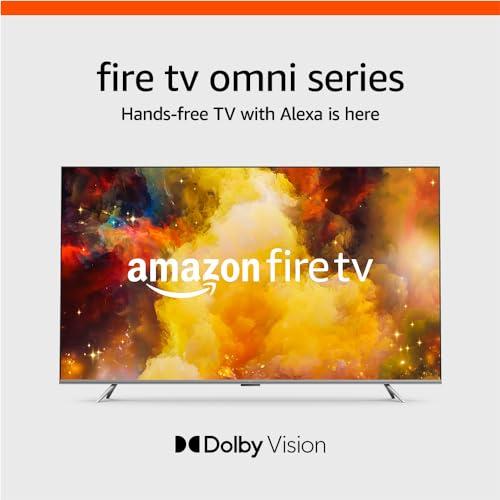
When shopping for a 65-inch smart TV, you'll quickly discover that not all displays are created equal—even when they share the same smart platform. The Hisense 65" QD6 Series QLED 4K Fire TV and Amazon Fire TV Omni Series 65" 4K UHD Smart TV perfectly illustrate this point. Both run Amazon's Fire TV operating system and target budget-conscious buyers, but they take fundamentally different approaches to delivering value.
The core question isn't just which TV costs less, but which one gives you the features that matter most for your viewing habits. At the time of writing, the Hisense QD6 typically sells for significantly less than the Amazon Fire TV Omni, yet it packs display technology normally found in much more expensive TVs. Meanwhile, the Fire TV Omni focuses on smart features and user convenience over raw display performance.
The most important difference between these TVs lies in their display technology. The Hisense QD6 uses QLED (Quantum Dot Light Emitting Diode) technology, while the Amazon Fire TV Omni relies on traditional LED backlighting. This distinction significantly impacts what you see on screen.
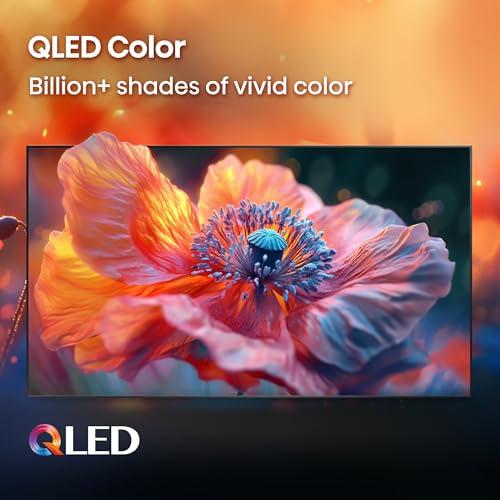
QLED technology works by placing a layer of quantum dots—microscopic semiconductor particles—between the LED backlight and the LCD panel. When light hits these quantum dots, they emit very pure colors at specific wavelengths. This process allows the Hisense QD6 to display approximately 90% of the DCI-P3 color space, which is the standard used by movie studios. In practical terms, this means reds look more vibrant, greens appear more natural, and the overall image has a richness that standard LED displays struggle to match.
The Amazon Fire TV Omni, by contrast, uses direct LED backlighting without quantum dots. While this approach can provide good uniformity and decent brightness, it simply can't produce the same color volume—the total amount of colors a display can show at different brightness levels—as quantum dot technology.
From our research into user reviews and professional evaluations, the color difference becomes most apparent when watching nature documentaries, animated movies, or HDR content. The Hisense QD6 makes tropical sunsets and autumn leaves pop in ways that the Amazon Fire TV Omni can't quite match.
The Hisense QD6 achieves peak brightness levels around 385 nits, which is notably higher than the Amazon Fire TV Omni's 330 nits. While neither TV gets bright enough to truly excel with HDR content in bright rooms, that extra brightness gives the Hisense a meaningful advantage when displaying highlights in movies or games.
Both TVs use VA (Vertical Alignment) panels, which means they share similar characteristics for contrast and viewing angles. VA panels excel at producing deep blacks compared to IPS panels, but they suffer from narrow viewing angles. This means colors and contrast degrade when you move off to the side—something to consider if you have a wide seating arrangement.
Where the Hisense QD6 pulls ahead is in gradient handling and color accuracy. The quantum dot layer helps eliminate some of the color banding (visible steps between similar colors) that can plague budget TVs, particularly in HDR content. This becomes especially noticeable in scenes with subtle color transitions, like sunsets or underwater sequences.
Both TVs support the major HDR formats—Dolby Vision, HDR10, and HDR10+—but the Hisense QD6's superior color reproduction and higher brightness make HDR content more impactful. However, neither TV includes local dimming, which means they can't dynamically adjust backlight zones for better contrast. This limitation affects both models equally, causing some blooming (light bleeding) around bright objects on dark backgrounds.
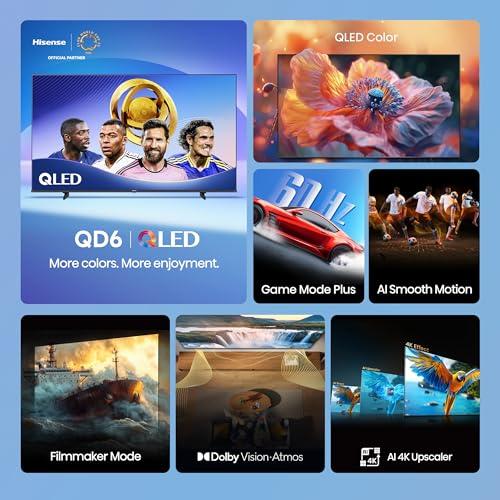
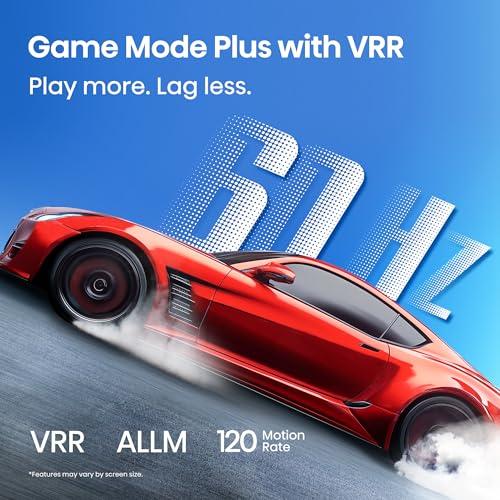
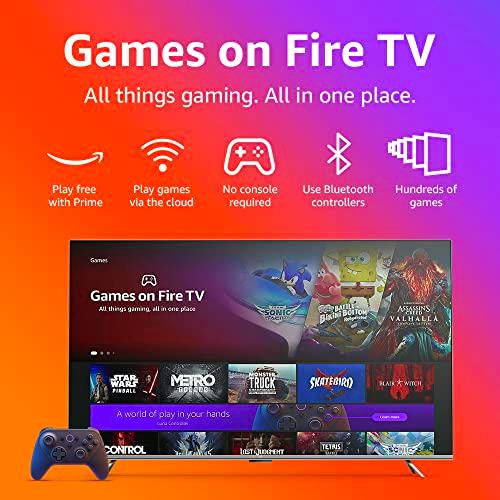
Gaming performance reveals another area where the Hisense QD6 distinguishes itself. Both TVs are limited to 60Hz refresh rates, so neither can take advantage of 120Hz gaming that newer consoles support. However, the Hisense includes Game Mode Plus with Variable Refresh Rate (VRR) and Auto Low Latency Mode (ALLM).
VRR synchronizes the TV's refresh rate with the console's frame rate output, reducing screen tearing and stuttering during games with inconsistent frame rates. ALLM automatically switches the TV to its lowest-latency mode when it detects a gaming signal, minimizing the delay between your controller input and what appears on screen.
The Amazon Fire TV Omni includes basic game mode functionality but lacks these advanced features. For casual gaming, both TVs perform adequately with input lag around 15 milliseconds in game mode—fast enough that most players won't notice any delay. However, competitive gamers or anyone using newer consoles will appreciate the Hisense QD6's additional gaming-focused features.
Motion handling represents another consideration. The Hisense QD6 includes Motion Rate 120 processing, which uses software to reduce blur in fast-moving scenes. While this isn't as effective as a native 120Hz panel, it does help with sports and action movies. The processing can sometimes create artifacts, so some users prefer to disable it for movies but enable it for sports content.
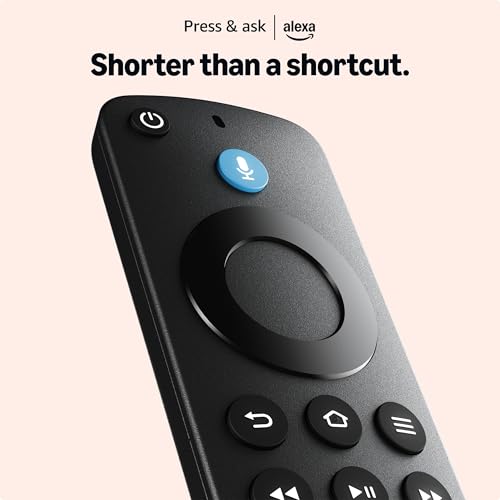
Both TVs run Fire TV OS, Amazon's smart platform, but their implementations differ in meaningful ways. The Amazon Fire TV Omni includes built-in microphones for hands-free Alexa control, allowing you to change channels, search for content, or control smart home devices without picking up the remote. This feature works even when the TV is off, making it function somewhat like an Echo device.
The Hisense QD6 requires its voice remote for Alexa functions but often provides snappier performance navigating menus and launching apps. This difference likely stems from Amazon optimizing the Fire TV Omni's hardware more for always-listening capabilities than pure processing power.
From a practical standpoint, hands-free voice control proves surprisingly useful in daily use. Being able to say "Alexa, turn off the TV" when leaving the room or "Alexa, open Netflix" without hunting for the remote genuinely improves the user experience. However, some users disable the always-listening feature due to privacy concerns, which eliminates this advantage.
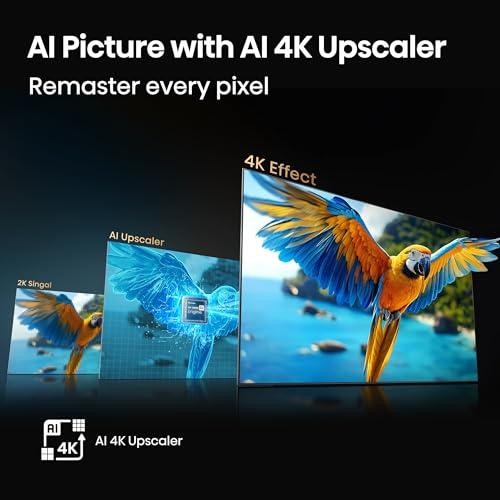
Both TVs support Apple AirPlay for screen mirroring and include Chromecast functionality. The Fire TV Omni includes additional smart home integration features, while the Hisense QD6 focuses more on AI upscaling to improve lower-resolution content quality.
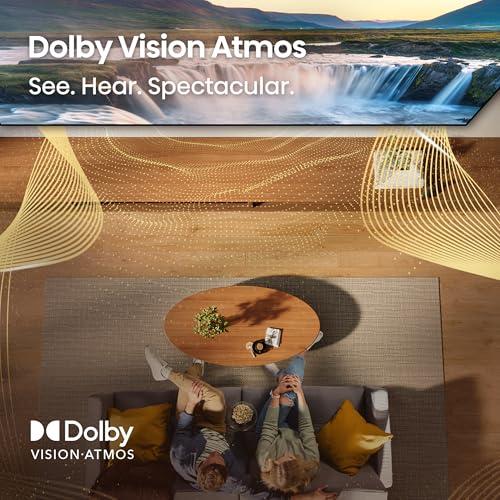
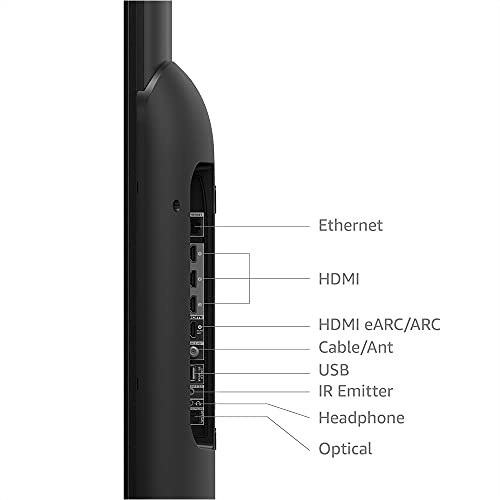
Audio represents one area where the Amazon Fire TV Omni holds a technical advantage. Its dual 8-watt speakers provide 16 watts total output compared to the Hisense QD6's 10-watt system. Both TVs support Dolby Atmos, but the Fire TV Omni also includes DTS HD support and features HDMI eARC (Enhanced Audio Return Channel) for connecting high-end soundbars.
In practice, both TVs benefit significantly from external audio solutions. Built-in TV speakers, regardless of wattage, struggle to fill large rooms or provide the bass response that movies and music demand. The Fire TV Omni's eARC connection becomes valuable if you plan to add a premium soundbar that supports advanced audio formats.
For users planning to rely primarily on built-in speakers, the Amazon Fire TV Omni provides clearer dialogue and slightly better overall sound quality. However, the difference isn't dramatic enough to be a deciding factor for most buyers.
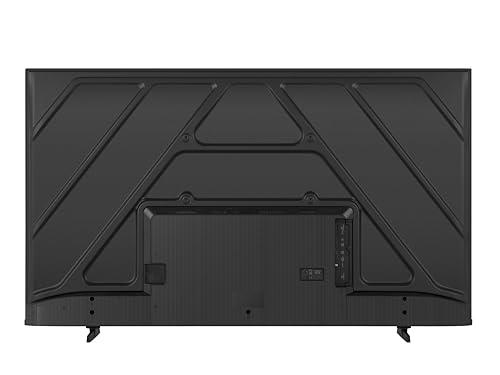
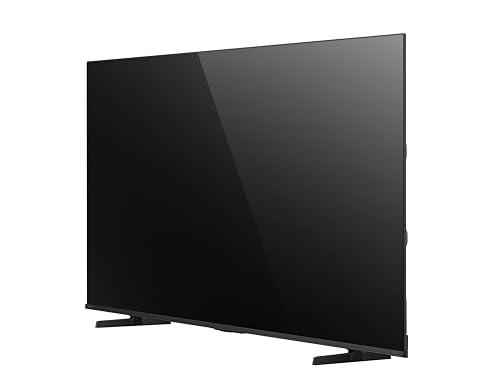
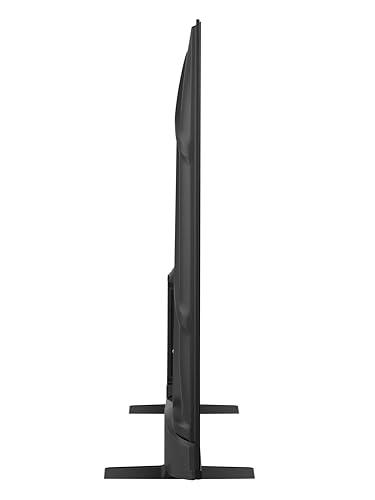
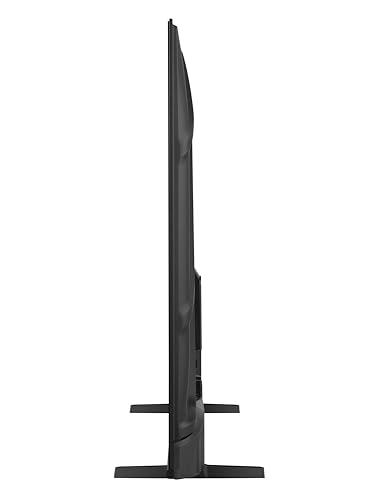
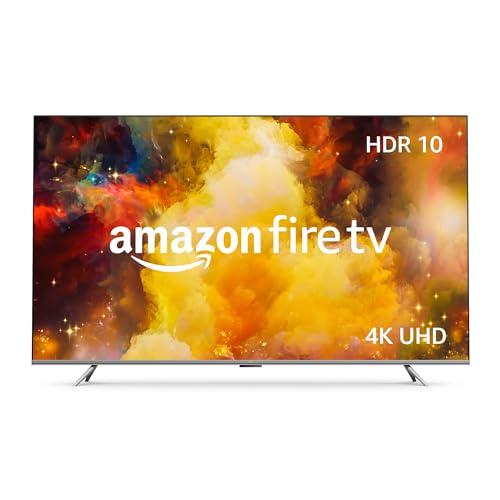
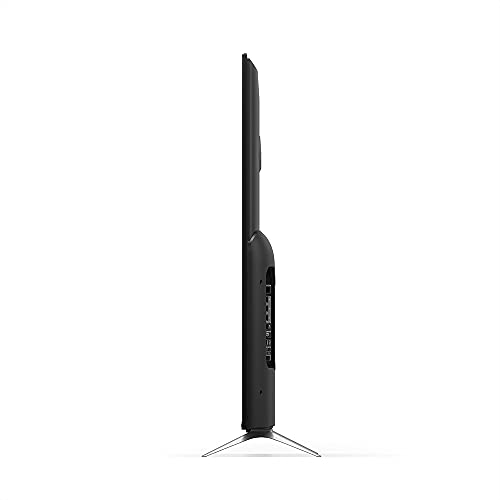
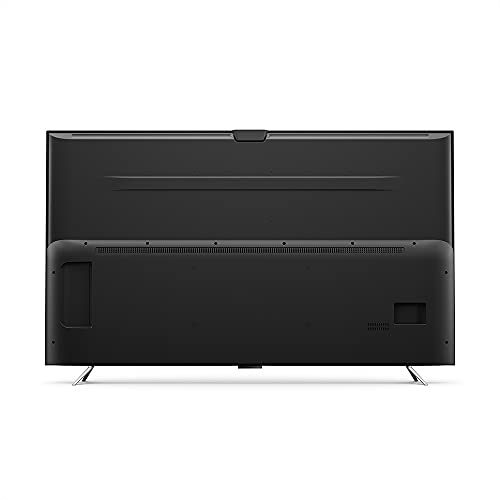
The Amazon Fire TV Omni reflects Amazon's focus on creating a premium user experience within budget constraints. It features a more refined design with thinner bezels and a brushed aluminum finish. The build quality feels more solid, and the included stand provides better stability.
The Hisense QD6 prioritizes performance over aesthetics, though it's hardly unattractive. The design is more utilitarian, focusing on delivering the best possible picture quality at its price point rather than winning design awards.
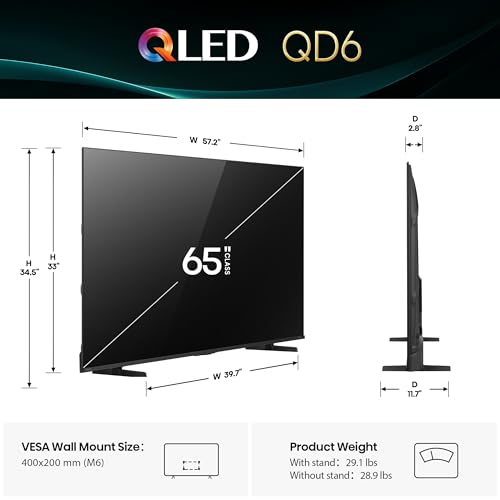
Both TVs support VESA wall mounting, though the Fire TV Omni includes slightly more premium mounting hardware. For most users, both will look perfectly acceptable wall-mounted or on a TV stand.
Released in 2024, both TVs represent the current generation of budget-friendly large-screen options. The TV market has seen significant improvements in recent years, with features like QLED technology and advanced gaming modes filtering down to more affordable price segments.
The Hisense QD6 embodies the "display-first" approach to value, packing premium picture technology into an affordable package. At the time of writing, it typically costs significantly less than the Amazon Fire TV Omni while delivering superior color accuracy and brightness—metrics that directly impact your viewing experience.
The Amazon Fire TV Omni represents the "experience-first" approach, prioritizing user convenience and smart home integration over raw display performance. While it costs more, that premium buys you hands-free voice control, better build quality, and deeper integration with Amazon's ecosystem.
For dedicated home theater use, the Hisense QD6 makes more sense for most buyers. The superior color reproduction and higher brightness translate directly into better movie watching, especially with HDR content. The quantum dot technology helps maintain color accuracy even in dim lighting conditions, which many home theater enthusiasts prefer.
However, home theater setups often include external audio systems, which somewhat negates the Amazon Fire TV Omni's audio advantages. If you're planning a complete home theater setup with a quality soundbar or surround system, the Hisense QD6's focus on picture quality becomes even more valuable.
The viewing angle limitations affect both TVs equally, so home theaters with wide seating arrangements might want to consider moving up to a higher-end model with better off-axis performance regardless of which TV you choose.
The Hisense QD6 makes the most sense for buyers who prioritize picture quality above convenience features. If you're primarily interested in the best possible visual experience for movies, shows, and games within a budget framework, the quantum dot technology delivers meaningful improvements over standard LED displays.
Gamers will particularly appreciate the Hisense QD6's VRR and ALLM features, which provide tangible benefits even on a 60Hz panel. The superior color reproduction also makes games look more vibrant and engaging.
The Amazon Fire TV Omni works better for users who value convenience and smart home integration. If you already have Alexa devices throughout your home and want your TV to integrate seamlessly with that ecosystem, the hands-free voice control and additional smart features justify the higher price.
Families with children might prefer the Fire TV Omni since hands-free voice control eliminates the need to find remotes constantly. The more robust build quality also handles daily use better.
At the time of writing, the Hisense QD6 represents exceptional value for buyers focused on picture quality. The quantum dot technology delivers color performance that rivals TVs costing significantly more, while the gaming features provide future-proofing for console upgrades.
The Amazon Fire TV Omni serves buyers who want a more premium smart TV experience and don't mind paying extra for convenience features. The hands-free Alexa control genuinely improves daily use, and the better build quality provides long-term value.
For most buyers, especially those setting up home theaters or wanting the best bang for their buck, the Hisense QD6 delivers superior value. The display improvements you'll see every time you watch content outweigh the convenience features you'll use occasionally. However, smart home enthusiasts and users who prioritize ease of use over picture quality will find the Amazon Fire TV Omni worth its premium.
Both TVs represent solid choices in the budget 65-inch segment, but they cater to different priorities. Understanding which features matter most to your viewing habits will guide you toward the right choice for your living room.
| Hisense 65" QD6 Series QLED 4K Fire TV | Amazon Fire TV Omni Series 65" 4K UHD Smart TV |
|---|---|
| Display Technology - The most important factor for picture quality | |
| QLED with Quantum Dots (~90% DCI-P3 color coverage) | Standard LED with Direct Backlighting |
| Peak Brightness - Critical for HDR performance and daytime viewing | |
| 385 nits (better for HDR highlights) | 330 nits (adequate for most content) |
| Refresh Rate & Gaming Features - Important for console gaming | |
| 60Hz with VRR, ALLM, Game Mode Plus | 60Hz with basic Game Mode only |
| Voice Control - Daily convenience factor | |
| Voice remote with Alexa (remote required) | Hands-free Alexa with built-in microphones |
| Smart Platform Performance - Affects daily navigation speed | |
| Fire TV OS (optimized performance, faster menu navigation) | Fire TV OS (prioritizes always-listening over speed) |
| Audio Output - Built-in speaker performance | |
| 10W with Dolby Atmos | 16W (2x8W) with Dolby Atmos + DTS HD |
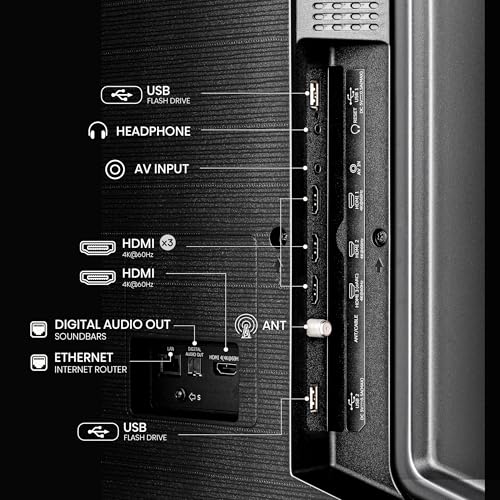
| HDMI Connectivity - Important for external devices | |
| 4x HDMI 2.0 (HDMI 3 with eARC) | 3x HDMI 2.0 + 1x HDMI 2.1 eARC |
| AI Features - Content enhancement capabilities | |
| AI 4K Upscaler + Filmmaker Mode | Basic upscaling + smart home integration |
| Build Quality & Design - Long-term durability and aesthetics | |
| Utilitarian design, focus on performance | Premium build with brushed aluminum finish |
| Typical Price Range - Value proposition at time of writing | |
| Budget-friendly QLED option | Mid-range with premium smart features |
The Hisense 65" QD6 Series QLED 4K Fire TV delivers superior picture quality thanks to its QLED quantum dot technology, which produces more vibrant colors and covers about 90% of the DCI-P3 color space. It also achieves higher peak brightness at 385 nits compared to the Amazon Fire TV Omni Series 65" 4K UHD Smart TV at 330 nits, making HDR content more impactful.
QLED technology in the Hisense QD6 uses quantum dots to enhance color reproduction, creating more accurate and vibrant colors than traditional LED displays. The Amazon Fire TV Omni uses standard LED backlighting, which provides good uniformity but can't match the color volume and accuracy of quantum dot technology.
The Hisense 65" QD6 Series QLED 4K Fire TV offers better gaming features with Variable Refresh Rate (VRR), Auto Low Latency Mode (ALLM), and Game Mode Plus. While both TVs are limited to 60Hz, the Hisense QD6 provides smoother gameplay and reduced screen tearing compared to the basic gaming features on the Amazon Fire TV Omni.
Yes, but they work differently. The Amazon Fire TV Omni Series 65" 4K UHD Smart TV includes built-in microphones for hands-free Alexa control, allowing voice commands without the remote. The Hisense QD6 requires its voice remote for Alexa functions but often provides faster menu navigation and app performance.
The Amazon Fire TV Omni excels in smart home integration with hands-free Alexa, ambient mode features, and deeper Amazon ecosystem connectivity. The Hisense 65" QD6 Series QLED 4K Fire TV focuses more on display performance with AI upscaling and Filmmaker Mode, while offering standard Fire TV smart functionality.
The Amazon Fire TV Omni Series 65" 4K UHD Smart TV provides 16W total output (2x8W speakers) with Dolby Atmos and DTS HD support, plus HDMI eARC for premium soundbars. The Hisense QD6 offers 10W with Dolby Atmos support. Both benefit significantly from external audio systems for optimal sound quality.
The Hisense 65" QD6 Series QLED 4K Fire TV typically offers exceptional value by delivering premium QLED display technology at a budget-friendly price point. The Amazon Fire TV Omni costs more but provides premium smart features and build quality, making it better value for users prioritizing convenience over picture quality.
Both TVs can handle moderately bright rooms, but neither excels in very bright environments. The Hisense QD6 has a slight advantage with higher peak brightness and better color saturation, while the Amazon Fire TV Omni Series 65" 4K UHD Smart TV offers more uniform backlighting that may reduce glare in some viewing conditions.
The Hisense 65" QD6 Series QLED 4K Fire TV delivers superior HDR performance due to its quantum dot technology and higher brightness output. Both TVs support Dolby Vision, HDR10, and HDR10+, but the Hisense QD6 produces more vibrant colors and better highlight detail in HDR content compared to the Amazon Fire TV Omni.
The Hisense QD6 works better for dedicated home theaters due to its superior color accuracy, higher brightness, and better gradient handling in dim lighting conditions. The Amazon Fire TV Omni Series 65" 4K UHD Smart TV can work for home theaters but doesn't offer the same level of picture quality that serious movie enthusiasts typically prefer.
The Amazon Fire TV Omni Series 65" 4K UHD Smart TV features more premium construction with a brushed aluminum finish, thinner bezels, and better overall aesthetics. The Hisense 65" QD6 Series QLED 4K Fire TV has a more utilitarian design that prioritizes performance over premium materials, though both support standard VESA wall mounting.
The Amazon Fire TV Omni includes HDMI 2.1 eARC support for advanced audio equipment, while the Hisense QD6 offers four HDMI 2.0 ports with one eARC connection. Both TVs provide similar wireless connectivity options including Wi-Fi, Bluetooth, and support for AirPlay and Chromecast functionality.
We've done our best to create useful and informative comparisons to help you decide what product to buy. Our research uses advanced automated methods to create this comparison and perfection is not possible - please contact us for corrections or questions. These are the sites we've researched in the creation of this article: rtings.com - bestbuy.com - pcvarge.com - youtube.com - consumerreports.org - costco.com - youtube.com - rtings.com - hometechnologyreview.com - manuals.plus - hisense-usa.com - costco.com - bestbuy.com - staples.com - hisense-usa.com - manuals.plus - pcrichard.com - hometechnologyreview.com - bestbuy.com - bestbuy.com - hisense-usa.com - bestbuy.com - rtings.com - techradar.com - youtube.com - youtube.com - businessinsider.com - amazonforum.com - pcvarge.com - tvpartstoday.com - kitele.com - manuals.plus - bestbuy.com - youtube.com - diverse-marketplace.com

Privacy Policy
Terms and Conditions - Affiliate Policy
Home Security
© Copyright 2008-2026.
11816 Inwood Rd #1211, Dallas, TX 75244