

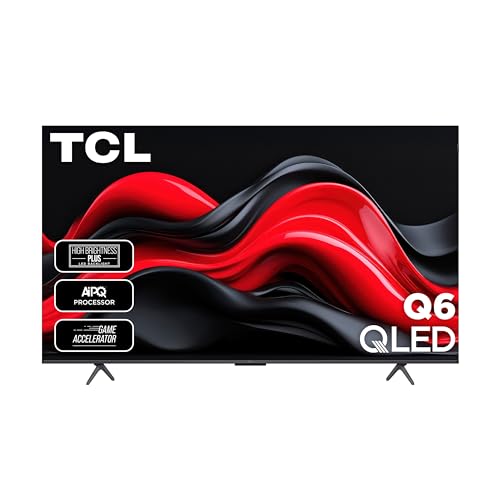

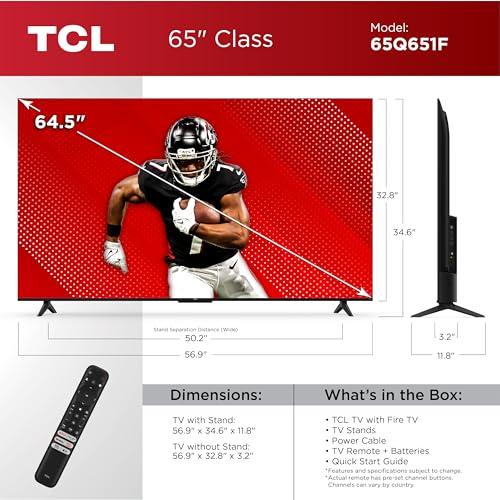
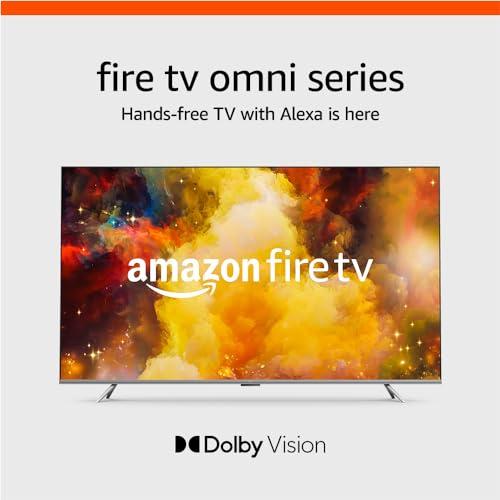
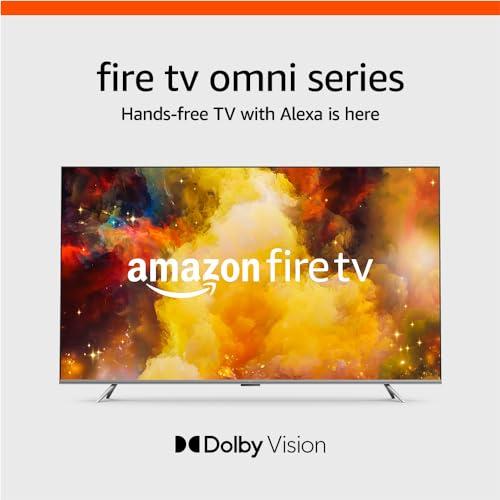
Shopping for a 65-inch 4K TV can feel overwhelming with so many options hitting the market each year. Two models that consistently catch attention in the budget-to-mid-range segment are the TCL Q Class QLED 4K Fire TV and the Amazon Fire TV Omni Series 65" 4K UHD Smart TV. Both launched in recent years as manufacturers pushed to make premium features more affordable, but they take notably different approaches to delivering value.
Understanding what separates these TVs—and more importantly, which differences actually matter for your viewing experience—can save you from buyer's remorse and help you get the most entertainment value for your money.
The 65-inch TV market has transformed dramatically since 2020. What used to require spending over $2,000 now delivers solid performance at much more accessible price points. Both the TCL Q Class QLED and Amazon Fire TV Omni Series represent this shift, packing features that were considered premium just a few years ago.
When evaluating any TV in this category, five key factors determine your satisfaction: picture quality (how good content looks), smart platform performance (how smoothly apps run), gaming capabilities (input lag and motion handling), audio quality, and build reliability. The relative importance of these factors depends entirely on how you use your TV, but picture quality and platform performance typically matter most for day-to-day satisfaction.
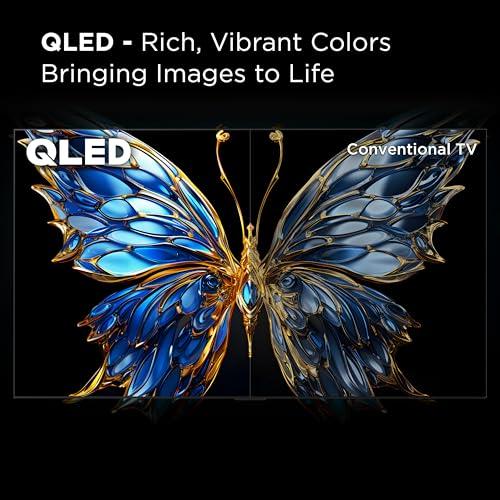
Both TVs use quantum dot technology—often marketed as "QLED"—which places microscopic particles between the backlight and LCD panel to produce more accurate colors. Think of quantum dots as tiny color filters that help the TV display a wider range of hues, particularly vibrant reds and greens that standard LED TVs struggle with.
The TCL Q Class QLED implements this technology more effectively. Our research into professional reviews reveals it covers over 90% of the DCI-P3 color space (the standard used for digital cinema), producing over one billion distinct colors. In practical terms, this means nature documentaries look more lifelike, animated movies appear more vibrant, and skin tones in dramas look more natural.
The Amazon Fire TV Omni Series also uses quantum dots but covers approximately 93% of the DCI-P3 space—competitive but not quite matching the TCL's color accuracy. The difference becomes most noticeable when watching content with rich, saturated colors like Marvel movies or nature programming.
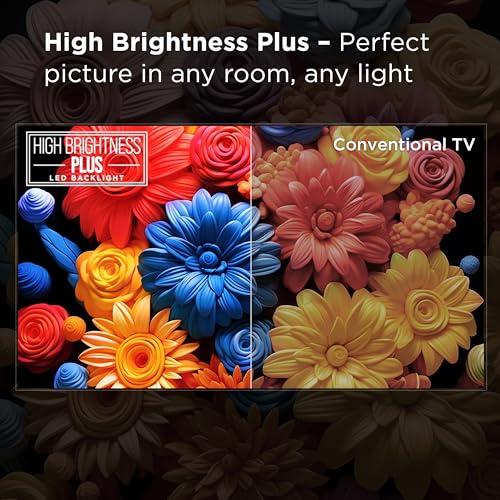
Here's where these TVs diverge significantly. HDR (High Dynamic Range) content is designed to display brighter highlights and deeper shadows than standard content, but it only works well if your TV can get bright enough.
The TCL Q Class QLED achieves meaningfully higher peak brightness levels, making HDR content actually look different from standard content. When watching HDR movies on Netflix or Disney+, you'll see more detail in bright scenes—sunlight streaming through windows, reflections on water, or the glow from lightsabers in Star Wars.
The Amazon Fire TV Omni Series supports the same HDR formats (Dolby Vision, HDR10, HLG) but maxes out around 330 nits of brightness. That's sufficient for general viewing but not bright enough to make HDR content dramatically better than standard content. In a bright living room, HDR scenes may actually look dimmer than you'd prefer.
This brightness difference affects viewing conditions too. The TCL handles ambient light better, staying visible and vibrant even with windows open or lights on. The Amazon TV performs better in darker, more controlled environments where its limitations are less apparent.
Both TVs use VA (Vertical Alignment) LCD panels, which naturally produce deeper blacks than IPS panels but can't match OLED technology. The contrast—the difference between the brightest whites and darkest blacks—largely determines how "cinematic" movies look.
The Amazon Fire TV Omni Series achieves a respectable 5000:1 contrast ratio, meaning its brightest whites are 5000 times brighter than its darkest blacks. That sounds impressive, but in practice, you'll notice some "blooming" where bright objects create halos in dark scenes. This is most obvious during movie credits or when watching content with stark contrasts.
The TCL Q Class QLED handles contrast slightly better through improved backlighting algorithms, though neither TV includes local dimming zones—sections of the backlight that can dim independently to improve black levels. This is a cost-saving measure that prevents either TV from matching more expensive models with mini-LED or OLED technology.
Not everything you watch will be crisp 4K content. Cable TV, older Netflix shows, and broadcast television often come in 720p or 1080p resolution. How well a TV "upscales" this lower-resolution content to fill its 4K screen significantly impacts your daily viewing experience.
The TCL Q Class QLED clearly outperforms here. Its upscaling processor does a respectable job making HD content look sharp on the large 65-inch screen. While it can't create detail that wasn't originally there, it minimizes the softness and artifacts that make upscaled content obvious.
The Amazon Fire TV Omni Series struggles more with upscaling. Standard definition content appears noticeably fuzzy and lacks the crisp detail you'd expect. Even 720p content can look disappointing, which matters if you watch a lot of cable TV or older streaming content.
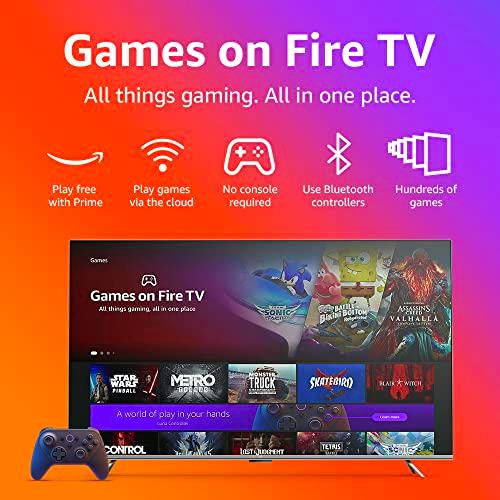
Gaming on large TVs has become increasingly popular, especially with current-generation consoles offering 4K gaming. Both TVs include gaming-focused features, but their implementations differ meaningfully.
Input lag—the delay between pressing a controller button and seeing the result on screen—can make or break gaming experiences. Both TVs include "Auto Game Mode" (ALLM), which automatically switches to low-latency settings when detecting a gaming console.
The Amazon Fire TV Omni Series achieves very low input lag around 15 milliseconds in Game Mode, which feels instantly responsive for most gaming. This performance rivals gaming monitors and easily handles competitive online games.
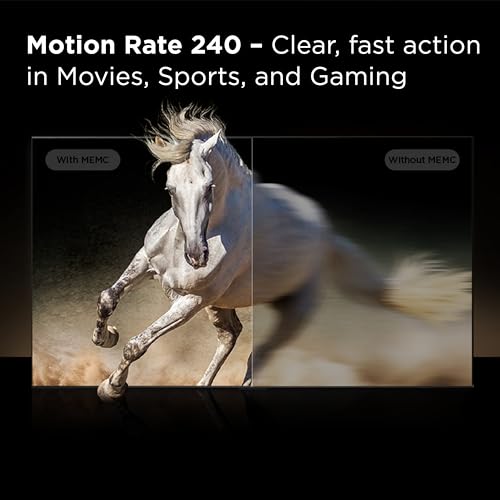
The TCL Q Class QLED matches this performance while adding Motion Rate 240 technology. This combines multiple techniques—including MEMC (Motion Estimation, Motion Compensation) frame insertion—to reduce motion blur during fast-paced gaming. In practice, this means racing games and first-person shooters look smoother, with less blur during quick camera movements.
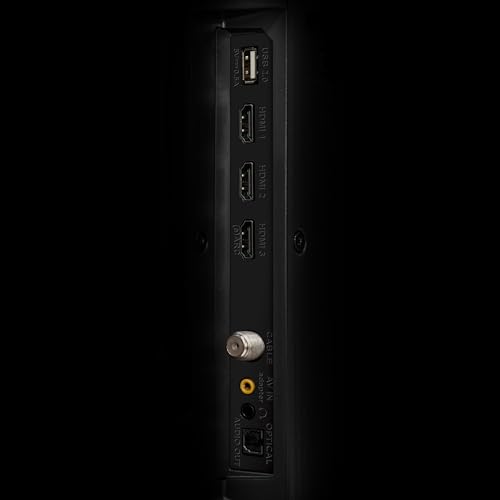
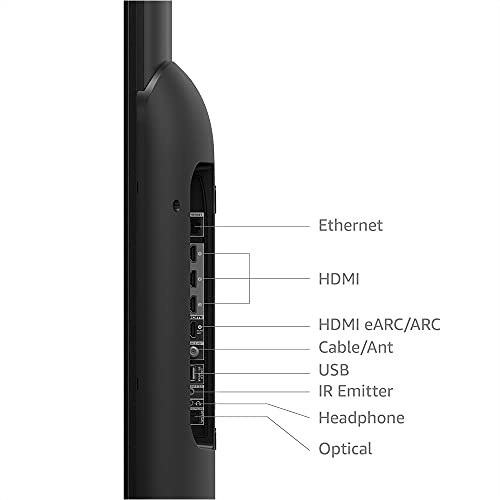
Both TVs support 4K gaming at 60Hz, adequate for most current gaming content. However, the Amazon Fire TV Omni Series includes one HDMI 2.1 port with eARC (enhanced Audio Return Channel), while the TCL Q Class QLED offers three HDMI ports with one supporting eARC.
Neither TV supports 120Hz gaming or variable refresh rate (VRR)—features becoming more common on premium models—but both handle current console gaming well. The additional HDMI ports on the TCL provide more flexibility for connecting multiple devices without constantly swapping cables.
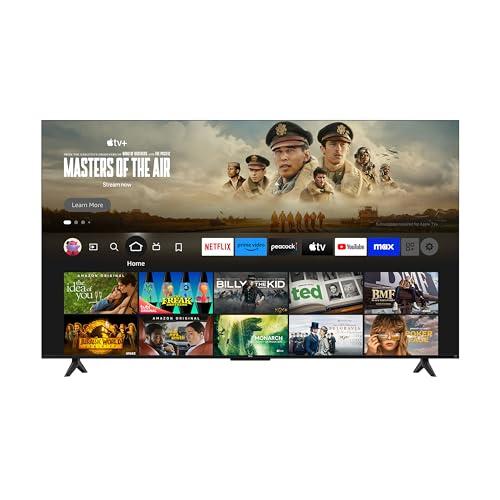
Both TVs run Amazon's Fire TV operating system, but their implementations perform differently despite using the same underlying platform.
The TCL Q Class QLED includes more processing power dedicated to running the smart TV interface. Apps launch faster, menu navigation feels smoother, and switching between inputs happens more quickly. This might seem minor, but these small delays add up to daily frustration when they occur repeatedly.
The Amazon Fire TV Omni Series can feel sluggish compared to dedicated streaming devices like the Fire TV Stick 4K Max. While it handles basic streaming adequately, demanding apps or multitasking can cause noticeable lag. Some users report needing to restart the TV occasionally to maintain smooth performance.
Here's where the Amazon TV shines. The Amazon Fire TV Omni Series includes far-field microphones that enable hands-free Alexa control. You can turn the TV on, search for content, control smart home devices, and even ask questions without touching the remote—even when the TV appears off.
The TCL Q Class QLED includes a voice remote for Alexa commands, but you need to press and hold a button. While functional, it's less convenient for frequent voice commands or smart home control.
This difference matters significantly if you're invested in Amazon's ecosystem with Echo devices, smart lights, or security cameras. The Amazon TV becomes a natural smart home hub, while the TCL functions more like a traditional TV with voice search capabilities.
Neither TV will blow you away with built-in audio, but their approaches differ enough to influence your decision.
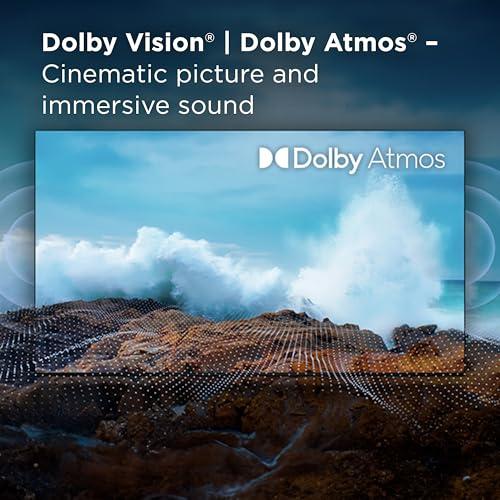
The TCL Q Class QLED includes 30 watts of total speaker power (two 15-watt speakers) with Dolby Atmos processing and DTS Virtual:X. While still limited by the thin TV design, it produces cleaner dialogue and slightly more dynamic range than typical TV speakers.
The Amazon Fire TV Omni Series provides 16 watts total (two 8-watt speakers) with basic Dolby Atmos support. The sound is adequate for casual viewing but lacks depth and bass response. You'll likely want a soundbar sooner rather than later.
Both TVs support eARC for connecting high-quality soundbars, and honestly, external audio makes a bigger difference than the built-in speaker variations. If you plan to add a soundbar eventually, this factor becomes less important in your decision.
The physical construction reveals different priorities between manufacturers.
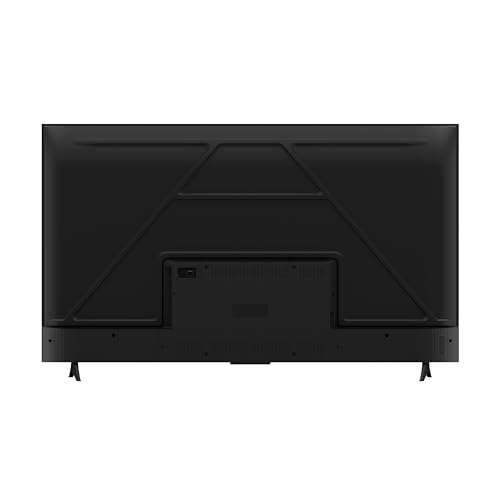
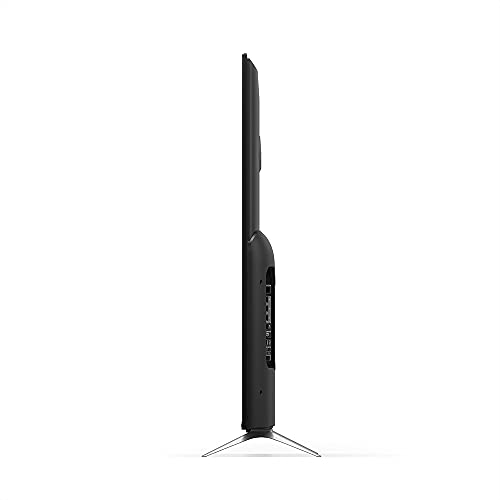
The TCL Q Class QLED emphasizes a premium appearance with its FullView metal bezel-less design. It's also lighter at around 34 pounds without the stand, making wall mounting easier. The build quality feels solid without unnecessary bulk.
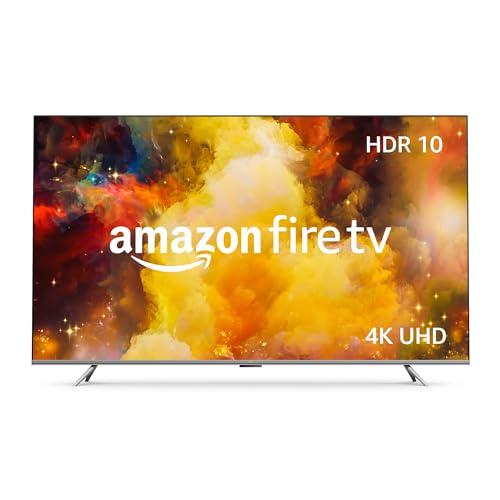
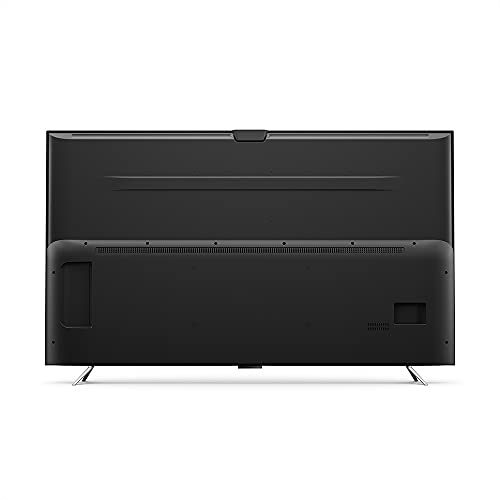
The Amazon Fire TV Omni Series uses a frameless design with brushed silver accents but weighs more at approximately 42 pounds. The extra weight suggests more substantial internal components but makes installation more challenging.
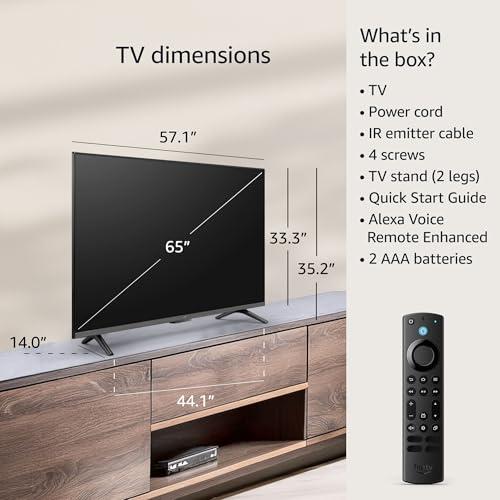
Both TVs support standard VESA mounting and include stands that work with most TV furniture, though the Amazon model's stand legs are notably wide and may not fit smaller entertainment centers.
For dedicated home theater setups, the TCL Q Class QLED makes more sense. Its superior brightness handling works better with the ambient light control typical in home theaters, while its improved upscaling benefits mixed content sources. The better motion handling also enhances movie watching, particularly action films.
The Amazon Fire TV Omni Series can work in home theaters but performs better as a living room TV where its smart home integration and voice control provide more daily convenience.
At the time of writing, both TVs typically sell in similar price ranges during regular retail periods, though Amazon frequently offers deeper discounts on its own-brand model during Prime events and holiday sales.
The TCL Q Class QLED generally offers better picture quality per dollar, especially considering its superior brightness, color accuracy, and upscaling. It's the better pure entertainment value.
The Amazon Fire TV Omni Series provides different value through ecosystem integration and convenience features. If you're already using Alexa devices and Amazon services extensively, its hands-free control and smart home integration can be worth the picture quality compromises.
Choose the TCL Q Class QLED if you:
Choose the Amazon Fire TV Omni Series if you:
The TCL Q Class QLED is the better television for most people focused on picture quality and overall entertainment value. Its superior brightness, color reproduction, and upscaling create a more satisfying viewing experience across different content types and viewing conditions.
The Amazon Fire TV Omni Series makes sense for specific users who value ecosystem integration and convenience features over peak performance. Its hands-free Alexa integration and aggressive pricing during Amazon sales can make it worthwhile despite picture quality limitations.
Neither TV will compete with flagship models costing twice as much, but both deliver solid 65-inch 4K performance at accessible price points. Your choice should depend on which compromises align better with your priorities and viewing habits. For pure entertainment value, the TCL generally wins. For smart home integration and convenience, the Amazon model offers unique advantages.
The 65-inch TV market continues evolving rapidly, with both manufacturers regularly updating their lineups. However, the fundamental differences between these approaches—TCL's focus on picture quality versus Amazon's emphasis on ecosystem integration—likely represent the companies' ongoing strategies in this competitive segment.
| TCL 65" Q Class QLED 4K Fire TV | Amazon Fire TV Omni Series 65" 4K UHD Smart TV |
|---|---|
| Display Technology - Affects color accuracy and brightness capabilities | |
| QLED with Quantum Dot Technology, 1.07 billion colors | QLED with Quantum Dots, 93% DCI-P3 color space |
| Peak Brightness - Critical for HDR performance and daytime viewing | |
| Higher brightness levels (exact specs vary by model) | 330 nits (limited HDR impact, better for darker rooms) |
| HDR Support - Determines how well premium content looks | |
| HDR PRO+ (Dolby Vision, HDR10+, HDR10, HLG) with effective brightness | Dolby Vision, HDR10, HLG (limited by low brightness) |
| Motion Handling - Important for sports and gaming | |
| Motion Rate 240 with MEMC Frame Insertion | Basic motion processing, 60Hz panel |
| Smart TV Performance - Affects daily usability and app speed | |
| Optimized Fire TV OS with responsive performance | Fire TV OS (can be sluggish, may need occasional restarts) |
| Voice Control - Convenience for smart home integration | |
| Voice Remote with Alexa (button required) | Hands-free Alexa with far-field microphones |
| Audio Power - Built-in speaker quality | |
| 30W total (2 x 15W) with Dolby Atmos, DTS Virtual:X | 16W total (2 x 8W) with basic Dolby Atmos |
| Gaming Features - Input lag and responsiveness for gamers | |
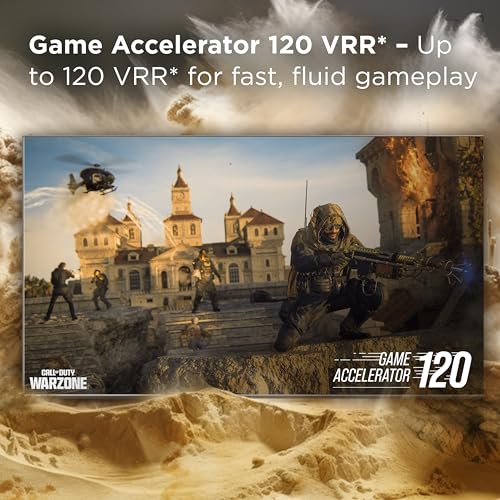
| Auto Game Mode (ALLM), Game Accelerator 120, low input lag | Very low input lag (~15ms), basic gaming features |
| Connectivity - HDMI ports and device compatibility | |
| 3 HDMI ports (1 eARC), USB 2.0, comprehensive options | 3 HDMI 2.0 + 1 HDMI 2.1 (eARC), 2 USB 2.0 ports |
| Upscaling Quality - How well lower-resolution content looks | |
| Superior upscaling engine handles HD/SD content well | Weak upscaling, SD and 720p content appears fuzzy |
| Build Quality - Physical construction and weight | |
| FullView Metal Bezel-less design, lighter (34 lbs) | Frameless brushed silver, heavier (42.5 lbs) |
| Best Use Case - Who should choose this TV | |
| Picture quality focused users, bright rooms, mixed content | Amazon ecosystem users, smart home integration priority |
The TCL 65" Q Class QLED 4K Fire TV delivers superior picture quality with higher brightness levels, better color accuracy covering over 90% of the DCI-P3 color space, and more effective HDR performance. The Amazon Fire TV Omni Series 65" 4K UHD Smart TV offers decent QLED performance but is limited by lower peak brightness (330 nits), making HDR content less impactful.
Both TVs offer excellent gaming performance with low input lag around 15ms and Auto Game Mode. The TCL Q Class QLED has a slight edge with Motion Rate 240 technology and Game Accelerator 120 features that provide smoother motion during fast-paced gaming. However, both are limited to 60Hz refresh rates.
Yes, both the TCL Q Class QLED and Amazon Fire TV Omni Series run Amazon's Fire TV operating system. However, the TCL implementation tends to be more responsive with faster app loading and smoother navigation, while the Amazon TV can experience occasional sluggish performance.
The Amazon Fire TV Omni Series excels in voice control with hands-free Alexa that works even when the TV is off, thanks to built-in far-field microphones. The TCL Q Class QLED requires using the voice remote button for Alexa commands, making it less convenient for smart home integration.
The TCL Q Class QLED offers better built-in audio with 30W total power (2 x 15W speakers) and Dolby Atmos processing with DTS Virtual:X. The Amazon Fire TV Omni Series provides adequate but limited audio with 16W total power (2 x 8W speakers) and basic Dolby Atmos support.
The TCL Q Class QLED significantly outperforms in upscaling lower-resolution content, making cable TV and older streaming content look much sharper. The Amazon Fire TV Omni Series struggles with upscaling, causing SD and 720p content to appear fuzzy and disappointing on the large 65-inch screen.
The TCL Q Class QLED is much better suited for bright rooms due to its higher peak brightness, maintaining picture quality even with ambient light. The Amazon Fire TV Omni Series performs better in darker, controlled environments where its brightness limitations are less noticeable.
The TCL Q Class QLED generally provides better entertainment value per dollar with superior picture quality, upscaling, and performance. The Amazon Fire TV Omni Series offers different value through aggressive pricing during Amazon sales and unique smart home integration features for users invested in the Amazon ecosystem.
For dedicated home theaters, the TCL Q Class QLED is the better choice due to its superior brightness handling, better motion processing for movies, and improved upscaling for mixed content sources. The Amazon Fire TV Omni Series works adequately but is better suited as a living room TV where convenience features matter more.
Both TVs offer similar connectivity with 3-4 HDMI ports and eARC support. The TCL Q Class QLED provides 3 HDMI ports with comprehensive connectivity options, while the Amazon Fire TV Omni Series includes 3 HDMI 2.0 ports plus 1 HDMI 2.1 port specifically for eARC functionality.
Both TVs handle 4K streaming content well through their Fire TV platforms. The TCL Q Class QLED provides a better overall experience with more responsive performance and superior picture quality. The Amazon Fire TV Omni Series works fine for streaming but may require occasional restarts to maintain smooth operation.
Choose the TCL Q Class QLED if you prioritize picture quality, have a bright room, watch mixed content types, or want the best entertainment value. Choose the Amazon Fire TV Omni Series if you're heavily invested in Amazon's ecosystem, want hands-free voice control, primarily stream content, or need the most affordable 65-inch option during sales.
We've done our best to create useful and informative comparisons to help you decide what product to buy. Our research uses advanced automated methods to create this comparison and perfection is not possible - please contact us for corrections or questions. These are the sites we've researched in the creation of this article: bestbuy.com - tcl.com - tcl.com - circuitworldonline.com - bestbuy.com - tcl.com - rtings.com - woodruffappliance.com - rtings.com - bestbuy.com - tcl.com - tcl.com - tcl.com - youtube.com - alexraytv.com - tcl.com - alexraytv.com - avsforum.com - a1ontheweb.com - bestbuy.com - rtings.com - techradar.com - youtube.com - youtube.com - businessinsider.com - amazonforum.com - pcvarge.com - tvpartstoday.com - kitele.com - manuals.plus - bestbuy.com - youtube.com - diverse-marketplace.com

Privacy Policy
Terms and Conditions - Affiliate Policy
Home Security
© Copyright 2008-2026.
11816 Inwood Rd #1211, Dallas, TX 75244