

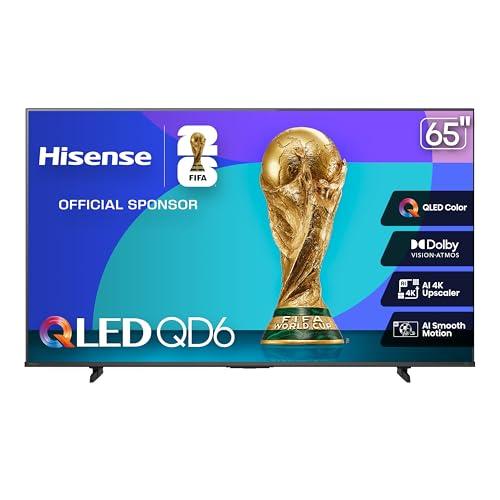
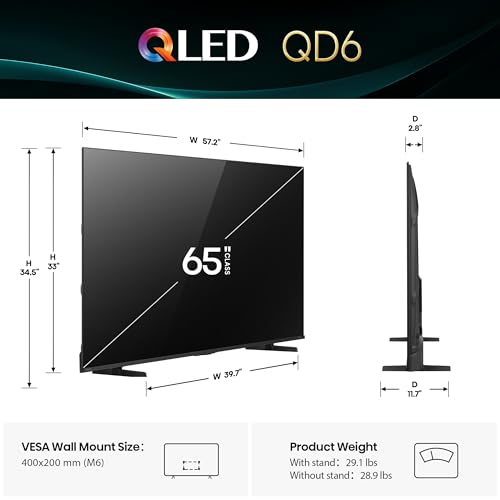
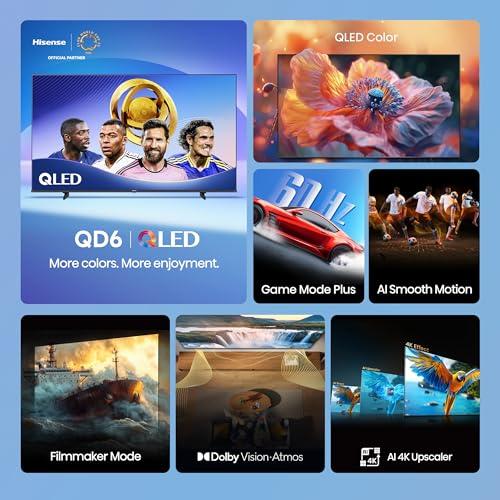
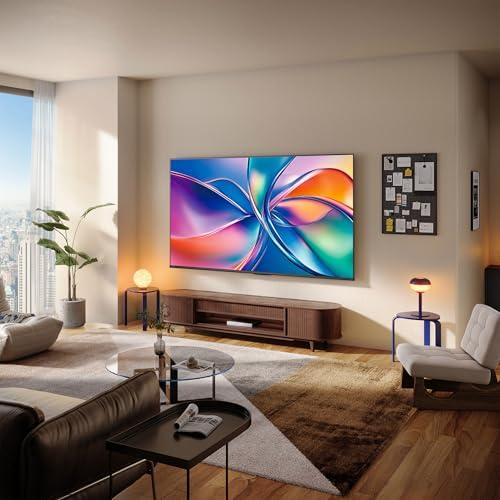
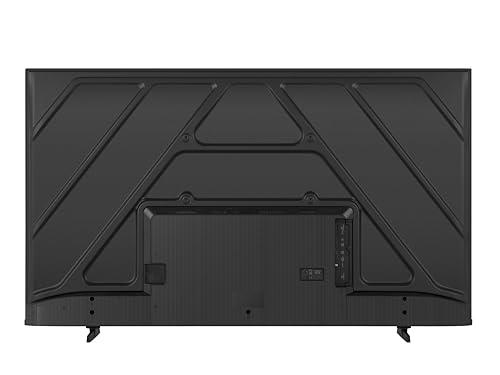
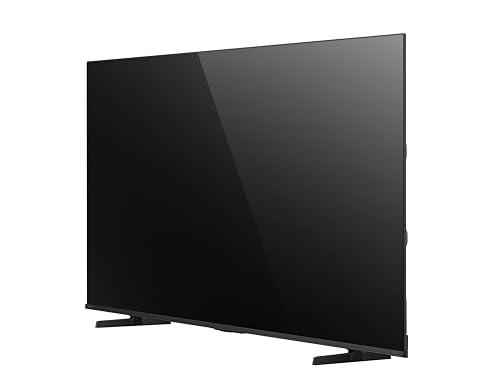
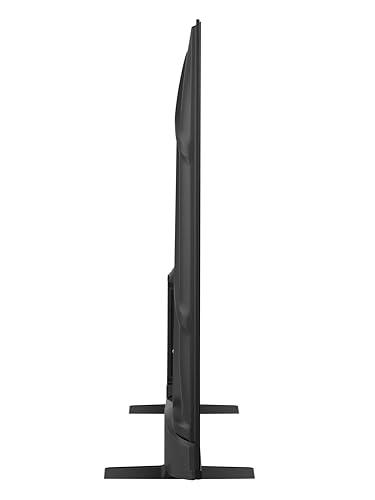

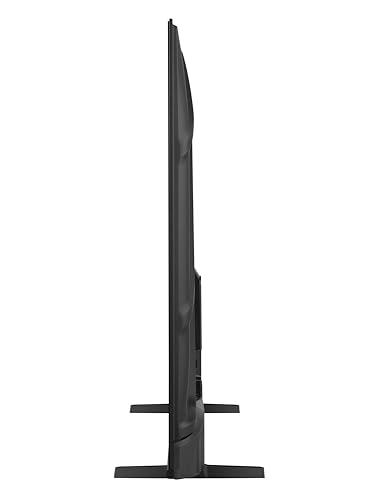
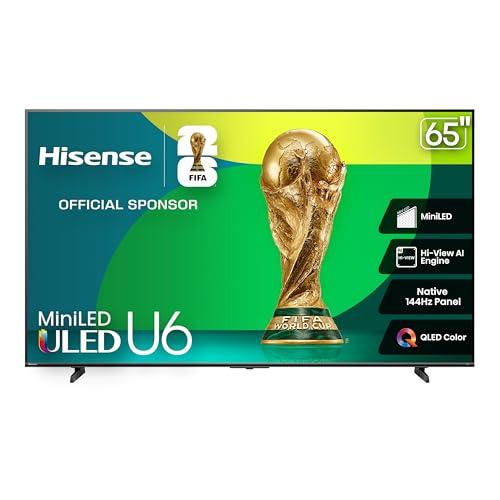
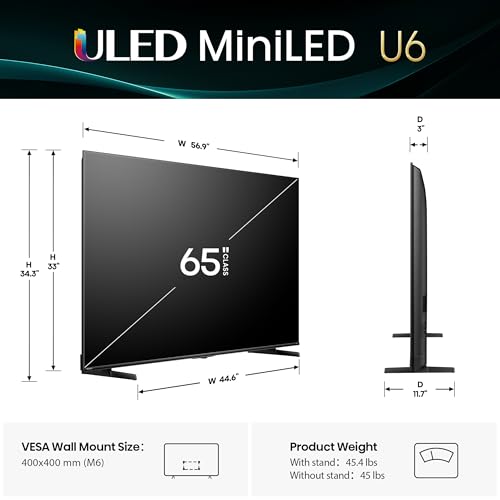
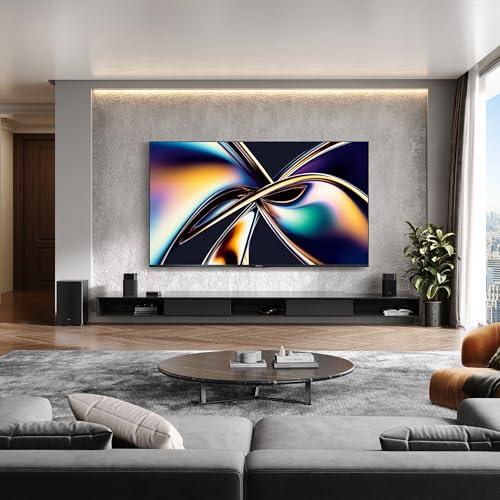
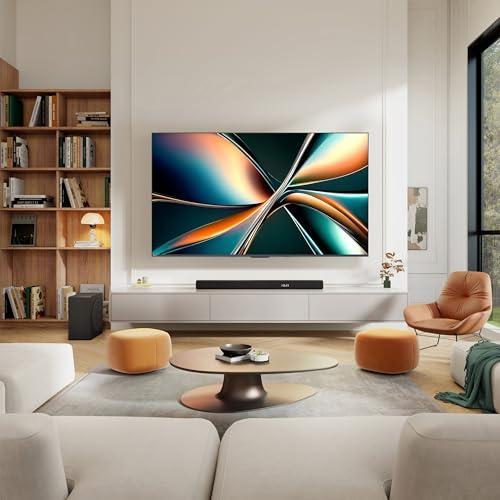
Choosing the right TV can feel overwhelming when faced with similar-looking models from the same brand. The Hisense 65" QD6 Series QLED 4K Fire TV and Hisense 65" U6 Series Mini-LED QLED 4K Fire TV both launched in 2025 and represent two different approaches to delivering premium picture quality. While they share the same screen size, Fire TV smart platform, and QLED technology, their performance capabilities and target audiences couldn't be more different.
The key question isn't just which TV is better—it's which one makes sense for your specific needs and budget. At the time of writing, these models sit in distinctly different price tiers, with the U6 Series commanding roughly double the price of the QD6 Series. Understanding whether that price difference translates to meaningful real-world benefits requires diving deep into their technical capabilities and performance characteristics.
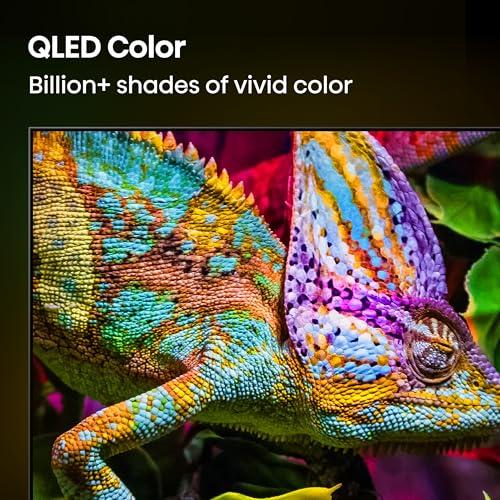
Before comparing these specific models, it's worth understanding what you're actually buying when you purchase a QLED TV. QLED stands for "Quantum Dot Light Emitting Diode," which sounds complicated but describes a fairly straightforward enhancement to traditional LCD displays. Regular LCD TVs use a white LED backlight that shines through color filters to create the image you see. QLED TVs add a layer of quantum dots—microscopic semiconductor particles—that convert the backlight into purer, more vibrant colors.
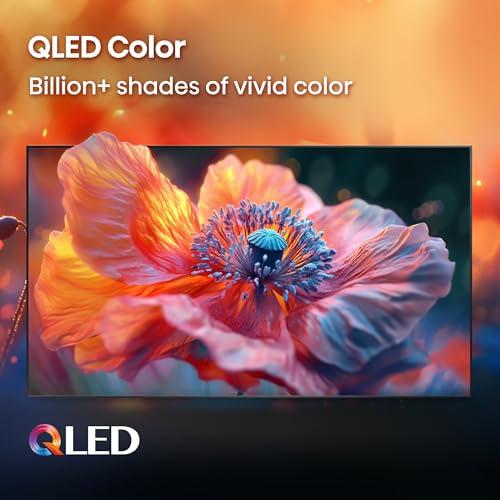
Think of quantum dots as extremely precise color translators. When hit by light, they emit very specific wavelengths, creating colors that are both more accurate and more intense than what traditional LCD panels can achieve. This technology allows QLED TVs to display over a billion different color shades, compared to the millions that standard LCD TVs can manage.
The other crucial technology to understand is local dimming, which controls how the backlight illuminates different parts of the screen. Without local dimming, the entire screen's backlight operates as one unit—if there's a bright explosion in a movie scene, the whole screen brightens, making black areas appear gray. With local dimming, different zones of the backlight can be controlled independently, keeping dark scenes truly dark while bright elements pop with intensity.
The most fundamental difference between the QD6 and U6 Series lies in their backlighting technology, and this single difference ripples through nearly every aspect of their performance.
The QD6 Series uses direct LED backlighting without local dimming zones. This means the LED lights are positioned directly behind the LCD panel, providing more uniform illumination than edge-lit designs, but the entire backlight operates as one system. When you're watching a movie with a bright campfire scene against a dark night sky, the QD6 has to choose between making the fire properly bright (which washes out the dark sky) or keeping the sky dark (which dims the fire). It's a constant compromise that limits contrast performance.
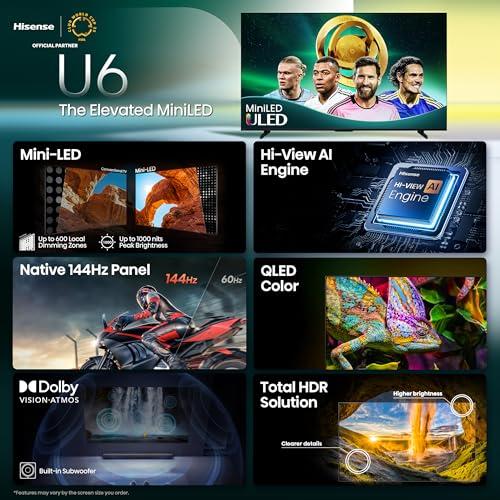
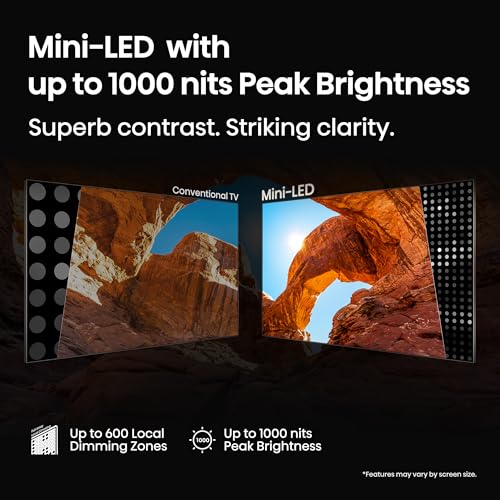
The U6 Series takes a dramatically different approach with Mini-LED technology and full array local dimming. Mini-LEDs are significantly smaller than traditional LEDs—sometimes 40 times smaller—allowing manufacturers to pack more of them behind the screen. The U6 uses up to 608 independent dimming zones, meaning it can control the brightness of 608 different areas of the screen simultaneously.
This zone-based control transforms the viewing experience. That same campfire scene can now have a blazing bright fire while the surrounding night sky remains inky black. The technical term for this capability is "contrast ratio"—the difference between the brightest whites and darkest blacks a display can produce. Higher contrast ratios create more realistic, three-dimensional-looking images that seem to jump off the screen.
Peak brightness might seem like a spec-sheet number, but it directly impacts your daily viewing experience. The QD6 Series achieves around 385 nits of peak brightness, which puts it in the "adequate" category for most viewing conditions. In a dim living room or bedroom, this brightness level works fine for standard content and provides reasonable HDR (High Dynamic Range) performance.
The U6 Series pushes peak brightness up to 1,000 nits, which transforms both HDR content and daytime viewing. HDR content is mastered with the assumption that your display can hit 1,000 nits or higher, so the U6 can actually show you what content creators intended. Those sun-dappled forest scenes in nature documentaries, the gleaming chrome on cars in action movies, or the explosive highlights in sci-fi films—they all look dramatically more realistic and impactful on the brighter display.
For rooms with lots of ambient light, this brightness difference becomes even more critical. If you have large windows or bright overhead lighting, the QD6 may appear washed out during daytime viewing, while the U6 maintains picture quality even in challenging lighting conditions.
Both models use quantum dot technology, but the U6 Series implements it more effectively due to superior processing and brightness capabilities. The QD6 covers about 90% of the DCI-P3 color space—the standard used for digital cinema—which delivers noticeably more vibrant colors than non-QLED TVs in its price range.
However, color volume—how vivid colors remain at different brightness levels—heavily favors the U6. Colors that look rich and saturated on the QD6 in dim scenes may appear washed out in bright scenes because the display lacks the peak brightness to maintain color intensity. The U6 maintains color vibrancy across the full brightness range, creating more consistent and realistic-looking images.
This represents perhaps the most dramatic difference between these models. The QD6 produces what we'd call "TV blacks"—they're dark enough for casual viewing but noticeably gray when compared to true black. In a completely dark room watching a movie with letterbox bars (those black strips above and below the image), you'll clearly see that those bars are lit up rather than truly black.
The U6 Series approaches OLED-like black performance thanks to its local dimming capabilities. Those same letterbox bars disappear into the darkness of your room, creating a more immersive, cinema-like experience. The difference is particularly striking in content with mixed lighting—think of a character silhouetted against a bright window, or stars twinkling against deep space.
Gaming capabilities represent another area where these models diverge significantly, and the differences matter more now than ever before.
The QD6 Series operates at a standard 60Hz refresh rate, which means it can display 60 frames per second maximum. For most TV content and casual gaming, this works perfectly fine. Movies are typically filmed at 24 frames per second, and most TV shows at 30fps, so 60Hz provides plenty of headroom for smooth playback.
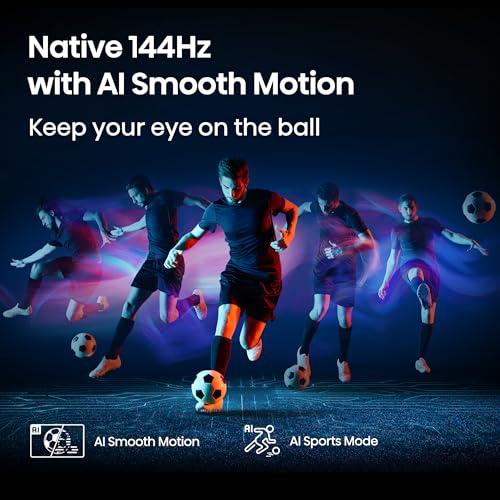
The U6 Series offers a native 144Hz refresh rate, more than doubling the frame rate capability. This higher refresh rate primarily benefits gaming, where modern consoles and PC graphics cards can output 120 frames per second or higher in supported games. The result is incredibly smooth motion, especially noticeable in fast-paced games like racing simulators, first-person shooters, or sports titles.
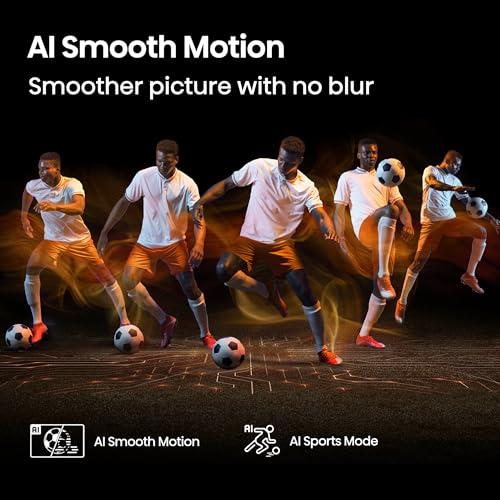
Beyond the higher frame rate, the U6 also features better motion processing that reduces blur during fast action. Even when watching 60fps content, the superior processing creates cleaner, sharper motion compared to the QD6.
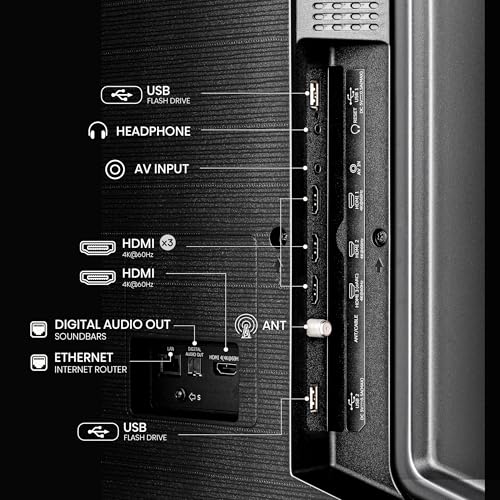
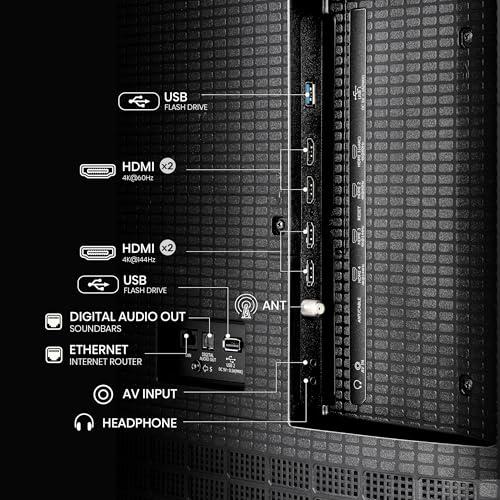
Here's where the connectivity differences become crucial for gamers. The QD6 Series includes HDMI 2.0 ports, which limit it to 4K resolution at 60Hz maximum. If you own a PlayStation 5 or Xbox Series X, you can play games in 4K, but you're locked to 60 frames per second regardless of what the game or console can actually deliver.
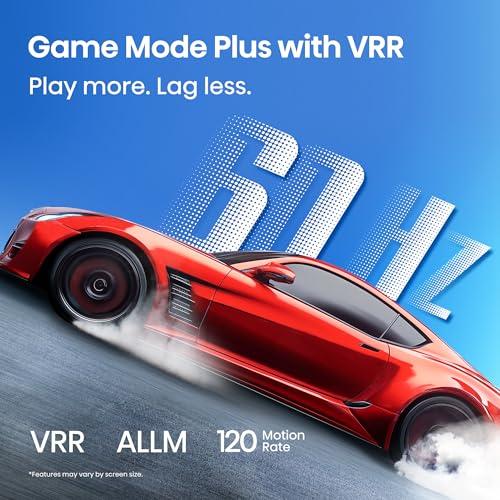
The U6 Series includes two full-bandwidth HDMI 2.1 ports that support 4K at 144Hz, along with Variable Refresh Rate (VRR) technology. VRR synchronizes the TV's refresh rate with the console's frame rate output, eliminating screen tearing and stuttering that can occur when these rates don't match. The result is smoother, more responsive gaming that takes full advantage of modern console capabilities.
For competitive gamers or anyone who prioritizes the latest gaming features, the U6 is essentially future-proofed for the current console generation, while the QD6 represents a compromise that limits gaming performance.
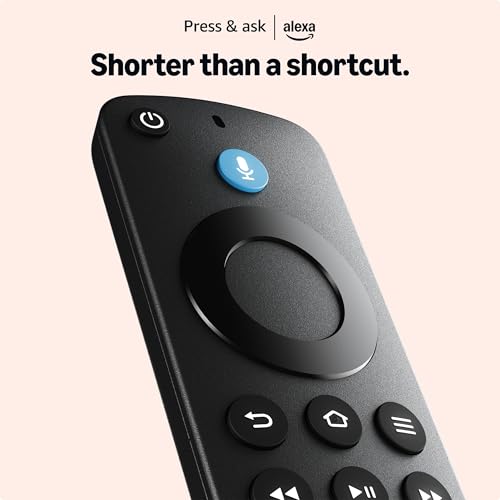
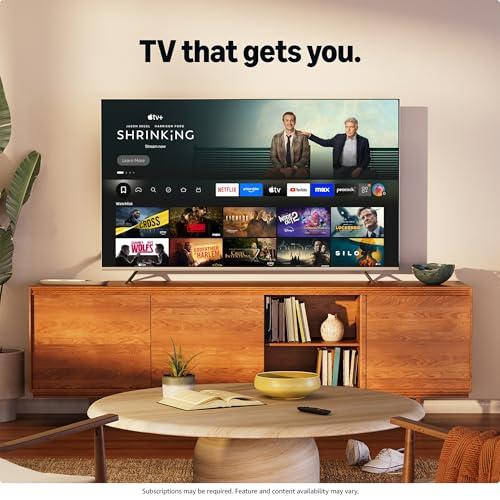
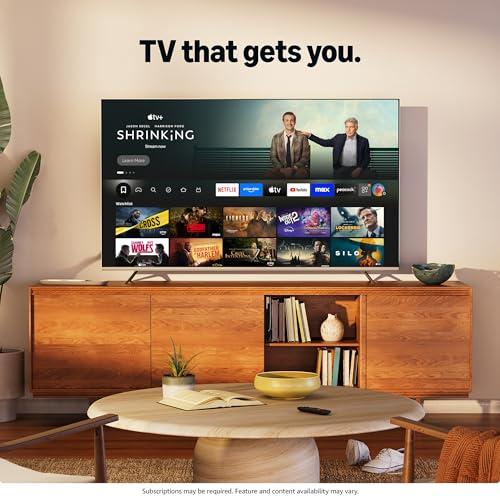
Both models run Amazon's Fire TV platform, which provides an identical smart TV experience regardless of which model you choose. Fire TV has evolved significantly since its introduction, and the 2025 version offers fast navigation, extensive app support, and tight integration with Amazon's ecosystem.
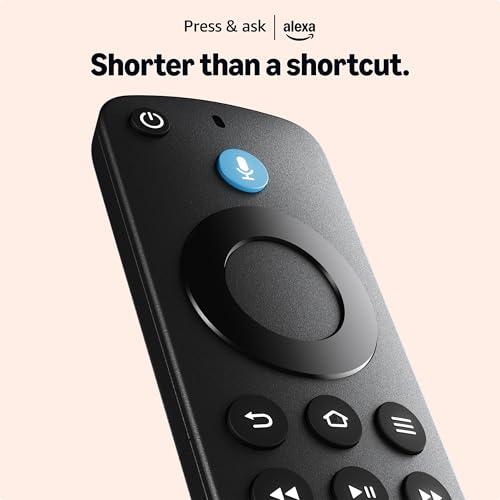
The platform includes all major streaming services—Netflix, Disney+, Apple TV+, HBO Max, and many others—plus access to Amazon's own Prime Video content library. Alexa voice control works well for searching content, controlling playback, and managing connected smart home devices. The interface feels responsive and rarely exhibits the lag that plagued earlier smart TV platforms.
One aspect that some users find annoying is Fire TV's aggressive promotion of Amazon content and services. The home screen prominently features Amazon Prime Video suggestions and occasionally displays ads for Amazon products. While this integration works well if you're already invested in Amazon's ecosystem, it can feel intrusive if you primarily use other streaming services.
TV audio performance often gets overlooked in comparisons, but the difference between these models is substantial enough to influence purchasing decisions.
The QD6 Series includes basic 10W speakers that provide adequate sound for casual viewing but lack the power and range for an engaging movie experience. The sound is clear enough for dialogue but struggles with dynamic range—the difference between quiet whispers and explosive action scenes. Most users will want to add a soundbar or external speakers for serious movie watching.
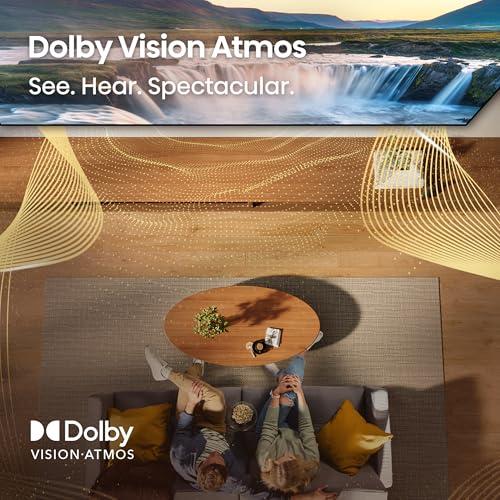
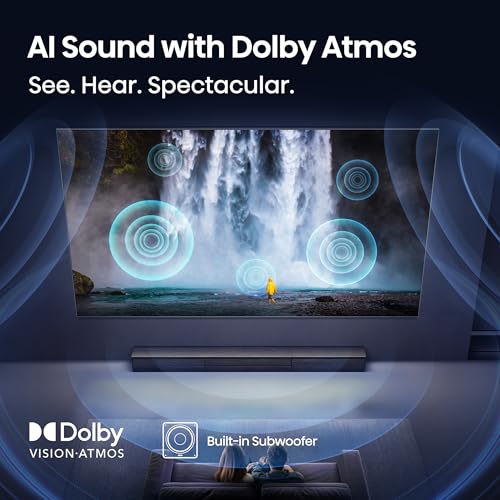
The U6 Series includes a 40W, 2.1-channel speaker system with a built-in subwoofer. This configuration provides significantly better bass response, clearer dialogue, and more immersive surround sound effects. While it still can't match a dedicated sound system, the built-in audio is good enough that many users won't feel compelled to upgrade immediately.
For home theater enthusiasts, both models support eARC (Enhanced Audio Return Channel) for passing high-quality audio formats to external sound systems, but the U6's superior built-in audio provides more flexibility in setup options.
At the time of writing, the U6 Series commands roughly double the price of the QD6 Series, which raises the obvious question: is it worth twice as much?
The answer depends heavily on your priorities and viewing habits. The QD6 delivers solid performance for its price point, offering quantum dot color enhancement, 4K resolution, and a reliable smart platform. For secondary TVs, casual viewing, or budget-conscious buyers, it provides genuine value by including premium technologies at an accessible price.
However, the U6 doesn't just cost twice as much—it delivers several times the performance in key areas. The Mini-LED backlighting with 608 dimming zones, 1,000-nit brightness, 144Hz gaming support, and superior audio represent genuine technological advances that translate to noticeable real-world improvements.
The value proposition becomes clearer when you consider the intended usage. If this TV will be your primary entertainment display for the next 5-7 years, the U6's superior performance and future-proofing capabilities justify the premium. If you need a good TV for secondary spaces or have strict budget constraints, the QD6 offers solid performance without the premium features you might not fully utilize.
For dedicated home theater setups, the choice between these models becomes more clearcut. The U6 Series provides the picture quality foundation necessary for an engaging cinematic experience, while the QD6 represents more of a compromise.
True home theater setups benefit enormously from high contrast ratios, accurate colors, and proper HDR implementation. The U6's Mini-LED backlighting creates the deep blacks and bright highlights that make movies look three-dimensional and engaging. Combined with its superior brightness handling, it can create a more authentic representation of what directors intended audiences to see.
The gaming capabilities also matter for modern home theaters, as many users integrate gaming consoles into their entertainment systems. The U6's 144Hz support and HDMI 2.1 connectivity ensure compatibility with the latest gaming technology, while the QD6 may limit gaming performance.
However, serious home theater enthusiasts should consider that even the U6 Series makes compromises compared to higher-end models from premium brands. While it offers excellent value in the mid-tier market, those seeking absolute picture quality might want to consider OLED displays or higher-end QLED models with more sophisticated processing and better panel uniformity.
After evaluating both models across multiple performance categories, the decision framework becomes relatively straightforward.
Choose the QD6 Series if you need a reliable 4K TV with good color performance at a budget-friendly price. It makes sense for secondary bedrooms, kids' rooms, or situations where you want QLED technology without paying premium prices. The Fire TV platform provides access to all modern streaming services, and the picture quality is genuinely good for casual viewing.
Choose the U6 Series if you want a TV that excels at everything modern displays are asked to do. The Mini-LED backlighting creates dramatically better contrast, the 144Hz gaming support future-proofs your setup for current-generation consoles, and the superior brightness makes it suitable for any lighting condition. The built-in audio is good enough to delay purchasing a soundbar, and the overall experience feels premium rather than compromised.
The U6 Series represents the better long-term investment for anyone who watches TV regularly, games with modern consoles, or wants a display that can handle whatever content they throw at it. While it costs significantly more upfront, the performance improvements are substantial enough to justify the premium for most buyers who can afford it.
The QD6 Series serves budget-conscious buyers well and shouldn't be dismissed as inadequate—it provides solid performance and will satisfy most casual viewing needs. However, if you can stretch your budget to accommodate the U6 Series, you'll likely find the additional capabilities worth the investment for years of daily use.
| Hisense 65" QD6 Series QLED 4K Fire TV | Hisense 65" U6 Series Mini-LED QLED 4K Fire TV |
|---|---|
| Backlight Technology - Determines contrast and black level performance | |
| Direct LED without local dimming (basic contrast) | Mini-LED with 608 local dimming zones (excellent contrast) |
| Peak Brightness - Critical for HDR impact and bright room viewing | |
| ~385 nits (adequate for dark rooms) | 1,000 nits (excellent for any lighting condition) |
| Refresh Rate - Essential for gaming and sports viewing | |
| 60Hz standard (limits modern console gaming) | 144Hz native (supports next-gen console features) |
| HDMI Connectivity - Affects gaming console compatibility | |
| HDMI 2.0 only (4K@60Hz maximum) | Two HDMI 2.1 ports (4K@144Hz with VRR support) |
| Gaming Features - Modern console optimization | |
| Basic Game Mode (no VRR or ALLM) | VRR, ALLM, FreeSync Premium, Game Mode Pro |
| Audio System - Built-in sound quality | |
| 10W speakers (basic audio, soundbar recommended) | 40W 2.1-channel with subwoofer (good built-in sound) |
| HDR Support - Wide format compatibility for streaming content | |
| Dolby Vision, HDR10+, HDR10, HLG | Dolby Vision IQ, HDR10+ Adaptive, HDR10, HLG, Advanced HDR |
| Smart Platform - Identical streaming and voice control experience | |
| Fire TV with Alexa, Apple AirPlay support | Fire TV with Alexa, Apple AirPlay support |
| Target Use Case - Best application for each model | |
| Budget-friendly secondary TV or casual viewing | Primary entertainment display and serious gaming |
| Value Proposition - Performance per dollar consideration | |
| Excellent entry-level QLED value | Strong premium TV value with future-proofing |
The primary difference is backlight technology. The Hisense QD6 Series uses direct LED backlighting without local dimming, while the Hisense U6 Series features Mini-LED technology with 608 local dimming zones. This gives the U6 Series dramatically better contrast, deeper blacks, and more precise brightness control for a superior picture quality experience.
The Hisense U6 Series is significantly better for modern gaming consoles. It offers 144Hz refresh rate, HDMI 2.1 ports supporting 4K@144Hz, Variable Refresh Rate (VRR), and Auto Low Latency Mode (ALLM). The Hisense QD6 Series is limited to 60Hz with HDMI 2.0, which restricts gaming to 4K@60Hz maximum and lacks advanced gaming features.
The Hisense U6 Series delivers up to 1,000 nits peak brightness, nearly triple the ~385 nits of the Hisense QD6 Series. This brightness difference makes the U6 much better for bright rooms, daytime viewing, and creates more impactful HDR performance with highlights that truly pop.
Yes, both the Hisense QD6 and U6 Series run the identical Fire TV platform with Alexa voice control, Apple AirPlay support, and access to all major streaming apps. The smart TV experience, interface speed, and app selection are essentially the same regardless of which model you choose.
The Hisense U6 Series has significantly better audio with 40W output and a 2.1-channel system including a built-in subwoofer. The Hisense QD6 Series has basic 10W speakers that are adequate for casual viewing but will likely require a soundbar upgrade for movies or music.
The Hisense QD6 Series can work for budget home theaters but makes notable compromises. It lacks the deep blacks and high brightness needed for cinematic contrast, and the 60Hz limitation reduces gaming capabilities. For dedicated home theater use, the Hisense U6 Series provides the picture quality foundation necessary for an engaging movie experience.
The Hisense QD6 Series produces "TV blacks" that appear noticeably gray in dark rooms due to its lack of local dimming. The Hisense U6 Series achieves near-OLED black levels thanks to its 608 local dimming zones, making letterbox bars and dark scenes truly disappear into room darkness for a more immersive viewing experience.
Both offer good value in their price tiers. The Hisense QD6 Series provides excellent value for budget-conscious buyers seeking QLED technology at an accessible price. The Hisense U6 Series justifies its higher cost with Mini-LED technology, gaming features, and brightness that deliver several times better performance in key areas.
The Hisense QD6 Series works adequately in moderately lit rooms but may appear washed out in very bright spaces or with direct sunlight. The Hisense U6 Series excels in any lighting condition thanks to its 1,000-nit brightness, maintaining picture quality even in challenging bright room environments.
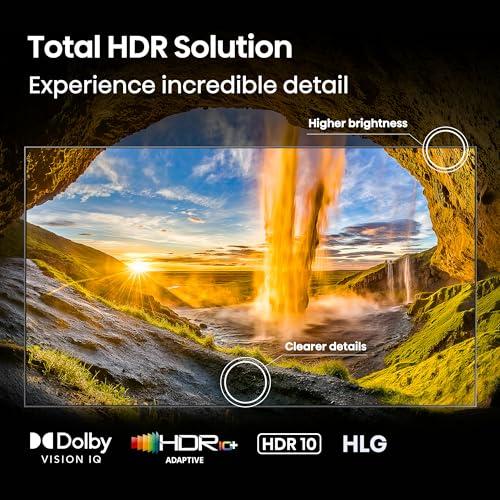
Both support major HDR formats, but the Hisense U6 Series includes more advanced variants. The QD6 supports Dolby Vision, HDR10+, HDR10, and HLG. The U6 adds Dolby Vision IQ, HDR10+ Adaptive, and Advanced HDR by Technicolor for better automatic optimization and wider content compatibility.
The Hisense U6 Series is superior for sports due to its 144Hz refresh rate and advanced motion processing, which virtually eliminates motion blur during fast action. The Hisense QD6 Series can show motion artifacts during rapid movement like quick camera pans or fast-moving players, making sports less crisp and smooth.
Yes, the Hisense QD6 Series is an excellent choice for secondary TVs, bedrooms, or casual viewing spaces. Its quantum dot color technology and Fire TV platform provide a premium experience without paying for advanced features like high refresh gaming or Mini-LED backlighting that you might not fully utilize in these applications.
We've done our best to create useful and informative comparisons to help you decide what product to buy. Our research uses advanced automated methods to create this comparison and perfection is not possible - please contact us for corrections or questions. These are the sites we've researched in the creation of this article: rtings.com - bestbuy.com - pcvarge.com - youtube.com - consumerreports.org - costco.com - youtube.com - rtings.com - hometechnologyreview.com - manuals.plus - hisense-usa.com - costco.com - bestbuy.com - staples.com - hisense-usa.com - manuals.plus - pcrichard.com - hometechnologyreview.com - bestbuy.com - bestbuy.com - hisense-usa.com - youtube.com - bestbuy.com - rtings.com - youtube.com - tomsguide.com - static.pcrichard.com - hisense-usa.com - pcguide.com - hisense-usa.com - manuals.plus - costco.com - pcrichard.com - beverlycenter.com - hisense-usa.com - rtings.com - device.report

Privacy Policy
Terms and Conditions - Affiliate Policy
Home Security
© Copyright 2008-2026.
11816 Inwood Rd #1211, Dallas, TX 75244