

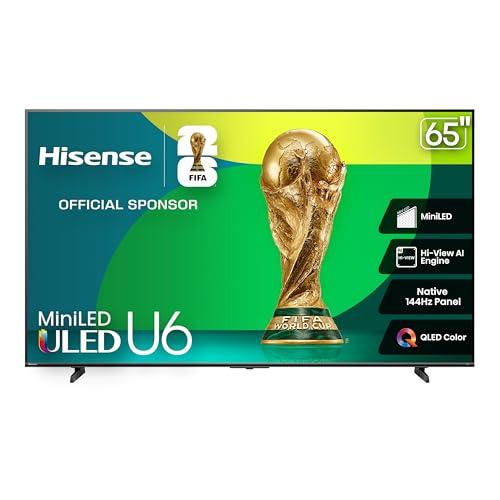
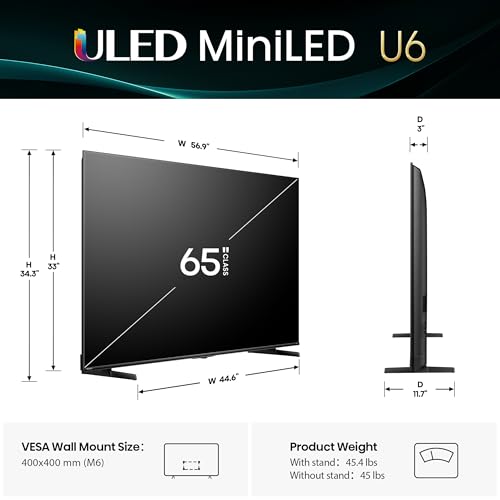
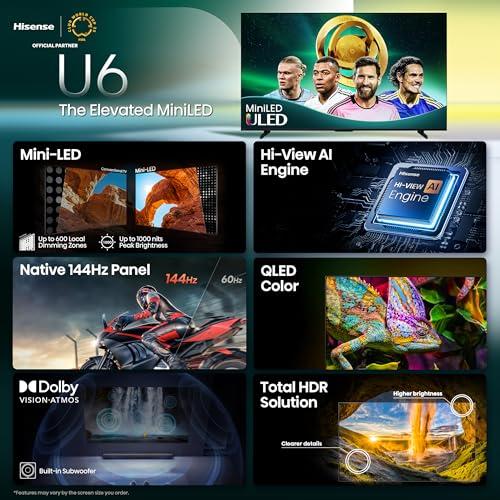
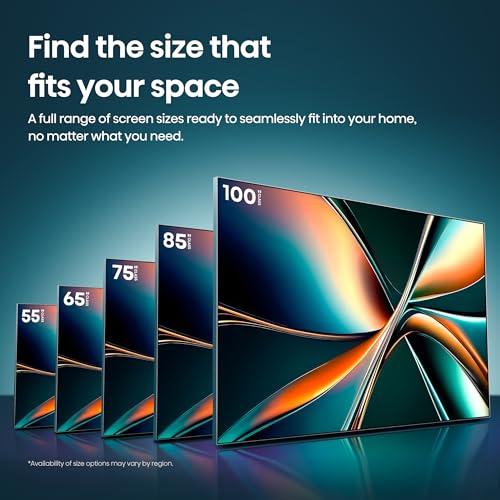
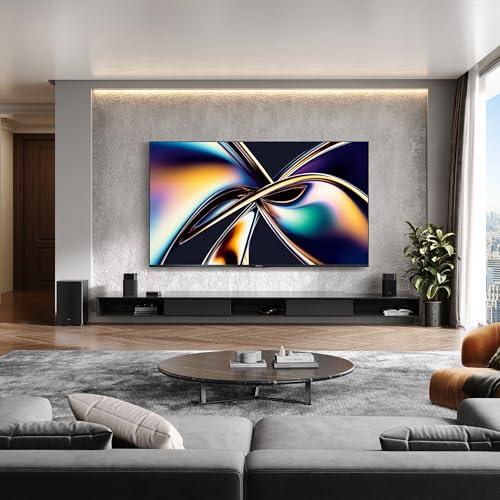
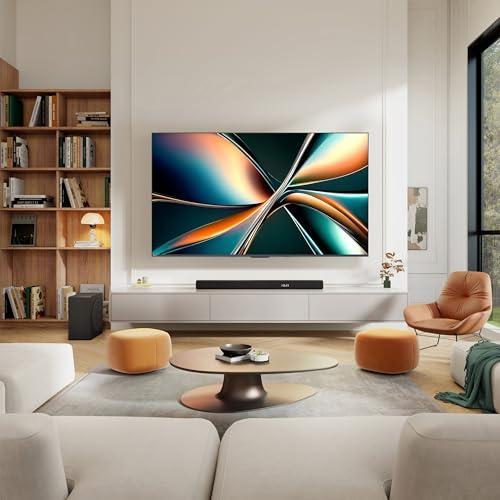
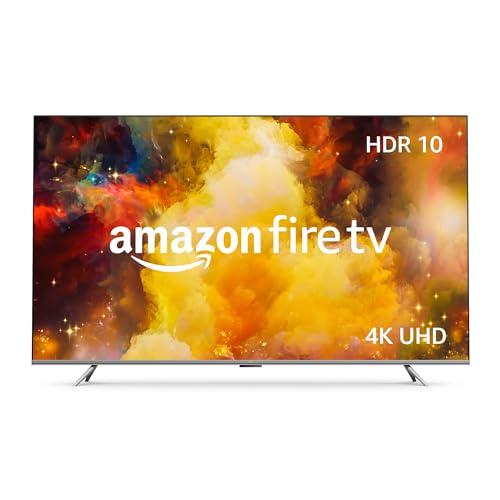
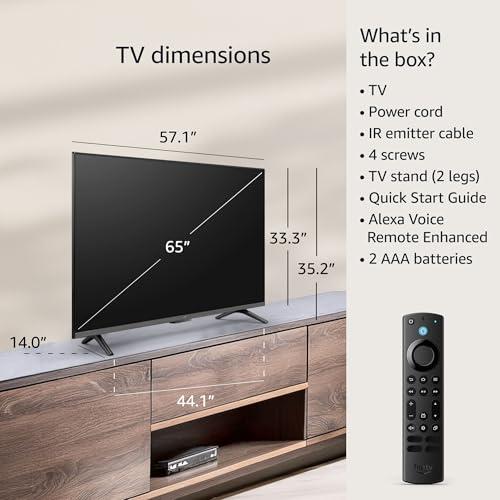
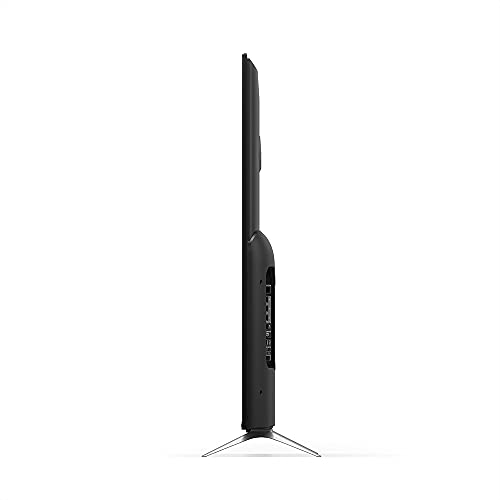
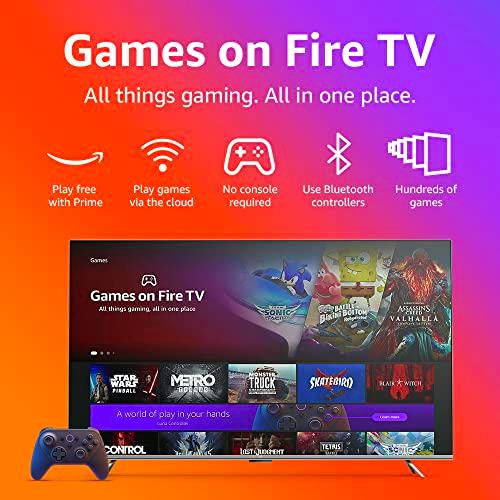
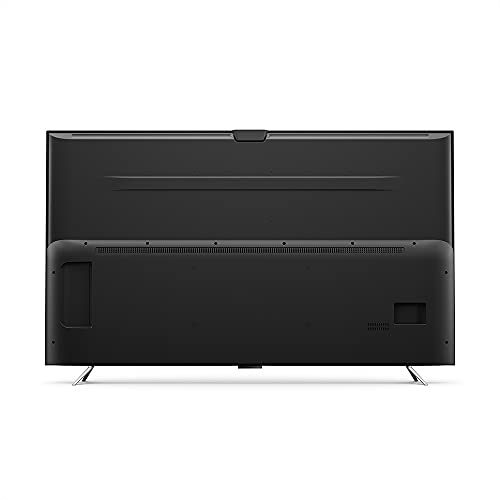
When shopping for a 65-inch smart TV in today's market, you'll encounter two distinctly different approaches to delivering entertainment. The Hisense U6 Series Mini-LED represents the cutting-edge display technology camp, while the Amazon Fire TV Omni Series focuses on seamless smart home integration. Both aim to deliver excellent viewing experiences, but their methods—and the results—differ significantly.
Understanding these differences matters because your TV will likely be the centerpiece of your entertainment setup for the next 5-7 years. The decision between advanced display technology and ecosystem convenience isn't just about today's needs; it's about future-proofing your investment and ensuring you're happy with your choice as technology evolves.
The fundamental difference between the Hisense U6 Series and Amazon Fire TV Omni Series lies in their core design philosophy. Hisense has prioritized display technology improvements, cramming premium features typically found in much more expensive TVs into an affordable package. Amazon, conversely, has focused on creating a TV that works seamlessly within their smart home ecosystem while maintaining decent picture quality.
This philosophical divide creates interesting trade-offs. The Hisense model delivers superior picture quality, gaming performance, and audio capabilities but relies on Amazon's Fire TV platform for smart features. The Amazon model provides unmatched voice control convenience and smart home integration but compromises on display technology to hit their target price point.
Both TVs launched in recent years, with the Hisense representing 2024-2025 technology improvements in Mini-LED backlighting and gaming features. The Amazon model reflects their continued push into hardware, building on lessons learned from earlier Fire TV devices. The timing matters because both benefit from mature smart TV platforms and improved manufacturing processes that have driven down costs for premium features.
The most significant difference between these TVs lies in their display technology, and it's here where the Hisense U6 Series demonstrates clear superiority. Mini-LED backlighting—the technology that powers the Hisense—represents a major advancement over traditional LED backlighting used in the Amazon Fire TV Omni Series.
To understand why this matters, think of your TV's backlight as the foundation for everything you see. Traditional LED TVs, like the Amazon model, use a relatively small number of LED lights positioned around the edges or across the back of the screen. These lights illuminate the entire display, but they can't be controlled with much precision. When you're watching a scene with bright stars against a dark sky, the whole area around those stars tends to glow slightly—what we call "blooming."
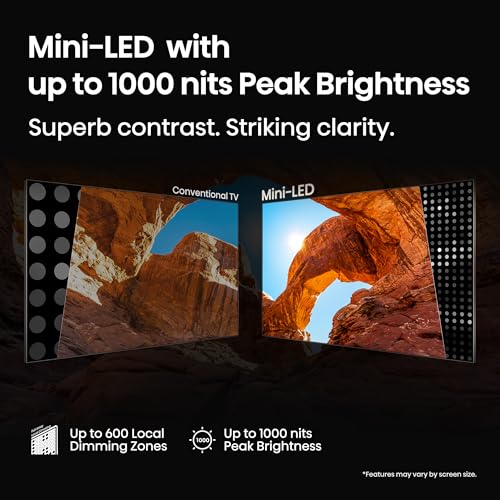
Mini-LED technology, found in the Hisense model, uses thousands of tiny LEDs arranged in hundreds of separate zones across the back of the screen. Each zone can be controlled independently, allowing for incredibly precise lighting. Those same stars against a dark sky will appear bright and crisp while the surrounding areas remain perfectly black. This level of control results in dramatically better contrast—the difference between the darkest and brightest parts of the image.
The practical impact is immediately noticeable. When watching movies with dark scenes, like horror films or space epics, the Hisense TV delivers true blacks that make the Amazon model look washed out by comparison. Bright scenes benefit too, with highlights that pop without affecting surrounding areas.
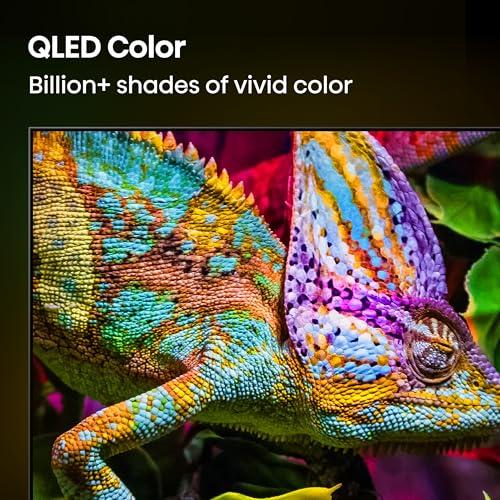
Color reproduction also favors the Hisense model significantly. Both TVs use quantum dot technology (QLED), which enhances color accuracy and vibrancy, but the Hisense implementation is more sophisticated. Quantum dots are microscopic particles that emit specific colors when hit by light, allowing for more accurate and vibrant color reproduction than traditional LCD panels. The Hisense U6 Series covers a wider range of colors and displays them more accurately, resulting in more lifelike images.
Peak brightness represents another crucial difference. The Hisense model can reach up to 1000 nits of brightness, while the Amazon TV maxes out around 330 nits. This difference becomes critical for HDR (High Dynamic Range) content, where bright highlights need to actually appear bright to create the intended visual impact. Watching HDR movies on the Amazon model often results in a flat, muted appearance because the TV simply can't get bright enough to display the content as intended.
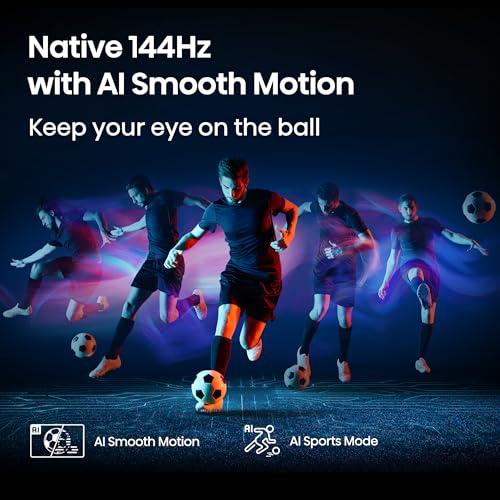
For gamers, the performance gap between these TVs is substantial enough to make the decision easy. The Hisense U6 Series supports a native 144Hz refresh rate, meaning it can display up to 144 unique frames per second. This creates incredibly smooth motion, especially noticeable in fast-paced games like first-person shooters or racing titles.
The Amazon Fire TV Omni Series is limited to 60Hz, which feels sluggish by comparison when playing modern games. The difference is like comparing a smooth highway drive to stop-and-go city traffic—both get you there, but one feels much more fluid and responsive.
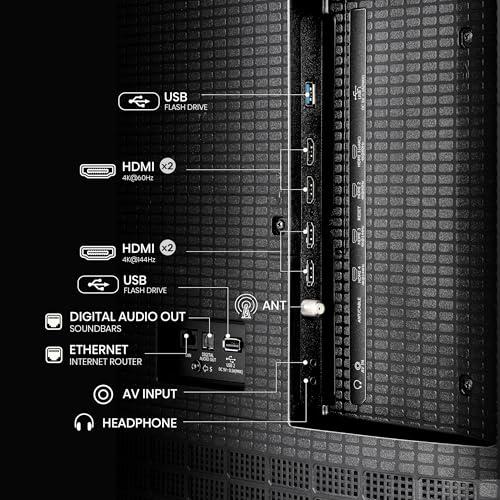
HDMI 2.1 support amplifies this advantage. The Hisense model includes two full-bandwidth HDMI 2.1 ports, allowing it to handle 4K resolution at 144Hz simultaneously. This means your PlayStation 5, Xbox Series X, or gaming PC can take full advantage of their capabilities without compromise. The TV also supports Variable Refresh Rate (VRR), which eliminates screen tearing by synchronizing the display refresh rate with your gaming device's frame output.
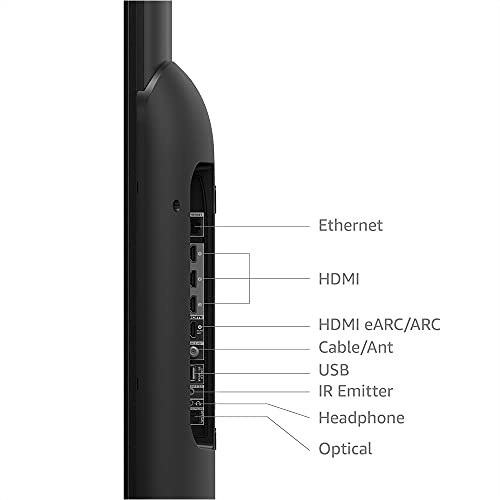
The Amazon model includes HDMI 2.1, but only for enhanced Audio Return Channel (eARC) functionality—it can't handle the high bandwidth needed for advanced gaming features. This limitation means you're stuck with 4K at 60Hz maximum, regardless of your gaming device's capabilities.
Input lag—the delay between pressing a button and seeing the action on screen—measures similarly low on both TVs when using their respective game modes. However, the Hisense model's additional features like Game Mode Pro and the dedicated Game Bar provide real-time information and adjustments that serious gamers appreciate.
Auto Low Latency Mode (ALLM) works on both TVs, automatically switching to game mode when it detects a gaming device. This convenience feature prevents you from manually switching modes every time you start playing.
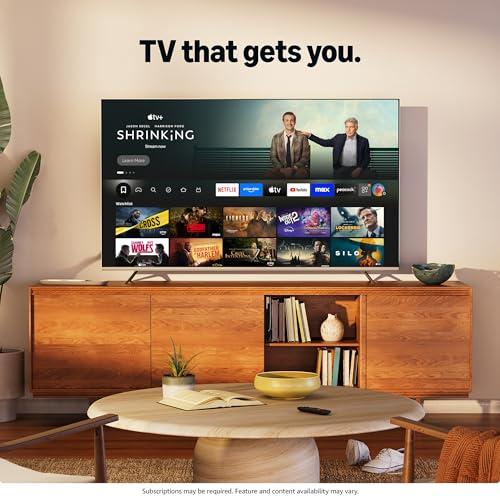
Both TVs run Amazon's Fire TV operating system, which creates an interesting situation where the smart TV experience is nearly identical. You'll find the same interface, the same apps, and the same integration with Amazon's services on both models. This similarity actually highlights the other differences more clearly since software isn't a differentiating factor.
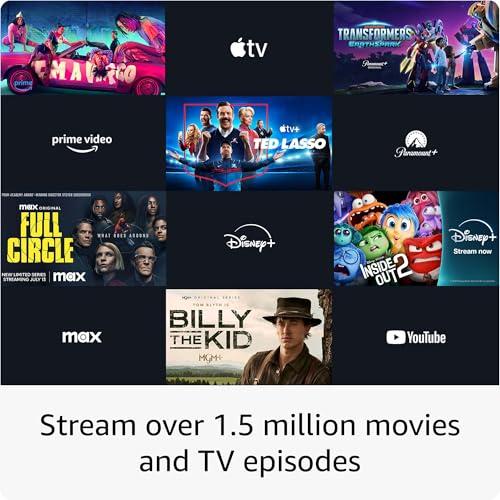
Fire TV OS provides access to all major streaming services—Netflix, Disney+, Apple TV+, YouTube, and others—along with Amazon's own Prime Video content. The interface prioritizes Amazon content and services, which some users love for its convenience while others find pushy. The platform includes robust search capabilities, personalized recommendations, and integration with Amazon's shopping ecosystem.
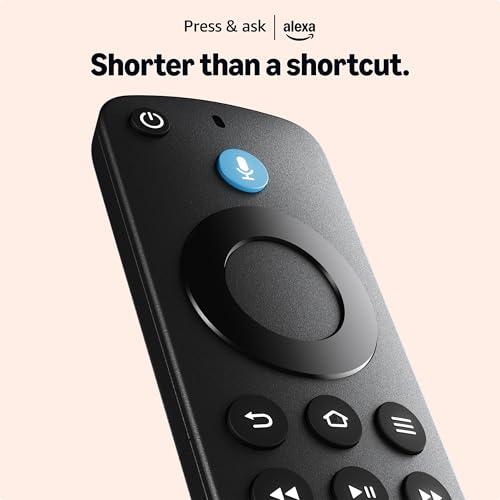
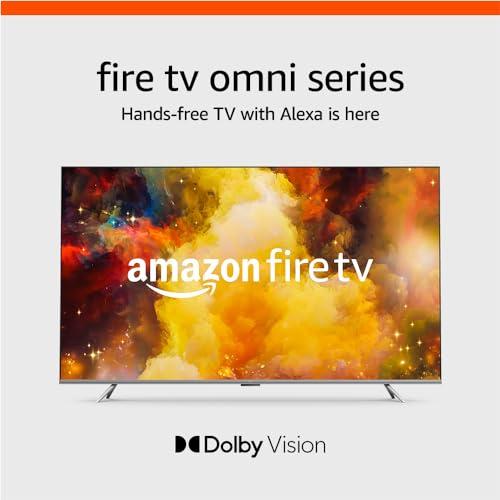
Where the TVs differ slightly is in voice control implementation. The Amazon Fire TV Omni Series includes far-field microphones, allowing hands-free voice control even when the TV is off. You can say "Alexa, turn on the TV" from across the room, and it will respond. This convenience extends to controlling smart home devices, checking weather, playing music, and other Alexa functions.
The Hisense model requires using the voice remote for Alexa commands, which is less convenient but still functional. For most users, this difference won't significantly impact daily usage, but smart home enthusiasts who want seamless voice control throughout their living space will notice the limitation.
Both TVs support Amazon's ecosystem features like viewing Ring doorbell footage, controlling smart lights, and accessing Amazon Music. If you're already invested in Amazon's smart home products, either TV integrates well, though the Amazon model provides a slightly more seamless experience.
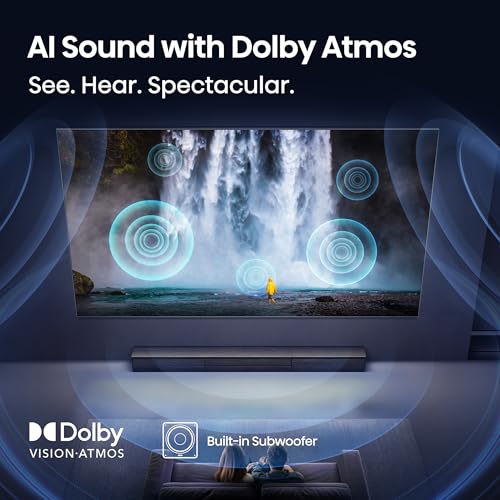
Audio represents another area where the Hisense U6 Series demonstrates clear superiority. Its 2.1 channel speaker system includes a dedicated built-in subwoofer, delivering significantly better bass response and overall audio clarity compared to the Amazon model's basic 2.0 stereo speakers.
The power difference is substantial: 40 watts total output for the Hisense versus 16 watts for the Amazon model. More importantly, the Hisense TV supports full Dolby Atmos processing, creating spatial audio effects that make movies and games more immersive. Dolby Atmos uses advanced processing to create the illusion of sound coming from above and around you, even from the TV's built-in speakers.
The Amazon model can pass Dolby Atmos signals to external sound systems via its eARC-capable HDMI port, but it can't process Dolby Atmos internally. This limitation means you'll need a soundbar or home theater system to experience spatial audio, adding to your total cost.
For users who prefer not to invest in external audio equipment immediately, the Hisense model's superior built-in audio provides a more complete entertainment experience out of the box. The improved bass response particularly benefits action movies, music, and games where low-frequency effects add impact and immersion.
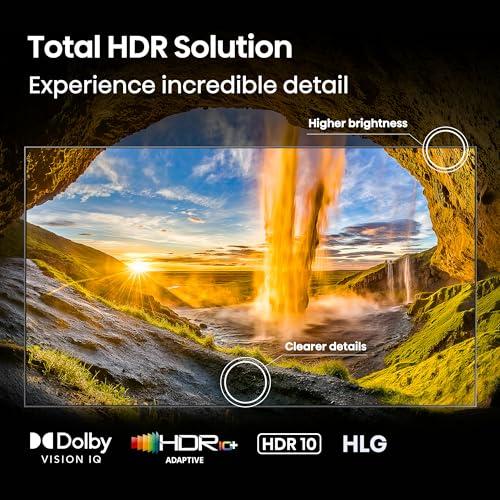
HDR content represents the biggest visual upgrade in modern entertainment, but it requires capable display technology to show meaningful improvements. HDR works by expanding both the range of brightness (from deeper blacks to brighter highlights) and the range of colors beyond what standard content can display.
The Hisense U6 Series excels at HDR playback thanks to its high peak brightness and superior local dimming. When watching HDR movies, bright elements like explosions, sunlight, or fires appear genuinely bright and impactful while maintaining detail. Dark scenes retain shadow detail without becoming muddy or gray.
Both TVs support major HDR formats including Dolby Vision, HDR10, and HLG, but support means little without the hardware to back it up. The Amazon Fire TV Omni Series can decode HDR signals, but its limited brightness capability means HDR content often looks only marginally better than standard content. The TV simply can't display the bright highlights that make HDR impressive.
This limitation becomes particularly noticeable with nature documentaries, action movies, and animated content where bright, vivid colors and lighting effects are central to the visual experience. The Hisense model makes these elements pop off the screen, while the Amazon model displays them in a more muted, flat manner.
At the time of writing, the Hisense U6 Series Mini-LED typically costs less than the Amazon Fire TV Omni Series while delivering substantially superior performance across multiple categories. This pricing dynamic creates one of the strongest value propositions in the TV market today.
The Mini-LED technology alone typically commands premium pricing in other brands' lineups. Hisense has managed to incorporate this advanced display technology into a mainstream-priced TV, making features that were previously exclusive to high-end models accessible to average consumers.
The Amazon model's pricing reflects its focus on smart home integration and ecosystem convenience rather than display technology advancement. For users who prioritize these features above picture quality, the premium might feel justified. However, most consumers will find better value in the Hisense model's superior performance.
From a future-proofing perspective, the Hisense TV provides better long-term value. Its 144Hz capability and HDMI 2.1 features ensure compatibility with future gaming devices and content formats. The superior display technology will remain impressive years longer than the Amazon model's basic LED implementation.
If you're building a dedicated home theater setup, the choice becomes even clearer in favor of the Hisense U6 Series. Home theaters benefit most from superior contrast, brightness, and color accuracy—all areas where the Hisense dominates.
The Mini-LED backlighting performs particularly well in darkened rooms where contrast differences become most apparent. Movie nights will look significantly more cinematic on the Hisense model, with deep blacks that don't glow gray and bright highlights that create genuine visual impact.
For home theater audio, the Hisense model's superior built-in speakers provide better temporary audio while you decide on external audio equipment. Its Dolby Atmos processing also means you can experience spatial audio immediately, even before investing in a full surround sound system.
The Amazon model can still work in a home theater setup, but you'll need to address its audio limitations with external speakers and accept its contrast limitations for movie watching.
The Hisense U6 Series Mini-LED makes sense for most buyers, particularly gamers, movie enthusiasts, and anyone who wants the best picture quality for their money. Its superior display technology, gaming features, and audio quality provide excellent value and future-proofing.
Specifically choose the Hisense model if you:
The Amazon Fire TV Omni Series makes sense for users deeply invested in Amazon's ecosystem who prioritize convenience features over display technology. Its hands-free voice control and seamless smart home integration provide genuine utility for the right user.
Choose the Amazon model if you:
The Hisense U6 Series Mini-LED delivers dramatically better performance across most categories while typically costing less than the Amazon Fire TV Omni Series. This combination of superior display technology, gaming features, and audio quality at a competitive price makes it an easy recommendation for most buyers.
The Amazon model serves a specific niche of users who prioritize smart home integration and voice control convenience over display performance. For everyone else, the Hisense provides better value and a more impressive viewing experience that will remain satisfying for years to come.
In the rapidly evolving TV market, choosing a model with advanced display technology like Mini-LED ensures your investment stays relevant as content and gaming technology continue advancing. The Hisense U6 Series positions you well for this future while delivering immediate benefits today.
| Hisense 65" U6 Series Mini-LED QLED 4K Fire TV | Amazon Fire TV Omni Series 65" 4K UHD Smart TV |
|---|---|
| Display Technology - Foundation for picture quality and contrast | |
| Mini-LED backlighting with up to 600 local dimming zones | Standard direct LED backlighting without local dimming |
| Peak Brightness - Critical for HDR content and bright rooms | |
| 1,000 nits (excellent HDR performance) | 330 nits (limited HDR impact) |
| Refresh Rate - Smooth motion for gaming and sports | |
| Native 144Hz (future-proof for next-gen gaming) | 60Hz (adequate for streaming, limiting for gaming) |
| HDMI 2.1 Support - High bandwidth for 4K gaming | |
| Two full-bandwidth HDMI 2.1 ports (4K at 144Hz) | One HDMI 2.1 port (eARC only, not full bandwidth) |
| Gaming Features - Advanced console compatibility | |
| VRR, ALLM, FreeSync Premium, G-SYNC compatible, Game Mode Pro | Basic VRR and ALLM support |
| Audio System - Built-in sound quality | |
| 2.1 channel with subwoofer, 40W total, Dolby Atmos processing | 2.0 stereo speakers, 16W total, Dolby Atmos passthrough only |
| Voice Control - Smart home integration | |
| Alexa via remote (requires button press) | Hands-free Alexa with far-field microphones |
| Smart Platform - Apps and interface experience | |
| Fire TV OS (identical experience to Amazon model) | Fire TV OS (native Amazon implementation) |
| Color Technology - Vibrancy and accuracy | |
| Advanced QLED quantum dot implementation | Basic quantum dot with QLED branding |
| HDR Format Support - Premium content compatibility | |
| Dolby Vision, HDR10+, HDR10, HLG (comprehensive support) | Dolby Vision, HDR10, HLG (good support but brightness-limited) |
| Local Dimming - Contrast control in dark scenes | |
| Full-array with precise zone control (superior blacks) | No local dimming (average black levels) |
| Value Proposition - Performance per dollar spent | |
| Premium display tech at mainstream pricing | Smart home convenience at higher cost for basic display |
The Hisense 65" U6 Series Mini-LED QLED 4K Fire TV delivers significantly better picture quality thanks to its Mini-LED backlighting technology with up to 600 local dimming zones. This creates deeper blacks, brighter highlights, and better contrast compared to the Amazon Fire TV Omni Series 65" 4K UHD Smart TV, which uses standard LED backlighting without local dimming. The Hisense also reaches 1,000 nits peak brightness versus Amazon's 330 nits, making HDR content much more impactful.
The Hisense U6 Series is dramatically better for modern gaming, supporting native 144Hz refresh rates and featuring two full-bandwidth HDMI 2.1 ports that can handle 4K at 144Hz. It includes VRR, ALLM, FreeSync Premium, and G-SYNC compatibility for tear-free gaming. The Amazon Fire TV Omni Series is limited to 60Hz and only has HDMI 2.1 for eARC functionality, not high-bandwidth gaming features.
Yes, both the Hisense Mini-LED TV and Amazon Omni Series run Amazon's Fire TV operating system, providing identical access to streaming apps, Amazon services, and the same user interface. The main difference is that the Amazon model includes far-field microphones for hands-free Alexa voice control, while the Hisense requires using the voice remote for Alexa commands.
The Hisense U6 Series has superior audio with a 2.1 channel system including a built-in subwoofer and 40W total output, plus full Dolby Atmos processing for spatial audio. The Amazon Fire TV Omni Series features basic 2.0 stereo speakers with only 16W output and can only pass Dolby Atmos to external sound systems, not process it internally.
The Hisense Mini-LED model typically costs less while delivering premium display technology, superior gaming features, and better audio quality. It provides Mini-LED backlighting, 144Hz gaming, and Dolby Atmos processing at a mainstream price point. The Amazon Omni Series costs more but offers basic display technology, making the Hisense a clear value winner for most buyers.
While both TVs support HDR formats like Dolby Vision and HDR10, the Hisense U6 Series handles HDR content much better due to its 1,000-nit peak brightness and local dimming capabilities. The Amazon Fire TV Omni Series can decode HDR signals but its 330-nit limitation means HDR content looks only marginally better than standard content, lacking the bright highlights that make HDR impressive.
The Hisense Mini-LED TV is significantly better for home theater use, offering superior contrast with deep blacks and bright highlights that create a more cinematic experience in darkened rooms. Its built-in Dolby Atmos processing and better speakers also provide improved audio until you add external sound equipment. The Amazon model would require immediate audio upgrades and accepts display quality compromises.
The Hisense U6 Series performs much better in bright rooms thanks to its 1,000-nit peak brightness, which helps overcome ambient light and maintains image visibility. The Amazon Fire TV Omni Series with only 330 nits of brightness struggles in bright environments, appearing washed out and lacking contrast when competing with room lighting.
The Amazon Fire TV Omni Series has superior smart home integration with far-field microphones enabling hands-free voice control even when the TV is off. You can control smart home devices, check weather, and operate the TV from across the room. The Hisense model requires using the remote for voice commands, though it still integrates well with Amazon's ecosystem.
Yes, the Hisense Mini-LED TV includes two full-bandwidth HDMI 2.1 ports supporting 4K at 144Hz for gaming, while the Amazon Omni Series only has one HDMI 2.1 port limited to eARC functionality. Both offer standard connectivity options like Wi-Fi, Bluetooth, and USB ports, but the Hisense provides more future-proof gaming connectivity.
The Hisense U6 Series offers better future-proofing with its 144Hz capability, advanced HDMI 2.1 features, and premium display technology that will remain impressive longer. Its Mini-LED backlighting and gaming features ensure compatibility with future content and devices. The Amazon Fire TV Omni Series may feel outdated sooner due to its 60Hz limitation and basic display technology.
Choose the Hisense Mini-LED model if you prioritize picture quality, game on modern consoles, watch movies frequently, or want the best value for premium features. Select the Amazon Omni Series if you're deeply invested in Amazon's smart home ecosystem, prefer hands-free voice control throughout your living space, and are primarily a casual viewer with basic picture quality needs.
We've done our best to create useful and informative comparisons to help you decide what product to buy. Our research uses advanced automated methods to create this comparison and perfection is not possible - please contact us for corrections or questions. These are the sites we've researched in the creation of this article: youtube.com - bestbuy.com - rtings.com - youtube.com - tomsguide.com - rtings.com - static.pcrichard.com - hisense-usa.com - pcguide.com - hisense-usa.com - manuals.plus - costco.com - pcrichard.com - beverlycenter.com - hisense-usa.com - rtings.com - device.report - bestbuy.com - rtings.com - techradar.com - youtube.com - youtube.com - businessinsider.com - amazonforum.com - pcvarge.com - tvpartstoday.com - kitele.com - manuals.plus - bestbuy.com - youtube.com - diverse-marketplace.com

Privacy Policy
Terms and Conditions - Affiliate Policy
Home Security
© Copyright 2008-2026.
11816 Inwood Rd #1211, Dallas, TX 75244