

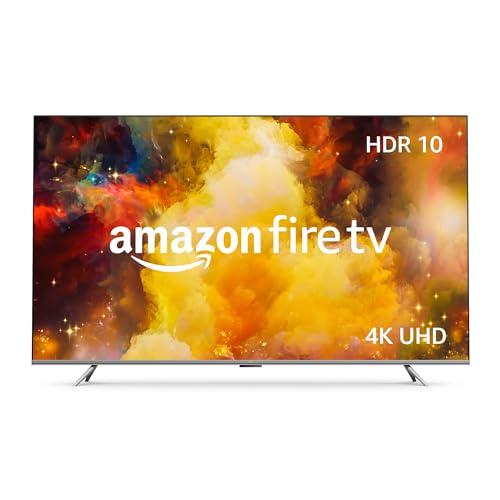
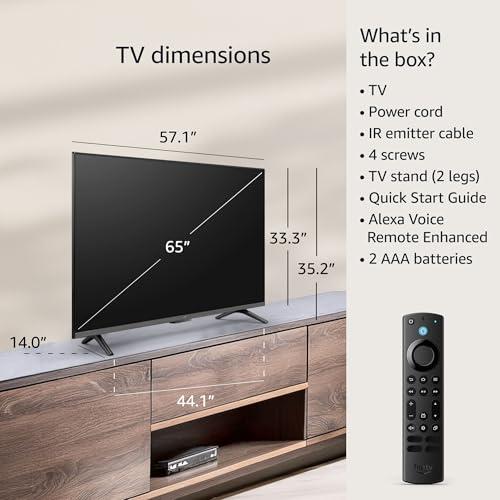

When you're looking to upgrade to a large 65-inch 4K TV without breaking the bank, two models consistently appear on shopping lists: the Amazon Fire TV Omni Series and the Toshiba C350 Series. Both offer the Fire TV smart platform and 4K resolution at competitive prices, but they take notably different approaches to delivering that big-screen experience.
The budget 65-inch TV market has exploded over the past few years, bringing large-screen entertainment to price points that seemed impossible just a decade ago. At the time of writing, quality 65" models can be found for well under $700, making them accessible to far more households than ever before.
When shopping in this category, you're looking for the sweet spot between screen size, picture quality, and smart features. The most important considerations include how well the TV handles different types of content (streaming, gaming, broadcast TV), how bright and colorful the picture appears in your living room, and whether the smart platform will remain responsive and updated over several years of use.
Modern budget TVs face an interesting challenge: they need to display everything from compressed streaming video to 4K Blu-rays to fast-paced video games, all while keeping costs reasonable. This means manufacturers make strategic choices about where to invest in premium features and where to accept compromises.
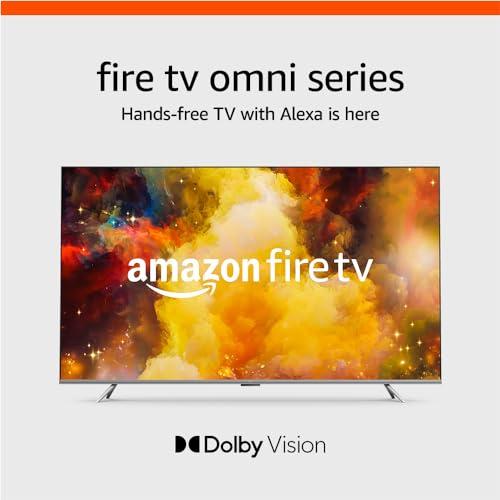
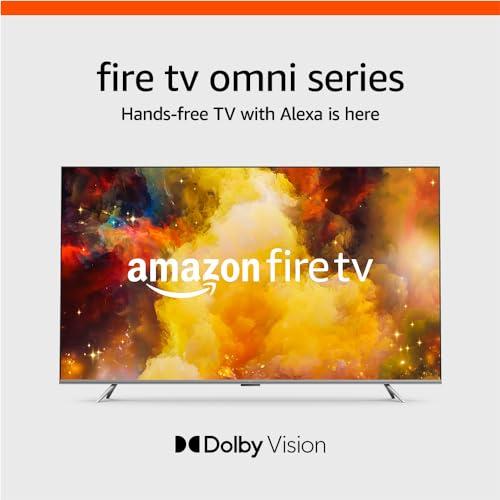
The Amazon Fire TV Omni Series represents Amazon's ambitious entry into TV manufacturing, launched in 2021 as the company's first serious attempt to compete directly with traditional TV brands. Amazon's approach focuses heavily on smart home integration and display technology, incorporating QLED (Quantum Dot LED) panels and hands-free Alexa control.
The standout feature is the built-in microphone array that enables hands-free voice control—you can literally tell your TV to turn on from across the room, search for shows, or control other smart home devices without touching a remote. This level of integration reflects Amazon's broader smart home ecosystem strategy.
From a display technology perspective, the Omni Series uses quantum dot technology, which places a layer of microscopic particles between the backlight and LCD panel. These quantum dots emit more precise colors when hit by light, resulting in a wider color gamut (the range of colors the TV can display) and more vibrant images than standard LCD panels.
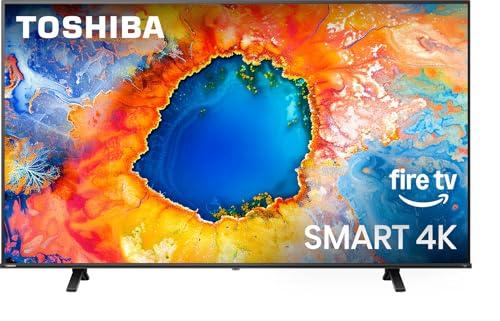
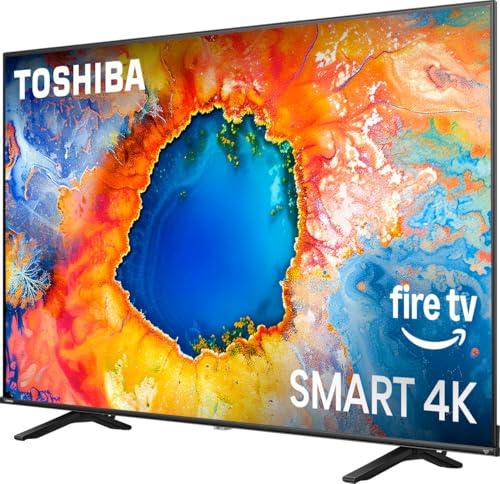
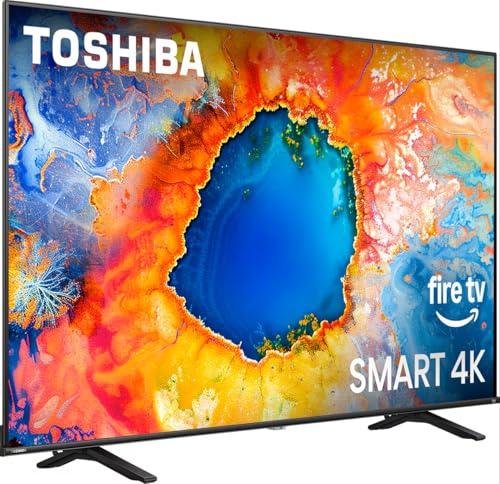
The Toshiba C350, released in 2023, takes a more traditional approach focused on maximizing value through proven technologies. Toshiba, with decades of TV manufacturing experience, emphasizes reliable performance and features that matter most to everyday viewing.
Rather than quantum dots, the C350 uses a full-array LED backlight system, which places LEDs across the entire back panel rather than just around the edges. This typically provides more even lighting across the screen, though without the color enhancement benefits of quantum dot technology.
The audio system deserves particular attention—Toshiba partnered with Harman Kardon for audio processing and includes DTS Virtual:X technology, which attempts to create a surround sound experience from the built-in speakers. While no TV speakers can match a dedicated sound system, enhanced audio processing can noticeably improve dialogue clarity and overall sound quality.
Picture quality differences between these TVs become apparent when you understand the underlying technologies and how they affect what you see on screen.
The Amazon Fire TV Omni covers approximately 93% of the DCI-P3 color space—a technical measurement that translates to more vivid and accurate colors in real-world viewing. When you're watching nature documentaries, animated movies, or vibrant TV shows, quantum dot technology makes colors appear more lifelike and saturated without looking oversaturated or artificial.
The difference is particularly noticeable in red and green tones. Standard LCD TVs often struggle to reproduce deep, rich reds—think of a sunset or red sports car—but quantum dots excel in this area. For viewers who prioritize color accuracy and vibrancy, this represents a meaningful upgrade over traditional LED-backlit displays.
The Toshiba C350, while lacking quantum dots, compensates with good color processing and wide viewing angles. This means the picture maintains its quality when viewed from the side, making it better suited for rooms where people sit at various angles to the screen.
Brightness capability significantly impacts TV performance in different viewing environments. The Omni Series achieves around 330 nits of peak brightness—adequate for most home viewing but not exceptional by modern standards. However, its VA (Vertical Alignment) panel technology delivers a 5000:1 contrast ratio, meaning bright areas appear 5000 times brighter than the darkest areas the panel can produce.
This high contrast ratio matters most when watching content with mixed lighting—think of a scene that shows both a bright window and a dark interior, or nighttime scenes in movies. VA panels like the one in the Amazon TV make dark areas appear genuinely dark rather than grayish, creating a more cinematic viewing experience.
The Toshiba C350 uses different panel technology that prioritizes viewing angles over contrast. While it won't deliver the same deep blacks, it maintains picture quality better when viewed from the sides of the room. For families who spread out across a large sectional sofa or have the TV mounted where not everyone sits directly in front, this can be more practical.
Both TVs support HDR (High Dynamic Range), but their implementation differs significantly. HDR content contains brightness and color information beyond what standard TV shows and movies include, allowing for more realistic lighting and colors that better match what your eyes see in real life.
The Amazon Fire TV Omni supports Dolby Vision, the premium HDR format that adjusts picture settings scene-by-scene rather than using fixed settings for entire movies. This means a bright outdoor scene and a dark indoor scene in the same film can each be optimized individually. However, the TV's limited peak brightness means HDR content won't deliver the dramatic improvements you'd see on higher-end models.
The Toshiba C350 also supports Dolby Vision but with even more limited brightness capabilities. HDR content will look somewhat better than standard content, but neither TV can truly showcase HDR's potential due to brightness limitations inherent in budget models.
For most viewers watching streaming content in moderately lit rooms, this limitation won't be deal-breaking. HDR's benefits are most apparent in very bright or very dark scenes, and much streaming content doesn't push these extremes.
Both TVs run Amazon's Fire TV platform, but the hardware powering that experience differs meaningfully. Think of smart TV performance like a smartphone—the same apps run differently on different processors and memory configurations.
The Amazon Fire TV Omni includes a quad-core ARM Cortex-A55 processor running at 1.3GHz with 2GB of RAM and 16GB of storage. These specifications might not mean much in isolation, but they translate to smoother navigation, faster app loading, and better multitasking when switching between streaming services.
More importantly, the Omni Series includes built-in microphones for hands-free Alexa control. This isn't just a gimmick—being able to turn the TV on, adjust volume, search for content, or control other smart home devices without finding the remote genuinely improves daily use. The microphones can be muted with a physical switch for privacy concerns.
The Toshiba C350 runs the same Fire TV interface but with less powerful processing hardware. While it includes an Alexa voice remote, you need to press a button and speak into the remote rather than addressing the TV directly. For basic streaming and app use, performance should be adequate, but heavy multitasking or demanding apps might reveal the processing limitations.
Both TVs will receive Fire TV platform updates, but the Amazon model is more likely to maintain smooth performance as the platform evolves and apps become more demanding over time.
Gaming performance on budget TVs has improved dramatically in recent years, though neither model targets serious competitive gamers. The key metrics for gaming are input lag (how long between pressing a button and seeing the action on screen) and motion handling (how well fast-moving objects appear without blur or artifacts).
The Amazon Fire TV Omni achieves approximately 15ms input lag in Game Mode—excellent for a budget TV and competitive with much more expensive models. It also includes HDMI 2.1 with eARC (Enhanced Audio Return Channel), which enables advanced audio formats to be sent to soundbars and AV receivers with full quality.
For PlayStation 5 and Xbox Series X owners, the Omni Series supports 4K resolution at 60Hz with Dolby Vision for gaming. While it can't do 120Hz gaming like premium models, most games run at 60fps anyway, making this limitation less important than the marketing might suggest.
The Toshiba C350 includes Auto Low Latency Mode, which automatically enables Game Mode when it detects a gaming console, but specific input lag measurements aren't widely available. It supports chroma 4:4:4, which ensures text and graphics from PC gaming appear sharp rather than fuzzy.
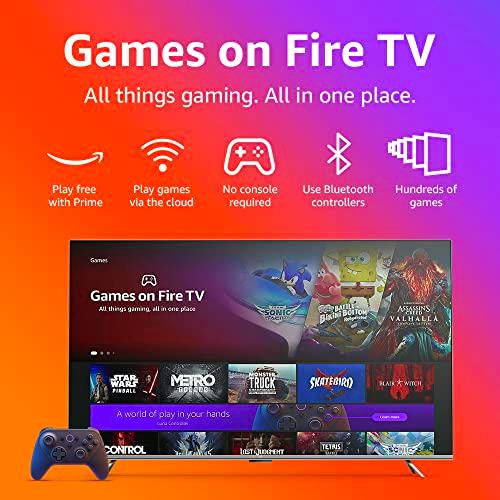
For casual gaming—playing single-player adventures, sports games with friends, or retro gaming—both TVs perform adequately. Competitive online gaming in fast-paced shooters or fighting games would benefit from the Amazon model's verified low input lag.
TV audio often gets overlooked until you're actually living with the TV daily. Both models attempt to improve upon the typically mediocre sound quality of budget TVs, but with different approaches.
The Toshiba C350 outputs 20W total power (2 x 10W speakers) compared to the Amazon model's 16W (2 x 8W). More importantly, Toshiba includes DTS Virtual:X processing, which attempts to create a surround sound effect from stereo speakers, and Harman Kardon audio tuning for better overall balance.
The Amazon Fire TV Omni focuses on connectivity rather than built-in audio, with full eARC support that can send uncompressed Dolby Atmos and other high-quality audio formats to external sound systems. Both TVs support eARC, but Amazon's implementation appears more robust based on user experiences.
In practice, neither TV's built-in audio will satisfy users accustomed to dedicated sound systems, but the Toshiba model provides noticeably clearer dialogue and fuller sound for everyday viewing. Both work well with soundbars, which we'd recommend for either model if audio quality matters to your viewing experience.
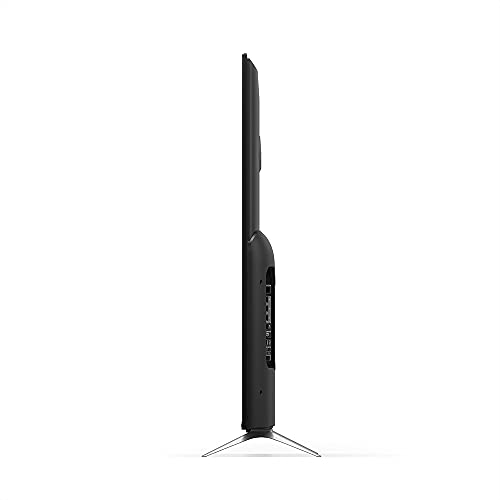
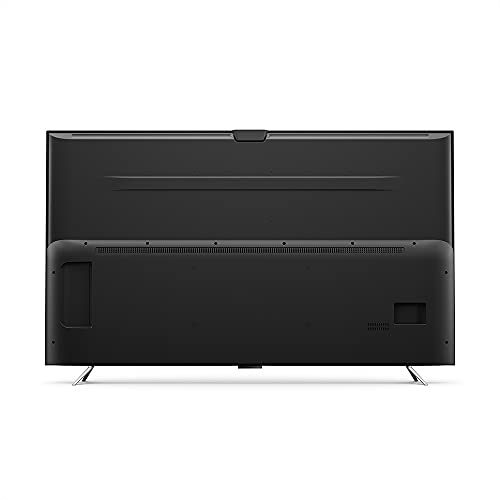
Build quality differences become apparent over years of use rather than initial setup. The Amazon Fire TV Omni features a premium-looking brushed silver finish and frameless design that fits well in modern living rooms. The build quality feels solid for the price point, though the wide-set feet require a substantial TV stand.
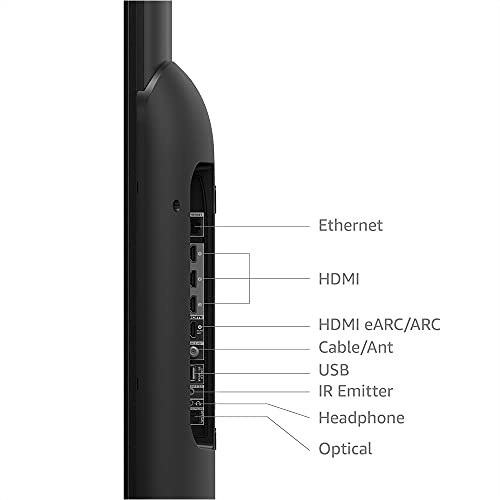
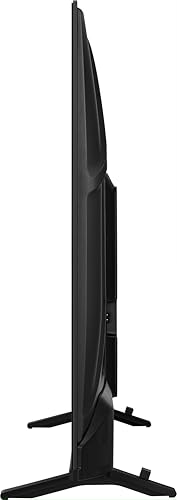
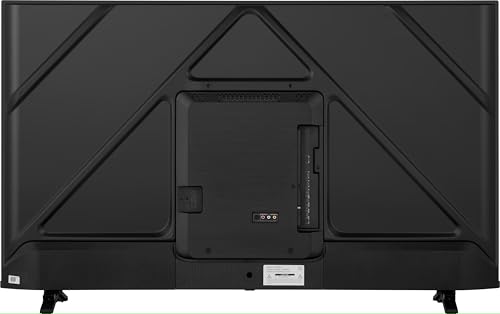
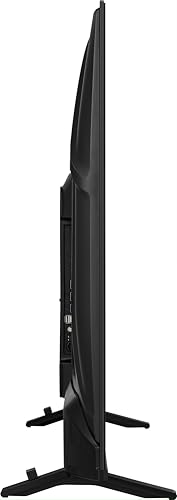
The Toshiba C350 opts for a more utilitarian design with thin bezels and practical cable management features. Toshiba's decades of TV manufacturing experience shows in thoughtful details like side-facing ports for easier access and sturdy metal construction.
Long-term reliability reports favor traditional TV manufacturers like Toshiba, though Amazon's TV division has generally received positive feedback for the relatively short time their TVs have been available. Both come with standard manufacturer warranties, but Amazon's customer service reputation provides additional peace of mind.
For dedicated home theater use, several factors become more critical than casual viewing scenarios. Room lighting control, seating distance, and audio system integration all influence which TV performs better in theater-style setups.
The Amazon Fire TV Omni's VA panel and higher contrast ratio make it better suited for darkened rooms where its deeper blacks enhance the cinematic experience. The QLED color accuracy also becomes more apparent when viewing high-quality source material like 4K Blu-rays.
However, the Toshiba C350's wide viewing angles make it better for theater rooms with multiple rows of seating or wide sectional arrangements. The enhanced audio processing also provides better sound for viewers who haven't yet invested in dedicated audio systems.
Both TVs handle the most common home theater sources adequately—streaming services, Blu-ray players, and game consoles all work well. Neither excels at upscaling lower-quality content like DVD or broadcast TV, which may disappoint viewers with extensive older media collections.
After researching user experiences and expert reviews, clear usage scenarios emerge for each TV.
Choose the Amazon Fire TV Omni Series if you prioritize picture quality, smart home integration, or gaming performance. The quantum dot display technology provides genuinely better color reproduction, and hands-free Alexa control becomes surprisingly useful in daily life. The verified low input lag makes it the safer choice for gaming, and the overall package justifies the typical $50-100 price premium over the Toshiba at the time of writing.
The Toshiba C350 makes sense for budget-focused buyers who need the largest screen for the lowest cost, families with wide seating arrangements who benefit from better viewing angles, or users who prioritize built-in audio quality over external sound systems. It delivers solid performance for essential TV functions without premium features that not everyone needs.
Neither TV will satisfy users seeking premium picture quality, advanced gaming features, or high-end audio performance. However, both represent significant value in the budget 65" category, bringing large-screen 4K entertainment to price points that would have been impossible just a few years ago.
The choice ultimately comes down to whether the Amazon model's display technology improvements and smart features justify its higher cost, or whether the Toshiba's focus on essential features at the lowest possible price better matches your priorities and viewing habits.
| Amazon Fire TV Omni Series 65" | Toshiba 65" C350 Series |
|---|---|
| Display Technology - Affects color vibrancy and accuracy | |
| QLED with Quantum Dots, VA panel | Standard LCD with full-array backlight |
| Peak Brightness - Critical for HDR and bright room viewing | |
| 330 nits (adequate for most rooms) | Limited brightness (best for darker rooms) |
| Contrast Ratio - Determines how deep blacks appear | |
| 5000:1 with VA panel (deeper blacks) | Lower contrast but wider viewing angles |
| Color Coverage - More colors means more lifelike images | |
| 93% DCI-P3 color space coverage | Standard color gamut coverage |
| Voice Control - Convenience and smart home integration | |
| Hands-free Alexa with built-in microphones | Voice remote only (button press required) |
| Processing Power - Affects smart TV responsiveness | |
| Quad-core ARM at 1.3GHz, 2GB RAM | Standard Fire TV processor (lower specs) |
| Gaming Performance - Input lag matters for responsive gameplay | |
| 15ms input lag, HDMI 2.1 with eARC | Auto Low Latency Mode, standard HDMI 2.0 |
| Audio Output - Built-in speaker quality | |
| 16W total (2 x 8W speakers) | 20W total with DTS Virtual:X and Harman Kardon |
| HDR Support - Enhanced contrast and color range | |
| Dolby Vision, HDR10, HLG | Dolby Vision, HDR10, HLG |
| Viewing Angles - Picture quality when viewed from the side | |
| Limited (typical VA panel restriction) | Wide viewing angles (better for group viewing) |
| Release Year - Indicates how current the technology is | |
| 2021 (established Fire TV integration) | 2023 (newer model with refined features) |
| Best For - Primary use case scenarios | |
| Picture quality enthusiasts, smart home users, gamers | Budget-conscious buyers, wide seating arrangements |
The Amazon Fire TV Omni Series 65" delivers superior picture quality thanks to its QLED display with quantum dot technology. This provides more vibrant colors covering 93% of the DCI-P3 color space and deeper blacks with its 5000:1 contrast ratio. The Toshiba 65" C350 Series offers decent picture quality but lacks the color enhancement and contrast performance of the Amazon model.
Both TVs run the same Fire TV platform, but the Amazon Fire TV Omni Series includes hands-free Alexa control with built-in microphones, allowing you to control the TV and smart home devices without a remote. The Toshiba C350 Series requires using the voice remote by pressing a button. The Amazon model also has more powerful processing for smoother performance.
The Amazon Fire TV Omni Series is the better gaming choice with verified 15ms input lag, HDMI 2.1 support, and features like Auto Low Latency Mode and Variable Refresh Rate. The Toshiba C350 Series includes gaming modes but has less advanced connectivity and unspecified input lag performance.
The Toshiba 65" C350 Series has better built-in audio with 20W total output, DTS Virtual:X surround processing, and Harman Kardon tuning for clearer dialogue and fuller sound. The Amazon Fire TV Omni Series has 16W speakers but focuses more on external audio connectivity with superior eARC support for soundbars.
The Amazon Fire TV Omni Series performs better in bright rooms with its 330 nits peak brightness and anti-glare properties from the quantum dot display. The Toshiba C350 Series has limited brightness capabilities and works best in rooms with controlled lighting or darker viewing environments.
The Toshiba 65" C350 Series typically costs less than the Amazon Fire TV Omni Series, making it the budget-friendly option. The Amazon model commands a premium for its QLED display, hands-free Alexa, and gaming features. Value depends on whether you prioritize the lowest price or enhanced picture quality and smart features.
The Toshiba 65" C350 Series offers wider viewing angles, maintaining picture quality better when viewed from the sides of the room. This makes it ideal for large sectional sofas or rooms where people sit at various angles. The Amazon Fire TV Omni Series uses a VA panel with more limited viewing angles but delivers better contrast when viewed straight-on.
Both TVs run the Fire TV platform with access to all major streaming services. The Amazon Fire TV Omni Series provides smoother performance with its more powerful processor and additional RAM, resulting in faster app loading and better multitasking. The Toshiba C350 Series handles basic streaming well but may be slower with demanding apps.
For home theater use, the Amazon Fire TV Omni Series excels in dark rooms with its superior contrast ratio and deeper blacks, creating a more cinematic experience. The quantum dot technology also provides more accurate colors for high-quality content. The Toshiba C350 Series works better for theater rooms with multiple seating rows due to its wider viewing angles.
Both the Amazon Fire TV Omni Series and Toshiba 65" C350 Series support Dolby Vision, HDR10, and HLG formats. However, the Amazon model delivers better HDR performance due to its higher peak brightness and quantum dot color enhancement, making HDR content appear more vibrant and detailed.
The Toshiba C350 Series benefits from Toshiba's decades of TV manufacturing experience, with thoughtful design elements like side-facing ports and sturdy construction. The Amazon Fire TV Omni Series features premium materials and a sleek frameless design, though Amazon is newer to TV manufacturing. Both offer solid build quality for their price ranges.
Choose the Amazon Fire TV Omni Series if you want the best picture quality, smart home integration with hands-free Alexa, or plan to do gaming. Select the Toshiba 65" C350 Series if you're budget-focused, have wide seating arrangements that benefit from better viewing angles, or prefer enhanced built-in audio without external speakers.
We've done our best to create useful and informative comparisons to help you decide what product to buy. Our research uses advanced automated methods to create this comparison and perfection is not possible - please contact us for corrections or questions. These are the sites we've researched in the creation of this article: bestbuy.com - rtings.com - techradar.com - youtube.com - youtube.com - businessinsider.com - amazonforum.com - pcvarge.com - tvpartstoday.com - kitele.com - manuals.plus - bestbuy.com - youtube.com - diverse-marketplace.com - bestbuy.com - bestbuy.com - youtube.com - rtings.com - cnet.com - youtube.com - consumerreports.org - toshibatv-canada.com - bestbuy.com - bestbuy.com - dolby.com - displayspecifications.com - toshibatv-usa.com - aarons.com

Privacy Policy
Terms and Conditions - Affiliate Policy
Home Security
© Copyright 2008-2026.
11816 Inwood Rd #1211, Dallas, TX 75244