

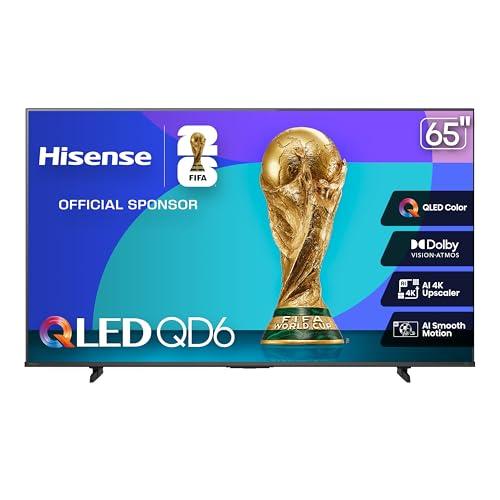
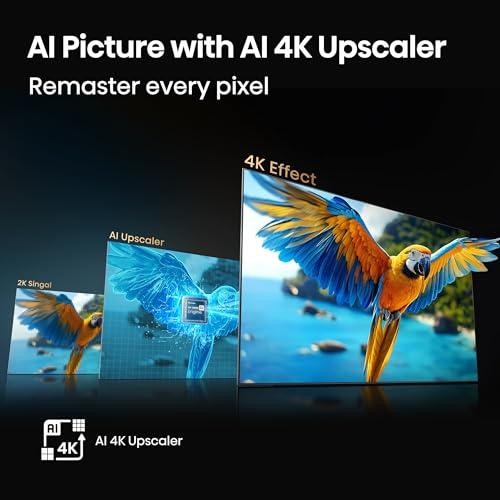
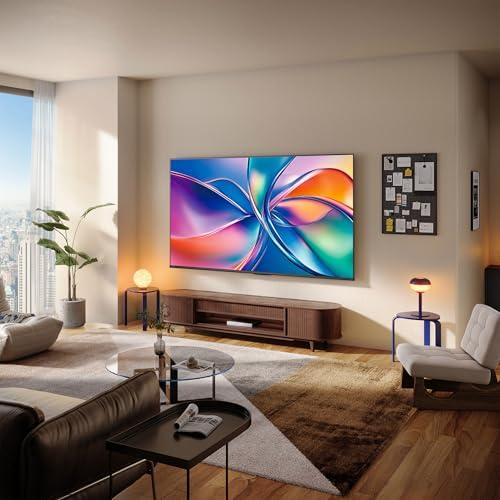
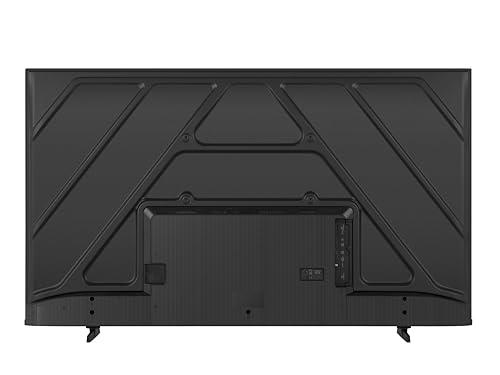
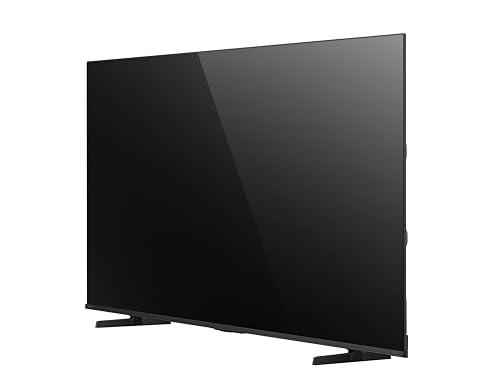
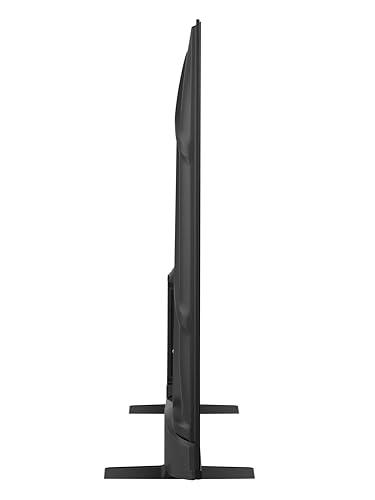

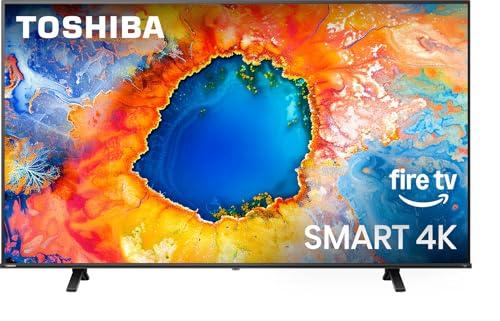
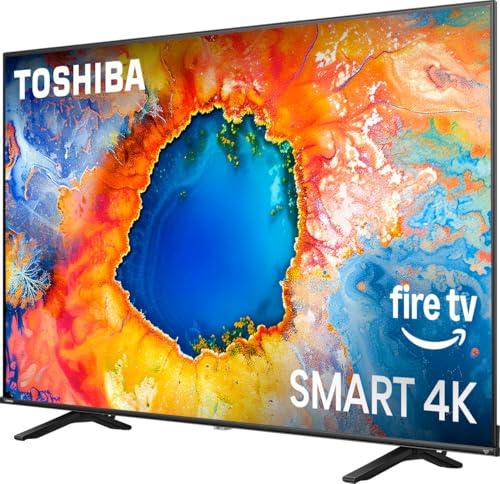
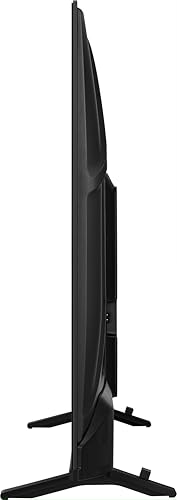

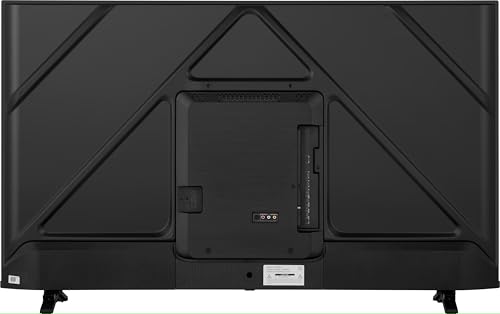
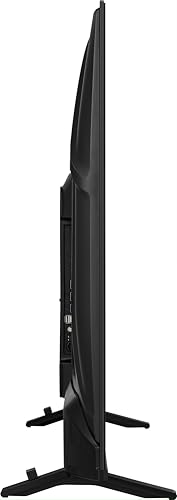
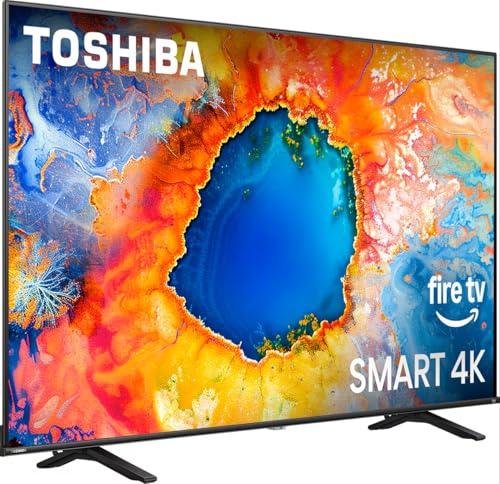
Shopping for a 65-inch 4K TV can feel overwhelming, especially when you're trying to balance picture quality with your budget. Two popular options that consistently appear in budget-to-mid-range searches are the Hisense 65" QD6 Series QLED 4K Fire TV and the Toshiba 65" C350 Series 4K UHD Smart Fire TV. While both offer the large screen size and smart features most people want, they take different approaches to delivering your entertainment experience.
The fundamental difference comes down to display technology. The Hisense QD6 uses QLED (Quantum Dot Light Emitting Diode) technology, while the Toshiba C350 relies on traditional LED-LCD panels. This isn't just marketing jargon—it translates to real differences in how colors pop off the screen and how bright the picture can get. Understanding these differences will help you decide which TV makes more sense for your living room and viewing habits.
When you're shopping for a 65-inch 4K TV in 2024-2025, you're entering a competitive market segment where manufacturers are fighting for every customer. Both the Hisense QD6 (released in 2024) and Toshiba C350 (released in 2023) represent their respective companies' attempts to offer premium features at accessible prices.
The most important factors that should guide your decision are picture quality, gaming performance, smart platform usability, and overall value. Sound quality matters too, but let's be honest—most people end up buying a soundbar anyway because TV speakers, while improved in recent years, still can't match dedicated audio equipment.
What's particularly interesting about these two models is that they both run Amazon's Fire TV platform, which removes one major variable from the equation. This means your decision can focus on the hardware differences rather than getting caught up in smart TV platform debates.
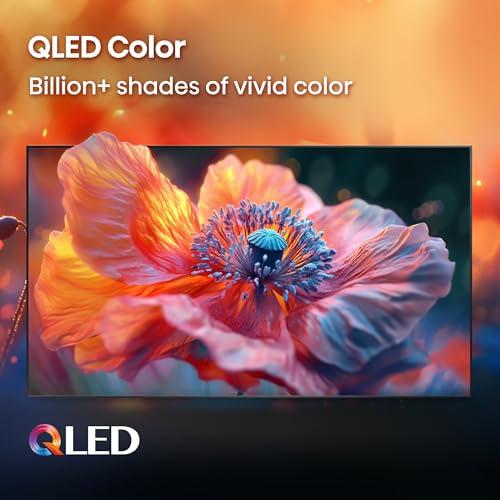
The biggest advantage of the Hisense QD6 comes from its quantum dot technology. Quantum dots are microscopic semiconductor particles that, when hit by blue LED light, emit very specific colors with remarkable precision. This isn't just technical wizardry—it translates to colors that look more vivid and accurate than traditional LED TVs can produce.
The Hisense QD6 covers approximately 90% of the DCI-P3 color gamut, which is the color space used in most modern movies and streaming content. Compare this to the Toshiba C350, which covers a more limited color range typical of standard LED displays. In practical terms, this means reds look more saturated, greens appear more lush, and blues have more depth on the Hisense.
This difference becomes most noticeable when watching nature documentaries, animated movies, or any content with vibrant scenery. The quantum dot advantage isn't subtle—it's the kind of improvement that makes you notice the difference immediately when switching between the two TVs.
Peak brightness is where the Hisense QD6 pulls further ahead. With a peak brightness reaching around 385 cd/m² (candelas per square meter), it outshines the Toshiba C350 significantly. This extra brightness capability has two major benefits: better performance in bright rooms and more impactful HDR (High Dynamic Range) content.
HDR is essentially a technology that allows TVs to display a wider range of brightness levels, from deeper blacks to brighter whites, more closely mimicking how our eyes see the real world. The Hisense QD6 supports more HDR formats than its competitor, including Dolby Vision, HDR10+, HDR10, and HLG. The Toshiba C350 supports Dolby Vision, HDR10, and HLG, which covers most content but misses HDR10+.
However, neither TV includes local dimming—a feature where different sections of the backlight can dim independently to create better contrast. This means both TVs struggle with the classic HDR challenge: displaying bright highlights and deep blacks simultaneously in the same scene.
Here's where both TVs show their budget origins. Without local dimming, both the Hisense QD6 and Toshiba C350 rely on their LCD panels' natural contrast ratios. The Hisense generally produces slightly better black levels when viewed straight-on, thanks to its VA (Vertical Alignment) panel technology.
The Toshiba C350 offers a different trade-off with wider viewing angles, meaning the picture quality doesn't degrade as much when you're sitting off to the side. This makes it potentially better for larger families or rooms where people sit at various angles to the TV.
For dark room viewing—like a dedicated home theater setup—neither TV will satisfy viewers who prioritize deep blacks and high contrast. You'd need to step up to TVs with local dimming or OLED technology for that level of performance.
Gaming has become increasingly important for TV buyers, especially with the PlayStation 5 and Xbox Series X pushing 4K gaming mainstream. Both TVs include Auto Low Latency Mode (ALLM), which automatically switches to a low-lag gaming mode when a console is detected. This reduces input lag—the delay between pressing a button and seeing the action on screen.
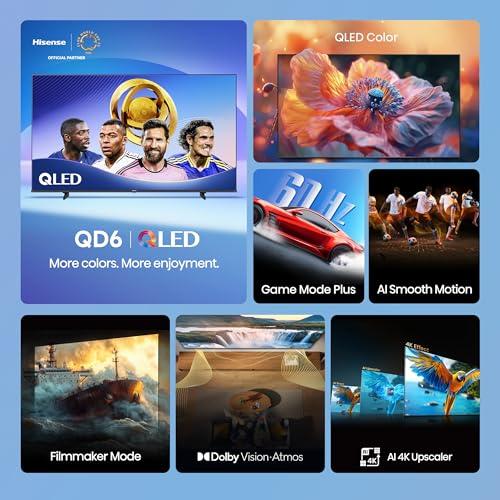
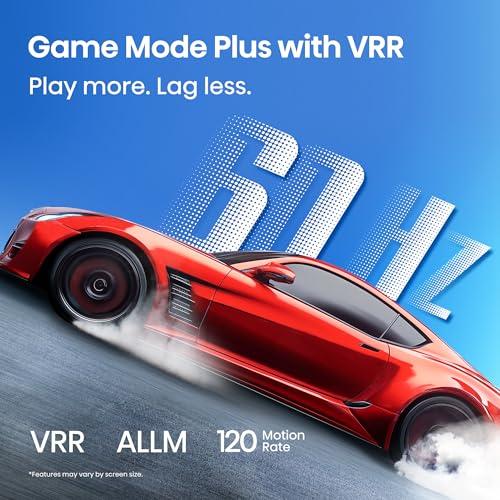
The Hisense QD6 includes Game Mode Plus with some additional gaming-focused features, and its Motion Rate 120 technology provides better motion handling during fast-paced gaming sessions. However, both TVs are limited by their 60Hz refresh rates and lack of HDMI 2.1 connectivity, meaning they cannot support 4K gaming at 120Hz or Variable Refresh Rate (VRR) features that reduce screen tearing.
For casual gaming, both perform adequately. For serious gamers who want to maximize their console's capabilities, neither TV offers the advanced gaming features found on higher-end models. The Hisense QD6 has a slight edge in responsiveness, but the difference isn't dramatic enough to be a deciding factor for most users.
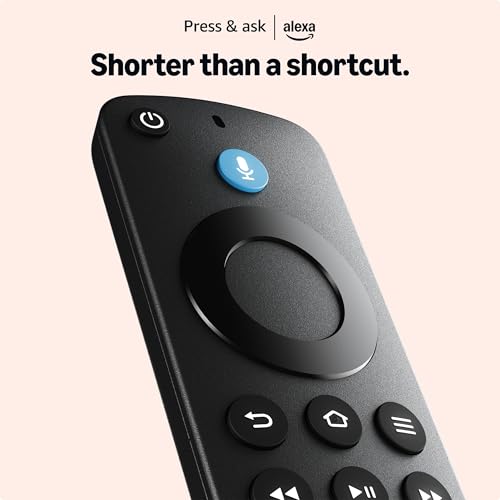
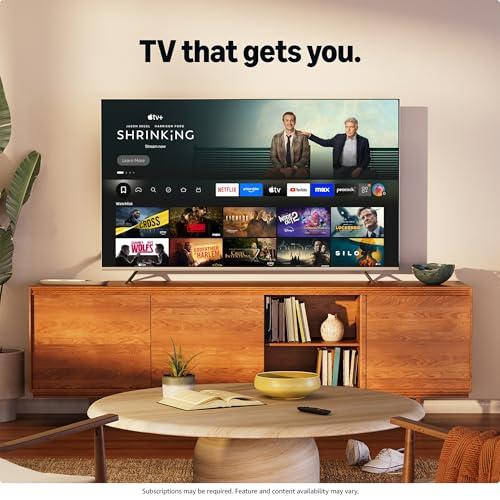
Since both TVs run Amazon's Fire TV platform, the smart TV experience is nearly identical. You get the same interface, the same app selection, and the same Alexa voice remote functionality. Fire TV has improved significantly since its early days, offering smooth navigation and quick access to major streaming services.
The platform integrates well with Amazon's ecosystem—if you're a Prime Video subscriber or use Alexa smart home devices, you'll appreciate the seamless connectivity. Both TVs also support Apple AirPlay, allowing iPhone and iPad users to cast content easily.
One consideration is that Fire TV can feel advertisement-heavy compared to platforms like Roku or Google TV. The home screen prominently displays content recommendations and promotional materials, which some users find intrusive while others appreciate for content discovery.
Audio is where the Toshiba C350 takes an unexpected lead. With 20W of total power output (10W per channel) and DTS Virtual:X technology enhanced by Harman Kardon audio processing, it delivers noticeably better built-in sound than the Hisense QD6's 10W system.
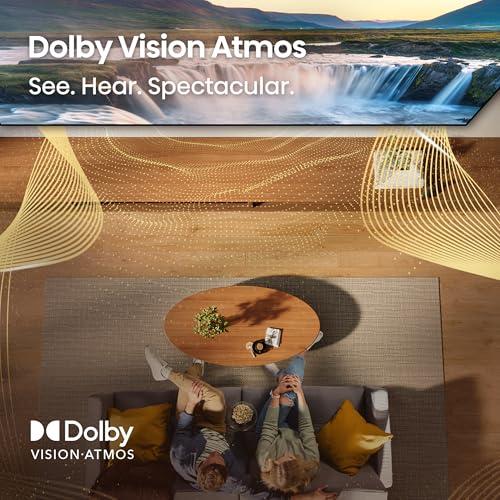
The Toshiba's audio setup provides clearer dialogue and more balanced sound across different types of content. While the Hisense QD6 supports Dolby Atmos passthrough for external sound systems, its built-in speakers are more basic.
For viewers who plan to use the TV's built-in speakers without adding a soundbar, the Toshiba C350 offers a more satisfying audio experience. However, both TVs benefit significantly from external audio solutions, and the picture quality advantages of the Hisense often outweigh the audio disadvantages for most users.
In a dedicated home theater environment, picture quality becomes paramount, and the Hisense QD6 is the clear winner. The superior color reproduction and higher peak brightness make movies and TV shows more engaging, especially in moderately lit rooms.
However, neither TV excels in completely dark home theater setups due to their lack of local dimming. The lifted black levels become more noticeable in dark rooms, reducing the cinematic impact that serious home theater enthusiasts seek.
For home theater use, consider the Hisense QD6 if you prioritize color accuracy and brightness, but be aware that you're still getting an entry-level viewing experience compared to TVs with advanced contrast technologies.
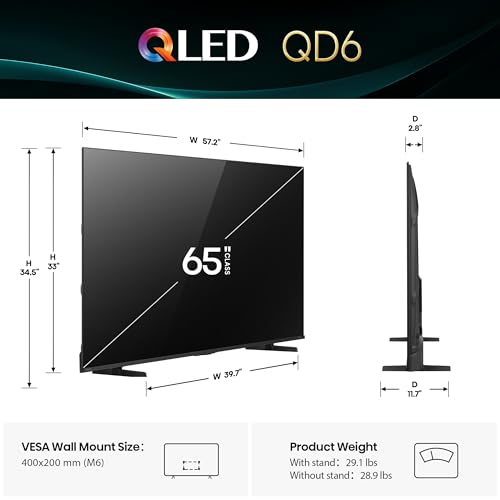
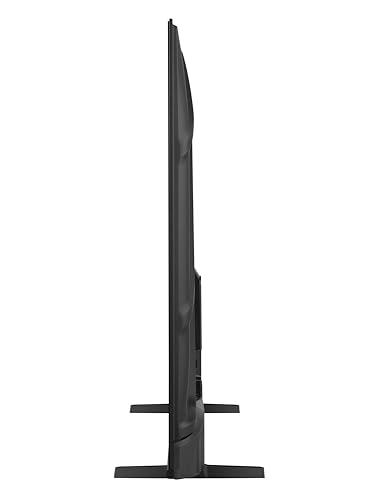
Both TVs feature modern, slim designs with minimal bezels that look appropriate in contemporary living rooms. The Hisense QD6 is slightly lighter at 28.9 pounds, making wall mounting easier, while the Toshiba C350 includes more thoughtful cable management features in its stand design.
Build quality appears solid on both models, though long-term reliability varies based on individual units and usage patterns. Both companies offer standard warranties, and both have established service networks in most markets.
At the time of writing, the Hisense QD6 typically commands a premium of roughly $100-200 over the Toshiba C350, though prices fluctuate based on sales and availability. This price difference represents about 15-25% more cost for meaningfully better picture quality.
The value equation depends heavily on your priorities. If you watch a lot of colorful content—nature documentaries, animated movies, sports with vibrant team colors—the Hisense QD6's superior color reproduction justifies the extra cost. If you primarily watch news, dramas, or older content where color accuracy is less critical, the Toshiba C350 delivers excellent value.
Both TVs represent strong value in the 65-inch 4K market, offering smart features and decent performance at accessible price points. Neither will match the performance of premium TVs costing twice as much, but both deliver satisfying experiences for their respective price ranges.
Choose the Hisense 65" QD6 Series if:
Choose the Toshiba 65" C350 Series if:
The Hisense QD6 represents the better choice for most buyers who can afford the premium. Its quantum dot technology delivers a noticeable improvement in color reproduction and overall picture quality that enhances virtually all content types. The extra HDR format support and gaming features add future-proofing value.
However, the Toshiba C350 shouldn't be dismissed as a budget compromise. Its wider viewing angles, better built-in audio, and solid overall performance make it an excellent choice for families prioritizing value and practicality over peak performance.
Both TVs will serve you well for years to come, delivering the large-screen 4K experience that makes modern streaming content shine. The decision ultimately comes down to whether the Hisense QD6's superior picture quality justifies the additional cost in your specific situation and budget.
| Hisense 65" QD6 Series QLED 4K Fire TV | Toshiba 65" C350 Series 4K UHD Smart Fire TV |
|---|---|
| Display Technology - The biggest factor in picture quality and color accuracy | |
| QLED with Quantum Dot technology (~90% DCI-P3 color gamut) | Standard LED-LCD with VA panel |
| Peak Brightness - Critical for HDR impact and bright room viewing | |
| 385 cd/m² (better for daytime viewing and HDR highlights) | Lower peak brightness (struggles more in bright rooms) |
| HDR Format Support - Determines compatibility with premium streaming content | |
| Dolby Vision, HDR10+, HDR10, HLG (most comprehensive support) | Dolby Vision, HDR10, HLG (missing HDR10+) |
| Refresh Rate and Motion - Important for sports and fast action content | |
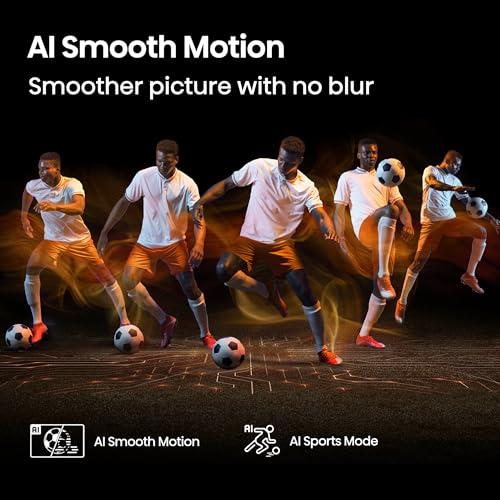
| 60Hz native, Motion Rate 120 with better motion processing | 60Hz native, Motion Rate 120 with basic processing |
| Gaming Features - Matters for console gamers seeking responsive gameplay | |
| Game Mode Plus with VRR, ALLM, low input lag | Auto Low Latency Mode, decent input lag performance |
| Audio Output - Affects whether you need a soundbar immediately | |
| 10W speakers with Dolby Atmos support (basic audio quality) | 20W speakers (2x10W) with DTS Virtual:X and Harman Kardon processing |
| Viewing Angles - Critical for wide seating arrangements | |
| Good straight-on viewing, narrows at angles (typical VA panel) | Wider viewing angles, better for family rooms with spread-out seating |
| Smart Platform - Both identical, so no deciding factor here | |
| Fire TV with Alexa voice remote, Apple AirPlay support | Fire TV with Alexa voice remote, Apple AirPlay support |
| Weight and Mounting - Practical considerations for installation | |
| 28.9 lbs (easier wall mounting), VESA 300x400 | Slightly heavier, VESA 400x300, better cable management |
| Warranty Coverage - Protection for your investment | |
| 3-year warranty (above average coverage) | 1-year standard warranty |
| Best For - Which buyer should choose each model | |
| Picture quality prioritizers, HDR enthusiasts, brighter rooms | Value seekers, wide seating setups, better built-in audio needs |
The Hisense 65" QD6 Series QLED 4K Fire TV delivers superior picture quality thanks to its quantum dot technology, which produces more vibrant colors covering ~90% of the DCI-P3 color gamut. It also achieves higher peak brightness at 385 cd/m², making HDR content more impactful. The Toshiba 65" C350 Series 4K UHD Smart Fire TV offers decent picture quality for its price range but cannot match the color accuracy and brightness of the QLED panel.
Yes, both the Hisense QD6 and Toshiba C350 run Amazon's Fire TV platform with identical functionality. You get the same interface, app selection, Alexa voice remote, and Apple AirPlay support on both models. This means your decision should focus on hardware differences rather than smart TV features.
The Hisense QD6 has a slight edge for gaming with its Game Mode Plus features and better motion processing. However, both TVs are limited by 60Hz refresh rates and lack HDMI 2.1, so neither supports 4K gaming at 120Hz or Variable Refresh Rate. Both include Auto Low Latency Mode for responsive gameplay, making them adequate for casual gaming but not ideal for competitive gamers.
QLED technology in the Hisense QD6 uses quantum dots to produce more accurate and vibrant colors than the standard LED-LCD panel in the Toshiba C350. Quantum dots are microscopic particles that emit precise colors when hit by light, resulting in better color reproduction, especially for reds, greens, and blues. This translates to more lifelike images, particularly noticeable in nature content and animated movies.
The Toshiba C350 offers significantly better built-in audio with 20W speakers featuring DTS Virtual:X and Harman Kardon processing, compared to the Hisense QD6's basic 10W speaker system. If you plan to use the TV's built-in speakers initially, the Toshiba provides clearer dialogue and more balanced sound across different content types.
The Hisense QD6 performs better in bright rooms due to its higher peak brightness of 385 cd/m², which helps combat glare and maintains picture quality in daylight conditions. The Toshiba C350 struggles more with brightness and may appear washed out in very bright environments, making it better suited for darker or moderately lit rooms.
Both TVs offer excellent value, but in different ways. The Toshiba C350 provides maximum screen size and smart features at the lowest cost, making it ideal for budget-conscious buyers. The Hisense QD6 costs more but delivers meaningfully better picture quality that justifies the premium for most buyers who prioritize visual performance over absolute lowest price.
The Toshiba C350 offers wider viewing angles, making it better for families or rooms where people sit at various positions relative to the TV. The Hisense QD6 provides better picture quality when viewed straight-on but experiences more color and brightness degradation when viewed from the sides, which is typical for VA panel technology.
For dedicated home theater use, the Hisense QD6 is the better choice due to its superior color accuracy, higher brightness, and comprehensive HDR format support including Dolby Vision and HDR10+. However, neither TV excels in completely dark rooms due to lack of local dimming technology, so both represent entry-level home theater options rather than premium cinematic experiences.
The Hisense QD6 supports more HDR formats including Dolby Vision, HDR10+, HDR10, and HLG, providing broader compatibility with premium streaming content. The Toshiba C350 supports Dolby Vision, HDR10, and HLG but lacks HDR10+ support, though this covers most available HDR content on major streaming platforms.
Both the Hisense QD6 and Toshiba C350 appear to have solid build quality for their price ranges. The Hisense offers a 3-year warranty compared to Toshiba's standard 1-year coverage, suggesting more confidence in long-term reliability. However, individual unit quality can vary, and both brands have established service networks for support.
Choose the Hisense QD6 if you prioritize picture quality, watch lots of colorful HDR content, have a bright living room, and can afford the premium for quantum dot technology. Choose the Toshiba C350 if you want maximum value, have wide seating arrangements, prefer better built-in audio, or are building a secondary TV setup where peak picture quality is less critical.
We've done our best to create useful and informative comparisons to help you decide what product to buy. Our research uses advanced automated methods to create this comparison and perfection is not possible - please contact us for corrections or questions. These are the sites we've researched in the creation of this article: rtings.com - bestbuy.com - pcvarge.com - youtube.com - consumerreports.org - costco.com - youtube.com - rtings.com - hometechnologyreview.com - manuals.plus - hisense-usa.com - costco.com - bestbuy.com - staples.com - hisense-usa.com - manuals.plus - pcrichard.com - hometechnologyreview.com - bestbuy.com - bestbuy.com - hisense-usa.com - bestbuy.com - bestbuy.com - youtube.com - rtings.com - cnet.com - youtube.com - consumerreports.org - toshibatv-canada.com - bestbuy.com - bestbuy.com - dolby.com - displayspecifications.com - toshibatv-usa.com - aarons.com

Privacy Policy
Terms and Conditions - Affiliate Policy
Home Security
© Copyright 2008-2026.
11816 Inwood Rd #1211, Dallas, TX 75244