

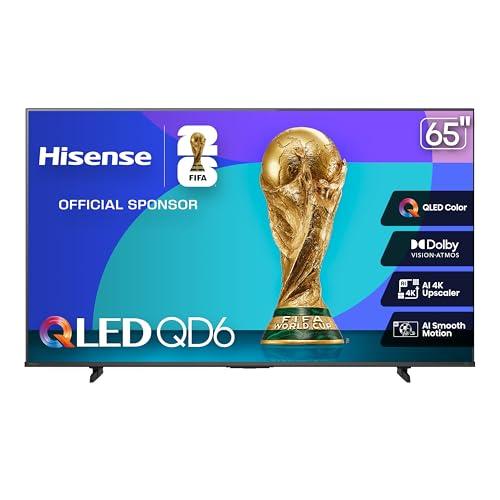
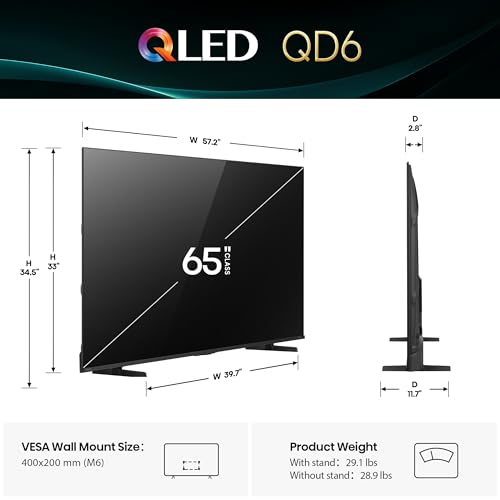

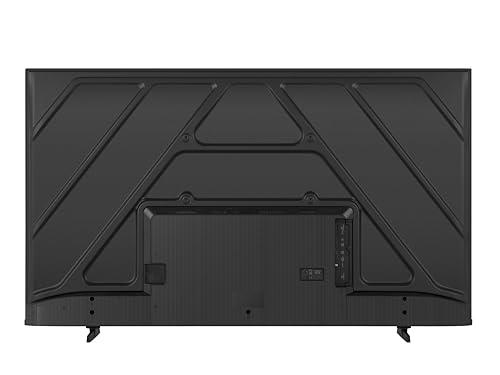
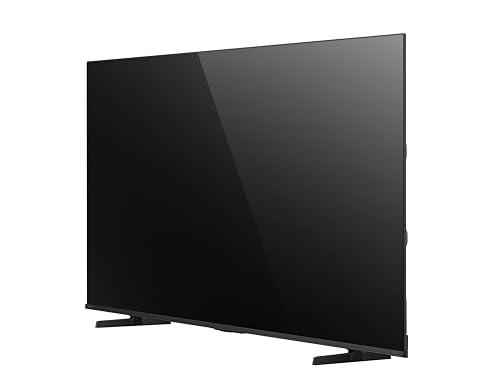
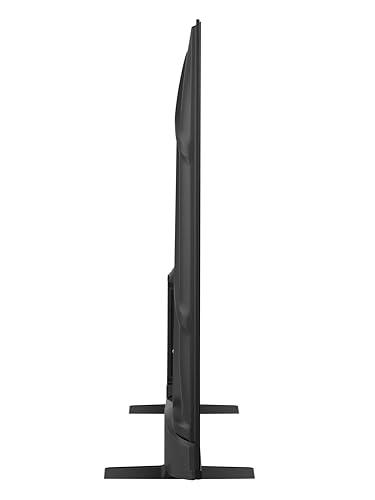

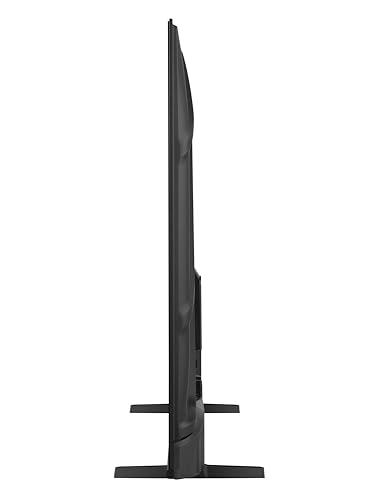
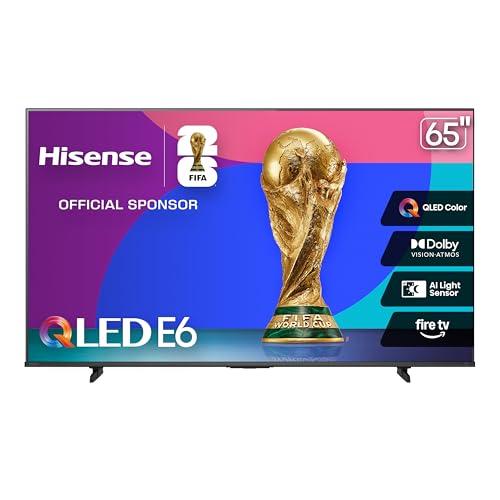
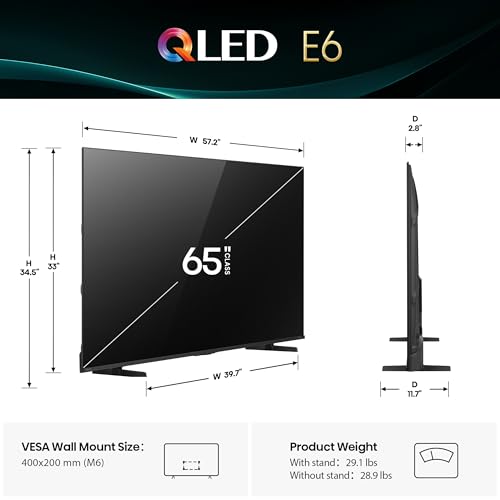

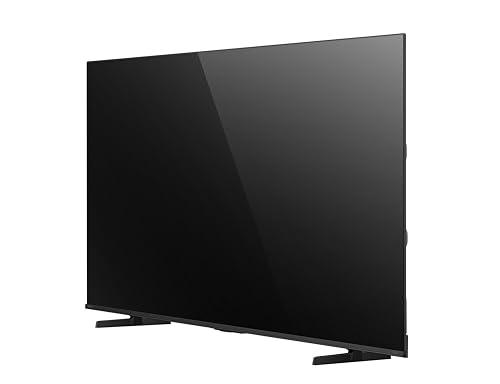
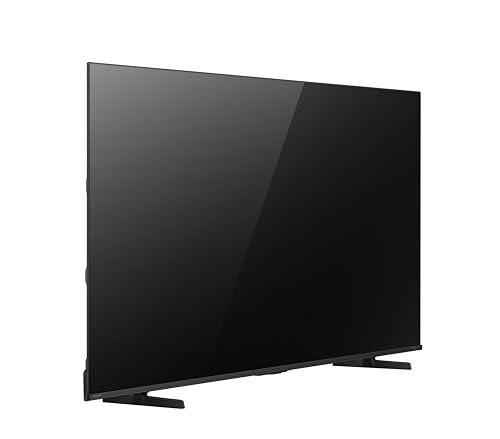
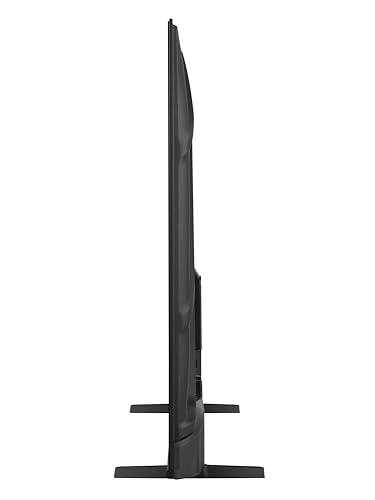
When shopping for a new TV, the world of acronyms and technical specifications can feel overwhelming. QLED, HDR10+, MEMC processing—what does it all mean, and more importantly, does it matter for your viewing experience? If you're considering Hisense's budget-friendly QLED lineup, specifically the QD6 Series and E6 Cinema Series, you're looking at two TVs that promise premium features without the premium price tag.
Both models were released in 2025, representing Hisense's latest attempt to bring quantum dot technology—previously reserved for high-end TVs—down to more affordable price points. This democratization of premium display technology has been one of the biggest trends in the TV market over the past few years, and these models exemplify that shift.
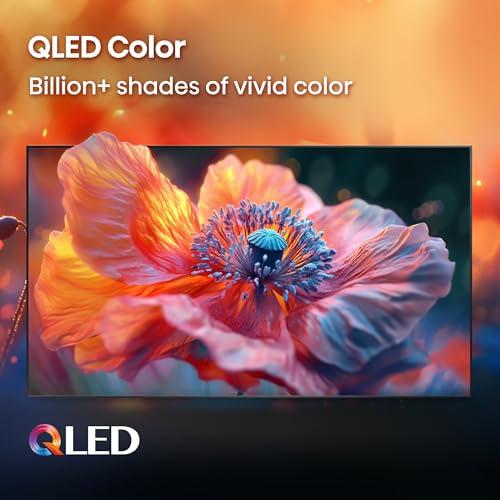
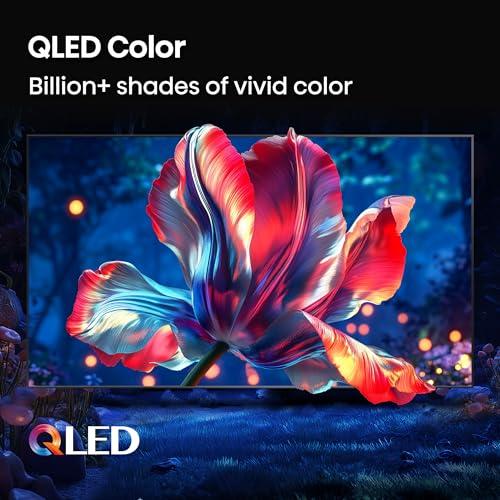
QLED stands for Quantum Dot Light Emitting Diode, which sounds complex but essentially means the TV uses tiny particles called quantum dots to produce more accurate and vibrant colors. Think of quantum dots as microscopic color filters that can display over a billion different shades, compared to the few million colors that standard LED TVs can produce.
At the time of writing, both the QD6 Series and E6 Cinema Series sit in that sweet spot between basic LED TVs and premium mini-LED or OLED displays. You're getting meaningful picture quality improvements over entry-level models without paying the thousands of dollars that top-tier TVs command.
The key considerations when choosing between budget QLED TVs come down to HDR performance (how well they handle high dynamic range content with bright highlights and deep shadows), color accuracy, gaming capabilities, smart TV features, and specific enhancements that justify spending more money. Both Hisense models check the essential boxes, but they take different approaches to delivering value.
Both TVs use quantum dot technology to achieve their color reproduction, but the implementation differs significantly. The QD6 Series covers approximately 90% of the DCI-P3 color space—this is the standard used by movie studios and streaming services for HDR content. To put this in perspective, that's considerably better than most budget TVs, which typically achieve around 70-80% DCI-P3 coverage.
Peak brightness on the QD6 reaches around 385 cd/m² (candelas per square meter), which is brighter than many competing budget models that hover around 320 cd/m². This extra brightness matters because it helps HDR content look more impactful and makes the TV more viewable in rooms with ambient light.
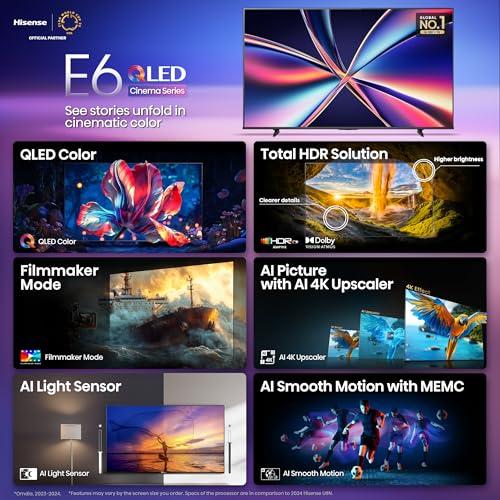
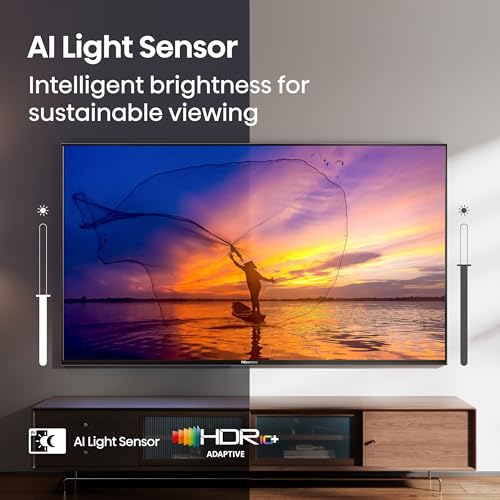
The E6 Cinema Series builds on these fundamentals with additional processing power. Its AI Light Sensor automatically adjusts the screen brightness based on your room's lighting conditions—similar to how your smartphone adjusts its screen brightness. This isn't just a convenience feature; it actually improves picture quality by maintaining optimal contrast ratios as lighting conditions change throughout the day.
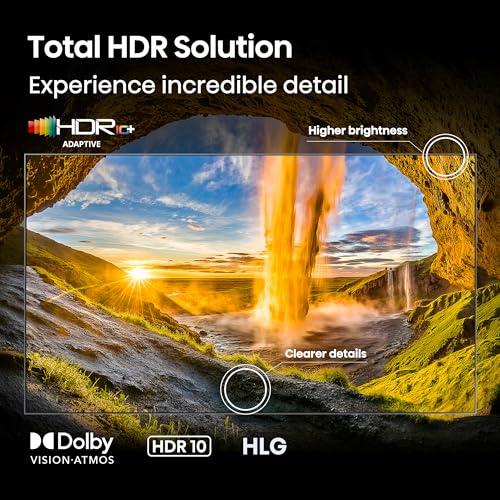
High Dynamic Range (HDR) represents the biggest difference between these two models. HDR allows TVs to display a wider range of brightness levels, from deeper blacks to brighter whites, creating more realistic and dramatic images. However, not all HDR implementations are created equal.
The QD6 Series supports the basic HDR formats, which provides some improvement over standard dynamic range content. However, the E6 Cinema Series offers what Hisense calls a "Total HDR Solution," supporting Dolby Vision, HDR10+Adaptive, HDR10, and HLG formats.
Dolby Vision is particularly important because it includes dynamic metadata—essentially instructions that tell the TV how to display each scene optimally. Many Netflix originals, Disney+ content, and premium streaming services use Dolby Vision. HDR10+Adaptive goes a step further, adjusting not just to each scene but to your specific viewing environment.
Based on our research into user feedback and expert evaluations, the HDR performance gap between these models is substantial. The E6 consistently delivers more impactful HDR experiences with better highlight detail and more convincing contrast, while the QD6 provides more modest HDR improvements that some viewers might not immediately notice.
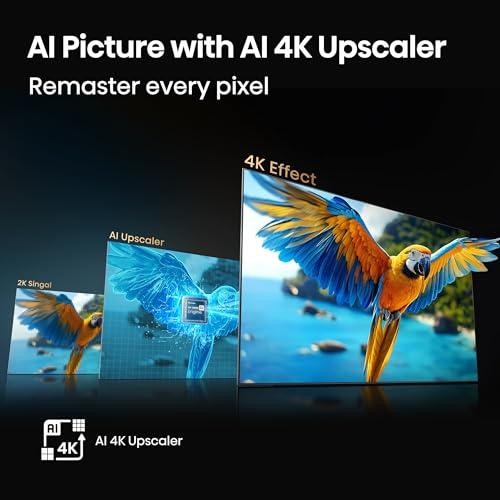
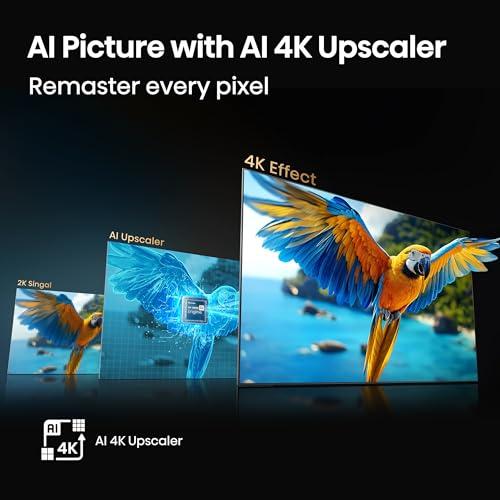
The E6 Cinema Series includes an AI 4K Upscaler that uses machine learning algorithms to enhance lower-resolution content. This matters more than you might think—most of the content we watch isn't native 4K. Cable TV, older movies, and even some streaming content comes in lower resolutions that the TV must upscale to fill its 4K screen.
Traditional upscaling simply stretches the image, often resulting in soft or pixelated pictures. AI upscaling analyzes the content and intelligently adds detail, sharpens edges, and reduces artifacts. In practice, this means your cable TV shows and older movies look noticeably clearer and more detailed on the E6 compared to the QD6.
The E6 also features AI Smooth Motion with MEMC (Motion Estimation, Motion Compensation) processing. This technology reduces motion blur during fast-paced scenes by inserting interpolated frames between the original frames. While some movie purists prefer to disable motion processing for films, it significantly improves sports viewing and action sequences.
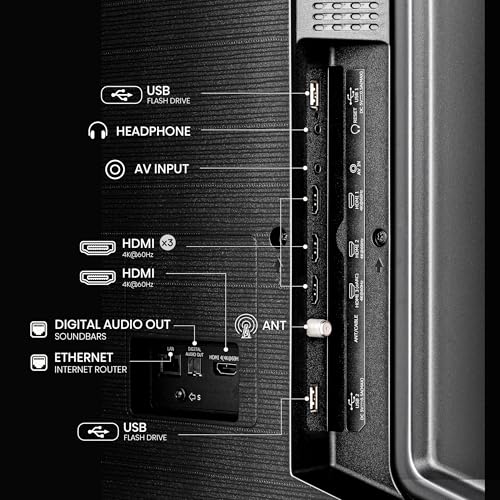
Both TVs target 4K gaming at 60 frames per second, which handles current gaming consoles well. However, the implementation details reveal important differences for gaming enthusiasts.
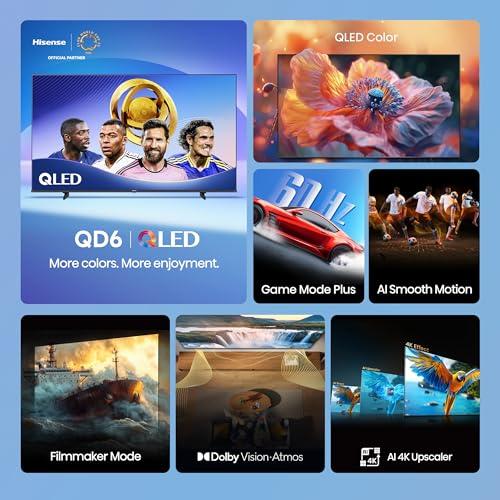
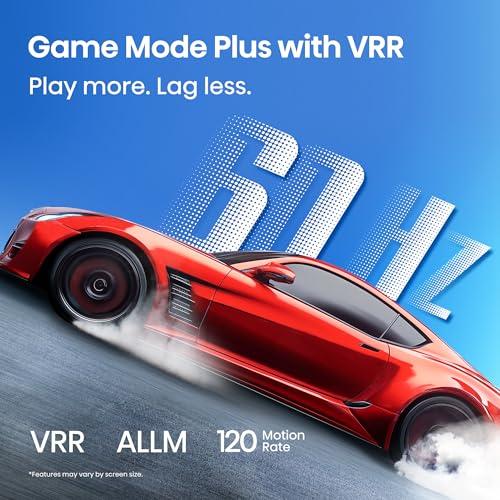
The QD6 Series provides a standard 60Hz refresh rate with Game Mode Plus, which reduces input lag (the delay between pressing a button and seeing the action on screen) and includes Auto Low Latency Mode (ALLM). This automatically switches the TV to game mode when it detects a gaming console, ensuring optimal responsiveness without manual adjustment.
The E6 Cinema Series offers Motion Rate 120, which isn't true 120Hz but rather enhanced motion processing that makes 60Hz content appear smoother. More importantly for gamers, it supports Variable Refresh Rate (VRR) technology, which synchronizes the TV's refresh rate with the gaming console's output. This eliminates screen tearing—those horizontal lines that can appear during fast motion—and provides a more consistent gaming experience.
For casual gamers who play single-player adventures or turn-based games, the QD6 performs adequately. However, competitive gamers or those who play fast-paced action games will appreciate the E6's enhanced motion handling and VRR support, even though it doesn't reach the 120Hz gaming that premium TVs offer.
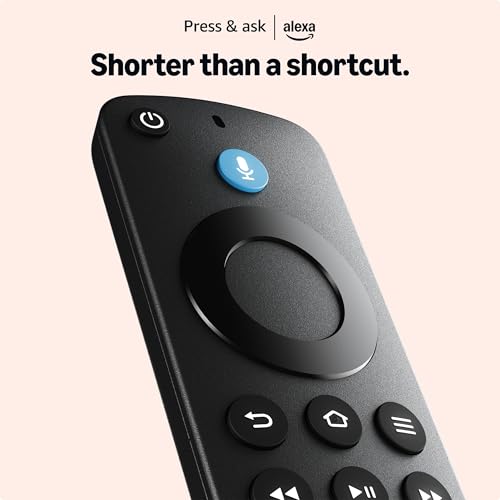
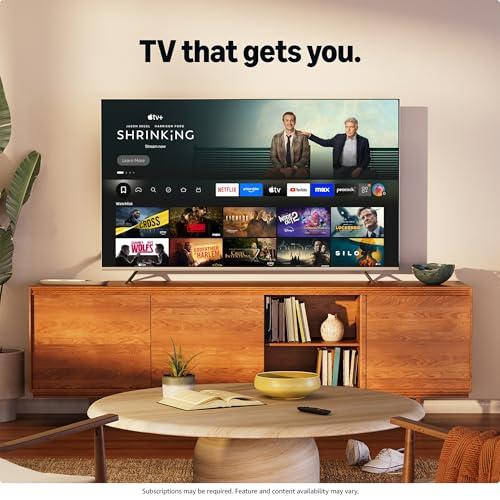
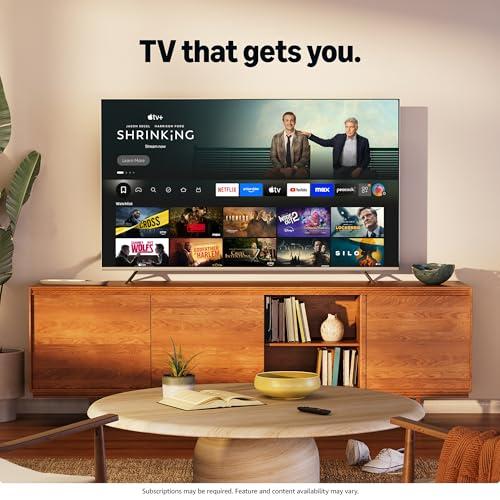
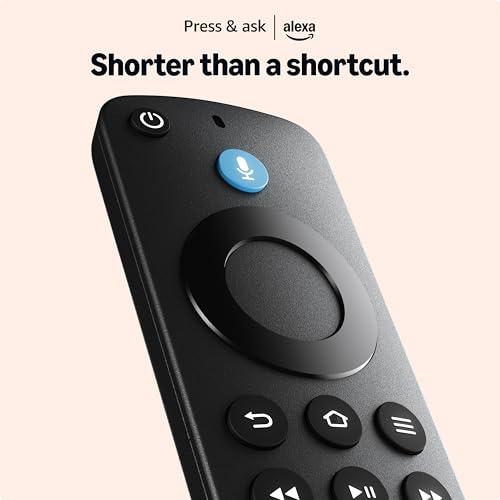
Both models run Amazon's Fire TV operating system with identical interfaces and app selection. Fire TV has matured significantly since its early days, offering smooth navigation and comprehensive streaming app support. The included Alexa Voice Remote allows you to search for content, control playback, and manage smart home devices using voice commands.
The key difference lies in connectivity. The E6 Cinema Series includes WiFi 6 support, which provides faster and more reliable wireless connections. WiFi 6 isn't just about raw speed—it handles multiple devices more efficiently and reduces network congestion. For households with numerous connected devices or those who frequently stream 4K content, this upgrade provides tangible benefits in streaming stability and app responsiveness.
Based on user feedback we've analyzed, both TVs handle the Fire TV interface smoothly, though some users report occasional lag when switching between apps or navigating menus during peak usage times. The E6's WiFi 6 connectivity appears to reduce these issues in households with heavy network usage.
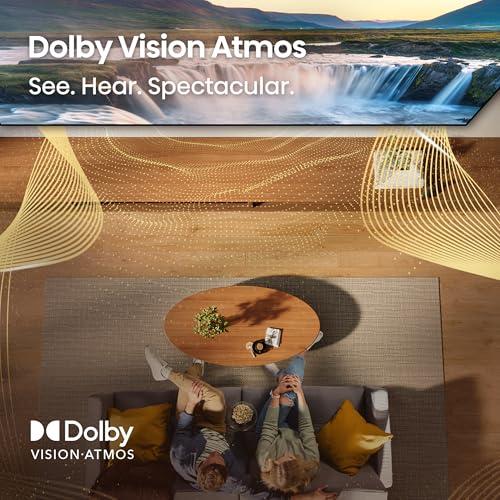
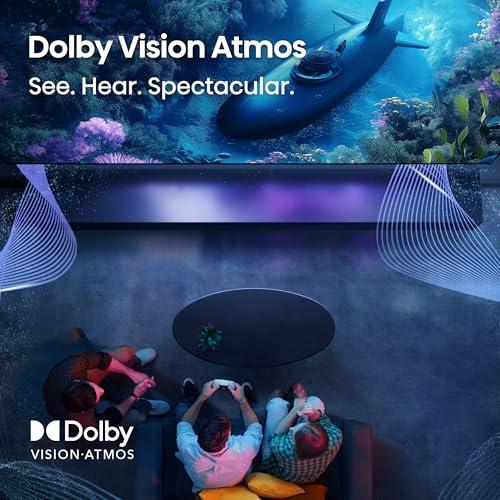
The E6 Cinema Series explicitly supports Dolby Atmos, which creates three-dimensional audio by bouncing sound off your ceiling and walls. While the TV's built-in speakers can't fully replicate a dedicated Dolby Atmos sound system, Dolby Atmos processing improves the spatial audio experience when using compatible soundbars or headphones.
Audio quality from built-in TV speakers has generally improved in recent years, but both models benefit significantly from external audio solutions. The E6's Dolby Atmos support provides better compatibility with modern soundbars and creates a foundation for future audio system upgrades.
At the time of writing, the E6 Cinema Series commands a modest premium over the QD6 Series—typically around $30-50 more for the 65-inch models. This price difference might seem minimal, but it's worth understanding exactly what those extra dollars buy you.
The QD6 delivers the core QLED experience: enhanced colors, decent brightness, and solid Fire TV functionality. It represents the most affordable entry point into quantum dot technology and performs admirably for its price class. Users consistently praise its color reproduction and overall picture quality relative to its cost.
The E6 includes several premium features that address specific use cases: comprehensive HDR support for movie enthusiasts, AI processing for content optimization, enhanced motion handling for sports viewers, and WiFi 6 for future-proofing. The cost-per-feature ratio strongly favors the E6 for buyers seeking long-term satisfaction.
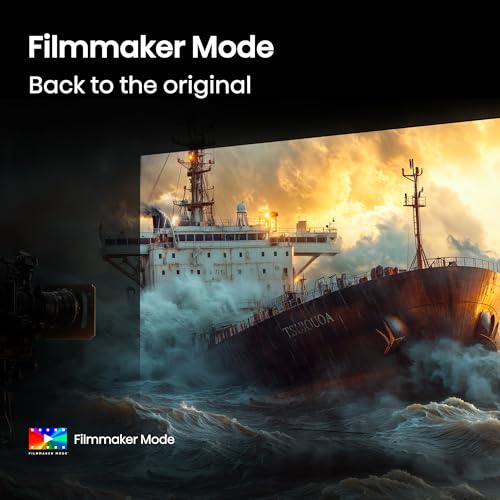
For dedicated home theater setups, the E6 Cinema Series offers several advantages that justify its positioning. Filmmaker Mode preserves the original aspect ratio, frame rate, color temperature, and audio settings as intended by content creators. This feature has gained support from directors like Christopher Nolan and Martin Scorsese, who advocate for viewers to see their films as originally intended.
The E6's comprehensive HDR support becomes particularly important in light-controlled environments where you can fully appreciate the extended contrast ratio. Combined with Dolby Atmos audio processing, it creates a more cinematic experience that approaches what you'd expect from higher-end displays.
Black levels on both models are decent for VA panel TVs, though neither includes local dimming zones that would improve contrast in dark scenes. In completely dark rooms, both TVs exhibit some light bleed and elevated black levels compared to OLED displays, but this is expected at their price points.
The decision between these models often comes down to viewing habits and priorities rather than pure specifications.
Choose the QD6 Series if you primarily watch cable TV, basic streaming services, or don't have strong preferences for HDR content. It's ideal for households seeking a significant upgrade from basic LED TVs without paying for features they won't utilize. The QD6 also makes sense if you're building a budget home theater system and plan to allocate more money toward audio equipment rather than TV premium features.
The E6 Cinema Series better serves movie enthusiasts, sports fans, and households with diverse viewing needs. If you subscribe to premium streaming services that offer Dolby Vision content, watch live sports regularly, or game frequently, the enhanced processing and format support provide daily benefits. The WiFi 6 connectivity also offers practical advantages for homes with multiple streaming devices or heavy internet usage.
Since 2020, budget TV technology has advanced remarkably quickly. Features like quantum dots, comprehensive HDR support, and AI processing have trickled down from premium models to affordable options much faster than historical patterns would suggest. Both Hisense models benefit from this trend, offering technologies that were exclusive to high-end TVs just a few years ago.
The E6's WiFi 6 support and extensive HDR format compatibility provide better future-proofing as streaming services continue expanding their premium content offerings. Dolby Vision content has increased dramatically across Netflix, Disney+, Apple TV+, and other services, making format support increasingly valuable.
After analyzing user feedback, expert reviews, and technical specifications, the E6 Cinema Series emerges as the superior choice for most buyers. The modest price premium delivers substantial value through enhanced HDR support, AI processing, improved connectivity, and future-proofing features.
However, the QD6 Series remains a solid option for budget-conscious buyers who prioritize core functionality over premium features. Its quantum dot color reproduction and Fire TV platform provide meaningful improvements over basic LED TVs at the most accessible price point.
For home theater enthusiasts specifically, the E6's Filmmaker Mode, comprehensive HDR support, and Dolby Atmos processing create a more authentic cinematic experience that justifies the investment. The AI upscaling also provides consistent benefits across all content types, from streaming movies to cable television.
Both models represent excellent value in the budget QLED segment, but they serve different priorities. The QD6 maximizes affordability while delivering essential improvements, while the E6 optimizes features and performance within budget constraints. Your choice should align with your viewing habits, content preferences, and long-term satisfaction goals.
| Hisense 65" QD6 Series QLED 4K Fire TV | Hisense 65" E6 Cinema Series QLED 4K Fire TV |
|---|---|
| HDR Format Support - Critical for streaming movies and premium content | |
| Basic HDR formats (HDR10, HLG) | Comprehensive HDR (Dolby Vision, HDR10+Adaptive, HDR10, HLG) |
| Motion Processing - Important for sports and fast-action content | |
| Standard 60Hz refresh rate | Motion Rate 120 with AI Smooth Motion and MEMC |
| Picture Enhancement Technology - Affects all content quality | |
| Standard QLED processing | AI 4K Upscaler, AI Light Sensor, AI Smooth Motion |
| Gaming Performance - Matters for console gaming | |
| 4K 60fps, Game Mode Plus, ALLM | 4K 60fps, Game Mode Plus, VRR, ALLM, enhanced motion handling |
| Special Picture Modes - Key for movie enthusiasts | |
| Standard picture modes | Filmmaker Mode preserves creator intentions |
| Connectivity - Future-proofing and streaming reliability | |
| Standard WiFi | WiFi 6 for faster, more stable connections |
| Audio Processing - Enhances built-in speakers and soundbar compatibility | |
| Standard audio processing | Dolby Atmos support for spatial audio |
| Color Performance - Core QLED advantage | |
| Quantum Dot technology, ~90% DCI-P3 coverage | Quantum Dot technology with enhanced processing |
| Brightness Capability - Affects HDR impact and room lighting tolerance | |
| ~385 cd/m² peak brightness | Similar base brightness with AI optimization |
| Smart TV Platform - Interface and app experience | |
| Fire TV with Alexa Voice Remote | Fire TV with Alexa Voice Remote (identical) |
| Best For | |
| Budget-conscious buyers wanting core QLED benefits | Movie lovers, sports fans, and feature-focused users |
The biggest difference is HDR support and picture processing. The Hisense E6 Cinema Series includes comprehensive HDR formats like Dolby Vision and HDR10+Adaptive, plus AI-enhanced picture processing, while the Hisense QD6 Series offers basic HDR support with standard processing. The E6 is specifically designed for movie watching and premium streaming content.
The Hisense E6 Cinema Series is significantly better for movies. It supports Dolby Vision (used by Netflix, Disney+, and Apple TV+), includes Filmmaker Mode to preserve director intentions, and features AI upscaling for older content. The QD6 Series handles movies adequately but lacks the advanced HDR formats that make premium streaming content look its best.
Yes, both the Hisense QD6 and E6 Cinema Series run the same Fire TV platform with Alexa voice control and identical app selection. However, the E6 includes WiFi 6 for faster, more reliable streaming, especially in homes with multiple connected devices.
Both handle 4K gaming at 60fps well, but the Hisense E6 Cinema Series has advantages for serious gamers. It includes Variable Refresh Rate (VRR) to eliminate screen tearing and enhanced motion processing for smoother gameplay. The QD6 Series works fine for casual gaming but lacks these advanced gaming features.
Yes, especially with HDR content. The E6 Cinema Series displays more vibrant colors, better contrast, and more detailed highlights thanks to its AI processing and comprehensive HDR support. Both use quantum dot technology for enhanced colors, but the E6 optimizes the picture more effectively across different content types.
The Hisense E6 Cinema Series is better for sports viewing. Its Motion Rate 120 with MEMC processing reduces motion blur during fast action, making sports appear smoother and clearer. The QD6 Series handles sports adequately but may show more motion blur during quick camera movements or fast plays.
Both models handle moderately bright rooms reasonably well, reaching similar peak brightness levels around 385 cd/m². However, the E6 Cinema Series includes an AI Light Sensor that automatically adjusts brightness based on room lighting, providing better optimization throughout the day compared to the QD6 Series.
The Hisense E6 Cinema Series typically offers better value despite costing slightly more. The small price difference gets you significantly more features: Dolby Vision HDR, AI processing, Filmmaker Mode, WiFi 6, and enhanced gaming capabilities. The QD6 Series is the budget choice if you primarily want basic QLED benefits.
The E6 Cinema Series is much better suited for home theaters. It includes Filmmaker Mode for authentic movie presentation, Dolby Vision HDR for dramatic contrast, and Dolby Atmos audio processing for better soundbar compatibility. The QD6 Series can work in a basic home theater but lacks the premium features serious movie watchers prefer.
Both models compete well in the budget QLED category. The Hisense QD6 offers solid quantum dot color performance at an entry-level price, while the E6 Cinema Series provides premium features typically found on more expensive models. They generally outperform similarly priced LED TVs in color accuracy and brightness.
The Hisense E6 Cinema Series is more future-proof thanks to WiFi 6 connectivity, comprehensive HDR format support, and AI processing that can be updated. As streaming services expand Dolby Vision content, the E6 will handle new content better. The QD6 Series covers current needs well but may feel outdated sooner.
Choose the E6 Cinema Series if you watch movies, stream premium content, or want features that will stay relevant longer. Pick the QD6 Series if you're upgrading from a very old TV and primarily watch cable or basic streaming, and want to spend as little as possible while still getting QLED color benefits.
We've done our best to create useful and informative comparisons to help you decide what product to buy. Our research uses advanced automated methods to create this comparison and perfection is not possible - please contact us for corrections or questions. These are the sites we've researched in the creation of this article: rtings.com - bestbuy.com - pcvarge.com - youtube.com - consumerreports.org - costco.com - youtube.com - rtings.com - hometechnologyreview.com - manuals.plus - hisense-usa.com - costco.com - bestbuy.com - staples.com - hisense-usa.com - manuals.plus - pcrichard.com - hometechnologyreview.com - bestbuy.com - bestbuy.com - hisense-usa.com - bestbuy.com - youtube.com - youtube.com - shopabunda.com - hisense-usa.com - camelcamelcamel.com - manuals.plus - hisense-usa.com - hisense-usa.com - slickdeals.net

Privacy Policy
Terms and Conditions - Affiliate Policy
Home Security
© Copyright 2008-2026.
11816 Inwood Rd #1211, Dallas, TX 75244