

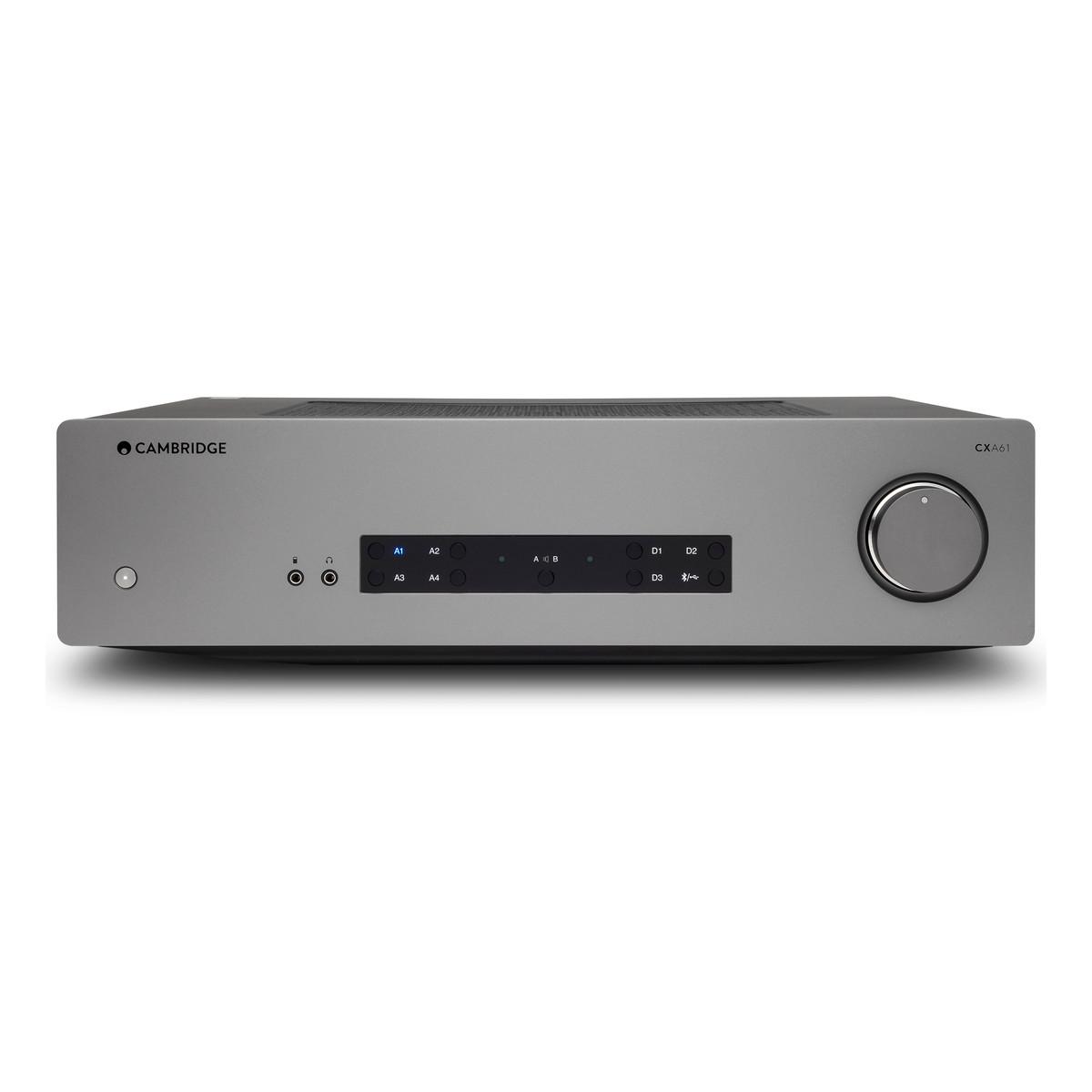
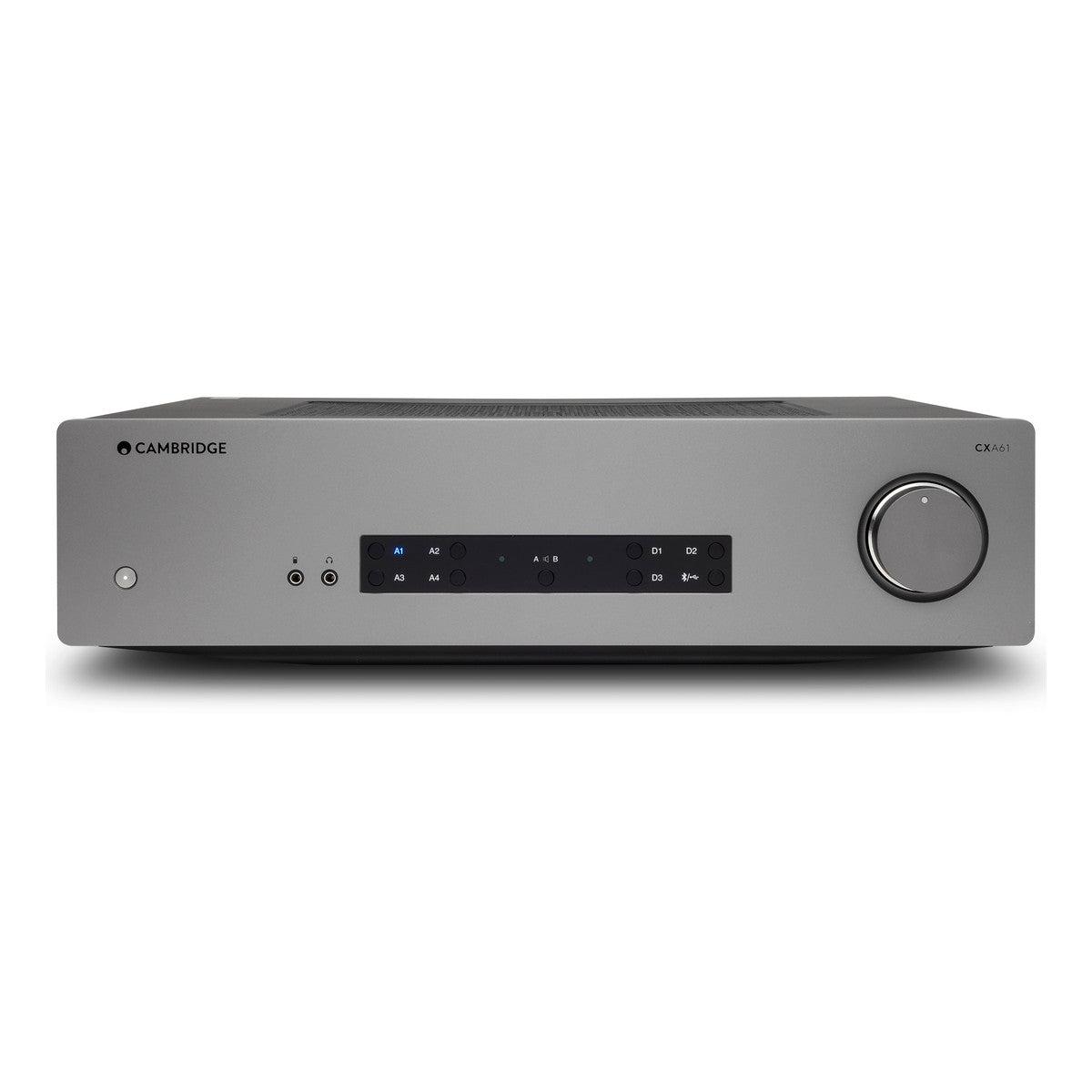
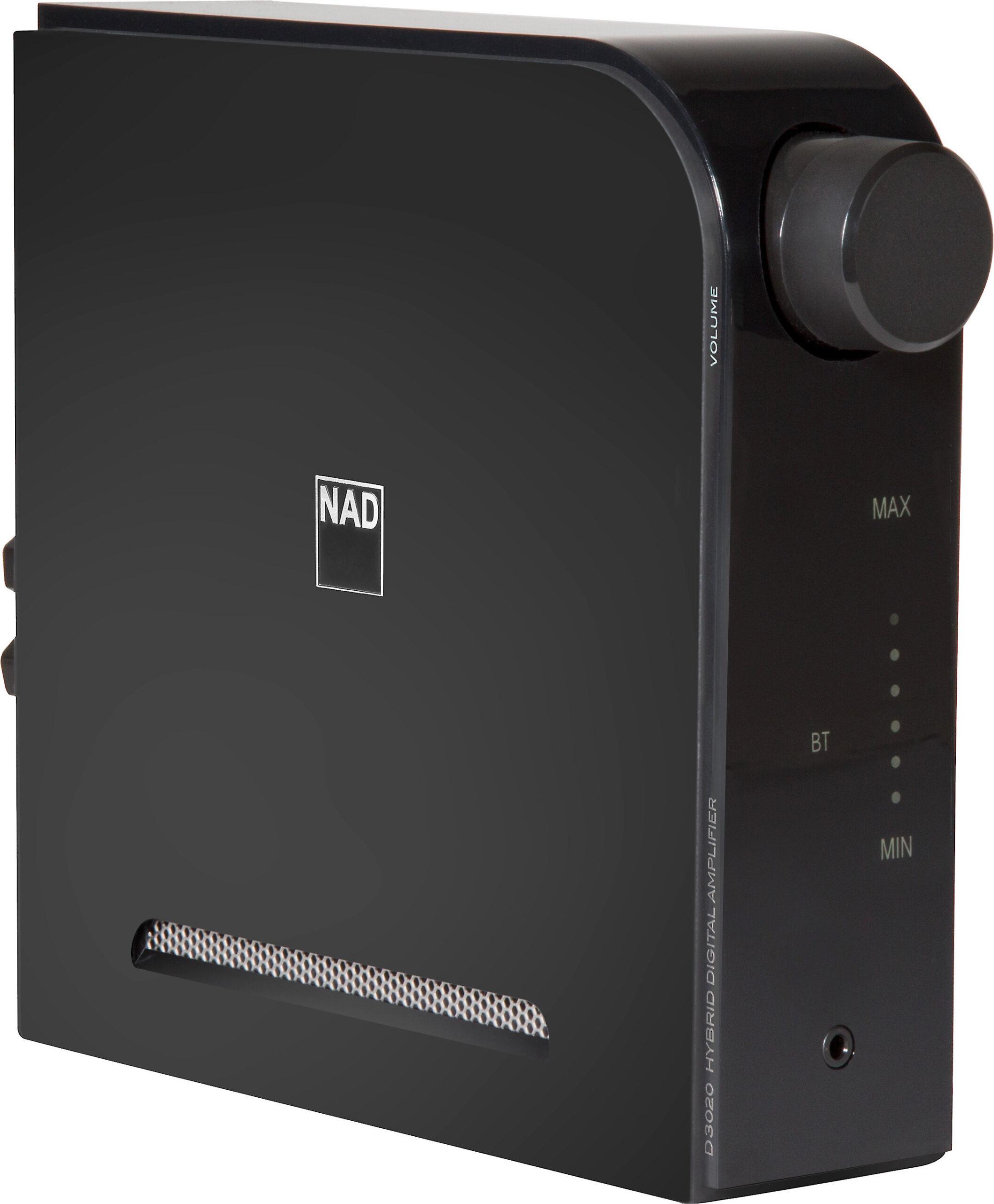
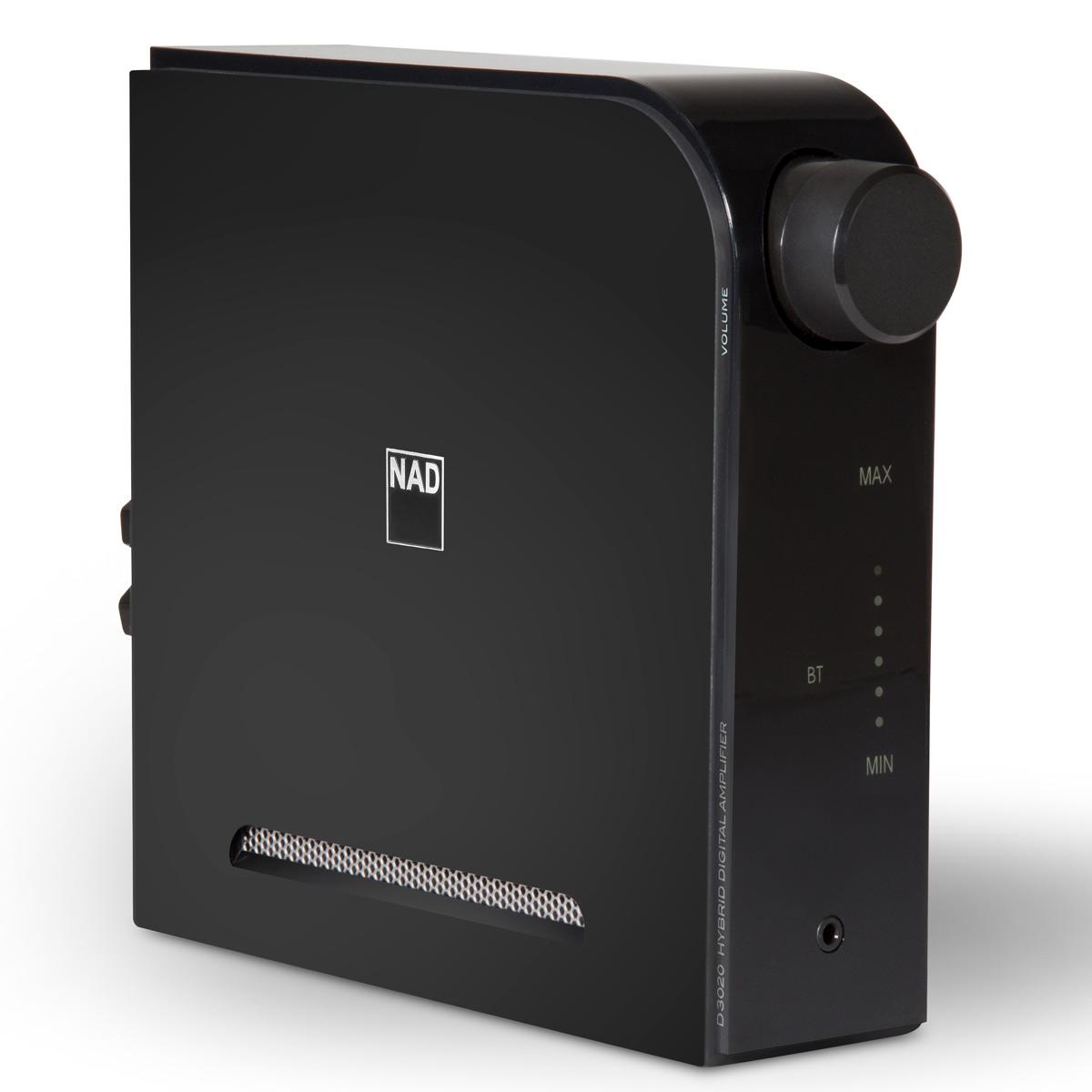
When you're ready to upgrade your audio setup, few decisions matter more than choosing the right integrated amplifier. These devices serve as the command center of your stereo system, taking signals from your sources and boosting them enough to drive your speakers. Today we're comparing two compelling options that take very different approaches: the Cambridge Audio CXA61 and the NAD D 3020 V2.
Released in 2018, both amplifiers represent modern thinking about what today's music lovers need. The Cambridge Audio CXA61 follows the traditional path of serious stereo amplification, while the NAD D 3020 V2 reimagines the compact amplifier for the streaming age. Understanding their differences will help you choose the right foundation for years of musical enjoyment.
An integrated amplifier combines two essential components: a preamplifier (which handles input switching and volume control) and a power amplifier (which provides the muscle to drive your speakers). This combination eliminates the need for separate components while maintaining excellent performance.
The most crucial factor in any amplifier is power output, measured in watts RMS (Root Mean Square). RMS represents continuous power delivery rather than peak bursts, giving you a realistic picture of an amplifier's strength. However, raw wattage numbers don't tell the whole story. Current delivery, damping factor (how well the amplifier controls speaker cone movement), and dynamic headroom (power reserves for sudden musical peaks) all contribute to real-world performance.
Modern integrated amplifiers also serve as digital hubs, incorporating DACs (Digital-to-Analog Converters) that transform digital music files into analog signals your speakers can reproduce. The quality of this conversion significantly impacts sound quality, especially with high-resolution music files that contain more detail than standard CDs.
At the time of writing, quality integrated amplifiers range from around $400 to well over $1000, with diminishing returns setting in around the $800-1200 mark for most listeners. The key is matching the amplifier's capabilities to your speakers, room size, and listening habits.
The Cambridge Audio CXA61 delivers 60 watts RMS per channel into 8-ohm speakers, jumping to 90 watts into 4-ohm loads. This power increase with lower impedance loads indicates a robust power supply with substantial current reserves – exactly what demanding speakers need. The amplifier uses Class AB topology, which balances efficiency with sound quality by switching between different operating modes based on signal strength.
The NAD D 3020 V2 takes a radically different approach with Class D amplification, delivering 30 watts RMS per channel into both 8-ohm and 4-ohm speakers. While this might seem limiting, NAD's PowerDrive technology provides impressive dynamic power bursts – up to 150 watts into 2-ohm loads for brief periods. This means the little NAD can handle sudden musical peaks that would challenge amplifiers with similar continuous ratings.
Class D amplification operates by rapidly switching the output on and off thousands of times per second, controlling the average power through pulse width modulation. This approach achieves remarkable efficiency (often over 90%) compared to traditional Class AB designs (typically 60-70%), resulting in less heat generation and smaller chassis requirements.
In practical terms, the Cambridge Audio CXA61 excels with larger, less efficient speakers that need substantial continuous power. Think floorstanding speakers or bookshelf monitors with sensitivity ratings below 87dB. The NAD D 3020 V2 works beautifully with efficient bookshelf speakers (88dB sensitivity or higher) in small to medium rooms, where its dynamic capabilities shine without needing massive continuous power.
For home theater applications, the Cambridge Audio CXA61 makes an excellent foundation for a 2-channel music system that occasionally handles movie duties. Its robust power delivery ensures dialogue clarity and dynamic range during film soundtracks. However, neither amplifier includes surround sound processing – they're pure stereo devices focused on two-channel excellence.
Both amplifiers recognize that modern listeners need excellent digital audio processing. The Cambridge Audio CXA61 incorporates an ESS Sabre ES9010K2M DAC chip, supporting impressive specifications including 32-bit/384kHz PCM files and DSD256 – formats that exceed even the highest-quality streaming services available today. This future-proofing ensures compatibility with evolving high-resolution audio standards.
The NAD D 3020 V2 uses a Cirrus Logic CS42528 DAC in a clever dual differential configuration. While supporting "only" 24-bit/192kHz resolution, this setup uses eight DAC channels combined to create two stereo outputs, reducing noise and improving linearity. It's a technique typically found in expensive AV receivers, bringing high-end digital processing to a compact amplifier.
Connectivity differs significantly between these models. The Cambridge Audio CXA61 offers comprehensive digital inputs: USB for direct computer connection, two optical inputs, and one coaxial input. This flexibility accommodates everything from streaming devices to CD transports to television audio.
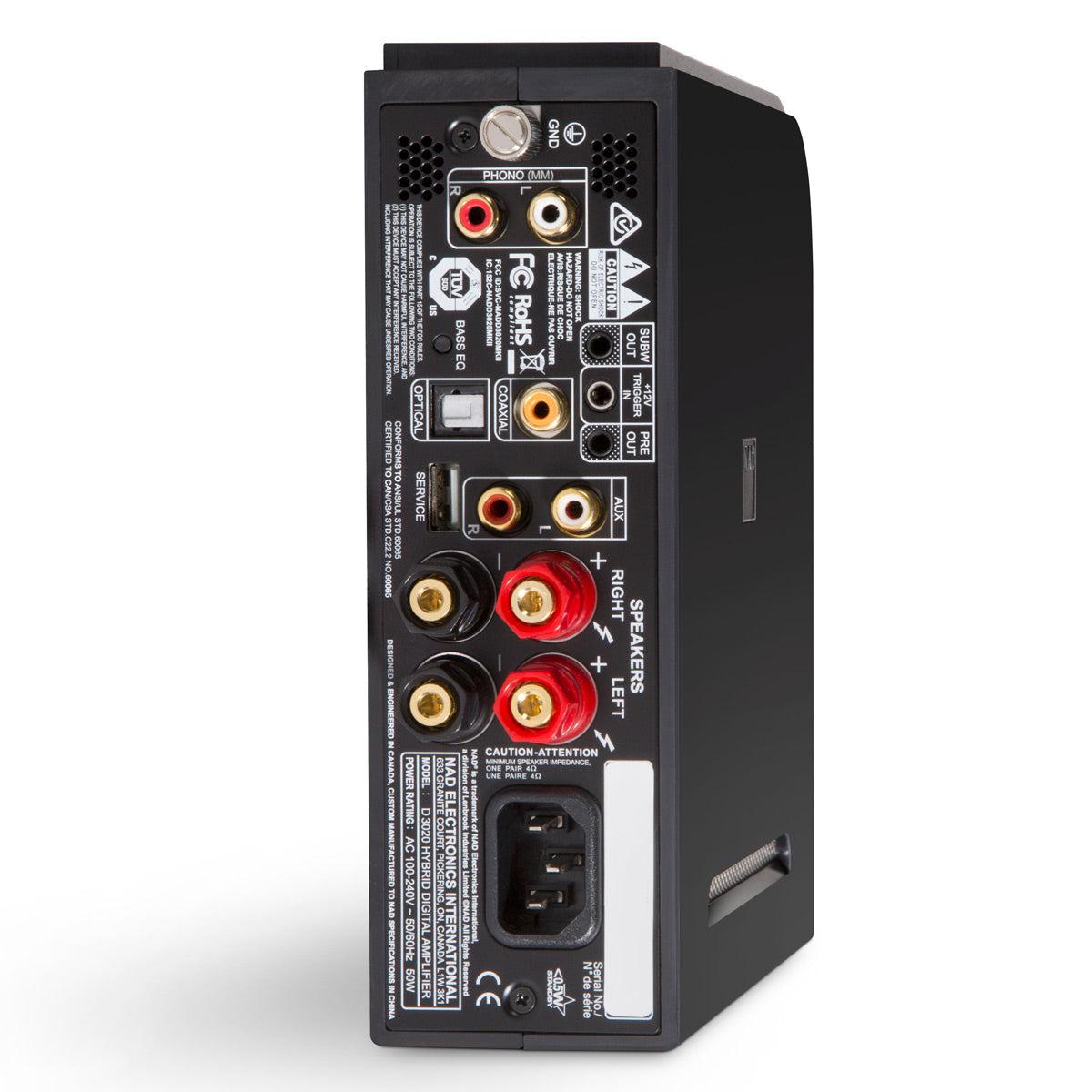
The NAD D 3020 V2 made an interesting trade-off in its V2 revision – removing the USB input found on the original model to make room for other features. You get optical and coaxial inputs supporting up to 24-bit/192kHz, which handles most real-world sources perfectly well. The missing USB input isn't necessarily a dealbreaker, as many users prefer dedicated streamers or use optical connections from their computers.
Both amplifiers include Bluetooth wireless streaming, but with different implementations. The Cambridge Audio CXA61 supports aptX HD, enabling wireless transmission of high-resolution audio up to 24-bit/48kHz – noticeably better than standard Bluetooth quality. The NAD D 3020 V2 uses standard aptX, which still provides CD-quality wireless audio that satisfies most casual listening needs.
The Cambridge Audio CXA61 focuses entirely on line-level sources, offering four pairs of RCA inputs for components like CD players, streaming devices, or tape decks. Its internal design emphasizes signal purity with symmetrical left and right channel circuitry, minimizing crosstalk between channels. This separation helps create the wide, precise soundstage that makes individual instruments easy to locate within the stereo image.
Cambridge Audio refined the analog circuitry for the CXA61, optimizing op-amps (operational amplifiers that boost and condition signals) and carefully selecting capacitor values throughout the signal path. The volume control – often a weak point in integrated amplifiers – received particular attention to reduce channel imbalance and distortion.
The NAD D 3020 V2 takes a different approach by including a built-in phono stage for direct turntable connection. This MM (Moving Magnet) phono input provides proper RIAA equalization (the standard frequency response curve used in vinyl mastering) and includes an infrasonic warp filter to eliminate low-frequency noise from warped records. For vinyl enthusiasts, this eliminates the need for a separate phono preamp.
However, the compact NAD offers just one additional line input beyond the phono stage. This limitation requires careful system planning – you might need to choose between a CD player and a streaming device unless you add an external input switcher.
The Cambridge Audio CXA61 uses a DC-coupled design throughout its signal path, meaning no coupling capacitors that might affect frequency response or introduce coloration. This approach preserves signal integrity from input to output, contributing to the amplifier's neutral, uncolored sound signature.
These amplifiers reflect completely different design philosophies. The Cambridge Audio CXA61 follows traditional hi-fi principles with a substantial chassis weighing over 18 pounds. This mass helps isolate sensitive circuitry from vibrations while providing thermal management for the Class AB output stages. The front panel features a clear display and intuitive controls, while the rear panel offers clearly labeled inputs with thoughtful touches like upside-down text that remains readable when bending over the unit.
The NAD D 3020 V2 represents modern miniaturization at its finest. Weighing just over 3 pounds and designed for vertical or horizontal placement, it maximizes performance per cubic inch. The compact chassis relies on Class D efficiency to minimize heat generation, allowing the tight packaging without thermal concerns.
Build quality meets different standards appropriate to each price point. The Cambridge Audio CXA61, priced significantly higher at the time of writing, justifies its cost with premium internal components, robust construction, and comprehensive connectivity. The NAD D 3020 V2 achieves remarkable value by focusing resources on audio performance rather than luxury construction, though it still feels solid and well-made.
Our research into professional reviews and user experiences reveals distinct sonic personalities. The Cambridge Audio CXA61 consistently receives praise for its powerful, dynamic presentation with excellent control across the frequency spectrum. Reviewers describe it as energetic and precise, maintaining composure even during complex musical passages. The substantial power reserves prevent compression during loud sections, preserving the natural ebb and flow of live performances.
The amplifier's soundstage – the three-dimensional space where instruments appear to be positioned – receives generally positive comments, though some reviewers suggest it could benefit from more spaciousness compared to certain competitors. The overall character leans toward accuracy rather than warmth, making it well-suited to a wide range of musical genres.
The NAD D 3020 V2 earns consistent praise for its smooth, musical character that avoids listening fatigue even during extended sessions. The PowerDrive circuitry helps maintain dynamic punch despite the modest continuous power rating, though some critical listeners note that fine detail retrieval and instrument separation don't quite match larger, more expensive amplifiers.
Interestingly, the compact NAD's phono stage often outperforms dedicated external units costing similar amounts, providing wide soundstages and good detail when spinning vinyl records. However, some users report noise at higher volume levels, requiring careful system matching to avoid issues.
The Cambridge Audio CXA61 excels as the centerpiece of a serious stereo system. Its dual speaker outputs allow connection to two pairs of speakers – perhaps main speakers in the living room and a second pair in an adjacent kitchen or patio. The preamp outputs enable easy integration with a powered subwoofer for full-range sound, or connection to a separate power amplifier for even more muscle.
This flexibility makes the Cambridge Audio ideal for systems that might grow over time. You could start with bookshelf speakers and later upgrade to demanding floorstanding models without outgrowing the amplifier's capabilities. The comprehensive input selection accommodates multiple sources without requiring external switching devices.
The NAD D 3020 V2 targets different scenarios where space and convenience matter more than ultimate expansion capability. It's perfect for desktop listening, where its compact footprint and vertical orientation save valuable desk space. The built-in Bluetooth makes it effortless to stream music from phones or tablets, while the phono input accommodates a turntable without additional equipment.
For apartment dwellers or college students, the NAD represents an excellent entry point into high-quality audio without the space requirements or complexity of larger systems. It also works beautifully as a secondary system in bedrooms or home offices where full-sized equipment would be overkill.
Choose the Cambridge Audio CXA61 if you're building a primary stereo system around quality speakers. Its power reserves handle demanding loads effortlessly, while the extensive connectivity future-proofs your investment. If you have or plan to acquire speakers with sensitivity below 87dB, or if your listening room is larger than a typical bedroom, the Cambridge Audio's extra power becomes essential rather than merely nice to have.
The NAD D 3020 V2 makes sense when space constraints, budget considerations, or specific features like the phono stage drive your decision. It delivers genuinely impressive performance for its size and price, making it perfect for efficient speakers in smaller rooms. The wireless capability and compact form factor suit modern lifestyles where flexibility often trumps absolute performance.
For home theater use, the Cambridge Audio CXA61 provides a stronger foundation, especially if you plan to use it for both music and movie soundtracks. Its power reserves handle the dynamic range of film audio better than the compact NAD.
Both amplifiers represent excellent value within their respective niches. The Cambridge Audio CXA61 justifies its higher price through superior power delivery, extensive connectivity, and build quality that should provide decades of service. The NAD D 3020 V2 achieves remarkable performance per dollar while adding modern conveniences that many users will appreciate daily.
Your choice ultimately depends on matching the amplifier's strengths to your specific needs, space constraints, and long-term audio goals. Either choice will provide years of musical enjoyment when properly matched to appropriate speakers and room conditions.
| Cambridge Audio CXA61 | NAD D 3020 V2 |
|---|---|
| Power Output - Determines ability to drive speakers effectively | |
| 60W RMS per channel (8Ω), 90W (4Ω) - Excellent for demanding speakers | 30W RMS per channel (both 8Ω/4Ω) - Adequate for efficient bookshelf speakers |
| Amplifier Technology - Affects efficiency and sound character | |
| Class AB - Traditional approach with excellent sound quality | Class D with PowerDrive - Modern efficiency, cooler operation |
| Size and Weight - Impact on placement flexibility | |
| 16.9" x 13.4" x 4.5", 18.3 lbs - Traditional full-size component | 8.6" x 7.4" x 2.3", 3.1 lbs - Compact desktop-friendly design |
| Digital Audio Processing - Quality of built-in DAC matters for digital sources | |
| ESS Sabre ES9010K2M, up to 32-bit/384kHz PCM, DSD256 support | Cirrus Logic CS42528, up to 24-bit/192kHz - Still excellent for most sources |
| Digital Connectivity - Flexibility for modern audio sources | |
| USB, 2x optical, 1x coaxial inputs - Comprehensive digital connectivity | 1x optical, 1x coaxial (no USB) - Basic but sufficient for most users |
| Analog Inputs - Connection options for traditional sources | |
| 4x line-level RCA inputs - Excellent for multiple sources | 1x line input + MM phono stage - Limited but includes vinyl capability |
| Wireless Connectivity - Convenience for smartphone/tablet streaming | |
| Bluetooth with aptX HD (24-bit/48kHz wireless) - High-quality wireless | Bluetooth with standard aptX - CD-quality wireless streaming |
| Phono Stage - Essential for turntable users | |
| Not included - Requires external phono preamp for turntables | Built-in MM phono stage with RIAA equalization - Ready for vinyl |
| Speaker Outputs - Flexibility for different setups | |
| Dual A/B speaker outputs - Can drive two pairs of speakers | Single speaker output - One pair only |
| Additional Outputs - Expandability options | |
| Preamp output, subwoofer output - Easy system expansion | Preamp output only - Basic expansion capability |
| Target Use Case - Best application scenarios | |
| Primary stereo system with quality speakers in medium-large rooms | Desktop/small room systems, secondary setups, space-constrained environments |
The Cambridge Audio CXA61 delivers significantly more power with 60W RMS per channel into 8-ohm speakers, compared to the NAD D 3020 V2's 30W RMS per channel. This makes the Cambridge Audio CXA61 better suited for larger speakers and rooms that need more volume.
The NAD D 3020 V2 is dramatically smaller and lighter at just 3.1 pounds and desktop-sized dimensions, while the Cambridge Audio CXA61 is a traditional full-size component weighing over 18 pounds. The compact NAD D 3020 V2 can be placed vertically or horizontally to save space.
The NAD D 3020 V2 includes a built-in phono stage specifically designed for turntables, making it plug-and-play ready for vinyl playback. The Cambridge Audio CXA61 doesn't have a phono input, so you'd need to add an external phono preamp to connect a turntable.
Yes, both amplifiers include Bluetooth connectivity. The Cambridge Audio CXA61 supports aptX HD for higher-quality wireless streaming, while the NAD D 3020 V2 uses standard aptX. Both provide good wireless audio quality from smartphones and tablets.
The Cambridge Audio CXA61 has a more advanced DAC supporting ultra-high resolution formats up to 32-bit/384kHz and DSD files. The NAD D 3020 V2 supports up to 24-bit/192kHz, which is still excellent for most digital music sources and streaming services.
The Cambridge Audio CXA61 offers much more connectivity with four analog inputs plus multiple digital inputs (USB, optical, coaxial). The NAD D 3020 V2 has more limited inputs with one analog line input, a phono input, and two digital inputs (no USB).
The Cambridge Audio CXA61 works better as part of a home theater system due to its higher power output for handling movie soundtracks dynamically. However, both are stereo-only amplifiers without surround sound processing, so they're primarily suited for 2-channel music listening rather than full home theater use.
The Cambridge Audio CXA61 features A/B speaker switching, allowing you to connect and choose between two pairs of speakers. The NAD D 3020 V2 only has one speaker output, limiting you to a single pair of speakers.
The NAD D 3020 V2 typically offers exceptional value with modern features like Bluetooth and a phono stage in a compact, affordable package. The Cambridge Audio CXA61 costs more but provides superior power, build quality, and connectivity for serious stereo systems.
The Cambridge Audio CXA61 excels with larger, less efficient speakers that need substantial power, including floorstanding models. The NAD D 3020 V2 pairs perfectly with efficient bookshelf speakers in small to medium rooms where its 30W output is sufficient.
The NAD D 3020 V2 is significantly more energy efficient thanks to its Class D amplification technology, running cooler and consuming less power than traditional designs. The Cambridge Audio CXA61 uses Class AB amplification, which is less efficient but offers excellent sound quality.
Choose the NAD D 3020 V2 if you want a compact, feature-rich amplifier with built-in phono stage and wireless streaming for a smaller space. Pick the Cambridge Audio CXA61 if you have larger speakers, need more power, or want extensive connectivity options for a serious stereo system that can grow over time.
We've done our best to create useful and informative comparisons to help you decide what product to buy. Our research uses advanced automated methods to create this comparison and perfection is not possible - please contact us for corrections or questions. These are the sites we've researched in the creation of this article: themasterswitch.com - theaudiophileman.com - youtube.com - forums.whathifi.com - crutchfield.com - youtube.com - youtube.com - hifihaven.org - crutchfield.com - audioguru.com - listenup.com - forums.whathifi.com - manuals.cambridgeaudio.com - alpha-audio.net - hifichoice.com - cambridgeaudio.com - the-ear.net - speakerdecision.com - hifinews.com - youtube.com - forum.psaudio.com - crutchfield.com - forum.audiogon.com - crutchfield.com - iiwireviews.com - crutchfield.ca - audiosciencereview.com - soundstagesimplifi.com - nadelectronics.com - hifiheaven.net - crutchfield.com - projectorscreen.com - upscaleaudio.com - dedicatedaudio.com - twitteringmachines.com - nadelectronics.com

Privacy Policy
Terms and Conditions - Affiliate Policy
Home Security
© Copyright 2008-2026.
11816 Inwood Rd #1211, Dallas, TX 75244