

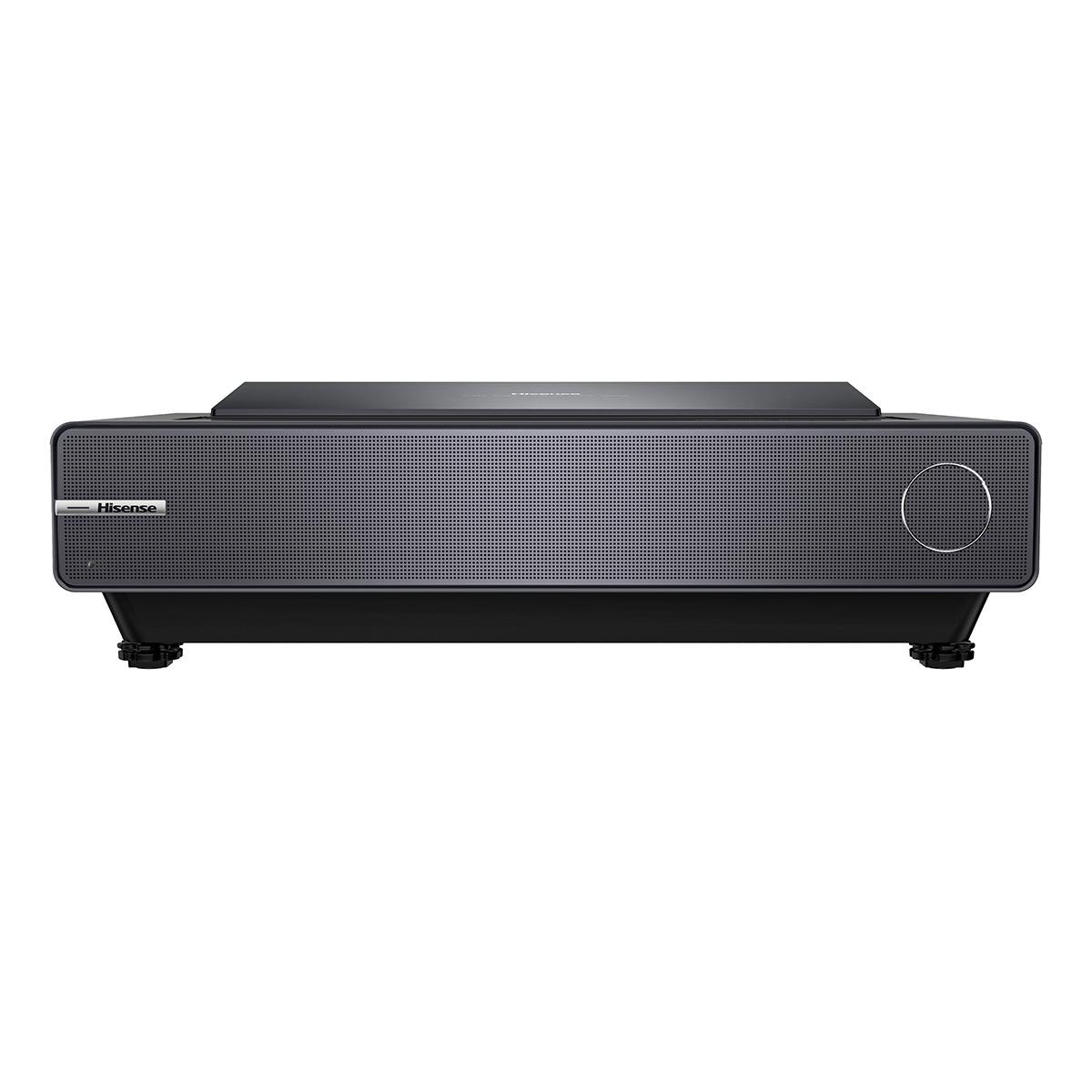
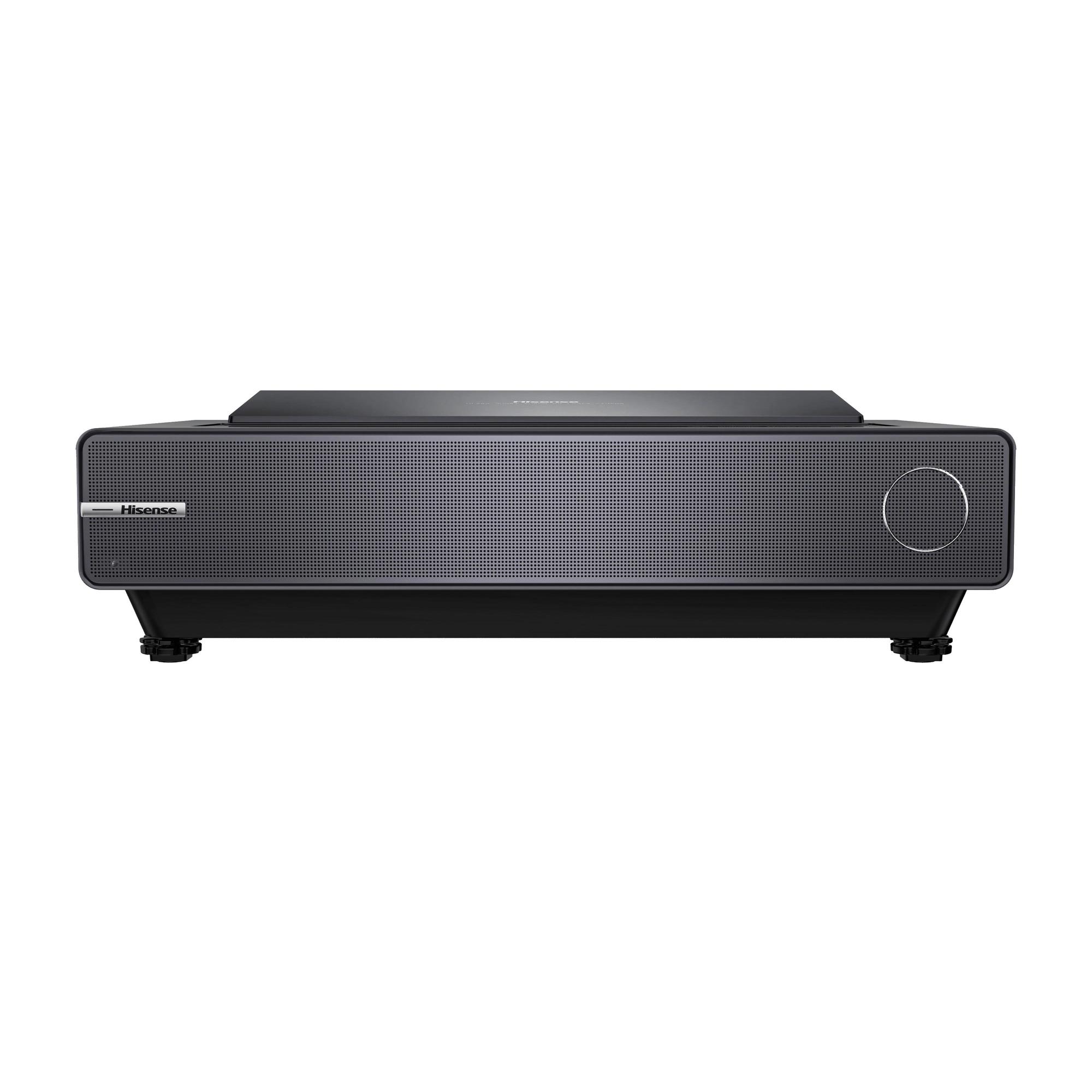
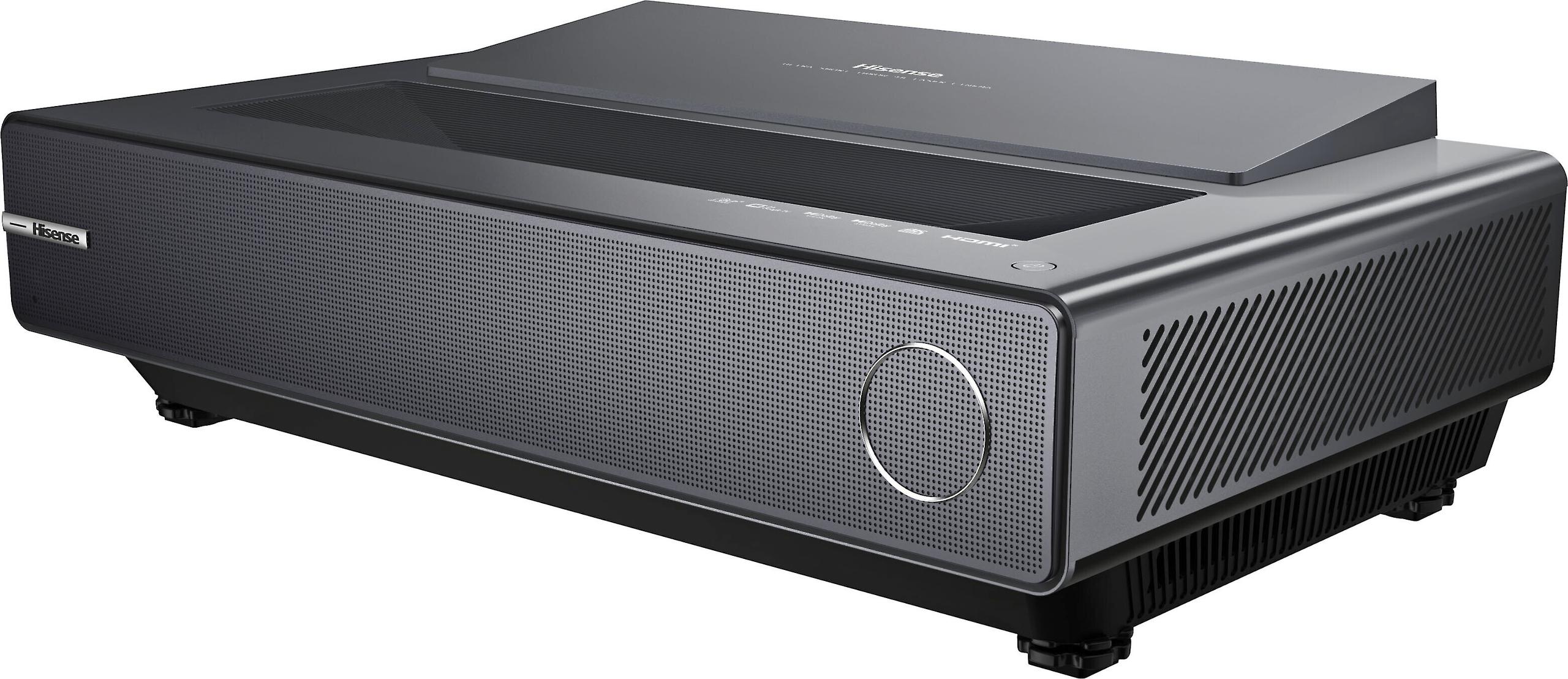
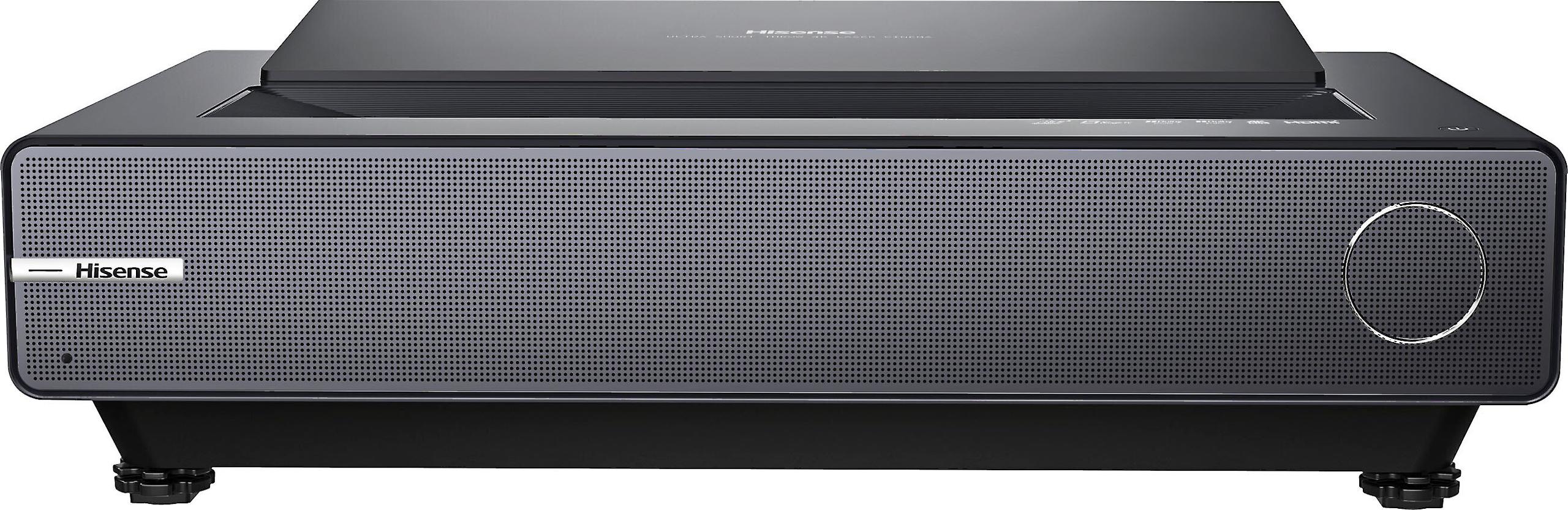
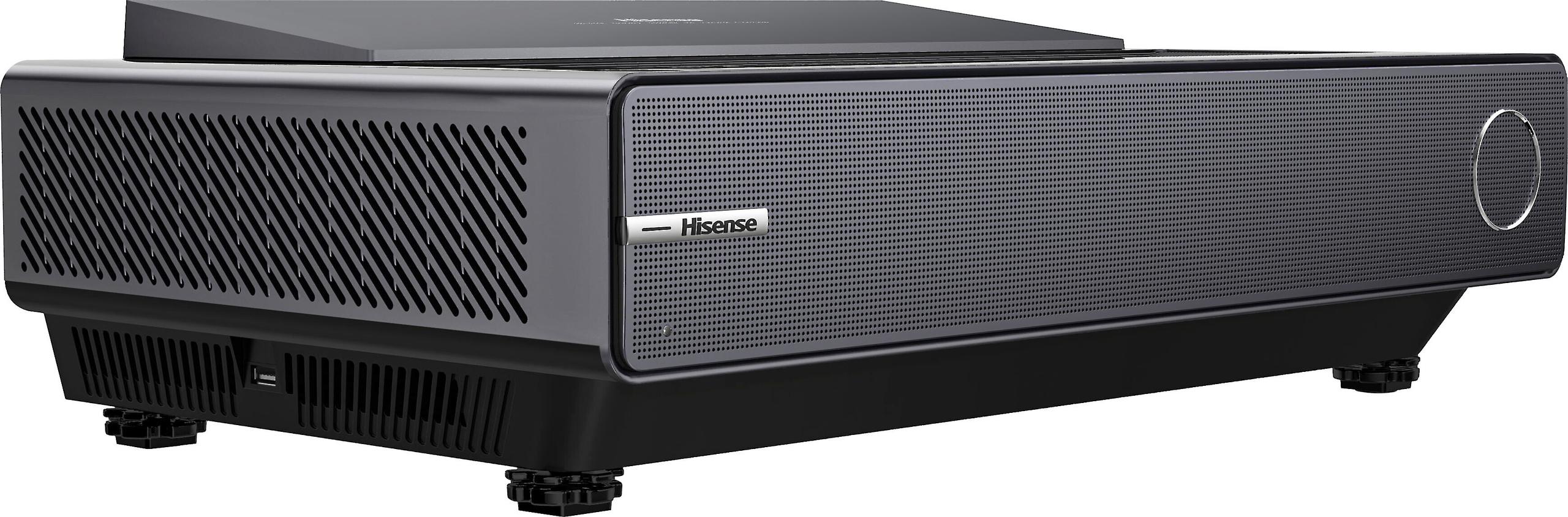
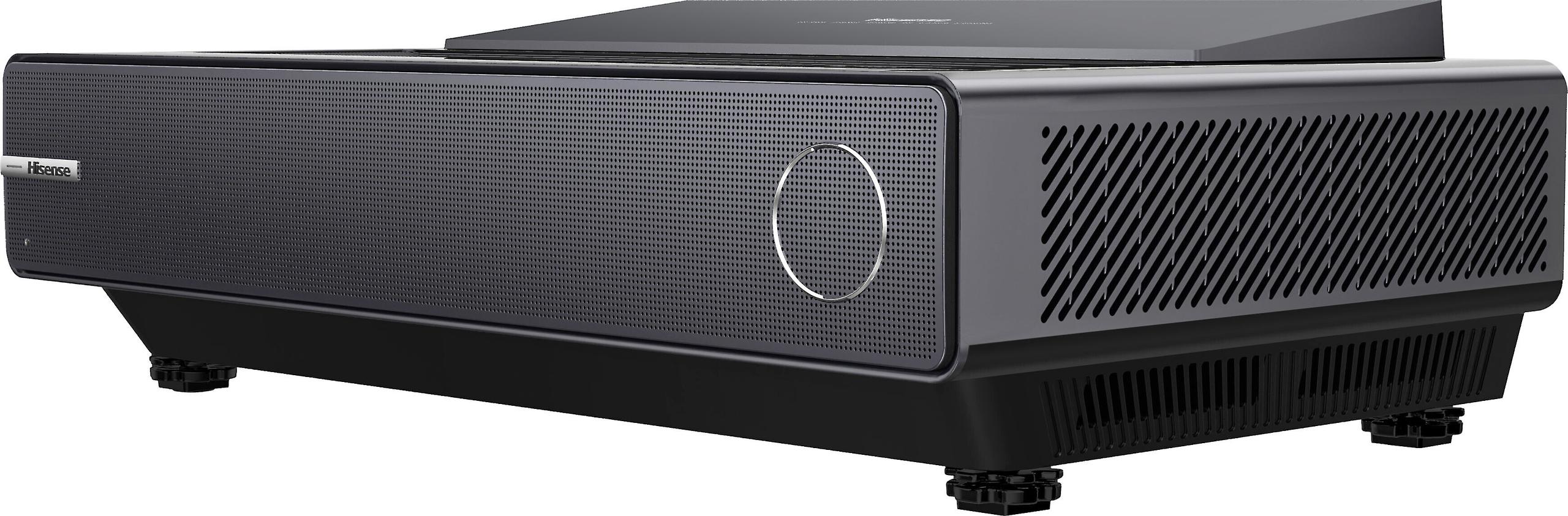
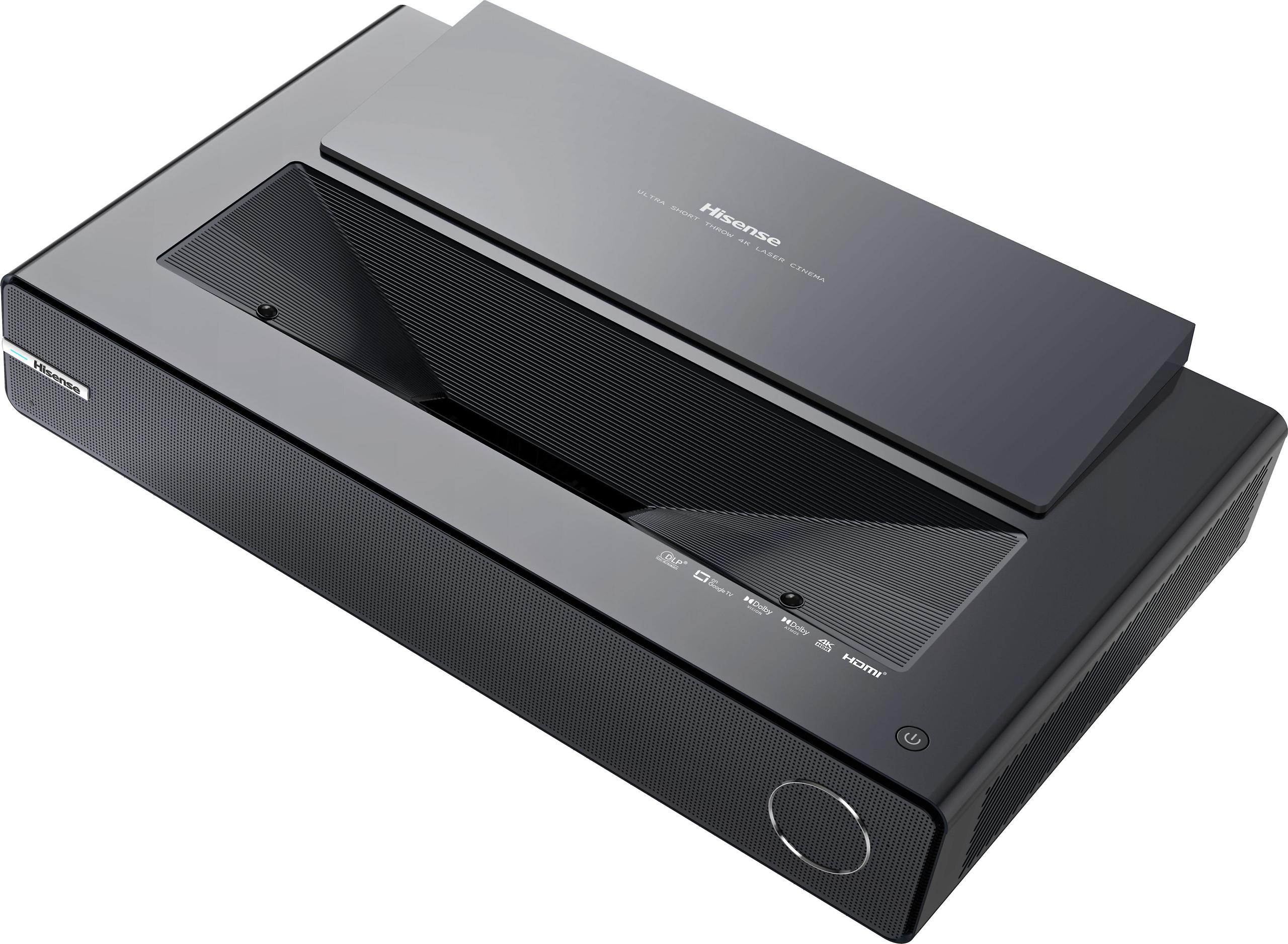
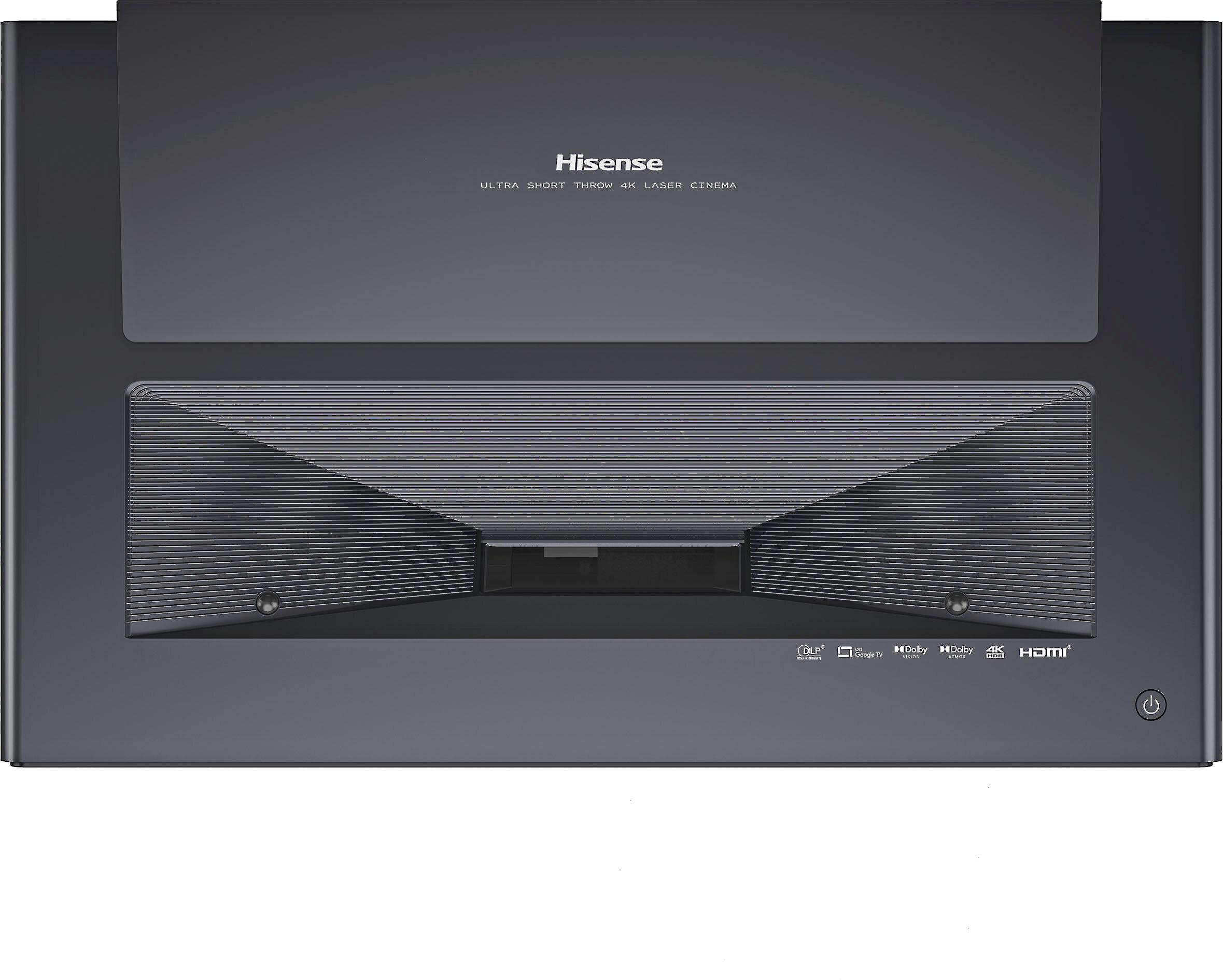
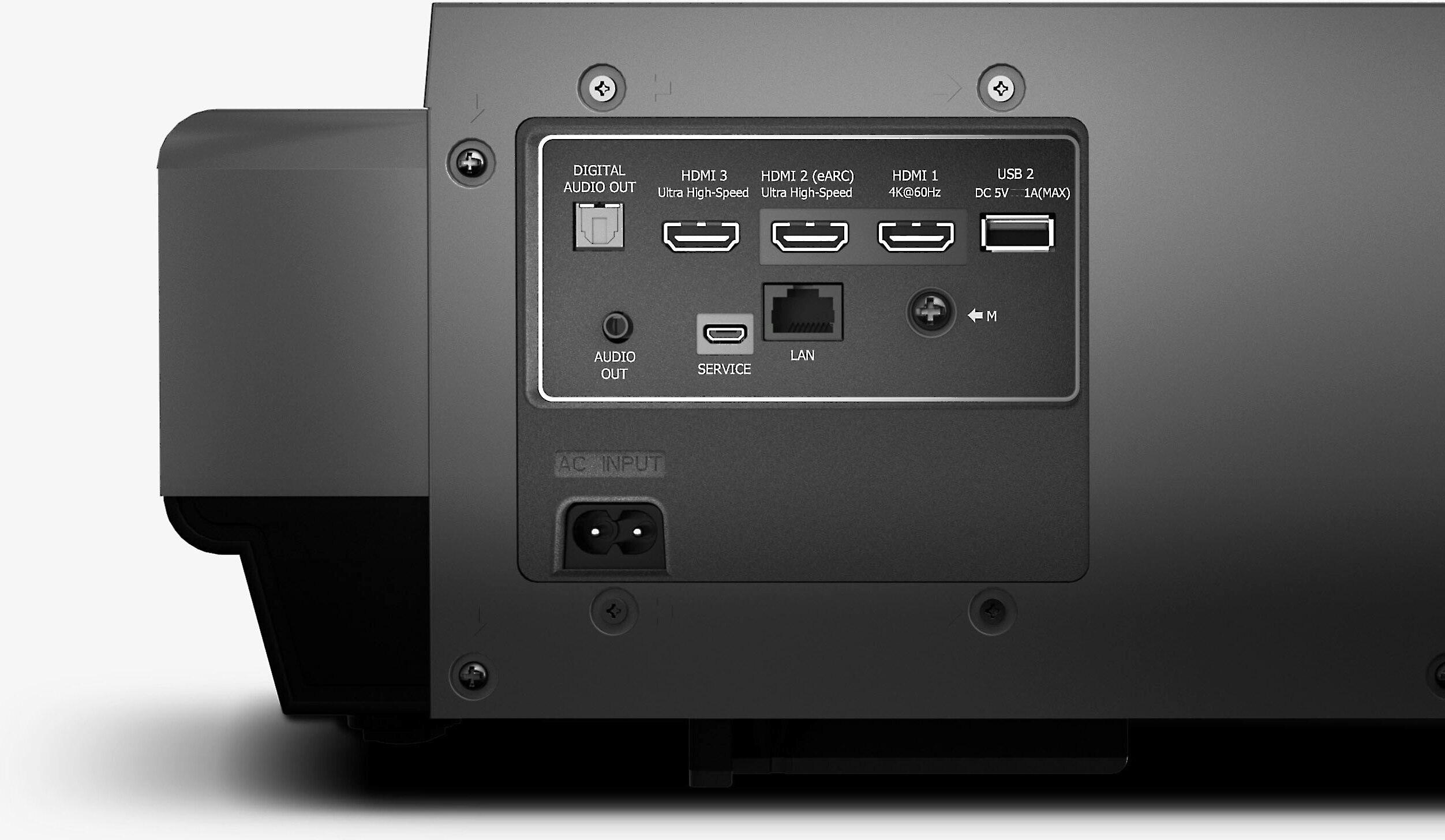
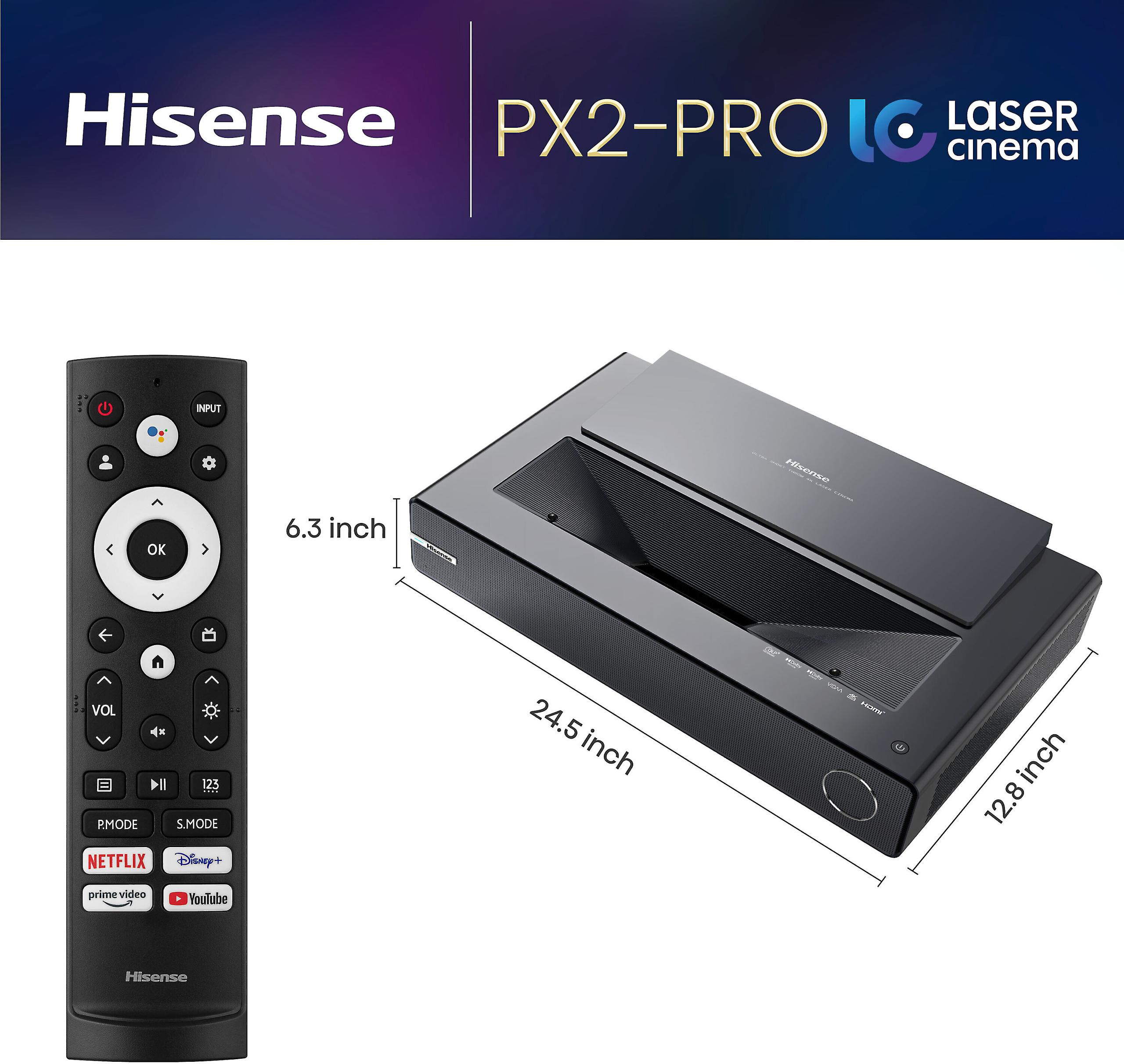

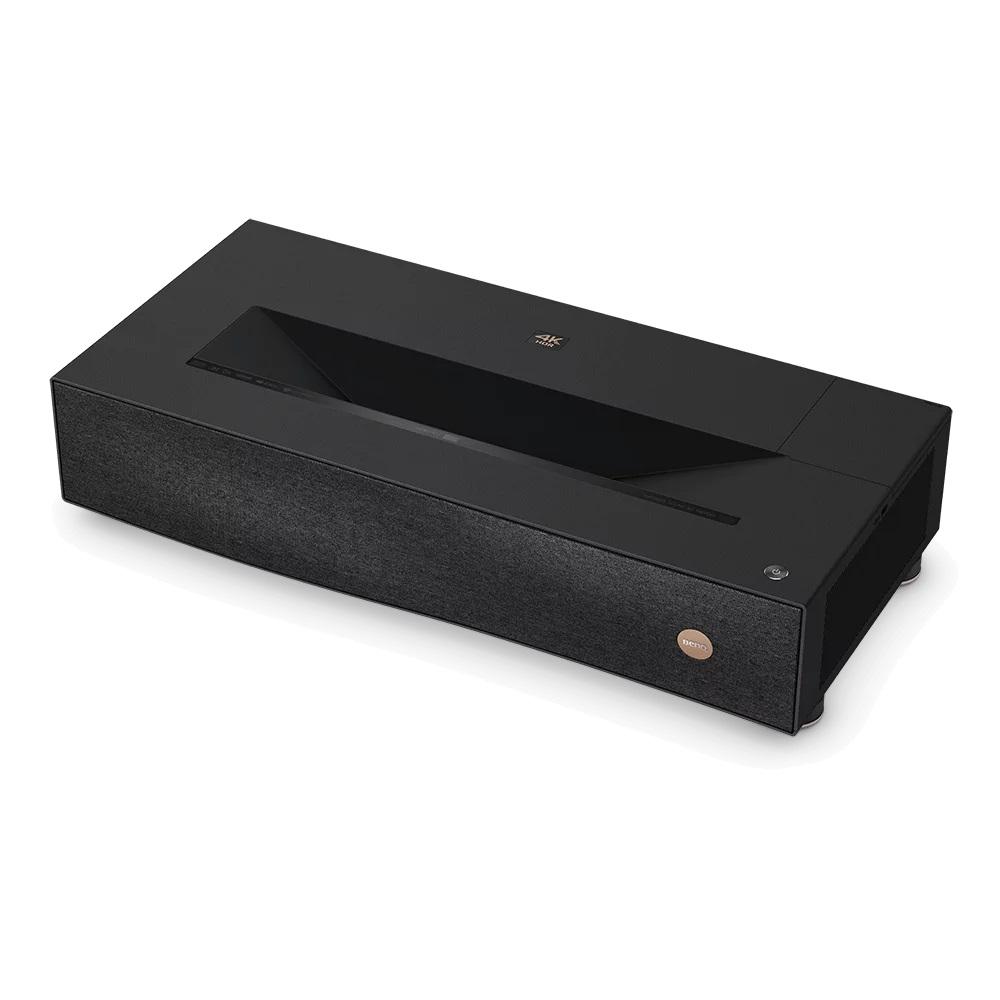
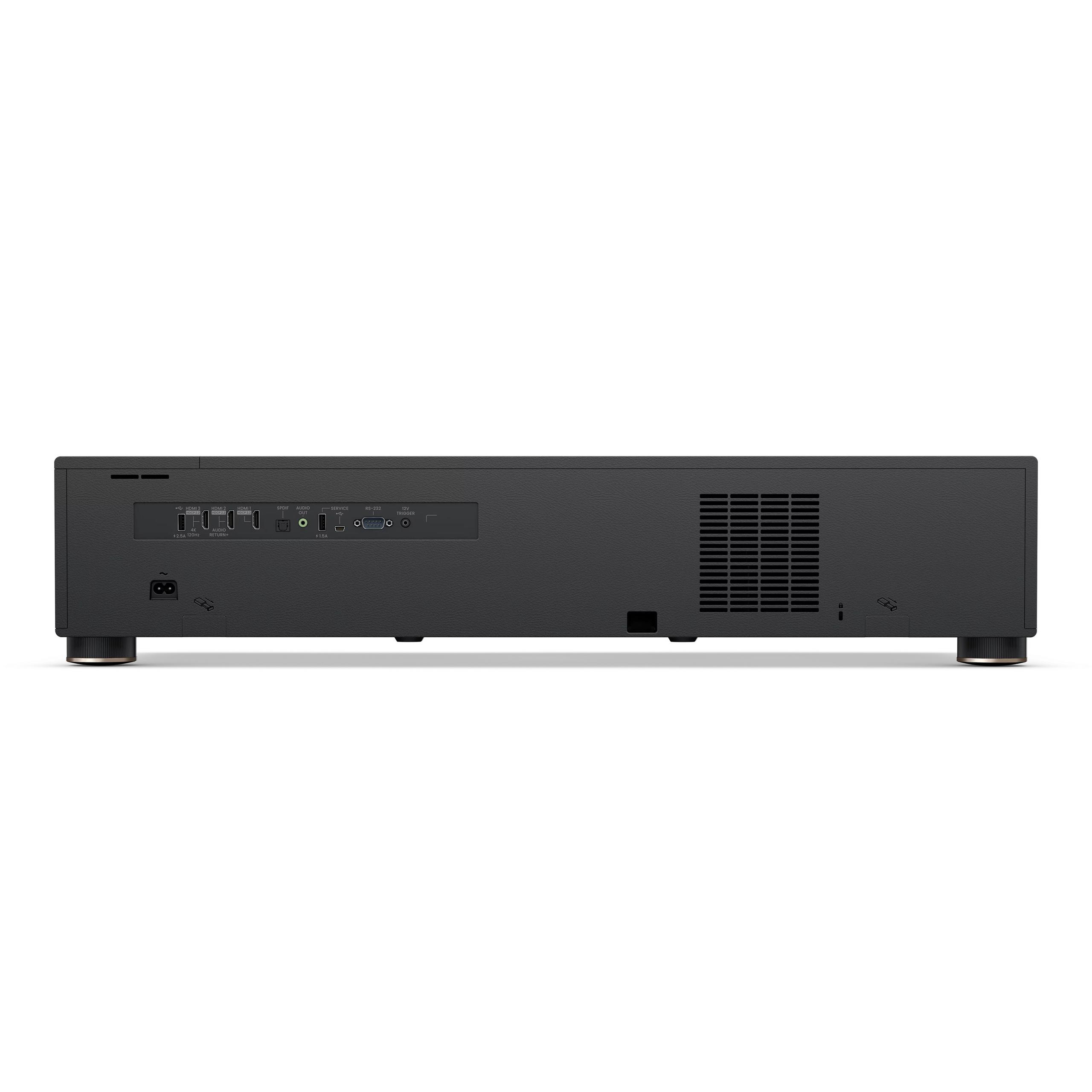
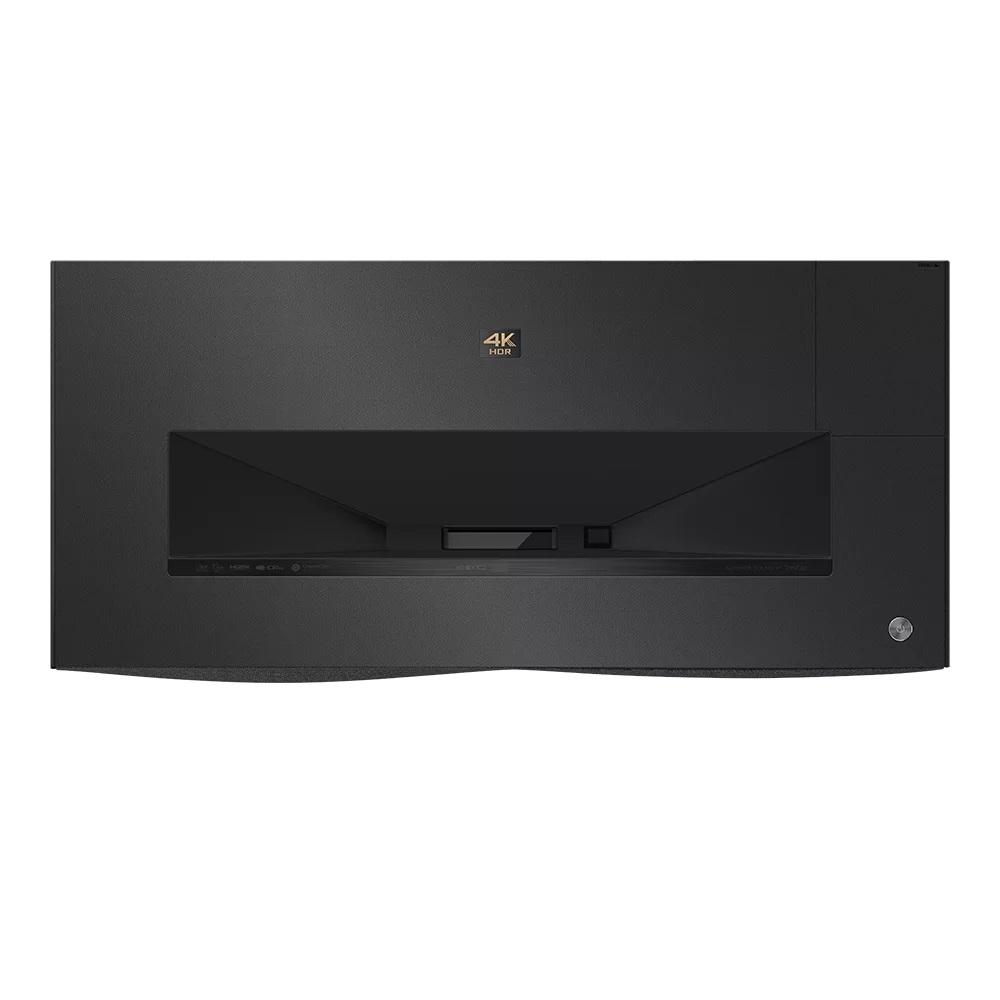
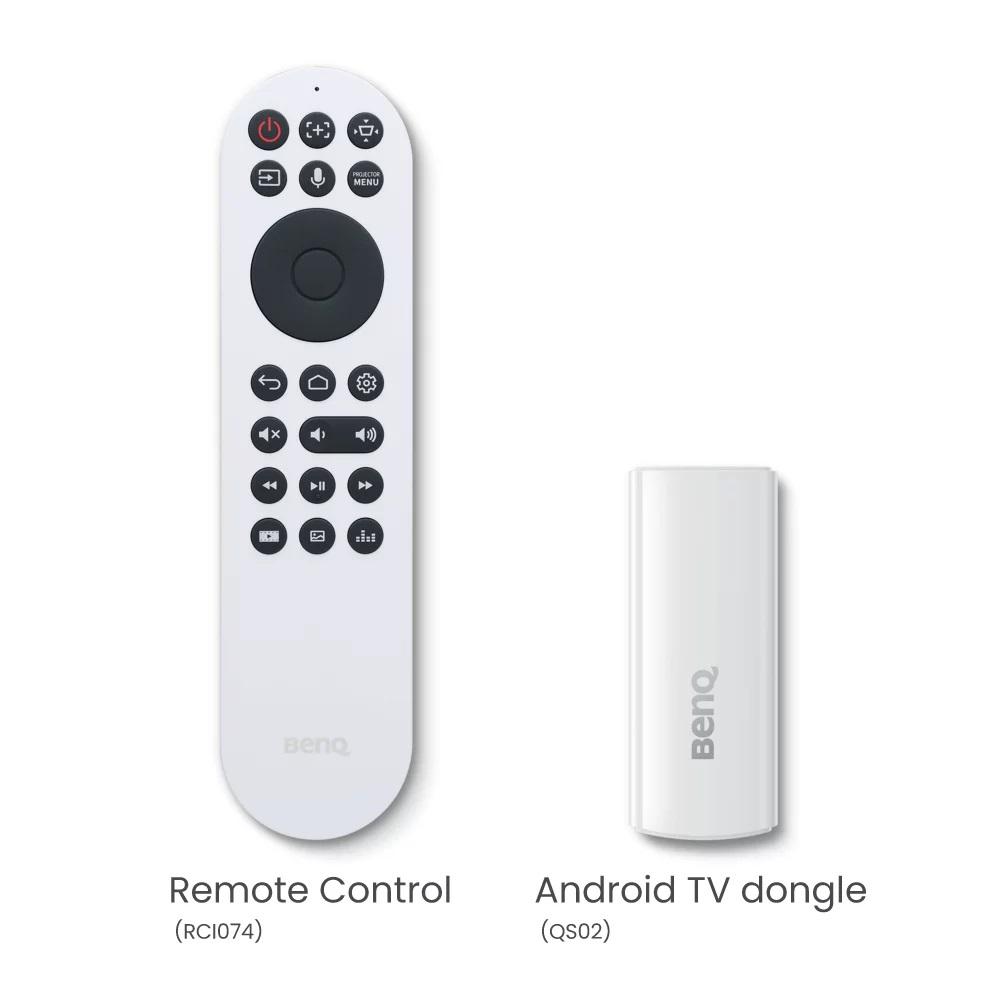
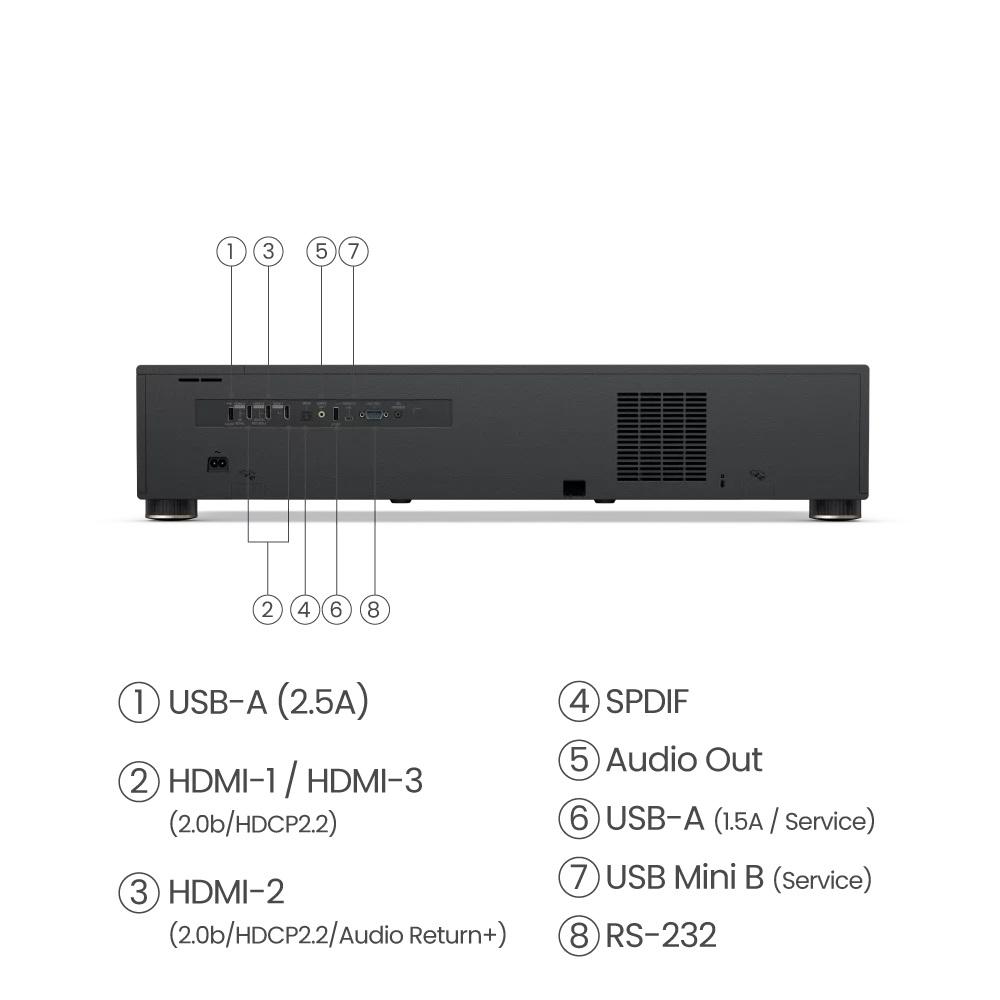
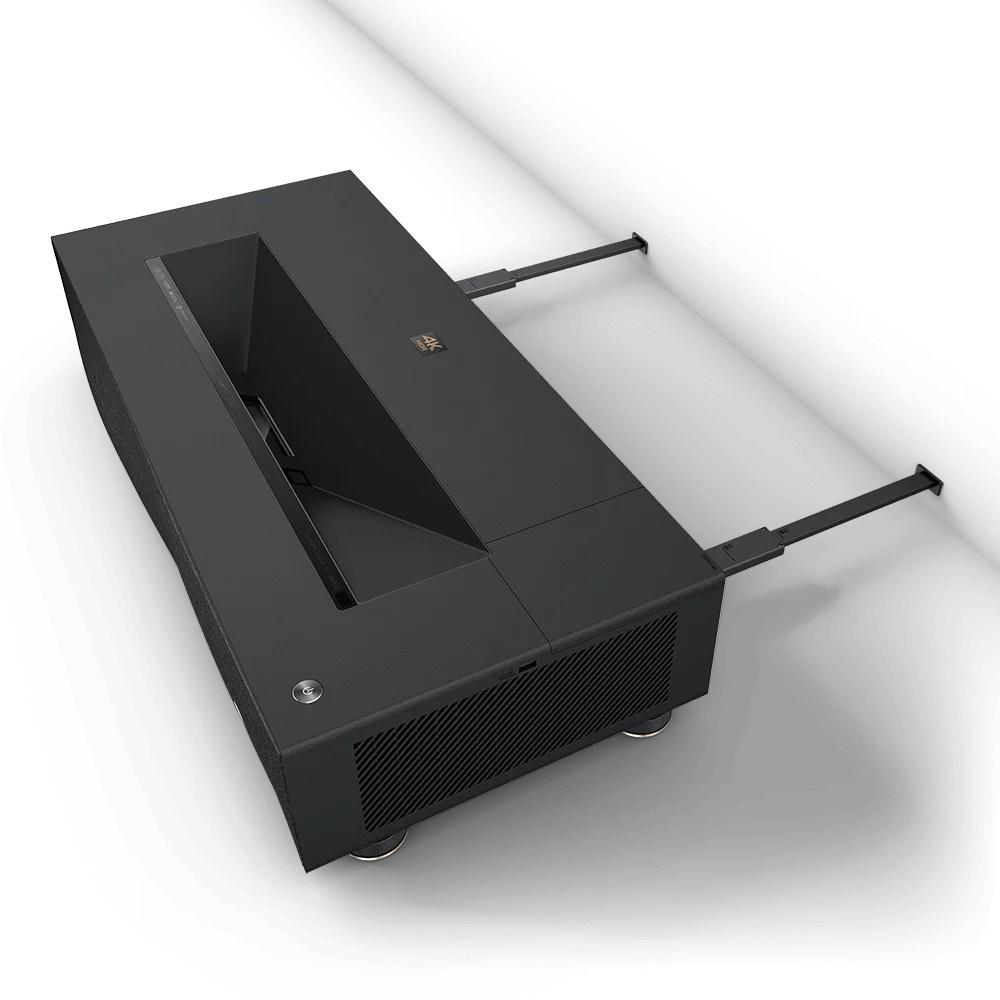
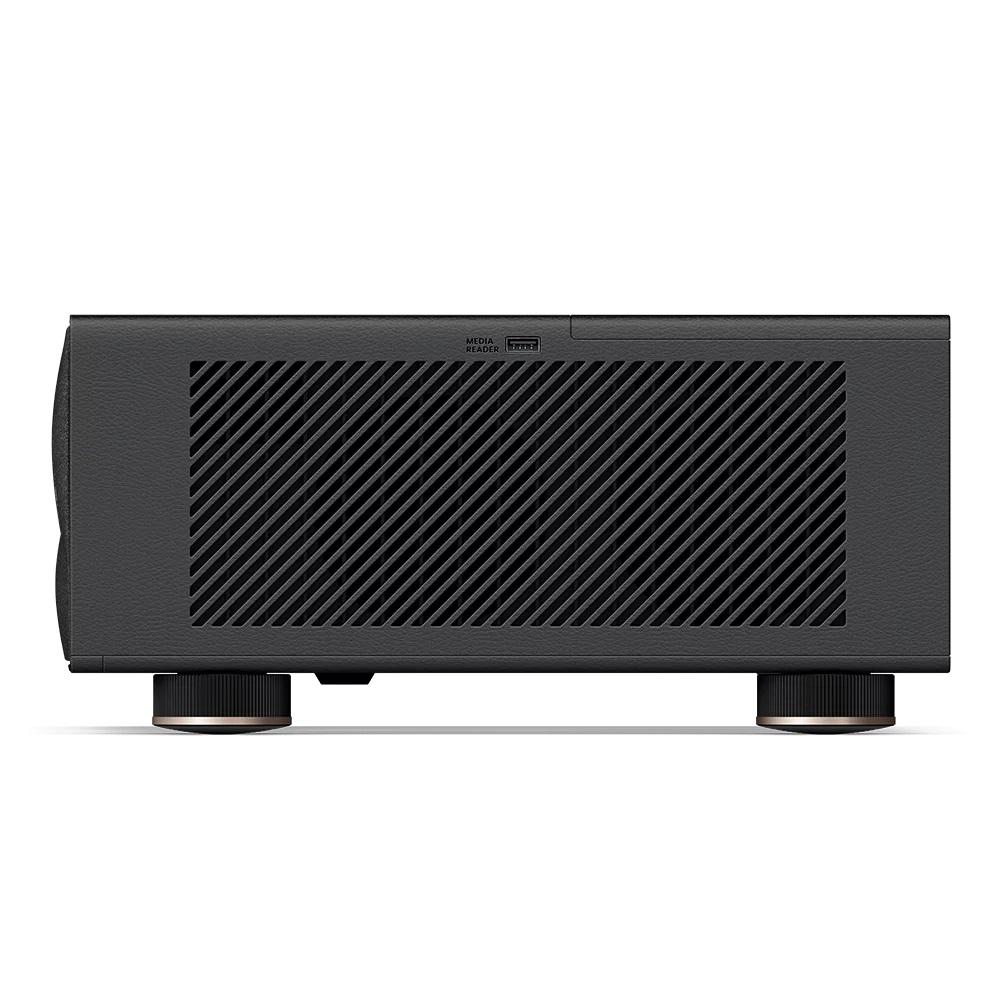
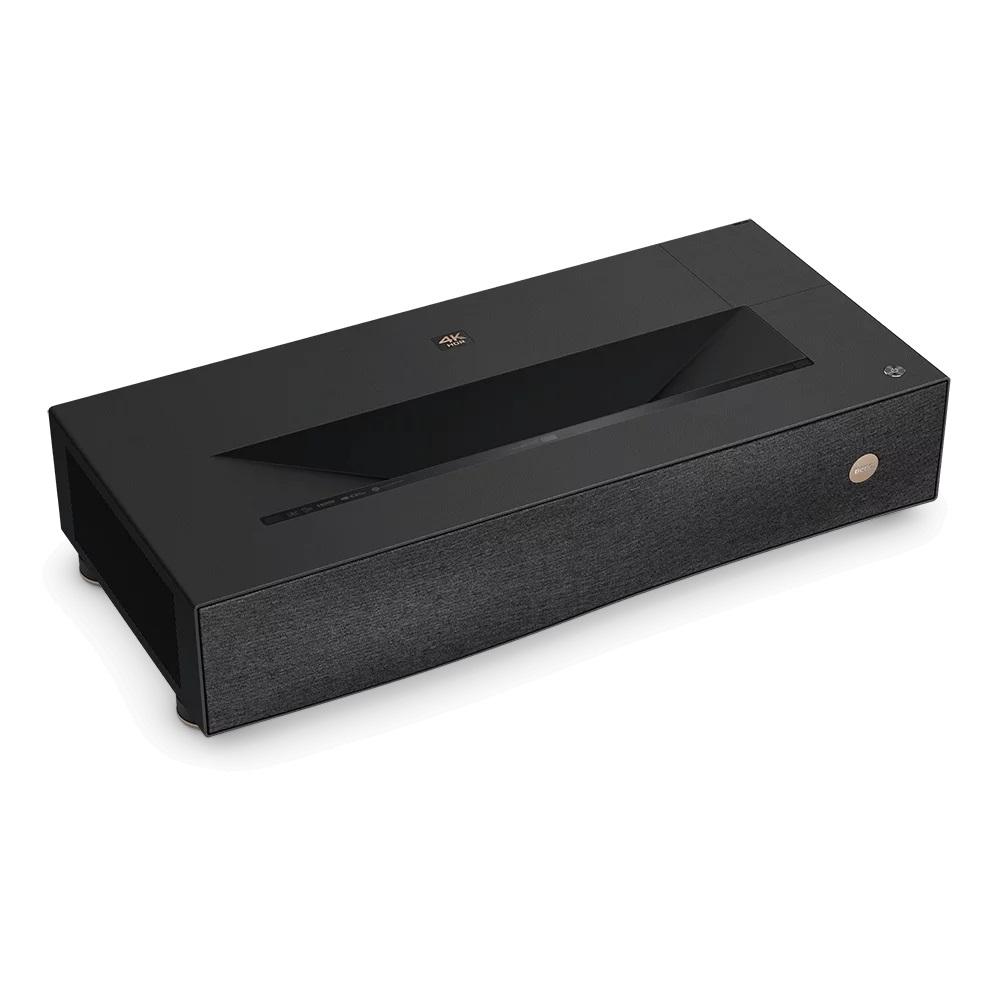
The home theater projector market has evolved dramatically in recent years, with Ultra Short Throw (UST) laser projectors becoming increasingly popular. Today, we're comparing two standout options: the Hisense PX2-PRO ($2,997) and the BenQ V5000i ($3,499). Both represent the latest in home theater technology, but they take slightly different approaches to delivering your big-screen experience.
Before diving into the specifics, let's understand what makes these projectors special. Unlike traditional projectors that need to sit far from the screen, UST projectors can create massive images from just inches away. They use advanced laser light sources and specialized lenses to achieve this feat, making them perfect for rooms where mounting a regular projector isn't practical.
The laser light sources in these projectors are particularly interesting - both use RGB (Red, Green, Blue) triple laser systems, which is a significant improvement over older single-laser designs. This technology allows them to produce more vibrant colors and maintain consistent brightness over their lifetime, typically rated for around 25,000 hours of use.
The Hisense PX2-PRO and BenQ V5000i both deliver exceptional image quality, but there are notable differences in their approach:
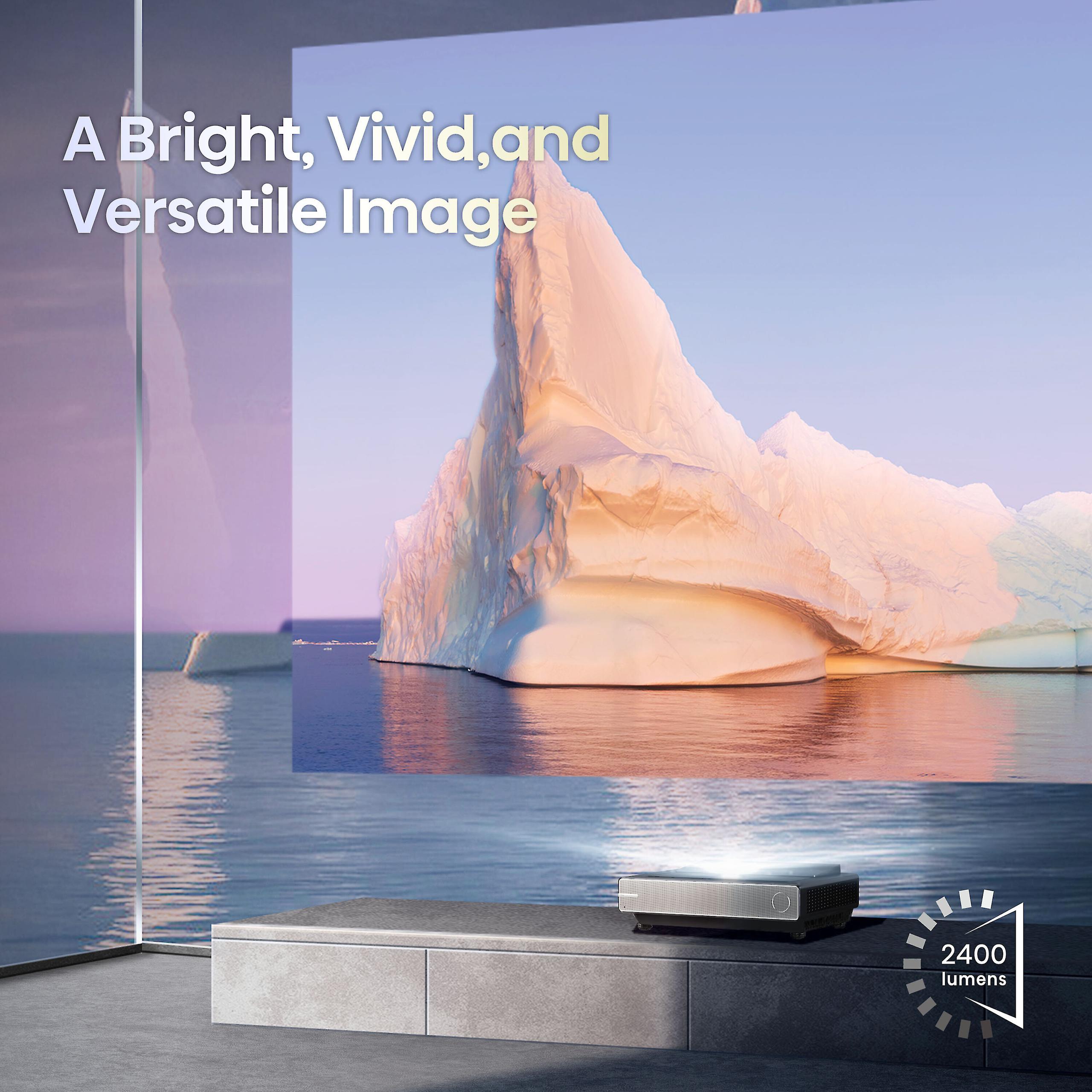
The BenQ edges out slightly with 2,500 ANSI lumens compared to Hisense's 2,400. In practical terms, this difference is minimal - both projectors are bright enough for moderate ambient light, though you'll want to control room lighting for the best experience.
Where things get interesting is in color reproduction. The Hisense achieves an impressive 107% of the BT.2020 color space, while the BenQ covers 98% of DCI-P3. For context, BT.2020 is a wider color space than DCI-P3, meaning the Hisense can technically display a broader range of colors. However, most current content is mastered for DCI-P3, so the BenQ's excellent coverage there is equally valuable.
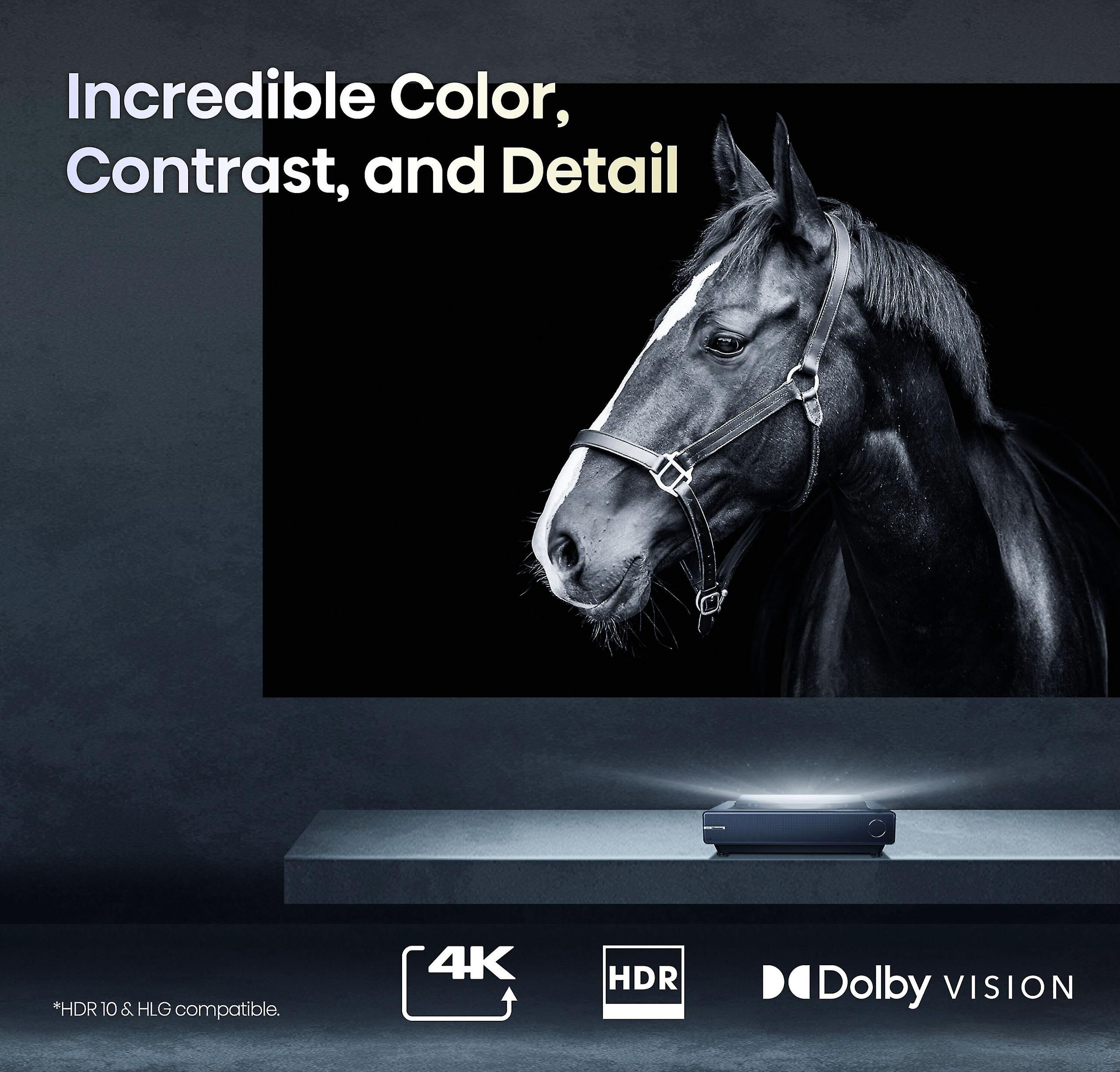
HDR (High Dynamic Range) handling differs between these projectors in meaningful ways. The Hisense supports Dolby Vision, which provides dynamic HDR metadata that can adjust the image quality scene-by-scene. The BenQ counters with HDR10+ support, offering similar dynamic adjustment capabilities but through a different standard.
Gaming performance is where we see some of the biggest differences between these projectors. The BenQ V5000i is clearly designed with gamers in mind, offering:
The Hisense PX2-PRO isn't as gaming-focused, with:
For casual gaming, either projector will work fine. However, competitive gamers will definitely appreciate the BenQ's lower input lag and higher refresh rate options.
Both projectors offer smart TV capabilities, but their implementations differ:
The Hisense uses Google TV, which provides:
The BenQ's Android TV 11 platform offers:
UST projectors require careful placement for optimal image alignment. Both projectors handle this differently:
The Hisense offers automatic geometric correction using your smartphone, making initial setup easier. The BenQ provides more manual calibration options, which can be better for achieving perfect alignment but requires more expertise.
Both projectors work best with an ALR (Ambient Light Rejecting) screen, which helps maintain image quality when there's ambient light in the room. These screens aren't included and can add $500-1,500 to your total cost.
While external speakers or a soundbar are recommended for the best experience, both projectors include built-in audio:
The BenQ's audio is slightly more powerful, but the Hisense's Dolby Atmos support provides better spatial audio effects when watching compatible content.
At $2,997, the Hisense PX2-PRO represents excellent value, especially considering its larger maximum screen size (130" vs BenQ's 100") and Dolby Vision support. The BenQ V5000i at $3,499 justifies its higher price through superior gaming performance and more detailed calibration options.
Choose the Hisense PX2-PRO if:
Choose the BenQ V5000i if:
Both projectors excel in their intended use cases. The Hisense PX2-PRO offers tremendous value and features that will satisfy most users, while the BenQ V5000i caters to enthusiasts who demand the absolute best in gaming performance and image calibration.
For most home theater setups, the Hisense PX2-PRO provides the better value proposition. However, if gaming is a priority or you need specific features like high refresh rate support, the BenQ V5000i is worth the extra investment. Remember to factor in the cost of an ALR screen and potentially external speakers when planning your budget.
| Hisense PX2-PRO | BenQ V5000i |
|---|---|
| Price - Base investment required | |
| $2,997 | $3,499 |
| Brightness - Critical for ambient light performance | |
| 2,400 ANSI lumens (good for moderate lighting) | 2,500 ANSI lumens (slightly better in bright rooms) |
| Color Performance - Impacts vibrancy and realism | |
| 107% BT.2020 (wider color range) | 98% DCI-P3 (excellent for current content) |
| Gaming Performance - Key for responsive gameplay | |
| 30-35ms input lag at 4K/60Hz | 17.9ms input lag at 4K/60Hz, supports up to 240Hz at 1080p |
| Screen Size Range - Flexibility for different rooms | |
| 90" to 130" (more flexible for larger spaces) | 70" to 100" (more limited maximum size) |
| HDR Support - Affects dynamic range and contrast | |
| HDR10, Dolby Vision, HLG | HDR10+, HDR10, HLG |
| Smart Platform - Streaming and interface experience | |
| Google TV (more polished, better recommendations) | Android TV 11 (basic but functional) |
| Audio System - Built-in sound capability | |
| 30W Dolby Atmos (good spatial audio) | 40W Trevolo (better overall power) |
| Light Source - Longevity and color stability | |
| TriChroma RGB Laser (25,000 hours) | RGB Triple Laser (20,000 hours) |
| Setup Features - Ease of installation | |
| Auto geometric correction via smartphone | Manual calibration with more precise controls |
| Additional Features - Extra capabilities | |
| Low blue light mode, Filmmaker Mode | ALLM, Advanced color temperature tuning, Local contrast enhancer |
The Hisense PX2-PRO offers better overall value at $2,997 with a larger maximum screen size and Dolby Vision, while the BenQ V5000i at $3,499 excels in gaming performance and calibration options. For most users, the Hisense provides the better balance of features and price.
The Hisense PX2-PRO costs $2,997, while the BenQ V5000i is priced at $3,499, making a $502 difference between them.
The BenQ V5000i is significantly better for gaming with 17.9ms input lag and support for up to 240Hz at 1080p. The Hisense PX2-PRO has higher input lag (30-35ms) and doesn't support high refresh rates.
The Hisense PX2-PRO can project up to 130 inches, while the BenQ V5000i maxes out at 100 inches. This makes the Hisense more suitable for larger rooms.
The BenQ V5000i is slightly brighter at 2,500 ANSI lumens compared to the Hisense PX2-PRO's 2,400 ANSI lumens, but the difference is minimal in real-world use.
Yes, both the Hisense PX2-PRO and BenQ V5000i work best with an ALR (Ambient Light Rejecting) screen for optimal image quality, which will add $500-1,500 to your total cost.
The Hisense PX2-PRO uses Google TV, which offers a more polished interface and better content recommendations compared to the BenQ V5000i's Android TV 11 platform.
The Hisense PX2-PRO offers 25,000 hours of laser life, while the BenQ V5000i provides 20,000 hours. Both should last many years under normal use.
The Hisense PX2-PRO supports Dolby Vision, HDR10, and HLG, while the BenQ V5000i offers HDR10+ and HDR10. Dolby Vision support gives the Hisense an edge for movie watching.
Yes, the BenQ V5000i has a 40W Trevolo sound system, while the Hisense PX2-PRO features a 30W Dolby Atmos system. Both benefit from external speakers for the best experience.
The Hisense PX2-PRO offers automatic geometric correction using a smartphone app, making it easier to set up than the BenQ V5000i, which relies on manual calibration.
Both the Hisense PX2-PRO and BenQ V5000i can work in rooms with some ambient light, especially when paired with an ALR screen, but controlled lighting will provide the best image quality.
We've done our best to create useful and informative comparisons to help you decide what product to buy. Our research uses advanced automated methods to create this comparison and perfection is not possible - please contact us for corrections or questions. These are the sites we've researched in the creation of this article: bestbuy.com - walmart.com - hisense-usa.com - techradar.com - youtube.com - shop.hisense-usa.com - shop.hisense-usa.com - electronicexpress.com - projectorreviews.com - projectorscreenstore.com - crutchfield.com - walmart.com - avsforum.com - projectorscreen.com - projectorscreen.com - avsforum.com - techradar.com - projectorreviews.com - projectorcentral.com - digitaltrends.com - digitaltrends.com - ooberpad.com

Privacy Policy
Terms and Conditions - Affiliate Policy
Home Security
© Copyright 2008-2026.
11816 Inwood Rd #1211, Dallas, TX 75244