

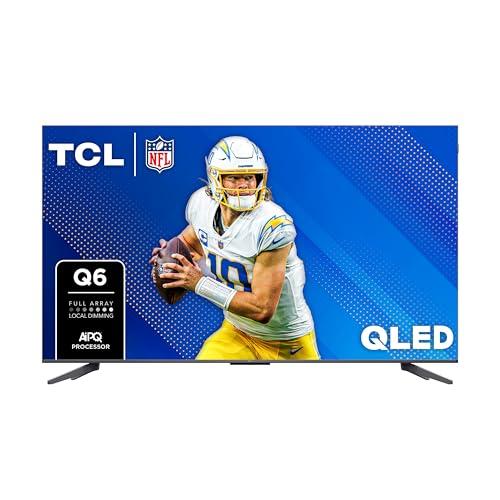

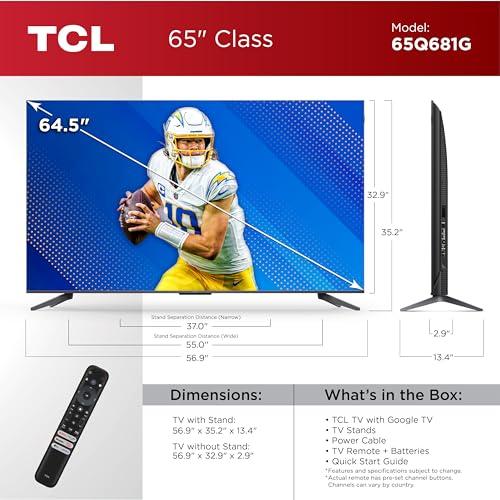
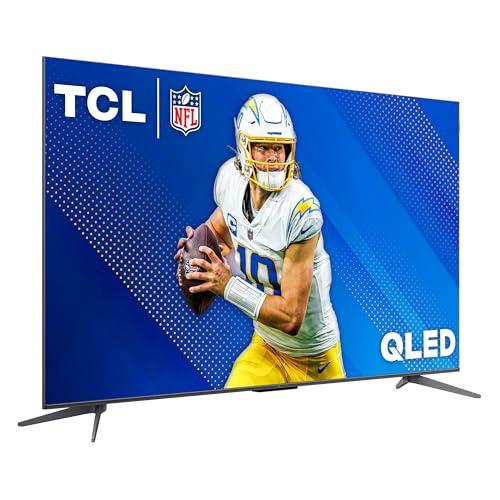
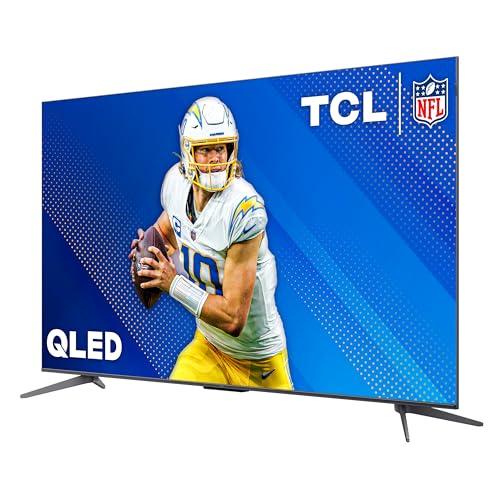

Shopping for a 65-inch 4K TV feels overwhelming when you're staring at endless model numbers and marketing buzzwords. Two televisions that frequently come up in searches are the TCL Q68 QLED and the Toshiba C350 Series, but they represent fundamentally different approaches to large-screen entertainment. After diving deep into reviews, specifications, and real-world performance data, the choice between these TVs comes down to whether you want premium picture technology or basic 4K functionality at the lowest possible price.
Before we compare these specific models, let's establish what actually matters in a large 4K television. The 65-inch category has become the sweet spot for modern living rooms—big enough to create an immersive experience from typical couch distances (8-10 feet), but not so massive that it dominates smaller spaces.
The most critical factors are display technology, which determines color accuracy and contrast; smart platform integration, which affects daily usability; gaming performance for console users; HDR (High Dynamic Range) support for premium streaming content; and built-in audio quality. Value becomes crucial because you're already investing in a large display, so getting the right balance of features versus cost determines long-term satisfaction.
The TCL Q68 QLED, released in 2024, represents TCL's push into premium mid-range territory. It's packed with quantum dot technology, local dimming, and gaming-focused features that weren't common in budget TVs just a few years ago. This reflects how competitive pressure has pushed advanced display technologies down from flagship models into more affordable segments.
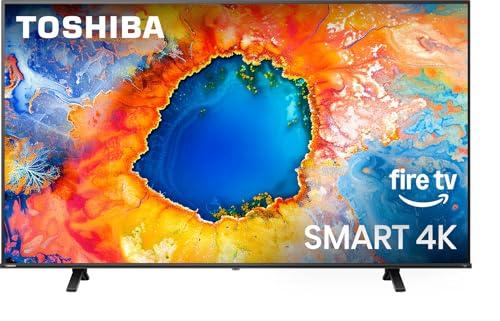
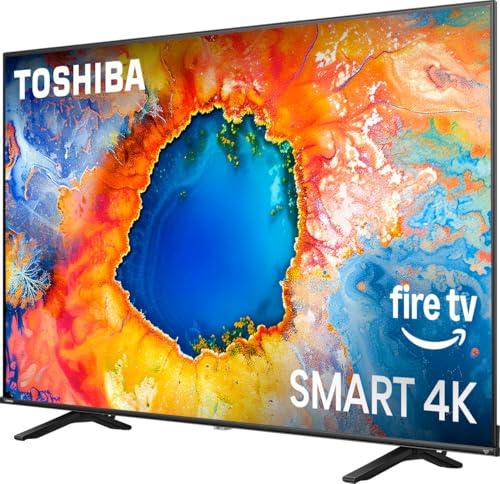
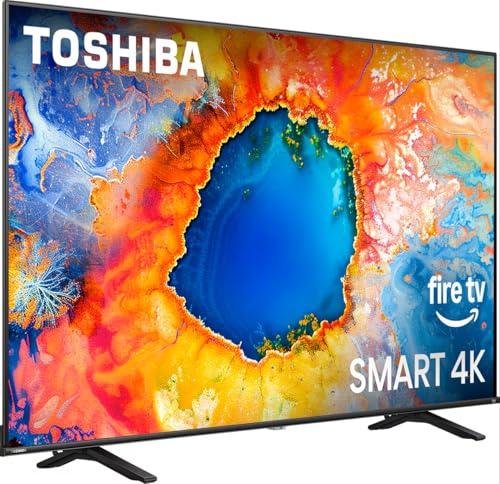
The Toshiba C350 Series, from 2023, takes the opposite approach. It focuses on delivering essential 4K and smart TV functionality without premium frills, targeting buyers who want a large screen but don't need cutting-edge display technology. This represents the mature end of the budget TV market, where manufacturers have perfected basic 4K delivery at rock-bottom prices.
The most significant difference between these TVs lies in their fundamental display technologies. The TCL Q68 uses QLED (Quantum Dot Light Emitting Diode) technology, which places a layer of quantum dots between the LED backlight and LCD panel. These microscopic particles convert blue LED light into precise red and green wavelengths, creating more accurate and vibrant colors than traditional LED displays.
What this means in practice is substantial. The TCL Q68 can reproduce nearly the entire DCI-P3 color space—the standard used by movie studios and streaming services for premium content. When you're watching a sunset scene in a nature documentary, the QLED technology delivers those orange and red hues with intensity and accuracy that makes the image pop off the screen. Colors appear more saturated yet natural, not the oversaturated, artificial look you sometimes get from basic LED TVs trying to compensate.
The Toshiba C350 uses standard LED technology without quantum dot enhancement. While it produces acceptable colors for everyday viewing, it can't match the color volume (the combination of color accuracy and brightness) of QLED displays. Side-by-side, the Toshiba's colors appear somewhat muted, particularly in highly saturated scenes like animated movies or nature content.
Brightness and contrast represent another major divide. The TCL Q68 achieves up to 600 nits peak brightness through its High Brightness PRO LED Backlight system. More importantly, it includes Full Array Local Dimming (FALD), which divides the backlight into dozens of independently controlled zones. When a scene shows bright stars against a dark sky, the TV can dim the zones behind the dark areas while keeping star regions bright, creating much better contrast than edge-lit displays.
The Toshiba C350 lacks local dimming entirely. Its edge-lit LED system illuminates the entire panel uniformly, so dark scenes appear gray rather than true black, and bright objects can cause blooming or light bleed into surrounding dark areas. For general TV watching, this isn't necessarily deal-breaking, but it significantly limits the TV's ability to display HDR content as intended.
Both TVs support HDR formats, but their implementation differs dramatically. HDR content contains brightness and color information beyond what standard TVs can display, so the TV must map this extended range to its capabilities. The TCL Q68 supports HDR PRO+, including Dolby Vision, HDR10+, HDR10, and HLG—essentially every HDR format you'll encounter.
More importantly, the TCL Q68 has the brightness and local dimming to actually take advantage of HDR metadata. When Netflix serves up a Dolby Vision movie, the TV can display bright highlights at 600 nits while maintaining deep blacks in the same frame. This creates the dramatic contrast that makes HDR content look three-dimensional and lifelike.
The Toshiba C350 supports major HDR formats including Dolby Vision, but without adequate peak brightness or local dimming, HDR content looks only marginally better than standard dynamic range. It's like having a sports car that can only drive in first gear—the technology is there, but the hardware can't fully utilize it.
Gaming has become a major consideration in TV purchases, especially with PlayStation 5 and Xbox Series X pushing higher frame rates and resolution. The TCL Q68 includes Game Accelerator 120, supporting up to 120Hz Variable Refresh Rate (VRR) at 1080p and 1440p resolutions. VRR synchronizes the TV's refresh rate with the console's output, eliminating screen tearing and stuttering during fast-paced gameplay.
Auto Low Latency Mode (ALLM) automatically switches the TV into its lowest input lag setting when it detects a gaming signal. Combined with the TCL Q68's sub-20ms input lag in game mode, this creates a responsive gaming experience that can handle competitive multiplayer titles without noticeable delay between controller input and on-screen action.
The Toshiba C350 includes basic ALLM but lacks VRR support and advanced gaming features. Input lag is acceptable for casual gaming, but the 60Hz limitation and higher latency make it less suitable for serious gaming or competitive play.
Motion handling also affects gaming and sports viewing. The TCL Q68 incorporates Motion Rate 240 with MEMC (Motion Estimation, Motion Compensation) Frame Insertion, which analyzes consecutive frames and inserts intermediate frames to reduce motion blur. While some videophiles disable this for movies (it can create the "soap opera effect"), it significantly improves clarity during fast sports action or gaming.
Smart TV platforms determine how you interact with your television daily, and these models take different approaches. The TCL Q68 ships with either Google TV or Fire TV, depending on retailer—an unusual approach that reflects TCL's flexibility in partnerships but can create confusion for buyers.
Google TV, when available, provides broader app selection and excellent integration with Google services. The interface learns your viewing habits and surfaces relevant content across multiple streaming services. Voice search through the Google Assistant works exceptionally well, understanding natural language queries like "show me sci-fi movies from the 2010s."
The Toshiba C350 runs Fire TV exclusively, deeply integrated with Amazon's ecosystem. Fire TV excels at surfacing Amazon Prime Video content and works seamlessly with Alexa voice commands. The interface is straightforward but heavily promotes Amazon content and services. Some users find the advertising and content recommendations intrusive, while others appreciate the direct access to Amazon's vast content library.
Both platforms provide access to major streaming services like Netflix, Disney+, Hulu, and HBO Max, but Google TV typically offers faster performance and more frequent updates. Fire TV can occasionally feel sluggish on budget TV hardware, though the Toshiba C350 generally performs adequately for basic streaming tasks.
Television audio rarely receives adequate attention during the buying process, but it significantly affects daily enjoyment. The TCL Q68 includes a 30-watt system (2×15W speakers) with Dolby Atmos and DTS Virtual:X support. These audio processing technologies create the impression of surround sound from the built-in speakers, adding height and spatial information to movie soundtracks.
Enhanced Dialogue Mode specifically boosts vocal frequencies, making conversation clearer in action movies where explosions and music often overwhelm speech. Bluetooth Personal Audio allows private listening through wireless headphones without affecting other viewers.
The Toshiba C350 provides basic stereo sound without detailed audio specifications available. Based on user feedback, dialogue clarity is acceptable for news and basic programming, but the limited power and processing result in thin sound that lacks bass response and dynamic range.
For either TV, a soundbar or external audio system will dramatically improve the viewing experience, especially in larger rooms or for movie watching. However, the TCL Q68's superior built-in audio makes it more usable without additional equipment.
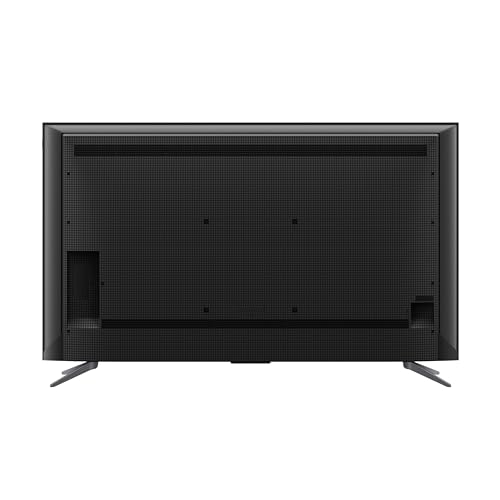
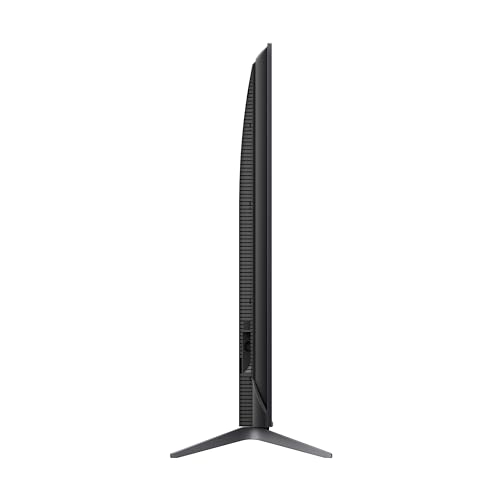
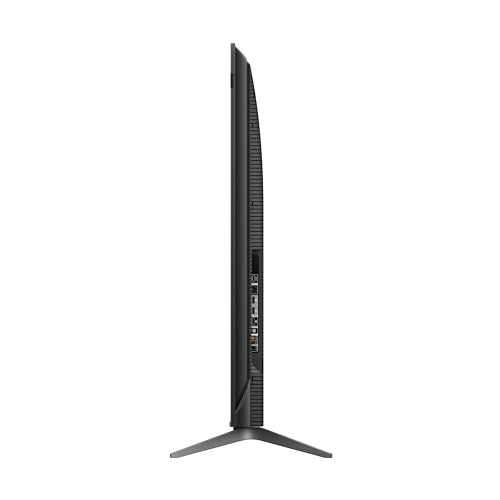
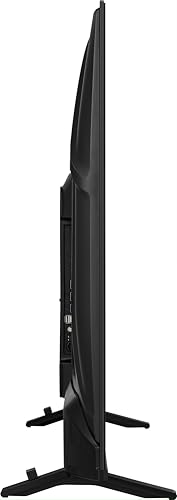
Physical construction and design affect both aesthetics and long-term durability. The TCL Q68 features a FullView 360 Metal Bezel-less Design with minimal borders and a height-adjustable pedestal stand. The metal construction feels substantial, and the adjustable stand accommodates different furniture heights and viewing angles.
The thin profile and nearly invisible bezels create a modern look that works well in contemporary living rooms. Cable management clips on the stand feet help organize connections, and the overall build quality suggests reasonable long-term durability.
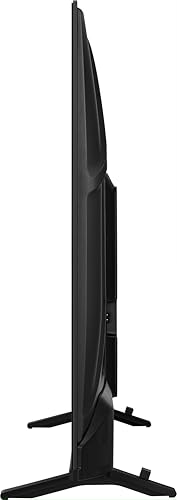
The Toshiba C350 emphasizes functional design over premium materials. The plastic construction is adequate but doesn't feel as substantial as the TCL Q68. The stand provides basic stability without height adjustment or premium finishing touches.
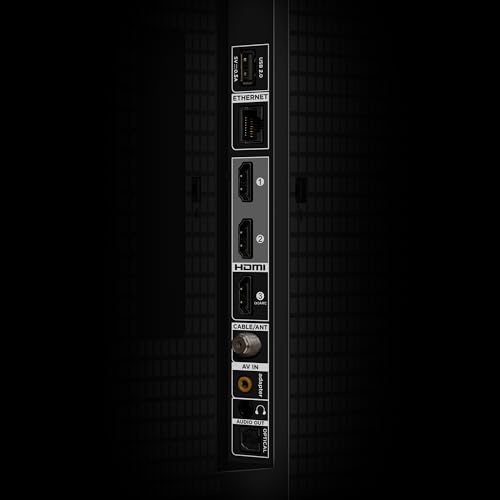
Connection options determine compatibility with current and future devices. The TCL Q68 includes three HDMI 2.1 ports (one with eARC), USB 3.0, Ethernet, and Wi-Fi 5. HDMI 2.1 supports higher bandwidth for 4K gaming at elevated frame rates, while eARC (Enhanced Audio Return Channel) passes high-quality audio formats to compatible soundbars without compression.
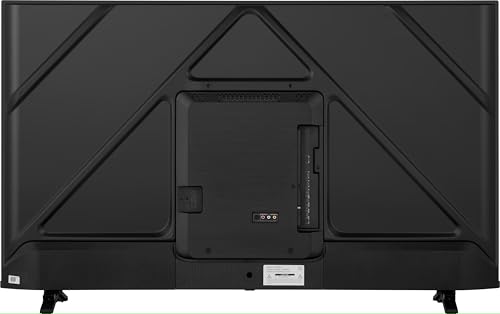
The Toshiba C350 provides essential connectivity including HDMI ports and USB inputs, but specific HDMI version information isn't clearly documented. This matters for future gaming consoles or high-bandwidth devices that may require HDMI 2.1 features.
At the time of writing, the TCL Q68 QLED commands a moderate premium over the Toshiba C350 Series, but the price difference is smaller than you might expect given the significant technology gap. The TCL delivers substantially more advanced display technology, gaming features, and build quality for a relatively modest increase in cost.
The Toshiba C350 excels at one thing: providing 65 inches of 4K resolution at the lowest possible price point. For buyers whose primary goal is screen size rather than picture quality, it accomplishes that mission effectively.
However, the TCL Q68 represents exceptional value in the current market. The quantum dot technology, local dimming, and gaming features were premium television characteristics just a few years ago. Getting these capabilities at a mid-range price point reflects how quickly display technology has democratized.
For dedicated home theater setups, the TCL Q68 is clearly superior. The local dimming and higher peak brightness provide the contrast necessary for movie watching in darkened rooms. The quantum dot color reproduction ensures accurate skin tones and vibrant scenery that matches the filmmaker's intent.
The Toshiba C350 works adequately for casual movie watching with room lighting, but lacks the dynamic range for serious home theater use. The limited black levels become more apparent in dark viewing environments, and the restricted color gamut reduces the impact of high-production-value content.
The TCL Q68 QLED makes sense for buyers who want premium display technology without flagship pricing. Choose this TV if you watch HDR content regularly, game on modern consoles, or simply want the best picture quality available at a reasonable price. The superior color reproduction and contrast make every type of content look better, from nature documentaries to animated movies to live sports.
The Toshiba C350 Series serves a specific market: budget-conscious buyers who prioritize screen size over display technology. Choose this TV if you primarily watch basic cable, standard streaming content, and don't need gaming features. It's also appropriate for secondary viewing areas where advanced picture quality isn't critical.
Based on our research into user experiences and expert reviews, the TCL Q68 offers significantly better long-term satisfaction. The superior picture quality and gaming features remain relevant as content standards continue advancing, while basic LED displays may feel outdated more quickly.
The TCL Q68 QLED and Toshiba C350 Series serve different segments of the 65-inch TV market, but the value proposition strongly favors the TCL for most buyers. The quantum dot technology, local dimming, and gaming features deliver a substantially better viewing experience for a modest price premium.
The Toshiba C350 succeeds at providing large-screen 4K at rock-bottom prices, but compromises significantly on picture quality and features. Unless budget constraints are absolute, the TCL Q68 offers better value through superior technology and longer-term relevance.
For the majority of buyers seeking a 65-inch 4K TV, the TCL Q68 QLED represents the better investment. Its advanced display technology and gaming capabilities ensure years of satisfying performance across all content types, making it the clear winner in this comparison.
| TCL 65" Q68 QLED 4K UHD Smart TV Display | Toshiba 65" C350 Series 4K UHD Smart Fire TV |
|---|---|
| Display Technology - Determines color accuracy and vibrancy | |
| QLED with Quantum Dot technology for 1.07 billion colors | Standard LED without quantum dot enhancement |
| Local Dimming - Critical for contrast and HDR performance | |
| Full Array Local Dimming for deeper blacks and better contrast | No local dimming; uniform backlighting limits contrast |
| Peak Brightness - Essential for HDR content and bright rooms | |
| Up to 600 nits for vibrant HDR highlights | Standard LED brightness; struggles in bright environments |
| Gaming Features - Important for console users | |
| Game Accelerator 120 with VRR up to 120Hz, ALLM support | Basic ALLM only; no VRR or advanced gaming features |
| HDR Support - Affects premium streaming content quality | |
| HDR PRO+ (Dolby Vision, HDR10+, HDR10, HLG) with hardware to utilize it | Dolby Vision, HDR10, HLG but limited by brightness/contrast |
| Smart TV Platform - Determines daily user experience | |
| Google TV or Fire TV (varies by retailer) | Fire TV exclusively with Amazon ecosystem integration |
| Audio System - Built-in sound quality | |
| 30W (2×15W) with Dolby Atmos, DTS Virtual:X, Enhanced Dialogue | Basic stereo speakers without detailed specifications |
| Motion Handling - Reduces blur in sports and action content | |
| Motion Rate 240 with MEMC Frame Insertion | Standard 60Hz without motion interpolation |
| Build Quality - Affects durability and aesthetics | |
| FullView 360 Metal Bezel-less Design with adjustable stand | Functional plastic construction with basic stand |
| Connectivity - Future-proofing for new devices | |
| 3 HDMI 2.1 ports (1 with eARC), USB 3.0, Wi-Fi 5 | Standard HDMI ports, basic connectivity options |
| Color Space Coverage - Accuracy for movies and streaming | |
| Nearly complete DCI-P3 coverage for cinema-accurate colors | Standard sRGB color space; more limited color reproduction |
| Input Lag - Responsiveness for gaming | |
| Sub-20ms in Game Mode for competitive gaming | Acceptable for casual gaming but higher latency |
The TCL Q68 QLED delivers significantly better picture quality with its quantum dot technology and full array local dimming. It produces more vibrant colors covering nearly the entire DCI-P3 color space and achieves deeper blacks with better contrast. The Toshiba C350 offers acceptable picture quality for basic viewing but lacks the color accuracy and contrast capabilities of QLED technology.
QLED technology in the TCL Q68 uses quantum dots to create more accurate and vibrant colors than standard LED displays. The Toshiba C350 uses traditional LED backlighting without quantum dot enhancement, resulting in less color volume and saturation. QLED displays can reproduce a wider range of colors and maintain brightness better than standard LED panels.
The TCL Q68 QLED is superior for gaming with Game Accelerator 120 supporting up to 120Hz Variable Refresh Rate and Auto Low Latency Mode. It offers sub-20ms input lag for responsive gameplay. The Toshiba C350 includes basic ALLM but lacks VRR support and has higher input lag, making it adequate only for casual gaming.
Yes, both TVs support HDR formats. The TCL Q68 includes HDR PRO+ with Dolby Vision, HDR10+, HDR10, and HLG, plus the brightness and local dimming to properly display HDR content. The Toshiba C350 supports Dolby Vision, HDR10, and HLG but lacks the peak brightness and contrast needed for optimal HDR performance.
The TCL Q68 offers either Google TV or Fire TV depending on the retailer, while the Toshiba C350 runs Fire TV exclusively. Google TV typically provides broader app selection and better performance, while Fire TV excels at Amazon content integration. Both platforms access major streaming services like Netflix, Disney+, and Hulu.
The TCL Q68 QLED features 30W speakers with Dolby Atmos and Enhanced Dialogue Mode, providing better built-in audio than most TVs. The Toshiba C350 has basic stereo speakers adequate for casual viewing. While both TVs benefit from external audio systems, the TCL Q68 is more usable without additional equipment.
The TCL Q68 performs better in bright rooms with up to 600 nits peak brightness and better reflection handling. The quantum dot technology maintains color accuracy even in well-lit environments. The Toshiba C350 has limited brightness that may appear washed out in very bright rooms or with direct sunlight.
For home theater use, the TCL Q68 QLED is clearly superior with its local dimming, higher brightness, and wider color gamut creating the contrast and color accuracy needed for cinematic viewing. The Toshiba C350 works for casual movie watching but lacks the dynamic range for serious home theater applications in darkened rooms.
The TCL Q68 offers exceptional value with premium display technology at a mid-range price point. While the Toshiba C350 costs less upfront, the TCL Q68 provides significantly more advanced features and better long-term satisfaction for a moderate price increase, making it the better overall value.
The TCL Q68 QLED is better for sports viewing with Motion Rate 240 and MEMC frame insertion reducing motion blur during fast action. The brighter display and better color reproduction make sports content more vibrant. The Toshiba C350 handles sports adequately but may show more motion blur during rapid movements.
The TCL Q68 offers better future-proofing with advanced gaming features, HDMI 2.1 connectivity, and superior display technology that will remain relevant as content standards evolve. The Toshiba C350 provides basic functionality that may feel outdated sooner as streaming services continue improving content quality.
Choose the TCL Q68 QLED if you want premium picture quality, gaming features, or watch HDR content regularly. Select the Toshiba C350 only if budget is the primary concern and you mainly watch basic cable or standard streaming content. For most buyers, the TCL Q68 provides significantly better performance and value.
We've done our best to create useful and informative comparisons to help you decide what product to buy. Our research uses advanced automated methods to create this comparison and perfection is not possible - please contact us for corrections or questions. These are the sites we've researched in the creation of this article: tvsbook.com - youtube.com - rtings.com - tcl.com - bestbuy.com - rtings.com - youtube.com - rcwilley.com - youtube.com - tvsbook.com - tcl.com - sellout.woot.com - tcl.com - tcl.com - bestbuy.com - bestbuy.com - youtube.com - rtings.com - cnet.com - youtube.com - consumerreports.org - toshibatv-canada.com - bestbuy.com - bestbuy.com - dolby.com - displayspecifications.com - toshibatv-usa.com - aarons.com

Privacy Policy
Terms and Conditions - Affiliate Policy
Home Security
© Copyright 2008-2026.
11816 Inwood Rd #1211, Dallas, TX 75244