

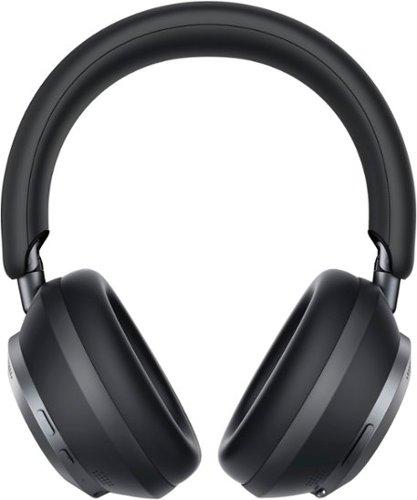
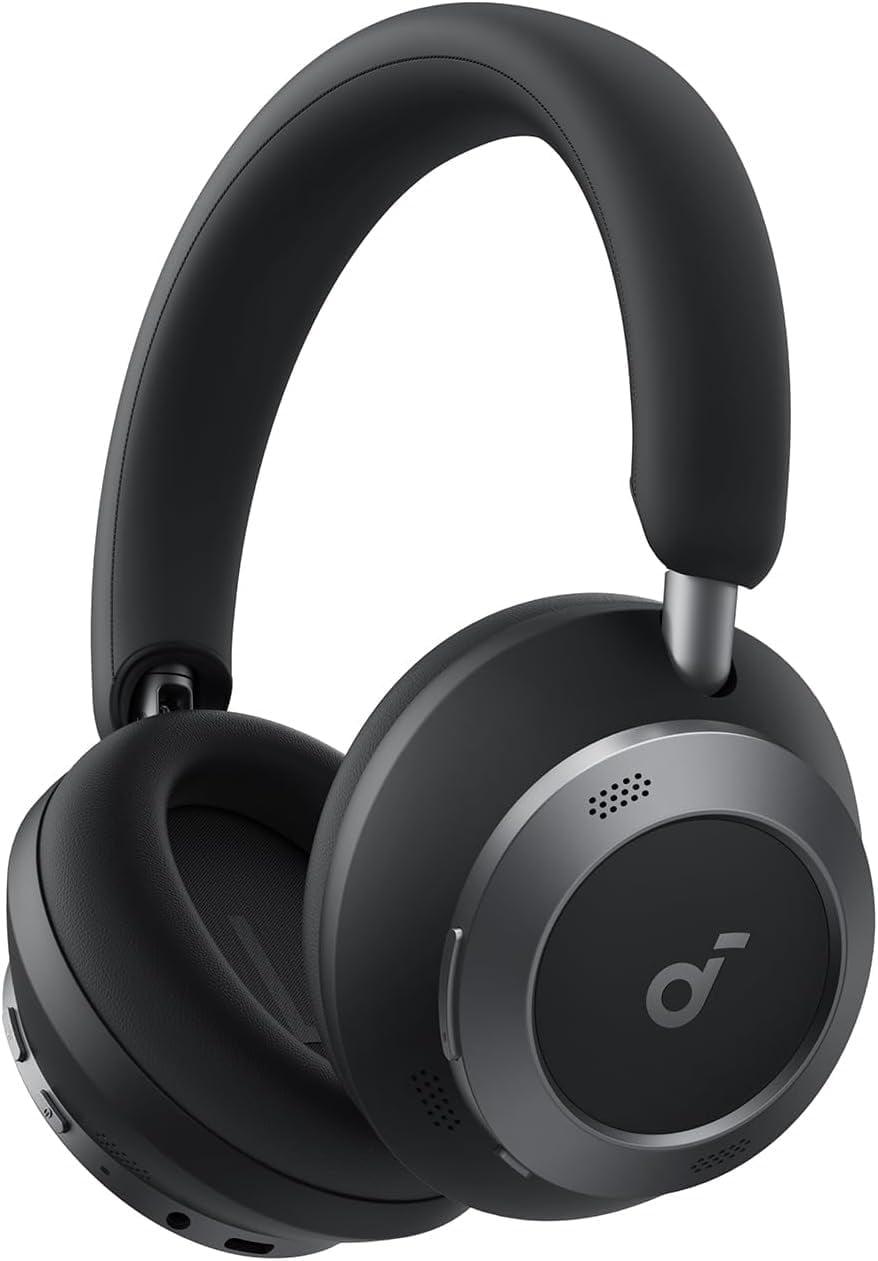
When you're shopping for wireless headphones, you'll quickly realize there are dozens of options at every price point. Two models that often come up in discussions are the Beats Solo3 Wireless and the Soundcore Space One Pro—but they represent very different approaches to personal audio. Understanding these differences can save you from buyer's remorse and help you pick the pair that actually fits your lifestyle.
Before diving into specifics, let's talk about what really matters when choosing wireless headphones. The form factor—whether they sit on your ears (on-ear) or around them (over-ear)—affects everything from comfort to sound isolation. Battery life determines whether you'll be constantly hunting for charging cables, while sound quality impacts your daily listening enjoyment.
Then there's active noise cancellation (ANC), which uses microphones and processing to actively cancel out background noise. This is different from passive isolation, which simply blocks sound through physical barriers. ANC can make the difference between enjoying music on a noisy commute or cranking the volume to dangerous levels.
Ecosystem integration is another consideration that's become increasingly important. How well do your headphones work with your phone, laptop, and other devices? Do they support modern Bluetooth features like connecting to multiple devices simultaneously?
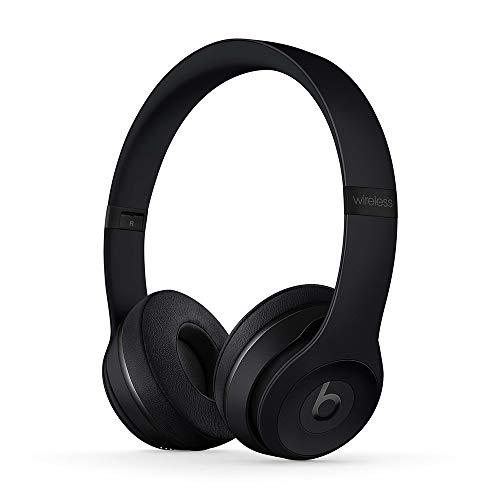
The Beats Solo3 Wireless launched in 2016, riding the wave of Apple's acquisition of Beats and introducing the revolutionary W1 chip. At the time, wireless headphones often suffered from poor battery life and connectivity issues—problems the Solo3 aimed to solve with Apple's engineering expertise.
The Soundcore Space One Pro, released in 2024, represents nearly a decade of additional development in wireless audio technology. It includes features that simply didn't exist or were prohibitively expensive when the Solo3 debuted, like adaptive noise cancellation and high-resolution wireless audio codecs.
This eight-year gap means we're essentially comparing a pioneering product from the early wireless era with a modern implementation that benefits from years of technological advancement.
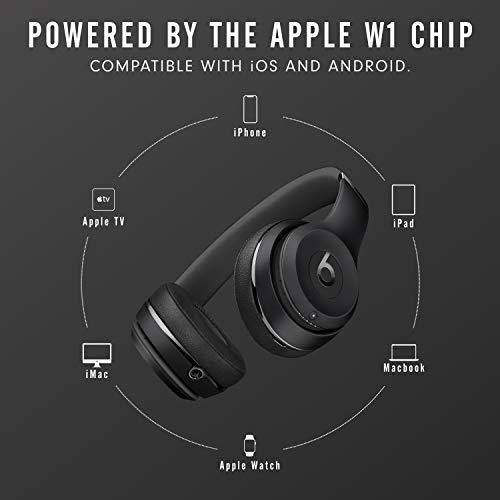
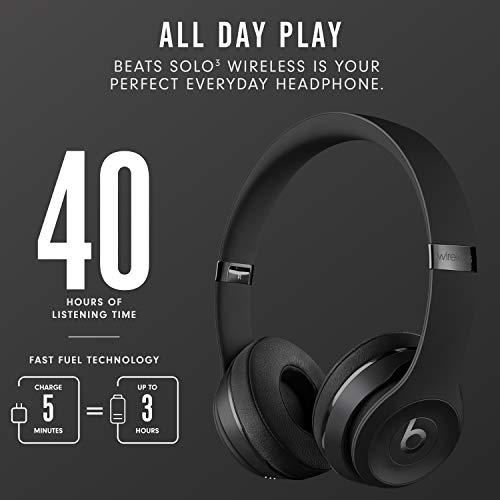
When it comes to battery performance, the Beats Solo3 remains genuinely impressive even by today's standards. Thanks to Apple's W1 chip—a specialized processor designed specifically for wireless audio—these headphones can run for over 40 hours on a single charge. This chip manages power so efficiently that it essentially redefined what was possible for wireless headphone battery life.
The W1 chip works by optimizing the Bluetooth connection and managing power distribution across the headphone's components. It's like having a smart energy manager that ensures every bit of power is used efficiently. When you pair this with the relatively simple electronics of an on-ear headphone without active noise cancellation, you get exceptional longevity.
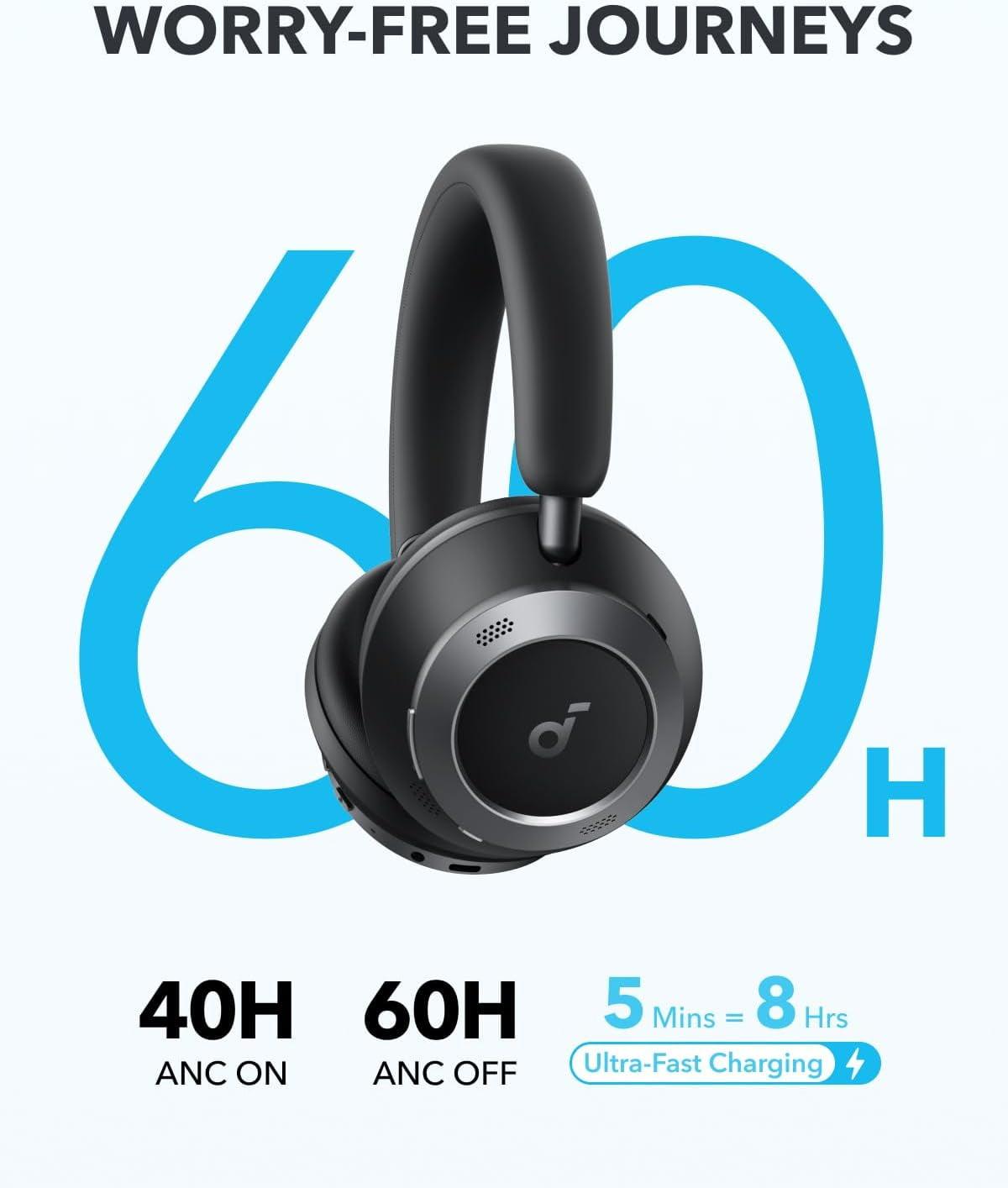
The Soundcore Space One Pro takes a more modern approach, offering 60 hours with ANC turned off or 40 hours with noise cancellation active. While slightly less than the Solo3's total, it achieves this while powering six microphones for noise cancellation, more sophisticated drivers, and additional processing. The fact that it matches the Solo3's ANC-on performance while providing all these extra features is actually quite impressive.
Where the Space One Pro really shines is fast charging. Five minutes plugged in gives you eight hours of playback time—more than double what the Solo3 provides with its Fast Fuel technology. This reflects improvements in battery chemistry and charging controllers that have developed since 2016. Plus, it uses modern USB-C instead of the outdated Micro-USB port on the Solo3.
From a practical standpoint, both offer enough battery life for most users, but the Space One Pro's superior fast charging means you're less likely to be stuck with dead headphones when you need them most.
This is where the biggest difference between these headphones becomes apparent. The Beats Solo3 relies entirely on passive noise isolation—essentially using the physical seal of the ear cups and clamping force to block outside noise. While this works reasonably well for mid and high-frequency sounds like voices and keyboard typing, it does almost nothing for low-frequency rumble from engines, air conditioning, or traffic.
The on-ear design of the Solo3 also limits how much passive isolation is possible. Since the pads sit on your ears rather than around them, there's inherently less of a seal compared to over-ear designs. This means you'll often find yourself turning up the volume in noisy environments, which can lead to hearing damage over time.
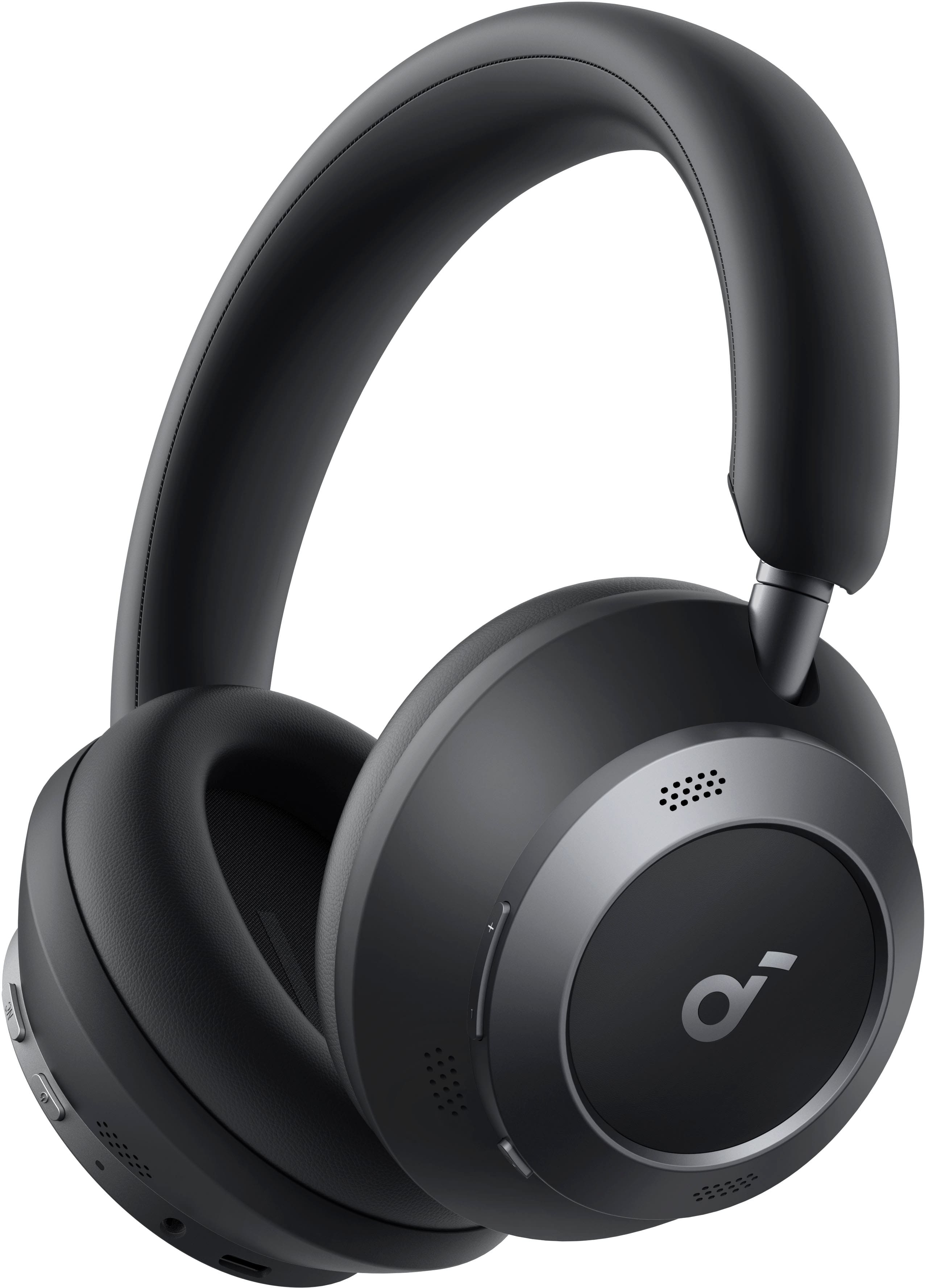
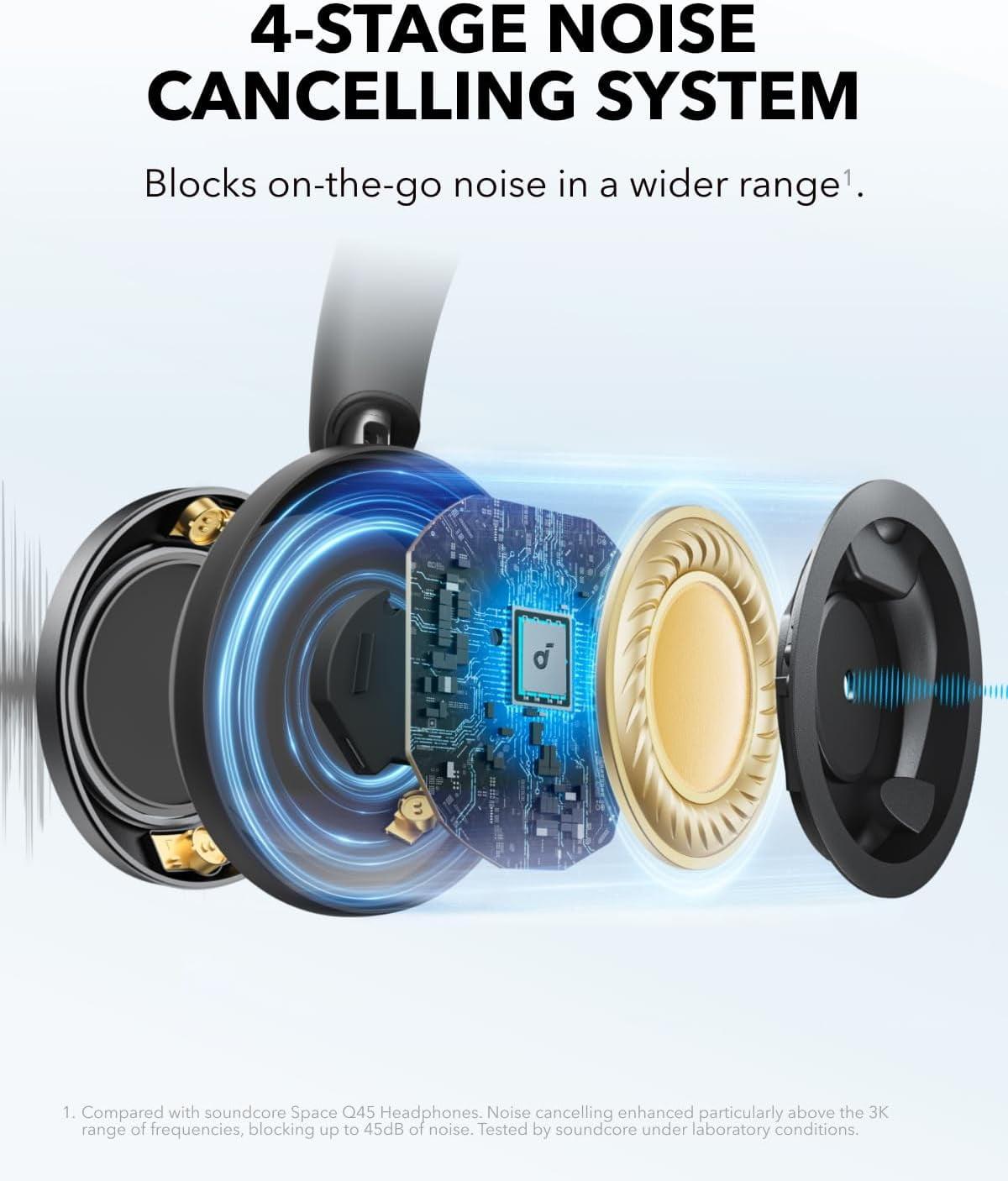
The Soundcore Space One Pro uses what Soundcore calls a "4-Stage Noise Cancelling System." This includes six microphones strategically placed around the headphones to detect ambient noise from all directions. The system then generates inverse sound waves to cancel out unwanted noise—a process called destructive interference.
What makes this system particularly sophisticated is its adaptive nature. The Adaptive ANC 3.0 algorithm continuously analyzes your environment and adjusts the noise cancellation in real-time. If you're walking and the fit changes slightly, or if you move from a quiet room to a busy street, the system adapts automatically.
The Space One Pro also offers five different levels of ANC intensity, letting you fine-tune the experience. Sometimes you want maximum isolation for focus, while other times you need to stay aware of announcements or conversations around you.
For anyone who commutes on public transportation, works in open offices, or travels frequently, the difference in noise management capabilities between these two headphones is substantial. The Space One Pro can make a genuinely noisy environment feel peaceful, while the Solo3 will have you competing with background noise.
Both headphones take distinct approaches to sound reproduction that reflect their target audiences and design philosophies.
The Beats Solo3 delivers what's become known as the "Beats sound signature"—a bass-forward presentation with punchy low frequencies and forward vocals. This tuning works particularly well for hip-hop, pop, electronic dance music, and other genres where rhythm and energy are paramount. The sound feels immediate and energetic, though it can become fatiguing during long listening sessions.
However, the on-ear design inherently limits soundstage—the sense of space and instrument separation in music. Everything feels somewhat "in your head" rather than surrounding you naturally. The bass, while prominent, can also mask details in the midrange where vocals and many instruments live.
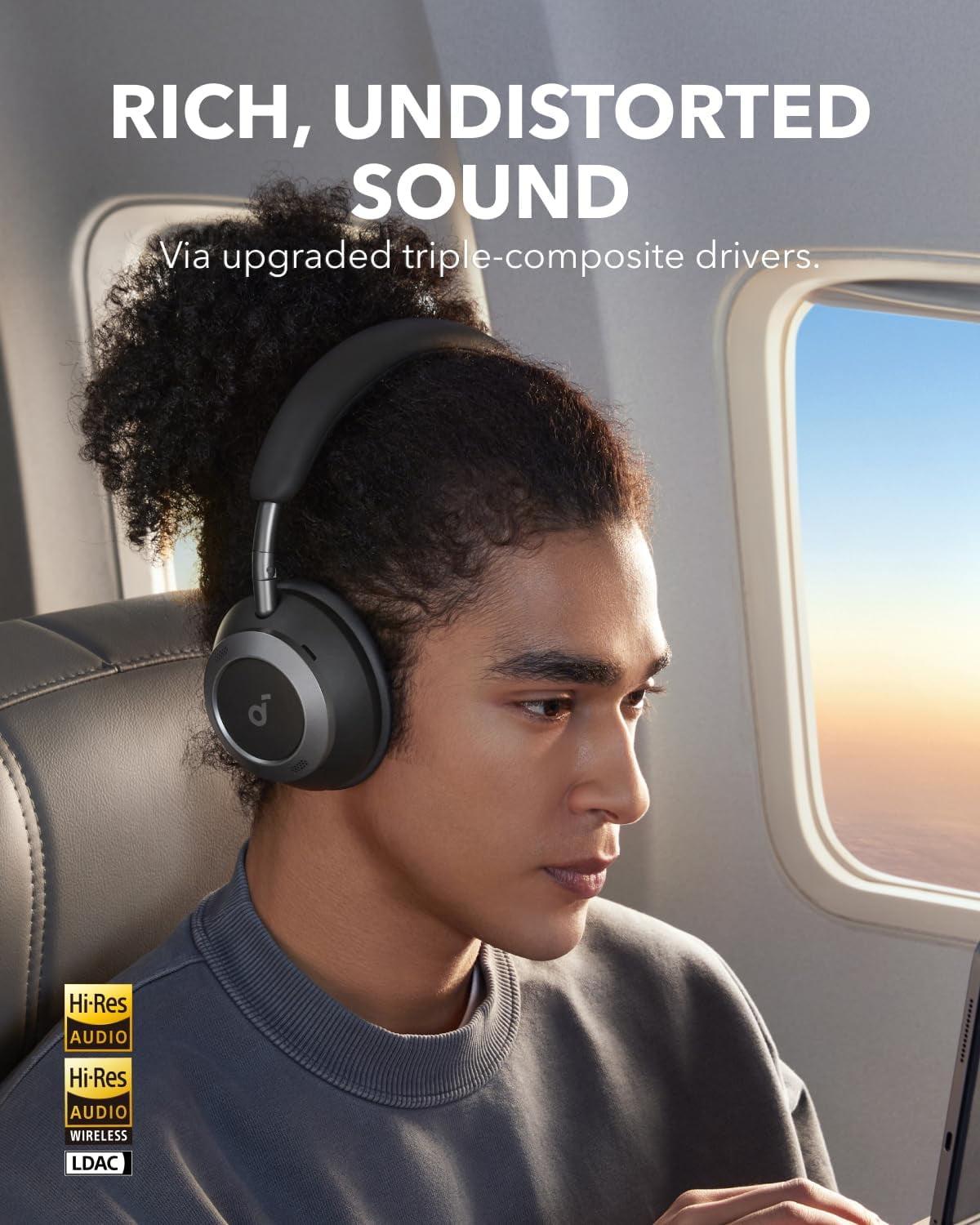
The Soundcore Space One Pro takes a more versatile approach with its 40mm triple-composite drivers. These drivers use multiple materials in their construction to reproduce different frequency ranges more accurately. The result is a more balanced sound that works well across various music genres.
More importantly, the Space One Pro supports LDAC, a high-resolution audio codec developed by Sony. While standard Bluetooth compresses audio significantly, LDAC can transmit nearly three times more audio data. This means you're hearing more of the original recording's detail and nuance, assuming your source device supports it (most modern Android phones and many music apps do).
The Space One Pro also includes HearID 2.0 personalized sound tuning and comprehensive EQ customization through the Soundcore app. This means you can tailor the sound signature to your preferences or hearing profile. If you want more bass like the Solo3, you can achieve that. If you prefer a more neutral presentation for classical music or podcasts, that's possible too.
For home theater use, the Space One Pro's over-ear design and more balanced sound signature make it better suited for movie watching. The larger soundstage and better detail retrieval help with dialogue clarity and sound effect placement. The ANC also helps when you need to keep volume down late at night but still want to catch every detail in action scenes.
Comfort might be the most important factor if you plan to wear your headphones for extended periods, and here the physical design differences create very different experiences.
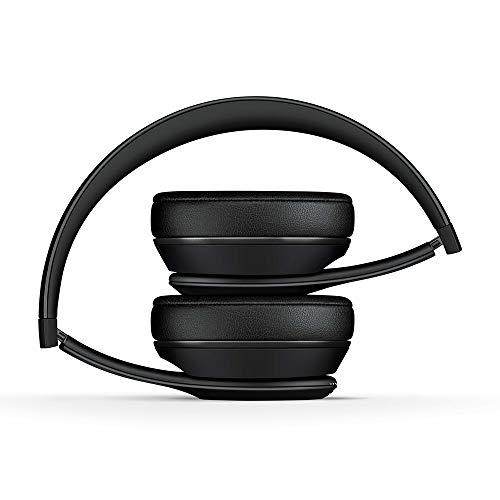
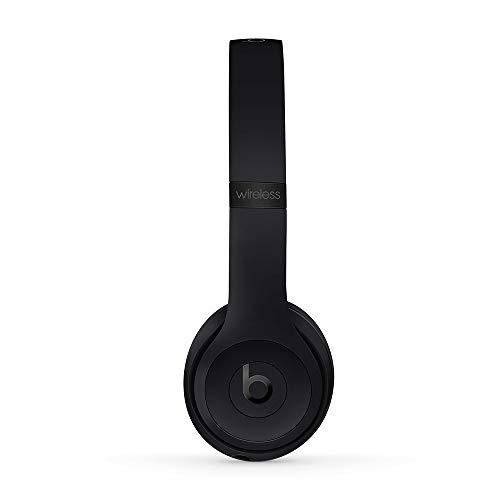
The Beats Solo3's on-ear design places the ear pads directly on your ears, supported by adjustable clamping force from the headband. At 215 grams, they're relatively light, and the compact design makes them easy to wear around your neck when not in use. However, that clamping force necessary to maintain a seal can become uncomfortable over time, especially for people with larger ears or those who wear glasses.
Many users report that the Solo3 becomes uncomfortable after an hour or two of continuous use. The pressure on your ears can cause soreness, and the on-ear design can trap heat, leading to sweaty, uncomfortable ears during longer sessions.
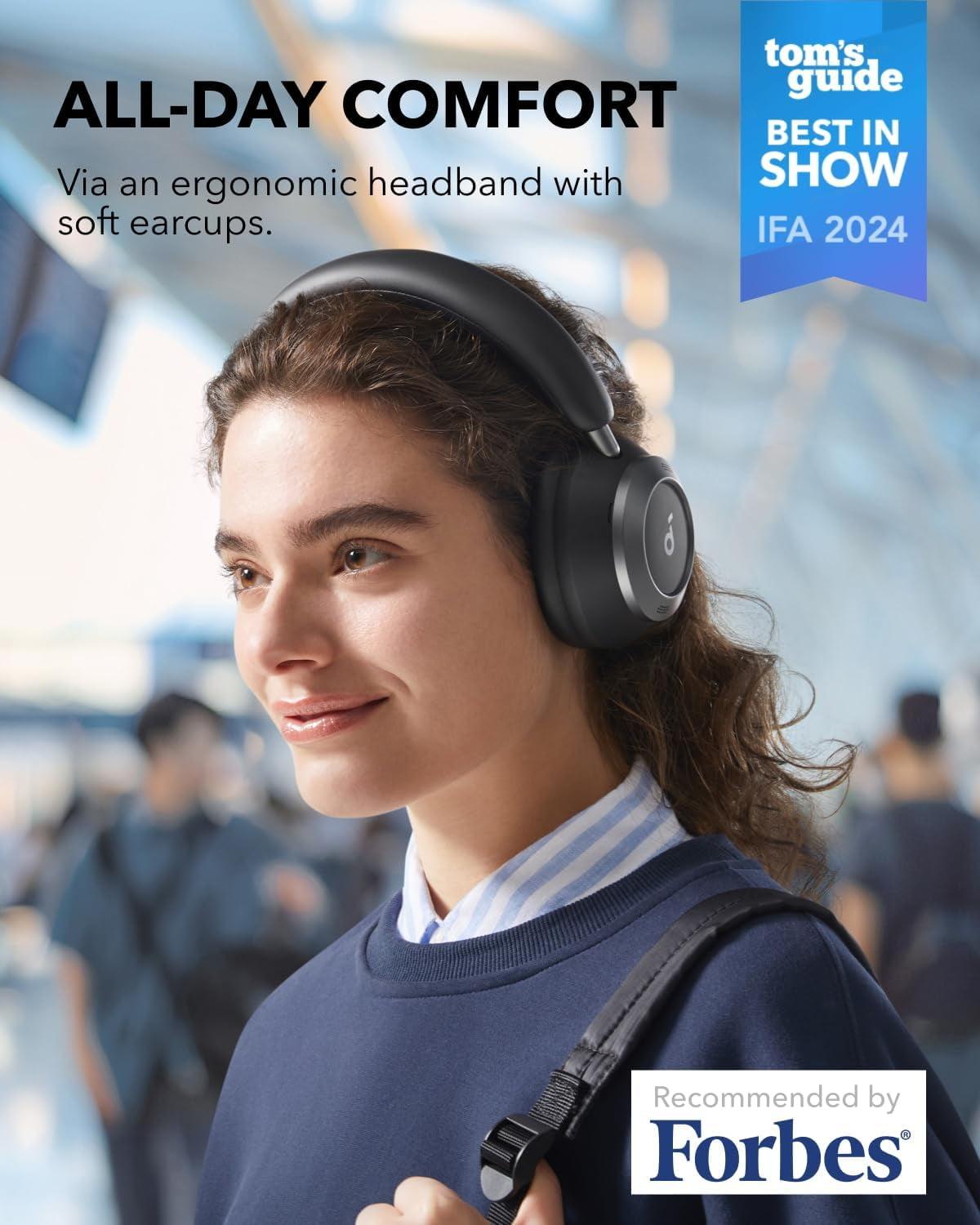
The Soundcore Space One Pro uses an over-ear design where the ear pads create a seal around your ears rather than pressing on them. At 286 grams, they're heavier than the Solo3, but the weight is distributed across the entire headband and around your ears rather than directly on them.
The Space One Pro features memory foam ear pads that conform to your head shape and a pressure-relieving headband design. Most users can wear them for several hours without discomfort. The over-ear design also provides better ventilation, reducing heat buildup.
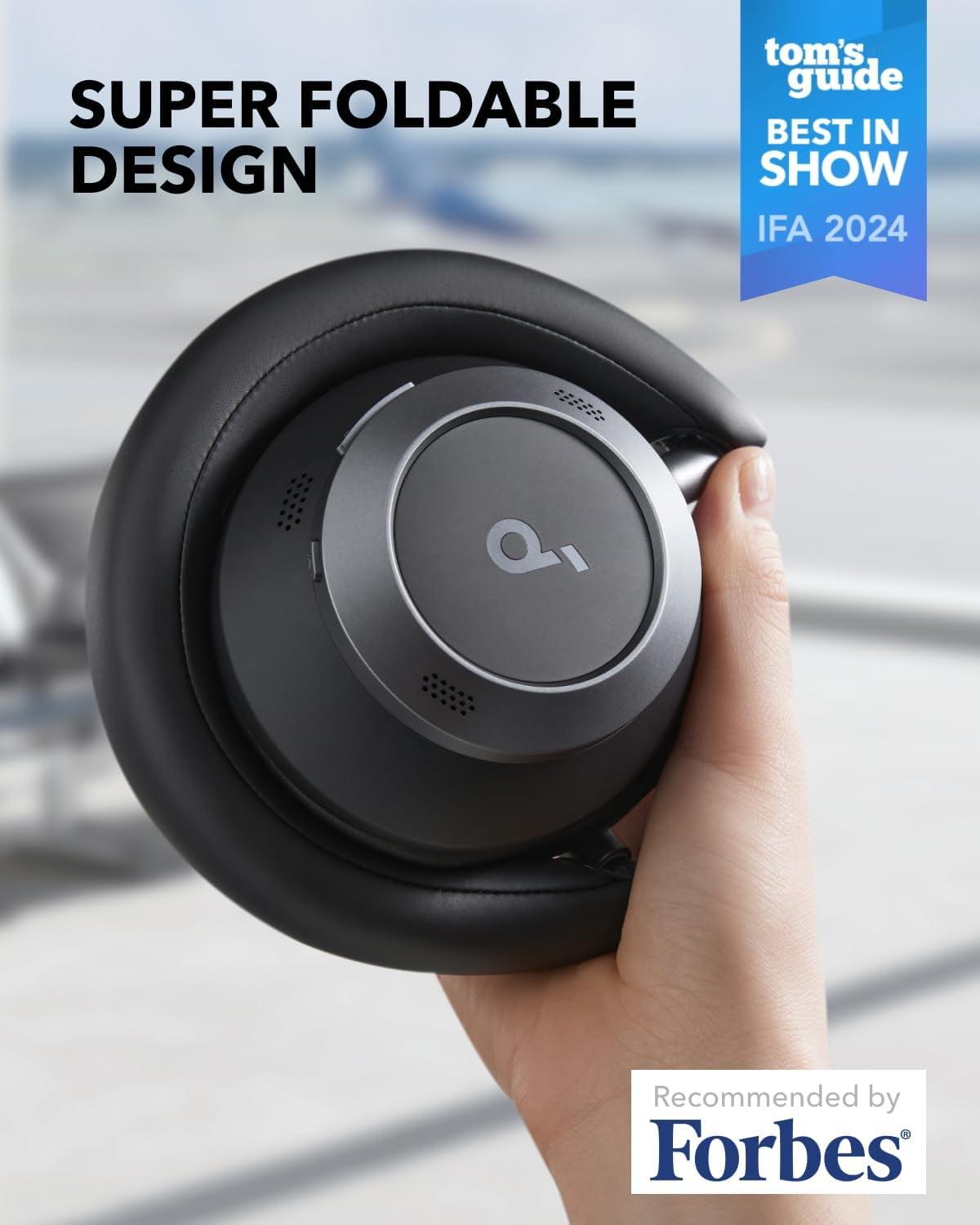
Interestingly, despite being over-ear headphones, the Space One Pro folds down to a remarkably compact size thanks to Soundcore's FlexiCurve design. This multi-axis folding mechanism allows them to pack almost as small as the Solo3, making them much more travel-friendly than typical over-ear headphones.
Here's where the eight-year technology gap becomes most apparent. The Beats Solo3 uses Bluetooth 4.0—ancient by current standards—though Apple's W1 chip helps it perform better than other headphones from that era. The W1 provides excellent connection stability and impressive range, plus seamless switching between Apple devices.
If you're deep in Apple's ecosystem with an iPhone, iPad, Mac, and Apple Watch, the Solo3's integration is genuinely convenient. They appear in your device settings automatically, show battery levels in your notification panel, and can switch between devices with minimal fuss.
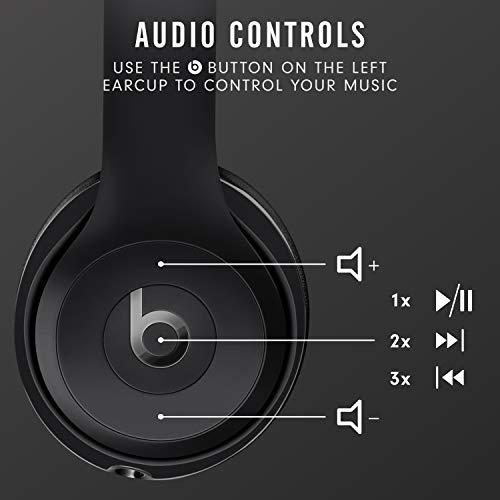
However, this convenience comes with limitations. The Solo3 offers minimal app support, no customization options, and no modern Bluetooth features like multipoint connection (connecting to two devices simultaneously).
The Soundcore Space One Pro uses current Bluetooth 5.3, which provides better connection stability, longer range, and lower power consumption. It supports multipoint connection, meaning you can stay connected to both your phone and laptop simultaneously—great for taking calls while working.
The comprehensive Soundcore app unlocks extensive customization options: custom EQ settings, ANC level adjustment, button remapping, and firmware updates to add new features over time. This means your headphones can actually improve after you buy them, rather than becoming increasingly outdated.
The Space One Pro also supports modern features like Google Fast Pair for Android users and works equally well across all platforms, not just Apple devices.
At the time of writing, both headphones typically sell in the mid-range price category, though the Beats Solo3 can often be found at significant discounts given its age. The question is whether those discounts make up for the technological limitations.
The Solo3 represents exceptional value if you primarily use Apple devices, don't need noise cancellation, and prioritize maximum battery life above all else. However, you're buying eight-year-old technology that lacks features now considered standard in wireless headphones.
The Soundcore Space One Pro offers what feels like flagship features at a mid-tier price point. You're getting effective ANC, hi-res audio support, extensive customization, modern connectivity, and regular software updates. For most users, it provides better long-term value since it's not based on outdated standards.
The Solo3's main value proposition has been eroded by time. Features that were revolutionary in 2016—like long battery life and stable wireless connection—are now standard across the category. Meanwhile, the Space One Pro delivers capabilities that would have cost significantly more just a few years ago.
Choose the Beats Solo3 Wireless if you're heavily invested in Apple's ecosystem and want the simplest possible experience. They're still excellent for casual listening, especially if you can find them at a substantial discount. The exceptional battery life remains genuinely useful, and the compact size makes them great for travel when noise cancellation isn't needed.
However, consider the Soundcore Space One Pro if you want headphones that feel modern and will remain relevant for years to come. The comfort advantage alone makes them worth considering for anyone who listens for more than an hour at a time. Add in the effective noise cancellation, superior sound customization, and comprehensive feature set, and they represent better value for most users.
The Space One Pro is particularly compelling for commuters, frequent travelers, students who need to focus in noisy environments, and anyone who wants the flexibility to fine-tune their audio experience. They're also better for home theater use thanks to their comfort and balanced sound signature.
Ultimately, while the Beats Solo3 was groundbreaking in its time, the Soundcore Space One Pro represents where wireless headphone technology has evolved. Unless you have specific needs that favor the Solo3's unique strengths, the Space One Pro offers a more complete and future-proof experience that justifies the investment.
The eight-year gap between these products tells the story of how rapidly audio technology has advanced. What seemed impossible in 2016—effective noise cancellation at reasonable prices, all-day comfort, and extensive customization—is now accessible to everyday users. That progress makes the choice clear for most people seeking their next pair of wireless headphones.
| Beats Solo3 Wireless | Soundcore Space One Pro |
|---|---|
| Design Type - Affects comfort and noise isolation | |
| On-ear (sits on ears, more portable but less comfortable) | Over-ear (around ears, better comfort and isolation) |
| Active Noise Cancellation - Essential for noisy environments | |
| None (passive isolation only) | Yes, 4-stage adaptive ANC with 5 adjustable levels |
| Battery Life - Critical for daily use without charging | |
| 40+ hours (exceptional, industry-leading for wireless) | 60 hours ANC off / 40 hours ANC on (excellent modern performance) |
| Fast Charging - How quickly you get back to listening | |
| 5 minutes = 3 hours playback | 5 minutes = 8 hours playbook (significantly better) |
| Charging Port - Convenience and future-proofing | |
| Micro-USB (outdated standard) | USB-C (modern, reversible connector) |
| Weight - Impact on long-term comfort | |
| 215g (lighter but pressure concentrated on ears) | 286g (heavier but distributed around ears) |
| Bluetooth Version - Affects connection quality and features | |
| 4.0 with Apple W1 chip (older but optimized for Apple) | 5.3 (modern standard with better efficiency) |
| Audio Codecs - Sound quality over wireless connection | |
| Standard Bluetooth codecs only | LDAC, AAC (hi-res audio support) |
| Sound Customization - Ability to tailor audio to your preferences | |
| None (fixed Beats sound signature) | Comprehensive EQ, HearID 2.0 personalization via app |
| Multipoint Connection - Connect to multiple devices simultaneously | |
| No (single device connection) | Yes (phone and laptop at same time) |
| Ecosystem Integration - Best compatibility and features | |
| Exceptional with Apple devices, basic elsewhere | Universal compatibility across all platforms |
| Foldability - Travel convenience | |
| Standard folding (compact for on-ear design) | FlexiCurve ultra-compact folding (remarkable for over-ear) |
| Release Year - Technology generation and future support | |
| 2016 (8+ years old technology) | 2024 (current generation with ongoing updates) |
| Best Use Cases - Where each excels | |
| Apple users wanting maximum battery, casual portable use | Commuting, travel, extended listening, noise-sensitive environments |
The Soundcore Space One Pro are better for most everyday situations due to their active noise cancellation, over-ear comfort, and modern features. The Beats Solo3 Wireless excel if you prioritize maximum battery life and seamless Apple device integration, but their on-ear design can become uncomfortable during extended use.
If you commute on public transport, work in noisy environments, or travel frequently, the Soundcore Space One Pro's active noise cancellation is extremely valuable. The Beats Solo3 Wireless only offer passive noise isolation, which means you'll need to turn up the volume in noisy places, potentially damaging your hearing.
The Soundcore Space One Pro are significantly more comfortable for extended use due to their over-ear design that distributes weight around your ears rather than on them. The Beats Solo3 Wireless can cause ear fatigue after 1-2 hours due to their on-ear clamping pressure.
The Beats Solo3 Wireless offer exceptional 40+ hour battery life, while the Soundcore Space One Pro provide 60 hours with ANC off or 40 hours with ANC on. However, the Space One Pro charge much faster, giving 8 hours of playback from just 5 minutes of charging compared to the Solo3's 3 hours.
The Beats Solo3 Wireless integrate seamlessly with Apple devices thanks to the W1 chip, offering automatic pairing, battery status display, and easy device switching. The Soundcore Space One Pro work well with iPhones but don't have the same level of deep integration, though they offer more features through their companion app.
The Soundcore Space One Pro offer extensive sound customization through their app, including personalized EQ and HearID 2.0 sound profiling. The Beats Solo3 Wireless have no customization options and are locked to the signature Beats bass-heavy sound profile.
The Soundcore Space One Pro are superior for calls due to their six-microphone array with AI processing and wind noise reduction. The over-ear design also provides better noise isolation so others won't hear your audio. The Beats Solo3 Wireless have basic call quality and may leak audio to others nearby.
Neither headphone is specifically designed for sports, but the Beats Solo3 Wireless are more suitable due to their lighter weight, on-ear design that stays put during movement, and lack of bulk. The Soundcore Space One Pro are better for stationary activities like gaming or desk work.
Surprisingly, the Soundcore Space One Pro fold down to an ultra-compact size despite being over-ear headphones, thanks to their FlexiCurve folding design. The Beats Solo3 Wireless also fold compactly as expected from on-ear headphones, making both good travel options for different reasons.
The Soundcore Space One Pro offer superior audio quality with Hi-Res audio support, LDAC codec, and balanced sound across all music genres. The Beats Solo3 Wireless excel with bass-heavy music like hip-hop and pop but can sound muddy with acoustic or classical music due to their fixed sound signature.
Only the Soundcore Space One Pro support multipoint Bluetooth connection, allowing you to stay connected to your phone and laptop simultaneously. The Beats Solo3 Wireless can only connect to one device at a time, though they switch between Apple devices relatively easily.
The Soundcore Space One Pro represent current 2024 technology with modern features, ongoing software updates, and future-proof connectivity. The Beats Solo3 Wireless are from 2016 with outdated Bluetooth 4.0 and Micro-USB charging, making the Space One Pro a better long-term investment for most users despite the Solo3's proven reliability.
We've done our best to create useful and informative comparisons to help you decide what product to buy. Our research uses advanced automated methods to create this comparison and perfection is not possible - please contact us for corrections or questions. These are the sites we've researched in the creation of this article: soundguys.com - cornellstore.com - imore.com - bestbuy.com - headphonecheck.com - soundguys.com - recordingnow.com - corporategift.com - ifixit.com - rtings.com - youtube.com - mobileciti.com.au - beatsbydre.com - discussions.apple.com - target.com - bestbuy.com - jalc.ecampus.com - beats.fandom.com - support.apple.com - electronics.woot.com - soundguys.com - loudnwireless.com - youtube.com - youtube.com - gadgetoid.com - youtube.com - soundguys.com - youtube.com - recordingnow.com - youtube.com - bestbuy.com - headphonecheck.com - support.soundcore.com - soundcore.com - soundcore.com - microcenter.com - tomsguide.com - us.soundcore.com - bestbuy.com - youtube.com - youtube.com

Privacy Policy
Terms and Conditions - Affiliate Policy
Home Security
© Copyright 2008-2026.
11816 Inwood Rd #1211, Dallas, TX 75244