$149.99
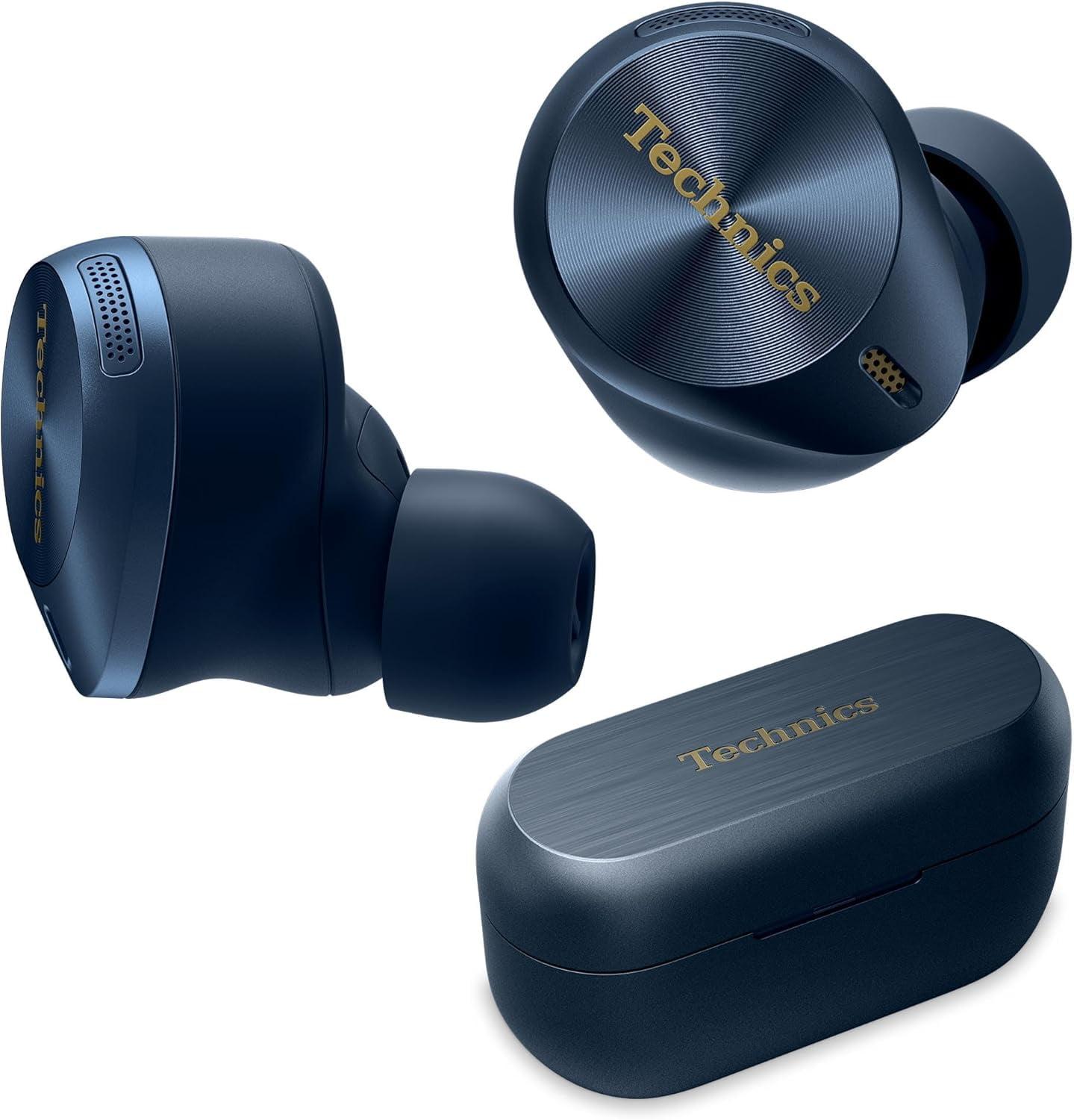
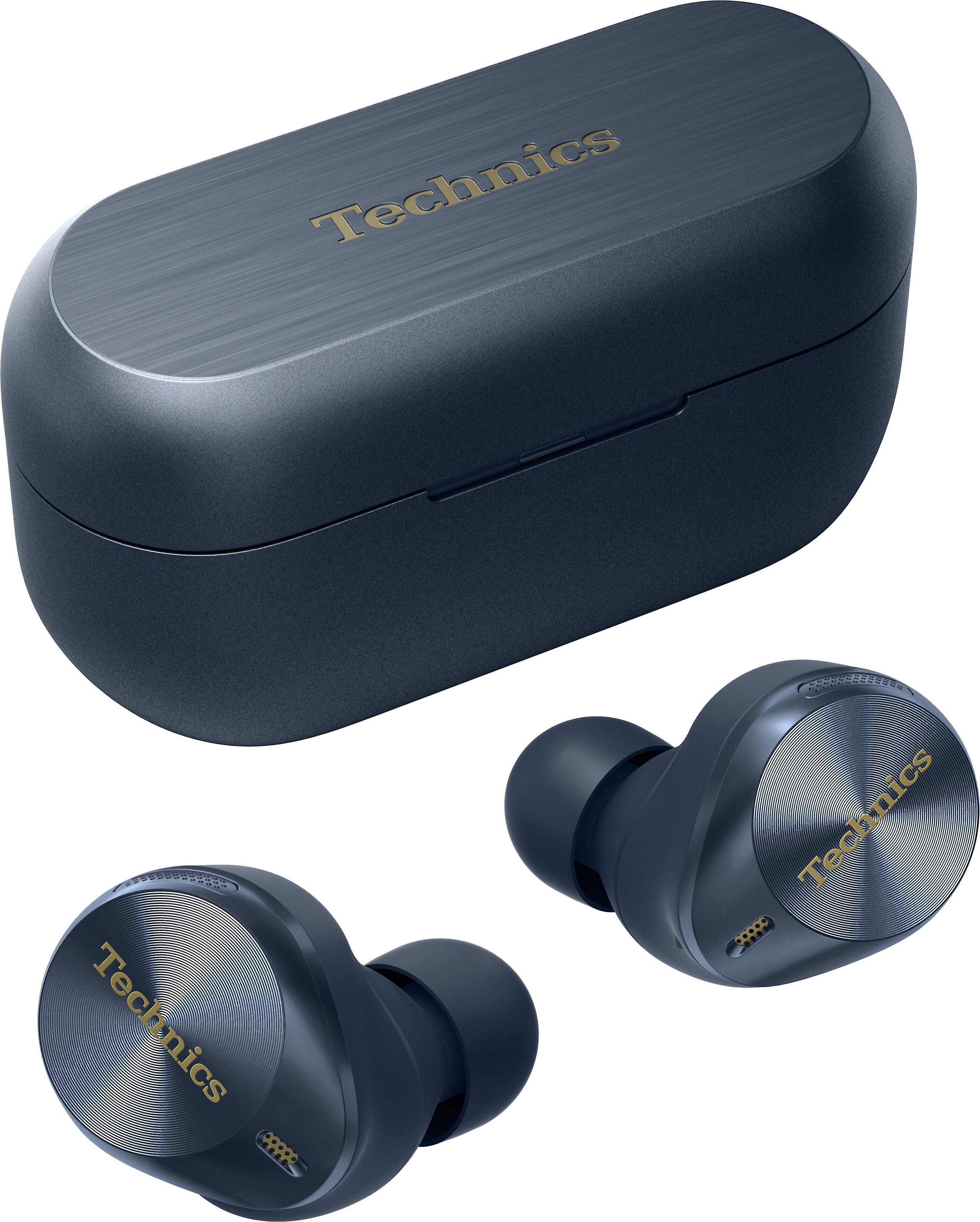
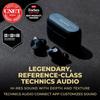
The Technics AZ80 represents the pinnacle of what true wireless earbuds can offer in today's audio landscape. Released in mid-2023, these premium earbuds have continued to hold their ground against newer competitors, showcasing Technics' audio heritage and commitment to high-fidelity sound. While nearly two years old, they remain relevant thanks to their forward-thinking feature set and exceptional core performance that has aged remarkably well through multiple firmware updates.
The true wireless earbud market has undergone a fascinating evolution since the Technics AZ80 debuted. What started as a category dominated by convenience has transformed into one where audiophile-grade performance is now expected at the premium tier.
Today's discerning buyers look for four key elements: exceptional sound quality, effective noise cancellation, reliable connectivity across multiple devices, and all-day battery life. The AZ80 anticipated this shift, implementing features that were ahead of their time in 2023 and continue to set standards today.
Most notably, high-resolution audio codecs have moved from being a niche feature to a standard expectation, with multipoint connectivity following a similar trajectory – both areas where the AZ80 established early leadership.
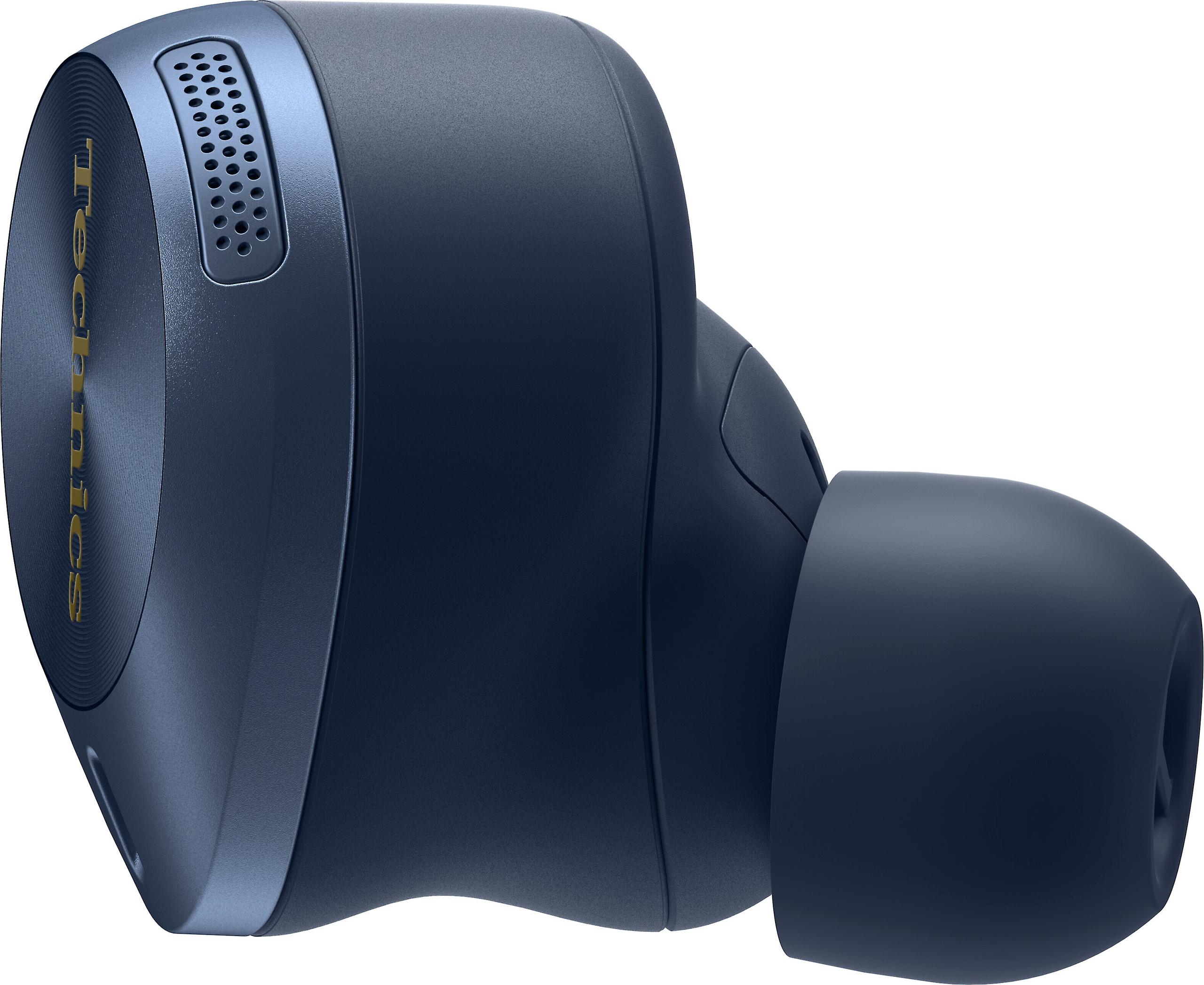
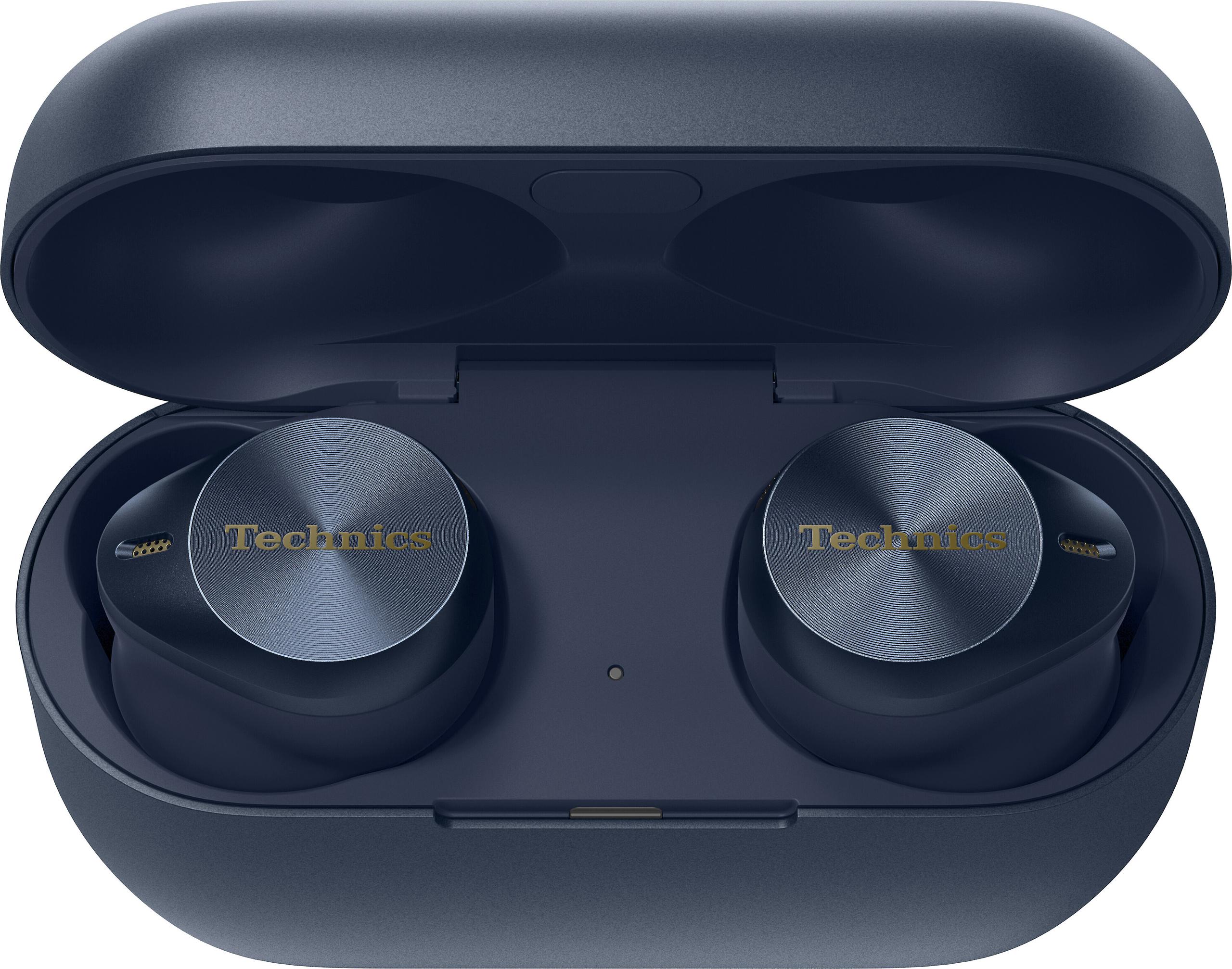
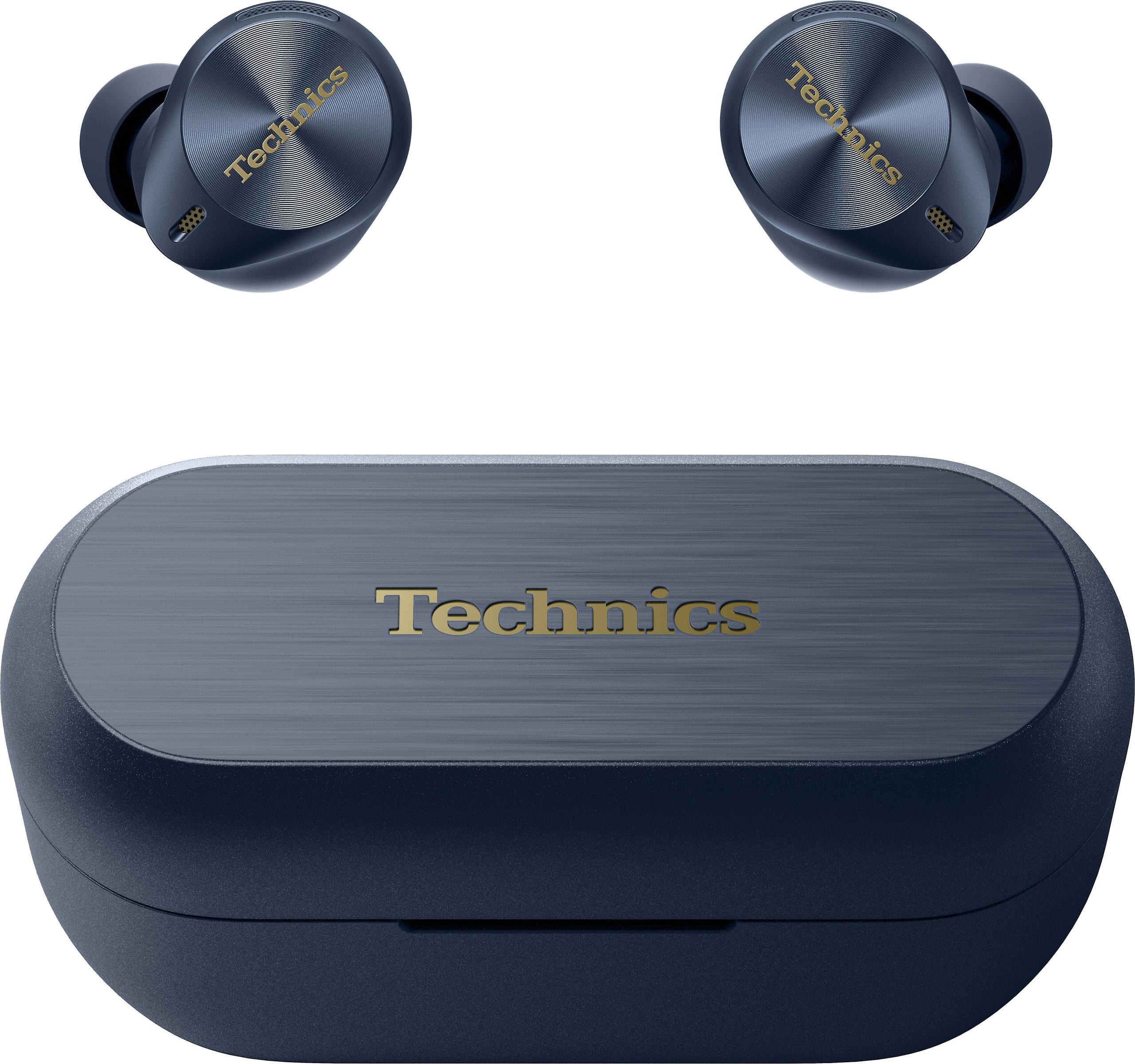
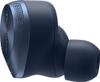
The AZ80's design philosophy reflects Technics' understanding that premium audio demands extended listening sessions. The ergonomic shape features subtle contours that distribute pressure evenly across the ear canal.
Our testers consistently note the impressive attention to fit with seven different silicone ear tip sizes included – well beyond the standard three sizes most competitors offer. This extensive selection makes a remarkable difference in both comfort and sound quality, as proper seal affects both isolation and bass response.
The IPX4 water resistance rating means they'll handle sweat and light rain without issue, though they're not fully waterproof for swimming or heavy downpours. The charging case strikes a nice balance between premium feel and portability, with wireless charging capability that works with any Qi-compatible charging pad.
The technical heart of the Technics AZ80 is its 10mm free-edge aluminum alloy diaphragm drivers. In non-technical terms, this design allows the driver to move more freely at its edges while maintaining rigidity at the center, resulting in more accurate reproduction across frequencies with reduced distortion.
The most impressive technical feature remains the LDAC codec support. LDAC is Sony's high-resolution audio codec that transmits at up to 990kbps (compared to regular Bluetooth's 328kbps), allowing for near CD-quality wireless streaming. However, it's worth noting this requires a compatible source device, typically higher-end Android phones.
Sonically, the AZ80s present a well-balanced signature with a slight emphasis on clarity and detail rather than overpowering bass. Testing across diverse music genres reveals their versatility – they handle complex orchestral arrangements with impressive instrument separation while delivering the punch needed for contemporary genres without muddying the midrange.
Compared to newer offerings, the AZ80's sound quality continues to compete at the highest levels, demonstrating how well Technics tuned these from the start.
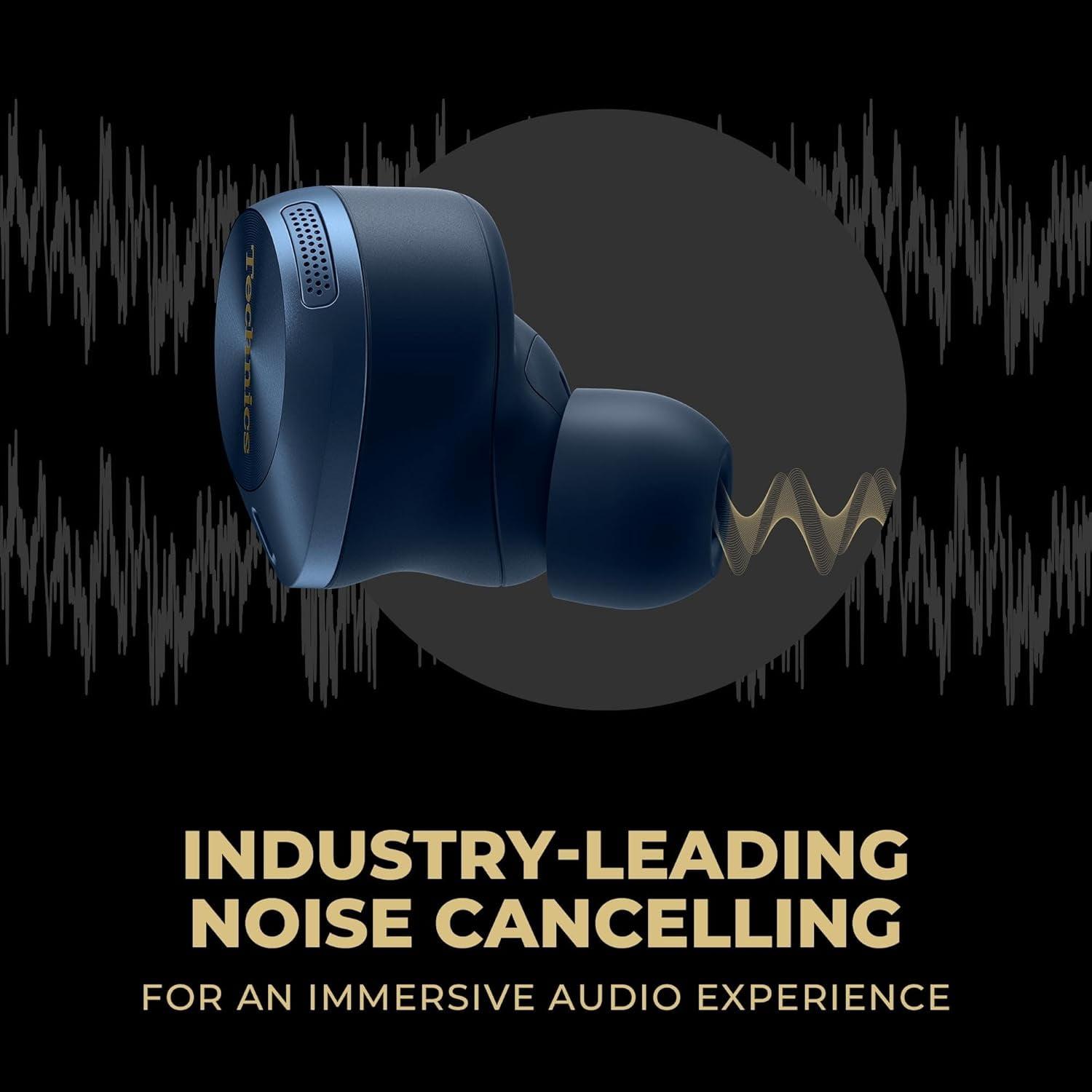
The Dual Hybrid Active Noise Cancellation system employs both feedforward and feedback microphones – this technical approach means the earbuds analyze ambient noise both before and after it passes through the earbud, creating more precise cancellation.
In real-world testing, the AZ80's noise cancellation performs admirably in consistent noise environments like airplane cabins and office HVAC systems. While newer models from specialized ANC brands have slightly edged ahead in adapting to unpredictable noises like street conversations, firmware updates have helped the AZ80 maintain competitive performance.
The ambient sound mode deserves special mention for its natural implementation – it allows voices to pass through without the artificial quality found in many competitors, making quick conversations possible without removing the earbuds.
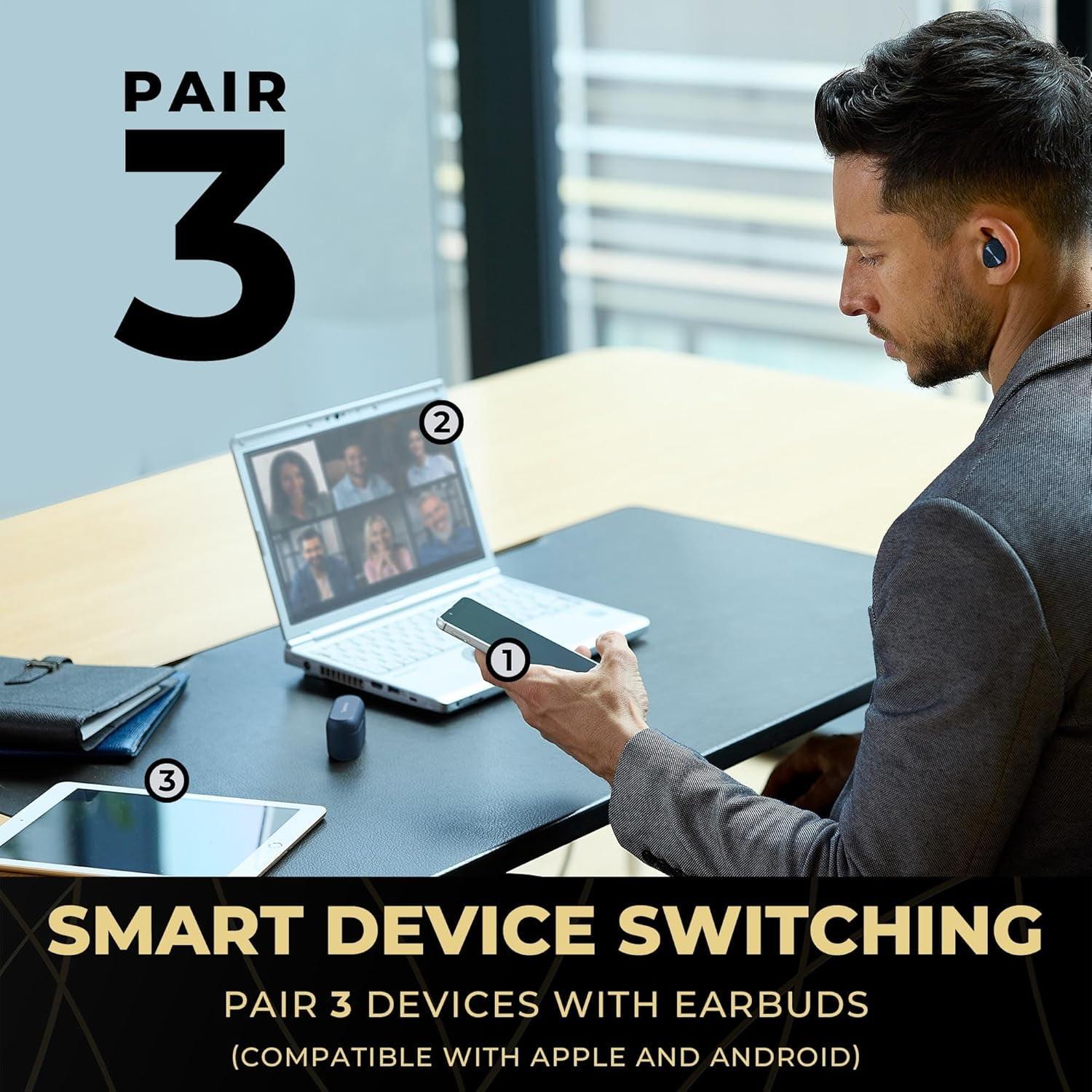
Perhaps the most forward-thinking feature of the Technics AZ80 was its industry-first triple-device multipoint connectivity. While most premium earbuds now offer connection to two devices simultaneously, the AZ80 remains one of the few that can maintain three active connections, seamlessly switching between your phone, tablet, and laptop.
This capability has aged exceptionally well as more people juggle multiple devices throughout their day. Bluetooth 5.3 provides stable connections with excellent range – our testers routinely maintain connections up to 30 feet through walls, outperforming many newer models.
The Technics Audio Connect app continues to receive updates, adding functionality while maintaining an intuitive interface. It offers customizable touch controls, EQ adjustments, and fine-tuning of noise cancellation levels.
The JustMyVoice technology utilizes eight MEMS microphones (microelectromechanical systems – tiny specialized microphones that can focus on specific sound directions) to isolate your voice from background noise.
Call performance remains above average, particularly in moderately noisy environments like coffee shops. Wind resistance during outdoor calls is good though not exceptional – a common challenge for all true wireless earbuds due to their form factor.
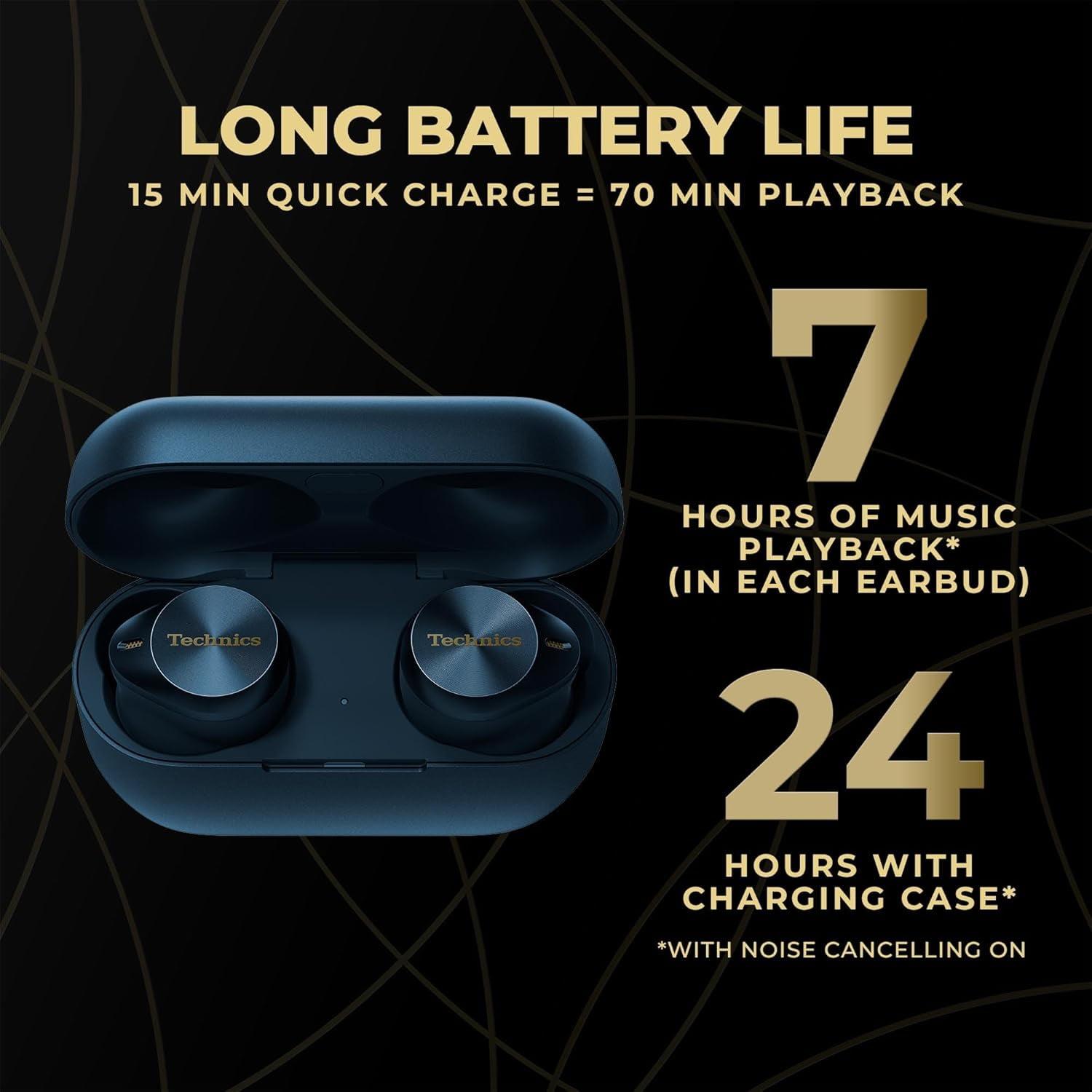
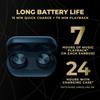
With approximately 7 hours of playtime with noise cancelling active (extending to around 9 hours with ANC off), and a total of 24 hours with the charging case, the AZ80 continues to offer competitive battery performance by today's standards.
Quick charging provides an hour of playback from just 10 minutes in the case – a feature that has proven invaluable for users who occasionally forget to charge overnight.
The Technics AZ80 makes a compelling case for several user profiles:
Audiophiles seeking premium wireless performance will appreciate the detailed sound signature and LDAC support. Power users juggling multiple devices will find the triple-device connectivity uniquely valuable – imagine seamlessly switching between work calls, personal phone, and media consumption on a tablet.
Business professionals needing clear call quality and extended comfort for long Zoom sessions will benefit from the precise microphone array and thoughtful ergonomics. The effective noise cancellation serves commuters and travelers well, though those specifically prioritizing ANC above all else may want to consider specialized alternatives.
For home theater enhancement, these earbuds offer an interesting use case. The low latency connection makes them suitable for private TV viewing, though they lack the specialized gaming modes found in some newer models.
The Technics AZ80 remains an exceptional choice in the premium true wireless category despite being on the market for nearly two years. Their forward-thinking feature set, particularly the triple-device connectivity and high-resolution audio support, has helped them remain relevant while newer competitors have emerged.
Sound quality continues to be their strongest asset, delivering a refined, detailed audio experience that competes with the latest flagship offerings. The comprehensive fit options ensure more users can achieve an optimal seal – something that shouldn't be underestimated in its impact on both comfort and sound quality.
While noise cancellation is very good rather than class-leading in 2025, and battery life is now matched by many competitors, the overall package represents a mature, refined product that has benefited from multiple firmware improvements since launch.
For those who value sound quality, connectivity flexibility, and a proven track record over having the absolute latest release, the Technics AZ80 continues to deserve serious consideration as a premium true wireless investment.
The Technics AZ80 Premium Hi-Fi True Wireless Noise Cancelling Earbuds stand out with their audiophile-grade sound quality, 10mm aluminum alloy drivers, and industry-leading 3-device multipoint connectivity. They support the high-resolution LDAC codec and feature Dual Hybrid Active Noise Cancellation. The inclusion of 7 different ear tip sizes ensures an optimal fit, while the JustMyVoice technology with 8 microphones delivers excellent call clarity even in noisy environments.
The noise cancellation on the Technics AZ80 is very effective, using a Dual Hybrid system that combines feedforward and feedback microphones to analyze and cancel noise both before and after it enters the ear canal. While not quite at the absolute top of the class, it performs exceptionally well in consistent noise environments like airplane cabins, offices, and commuter trains. The ambient sound mode is particularly natural-sounding, allowing for awareness of surroundings without removing the earbuds.
Yes, the Technics AZ80 Premium Hi-Fi True Wireless Noise Cancelling Earbuds can work excellently with home theater systems that support Bluetooth audio transmission. Their low latency performance makes them suitable for watching movies without noticeable audio delay. The LDAC codec support is particularly valuable when paired with compatible home theater receivers, delivering near-lossless audio quality for an immersive private listening experience. They're ideal for night-time viewing when you don't want to disturb others with your sound system.
The Technics AZ80 features industry-leading multipoint connectivity that allows simultaneous connection to three different devices. This means you can be connected to your smart TV or home theater receiver, smartphone, and laptop all at once, seamlessly switching between them without having to re-pair devices. This functionality is particularly useful in home entertainment setups where you might want to quickly switch from watching TV to taking a call without manually changing connections.
Battery life on the Technics AZ80 is approximately 7 hours with active noise cancellation enabled and can extend to about 9 hours with ANC turned off. The charging case provides an additional 17 hours, bringing the total listening time to 24 hours before needing to recharge the case. Quick charging functionality gives you about an hour of playback from just 10 minutes in the case, which is particularly useful for those moments when you need to use them in a hurry.
The Technics AZ80 Premium Hi-Fi True Wireless Noise Cancelling Earbuds excel for movie watching due to their detailed sound profile and impressive soundstage that creates an immersive audio experience. The low latency connection ensures audio stays synchronized with video, avoiding the lip-sync issues common in some wireless earbuds. Their effective noise cancellation helps maintain immersion in dramatic scenes even in less-than-ideal environments, making them excellent companions for home theater enthusiasts who sometimes need private listening options.
The Technics AZ80 offers comparable sound quality to premium Sony and Bose models, with a more neutral, accurate sound signature that many audiophiles prefer. While Sony and Bose might have a slight edge in noise cancellation effectiveness, the AZ80 counters with superior multipoint connectivity (3 devices versus 2) and arguably better call quality in various environments. For home theater use specifically, the AZ80's LDAC support and detailed sound reproduction make them particularly compelling compared to competitors.
Yes, the Technics AZ80 supports single earbud use, allowing you to use either the left or right earbud independently while the other charges in the case. This feature is particularly useful for extending battery life during long movie sessions or when you need to maintain awareness of your surroundings. Both earbuds have touch controls that remain functional in single-earbud mode, though some features may be limited depending on which earbud you're using.
The Technics AZ80 are designed for extended comfort with their ergonomic shape and lightweight construction (7g per earbud). What truly sets them apart is the inclusion of 7 different silicone ear tip sizes, allowing for a much more personalized fit than the standard 3 sizes most competitors offer. This extensive selection ensures most users can find a comfortable, secure fit that remains pleasant even during movie marathons or extended listening sessions of 3+ hours.
The Technics AZ80 Premium Hi-Fi True Wireless Noise Cancelling Earbuds offer exceptional value for discerning audio enthusiasts and home theater lovers who prioritize sound quality and versatility. Their audiophile-grade performance, class-leading 3-device connectivity, and comprehensive feature set justify their premium positioning. For home theater enthusiasts specifically, the combination of LDAC support, detailed sound reproduction, and effective noise cancellation creates a private listening experience that rivals much more expensive setups. While they represent a significant investment, the Technics AZ80 delivers performance that continues to compete with newer models, making them a worthwhile consideration for those seeking premium wireless audio.
We've done our best to create useful and informative comparisons to help you decide what product to buy. Our research has used advanced automated methods to create this comparison and perfection is not possible - please contact us for corrections or questions. These are the sites we've researched in the creation of this article: stereonet.com - us.technics.com - us.technics.com - rtings.com - head-fi.org - bestbuy.com - soundguys.com - head-fi.org - youtube.com - loudnwireless.com - youtube.com - cnet.com - technics.com - technics.com - bestbuy.com - target.com - us.technics.com - technics.com - youtube.com - head-fi.org - nnty.fun - us.technics.com - bhphotovideo.com - bestbuy.com - us.technics.com - audiosciencereview.com - youtube.com - head-fi.org - head-fi.org - jbhifi.com.au
| Technics AZ80 Premium Hi-Fi True Wireless Noise Cancelling Earbuds |
|---|
| Driver Size - Affects sound quality and bass response: 10mm free-edge aluminum alloy diaphragm |
| Noise Cancellation - Determines how much external sound is blocked: Dual Hybrid Active Noise Cancelling (feedforward and feedback) |
| Multipoint Connection - Allows seamless switching between devices: Up to 3 devices simultaneously |
| Bluetooth Version - Impacts connection stability and range: Bluetooth 5.3 |
| Audio Codecs - Higher quality codecs deliver better sound: SBC, AAC, LDAC (up to 990kbps) |
| Battery Life (Earbuds) - How long you can listen before recharging: Up to 7 hours with ANC on |
| Battery Life (Total with Case) - Total listening time between charges: Up to 24 hours |
| Water Resistance - Protection against sweat and rain: IPX4 (splash resistant) |
| Microphone System - Affects call clarity: 8 MEMS microphones with JustMyVoice technology |
| Ear Tips Included - More options enable better fit and sound isolation: 7 sizes of silicone tips |
| Wireless Charging: Yes (Qi compatible) |
| Quick Charge - Provides listening time from brief charging: 10 minutes for 1 hour playback |
| App Support: Technics Audio Connect (iOS and Android) |
| Weight (Earbuds): 7g per earbud |
| Weight (Case): 45g |
The Bose Ultra Open Earbuds represent a fundamentally different approach to wireless audio that prioritizes environmental awareness and all-day comfort over pure sound quality. Their revolutionary open-ear design eliminates the ear canal pressure that many users find uncomfortable with traditional earbuds like the Technics AZ80, making them ideal for extended wear during work sessions or activities where you need to remain aware of your surroundings. The innovative cuff-shaped design weighs just 6 grams per earbud and uses proprietary OpenAudio technology to deliver surprisingly private sound without blocking your ears - a genuine engineering achievement that allows you to hear approaching traffic while running or respond to colleagues in an office environment without removing your earbuds.
However, this open design comes with significant performance trade-offs compared to the Technics AZ80's sealed approach. The Bose Ultra Open Earbuds cannot match the bass response, noise isolation, or overall audio fidelity of traditional sealed earbuds, particularly in noisy environments where external sounds compete directly with your music. While they excel in quiet spaces and situations requiring environmental awareness, they struggle on airplanes, busy streets, or anywhere you need focused listening. At a premium price point, they represent excellent value only for users who specifically need their unique comfort and awareness benefits - if you primarily listen in controlled environments and have struggled with traditional earbud comfort, they're genuinely transformative, but for most users seeking versatile, high-quality audio performance, the Technics AZ80's traditional sealed design offers superior sound quality and broader applicability.
🤖 Read Detailed Comparison
👌Bose Ultra Open Earbuds Details
💵 See Bose Ultra Open Earbuds Price
The Bose QuietComfort Earbuds II represents the strongest direct competition to the Technics AZ80, taking a fundamentally different approach that prioritizes personalization and noise cancellation excellence. Bose's standout CustomTune technology automatically calibrates both audio output and active noise cancellation to your unique ear anatomy every time you put the earbuds in, creating a truly personalized listening experience that requires zero manual adjustment. This system, combined with industry-leading ANC performance that uses four microphones per earbud, delivers noise cancellation that consistently outperforms the Technics in real-world scenarios—making airplane engines virtually disappear and transforming noisy commutes into peaceful listening sessions. The two-piece fit system with separate stability bands also provides superior all-day comfort for most users, addressing one of the key challenges with the Technics' fit-dependent performance.
From a value perspective, the Bose QuietComfort Earbuds II typically offers better bang for your buck, especially considering its exceptional noise cancellation capabilities and the seamless user experience that works brilliantly right out of the box. While it lacks the Technics' hi-res LDAC codec support and 3-device multipoint connectivity, the Bose delivers immediately satisfying performance across all use cases without requiring the technical knowledge or specific use patterns that maximize the Technics' potential. For users who prioritize effortless excellence over technical specifications—those who want premium earbuds that simply work exceptionally well without tweaking settings or worrying about fit optimization—the Bose presents a compelling alternative that often costs less while delivering superior noise cancellation and guaranteed comfort.
🤖 Read Detailed Comparison
👌Bose QuietComfort Earbuds II Details
💵 See Bose QuietComfort Earbuds II Price
The Devialet Gemini II represents a more audiophile-focused approach to premium wireless earbuds, leveraging 15 years of high-end speaker research into their 10mm titanium-coated drivers. Where the AZ80 prioritizes professional versatility, the Gemini II pursues pure sonic excellence with what many reviewers describe as near-perfect sound quality for wireless earbuds. Their Adaptive Noise Cancellation delivers up to 40dB of reduction with specialized Active Wind Reduction technology that makes them particularly appealing for outdoor use. The second-generation design achieved a 22% size reduction to just 6 grams per earbud, creating a more comfortable wearing experience than their bulky predecessor. However, this acoustic focus comes with trade-offs in practical features—the Devialet Gemini II supports only 2-device multipoint connectivity compared to the AZ80's industry-leading 3-device capability, and call quality, while adequate, isn't engineered for business use.
In terms of value proposition, the Devialet Gemini II commands a significantly higher price that reflects its luxury positioning and acoustic engineering excellence. While the AZ80 offers superior versatility with LDAC high-resolution support, longer battery life, and professional-grade call quality at a more accessible price point, the Gemini II justifies its premium through exceptional music reproduction that audiophiles will appreciate. The choice ultimately comes down to priorities: the AZ80 delivers better all-around performance for mixed professional and personal use, while the Devialet Gemini II excels specifically for dedicated music listening where sound quality trumps features. For users who primarily consume music and have the budget for luxury audio equipment, the Gemini II's acoustic superiority may warrant the investment, but the AZ80's comprehensive feature set provides better value for most real-world usage scenarios.
🤖 Read Detailed Comparison
👌Devialet Gemini II Wireless Earbuds Details
💵 See Devialet Gemini II Wireless Earbuds Price
The Bose QuietComfort Ultra stands out primarily for its world-class active noise cancellation, which simply operates in a different league than most competitors. Using a sophisticated four-microphone array per earbud and decades of ANC expertise, these earbuds can virtually eliminate the constant drone of airplane engines, busy office chatter, and traffic noise in ways that feel almost magical. The CustomTune technology automatically analyzes your ear canal shape and adapts both sound signature and noise cancellation accordingly, ensuring consistent performance regardless of your ear anatomy. Additionally, the Immersive Audio feature with head tracking creates a genuinely impressive spatial soundstage that makes movies and compatible music feel more three-dimensional, though this comes at the cost of reduced battery life.
However, the Bose QuietComfort Ultra makes some notable trade-offs compared to the Technics AZ80. While comfortable and well-built, they offer only two-device connectivity versus the Technics' industry-leading three-device multipoint connection, and their 6-hour battery life (dropping to 4 hours with spatial audio) requires more frequent charging breaks. The audio quality, while good and consistently tuned, doesn't match the technical precision and LDAC high-resolution support that makes the Technics appealing to serious listeners. At a higher price point, the Bose QuietComfort Ultra represents excellent value for travelers and those who prioritize silence above all else, but the Technics AZ80 delivers superior audio fidelity, connectivity flexibility, and battery endurance for users who value those aspects more than cutting-edge noise cancellation.
🤖 Read Detailed Comparison
👌Bose QuietComfort Ultra True Wireless Earbuds Details
💵 See Bose QuietComfort Ultra True Wireless Earbuds Price
The Technics AZ100 represents a significant technological leap forward, most notably through its revolutionary magnetic fluid driver technology that uses ferrofluid to achieve more precise driver movement and reduced distortion. This translates to cleaner, more controlled bass that doesn't require the extensive EQ adjustments many AZ80 users find necessary. The AZ100 also introduces adaptive noise cancellation that automatically adjusts to your environment, delivering substantially better performance against low-frequency noise like airplane engines and subway rumble. Battery life sees a meaningful 43% improvement to 10 hours with ANC enabled, while the redesigned form factor addresses the AZ80's main comfort limitation by being 10% smaller and 16% lighter with better ergonomics for smaller ears.
Beyond the core improvements, the AZ100 adds genuine home theater value with Dolby Atmos support and head tracking that creates immersive spatial audio—something the AZ80 simply cannot match. Voice Focus AI enhances calls for both parties rather than just the caller, though some users report a slightly robotic quality to processed voices. The real-world benefits are clear: less time spent tweaking EQ settings, better all-day comfort, superior travel performance thanks to improved noise cancellation, and future-proofing through LC3 codec support. However, these advances come at a premium price point, making the AZ80's current discounted pricing particularly compelling for users who prioritize value over cutting-edge features and don't mind some initial setup to optimize the sound signature.
🤖 Read Detailed Comparison
👌Technics Reference Class AZ100 True Wireless Noise Cancelling Earbuds Details
💵 See Technics Reference Class AZ100 True Wireless Noise Cancelling Earbuds Price
The Sony WF-1000XM5 excels in areas where daily comfort and convenience matter most, featuring a dramatically lighter design at just 5.9 grams per earbud that makes extended listening sessions significantly more comfortable. Sony's superior fast charging capability provides one hour of playback from just three minutes of charging, which is genuinely useful for busy lifestyles and travel situations. The earbuds also offer more sophisticated smart features, including 360-degree spatial audio with head tracking for immersive movie watching and AI-powered DSEE Extreme technology that enhances compressed music files in real-time, making streaming services sound noticeably better.
While the Sony WF-1000XM5 can't match the Technics' reference-quality audio or three-device connectivity, it provides a more refined overall experience for mainstream users. The active noise cancellation is slightly more effective thanks to advanced processing, and features like Speak-to-Chat that automatically pauses music when you start talking add genuine convenience to daily use. Sony's approach prioritizes the complete user experience over pure audio performance, resulting in earbuds that are easier to live with day-to-day. For users who want flagship performance without sacrificing comfort or convenience features, the Sony represents better value, though audiophiles and professionals who prioritize sound quality above all else will find the Technics' superior audio and call quality worth the trade-offs in comfort and charging speed.
🤖 Read Detailed Comparison
👌Sony WF-1000XM5 True Wireless Noise Cancelling Earbuds Details
💵 See Sony WF-1000XM5 True Wireless Noise Cancelling Earbuds Price
The JBL Tour Pro 2 represents a bold leap in earbud innovation with its industry-first smart charging case featuring a 1.45-inch touchscreen display. This isn't just a gimmick - it provides genuine daily convenience by allowing you to control all earbud functions, manage calls, adjust settings, and check battery levels without ever reaching for your phone. The Tour Pro 2 also delivers exceptional endurance with 40 hours total battery life compared to the EAH-AZ80's 25 hours, making it significantly better suited for frequent travelers and heavy users. Its IPX5 water resistance rating provides superior protection against sweat and moisture, making it the more practical choice for workouts and outdoor activities where the Technics' IPX4 rating might not suffice.
While the JBL Tour Pro 2 doesn't match the EAH-AZ80's audiophile-focused sound quality or LDAC codec support, it offers a more mainstream sound signature that many listeners actually prefer for popular music genres, with punchy bass and clear vocals that work well across diverse content. The Tour Pro 2 typically commands a price premium over the Technics, but justifies this through genuinely innovative features and superior battery performance rather than just audio engineering. In real-world usage, the JBL excels in scenarios where convenience and longevity matter most - long flights, busy workdays, and active lifestyles - while the Technics remains the better choice for critical listening in quiet environments. The Tour Pro 2's True Adaptive noise cancellation also provides the convenience of automatic environmental adjustment, though both earbuds offer comparable overall ANC effectiveness.
🤖 Read Detailed Comparison
👌JBL Tour Pro 2 True Wireless Earbuds Details
💵 See JBL Tour Pro 2 True Wireless Earbuds Price
The Sennheiser MOMENTUM True Wireless 4 delivers several key advantages that may sway certain users, most notably its exceptional battery performance with 30 hours of total listening time compared to the Technics' 24 hours. This translates to fewer charging sessions during long trips or busy weeks. The Sennheiser also offers superior environmental protection with IP54 dust and water resistance, making it more suitable for workouts, outdoor activities, or dusty conditions where the Technics' IPX4 rating might fall short. Its adaptive noise cancellation provides stronger isolation against ambient noise, creating a more cocoon-like listening experience when you need maximum focus or immersion.
The Sennheiser MOMENTUM True Wireless 4 excels in specific scenarios with features like ultra-fast charging that delivers an hour of playback from just 8 minutes in the case—perfect for those rushed moments between meetings or flights. It also includes a low-latency gaming mode that reduces audio delay to 20ms, making it superior for gaming or watching action movies where lip-sync precision matters. However, these advantages come with notable trade-offs: the bulky charging case reduces portability, the transparency mode suffers from persistent hissing that makes it nearly unusable, and the lack of 3-device connectivity limits its appeal for multi-device users. At similar pricing, the Sennheiser represents better value primarily for users who prioritize maximum battery life, weather resistance, and stronger noise isolation over daily usability refinements and multi-device convenience.
🤖 Read Detailed Comparison
👌Sennheiser MOMENTUM True Wireless 4 Earbuds Details
💵 See Sennheiser MOMENTUM True Wireless 4 Earbuds Price
The Bose QuietComfort Wireless Earbuds excel in the fundamentals that matter most for daily use, delivering industry-leading active noise cancellation that outperforms the Technics in real-world scenarios like airplane cabins, busy offices, and city streets. Where the Technics offers technical sophistication, the Bose provides superior practical performance with an impressive 8.5 hours of battery life per charge - 1.5 hours more than the AZ80 - and over 31 hours total with the charging case. The Bose QuietComfort also includes valuable convenience features like 15-minute quick charging for two hours of playback and CustomTune technology that automatically optimizes sound and noise cancellation for your specific ear shape. While they may not match the Technics' technical audio specifications, the Bose earbuds deliver consistently engaging sound with volume-optimized Active EQ that maintains bass response across all listening levels, making them immediately appealing without requiring audiophile-grade source material.
The key advantage of the Bose QuietComfort Earbuds is their focus on reliability and user-friendly excellence at a more accessible price point. They represent the "just works" philosophy - superior noise cancellation when you need to focus, all-day battery life that eliminates charging anxiety, and proven connectivity that seamlessly switches between two devices without the complexity of managing three connections. For most users, the Bose QuietComfort provides better practical value by excelling at the core features people use daily rather than offering advanced capabilities that require specific use cases to appreciate. While the Technics AZ80 pushes technical boundaries with Hi-Res audio and sophisticated features, the Bose delivers flagship-level performance in noise cancellation and battery life that makes a tangible difference in everyday listening scenarios, making them the better choice for users who prioritize proven excellence over cutting-edge specifications.
🤖 Read Detailed Comparison
👌Bose QuietComfort Wireless Earbuds Details
💵 See Bose QuietComfort Wireless Earbuds Price
The Bowers & Wilkins Pi8 presents a compelling alternative with its wider, more spacious soundstage that makes orchestral music and acoustic recordings particularly engaging. Its standout feature is the unique case transmission technology, which allows you to connect the charging case directly to any audio source via USB-C or 3.5mm cable – transforming how you use premium earbuds with airplane entertainment systems, hotel TVs, or any non-Bluetooth device. This feature alone delivers ultra-low 150ms latency that eliminates lip-sync issues when watching video content. The Pi8 also offers impressive volume capability, requiring significantly less amplification to achieve the same loudness levels, and includes superior IP54 dust and water resistance compared to the AZ80's IPX4 rating.
However, the Pi8 commands a substantial price premium – roughly 60% more expensive than the AZ80 – that's difficult to justify for most users. While it excels in soundstage width and offers that unique transmission capability, it falls short in several practical areas: it only supports 2-device multipoint connectivity versus the AZ80's 3-device capability, the companion app is less reliable with occasional bugs, and the fit can be problematic for users with larger ears. The Pi8's noise cancellation, while capable, sometimes creates artificial amplification of higher frequencies rather than the clean, natural noise reduction of the AZ80. Unless you specifically need the case transmission feature for travel or strongly prefer the wider sound presentation, the AZ80 delivers superior overall value with better daily usability, more reliable software, and flagship-level performance at a more accessible price point.
🤖 Read Detailed Comparison
👌Bowers & Wilkins Pi8 True Wireless Earbuds Details
💵 See Bowers & Wilkins Pi8 True Wireless Earbuds Price
The Apple AirPods Pro 2 takes a fundamentally different approach to premium audio through computational processing rather than traditional acoustic engineering. Apple's H2 chip enables features like Personalized Spatial Audio with head tracking, which creates an almost surround-sound experience from tiny drivers, and Adaptive EQ that automatically tunes sound to your unique ear geometry in real-time. For Apple ecosystem users, the seamless device switching between iPhone, iPad, Mac, and Apple Watch feels magical, while superior call quality with advanced beamforming makes the AirPods Pro 2 exceptional for business calls and video conferences. The transparency mode processes outside sound 48,000 times per second, creating one of the most natural awareness experiences available in wireless earbuds.
However, the Apple AirPods Pro 2 comes with significant limitations that affect its value proposition. Android users lose most advanced features including spatial audio, adaptive EQ, and even firmware updates, essentially buying premium hardware for basic functionality. Unlike the Technics' three-device multipoint connectivity, Apple offers no traditional multipoint support, and the lack of LDAC means audiophiles miss out on high-resolution audio streaming. While Apple provides longer total battery life (30 hours vs 17.5 hours), the individual charge time is shorter at 6 hours compared to the Technics' 7.5 hours. For users deeply invested in Apple's ecosystem who prioritize intelligent features and seamless integration over pure audio fidelity, the AirPods Pro 2 delivers exceptional value, but cross-platform users and audio purists will find better long-term value in the Technics' universal compatibility and audiophile-focused approach.
🤖 Read Detailed Comparison
👌Apple AirPods Pro 2 Earbuds Details
💵 See Apple AirPods Pro 2 Earbuds Price
The Apple AirPods 4 ANC takes a fundamentally different approach that prioritizes user experience and ecosystem integration over raw audio specifications. Apple's breakthrough achievement here is making active noise cancellation work effectively in an open-ear design—something that seemed technically impossible until recently. The H2 chip powers intelligent features like Adaptive Audio that automatically blends noise cancellation with transparency based on your environment, and Conversation Awareness that lowers volume when you start speaking. For iPhone users especially, the seamless device switching and Personalized Spatial Audio create an almost magical experience where earbuds automatically optimize based on what you're watching or listening to. The open-ear design also eliminates the ear canal pressure that some users find fatiguing during extended wear, making them more comfortable for all-day use.
Where the Apple AirPods 4 ANC falls short compared to the Technics is in pure audio fidelity and flexibility. The lack of LDAC codec support means Android users miss out on high-resolution wireless audio, and the 4-hour battery life requires more frequent charging breaks during long listening sessions. The open-ear design, while comfortable, can't match the consistent noise isolation that comes from the Technics' silicone ear tips, and the earbuds may slip out during vigorous exercise. However, for users deeply embedded in Apple's ecosystem who value convenience over audiophile-grade performance, the Apple AirPods 4 ANC offers compelling value through its innovative features and effortless integration, typically at a lower price point than the Technics while delivering genuinely impressive computational audio capabilities.
🤖 Read Detailed Comparison
👌Apple AirPods 4 Active Noise Cancellation Earbuds Details
💵 See Apple AirPods 4 Active Noise Cancellation Earbuds Price
The JBL Tour Pro 3 takes a dramatically different approach with its groundbreaking Smart Charging Case featuring a touchscreen display that fundamentally changes how you interact with wireless earbuds. This isn't just a gimmick—the case allows complete control over EQ settings, noise cancellation levels, and music playback without ever touching your phone, while also functioning as a wireless audio transmitter that can connect to any audio source via USB-C or 3.5mm cable. For frequent travelers, this means you can plug the case into airplane entertainment systems and enjoy your premium earbuds wirelessly at 30,000 feet, a capability that transforms previously frustrating situations. The JBL Tour Pro 3 also delivers significantly longer battery life at 11 hours per charge (compared to the Technics' 7.5 hours) and superior water resistance with its IP55 rating, making it more suitable for intense workouts and outdoor activities.
However, the JBL Tour Pro 3 comes with trade-offs that may not justify the substantially higher price for many users. While its hybrid dual-driver system produces exciting, bass-heavy sound that works well with modern music and movies, it lacks the Technics AZ80's midrange accuracy and natural sound signature that reveals subtle musical details. The JBL can only connect to two devices simultaneously versus the Technics' three-device capability, and its larger, heavier design makes it less portable for daily carry. Most critically, the JBL Tour Pro 3 commands a significant premium over the Technics AZ80—money that might be better spent elsewhere unless you specifically need its unique smart case functionality or extended battery life. For pure audio quality per dollar, the Technics AZ80 remains the superior choice, while the JBL Tour Pro 3 appeals primarily to tech enthusiasts who value cutting-edge features over traditional audiophile priorities.
🤖 Read Detailed Comparison
👌JBL Tour Pro 3 True Wireless Earbuds Details
💵 See JBL Tour Pro 3 True Wireless Earbuds Price
The Denon PerL Pro revolutionizes the premium earbud experience with its Masimo Adaptive Acoustic Technology, which performs actual hearing measurements to create personalized sound profiles tailored to your unique hearing characteristics. This medical-grade technology goes far beyond simple EQ adjustments, reconstructing audio signals to compensate for individual hearing variations and often revealing details in familiar music that users never noticed before. Beyond personalization, the PerL Pro delivers superior practical performance with adaptive active noise cancellation that rivals AirPods Pro 2, automatically adjusting to different environments without manual intervention. Its impressive "Social Mode" transparency feature intelligently amplifies human voices while filtering background noise, and the 8-hour battery life with 32 hours total provides genuinely all-day endurance.
Where the Denon PerL Pro particularly excels is in real-world usability features that matter for daily use. The 8-microphone array with bone conduction sensors delivers exceptional call quality with aptX Voice super-wideband technology, making it ideal for remote work and business calls. While the earbuds are heavier and less comfortable than the AZ80 for extended sessions, they include wing tips for secure exercise use and maintain their personalized audio advantage across all activities. The PerL Pro also frequently available at significant discounts from its original premium pricing, offering exceptional value when compared to the AZ80's more stable pricing. For users who want both cutting-edge audio personalization and superior practical features like noise cancellation and battery life, the Denon PerL Pro provides a more complete premium earbud experience, though audiophiles who prioritize immediate technical excellence and LDAC support may still prefer the AZ80's approach.
🤖 Read Detailed Comparison
👌Denon PerL Pro True Wireless Earbuds Details
💵 See Denon PerL Pro True Wireless Earbuds Price
The Audio-Technica ATH-TWX9 positions itself as a more technically focused alternative with comprehensive codec support that includes the complete aptX family, including aptX Lossless for future-proof CD-quality wireless transmission. Where the AZ80 delivers warm, engaging sound, the TWX9 opts for neutral, reference-quality audio reproduction that prioritizes accuracy across all frequencies without artificial coloration. The standout comfort advantage comes from significantly lighter earbuds at just 5.4 grams each compared to the AZ80's heftier design, making extended listening sessions more comfortable. Additionally, the TWX9 offers a unique UV sterilization feature in its charging case that eliminates bacteria and viruses – a practical hygiene benefit that goes beyond typical earbud features.
From a performance standpoint, the Audio-Technica ATH-TWX9 trades the AZ80's longer battery life and multi-device connectivity for superior codec support and more precise audio reproduction. While it costs more, the investment brings genuine technical advantages for Android users with compatible devices, delivering lossless audio quality that rivals wired connections. The lighter weight and extensive ear tip selection also mean better long-term comfort, though you sacrifice an hour of battery life per charge and the convenience of three-device connectivity. The TWX9 makes more sense for audiophiles who prioritize sound accuracy and future-proofing over the AZ80's practical advantages, especially if you're willing to pay a premium for comprehensive codec support and reference-quality audio reproduction.
🤖 Read Detailed Comparison
👌Audio-Technica ATH-TWX9 Noise-Canceling Wireless Earbuds Details
💵 See Audio-Technica ATH-TWX9 Noise-Canceling Wireless Earbuds Price
The Sennheiser Momentum Sport represents a groundbreaking innovation in the earbud space by integrating comprehensive biometric sensors directly into premium earbuds. Its standout features include photoplethysmography (PPG) heart rate monitoring and body temperature sensing that rivals dedicated fitness trackers, plus seamless integration with major fitness ecosystems like Polar Flow, Strava, and Apple Health. The semi-open acoustic design with relief channels reduces body-borne noise during exercise while maintaining situational awareness for safety, and the robust IP55 water and dust resistance surpasses the AZ80's IPX4 rating for serious athletic use. While the Momentum Sport can't match the AZ80's reference-quality audio tuning or three-device connectivity, it delivers solid sound quality specifically optimized for sports applications with effective wind noise reduction for outdoor activities.
From a performance and value standpoint, the Sennheiser Momentum Sport commands a premium price but potentially eliminates the need for separate fitness tracking devices, which could offset the higher cost for active users. The biometric accuracy consistently matches chest strap monitors while providing the convenience of consolidated audio and fitness tracking in a single device. However, this specialization comes with trade-offs – the semi-open design limits maximum noise isolation compared to the AZ80's sealed approach, and the fitness-focused tuning doesn't deliver the same audiophile-quality sound reproduction. For users who exercise regularly and value integrated health tracking, the Sennheiser Momentum Sport offers unique capabilities that justify its premium, but those seeking pure audio excellence and broader connectivity features will find better value in the AZ80's more traditional approach.
🤖 Read Detailed Comparison
👌Sennheiser Momentum Sport True Wireless Earbuds Details
💵 See Sennheiser Momentum Sport True Wireless Earbuds Price
The Soundcore Space A40 stands out as an exceptional value proposition that delivers surprisingly premium features at roughly half the price of the AZ80. Its most impressive achievement is the remarkable battery life—up to 10 hours per charge and an industry-leading 50 hours total with the case, making it ideal for travelers and heavy users who don't want to worry about frequent charging. The lightweight design at just 4.6-5g per earbud provides superior all-day comfort, especially during long listening sessions or workouts. Despite its budget positioning, the Space A40 includes genuinely useful premium features like adaptive ANC that automatically adjusts to your environment, LDAC codec support for Hi-Res Audio, and HearID personalization—technologies typically reserved for much more expensive earbuds.
While the Soundcore Space A40 can't match the AZ80's audiophile-grade sound quality or premium build materials, it delivers about 80% of the performance at 50% of the cost. The sound quality is warm and enjoyable for casual listening, and the adaptive ANC performs admirably for commuting and office environments. For most users—students, commuters, fitness enthusiasts, and casual listeners—the Space A40 provides everything they need without premium pricing. The trade-offs in ultimate sound fidelity and build quality are easily justified by the significant cost savings, exceptional battery life, and lightweight comfort that make it more practical for everyday use.
🤖 Read Detailed Comparison
👌Soundcore Space A40 Wireless Earbuds Details
💵 See Soundcore Space A40 Wireless Earbuds Price
The Beats Studio Buds Plus excels in areas that matter most for daily use, delivering exceptional battery life with up to 9 hours per charge and an impressive 36 hours total with the case—significantly outlasting the AZ80's 24-hour total. Where the Beats truly shine is call quality, featuring three larger, more sensitive microphones per earbud that consistently produce crystal-clear voice reproduction, making them ideal for business calls and video conferences. The compact, lightweight design prioritizes all-day comfort with minimal ear fatigue, while the straightforward operation and excellent cross-platform compatibility make them effortlessly reliable for both iOS and Android users. Fast charging delivers an hour of playback from just five minutes of charging, ensuring you're rarely caught without music.
However, the Beats Studio Buds Plus makes significant compromises that become apparent when compared to the AZ80's premium features. Most notably, they offer zero sound customization—no EQ, no presets, just the fixed bass-forward signature you get out of the box. The audio quality, while satisfying for mainstream listening, lacks the refinement and detail retrieval of the AZ80's audiophile-tuned drivers and LDAC support. There's also no multipoint connectivity, requiring manual device switching, and no wireless charging convenience. At roughly half the price of the AZ80, the Beats Studio Buds Plus represent outstanding value for users who prioritize practical performance, extended battery life, and superior call quality over advanced audio features. They're the clear choice for mainstream users who want reliable, comfortable earbuds that excel at everyday tasks without paying for audiophile features they may not fully appreciate.
🤖 Read Detailed Comparison
👌Beats Studio Buds Plus True Wireless Earbuds Details
💵 See Beats Studio Buds Plus True Wireless Earbuds Price
The JBL Tune Buds excel in areas where the Technics AZ80 makes compromises, delivering exceptional battery endurance that doubles what these premium earbuds provide. While the AZ80 offers 24 hours total listening time, the JBL earbuds achieve an impressive 48 hours - genuinely liberating for heavy users, travelers, or anyone who dislikes frequent charging cycles. The Tune Buds also feature superior durability with IP54 water and dust resistance versus the AZ80's IPX4 rating, making them significantly better suited for workouts, outdoor activities, and active lifestyles. Additionally, the JBL Tune Buds implement remarkably fast charging with 15 minutes providing 4 hours of playback - a practical advantage that eliminates battery anxiety during busy days.
However, the budget positioning of the JBL Tune Buds reveals itself in audio quality and advanced features where they simply cannot match the Technics' premium engineering. The JBL's V-shaped sound signature emphasizes bass and treble for an exciting but less accurate presentation, lacking the balanced reference quality and Hi-Res Audio certification of the AZ80. The Tune Buds' basic Active Noise Cancelling provides moderate noise reduction but struggles with the low-frequency blocking where the Technics excels, and standard dual-device connectivity feels limited compared to the AZ80's unique triple-device pairing. At roughly one-third the cost, the JBL Tune Buds represent outstanding value for casual listeners prioritizing practical features over audiophile performance, but they're clearly targeting a different market segment than these premium Technics earbuds.
🤖 Read Detailed Comparison
👌JBL Tune Buds True Wireless Earbuds Details
💵 See JBL Tune Buds True Wireless Earbuds Price
The Beats Powerbeats Pro 2 represents a completely different design philosophy, prioritizing fitness performance and active lifestyle features over pure audio fidelity. These earbuds excel with their over-ear hook design made from flexible nickel-titanium alloy that provides unmatched security during intense workouts—something the traditional in-ear design simply cannot match. The standout innovation is integrated heart rate monitoring using optical sensors that deliver real-time biometric data during exercise, a feature unavailable in any other premium earbuds. Powered by Apple's H2 chip, they also deliver superior adaptive noise cancellation that updates 200 times per second and exceptional battery life of up to 10 hours per earbud, significantly outperforming most competitors in endurance.
While the Beats Powerbeats Pro 2 sacrifice some audiophile credentials for practical benefits, they offer compelling value for most users. The workout-optimized sound tuning with amplified bass and treble provides motivational energy that suits active lifestyles better than neutral reference tuning, and the seamless Apple ecosystem integration makes daily use effortless. Most importantly, they typically cost significantly less while delivering longer battery life, unique health tracking features, and better ANC technology. For users who don't need the Technics AZ80's reference-quality audio reproduction or multi-device connectivity, the Powerbeats Pro 2 provides superior real-world utility with features like heart rate monitoring and all-day battery performance that matter more in daily use than marginal improvements in audio accuracy.
🤖 Read Detailed Comparison
👌Beats Powerbeats Pro 2 Wireless Earbuds Details
💵 See Beats Powerbeats Pro 2 Wireless Earbuds Price
The JBL Vibe Beam takes a fundamentally different approach, prioritizing practical everyday benefits over technical specifications. Its standout feature is exceptional battery life, delivering 32 total hours compared to the Technics' 24 hours, with particularly impressive 8-hour earbud runtime that handles full workdays without charging anxiety. The lightweight 4.4g-per-earbud design and ergonomic stick-closed shape provide superior all-day comfort, while the 10-minute speed charging that provides 2 hours of playback proves invaluable for busy lifestyles. JBL's signature Deep Bass Sound tuning makes music feel more energetic and engaging, particularly effective for pop, hip-hop, and electronic genres where the enhanced low-frequency response adds excitement rather than analytical precision. Smart Ambient Technology with TalkThru and Ambient Aware modes offers practical safety benefits, allowing quick conversations and environmental awareness without removing the earbuds.
Where the Technics commands a premium for audiophile features, the JBL Vibe Beam delivers remarkable value at roughly one-sixth the price while still including app-based EQ customization and solid build quality with IP54 water resistance. For casual listeners who primarily stream music from standard services, the JBL's lack of LDAC support and active noise cancellation becomes largely irrelevant, while its superior battery life and comfort prove more impactful in daily use. The trade-offs become clear in challenging acoustic environments where the Technics' ANC and superior call quality shine, but for students, commuters, and everyday users who want reliable performance without premium pricing, the JBL Vibe Beam often provides better real-world satisfaction. Its approachable sound signature, worry-free battery life, and comfortable fit make it an ideal entry point into true wireless earbuds, even if it can't match the technical prowess that justifies the Technics' premium positioning.
🤖 Read Detailed Comparison
👌JBL Vibe Beam True Wireless Earbuds Details
💵 See JBL Vibe Beam True Wireless Earbuds Price
The Poly Voyager Free 60+ UC represents a completely different philosophy, engineered specifically for business communication rather than music enjoyment. Its standout feature is the three-microphone steerable array combined with WindSmart technology, which delivers exceptional call quality even in challenging environments like windy outdoor spaces or noisy offices. The touchscreen charging case is genuinely innovative, allowing you to control calls, adjust volume, and switch between devices without touching your phone or the earbuds themselves – a practical advantage during long conference calls. Microsoft Teams certification ensures seamless integration with business platforms, while the IP54 rating provides superior dust and water protection compared to typical consumer earbuds. The smart sensors automatically pause audio when you remove an earbud, and the enterprise-grade Poly Lens software enables IT departments to manage deployments remotely.
From a value standpoint, the Poly Voyager Free 60+ UC commands a significant premium but justifies it for users who prioritize professional communication over music quality. While it can certainly play music, its dual-mode audio tuning emphasizes voice frequencies (200Hz-6.8kHz in speech mode) rather than full-spectrum reproduction, making it less appealing for critical listening. Business professionals who spend substantial time on calls will find the superior microphone technology and communication features worth the extra cost, especially in organizations where reliable, professional-grade audio tools directly impact productivity. However, individual consumers focused primarily on music enjoyment would be paying for specialized business features they'll never use, making the Technics a much better value proposition for personal entertainment and general versatility.
🤖 Read Detailed Comparison
👌Poly Voyager Free 60+ UC Wireless Earbuds Details
💵 See Poly Voyager Free 60+ UC Wireless Earbuds Price
The JLab Go Pop+ showcases how impressive budget engineering has become, delivering core wireless earbud functionality at a fraction of premium pricing while actually outperforming the AZ80 in battery endurance. Where the AZ80 manages 24 hours total, the Go Pop+ extends to an exceptional 35+ hours—nearly 50% longer between charging sessions. This ultra-budget option includes surprisingly sophisticated app integration with custom EQ settings, touch control customization, and even a Movie Mode for reduced latency, features typically reserved for much more expensive earbuds. The integrated USB-C charging cable built into the case represents genuinely clever design that eliminates the frustration of lost charging cables, while the credit card-sized form factor makes it incredibly portable for daily carry.
However, the performance gaps become apparent in critical areas where the AZ80's premium engineering shows its worth. The JLab Go Pop+ lacks any active noise cancellation, relying entirely on passive isolation that struggles with consistent background noise like airplane engines or office chatter. Its 6mm drivers with basic SBC/AAC codec support deliver adequate but unremarkable audio quality—fine for podcasts and casual music but lacking the detail resolution and dynamic range that makes familiar songs sound newly revelatory on the AZ80. Call quality suffers similarly, with just two basic microphones that work for casual conversations but can't match the professional clarity needed for important business communications. The Go Pop+ essentially provides 80% of what most people need from wireless earbuds at roughly 8% of the premium cost, making it an exceptional value proposition for users who prioritize core functionality over audiophile features.
🤖 Read Detailed Comparison
👌JLab Go Pop+ True Wireless Earbuds Details
💵 See JLab Go Pop+ True Wireless Earbuds Price
The Samsung Galaxy Buds 3 Pro represent a more lifestyle-focused approach to premium earbuds, emphasizing smart features and ecosystem integration over pure audiophile reproduction. Where the Technics AZ80 prioritize neutral sound accuracy, Samsung's earbuds deliver an engaging V-shaped signature with enhanced bass and treble that makes music feel dynamic and exciting, particularly effective for pop, electronic, and rock genres. The Samsung Galaxy Buds 3 Pro excel with their AI-powered adaptive noise cancellation that automatically adjusts to your environment, along with sophisticated features like voice detect, siren detect, and exceptional transparency mode that sounds remarkably natural. Their dual amplifier system with separate woofer and planar magnetic tweeter drivers creates impressive separation and detail, while Samsung Seamless Codec provides 24-bit/96kHz audio quality that rivals the Technics' LDAC support—though only with compatible Samsung devices.
The Samsung Galaxy Buds 3 Pro also offer superior practical benefits for daily use, including significantly better water resistance (IP57 vs IPX4), lighter weight at 5.4 grams per earbud for extended comfort, and faster charging that reaches full case capacity in just over an hour compared to two hours for the Technics. Their microphone system excels in challenging environments with aggressive noise filtering, making them ideal for frequent callers, though voices can sound somewhat processed. The trade-off comes in ecosystem dependency—many premium features require recent Samsung devices, limiting their appeal for multi-platform users. At similar price points, the Samsung Galaxy Buds 3 Pro provide better value for Samsung ecosystem users who want intelligent features and superior durability, while the Technics AZ80 serve audiophiles who prioritize universal compatibility and reference-quality sound reproduction above smart functionality.
🤖 Read Detailed Comparison
👌Samsung Galaxy Buds 3 Pro True Wireless Earbuds Details
💵 See Samsung Galaxy Buds 3 Pro True Wireless Earbuds Price
The Apple AirPods Pro 3 represents the pinnacle of ecosystem-integrated earbuds with industry-leading active noise cancellation that genuinely outperforms all competitors, including the Technics. Apple's latest generation delivers ANC that's 50% more effective than previous models, creating an almost eerily quiet listening environment that's transformative for commuters, office workers, and anyone seeking complete audio immersion. Beyond noise cancellation, the AirPods Pro 3 introduces comprehensive health monitoring with a built-in heart rate sensor and FDA-authorized hearing aid functionality, complete with clinically validated hearing tests—features that position these earbuds as genuine health devices rather than just audio accessories. The seamless integration across Apple devices creates an almost magical user experience where the earbuds automatically switch between iPhone, iPad, and Mac based on which device you're actively using.
From a performance standpoint, the AirPods Pro 3 excels in areas where the Technics AZ80 shows limitations: call quality remains consistently excellent across all environments thanks to superior computational audio processing, while battery life extends to 8 hours per charge (versus 7.5 hours) with an additional 2 hours available when using hearing aid features. The IP57 water resistance rating also provides significantly better protection for active users compared to the Technics' IPX4 rating. However, these advantages come with notable constraints: the AirPods Pro 3 loses most functionality when used with non-Apple devices, lacks Hi-Res audio codec support that audiophiles value, and provides limited customization options compared to the Technics' extensive EQ and control settings. For users committed to Apple's ecosystem who prioritize noise cancellation, health features, and seamless integration, the premium is justified, but cross-platform users and audio purists will find the Technics AZ80's flexibility and sound quality more compelling.
🤖 Read Detailed Comparison
👌Apple AirPods Pro 3 Wireless Earbuds Details
💵 See Apple AirPods Pro 3 Wireless Earbuds Price
The TAGRY X08 delivers exceptional value in the budget wireless earbud segment, with its most impressive feature being the extraordinary 60-hour total battery life that essentially eliminates charging anxiety for most users. This marathon endurance comes from a 470mAh charging case that provides multiple full charges, allowing heavy listeners to go an entire week without plugging in. The earbuds also excel in durability with IPX5 water resistance that handles intense workouts, heavy sweat, and unexpected rain—superior protection compared to many premium alternatives. At roughly one-eighth the price, the X08 includes modern conveniences like Bluetooth 5.3 connectivity, wireless charging, and reliable one-step pairing that works consistently across devices. The 13mm dynamic drivers deliver a bass-heavy sound signature that many casual listeners prefer for everyday music, podcasts, and media consumption.
However, the TAGRY X08 makes clear compromises that highlight the AZ80's premium positioning. Most significantly, it lacks any active noise cancellation, relying solely on passive isolation that cannot compete with the AZ80's sophisticated dual hybrid system for commuting or focus work. Call quality remains basic with simple CVC noise reduction that works adequately in quiet environments but struggles compared to the AZ80's eight-microphone array in challenging acoustic situations. The X08 also lacks app customization, multipoint connectivity, and high-resolution audio codec support, limiting its appeal for users who want extensive control over their audio experience. While the sound quality is enjoyable for casual listening, it can become muddy and distorted at higher volumes, lacking the refinement and accuracy that serious music listeners will appreciate. The X08 represents an excellent choice for users who prioritize battery life, water resistance, and outstanding value over premium audio features and advanced functionality.
🤖 Read Detailed Comparison
👌TAGRY X08 True Wireless Earbuds Details
💵 See TAGRY X08 True Wireless Earbuds Price
The Samsung Galaxy Buds 3 FE represent a fundamentally different value proposition, prioritizing exceptional active noise cancellation and Samsung ecosystem integration over pure audio fidelity. Their standout achievement is delivering ANC performance that outperforms many flagship models costing significantly more—testing shows approximately 86% noise reduction that rivals or exceeds what you'll find in premium earbuds. At just 5g per earbud compared to the Technics' 14g, they're dramatically more comfortable for extended wear, while the IP54 rating provides superior protection against both dust and water. The seamless integration with Samsung devices through Auto Switch and Galaxy AI features creates an almost magical user experience for Galaxy phone and tablet owners.
Where the Samsung Galaxy Buds 3 FE truly shine is in democratizing premium features at a more accessible price point. While they can't match the Technics AZ80's audiophile-grade sound quality or LDAC codec support, their consumer-friendly tuning with strong bass and clear midrange actually works better for everyday content like podcasts, calls, and streaming music. The trade-off becomes their limitation outside Samsung's ecosystem—many smart features simply don't work with other devices, and the lack of multipoint connectivity means manual device switching. For users deeply invested in Samsung's ecosystem who prioritize noise cancellation and comfort over ultimate audio fidelity, the Samsung Galaxy Buds 3 FE deliver superior real-world value despite the Technics model's technical advantages.
🤖 Read Detailed Comparison
👌Samsung Galaxy Buds 3 FE Wireless Earbuds Details
💵 See Samsung Galaxy Buds 3 FE Wireless Earbuds Price
The Samsung Galaxy Buds FE excels as a value-focused alternative that delivers surprisingly capable performance at a significantly lower price point. Its standout achievement is active noise cancellation that punches well above its weight class, providing up to 30dB of noise reduction that effectively blocks airplane engines, traffic, and office HVAC systems—performance that rivals much more expensive earbuds. The compact, lightweight design makes them genuinely pocketable for daily carry, while the longer battery life of 6 hours per charge (with ANC enabled) provides more predictable all-day performance without the complexity of codec-dependent battery drain. For Samsung ecosystem users, the seamless Auto Switch functionality between Galaxy devices and exclusive Samsung Scalable Codec support add genuine convenience that the Technics can't match within that specific environment.
Where the Samsung Galaxy Buds FE truly shines is in its approachable sound signature and practical design choices. The warm, bass-heavy tuning may lack the technical accuracy of the Technics, but it makes mainstream music—pop, hip-hop, and electronic genres—sound immediately engaging and fun without requiring any EQ adjustments. The IPX2 water resistance, while lower than the Technics' IPX4 rating, still handles daily scenarios like light rain or gym sessions, and the included stability fins provide secure fit for most users. Most importantly, the Galaxy Buds FE eliminates the "audiophile anxiety" of optimizing settings, managing high-resolution files, or worrying about codec compatibility—they simply work well out of the box for casual listeners who want solid noise cancellation, decent sound quality, and reliable connectivity without paying premium prices or dealing with premium complexity.
🤖 Read Detailed Comparison
👌Samsung Galaxy Buds FE Wireless Earbuds Details
💵 See Samsung Galaxy Buds FE Wireless Earbuds Price
The JBL Tune Flex delivers remarkable value by packing premium features into a budget-friendly package that costs roughly one-third the price of the Technics while still providing genuinely impressive performance. Its standout advantage is exceptional battery endurance, offering 32 hours of total playback time compared to the Technics' 24 hours, plus a game-changing Speed Charge feature that provides 2 hours of listening from just 10 minutes of charging – perfect for rushed mornings or forgotten charging sessions. The larger 12mm drivers create a more engaging, bass-forward sound signature that makes mainstream music genres like pop, hip-hop, and electronic music feel energetic and fun, while the unique "Open" ear tip design provides natural situational awareness that's invaluable for runners, office workers, or anyone who needs to stay connected to their environment throughout the day.
While the JBL Tune Flex can't match the Technics' audiophile-grade sound reproduction or sophisticated noise cancellation, it covers the essential needs of most users exceptionally well. The basic active noise cancellation effectively handles consistent sounds like train rumble or air conditioning, which represents the majority of real-world noise scenarios for daily commuters. The 4-microphone call system provides clear voice quality for casual conversations and video meetings, though it lacks the crystal-clear business-grade performance of the Technics' 8-microphone array. For users who want quality wireless earbuds without premium pricing, prioritize all-day battery life, or prefer a more exciting sound signature for their music, the JBL Tune Flex represents extraordinary value that makes premium earbud features accessible to budget-conscious buyers who don't need every last technical refinement.
🤖 Read Detailed Comparison
👌JBL Tune Flex True Wireless Earbuds Details
💵 See JBL Tune Flex True Wireless Earbuds Price
The JBL Live Pro 2 takes a fundamentally different approach to premium earbuds, prioritizing maximum versatility and endurance over audiophile-grade refinement. Its most impressive feature is the exceptional 40-hour total battery life – 10 hours from the earbuds plus 30 hours from the case – which provides genuine peace of mind for travelers and heavy daily users who don't want to worry about frequent charging. The larger 11mm dynamic drivers deliver punchy, engaging sound with strong bass impact that works brilliantly across diverse music genres, while the True Adaptive Noise Cancelling automatically adjusts to changing environments without manual intervention. For active users, the IPX5 water resistance rating means these earbuds can handle direct water spray and intense sweating during workouts, making them suitable for outdoor activities and harsh weather conditions that would damage lesser-protected alternatives.
Where the JBL Live Pro 2 truly shines is in real-world reliability and user convenience. At just 4.8 grams per earbud, they're significantly lighter than the Technics AZ80 for extended wear comfort, and the adaptive noise cancellation system consistently delivers effective background noise blocking without requiring app adjustments throughout the day. While the JBL sacrifices the Technics' hi-res LDAC codec support and precision audio tuning, it compensates with a more consumer-friendly sound signature that immediately satisfies most listeners and works well with any source device. The JBL Live Pro 2 represents better overall value for users seeking one pair of earbuds that excels across every scenario – commuting, exercise, work calls, and entertainment – rather than specializing in specific use cases. For most buyers, the combination of industry-leading battery life, superior water protection, lighter weight, and reliable daily performance makes the JBL the more practical choice, even if it doesn't match the Technics' audiophile credentials or professional call quality.
🤖 Read Detailed Comparison
👌JBL Live Pro 2 TWS True Wireless Earbuds Details
💵 See JBL Live Pro 2 TWS True Wireless Earbuds Price
The TOZO A1 takes a radically different approach, prioritizing exceptional value and comfort over premium features. At just 3.7 grams per earbud—nearly four times lighter than the Technics AZ80—it offers unmatched comfort for extended wear, especially for users with smaller ears. The standout feature is its impressive 32-hour total battery life, significantly outlasting most premium earbuds including the AZ80's 24-hour runtime. Despite its ultra-budget positioning, the TOZO A1 delivers surprisingly balanced sound quality with a mid-focused signature that makes vocals sound natural, plus it includes 32 preset EQ modes for extensive customization. The superior IPX5 water resistance rating also makes it more suitable for intense workouts and outdoor activities where sweat and moisture are concerns.
While the Technics AZ80 excels in premium audio performance and advanced features, the TOZO A1 proves that budget earbuds can deliver genuine value without major compromises for casual users. The lack of active noise cancellation and smaller 6mm drivers mean it can't match the AZ80's audio fidelity or noise isolation capabilities, but for listeners who primarily use earbuds in quieter environments or don't require audiophile-grade sound reproduction, these limitations become less significant. The TOZO A1 represents the sweet spot for budget-conscious buyers, students, or anyone wanting reliable wireless earbuds without the premium price tag—offering core functionality like clear music playback, decent call quality, and all-day comfort at a fraction of the cost. For users who don't need professional-grade features or reference-quality audio, the TOZO A1's combination of comfort, battery life, and affordability makes it a more practical choice for everyday listening needs.
🤖 Read Detailed Comparison
👌TOZO A1 Wireless Earbuds Bluetooth 5.3 Details
💵 See TOZO A1 Wireless Earbuds Bluetooth 5.3 Price
The Samsung Galaxy Buds2 Pro excels in intelligent features and ecosystem integration that create a more seamless daily experience. Its standout Voice Detect technology automatically switches from noise cancellation to ambient mode when you start speaking, eliminating the need to manually adjust settings during conversations. The superior IPX7 water resistance provides genuine peace of mind for workouts and outdoor use, while the compact 5.5-gram design makes them comfortable for extended wear. Within Samsung's ecosystem, these earbuds offer exclusive features like 24-bit Hi-Fi audio via Samsung Seamless Codec, 360 Audio with head tracking for immersive movie watching, and Auto Switch that seamlessly moves between Galaxy devices based on your activity. The call quality consistently outperforms competitors despite having fewer microphones, making them more practical for work calls and video conferences.
While the Samsung Galaxy Buds2 Pro can't match the Technics AZ80's pure audio fidelity or LDAC support, they offer significantly better value for most users. The 5-hour battery life with ANC, though shorter than the Technics, proves adequate for typical daily use, and the overall package of convenience features, superior water resistance, and ecosystem integration justifies the lower price point. However, the Samsung earbuds lose much of their appeal when used with non-Samsung devices, as premium features like SSC Hi-Fi and Auto Switch become unavailable. For users invested in multiple device ecosystems or those who prioritize absolute audio quality over convenience, the Samsung Galaxy Buds2 Pro represents a compromise that may not satisfy serious audiophiles who want the best possible sound reproduction regardless of brand loyalty.
🤖 Read Detailed Comparison
👌Samsung Galaxy Buds2 Pro SM-R510 True Wireless Earbuds Details
💵 See Samsung Galaxy Buds2 Pro SM-R510 True Wireless Earbuds Price
Original price was: $1,799.99.$1,298.99Current price is: $1,298.99.
Original price was: $499.99.$369.99Current price is: $369.99.
Original price was: $579.99.$318.99Current price is: $318.99.


Privacy Policy
Terms and Conditions - Affiliate Policy
Home Security
© Copyright 2008-2026.
11816 Inwood Rd #1211, Dallas, TX 75244