$99.90
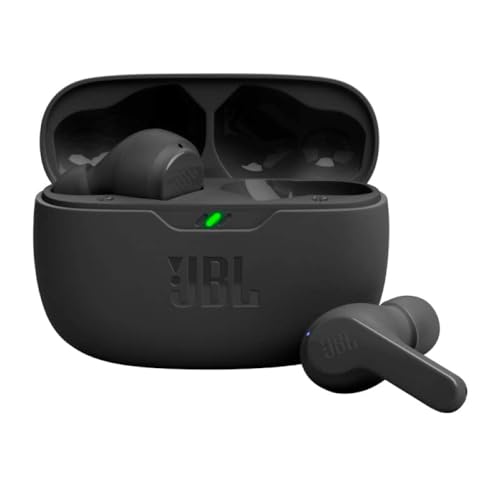
True wireless earbuds have become the go-to audio solution for millions of people, and the JBL Vibe Beam enters this crowded market with some genuinely compelling features. After extensive research into user experiences and technical specifications, these earbuds stand out not just for their impressive battery life, but for how they approach the fundamental challenge of staying connected to your environment while enjoying your audio.
The heart of any earbud is its drivers—the tiny speakers that actually produce sound. The JBL Vibe Beam packs 8mm dynamic drivers, which might not sound huge, but in the world of earbuds, size matters. These drivers deliver JBL's signature "Deep Bass Sound," and based on extensive user feedback, this isn't just marketing hype.
What makes this bass enhancement work is JBL's tuning philosophy. Rather than simply boosting low frequencies (which can muddy the overall sound), the company has engineered a frequency response curve that emphasizes the punchy, impactful part of the bass range while keeping vocals and instruments clear. The frequency response spans 20 Hz to 20 kHz—essentially the full range of human hearing—with a sensitivity of 100 dB SPL at 1 kHz, meaning these earbuds can get genuinely loud without distortion.
Our research into user experiences reveals that people consistently praise the balanced sound signature. Unlike some competitors that can sound thin or overly bright, the Vibe Beam maintains what audiophiles call "musicality"—the ability to make different genres of music sound engaging rather than clinically accurate. The 16-ohm impedance makes them efficient enough to sound great straight from your phone without draining battery quickly.
Here's where the JBL Vibe Beam truly differentiates itself from the pack. Smart Ambient technology includes two distinct modes: Ambient Aware and TalkThru. These features address one of the biggest practical issues with earbuds—complete isolation from your surroundings.
Ambient Aware uses the built-in microphones to pipe environmental sounds into your music mix. This isn't just a simple "transparency mode" like many competitors offer. Based on user reports, JBL's implementation is notably natural-sounding, letting you hear approaching cars, announcements, or conversations without that artificial, digital quality that plagues some systems.
TalkThru goes further by actively lowering your music volume while amplifying human voices. Researchers have found this particularly useful in retail environments, airports, or when someone needs to get your attention quickly. Instead of the awkward pause-and-remove dance that most earbud users know well, you can have quick conversations seamlessly.
The sophistication here lies in the digital signal processing (DSP)—the computer chips that analyze incoming audio and make real-time decisions about what to emphasize or suppress. This technology was once exclusive to premium models, making its presence in the Vibe Beam particularly noteworthy.
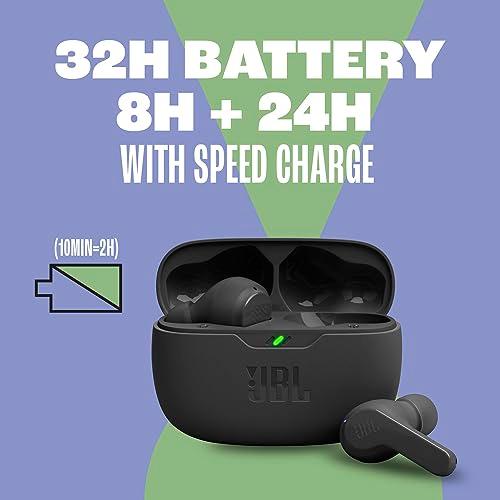
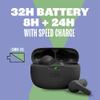
Battery life often separates good earbuds from great ones, and the JBL Vibe Beam delivers exceptional performance. The earbuds themselves provide 8 hours of continuous playback, while the charging case adds another 24 hours, totaling 32 hours of listening time. To put this in perspective, that's longer than most people's entire waking day.
The secret lies in efficient power management. The Bluetooth 5.2 chipset consumes less power than older versions while maintaining stable connections. The lithium-ion polymer batteries (48 mAh in each earbud, 530 mAh in the case) are optimized for longevity rather than just capacity.
Speed charging delivers impressive results—10 minutes of charging provides 2 hours of playback. Our research shows users particularly appreciate this feature for those moments when you grab your earbuds and realize they're dead. The full charging time of under 2 hours means overnight charging easily handles daily use.
The Bluetooth 5.2 implementation deserves special attention. This version of Bluetooth offers several advantages over earlier iterations: improved connection stability, lower latency (the delay between audio and video), and better power efficiency. The supported profiles include A2DP V1.3 for high-quality audio streaming, AVRCP V1.6 for media controls, and HFP V1.7 for hands-free calling.
Touch controls on true wireless earbuds can be hit-or-miss, but user experiences suggest JBL has refined their implementation well. The controls handle playback, volume adjustment, call management, and ambient mode switching without accidental triggers during adjustment or removal.
The integrated microphones provide clear voice pickup with a sensitivity of -38 dBV/Pa at 1 kHz—technical specifications that translate to natural-sounding voice reproduction on calls. The standout feature is VoiceAware, which lets users control how much of their own voice they hear during calls.
This addresses a common complaint with sealed earbuds: the "talking in a tunnel" effect where your own voice sounds unnatural. VoiceAware essentially creates a feedback loop that makes conversations feel more natural. Based on user feedback, this feature significantly improves the calling experience, especially for frequent phone users.
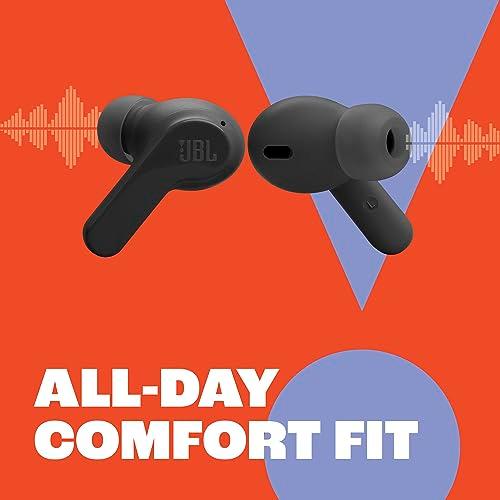
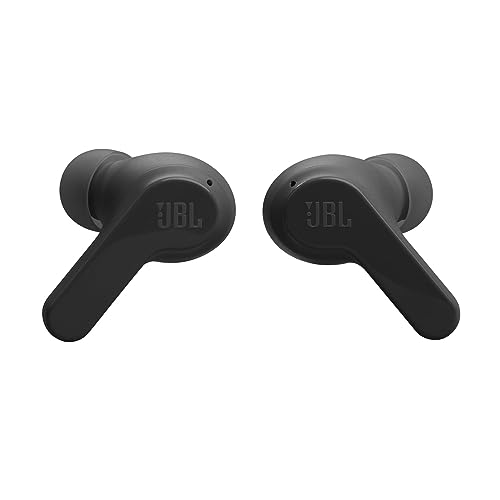
The ergonomic design uses what JBL calls a "stick-closed" configuration—essentially a sealed design that enhances bass response while providing passive noise isolation. Each earbud weighs just 4.4 grams, light enough that users report forgetting they're wearing them during extended sessions.
The IP54 rating for the earbuds provides protection against dust ingress and water splashes from any direction. The charging case carries an IPX2 rating, protecting against vertically falling water drops. While not fully waterproof, this protection covers most real-world scenarios including workouts and light rain exposure.
The companion app transforms the JBL Vibe Beam from good earbuds into genuinely customizable audio tools. The parametric EQ allows precise frequency adjustments—you can boost or cut specific frequency ranges to match your preferences or compensate for hearing differences.
Preset modes optimize the sound for different content types, while the Find My Buds feature plays a tone to locate misplaced earbuds. Regular firmware updates add new features and improvements, extending the product's useful life beyond the initial purchase.
At the time of writing, the true wireless market includes options ranging from budget models to premium offerings with advanced noise cancellation. The JBL Vibe Beam positions itself as a value-focused option that doesn't sacrifice core performance.
Compared to Apple AirPods, users report comparable or superior sound quality, particularly in bass response. Against Samsung Galaxy Buds, the Vibe Beam offers longer battery life and more customization options. The main trade-off compared to premium models is the lack of active noise cancellation (ANC)—the technology that uses microphones and processing to actively cancel external noise.
However, JBL's Smart Ambient approach represents a different philosophy. Instead of blocking all external sound, it gives users control over what they hear. For many use cases—commuting, office work, casual listening—this proves more practical than complete isolation.
While primarily designed for mobile use, the JBL Vibe Beam can serve as personal audio devices for home theater applications. The low-latency Bluetooth connection makes them suitable for late-night movie watching without disturbing others. The long battery life supports extended viewing sessions, while the customizable EQ can enhance dialogue clarity or cinematic bass response.
However, dedicated home theater headphones typically offer advantages like larger drivers, open-back designs for better soundstage, and wired connections for zero latency. The Vibe Beam works well as a convenient option but shouldn't replace purpose-built home audio solutions.
The JBL Vibe Beam succeeds by focusing on practical innovation rather than headline-grabbing features. The Smart Ambient technology addresses real user needs, while the exceptional battery life eliminates daily charging anxiety. Combined with solid sound quality and extensive customization options, these earbuds offer compelling value in their market segment.
They're particularly well-suited for users who prioritize convenience, battery life, and environmental awareness over features like active noise cancellation. The JBL Vibe Beam represents mature thinking about what most people actually need from true wireless earbuds, delivering those features with impressive competence.
The JBL Vibe Beam True Wireless Earbuds provide up to 8 hours of continuous playback on a single charge, with the charging case extending total battery life to 32 hours. This exceptional battery performance makes them ideal for all-day use, including extended home theater sessions for late-night movie watching without disturbing others.
Yes, the JBL Vibe Beam work well for home theater use thanks to their Bluetooth 5.2 connectivity which provides low latency for synchronized audio-video playback. The JBL Deep Bass Sound enhances movie soundtracks and action sequences, while the customizable EQ in the JBL Headphones App lets you optimize dialogue clarity or boost cinematic bass response.
The JBL Vibe Beam True Wireless Earbuds don't have active noise cancellation (ANC), but they feature Smart Ambient Technology with Ambient Aware and TalkThru modes. This allows you to control how much environmental sound you hear, which is often more practical for daily use than complete noise isolation.
The earbuds have an IP54 rating, making them resistant to dust and water splashes from any direction, while the charging case is rated IPX2. The JBL Vibe Beam can handle sweat during workouts and light rain, but they're not fully waterproof for swimming or submersion.
Smart Ambient Technology includes Ambient Aware mode, which lets you hear your surroundings while listening to music, and TalkThru mode, which lowers music volume and amplifies voices for quick conversations. This makes the JBL Vibe Beam True Wireless Earbuds particularly useful for home theater use when you need to stay aware of family members or important sounds around the house.
The JBL Vibe Beam offers superior battery life (32 vs 24 hours total), stronger bass response, and extensive customization through the JBL Headphones App. While AirPods have seamless Apple ecosystem integration, the Vibe Beam provides better value with comparable sound quality and longer listening sessions ideal for home entertainment.
Yes, the JBL Vibe Beam True Wireless Earbuds excel at phone calls with clear microphone pickup and VoiceAware technology that lets you control how much of your own voice you hear during conversations. This eliminates the "talking in a tunnel" effect common with sealed earbuds.
The JBL Vibe Beam use standard Bluetooth 5.2 connectivity, making them compatible with smartphones, tablets, laptops, smart TVs, and most Bluetooth-enabled devices. They support key audio profiles including A2DP for high-quality music streaming and HFP for hands-free calling.
The ergonomic stick-closed design weighs just 4.4 grams per earbud, making the JBL Vibe Beam True Wireless Earbuds comfortable for extended wear. They include three sizes of eartips for a secure fit, which is particularly important for long home theater sessions or all-day listening.
The JBL Vibe Beam offers exceptional value with industry-leading 32-hour battery life, Smart Ambient Technology, customizable sound through the JBL app, and solid build quality with water resistance. For users seeking reliable true wireless earbuds for daily use and home entertainment without premium pricing, the JBL Vibe Beam True Wireless Earbuds delivers impressive performance that competes with more expensive alternatives.
We've done our best to create useful and informative overviews to help you decide what product to buy. Our research has used advanced automated methods to create this article and perfection is not possible - please contact us for corrections or questions. These are the sites we've researched in the creation of this article: bestbuy.com - jbl.com - rtings.com - jbl.com - youtube.com - youtube.com - audio46.com - jbl.com - soundguys.com - bestbuy.com - walmart.com - uclastore.com - bestbuy.com - manuals.plus
| JBL Vibe Beam True Wireless Earbuds |
|---|
| Total Battery Life - Determines how long you can go without plugging in: 32 hours (8h earbuds + 24h case) |
| Driver Size - Larger drivers typically produce better bass and overall sound quality: 8mm dynamic drivers |
| Bluetooth Version - Newer versions offer better connection stability and power efficiency: 5.2 |
| Water Resistance - Protection level for workouts and weather: IP54 (earbuds), IPX2 (case) |
| Quick Charge - Emergency power when you're running low: 10 minutes = 2 hours playback |
| Smart Ambient Technology - Lets you hear surroundings while listening: Ambient Aware & TalkThru modes |
| Frequency Response - The range of sounds the earbuds can reproduce: 20 Hz – 20 kHz |
| Weight per Earbud: 4.4g |
| Microphone Sensitivity - Higher sensitivity picks up voice better for calls: -38 dBV/Pa @ 1 kHz |
| JBL Deep Bass Sound - Enhanced low-frequency response for impactful audio: Yes |
| App Compatibility - Enables customization and firmware updates: JBL Headphones App |
| Voice Assistant Support: Compatible |
| Independent Earbud Use - Can use just one earbud for calls or mono listening: Yes |
| Find My Buds Feature: Included |
| Charging Port: USB Type-C |
The Beats Powerbeats Pro 2 represents a dramatically different approach to wireless earbuds, targeting serious athletes and fitness enthusiasts with premium features that justify its significantly higher price point. The standout innovation is its integrated heart rate monitoring system, which uses optical sensors to track your pulse in real-time during workouts – a capability you simply won't find in the JBL Vibe Beam or most other earbuds. The over-ear hook design with flexible nickel-titanium alloy creates an exceptionally secure fit that eliminates the worry of earbuds falling out during intense movement, while Active Noise Cancellation and Transparency Mode provide premium noise control that surpasses the JBL's Smart Ambient features. The larger 9.5mm dual-layer drivers and Apple's H2 chip enable sophisticated audio processing including Adaptive EQ and Personalized Spatial Audio, delivering a more immersive and technically advanced listening experience.
However, this premium performance comes at a cost that's roughly six times higher than the JBL Vibe Beam, making the value proposition highly dependent on your specific needs. While the Beats Powerbeats Pro 2 excels for fitness applications and offers cutting-edge features, the JBL provides superior battery life (32 vs 45 hours total), customizable EQ options, and cross-platform compatibility at a fraction of the price. For casual listeners who prioritize value and don't need heart rate monitoring or premium ANC, the performance gap may not justify the significant price difference. The Beats truly shine for Apple ecosystem users who engage in regular intense workouts and want the latest audio technology, but the JBL Vibe Beam delivers most of the essential wireless earbud experience with remarkable efficiency and affordability.
🤖 Read Detailed Comparison
👌Beats Powerbeats Pro 2 Wireless Earbuds Details
💵 See Beats Powerbeats Pro 2 Wireless Earbuds Price
The JBL Tune Buds step up significantly in several key areas that justify their higher price point. Most notably, they include Active Noise Cancellation technology with Smart Ambient modes, transforming the listening experience in noisy environments like offices, planes, or busy streets. The larger 10mm drivers deliver fuller, more dynamic sound compared to the Vibe Beam's 8mm drivers, with better bass response and overall clarity across the frequency spectrum. Battery life extends to an impressive 48 hours total (40 hours with ANC active), and the 4-microphone array provides substantially better call quality with advanced noise suppression that makes work calls and video conferences much clearer.
However, these premium features come with complexity and cost considerations that may not benefit all users. The Tune Buds require more decision-making around ANC settings, multi-device connectivity, and various smart modes, which can feel overwhelming for users seeking simple, reliable wireless audio. The battery life advantage diminishes significantly when ANC is active, and the additional features drain power faster than the Vibe Beam's straightforward approach. For users who primarily listen to music and podcasts in relatively quiet environments, don't make frequent calls, and prefer simplicity over advanced features, the Vibe Beam's exceptional value proposition and consistent performance often prove more satisfying than paying extra for capabilities they won't regularly use.
🤖 Read Detailed Comparison
👌JBL Tune Buds True Wireless Earbuds Details
💵 See JBL Tune Buds True Wireless Earbuds Price
The Soundcore Space A40 represents a significant step up in features and performance, most notably through its adaptive active noise cancellation that can reduce ambient noise by up to 98%. This ANC automatically adjusts to your environment—whether you're indoors, commuting, or flying—making it transformative for anyone who regularly finds themselves in noisy situations. The Space A40 also delivers superior audio quality through larger 10mm double-layer drivers and Hi-Res Wireless certification with LDAC codec support, allowing compatible Android devices to stream near-CD-quality audio over Bluetooth. Additional premium features include multipoint connectivity for seamless switching between two devices, six microphones with AI-enhanced call quality, and an impressive 50-hour total battery life with wireless charging case support.
However, these advanced features come at roughly three times the cost of the JBL Vibe Beam, making the value proposition more complex. The Space A40 justifies its higher price for users who genuinely need noise cancellation for daily commutes, frequent air travel, or noisy work environments. The multipoint connectivity becomes essential for professionals juggling phone calls and laptop work, while the superior audio quality appeals to listeners with high-quality music libraries. For casual users who primarily listen at home or in quiet environments, the Space A40's premium features may feel like overkill. The JBL Vibe Beam covers the fundamentals exceptionally well—comfortable fit, reliable connectivity, enjoyable sound, and outstanding battery life—making it the smarter choice unless you specifically need the advanced capabilities that the Soundcore Space A40 provides.
🤖 Read Detailed Comparison
👌Soundcore Space A40 Wireless Earbuds Details
💵 See Soundcore Space A40 Wireless Earbuds Price
The Beats Studio Buds Plus represent a significant step up in features and performance, most notably with their active noise cancellation system that uses three microphones per earbud to reduce external noise by approximately 80%. This ANC capability, combined with an enhanced Transparency mode, makes them genuinely effective for commuting, air travel, and working in noisy environments where the JBL Vibe Beam's passive isolation falls short. The call quality is also substantially better thanks to a triple-microphone array with voice-targeting algorithms that rival premium options like AirPods Pro, making them ideal for frequent work calls or conversations in challenging acoustic environments.
However, this premium feature set comes with notable trade-offs. The Beats Studio Buds Plus lack any sound customization options—you're stuck with Beats' bass-heavy house sound that some find fatiguing during extended listening. While their custom two-layer transducer delivers technically superior audio with cleaner bass and lower distortion, the inability to adjust the EQ means less flexibility than the JBL's parametric equalizer. At roughly three times the price of the Vibe Beam, the Beats justify their cost if you need ANC and superior call quality for daily use, but they represent overkill for casual listeners who prioritize customizable sound and exceptional battery life over advanced features.
🤖 Read Detailed Comparison
👌Beats Studio Buds Plus True Wireless Earbuds Details
💵 See Beats Studio Buds Plus True Wireless Earbuds Price
The Bose Ultra Open Earbuds represent a fundamentally different approach to personal audio, prioritizing environmental awareness and all-day comfort over the traditional isolation that defines the JBL Vibe Beam. Released in 2024, these innovative earbuds use Bose's proprietary OpenAudio technology to deliver what they call "rich, private sound" without blocking your ear canals at all. The revolutionary cuff-shaped design, inspired by ear jewelry, eliminates the pressure and "plugged up" feeling that can develop during extended wear with traditional earbuds. Most impressively, the Bose Ultra Open Earbuds feature Immersive Audio spatial processing that creates a three-dimensional soundstage around your head, with Still and Motion modes that adapt the audio field as you move. This makes them particularly compelling for users who've struggled with earbud comfort or need to maintain situational awareness for safety reasons during activities like running or cycling.
However, the Bose Ultra Open Earbuds require significant compromises in both performance and value compared to the JBL Vibe Beam. The open design inherently limits bass response—while surprisingly good for an open-ear design, it simply cannot match the low-end punch and overall audio isolation of sealed earbuds. Battery life drops to 27 hours total, and further reduces to around 23 hours when using the advanced spatial features, falling well short of the JBL's exceptional 32-hour runtime. Most significantly, the Bose commands premium pricing that puts it in an entirely different market segment, making the cost-per-feature ratio heavily favor the JBL. The Bose Ultra Open Earbuds excel in specific scenarios—office work where you need to stay accessible, outdoor activities where safety awareness is crucial, or situations where traditional earbuds cause discomfort—but for most users seeking versatile, high-value earbuds with strong audio performance, the JBL Vibe Beam offers a more compelling overall package.
🤖 Read Detailed Comparison
👌Bose Ultra Open Earbuds Details
💵 See Bose Ultra Open Earbuds Price
The Poly Voyager Free 60+ UC represents a completely different philosophy, targeting business professionals with premium communication features that justify its significantly higher price point. Its standout three-microphone array per earbud creates a sophisticated voice isolation system that dramatically outperforms standard earbuds in noisy environments, while WindSmart technology ensures clear calls even outdoors. The adaptive hybrid Active Noise Cancellation provides genuine focus benefits in open offices or during travel, and the unique color touchscreen charging case allows you to manage calls, volume, and device switching without touching your phone. With Bluetooth 5.3 and multipoint connectivity, the Poly Voyager Free 60+ UC seamlessly handles simultaneous connections to your phone and computer – a crucial feature for professionals juggling multiple devices throughout the workday.
From a performance standpoint, the Poly Voyager Free 60+ UC delivers specialized capabilities that the JBL simply cannot match, particularly for business use cases. While it sacrifices the JBL's exceptional battery life and customizable sound signature, it provides professional-grade call quality, Microsoft Teams certification, and advanced noise management that create genuine productivity benefits. The inclusion of a BT700 USB adapter and 3.5mm wired connectivity options adds versatility for various work scenarios. However, this premium performance comes at a substantial cost premium – roughly ten times the price of the JBL. For users who depend on crystal-clear communication for their livelihood or frequently work in challenging acoustic environments, the Poly Voyager Free 60+ UC justifies its investment through superior call technology and business-focused features that the budget-friendly JBL cannot provide.
🤖 Read Detailed Comparison
👌Poly Voyager Free 60+ UC Wireless Earbuds Details
💵 See Poly Voyager Free 60+ UC Wireless Earbuds Price
The Apple AirPods Pro 2 represents a significant step up in technology and features, though at a considerably higher price point. The standout advantage is industry-leading active noise cancellation that can genuinely transform your listening experience in noisy environments like airplanes, busy cafes, or commuter trains. The H2 chip enables sophisticated computational audio processing, including Adaptive EQ that automatically tunes sound to your specific ear shape and Personalized Spatial Audio that creates an immersive, theater-like experience for movies and shows. For Apple users, the seamless ecosystem integration—automatic device switching, "Hey Siri" activation, and wireless charging compatibility—adds genuine daily convenience that's hard to replicate with third-party options.
However, the AirPods Pro 2 costs three to four times more than the JBL Vibe Beam while delivering shorter battery life (6 hours vs 8 hours per charge). The premium is justified if you frequently find yourself in noisy environments where active noise cancellation makes a meaningful difference, consume lots of video content where spatial audio enhances the experience, or are deeply invested in Apple's ecosystem. For users who primarily listen in quiet environments, use Android devices, or simply want excellent sound quality and battery life without premium features, the JBL Vibe Beam delivers 80% of the performance at a fraction of the cost. The AirPods Pro 2 is undeniably more advanced, but whether those advances are worth the significant price premium depends entirely on your specific needs and listening habits.
🤖 Read Detailed Comparison
👌Apple AirPods Pro 2 Earbuds Details
💵 See Apple AirPods Pro 2 Earbuds Price
The Bose QuietComfort Ultra represents the premium end of the true wireless market with several standout features that justify its significantly higher price point. Most notably, it offers world-class Active Noise Cancellation that can virtually eliminate airplane engines, air conditioning hum, and other consistent background noise—a transformative feature for frequent travelers or anyone working in noisy environments. The CustomTune technology automatically analyzes your ear canal shape and optimizes both sound reproduction and noise cancellation specifically for your anatomy, while Bose Immersive Audio creates a spatial sound experience that places music in front of you rather than inside your head. These advanced features, combined with multi-point Bluetooth connectivity that lets you seamlessly switch between two devices, represent genuine technological innovations rather than marketing gimmicks.
However, the Bose QuietComfort Ultra makes significant trade-offs for these premium features. Battery life drops to 24 hours total compared to the JBL's impressive 32 hours, and activating the spatial audio feature further reduces playback time to just 4 hours per charge. At roughly seven times the price of the JBL Vibe Beam, the Bose earbuds demand a substantial investment that only makes sense if you specifically need best-in-class noise cancellation or work in consistently challenging acoustic environments. For most users enjoying music in relatively quiet settings, the JBL Vibe Beam delivers 80% of the premium experience at a fraction of the cost, making the Bose a specialized tool for those who can fully utilize its advanced capabilities rather than a general recommendation for everyday listeners.
🤖 Read Detailed Comparison
👌Bose QuietComfort Ultra True Wireless Earbuds Details
💵 See Bose QuietComfort Ultra True Wireless Earbuds Price
The JBL Tour Pro 3 represents a completely different tier of wireless earbuds, with active noise cancellation, spatial audio with head tracking, and a revolutionary smart charging case featuring a touchscreen display. The hybrid dual-driver system delivers noticeably superior sound quality with better instrument separation and detail retrieval, while the six-microphone array with AI processing provides professional-grade call quality that far exceeds the Vibe Beam's basic communication capabilities. The smart case isn't just a gimmick—it genuinely transforms the user experience by allowing full control over playbook, calls, and settings without touching your phone, plus it doubles as a wireless audio transmitter for connecting to airplane entertainment systems or computers.
However, the JBL Tour Pro 3 costs roughly 10 times more than the Vibe Beam, which raises important questions about value for most users. While the premium model excels in every measurable category—from the extended 44-hour battery life to the superior IP55 water resistance—the real-world benefits may not justify the dramatic price increase unless you specifically need active noise cancellation for commuting or travel, frequently take important calls in noisy environments, or genuinely value cutting-edge features like spatial audio. For casual listeners who primarily use earbuds for music during workouts, podcasts during commutes, or basic phone calls, the Vibe Beam's excellent execution of core wireless functionality at an accessible price point often proves more practical than the Tour Pro 3's flagship innovations.
🤖 Read Detailed Comparison
👌JBL Tour Pro 3 True Wireless Earbuds Details
💵 See JBL Tour Pro 3 True Wireless Earbuds Price
The Technics AZ80 represents a completely different philosophy in true wireless earbuds, targeting audio enthusiasts willing to pay a premium for superior technical performance. Where the JBL Vibe Beam focuses on practical everyday features, the Technics model delivers audiophile-grade sound quality through larger 10mm aluminum alloy drivers and extended frequency response reaching 40kHz—well beyond human hearing limits but crucial for reproducing the harmonic details that make music sound realistic and spacious. The inclusion of LDAC codec support sets it apart significantly, transmitting roughly three times more audio data than standard Bluetooth connections, which means high-resolution music files and lossless streaming services sound noticeably more detailed and dynamic. Active noise cancellation using dual hybrid technology effectively silences low-frequency rumble from engines and HVAC systems that passive isolation can't touch, while the industry-leading 3-device multipoint connectivity seamlessly switches between your phone, laptop, and tablet without manual intervention.
However, these premium features come with real-world trade-offs that highlight why the JBL Vibe Beam appeals to different users. The Technics AZ80 commands a price premium of roughly 5-6 times more at the time of writing, while delivering shorter battery life at 24 total hours compared to the JBL's exceptional 32 hours. The superior call quality through eight MEMS microphones and advanced noise processing makes it genuinely suitable for important business calls, but casual users may not need this level of performance. For audio enthusiasts with high-resolution music collections, those working in noisy environments, or professionals requiring seamless multi-device workflows, the Technics justifies its cost through measurably superior technical capabilities. But for everyday listening to standard streaming services, commuting, and casual use, the JBL Vibe Beam's combination of comfort, battery life, and fun sound signature often proves more practical and satisfying despite the technical limitations.
🤖 Read Detailed Comparison
👌Technics AZ80 Premium Hi-Fi True Wireless Noise Cancelling Earbuds Details
💵 See Technics AZ80 Premium Hi-Fi True Wireless Noise Cancelling Earbuds Price
The Audio-Technica ATH-TWX9 represents a completely different approach to wireless earbuds, targeting audiophiles and frequent travelers with premium features that justify its significantly higher price point. Most notably, it includes digital hybrid active noise cancellation with multiple preset modes that can transform noisy environments like airplanes or trains into peaceful listening spaces – something the Vibe Beam simply cannot match with its passive isolation alone. The sound quality difference is substantial, with the ATH-TWX9's high-resolution 5.8mm drivers delivering balanced, detailed audio that reveals nuances in music that cheaper earbuds often miss. Additional premium touches include support for high-quality aptX Adaptive codec, 12 different ear tip sizes for optimal fit, and unique features like deep-UV LED sterilization in the charging case.
However, this premium positioning comes with trade-offs that make the comparison interesting. The ATH-TWX9 delivers notably shorter battery life at 24.5 total hours versus the Vibe Beam's exceptional 32 hours, and lacks the convenient speed charging that provides quick top-ups when you're in a rush. While the audio quality and noise cancellation are superior, you're paying several times more for these improvements. For users who primarily listen to podcasts, make calls, or enjoy bass-heavy music genres, the Vibe Beam's practical advantages like extended battery life, faster charging, and better water resistance may prove more valuable in daily use than the ATH-TWX9's audiophile-focused refinements.
🤖 Read Detailed Comparison
👌Audio-Technica ATH-TWX9 Noise-Canceling Wireless Earbuds Details
💵 See Audio-Technica ATH-TWX9 Noise-Canceling Wireless Earbuds Price
The Sennheiser Momentum Sport represents a completely different approach to wireless earbuds, integrating biometric sensors that track heart rate and body temperature directly into premium audio hardware. This innovative design transforms earbuds into comprehensive fitness monitors that sync seamlessly with major fitness platforms like Strava, Garmin Connect, and Apple Health—eliminating the need for separate heart rate monitors during workouts. The semi-open acoustic design with an acoustic relief channel specifically addresses one of the biggest complaints about earbuds during exercise by dramatically reducing annoying body-borne sounds like footsteps and breathing. With 10mm drivers, aptX Adaptive codec support, and adaptive active noise cancellation, the audio quality surpasses the JBL's capabilities, delivering more balanced, detailed sound reproduction that audiophiles will appreciate.
However, this premium positioning comes with significant tradeoffs that affect daily usability. The Momentum Sport offers notably shorter battery life at 6 hours per charge compared to the JBL's 8 hours, and costs substantially more—often 6-7 times the price at the time of writing. While features like wireless charging and superior IP55 water resistance add convenience and durability, the core question becomes whether the specialized fitness integration and enhanced audio quality justify the dramatic price premium. For casual listeners and budget-conscious buyers, the JBL Vibe Beam delivers 90% of the daily performance at a fraction of the cost. The Momentum Sport makes sense primarily for serious athletes who will actually utilize the biometric sensors and can afford premium pricing for the convenience of integrated health monitoring with high-quality audio.
🤖 Read Detailed Comparison
👌Sennheiser Momentum Sport True Wireless Earbuds Details
💵 See Sennheiser Momentum Sport True Wireless Earbuds Price
The Denon PerL Pro represents a fundamentally different approach to wireless earbuds, prioritizing cutting-edge audio technology over value proposition. Its standout feature is Masimo Adaptive Acoustic Technology, which creates a personalized hearing profile by measuring how sound reflects off your unique ear structure—technology previously only available in professional hearing aids. This calibration process genuinely transforms the listening experience, making music sound clearer and more natural than standard tuning. The earbuds also support aptX Lossless codec for CD-quality wireless transmission and feature larger 12mm titanium drivers with extended frequency response up to 40,000Hz, enabling true high-resolution audio playback that the JBL simply cannot match.
However, this technical superiority comes at a significant cost premium—the Denon PerL Pro typically costs 4-5 times more than the JBL Vibe Beam while offering identical battery life and less robust water resistance. The Denon's IPX4 rating makes it unsuitable for intense workouts, and its heavier build sacrifices the JBL's all-day comfort advantage. For most users listening to streaming music, the personalized calibration and high-res codec support may not justify the substantial price difference. The Denon makes sense for serious audiophiles with high-quality music libraries who prioritize sound accuracy above all else, but the JBL delivers 80% of the performance for a fraction of the cost, making it the smarter choice for everyday users who want premium features without premium pricing.
🤖 Read Detailed Comparison
👌Denon PerL Pro True Wireless Earbuds Details
💵 See Denon PerL Pro True Wireless Earbuds Price
The Apple AirPods 4 ANC brings several standout features that justify its premium positioning, most notably genuine Active Noise Cancellation powered by Apple's H2 chip. This technology effectively silences low-frequency environmental noise like airplane engines, subway rumble, and office HVAC systems—something the JBL's passive isolation simply cannot match. The Personalized Spatial Audio creates an immersive three-dimensional soundstage that transforms movie watching and specially mixed music into a theater-like experience, while Adaptive Audio intelligently blends noise cancellation and transparency modes based on your environment. The seamless integration with Apple devices, including automatic switching between iPhone, iPad, and Mac, provides a level of convenience that feels almost magical when it works properly.
However, these premium features come with significant trade-offs that may not justify the roughly 4x price premium for many users. Battery life drops to just 4-5 hours per charge compared to the JBL's impressive 8 hours, and the one-size-fits-all design lacks the fit customization options that help the JBL accommodate different ear shapes. Most critically, the Apple AirPods 4 ANC heavily favors Apple ecosystem users—Android users lose access to many smart features and pay premium prices for basic functionality. While the active noise cancellation and spatial audio are genuinely transformative for frequent travelers and Apple enthusiasts, casual listeners who primarily use earbuds at home or in moderate noise environments will find the JBL delivers 90% of the performance at 25% of the cost, making it the smarter choice for value-conscious buyers.
🤖 Read Detailed Comparison
👌Apple AirPods 4 Active Noise Cancellation Earbuds Details
💵 See Apple AirPods 4 Active Noise Cancellation Earbuds Price
The JLab Go Pop+ stands out as a feature-packed alternative that prioritizes comprehensive functionality and convenience over pure audio impact. Its most impressive advantage is the exceptional 35+ hour battery life that outlasts the Vibe Beam by several hours, combined with an integrated USB-C charging cable built into the case that eliminates the need to carry separate cables—a genuinely useful convenience for daily use and travel. The Go Pop+ also includes cutting-edge Bluetooth 5.3 connectivity with Google Fast Pair support for seamless Android integration, plus practical smart features like Be Aware Mode for environmental awareness and a dedicated Movie Mode that reduces audio latency for better video synchronization. The comprehensive JLab app provides full parametric EQ control rather than just presets, allowing users to completely customize their sound signature over time.
Where the JLab Go Pop+ particularly excels is in areas that matter for daily versatility and long-term satisfaction. Its superior call quality with dual MEMS microphones and Environmental Noise Canceling makes it significantly better for phone conversations, while its ultra-lightweight 7.8g design provides better comfort during extended wear compared to the Vibe Beam's heavier, more secure fit. The trade-off is in immediate audio impact—the Go Pop+'s smaller 6mm drivers can't match the Vibe Beam's bass punch and overall volume capabilities without EQ adjustments. However, for users who value customization, convenience features, longer battery life, and superior connectivity over raw audio power, the JLab Go Pop+ delivers a more complete and future-proof package that adapts better to varied use cases and evolving needs.
🤖 Read Detailed Comparison
👌JLab Go Pop+ True Wireless Earbuds Details
💵 See JLab Go Pop+ True Wireless Earbuds Price
The Samsung Galaxy Buds 3 Pro represent a significant step up in audio engineering and smart features that become immediately apparent in daily use. The dual-driver system with separate 10.5mm woofer and 6.1mm planar tweeter delivers noticeably superior instrument separation and soundstage depth, particularly evident when listening to complex musical arrangements where the JBL Vibe Beam can sound congested. Samsung's adaptive active noise cancellation transforms the listening experience in noisy environments—commuter trains, airplane cabins, and busy offices become quiet sanctuaries where the Vibe Beam's passive isolation simply cannot compete. The Samsung Galaxy Buds 3 Pro also excel in call quality with multiple microphones and AI-powered noise suppression that cleanly filters background chatter and wind noise, making them genuinely useful for professional calls in challenging environments.
The premium positioning brings tangible real-world benefits beyond just audio quality, though at a significantly higher investment. The IP57 water resistance rating means the Samsung Galaxy Buds 3 Pro handle intense workouts, sudden rainstorms, and even accidental submersion that would damage the JBL earbuds' basic IP54 protection. Features like real-time AI translation, seamless device switching within Samsung's ecosystem, and 24-bit high-resolution audio streaming (when paired with compatible Samsung devices) provide functionality that extends far beyond basic music playback. While the Galaxy Buds 3 Pro sacrifice some battery life for these advanced features—offering 6 hours versus the Vibe Beam's 8 hours per charge—the wireless charging convenience and superior build quality justify the premium for users who demand the best performance and are willing to invest accordingly. For casual listeners satisfied with the Vibe Beam's solid fundamentals, however, the Samsung Galaxy Buds 3 Pro's advanced capabilities may represent overkill rather than essential upgrades.
🤖 Read Detailed Comparison
👌Samsung Galaxy Buds 3 Pro True Wireless Earbuds Details
💵 See Samsung Galaxy Buds 3 Pro True Wireless Earbuds Price
The Apple AirPods Pro 3 represents the pinnacle of wireless earbud technology, featuring industry-leading active noise cancellation that removes up to twice as much ambient noise as previous generations—a transformative capability for frequent travelers, commuters, and anyone working in noisy environments. Its computational audio processing delivers genuinely impressive innovations like Personalized Spatial Audio that creates immersive three-dimensional soundstages, Adaptive EQ that adjusts frequency response based on your unique ear geometry, and heart rate monitoring that tracks 50+ workout types without additional devices. The seamless integration with Apple's ecosystem provides automatic device switching, Siri voice control with head gestures, and live translation capabilities that feel genuinely futuristic in daily use.
However, these premium features come at a significant cost premium—approximately 8 times more than the JBL Vibe Beam at the time of writing. The Apple AirPods Pro 3 justifies this pricing for users deeply invested in Apple's ecosystem who regularly encounter scenarios where advanced noise cancellation provides genuine utility, such as airplane travel or open office environments. The sophisticated audio processing and health monitoring features add real value for fitness enthusiasts and professionals who need reference-quality sound reproduction. Yet for many users, the practical advantages of the JBL Vibe Beam's exceptional battery life, universal compatibility, and engaging sound signature may provide better daily satisfaction than premium features they won't fully utilize, making the Apple AirPods Pro 3 a luxury purchase rather than a necessity for most wireless earbud buyers.
🤖 Read Detailed Comparison
👌Apple AirPods Pro 3 Wireless Earbuds Details
💵 See Apple AirPods Pro 3 Wireless Earbuds Price
The Samsung Galaxy Buds FE elevates the listening experience with active noise cancellation that can reduce ambient noise by up to 30dB, a feature completely absent from the JBL Vibe Beam. This ANC capability transforms commuting, office work, and travel by effectively blocking low-frequency rumble from engines, air conditioning, and traffic while the excellent passive isolation handles higher-pitched sounds. The Samsung earbuds also deliver superior call quality through their three-microphone array with beamforming technology, clearly separating your voice from background noise even in challenging acoustic environments. The Samsung Galaxy Buds FE's balanced sound signature provides versatility across all music genres with transparent mids, natural vocals, and controlled bass that doesn't overwhelm other frequencies, making them equally suitable for podcasts, classical music, and modern pop.
Where the Samsung Galaxy Buds FE truly differentiates itself is in ecosystem integration and advanced features that extend beyond basic audio playback. Auto Switch seamlessly connects between Samsung devices without manual intervention, while the Samsung Scalable Codec provides enhanced audio quality on Galaxy phones and tablets. Real-time translation features during calls and face-to-face conversations showcase how these earbuds function as smart accessories rather than simple audio devices. However, these premium capabilities come with trade-offs in battery life, offering 6 hours per charge compared to the JBL's 8 hours, and the higher price point reflects the additional technology. For users who value comprehensive features, noise cancellation, and balanced audio quality over maximum battery endurance and bass emphasis, the Samsung Galaxy Buds FE justifies its positioning as a more sophisticated, albeit shorter-lasting, audio solution.
🤖 Read Detailed Comparison
👌Samsung Galaxy Buds FE Wireless Earbuds Details
💵 See Samsung Galaxy Buds FE Wireless Earbuds Price
The TAGRY X08 stands out as a battery life champion, delivering an exceptional 60 hours of total playtime that nearly doubles what the JBL Vibe Beam offers. This isn't just a numbers game—the real-world benefit means you can go an entire week of regular use without touching a charger, making it ideal for frequent travelers, busy professionals, or anyone who simply hates dealing with dead batteries. The TAGRY X08 also includes wireless charging capability, a premium feature rarely found at this price point, along with a dual LED display that shows precise battery levels for both the case and individual earbuds. At just 3.9 grams per earbud, it's notably lighter than the JBL, contributing to exceptional comfort during extended wear sessions.
However, the TAGRY X08's aggressive pricing comes with meaningful trade-offs in audio performance and features. While it boasts larger 13mm drivers, the sound quality becomes muffled and distorted above 75% volume, with overpowering bass that can muddy vocals and instruments—a significant limitation for anyone who actively listens to music. The earbuds lack app support for customization and miss smart features like ambient sound control or advanced call processing that enhance daily usability. For users prioritizing maximum convenience and battery life over audio fidelity, the TAGRY X08 delivers exceptional value, but those seeking balanced sound quality and modern smart features will find the JBL Vibe Beam's higher price justified by its superior performance in critical areas like call clarity, sound reproduction, and feature sophistication.
🤖 Read Detailed Comparison
👌TAGRY X08 True Wireless Earbuds Details
💵 See TAGRY X08 True Wireless Earbuds Price
The JBL Live Pro 2 TWS elevates the true wireless experience with genuinely transformative features that justify its premium positioning. The True Adaptive Noise Cancelling system automatically adjusts to your environment, making noisy commutes, airplane flights, and busy offices dramatically more manageable—something the Vibe Beam simply cannot accomplish with passive isolation alone. The 11mm drivers deliver noticeably superior audio quality with deeper bass extension, clearer instrument separation, and more detailed highs, while the six beamforming microphones ensure crystal-clear calls even in challenging acoustic environments. The multipoint connection capability eliminates the daily frustration of manually switching between devices, and features like wireless charging, 15-minute speed charging for 4 hours of playback, and comprehensive 10-band parametric EQ provide the convenience and customization that frequent users genuinely appreciate.
However, these premium features come at a significant cost premium—roughly five times more than the Vibe Beam at the time of writing. The JBL Live Pro 2 also carries noticeably more weight per earbud, which can cause comfort issues during extended listening sessions where the Vibe Beam's featherlight design excels. For users who primarily listen in quiet environments, rarely take calls in noisy situations, and don't need to juggle multiple devices, the Live Pro 2's advanced features become expensive luxuries rather than essential tools. The performance gap, while real, may not justify the substantial price difference for casual listeners who prioritize music enjoyment over professional-grade functionality. The Live Pro 2 represents the smart choice for frequent travelers, professionals with demanding call requirements, and audio enthusiasts who want the best possible wireless experience, but the Vibe Beam proves that excellent sound quality doesn't require premium pricing.
🤖 Read Detailed Comparison
👌JBL Live Pro 2 TWS True Wireless Earbuds Details
💵 See JBL Live Pro 2 TWS True Wireless Earbuds Price
The JBL Tune Flex elevates the experience with active noise cancellation and remarkable versatility that the Vibe Beam simply cannot match. Its standout feature is the sophisticated ANC system powered by multiple microphones, which effectively reduces consistent background noise like air conditioning, train rumble, and airplane engines – making it genuinely superior for commuting and noisy environments. The Tune Flex's unique dual ear tip system offers unprecedented flexibility, allowing you to switch between sealing tips for maximum isolation and open tips for natural sound awareness, effectively giving you two different earbuds in one package. Its larger 12mm drivers deliver broader frequency coverage and more robust bass response, while the advanced microphone array with beamforming technology provides clearer call quality in challenging acoustic environments.
From a performance and value standpoint, the JBL Tune Flex justifies its premium over the Vibe Beam by delivering features typically found in much more expensive earbuds. While you sacrifice some single-charge battery life (6-8 hours versus the Vibe Beam's consistent 8 hours), you gain the flexibility to adapt to different listening scenarios throughout your day – sealed isolation for focused work, ANC for travel, or open awareness for outdoor activities. The trade-off is worthwhile for users who need versatility and don't mind paying extra for active noise cancellation and superior call handling. For commuters, frequent travelers, or anyone who values having multiple listening modes in one device, the Tune Flex represents excellent value by consolidating features that would otherwise require multiple audio devices.
🤖 Read Detailed Comparison
👌JBL Tune Flex True Wireless Earbuds Details
💵 See JBL Tune Flex True Wireless Earbuds Price
The Samsung Galaxy Buds 3 FE represents a significant step up in both technology and performance, most notably through its Enhanced Active Noise Cancellation that reduces approximately 86% of outside noise—a feature completely absent from the Vibe Beam. This ANC capability transforms the listening experience in real-world scenarios like commuting, working in open offices, or traveling, where the Samsung earbuds create an isolated audio environment that the JBL simply cannot match. The Galaxy Buds 3 FE also excels in call quality with Crystal Clear Call technology and three optimized microphones that use machine learning to isolate your voice from background noise, making them far superior for frequent phone users or video conference calls. Additional premium features include wireless charging convenience, larger 11mm drivers for more refined audio reproduction, and comprehensive Galaxy AI integration with real-time translation and hands-free Google Gemini access.
While the Samsung Galaxy Buds 3 FE costs roughly four times more than the Vibe Beam, the price difference reflects genuinely useful technology rather than superficial upgrades. The ANC alone justifies the premium for users who regularly encounter noisy environments, as it transforms unusable listening situations into enjoyable ones. The superior microphone system and call quality make these earbuds practical tools for work and communication, not just entertainment devices. However, the Samsung model's advanced features are most valuable within the Samsung ecosystem—users with iPhones or other Android brands won't access features like Auto Switch or Galaxy AI, reducing some of the value proposition. For casual listeners in quiet environments who primarily want basic wireless functionality, the JBL Vibe Beam's approach proves that expensive doesn't always mean necessary, but for users who need the noise cancellation, call quality, or smart features, the Galaxy Buds 3 FE delivers performance that justifies its premium positioning.
🤖 Read Detailed Comparison
👌Samsung Galaxy Buds 3 FE Wireless Earbuds Details
💵 See Samsung Galaxy Buds 3 FE Wireless Earbuds Price
The TOZO A1 stands out primarily for its ultra-lightweight design and exceptional comfort, weighing just 3.7g per earbud compared to the JBL Vibe Beam's 4.4g. This makes them virtually disappear in your ears and particularly appealing for users with small ears or those sensitive to weight during extended listening sessions. The stem-free, compact design offers superior discretion and portability, while Bluetooth 5.3 provides slightly newer connectivity with lower latency than the Vibe Beam's Bluetooth 5.2. The TOZO A1 also supports independent earbud use and offers 32 preset EQ modes through its companion app, giving users decent customization options for the price point.
However, the TOZO A1's primary appeal lies in its remarkable value proposition rather than outright performance. At roughly one-third the cost of the JBL Vibe Beam, it delivers surprisingly competent audio quality with its balanced, mid-focused tuning that handles vocals and podcasts well, though it lacks the engaging bass response and overall richness of the Vibe Beam's larger drivers. The trade-offs become apparent in real-world use: the ultra-light design can lead to fit issues during physical activity, call quality suffers with background noise overpowering your voice, and the overall feature set remains basic compared to the Vibe Beam's smart ambient modes and advanced app integration. For budget-conscious buyers seeking comfortable earbuds for casual listening, or as backup earbuds, the TOZO A1 represents excellent value, but it can't match the JBL's superior sound quality, smart features, and robust build quality that justify the higher investment.
🤖 Read Detailed Comparison
👌TOZO A1 Wireless Earbuds Bluetooth 5.3 Details
💵 See TOZO A1 Wireless Earbuds Bluetooth 5.3 Price
The JBL Endurance Race 2 represents JBL's premium sports offering, built around features that the Vibe Beam simply can't match for active users. Its revolutionary TwistLock technology with ergonomic wing enhancers creates an virtually unshakeable fit that locks into your ear's natural contours—you can headbang, do jumping jacks, or sprint without any movement whatsoever. The IP68 waterproof rating goes far beyond splash resistance, allowing full submersion for swimming, beach activities, or getting caught in downpours without worry. Active Noise Cancelling helps maintain focus during workouts by filtering out gym chatter and equipment noise, while four beamforming microphones deliver crystal-clear calls even in windy outdoor conditions. The 48-hour total battery life (versus the Vibe Beam's 32 hours) provides genuine all-week usage for serious athletes.
However, the JBL Endurance Race 2 costs roughly double the Vibe Beam's price and makes trade-offs that affect general listening enjoyment. Its smaller 6.8mm drivers can't match the Vibe Beam's 8mm drivers for pure sound quality—the audio is tuned for motivation and clarity during exercise rather than nuanced music reproduction. The heavier 6.4g weight and sports-focused fit become less comfortable during extended stationary use like office work or movie watching, where the Vibe Beam's lighter design excels. The specialized features that justify the premium—waterproofing, TwistLock retention, extended battery—add unnecessary cost for users who primarily listen at desks or during commutes. Unless you're genuinely active and need bombproof durability, the Endurance Race 2's sports-first design philosophy makes it overkill for most casual listeners who would be better served by the Vibe Beam's balanced approach.
🤖 Read Detailed Comparison
👌JBL Endurance Race 2 True Wireless Sports Earbuds Details
💵 See JBL Endurance Race 2 True Wireless Sports Earbuds Price
The Samsung Galaxy Buds2 Pro represent a significant step up in premium features and audio technology. Their most compelling advantage is intelligent Active Noise Cancellation powered by six high-SNR microphones, delivering approximately 30dB of noise reduction that makes them essential for commuting, flights, or noisy office environments where the JBL Vibe Beam's passive isolation falls short. The sophisticated 2-way coaxial speaker system with separate 10mm woofer and 5.3mm tweeter drivers creates noticeably superior audio fidelity, especially when paired with Samsung devices that unlock 24-bit Hi-Fi streaming through the proprietary Samsung Seamless Codec. Advanced features like Voice Detect automatically pause music and activate ambient sound when you speak, while 360 Audio with head tracking creates an immersive spatial sound experience for movies and compatible music content.
However, the Samsung Galaxy Buds2 Pro command a premium price that's roughly three to four times higher than the JBL model, and this cost difference is hard to justify for many users. Battery life is notably shorter at 5-8 hours versus the Vibe Beam's impressive 8-hour runtime, and the Samsung model lacks the convenient speed charging that provides hours of playback from minutes of charging. The Galaxy Wearable app offers fewer customization options compared to JBL's parametric EQ, limiting sound personalization to six presets rather than granular frequency control. While the Samsung Galaxy Buds2 Pro excel in premium features and ecosystem integration for Samsung device owners, they're overkill for users who primarily listen in quiet environments and don't need active noise cancellation—making the JBL's practical focus on battery life and customizable sound a more sensible choice for budget-conscious buyers.
🤖 Read Detailed Comparison
👌Samsung Galaxy Buds2 Pro SM-R510 True Wireless Earbuds Details
💵 See Samsung Galaxy Buds2 Pro SM-R510 True Wireless Earbuds Price
Original price was: $499.99.$369.99Current price is: $369.99.
Original price was: $579.99.$318.99Current price is: $318.99.


Privacy Policy
Terms and Conditions - Affiliate Policy
Home Security
© Copyright 2008-2026.
11816 Inwood Rd #1211, Dallas, TX 75244