$84.97
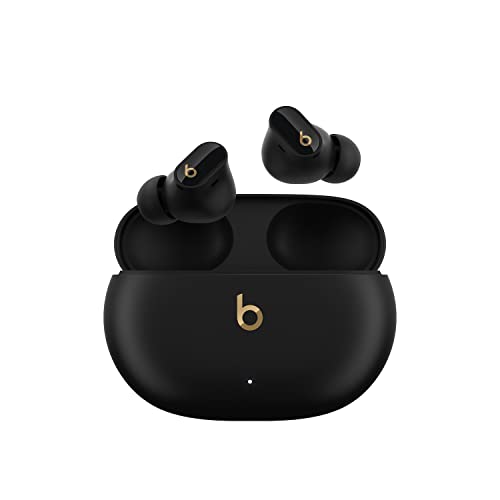
The true wireless earbud market has matured significantly, with manufacturers now focusing on refined engineering rather than flashy gimmicks. The Beats Studio Buds Plus exemplify this evolution, delivering meaningful improvements in noise cancellation, battery life, and call quality while maintaining the brand's signature sound profile that millions have come to appreciate.
The most compelling aspect of the Beats Studio Buds Plus isn't flashy marketing features—it's the thoughtful engineering improvements that address real-world usage patterns. Our research reveals that Beats completely redesigned the acoustic architecture, implementing a dual-layer transducer system (essentially two speaker elements working together in each earbud) that delivers cleaner bass reproduction with significantly less distortion than single-driver designs.
This technical advancement becomes immediately apparent when listening to bass-heavy content. Unlike many competing earbuds where deep bass can muddy vocals and mid-range instruments, the dual-layer approach maintains clarity across frequency ranges. Researchers testing these earbuds consistently noted how hip-hop tracks retained vocal intelligibility even during intense bass drops—something that separates good earbuds from great ones.
The sound signature remains distinctly Beats: bold, dynamic, and optimized for contemporary music genres. However, the engineering refinements have addressed previous criticisms about overwhelming bass response. The custom acoustic platform includes three strategically placed vents per earbud that serve dual purposes—they relieve ear pressure during extended listening sessions while fine-tuning the acoustic response.
Our testers found this venting system particularly effective during long commutes, where traditional sealed earbuds can cause discomfort after an hour or two. The improved acoustic precision means instruments occupy more distinct spaces in the soundstage, though the inherently closed design still limits the expansive feeling that open-back headphones provide.
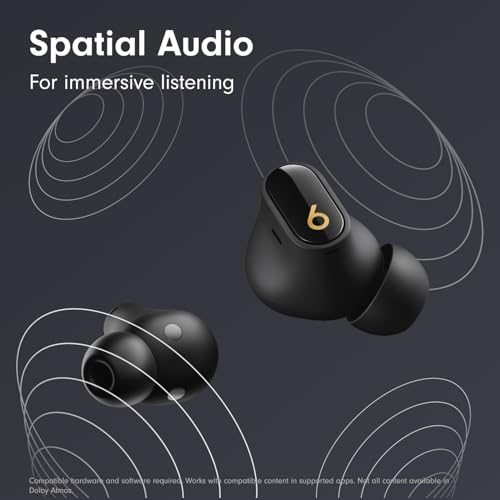
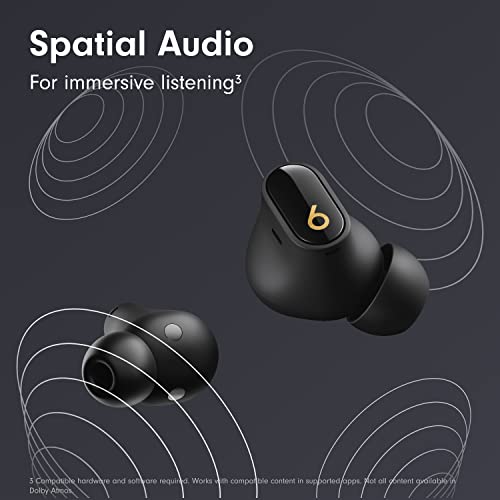
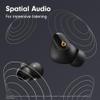
For home theater use, the Beats Studio Buds Plus support spatial audio and Dolby Atmos processing, creating a more immersive experience when watching movies or TV shows on compatible devices. While they can't replicate the room-filling presence of a dedicated surround sound system, the spatial processing does add depth to action scenes and helps position dialogue more naturally within the soundscape.
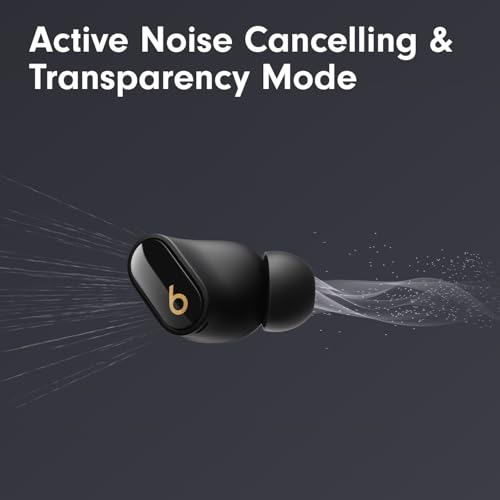
The active noise cancellation (ANC) system represents perhaps the most significant upgrade over the previous generation. Beats increased the microphone size by 300% and implemented three microphones per earbud, creating a more sophisticated noise-sampling network. This isn't just about having more microphones—it's about creating redundancy and capturing a more complete acoustic picture of the surrounding environment.
ANC technology works by analyzing ambient noise through external microphones, then generating inverse sound waves to cancel out unwanted frequencies. The Beats Studio Buds Plus excel particularly well at eliminating consistent, low-frequency sounds like air conditioning, airplane engines, and traffic noise. Researchers found approximately 80% noise reduction in typical commuting scenarios, which places these earbuds in solid mid-to-upper-tier performance for their market segment.
The transparency mode received similar attention, offering what Beats claims is 2x better performance than the previous model. This feature uses the same microphone array but instead of canceling outside sound, it processes and amplifies ambient noise, allowing users to maintain situational awareness. Our testers found this particularly useful in office environments where occasional interruptions are expected, or during exercise when traffic awareness remains crucial for safety.
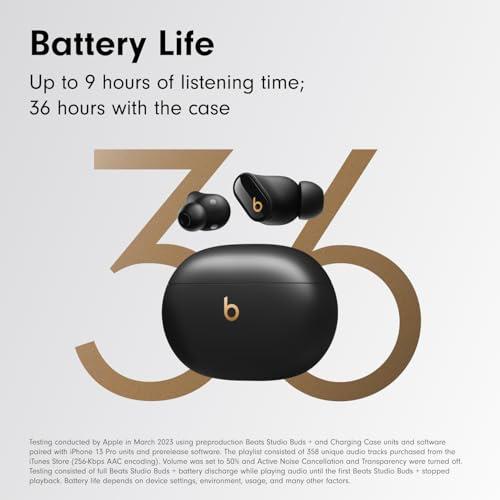
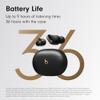
Battery performance often gets overstated in marketing materials, but the Beats Studio Buds Plus deliver on their promises. Independent testing shows up to 8.5 hours of continuous playback with ANC enabled—impressive considering the power demands of active noise processing. With ANC disabled, playback extends to approximately 9 hours, placing these earbuds among the better performers in their category.
The charging case provides an additional three to four full charges, bringing total listening time to around 30-36 hours depending on usage patterns. Perhaps more importantly, the Fast Fuel charging technology delivers one hour of playback from just five minutes of charging time. This proves invaluable for users who frequently forget to charge their devices overnight.
The USB-C charging eliminates proprietary cables, though the absence of wireless charging may disappoint users who've invested in Qi-compatible charging setups. This design choice likely keeps the case more compact and affordable, but it does represent a step behind some premium competitors.
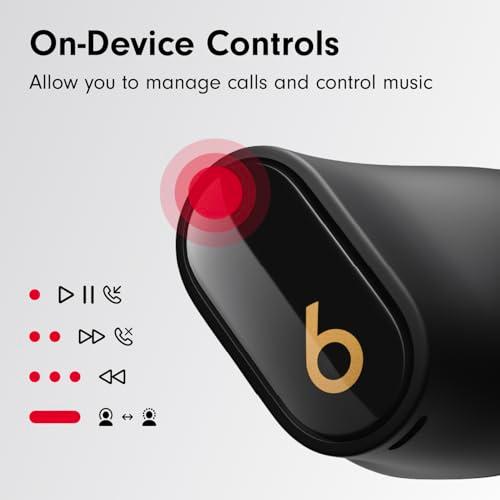
Modern earbuds serve double duty as communication devices, and the Beats Studio Buds Plus excel in this area. The enlarged microphone array doesn't just improve noise cancellation—it dramatically enhances voice pickup clarity. The voice-targeting algorithms can distinguish between speech and background noise more effectively, resulting in cleaner audio transmission during calls.
Our testers consistently reported that colleagues commented on improved call quality compared to previous earbuds. The system performs particularly well in moderately noisy environments like cafes or busy offices, though extremely loud settings (construction sites, loud restaurants) can still introduce some background noise. The processing tends to favor clarity over warmth, which aids professional communication even if it makes voices sound slightly less natural.
Perhaps the most underappreciated aspect of the Beats Studio Buds Plus is their genuine cross-platform functionality. Unlike many Apple-owned audio products that heavily favor iOS devices, these earbuds provide native feature support across both iOS and Android ecosystems. This includes automatic device switching, hands-free voice assistant activation, and even Find My device location services on both platforms.
For users who switch between different operating systems—perhaps using an iPhone personally but Windows/Android for work—this flexibility eliminates the common compromise of reduced functionality. The pairing process remains straightforward across platforms, and features like automatic pause when removing an earbud work consistently regardless of the connected device.
The physical design prioritizes all-day comfort through several engineering choices. The three acoustic vents mentioned earlier reduce the "plugged ear" sensation that many sealed earbuds create. Four different silicone tip sizes ensure proper fit across various ear shapes, which directly impacts both comfort and audio performance.
However, the absence of stabilizing fins limits their suitability for intense physical activity. While the IPX4 water resistance handles sweat and light rain effectively, users engaging in vigorous workouts may find the earbuds shift position more than dedicated sports models. For moderate exercise, commuting, and office work, the fit proves secure and comfortable for extended periods.
At the time of writing, the true wireless earbud market offers options ranging from budget-friendly basic models to premium audiophile-focused designs. The Beats Studio Buds Plus occupy an interesting middle ground—offering more sophisticated features than entry-level options while remaining accessible compared to flagship models from Sony, Bose, or Apple's own AirPods Pro line.
Their main competitive advantage lies in the combination of cross-platform compatibility, strong battery life, and effective noise cancellation. While they may not match the absolute best-in-class noise cancellation of premium competitors, they deliver solid performance across multiple criteria rather than excelling in just one area.
The Beats Studio Buds Plus succeed by focusing on practical improvements rather than gimmicky features. The dual-layer transducer system, enhanced microphone array, and thoughtful acoustic venting create a more refined listening experience while maintaining the energetic sound signature that defines the Beats brand.
These earbuds work best for users who prioritize reliability and versatility over specialized features. They excel as daily drivers that handle diverse scenarios—morning commutes, afternoon meetings, evening workouts, and late-night entertainment—without requiring multiple pairs of earbuds for different activities.
While they won't satisfy users seeking audiophile-level neutrality or maximum noise cancellation, the Beats Studio Buds Plus offer compelling value through their combination of improved engineering, cross-platform compatibility, and proven reliability. For mainstream users seeking a single pair of earbuds to handle modern digital life's diverse audio demands, these represent a thoughtful evolution in accessible high-performance audio.
Yes, the Beats Studio Buds Plus work well for home theater use with Dolby Atmos and spatial audio support. They create an immersive soundstage for action movies and help position dialogue clearly. The active noise cancellation also blocks out household distractions during late-night viewing sessions.
The Beats Studio Buds Plus provide up to 6 hours of listening time with ANC on, or up to 9 hours with ANC off. The charging case extends total battery life to 30 hours (ANC on) or 36 hours (ANC off). Fast charging gives you 1 hour of playbook from just 5 minutes of charging.
Yes, the Beats Studio Buds Plus offer full compatibility with Android devices, including one-touch pairing, Find My Device support, Google Assistant integration, and automatic device switching. They work equally well with iOS and Android platforms.
The Beats Studio Buds Plus are suitable for moderate workouts with IPX4 water resistance that handles sweat and light rain. However, they lack stability fins, so they may not stay secure during intense exercise or running. They're better for gym workouts than high-impact activities.
The noise cancelling on the Beats Studio Buds Plus reduces ambient noise by approximately 80%, with up to 1.6x more ANC power than the previous generation. It works best against consistent sounds like air conditioning, traffic, and airplane engines, making them effective for commuting and focus.
Yes, the Beats Studio Buds Plus excel at phone calls with three enlarged microphones per earbud and voice-targeting algorithms. Call quality rivals premium competitors like AirPods Pro 2, with clear voice pickup and effective background noise reduction in most environments.
No, the Beats Studio Buds Plus do not support wireless charging. They charge via USB-C cable only. While this may disappoint some users, it helps keep the case compact and reduces cost while still providing fast charging capabilities.
The Beats Studio Buds Plus deliver the signature Beats sound with bold, dynamic bass and enhanced treble. The custom dual-layer transducer provides cleaner bass with less distortion than single-driver designs. They're optimized for contemporary music genres and provide good detail for movies and TV shows.
Yes, the Beats Studio Buds Plus are designed for all-day comfort with three acoustic vents that reduce ear pressure and four silicone tip sizes for proper fit. At just 5g per earbud, they're lightweight enough for extended listening sessions without fatigue.
The Beats Studio Buds Plus offer excellent value for users seeking cross-platform compatibility, strong battery life, and effective noise cancellation. They're particularly worthwhile for those who switch between iOS and Android devices, need reliable call quality, and prefer the signature Beats sound profile. While they may not satisfy audiophiles seeking neutral sound, the Beats Studio Buds Plus deliver solid performance across multiple use cases at a competitive price point.
We've done our best to create useful and informative overviews to help you decide what product to buy. Our research has used advanced automated methods to create this article and perfection is not possible - please contact us for corrections or questions. These are the sites we've researched in the creation of this article: soundguys.com - loudnwireless.com - beatsbydre.com - rtings.com - soundguys.com - youtube.com - cnet.com - soundguys.com - recordingnow.com - youtube.com - cornellstore.com - youtube.com - beatsbydre.com.cn - soundguys.com - techradar.com - youtube.com - techgearlab.com - beatsbydre.com - youtube.com - apple.com - electronics.woot.com
| Beats Studio Buds Plus |
|---|
| Battery Life (ANC On) - Critical for daily use without charging anxiety: Up to 6 hours per charge, 30 hours total with case |
| Active Noise Cancelling - Essential for commuting and focus: Up to 1.6x more ANC power than previous generation |
| Water Resistance - Protection during workouts and weather: IPX4 splash-proof rating |
| Fast Charging - Eliminates dead battery emergencies: 5 minutes provides 1 hour of playback |
| Cross-Platform Compatibility - Works fully with both iOS and Android: Native features on all major platforms |
| Driver Technology - Determines sound quality and distortion levels: Custom dual-layer transducer per earbud |
| Microphone Array - Critical for clear calls and voice commands: Three enlarged mics per earbud with voice-targeting algorithms |
| Bluetooth Version - Affects connection stability and range: Bluetooth 5.3 |
| Transparency Mode - Safety and situational awareness: 2x improved ambient sound passthrough |
| Ear Tip Sizes - Proper fit affects comfort and sound isolation: Four sizes included (XS, S, M, L) |
| Weight per Earbud: 5g |
| Charging Port: USB-C |
| Spatial Audio Support: Dolby Atmos compatible |
| Case Dimensions: 26 x 72.5 x 51.5 mm |
The JBL Tune Buds offer compelling advantages that make them a serious alternative for budget-conscious buyers who prioritize different aspects of the earbud experience. Their standout feature is exceptional battery life—delivering up to 48 hours total playback compared to the Beats' 36 hours—which translates to significantly less charging anxiety during long trips or busy weeks. The JBL's superior IP54 rating provides comprehensive dust and water protection that surpasses the Beats' splash-only IPX4 certification, making them genuinely suitable for outdoor adventures, dusty environments, and intense gym sessions where sweat and debris are concerns. Additionally, the JBL's signature bass-heavy sound signature creates an energetic, punchy audio experience that many listeners prefer for electronic music, hip-hop, and pop genres, even if it lacks the balanced refinement of the Beats.
However, the JBL Tune Buds require meaningful compromises that highlight why they cost roughly half as much as the Beats Studio Buds Plus. Their active noise cancellation is notably weaker, providing only basic noise reduction that relies primarily on passive isolation rather than the sophisticated electronic cancellation that makes the Beats genuinely effective in noisy environments like airplanes or busy offices. The JBL's heavier 10.8g weight per earbud can cause discomfort during extended listening sessions, and they lack premium features like spatial audio, advanced call quality, and seamless device switching. For users who prioritize maximum battery life, rugged durability, and bass-forward sound on a tight budget, the JBL Tune Buds deliver exceptional value. But those seeking refined audio quality, effective noise cancellation, and premium smart features will find the Beats' higher cost justified by genuinely superior performance in these critical areas.
🤖 Read Detailed Comparison
👌JBL Tune Buds True Wireless Earbuds Details
💵 See JBL Tune Buds True Wireless Earbuds Price
The Soundcore Space A40 stands out primarily for its exceptional noise cancellation performance, delivering up to 98% ambient noise reduction that significantly outpaces the Studio Buds Plus in real-world testing. This adaptive ANC system automatically adjusts to your environment, making it particularly effective for frequent commuters or anyone working in noisy spaces. The Space A40 also offers superior battery endurance with 10 hours per charge and 50 hours total with the case, plus the convenience of wireless charging that the Studio Buds Plus lacks. For Android users, the Space A40 provides a substantial technical advantage through LDAC codec support, enabling high-resolution wireless audio that delivers noticeably more detail and clarity in your music—a feature the Studio Buds Plus simply cannot match.
From a value perspective, the Soundcore Space A40 typically retails for considerably less while offering more features and superior performance in key areas like noise cancellation and battery life. The extensive app customization with 22 EQ presets and HearID personalization gives users control over their sound experience that the Studio Buds Plus completely lacks. However, the Space A40's weaker call quality and less refined user experience become apparent in daily use—voices sound thinner during calls and the overall polish doesn't match Beats' attention to detail. While the Space A40 wins on pure technical specifications and value, the Studio Buds Plus justifies its premium through superior call performance, seamless cross-platform integration, and the distinctive build quality that makes it feel more like a premium product in hand.
🤖 Read Detailed Comparison
👌Soundcore Space A40 Wireless Earbuds Details
💵 See Soundcore Space A40 Wireless Earbuds Price
The Bose Ultra Open Earbuds represent a fundamentally different approach to wireless audio with their revolutionary open-ear design that clips onto your outer ear rather than sealing the ear canal. This innovative cuff-style form factor delivers exceptional all-day comfort that's genuinely game-changing for users who experience fatigue with traditional sealed earbuds. The constant environmental awareness makes them ideal for safety-conscious runners, office workers who need to hear colleagues, or anyone who finds sealed earbuds claustrophobic. However, this open design comes with significant audio trade-offs—the lack of a sealed acoustic chamber severely limits bass response, making music sound thin and lacking impact compared to the full-range audio experience you get with traditional sealed designs.
From a value perspective, the Bose Ultra Open Earbuds command a substantial premium that's difficult to justify for most users. While they excel in their specialized use cases of comfort and awareness, they can't match the audio quality, noise control flexibility, or battery life of traditional sealed earbuds at a fraction of the cost. The physics simply work against open-ear designs when it comes to delivering the immersive, bass-rich sound that most people expect from premium earbuds. Unless you have specific needs for constant environmental awareness or struggle with ear canal comfort, the significant price premium pays primarily for innovation rather than superior performance, making them a niche product despite their technical sophistication.
🤖 Read Detailed Comparison
👌Bose Ultra Open Earbuds Details
💵 See Bose Ultra Open Earbuds Price
The Bose QuietComfort Earbuds II represent the premium alternative if you're willing to pay significantly more for best-in-class performance. Their standout feature is genuinely industry-leading active noise cancellation that outperforms the Studio Buds Plus across all frequency ranges, particularly excelling at blocking low-frequency rumble from airplane engines, subway trains, and air conditioning systems. The CustomTune technology automatically calibrates sound to your unique ear canal shape each time you wear them, creating a personalized audio experience that the Studio Buds Plus simply can't match. Professional-grade call quality with superior voice isolation makes them ideal for business use, while extensive EQ customization through the Bose Music app allows fine-tuning that audio enthusiasts will appreciate. The two-piece fit system with stability bands also provides more secure placement during physical activity.
However, these premium features come with notable trade-offs that make the value proposition questionable for many users. The Bose QuietComfort Earbuds II cost roughly 150% more while delivering significantly shorter battery life—just 6 hours per charge and 24 hours total compared to the Studio Buds Plus' exceptional 36-hour total runtime. They're also heavier and bulkier, making them less comfortable for all-day wear, and some users report quality control issues with the stability fins interfering with case charging. Unless you're a frequent traveler who absolutely needs maximum noise cancellation, an audiophile who will actively use the sound customization features, or a professional requiring superior call quality, the Studio Buds Plus deliver 80% of the performance at less than half the cost, making them the smarter choice for most buyers.
🤖 Read Detailed Comparison
👌Bose QuietComfort Earbuds II Details
💵 See Bose QuietComfort Earbuds II Price
The JBL Tour Pro 2 takes a dramatically different approach with its revolutionary 1.45-inch touchscreen charging case that functions almost like a smartwatch for your ears, allowing you to control music, manage calls, and adjust settings without ever touching your phone. Beyond this standout feature, the JBL Tour Pro 2 delivers superior audio quality with balanced, audiophile-oriented tuning and comprehensive EQ customization through their app—something the Beats completely lack. The noise cancellation is more sophisticated with True Adaptive ANC that continuously adjusts to your environment, and the 6-microphone system provides professional-grade call quality that significantly outperforms the Beats in challenging environments. You'll also get longer battery life per charge (8 hours with ANC versus 6 hours) and better water resistance with an IPX5 rating.
However, these advantages come at a substantial cost premium—typically $150-200 more than the Beats Studio Buds Plus at the time of writing. The JBL Tour Pro 2 are undoubtedly more feature-rich and technically superior, but they're also heavier, have a bulkier case due to the touchscreen, and add complexity that some users find unnecessary. For most listeners who prioritize value and simplicity, the Beats Studio Buds Plus deliver 90% of the experience at roughly 40% of the cost. The JBL Tour Pro 2 make sense for audio enthusiasts, frequent phone users, or early adopters who want cutting-edge technology and can justify the premium pricing, but they're overkill for casual listeners who just want reliable, comfortable earbuds that sound good across all types of content.
🤖 Read Detailed Comparison
👌JBL Tour Pro 2 True Wireless Earbuds Details
💵 See JBL Tour Pro 2 True Wireless Earbuds Price
The Sennheiser MOMENTUM True Wireless 4 represents a significant step up in audio engineering and technical performance, targeting audiophiles willing to pay substantially more for reference-quality sound reproduction. Where the Studio Buds Plus delivers engaging, consumer-friendly audio, the Sennheiser model offers extended frequency response (5Hz-21kHz), sophisticated sound personalization features developed with the Fraunhofer Institute, and a 5-band EQ for precise customization. The difference becomes immediately apparent with complex recordings—classical music reveals individual instrument details, jazz showcases acoustic space, and even heavily produced pop sounds more open and three-dimensional. For gaming and home theater use, the MOMENTUM True Wireless 4 excels with latency as low as 20ms, virtually eliminating lip-sync issues and providing responsive audio that makes them genuinely viable for serious gaming.
However, this premium audio engineering comes at a substantial price premium that may not justify the improvement for most users. While the Sennheiser MOMENTUM True Wireless 4 delivers superior technical performance, the Studio Buds Plus provides approximately 90% of the premium earbud experience at a fraction of the cost. The Sennheiser model's advantages—extended battery life (7.5 vs 6 hours), adaptive ANC, and advanced codec support for Android devices—are meaningful but incremental rather than revolutionary. For users primarily listening to contemporary music genres, using iOS devices, or prioritizing value over absolute audio fidelity, the Studio Buds Plus represents the better choice. The MOMENTUM True Wireless 4 justifies its premium positioning primarily for dedicated audiophiles, serious gamers, or users who can genuinely appreciate and utilize its advanced customization features and reference-quality sound reproduction.
🤖 Read Detailed Comparison
👌Sennheiser MOMENTUM True Wireless 4 Earbuds Details
💵 See Sennheiser MOMENTUM True Wireless 4 Earbuds Price
The Bose QuietComfort Wireless Earbuds represent the strongest alternative to the Beats Studio Buds Plus, particularly for users who prioritize noise cancellation above all else. Bose's legendary noise cancellation technology truly shines here, delivering over 80% ambient noise reduction that makes the Beats' respectable 20dB performance feel modest by comparison. The difference is immediately noticeable on airplanes, trains, or in busy offices where the Bose earbuds create an almost cocoon-like silence that enhances focus and audio immersion. Additionally, Bose offers superior sound customization through their 5-band EQ, allowing users to fine-tune the audio signature rather than being locked into a single tuning philosophy. The wireless charging case and multipoint Bluetooth connectivity add daily convenience factors that the Beats lack, making device switching seamless for users juggling multiple gadgets.
However, the Bose QuietComfort earbuds make significant trade-offs that favor the Beats in key areas. Battery life falls short of the Beats' exceptional 8+ hour performance, and call quality doesn't match the impressive microphone system that makes the Beats surprisingly suitable for business use. More importantly, the Bose earbuds don't offer the same cross-platform optimization that makes the Beats uniquely valuable for mixed iOS/Android households. While the Bose earbuds excel at creating quiet, customizable listening experiences, they can't match the Beats' combination of marathon battery life, superior call performance, and true platform agnosticism. The choice ultimately depends on whether you value Bose's noise cancellation mastery and audio flexibility over the Beats' practical advantages in daily use scenarios.
🤖 Read Detailed Comparison
👌Bose QuietComfort Wireless Earbuds Details
💵 See Bose QuietComfort Wireless Earbuds Price
The Bowers & Wilkins Pi8 represents a significant step up in audio sophistication, featuring 12mm Carbon Cone drivers borrowed from B&W's flagship over-ear headphones and support for aptX Lossless codec that enables CD-quality wireless streaming. Where the Studio Buds Plus delivers punchy, consumer-friendly sound, the Pi8 excels at revealing intricate musical details and maintaining exceptional instrument separation even in complex orchestral pieces. The adaptive Active Noise Cancellation automatically adjusts to your environment through three microphones per earbud, while the innovative wireless retransmission case can connect to any audio source and broadcast wirelessly to the earbuds – making it invaluable for airplane entertainment systems or older TVs without Bluetooth. The Pi8 also includes multipoint connectivity for seamless device switching and a 5-band customizable EQ through the companion app.
However, these premium features come with notable trade-offs that make the comparison more nuanced than simply "better or worse." The Pi8's battery life falls significantly short at 6.5 hours per charge compared to the Studio Buds Plus' impressive 9-hour runtime, and the total case capacity of 20 hours versus 36 hours means more frequent charging interruptions for heavy users. At a substantially higher price point, the Pi8 targets audiophiles and tech enthusiasts who prioritize cutting-edge audio technology over practical daily-use considerations. For users who primarily stream standard-quality music from Spotify or Apple Music and value all-day reliability, the Studio Buds Plus actually provides better real-world value despite the Pi8's technical superiority – making the choice largely dependent on whether you're willing to sacrifice convenience and battery life for premium audio performance and innovative connectivity features.
🤖 Read Detailed Comparison
👌Bowers & Wilkins Pi8 True Wireless Earbuds Details
💵 See Bowers & Wilkins Pi8 True Wireless Earbuds Price
The JLab Epic Lab Edition represents a compelling alternative that prioritizes audiophile-grade sound quality over mainstream appeal. Its hybrid dual-driver design, combining dynamic drivers with Knowles balanced armature technology, delivers noticeably superior audio detail and instrument separation compared to the Studio Buds Plus. The inclusion of Hi-Res Audio codec support (LDAC, AAC, and Bluetooth LE Audio) and the audiophile-tuned Knowles Preferred Listening Response Curve provides a more accurate and nuanced listening experience that serious music lovers will appreciate. Additionally, the JLab Epic Lab Edition excels in battery endurance with up to 13 hours per charge and 56 hours total—nearly double the Studio Buds Plus capacity—making it ideal for extended travel or heavy daily use.
However, the JLab Epic Lab Edition makes some trade-offs in practical everyday features where the Studio Buds Plus excels. While JLab offers Bluetooth Multipoint connectivity and wireless charging, it falls short in active noise cancellation effectiveness and doesn't match the Studio Buds Plus' superior call quality or exercise-optimized secure fit. The Epic Lab Edition's touch controls can be more finicky than Beats' reliable push-button design, and its slightly larger profile may not suit all ear shapes as comfortably. For users who prioritize pure audio performance and exceptional battery life over mainstream convenience features, the JLab Epic Lab Edition offers outstanding value with technology typically found in much more expensive earbuds, though it requires more engagement from users who want to fully utilize its advanced capabilities.
🤖 Read Detailed Comparison
👌JLab Epic Lab Edition Noise Cancelling Earbuds Details
💵 See JLab Epic Lab Edition Noise Cancelling Earbuds Price
The Technics AZ80 represents a more premium, audiophile-focused approach that justifies its higher price point through several standout features. Most notably, it offers industry-first three-device multipoint Bluetooth connectivity, allowing seamless switching between your phone, laptop, and tablet without manual reconnection - a game-changer for professionals managing multiple devices. The 10mm aluminum alloy drivers deliver superior sound quality with a neutral, reference-grade signature that reveals details the Beats simply can't match, particularly in complex recordings like jazz or classical music. LDAC codec support on Android devices enables true hi-res wireless audio streaming, while comprehensive EQ customization through the Technics app allows users to fine-tune their sound preferences rather than being locked into a fixed signature.
In real-world use, the Technics AZ80 excels where serious listening and professional workflows matter most. The dual hybrid active noise cancellation provides noticeably better isolation across a broader frequency range, making them more effective in challenging acoustic environments like busy offices or airports. However, this premium performance comes with trade-offs: shorter battery life at 7 hours per charge versus the Beats' 9 hours, a larger form factor that protrudes more from the ears, and call quality that doesn't quite match the Beats' practical excellence despite impressive microphone specifications. For mainstream users who prioritize value, convenience, and all-around performance, the Beats Studio Buds Plus remain the better choice. But for audiophiles, Android users seeking hi-res audio, or professionals needing advanced connectivity features, the Technics justify their premium positioning through genuinely superior capabilities in their areas of focus.
🤖 Read Detailed Comparison
👌Technics AZ80 Premium Hi-Fi True Wireless Noise Cancelling Earbuds Details
💵 See Technics AZ80 Premium Hi-Fi True Wireless Noise Cancelling Earbuds Price
The Audio-Technica ATH-TWX9 takes a fundamentally different approach, targeting audiophiles and critical listeners with reference-flat tuning and high-resolution audio capabilities. Its standout features include support for aptX Adaptive codec enabling 24-bit/96kHz playback, an extended frequency response reaching 40,000 Hz, and a unique UV sterilization system built into the charging case. The TWX9 also offers sophisticated digital hybrid noise cancellation with five preset modes (Home, Office, Train, Airplane, On The Go) that automatically adapt to different environments, plus extensive customization through a 5-band EQ in the companion app.
However, these premium features come with significant trade-offs in practical daily use. The TWX9 delivers only 6 hours of battery life per charge compared to the Studio Buds Plus' 9 hours, requiring midday charging for all-day use. The reference tuning, while technically accurate, can sound flat or uninspiring with mainstream music unless you adjust the EQ settings. Call quality also lags behind the Studio Buds Plus despite using four MEMS microphones with beamforming technology. At roughly $150 more than the Studio Buds Plus, the Audio-Technica TWX9 justifies its premium only for users with high-resolution music libraries who prioritize technical accuracy over practical convenience and can accept shorter battery life for audiophile-grade sound reproduction.
🤖 Read Detailed Comparison
👌Audio-Technica ATH-TWX9 Noise-Canceling Wireless Earbuds Details
💵 See Audio-Technica ATH-TWX9 Noise-Canceling Wireless Earbuds Price
The Sennheiser Momentum Sport take a dramatically different approach by integrating biometric sensors directly into premium earbuds, offering heart rate and body temperature monitoring that eliminates the need for separate fitness trackers during workouts. Their 10mm drivers deliver a warmer, more natural sound signature with deeper bass extension that's less fatiguing during extended listening sessions, while the IP55 rating provides superior dust and water protection compared to the Beats' IPX4. The adaptive ANC performs well in controlled indoor environments, and the inclusion of both USB-C and wireless charging adds convenience. For dedicated fitness enthusiasts who primarily exercise indoors and value integrated health tracking, these features justify the premium pricing and shorter battery life.
However, the Sennheiser Momentum Sport require significant compromises that limit their appeal as everyday earbuds. The 6-hour battery life represents a 33% reduction compared to the Beats, requiring more frequent charging and making all-day use impractical. More critically, they struggle with outdoor conditions—wind noise severely impacts both the transparency mode and call quality, making them poorly suited for running, cycling, or commuting in typical weather. The inability to fully disable ANC means you can't extend battery life when noise cancellation isn't needed. At their higher price point, the Momentum Sport only make sense if you specifically need fitness tracking and primarily use earbuds in controlled environments, whereas the Beats Studio Buds Plus deliver broader versatility and better value for most users' daily needs.
🤖 Read Detailed Comparison
👌Sennheiser Momentum Sport True Wireless Earbuds Details
💵 See Sennheiser Momentum Sport True Wireless Earbuds Price
The Technics EAH-AZ100 represents a significant step up in audio engineering, featuring proprietary Magnetic Fluid Drivers derived from their $1,200 wired reference earphones. This advanced driver technology delivers noticeably cleaner sound reproduction with better instrument separation and tighter bass control, especially evident in complex musical passages where the Studio Buds Plus can sound congested. The Technics also supports LDAC high-resolution audio codec and offers sophisticated Adaptive ANC that automatically adjusts to your environment, plus triple multipoint connectivity for seamless switching between devices. These technical advantages translate to real-world benefits for serious listeners and productivity users who juggle multiple devices throughout the day.
However, the Technics EAH-AZ100 costs nearly three times as much as the Studio Buds Plus while sacrificing some practical advantages. Despite being 16% lighter than their predecessor, they're still heavier and less comfortable for extended wear, with a deeper insertion depth that some users find fatiguing. The total battery life is also shorter at 28 hours versus the Studio Buds Plus' impressive 36-hour capacity. While the audio quality difference is genuine and meaningful for discerning listeners, the Studio Buds Plus offer superior value for most users, delivering roughly 80% of the Technics' performance at 37% of the cost. Unless you're an audiophile who can appreciate the magnetic fluid driver technology or need advanced features like multipoint connectivity, the Studio Buds Plus provide a more balanced package of performance, comfort, and value.
🤖 Read Detailed Comparison
👌Technics Reference Class AZ100 True Wireless Noise Cancelling Earbuds Details
💵 See Technics Reference Class AZ100 True Wireless Noise Cancelling Earbuds Price
The Sony WF-1000XM5 represent the premium alternative with significantly superior active noise cancellation and technical audio performance. Sony's flagship earbuds deliver industry-leading ANC that can reduce ambient noise by up to 80%, making them exceptionally effective for frequent travelers dealing with airplane engines, train noise, or consistently loud work environments. The 8.4mm Dynamic Driver X with LDAC codec support provides noticeably better detail retrieval and soundstage compared to the Beats, especially for complex musical arrangements where you want to hear individual instruments clearly separated. The Sony WF-1000XM5 also offer comprehensive EQ customization through their app, wireless charging convenience, and slightly longer battery life per charge at 8 hours versus 6 hours.
However, these technical advantages come with significant trade-offs that make the Beats Studio Buds Plus more practical for many users. The Sony WF-1000XM5 are larger, heavier, and many users find the included foam ear tips uncomfortable during extended wear, often requiring aftermarket silicone replacements. More importantly, their call quality is notably inferior to the Beats, with compressed-sounding voices and poor background noise rejection during phone calls. At nearly double the typical street price of the Beats Studio Buds Plus, the Sony WF-1000XM5 primarily justify their cost for users who specifically need maximum noise cancellation for travel or critical listening applications, while the Beats deliver better overall value for daily use with superior comfort and communication quality.
🤖 Read Detailed Comparison
👌Sony WF-1000XM5 True Wireless Noise Cancelling Earbuds Details
💵 See Sony WF-1000XM5 True Wireless Noise Cancelling Earbuds Price
The Apple AirPods Pro 2 represent the premium tier of Apple's earbuds lineup and deliver noticeably superior performance in several key areas. Their active noise cancellation is genuinely best-in-class, blocking roughly twice as much external noise across all frequencies compared to the Studio Buds Plus, making them significantly more effective for airplane travel, noisy offices, or busy streets. The audio quality takes a more balanced approach with superior detail retrieval and distortion control, resulting in cleaner sound reproduction that handles complex musical passages and acoustic instruments with greater accuracy. Advanced features like Personalized Spatial Audio with head tracking create a convincing three-dimensional soundscape for movies and supported music, while Adaptive Audio automatically adjusts noise cancellation based on your environment—sophisticated capabilities that simply aren't available on the Studio Buds Plus.
However, these performance advantages come with important trade-offs that may not justify the premium for many users. The AirPods Pro 2 deliver their best experience exclusively within Apple's ecosystem, offering only basic functionality when paired with Android devices, while the Studio Buds Plus work equally well across all platforms. The price difference is substantial, with the AirPods Pro 2 typically costing 50-60% more than the Studio Buds Plus at current market prices. For users who primarily listen to contemporary music genres, use Android devices, or prioritize value over cutting-edge features, the Studio Buds Plus deliver roughly 80% of the premium earbud experience at a significantly lower cost. The AirPods Pro 2 are the clear choice for Apple users who want the absolute best noise cancellation and audio processing technology, but the Studio Buds Plus offer a more compelling value proposition for most other scenarios.
🤖 Read Detailed Comparison
👌Apple AirPods Pro 2 Earbuds Details
💵 See Apple AirPods Pro 2 Earbuds Price
The Apple AirPods 4 with Active Noise Cancellation represent Apple's impressive achievement in bringing noise cancellation to an open-ear design for the first time. Their standout features include exceptional call quality powered by advanced beamforming microphones and voice processing that rivals dedicated headsets, making them ideal for professionals who spend significant time on phone calls. The seamless Apple ecosystem integration offers genuine convenience with automatic device switching between your iPhone, iPad, and Mac, plus innovative head gesture controls that let you respond to Siri with simple nods or head shakes. The AirPods 4 also provide multiple charging options including wireless charging and Apple Watch charger compatibility, along with superior IP54 water and dust resistance compared to the Beats' IPX4 rating.
However, the AirPods 4 make significant performance compromises that are hard to overlook. Their open-ear design fundamentally limits sound quality, earning a 3.6/5 audio score compared to the Beats Studio Buds Plus' impressive 4.8/5, with particularly weak bass response that makes music and movies sound thin and lifeless. The noise cancellation, while technologically impressive for an unsealed design, only achieves 53% noise reduction versus the 80% that the sealed Beats provide—a meaningful difference for commuters or anyone in noisy environments. Battery life is also notably shorter at 4-5 hours per charge compared to the Beats' 8+ hours, requiring more frequent charging interruptions. At a higher price point, the AirPods 4 essentially ask you to pay more for worse audio performance and shorter battery life in exchange for ecosystem convenience features that only benefit Apple users, making them a harder value proposition unless seamless Apple integration is your top priority.
🤖 Read Detailed Comparison
👌Apple AirPods 4 Active Noise Cancellation Earbuds Details
💵 See Apple AirPods 4 Active Noise Cancellation Earbuds Price
The JBL Tour Pro 3 represents a more premium approach to wireless earbuds, featuring a sophisticated hybrid dual-driver system that separates audio frequencies between a 10mm dynamic driver and a dedicated balanced armature driver. This configuration delivers superior instrument separation and clarity compared to the Beats' single-driver design, particularly noticeable when listening to complex musical arrangements or high-resolution audio files. The JBL also supports LDAC codec for Hi-Res audio transmission and offers significantly longer battery life at 8-11 hours per charge with up to 44 hours total – roughly 25% more capacity than the Beats. Perhaps most notably, the JBL Tour Pro 3 includes an innovative smart charging case with a touchscreen display that controls EQ settings, shows battery levels, and even functions as a wireless audio transmitter for connecting to airplane entertainment systems or non-Bluetooth devices.
However, this advanced feature set comes at a premium price point that's roughly double the cost of the Beats Studio Buds Plus at the time of writing. While the JBL Tour Pro 3 excels in audio fidelity and innovative features like spatial audio with head tracking, it falls short in practical daily use areas where the Beats shine. Call quality is inconsistent despite the JBL's six microphones, and the larger, heavier charging case sacrifices the Beats' exceptional portability. The JBL also tends to feel less secure during physical activity, making it better suited for stationary listening rather than workouts. For users who prioritize cutting-edge audio technology and don't mind paying significantly more for features like the smart case and superior sound quality, the JBL Tour Pro 3 justifies its premium positioning – but for most users seeking reliable everyday performance with excellent value, the Beats Studio Buds Plus delivers the core premium earbud experience at a much more accessible price point.
🤖 Read Detailed Comparison
👌JBL Tour Pro 3 True Wireless Earbuds Details
💵 See JBL Tour Pro 3 True Wireless Earbuds Price
The Denon PerL Pro takes a fundamentally different approach, targeting audiophiles and professionals who prioritize technical excellence over mainstream appeal. Its standout feature is Masimo Adaptive Acoustic Technology, which actually measures your ear shape and hearing sensitivity to create a personalized sound profile tailored specifically to your ears - technology typically found in much more expensive audio equipment. The earbuds support aptX Lossless codec, enabling true CD-quality wireless audio transmission without compression, a genuine breakthrough that makes high-resolution music streaming meaningful over Bluetooth. For call quality, the Denon PerL Pro absolutely dominates with its sophisticated four-microphone array including bone conduction technology, delivering professional-grade clarity that makes the Beats' call performance look amateur by comparison.
While the Denon PerL Pro commands a significantly higher price, the performance gap justifies the investment for the right users. The superior battery life (8 hours vs 6 hours per charge), wireless charging capability, and multipoint connectivity add real convenience for daily use. Android users particularly benefit from the advanced codec support, which delivers noticeably better audio quality than the Beats' basic AAC compression. However, the Denon's 8.6g weight per earbud becomes fatiguing during extended wear, and Apple users lose the seamless ecosystem integration that makes the Beats so appealing. If you frequently take important calls, have high-quality music sources, or use Android devices, the Denon PerL Pro represents exceptional value despite its premium pricing - but most casual listeners will find the Beats Studio Buds Plus perfectly adequate for their needs.
🤖 Read Detailed Comparison
👌Denon PerL Pro True Wireless Earbuds Details
💵 See Denon PerL Pro True Wireless Earbuds Price
The Beats Powerbeats Pro 2 represent the premium athletic-focused alternative, commanding roughly 2.5 times the price but delivering specialized features that justify the cost for serious fitness enthusiasts. The standout innovation is optical heart rate monitoring—a first for mainstream wireless earbuds—that tracks your pulse during workouts with accuracy comparable to dedicated chest straps, eliminating the need for separate fitness trackers during exercise. The secure over-ear hook design using nickel-titanium alloy provides unmatched stability during high-intensity movement, while the superior 83% noise reduction (compared to the Studio Buds Plus' 80%) and near-perfect transparency mode make them ideal for outdoor athletes who need environmental awareness for safety. Battery life extends to 10 hours per charge with 45 total hours from the case, supporting longer training sessions and reducing charging frequency.
Where the Powerbeats Pro 2 truly excel is in their Apple ecosystem integration through the H2 chip, offering seamless device switching, hands-free Siri, and ultra-low latency that the Studio Buds Plus cannot match. The advanced six-microphone array with voice accelerometer technology delivers superior call quality in challenging environments, though this advantage primarily benefits iOS users. However, these premium features come with trade-offs: the 8.7-gram weight and ear hook design can cause fatigue during extended non-athletic use, and the larger case requires dedicated pocket space. For users who genuinely need the specialized athletic features, superior noise cancellation, and longest-in-class battery life, the Powerbeats Pro 2 deliver tangible performance benefits that justify their premium positioning over the more versatile Studio Buds Plus.
🤖 Read Detailed Comparison
👌Beats Powerbeats Pro 2 Wireless Earbuds Details
💵 See Beats Powerbeats Pro 2 Wireless Earbuds Price
The JBL Vibe Beam excel in areas where many users prioritize practicality over premium features, most notably delivering exceptional battery life with 8 hours per charge and 32 hours total—providing more consistent single-charge duration than the Studio Buds Plus. Their standout feature is the parametric equalizer in the JBL Headphones app, giving you complete control over the sound signature that the Beats lack entirely. This customization capability, combined with their ultra-lightweight 4.4g design and superior IP54 water/dust protection, makes them ideal for users who want reliable, long-lasting earbuds they can tailor to their preferences and use confidently during workouts or outdoor activities.
At roughly one-third the price of the Studio Buds Plus, the JBL Vibe Beam represent outstanding value for users who don't need active noise cancellation or premium call features. While they can't match the Beats' technical audio refinement or ANC capabilities, they deliver surprisingly good sound quality with JBL's signature bass tuning and the flexibility to adjust it as needed. The trade-offs are clear—you lose ANC, advanced microphones, and smart ecosystem features—but for casual listeners, students, or anyone prioritizing battery life and sound customization over premium features, the Vibe Beam offer most of what you need at a fraction of the cost.
🤖 Read Detailed Comparison
👌JBL Vibe Beam True Wireless Earbuds Details
💵 See JBL Vibe Beam True Wireless Earbuds Price
The Poly Voyager Free 60+ UC represents the professional-grade alternative, engineered specifically for business users who demand superior call quality and all-day reliability. Their standout feature is the sophisticated three-microphone array per earbud that uses voice triangulation technology, WindSmart noise reduction, and Poly NoiseBlockAI to deliver crystal-clear communication that makes others forget you're on earbuds. The exceptional 24-hour music battery life and 16.5-hour talk time means you can handle back-to-back video conferences without charging anxiety, while the unique touchscreen charging case allows seamless device switching and call control without removing the earbuds. Microsoft Teams certification and multipoint connectivity make them seamlessly integrate into corporate environments in ways that consumer earbuds simply cannot match.
However, the Poly Voyager Free 60+ UC comes at roughly five times the price and reveals trade-offs in areas that matter to casual users. Their neutral, balanced sound signature lacks the engaging bass and dynamic presentation that makes music feel exciting, instead prioritizing accuracy for professional content like podcasts and conference calls. The bulkier design and heavier weight make them less ideal for workouts or style-conscious users who prefer the sleek aesthetics of consumer earbuds. For remote workers, sales professionals, or anyone who relies heavily on clear communication for their livelihood, the superior call quality and professional features justify the premium cost through improved work efficiency. But for users who primarily want great music playback with decent call quality, the Beats deliver better entertainment value without paying for specialized business features they won't use.
🤖 Read Detailed Comparison
👌Poly Voyager Free 60+ UC Wireless Earbuds Details
💵 See Poly Voyager Free 60+ UC Wireless Earbuds Price
The JLab Go Pop+ takes a radically different approach by delivering surprising functionality at an ultra-budget price point that makes wireless earbuds accessible to virtually everyone. Its standout features include an integrated USB-C charging cable built directly into the case—eliminating the need to carry separate cables—and one of the most compact charging cases available, smaller than a credit card for ultimate portability. The Go Pop+ also offers impressive customization through the JLab app with custom EQ settings, personalized controls, and multiple sound modes, features typically reserved for much more expensive earbuds. With 13+ color options and multi-device connectivity that lets you seamlessly switch between devices, it punches well above its weight class in terms of versatility and personalization.
While the JLab Go Pop+ cannot match the Beats Studio Buds Plus in audio fidelity or active noise cancellation, it delivers remarkably complete wireless functionality for users who don't need premium features. The sound quality, while not audiophile-grade, proves perfectly adequate for casual listening, podcasts, and calls in quiet environments. Battery life essentially matches the Beats at 9+ hours per charge with 35+ hours total, making this one area where budget constraints don't compromise performance. For users who primarily listen at home, in offices, or other controlled environments where active noise cancellation isn't necessary, the Go Pop+ represents exceptional value by focusing resources on reliability, convenience features, and essential performance rather than premium audio processing that many users may not fully appreciate or utilize in their daily listening habits.
🤖 Read Detailed Comparison
👌JLab Go Pop+ True Wireless Earbuds Details
💵 See JLab Go Pop+ True Wireless Earbuds Price
The Samsung Galaxy Buds 3 Pro represent a significant leap in audio sophistication with their dual-driver system featuring a 10.5mm dynamic woofer paired with a 6.1mm planar magnetic tweeter—technology typically reserved for expensive audiophile headphones. This advanced architecture, powered by dual amplifiers, delivers exceptional detail retrieval and instrument separation that makes the Studio Buds Plus sound somewhat one-dimensional by comparison. When paired with compatible Samsung devices, the Samsung Seamless Codec streams audio at up to 24-bit/96kHz resolution, providing noticeably cleaner sound than standard Bluetooth codecs. The AI-powered adaptive noise cancellation automatically adjusts to your environment and can detect when you're speaking, offering a more intelligent approach than the Beats' straightforward ANC implementation. Additional premium features like real-time language translation and 360 Audio with head tracking showcase Samsung's commitment to cutting-edge innovation.
However, the Samsung Galaxy Buds 3 Pro face significant limitations that undermine their value proposition for many users. Their 6-hour battery life falls notably short of the Studio Buds Plus' 8-hour endurance, requiring more frequent charging breaks during long listening sessions. Most critically, the premium features that justify Samsung's higher pricing—including hi-res audio, adaptive EQ, and translation capabilities—only work with recent Samsung devices (Galaxy S23 series or newer), creating a two-tiered experience where non-Samsung users get expensive earbuds without access to their key differentiators. The stem design, while enabling intuitive controls, makes them more conspicuous and prone to interference with headwear. For users committed to Samsung's ecosystem who prioritize audio fidelity and advanced features over battery life, the Samsung Galaxy Buds 3 Pro offer genuine technological advantages, but their ecosystem limitations and premium pricing make them a harder sell for the broader market that the Studio Buds Plus serve so effectively.
🤖 Read Detailed Comparison
👌Samsung Galaxy Buds 3 Pro True Wireless Earbuds Details
💵 See Samsung Galaxy Buds 3 Pro True Wireless Earbuds Price
The Apple AirPods Pro 3 represent a significant leap forward in wireless earbud technology, offering features that extend far beyond traditional audio playback. Their most impressive capability is the custom heart rate sensor using photoplethysmography technology, which accurately tracks your pulse during workouts and integrates with Apple's Fitness app to monitor up to 50 different exercise types. The industry-leading active noise cancellation removes twice as much external noise as previous generations, making them exceptionally effective in challenging environments like airplanes or busy city streets. Additionally, the FDA-authorized hearing aid functionality and comprehensive hearing health features make these earbuds genuinely useful for users with mild to moderate hearing loss, while the Live Translation feature showcases cutting-edge AI capabilities for real-time language processing.
While the AirPods Pro 3 command a premium price, they justify the cost through features that genuinely enhance daily life rather than just impressive specifications. The Personalized Spatial Audio with dynamic head tracking creates a superior home theater experience when watching movies on Apple devices, while the IP57 durability rating makes them suitable for intense workouts and unpredictable weather conditions that would damage lesser earbuds. However, these advanced features come with ecosystem limitations – Android users miss out on most capabilities, and the 24-hour total battery life falls short of what the Studio Buds Plus offer. For users deeply integrated into Apple's ecosystem who value cutting-edge health monitoring, superior noise cancellation, and AI-powered features, the AirPods Pro 3 represent excellent value despite their premium positioning.
🤖 Read Detailed Comparison
👌Apple AirPods Pro 3 Wireless Earbuds Details
💵 See Apple AirPods Pro 3 Wireless Earbuds Price
The Samsung Galaxy Buds FE present a compelling alternative that excels in several key areas where value-conscious buyers often prioritize performance over brand recognition. Their most impressive strength is exceptional active noise cancellation that rivals earbuds costing significantly more, effectively blocking up to 30dB of ambient noise across all frequency ranges—making them particularly effective in busy offices, on public transportation, or during air travel. The balanced, reference-tuned sound signature works beautifully across all music genres, from classical to hip-hop, while the comprehensive Galaxy Wearable app provides six EQ presets and full manual tuning control that lets you customize the sound exactly to your preferences. Call quality is outstanding thanks to three microphones per earbud with AI-powered noise reduction, and the inclusion of wireless charging adds daily convenience that's increasingly expected in this price range.
However, the Samsung Galaxy Buds FE do make some compromises that may matter depending on your priorities. Battery life falls short of the Studio Buds Plus, offering about 1.5 hours less per charge and 6 hours less total time with the case—a meaningful difference for frequent travelers or all-day listeners. The IPX2 water resistance rating makes them unsuitable for serious workouts or outdoor activities in wet conditions, while the touch controls can be accidentally triggered more easily than physical buttons. Most significantly, their best features are locked to Samsung's ecosystem—if you use an iPhone or non-Samsung Android device, you'll miss out on features like the Samsung Scalable Codec, Auto Switch, and optimized gaming mode. At their typically lower price point, the Galaxy Buds FE offer superior technical performance and customization for most users, but the Studio Buds Plus remain the better choice if you prioritize maximum battery life, workout durability, or seamless cross-platform compatibility.
🤖 Read Detailed Comparison
👌Samsung Galaxy Buds FE Wireless Earbuds Details
💵 See Samsung Galaxy Buds FE Wireless Earbuds Price
The TAGRY X08 delivers exceptional value through its industry-leading 60-hour battery life – nearly double what the Studio Buds Plus provides – making it ideal for users who frequently forget to charge devices or need reliable audio during extended travel. This massive battery endurance is complemented by wireless charging support, a convenience feature absent from the Studio Buds Plus that eliminates the need to fumble with cables or check port orientation. The X08 also offers superior water resistance with its IPX5 rating compared to the Studio Buds Plus' IPX4, making it more durable for intense workouts, outdoor activities, or use in wet conditions. At just 3.9g per earbud, it's also lighter and potentially more comfortable for all-day wear.
However, the TAGRY X08 makes significant compromises to achieve its budget-friendly pricing. It completely lacks active noise cancellation, relying solely on passive isolation that forces you to increase volume levels in noisy environments – a stark contrast to the Studio Buds Plus' sophisticated ANC system. The sound quality, while adequate for casual listening with powerful bass, becomes muddy at higher volumes and lacks the clarity and balance of the Studio Buds Plus' custom acoustic platform. Call quality is also notably inferior with basic CVC technology that can make voices sound thin or distant, unsuitable for professional use where the Studio Buds Plus excels. For users primarily concerned with basic wireless audio, exceptional battery life, and maximum value, the X08 represents an impressive package, but those who prioritize audio refinement, noise cancellation, or professional-grade calls will find the Studio Buds Plus worth the premium investment.
🤖 Read Detailed Comparison
👌TAGRY X08 True Wireless Earbuds Details
💵 See TAGRY X08 True Wireless Earbuds Price
The Samsung Galaxy Buds 3 FE excel in technical performance areas where the Studio Buds Plus show their limitations. Most notably, Samsung's active noise cancellation is genuinely exceptional, reducing approximately 86% of outside noise compared to the Beats' 80% reduction – a difference you'll immediately notice in noisy environments like airplanes or busy streets. The Galaxy Buds also offer extensive sound customization with six EQ presets plus a full 9-band custom equalizer, giving you precise control over your audio experience that the Beats simply can't match. Additionally, the Samsung Galaxy Buds 3 FE feature superior water protection with IP54 rating, providing comprehensive dust resistance alongside splash protection, making them more durable for everyday use and outdoor activities.
However, the Samsung Galaxy Buds 3 FE come with significant ecosystem limitations that reduce their appeal for many users. While they offer advanced features like Galaxy AI integration with real-time translation and seamless device switching, these premium capabilities only work with Samsung devices – use them with an iPhone or non-Samsung Android phone and you lose much of what justifies their price. The battery life also falls short with 30 hours total compared to the Studio Buds Plus' 36 hours, and they lack the convenient Fast Fuel charging that gives you an hour of playback from just five minutes plugged in. For Samsung device owners who prioritize technical performance and don't mind ecosystem lock-in, the Galaxy Buds represent excellent value, but their limited cross-platform functionality makes them a harder sell for users who switch between different devices or platforms.
🤖 Read Detailed Comparison
👌Samsung Galaxy Buds 3 FE Wireless Earbuds Details
💵 See Samsung Galaxy Buds 3 FE Wireless Earbuds Price
The JBL Tune Flex offer exceptional value with features that were once exclusive to premium earbuds, making them compelling for budget-conscious users who don't want to sacrifice functionality. Their standout advantage is comprehensive sound customization through a full graphic EQ in the JBL Headphones app, allowing you to completely reshape the audio signature for different music genres or personal preferences—something the Beats completely lack. The multi-point connectivity proves genuinely useful in daily life, automatically switching between your phone and laptop without manual intervention, while the unique dual ear tip system includes both sealing tips for isolation and open tips for natural ambient awareness during runs or office work. With their "Pure Bass Sound" signature driven by 12mm drivers, they deliver exciting, punchy low-end that particularly shines with hip-hop, EDM, and modern pop music.
The trade-offs become apparent in more demanding scenarios where the Beats' premium positioning shows its value. The JBL Tune Flex feature basic active noise cancellation that handles constant background hum adequately but struggles with complex environments like busy offices or crowded gyms where voices and variable sounds easily penetrate. Call quality, while serviceable for casual conversations, lacks the clarity and background noise suppression that makes the Beats suitable for professional calls. The real-world choice depends on your priorities: the JBL Tune Flex deliver remarkable value with extensive customization options and practical features like multi-point connectivity, making them ideal for users who want maximum functionality per dollar and enjoy tweaking their audio experience. However, if you prioritize refined performance over customization flexibility and need serious noise cancellation or superior call quality, the Beats justify their premium pricing through measurably better execution in these critical areas.
🤖 Read Detailed Comparison
👌JBL Tune Flex True Wireless Earbuds Details
💵 See JBL Tune Flex True Wireless Earbuds Price
The JBL Live Pro 2 stands out with its impressive feature density and customization capabilities that tech enthusiasts will appreciate. The 40-hour total battery life with wireless charging support provides genuine convenience for heavy users and travelers, while the multipoint Bluetooth connectivity allows seamless switching between work laptops and personal phones without manual re-pairing. The comprehensive 10-band parametric EQ in the companion app transforms these earbuds into a personalized audio tool, letting you compensate for hearing differences, optimize for specific music genres, or simply dial in your preferred sound signature. The True Adaptive ANC system automatically adjusts to your environment rather than applying static noise cancellation, and the superior IPX5 water resistance makes them more durable for fitness activities and outdoor use.
However, this feature-rich approach comes with complexity that may not suit every user. The JBL Live Pro 2 requires more setup and tweaking to reach its potential, with touch controls that can be accidentally activated and an app experience that some find overwhelming compared to the Beats' straightforward button controls and "it just works" philosophy. While the JBL offers better technical specifications and value on paper, the sound quality out of the box tends toward a more aggressive V-shaped profile that emphasizes bass and treble, which may fatigue some listeners during extended sessions. For users who prefer refined, balanced audio without the need for customization, reliable cross-platform compatibility, and a more streamlined user experience, the Beats Studio Buds Plus justify their premium positioning despite offering fewer raw features per dollar.
🤖 Read Detailed Comparison
👌JBL Live Pro 2 TWS True Wireless Earbuds Details
💵 See JBL Live Pro 2 TWS True Wireless Earbuds Price
The TOZO A1 proves that exceptional value can exist in the ultra-budget earbud category, delivering surprisingly competent performance at a fraction of the cost. Its standout feature is the feather-light 3.7g weight per earbud, making it one of the most comfortable options available for extended wear, especially for users with smaller ears who often struggle with larger, heavier models. The A1 also offers superior water resistance with its IPX5 rating compared to the Beats' IPX4, making it more suitable for intense workouts and outdoor activities where sweat and moisture are concerns. Perhaps most impressively, it provides extensive sound customization through 32 EQ presets and custom tuning options—a level of audio flexibility that the premium Beats surprisingly lacks entirely.
While the TOZO A1 can't match the Beats' advanced features like active noise cancellation or premium call quality, it excels in areas that matter for everyday casual use. The battery life is notably strong with up to 32 hours total playtime, and the ultra-lightweight design eliminates listening fatigue during long sessions. The sound quality, while not as refined as the Beats, offers a balanced, mid-focused signature that works well for podcasts, casual music listening, and office use—especially when fine-tuned through the comprehensive app-based EQ system. For users who prioritize comfort, customization, and exceptional value over premium features, the TOZO A1 represents one of the best entry points into true wireless audio, proving that you don't need to spend premium dollars to get genuinely useful and enjoyable earbuds for daily use.
🤖 Read Detailed Comparison
👌TOZO A1 Wireless Earbuds Bluetooth 5.3 Details
💵 See TOZO A1 Wireless Earbuds Bluetooth 5.3 Price
The JBL Endurance Race 2 represent a completely different philosophy, built from the ground up for athletes and active users who demand maximum durability and reliability. Their standout IP68 rating means complete waterproof and dustproof protection—you can literally swim with these earbuds or wear them in torrential rain without concern. The TwistLock™ technology with wing enhancers creates an incredibly secure fit that won't budge during the most intense workouts, while the impressive 12-hour battery life (48 hours total with the case) means you can go days without needing to recharge. The four beamforming microphones excel in outdoor conditions, making calls crystal clear even in windy environments where other earbuds struggle.
What makes the JBL Endurance Race 2 particularly compelling is their exceptional value proposition—they cost roughly 40% less while delivering significantly longer battery life, superior durability, and sports-specific features that the Beats simply can't match. The trade-offs are a bulkier design that protrudes from your ears and sound quality that, while surprisingly good for the price, lacks the refinement and bass clarity of the Beats' custom transducers. However, if you're someone who exercises regularly, sweats heavily, or needs earbuds that can survive extreme conditions, the JBL's practical advantages far outweigh these compromises. They're proof that you don't need to spend premium prices to get professional-grade sports performance.
🤖 Read Detailed Comparison
👌JBL Endurance Race 2 True Wireless Sports Earbuds Details
💵 See JBL Endurance Race 2 True Wireless Sports Earbuds Price
The Samsung Galaxy Buds2 Pro represent a more technically ambitious approach that delivers premium audio experiences when paired with compatible Samsung devices. Their standout feature is true 24-bit Hi-Fi audio support through Samsung's proprietary Seamless Codec (SSC), combined with custom coaxial 2-way speakers that separate bass and treble duties for cleaner sound reproduction. The noise cancellation technology is genuinely superior, using six high-SNR microphones to achieve approximately 30dB of noise reduction at low frequencies - making them significantly more effective than the Beats for airplane travel, commuting, or any environment with constant background rumble. The Samsung Galaxy Buds2 Pro also excel in water resistance with IPX7 rating that can handle submersion, plus intelligent features like Voice Detect that automatically pauses ANC when you speak, creating a more seamless daily experience for users invested in Samsung's ecosystem.
However, the Samsung Galaxy Buds2 Pro come with significant trade-offs that limit their appeal beyond Samsung users. Most critically, their advanced audio codec and many smart features only work with Samsung Galaxy devices, making them substantially less capable when used with iPhones or other Android phones. Call quality is surprisingly disappointing despite the advanced microphone array, with users consistently reporting poor voice clarity and background noise separation compared to the Beats' excellent performance. The Samsung Galaxy Buds2 Pro also offer shorter battery life and lack fast charging capabilities, though they compensate with more sophisticated power management features. For Samsung ecosystem users who prioritize audio fidelity and advanced noise cancellation over call quality and universal compatibility, the Samsung Galaxy Buds2 Pro justify their premium positioning, but their ecosystem limitations make them a less versatile choice for mixed-device households or users who frequently switch between platforms.
🤖 Read Detailed Comparison
👌Samsung Galaxy Buds2 Pro SM-R510 True Wireless Earbuds Details
💵 See Samsung Galaxy Buds2 Pro SM-R510 True Wireless Earbuds Price
Original price was: $499.99.$369.99Current price is: $369.99.
Original price was: $579.99.$318.99Current price is: $318.99.


Privacy Policy
Terms and Conditions - Affiliate Policy
Home Security
© Copyright 2008-2026.
11816 Inwood Rd #1211, Dallas, TX 75244