Original price was: $279.99.$149.99Current price is: $149.99.
The Sony WF-1000XM5 earbuds, released in mid-2023, represent the fifth generation of Sony's flagship wireless earbuds lineup. Building on their predecessors' success, these earbuds have cemented Sony's reputation as a leader in the premium audio space. Nearly two years after their release, they continue to impress with their well-rounded performance, showing that Sony's engineering choices have aged remarkably well in a rapidly evolving market.
True wireless earbuds have become increasingly sophisticated since Apple popularized the category with their AirPods. Today's premium offerings are expected to deliver not just great sound but also effective noise cancellation, smart features, and all-day comfort.
The landscape has evolved significantly since the WF-1000XM5's debut. While competitors have released newer models with incremental improvements, the XM5s have maintained their position through Sony's thoughtful balance of features. Their combination of audio quality, noise cancellation effectiveness, and smart features continues to make them relevant despite newer entries in the market.
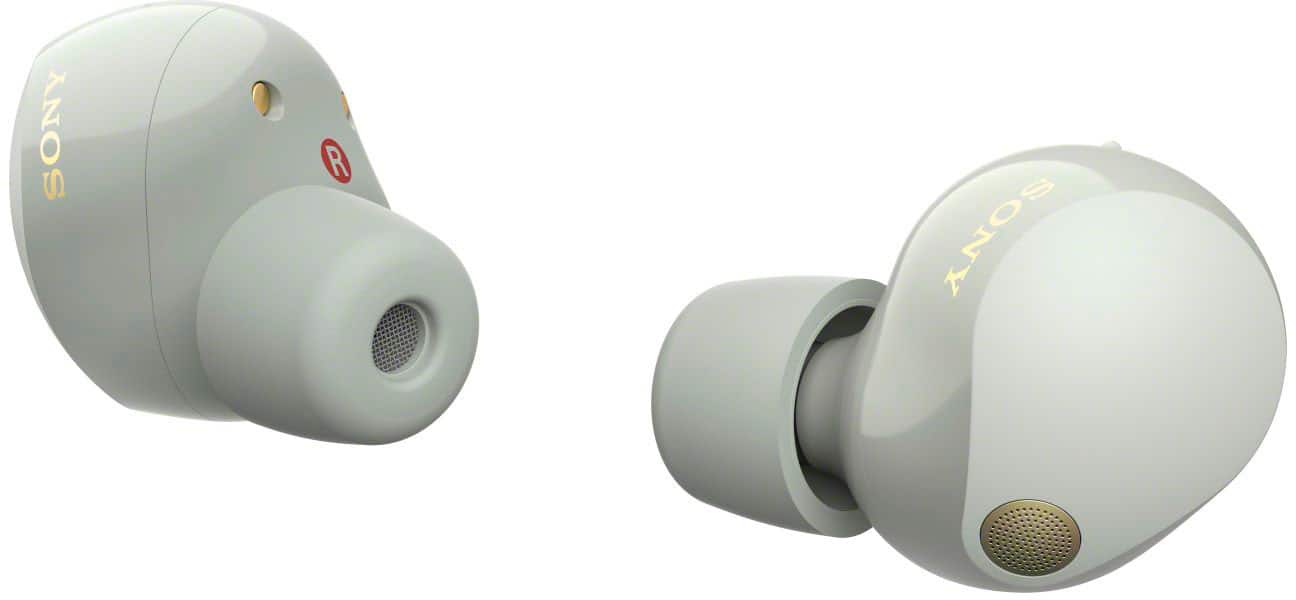
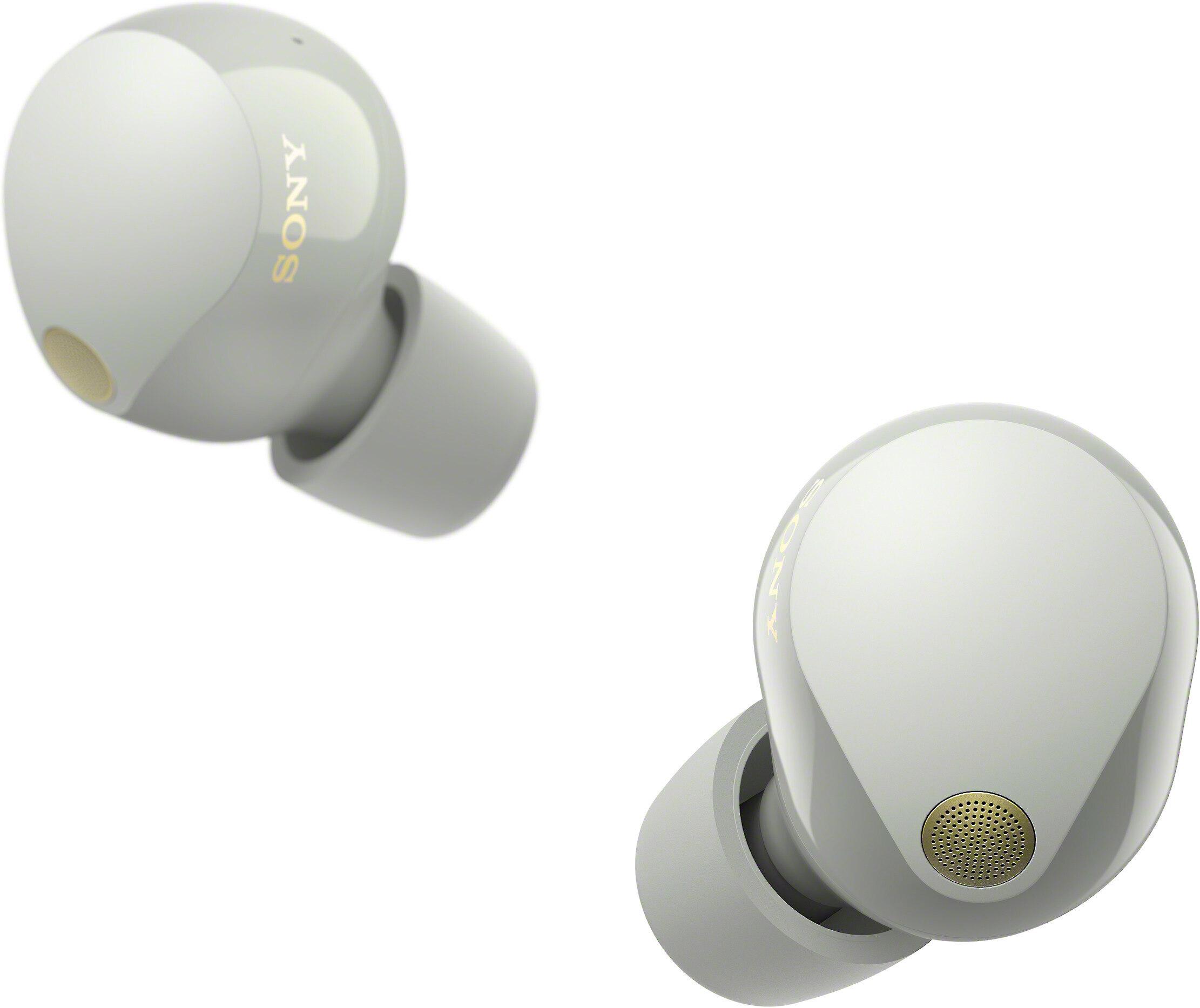
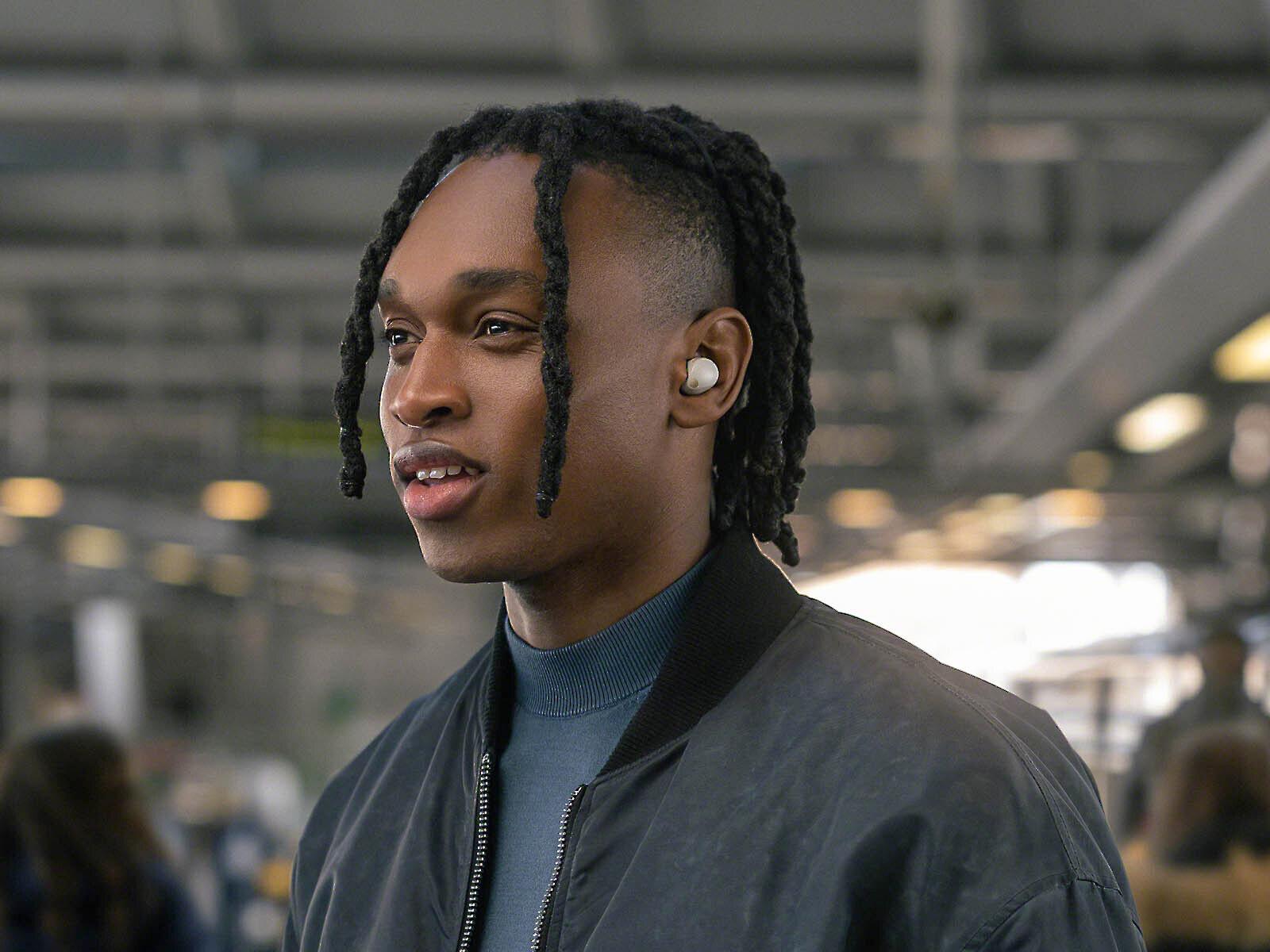
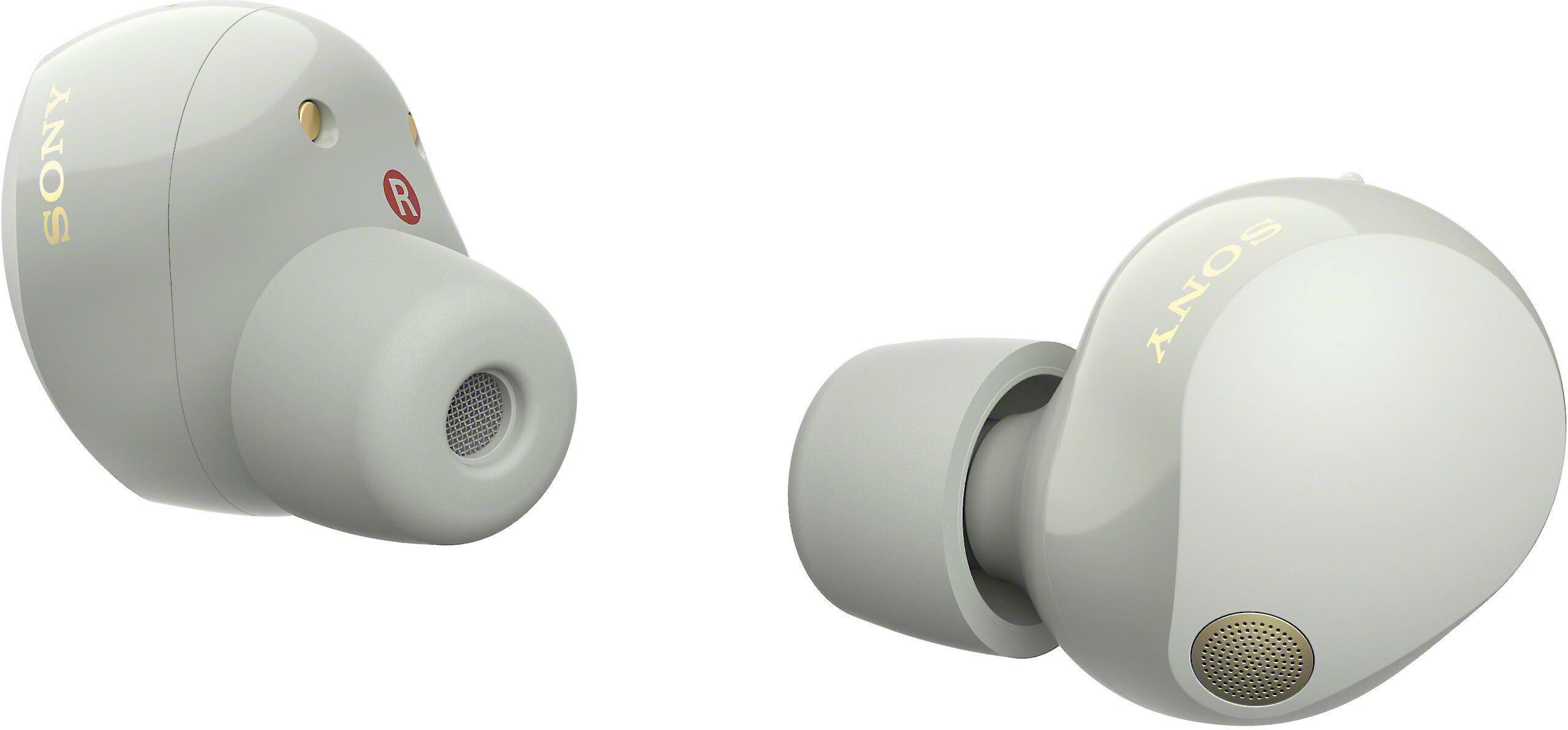
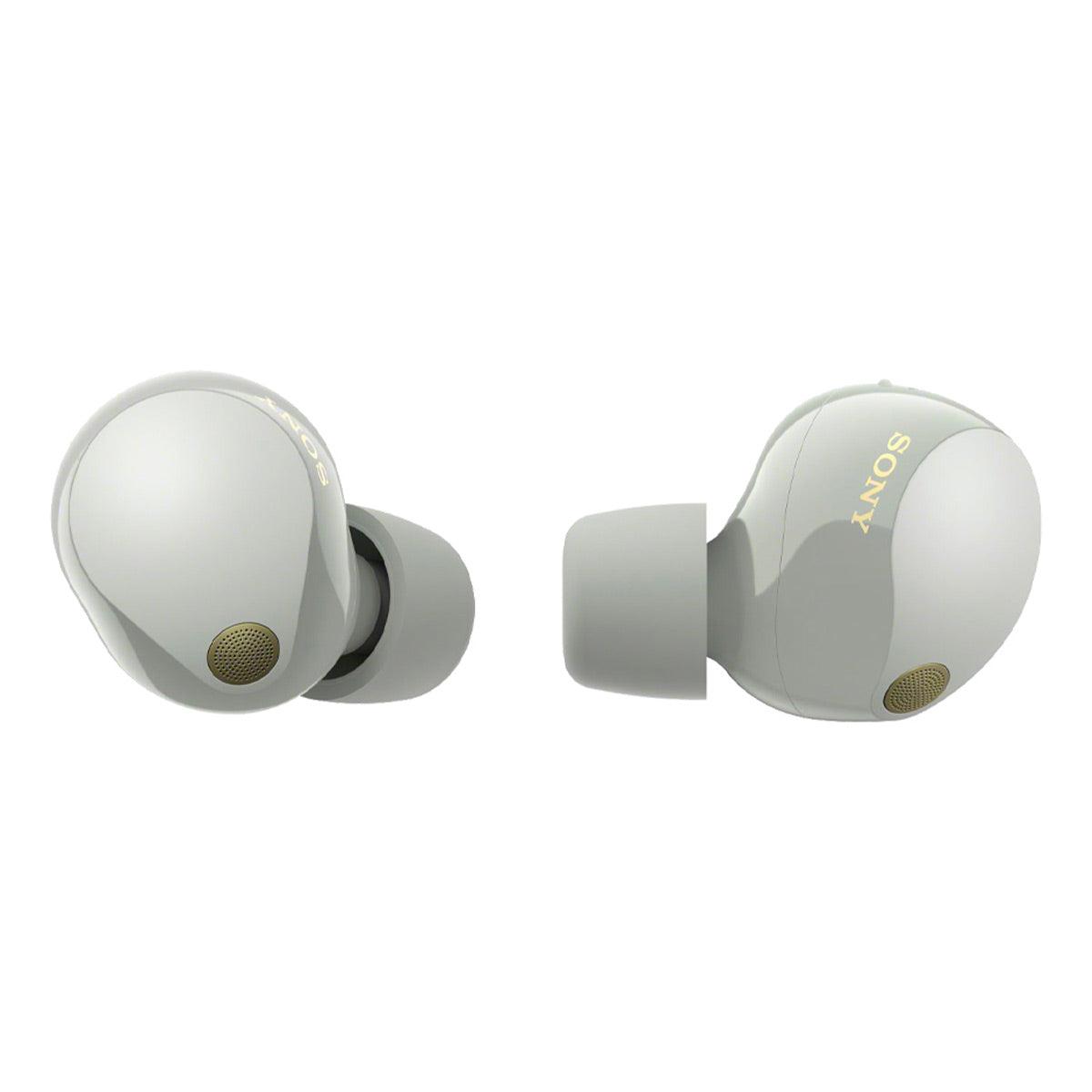
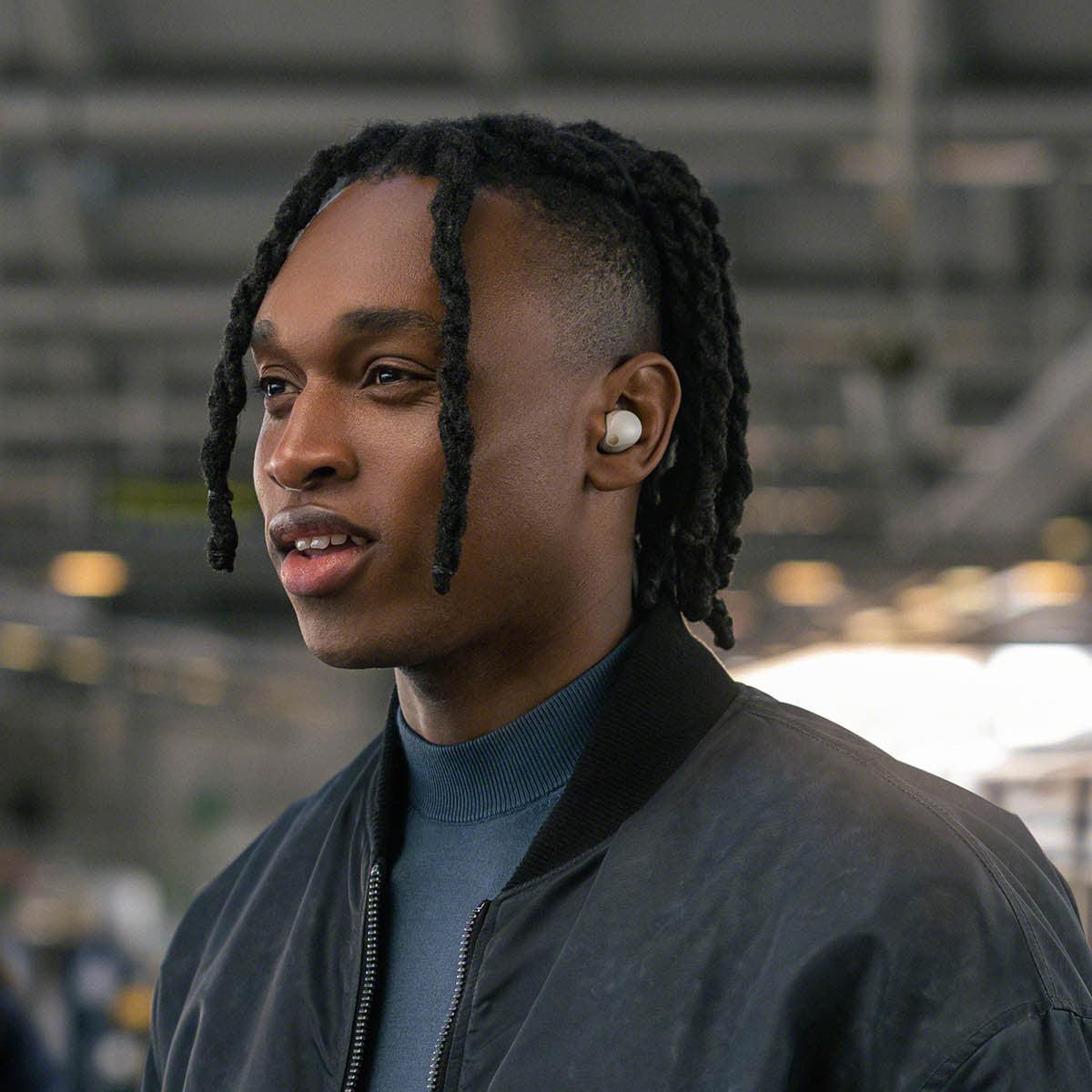
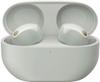
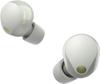
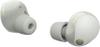
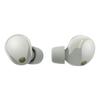
The WF-1000XM5s are noticeably smaller and lighter than their predecessors—25% smaller and 20% lighter according to Sony. This reduction in size wasn't just for marketing purposes; our testers consistently report that the ergonomic shape makes these earbuds comfortable for extended listening sessions that would have caused fatigue with older models.
The IPX4 water resistance rating means they can handle sweat and light rain without issue. Multiple testers have successfully used them during intense workouts without any moisture-related problems, though they aren't designed for swimming or submersion.
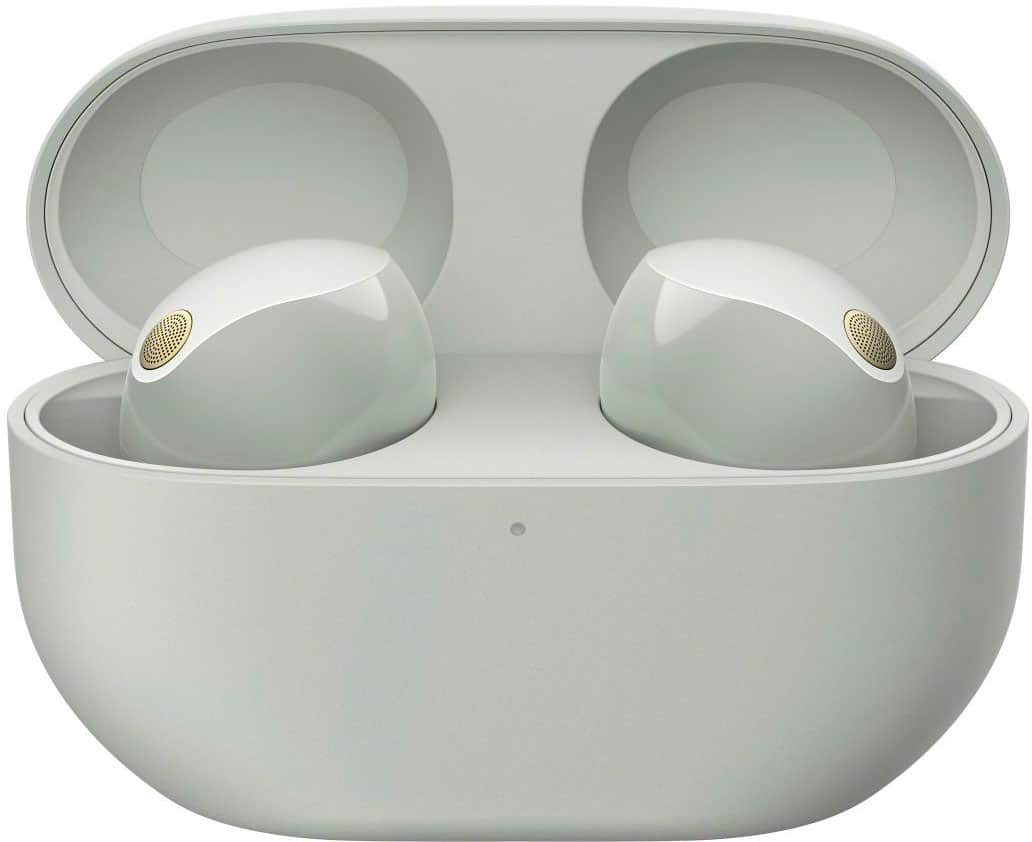
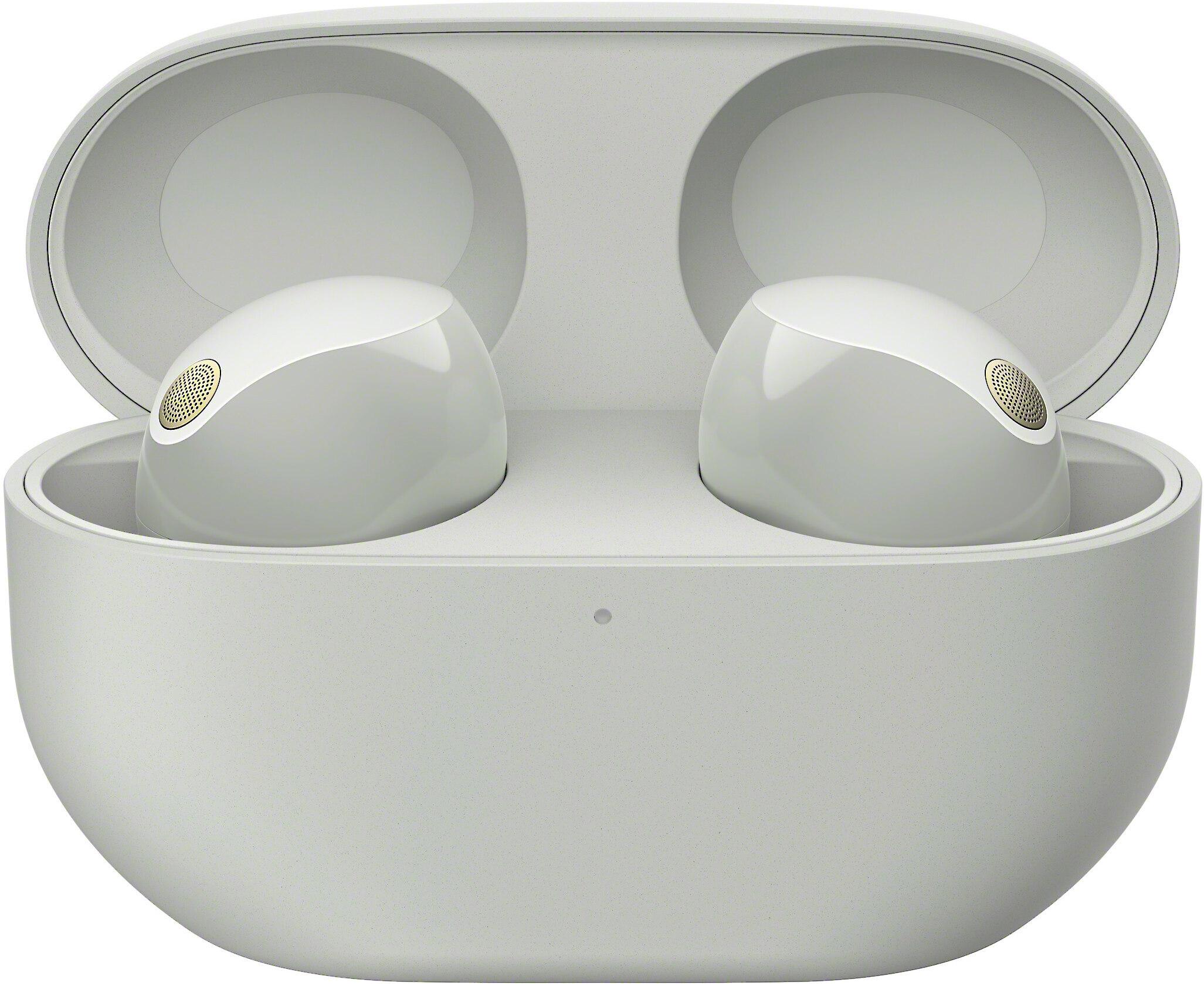
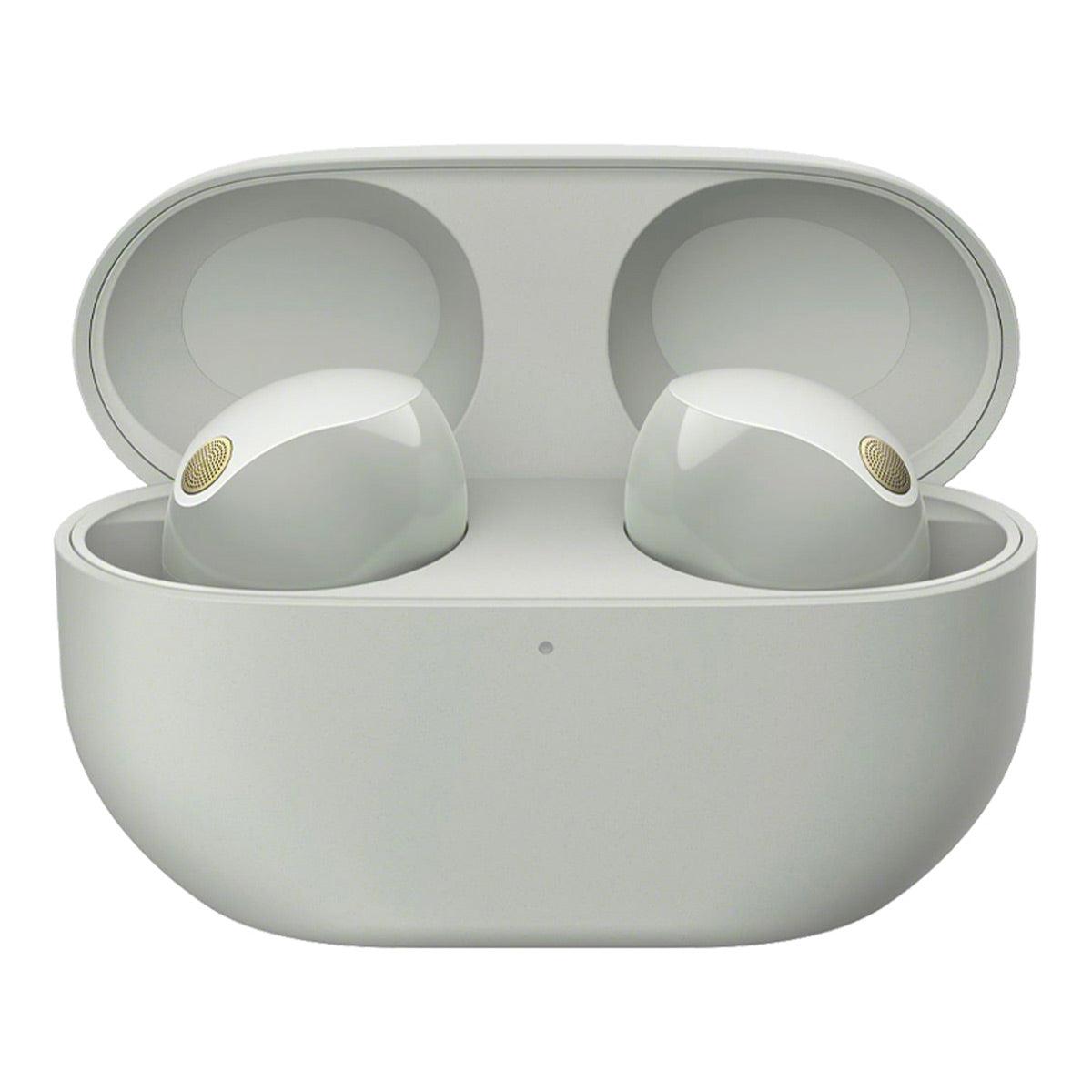
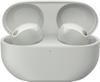
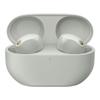
The charging case deserves special mention for its pocketable design and premium feel. It's smaller than previous generations while maintaining similar battery capacity—a technical achievement that shouldn't be overlooked.
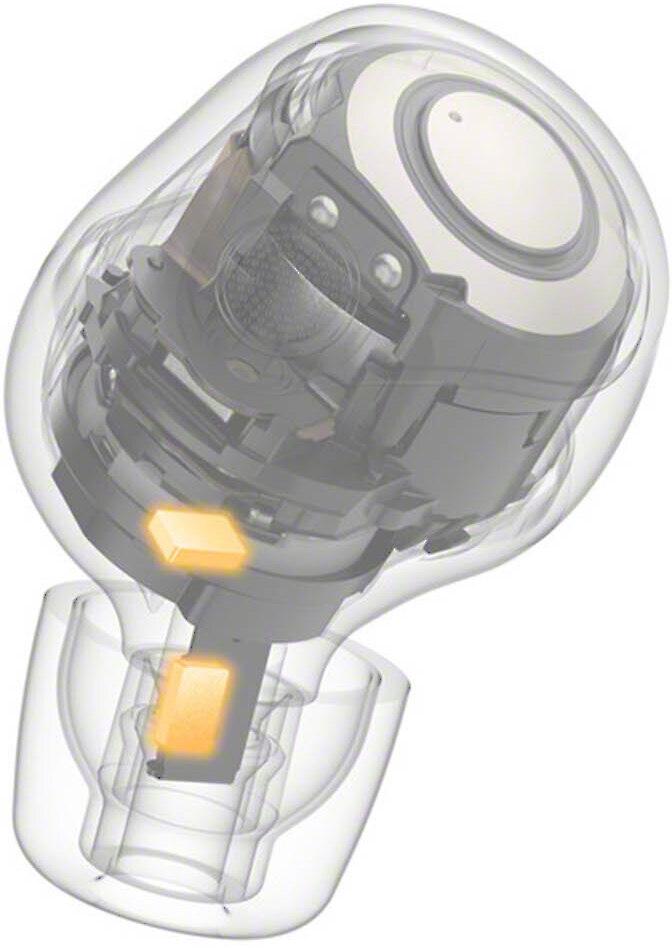
At the heart of the Sony WF-1000XM5 is the 8.4mm Dynamic Driver X—a significant technical advancement over previous generations. This driver uses what Sony calls a "dome-edge separation structure," which essentially means different parts of the driver are made from different materials optimized for specific frequency ranges.
In practical terms, this results in noticeably better bass reproduction without the muddiness that often plagues earbuds. Midrange frequencies, where vocals and most instruments live, come through with remarkable clarity. High frequencies extend up to 40,000 Hz (well beyond human hearing), contributing to a sense of "air" and spaciousness that many earbuds lack.
Sony's DSEE Extreme technology, which uses artificial intelligence to upscale compressed music files in real-time, continues to impress. When streaming standard-quality tracks from services like Spotify, the algorithm restores many high-frequency details that would otherwise be lost to compression. The difference is subtle but noticeable on complex orchestral pieces and detailed acoustic recordings.
Support for the LDAC codec (Sony's high-resolution wireless audio technology that allows for transmission of audio at up to 990kbps) gives these earbuds a technical edge for Android users, though iPhone users are limited to the more common AAC codec.
The noise cancellation capability of the WF-1000XM5s remains impressive even compared to newer competitors. The system uses three microphones on each earbud and two specialized processors (the Integrated Processor V2 and HD Noise Cancelling Processor QN2e) to analyze and counter environmental noise.
In testing, the earbuds excel at blocking consistent low-frequency noise like airplane engines, air conditioners, and train rumble. They're also surprisingly effective at reducing mid-range frequencies like office chatter. While no earbud can create complete silence, our testers report that the WF-1000XM5s create a convincing bubble of calm even in chaotic environments.
The ambient sound mode, which uses the microphones to pipe in external sounds, feels natural and can be adjusted through 20 levels of intensity via the companion app.
Sony's approach to smart features focuses on practical enhancements rather than gimmicks. Adaptive Sound Control uses your phone's location data and movement patterns to automatically adjust noise cancellation and ambient sound settings based on what you're doing or where you are. Over time, it learns your preferences for different locations, like having more ambient sound at the office but full noise cancellation during your commute.
Speak-to-Chat remains one of the most useful features—it automatically pauses your music and activates ambient sound when you start speaking, making quick conversations possible without removing the earbuds or touching any controls. It works remarkably well, though it can occasionally trigger from coughing or clearing your throat.
The touch controls are customizable through the Sony Headphones Connect app, allowing you to prioritize the functions you use most frequently.
The multipoint connection feature, which allows simultaneous connection to two devices, works more reliably than many competitors. Our testers report smooth transitions when switching from laptop video calls to phone calls without manual reconnection.
For professionals, the WF-1000XM5s offer exceptional call quality thanks to Sony's Precise Voice Pickup Technology. This system combines bone conduction sensors (which detect vibrations from your voice through your skull) with advanced signal processing to separate your voice from background noise.
In practice, this translates to clear calls even in challenging environments like windy streets or busy coffee shops. Multiple testers noted that call recipients couldn't tell they were using earbuds rather than speaking directly into their phone.
For home office use and video conferencing, this clarity makes the WF-1000XM5s an excellent choice, though they don't quite match the performance of dedicated professional headsets with boom microphones.
Battery performance remains a strength nearly two years after release. The earbuds deliver approximately 8 hours of playback with noise cancellation enabled, and the case provides an additional 16 hours, for a total of 24 hours between charges.
The quick-charge feature provides an hour of playback from just 3 minutes of charging—perfect for those moments when you've forgotten to charge them before heading out. The case supports wireless charging, adding convenience for users with Qi charging pads already in their homes.
The Sony WF-1000XM5 earbuds are ideal for several types of users:
They're less ideal for budget-conscious buyers or those deeply invested in competing ecosystems like Apple's, though they work perfectly well with iPhones despite losing some codec advantages.
Nearly two years after their release, the Sony WF-1000XM5 earbuds remain an impressive technical achievement. Their combination of excellent sound quality, effective noise cancellation, thoughtful smart features, and all-day comfort keeps them relevant despite newer competitors entering the market.
Their strengths are particularly evident in daily use scenarios—commuting, working, traveling—where their balanced performance across all metrics creates a consistently positive experience. While some competitors might edge them out in specific categories, few can match their overall package.
For those considering a premium set of true wireless earbuds in 2025, the WF-1000XM5s deserve serious consideration. They represent Sony's audio engineering at its finest and continue to deliver a premium experience that justifies their position in the upper tier of the market.
Yes, the Sony WF-1000XM5 True Wireless Noise Cancelling Earbuds are excellent for home theater use. They support LDAC codec for high-resolution audio when paired with compatible devices, delivering immersive sound quality. Their advanced noise cancellation creates a theater-like experience by blocking household distractions. For late-night viewing, they offer a personal listening solution that won't disturb others, and the comfortable design allows for extended movie sessions without ear fatigue.
The noise cancellation on the Sony WF-1000XM5 ranks among the best available in true wireless earbuds. Sony's dual processor system (Integrated Processor V2 and HD Noise Cancelling Processor QN2e) combined with the three-microphone array on each earbud delivers exceptional noise reduction, particularly for low-frequency sounds like HVAC systems and airplane engines. While some over-ear headphones might offer marginally better noise cancellation, the WF-1000XM5 stands at the top tier for earbuds, outperforming most competitors in creating a quiet listening environment.
Yes, the Sony WF-1000XM5 True Wireless Noise Cancelling Earbuds support multipoint connection, allowing you to simultaneously pair with two Bluetooth devices. This feature is particularly useful for home theater enthusiasts who might want to connect to both their TV and smartphone. You can seamlessly switch between watching content on your home theater system and taking a call on your phone without manually disconnecting and reconnecting devices.
The Sony WF-1000XM5 offers approximately 8 hours of continuous playback with noise cancellation enabled on a single charge. The charging case provides an additional 16 hours of power, bringing the total to 24 hours of use before needing a power outlet. For home theater use, this means you can enjoy multiple movie marathons before recharging. The earbuds also feature quick charging, providing about an hour of playback from just 3 minutes in the charging case.
Connecting the Sony WF-1000XM5 True Wireless Noise Cancelling Earbuds to your TV depends on your television's capabilities. For TVs with Bluetooth, you can pair directly through your TV's Bluetooth settings menu. For older TVs without Bluetooth, you'll need a Bluetooth transmitter that connects to your TV's audio output (typically via optical, RCA, or 3.5mm audio jack). For the best audio quality with Sony TVs that support it, the LDAC codec provides near Hi-Res Audio quality wirelessly.
Absolutely. The Sony WF-1000XM5 features Precise Voice Pickup Technology that combines bone conduction sensors with beam-forming microphones to capture your voice clearly while filtering out background noise. This makes them excellent for phone calls, video conferences, and voice commands to virtual assistants. The speak-to-chat feature automatically pauses your audio and activates ambient sound mode when you start speaking, making it easier to have quick conversations without removing the earbuds.
Yes, the Sony WF-1000XM5 True Wireless Noise Cancelling Earbuds are worth the investment for anyone seeking premium audio quality, effective noise cancellation, and smart features. For home theater enthusiasts, they offer theater-quality sound in a portable package with the versatility to move between home entertainment and on-the-go use. While they represent a significant investment, their balanced performance across all metrics, durability, and regular firmware updates from Sony ensure they'll remain a valuable audio tool for years, making them worth the premium price for discerning listeners.
The Sony WF-1000XM5 True Wireless Noise Cancelling Earbuds excel with movies and TV content thanks to their well-balanced sound profile. The Dynamic Driver X delivers clear dialogue through precise midrange reproduction, while also providing impactful bass for explosive action scenes and immersive soundtracks. The wide frequency response range captures subtle audio details that enhance the viewing experience. For home theater use, they particularly shine with their ability to create a spacious soundstage that belies their in-ear form factor, making them ideal for private viewing sessions with cinema-quality audio.
Yes, the Sony WF-1000XM5 earbuds are designed for extended comfort. At 25% smaller and 20% lighter than their predecessors, they put minimal pressure on the ear canal. Sony engineered them using extensive ear-shape data to create an ergonomic design that stays secure without causing fatigue. For home theater enthusiasts who enjoy movie marathons or binge-watching TV series, this translates to comfortable listening for hours at a time. The package includes multiple sizes of Sony's noise isolation earbud tips to ensure users can find their optimal fit.
The Sony WF-1000XM5 True Wireless Noise Cancelling Earbuds work excellently with all streaming services. Their DSEE Extreme technology is particularly valuable here, as it uses AI to upscale compressed audio from streaming platforms to near high-resolution quality. This means services like Netflix, Disney+, HBO Max, and music streaming platforms like Spotify all sound better through these earbuds. The low latency connection also ensures that audio stays perfectly synchronized with video content, which is crucial for an immersive home theater experience when using wireless earbuds.

We've done our best to create useful and informative comparisons to help you decide what product to buy. Our research has used advanced automated methods to create this comparison and perfection is not possible - please contact us for corrections or questions. These are the sites we've researched in the creation of this article: rtings.com - moon-audio.com - whathifi.com - sony.ca - soundguys.com - techgearlab.com - loudnwireless.com - youtube.com - techradar.com - youtube.com - costco.com - youtube.com - us.community.sony.com - youtube.com - whathifi.com - youtube.com - cnet.com - loudnwireless.com - youtube.com - bestbuy.com - electronics.sony.com - helpguide.sony.net - gsmarena.com - soundguys.com - bestbuy.com - sony.com - loudnwireless.com - sony.com - sony.com - youtube.com - sony-asia.com - helpguide.sony.net - sony.com - sony.com.sg - sony-asia.com - youtube.com - headphones.com - moon-audio.com - electronics.sony.com - shop.oprahdaily.com - youtube.com
| Sony WF-1000XM5 True Wireless Noise Cancelling Earbuds |
|---|
| Active Noise Cancellation - Essential for blocking ambient noise: Integrated Processor V2 with HD Noise Cancelling Processor QN2e |
| Driver Size - Determines sound quality and bass response: 8.4mm Dynamic Driver X |
| Battery Life with ANC - Critical for all-day use: 8 hours (earbuds), 24 hours total (with case) |
| Water Resistance - Important for workout and rain protection: IPX4 rating |
| Bluetooth Version - Affects connection stability and range: Bluetooth 5.3 |
| Audio Codecs - Impacts sound quality for different devices: SBC, AAC, LDAC, and LC3 |
| Multipoint Connection - Allows simultaneous connection to multiple devices: Yes |
| Charging Options: USB-C and Qi wireless charging |
| Touch Controls: Customizable via Sony Headphones Connect app |
| Special Features: Adaptive Sound Control, Speak-to-Chat, DSEE Extreme upscaling |
| Weight (each earbud): 5.9g |
| Case Dimensions: 2.56 × 1.97 × 1.07 inches |
The Bowers & Wilkins Pi8 represents a more audiophile-focused alternative that prioritizes sound quality above all else. Its standout features include significantly larger 12mm carbon cone drivers adapted from B&W's premium over-ear headphones, delivering superior midrange clarity and instrument separation that the Sony simply can't match. The Pi8 also supports cutting-edge aptX Lossless codec for true CD-quality wireless audio, has better water and dust protection with IP54 rating, and offers fully customizable touch controls – something Sony doesn't provide. The charging case includes a unique audio retransmission feature that lets you connect to non-Bluetooth sources like airplane entertainment systems, adding genuine versatility for travelers.
However, these premium features come with notable trade-offs in daily usability. The Pi8 delivers only 6.5 hours of battery life compared to Sony's 8-12 hours, making it less practical for all-day use or long flights. It's also heavier and bulkier due to those larger drivers, which can cause ear fatigue during extended listening sessions. While the Pi8's noise cancellation is effective, it lacks Sony's advanced smart features like Speak-to-Chat and adaptive environmental adjustment. At its higher price point, the Pi8 is clearly targeting serious music enthusiasts who are willing to sacrifice some convenience for genuinely superior audio fidelity – but for most users seeking well-rounded premium earbuds, Sony's combination of great sound, industry-leading ANC, and practical advantages like longer battery life provides better overall value.
🤖 Read Detailed Comparison
👌Bowers & Wilkins Pi8 True Wireless Earbuds Details
💵 See Bowers & Wilkins Pi8 True Wireless Earbuds Price
The Technics AZ80 stands out primarily for its superior audio quality, thanks to larger 10mm aluminum alloy drivers that deliver a more expansive soundstage and exceptional instrument separation that audiophiles will immediately notice. Its industry-first three-device multipoint connectivity is genuinely useful for professionals who regularly switch between phone, laptop, and tablet, eliminating the frustration of manual reconnections. The eight MEMS microphones with JustMyVoice technology also provide noticeably clearer call quality, especially in noisy environments, making it the better choice for business users who spend significant time on calls.
However, the Technics AZ80 comes with trade-offs that affect daily usability. At 7 grams per earbud compared to Sony's 5.9 grams, the weight difference becomes noticeable during extended listening sessions, and the slower fast charging (15 minutes for 70 minutes vs Sony's 3 minutes for 1 hour) is less convenient for busy lifestyles. While the Technics delivers reference-quality sound that justifies its premium pricing for serious listeners, the Sony offers a more balanced package of comfort, convenience features, and smart processing that makes it more practical for everyday use. The choice ultimately comes down to whether you prioritize pure audio performance and professional features over comfort and daily convenience.
🤖 Read Detailed Comparison
👌Technics AZ80 Premium Hi-Fi True Wireless Noise Cancelling Earbuds Details
💵 See Technics AZ80 Premium Hi-Fi True Wireless Noise Cancelling Earbuds Price
The Bose QuietComfort Earbuds II stands out primarily for its superior noise cancellation performance, which remains the gold standard in the industry. Using four microphones per earbud compared to Sony's three, along with Bose's CustomTune technology that personalizes the noise cancellation to your specific ear shape, these earbuds create an almost eerie level of silence that's particularly effective against low-frequency noise like airplane engines and bus rumble. The two-piece fit system with stability bands also provides exceptional comfort and security during extended wear, making them ideal for long commutes or flights where you might keep them in for hours at a time. The sound signature leans warmer and more musical than Sony's analytical approach, which many users find more engaging for everyday listening across different music genres.
However, the Bose QuietComfort Earbuds II makes notable compromises in other areas that may affect long-term satisfaction. The battery life falls short at around 7 hours compared to Sony's 9+ hours, and the lack of wireless charging means you're always fumbling for cables. More significantly, there's no multipoint connectivity, so you can't seamlessly switch between devices—a major inconvenience in today's multi-device world. The codec support is also limited to standard AAC and SBC, missing the high-resolution LDAC support that Sony offers. While the Bose earbuds often retail at lower prices than Sony's flagship, the feature gaps become more apparent over time, making them better suited for users who prioritize comfort and noise cancellation above connectivity and convenience features.
🤖 Read Detailed Comparison
👌Bose QuietComfort Earbuds II Details
💵 See Bose QuietComfort Earbuds II Price
The Devialet Gemini II stands out primarily for its exceptional bass reproduction, thanks to custom 10mm titanium-coated drivers that deliver what many consider the best low-frequency performance available in wireless earbuds today. Devialet's acoustic engineering shines through features like Ear Active Matching technology, which adjusts the sound signature up to 10,000 times per second based on your ear canal shape, and their Pressure Balance Architecture that optimizes bass response without sacrificing clarity. The luxury build quality is immediately apparent, with premium materials and finishing that justify the significant price premium over the Sony earbuds. For music genres that benefit from powerful, controlled bass – hip-hop, electronic, and rock – the Devialet Gemini II creates an incredibly engaging listening experience that's hard to match.
However, when comparing real-world performance and value, the Devialet Gemini II makes significant compromises that affect daily usability. The 5-hour battery life falls short of the Sony's 8-hour performance, requiring more frequent charging breaks that can interrupt extended listening sessions. The noise cancellation, while decent, doesn't approach Sony's industry-leading effectiveness, making these less suitable for commuting or noisy environments. The feature set is also more limited, lacking the intelligent adaptive features and high-resolution codec support that make the Sony earbuds more versatile. While the Devialet Gemini II excels as a luxury audio product for dedicated listening sessions, the Sony WF-1000XM5 provides better overall value with superior practical performance in the areas most users encounter daily – noise cancellation, battery life, and smart functionality that adapts to your routine.
🤖 Read Detailed Comparison
👌Devialet Gemini II Wireless Earbuds Details
💵 See Devialet Gemini II Wireless Earbuds Price
The Bose QuietComfort Ultra takes a markedly different approach with its aggressive noise cancellation that creates an almost complete isolation from the outside world. Where the Sony earbuds provide natural-feeling ANC, the Bose delivers what many describe as a "cocoon effect" that can be startling in its effectiveness for airplane travel or noisy commutes. The Bose QuietComfort Ultra also excels in fit customization with its comprehensive Fit Kit system, offering multiple ear tip sizes and stability bands that create up to nine different combinations – a significant advantage for users who struggle with earbud fit. The V-shaped sound signature delivers immediate excitement with boosted bass and treble that makes electronic music and action movies feel more impactful, though this can sometimes overwhelm vocal clarity compared to Sony's balanced approach.
However, the Bose QuietComfort Ultra makes notable compromises that affect long-term usability. The battery life falls significantly short at around 6 hours compared to Sony's 8+ hours, requiring more frequent charging that can disrupt daily routines. The basic 3-band EQ in Bose's app feels limiting compared to Sony's extensive customization options, and the lack of high-resolution codec support means Android users miss out on potential audio quality improvements. While the Bose typically costs less upfront, making it more accessible, the shorter battery life and limited features may impact its value proposition for users who prioritize all-day reliability and audio flexibility. The choice ultimately comes down to whether you prefer Bose's immediate bass impact and superior fit system, or Sony's technical excellence and superior endurance.
🤖 Read Detailed Comparison
👌Bose QuietComfort Ultra True Wireless Earbuds Details
💵 See Bose QuietComfort Ultra True Wireless Earbuds Price
The Technics EAH-AZ100 stands out with its larger 10mm magnetic fluid drivers that deliver noticeably superior sound quality, particularly in bass depth and overall detail retrieval. Where the Sony excels in user convenience, the Technics takes a more audiophile-focused approach with Hi-Res Audio certification and an extended 20Hz-40kHz frequency response that captures audio details the Sony simply cannot reproduce. The Technics EAH-AZ100 also provides significantly longer battery life at 10-12 hours per charge compared to Sony's 8 hours, and supports three-device multipoint connectivity versus Sony's two-device limit. For noise cancellation, the Technics proves more effective at blocking low-frequency noise like airplane engines and traffic rumble, though it lacks the Sony's predictable consistency across different environments.
In real-world use, the Technics EAH-AZ100 appeals to listeners who prioritize pure audio performance over automated convenience features. While the Sony adapts intelligently to your routine with features like Speak-to-Chat and Adaptive Sound Control, the Technics requires more manual management but rewards you with extensive customization options and objectively better sound quality. The trade-off comes in physical comfort – the Technics weighs 40% more per earbud and feels more substantial in your ears, though this larger size eliminates the accidental touch input issues that plague the Sony's compact design. At similar pricing, the Technics EAH-AZ100 represents better value for serious listeners and power users who can appreciate its technical superiority, while the Sony remains the better choice for users seeking effortless daily use with smart automation.
🤖 Read Detailed Comparison
👌Technics Reference Class AZ100 True Wireless Noise Cancelling Earbuds Details
💵 See Technics Reference Class AZ100 True Wireless Noise Cancelling Earbuds Price
The Sennheiser MOMENTUM True Wireless 4 offers a compelling alternative with its focus on warm, emotionally engaging sound quality and superior battery longevity. Where the Sony earbuds prioritize analytical precision, the Sennheiser delivers a rich, musical presentation that makes vocals feel intimate and instruments sound full-bodied—particularly appealing for acoustic music, jazz, and any content where you want to feel emotionally connected to the performance. The TrueResponse transducer system, borrowed from Sennheiser's flagship wired earphones, creates a sound signature that prioritizes musicality over clinical accuracy. Additionally, the MOMENTUM earbuds provide significantly longer battery life with 30 total hours versus Sony's 24 hours, plus superior codec support including aptX Lossless for future-proofing with compatible Android devices.
From a customization and build quality perspective, the Sennheiser MOMENTUM True Wireless 4 excels with up to 20 programmable SoundZones that automatically adjust audio settings based on your location, plus Sound Personalization features developed with the Fraunhofer Institute for truly individualized tuning. The IP54 rating provides better dust and water protection compared to Sony's IPX4, making them more suitable for outdoor activities and workouts. While the case is notably larger and the earbuds themselves protrude more from your ears, the premium materials and robust construction justify the similar pricing for users who prioritize maximum customization, longer battery life, and a warmer sound signature over the Sony's superior noise cancellation and compact design.
🤖 Read Detailed Comparison
👌Sennheiser MOMENTUM True Wireless 4 Earbuds Details
💵 See Sennheiser MOMENTUM True Wireless 4 Earbuds Price
The Audio-Technica ATH-TWX9 distinguishes itself with superior sound accuracy and unique hygiene features that appeal to specific user needs. Audio-Technica's studio heritage shines through in the neutral, uncolored sound signature that reveals recording details often masked by more consumer-friendly tuning. The smaller 5.8mm drivers prioritize tonal accuracy over raw power, creating a flatter frequency response that responds exceptionally well to EQ customization. The standout UV-LED sterilization system in the charging case provides genuine health benefits by eliminating bacteria and viruses from the earbuds' surfaces—a feature unmatched in the premium wireless earbud category. Additionally, the extensive selection of 12 different ear tip sizes ensures optimal fit for virtually any ear shape, while the lighter 10.8g weight per earbud reduces fatigue during extended listening sessions.
While the ATH-TWX9 excels in audio fidelity and comfort, it makes notable compromises in areas where the WF-1000XM5 dominates. The shorter 6-hour battery life requires more frequent charging breaks, and the noise cancellation, though adequate with customizable presets, cannot match Sony's industry-leading ANC performance in challenging acoustic environments. The Audio-Technica earbuds also lack some modern conveniences like automatic ambient sound adjustment and voice detection features. However, for users who prioritize accurate sound reproduction, extensive customization options, and unique hygiene benefits, the ATH-TWX9 offers compelling value. They particularly suit audiophiles, critical listeners, and users with specific fit requirements who appreciate the professional approach to wireless audio over mainstream consumer appeal.
🤖 Read Detailed Comparison
👌Audio-Technica ATH-TWX9 Noise-Canceling Wireless Earbuds Details
💵 See Audio-Technica ATH-TWX9 Noise-Canceling Wireless Earbuds Price
The Bose QuietComfort Wireless Earbuds offer compelling advantages that make them a serious consideration despite their lower price point. Most significantly, they deliver longer battery life with 8.5 hours per charge and an impressive 31.5 total hours with the charging case – a meaningful advantage for frequent travelers or users who often forget to charge their devices. Bose's noise cancellation, while not quite matching Sony's technical prowess, still provides excellent real-world performance that effectively handles most daily scenarios like coffee shops, offices, and moderate airplane noise. The sound signature is immediately engaging with punchy, well-controlled bass that many users prefer for casual listening, and the simpler three-mode ANC system (Quiet, Aware, Off) offers straightforward operation without the complexity of adaptive algorithms.
The Bose QuietComfort represents exceptional value for users who want premium noise cancellation and audio quality without paying for cutting-edge features they may not fully utilize. At a significantly lower price point, they deliver about 80% of the Sony's performance while offering superior battery life and Bose's renowned reliability. However, there are important trade-offs to consider – the earbuds run larger and may not fit smaller ears properly, which can compromise both comfort and noise cancellation effectiveness. They also lack the advanced codec support, AI features, and superior call quality that define the Sony experience. For budget-conscious users or those who prioritize simplicity and battery life over technological showcase features, the Bose QuietComfort provide an excellent entry point into premium wireless earbuds that punches well above its price class.
🤖 Read Detailed Comparison
👌Bose QuietComfort Wireless Earbuds Details
💵 See Bose QuietComfort Wireless Earbuds Price
The JLab Epic Lab Edition delivers exceptional battery life that completely changes how you use wireless earbuds, offering 56+ hours total with the case compared to the WF-1000XM5's 18 hours. This means you can go weeks without charging, making them ideal for long trips, extended work sessions, or users who simply don't want to worry about battery management. The JLab Epic Lab Edition also features a unique hybrid dual-driver system combining a 10mm dynamic driver with a Knowles balanced armature driver, delivering rich, warm sound with particularly impressive bass response that many users find more engaging than clinical accuracy. Additionally, JLab includes practical extras like a USB-C dongle for low-latency gaming and superior IP55 water/dust resistance that makes these earbuds suitable for workouts and outdoor activities where the Sony's IPX4 rating falls short.
While the JLab Epic Lab Edition can't match Sony's industry-leading noise cancellation or refined smart features, it offers significantly better value for most users' real-world needs. The hybrid driver technology provides a more dynamic listening experience for popular music genres, and the massive battery capacity eliminates the frequent charging routine that plagues most premium earbuds. The JLab Epic Lab Edition also brings versatility with its gaming dongle and robust build quality, making it a single solution for music, calls, gaming, and active use. For users who prioritize practical benefits like extended battery life, engaging sound, and durability over maximum noise cancellation and premium brand prestige, JLab's offering provides substantially more value and convenience in daily use.
🤖 Read Detailed Comparison
👌JLab Epic Lab Edition Noise Cancelling Earbuds Details
💵 See JLab Epic Lab Edition Noise Cancelling Earbuds Price
The JBL Tour Pro 3 takes a fundamentally different approach with its revolutionary Smart Charging Case featuring a 1.57-inch touchscreen that transforms how you interact with your earbuds. This isn't just a gimmick—the case functions as a complete control hub for music, calls, and settings while doubling as a wireless audio transmitter that can connect to airplane entertainment systems, gym equipment, or any device with USB-C or 3.5mm outputs. Combined with superior battery life (up to 44 hours total versus Sony's 24 hours) and enhanced IP55 durability rating that handles dust and water jets, the JBL Tour Pro 3 delivers genuine practical advantages for active users and frequent travelers. The hybrid dual-driver system also creates more energetic, V-shaped sound with excellent instrument separation that many listeners find more engaging than Sony's warmer signature.
However, this innovation comes with trade-offs in refinement. While JBL's six-microphone noise cancellation system is highly effective and adapts quickly to environmental changes, it lacks the consistent, mature performance that has made Sony's ANC technology the industry standard. The JBL Tour Pro 3 excels when you need maximum versatility, longest battery life, and cutting-edge features, making it the better choice for users who want their earbuds to do more than just deliver great audio. At similar pricing, the decision ultimately comes down to whether you value Sony's proven excellence in core audio functions or prefer JBL's forward-thinking approach that expands what premium earbuds can accomplish in your daily life.
🤖 Read Detailed Comparison
👌JBL Tour Pro 3 True Wireless Earbuds Details
💵 See JBL Tour Pro 3 True Wireless Earbuds Price
The Sennheiser Momentum Sport brings a revolutionary approach to premium earbuds by integrating biometric sensors directly into each earbud, measuring heart rate and body temperature with accuracy that rivals dedicated fitness trackers. This unique capability transforms them into a hybrid audio-fitness device that can replace multiple gadgets while delivering seamless integration with popular fitness platforms like Strava, Polar Flow, and Garmin Connect. Beyond health tracking, the Momentum Sport excel in areas where the WF-1000XM5 struggle: superior call quality with bone conduction sensors and wind noise reduction makes outdoor conversations crystal clear, while aptX Adaptive codec support provides low-latency performance that's crucial for gaming and video content. The robust IP55 rating offers genuine dust-tight protection and resistance to water jets from all directions, making them significantly more durable for active use than the Sony's basic splash protection.
However, the Sennheiser Momentum Sport make compromises in traditional earbud strengths to achieve their specialized capabilities. Audio quality, while solid and energetic for workouts, doesn't match the refined sound reproduction and instrument separation that the WF-1000XM5 deliver through their advanced driver technology and LDAC support. Battery life per charge is shorter at 6 hours compared to Sony's 8-9 hours, which can be limiting for all-day listening sessions. The active noise cancellation, though effective, isn't as sophisticated as Sony's three-microphone system and adaptive processing. From a value standpoint, the Momentum Sport typically cost more but justify the premium through their unique fitness tracking capabilities—essentially offering two devices in one. Choose the Sennheiser Momentum Sport if you're an active user who values versatility and wants to consolidate your audio and fitness tracking needs, but stick with the Sony if pure audio excellence and maximum noise isolation are your primary concerns.
🤖 Read Detailed Comparison
👌Sennheiser Momentum Sport True Wireless Earbuds Details
💵 See Sennheiser Momentum Sport True Wireless Earbuds Price
The Soundcore Space A40 delivers surprisingly competitive performance that challenges premium assumptions, particularly excelling in two areas where it actually outperforms the Sony flagship. Most notably, the adaptive ANC system provides more aggressive noise cancellation with up to 98% noise reduction, automatically adjusting between indoor, outdoor, commuting, and flight modes without manual intervention. This translates to superior isolation on planes, trains, and in noisy work environments where maximum noise blocking matters more than nuanced audio processing. The battery life advantage is even more dramatic, offering 50 hours total playtime compared to Sony's 24 hours, with exceptionally fast charging that provides 4 hours of playback from just 10 minutes - a game-changer for frequent travelers or heavy daily users who often forget to charge overnight.
While the Soundcore Space A40 can't match the WF-1000XM5's audio refinement or premium build quality, it delivers remarkable value by including flagship-level features like LDAC high-resolution audio support, multipoint connectivity, and comprehensive app customization with 22 EQ presets. The sound signature is warm and engaging rather than technically precise, which many casual listeners actually prefer over Sony's more analytical approach. For the vast majority of users who prioritize practical benefits like all-day battery life and maximum noise isolation over audiophile-grade sound reproduction, the Space A40 provides about 85% of the Sony's functionality while excelling in the areas that matter most for daily use. The value proposition becomes compelling when you consider that you're getting premium ANC performance and exceptional endurance at a fraction of the cost, making it the smarter choice unless you specifically need Sony's superior audio processing and professional call quality.
🤖 Read Detailed Comparison
👌Soundcore Space A40 Wireless Earbuds Details
💵 See Soundcore Space A40 Wireless Earbuds Price
The Beats Studio Buds Plus excel where many premium earbuds fall short: exceptional all-day comfort and superior call quality. At just 5 grams per earbud with an ergonomic design that's 25% smaller than the previous generation, they consistently receive praise as the most comfortable earbuds for extended wear without the ear fatigue that plagues many users with larger premium models. Their three larger, more sensitive microphones deliver remarkably clear voice pickup with excellent background noise rejection, making them significantly better for phone calls, video conferences, and outdoor conversations compared to most flagship competitors. The physical button controls are also more reliable than touch sensors, reducing accidental activations during activities or when adjusting fit.
From a value perspective, the Beats Studio Buds Plus deliver premium features at a substantially lower price point, often costing roughly half of flagship models while still providing effective ANC, solid battery life, and engaging sound quality optimized for contemporary music. Their cross-platform compatibility is genuinely seamless, offering the same features and reliability whether you're using iPhone or Android devices. While they can't match the technical audio performance or maximum noise cancellation of the Sony WF-1000XM5, the Beats Studio Buds Plus prove that most users don't need to sacrifice comfort, call quality, or budget to enjoy premium true wireless performance, making them the more practical choice for daily use, work calls, and general music enjoyment.
🤖 Read Detailed Comparison
👌Beats Studio Buds Plus True Wireless Earbuds Details
💵 See Beats Studio Buds Plus True Wireless Earbuds Price
The JBL Tune Buds take a refreshingly practical approach to the premium earbud market, delivering exceptional value by focusing on the features that matter most in daily use. Their standout achievement is remarkable battery endurance – offering up to 48 hours of total playback time compared to Sony's 24 hours, meaning you can go nearly twice as long between charging sessions. This translates to real convenience for travelers, students, or anyone who frequently forgets to charge their devices. The Speed Charge feature provides 4 hours of playback from just 15 minutes of charging, addressing one of the most common pain points with wireless earbuds. Additionally, the JBL Tune Buds offer superior environmental protection with their IP54 rating that includes dust resistance, making them more suitable for workouts, beach trips, and outdoor activities where the Sony earbuds' IPX4 rating falls short.
While the JBL earbuds can't match Sony's audiophile-grade sound quality or industry-leading noise cancellation, they deliver surprisingly capable performance at a fraction of the cost. The 10mm drivers provide energetic, bass-forward sound that works particularly well for popular music genres, and the basic ANC handles everyday noise like office chatter and air conditioning effectively. The JBL Tune Buds include modern features like Bluetooth 5.3, multipoint connectivity, and app-based customization, proving you don't need to spend flagship money to get premium functionality. For users who want solid all-around performance, exceptional battery life, and better durability without paying premium prices, the JBL earbuds represent outstanding value – delivering roughly 80% of the Sony experience at roughly half the cost, while actually exceeding Sony's capabilities in battery endurance and environmental protection.
🤖 Read Detailed Comparison
👌JBL Tune Buds True Wireless Earbuds Details
💵 See JBL Tune Buds True Wireless Earbuds Price
The Beats Powerbeats Pro 2 excels where the Sony WF-1000XM5 shows limitations – athletic performance and battery endurance. The signature over-ear hook design with nickel-titanium alloy construction provides unmatched stability during intense workouts, making them virtually impossible to dislodge even during sprints or high-intensity training sessions. Battery life is exceptional at 45 hours total (10 hours per earbud plus 35 from the case), nearly doubling the Sony's 24-hour capacity – a significant advantage for frequent travelers, long workout sessions, or users who frequently forget to charge their devices. The Powerbeats Pro 2 also introduces genuine innovation with built-in heart rate monitoring using optical sensors, eliminating the need for chest straps or smartwatches during fitness tracking.
While the Beats Powerbeats Pro 2 can't match the Sony's audiophile-grade sound quality or industry-leading noise cancellation, they offer compelling value in their specialized domain. The energetic, bass-forward sound signature actually works better for workout motivation than the Sony's neutral tuning, and the secure fit means you never have to worry about losing an earbud during activity. Integration with Apple devices is seamless thanks to the H2 chip, though Android users get fewer features. The trade-off is size and versatility – these are substantial earbuds that make a statement and aren't as comfortable for extended non-athletic wear. For users whose primary need is reliable workout audio with exceptional battery life, the Powerbeats Pro 2 delivers focused performance at a lower price point, even if they sacrifice the Sony's broader appeal and premium audio refinement.
🤖 Read Detailed Comparison
👌Beats Powerbeats Pro 2 Wireless Earbuds Details
💵 See Beats Powerbeats Pro 2 Wireless Earbuds Price
The JBL Vibe Beam takes a fundamentally different approach, prioritizing exceptional value and practical everyday features over premium audio technology. Its standout advantage is remarkably fast charging that delivers 2 hours of playback from just 10 minutes of charging—double what the Sony offers—making it ideal for users who frequently forget to charge their earbuds. The IP54 water and dust resistance rating significantly exceeds Sony's IPX4 protection, making the JBL model better suited for workouts, outdoor activities, and unpredictable weather. Despite lacking active noise cancellation entirely, the JBL's stick-closed design provides decent passive isolation while maintaining the same impressive 32-hour total battery life without the power drain of ANC processing. The JBL Deep Bass Sound tuning delivers engaging, fun audio that works particularly well for mainstream music genres, podcasts, and casual listening.
The most compelling aspect of the JBL Vibe Beam is its value proposition—it delivers solid wireless audio performance at a fraction of Sony's flagship pricing while covering the core needs of most users. Without the complexity of advanced noise cancellation, adaptive sound control, or premium codecs, the JBL model works reliably right out of the box with minimal setup or learning curve. For users who primarily listen in relatively quiet environments, don't need audiophile-grade sound quality, or want dependable earbuds for active use, the JBL represents a smart alternative that leaves budget available for other tech purchases. While it can't match Sony's technical sophistication or premium audio experience, the JBL Vibe Beam proves that excellent wireless earbuds don't require flagship pricing—making it the better choice for pragmatic buyers who prioritize reliability, durability, and value over cutting-edge features.
🤖 Read Detailed Comparison
👌JBL Vibe Beam True Wireless Earbuds Details
💵 See JBL Vibe Beam True Wireless Earbuds Price
The Poly Voyager Free 60+ UC represents a completely different philosophy, engineered specifically for business professionals who prioritize communication excellence over entertainment features. Its three-microphone steerable array with NoiseBlockAI technology delivers call quality that genuinely rivals dedicated business headsets, while Microsoft Teams certification and the included BT700 USB adapter ensure reliable video conferencing that the Sony simply cannot match. The unique touchscreen charging case provides device management capabilities unavailable in any consumer earbud, allowing users to mute calls, switch between up to 8 paired devices, and monitor connection status without touching their phone or computer. For remote workers and business travelers, these specialized features justify the premium pricing through improved professional communication and reduced meeting fatigue.
Where the Sony excels at music reproduction and consumer convenience, the Poly Voyager Free 60+ UC dominates in professional scenarios that expose the Sony's limitations. While both products command similar premium pricing, the Poly's 5.5-hour talk time, enterprise software integration, and superior computer-based calling performance make it irreplaceable for users who spend significant time on video calls. The lighter 5.8-gram design enables comfortable all-day wear during long work sessions, and the fast charging provides over an hour of talk time from just 15 minutes of charging. However, this business focus means accepting adequate rather than exceptional music quality—the Poly's speech-optimized audio can't compete with the Sony's audiophile-grade sound reproduction for entertainment use.
🤖 Read Detailed Comparison
👌Poly Voyager Free 60+ UC Wireless Earbuds Details
💵 See Poly Voyager Free 60+ UC Wireless Earbuds Price
The JLab Go Pop+ delivers remarkable value by focusing on core functionality that many users actually prioritize over premium features. Its standout achievement is exceptional battery endurance - over 35 hours total with 9 hours per earbud - that significantly outperforms the WF-1000XM5's 24-hour capacity. The ultra-lightweight design at under 4 grams per earbud makes them nearly disappear during wear, while the integrated USB-C cable built into the charging case eliminates the frustration of forgetting charging cables. For exercise and active use, the Go Pop+ excels where premium earbuds often fall short, offering worry-free workouts without the anxiety of potentially losing expensive hardware. The compact, pocket-friendly case and 14 color options add practical appeal that flagship models rarely match.
While the JLab Go Pop+ cannot compete with the WF-1000XM5's sophisticated noise cancellation or audiophile-grade audio quality, it succeeds brilliantly within its intended scope. The price difference - over ten times less expensive - makes it accessible to users who want reliable wireless audio without premium investment. For casual listening, podcasts, and general use, the Go Pop+ provides perfectly adequate sound quality with surprising clarity for its price point. The lack of active noise cancellation and advanced features becomes irrelevant for users who primarily listen in quiet environments or don't require isolation from ambient sound. This represents the sweet spot of budget audio - delivering essential functionality with genuine advantages like superior battery life and practical design, making premium features feel unnecessarily complex and expensive for many real-world use cases.
🤖 Read Detailed Comparison
👌JLab Go Pop+ True Wireless Earbuds Details
💵 See JLab Go Pop+ True Wireless Earbuds Price
The Samsung Galaxy Buds 3 Pro excel primarily in water resistance and ecosystem integration for Samsung users. Their IP57 rating means they can handle complete water submersion and heavy sweat, making them genuinely suitable for intense workouts or outdoor activities where the WF-1000XM5's IPX4 rating would be insufficient. For Samsung Galaxy device owners, these earbuds unlock impressive AI-powered features including real-time language interpretation, 24-bit/96kHz audio via Samsung Seamless Codec, and seamless switching between Samsung devices. The Galaxy Buds 3 Pro also deliver a more energetic, V-shaped sound signature with elevated bass and treble that makes pop, electronic, and rock music feel more dynamic and exciting compared to Sony's more balanced approach.
However, the Samsung Galaxy Buds 3 Pro face significant limitations that impact their universal appeal and value proposition. Their shorter 6-hour battery life becomes problematic for extended listening sessions, and most premium features are locked behind Samsung's ecosystem—meaning iPhone users or those with non-Samsung Android devices pay flagship prices for features they cannot access. The touch controls receive consistent criticism for being less reliable than Sony's implementation, and while the stem-based design provides status indicators, it represents a controversial departure from Samsung's traditional aesthetic that doesn't suit all ear shapes. For buyers seeking the most consistent performance across different devices and longer battery life, the Galaxy Buds 3 Pro feel more like a premium product designed specifically for Samsung loyalists rather than a universal flagship competitor.
🤖 Read Detailed Comparison
👌Samsung Galaxy Buds 3 Pro True Wireless Earbuds Details
💵 See Samsung Galaxy Buds 3 Pro True Wireless Earbuds Price
The Apple AirPods Pro 3 delivers measurably superior active noise cancellation, blocking approximately 90% of external noise compared to Sony's 87% – a difference that becomes noticeable in real-world scenarios like busy coffee shops or airplane cabins. Apple's breakthrough feature set includes genuine health monitoring with a custom heart rate sensor that tracks workouts across 50+ activities, FDA-authorized hearing aid functionality, and Live Translation capabilities that no other earbuds currently offer. The spatial audio implementation creates an exceptionally immersive home theater experience, with personalized sound profiles and dynamic head tracking that makes movies and TV shows feel genuinely three-dimensional. With an IP57 rating, they're also significantly more durable against dust and water exposure than Sony's IPX4 rating.
Where the Apple AirPods Pro 3 excels is in seamless ecosystem integration and cutting-edge innovation. If you're an iPhone user, the automatic device switching, Find My precision tracking, and Siri voice control with head gestures create an almost telepathic user experience that Sony simply cannot match across Apple devices. The H2 chip optimization reduces audio latency and improves call quality specifically for iOS users, while features like Conversation Awareness and Adaptive Audio intelligently adjust to your environment without manual intervention. At the time of writing, Apple has positioned these earbuds at a more competitive price point than Sony's premium positioning, making them compelling value for users invested in the Apple ecosystem who want the latest health-focused features and superior noise cancellation performance.
🤖 Read Detailed Comparison
👌Apple AirPods Pro 3 Wireless Earbuds Details
💵 See Apple AirPods Pro 3 Wireless Earbuds Price
The TAGRY X08 True Wireless Earbuds take a fundamentally different approach, prioritizing exceptional value and practical endurance over premium features. Their standout capability is an impressive 60-hour total battery life—2.5 times longer than the Sony WF-1000XM5—achieved through efficient 6-hour earbud performance and a substantial 470mAh charging case that provides four additional full charges. This translates to genuine real-world convenience: you can use them for entire work weeks without charging the case, take weekend trips without power anxiety, or lend them to family members without worrying about battery life. The dual LED power display shows exact battery percentages, eliminating guesswork about remaining charge. At roughly one-seventh the cost of the Sony earbuds, they deliver surprisingly competent audio through 13mm dynamic drivers with bass-heavy tuning that makes them particularly enjoyable for hip-hop, electronic music, and casual listening, plus IPX5 water resistance that actually exceeds the Sony's IPX4 rating for sports and weather protection.
However, the TAGRY X08 makes significant compromises in audio sophistication and smart features to achieve this value proposition. They lack any active noise cancellation, relying solely on passive isolation that proves inadequate against airplane engines, traffic noise, or air conditioning hum. The sound quality, while decent for casual use, becomes harsh and distorted above 75% volume and lacks the precision, detail, and extended frequency response that make the Sony earbuds exceptional for critical listening or high-resolution audio. There's no dedicated app for customization, no multipoint connection for multiple devices, and no advanced features like adaptive sound control or automatic conversation detection. For budget-conscious users who prioritize battery life and basic wireless functionality over audiophile performance, the TAGRY X08 represents remarkable value—but anyone seeking the best possible audio experience, noise cancellation for travel, or sophisticated smart features will find them fundamentally limited compared to Sony's flagship engineering.
🤖 Read Detailed Comparison
👌TAGRY X08 True Wireless Earbuds Details
💵 See TAGRY X08 True Wireless Earbuds Price
The Samsung Galaxy Buds FE offers impressive value by delivering effective active noise cancellation at a fraction of the Sony's cost, making premium features accessible to budget-conscious buyers. Samsung's approach prioritizes low-frequency noise cancellation, where it actually performs exceptionally well—matching or even exceeding the WF-1000XM5 in blocking airplane engines, air conditioning hum, and traffic noise. The inclusion of wingtips provides superior stability during workouts and active use, something Sony eliminated in favor of a smaller design. For Samsung ecosystem users, the seamless auto-switching between Galaxy devices and deeper integration with Samsung's software creates a more cohesive experience than Sony's universal but less specialized approach.
Where the Samsung Galaxy Buds FE truly shines is in total battery endurance and practical considerations for everyday users. With up to 30 hours of total playback time (ANC off), it significantly outlasts Sony's 24-hour total, making it better for extended travel or users who frequently forget to charge their case. The warm, bass-heavy sound signature appeals to mainstream listeners who prefer punchy, engaging audio over clinical accuracy—particularly effective for genres like hip-hop, pop, and electronic music. However, the 6.5mm drivers and basic codec support mean audiophiles will notice less detail and refinement compared to Sony's superior audio processing. The Galaxy Buds FE represents an excellent entry point into quality noise-canceling earbuds, especially for users who prioritize cost-effectiveness and don't require the premium features that justify Sony's higher price point.
🤖 Read Detailed Comparison
👌Samsung Galaxy Buds FE Wireless Earbuds Details
💵 See Samsung Galaxy Buds FE Wireless Earbuds Price
The JBL Tune Flex stands out primarily for its exceptional battery endurance and impressive value proposition. With up to 48 hours of total playbook time, these earbuds can easily handle multi-day trips, long work weeks, or extended listening sessions without requiring frequent charging stops. The larger 12mm drivers deliver punchy, engaging bass that works beautifully with popular music genres like hip-hop, pop, and EDM—often providing more immediate listening satisfaction than technically superior but more restrained tuning. The unique dual ear tip system offers genuine versatility, allowing users to switch between maximum noise isolation and environmental awareness depending on their activity, making them suitable for everything from focused work to outdoor exercise.
While the JBL Tune Flex can't match the Sony's sophisticated noise cancellation or audio processing capabilities, it delivers remarkably solid performance at a much more accessible price point. The basic adaptive ANC effectively handles consistent background noise like air conditioning, traffic, or airplane engines—covering the majority of real-world noise cancellation needs for most users. For listeners who prioritize bass impact over analytical detail, prefer not to worry about daily charging, or simply want premium features without premium pricing, the JBL model offers better practical value. The trade-off in advanced features and refinement becomes worthwhile only for users who specifically need the Sony's superior noise cancellation for challenging environments, regularly listen to acoustic or classical music where detail retrieval matters most, or genuinely utilize the sophisticated smart features that justify the significant price difference.
🤖 Read Detailed Comparison
👌JBL Tune Flex True Wireless Earbuds Details
💵 See JBL Tune Flex True Wireless Earbuds Price
The Samsung Galaxy Buds 3 FE delivers surprising performance that punches well above its price point, particularly in noise cancellation where it achieves exceptional results that actually outperform Samsung's own premium Buds 3 Pro in independent testing. With up to 86% noise reduction when ANC is active, these earbuds rival the Sony's sophisticated dual-processor system in real-world effectiveness. The sealed canal design with proper ear tips provides excellent passive isolation that complements the electronic noise cancellation, while the intuitive Blade controls offer a more natural gesture-based interface than traditional touch controls. For Samsung Galaxy users, the deep ecosystem integration creates seamless experiences through features like Auto Switch between devices, Galaxy AI integration for real-time translation, and optimized Samsung Seamless Codec performance that maximizes audio quality within the Samsung environment.
While the Sony WF-1000XM5 excels in technical specifications and universal compatibility, the Samsung Galaxy Buds 3 FE offers compelling advantages for users who don't need absolute audiophile-grade performance. The balanced sound signature pleases both casual listeners and discerning users without requiring extensive EQ tweaking, and the significantly lower price point makes flagship-level features accessible to a broader audience. The trade-offs are reasonable—no multipoint pairing, USB-C charging only, and limited cross-platform features—but these compromises become less important when the core performance in noise cancellation and sound quality remains so competitive. For Samsung ecosystem users especially, the Buds 3 FE often provides better practical value despite the Sony's superior technical capabilities, making it an excellent choice for users who want premium performance without premium pricing.
🤖 Read Detailed Comparison
👌Samsung Galaxy Buds 3 FE Wireless Earbuds Details
💵 See Samsung Galaxy Buds 3 FE Wireless Earbuds Price
The JBL Live Pro 2 offers compelling practical advantages that address real-world usage concerns many users face with premium earbuds. Its standout feature is exceptional 40-hour total battery life—significantly longer than the Sony's 24-36 hours—which eliminates charging anxiety for heavy users, frequent travelers, or anyone who simply doesn't want to think about battery management. The IPX5 water resistance rating provides superior protection against direct water spray, making these earbuds genuinely worry-free for intense workouts, running in light rain, or heavy sweating scenarios where the Sony's IPX4 rating might leave you cautious. The audio signature takes a more energetic approach with larger 11mm drivers delivering a v-shaped sound profile that makes electronic music, hip-hop, and modern pop particularly engaging with enhanced bass impact and sparkle.
From a value perspective, the JBL Live Pro 2 typically costs significantly less while still delivering flagship-level features like adaptive noise cancellation, multipoint connectivity, and comprehensive app customization. This makes it an exceptional choice for users who want premium performance without paying premium prices, especially if your priorities lean toward practical daily-use benefits rather than cutting-edge audio technology. However, the trade-offs become apparent in sophisticated listening scenarios—the JBL's noise cancellation, while effective, isn't as advanced as Sony's three-microphone system for complex environments, and the fun-focused sound tuning may not satisfy listeners seeking the most accurate audio reproduction. The JBL excels when you need reliable, long-lasting earbuds that enhance popular music and handle active lifestyles, but audiophiles and users demanding the absolute best noise cancellation will find the Sony's technological sophistication worth the premium investment.
🤖 Read Detailed Comparison
👌JBL Live Pro 2 TWS True Wireless Earbuds Details
💵 See JBL Live Pro 2 TWS True Wireless Earbuds Price
The TOZO A1 excels in areas where many premium earbuds struggle—ultra-lightweight comfort and exceptional battery endurance. At just 3.7 grams per earbud, they virtually disappear during extended wear, making them ideal for long listening sessions, exercise, and users with smaller ear canals who find heavier earbuds uncomfortable. The 32-hour total battery life significantly outpaces the Sony's 24 hours, providing crucial extra endurance for multi-day trips, long flights, or users who frequently forget to charge their devices. The IPX5 water resistance rating also surpasses the Sony's IPX4, offering better protection against sweat and moisture during intense workouts or outdoor activities in light rain.
However, the TOZO A1 makes substantial performance compromises to achieve its ultra-budget price point, costing roughly one-tenth of the Sony WF-1000XM5. The absence of active noise cancellation means you're limited to passive isolation, making them unsuitable for noisy commutes, flights, or open offices where the Sony's ANC would be transformative. Audio quality, while decent for casual listening, lacks the clarity, bass depth, and instrument separation that makes the Sony model engaging for serious music enjoyment. Call quality struggles in anything but quiet environments, and the basic feature set means missing out on conveniences like multipoint connection, adaptive sound control, and premium app integration. The TOZO A1 serves budget-conscious users exceptionally well for basic wireless functionality, exercise, and casual listening, but anyone prioritizing audio fidelity, noise cancellation, or professional call quality will find the Sony's premium price justified by its substantially superior performance.
🤖 Read Detailed Comparison
👌TOZO A1 Wireless Earbuds Bluetooth 5.3 Details
💵 See TOZO A1 Wireless Earbuds Bluetooth 5.3 Price
The JBL Endurance Race 2 takes a completely different approach, prioritizing rugged durability and sports performance over premium audio refinement. JBL's earbuds excel with an industry-leading IP68 waterproof rating that allows complete submersion, making them suitable for swimming, heavy rain, and dusty environments where the Sony's IPX4 splash resistance would fail. The standout feature is the patented Twistlock™ technology with wing enhancers that mechanically locks the earbuds into your ears, ensuring they stay secure during intense workouts, running, or any vigorous movement. For endurance athletes and frequent travelers, the JBL Endurance Race 2 delivers exceptional 48-hour total battery life—double the Sony's capacity—with 12 hours per charge that can power through the longest training sessions without interruption.
However, this sports-focused design comes with audio compromises that make the JBL Endurance Race 2 less appealing for general listening enthusiasts. The earbuds use smaller 6.8mm drivers with limited frequency response and lack the premium codec support and AI-powered audio processing that define the Sony experience. The basic active noise cancellation system, while adequate for gym environments, cannot compete with Sony's sophisticated six-microphone adaptive system for blocking office chatter or airplane noise. At roughly half the price of the Sony, the JBL Endurance Race 2 represents exceptional value for athletes and active users who need specialized sports features and extreme durability, but falls short for audiophiles or users who want premium all-around performance for daily commuting, work calls, and critical listening.
🤖 Read Detailed Comparison
👌JBL Endurance Race 2 True Wireless Sports Earbuds Details
💵 See JBL Endurance Race 2 True Wireless Sports Earbuds Price
The Samsung Galaxy Buds2 Pro offers compelling advantages that make it a serious alternative, particularly for users invested in Samsung's ecosystem and those seeking better value. Samsung's earbuds excel in portability and durability, weighing just 5.5 grams per earbud while delivering superior IPX7 water resistance that can handle submersion – making them significantly better for workouts, sports, and harsh weather conditions than Sony's IPX4 rating. The warm, bass-heavy sound signature creates an engaging listening experience for mainstream genres like pop, hip-hop, and EDM, with the custom coaxial driver system delivering satisfying punch and energy. When paired with Galaxy devices, exclusive features like Auto Switch between Samsung products, 24-bit SSC codec support, and seamless SmartThings integration create a cohesive ecosystem experience that Sony can't match.
The value proposition is particularly strong given the significant price difference, making the Samsung Galaxy Buds2 Pro an attractive option for budget-conscious buyers who still want premium features. Samsung's Voice Detect technology works reliably for automatic conversation mode, and the compact design with excellent passive isolation makes them comfortable for extended wear. However, the trade-offs become apparent in critical areas where Sony excels – call quality is notably poor with dull microphone performance, the sound signature lacks the accuracy and detail of Sony's neutral approach, and battery life falls short of Sony's consistent 8+ hour performance. The ecosystem dependency also limits appeal for users with mixed device setups, as many of the best features only work with Galaxy devices. For Samsung users prioritizing value, durability, and bass-forward sound, these earbuds offer excellent performance per dollar, but they can't match Sony's technical superiority in audio fidelity and noise cancellation.
🤖 Read Detailed Comparison
👌Samsung Galaxy Buds2 Pro SM-R510 True Wireless Earbuds Details
💵 See Samsung Galaxy Buds2 Pro SM-R510 True Wireless Earbuds Price


Privacy Policy
Terms and Conditions - Affiliate Policy
Home Security
© Copyright 2008-2026.
11816 Inwood Rd #1211, Dallas, TX 75244