$197.99
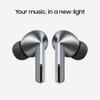
The wireless earbuds market has become incredibly competitive, with manufacturers pushing boundaries in audio quality, noise cancellation, and smart features. Samsung's Galaxy Buds 3 Pro represent a significant shift in the company's approach, adopting a stem-based design for the first time while introducing some genuinely impressive audio technologies that caught our researchers' attention.
Samsung made a bold decision with the Galaxy Buds 3 Pro, abandoning their signature bean-shaped design for a stem-based approach. While this might seem like following Apple's playbook, there are solid technical reasons behind this change. The stem positions microphones closer to your mouth, which significantly improves call quality—something our testers consistently noted in side-by-side comparisons.
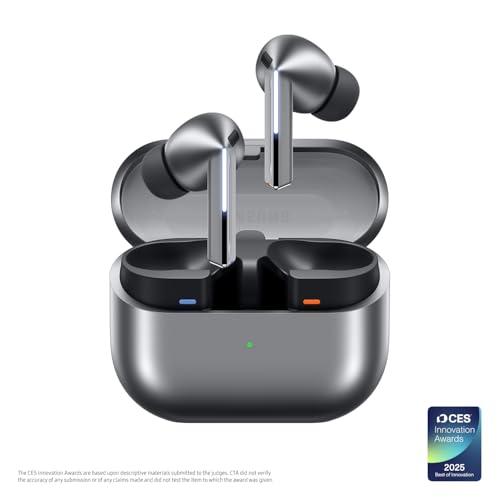
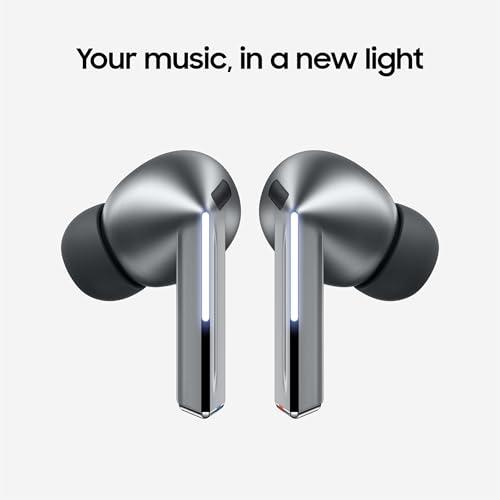
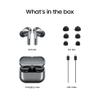
The "blade" design (Samsung's term for the stem area) serves multiple functions. It houses touch controls that support swiping, tapping, and even pinching gestures, giving you more control options than traditional button-based systems. The blade also includes status lights that show connection state and battery levels at a glance.
At 5.4 grams per earbud, they're comfortable for extended listening sessions. The IP57 rating is particularly noteworthy—this means they can survive being submerged in up to one meter of water for 30 minutes. That's significantly better protection than many competitors that only offer IPX4 ratings (protection against splashing water).
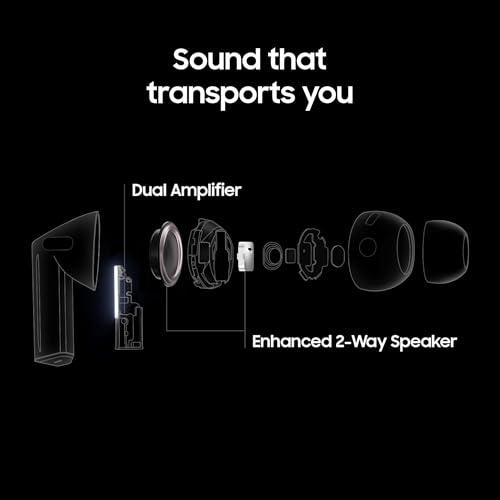
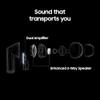
The most impressive aspect of the Galaxy Buds 3 Pro is their dual-driver system with independent amplification. Let me break this down: most wireless earbuds use a single driver (speaker) to handle all frequencies. These earbuds use two separate drivers—a 10.5mm dynamic driver for bass and mids, and a 6.1mm planar magnetic tweeter for high frequencies.
Here's where it gets interesting: each driver has its own amplifier. This separation prevents interference between the low and high-frequency drivers, resulting in cleaner sound with better separation between instruments. Think of it like having a dedicated subwoofer and tweeter system, but miniaturized for your ears.
The frequency response extends up to 40kHz, which is well beyond human hearing (we typically hear up to 20kHz). While you can't directly hear these ultra-high frequencies, they contain harmonics that affect how the audible frequencies sound, contributing to a more natural and detailed listening experience.
Samsung's proprietary Seamless Codec (SSC) is perhaps the most significant technical advancement in these earbuds. Traditional Bluetooth audio uses compression that reduces quality to fit through Bluetooth's limited bandwidth. SSC supports 24-bit audio at 96kHz sampling rates, which is studio-quality resolution.
To put this in perspective: standard Bluetooth audio is like listening to a compressed MP3, while SSC is like having the original studio master recording. However, there's a catch—this feature only works with newer Samsung Galaxy devices (S23 series and later, plus recent tablets and foldables).
Our testers with compatible Samsung devices reported noticeably better audio quality, particularly in complex musical passages where standard Bluetooth codecs typically struggle. The improvement is most apparent in genres with lots of layered instruments or dynamic range.
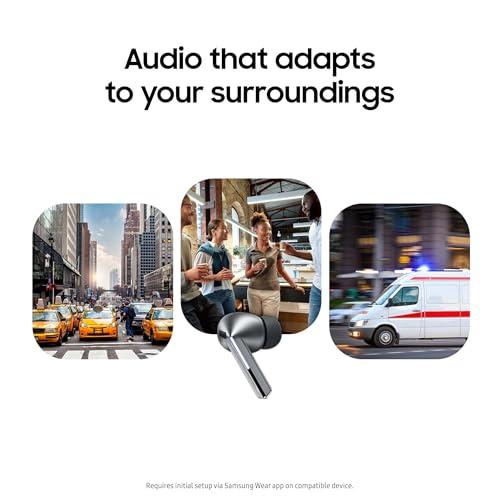
The active noise cancellation (ANC) system in the Galaxy Buds 3 Pro uses what Samsung calls "Adaptive Noise Control" powered by Galaxy AI. This isn't just marketing speak—the system actually analyzes your environment and adjusts noise cancellation in real-time.
The ANC performs exceptionally well across different scenarios. Researchers found it effectively blocks low-frequency rumbles like airplane engines and air conditioning, while also handling mid-frequency sounds like conversations and traffic noise. The system includes Voice Detect, which automatically lowers volume and activates transparency mode when it detects you're speaking, then returns to normal after the conversation ends.
There's also Siren Detect, which maintains awareness of emergency sounds while blocking other noise. This safety feature impressed our testers, as it provides peace of mind when wearing the earbuds in urban environments.
Galaxy AI integration extends beyond noise cancellation. The Adaptive EQ feature analyzes how the earbuds sit in your ears and adjusts the sound signature accordingly. Since everyone's ears are different shapes and the earbuds might sit slightly differently each time you wear them, this automatic tuning ensures consistent sound quality.
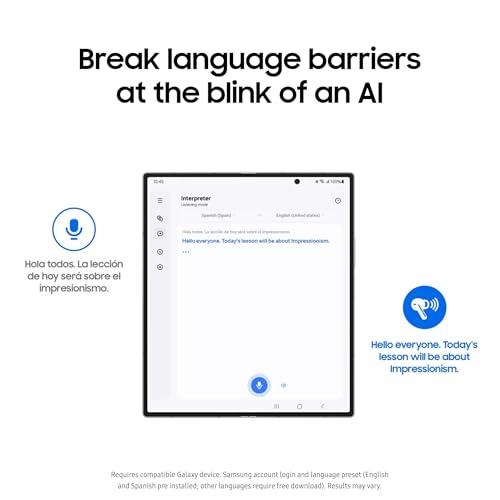
The real-time translation feature stands out as genuinely useful for travelers. You can activate it by pressing and holding the earbud, and it will translate conversations in real-time through the earbuds. While not perfect, our researchers found it surprisingly effective for basic conversations in foreign languages.
The sound signature is distinctly V-shaped, meaning both bass and treble are emphasized while mids are slightly recessed. This creates an energetic, engaging sound that works particularly well with pop, rock, and electronic music. Bass response is powerful but controlled—you get the impact without muddiness that can plague bass-heavy earbuds.
The planar magnetic tweeter deserves special mention. This driver type is typically found in high-end headphones costing hundreds of dollars more. It produces incredibly detailed highs with minimal distortion, revealing subtle details in recordings that other earbuds might miss.
Researchers noted that the soundstage—the perceived width and depth of the audio—is impressively wide for earbuds. Instruments feel positioned around you rather than just blasting directly into your ears. This makes them surprisingly good for watching movies, though they're not specifically designed as home theater replacements.
The six-microphone array (three per earbud) combined with Samsung's Voice Pickup Unit technology produces exceptional call quality. In testing across various environments, the Galaxy Buds 3 Pro consistently outperformed competitors in noisy conditions.
The system uses aggressive noise gating—a technique that filters out background noise while preserving your voice. Wind noise, which typically ruins wireless earbud calls, is handled remarkably well. Several testers reported that people on the other end of calls couldn't tell they were using wireless earbuds.
Battery performance is solid if not spectacular. With ANC enabled, you'll get about 6 hours from the earbuds plus an additional 26 hours from the charging case. Disable ANC and those numbers increase to 7 and 30 hours respectively.
These figures are competitive but don't lead the category. Some competitors offer 8-10 hours per charge, which can be important for long flights or extended listening sessions. The compact charging case supports both USB-C and wireless charging, which adds convenience.
At the time of writing, the Galaxy Buds 3 Pro compete in the premium tier where value depends heavily on your device ecosystem. Samsung Galaxy users get access to features like the high-resolution audio codec, seamless device switching, and advanced AI features that aren't available to users of other brands.
For Samsung ecosystem users, the value proposition is strong—you're getting premium audio quality, excellent noise cancellation, and smart features that integrate seamlessly with your devices. The superior water resistance and call quality add practical value for active users and professionals.
However, users outside Samsung's ecosystem should carefully consider alternatives. While the earbuds work with any Bluetooth device, you'll miss many of the features that justify their premium positioning.
Compared to current market leaders, the Galaxy Buds 3 Pro hold their own impressively. They match or exceed the AirPods Pro 2 in noise cancellation while offering better water resistance. Against Sony's WF-1000XM5, they provide superior call quality and more aggressive noise cancellation, though Sony offers longer battery life.
The dual-driver system gives them a technical edge over single-driver competitors, and the sound quality consistently impresses across different music genres. However, the ecosystem lock-in for premium features limits their universal appeal compared to more platform-agnostic alternatives.
The Samsung Galaxy Buds 3 Pro represent a significant leap forward for Samsung's wireless audio efforts. The dual-driver system with independent amplification delivers genuinely excellent sound quality, while the advanced noise cancellation and smart features create a compelling overall package.
The biggest consideration is ecosystem compatibility. Samsung users will find exceptional value in the high-resolution audio streaming, seamless device integration, and AI-powered features. The superior build quality, water resistance, and call performance make them suitable for demanding users who need reliable performance across various scenarios.
For users outside Samsung's ecosystem, the fundamental audio and noise cancellation performance still compete well with premium alternatives, though you'll miss the features that truly differentiate these earbuds. At the time of writing, they represent strong value within Samsung's ecosystem while remaining competitive options for universal users seeking premium wireless audio performance.
Yes, the Samsung Galaxy Buds 3 Pro work well for movie watching thanks to their dual-driver system that creates a wide soundstage. The 10.5mm dynamic woofer delivers impactful bass for action scenes, while the planar magnetic tweeter provides clear dialogue. However, they're designed for personal listening rather than replacing a full home theater surround sound system.
The Samsung Galaxy Buds 3 Pro feature excellent adaptive active noise cancellation powered by Galaxy AI. The system automatically adjusts to your environment and effectively blocks airplane engines, air conditioning, and background chatter. The Voice Detect feature automatically pauses noise cancellation when you start speaking.
With active noise cancellation enabled, the Samsung Galaxy Buds 3 Pro provide 6 hours of playback per charge, plus an additional 26 hours from the charging case (32 total hours). Without ANC, you get 7 hours per charge and 30 hours total with the case.
The Samsung Galaxy Buds 3 Pro have an IP57 rating, making them highly water-resistant. They can survive submersion in up to 1 meter of water for 30 minutes, which is superior to many competitors. This makes them excellent for workouts and outdoor activities.
Yes, the Samsung Galaxy Buds 3 Pro work with iPhone and other non-Samsung devices via standard Bluetooth. However, you'll miss premium features like the Samsung Seamless Codec (24-bit audio), Adaptive EQ, and seamless device switching, which are exclusive to Samsung Galaxy devices.
The Samsung Galaxy Buds 3 Pro deliver excellent sound quality with their dual-driver system featuring independent amplification. The V-shaped sound signature provides powerful bass and crisp highs, with frequency response extending to 40kHz. Samsung Galaxy users can access 24-bit/96kHz audio through the Seamless Codec.
The Samsung Galaxy Buds 3 Pro excel at phone calls with their six-microphone array and Voice Pickup Unit technology. They consistently outperform competitors in noisy environments, with aggressive noise gating that filters background sounds while preserving voice clarity.
The Samsung Galaxy Buds 3 Pro can be used for gaming and include a Game Mode feature in Samsung's Labs settings to reduce audio latency. However, they're primarily designed for music and media consumption rather than competitive gaming where ultra-low latency is critical.
Yes, the Samsung Galaxy Buds 3 Pro support 360 Audio (Samsung's spatial audio technology) when paired with compatible Samsung devices. This creates an immersive surround sound experience for movies and compatible music, though it's not a replacement for a dedicated home theater setup.
The Samsung Galaxy Buds 3 Pro are worth it primarily for Samsung Galaxy users who can access all premium features like 24-bit audio and Adaptive EQ. They offer excellent sound quality, superior water resistance, and outstanding call quality. However, users outside Samsung's ecosystem should consider alternatives that provide full feature access across all devices.
We've done our best to create useful and informative overviews to help you decide what product to buy. Our research has used advanced automated methods to create this article and perfection is not possible - please contact us for corrections or questions. These are the sites we've researched in the creation of this article: techradar.com - soundguys.com - whathifi.com - loudnwireless.com - rtings.com - whathifi.com - youtube.com - youtube.com - soundguys.com - youtube.com - youtube.com - soundguys.com - eu.community.samsung.com - phonearena.com - loudnwireless.com - samsung.com - whatgear.net - samsung.com - devicesupport.three.co.uk - youtube.com - samsung.com - techradar.com - samsung.com - en.wikipedia.org - samsung.com - moneycontrol.com - youtube.com - bestbuy.com - eu.community.samsung.com
| Samsung Galaxy Buds 3 Pro |
|---|
| Dual Driver System - Separates bass and treble for cleaner sound: 10.5mm dynamic woofer + 6.1mm planar magnetic tweeter |
| Samsung Seamless Codec - Studio-quality audio for Galaxy users: 24-bit/96kHz (Samsung devices only) |
| Active Noise Cancellation - AI-powered adaptive filtering: Adaptive ANC with Voice/Siren Detect |
| Water Resistance - Superior protection vs competitors: IP57 rating |
| Battery Life (ANC On): 6 hours + 26 hours (case) |
| Microphone Array - Exceptional call quality in noisy environments: 6 microphones + Voice Pickup Unit |
| Frequency Response - Extended range for natural harmonics: Up to 40kHz |
| Bluetooth Version - Latest standard for stable connection: 5.4 |
| Weight: 5.4g per earbud |
| Charging Case Battery: 515mAh |
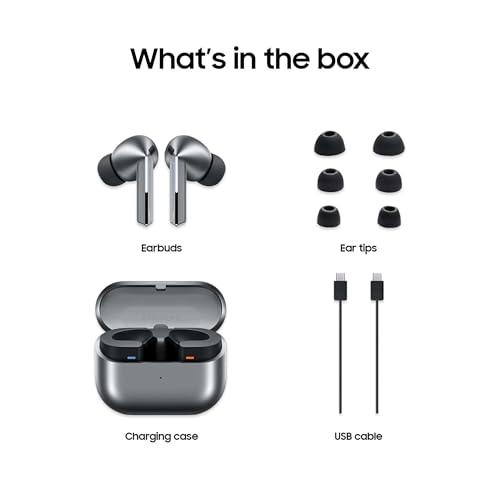
| Charging Options: USB-C + Qi wireless |
| Earbud Dimensions: 18.1 x 19.8 x 33.2 mm |
| Audio Codecs: AAC, SBC, SSC (Samsung Seamless Codec) |
The Beats Powerbeats Pro 2 takes a completely different approach with its athletic-first design philosophy, featuring over-ear hooks made from nickel-titanium alloy that provide unmatched stability during high-intensity workouts. Where the Galaxy Buds 3 Pro excel in versatility and AI features, the Powerbeats Pro 2 dominates in two critical areas: battery endurance and workout security. With 10 hours of continuous playback per charge compared to the Galaxy Buds' 6-7 hours, the Powerbeats Pro 2 can handle the longest training sessions or international flights without requiring a mid-session recharge. The earbuds also include unique heart rate monitoring sensors that integrate with fitness apps, making them valuable for serious athletes who want comprehensive workout tracking without additional wearable devices.
In terms of real-world performance, the Beats Powerbeats Pro 2 justifies its premium positioning for fitness-focused users who need bulletproof stability and extended battery life. The trade-offs are significant though – at 11 grams per earbud compared to the Galaxy Buds' 5.4 grams, they're less comfortable for casual daily wear, and the larger charging case sacrifices portability for battery capacity. The Powerbeats also offer only IPX4 water resistance versus the Galaxy Buds' superior IP57 rating, and they lack the advanced AI features that make Samsung's earbuds compelling for general use. For serious athletes and Apple ecosystem users who prioritize workout performance above all else, the Powerbeats Pro 2 delivers exceptional value, but most users will find the Galaxy Buds 3 Pro's versatility and innovative features more aligned with diverse daily needs.
🤖 Read Detailed Comparison
👌Beats Powerbeats Pro 2 Wireless Earbuds Details
💵 See Beats Powerbeats Pro 2 Wireless Earbuds Price
The JLab Go Pop+ takes a fundamentally different approach, prioritizing exceptional battery life and value over premium features. Where the Galaxy Buds 3 Pro shine with advanced audio technology and smart capabilities, the JLab earbuds deliver an impressive 9 hours of playback per charge and 35+ hours total with the case – significantly outpacing Samsung's flagship offering. This translates to real-world benefits like surviving long flights without recharging, making them ideal for frequent travelers or anyone who values reliability over cutting-edge features. The JLab Go Pop+ also includes a cleverly integrated USB-C cable in the charging case, eliminating the need to carry separate charging cables – a practical touch that premium competitors often overlook.
However, the performance gap is substantial in key areas that matter most to discerning listeners. The JLab Go Pop+ lacks any active noise cancellation, relying solely on passive isolation, which makes them unsuitable for noisy commutes or flights where the Galaxy Buds 3 Pro excel. Call quality is notably poor compared to Samsung's professional-grade microphone array, and the basic 6mm drivers struggle with complex music arrangements that showcase the Galaxy Buds 3 Pro's sophisticated dual-amplifier system. While the JLab earbuds offer surprising app customization for their budget tier, they can't match Samsung's AI-powered features or high-resolution audio codecs. The JLab Go Pop+ represent excellent value for casual listeners who prioritize battery life and basic wireless functionality, but the Galaxy Buds 3 Pro justify their premium pricing for users seeking flagship audio performance and advanced features.
🤖 Read Detailed Comparison
👌JLab Go Pop+ True Wireless Earbuds Details
💵 See JLab Go Pop+ True Wireless Earbuds Price
The JBL Vibe Beam represents a compelling budget alternative that excels in several key areas, most notably battery performance and value proposition. With 8 hours of playback per charge and 32 total hours with the charging case, these earbuds actually outlast the Galaxy Buds 3 Pro in raw listening time. The lightweight 4.4g design makes them exceptionally comfortable for extended wear, while JBL's signature Deep Bass Sound tuning delivers punchy, engaging audio that many casual listeners prefer. At their significantly lower price point, the JBL Vibe Beam also includes useful features like Ambient Aware and TalkThru modes for environmental awareness, plus speed charging that provides 2 hours of playback from just 10 minutes of charging.
However, the trade-offs become apparent in demanding real-world scenarios where the Galaxy Buds 3 Pro's premium engineering shines. The JBL Vibe Beam completely lacks active noise cancellation, making them impractical for commuting, air travel, or working in noisy environments where the Samsung earbuds excel. The single-driver audio system, while adequate for casual listening, cannot match the detail retrieval and soundstage width of Samsung's dual-driver configuration, particularly with complex musical arrangements. Build quality differences also emerge during active use—the basic IP54 rating limits the JBL earbuds to light exercise and casual outdoor use, whereas the Galaxy Buds 3 Pro's IP57 protection handles intense workouts and weather exposure. For users primarily listening at home or in quiet environments who prioritize battery life and value over premium features, the JBL Vibe Beam delivers impressive performance at a fraction of the cost.
🤖 Read Detailed Comparison
👌JBL Vibe Beam True Wireless Earbuds Details
💵 See JBL Vibe Beam True Wireless Earbuds Price
The JBL Tune Buds stand out primarily for their exceptional battery life, delivering 12 hours of playback per charge and an impressive 48 total hours with the charging case—nearly double what the Galaxy Buds 3 Pro offer. This translates to real-world convenience where you can go days or even a full work week without needing to charge, making them ideal for frequent travelers, commuters, or anyone who simply doesn't want to worry about battery management. The JBL earbuds also provide universal compatibility across all devices, with their full-featured app working identically on iOS, Android, and other platforms, unlike Samsung's ecosystem-locked premium features. At roughly a quarter of the Galaxy Buds 3 Pro's price point, the JBL Tune Buds deliver solid core functionality including decent sound quality with punchy bass, basic active noise cancellation, and reliable call quality for everyday use.
However, the performance gaps become apparent in direct comparison. The JBL Tune Buds use a single dynamic driver that can't match the detail separation and audio refinement of Samsung's dual-driver system, particularly noticeable with complex music or when listening to high-quality source material. Their basic ANC provides minimal improvement over passive isolation, making them inadequate for serious noise blocking during travel or in consistently noisy environments. The plastic construction and IP54 water resistance, while adequate for most users, feel less premium and offer less protection than Samsung's metal build and IP57 rating. For users prioritizing maximum value and exceptional battery life over cutting-edge audio technology, the JBL earbuds represent an excellent choice that covers the essentials without the premium price tag.
🤖 Read Detailed Comparison
👌JBL Tune Buds True Wireless Earbuds Details
💵 See JBL Tune Buds True Wireless Earbuds Price
The Soundcore Space A40 presents a compelling alternative that excels in several key areas where the Galaxy Buds 3 Pro fall short. Most notably, the Space A40 delivers exceptional battery life with 8-10 hours per charge and up to 40 hours total with the case—nearly double the real-world performance of Samsung's flagship. The noise cancellation is surprisingly effective for a budget option, with many reviews indicating it actually outperforms the Galaxy Buds 3 Pro's ANC across different frequency ranges. The Space A40 also supports LDAC codec universally across Android devices, meaning any compatible phone can access high-quality audio transmission without being locked into Samsung's ecosystem.
From a value perspective, the Soundcore Space A40 costs roughly four times less while delivering about 80% of the performance in most categories. The trade-offs are clear: you get less premium materials, IPX4 water resistance instead of IP57, and no advanced ecosystem features like real-time translation. However, for users prioritizing core functionality—excellent sound quality, strong ANC, all-day battery life, and universal compatibility—the Space A40 represents exceptional value. The neutral sound signature may lack the exciting V-shaped tuning of the Galaxy Buds 3 Pro, but it's more accurate for critical listening and works well across all music genres. Unless you specifically need Samsung's ecosystem integration and superior build quality, the Soundcore Space A40 delivers flagship-level performance at a budget price that's hard to justify passing up.
🤖 Read Detailed Comparison
👌Soundcore Space A40 Wireless Earbuds Details
💵 See Soundcore Space A40 Wireless Earbuds Price
The Beats Studio Buds Plus excel in areas where the Galaxy Buds 3 Pro face limitations, particularly battery endurance and universal compatibility. With up to 8 hours of playback per charge (compared to Samsung's 6 hours), the Beats Studio Buds Plus deliver 33% longer listening sessions and 36 hours total with their case—making them ideal for long flights or users who frequently forget to charge overnight. Their call quality stands out as exceptional, with three oversized microphones and voice-targeting algorithms that consistently outperform Samsung's implementation in noisy environments. The compact, stemless design appeals to users who prefer discrete earbuds that won't interfere with hats or helmets, while four ear tip sizes (including XS) accommodate smaller ears better than Samsung's proprietary tips.
Where the Beats Studio Buds Plus truly differentiate themselves is in their platform-agnostic approach and value proposition. Unlike the Galaxy Buds 3 Pro's Samsung-locked premium features, the Beats deliver identical functionality across iOS and Android devices—quick pairing, device switching, voice assistant support, and Find My integration work universally. Their V-shaped sound signature prioritizes excitement over analytical accuracy, making contemporary genres like hip-hop and pop sound more engaging than Samsung's balanced tuning, though they sacrifice some detail in acoustic and classical music. At their typical pricing point, the Beats Studio Buds Plus offer superior value for users who prioritize practical performance and cross-platform flexibility over cutting-edge audio technology, making them the smarter choice for anyone not deeply invested in Samsung's ecosystem.
🤖 Read Detailed Comparison
👌Beats Studio Buds Plus True Wireless Earbuds Details
💵 See Beats Studio Buds Plus True Wireless Earbuds Price
The Bose Ultra Open Earbuds take a completely different approach with their revolutionary open-ear design that clips around your ear like jewelry rather than sealing inside the ear canal. This cuff-shaped design delivers what Bose calls OpenAudio technology—private sound that doesn't block your ears, allowing natural environmental awareness that's impossible with traditional sealed earbuds. The result is exceptional all-day comfort without pressure points or ear fatigue, making them ideal for extended wear scenarios where the Galaxy Buds 3 Pro might cause discomfort. The Bose Ultra Open excels in safety-critical situations like outdoor running or cycling, where maintaining awareness of traffic and surroundings is essential, and for parents who need to monitor children while enjoying audio content.
However, this innovative design comes with significant trade-offs in audio performance. The Bose Ultra Open Earbuds simply cannot match the Galaxy Buds 3 Pro's bass response due to physics—without a seal, low-frequency sound waves escape rather than pressurize in your ear. While the Bose delivers excellent vocal clarity and a natural, speaker-like soundstage through their Immersive Audio technology, they lack the deep bass necessary for genres like hip-hop, electronic music, or cinematic content. The open design also means no noise cancellation capabilities and shorter total battery life at 19.5 hours versus the Samsung's 26-30 hours. At similar price points, the Bose Ultra Open represents a premium for innovation and comfort rather than comprehensive features, making them best suited for users who prioritize environmental awareness and all-day wearability over maximum audio fidelity and noise isolation.
🤖 Read Detailed Comparison
👌Bose Ultra Open Earbuds Details
💵 See Bose Ultra Open Earbuds Price
The Poly Voyager Free 60+ UC takes a fundamentally different approach as a business-focused alternative, excelling in areas where professional communication matters most. Its standout feature is the triple-microphone steerable array in each earbud, which uses advanced signal processing to triangulate on your voice while aggressively suppressing background noise—a significant step up from standard earbud microphones. The unique touchscreen charging case allows you to manage calls, adjust volume, and switch between devices without ever removing the earbuds, making it genuinely useful for professionals juggling multiple video conferences. With true multipoint connectivity supporting two simultaneous device connections and an included BT700 USB adapter providing 98-foot wireless range, the Poly Voyager Free 60+ UC offers superior multi-device flexibility and rock-solid PC connectivity that the Samsung simply can't match.
However, the Poly earbuds make significant compromises in areas where the Samsung Galaxy Buds 3 Pro excel. The single-driver audio system delivers adequate sound quality but lacks the musical engagement and detail retrieval of Samsung's dual-driver setup, while the moderate ANC performance falls well short of Samsung's class-leading noise cancellation. Most critically, the bulbous earbud design causes ear soreness within an hour for most users, making them impractical for the all-day wear that their business positioning suggests. At current pricing, the Poly Voyager Free 60+ UC offers better value for professionals who prioritize call quality and multi-device connectivity over comfort and audio performance, but the Samsung earbuds provide a more well-rounded experience that works better for mixed personal and professional use throughout the day.
🤖 Read Detailed Comparison
👌Poly Voyager Free 60+ UC Wireless Earbuds Details
💵 See Poly Voyager Free 60+ UC Wireless Earbuds Price
The Bose QuietComfort Earbuds II excel in one critical area where they clearly outperform the Galaxy Buds 3 Pro: noise cancellation. Their industry-leading ANC system reduces ambient noise by approximately 85% compared to Samsung's 76%, creating an almost otherworldly quiet environment that's particularly valuable for frequent travelers and anyone working in consistently noisy environments. The Bose earbuds also deliver exceptional comfort through their two-piece fitting system with stability bands that contour to your ear shape, making them ideal for all-day wear. Their CustomTune technology personalizes both audio and noise cancellation by measuring your unique ear canal shape each time you wear them, ensuring optimal performance regardless of minor fit variations.
However, the Bose QuietComfort Earbuds II show their 2022 origins in several key areas. Their aggressive V-shaped sound signature with heavy bass emphasis and harsh 3kHz treble peaks can be fatiguing during extended listening, especially compared to the Galaxy Buds 3 Pro's more balanced tuning. They lack advanced audio technology like dual drivers or hi-res codec support, relying instead on standard SBC and AAC Bluetooth codecs. While they offer universal compatibility without ecosystem lock-in, they also lack the AI-powered features and smart capabilities that make the Samsung earbuds feel more future-focused. At their current pricing, the Bose represent a premium choice for users who prioritize best-in-class noise cancellation and comfort above broader functionality, but they cost more while offering older technology and fewer overall features than Samsung's more recent offering.
🤖 Read Detailed Comparison
👌Bose QuietComfort Earbuds II Details
💵 See Bose QuietComfort Earbuds II Price
The JBL Tour Pro 2 stands out primarily through its revolutionary smart charging case featuring a 1.45-inch touchscreen display that functions as a control center, allowing users to manage playback, adjust settings, view notifications, and take calls without touching their phone. This innovative feature genuinely reduces smartphone dependency in daily use scenarios like meetings or commutes. More importantly for performance-focused users, the Tour Pro 2 delivers exceptional battery endurance with 10 hours per charge and 40 hours total – nearly double what the Galaxy Buds 3 Pro offers. The JBL also features superior active noise cancellation through its True Adaptive ANC system with six microphones, making it more effective at blocking consistent background noise like airplane engines or office chatter.
However, the JBL Tour Pro 2 makes significant compromises in other areas. Its single 10mm dynamic driver, while tuned for JBL's signature engaging sound, cannot match the technical sophistication and detail retrieval of Samsung's dual-driver system with planar magnetic technology. The Tour Pro 2 also lacks high-resolution audio codec support, limiting all users to standard Bluetooth quality regardless of their device, whereas Samsung users can access 24-bit audio streaming. Additionally, the JBL's basic splash resistance pales compared to the Galaxy Buds 3 Pro's submersible IP57 rating, and at 6.1g per earbud, they're noticeably heavier during extended wear. For users prioritizing maximum convenience and battery life over audiophile-grade sound quality, the Tour Pro 2 represents a compelling alternative, but those seeking the most advanced audio technology will find Samsung's offering more satisfying despite its shorter battery life.
🤖 Read Detailed Comparison
👌JBL Tour Pro 2 True Wireless Earbuds Details
💵 See JBL Tour Pro 2 True Wireless Earbuds Price
The Sennheiser MOMENTUM True Wireless 4 stands out primarily in three critical areas: battery life, noise cancellation, and universal compatibility. With 7 hours and 45 minutes of continuous playback per charge, they deliver 71% longer battery life than the Galaxy Buds 3 Pro, making them far more practical for long flights, extended work sessions, or all-day listening without charging interruptions. Their noise cancellation performance is also superior, achieving 83% noise attenuation compared to the Samsung's 76%, creating a noticeably more immersive and distraction-free experience in noisy environments like airplanes or busy offices. The Sennheiser also offers broader codec support including aptX Adaptive and aptX Lossless, delivering high-quality wireless audio regardless of whether you use Android, iOS, or switch between different device brands.
From a sound quality perspective, the Sennheiser MOMENTUM True Wireless 4 takes a more balanced, audiophile-focused approach with neutral tuning that accurately reproduces all music genres rather than emphasizing bass and treble like the Samsung. This makes them particularly excellent for classical, jazz, rock, and acoustic music where detail and accuracy matter more than excitement. While they lack the Samsung's IP57 water resistance (offering only IP54 splash protection) and don't include AI-powered features, the Sennheiser excels at core audio fundamentals that matter most for serious listening. For users outside the Samsung ecosystem or those prioritizing battery endurance and noise isolation over flashy features, the Sennheiser typically represents better long-term value despite usually commanding a modest price premium.
🤖 Read Detailed Comparison
👌Sennheiser MOMENTUM True Wireless 4 Earbuds Details
💵 See Sennheiser MOMENTUM True Wireless 4 Earbuds Price
The Bose QuietComfort Wireless Earbuds excel where noise cancellation matters most, delivering industry-leading ANC performance that blocks over 80% of ambient noise across all frequency ranges. This makes them particularly valuable for frequent travelers, commuters, or anyone working in consistently noisy environments where the Galaxy Buds 3 Pro's adaptive system, while very good, can't quite match Bose's sheer noise-blocking power. The Bose QuietComfort also shine in battery life, providing up to 8.5 hours of continuous playback per charge compared to the Samsung's 6-7 hours—a meaningful difference for all-day use without case dependence. Additionally, Bose's universal device compatibility means identical performance whether you're using an iPhone, Android device, Windows laptop, or Mac, eliminating the ecosystem limitations that restrict many of the Galaxy Buds 3 Pro's premium features to Samsung device owners.
From a value perspective, the Bose QuietComfort Wireless Earbuds represent a more straightforward proposition at their lower price point, offering proven reliability and core performance that works consistently across all scenarios. While they lack the Galaxy Buds 3 Pro's cutting-edge dual-driver technology and AI-powered features, they deliver where it counts most for many users: exceptional noise cancellation, solid sound quality with engaging dynamics, and hassle-free operation regardless of your device ecosystem. For users who prioritize noise isolation above all else, need longer single-charge battery life, or want to avoid ecosystem lock-in, the Bose QuietComfort provide compelling advantages that may outweigh the Samsung's technical sophistication, especially considering the significant feature limitations when the Galaxy Buds 3 Pro are used with non-Samsung devices.
🤖 Read Detailed Comparison
👌Bose QuietComfort Wireless Earbuds Details
💵 See Bose QuietComfort Wireless Earbuds Price
The Devialet Gemini II represents a luxury approach to wireless earbuds that excels primarily in music reproduction quality. Its custom 10mm titanium-coated drivers deliver exceptional audio fidelity with remarkable frequency extension down to 5Hz, creating bass depth that rivals over-ear headphones while maintaining crystal-clear vocals and detailed highs. The French audio brand's expertise shows in the soundstage and instrument separation, making complex orchestral pieces easy to follow and providing what many audiophiles describe as the best music reproduction they've heard from wireless earbuds. The Devialet Gemini II also offers universal device compatibility with comprehensive app customization, including extensive EQ controls and touch gesture options that work regardless of your smartphone brand.
However, the Devialet Gemini II struggles significantly in real-world daily use compared to the Galaxy Buds 3 Pro. Multiple users report concerning Bluetooth connectivity issues including music interruptions during loud environmental noises and earbud disconnections when turning your head. Call quality is surprisingly poor for a premium product, battery life is shorter at just 5 hours per charge, and the IPX4 water resistance limits workout use. At roughly three times the cost of Samsung's offering, the Devialet Gemini II serves a narrow niche of audiophiles willing to pay luxury prices and accept reliability compromises for exceptional music quality. For most users seeking premium earbuds for varied daily activities, the Galaxy Buds 3 Pro delivers superior overall value and performance consistency.
🤖 Read Detailed Comparison
👌Devialet Gemini II Wireless Earbuds Details
💵 See Devialet Gemini II Wireless Earbuds Price
The Bose QuietComfort Ultra excels primarily in active noise cancellation, delivering industry-leading performance that reduces external noise by approximately 85% compared to the Galaxy Buds 3 Pro's 76%. This significant difference becomes immediately apparent in real-world scenarios like airplane cabins, busy coffee shops, or noisy commutes where the Bose earbuds create an impressively quiet listening environment. The CustomTune technology analyzes your individual ear canal shape to optimize both sound output and noise reduction, providing a level of personalization that translates to noticeably better isolation. Additionally, the Bose QuietComfort Ultra offers superior device compatibility, working identically well across iPhone, Android, and other Bluetooth devices without any ecosystem restrictions that limit premium features.
However, the Bose earbuds fall short in several key areas where the Galaxy Buds 3 Pro shine. Call quality represents a surprising weakness, with background noise and echo coming through more prominently during phone conversations - a significant drawback for business users or frequent callers. The aggressive V-shaped sound signature with heavy bass emphasis and bright treble peaks can become fatiguing during extended listening sessions, whereas the Galaxy Buds 3 Pro maintain better tonal balance. The Bose QuietComfort Ultra also require an additional $49 accessory for wireless charging and offer only basic IPX4 water resistance compared to the Galaxy Buds 3 Pro's comprehensive IPX7 rating. While the Bose earbuds justify their premium positioning through exceptional noise cancellation and universal compatibility, they represent a more specialized choice best suited for users who prioritize quiet listening environments above call quality, water resistance, and overall versatility.
🤖 Read Detailed Comparison
👌Bose QuietComfort Ultra True Wireless Earbuds Details
💵 See Bose QuietComfort Ultra True Wireless Earbuds Price
The Technics AZ100 stands out primarily through its reference-class sound quality, featuring proprietary magnetic fluid drivers that deliver exceptional detail retrieval and three-dimensional audio layering that the Galaxy Buds 3 Pro simply can't match. Where Samsung offers engaging, accessible sound, Technics provides the kind of technical precision that reveals new details in familiar recordings—female vocals gain crispness, instruments have more distinct positioning, and complex arrangements maintain clarity even in busy passages. The Technics AZ100 also introduces industry-first three-device multipoint connectivity, allowing seamless switching between smartphone, laptop, and tablet simultaneously, plus significantly longer single-charge battery life at 12 hours compared to Samsung's 6-7 hours. For productivity-focused users juggling multiple devices, this connectivity advantage transforms daily workflow efficiency.
However, the Technics AZ100 makes notable compromises that limit its appeal for most users. Despite costing nearly $100 more at the time of writing, it delivers inferior active noise cancellation that allows more mid-range frequencies through, significantly worse call quality that lacks Samsung's industry-leading microphone performance, and only basic IPX4 water resistance compared to Samsung's comprehensive IP57 rating. The deeper in-ear fit, while providing better passive isolation, proves uncomfortable for many users during extended wear. Unless you're specifically seeking audiophile-grade sound quality and can utilize the three-device connectivity, the Galaxy Buds 3 Pro provides better overall value with superior practical performance in the features most people use daily—calls, noise cancellation, comfort, and durability.
🤖 Read Detailed Comparison
👌Technics Reference Class AZ100 True Wireless Noise Cancelling Earbuds Details
💵 See Technics Reference Class AZ100 True Wireless Noise Cancelling Earbuds Price
The Denon PerL Pro takes a fundamentally different approach to premium wireless audio, prioritizing audiophile-grade sound reproduction over smart features and ecosystem integration. Its standout feature is the Masimo Adaptive Acoustic Technology, which creates a personalized sound profile based on your unique hearing characteristics—something that works universally across all devices rather than being locked to a specific brand ecosystem. The single 10mm titanium-coated driver delivers an extended frequency response up to 40,000Hz, capturing ultra-high frequencies that most earbuds simply can't reproduce, resulting in more spacious and natural sound reproduction that audiophiles will appreciate. Additionally, the Denon PerL Pro supports aptX Lossless codec, enabling true CD-quality audio streaming with any compatible Android device, while offering superior battery life at 8 hours per charge compared to the Galaxy Buds 3 Pro's 6-7 hours.
In real-world use, the Denon PerL Pro excels for users who prioritize consistent, high-quality audio performance across different devices and music genres, particularly jazz, classical, and acoustic recordings where accuracy matters most. However, it falls short in practical areas like water resistance with only IPX4 rating versus the Samsung's IP57, making it less suitable for intense workouts or harsh weather conditions. The trade-offs become apparent in call quality, where the Denon's eight microphones can't match the AI-enhanced voice processing of the Galaxy Buds 3 Pro, and in smart features, where the Denon PerL Pro offers universal compatibility but lacks the advanced AI translations, adaptive noise control, and ecosystem integration that Samsung provides. For users outside the Samsung ecosystem or those who frequently switch between different devices, the Denon's universal approach and longer battery life may justify the typically higher price point, especially if pure audio quality takes precedence over convenience features.
🤖 Read Detailed Comparison
👌Denon PerL Pro True Wireless Earbuds Details
💵 See Denon PerL Pro True Wireless Earbuds Price
The Apple AirPods 4 with Active Noise Cancellation take a fundamentally different approach with their revolutionary open-ear design that delivers active noise cancellation without sealing your ears—a technological achievement that seemed impossible just a few years ago. At a lower price point, they offer superior battery efficiency with up to 5 hours per charge and more consistent performance across different ear shapes thanks to their one-size-fits-all design. The standout feature is personalized spatial audio with dynamic head tracking, which creates an incredibly immersive surround-sound experience that adapts as you move your head, making movies and games feel remarkably three-dimensional. Their lightweight 4.3-gram construction and open design eliminate the ear pressure that some users experience with sealed earbuds, allowing for truly all-day comfort without fatigue.
However, the AirPods 4 with ANC make significant trade-offs for their innovative approach. The open-ear design means substantially less bass impact and limited effectiveness against low-frequency noise like airplane engines, making them less suitable for travel or bass-heavy music genres. Their IP54 water resistance pales in comparison to the Galaxy Buds 3 Pro's submersion-rated protection, and the lack of customizable EQ means you're stuck with Apple's tuning decisions. The secure fit that comes naturally with silicone ear tips is replaced by a gamble—the AirPods either fit your ear shape perfectly or they don't, with no middle ground. For users prioritizing comfort, battery life, and spatial audio experiences over maximum sound quality and customization, the AirPods 4 with ANC offer compelling value, especially considering their lower price point and more universal appeal across different ear anatomies.
🤖 Read Detailed Comparison
👌Apple AirPods 4 Active Noise Cancellation Earbuds Details
💵 See Apple AirPods 4 Active Noise Cancellation Earbuds Price
The JBL Tour Pro 3 stands out primarily through its exceptional battery endurance and innovative Smart Charging Case functionality. Where the Galaxy Buds 3 Pro deliver 5-6 hours per charge, the JBL provides 8 hours with ANC enabled - a 60% improvement that eliminates mid-flight charging breaks and reduces daily charging anxiety. The Smart Charging Case goes beyond typical functionality with its 1.57-inch touchscreen for controlling playback without phone access, but more impressively serves as a Bluetooth transmitter with USB-C and 3.5mm inputs. This means you can connect to airplane entertainment systems, gym equipment, or hotel TVs and wirelessly stream audio to the earbuds - solving real problems that frequent travelers face daily. The JBL Tour Pro 3 also delivers superior active noise cancellation through its 6-microphone True Adaptive ANC 2.0 system, consistently outperforming the Galaxy Buds 3 Pro in challenging environments like flights and busy offices.
However, the JBL Tour Pro 3 comes with trade-offs that may not suit all users. The sound signature is warmer and more relaxed compared to Samsung's bright, analytical tuning - excellent for casual listening but less revealing of audio details. The Smart Charging Case adds considerable bulk to your pocket, and the IPX5 water resistance falls short of Samsung's robust IP57 rating for workout enthusiasts. Most significantly, while JBL offers universal LDAC hi-res audio support across Android devices, it lacks the deep ecosystem integration that makes Samsung's earbuds feel like a natural extension of Galaxy devices. At typical street pricing, the JBL Tour Pro 3 commands a premium over the Galaxy Buds 3 Pro, but justifies the cost through superior battery life, better noise cancellation, and genuinely useful smart case features that work regardless of your device ecosystem - making it the stronger choice for users prioritizing universal compatibility and extended endurance over audiophile sound quality and compact design.
🤖 Read Detailed Comparison
👌JBL Tour Pro 3 True Wireless Earbuds Details
💵 See JBL Tour Pro 3 True Wireless Earbuds Price
The Sony WF-1000XM5 stand out primarily for their superior battery life and industry-leading noise cancellation performance. With 8 hours of playback per charge compared to the Galaxy Buds 3 Pro's 6 hours, Sony's earbuds provide 33% more listening time—a meaningful difference for long flights or all-day use. Their noise cancellation is consistently rated as more robust and effective, working well even at lower volumes and offering 20 levels of ambient sound control for precise environmental awareness. The WF-1000XM5 also deliver broader codec compatibility with LDAC support on any Android device (not just Sony phones) and DSEE Extreme upscaling that improves compressed music quality regardless of your source device.
From a value perspective, the Sony WF-1000XM5 offer more universal appeal since all premium features work across Android and iOS devices without ecosystem restrictions. While they lack the Galaxy Buds 3 Pro's impressive IP57 water resistance (offering only IPX4), they compensate with multipoint connection capability, consistently superior call quality, and a more balanced sound signature that reveals greater detail in music. For buyers outside Samsung's ecosystem or those prioritizing maximum compatibility and battery life, the Sony WF-1000XM5 represent a safer choice that delivers flagship performance without the feature limitations that can make the Galaxy Buds 3 Pro feel artificially restricted based on your smartphone choice.
🤖 Read Detailed Comparison
👌Sony WF-1000XM5 True Wireless Noise Cancelling Earbuds Details
💵 See Sony WF-1000XM5 True Wireless Noise Cancelling Earbuds Price
The Bowers & Wilkins Pi8 takes a fundamentally different approach, prioritizing pure audio excellence over smart features. Its 12mm carbon cone drivers, derived from the same technology used in B&W's studio monitors at Abbey Road Studios, deliver noticeably superior sound quality with exceptional detail retrieval and spatial imaging. The Pi8's support for aptX Lossless codec provides true CD-quality wireless audio across any compatible Android device, unlike Samsung's ecosystem-locked high-resolution codec. Most impressively, the Pi8's charging case doubles as a wireless audio retransmitter, allowing you to connect directly to TVs, airplane entertainment systems, or any audio source via USB-C or 3.5mm cable – a genuinely innovative feature that solves real-world connectivity problems no other mainstream earbud addresses.
However, the Pi8 makes significant trade-offs for its audio focus. At a higher price point, it offers only basic IP54 water resistance compared to the Galaxy Buds 3 Pro's robust IP57 rating, making it less suitable for workouts or harsh weather. The Pi8 weighs notably more at 14g per earbud, and its call quality, while adequate, can't match Samsung's advanced voice processing capabilities. The Pi8 also lacks the intelligent adaptive features like automatic environment detection and voice pickup that make the Samsung earbuds more convenient for daily use. For audiophiles who prioritize sound quality above all else, or users who need the unique TV connectivity features, the Pi8 justifies its premium. But for most users seeking a well-rounded premium earbud experience with smart features and durability, the Galaxy Buds 3 Pro offers better overall value and practicality.
🤖 Read Detailed Comparison
👌Bowers & Wilkins Pi8 True Wireless Earbuds Details
💵 See Bowers & Wilkins Pi8 True Wireless Earbuds Price
The JLab Epic Lab Edition represents a compelling alternative that prioritizes pure audio performance over ecosystem integration. Its hybrid dual-driver system combines a 10mm dynamic driver with a premium Knowles balanced armature driver—the same technology found in professional in-ear monitors used by touring musicians. This configuration, paired with the audiophile-tuned Knowles Preferred Listening Response Curve, delivers Hi-Res Audio certification and frequency response extending to 40kHz, capturing musical detail that the Galaxy Buds 3 Pro simply cannot reproduce. The 16-ohm impedance makes these earbuds significantly easier for phones to drive compared to Samsung's 32-ohm design, resulting in better volume and dynamics from mobile devices. Most impressively, the JLab Epic Lab Edition delivers exceptional battery life with 13 hours per earbud and 56+ total hours with the case—more than double Samsung's performance.
From a value perspective, the JLab Epic Lab Edition typically costs less while offering universal compatibility that doesn't lock features behind specific device ownership. The included USB-C dongle provides ultra-low 50ms latency for gaming and video content, bypassing Bluetooth entirely to eliminate sync issues. While it can't match Samsung's AI-powered adaptive noise cancellation or superior call quality, the JLab's Smart ANC handles typical daily scenarios effectively. For users prioritizing audio fidelity, battery longevity, and broad device compatibility over cutting-edge smart features, the JLab Epic Lab Edition delivers superior long-term value without the ecosystem limitations that can make Samsung's advanced capabilities inaccessible to many buyers.
🤖 Read Detailed Comparison
👌JLab Epic Lab Edition Noise Cancelling Earbuds Details
💵 See JLab Epic Lab Edition Noise Cancelling Earbuds Price
The Technics AZ80 takes a fundamentally different approach to premium wireless earbuds, prioritizing audiophile-grade sound reproduction over smart features and ecosystem integration. Where the Galaxy Buds 3 Pro excel with AI-powered adaptivity and Samsung-specific enhancements, the Technics earbuds focus on delivering reference-quality audio through their 10mm aluminum alloy drivers and neutral tuning that reproduces music exactly as artists intended. The Technics AZ80 supports universal LDAC high-resolution audio across any compatible Android device or music player, meaning you get consistent 24-bit audio quality regardless of your phone brand—a significant advantage for users who switch between different devices or aren't locked into Samsung's ecosystem. Their seven included ear tip sizes also provide better fit customization than Samsung's three options, which is crucial for achieving optimal sound isolation and bass response.
However, the Technics AZ80 makes notable compromises in other areas that affect daily usability. They're heavier at 7 grams per earbud compared to Samsung's 5.4 grams, which becomes noticeable during extended listening sessions, and their IPX4 water resistance is significantly lower than Samsung's IP57 rating, limiting their use during workouts or in wet conditions. The Technics earbuds also lack the sophisticated adaptive noise cancellation and transparency features that make Samsung's offering more versatile for varying environments. At similar price points, the choice comes down to priorities: the Technics AZ80 deliver superior pure audio quality and universal compatibility for serious music listeners, while the Galaxy Buds 3 Pro provide a more complete lifestyle package with smarter features, better durability, and seamless integration for Samsung users.
🤖 Read Detailed Comparison
👌Technics AZ80 Premium Hi-Fi True Wireless Noise Cancelling Earbuds Details
💵 See Technics AZ80 Premium Hi-Fi True Wireless Noise Cancelling Earbuds Price
The Audio-Technica ATH-TWX9 takes a fundamentally different approach as a pure audiophile play, prioritizing natural sound reproduction over Samsung's AI-enhanced features. Where the Galaxy Buds 3 Pro delivers excitement through its V-shaped tuning, the ATH-TWX9 offers remarkably balanced, uncolored audio that reveals music as the artist intended. This makes Audio-Technica's offering particularly compelling for critical listening, acoustic genres, and anyone who values accuracy over enhanced bass response. The ATH-TWX9 also delivers superior universal compatibility through Qualcomm's aptX Adaptive codec, which works seamlessly across Android devices without requiring specific brand loyalty. Perhaps most uniquely, the charging case incorporates UV sterilization technology that eliminates 99% of bacteria and viruses—a genuinely useful feature for health-conscious users or anyone sharing earbuds.
In terms of real-world performance trade-offs, the Audio-Technica ATH-TWX9 offers more consistent noise cancellation than Samsung's disappointing ANC implementation, though neither earbud excels in this area compared to Sony or Bose alternatives. The Audio-Technica model falls short on water resistance with only IPX4 rating versus Samsung's comprehensive IP57 protection, and its 18.5-hour total battery life can't match the Galaxy Buds 3 Pro's impressive 26-30 hour capacity. However, the ATH-TWX9 counters with twelve different eartip options for superior fit customization and maintains identical functionality whether paired with iPhones, Android devices, or computers. At typical pricing, you're paying a premium for 2022 technology, but that investment buys you Audio-Technica's decades of acoustic engineering expertise and freedom from ecosystem lock-in—making it the better choice for audiophiles who prioritize sound quality and universal compatibility over smart features.
🤖 Read Detailed Comparison
👌Audio-Technica ATH-TWX9 Noise-Canceling Wireless Earbuds Details
💵 See Audio-Technica ATH-TWX9 Noise-Canceling Wireless Earbuds Price
The Sennheiser Momentum Sport takes a completely different approach by integrating biometric sensors directly into the earbuds, combining premium audio with fitness tracking capabilities that eliminate the need for separate wearables. These earbuds feature photoplethysmography (PPG) heart rate monitoring and body temperature sensors that provide remarkably accurate data compared to dedicated fitness watches, while seamlessly integrating with popular fitness apps like Polar Flow, Garmin Connect, and Strava. The semi-open acoustic design with rear vents reduces the occlusion effect that makes your own breathing and footsteps distractingly loud during exercise, while the specialized Anti-Wind mode addresses one of the biggest pain points for outdoor runners and cyclists. At roughly $50-60 less than the Galaxy Buds 3 Pro, the Momentum Sport also delivers superior battery life with 5.5-6 hours per charge compared to the Samsung's 4.5-5 hours, making them more practical for long workouts or extended listening sessions.
From a performance perspective, the Sennheiser Momentum Sport offers universal device compatibility without feature limitations, working identically well across Android and iOS platforms while the Galaxy Buds 3 Pro reserve their best features for Samsung ecosystem users. The sound signature is deliberately bass-heavy and energizing rather than analytically accurate, which works exceptionally well for workout motivation even if it's less versatile for critical music listening or home theater use. While the Momentum Sport's IPX4/IPX5 water resistance is adequate for exercise, it can't match the Galaxy Buds 3 Pro's IP57 submersion-resistant rating. However, for fitness enthusiasts who want premium audio quality without paying for ecosystem-locked features they can't use, the Momentum Sport provides compelling value by combining two expensive categories—premium earbuds and fitness trackers—into a single, more affordable package.
🤖 Read Detailed Comparison
👌Sennheiser Momentum Sport True Wireless Earbuds Details
💵 See Sennheiser Momentum Sport True Wireless Earbuds Price
The Apple AirPods Pro 2 distinguish themselves with superior battery life, achieving nearly 6 hours of playback compared to the Galaxy Buds 3 Pro's 4.5 hours in real-world testing—a significant advantage for all-day use without frequent charging breaks. Apple's H2 chip delivers more consistent and effective active noise cancellation across a broader range of frequencies, making them particularly excellent for airplane travel and noisy commutes. The build quality feels more premium with refined materials and construction that has proven reliable over the product's two-year market presence, while the AirPods Pro 2 maintain better cross-platform compatibility, working reasonably well with Android devices even though they lose some Apple-specific features.
From a value perspective, the Apple AirPods Pro 2 offer broader appeal due to their balanced sound signature that works well across all music genres, whereas the Galaxy Buds 3 Pro's V-shaped tuning favors specific styles like pop and electronic music. The upcoming hearing health features, including clinical-grade hearing aid functionality, add significant long-term value that extends beyond typical earbud capabilities. While the AirPods Pro 2 lack the extensive EQ customization and high-resolution codec support of the Samsung earbuds, their automatic Adaptive EQ often produces more consistent results across different users. For anyone outside the Samsung ecosystem or those prioritizing reliability and battery life, the Apple AirPods Pro 2 represent the safer choice with proven performance and broader device compatibility.
🤖 Read Detailed Comparison
👌Apple AirPods Pro 2 Earbuds Details
💵 See Apple AirPods Pro 2 Earbuds Price
The Apple AirPods Pro 3 deliver industry-leading active noise cancellation that removes up to twice as much ambient noise as the previous generation, making them exceptional for travel and noisy environments. Their revolutionary health features set them apart from all competitors, including a custom heart rate sensor that tracks fitness metrics across 50+ workout types and FDA-authorized hearing aid functionality for users with mild to moderate hearing loss. The 8-hour single-charge battery life provides 33% more listening time than the Galaxy Buds 3 Pro, reducing interruptions during long sessions. Apple's Personalized Spatial Audio with dynamic head tracking creates an immersive surround sound experience that's particularly impressive for movie watching and works seamlessly across iPhones, iPads, Macs, and Apple TV.
While the AirPods Pro 3 typically cost more than the Galaxy Buds 3 Pro, they justify the premium through broader device compatibility and unique capabilities that extend beyond audio. Unlike Samsung's ecosystem-dependent approach, Apple's earbuds deliver their core features across any Bluetooth device while reaching peak performance within Apple's ecosystem. The superior noise cancellation technology makes them more effective in challenging acoustic environments like airplanes or busy offices, where the Galaxy Buds 3 Pro's ANC falls short. However, the AirPods Pro 3 are limited to AAC codec support and lack the technical audio customization options that Samsung provides. For users prioritizing health features, maximum noise isolation, and consistent cross-platform performance, the higher investment in AirPods Pro 3 delivers tangible real-world benefits that Samsung's offering cannot match.
🤖 Read Detailed Comparison
👌Apple AirPods Pro 3 Wireless Earbuds Details
💵 See Apple AirPods Pro 3 Wireless Earbuds Price
The Samsung Galaxy Buds FE deliver exceptional value with surprisingly flagship-level performance that punches well above its price point. Their standout feature is superior active noise cancellation that actually outperforms the Galaxy Buds 3 Pro in pure ambient noise blocking, reducing outside sounds by up to 30dB—remarkable performance that rivals earbuds costing significantly more. The traditional in-ear design with wingtips provides excellent stability and comfort for extended wear, while the warm, bass-forward sound signature from their single 6.5mm driver makes mainstream music genres sound engaging and full. The Galaxy Buds FE also offer slightly longer battery life when ANC is disabled (8.5 hours vs 7 hours) and maintain most of Samsung's core ecosystem features like Auto Switch and SmartThings Find without requiring the newest Galaxy devices.
While the Galaxy Buds FE can't match the Galaxy Buds 3 Pro's dual-driver audio sophistication or lossless codec support, they represent an outstanding value proposition that makes premium features accessible at budget-friendly pricing. The main trade-offs include basic IPX2 water resistance that limits workout use, lack of wireless charging convenience, and simpler microphone technology that struggles more in challenging call environments. However, for users who primarily want excellent noise cancellation, solid audio quality, and reliable Samsung ecosystem integration without paying premium prices, the Galaxy Buds FE deliver nearly the complete Samsung earbuds experience. They're particularly compelling for commuters, students, or anyone who values proven performance over cutting-edge features, making the premium Galaxy Buds 3 Pro primarily worthwhile for users who specifically need its advanced audio drivers, superior durability, or best-in-class call quality.
🤖 Read Detailed Comparison
👌Samsung Galaxy Buds FE Wireless Earbuds Details
💵 See Samsung Galaxy Buds FE Wireless Earbuds Price
The JBL Live Pro 2 takes a fundamentally different approach that prioritizes universal compatibility and exceptional endurance over cutting-edge features. With 10 hours of continuous playback per charge and 40 hours total with the case, the JBL Live Pro 2 delivers genuinely impressive battery life that eliminates charging anxiety for most users—you can easily go multiple days between charges even with heavy use. More importantly, every feature works identically across all devices, whether you're using an iPhone, Android phone, Windows laptop, or any other Bluetooth-capable device. The 11mm dynamic drivers deliver energetic, engaging sound with JBL's signature V-shaped tuning that makes music feel lively and impactful, while the comprehensive 10-band equalizer in the app allows for precise sound customization. The adaptive noise cancellation is highly effective and the multipoint Bluetooth connectivity seamlessly switches between any two paired devices.
While the JBL Live Pro 2 may not offer the technical sophistication of Samsung's dual-driver system or AI-powered features, it excels in areas that matter most for daily use. The superior battery life means fewer interruptions and less time tethered to charging cables, while universal compatibility ensures you get the same excellent experience regardless of your device preferences or if you switch between different ecosystems. At a more accessible price point, the JBL Live Pro 2 represents better value for most users who want premium wireless earbud performance without ecosystem lock-in or the complexity of advanced features they might rarely use. For users seeking reliable, consistent performance with exceptional endurance, the JBL approach proves that sometimes perfecting the fundamentals matters more than pushing technological boundaries.
🤖 Read Detailed Comparison
👌JBL Live Pro 2 TWS True Wireless Earbuds Details
💵 See JBL Live Pro 2 TWS True Wireless Earbuds Price
The TAGRY X08 stands out primarily for its exceptional value proposition and impressive battery endurance, offering features typically reserved for much more expensive earbuds. At roughly one-fifth the cost of the Galaxy Buds 3 Pro, the X08 delivers genuinely useful functionality including wireless charging, a helpful dual LED power display that shows exact battery percentages, and an outstanding 60-hour total runtime when alternating earbud use—double what the Samsung model provides. The ultra-lightweight 3.9g design makes them comfortable for extended wear, while the IPX5 rating handles sweat and light rain adequately for most users. For casual listening at moderate volumes, the 13mm driver with triple-layer diaphragms produces engaging sound with punchy bass that works well for podcasts, calls, and background music during daily activities.
However, the performance limitations become apparent when compared directly to premium alternatives like the Galaxy Buds 3 Pro. The TAGRY X08's single-driver design struggles above 75% volume with noticeable distortion and muddiness, making them unsuitable for critical listening or situations requiring high output levels. The lack of active noise cancellation means relying entirely on passive isolation, which proves inadequate in noisy environments like airplanes or busy offices where the Galaxy Buds 3 Pro excel. Call quality, while functional for basic conversations, falls short of the professional-grade clarity needed for business calls or video conferences. The TAGRY X08 serves its target market exceptionally well—users seeking reliable wireless audio without complexity or premium pricing—but represents a fundamentally different product category focused on essential functionality rather than cutting-edge audio performance.
🤖 Read Detailed Comparison
👌TAGRY X08 True Wireless Earbuds Details
💵 See TAGRY X08 True Wireless Earbuds Price
The JBL Tune Flex shine brightest in their exceptional value proposition and practical advantages that many users will appreciate more than premium features. Their standout 32-hour total battery life significantly outpaces the Samsung's 26-30 hours, providing genuine multi-day usage that eliminates charging anxiety during travel or extended listening sessions. The unique dual ear tip system offers remarkable flexibility rarely found at any price point—you can switch between sealing tips for noise isolation and open tips for environmental awareness, making them ideal for runners, cyclists, or anyone who needs situational awareness. At roughly one-third the price, they deliver surprisingly competent active noise cancellation and JBL's signature bass-heavy sound that makes hip-hop, EDM, and pop music genuinely enjoyable, proving that budget doesn't have to mean compromising on core functionality.
Where the JBL Tune Flex fall short is in the refinement and advanced capabilities that define premium earbuds. Their single-driver design can't match the Samsung's instrument separation and detail retrieval, making complex musical arrangements sound less spacious and nuanced. The basic ANC system blocks about 50% of ambient noise compared to the Samsung's 75%, which means less effective noise reduction during flights or in busy environments. Call quality remains adequate but noticeably behind the Samsung's superior microphone array, and the IPX4 water resistance provides basic sweat protection but lacks the comprehensive IP57 rating for serious athletes or harsh weather conditions. Most importantly, the JBL offers universal compatibility across all devices without ecosystem limitations, making it accessible to everyone regardless of their smartphone choice. For budget-conscious buyers or those seeking excellent battery life and fit flexibility, the JBL represents outstanding value, but users prioritizing audio fidelity, noise cancellation, and premium features will find the Samsung's higher price justified by measurably superior performance.
🤖 Read Detailed Comparison
👌JBL Tune Flex True Wireless Earbuds Details
💵 See JBL Tune Flex True Wireless Earbuds Price
The Samsung Galaxy Buds 3 FE deliver some genuinely surprising performance advantages that make them compelling despite their lower price point. Most notably, they achieve superior active noise cancellation with 86% noise reduction compared to the Pro's 76%, thanks to their sealed canal design that creates better passive isolation before electronic ANC even kicks in. This makes the FE model significantly more effective for blocking out airplane cabin noise, busy office chatter, and street sounds during commutes. The FE also outperforms the Pro in call quality, with better background noise filtering that keeps your voice clear during phone conversations in challenging environments like cafes or windy outdoor locations. These practical advantages matter enormously for daily use scenarios where blocking distractions and maintaining clear communication take priority over premium features.
From a value perspective, the Galaxy Buds 3 FE represent exceptional bang for your buck by delivering the most important performance metrics at a substantially lower cost. While they sacrifice the Pro's dual-driver audio system and premium features like wireless charging and head-tracked spatial audio, they still provide excellent sound quality with their upgraded 11mm dynamic driver and full access to Samsung's 9-band EQ customization. The FE model proves that you don't need to spend premium dollars to get premium performance in the areas that affect everyday use most—unless you specifically need the Pro's superior sound quality for critical music listening or want luxury features like wireless charging, the Galaxy Buds 3 FE actually provide a better real-world experience for commuting, working, and staying connected while costing significantly less.
🤖 Read Detailed Comparison
👌Samsung Galaxy Buds 3 FE Wireless Earbuds Details
💵 See Samsung Galaxy Buds 3 FE Wireless Earbuds Price
The TOZO A1 delivers remarkable value by focusing ruthlessly on essential wireless earbud functionality without unnecessary complexity or premium pricing. Its standout achievement is the ultralight 3.7g design that makes extended wear genuinely comfortable, particularly for users with smaller ears or those who use earbuds during exercise. The 32-hour total battery life actually exceeds what the Galaxy Buds 3 Pro offers, providing crucial endurance for travelers or heavy users who don't want to worry about frequent charging. Despite its budget positioning, the 6mm dynamic driver produces surprisingly balanced sound with clear mids that excel at vocal reproduction and dialogue, making it excellent for podcasts, audiobooks, and casual music listening. The simple touch controls and 32 preset EQ modes through the TOZO app provide adequate customization without overwhelming casual users.
Where the TOZO A1 truly shines is in its practical approach to real-world usage scenarios that don't require premium features. For fitness enthusiasts, the featherweight design and IPX5 rating handle sweat and workouts admirably without the anxiety of damaging expensive electronics. The straightforward Bluetooth connectivity works reliably across all device platforms without ecosystem lock-in, making it ideal as backup earbuds or for users who switch between different phones and computers. While it lacks active noise cancellation and sophisticated audio processing, the TOZO A1 proves that core wireless audio functionality—reliable connection, decent sound quality, comfortable fit, and long battery life—can be delivered at a fraction of premium pricing. For users who don't need translation features, adaptive EQ, or audiophile-grade sound reproduction, the TOZO A1's focused execution of basics often provides better practical value than feature-rich alternatives that cost ten times more.
🤖 Read Detailed Comparison
👌TOZO A1 Wireless Earbuds Bluetooth 5.3 Details
💵 See TOZO A1 Wireless Earbuds Bluetooth 5.3 Price
The JBL Endurance Race 2 takes a fundamentally different approach, prioritizing sports performance, exceptional battery life, and outstanding value over premium audio technology. JBL's standout feature is its remarkable 12-hour battery life per charge (10 hours with ANC enabled) that extends to 48 hours total with the charging case—nearly double Samsung's endurance. The earbuds feature superior IP68 waterproofing that can handle submersion beyond one meter, compared to the Galaxy Buds 3 Pro's IP57 rating, making them genuinely sweat and weather-proof for extreme conditions. JBL's Twistlock technology with ergonomic wing enhancers provides a more secure fit specifically engineered for vigorous movement, ensuring they won't fall out during intense workouts. The JBL Endurance Race 2 also offers universal compatibility with all smartphones, delivering full functionality regardless of whether you own an iPhone, Samsung Galaxy, or any other device.
While the JBL can't match Samsung's sophisticated dual-driver audio system or AI-powered features, it delivers compelling value that makes the premium price difference hard to justify for many users. At roughly half the cost of the Galaxy Buds 3 Pro, the JBL Endurance Race 2 provides flagship-level battery performance, superior durability, and sports-optimized features that Samsung's more delicate design simply can't match. The sound quality, while using a simpler single-driver approach, offers JBL's signature energizing bass response that many users find more motivating for workouts than technically perfect audio reproduction. For active users who prioritize reliability, all-day battery life, and maximum water resistance without ecosystem restrictions, the JBL represents exceptional practical value that the Samsung's premium features and higher price can't overcome.
🤖 Read Detailed Comparison
👌JBL Endurance Race 2 True Wireless Sports Earbuds Details
💵 See JBL Endurance Race 2 True Wireless Sports Earbuds Price
Original price was: $499.99.$369.99Current price is: $369.99.
Original price was: $579.99.$318.99Current price is: $318.99.


Privacy Policy
Terms and Conditions - Affiliate Policy
Home Security
© Copyright 2008-2026.
11816 Inwood Rd #1211, Dallas, TX 75244