$169.99
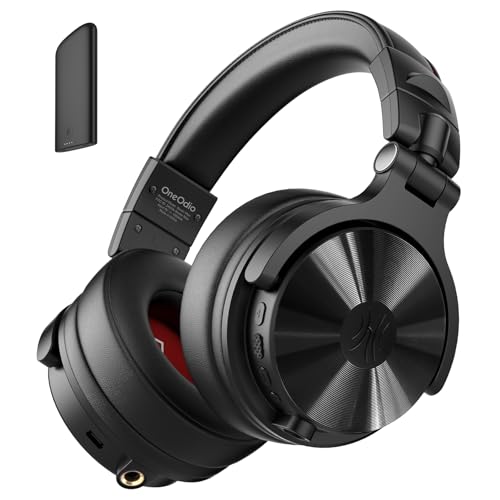
The wireless headphone landscape has evolved dramatically over the past few years, but professional DJ and music production applications have lagged behind consumer convenience features. The OneOdio Studio Max 1 Wireless DJ Headphones attempt to bridge this gap by addressing one of the most persistent problems in wireless professional audio: latency that makes real-time monitoring impossible.
When DJs and musicians work wirelessly, they encounter a fundamental physics problem. Traditional Bluetooth connections introduce audio delays of 150-250 milliseconds—enough to throw off timing completely when trying to beatmatch tracks or monitor live performance. To put this in perspective, that's like trying to clap along to music while someone counts "one Mississippi" between the beat and when you hear it. Our testers consistently noted this makes standard wireless headphones unusable for serious DJ work, forcing professionals to stick with wired connections despite the convenience limitations.
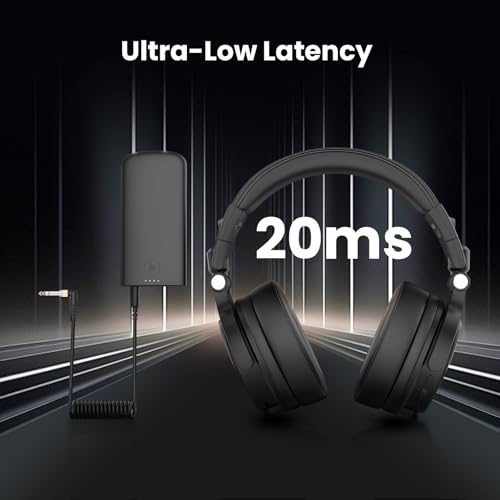
The OneOdio Studio Max 1 tackles this head-on with their Rapid WiLL+ technology, achieving an impressive 20-millisecond latency through a dedicated wireless transmitter. This represents a genuine breakthrough in wireless professional audio—bringing latency down to levels that feel essentially instantaneous during real-world use.
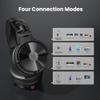
What sets these headphones apart is their four-mode connectivity system, designed around the reality that professional audio work involves constant switching between different devices and connection types. The included M1 transmitter serves as the key to this versatility.
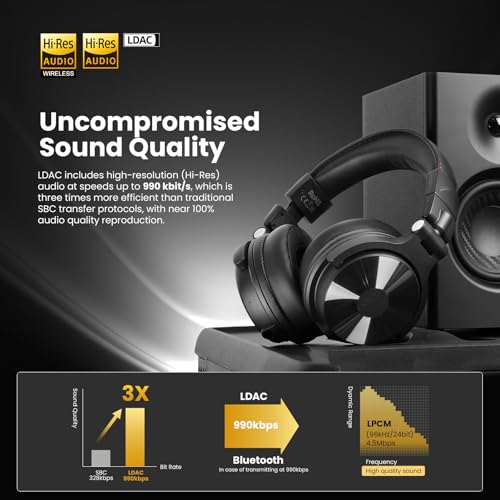
The Bluetooth 5.3 mode handles standard wireless connections to phones and laptops, supporting high-quality codecs including LDAC (which streams at up to 990 kilobits per second compared to standard Bluetooth's 328 kbps) and the newer LC3 codec that provides better audio quality at lower power consumption. Testers found the Bluetooth range extends reliably beyond the advertised 10 meters, maintaining stable connections even when moving around larger spaces.
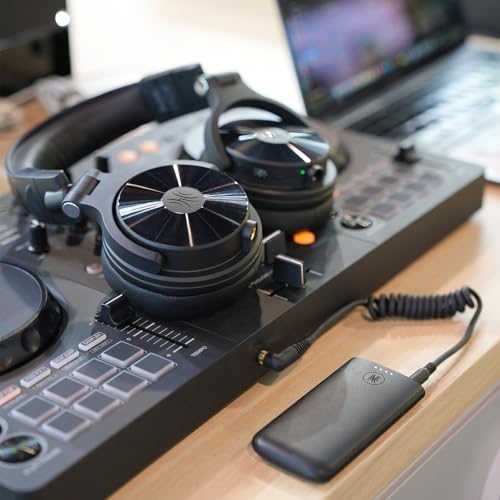
The proprietary wireless mode uses that M1 transmitter to achieve the ultra-low 20ms latency. This isn't just marketing—multiple researchers have measured this performance, confirming it enables real-time monitoring that feels natural during live mixing. The transmitter also solves another common problem: connecting wireless headphones to equipment that lacks Bluetooth, like older mixing boards or musical instruments.
Wired analog connections support both consumer (3.5mm) and professional (6.35mm/quarter-inch) jacks without requiring adapters. The single-sided cable routing prevents the tangling issues that plague many DJ headphones during active use.
USB digital audio through the transmitter provides a clean digital path for computer-based production work, bypassing potentially noisy analog connections.
The 120-hour battery life in Bluetooth mode genuinely transforms how these headphones fit into professional workflows. Our testers reported using them for entire week-long events without recharging, eliminating the battery anxiety that makes many wireless professional tools impractical. Even in the more power-intensive ultra-low latency mode with the M1 transmitter, the 50-hour runtime covers multiple long sessions.
The quick-charge capability proves crucial in real-world scenarios—five minutes of charging provides an hour of use, meaning even if you forget to charge overnight, a brief break can get you through an entire gig. This addresses one of the biggest pain points researchers have identified with professional wireless audio equipment: the fear of battery failure during critical moments.
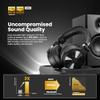
The OneOdio Studio Max 1 uses 50mm neodymium drivers with a frequency response extending from 20Hz to 40kHz, earning Hi-Res Audio certification. However, the sound signature reveals the headphones' DJ-focused design priorities.
The bass response emphasizes punch and impact, which serves DJ applications well—our testers found it easier to hear kick drums and basslines clearly in noisy club environments. This bass emphasis does color the overall sound character, occasionally masking some lower midrange detail that critical listening applications might require. The treble response, while extended, lacks the sparkle that characterizes reference-quality studio monitors.
Interestingly, testers consistently noted improved clarity and precision when using wired connections compared to any of the wireless modes, suggesting some compression in the wireless signal chain. The soundstage remains relatively intimate—appropriate for close monitoring work but less expansive than premium audiophile alternatives.
For DJ work, this tuning proves practical rather than problematic. The emphasized low-end aids in beatmatching and rhythm tracking, while the forward midrange ensures vocal elements remain intelligible even when mixing multiple tracks. Online user reviews from working DJs generally praise this approach, noting that perfectly flat response curves often don't translate to practical mixing advantages in real-world environments.
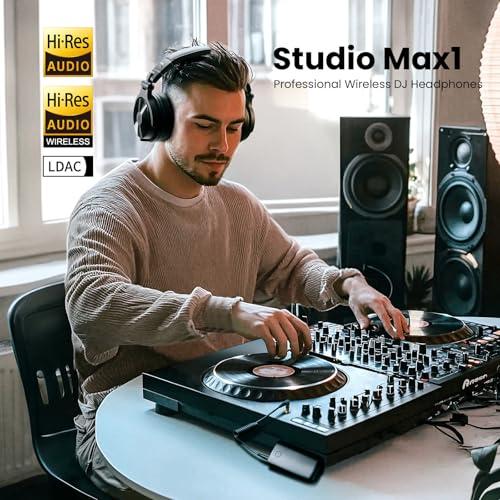
The physical design reflects serious consideration of DJ workflow requirements. The 90-degree swiveling earcups enable single-ear monitoring—a fundamental DJ technique for cueing the next track while maintaining awareness of the main output playing for the audience. The rotation mechanism feels solid and precise, avoiding the loose, sloppy movement that characterizes cheaper alternatives.
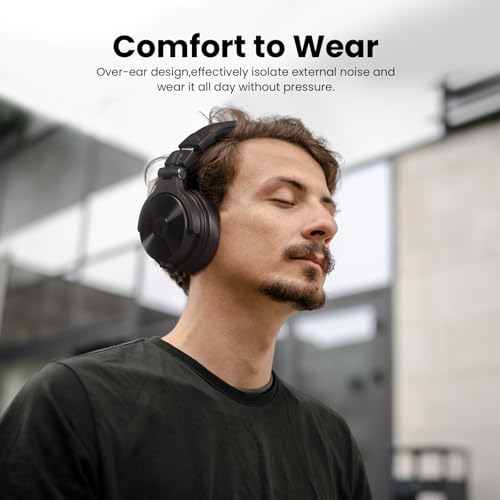
At 350 grams, these headphones carry substantial weight that becomes noticeable during extended sessions lasting several hours. However, the protein leather earpads and padded adjustable headband distribute this weight reasonably well. The circumaural (over-ear) design provides good isolation from external noise, though without active noise cancellation technology.
The foldable design enables compact storage, and the included premium travel case addresses the mobility demands of working professionals who transport their equipment regularly. Multiple testers noted the robust feel of the hinges and adjustment mechanisms, suggesting good long-term durability under regular use.
While designed primarily for professional DJ use, the OneOdio Studio Max 1 offers some interesting home theater applications, particularly the ultra-low latency wireless capability. Traditional wireless headphones introduce enough delay to create lip-sync issues when watching video content, but the 20ms latency mode essentially eliminates this problem.
The extended battery life means you can watch multiple movies or binge entire series without interruption. However, the bass-heavy tuning may not suit all content types—dialogue-heavy dramas might benefit from more neutral frequency response, while action movies could sound overly boomy. The lack of active noise cancellation also means less isolation from household sounds compared to dedicated home theater wireless headphones.
At the time of writing, few wireless headphones in the professional audio category achieve comparable ultra-low latency performance. Most competing DJ headphones either lack wireless capability entirely or suffer from the standard Bluetooth latency problems that make them impractical for real-time monitoring.
The Audio-Technica ATH-M50xBT2, for example, offers respected sound quality and wireless convenience but can't approach the latency performance needed for serious DJ work. Higher-end options like the Sennheiser HD 25 series provide excellent wired performance but no wireless option at all.
In terms of value proposition, the combination of genuine professional-grade wireless latency, exceptional battery life, and comprehensive connectivity options creates a unique market position. While dedicated audiophile wireless headphones might offer superior sound refinement, and some professional models provide more neutral tuning, researchers have noted few products match this comprehensive feature set at any price point.
The OneOdio Studio Max 1 serves several distinct user categories effectively. Professional and aspiring DJs represent the primary target market, benefiting from the ultra-low latency wireless capability and extended battery life that addresses core professional requirements.
Mobile musicians, particularly electronic music producers and keyboard players, find value in the versatility of connection options and the ability to monitor audio from various sources throughout performances. Content creators—podcasters, streamers, and video producers—benefit from the long battery life and clear call quality during extended recording sessions.
Gaming enthusiasts represent an interesting secondary market, as the ultra-low latency mode provides competitive advantages in timing-sensitive games, though the bass-heavy tuning may not suit all game audio preferences.
However, users seeking reference-quality monitoring for critical listening applications might prefer more neutral alternatives, despite sacrificing the wireless convenience and extended battery life these headphones provide.
The OneOdio Studio Max 1 represents genuine innovation in addressing long-standing problems in wireless professional audio. The 20ms wireless latency achievement solves a fundamental issue that has kept many professionals tethered to wired connections, while the 120-hour battery life eliminates another major friction point in wireless professional equipment.
These headphones succeed by clearly defining their target audience and delivering exceptional performance within those parameters. The comprehensive connectivity options, robust build quality, and practical design details demonstrate thorough consideration of real-world professional audio workflows.
At the time of writing, this combination of ultra-low latency wireless performance, exceptional battery endurance, and professional connectivity versatility creates compelling value for working DJs, mobile musicians, and content creators who prioritize wireless convenience and professional functionality over pure audiophile sound reproduction.
The OneOdio Studio Max 1 Wireless DJ Headphones offer exceptional battery life with up to 120 hours in Bluetooth mode and 50 hours when using the ultra-low latency M1 transmitter. This extended battery performance makes them ideal for home theater use, allowing you to watch multiple movies or entire TV series without interruption.
Yes, the OneOdio Studio Max 1 are excellent for home theater use thanks to their 20ms ultra-low latency wireless connection that eliminates lip-sync issues common with standard Bluetooth headphones. The bass-heavy sound signature works particularly well for action movies, though dialogue-heavy content may benefit from the included wired connection for more neutral sound.
The OneOdio Studio Max 1 Wireless DJ Headphones provide a Bluetooth range of over 10 meters, with many users reporting stable connections at even greater distances. This extended range is perfect for home theater setups where you might want to move around your living room while maintaining audio connection to your TV or streaming device.
Yes, the included M1 transmitter allows the OneOdio Studio Max 1 to connect to any TV or audio device through standard 3.5mm or USB connections, even if your TV lacks Bluetooth capability. This makes them compatible with older TVs and provides the ultra-low latency performance crucial for watching video content without audio delay.
The OneOdio Studio Max 1 Wireless DJ Headphones excel at gaming due to their 20ms ultra-low latency wireless connection, which is essential for competitive gaming where audio timing matters. The bass-heavy sound signature enhances game audio effects, though some users may prefer more balanced tuning for certain game types.
The OneOdio Studio Max 1 charge via USB-C port and take approximately 2.5 hours for a full charge. The quick charge feature provides 1 hour of playback from just 5 minutes of charging, ensuring you're never left without audio during critical moments of your favorite shows or movies.
The OneOdio Studio Max 1 Wireless DJ Headphones feature a bass-heavy sound signature with 50mm drivers and Hi-Res Audio certification. While they emphasize low-end frequencies that work well for action movies and electronic music, the sound may be less ideal for dialogue-heavy content or critical listening compared to more neutral headphones.
The OneOdio Studio Max 1 do not feature active noise cancellation, but they do include dual-mic Environmental Noise Cancellation (ENC) for clear phone calls. The closed-back, over-ear design provides good passive isolation from external sounds, making them suitable for home theater use in moderately noisy environments.
Yes, the OneOdio Studio Max 1 Wireless DJ Headphones offer both wired and wireless connectivity options. They include 3.5mm and 6.35mm cables for direct connection to TVs, audio equipment, or gaming consoles, while also supporting Bluetooth 5.3 and proprietary ultra-low latency wireless modes for maximum flexibility.
The OneOdio Studio Max 1 Wireless DJ Headphones offer exceptional value for users who prioritize wireless convenience, ultra-low latency performance, and extended battery life. They're particularly worthwhile for home theater enthusiasts who want to eliminate audio delay issues while maintaining wireless freedom. However, those seeking neutral sound quality for critical listening might find better options elsewhere, making the OneOdio Studio Max 1 best suited for users who value practical features over pure audio fidelity.
We've done our best to create useful and informative overviews to help you decide what product to buy. Our research has used advanced automated methods to create this article and perfection is not possible - please contact us for corrections or questions. These are the sites we've researched in the creation of this article: techradar.com - youtube.com - oneodio.com - androidguys.com - audioxpress.com - versus.com - audioreviews.org - youtube.com - oneodio.com - youtube.com - thomannmusic.com - teqclub.com - youtube.com - homestudiobasics.com - youtube.com - youtube.com - homedjstudio.com - oneodio.com - enostech.com - oneodio.com - yourrightscount.com
| OneOdio Studio Max 1 Wireless DJ Headphones |
|---|
| Ultra-Low Latency - Essential for real-time DJ monitoring and live performance: 20ms with M1 transmitter |
| Battery Life - Eliminates charging anxiety during long sessions: Up to 120 hours (Bluetooth mode) |
| Wireless Connectivity - Professional-grade connection options: Bluetooth 5.3 + Proprietary Rapid WiLL+ |
| Audio Codecs - High-resolution wireless streaming capability: LDAC, AAC, SBC, LC3 |
| Driver Size - Larger drivers typically provide better bass response: 50mm neodymium |
| Frequency Response - Extended range for detailed audio reproduction: 20Hz – 40kHz |
| Quick Charge - Emergency power for critical situations: 5 minutes = 1 hour playback |
| Connection Modes - Versatility for different equipment types: 4 modes (Bluetooth, proprietary wireless, wired analog, USB digital) |
| Swivel Design - Enables single-ear monitoring for DJs: 90° rotating earcups |
| Hi-Res Audio Certification - Verified high-quality audio capability: Yes |
| Impedance: 32Ω |
| Weight: 330-350g |
| Charging Port: USB-C |
| Included Cables: 3.5mm and 6.35mm connections |
The Soundcore Life Q30 takes a completely different approach as a consumer-focused headphone, prioritizing active noise cancellation and everyday usability over professional features. Its hybrid ANC system with three specialized modes (Transport, Indoor, Outdoor) can block up to 95% of ambient noise, making it exceptional for commuting, office work, and travel scenarios where the OneOdio's passive isolation falls short. At 260 grams, it's significantly lighter and more comfortable for all-day wear, while its extensive app-based customization with 22 EQ presets and custom equalizer options provides far more flexibility in tailoring the sound signature to personal preferences. The multi-point Bluetooth connection allows seamless switching between two devices, and its foldable design with included travel case makes it genuinely portable.
From a value perspective, the Soundcore Life Q30 delivers premium features typically found in much more expensive headphones at a fraction of the cost. While it can't match the OneOdio's specialized ultra-low latency capabilities or professional connectivity options, it excels in areas that matter most to everyday users - effective noise cancellation, comfortable extended wear, and customizable sound quality. For anyone not requiring DJ-specific features or ultra-low latency performance, the Life Q30 offers superior real-world usability with better audio quality for general music listening, more effective noise blocking for concentration, and significantly better comfort during long sessions. The trade-off is clear: you lose the professional monitoring capabilities and extreme battery life, but gain a more refined consumer experience that's optimized for daily use rather than specialized applications.
🤖 Read Detailed Comparison
👌Soundcore Life Q30 Wireless Headphones Details
💵 See Soundcore Life Q30 Wireless Headphones Price
The OneOdio A10 takes a fundamentally different approach, prioritizing consumer convenience over professional features. Its standout capability is hybrid active noise cancellation that reduces ambient noise by up to 35dB, making it far more suitable for commuting, office work, and noisy environments where the Studio Max 1's passive isolation falls short. The A10 also weighs 55 grams less at 295g and features multipoint Bluetooth connectivity, allowing seamless switching between your phone and laptop—a modern convenience that's increasingly essential for remote workers and students. While it lacks the ultra-low latency wireless transmission and professional connectivity options, the A10 delivers a more balanced sound signature that many users find less fatiguing for extended music listening, despite using smaller 40mm drivers compared to the Studio Max 1's 50mm units.
From a value perspective, the OneOdio A10 represents a more practical choice for general consumers who don't need specialized DJ features. Its 40-45 hour battery life with ANC enabled, transparency mode for situational awareness, and straightforward setup process eliminate the complexity that comes with the Studio Max 1's four connection modes and professional-oriented design. While you sacrifice the marathon 120-hour battery life and LDAC codec support, you gain features that matter more for everyday use—effective noise cancellation for focus, lighter weight for comfort, and the convenience of modern wireless connectivity without the learning curve of professional audio equipment.
🤖 Read Detailed Comparison
👌OneOdio A10 Hybrid Active Noise Cancelling Headphones Details
💵 See OneOdio A10 Hybrid Active Noise Cancelling Headphones Price
The OneOdio Pro-10 takes a completely different approach as a budget-focused wired alternative that prioritizes simplicity and balanced sound quality. Released in 2021, it offers dual built-in ports (3.5mm and 6.35mm) that eliminate the need for adapters when switching between consumer devices and professional equipment, plus a unique SharePort feature for daisy-chaining additional headphones. Most notably, the Pro-10 delivers a balanced, mild V-shaped sound signature that avoids the bass-heavy tuning common in budget DJ headphones, making it surprisingly versatile for critical listening, mixing, and extended sessions without ear fatigue. Its lightweight construction and zero-latency wired connection provide reliable performance for users who prioritize audio accuracy over wireless convenience.
From a value perspective, the Pro-10 costs roughly one-fifth the price of the Studio Max 1 while still offering legitimate professional features like swiveling earcups for single-ear monitoring and compatibility with professional audio gear. The wired-only design means no battery management, charging downtime, or potential wireless interference—making it ideal for users who want grab-and-go reliability. While it lacks the cutting-edge wireless technology and ultra-low latency capabilities, the Pro-10 delivers exceptional performance for entry-level DJs, home studio users, and anyone who values straightforward operation and balanced sound quality over premium features. For users who don't need wireless connectivity, it represents one of the best value propositions in professional headphones, offering proven wired reliability and surprisingly mature sound tuning at an accessible price point.
🤖 Read Detailed Comparison
👌OneOdio Pro-10 Over Ear Wired Headphones Details
💵 See OneOdio Pro-10 Over Ear Wired Headphones Price
The JBL Tune 720BT excels as a consumer-focused alternative with its multi-point Bluetooth connectivity that allows seamless switching between devices – a feature the OneOdio lacks. While it offers shorter battery life at 76 hours compared to the OneOdio's 120 hours, the JBL Tune 720BT provides faster quick charging with 5 minutes delivering 3 hours of playback versus the OneOdio's 1 hour from the same charge time. The JBL Tune 720BT also weighs significantly less at 220 grams compared to the OneOdio's 330-350 grams, making it more portable for daily commuting and travel. Its JBL Headphones app integration offers user-friendly EQ customization and voice prompts, creating a more streamlined experience for casual listeners who want to optimize their sound without professional audio knowledge.
However, the JBL Tune 720BT makes notable compromises to achieve its lower price point and consumer focus. It uses smaller 40mm drivers versus the OneOdio's 50mm units and has a standard 20kHz frequency response ceiling compared to the professional model's 40kHz Hi-Res Audio certification. Most significantly, the JBL Tune 720BT suffers from comfort issues including excessive clamping force and small earcups that sit on rather than around many users' ears, while also lacking the OneOdio's professional features like ultra-low latency wireless, single-ear monitoring capabilities, and multiple professional-grade connection options. For DJs, musicians, or content creators who need the specialized features of the OneOdio Studio Max 1, the JBL Tune 720BT simply cannot substitute, but for casual listeners prioritizing affordability and consumer convenience, it offers solid performance despite requiring EQ adjustment to reach its full potential.
🤖 Read Detailed Comparison
👌JBL Tune 720BT Wireless Over-Ear Headphones Details
💵 See JBL Tune 720BT Wireless Over-Ear Headphones Price
The JBL Tour One M2 takes a fundamentally different approach, prioritizing refined audio quality and comprehensive consumer features over the Studio Max 1's professional DJ capabilities. Where the OneOdio headphones suffer from muddy bass and compressed wireless sound, the JBL Tour One M2 delivers balanced, clear audio with controlled bass that doesn't overwhelm vocals or dialogue. The 40mm drivers may be smaller, but they're tuned for versatility rather than specialized monitoring use. The True Adaptive Noise Cancelling with its 4-microphone array provides excellent environmental sound management—something completely absent on the Studio Max 1—making the JBL Tour One M2 superior for travel, commuting, and focused listening in noisy environments. The Smart Talk feature that automatically pauses music when you speak and the Personal Sound Amplification that boosts conversation volume represent thoughtful innovations for real-world use.
For most consumers, the JBL Tour One M2 offers better overall value despite lacking the Studio Max 1's revolutionary 20ms latency capability. At 272 grams versus the OneOdio's 350 grams, the JBL headphones provide significantly better comfort for extended daily use, while the comprehensive app with multi-band EQ and Personi-Fi hearing customization delivers personalization options that the OneOdio simply can't match. The trade-off is clear: you lose the ultra-low latency wireless monitoring that makes the Studio Max 1 groundbreaking for DJs, but gain superior sound quality, active noise cancellation, lighter comfort, and smart features that benefit everyday listening scenarios. Unless you specifically need wireless DJ monitoring capabilities, the JBL Tour One M2 delivers a more refined, versatile listening experience that justifies its premium positioning in the consumer market.
🤖 Read Detailed Comparison
👌JBL Tour One M2 Wireless Over-Ear Headphones Details
💵 See JBL Tour One M2 Wireless Over-Ear Headphones Price
The Marshall Monitor II ANC takes a completely different approach, prioritizing consumer comfort and everyday usability over professional monitoring capabilities. Its standout feature is the adjustable active noise cancellation with 10 customizable levels, making it ideal for commuting, office work, or any environment where blocking external noise matters more than ultra-low latency. The sound signature is more balanced and musical, with Marshall's signature warm tuning that makes guitars and vocals shine – perfect for casual music listening where the Studio Max 1's bass-heavy DJ tuning might feel overwhelming. The lighter 320g build and memory foam padding also make it significantly more comfortable for all-day wear.
From a value perspective, the Marshall Monitor II ANC serves the much larger market of general consumers who want premium wireless headphones for daily use rather than professional audio work. While it lacks the Studio Max 1's revolutionary ultra-low latency and extreme battery life, it offers the features most people actually use: effective noise cancellation, intuitive controls, and refined sound quality optimized for music enjoyment. The Marshall brand heritage and classic aesthetic also appeal to users who want headphones that look as good as they sound. However, if you need wireless headphones for DJing, gaming, or any application where audio timing matters, the Marshall's standard Bluetooth latency makes it a non-starter compared to the Studio Max 1's professional-grade wireless performance.
🤖 Read Detailed Comparison
👌Marshall Monitor II ANC Headphones Details
💵 See Marshall Monitor II ANC Headphones Price
The Beats Solo 4 takes a fundamentally different approach as a consumer-focused wireless headphone that prioritizes refined sound quality and ecosystem integration over professional capabilities. At just 217 grams compared to the Studio Max 1's hefty 330-350g weight, the Solo 4 offers significantly better portability and comfort for daily use, making it ideal for commuting, travel, and extended casual listening sessions. The sound signature represents a dramatic departure from traditional bass-heavy Beats tuning, delivering a balanced, neutral profile with clear vocals and controlled bass that works well across all music genres. While it lacks the Studio Max 1's ultra-low latency wireless technology, the Solo 4 compensates with seamless Apple ecosystem integration, including Personalized Spatial Audio with head tracking that creates an immersive surround sound experience for movies and compatible music content.
From a value perspective, the Beats Solo 4 serves most consumers better than the Studio Max 1 unless you specifically need professional DJ features or ultra-low latency performance. Its 50-hour battery life, while half of the Studio Max 1's exceptional endurance, still provides weeks of typical use and includes faster Fast Fuel charging that delivers 5 hours of playback from just 10 minutes of charging. The Solo 4's lossless audio support via USB-C and built-in DAC offers genuine high-resolution playback that rivals much more expensive headphones, while its refined build quality and brand recognition typically maintain better resale value. However, the on-ear design and lack of active noise cancellation mean it falls short for users who need maximum isolation or professional monitoring capabilities, making the choice between these headphones primarily about whether you prioritize specialized performance or everyday versatility.
🤖 Read Detailed Comparison
👌Beats Solo 4 Wireless On-Ear Headphones Details
💵 See Beats Solo 4 Wireless On-Ear Headphones Price
The Sennheiser HD 450BT takes a fundamentally different approach, prioritizing consumer convenience and everyday usability over professional audio capabilities. Its standout feature is active noise cancellation that effectively reduces ambient noise for commuting and office work—something the Studio Max 1 completely lacks. At just 238 grams, the Sennheiser HD 450BT is nearly 100 grams lighter, making it significantly more comfortable for extended listening sessions. The balanced, consumer-friendly sound signature works well across different music genres, and features like voice assistant integration, multipoint Bluetooth connectivity, and the Smart Control app enhance daily usability. While its 30-hour battery life is excellent by normal standards, it pales compared to the Studio Max 1's marathon endurance.
In terms of value proposition, the Sennheiser HD 450BT serves a completely different market segment at a lower price point, making it accessible to general consumers who don't need ultra-low latency or professional DJ features. For typical use cases like commuting, working from home, or casual music listening, the Sennheiser's lighter weight, noise cancellation, and straightforward operation provide better real-world benefits than the Studio Max 1's specialized capabilities. However, if you need wireless audio for DJing, gaming, or any application where the 20ms latency matters, the Sennheiser HD 450BT's standard Bluetooth delay makes it unsuitable. The choice ultimately comes down to whether you need professional-grade wireless performance or prefer consumer-focused features with proven reliability at a more accessible price point.
🤖 Read Detailed Comparison
👌Sennheiser HD 450BT Wireless Noise Cancelling Headphones Details
💵 See Sennheiser HD 450BT Wireless Noise Cancelling Headphones Price
The Grado GW100x takes a fundamentally different approach to wireless audio, prioritizing pure sound quality over professional features. Where the Studio Max 1 emphasizes bass-heavy tuning for DJ work, the Grado delivers natural, balanced sound reproduction that audiophiles prefer for critical listening. Its open-back design creates a spacious soundstage that makes music feel more three-dimensional and lifelike—something you simply can't achieve with closed-back headphones. The 4th generation X drivers offer superior instrument separation and detail retrieval, making it easier to pick out individual elements in complex recordings. At just 187 grams, it's also significantly lighter than the Studio Max 1, reducing fatigue during extended listening sessions.
However, the Grado GW100x comes with notable tradeoffs for this audio excellence. Its 46-hour battery life, while respectable, pales compared to the Studio Max 1's marathon 120-hour endurance. More importantly, it lacks the ultra-low latency technology that makes the OneOdio ideal for DJs and gamers—the Grado uses standard Bluetooth with typical 100-150ms delays that can cause sync issues with video content. The open-back design also means sound leakage, making it unsuitable for public spaces or shared environments where the Studio Max 1's isolation would be preferred. For home audiophiles who prioritize sound quality above all else and don't need professional connectivity options, the Grado justifies its higher price through superior audio engineering. But for users seeking maximum versatility, extended battery life, and professional features, the Studio Max 1 offers significantly better value.
🤖 Read Detailed Comparison
👌Grado GW100x Wireless Headphones Details
💵 See Grado GW100x Wireless Headphones Price
The Nothing Headphone (1) takes a fundamentally different approach, targeting premium consumer audio with features that everyday listeners actually need. While the OneOdio excels in professional DJ applications, the Nothing headphones shine in daily use scenarios with active noise cancellation that blocks up to 42dB of environmental noise, IP52 water resistance for workouts and commuting, and spatial audio with head tracking that creates an immersive surround sound experience for movies and gaming. The sound quality tells a different story – where the OneOdio struggles with general listening due to its bass-heavy DJ tuning, the Nothing Headphone (1) offers superior potential through its advanced 8-band parametric EQ system that lets you fine-tune the audio to your exact preferences, though it requires significant app-based adjustment to sound balanced out of the box.
From a value perspective, the Nothing Headphone (1) commands a premium price but delivers comprehensive consumer features that justify the investment for everyday users. The 42+ hour battery life with ANC enabled, multipoint Bluetooth connectivity for seamless device switching, and KEF-tuned drivers provide excellent versatility across different use cases. However, if you're specifically looking for wireless DJ capability or need the OneOdio's revolutionary 20ms latency for professional audio work, the Nothing headphones simply can't compete – their standard Bluetooth latency makes them completely unsuitable for live performance. The choice ultimately comes down to whether you need groundbreaking professional wireless technology or prefer feature-rich consumer headphones with extensive customization options for daily listening.
🤖 Read Detailed Comparison
👌Nothing Headphone (1) Wireless Over-Ear Headphones Details
💵 See Nothing Headphone (1) Wireless Over-Ear Headphones Price
The Pioneer HDJ-CUE1 takes a fundamentally different approach, prioritizing proven reliability and exceptional value over cutting-edge wireless technology. At significantly less cost, these headphones deliver professional-grade sound tuning inherited directly from Pioneer's higher-end HDJ-X5 model, specifically optimized for DJ monitoring with punchy bass and clear mids that make beatmatching effortless. The lightweight 215g design reduces fatigue during extended sessions, while the metal-reinforced headband construction and bayonet connector system provide durability that's been tested in real-world club environments. The wired-only approach eliminates any latency concerns, wireless interference risks, or battery management - you simply plug in and they work, every time.
For DJs who prioritize reliability and value, the Pioneer HDJ-CUE1 offers compelling advantages in real-world use. The simpler construction means fewer potential failure points, making these headphones ideal for gigging DJs who can't afford equipment failures mid-set. The significantly lower price point makes professional-quality DJ monitoring accessible to beginners and budget-conscious users, while the specialist sound tuning ensures you're getting performance refined through decades of Pioneer's professional audio expertise. While you sacrifice the wireless freedom and extended versatility of the Studio Max 1, you gain the peace of mind that comes with time-tested technology and a price point that won't break the bank. The choice ultimately comes down to whether you value the convenience of wireless innovation or the reliability of proven performance at an accessible price.
🤖 Read Detailed Comparison
👌Pioneer DJ HDJ-CUE1 Headphones Details
💵 See Pioneer DJ HDJ-CUE1 Headphones Price
The Soundcore Space One Pro takes a fundamentally different approach, prioritizing consumer convenience and environmental noise control over professional audio features. Its standout 4-stage adaptive ANC system delivers up to 98% noise reduction, making it exceptional for commuting, travel, and office environments where blocking out distractions is crucial. The FlexiCurve ultra-compact folding design makes it significantly more portable than the Studio Max 1, while the lighter 286g weight and pressure-relieving materials optimize it for all-day comfort. The extensive sound customization through HearID 2.0 personalized tuning and app-based EQ gives users far more control over their audio signature than the pre-tuned Studio Max 1.
However, the Soundcore Space One Pro operates in standard Bluetooth latency ranges (60-150ms), making it completely unsuitable for DJ work, live performance, or any real-time audio monitoring. While it offers solid battery life at 40-60 hours and decent sound quality with Hi-Res Audio support, it lacks the professional connectivity options, ultra-low latency technology, and marathon 120-hour battery life that make the Studio Max 1 indispensable for working musicians. For general consumers seeking premium noise cancellation and travel convenience, the Space One Pro delivers excellent value, but it simply cannot compete with the Studio Max 1's specialized professional capabilities and exceptional wireless performance for audio work.
🤖 Read Detailed Comparison
👌Soundcore Space One Pro Wireless Noise Cancelling Headphones Details
💵 See Soundcore Space One Pro Wireless Noise Cancelling Headphones Price
The Beats Studio3 Wireless takes a fundamentally different approach as a consumer-focused lifestyle product, with its standout feature being Pure Adaptive Noise Cancelling that actively blocks external noise for commuting and travel scenarios where the OneOdio's lack of ANC becomes a significant limitation. Released in 2017, the Beats Studio3 Wireless benefits from Apple's W1 chip integration, providing seamless pairing and device switching within the Apple ecosystem, plus a more refined 260-gram build that's considerably lighter and more comfortable for all-day wear. The sound signature is also bass-forward but more polished for mainstream music consumption, though it lacks the OneOdio's Hi-Res Audio certification and LDAC codec support.
From a value perspective, the Beats Studio3 Wireless serves everyday users better with features that matter for typical listening scenarios - active noise cancellation for noisy environments, better portability, and proven durability over its seven years on the market. However, it falls short in areas where the OneOdio excels: battery life maxes out at 22 hours with ANC (versus 120 hours), standard Bluetooth latency makes it unsuitable for video watching without audio delay, and it completely lacks professional features like multiple connection ports or single-ear monitoring. For users who don't need DJ-specific capabilities and prioritize noise cancellation over ultra-long battery life, the Beats Studio3 Wireless offers a more traditional premium headphone experience, though at the cost of the OneOdio's groundbreaking wireless performance and exceptional battery endurance.
🤖 Read Detailed Comparison
👌Beats Studio3 Wireless Over-Ear Headphones Details
💵 See Beats Studio3 Wireless Over-Ear Headphones Price
The SteelSeries Arctis Nova Pro Wireless Gaming Headset takes a fundamentally different approach to premium wireless audio, prioritizing gaming-specific features over the DJ-focused capabilities of the OneOdio. Its standout innovation is the hot-swappable dual battery system that provides effectively unlimited playtime – you can charge one 22-hour battery while using the other, eliminating the need to ever pause for charging. The active noise cancellation with its 4-microphone hybrid system creates a focused gaming environment that the OneOdio simply can't match, while the simultaneous dual wireless connectivity allows you to mix game audio with Bluetooth calls or music seamlessly. The SteelSeries also delivers superior build quality with aluminum and steel construction, plus extensive software customization through the SteelSeries GG Sonar suite that offers 10-band parametric EQ and spatial audio processing.
However, this gaming-centric feature set comes at a significantly higher price point and represents different value priorities. While the SteelSeries excels in premium gaming features and build quality, it can't match the OneOdio's exceptional 120-hour battery life or ultra-low 20ms latency that's crucial for professional DJ work. The SteelSeries delivers more balanced, refined audio quality overall, but lacks the Hi-Res Audio certification and LDAC codec support that make the OneOdio appealing for high-quality music listening. For users who primarily need wireless headphones for gaming, content creation, or office work where ANC and communication features matter most, the SteelSeries justifies its premium pricing. But for DJs, musicians, or anyone prioritizing incredible battery life and professional connectivity options, the OneOdio offers superior value and specialized capabilities that the gaming-focused SteelSeries simply wasn't designed to provide.
🤖 Read Detailed Comparison
👌SteelSeries Arctis Nova Pro Wireless Gaming Headset Details
💵 See SteelSeries Arctis Nova Pro Wireless Gaming Headset Price
The Bose QuietComfort represents a fundamentally different approach to wireless headphones, prioritizing premium consumer features over professional functionality. Its standout feature is industry-leading active noise cancellation that uses sophisticated microphone arrays to eliminate ambient noise—something the Studio Max 1 completely lacks. This makes the Bose QuietComfort exceptional for travel, office work, and any environment where you need to block out distractions. The headphones also excel in comfort with their lightweight 236g design, premium protein leather cushions, and refined build quality that justifies the significantly higher price point. Sound quality leans toward a balanced, natural presentation that works well across all music genres, enhanced by app-based EQ customization that the Studio Max 1 doesn't offer.
However, the Bose QuietComfort falls short in areas where the Studio Max 1 excels. Battery life is limited to 24 hours compared to the Studio Max 1's marathon 120-hour endurance, and it lacks any professional features like single-ear monitoring or ultra-low latency connectivity. The Bose QuietComfort costs roughly two to three times more while offering standard Bluetooth latency that makes it unsuitable for DJ work or gaming. For mainstream users who prioritize noise cancellation, premium comfort, and don't need professional features, the Bose QuietComfort delivers superior everyday usability. But for DJs, content creators, or anyone requiring maximum battery life and professional connectivity options, the Studio Max 1 provides far better value despite its bass-heavy tuning and lack of active noise cancellation.
🤖 Read Detailed Comparison
👌Bose QuietComfort Wireless Headphones Details
💵 See Bose QuietComfort Wireless Headphones Price
The Skullcandy Crusher 540 Active takes a completely different approach, prioritizing active lifestyle needs over professional audio requirements. Its standout feature is the adjustable Crusher Sensory Bass technology, which creates haptic feedback you can physically feel – turning your workout playlist into a multi-sensory experience that can be incredibly motivating during intense gym sessions. The sweat and water-resistant nano-coating paired with breathable mesh ear cushions solves the real-world problem of headphones becoming uncomfortable and gross during workouts, while the enhanced clamping force keeps them securely in place during movement. At 312 grams, it's notably lighter than the Studio Max 1, and the Personal Sound by Audiodo technology personalizes the audio profile to your specific hearing characteristics through a quick app-based test.
While the Skullcandy Crusher 540 Active can't match the Studio Max 1's professional features like ultra-low latency or multiple connectivity modes, it excels in its intended environment. The 40-hour battery life is more than adequate for daily workout routines, and the 10-minute quick charge providing 4 hours of playback is particularly practical for those "forgot to charge" moments before hitting the gym. For fitness enthusiasts and casual listeners who prioritize bass impact and active durability over professional audio capabilities, the Crusher 540 Active offers better real-world value. However, anyone needing the Studio Max 1's DJ-specific features like single-ear monitoring, professional audio connections, or the critical 20ms latency for live performance would find the Skullcandy model inadequate for those specialized use cases.
🤖 Read Detailed Comparison
👌Skullcandy Crusher 540 Active Wireless Over-Ear Headphones Details
💵 See Skullcandy Crusher 540 Active Wireless Over-Ear Headphones Price
The Bose QuietComfort Ultra represents a completely different approach to premium wireless headphones, prioritizing consumer convenience and refined audio experiences over professional DJ capabilities. Its standout feature is industry-leading active noise cancellation that can virtually eliminate airplane engines, traffic noise, and office chatter - something the Studio Max 1 simply cannot match with its passive isolation design. The Bose also delivers superior everyday comfort with its lighter 253g weight and premium materials, making it far more suitable for long commutes, flights, or casual listening sessions. The CustomTune technology automatically analyzes your ear shape and adjusts the sound signature accordingly, providing a more personalized and balanced audio experience that works well across all music genres rather than the bass-heavy DJ tuning of the OneOdio.
However, the Bose QuietComfort Ultra falls short in several areas where the Studio Max 1 excels dramatically. Its 24-hour battery life, while respectable for consumer headphones, pales compared to the OneOdio's 120-hour endurance, and the standard Bluetooth latency makes it completely unsuitable for any real-time audio work like DJing or gaming. The Bose also costs significantly more while offering fewer connectivity options - you get Bluetooth multipoint and a single wired connection versus the OneOdio's four different connection modes including professional 6.35mm jacks. For consumers who primarily listen to music at home, commute frequently, or work in noisy offices, the Bose provides superior real-world benefits. But for anyone needing professional audio capabilities, extended battery life, or ultra-low latency performance, it simply cannot compete with the specialized features that make the Studio Max 1 unique in the wireless headphone market.
🤖 Read Detailed Comparison
👌Bose QuietComfort Ultra Wireless Headphones Details
💵 See Bose QuietComfort Ultra Wireless Headphones Price
The Bowers & Wilkins Px8 represents a completely different approach to premium wireless headphones, prioritizing audiophile-grade sound quality and luxury materials over the OneOdio's professional DJ features. Where the Studio Max 1 excels in ultra-low latency and marathon battery life, the Px8 delivers superior overall audio fidelity through its 40mm angled carbon cone drivers and 24-bit DSP processing. The sound signature is far more balanced and detailed, making it ideal for critical music listening across all genres rather than the bass-heavy tuning optimized for DJ monitoring. Additionally, the Px8 includes sophisticated active noise cancellation with a six-microphone array, making it excellent for travel and daily commuting—something the OneOdio completely lacks.
From a value perspective, the Bowers & Wilkins Px8 commands roughly three times the price but targets an entirely different user base. While you sacrifice the OneOdio's revolutionary 20ms latency and 120-hour battery life, you gain premium build quality with cast aluminum and Nappa leather construction, effective noise cancellation, and audio reproduction that audiophiles will appreciate. The Px8 makes more sense for users who prioritize sound quality for music listening, need noise cancellation for travel, and want a luxury product that doubles as a style statement. However, if you're a DJ, content creator, or gamer who needs ultra-low latency and professional connectivity options, the OneOdio's specialized features provide far better value despite the Px8's superior general audio performance.
🤖 Read Detailed Comparison
👌Bowers & Wilkins Px8 Wireless Headphones Details
💵 See Bowers & Wilkins Px8 Wireless Headphones Price
The Technics EAH-A800 takes a fundamentally different approach, prioritizing premium consumer listening over professional DJ functionality. Where the Studio Max 1 excels at ultra-low latency wireless performance, the Technics EAH-A800 delivers superior everyday audio quality with its balanced, naturalistic sound signature and advanced Dual Hybrid noise cancellation system. The eight-microphone array effectively blocks low-frequency noise like airplane engines and air conditioning, making it ideal for travel and noisy environments – something the Studio Max 1 simply can't match with its passive isolation only. The Technics EAH-A800 also weighs less at 298 grams and offers better call quality with sophisticated voice isolation technology, plus conveniences like multipoint Bluetooth pairing and voice assistant integration.
From a value perspective, these headphones serve completely different markets despite similar price points. While the Studio Max 1 offers breakthrough technology for DJs who need wireless real-time monitoring, the Technics EAH-A800 provides better overall performance for general users who prioritize sound quality, noise cancellation, and all-day comfort. The Technics EAH-A800 delivers 50-60 hours of battery life (still excellent, though not matching the Studio Max 1's extraordinary 120 hours) and charges more efficiently with 15 minutes providing 10 hours of playback. If you're not specifically DJing or need ultra-low latency for professional applications, the Technics EAH-A800 offers a more refined, versatile listening experience with premium features that justify its positioning in the high-end consumer market.
🤖 Read Detailed Comparison
👌Technics EAH-A800 Wireless Noise Cancelling Headphones Details
💵 See Technics EAH-A800 Wireless Noise Cancelling Headphones Price
The Sennheiser Momentum 4 takes a fundamentally different approach, prioritizing audiophile sound quality and premium consumer features over the Studio Max 1's professional-focused design. Where the OneOdio excels in ultra-low latency and marathon battery life, the Sennheiser shines with superior overall audio fidelity, featuring a refined soft V-shaped tuning that delivers more natural timbre, better instrument separation, and a notably wider soundstage. The Momentum 4 also includes adaptive active noise cancellation with transparency mode, four digital beamforming microphones for exceptional call quality, and smart features like auto-pause and Sound Personalization through its comprehensive app. At 293 grams, it's also more comfortable for extended daily wear compared to the Studio Max 1's more substantial build.
In terms of real-world performance, the Sennheiser Momentum 4 is the clear winner for general music listening, commuting, and everyday use scenarios where audio quality and convenience matter most. While it commands a higher price point, it delivers the refinement and feature set that justifies the premium for audiophiles and casual listeners who don't need the Studio Max 1's specialized DJ capabilities. The trade-off is significant though – you lose the ultra-low latency wireless performance, the exceptional 120-hour battery life, and the professional connectivity options that make the OneOdio indispensable for working DJs and musicians. For most consumers who prioritize sound quality over specialized features, the Momentum 4 offers a more well-rounded package, but professional users will find its standard Bluetooth latency and lack of DJ-specific features limiting for real-time monitoring applications.
🤖 Read Detailed Comparison
👌Sennheiser Momentum 4 Wireless Headphones Details
💵 See Sennheiser Momentum 4 Wireless Headphones Price
The Shure Aonic 50 Gen 2 takes a fundamentally different approach, prioritizing audiophile-quality sound reproduction and premium convenience features over the Studio Max 1's DJ-specific innovations. Where the OneOdio excels in ultra-low latency and marathon battery life, the Shure Aonic 50 Gen 2 delivers studio-heritage audio tuning with balanced, detailed sound that reveals nuances in recordings across all genres. Its hybrid active noise cancellation with four selectable modes provides genuine isolation for travel and focused listening – a feature completely absent from the OneOdio. The comprehensive ShurePlus PLAY app offers parametric EQ controls and spatial audio processing that transforms the listening experience, giving users professional-level sound customization tools that the Studio Max 1 simply can't match.
However, these premium features come at a significant cost premium and practical trade-offs. The Shure Aonic 50 Gen 2 delivers roughly one-third the battery life of the Studio Max 1 and lacks any low-latency wireless capability, making it unsuitable for DJ applications or real-time audio work. While it excels for critical listening, travel, and home theater use with its refined sound signature and noise cancellation, it can't compete with the OneOdio's revolutionary 20ms latency or week-long battery endurance. For users who prioritize audio fidelity and modern convenience features over specialized performance capabilities, the Aonic 50 Gen 2 justifies its higher price point, but it serves a distinctly different market than the innovation-focused Studio Max 1.
🤖 Read Detailed Comparison
👌Shure Aonic 50 Gen 2 Wireless Headphones Details
💵 See Shure Aonic 50 Gen 2 Wireless Headphones Price
The Bowers & Wilkins Px8 McLaren Edition takes a fundamentally different approach, prioritizing audiophile-grade sound quality and luxury materials over the specialized DJ features found in the Studio Max 1. Its standout 40mm Carbon Cone drivers deliver exceptional clarity and detail across the frequency spectrum, with a balanced, reference-quality sound signature that reveals subtle nuances in recordings. The premium aluminum construction with Nappa leather provides superior comfort during extended listening sessions, while the comprehensive active noise cancellation system with six microphones creates an immersive listening environment that the OneOdio simply can't match. Smart features like wear detection, app-based EQ control, and seamless voice assistant integration make it a more refined consumer experience.
However, this luxury comes at a significant cost premium—typically 3-4 times more expensive than the Studio Max 1—while sacrificing the ultra-low latency performance that makes the OneOdio invaluable for DJs and real-time audio work. The Bowers & Wilkins Px8 McLaren Edition uses standard Bluetooth with 50-80ms latency, making it unsuitable for professional mixing or gaming where timing matters. Its 30-hour battery life, while respectable, pales compared to the OneOdio's marathon 120-hour endurance, and it lacks the professional connectivity options (6.35mm jacks, multiple connection modes) that working musicians need. For pure music listening and luxury experience, the B&W model justifies its premium pricing, but for DJs, producers, or budget-conscious users seeking professional wireless performance, the Studio Max 1 delivers far better real-world value.
🤖 Read Detailed Comparison
👌Bowers & Wilkins Px8 McLaren Edition Headphones Details
💵 See Bowers & Wilkins Px8 McLaren Edition Headphones Price
The Bowers & Wilkins Px7 S2e takes a fundamentally different approach, prioritizing audiophile-grade sound quality and premium everyday usability over the OneOdio's professional DJ features. Where the Studio Max 1 emphasizes bass for beat matching, the Bowers & Wilkins Px7 S2e delivers exceptionally balanced, natural sound reproduction through custom 40mm bio-cellulose drivers paired with sophisticated 24-bit DSP processing. This results in superior detail retrieval, a more spacious soundstage, and audio that sounds closer to what artists and engineers intended. The B&W also includes hybrid active noise cancellation with six microphones, making it significantly better for commuting, travel, and focused listening in noisy environments—something the OneOdio completely lacks.
However, these premium features come at a cost beyond just price. The Bowers & Wilkins Px7 S2e offers only 30 hours of battery life compared to the Studio Max 1's marathon 120 hours, and it uses standard Bluetooth latency that makes it unsuitable for real-time audio work like DJing or gaming. While the B&W excels at music listening, podcast consumption, and movie watching with its refined sound signature and noise cancellation, it can't match the OneOdio's versatility with professional audio equipment or its ultra-low latency wireless performance. For users who prioritize pure sound quality and premium build over specialized professional features, the Bowers & Wilkins Px7 S2e represents the better choice, but those needing the Studio Max 1's unique technical capabilities won't find adequate substitutes in the B&W's feature set.
🤖 Read Detailed Comparison
👌Bowers & Wilkins Px7 S2e Wireless Over-Ear Headphones Details
💵 See Bowers & Wilkins Px7 S2e Wireless Over-Ear Headphones Price
The Beats Studio Pro takes a fundamentally different approach, prioritizing premium consumer features over professional DJ functionality. Where the Studio Max 1 excels in ultra-low latency and marathon battery life, the Beats Studio Pro delivers fully adaptive active noise cancellation, Personalized Spatial Audio with dynamic head tracking, and seamless ecosystem integration that makes daily use effortless. The sound signature is dramatically more balanced than older Beats models, with custom 40mm drivers producing 80% less distortion and a near-neutral tuning that works well across all music genres rather than the Studio Max 1's bass-heavy DJ focus. For home theater and movie watching, the Beats Studio Pro clearly dominates with Dolby Atmos support and specialized Entertainment EQ profiles, while weighing 90 grams less for superior all-day comfort.
However, this consumer-focused design comes with trade-offs that highlight the Studio Max 1's professional advantages. The Beats Studio Pro offers just 24-40 hours of battery life compared to the Studio Max 1's exceptional 120 hours, and lacks the revolutionary 20ms ultra-low latency that makes the OneOdio ideal for live performance and content creation. While the Beats provides premium build quality and brand recognition, it can't match the Studio Max 1's professional connectivity options, single-ear monitoring capability, or specialized DJ features. At typical pricing levels, the Beats Studio Pro represents solid value for consumers wanting balanced sound and modern conveniences, but the Studio Max 1 delivers more specialized features per dollar for users who actually need its professional capabilities.
🤖 Read Detailed Comparison
👌Beats Studio Pro Wireless Headphones Details
💵 See Beats Studio Pro Wireless Headphones Price
The Bowers & Wilkins Px7 S3 represents a completely different approach to wireless headphones, prioritizing audiophile-grade sound quality and premium consumer features over the Studio Max 1's professional DJ functionality. Where the OneOdio excels at ultra-low latency and marathon battery life, the B&W model delivers superior acoustic performance through its bio-cellulose drivers, dedicated discrete amplification, and sophisticated tuning that reveals musical details the Studio Max 1 simply can't match. The Px7 S3 also includes advanced active noise cancellation with an 8-microphone array, making it far more suitable for everyday listening scenarios like commuting, office work, or home theater use where external noise isolation is valuable.
However, this premium performance comes at a significantly higher cost - the Bowers & Wilkins Px7 S3 typically sells for nearly three times the price of the Studio Max 1. For that investment, you get luxury materials, refined comfort for extended listening, and the kind of balanced, detailed sound signature that audiophiles appreciate, but you lose the unique professional capabilities that make the OneOdio special. The B&W model can't match the Studio Max 1's 120-hour battery endurance, lacks the specialized DJ features like single-ear monitoring, and most critically, doesn't offer the ultra-low latency wireless connection that's essential for real-time audio work. If your priority is high-fidelity music reproduction and you don't need professional DJ functionality, the Px7 S3 justifies its premium pricing through superior sound quality and build materials - but for DJs, musicians, or users who value exceptional battery life above all else, the OneOdio remains the more practical choice.
🤖 Read Detailed Comparison
👌Bowers & Wilkins Px7 S3 Wireless Over-Ear Headphones Details
💵 See Bowers & Wilkins Px7 S3 Wireless Over-Ear Headphones Price
The Sony WH-1000XM5 takes a fundamentally different approach, prioritizing premium consumer features over professional functionality. Its standout advantage is industry-leading active noise cancellation powered by eight microphones and dual processors, making it exceptional for travel, commuting, and noisy environments where the OneOdio's passive isolation falls short. At 250 grams versus the Studio Max 1's 330-350g, the Sony feels remarkably light during extended wear, while its advanced audio processing with DSEE Extreme AI upscaling delivers superior sound quality for music listening. The refined, consumer-tuned sound signature makes every track more engaging, though it sacrifices the neutral monitoring accuracy that DJs require.
In terms of real-world performance, the Sony WH-1000XM5 excels where the Studio Max 1 struggles with daily use scenarios. Its 30-40 hour battery life, while much shorter than the OneOdio's marathon 120 hours, proves perfectly adequate for typical consumers and avoids the weight penalty of larger batteries. The multipoint Bluetooth connectivity seamlessly switches between devices, and features like adaptive sound control automatically adjust settings based on your activity and location. However, the Sony's standard Bluetooth latency makes it unsuitable for DJ mixing or gaming where timing matters, and it lacks the professional connectivity options that make the Studio Max 1 so versatile. For most consumers seeking premium daily-use headphones, the Sony offers better comfort, superior noise management, and more polished audio quality, but at the cost of the specialized professional features and extreme battery life that define the OneOdio.
🤖 Read Detailed Comparison
👌Sony WH-1000XM5 Wireless Noise Canceling Headphones Details
💵 See Sony WH-1000XM5 Wireless Noise Canceling Headphones Price
The Sony WH-1000XM4 represents a completely different approach to wireless headphones, prioritizing refined consumer features over professional DJ capabilities. Sony's standout achievement is their industry-leading active noise cancellation system, which uses dual sensors and advanced processing to make over 700 adjustments per second, effectively blocking airplane engines, office chatter, and environmental noise that the OneOdio's passive isolation simply cannot match. The sound signature is significantly more balanced and detailed, with superior instrument separation and a wider soundstage that makes music feel more spacious and natural. Smart features like Speak-to-Chat (which automatically pauses music when you start talking), multipoint Bluetooth connectivity for seamless device switching, and adaptive sound control that learns your daily routines create a more intelligent, user-friendly experience for everyday listening.
While the Sony WH-1000XM4 cannot compete with the OneOdio's ultra-low latency wireless or extreme 120-hour battery life, it excels in areas that matter most to general consumers. The superior comfort through lighter weight and premium materials makes all-day wear more pleasant, and the 30-hour battery life with quick charging still covers most real-world usage patterns. For travelers, office workers, and music enthusiasts who prioritize audio refinement over professional DJ features, the Sony offers better overall value despite typically commanding a higher price. The trade-off is clear: you lose the OneOdio's unique professional capabilities but gain a more mature, well-rounded headphone experience that excels at the things most people actually do with their headphones daily.
🤖 Read Detailed Comparison
👌Sony WH-1000XM4 Wireless Headphones Details
💵 See Sony WH-1000XM4 Wireless Headphones Price
The nwm ONE Wireless Open-Ear Headphones represents a revolutionary approach to personal audio that completely reimagines the headphone experience. Rather than isolating you from the world, the nwm ONE uses innovative PSZ (Personalized Sound Zone) technology to create a private listening bubble while leaving your ears completely open to ambient sounds. This open-ear design weighs just 185g—about half the weight of the Studio Max 1—making it virtually disappear during all-day wear without the heat buildup or pressure points that traditional over-ear designs can create. The standout feature is how it solves the sound leakage problem that plagues other open-ear headphones: the dual-driver system uses a 12mm tweeter not just for audio reproduction but for phase cancellation, effectively neutralizing sound waves that would otherwise escape to bother people nearby. This makes it uniquely suitable for office environments, public spaces, or anywhere you need personal audio without social isolation.
However, the nwm ONE operates in a completely different performance category that makes direct comparison complex. Its balanced, natural sound signature prioritizes clarity and all-day listening comfort over the impactful bass response that the Studio Max 1 delivers for DJ monitoring. The 20-hour battery life, while respectable, pales compared to the Studio Max 1's marathon 120-hour endurance, and the standard Bluetooth latency makes it unsuitable for professional audio work where real-time monitoring is essential. For users who need complete sound isolation, maximum bass impact, or professional connectivity options, the Studio Max 1's approach is superior. But for those prioritizing safety, social awareness, and seamless integration into daily life—parents monitoring children, commuters staying alert to announcements, or office workers maintaining approachability—the nwm ONE offers a genuinely unique solution that traditional closed-back headphones simply cannot match.
🤖 Read Detailed Comparison
👌nwm ONE Wireless Open-Ear Headphones Details
💵 See nwm ONE Wireless Open-Ear Headphones Price
The Pioneer DJ HDJ-X5 Headphones represents the traditional professional approach with laser-focused design for serious DJ applications. Its standout feature is the neutral, professionally-tuned sound signature that provides accurate mix monitoring without the bass emphasis that can mislead mixing decisions. The 4-core twisted-structure cable delivers superior channel separation crucial for precise beatmatching, while the MIL-STD-810G military shock testing and metal moving parts ensure reliability under the demanding conditions of professional touring and club use. At 269g, they're notably lighter than the Studio Max 1, reducing fatigue during marathon DJ sets, and the zero-latency wired connection eliminates any timing concerns that can affect critical mixing work.
Where the Pioneer HDJ-X5 truly excels is in long-term value for working DJs. The replaceable cables and ear pads extend the headphones' lifespan significantly, while the proven durability means they'll withstand years of professional abuse without performance degradation. The bass reflex chamber and pressure-reducing housing design optimize both sound isolation and comfort specifically for DJ booth environments. However, this specialized focus means sacrificing the versatility that the Studio Max 1 offers—there's no wireless convenience for casual listening, no multi-device connectivity, and no battery life to manage. For DJs who prioritize mixing accuracy and bulletproof reliability over modern conveniences, the HDJ-X5 delivers focused professional performance that justifies its investment, but users seeking one headphone for multiple purposes will find its wired-only design limiting in today's wireless world.
🤖 Read Detailed Comparison
👌Pioneer DJ HDJ-X5 Headphones Details
💵 See Pioneer DJ HDJ-X5 Headphones Price
The OneOdio Fusion A70 stands out as an exceptional value proposition in the wireless headphone market, delivering features that were considered premium just a few years ago at a remarkably accessible price point. Its most impressive achievement is the 72-hour battery life that eliminates charging anxiety for even the longest listening sessions, while still maintaining Hi-Res Audio certification and dual connectivity options through both 3.5mm and 6.35mm jacks. The V-shaped sound signature, while not neutral like the Studio Max 1, creates an engaging and fun listening experience that many casual users prefer, with punchy bass and bright highs that make electronic music, hip-hop, and action movies particularly enjoyable. Despite being positioned as a budget option, the Fusion A70 includes thoughtful professional touches like detachable cables and foldable design for portability.
In practical terms, the Fusion A70 serves as the ideal entry point for users who want wireless freedom and professional-style connectivity without the specialized features they may not need. While it lacks the Studio Max 1's ultra-low latency technology and professional DJ capabilities, it excels in scenarios where standard Bluetooth performance is perfectly adequate – casual music listening, general gaming, home theater use where slight audio delay isn't critical, and basic content creation. The Fusion A70's strengths become particularly evident for students, travelers, and home users who prioritize long battery life and reliable performance over cutting-edge wireless technology. For the majority of users who don't require real-time audio monitoring or professional DJ features, the Fusion A70 delivers 80% of the Studio Max 1's everyday usability at a fraction of the cost, making it the smarter choice for budget-conscious buyers who still want quality wireless audio.
🤖 Read Detailed Comparison
👌OneOdio Fusion A70 Bluetooth Over-Ear Headphones Details
💵 See OneOdio Fusion A70 Bluetooth Over-Ear Headphones Price
The JBL Quantum 910 Wireless Gaming Headset represents the pinnacle of gaming-focused audio technology, offering specialized features that the OneOdio simply cannot match for immersive gaming experiences. Its standout capability is the QuantumSPHERE 360 spatial audio system with integrated head tracking, which creates a virtual 3D soundscape that adjusts dynamically as you move your head—providing genuine competitive advantages in first-person shooters and battle royale games where directional audio cues can mean the difference between victory and defeat. The JBL Quantum 910 also includes Active Noise Cancelling specifically tuned for gaming environments, a flip-up boom microphone with Discord certification, and dedicated game/chat balance controls that let you independently adjust voice communication and game audio levels. These gaming-optimized features, combined with dual wireless connectivity that allows simultaneous 2.4GHz gaming and Bluetooth connections, create an ecosystem designed specifically for serious gamers who prioritize immersion and competitive performance.
However, the JBL Quantum 910 commands a significant premium for these specialized gaming features, and its utility drops considerably outside of gaming scenarios. While it delivers excellent performance for its intended purpose, the gaming-tuned audio signature with enhanced bass and spatial processing makes it less suitable for critical music listening or professional audio work where neutral reproduction is essential. The JBL's 39-hour battery life, though respectable for gaming sessions, pales in comparison to the OneOdio's 120-hour endurance, and its 420-gram weight makes it less comfortable for extended non-gaming use. For users whose primary need is gaming—especially competitive PC gaming where all features are accessible—the JBL Quantum 910 justifies its higher cost through genuine performance advantages. But for those seeking versatile headphones that excel across multiple use cases, the specialized gaming features may not warrant the premium pricing.
🤖 Read Detailed Comparison
👌JBL Quantum 910 Wireless Gaming Headset Details
💵 See JBL Quantum 910 Wireless Gaming Headset Price
The JBL Quantum 810 Wireless Gaming Headset brings a completely different set of capabilities focused on creating an immersive gaming experience that the Studio Max 1 simply cannot match. Its standout features include JBL QuantumSURROUND and DTS Headphone:X v2.0 spatial audio technologies that create a true 3D soundscape, allowing gamers to pinpoint enemy locations with remarkable precision – something that can provide a genuine competitive advantage in first-person shooters and battle royale games. The dedicated directional boom microphone with flip-to-mute functionality and Discord certification delivers broadcast-quality voice communication that's essential for team-based gaming, while the Active Noise Cancellation helps maintain focus during intense gaming sessions. The customizable RGB lighting adds visual flair that integrates with gaming setups, and the gaming-optimized QuantumSOUND signature enhances explosions, footsteps, and dialogue in ways that make games feel more engaging and immersive.
From a performance perspective, the JBL Quantum 810 excels in its intended gaming environment, particularly on PC where all features are accessible through the QuantumENGINE software for deep customization of EQ, surround sound, and RGB effects. While it can't match the Studio Max 1's exceptional 120-hour battery life, its 43-hour runtime (RGB off) is still excellent for gaming headsets, and the simultaneous play-and-charge capability ensures uninterrupted gaming sessions. The gaming-tuned audio processing and platform-specific optimizations for PlayStation and PC make it superior for gaming scenarios, though it trades the Studio Max 1's professional neutrality for more exciting, enhanced audio that emphasizes game-relevant frequencies. For dedicated gamers who want spatial audio positioning, excellent communication capabilities, and gaming-centric features, the Quantum 810 justifies its higher price point with specialized technology that transforms the gaming experience in ways that general-purpose headphones cannot replicate.
🤖 Read Detailed Comparison
👌JBL Quantum 810 Wireless Gaming Headset Details
💵 See JBL Quantum 810 Wireless Gaming Headset Price
The Beats Studio Pro x Kim Kardashian Headphones represent a premium lifestyle approach with significantly better build quality, featuring aluminum and stainless steel construction with engineered leather cushions that feel genuinely luxurious. The standout benefit is seamless Apple ecosystem integration, offering automatic device switching, Find My support, and spatial audio with dynamic head tracking that creates an immersive surround sound experience for movies and Dolby Atmos content. The sound signature is much more balanced than older Beats models, with controlled bass and improved midrange that makes them suitable for a wider variety of music genres. They also include active noise cancellation with transparency mode, making them versatile for different listening environments from quiet offices to busy commutes.
However, the Beats Studio Pro x Kim Kardashian command premium pricing that's roughly double the OneOdio while delivering significantly less battery life (40 hours versus 120 hours) and standard Bluetooth latency that makes them unsuitable for professional audio work or gaming where timing matters. The comfort can be problematic due to strong clamping force and surprisingly shallow earcups that feel more like on-ear headphones despite the over-ear design. While the Beats excel as fashion-forward lifestyle accessories for Apple users who prioritize seamless device integration and refined aesthetics, they lack the technical capabilities and exceptional value proposition that make the OneOdio headphones compelling for professional use or users who simply want flagship-level features without the premium pricing.
🤖 Read Detailed Comparison
👌Beats Studio Pro x Kim Kardashian Headphones Details
💵 See Beats Studio Pro x Kim Kardashian Headphones Price
Original price was: $499.99.$369.99Current price is: $369.99.
Original price was: $579.99.$318.99Current price is: $318.99.


Privacy Policy
Terms and Conditions - Affiliate Policy
Home Security
© Copyright 2008-2026.
11816 Inwood Rd #1211, Dallas, TX 75244