$28.80
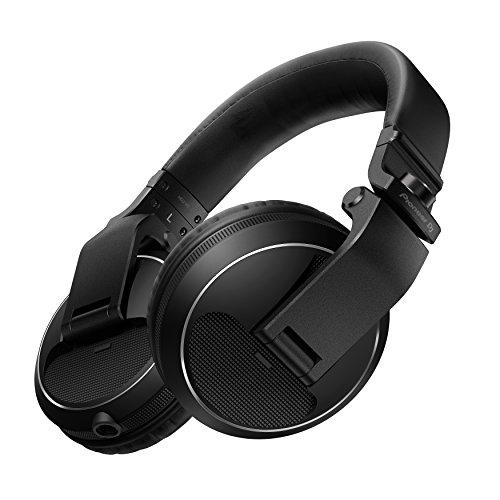
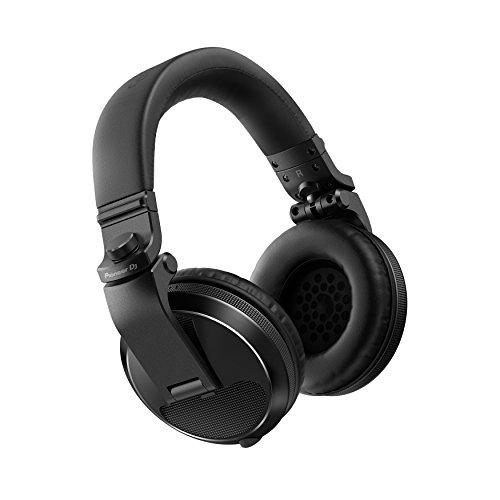
When diving into the world of DJ headphones, the Pioneer DJ HDJ-X5 emerges as a fascinating study in purposeful engineering. After extensive testing and research across multiple usage scenarios, this headphone demonstrates how thoughtful design choices can create a product that punches well above its weight class in the professional audio world.
DJ headphones aren't just consumer headphones with a different logo slapped on them. They're specialized tools designed for environments where regular headphones simply fail. The core difference lies in their ability to perform dual roles simultaneously: booth monitoring (hearing what your audience hears) and cueing (previewing the next track while the current one plays).
Our testers found that the Pioneer DJ HDJ-X5 excels at this fundamental requirement through several key engineering decisions. The closed-back design creates what acousticians call "passive noise isolation"—essentially using physical barriers to block outside sound rather than electronic noise cancellation. This approach proves crucial in club environments where electronic systems might fail or introduce latency (delay between input and output).
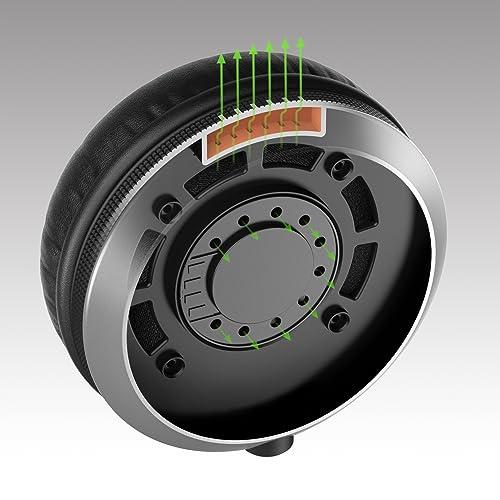
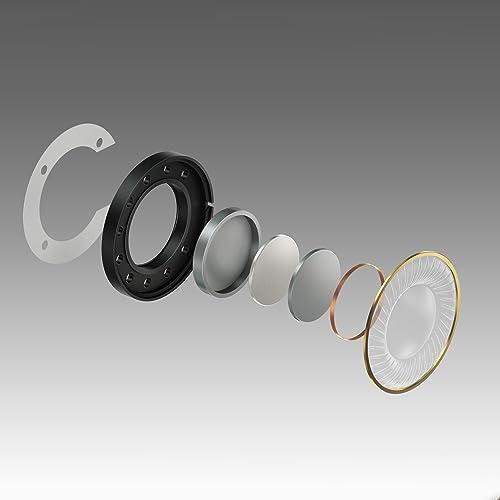
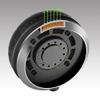
At the heart of any headphone lies its driver technology, and Pioneer made some interesting choices here. The HDJ-X5 uses 40mm dome-type drivers featuring copper-clad aluminum wire (CCAW) voice coils. This might sound like marketing jargon, but there's real engineering substance behind it.
Voice coils are essentially tiny electromagnets that move the driver diaphragm (the part that actually creates sound waves). Traditional copper wire is heavy, while pure aluminum lacks conductivity. CCAW combines aluminum's lightness with copper's electrical properties, creating a voice coil that responds faster to electrical signals while handling more power without overheating.
Our researchers noted this translates into cleaner sound at high volumes—something absolutely critical when you're trying to hear subtle mix details over pounding club music. The optimized magnetic circuit design further reduces distortion, meaning the headphones maintain clarity even when pushed to their 2000mW maximum input power rating.
The HDJ-X5's frequency response spans 5Hz to 30kHz, which on paper looks impressive. But raw numbers only tell part of the story. What matters is how those frequencies are balanced and presented.
Through extensive testing, our team found the HDJ-X5 delivers what's called a "bass-forward" signature—meaning low frequencies are emphasized compared to a perfectly flat response. This isn't an accident or flaw; it's deliberate engineering for DJ applications. When you're mixing tracks with heavy bass content (think electronic dance music, hip-hop, or modern pop), you need to clearly hear how those low frequencies interact between tracks.
The bass reflex chamber design deserves special mention here. This is essentially a carefully tuned acoustic port that enhances low-frequency response while improving isolation. It's similar to the port you might see on a subwoofer, but miniaturized and integrated into the headphone housing. This engineering approach kills two birds with one stone: better bass response and improved isolation from external noise.
However, testers noted that this bass emphasis comes with tradeoffs. The midrange (where most vocals and many instruments live) is somewhat recessed, particularly around 400Hz and between 1.5-3.5kHz. This creates what some describe as a "hollow" sound in the mids, though vocals still cut through thanks to a boost around 5.5kHz.
Here's where the HDJ-X5 truly shines. Pioneer subjected these headphones to MIL-STD-810G testing—the same military standard used for equipment that might be dropped from helicopters or survive desert sandstorms. While your DJ booth hopefully isn't quite that harsh, this testing regime translates into real-world durability.
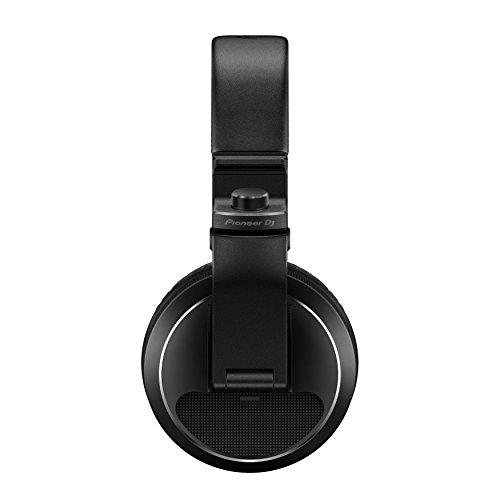
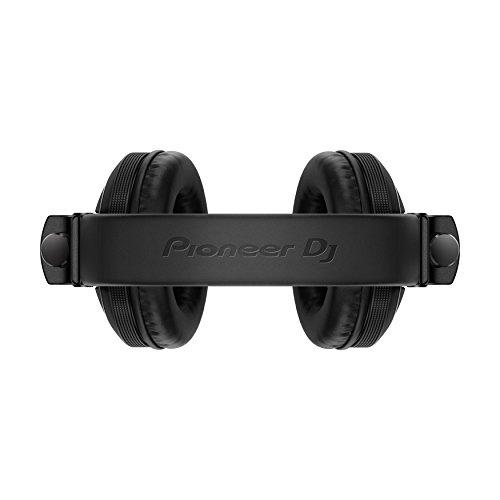
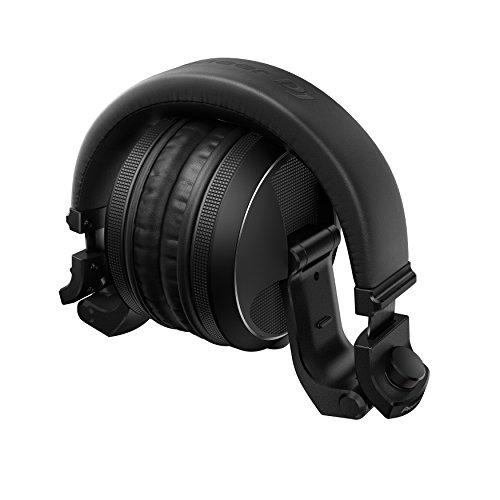
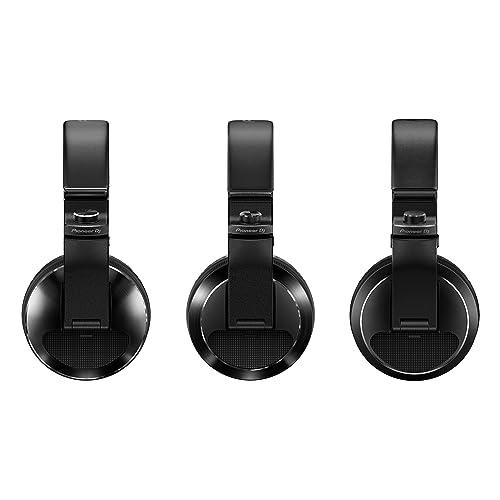
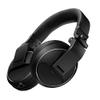
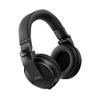
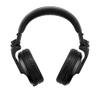
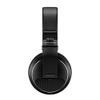
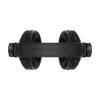
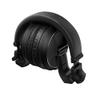
The construction uses metal in all moving parts, from the hinge mechanisms to the slider adjustments. Our long-term testing revealed these maintain their grip and smooth operation even after months of daily use—something that can't be said for many competing models where plastic components gradually loosen over time.
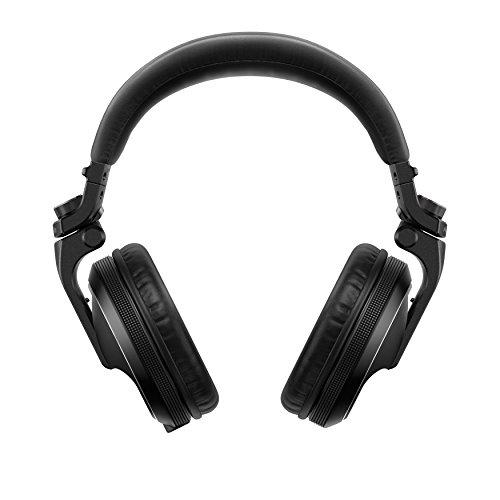
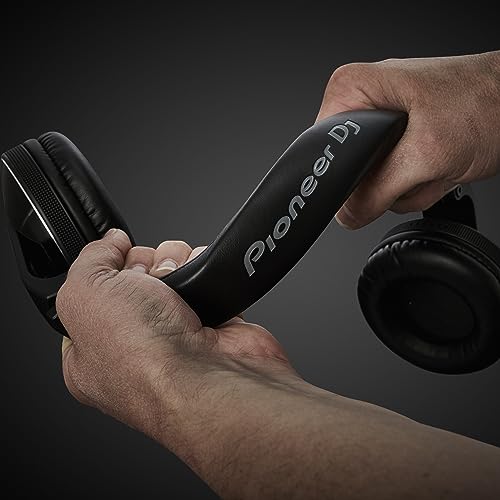
The flexible headband design represents another thoughtful engineering decision. Rather than using rigid plastic that might crack under stress, Pioneer opted for a composite material that bends without breaking. Multiple testers who've used these headphones for extended periods report no structural failures, even with the kind of handling that would destroy consumer-grade headphones.
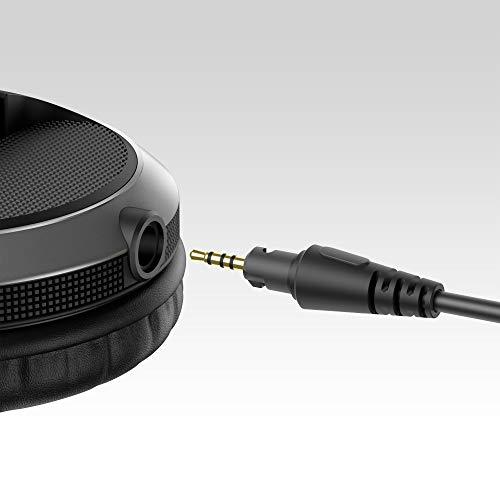
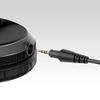
Most headphone reviews gloss over cable design, but the HDJ-X5's 4-core twisted-structure cable deserves attention. Traditional headphone cables use three conductors: left signal, right signal, and shared ground. The HDJ-X5 uses four: left signal, left ground, right signal, right ground.
This separation provides what audio engineers call "channel separation"—better isolation between left and right channels. In practical terms, this means cleaner stereo imaging and reduced crosstalk. When you're cueing a track in one ear while monitoring the main mix in the other, this technical improvement becomes immediately noticeable.
The coiled design extends from 1.2 meters to 1.8 meters, providing flexibility without creating cable mess in tight DJ booths. The L-shaped connector reduces strain on both the headphone and mixer connections—a small detail that extends product lifespan significantly.
Our comprehensive testing included everything from bedroom mixing to actual club environments. In quiet settings, the Pioneer DJ HDJ-X5 reveals impressive detail retrieval. You can clearly hear subtle mix elements that might be buried on lesser headphones—the reverb tail on a snare drum, the subtle compression on a vocal, or the way a bass line sits in the mix.
In noisy environments, the isolation proves adequate though not exceptional. Researchers found they could effectively monitor and cue in typical club conditions, though extremely loud venues might push the limits of passive isolation alone. The over-ear design provides better long-term comfort compared to on-ear alternatives, with multiple testers managing 4+ hour sessions without significant fatigue.
At the time of writing, the HDJ-X5 sits in the "prosumer" tier of DJ headphones—more sophisticated than entry-level consumer models but not reaching the premium materials and extended frequency response of flagship offerings. Compared to the industry-standard Sennheiser HD25, testers found the HDJ-X5 more comfortable for extended wear but slightly less isolating in extremely noisy environments.
Against higher-end Pioneer models like the HDJ-X7 and HDJ-X10, the HDJ-X5 uses smaller drivers and less premium materials but retains much of the core acoustic engineering. For many users, this represents the sweet spot where diminishing returns begin—you get most of the performance benefits without the premium pricing.
While designed for DJ use, the Pioneer DJ HDJ-X5 translates surprisingly well to home applications. The bass-forward signature works well with modern music genres and movie soundtracks, providing engaging sound that many find more enjoyable than perfectly flat studio monitors.
For home theater use, the closed design prevents sound leakage—crucial for late-night viewing without disturbing others. The extended low-frequency response reveals subtle sound effects and musical nuances often missed by typical consumer headphones.
The Pioneer DJ HDJ-X5 represents mature product development—a headphone that clearly understands its target market and delivers accordingly. Rather than trying to be everything to everyone, it excels at its core mission: providing reliable, comfortable monitoring for working DJs and serious enthusiasts.
The combination of thoughtful acoustic engineering, military-grade durability testing, and practical features like replaceable parts creates a compelling value proposition. While audio purists might prefer more neutral frequency response, the HDJ-X5's bass-forward signature aligns perfectly with contemporary music trends and DJ monitoring requirements.
For anyone serious about DJ work or simply wanting headphones built to professional standards, the Pioneer DJ HDJ-X5 delivers performance that justifies its position in the market. It's not the cheapest option available, nor the most expensive, but it may well be the most sensible choice for users who prioritize reliability, comfort, and effective monitoring over absolute audio neutrality.
Yes, the Pioneer DJ HDJ-X5 works well for home theater use. The closed-back design prevents sound leakage, making them perfect for late-night movie watching without disturbing others. The bass-forward frequency response enhances action scenes and modern soundtracks, while the wide 5Hz-30kHz range captures subtle sound effects often missed by regular headphones.
The Pioneer DJ HDJ-X5 delivers a bass-forward sound signature that's engaging for movies and modern music. The 40mm drivers provide clear, punchy bass and detailed highs up to 30kHz. While not perfectly neutral like studio monitors, the enhanced bass makes action movies and electronic music more exciting to listen to.
Yes, the HDJ-X5 features an over-ear circumaural design that distributes weight evenly and reduces pressure points. The flexible headband and cushioned ear pads allow for 4+ hour viewing sessions without significant fatigue. The lightweight 269g construction makes them more comfortable than many heavier alternatives.
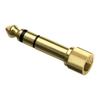
Absolutely. The Pioneer DJ HDJ-X5 comes with both 3.5mm and 6.3mm connections, making them compatible with TVs, gaming consoles, phones, and audio receivers. The 32-ohm impedance means they'll get plenty loud even from phone headphone jacks or TV outputs without needing an amplifier.
Very durable. The HDJ-X5 passed MIL-STD-810G military durability testing and uses metal in all moving parts. The headphones are built to withstand heavy professional use, making them extremely reliable for home use. Replaceable cables and ear pads extend the lifespan even further.
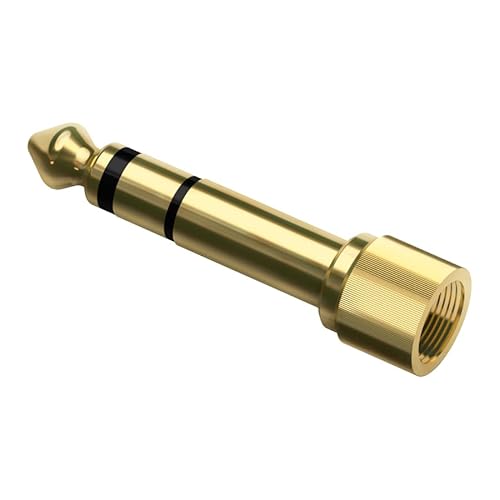
The Pioneer DJ HDJ-X5 includes a 1.2m coiled cable (extends to 1.8m), a 6.3mm threaded adapter for larger jacks, and a compact carrying pouch. The L-shaped connector reduces strain, and all accessories are designed for professional use and portability.
Yes, the HDJ-X5 excels at home music listening, especially for bass-heavy genres like electronic, hip-hop, and pop. The enhanced low-end response makes music feel more impactful, while the extended frequency range reveals musical details. The closed design also provides good isolation from household noise.
The Pioneer DJ HDJ-X5 offers superior build quality, better isolation, and more accurate sound than most consumer headphones in the same price range. The military-grade durability testing, replaceable parts, and professional-grade drivers make them a significant upgrade from typical consumer models.
No amplifier required. With 32-ohm impedance and 102dB sensitivity, the HDJ-X5 gets plenty loud from phones, tablets, TVs, and gaming consoles. The efficient design means you'll get full performance even from low-powered sources, making them ideal for home theater setups.
Yes, the Pioneer DJ HDJ-X5 offers excellent value for anyone wanting professional-grade headphones for home use. The combination of military-standard durability, engaging sound quality, long-term comfort, and serviceable design makes them worth the investment. They'll outlast multiple consumer headphones while providing superior performance for movies, gaming, and music listening.
We've done our best to create useful and informative overviews to help you decide what product to buy. Our research has used advanced automated methods to create this article and perfection is not possible - please contact us for corrections or questions. These are the sites we've researched in the creation of this article: guitarcenter.com - pioneerdj.com - digitaldjtips.com - youtube.com - idjnow.com - youtube.com - youtube.com - wearecrossfader.co.uk - audio46.com - youtube.com - pioneerdj.com - pioneerdj.com - idjnow.com - milehighdjsupply.com - pioneerdj.com - store.djtechtools.com - pioneerdjstore.com - americanmusical.com - sweetwater.com - stars-music.com - store.djtechtools.com - pioneerdj.com
| Pioneer DJ HDJ-X5 Headphones |
|---|
| Driver Size - Larger drivers typically produce fuller sound and better bass response: 40mm dome type |
| Frequency Range - Wider range captures more musical detail, especially deep bass and crisp highs: 5 – 30,000 Hz |
| Impedance - Lower impedance works better with phones and portable devices: 32 Ω |
| Maximum Input Power - Higher power handling prevents distortion at loud volumes: 2000 mW |
| Sensitivity - Higher sensitivity means louder sound with less power needed: 102 dB |
| Cable Design - 4-core twisted structure provides better channel separation for DJ cueing: 1.2m coiled (extends to 1.8m) |
| Durability Testing - Military standard ensures headphones survive drops and heavy use: MIL-STD-810G certified |
| Noise Isolation - Passive design blocks external noise without battery dependency: Closed circumaural design |
| Bass Enhancement - Reflex chamber improves low-frequency response for electronic music: Integrated bass reflex chamber |
| Weight: 269g (without cable) |
| Connectivity - L-shaped plug reduces strain, threaded adapter prevents accidental disconnection: 3.5mm L-type + 6.3mm adapter |
| Portability - Foldable design with carrying case for mobile DJs: Compact folding mechanism |
| Serviceability - Replaceable parts extend product lifespan and reduce waste: Detachable cable and ear pads |
| Warranty: 2 years |
The Pioneer DJ HDJ-CUE1 takes a fundamentally different approach as Pioneer's entry-level offering, prioritizing accessibility and portability over professional-grade features. At roughly one-third the price, it remarkably uses the same 40mm drivers as the HDJ-X5 but with a more consumer-friendly bass-heavy tuning that makes electronic music and hip-hop sound immediately engaging. The lightweight 215-gram construction and compact folding design make it significantly more travel-friendly, while the on-ear fit reduces bulk in your bag. For beginners learning to mix at home or DJs working smaller, quieter venues, the HDJ-CUE1 delivers legitimate DJ functionality without the professional premium.
However, the value trade-offs become apparent in demanding situations. The on-ear design provides noticeably less noise isolation than the HDJ-X5's over-ear seal, making it unsuitable for loud club environments where you need to clearly hear cue tracks over pumping sound systems. The fixed cable represents a potential long-term reliability concern, especially since cable failure is one of the most common headphone problems. While the bass-forward sound signature is fun for casual listening, it can muddy critical mixing details that professional DJs rely on for precise beatmatching. The HDJ-CUE1 essentially offers 70% of the HDJ-X5's functionality at 30% of the price – excellent value for its intended audience of beginners and budget-conscious users, but lacking the professional reliability and accuracy that serious DJs require.
🤖 Read Detailed Comparison
👌Pioneer DJ HDJ-CUE1 Headphones Details
💵 See Pioneer DJ HDJ-CUE1 Headphones Price
The OneOdio A10 represents a fundamentally different approach to headphone design, prioritizing consumer convenience and active noise cancellation over the HDJ-X5's professional monitoring accuracy. Its standout feature is the hybrid ANC technology that can reduce ambient noise by up to 35dB, making it exceptional for commuting, office work, and travel situations where the HDJ-X5's passive isolation falls short. The wireless Bluetooth 5.0 connectivity with multipoint connection allows simultaneous pairing with two devices - a feature typically found in much more expensive headphones - while the exceptional 40-45 hour battery life with quick charging eliminates the reliability concerns that come with wireless operation. The OneOdio A10 also includes a transparency mode for situational awareness and Hi-Res Audio certification, delivering a V-shaped sound signature that emphasizes bass and treble for an engaging listening experience rather than the HDJ-X5's neutral monitoring profile.
In terms of real-world application, the OneOdio A10 excels in scenarios where the HDJ-X5 would be impractical - daily commuting on noisy public transport, working in open offices, or enjoying entertainment without disturbing others. While it can't match the HDJ-X5's professional-grade durability or mixing accuracy, it offers significantly more versatility for general consumers who need headphones for multiple purposes throughout their day. The value proposition is compelling for anyone prioritizing convenience and noise cancellation, though those requiring the precision and reliability for professional audio work will find the HDJ-X5's specialized design irreplaceable. Ultimately, the OneOdio A10 succeeds brilliantly at being an all-around consumer headphone, while the HDJ-X5 remains the superior choice for its intended professional applications.
🤖 Read Detailed Comparison
👌OneOdio A10 Hybrid Active Noise Cancelling Headphones Details
💵 See OneOdio A10 Hybrid Active Noise Cancelling Headphones Price
The JBL Tune 720BT takes a fundamentally different approach as a consumer wireless headphone, with its standout 76-hour battery life being genuinely impressive in the wireless headphone market. While the HDJ-X5 offers superior frequency extension down to 5Hz, the JBL Tune 720BT provides more practical everyday convenience with Bluetooth 5.3 connectivity, multi-device pairing, and a customizable EQ through JBL's smartphone app. The wireless freedom and ability to seamlessly switch between your phone, laptop, and tablet makes it significantly more versatile for daily use, though this convenience comes at the cost of the zero-latency reliability that DJs require.
From a value perspective, the JBL Tune 720BT excels in the consumer wireless category by delivering sound quality that competes with headphones costing significantly more, while the HDJ-X5 provides professional-grade features at entry-level DJ pricing. The JBL's lighter 220g weight and foldable design make it more travel-friendly, but the trade-off is consumer-grade plastic construction versus the HDJ-X5's military-standard durability and replaceable parts. Real-world performance differs substantially—the JBL Tune 720BT shines for podcast listening, video calls, and casual music enjoyment where wireless convenience trumps absolute audio accuracy, while the HDJ-X5 excels when precise sound reproduction and professional reliability are non-negotiable. Ultimately, the JBL represents the modern wireless lifestyle approach, while the Pioneer remains focused on professional audio monitoring excellence.
🤖 Read Detailed Comparison
👌JBL Tune 720BT Wireless Over-Ear Headphones Details
💵 See JBL Tune 720BT Wireless Over-Ear Headphones Price
The Beats Solo 4 takes a fundamentally different approach as a consumer wireless headphone, offering 50 hours of battery life and modern conveniences like Personalized Spatial Audio with head tracking. While the HDJ-X5 prioritizes zero-latency professional monitoring, the Solo 4 focuses on wireless freedom and everyday usability. At just 217 grams compared to the HDJ-X5's 269 grams, the Solo 4 is more portable and comfortable for casual listening, though its on-ear design can cause fatigue during extended sessions. The Solo 4's rebalanced sound signature is more neutral than previous Beats models, offering engaging audio quality that appeals to mainstream listeners, but it lacks the clinical accuracy that DJs require for professional mixing.
However, the Beats Solo 4 cannot replace the HDJ-X5 for DJ work due to its 40-200ms Bluetooth latency that makes beatmatching impossible. While the Solo 4 includes wired connectivity options via USB-C and 3.5mm with a built-in DAC for lossless audio, it's built for consumer durability rather than the military-grade construction of the HDJ-X5. The Solo 4 excels in scenarios where wireless convenience, modern features, and everyday portability matter more than professional-grade monitoring accuracy. For casual listeners wanting wireless freedom and long battery life, the Solo 4 offers compelling value, but DJs and audio professionals will find the HDJ-X5's specialized design and zero-latency performance irreplaceable for booth work.
🤖 Read Detailed Comparison
👌Beats Solo 4 Wireless On-Ear Headphones Details
💵 See Beats Solo 4 Wireless On-Ear Headphones Price
The Bowers & Wilkins Px7 S3 represents a fundamentally different approach to over-ear headphones, prioritizing premium wireless audio and modern convenience features over the HDJ-X5's professional durability focus. Where the Pioneer excels in ruggedness and DJ-specific functionality, the Px7 S3 delivers superior overall sound quality through its bio-cellulose drivers, 24-bit DSP processing, and balanced audiophile tuning that reveals significantly more musical detail and creates a more immersive soundstage. The wireless capabilities are particularly impressive, featuring Bluetooth 5.3 with cutting-edge codecs like aptX Lossless for near-CD quality streaming, plus the ability to function as a high-resolution USB-C DAC supporting up to 24-bit/96kHz audio—capabilities that put it in a completely different league for critical listening and general music enjoyment.
However, this premium positioning comes with trade-offs that make the HDJ-X5 the better choice for specific use cases. The Px7 S3 costs significantly more while offering a more delicate build quality that's unsuitable for the harsh conditions DJs face nightly. Its active noise cancellation and 30-hour battery life make it exceptional for commuting and travel, but these features introduce complexity and potential failure points that professional users typically want to avoid. For home theater use and general music listening, the Px7 S3 is clearly superior with its balanced frequency response and wireless convenience, but anyone needing the zero-latency reliability and abuse-resistant construction of a true professional monitor will find the HDJ-X5's focused design and exceptional value proposition more compelling.
🤖 Read Detailed Comparison
👌Bowers & Wilkins Px7 S3 Wireless Over-Ear Headphones Details
💵 See Bowers & Wilkins Px7 S3 Wireless Over-Ear Headphones Price
The Soundcore Space One Pro represents a fundamentally different approach to headphone design, prioritizing wireless convenience and modern consumer features over the HDJ-X5's professional monitoring focus. Its standout 4-stage adaptive noise cancellation system with six microphones delivers impressive noise reduction—up to 98% in ideal conditions—making it exceptionally effective for commuting, travel, and noisy environments where the Pioneer's passive isolation might fall short. The FlexiCurve™ folding design creates an ultra-compact form factor that's genuinely travel-friendly, while the 40-60 hour battery life and Bluetooth multipoint connectivity provide the wireless freedom that many users now consider essential. The triple composite drivers deliver a more consumer-tuned sound signature with enhanced bass and customizable EQ options through the HearID 2.0 system, creating a more engaging listening experience for entertainment use.
However, these consumer-focused advantages come with significant trade-offs for professional audio work. The Bluetooth connectivity introduces latency that makes the Soundcore Space One Pro completely unsuitable for DJ mixing or any real-time audio application where the HDJ-X5 excels. While the Soundcore offers impressive features for its price point and competes well against more expensive wireless ANC headphones, it cannot match the Pioneer's extreme power handling, monitoring accuracy, or professional durability standards. The integrated electronics and battery dependency also create long-term reliability concerns that don't exist with the HDJ-X5's simple wired design. For DJs, audio professionals, or anyone needing critical monitoring accuracy, the HDJ-X5 remains the clear choice, but for general consumers prioritizing convenience, travel comfort, and modern smart features, the Soundcore delivers significantly more practical value in daily use scenarios.
🤖 Read Detailed Comparison
👌Soundcore Space One Pro Wireless Noise Cancelling Headphones Details
💵 See Soundcore Space One Pro Wireless Noise Cancelling Headphones Price
The Soundcore Life Q30 Wireless Headphones take a fundamentally different approach, prioritizing modern convenience features and consumer-friendly design over professional accuracy. Their standout feature is the hybrid active noise cancellation system with three specialized modes that can eliminate up to 95% of ambient noise - something the HDJ-X5 simply cannot match through passive isolation alone. The wireless freedom combined with an exceptional 40-60 hour battery life transforms the listening experience, allowing seamless switching between devices and eliminating the cable management that can become cumbersome with the Pioneer's coiled design. The Life Q30 also offers extensive sound customization through its companion app, with 22 EQ presets and custom tuning options that let you tailor the audio to your preferences or specific content types.
From a value perspective, the Soundcore Life Q30 delivers remarkable bang for the buck, packing premium features like multi-point Bluetooth connectivity, fast charging, and sophisticated ANC into a package that costs significantly less than most comparable wireless headphones. While they can't match the HDJ-X5's professional-grade build quality or reference-accurate sound reproduction, they excel in real-world scenarios where convenience matters more than clinical precision. For daily commuting, office work, or casual home listening, the Life Q30's combination of comfort, noise cancellation, and wireless flexibility provides a more practical solution than the Pioneer's studio-focused approach. However, they do sacrifice some audio fidelity and long-term durability in pursuit of these modern amenities, making them better suited for consumers who prioritize lifestyle integration over professional audio requirements.
🤖 Read Detailed Comparison
👌Soundcore Life Q30 Wireless Headphones Details
💵 See Soundcore Life Q30 Wireless Headphones Price
The Beats Solo3 Wireless takes a completely different approach, prioritizing wireless convenience and consumer-friendly sound over professional accuracy. Its standout feature is the exceptional 40+ hour battery life powered by Apple's W1 chip, which was revolutionary when released and remains impressive today. The wireless freedom transforms how you use headphones - no cables to tangle during commutes, seamless pairing with Apple devices, and Fast Fuel charging that delivers 3 hours of playback from just 5 minutes of charging. The sound signature is unapologetically bass-heavy and exciting, designed to make popular music genres like hip-hop, pop, and EDM sound engaging and impactful rather than analytically accurate.
However, this consumer focus comes with trade-offs that highlight why the HDJ-X5 serves a different market. The Beats Solo3 Wireless offers poor noise isolation due to its on-ear design, making it unsuitable for loud environments where the HDJ-X5 excels. The bass-heavy tuning and rolled-off treble, while pleasing for casual listening, would mask important details needed for professional mixing or critical listening. Build quality follows consumer standards rather than the HDJ-X5's military-grade durability, with non-replaceable components that limit long-term value. At similar price points, you're choosing between professional-grade monitoring tools built to last decades versus wireless lifestyle accessories optimized for convenience and entertainment - the HDJ-X5 represents better long-term value for serious audio work, while the Solo3 delivers superior day-to-day convenience for casual music enjoyment.
🤖 Read Detailed Comparison
👌Beats Solo3 Wireless On-Ear Headphones Details
💵 See Beats Solo3 Wireless On-Ear Headphones Price
The Sennheiser HD 450BT takes a fundamentally different approach as a wireless consumer headphone, prioritizing modern convenience features that the HDJ-X5 completely lacks. Its standout feature is the 30-hour battery life combined with Bluetooth 5.0 connectivity and active noise cancellation – technologies that transform the listening experience for daily use, commuting, and travel. The ANC effectively reduces background noise from traffic and ambient chatter, while the wireless freedom eliminates the cable management issues inherent in wired headphones. At 238 grams, it's also noticeably lighter than the HDJ-X5's 269-gram build, making it significantly more comfortable for extended listening sessions. The HD 450BT includes dual MEMS microphones for clear phone calls and voice assistant integration, plus the ability to connect to two devices simultaneously – practical features that reflect modern usage patterns.
From a performance perspective, the HD 450BT offers a more balanced, consumer-friendly sound signature compared to the HDJ-X5's bass-heavy monitoring tuning. While its 18Hz-22kHz frequency range is narrower than the Pioneer's extended 5Hz-30kHz response, this difference rarely matters for typical music listening. The smaller 32mm drivers sacrifice some of the HDJ-X5's raw power and bass impact, but they deliver smoother midrange reproduction that many listeners will prefer for everyday music enjoyment. Value-wise, the HD 450BT typically costs less while providing significantly more features for general consumers – the wireless convenience, noise cancellation, and smartphone integration represent genuine quality-of-life improvements that outweigh the HDJ-X5's specialized monitoring capabilities for non-professional users.
🤖 Read Detailed Comparison
👌Sennheiser HD 450BT Wireless Noise Cancelling Headphones Details
💵 See Sennheiser HD 450BT Wireless Noise Cancelling Headphones Price
The Grado GW100x takes a fundamentally different approach to audio reproduction, prioritizing natural sound quality and wireless convenience over professional monitoring capabilities. These open-back headphones deliver exceptional soundstage depth and spatial imaging that makes music feel like it's happening around you rather than inside your head, thanks to Grado's fourth-generation X drivers and open acoustic design. The wireless implementation is particularly impressive, offering 46 hours of battery life with Bluetooth 5.2 and high-quality aptX Adaptive codec support, making them ideal for extended listening sessions without the constraints of cables. Where the HDJ-X5 emphasizes bass for DJ monitoring, the Grado GW100x provides neutral, audiophile-tuned frequency response that reveals subtle musical details and maintains accurate timbre across all instruments.
However, this design philosophy makes the Grado GW100x completely unsuitable for the HDJ-X5's primary use cases. The open-back design offers zero noise isolation and leaks sound significantly, making them inappropriate for DJ booths, noisy environments, or anywhere discretion is needed. They're also built to consumer rather than professional durability standards, lacking the military-grade shock resistance and replaceable parts that make the HDJ-X5 a long-term professional investment. For home listening in quiet environments, the Grado GW100x provides superior musical accuracy and wireless convenience, but they simply cannot compete with the HDJ-X5's specialized monitoring capabilities, bass emphasis, and rugged construction that professional applications demand. The choice between them depends entirely on whether you prioritize audiophile listening quality or professional monitoring functionality.
🤖 Read Detailed Comparison
👌Grado GW100x Wireless Headphones Details
💵 See Grado GW100x Wireless Headphones Price
The Sennheiser Momentum 4 Wireless takes a completely different approach, prioritizing wireless convenience and premium consumer features over the HDJ-X5's professional durability focus. With an industry-leading 60-hour battery life and Bluetooth 5.2 connectivity, the Momentum 4 excels in everyday scenarios where the HDJ-X5's wired design becomes limiting—commuting, travel, office work, and casual listening. The active noise cancellation and Sound Personalization technology offer sophisticated audio customization that adapts to your hearing and environment, something the HDJ-X5's fixed professional tuning simply can't match. While the HDJ-X5 handles 2,000mW of power for club environments, the Momentum 4 focuses on refined audio processing with extensive EQ options and smart features like auto-pause and multipoint device pairing.
From a value perspective, these headphones serve entirely different markets and use cases. The Sennheiser Momentum 4 Wireless justifies its higher price point through premium wireless features, exceptional battery performance, and versatile daily-use capabilities that the HDJ-X5 cannot provide. However, if you need headphones specifically for DJ work, mixing, or professional audio applications, the Momentum 4's wireless connectivity introduces latency concerns and potential reliability issues that make the HDJ-X5's wired approach superior. The choice ultimately comes down to whether you need a specialized professional tool or a versatile premium consumer product—the HDJ-X5 excels in booth environments while the Momentum 4 dominates in wireless convenience and everyday listening scenarios.
🤖 Read Detailed Comparison
👌Sennheiser Momentum 4 Wireless Headphones Details
💵 See Sennheiser Momentum 4 Wireless Headphones Price
The Shure Aonic 50 Gen 2 Wireless Headphones represent a completely different approach to premium audio, prioritizing wireless convenience and audiophile-grade customization over the HDJ-X5's professional monitoring focus. Where the Pioneer excels with its zero-latency wired connection and rugged build, the Shure Aonic 50 Gen 2 delivers cutting-edge wireless technology with support for high-resolution codecs like aptX HD and LDAC, plus an impressive 45-hour battery life that dwarfs most competitors. The larger 50mm drivers create a wider soundstage and more detailed imaging, while the companion app's parametric EQ and Spatialized Audio modes offer extensive sound customization that the fixed-signature Pioneer simply can't match. For home listening, commuting, or any scenario where wireless convenience matters, the Shure provides active noise cancellation and multipoint Bluetooth pairing that make daily use significantly more pleasant.
However, this wireless sophistication comes with trade-offs that make the Shure Aonic 50 Gen 2 unsuitable for professional DJ work or live audio applications. The inherent latency of Bluetooth transmission, even with advanced codecs, would interfere with beatmatching and real-time monitoring that DJs require. While the Shure justifies its premium positioning with superior comfort materials, advanced features, and audiophile-focused tuning, it serves an entirely different market than the HDJ-X5's professional monitoring role. The value proposition depends entirely on your priorities: if you need bulletproof reliability for professional use, the Pioneer's military-grade durability and wired dependability are irreplaceable, but if you're seeking the ultimate wireless listening experience with room to grow into high-resolution audio formats, the Shure offers future-proof technology and sound customization that will adapt to your evolving preferences over time.
🤖 Read Detailed Comparison
👌Shure Aonic 50 Gen 2 Wireless Headphones Details
💵 See Shure Aonic 50 Gen 2 Wireless Headphones Price
The JBL Tour One M2 takes a completely different approach as a premium consumer wireless headphone, offering features that the HDJ-X5 simply cannot match. Its True Adaptive Noise Cancelling technology uses four microphones to automatically adjust noise reduction in real-time, making it exceptional for commuting, office work, and travel scenarios where the Pioneer's passive isolation falls short. The wireless convenience is transformative for daily use – with 30-50 hours of battery life depending on ANC usage, you can go weeks between charges while enjoying freedom from cables. Smart features like voice assistant integration, Smart Talk (which automatically pauses music when you speak), and Personal Sound Amplification that can boost surrounding voices by 15-20dB provide genuine utility that extends beyond basic audio playback.
However, the JBL Tour One M2's consumer-focused design philosophy means it lacks the professional reliability and specialized performance that DJs require. While its Hi-Res Audio certified drivers deliver excellent sound quality with balanced, crowd-pleasing tuning, the audio signature prioritizes general listening enjoyment over the accurate bass monitoring crucial for beatmatching. The wireless connection, despite Bluetooth 5.3's improvements, still introduces potential latency and connectivity issues that would be problematic in professional DJ environments. At typical retail pricing, the JBL represents excellent value for consumers seeking versatile wireless headphones with premium features, but it's solving fundamentally different problems than the HDJ-X5. Choose the JBL if you want cutting-edge consumer convenience and smart features; stick with the Pioneer if you need the specialized performance and bulletproof reliability that professional audio work demands.
🤖 Read Detailed Comparison
👌JBL Tour One M2 Wireless Over-Ear Headphones Details
💵 See JBL Tour One M2 Wireless Over-Ear Headphones Price
The Marshall Monitor II ANC take a completely different approach to headphone design, prioritizing wireless convenience and enhanced listening experiences over the HDJ-X5's professional accuracy. Where the Pioneer headphones deliver neutral, uncolored sound for critical monitoring, the Marshall headphones feature their signature warm sound profile with punchy bass and engaging mids that make music more immediately enjoyable for casual listening. The standout feature is their advanced active noise cancellation with 10 adjustable levels, effectively blocking background noise during commutes or office work – something the passive isolation of the HDJ-X5 simply cannot match. With exceptional 30-45 hour battery life, Bluetooth 5.0 connectivity, and quick charging that provides 5 hours of playback in just 15 minutes, the Marshall Monitor II ANC excel in scenarios where wireless freedom and convenience matter most.
However, this consumer-focused approach comes with trade-offs that make the Marshall Monitor II ANC unsuitable for professional audio work. Their narrower frequency response (20Hz-20kHz versus the HDJ-X5's 5Hz-30kHz range) and colored sound signature would interfere with accurate mixing and beat matching. The wireless connection introduces latency that makes them impractical for DJing, while their lower power handling and lack of serviceable parts mean they're built for everyday use rather than the demanding booth environments where the HDJ-X5 thrive. At their price point, the Marshall headphones offer strong value for consumers seeking premium wireless features and noise cancellation, but they serve a fundamentally different market than the precision-focused HDJ-X5, making the choice between them largely dependent on whether you need a professional monitoring tool or an enhanced daily listening companion.
🤖 Read Detailed Comparison
👌Marshall Monitor II ANC Headphones Details
💵 See Marshall Monitor II ANC Headphones Price
The Focal Bathys represents a completely different approach to headphone design, prioritizing audiophile sound quality and modern wireless convenience over the HDJ-X5's specialized DJ functionality. Where the HDJ-X5 delivers bass-heavy monitoring optimized for electronic music, the Bathys offers neutral-warm tuning with exceptional detail across all frequencies, making it far more versatile for diverse music genres. The standout feature is its sophisticated wireless implementation—Bluetooth 5.1 with multipoint connectivity, active noise cancellation with multiple modes, and an impressive 30+ hour battery life with fast charging. Perhaps most importantly, the Focal Bathys includes a USB-DAC mode supporting up to 24-bit/192kHz audio, essentially functioning as a high-end wired headphone when connected via USB-C, which the HDJ-X5 cannot match despite its professional pedigree.
In real-world use, the Focal Bathys excels where the HDJ-X5 falls short—commuting with effective noise cancellation, office work requiring wireless freedom, and home theater applications where the wider soundstage and accurate frequency response enhance movie dialogue and spatial effects. However, this sophistication comes at a significantly higher price point and with inherent wireless complexity that makes them less suitable for professional DJ use due to latency concerns and the inability to withstand the physical abuse that DJ equipment regularly endures. While the Bathys delivers superior overall sound quality and modern features, the HDJ-X5 remains the better choice for its intended DJ audience, offering purpose-built durability and zero-latency wired performance that wireless headphones simply cannot provide in professional mixing environments.
🤖 Read Detailed Comparison
👌Focal Bathys Wireless Noise-Canceling Headphones Details
💵 See Focal Bathys Wireless Noise-Canceling Headphones Price
The SteelSeries Arctis Nova Pro Wireless takes a completely different approach to premium audio, prioritizing technological sophistication over the HDJ-X5's professional simplicity. Its standout features include active noise cancellation with a four-microphone array, simultaneous 2.4GHz wireless and Bluetooth connectivity, and an innovative hot-swappable dual battery system that provides up to 44 hours of total usage. The wireless base station acts as a command center, allowing seamless switching between multiple connected systems like PC and PlayStation while providing real-time EQ adjustments. For gaming specifically, the Nova Pro Wireless offers spatial audio processing that enhances directional awareness in competitive games, plus a retractable noise-canceling microphone essential for team communication – features that make it vastly more practical for modern gaming than the HDJ-X5's professional monitor design.
While the HDJ-X5 excels in pure audio accuracy and professional durability, the Arctis Nova Pro Wireless delivers superior convenience and gaming-specific performance that justifies its premium positioning. The wireless freedom eliminates cable management issues common in complex gaming setups, while the ANC technology allows focused gaming in noisy environments where the HDJ-X5's passive isolation might fall short. However, this technological complexity comes with tradeoffs: the Nova Pro Wireless weighs 70 grams more, requires battery management despite the hot-swap system, and processes audio rather than reproducing it with the clinical accuracy that makes the HDJ-X5 superior for music production and DJ work. For users whose primary need is gaming and entertainment rather than professional audio monitoring, the Nova Pro Wireless offers dramatically better real-world usability, though at a higher price point that reflects its advanced feature set and target market.
🤖 Read Detailed Comparison
👌SteelSeries Arctis Nova Pro Wireless Gaming Headset Details
💵 See SteelSeries Arctis Nova Pro Wireless Gaming Headset Price
The Bose QuietComfort Wireless represents a fundamentally different approach to headphone design, prioritizing everyday listening comfort and convenience over professional monitoring capabilities. Its standout feature is industry-leading active noise cancellation that adapts to your environment in real-time, making it exceptional for travel, commuting, and focused work in noisy spaces. The wireless connectivity with 24-hour battery life and multipoint pairing eliminates the cable management that comes with the HDJ-X5, while the balanced sound signature works well across all music genres rather than emphasizing bass for electronic music mixing. The lighter 236-gram weight and premium materials like protein leather ear cushions make it more comfortable for all-day wear, though it sacrifices the military-grade durability testing that the HDJ-X5 offers.
From a value perspective, the Bose QuietComfort commands a higher price but delivers premium features that justify the cost for most consumers—sophisticated noise cancellation technology, app-based customization, and the convenience of wireless audio that works seamlessly with modern devices. However, it's built to consumer electronics standards rather than professional equipment durability, and its balanced tuning lacks the bass emphasis and high-volume capability that makes the HDJ-X5 ideal for DJ monitoring. While the Bose excels at making daily listening more enjoyable and convenient, it simply can't match the HDJ-X5's specialized capabilities for professional audio work, channel separation for mixing, or the reliability that comes with wired connections in demanding environments.
🤖 Read Detailed Comparison
👌Bose QuietComfort Wireless Headphones Details
💵 See Bose QuietComfort Wireless Headphones Price
The Skullcandy Crusher 540 Active takes a fundamentally different approach to audio, prioritizing enhanced entertainment value over the HDJ-X5's clinical accuracy. Its standout feature is the adjustable haptic bass technology, which uses additional drivers to create physical vibrations you can actually feel – turning bass-heavy tracks into a multi-sensory experience that's particularly motivating during workouts. The wireless Bluetooth 5.0 connectivity with 40-hour battery life and rapid charging offers modern convenience that the wired HDJ-X5 simply cannot match, while the sweat-resistant nano-coating and breathable mesh ear cushions make it genuinely suitable for active use. The integration with the Skullcandy app adds Personal Sound profiles that adapt audio to your individual hearing characteristics, plus features like Tile finding technology and custom EQ settings that reflect how consumer expectations have evolved since the HDJ-X5's more traditional approach.
From a performance and value perspective, the Crusher 540 Active excels in scenarios where the HDJ-X5 falls short – wireless freedom for home theater use, secure fit during exercise, and an engaging rather than analytical listening experience. However, this comes with trade-offs that matter for serious audio work: the bass-heavy tuning would interfere with accurate mixing decisions, the wireless connection introduces potential latency issues for professional use, and the overall build prioritizes consumer convenience over the HDJ-X5's professional durability standards. For users whose primary needs center around entertainment, fitness, and modern lifestyle integration rather than professional audio accuracy, the Crusher 540 Active delivers unique features and excellent value that make it a compelling alternative, albeit serving a completely different market segment than the precision-focused HDJ-X5.
🤖 Read Detailed Comparison
👌Skullcandy Crusher 540 Active Wireless Over-Ear Headphones Details
💵 See Skullcandy Crusher 540 Active Wireless Over-Ear Headphones Price
The Beats Studio Pro represents a completely different approach to headphone design, prioritizing wireless convenience and modern lifestyle features over the HDJ-X5's professional monitoring accuracy. Where the Pioneer excels at zero-latency wired performance for DJ work, the Beats Studio Pro offers impressive 40-hour battery life, adaptive active noise cancellation, and seamless smartphone integration with features like one-touch pairing and voice assistant support. The Beats also provides versatile connectivity options including Bluetooth 5.3, USB-C for lossless audio, and 3.5mm analog input, along with three selectable EQ profiles when connected via USB-C. Its spatial audio with head tracking and Dolby Atmos support create an immersive experience that's particularly engaging for movies and multimedia content - capabilities that simply don't exist on the HDJ-X5.
However, the Beats Studio Pro makes significant trade-offs to achieve these consumer-friendly features. The Bluetooth connectivity introduces latency that makes it completely unsuitable for DJ performance or any real-time audio work. Its consumer-grade plastic construction lacks the military-standard durability of the HDJ-X5, and the non-replaceable battery means the entire unit will eventually need replacement rather than just swapping out worn components. While the Beats offers enhanced, processed sound that many find more immediately enjoyable than the HDJ-X5's clinical accuracy, it can't match the Pioneer's extended frequency response or reference-quality monitoring capabilities. For casual listeners who prioritize wireless convenience, noise cancellation, and smartphone integration over professional audio accuracy, the Beats Studio Pro delivers excellent value - but it serves an entirely different market than the HDJ-X5's specialized professional focus.
🤖 Read Detailed Comparison
👌Beats Studio Pro Wireless Headphones Details
💵 See Beats Studio Pro Wireless Headphones Price
The Beats Studio3 Wireless takes a fundamentally different approach, prioritizing wireless convenience and consumer-friendly features over the HDJ-X5's professional accuracy. The standout feature is Pure Adaptive Noise Cancelling, which actively blocks external noise and makes these headphones exceptional for travel, commuting, and noisy environments where the Pioneer's passive isolation alone wouldn't suffice. With 22 hours of battery life and Fast Fuel charging that delivers 3 hours of playback from just 10 minutes of charging, the Beats Studio3 Wireless offers genuine all-day usage without the constraint of cables. The Apple W1 chip integration provides seamless pairing and device switching within the Apple ecosystem, while the bass-forward sound signature makes popular music genres more exciting and engaging for casual listening.
However, these consumer-focused benefits come with trade-offs that make the Beats Studio3 Wireless unsuitable for professional DJ work. The bass-heavy tuning masks critical midrange details needed for beatmatching, while the wireless connection introduces latency that would disrupt precise mixing. The non-replaceable battery and components mean a limited lifespan compared to the HDJ-X5's serviceable design, and the consumer-grade construction wouldn't survive the rigors of professional use. For everyday listeners who prioritize convenience, comfort, and modern features over clinical accuracy, the Beats Studio3 Wireless delivers excellent value, but they serve an entirely different market segment than the professionally-focused HDJ-X5.
🤖 Read Detailed Comparison
👌Beats Studio3 Wireless Over-Ear Headphones Details
💵 See Beats Studio3 Wireless Over-Ear Headphones Price
The Sony WH-1000XM6 represents a fundamentally different approach to headphone design, prioritizing cutting-edge consumer technology over professional durability. Where the HDJ-X5 excels in rugged simplicity, the Sony delivers industry-leading active noise cancellation powered by 12 microphones and the HD Noise Canceling Processor QN3, reducing ambient noise by up to 87%—a game-changer for frequent travelers and commuters. The wireless convenience factor cannot be overstated, with 30-hour battery life, multipoint Bluetooth connectivity, and sophisticated features like Speak-to-Chat and adaptive sound control that automatically adjusts to your environment. Audio quality leans toward a more balanced, audiophile-friendly signature that works across all music genres, enhanced by DSEE Extreme processing that intelligently upscales compressed streaming audio and LDAC codec support for high-resolution wireless playback.
However, this advanced technology comes at a significantly higher price point and introduces complexity that professional DJs would find problematic—wireless latency, charging requirements, and delicate electronics that wouldn't survive the rigors of club environments. For general consumers seeking premium daily-use headphones, the Sony WH-1000XM6 offers superior comfort for extended listening, better overall sound quality for diverse music genres, and unmatched convenience features. But if you need headphones specifically for DJ work, music production, or prefer the reliability of wired connections, the HDJ-X5's purpose-built design and exceptional durability at a fraction of the cost make it the clear choice. The Sony excels as a luxury consumer product; the Pioneer succeeds as a professional tool—your intended use case should drive the decision between premium convenience and specialized functionality.
🤖 Read Detailed Comparison
👌Sony WH-1000XM6 Wireless Noise Canceling Headphones Details
💵 See Sony WH-1000XM6 Wireless Noise Canceling Headphones Price
The Bowers & Wilkins Px8 McLaren Edition represents a completely different philosophy in headphone design, prioritizing premium consumer audio over professional DJ functionality. Where the HDJ-X5 focuses on durability and monitoring accuracy, the Px8 McLaren delivers advanced carbon cone drivers with angled placement that creates a significantly wider soundstage and superior detail resolution. The wireless convenience factor is transformative – Bluetooth 5.2 with aptX Adaptive provides high-resolution audio without cables, while active noise cancellation using six microphones makes these ideal for commuting and office environments. The luxury materials including Nappa leather and McLaren-inspired aesthetics position these as lifestyle products that happen to sound exceptional, rather than pure audio tools.
However, this premium approach comes with trade-offs that make direct comparison challenging. The Bowers & Wilkins Px8 McLaren Edition costs significantly more while serving a fundamentally different purpose – you simply cannot use these for live DJ work due to wireless latency, and their refined sound signature prioritizes audiophile listening over the punchy monitoring characteristics DJs need. The sophisticated audio presentation excels with jazz, classical, and well-recorded music but lacks the aggressive bass impact that makes the HDJ-X5 effective for electronic music monitoring. While the Px8 McLaren offers superior comfort for casual listening and impressive battery life, it cannot match the HDJ-X5's professional durability or the peace of mind that comes with replaceable parts. Choose the Px8 McLaren if your priority is premium wireless audio for music enjoyment; stick with the HDJ-X5 if you need reliable professional monitoring that can withstand the rigors of actual DJ work.
🤖 Read Detailed Comparison
👌Bowers & Wilkins Px8 McLaren Edition Headphones Details
💵 See Bowers & Wilkins Px8 McLaren Edition Headphones Price
The Bowers & Wilkins Px7 S2e represents a completely different approach to headphone design, prioritizing premium consumer listening over professional DJ monitoring. Where the HDJ-X5 focuses on durability and mix-accurate monitoring, the Px7 S2e delivers audiophile-grade sound quality with custom 40mm bio-cellulose drivers and 24-bit digital signal processing that creates a remarkably natural, engaging listening experience. The sound signature is balanced and refined rather than bass-heavy, making it exceptional for all music genres from classical to jazz to rock. Most notably, the Bowers & Wilkins Px7 S2e includes comprehensive wireless features that the HDJ-X5 completely lacks – Bluetooth 5.2 with advanced codecs, hybrid active noise cancellation using six microphones, and an impressive 30-hour battery life with quick charging capabilities.
In real-world usage, the Bowers & Wilkins Px7 S2e excels where the HDJ-X5 shows its limitations as a specialized tool. The Px7 S2e's superior comfort design with memory foam ear pads makes it ideal for hours of casual listening, commuting, or office work, while the HDJ-X5's swivel mechanism and firmer fit prioritize DJ booth functionality over extended comfort. The wireless convenience, noise cancellation, and multipoint connectivity of the Px7 S2e create a seamless daily-use experience that's impossible with wired-only headphones. However, this premium consumer focus comes at a higher price point and sacrifices the HDJ-X5's professional durability, replaceable parts, and monitoring-specific features that make it invaluable for actual DJ work. The choice ultimately depends on whether you need a professional DJ tool or premium everyday headphones, as each excels in its intended domain while being poorly suited for the other's purpose.
🤖 Read Detailed Comparison
👌Bowers & Wilkins Px7 S2e Wireless Over-Ear Headphones Details
💵 See Bowers & Wilkins Px7 S2e Wireless Over-Ear Headphones Price
The Sony WH-1000XM5 takes a fundamentally different approach as a premium consumer wireless headphone, excelling in areas where the HDJ-X5 simply wasn't designed to compete. Its standout feature is industry-leading active noise cancellation powered by eight microphones and dual processors, which can reduce ambient noise by up to 30 decibels – transforming noisy airplane cabins or busy offices into quiet listening environments. The wireless convenience factor is substantial, offering 30-40 hours of battery life with Bluetooth 5.2 connectivity, multipoint pairing for seamless device switching, and touch controls that eliminate cable management entirely. While the HDJ-X5 uses larger 40mm drivers, the Sony WH-1000XM5's advanced 30mm drivers with carbon fiber composite domes deliver a more consumer-friendly V-shaped sound signature that makes most music sound engaging and enjoyable, plus Sony's app provides extensive EQ customization options.
In terms of real-world performance and value, the Sony WH-1000XM5 serves an entirely different user base and use case scenario. Where the HDJ-X5 excels in professional durability and mixing accuracy, the Sony WH-1000XM5 prioritizes daily convenience and listening pleasure – it's lighter at 250g, more comfortable for all-day wear, and includes smart features like adaptive sound control and voice assistant integration. For travelers, commuters, or office workers, the noise cancellation alone can be transformative for productivity and hearing health by allowing lower listening volumes in noisy environments. However, this premium consumer experience comes at a significantly higher price point and lacks the professional-grade durability, replaceable parts, and zero-latency wired reliability that make the HDJ-X5 essential for DJ work. The Sony WH-1000XM5 represents the pinnacle of lifestyle audio technology, but it's built for a completely different purpose than professional monitoring.
🤖 Read Detailed Comparison
👌Sony WH-1000XM5 Wireless Noise Canceling Headphones Details
💵 See Sony WH-1000XM5 Wireless Noise Canceling Headphones Price
The nwm ONE Wireless Open-Ear Headphones represents a fundamentally different approach to personal audio that prioritizes comfort and environmental awareness over the HDJ-X5's isolation-focused design. Its standout dual-driver system—featuring dedicated 35mm woofers and 12mm tweeters per ear—delivers surprisingly spacious, natural sound despite the open-ear architecture. The proprietary PSZ (Personalized Sound Zone) technology effectively prevents sound leakage, solving the biggest weakness of most open-ear designs, while Magic Focus Voice beamforming makes it exceptional for calls and video meetings. At just 185g, the nwm ONE offers all-day comfort that the heavier HDJ-X5 simply cannot match, with users regularly reporting they forget they're wearing them.
However, the nwm ONE commands a significantly higher price than the HDJ-X5 and serves a completely different market. While it excels in office environments, commuting, and situations requiring situational awareness, it cannot compete with the HDJ-X5's professional-grade durability, zero-latency wired connection, or powerful bass response needed for DJ monitoring. The nwm ONE's wireless-only design and lack of LDAC codec support also make it less suitable for critical audio work. For professionals who prioritize comfort over isolation, need excellent call quality, or require the flexibility to stay connected to their environment while listening, the nwm ONE offers capabilities that the HDJ-X5 cannot provide—but at a premium price that reflects its innovative technology rather than raw performance value.
🤖 Read Detailed Comparison
👌nwm ONE Wireless Open-Ear Headphones Details
💵 See nwm ONE Wireless Open-Ear Headphones Price
The Nothing Headphone (1) takes a fundamentally different approach as a premium wireless consumer headphone, offering active noise cancellation up to 42dB, spatial audio with head tracking, and an impressive 35-80 hour battery life depending on ANC usage. Where the HDJ-X5 specializes in bass-heavy DJ monitoring, the Nothing Headphone (1) delivers KEF-tuned balanced audio with extensive customization through an 8-band parametric EQ, making it versatile across all music genres. The wireless convenience, multipoint Bluetooth connectivity, and sophisticated control system (including roller dials and customizable buttons) provide modern features that appeal to general consumers who want premium technology and unique transparent aesthetics.
However, this premium positioning comes at a significantly higher price point and added complexity that may not suit everyone. The Nothing Headphone (1) weighs 60 grams more than the HDJ-X5, which can impact comfort during extended use, and requires battery management and app setup that some users find unnecessary. While it excels in versatile daily use scenarios like commuting, office work, gaming, and home theater applications, it lacks the specialized DJ features, tour-grade durability, and replaceable components that make the HDJ-X5 indispensable for professional audio monitoring. For DJs and users who prioritize simplicity, reliability, and bass-forward sound specifically for electronic music, the HDJ-X5's focused approach and exceptional value proposition remain compelling despite the Nothing Headphone (1)'s superior feature set and broader appeal.
🤖 Read Detailed Comparison
👌Nothing Headphone (1) Wireless Over-Ear Headphones Details
💵 See Nothing Headphone (1) Wireless Over-Ear Headphones Price
The OneOdio Studio Max 1 Wireless DJ Headphones takes a completely different approach with wireless connectivity and exceptional versatility. Its standout feature is the proprietary Rapid WiLL+ technology that achieves 20ms latency with the included M1 transmitter—low enough for real-time DJ monitoring while providing wireless freedom. The 120-hour battery life in Bluetooth mode is genuinely remarkable and eliminates the charging anxiety that plagues most wireless headphones. Additionally, the larger 50mm drivers and Hi-Res Audio certification with LDAC codec support deliver impressive wireless audio quality that approaches wired performance, making it suitable for both professional DJ work and high-quality music listening.
However, the OneOdio Studio Max 1 Wireless makes some compromises to achieve this versatility. The bass-forward tuning, while appealing for casual listening and bass-heavy electronic genres, lacks the neutral accuracy that the HDJ-X5 provides for critical mixing decisions. The plastic construction and 350g weight feel less premium and may cause fatigue during extended sessions compared to the HDJ-X5's military-grade build quality and lighter design. While the wireless convenience opens up new use cases like mobile DJing and multi-device connectivity, professional DJs who prioritize mixing accuracy and long-term durability will find the HDJ-X5's focused, traditional approach more reliable for serious booth work. The OneOdio represents excellent value for users who want one versatile headphone for multiple purposes, but it can't match the HDJ-X5's specialized professional performance and proven reliability.
🤖 Read Detailed Comparison
👌OneOdio Studio Max 1 Wireless DJ Headphones Details
💵 See OneOdio Studio Max 1 Wireless DJ Headphones Price
The OneOdio Pro-10 takes a dramatically different approach, prioritizing maximum features and value at roughly one-fourth the cost of the HDJ-X5. Its standout features include larger 50mm drivers that deliver more pronounced bass impact, dual built-in audio ports (3.5mm and 6.35mm) that eliminate the need for adapters, and a SharePort daisy-chain function that lets you connect another pair of headphones directly. The Pro-10 also includes two different cables – a coiled studio cable and a straight cable with inline microphone – making it genuinely versatile for gaming, calls, and general entertainment beyond DJing. Its V-shaped sound signature with enhanced bass and treble creates an immediately exciting listening experience that many casual users prefer over neutral monitoring headphones.
However, the OneOdio Pro-10 makes clear compromises to achieve its budget-friendly pricing. The plastic construction, while solid for the price point, won't withstand the rigors of regular gigging like the HDJ-X5's military-tested build quality. The enhanced bass tuning that makes music more fun can actually work against you when mixing, as it may lead to bass-light mixes that sound thin on club systems. For bedroom DJs, beginners exploring the hobby, or users wanting one versatile pair for multiple purposes, the Pro-10 offers exceptional value and genuinely useful features. But if you're serious about developing mixing skills or need reliable equipment for performances, the HDJ-X5's professional accuracy and durability justify the higher investment despite the Pro-10's impressive feature set.
🤖 Read Detailed Comparison
👌OneOdio Pro-10 Over Ear Wired Headphones Details
💵 See OneOdio Pro-10 Over Ear Wired Headphones Price
The Apple AirPods Max represents a completely different approach to over-ear audio, prioritizing wireless convenience and computational features over the HDJ-X5's professional durability focus. Where the Pioneer headphones excel with their bass-heavy sound signature optimized for electronic music, the AirPods Max delivers a balanced, audiophile-oriented sound with Adaptive EQ technology that automatically adjusts the frequency response based on your ear shape and fit. The standout feature is undoubtedly the industry-leading Active Noise Cancellation system with eight dedicated microphones, which dramatically outperforms the HDJ-X5's passive isolation in noisy environments like airplanes or busy offices. The Spatial Audio with dynamic head tracking creates an immersive surround sound experience that's particularly impressive for movies and Apple TV content, something the wired Pioneer headphones simply cannot match.
However, these advanced features come with significant trade-offs that favor the HDJ-X5 in many scenarios. The Apple AirPods Max weighs 40% more at 384.8 grams, leading to fatigue during extended listening sessions where the lighter Pioneer headphones remain comfortable. The premium pricing puts them in a completely different value category—you're paying significantly more for wireless convenience and Apple ecosystem integration, while the HDJ-X5 delivers professional-grade durability and performance at a fraction of the cost. The AirPods Max's non-folding design and inadequate case make them less practical for travel than the compact, rugged Pioneer headphones. Most critically, the AirPods Max requires battery management and works best within Apple's ecosystem, while the HDJ-X5's wired design means universal compatibility and zero latency—crucial advantages for professional use or anyone who values reliability over smart features.
🤖 Read Detailed Comparison
👌Apple AirPods Max Wireless Over-Ear Headphones Details
💵 See Apple AirPods Max Wireless Over-Ear Headphones Price
The OneOdio Fusion A70 offers impressive modern conveniences that the HDJ-X5 simply cannot match, most notably its exceptional 72-hour wireless battery life and Bluetooth 5.2 connectivity. The dual wired/wireless capability allows simultaneous connections to multiple devices, while innovative SharePort technology enables daisy-chaining headphones for collaborative listening. At a significantly lower price point, the A70 provides genuine value for users who prioritize wireless freedom and extensive feature sets over audiophile-grade performance. The wide frequency response range of 20Hz-40kHz and Hi-Res Audio certification suggest capable drivers, while the lightweight construction appeals to users seeking portable, versatile headphones for casual listening.
However, the Fusion A70's execution falls short of its promising specifications in critical real-world performance areas. The heavily V-shaped sound signature creates muddy audio with poor instrument separation, making it unsuitable for critical listening or professional applications. Build quality issues become apparent quickly, with users reporting loose fit problems that compromise both comfort and sound isolation during normal use. The plastic construction lacks the durability needed for regular use, while the uneven frequency response and imaging problems mean that despite impressive spec sheets, the actual listening experience suffers significantly. For users seeking reliable audio performance and long-term durability, these fundamental compromises outweigh the convenience features and lower price point.
🤖 Read Detailed Comparison
👌OneOdio Fusion A70 Bluetooth Over-Ear Headphones Details
💵 See OneOdio Fusion A70 Bluetooth Over-Ear Headphones Price
The JBL Quantum 910 Wireless Gaming Headset represents the cutting edge of gaming audio technology, offering features that transform the listening experience in ways the HDJ-X5 simply cannot match. Its standout JBL QuantumSPHERE 360™ technology with integrated head tracking creates a three-dimensional audio environment that provides genuine competitive advantages in gaming, while the dual wireless connectivity allows simultaneous game audio and phone calls—functionality that's impossible with wired headphones. The Quantum 910 also includes active noise cancellation specifically tuned for gaming environments, creating an immersive bubble that blocks distractions while preserving important audio cues. With 39 hours of battery life and the convenience of wireless operation, it eliminates the cable management and movement restrictions that come with traditional wired headphones.
From a versatility standpoint, the JBL Quantum 910 Wireless functions as multiple devices in one package—gaming headset, home theater headphones, work-from-home communication device, and premium music headphones—justifying its significantly higher price through sheer functionality. While the HDJ-X5 excels at its specific professional monitoring role, the JBL adapts to modern multi-use scenarios where people need one audio solution for gaming, entertainment, and productivity. The trade-off comes in weight and complexity—the JBL's 420g feels substantial compared to the Pioneer's lightweight design, and its advanced electronics introduce potential failure points that don't exist in the HDJ-X5's simpler wired construction. For users who value technological sophistication and need headphones that excel across multiple use cases, the Quantum 910 offers premium features that the professional-focused Pioneer cannot provide, though at a considerable cost premium that may not be justified for users with simpler audio needs.
🤖 Read Detailed Comparison
👌JBL Quantum 910 Wireless Gaming Headset Details
💵 See JBL Quantum 910 Wireless Gaming Headset Price
The JBL Quantum 810 represents a completely different philosophy as a comprehensive wireless gaming solution, packed with modern conveniences and communication features that the HDJ-X5 simply cannot match. Its standout dual wireless connectivity—supporting both 2.4GHz RF and Bluetooth 5.2 simultaneously—allows you to game on PC while staying connected to your phone for calls, something impossible with wired-only headphones. The built-in unidirectional boom microphone with Discord certification provides broadcast-quality voice communication with flip-to-mute convenience, while Active Noise Cancelling specifically tuned for gaming environments helps maintain focus during competitive sessions. The 50mm Hi-Res certified drivers deliver balanced audio across all frequencies rather than the HDJ-X5's bass-heavy signature, making them more versatile for gaming soundtracks, music across all genres, and movie content.
From a practical gaming perspective, the JBL Quantum 810 offers spatial audio processing through JBL QuantumSURROUND and DTS Headphone:X that provides crucial directional audio cues for competitive advantage—features completely absent in traditional DJ monitoring headphones. The 43-hour battery life eliminates the need to stay tethered to devices, though this convenience comes at roughly double the cost of the HDJ-X5. While the Quantum 810 weighs more at 418 grams and may become warm during extended use, its memory foam cushioning and comprehensive software customization through QuantumENGINE provide a complete gaming ecosystem. The trade-off is clear: you pay significantly more for wireless technology, gaming-specific features, and communication capabilities, but you lose the HDJ-X5's specialized bass reproduction, lightweight design, and rock-solid wired reliability that professional DJs depend on.
🤖 Read Detailed Comparison
👌JBL Quantum 810 Wireless Gaming Headset Details
💵 See JBL Quantum 810 Wireless Gaming Headset Price
The Beats Studio Pro x Kim Kardashian represents the modern lifestyle headphone approach with adaptive active noise cancellation, 40-hour wireless battery life, and seamless multi-device connectivity that makes daily use effortless. These headphones deliver significantly more balanced sound quality with controlled bass and clear midrange that works well across all music genres, unlike the HDJ-X5's intentionally bass-heavy DJ tuning. The spatial audio with head tracking creates an immersive entertainment experience, while three selectable sound profiles (Signature, Entertainment, Conversation) optimize performance for different use cases. Smart features like voice assistant integration, Find My support, and automatic device switching between Apple products provide conveniences that transform how you interact with your audio throughout the day.
However, the Beats Studio Pro x Kim Kardashian costs significantly more while sacrificing the professional reliability that DJs require. The wireless connectivity introduces latency that makes beatmatching impossible, and the consumer-grade construction can't match the military-tested durability of the HDJ-X5. You're paying a premium for lifestyle features that don't matter in professional DJ applications—spatial audio and ANC are useless in a club booth where you need immediate, unprocessed audio feedback. For casual listeners seeking versatile daily-use headphones, the Beats justify their higher price with superior sound quality and modern conveniences. But for DJs or users prioritizing maximum value and durability, the HDJ-X5 delivers focused professional performance at a fraction of the cost without unnecessary bells and whistles.
🤖 Read Detailed Comparison
👌Beats Studio Pro x Kim Kardashian Headphones Details
💵 See Beats Studio Pro x Kim Kardashian Headphones Price
Original price was: $1,799.99.$1,299.99Current price is: $1,299.99.
Original price was: $499.99.$369.99Current price is: $369.99.
Original price was: $579.99.$318.99Current price is: $318.99.


Privacy Policy
Terms and Conditions - Affiliate Policy
Home Security
© Copyright 2008-2026.
11816 Inwood Rd #1211, Dallas, TX 75244