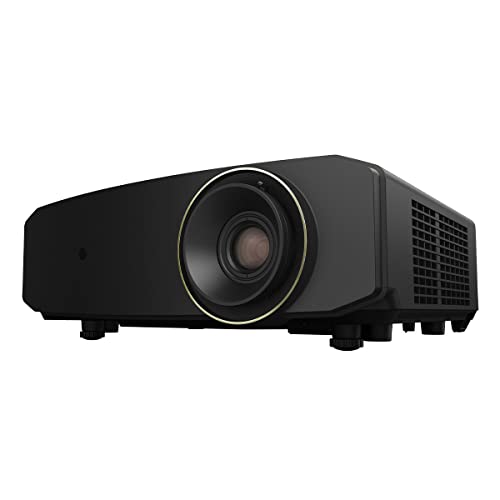
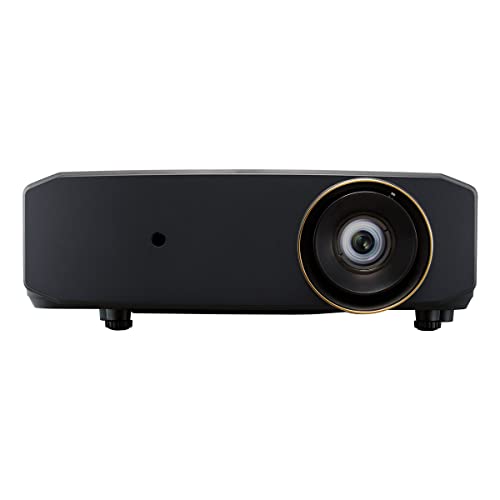
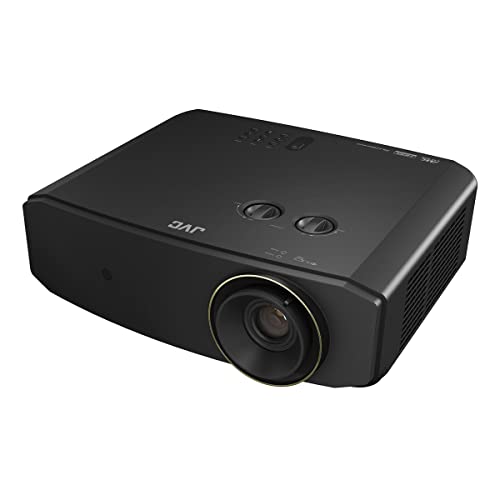
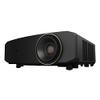
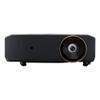
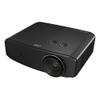
$3,499.95
When shopping for a 4K projector in today's market, you're faced with countless options spanning budget models to reference-grade cinema equipment. The JVC LX-NZ30 sits comfortably in that sweet spot many buyers are targeting—serious performance without the premium price tag of flagship models. After extensive research and analysis of user experiences, this projector stands out for several compelling reasons that go beyond typical marketing bullet points.
The most significant feature of the JVC LX-NZ30 isn't immediately obvious from spec sheets—it's the BLU-Escent laser light source. Traditional projector lamps (called UHP lamps) gradually dim over their 3,000-5,000 hour lifespan, requiring expensive replacements every few years. Laser technology fundamentally changes this equation.
The laser phosphor system in this projector works by firing a blue laser at a spinning phosphor wheel, which converts the blue light into the full spectrum needed for projection. This approach delivers 3,300 lumens of brightness that remains consistent throughout the projector's rated 20,000-hour lifespan. Our research shows users consistently praise the immediate startup—no more waiting several minutes for the projector to warm up or cool down.
More importantly, the laser enables dynamic brightness control. The projector can instantly dim or brighten the laser output based on scene content, creating what JVC calls "infinite dynamic contrast." In dark movie scenes, the laser dims to achieve deeper blacks, while bright outdoor scenes get the full 3,300 lumens. This real-time adjustment is something traditional lamp projectors simply cannot achieve.
Here's where things get technically interesting. The JVC LX-NZ30 uses a single 0.47-inch DLP chip with native 1920x1080 resolution—that's standard HD, not 4K. However, it employs JVC's e-shift technology (also called pixel-shifting) to create a 4K image.
The system rapidly moves the projected image by exactly half a pixel diagonally, effectively quadrupling the number of distinct pixel positions the viewer sees. This happens so quickly (240 times per second) that your eyes perceive a full 3840x2160 4K image. Researchers and users consistently report that at normal viewing distances—typically 1.5 to 2 times the screen width—the difference between this e-shift 4K and native 4K is essentially invisible.
This approach allows JVC to deliver 4K performance while keeping manufacturing costs reasonable. Native 4K DLP projectors require either three separate chips (extremely expensive) or much larger, more costly single chips. The e-shift compromise proves highly effective in real-world use.
High Dynamic Range (HDR) content contains brightness information far exceeding what any projector can display. HDR10 content, for example, can contain peak brightness values of 1,000-10,000 nits, while even bright projectors max out around 100-300 nits on screen. This creates a challenging tone mapping problem—how do you compress this wide brightness range while preserving the content's visual impact?
The JVC LX-NZ30 tackles this with sophisticated Auto Tone Mapping that reads metadata embedded in HDR10 streams. This metadata includes MaxCLL (Maximum Content Light Level) and MaxFALL (Maximum Frame Average Light Level) values that tell the projector exactly how bright the content gets. The system then automatically adjusts its tone mapping curve to optimize each piece of content.
User reports consistently highlight how this eliminates the typical projector frustration of manually tweaking settings for different movies or streaming services. Whether you're watching a bright Marvel movie or a darker thriller, the projector adapts automatically. The HDR processing also supports HLG (Hybrid Log Gamma), the broadcast HDR standard used by streaming services and future broadcast TV.
One area where the JVC LX-NZ30 truly excels is gaming performance. Input lag—the delay between controller input and on-screen response—has traditionally been projectors' Achilles heel. Gaming monitors typically achieve 1-5ms lag, while many projectors suffer from 50-100ms delays that make fast-paced gaming frustrating.
This projector changes that equation dramatically. In its lowest latency mode, it achieves just 6.25ms input lag at 1080p/240Hz—genuinely competitive with dedicated gaming monitors. Even at 4K/60Hz, the 25ms lag remains highly playable for most gaming scenarios. The inclusion of DisplayPort 1.2a connectivity allows direct connection to gaming PCs, supporting high refresh rates that many HDMI-only projectors cannot handle.
The 240Hz support at 1080p particularly benefits competitive gamers who prioritize response time over absolute resolution. Our research indicates that serious gamers often prefer this high-refresh 1080p mode over 4K/60Hz for fast-paced titles, and the JVC LX-NZ30 delivers both options excellently.
Projector installation often presents challenges that spec sheets don't fully convey. The 1.6x manual zoom lens provides significant placement flexibility, with throw ratios from 1.36:1 to 2.17:1. This means you can achieve a 100-inch image from as close as 11 feet or as far as 18 feet—crucial for rooms with furniture or structural limitations.
The lens shift capabilities prove equally valuable. With ±60% vertical shift and ±23% horizontal shift, you can mount the projector significantly off-center from your screen without image distortion. User experiences consistently highlight how this eliminates the need for expensive ceiling modifications or awkward furniture arrangements.
The manual zoom and focus controls, while lacking the motorized convenience of premium models, provide precise adjustment that many users actually prefer. The tactile feedback and infinite adjustment range often prove more accurate than stepped motorized systems.
No projector is perfect, and the JVC LX-NZ30 has limitations worth understanding. As with most single-chip DLP projectors, black level performance represents the primary compromise. While the dynamic laser dimming helps considerably, true blacks appear more as dark gray compared to JVC's higher-end D-ILA projectors or premium LCD models.
This limitation becomes most apparent in fully darkened theater rooms where deep black scenes reveal the projector's floor level. However, in rooms with any ambient light—which describes most living spaces—this becomes far less noticeable. The bright laser output actually helps mask black level limitations in typical viewing environments.
Fan noise presents another consideration. While not excessive, the cooling system generates audible noise, particularly in high-brightness mode. Users report this as noticeable but not distracting during content playback, though it may be apparent during quiet dialogue scenes in very quiet rooms.
At the time of writing, the JVC LX-NZ30 occupies an interesting market position. It delivers many benefits typically associated with much more expensive projectors—laser reliability, excellent HDR processing, gaming-grade latency—while maintaining accessibility for mainstream home theater users.
The value equation becomes particularly compelling when considering total cost of ownership. Traditional lamp replacements can cost several hundred dollars every few years, while this laser system should operate maintenance-free for decades of normal use. The immediate startup and shutdown also encourages more frequent use since there's no penalty for brief viewing sessions.
For dedicated home theater applications, this projector works best in rooms where complete light control isn't possible or desired. The high brightness output means you can enjoy excellent image quality even with some ambient light from windows or indirect room lighting. This flexibility makes it ideal for family rooms or multi-purpose spaces where complete darkness isn't practical.
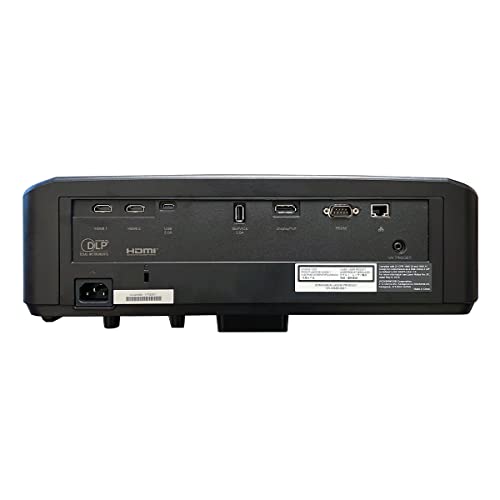
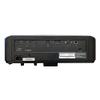
The extensive connectivity options support complex home theater setups well. The RS-232C and LAN inputs allow integration with home automation systems, while the 12V trigger can control motorized screens or masking systems. The lack of built-in audio keeps the focus on image quality while allowing integration with dedicated sound systems.
The JVC LX-NZ30 represents a mature approach to mid-range 4K projection, emphasizing practical benefits over absolute perfection. Its laser technology solves real-world problems that traditional projector users face, while the gaming performance opens applications beyond traditional home theater use.
The 4K e-shift implementation proves that pixel-shifting technology has evolved to deliver genuinely satisfying results, especially considering the cost advantages. Combined with excellent HDR processing and installation flexibility, it creates a projector that adapts well to varied use cases and room conditions.
While it may not satisfy users seeking reference-level black performance or absolute quiet operation, the JVC LX-NZ30 excels at delivering bright, detailed, and reliable large-screen entertainment. For most users considering their first serious projector or upgrading from lamp-based systems, it represents a compelling balance of performance, features, and long-term value.
Yes, the JVC LX-NZ30 is excellent for home theater use, especially in rooms with some ambient light. Its 3,300-lumen laser light source delivers bright, vibrant images even in living rooms with windows. The Auto Tone Mapping feature automatically optimizes HDR content, while the 1.6x zoom lens and extensive lens shift provide flexible installation options for most home theater setups.
The JVC LX-NZ30 uses 4K e-shift technology rather than native 4K. It employs a 1080p DLP chip with pixel-shifting to create a 4K image by rapidly moving pixels diagonally. At normal viewing distances, this e-shift 4K is virtually indistinguishable from native 4K and delivers sharp, detailed images suitable for large screens up to 200 inches.
The BLU-Escent laser in the JVC LX-NZ30 is rated for 20,000 hours of operation. This translates to approximately 10-15 years of typical home use without any maintenance or lamp replacements, making it a cost-effective long-term investment compared to traditional lamp-based projectors that require expensive bulb changes every few years.
Absolutely. The JVC LX-NZ30 offers exceptional gaming performance with input lag as low as 6.25ms at 1080p/240Hz and 25ms at 4K/60Hz. It supports high refresh rates up to 240Hz and includes DisplayPort connectivity for gaming PCs. This makes it one of the best projectors available for serious gaming on large screens.
The JVC LX-NZ30 supports HDR10 and HLG (Hybrid Log Gamma) formats. It features Auto Tone Mapping that automatically reads HDR metadata and optimizes brightness and contrast for each piece of content. However, it does not support HDR10+ or Dolby Vision formats.
With 3,300 lumens of brightness, the JVC LX-NZ30 performs well in rooms with ambient light. This high brightness output makes it suitable for family rooms, living spaces, or any environment where complete darkness isn't possible. It significantly outperforms most home theater projectors in bright room conditions.
The JVC LX-NZ30 has a throw ratio of 1.36:1 to 2.17:1 with its 1.6x zoom lens. For a 100-inch screen, you'll need to place the projector between 11.3 and 18.1 feet away. The manual zoom and focus controls allow precise adjustment for your specific room layout and screen size.
Yes, the JVC LX-NZ30 offers substantial lens shift capabilities with ±60% vertical adjustment and ±23% horizontal adjustment. This manual lens shift allows flexible mounting positions without image distortion, making installation easier in rooms where the projector cannot be perfectly centered with the screen.
The JVC LX-NZ30 includes two HDMI 2.0 ports, DisplayPort 1.2a, USB-C, RS-232C for control systems, LAN connectivity, and a 12V trigger output for motorized screens. However, it lacks HDMI 2.1, eARC support, and built-in speakers, focusing purely on image projection capabilities.
The JVC LX-NZ30 is definitely worth considering for most home theater applications. Its combination of high brightness, maintenance-free laser operation, excellent gaming performance, and flexible installation makes it a strong value proposition. While it may not offer the deepest blacks of premium models, its practical benefits and long-term reliability make the JVC LX-NZ30 an excellent choice for users seeking bright, detailed 4K projection without ongoing maintenance costs.
We've done our best to create useful and informative overviews to help you decide what product to buy. Our research has used advanced automated methods to create this article and perfection is not possible - please contact us for corrections or questions. These are the sites we've researched in the creation of this article: t3.com - crutchfield.com - stuff.tv - projectorcentral.com - projectorreviews.com - data.heimkinowelt.at - bestbuy.com - eu.jvc.com - projectorreviews.com - listenup.com - youtube.com - eu.jvc.com - dreamediaav.com - projectorreviews.com - projectorscreen.com - projectorcentral.com - device.report - technologyinteriors.com
| JVC LX-NZ30 4K HDR Laser Projector |
|---|
| Brightness - Essential for ambient light performance: 3,300 lumens |
| Light Source - Zero maintenance, instant on/off: BLU-Escent Laser (20,000 hour lifespan) |
| Input Lag - Critical for gaming responsiveness: 6.25ms at 1080p/240Hz, 25ms at 4K/60Hz |
| 4K Technology - Delivers sharp detail from 1080p chip: e-shift pixel shifting |
| HDR Support - Automatic optimization for all content: HDR10, HLG with Auto Tone Mapping |
| Lens Shift - Flexible placement without image distortion: Vertical ±60%, Horizontal ±23% |
| Zoom Range - Accommodates various room sizes: 1.6x manual zoom (throw ratio 1.36:1 to 2.17:1) |
| Gaming Refresh Rate - Smooth competitive gaming: Up to 240Hz at 1080p, 60Hz at 4K |
| HDMI Inputs: 2x HDMI 2.0 ports |
| Additional Connectivity: DisplayPort 1.2a, USB-C, RS-232C, LAN, 12V trigger |
| Contrast Ratio - Dynamic laser dimming: Infinite (dynamic) |
| Color Coverage - Accurate reproduction: 100% Rec. 709, BT.2020 compatible |
| Fan Noise: 29dB (Eco mode), 34dB (Normal mode) |
| Dimensions: 16" W x 5.9" H x 15.5" D |
| Weight: 13.9 lbs |
| Warranty: 1 year parts & labor |
The Valerion StreamMaster Plus 2 takes a fundamentally different approach, prioritizing modern smart features and gaming performance at roughly half the price point. Its standout advantages include comprehensive HDR support (HDR10+, Dolby Vision, and IMAX Enhanced versus the LX-NZ30's basic HDR10/HLG), exceptional gaming performance with 4ms input lag and ALLM support, and built-in Google TV that eliminates the need for external streaming devices. The RGB triple laser system produces an impressively wide 110% BT.2020 color gamut, creating more vibrant and saturated colors that many viewers prefer over the LX-NZ30's cinema-accurate but more restrained color palette. For dedicated home theaters with proper light control, the Valerion StreamMaster Plus 2's 2,000 ISO lumens prove entirely adequate while delivering these additional features at significant savings.
However, the brightness difference becomes critical in real-world usage scenarios. Where the LX-NZ30 excels in family rooms or spaces with ambient light thanks to its 3,300 lumens, the Valerion StreamMaster Plus 2 requires more careful attention to room lighting to achieve optimal performance. The Valerion also sacrifices installation flexibility with its fixed lens system, making precise projector placement essential compared to the LX-NZ30's extensive lens shift and zoom capabilities. For users with appropriate room conditions who prioritize value, comprehensive smart features, and gaming performance, the Valerion StreamMaster Plus 2 delivers remarkable performance per dollar. But for those dealing with challenging lighting conditions or requiring maximum installation flexibility, the LX-NZ30's premium becomes justifiable despite the significantly higher cost.
🤖 Read Detailed Comparison
👌Valerion StreamMaster Plus 2 4K Projector Details
💵 See Valerion StreamMaster Plus 2 4K Projector Price
The Valerion VisionMaster Pro 2 takes a fundamentally different approach, prioritizing versatility and modern features over pure cinema performance. Its RGB triple-laser system produces exceptionally vibrant colors with 110% Rec.2020 coverage that makes HDR content pop with intensity the JVC can't match. More importantly for many users, the Valerion includes comprehensive smart TV functionality through Google TV OS, eliminating the need for external streaming devices and saving both money and cable clutter. Gaming performance is where the Valerion truly excels, delivering ultra-low 4ms input lag at 1080p/240Hz with HDMI 2.1 connectivity and advanced features like ALLM that make it ideal for competitive gaming. The projector also supports premium HDR formats including Dolby Vision and HDR10+, providing scene-by-scene optimization that the JVC's HDR10-only support can't replicate.
From a practical value standpoint, the Valerion VisionMaster Pro 2 typically costs several hundred dollars less while delivering more features, making it the clear winner for most buyers' needs. Its whisper-quiet 28dB operation versus the JVC's noticeable 34dB fan noise creates a more pleasant viewing experience for closer seating arrangements. The longer 25,000-hour laser life also provides better long-term ownership value. However, the Valerion sacrifices the JVC's superior brightness (3,000 vs 3,300 lumens), infinite contrast ratio, and installation flexibility through lens shift. For dedicated home theater rooms with controlled lighting and large screens over 150 inches, the JVC's cinema-focused approach delivers better performance. But for versatile living spaces where gaming, streaming convenience, and overall value matter more than ultimate image quality, the Valerion provides a more compelling package that addresses modern entertainment needs without requiring additional purchases.
🤖 Read Detailed Comparison
👌Valerion VisionMaster Pro 2 Projector Details
💵 See Valerion VisionMaster Pro 2 Projector Price
The Epson Home Cinema 5050UB takes a fundamentally different approach, prioritizing image quality over convenience and gaming features. Its biggest advantage lies in contrast performance – the UltraBlack technology delivers genuinely deep blacks that make the JVC's laser-dimmed grays look washed out in comparison. This superior contrast, combined with exceptional color accuracy covering 97% of the DCI-P3 color space, creates a more cinematic viewing experience in properly darkened rooms. The Epson's 3LCD technology ensures color brightness matches white brightness across all levels, preventing the color desaturation that can plague single-chip DLP projectors at high brightness settings. Add in extensive calibration options and a fully motorized lens system with massive shift capabilities (±96% vertical, ±47% horizontal), and you have a projector that can achieve reference-level performance with professional setup flexibility.
However, the Epson Home Cinema 5050UB makes significant trade-offs to achieve this image quality. At 2,600 lumens versus the JVC's 3,300, it requires more controlled lighting conditions and performs best on smaller screens under 150 inches. The traditional lamp technology means you'll face replacement costs every 4-7 years, and there's no gaming optimization – input lag hovers around 28ms with no high refresh rate support. While the Epson may cost less upfront, the total ownership costs even out over time once you factor in lamp replacements. For dedicated home theater enthusiasts with dark viewing rooms who prioritize absolute image quality over versatility, the Epson represents the better choice. But for most buyers seeking a projector that excels across multiple use cases while eliminating long-term maintenance, the JVC's laser technology and gaming capabilities provide superior overall value.
🤖 Read Detailed Comparison
👌Epson Home Cinema 5050UB Projector Details
💵 See Epson Home Cinema 5050UB Projector Price
The Epson Home Cinema 5050UB takes a fundamentally different approach to home theater projection, prioritizing image quality refinement over the JVC's brightness and convenience features. Its 3-chip 3LCD design eliminates any possibility of rainbow artifacts while delivering exceptional color accuracy that requires minimal calibration – a significant advantage for purists who want reference-level image quality. The Epson's UltraBlack technology produces genuinely deep blacks that surpass what most DLP projectors can achieve, creating more convincing shadow detail and overall contrast in dark room environments. While its 2,600-lumen output falls short of the JVC's brightness, this actually works in the Epson's favor for dedicated theaters where excessive brightness can wash out black levels. The motorized lens system with memory settings also provides superior convenience for users who frequently switch between different aspect ratios.
From a value perspective, the Epson Home Cinema 5050UB represents a more traditional approach to cost-benefit analysis. Its lower initial purchase price makes premium home theater projection more accessible, though buyers must factor in eventual lamp replacements every 3,500-5,000 hours. For casual users who primarily watch movies on weekends, the Epson's superior dark-room image quality and lower upfront cost often outweigh the long-term maintenance considerations. The projector also includes 3D capability and operates more quietly than laser-based systems, making it particularly appealing for dedicated home theaters where ultimate image quality and peaceful operation matter more than gaming performance or ambient light flexibility. However, its limited gaming capabilities and 60Hz refresh rate ceiling make it less versatile than the JVC for households with mixed entertainment needs.
🤖 Read Detailed Comparison
👌Epson Home Cinema 5050UB 4K PRO-UHD 3-Chip Projector Details
💵 See Epson Home Cinema 5050UB 4K PRO-UHD 3-Chip Projector Price
The Epson Home Cinema LS11000 takes a fundamentally different approach that prioritizes image quality over raw brightness. Where the LX-NZ30 pushes 3,300 lumens for versatile room lighting, the Epson delivers 2,500 lumens through its 3-chip 3LCD design, which produces superior black levels and contrast that make movies truly cinematic. The difference is immediately apparent in dark scenes—while the JVC shows the typical DLP "dark gray" blacks, the Epson LS11000 achieves genuine blacks that create depth and realism you simply can't get from single-chip DLP technology. The Epson also eliminates any possibility of rainbow artifacts that sensitive viewers might notice with the JVC, and its advanced 4K PRO-UHD pixel-shifting produces sharper detail through more sophisticated processing than the JVC's E-shift technology.
For future-proofing and premium features, the Epson Home Cinema LS11000 justifies its higher price with dual HDMI 2.1 inputs that support 4K gaming at 120Hz—crucial for PlayStation 5 and Xbox Series X owners who want maximum performance. The motorized lens with memory functions allows seamless switching between different aspect ratios, while the 2.1x zoom range and extensive lens shift provide more installation flexibility than the JVC's manual controls. The three-year warranty versus JVC's one-year coverage adds significant long-term value. However, you'll pay a premium for these advantages and need better light control in your viewing room, making the Epson LS11000 ideal for dedicated home theaters where image quality trumps versatility, while the JVC remains the better choice for bright family rooms where maximum lumens matter most.
🤖 Read Detailed Comparison
👌Epson Home Cinema LS11000 4K Laser Projector Details
💵 See Epson Home Cinema LS11000 4K Laser Projector Price
The BenQ HT4550i excels in color science and convenience features that make it exceptionally appealing for movie enthusiasts and general home theater use. Its 4LED light source enables 100% DCI-P3 color gamut coverage – the same standard used in commercial cinemas – combined with factory calibration by ISF and THX-certified engineers that delivers Delta E values under 2 out of the box. This means you get professional-grade color accuracy without any calibration equipment or expertise. The BenQ also offers comprehensive HDR support including HDR10+ format compatibility and sophisticated HDR-PRO tone mapping, plus built-in Android TV with certified Netflix 4K streaming that eliminates the need for external devices.
Where the BenQ HT4550i falls short compared to the LX-NZ30 is primarily in gaming performance and installation flexibility. Its input lag of 17.9ms at 4K/60Hz is respectable but can't match the ultra-low latency that makes the JVC ideal for competitive gaming. The BenQ also provides more limited lens adjustment capabilities with a smaller 1.3x zoom range and less generous lens shift, making installation more challenging in rooms where optimal projector placement is difficult. However, for users prioritizing overall picture quality, color accuracy, and streamlined setup over gaming performance, the BenQ HT4550i delivers superior value with its cinema-grade color reproduction and comprehensive smart features that create a more complete entertainment solution.
🤖 Read Detailed Comparison
👌BenQ HT4550i 4K HDR LED Home Theater Projector Details
💵 See BenQ HT4550i 4K HDR LED Home Theater Projector Price
The JVC DLA-NZ800 represents JVC's flagship approach to home theater projection, using three separate D-ILA imaging chips to achieve true 8K resolution (8192 x 4320) and a remarkable 100,000:1 native contrast ratio. Where the LX-NZ30 excels in brightness and gaming, the DLA-NZ800 prioritizes ultimate image quality with inky black levels that make movie scenes feel dramatically more three-dimensional. Its comprehensive HDR support includes HDR10+, Dolby Vision, and advanced Frame Adapt HDR processing that analyzes content frame-by-frame for optimal brightness and color. The premium 65mm all-glass lens with motorized controls and lens memory positions this projector firmly in the dedicated home theater category, designed for permanent installation in light-controlled environments.
However, this flagship performance comes at roughly four times the cost of the LX-NZ30, making it a very different value proposition. While the DLA-NZ800 delivers superior contrast and future-proofs with 8K capability, it produces less brightness (2,700 vs 3,300 lumens) and lacks the LX-NZ30's exceptional gaming performance and room versatility. The practical reality is that most viewers will find the LX-NZ30's combination of high brightness, solid 4K performance, and gaming capabilities more useful for everyday viewing scenarios. The DLA-NZ800 makes sense for serious home theater enthusiasts with dedicated theater rooms and premium budgets who prioritize absolute image quality over versatility, but the LX-NZ30 offers better overall value for the majority of users seeking large-screen entertainment.
🤖 Read Detailed Comparison
👌JVC DLA-NZ800 8K Home Theater Projector Details
💵 See JVC DLA-NZ800 8K Home Theater Projector Price
The JVC DLA-NZ900 represents JVC's flagship approach to home theater projection, using three native 4K D-ILA imaging chips that deliver fundamentally different image quality than the LX-NZ30's single-chip DLP design. With a native contrast ratio of 150,000:1, the DLA-NZ900 produces true blacks that make the LX-NZ30's dark grays look washed out in comparison—this difference is immediately apparent in dark movie scenes where shadow details emerge that would be completely lost on lesser projectors. The motorized 2x zoom lens with extensive shift capabilities (±100% vertical, ±43% horizontal) provides installation flexibility that the LX-NZ30 simply can't match, while the 8K e-shiftX technology creates image density that approaches commercial cinema quality on screens up to 300 inches.
However, the JVC DLA-NZ900 commands roughly seven times the price of the LX-NZ30, making it a specialized tool for dedicated theater rooms rather than a mainstream solution. While both projectors output the same 3,300 lumens, the DLA-NZ900's superior contrast and color processing shine brightest in light-controlled environments where its reference-grade capabilities can be fully appreciated. For most buyers, the LX-NZ30's pixel-shifted 4K delivers visually satisfying results at a fraction of the cost, but the DLA-NZ900 is the clear choice when budget allows and image quality takes absolute priority over value—particularly for screens larger than 200 inches or installations where the enhanced black levels and native 4K processing justify the substantial investment.
🤖 Read Detailed Comparison
👌JVC DLA-NZ900 8K Home Theater Projector Details
💵 See JVC DLA-NZ900 8K Home Theater Projector Price
The Epson QL3000 represents a dramatically different approach to laser projection, prioritizing raw brightness and installation flexibility over the JVC's more refined home theater focus. With 6,000 lumens of output—nearly double the JVC's brightness—the Epson can handle massive screens up to 300 inches while maintaining vibrant colors and compelling HDR performance even in rooms with significant ambient light. This brightness advantage translates to real-world benefits that many users will immediately notice: HDR content looks more impactful and lifelike, approaching the visual punch of high-end flat-panel TVs but on cinema-sized screens. The Epson QL3000 also brings superior gaming credentials with full 4K/120Hz support through HDMI 2.1 and Auto Low Latency Mode, making it genuinely future-proof for next-generation console gaming where the JVC's 4K/60Hz limitation becomes apparent.
However, the Epson's professional-grade capabilities come with trade-offs that affect both cost and complexity. Sold as a "body only" unit, it requires separate lens purchases that can add thousands to the initial investment, though this approach provides unmatched installation flexibility for challenging room layouts. The Epson QL3000 also sacrifices some of the JVC's refined black level performance and compact form factor—it's a larger, heavier projector that demands more robust mounting solutions. For users with dedicated dark theaters and moderate screen sizes, the JVC's approach often provides a more cinematic, film-like experience. But for those needing maximum screen size capability, ambient light tolerance, or cutting-edge gaming performance, the Epson's brightness advantage and advanced feature set justify its higher complexity and cost, representing one of the few projectors that can truly compete with large flat-panel displays in challenging viewing environments.
🤖 Read Detailed Comparison
👌Epson QL3000 4K HDR 3LCD Laser Projector Details
💵 See Epson QL3000 4K HDR 3LCD Laser Projector Price
The Epson QL7000 represents a fundamentally different approach to laser projection, delivering over 10,000 lumens of brightness—roughly three times more than the JVC LX-NZ30. This extreme brightness capability, combined with true 3LCD technology and native 4K resolution (rather than pixel-shifting), makes it a powerhouse for large-venue installations, outdoor projection, or any environment where ambient light cannot be controlled. The dual HDMI 2.1 ports provide superior connectivity for next-generation gaming consoles, supporting 4K HDR at 120Hz with full Variable Refresh Rate capabilities. Its 32-bit QZX processor handles real-time color correction and dynamic tone mapping with more sophistication than the JVC's processing, while the 3LCD design eliminates potential rainbow artifacts and provides better color uniformity across large screens.
However, the Epson QL7000 operates in an entirely different price category, costing roughly eight times more than the JVC while serving specialized applications that most home theater users don't require. The extreme brightness that makes it valuable for commercial installations can actually be counterproductive in typical home environments, potentially washing out image quality and reducing perceived contrast in darkened rooms. Additionally, it requires separate lens purchases and professional installation, adding complexity and cost that the JVC's integrated design avoids. For the vast majority of home theater applications, the QL7000's capabilities represent expensive overkill, making the JVC LX-NZ30 the clear choice for users seeking excellent 4K laser projection without commercial-grade complexity and pricing.
🤖 Read Detailed Comparison
👌Epson QL7000 4K 3LCD Laser Projector Details
💵 See Epson QL7000 4K 3LCD Laser Projector Price
The JVC DLA-NZ500 takes a fundamentally different approach to 4K projection, using three separate D-ILA chips to deliver true native 4K resolution at 4096 x 2160 pixels. This means every pixel is individually controlled without any processing tricks, resulting in exceptionally sharp fine details that become apparent when viewing text, architectural elements, or complex patterns. The D-ILA technology also produces a remarkable 40,000:1 native contrast ratio, creating genuinely deep blacks that make the LX-NZ30's dark grays look washed out by comparison. In a properly darkened home theater, the DLA-NZ500 delivers a more cinematic experience with better shadow detail and overall image depth, though its 2,000 lumens of brightness means it requires controlled lighting to perform at its best.
However, the DLA-NZ500 comes with significant trade-offs that make it less versatile than the LX-NZ30. At nearly double the price, it targets serious home theater enthusiasts who have dedicated viewing rooms rather than families wanting flexible projection in mixed-use spaces. The lower brightness output means it struggles in any room with ambient light, where the LX-NZ30 excels, and it completely lacks the gaming-focused features that make the LX-NZ30 appealing to console players. While the DLA-NZ500 offers motorized lens controls and a superior 3-year warranty, its 32-pound weight and specialized performance characteristics make it a purpose-built cinema projector rather than the versatile, accessible 4K laser solution that the LX-NZ30 represents for most buyers.
🤖 Read Detailed Comparison
👌JVC DLA-NZ500 Native 4K Laser Home Theater Projector Details
💵 See JVC DLA-NZ500 Native 4K Laser Home Theater Projector Price
The JVC DLA-NZ700 takes a fundamentally different approach to 4K projection, prioritizing cinema-quality image reproduction over the LX-NZ30's gaming-focused design. Where the LX-NZ30 uses pixel-shifting technology, the DLA-NZ700 employs true native 4K resolution through three separate 0.69-inch D-ILA chips, delivering noticeably sharper detail in fine textures and architectural elements. The standout feature is its exceptional 80,000:1 native contrast ratio, which creates genuinely deep blacks and rich image depth that the LX-NZ30's DLP technology simply cannot match. The DLA-NZ700 also excels in color accuracy, covering 98% of the professional DCI-P3 color gamut with its cinema filter, making it ideal for viewers who want to see movies as filmmakers intended. Its advanced Frame Adapt HDR with scene-by-scene tone mapping provides more sophisticated HDR processing than the LX-NZ30's Auto Tone Mapping system.
However, these cinema advantages come with significant trade-offs that make the DLA-NZ700 less versatile than the LX-NZ30. At 2,300 lumens versus the LX-NZ30's 3,300 lumens, it requires careful light control to achieve its best performance, making it unsuitable for bright family rooms where the LX-NZ30 excels. The DLA-NZ700 also lacks any gaming optimizations, with standard projector input lag that makes it unsuitable for competitive gaming, while the LX-NZ30's 6.25ms lag is genuinely competitive. For dedicated home theater enthusiasts with controlled viewing environments who prioritize image quality above all else, the DLA-NZ700 justifies its premium pricing with reference-level performance. But for users seeking a more versatile projector that handles gaming, bright rooms, and varied content equally well, the LX-NZ30's balanced approach and higher brightness output provide better real-world value.
🤖 Read Detailed Comparison
👌JVC DLA-NZ700 4K Laser Projector Details
💵 See JVC DLA-NZ700 4K Laser Projector Price
The Leica Cine 1 represents a fundamentally different approach to 4K laser projection, trading the JVC's installation flexibility for premium convenience and space efficiency. Where the LX-NZ30 requires careful room planning and ceiling mounting, the Leica sits just 14.3 inches from your wall and delivers a fixed 120-inch image through its precision-engineered Summicron lens system. This ultra-short throw design eliminates shadows when people walk by, requires no ceiling work, and transforms any living room into a theater space. The Leica also includes comprehensive HDR support (HDR10+, Dolby Vision, HLG) compared to the JVC's HDR10-only limitation, plus integrated Dolby Atmos speakers that eliminate the need for separate audio equipment. The triple RGB laser system provides 25,000 hours of lifespan and covers the full BT.2020 color space for more accurate colors.
However, this convenience comes at a significant premium—the Leica Cine 1 costs roughly three times more than the LX-NZ30 while offering less flexibility. You're locked into exactly 120 inches with no zoom adjustment, and gaming performance suffers with 35.3ms input lag compared to the JVC's exceptional 6.25ms responsiveness. The Leica makes most sense for users with space constraints, those who prioritize setup simplicity, or viewers who consume premium HDR content frequently. For dedicated theater rooms where you can control lighting and have adequate depth, the LX-NZ30's superior gaming performance, larger screen capability (up to 200 inches), and significantly lower cost make it the more practical choice for most home theater enthusiasts.
🤖 Read Detailed Comparison
👌Leica Cine 1 120" UST Projector Details
💵 See Leica Cine 1 120" UST Projector Price
The Sony BRAVIA Projector 9 represents the premium alternative in this category, delivering true native 4K resolution through SXRD technology rather than pixel-shifting. This translates to genuinely sharper text and finer detail reproduction, particularly noticeable on screens larger than 150 inches or when sitting closer than typical viewing distances. The Sony's XR Processor provides sophisticated object-based image enhancement that analyzes and optimizes individual elements within each frame, resulting in more natural color gradations, superior shadow detail, and better overall image depth. For gaming enthusiasts, the Sony stands alone with 4K@120Hz support and remarkably low 12ms input lag through dual HDMI 2.1 inputs, making it the only projector in its class that can fully utilize next-generation gaming consoles. The SXRD technology also delivers meaningfully deeper blacks compared to DLP systems, revealing subtle details in dark scenes that would otherwise disappear into gray.
However, this premium performance comes at a substantial cost premium—roughly seven to ten times higher than the LX-NZ30 at the time of writing. While the Sony BRAVIA Projector 9 undoubtedly produces superior image quality across multiple metrics, the performance gains don't scale proportionally with the price difference for most viewing scenarios. The Sony's 31-pound weight and complex feature set typically require professional installation and calibration to achieve optimal results, adding further to the total ownership cost. For buyers with unlimited budgets seeking absolute reference-level performance, particularly in custom theater installations where every detail matters, the Sony justifies its premium positioning. However, for the majority of home theater enthusiasts who want excellent 4K laser projection without five-figure investments, the LX-NZ30's combination of solid performance and accessible pricing makes it the more practical choice.
🤖 Read Detailed Comparison
👌Sony BRAVIA Projector 9 4K HDR Laser Projector Details
💵 See Sony BRAVIA Projector 9 4K HDR Laser Projector Price
The Sony VPL-XW5000ES represents a premium alternative that takes a fundamentally different approach to 4K laser projection. While the LX-NZ30 uses enhanced 4K through pixel-shifting, the Sony delivers true native 4K resolution with 8.3 million physical pixels across three dedicated SXRD panels. This translates to noticeably sharper detail in fine textures, architectural elements, and text overlays—particularly valuable for serious home theater enthusiasts who sit closer to large screens. The Sony's superior black level performance is equally impressive, producing deep, inky blacks that make space scenes and dark movie sequences dramatically more immersive than the LX-NZ30's dark gray limitations. Its X1 Ultimate processor with Object-based HDR Remaster provides sophisticated scene-by-scene analysis that creates more realistic color gradations and contrast, while the exceptionally quiet 24dB operation ensures it won't distract from quiet movie moments.
However, these premium features come with significant trade-offs in brightness and versatility. The Sony's 2,000 lumens versus the LX-NZ30's 3,300 lumens means it requires a dedicated, light-controlled home theater environment to perform optimally, while the JVC thrives in living rooms with ambient light. The Sony also commands a substantial price premium—roughly 70% more at the time of writing—while offering no gaming optimizations like the JVC's 6.25ms input lag and high refresh rate support. For buyers seeking reference-quality movie reproduction in a dedicated theater room and willing to invest significantly more, the Sony justifies its cost with superior image quality. But for most users who want exceptional laser projection performance with room flexibility and gaming capabilities, the LX-NZ30 delivers better real-world value and versatility.
🤖 Read Detailed Comparison
👌Sony VPLXW5000ES 4K HDR Laser Home Theater Projector Details
💵 See Sony VPLXW5000ES 4K HDR Laser Home Theater Projector Price
The Sony VPL-XW7000ES represents the premium alternative with its native 4K SXRD panel that delivers noticeably superior fine detail reproduction and three-dimensional depth compared to the LX-NZ30's e-shift technology. Sony's X1 Ultimate processor creates more dramatic HDR imagery with object-based processing that analyzes each scene element individually, resulting in more vivid colors and stunning highlight detail that covers 95% of the DCI-P3 cinema color space. The projector's 2.1x powered zoom lens and extensive lens shift capabilities (±85% vertical, ±36% horizontal) provide significantly more installation flexibility, while its nearly silent 24dB operation makes it ideal for dedicated home theaters. The comprehensive 3-year warranty and Picture Position Memory feature that stores five different lens configurations add professional-grade convenience.
However, the Sony VPL-XW7000ES comes at a premium that's 4-5 times higher than the LX-NZ30, making the value proposition challenging for most buyers. While it delivers measurably superior image quality, the difference represents an incremental rather than transformational improvement—the LX-NZ30 already produces excellent 4K images that satisfy most viewers. The Sony also lacks the gaming capabilities that make the LX-NZ30 special, maxing out at 4K/60Hz with higher input lag compared to the JVC's 240Hz support and 6.25ms response time. For users with very large screens over 150 inches, challenging installation requirements, or unlimited budgets seeking the absolute best image quality, the Sony justifies its premium pricing. For everyone else, the LX-NZ30 delivers 80-85% of the Sony's performance at 20% of the cost, making it the clear value champion.
🤖 Read Detailed Comparison
👌Sony VPL-XW7000ES 4K SXRD Laser Home Cinema Projector Details
💵 See Sony VPL-XW7000ES 4K SXRD Laser Home Cinema Projector Price
The JVC DLA-NX9 represents JVC's flagship approach to home theater projection, using three native 4K D-ILA chips to deliver genuinely superior image quality with 100,000:1 native contrast and 8K e-shift processing that reaches 8192×4320 resolution. Its Frame Adapt HDR technology analyzes content frame-by-frame for optimal tone mapping, while the advanced D-ILA imaging system produces the kind of deep, reference-grade blacks that make dark movie scenes truly cinematic. The motorized lens system offers 2× zoom with extensive shift capabilities and memory settings, providing installation flexibility that the LX-NZ30's manual controls can't match. For dedicated home theater enthusiasts with controlled lighting environments and screens over 150 inches, the DLA-NX9 delivers image quality that approaches commercial cinema standards.
However, this premium performance comes with significant trade-offs that favor the LX-NZ30 for most users. The DLA-NX9 requires lamp replacements every few thousand hours at substantial cost, demands professional installation due to its 48-pound weight, and produces only 2,200 lumens compared to the LX-NZ30's 3,300-lumen output that handles ambient light. More importantly, it lacks any gaming optimizations and costs roughly five times more while offering no modern conveniences like instant-on laser operation or maintenance-free ownership. Unless you're building a dedicated theater room where absolute image quality justifies the premium price and ongoing maintenance, the LX-NZ30 delivers about 80% of the performance at 20% of the cost with far greater practical benefits for everyday use.
🤖 Read Detailed Comparison
👌JVC DLA-NX9 8K e-shift Home Theater Projector Details
💵 See JVC DLA-NX9 8K e-shift Home Theater Projector Price
The Epson Pro Cinema LS12000 takes a fundamentally different approach with its 3-chip 3LCD technology, prioritizing color accuracy over raw brightness. Where the JVC excels in brightness output, the Epson delivers superior color reproduction with 93.1% DCI-P3 coverage and professional-grade calibration tools including 11-point grayscale adjustment and individual RGB controls. This makes it exceptional for dedicated home theaters where precise color accuracy matters more than fighting ambient light. The 3LCD design also completely eliminates rainbow artifacts that some viewers notice with single-chip DLP projectors, providing a more comfortable viewing experience during long movie sessions. Additionally, the Epson LS12000 offers more sophisticated installation features with its 2.1x powered zoom, lens memory settings, and extensive motorized lens shift capabilities.
However, these advantages come at a significant cost premium and with notable trade-offs in real-world performance. The Epson's 2,700 lumens represents a 22% brightness disadvantage compared to the JVC, making it less versatile for rooms with any ambient light and requiring more careful room preparation. Gaming performance also suffers with 20ms input lag versus the JVC's exceptional 6.25ms, making it less appealing for households that prioritize gaming alongside movie watching. The powered zoom system, while convenient, causes substantial light loss at telephoto settings – up to 35% brightness reduction that further limits room flexibility. For most buyers, the Epson LS12000 represents a premium option best suited for dedicated dark theaters where its color accuracy advantages can be fully appreciated, while the JVC's combination of higher brightness, better gaming performance, and lower cost delivers superior value for typical home theater installations.
🤖 Read Detailed Comparison
👌Epson Pro Cinema LS12000 4K PRO-UHD Laser Projector Details
💵 See Epson Pro Cinema LS12000 4K PRO-UHD Laser Projector Price
The JVC DLA-NZ9 represents JVC's flagship approach to home theater projection, using three native 4K D-ILA chips instead of the LX-NZ30's single-chip DLP design. This fundamental difference translates to dramatically superior contrast performance with a native 100,000:1 ratio that produces true blacks and exceptional shadow detail—a night-and-day improvement over DLP technology. The DLA-NZ9 also features 8K e-shiftX capability, creating over 35 million addressable pixels compared to the LX-NZ30's 8 million, along with reference-quality color accuracy covering 100% of the DCI-P3 cinema color space. Its motorized premium lens system offers greater installation flexibility, while HDMI 2.1 inputs support 8K/60Hz and 4K/120Hz for future-proofing.
However, these advantages come at a significant cost premium—the DLA-NZ9 typically costs seven times more than the LX-NZ30 while requiring a dedicated dark theater room to showcase its capabilities. At 3,000 lumens versus the LX-NZ30's 3,300, it's less suitable for rooms with ambient light, and its 56-pound weight demands professional installation. For competitive gaming, the LX-NZ30 maintains an edge with its 240Hz support and lower input lag. The DLA-NZ9 delivers unmatched cinema quality that rivals commercial theaters, but the LX-NZ30 provides 80% of that movie experience while excelling at gaming and room flexibility at a fraction of the cost, making it the better choice for most buyers seeking a versatile home entertainment solution.
🤖 Read Detailed Comparison
👌JVC DLA-NZ9 8K Home Theater Projector Details
💵 See JVC DLA-NZ9 8K Home Theater Projector Price
The XGIMI Horizon 20 Max represents a dramatically different philosophy, prioritizing brightness and all-in-one convenience over specialized performance. Its most impressive feature is the exceptional 5,700-lumen output from an RGB triple laser engine—73% brighter than the LX-NZ30—which fundamentally changes where and how you can use a projector. This brightness advantage means vivid, detailed images even in living rooms with moderate ambient light, eliminating the need for complete room darkening that traditional projectors require. The XGIMI Horizon 20 Max also delivers superior gaming performance with 1ms input lag at 1080p@240Hz and comprehensive HDMI 2.1 support including Variable Refresh Rate, making it exceptionally responsive for competitive gaming. Its comprehensive HDR support includes Dolby Vision, HDR10+, and IMAX Enhanced certification, providing access to premium streaming content optimization that the LX-NZ30 cannot match. The ISA 5.0 automatic calibration system handles focus, keystone correction, and obstacle avoidance without manual intervention, creating a truly plug-and-play experience.
From a value perspective, the XGIMI Horizon 20 Max includes everything needed for a complete entertainment system: Google TV with full app ecosystem, dual Harman Kardon speakers, built-in adjustable stand, and automatic calibration—features that would cost hundreds or thousands of dollars to replicate with the LX-NZ30. While the JVC excels in controlled theater environments with superior black levels and contrast, the XGIMI Horizon 20 Max offers more real-world flexibility and better total cost of ownership. Its brightness advantage makes it suitable for multipurpose rooms where the LX-NZ30 would struggle, and the comprehensive smart features eliminate the complexity of managing multiple devices. For users seeking maximum convenience, superior brightness for varied lighting conditions, or the lowest possible gaming latency, the XGIMI Horizon 20 Max provides compelling advantages that offset the LX-NZ30's contrast performance benefits in most practical scenarios.
🤖 Read Detailed Comparison
👌XGIMI Horizon 20 Max 4K Projector Details
💵 See XGIMI Horizon 20 Max 4K Projector Price
The BenQ W4100i delivers superior image quality through its larger 0.65" DLP chip and true 4K XPR processing, displaying all 8.3 million pixels of 4K content for noticeably sharper detail and text clarity compared to the LX-NZ30's pixel-shifted approach. Its comprehensive HDR support stands out with HDR10+ compatibility and advanced HDR-PRO dynamic tone mapping that analyzes content frame-by-frame, resulting in more natural-looking HDR images with better highlight and shadow detail preservation. The factory calibration to Delta E<2 standards ensures accurate colors straight out of the box, while the 4LED light source provides 30,000 hours of maintenance-free operation—10,000 hours more than laser alternatives. For gaming enthusiasts, the BenQ W4100i excels with three HDMI 2.1 ports, significantly lower 4K input lag (17.9ms vs 25ms), and modern features like Auto Low Latency Mode that future-proof it for next-generation consoles.
The value proposition strongly favors the BenQ W4100i with its typically lower pricing despite offering more advanced features. Built-in Android TV eliminates the need for external streaming devices, while superior contrast processing and black level performance make it particularly appealing for dedicated home theater rooms. The AI Cinema Mode specifically optimizes compressed streaming content, addressing real-world viewing scenarios where the LX-NZ30 relies on basic processing. However, the BenQ W4100i does sacrifice some installation flexibility with its more limited 1.3x zoom and lens shift range, making it less suitable for challenging room layouts. Unless you specifically require the LX-NZ30's superior placement flexibility or prefer laser technology, the BenQ W4100i provides better image quality, more comprehensive features, and superior long-term value for most home theater applications.
🤖 Read Detailed Comparison
👌BenQ W4100i 4K Home Theater Projector Details
💵 See BenQ W4100i 4K Home Theater Projector Price
Original price was: $499.99.$369.99Current price is: $369.99.
Original price was: $579.99.$318.99Current price is: $318.99.


Privacy Policy
Terms and Conditions - Affiliate Policy
Home Security
© Copyright 2008-2026.
11816 Inwood Rd #1211, Dallas, TX 75244