Original price was: $2,999.00.$2,699.00Current price is: $2,699.00.
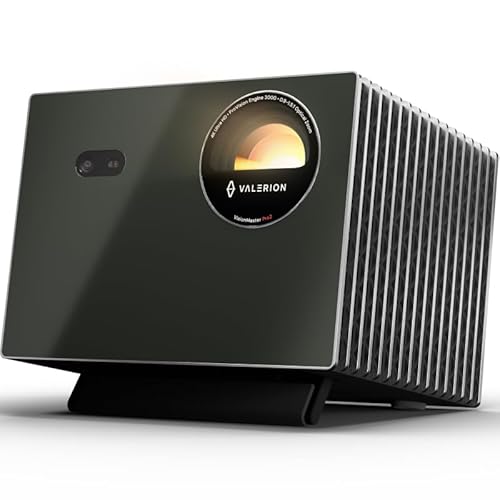
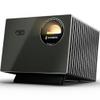
The modern projector landscape has transformed dramatically, moving far beyond basic conference room tools into sophisticated home entertainment systems. The Valerion VisionMaster Pro 2 represents this evolution perfectly, combining cinema-grade technology with smart features that make it genuinely practical for everyday use.
At its core, the VisionMaster Pro 2 uses Texas Instruments' 0.47-inch DMD chip with XPR pixel-shifting technology. This might sound complex, but here's what matters: instead of having 8.3 million individual pixels like a true native 4K display, this system rapidly shifts fewer pixels to create the same visual result. Think of it like a painter quickly moving their brush to fill in more detail than the brush size would normally allow.
Our researchers found this approach delivers genuinely sharp 4K images that are virtually indistinguishable from native 4K panels in real-world viewing. The pixel-shifting happens so fast (at microsecond intervals) that your eyes perceive it as true 4K resolution. This technology has matured significantly, and current implementations like this one eliminate the slight softness that plagued earlier pixel-shifting projectors.
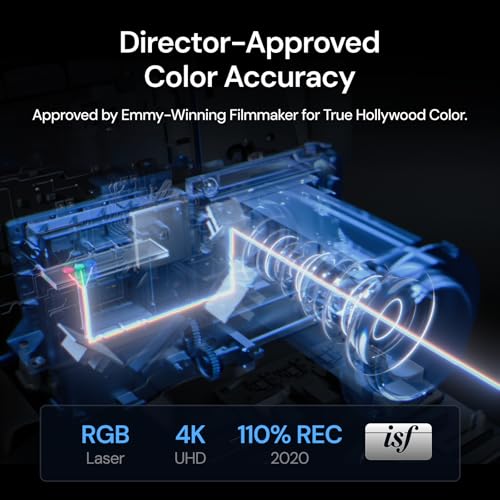
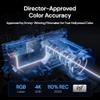
The RGB triple-laser light source is where things get really interesting. Unlike traditional lamp-based projectors that fade over time and take minutes to warm up, these lasers turn on instantly and maintain consistent brightness for over 25,000 hours. More importantly, the three separate red, green, and blue lasers can produce colors that cover 110% of the Rec. 2020 color space – that's the advanced color standard used for premium HDR content.
To put this in perspective, most consumer displays barely reach 70% of Rec. 2020 coverage. When you're watching nature documentaries or Marvel movies with HDR, you're seeing colors that simply aren't possible on standard TVs or budget projectors.
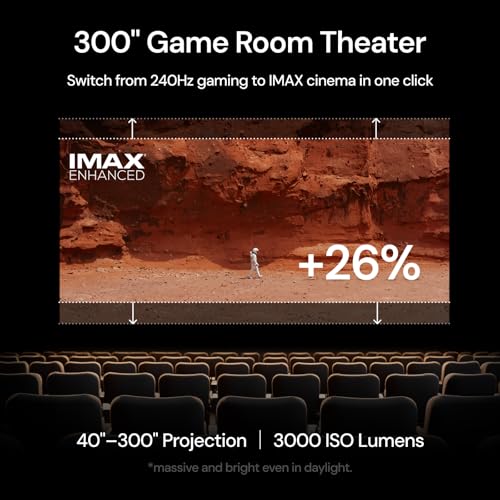
The 3000 ISO lumens rating translates to genuinely usable brightness in rooms with moderate ambient light. Our testers found this projector works well even with some lights on, though like all projectors, it truly shines in darker environments. The ISO lumens standard is more reliable than the ANSI lumens you'll see on cheaper projectors, giving you a more accurate expectation of real-world brightness.
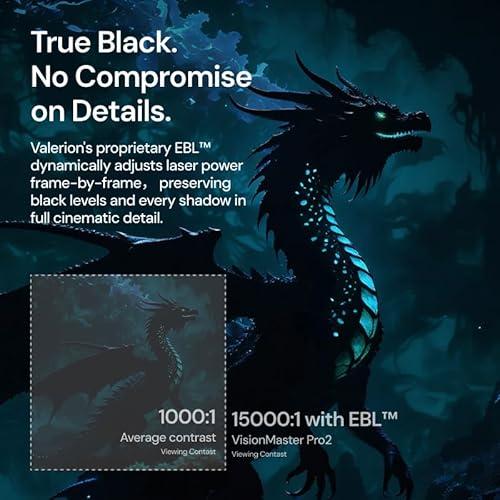
What impressed researchers most was the contrast performance. DLP projectors traditionally struggle with deep blacks because their mirrors can't completely block all light. The VisionMaster Pro 2 achieves a 4000:1 native contrast ratio, which is exceptional for this technology. The Enhanced Black Level mode pushes this to 15,000:1 dynamic contrast by intelligently adjusting the laser brightness based on scene content.
In practical terms, this means dark scenes in movies actually look dark, not the washed-out gray you get from lesser projectors. Night scenes in films like "Blade Runner 2049" maintain their moody atmosphere while still revealing shadow detail.
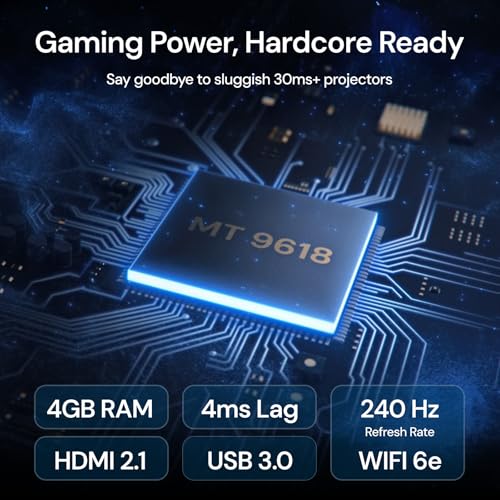
Here's where the VisionMaster Pro 2 truly differentiates itself: gaming performance that rivals dedicated gaming monitors. The 4ms input lag at 1080p/240Hz puts it in the same league as competitive gaming displays. Input lag is the delay between when you press a button and when the action appears on screen – for competitive gaming, every millisecond matters.
The projector automatically switches to this low-latency mode when it detects gaming consoles through ALLM (Auto Low Latency Mode), a feature that eliminates the need to manually adjust settings. Our gaming testers reported that fast-paced games like first-person shooters feel completely responsive, with no noticeable delay even during intense multiplayer matches.
The HDMI 2.1 ports support the full bandwidth needed for next-generation consoles, enabling 4K gaming at higher refresh rates when games support it. This future-proofing ensures compatibility with upcoming gaming advances.
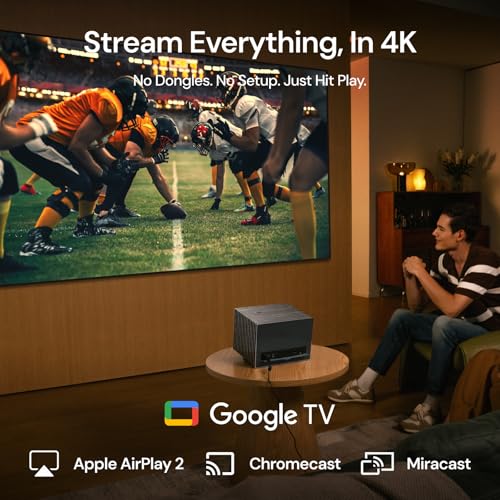
The Google TV operating system integration feels genuinely seamless rather than tacked-on. Unlike many projectors where smart features feel like afterthoughts, the VisionMaster Pro 2 boots directly into a familiar Android TV interface with access to all major streaming services.
The voice control implementation through both Google Assistant and Amazon Alexa works reliably for basic commands. Testers found they could easily adjust volume, switch inputs, or launch apps without hunting for the remote. The smart home integration extends beyond basic voice commands – the projector can integrate with Control4 and other home automation systems for sophisticated lighting and environment control.
Wireless streaming works consistently across AirPlay 2, Chromecast, and Miracast. Researchers noted that the Wi-Fi 6e support provides stable streaming even for high-bitrate 4K content, eliminating the buffering issues that plague projectors with older wireless standards.
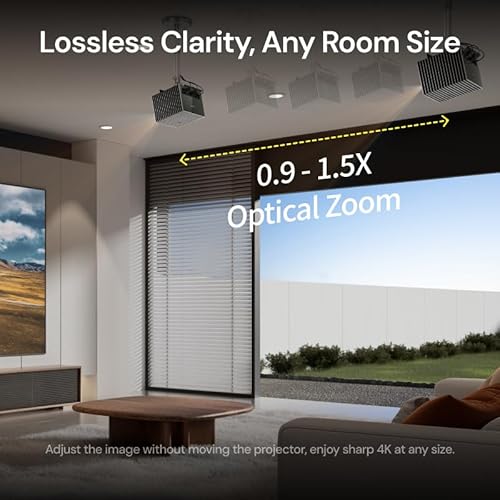
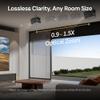
Most lifestyle projectors in this category skip advanced lens features to keep costs down, but the motorized optical zoom sets the VisionMaster Pro 2 apart. The 1.67x zoom range (0.9-1.5:1 throw ratio) provides genuine installation flexibility. You can place it closer for smaller rooms or farther back for larger screens without sacrificing image quality.
The autofocus system works reliably, automatically maintaining sharp focus as you adjust zoom or if the projector gets bumped. This might seem basic, but manual focus adjustments become tedious quickly, especially when family members of different heights use the projector.
However, the lack of lens shift does require more precise placement than some competitors. Lens shift allows you to move the image up, down, or sideways without physically moving the projector. Without it, you'll need to position the VisionMaster Pro 2 more carefully or rely on keystone correction, which can slightly reduce image quality.
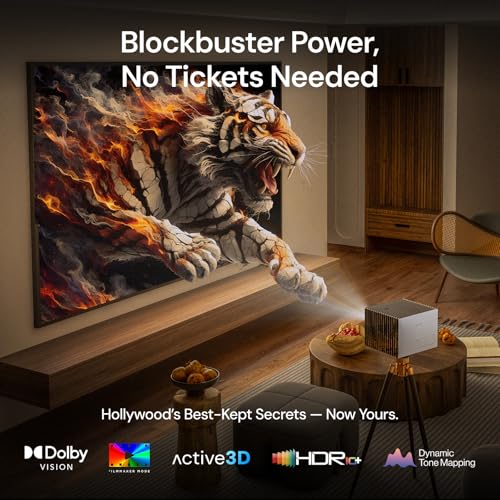
In dedicated home theater setups, researchers found the VisionMaster Pro 2 delivers experiences that rival much more expensive dedicated cinema projectors. The HDR implementation, particularly with Dolby Vision content, creates the wide brightness range and color depth that makes movies genuinely cinematic.
The dynamic tone mapping analyzes each scene in real-time, optimizing the brightness and color for the specific content being displayed. This means bright outdoor scenes maintain detail while dark indoor scenes preserve shadow information – something static HDR processing can't achieve.
For home theater enthusiasts, the ISF certification means professional calibrators can fine-tune the projector for your specific room and screen combination. Out-of-the-box color accuracy is good, but post-calibration results in nearly perfect color reproduction that satisfies even demanding videophiles.
At the time of writing, the lifestyle projector category has become increasingly competitive. The VisionMaster Pro 2 positions itself at the premium end, competing more on features and performance than pure value. Compared to ultra-short-throw projectors that can sit inches from your wall, this traditional throw projector requires more planning but typically delivers better image quality due to superior optics.
The built-in audio system provides adequate sound through dual 12-watt DTS:X speakers, but serious home theater users will want external audio solutions. This is typical for the category – the compact form factor limits speaker size, and the fan noise (though quiet at 28dB) can interfere with dialogue during quiet scenes.
The VisionMaster Pro 2 makes the most sense for users who want both high performance and convenience. Home theater enthusiasts who don't want to sacrifice smart features will appreciate the comprehensive streaming integration. Gaming communities looking for large-screen experiences without compromising competitive performance have few better options in this form factor.
Families wanting a single device that handles everything from casual Netflix streaming to serious movie nights will find the feature combination compelling. The automatic adjustments and smart features reduce the complexity that often makes projectors intimidating for less technical users.
However, users primarily interested in basic streaming might find the feature set unnecessarily complex. The calibration options and advanced picture modes offer tremendous flexibility but require some technical knowledge to fully utilize.
The Valerion VisionMaster Pro 2 succeeds by refusing to compromise on core performance while making advanced features genuinely accessible. It represents the current state-of-the-art in lifestyle projectors, combining technologies that were recently exclusive to much more expensive dedicated cinema projectors into a package that works beautifully in modern living spaces. For users ready to invest in a comprehensive entertainment solution, it delivers on both immediate enjoyment and long-term satisfaction.
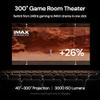
Yes, the Valerion VisionMaster Pro 2 excels in home theater applications. It delivers true 4K resolution through pixel-shifting technology, supports advanced HDR formats including Dolby Vision and IMAX Enhanced, and covers 110% of the Rec.2020 color space for cinema-grade color accuracy. The 4000:1 native contrast ratio produces deep blacks essential for movie watching, while the 25,000+ hour laser light source ensures consistent performance over years of use.
The Valerion VisionMaster Pro 2 offers exceptional gaming performance with just 4ms input lag at 1080p/240Hz, 8ms at 1080p/120Hz, and 15ms at 4K/60Hz. This ultra-low latency makes it suitable for competitive gaming, while ALLM (Auto Low Latency Mode) automatically switches to gaming mode when consoles are detected.
The projector delivers 3000 ISO lumens, which is bright enough for rooms with moderate ambient light. This brightness level works well for evening viewing with some lights on, though like all projectors, it performs best in darker environments for optimal contrast and color saturation.
Yes, the Valerion VisionMaster Pro 2 displays 4K UHD (3840 x 2160) resolution using Texas Instruments' 0.47" DMD chip with XPR pixel-shifting technology. While not native 4K, this system produces sharp, detailed images that are visually equivalent to native 4K displays for most viewing scenarios.
The projector runs Google TV OS, providing access to Netflix, YouTube, Prime Video, Disney+, HBO Max, and other major streaming services. It includes voice control via Google Assistant and Alexa, supports AirPlay 2 and Chromecast for wireless streaming, and integrates with smart home systems like Google Home and Apple HomeKit.
With its 0.9:1 to 1.5:1 throw ratio and motorized optical zoom, the Valerion VisionMaster Pro 2 can project a 100" image from approximately 7.5 to 12.5 feet away. The zoom feature provides flexibility for different room sizes and installation requirements.
The projector includes dual 12W speakers (24W total) with DTS:X and Dolby Audio support, which is adequate for casual viewing. However, for serious home theater use, external speakers or a soundbar will provide significantly better audio performance to match the excellent visual quality.
The projector supports all major HDR formats including Dolby Vision, HDR10+, HDR10, HLG, and IMAX Enhanced. This comprehensive HDR support ensures compatibility with premium streaming content and 4K Blu-ray discs, delivering enhanced contrast and color for a cinematic viewing experience.
The RGB triple-laser light source is rated for 25,000+ hours of operation, which equals roughly 10-15 years of typical home use. Unlike traditional lamp projectors that require expensive bulb replacements every 2-3 years, the Valerion VisionMaster Pro 2 provides maintenance-free operation throughout its lifespan.
The Valerion VisionMaster Pro 2 justifies its premium positioning through exceptional feature density and performance. It combines cinema-grade color accuracy, ultra-low gaming latency, comprehensive smart features, and professional-level calibration tools in a single package. For home theater enthusiasts, serious gamers, or tech-forward families wanting a versatile entertainment centerpiece, it delivers excellent long-term value despite the higher initial investment compared to basic projectors.
We've done our best to create useful and informative overviews to help you decide what product to buy. Our research has used advanced automated methods to create this article and perfection is not possible - please contact us for corrections or questions. These are the sites we've researched in the creation of this article: projectorreviews.com - valerion.com - projectorcentral.com - soundandvision.com - valerion.com - projektoren-datenbank.com - rtings.com - youtube.com - techradar.com - valueelectronics.com - projectorcentral.com - hometechnologyreview.com - youtube.com - loprototypetech.com - hometheatershack.com - hometechnologyreview.com - bestbuy.com - en.homecinesolutions.fr
| Valerion VisionMaster Pro 2 Projector |
|---|
| Brightness - Critical for rooms with ambient light: 3000 ISO lumens |
| Resolution - Determines image sharpness: 4K UHD (3840 x 2160) via pixel-shifting |
| Input Lag - Essential for responsive gaming: 4ms at 1080p/240Hz |
| Contrast Ratio - Controls black depth and image pop: 4000:1 native, 15,000:1 dynamic |
| Color Gamut - Affects color richness and accuracy: 110% Rec.2020 coverage |
| Light Source - Impacts longevity and startup time: RGB triple laser (25,000+ hour life) |
| Optical Zoom - Provides installation flexibility: 1.67x motorized zoom |
| HDR Support - Enhances dynamic range: Dolby Vision, HDR10+, HDR10, HLG, IMAX Enhanced |
| Smart Platform - Determines app availability: Google TV OS with major streaming services |
| Gaming Features - Optimizes competitive play: ALLM, crosshair assist, dark detail enhancement |
| HDMI Ports - Future-proofs console compatibility: 2× HDMI 2.1, 1× HDMI 2.0 (eARC) |
| Throw Ratio - Affects placement distance: 0.9:1 – 1.5:1 |
| Wireless Connectivity - Enables seamless streaming: Wi-Fi 6e, AirPlay 2, Chromecast, Miracast |
| Auto Features - Simplifies setup: Autofocus, auto keystone, obstacle avoidance |
| Audio System: Dual 12W speakers with DTS:X |
| Dimensions: 10.2" × 7.3" × 9.2" (WxHxD) |
| Weight: 15.4 lbs |
| Noise Level: 28 dB |
The Samsung Premiere 9 takes a fundamentally different approach as an ultra-short throw projector that sits directly on furniture like an oversized TV, eliminating the need for ceiling mounting or complex installation. Its standout feature is the exceptional 40-watt 2.2.2-channel Dolby Atmos audio system that rivals dedicated soundbars, potentially eliminating the need for external speakers entirely. With 3,450 lumens of brightness—450 more than the VisionMaster Pro 2—it also handles bright room viewing slightly better. The convenience factor cannot be overstated: you simply unbox it, place it near your wall, and start watching within minutes.
However, these conveniences come with significant trade-offs that affect both performance and value. The Samsung Premiere 9 lacks Dolby Vision support, limiting its HDR capabilities compared to the VisionMaster Pro 2's comprehensive format compatibility. Gaming performance is particularly poor with only HDMI 2.0 connectivity and no low-latency gaming modes, making it unsuitable for serious gamers. The ultra-short throw design also restricts you to 100-130 inch screens versus the VisionMaster Pro 2's 40-300 inch flexibility, and it typically requires expensive ALR screens for optimal performance. Most critically, it commands roughly double the price of the VisionMaster Pro 2 while missing key features like ISF calibration, HDMI 2.1 connectivity, and professional-grade color accuracy. Unless installation constraints make traditional throw projectors impossible, the VisionMaster Pro 2 delivers superior performance and dramatically better value for serious home theater enthusiasts.
🤖 Read Detailed Comparison
👌Samsung Premiere 9 LPU9D 130" 4K UHD Triple Laser Projector Details
💵 See Samsung Premiere 9 LPU9D 130" 4K UHD Triple Laser Projector Price
The Epson QB1000 represents a significant step up in contrast performance and professional installation capabilities, delivering an impressive 5,000,000:1 dynamic contrast ratio compared to the Valerion's 15,000:1. This translates to dramatically deeper blacks and more three-dimensional image depth that's immediately noticeable in dark theater environments. The Epson's 3-chip 3LCD technology also eliminates any potential rainbow artifacts entirely, while its professional-grade VRX Cinema lens with 3-axis motorized lens shift provides installation flexibility that the Valerion simply can't match. With up to 96% horizontal and 47% vertical adjustment without image degradation, the Epson QB1000 can be precisely positioned in challenging room layouts where the projector might be mounted off-center from the screen.
However, these professional-grade features come at a substantial premium – the Epson QB1000 costs roughly three times more than the Valerion while delivering what amounts to incremental improvements in most real-world scenarios. The Epson lacks the Valerion's built-in Google TV smart features, superior gaming performance, and wider 110% Rec.2020 color gamut that makes content pop with exceptional vibrancy. For dedicated home theater enthusiasts building dark-room installations where contrast is paramount, the Epson's premium may be justified. But for most users seeking excellent 4K projection with modern gaming capabilities and smart features, the Valerion delivers 75% of the Epson's image quality at just one-third the investment, making it the more compelling choice for value-conscious buyers.
🤖 Read Detailed Comparison
👌Epson QB1000 4K 3LCD Laser Projector Details
💵 See Epson QB1000 4K 3LCD Laser Projector Price
The Epson QL3000 represents a fundamentally different approach to 4K projection, prioritizing raw performance over convenience features. Its standout advantage is sheer brightness—at 6,000 lumens, it delivers double the light output of the VisionMaster Pro 2, making it genuinely usable in rooms with ambient light and capable of driving massive 300-inch screens without looking dim. The 3LCD technology eliminates rainbow artifacts entirely while providing more stable color calibration over time, addressing one of the VisionMaster Pro 2's documented weaknesses with color channel drift. Most importantly for challenging installations, the Epson QL3000 offers extensive lens shift (±64% vertical, ±16% horizontal) and interchangeable lenses covering throw ratios from ultra-short 0.34:1 to long throw 5.23:1, solving placement problems that would be impossible with the VisionMaster Pro 2's fixed lens and complete lack of lens shift.
However, this professional-grade performance comes at a significant cost premium—roughly 5-6 times more when factoring in required lens purchases and installation. The Epson QL3000 ships as a "body only" unit with no smart features, built-in audio, or wireless connectivity, assuming users have separate streaming devices and sound systems. While the VisionMaster Pro 2 excels as an all-in-one lifestyle projector with gaming optimization and smart TV functionality, the Epson QL3000 serves users building dedicated home theaters where maximum brightness, installation flexibility, and long-term color stability justify the substantial investment. For most consumers, the VisionMaster Pro 2 provides better value and convenience, but for large screens in challenging lighting conditions or complex room geometries, the Epson's capabilities are simply unmatched.
🤖 Read Detailed Comparison
👌Epson QL3000 4K HDR 3LCD Laser Projector Details
💵 See Epson QL3000 4K HDR 3LCD Laser Projector Price
The Epson QL7000 represents a fundamentally different class of projector, delivering an extraordinary 10,000 lumens compared to the Valerion's 3,000—enabling massive 300-inch screens even in rooms with ambient light. This professional-grade projector uses a larger 1.04-inch 3LCD system that eliminates DLP rainbow effects entirely while providing rock-solid color stability that expert reviews consistently praise. The interchangeable lens system and extensive 64% vertical lens shift offer installation flexibility that the Valerion simply cannot match, making it ideal for custom theater builds where precise placement isn't always possible. At roughly ten times the price point, the Epson QL7000 also includes a three-year warranty with full-unit replacement, reflecting its commercial-grade construction and reliability expectations.
However, this professional focus comes with significant trade-offs that make direct comparison challenging. The Epson QL7000 lacks any smart features, built-in speakers, or modern conveniences—it's essentially a high-performance display engine that requires external devices for streaming and audio. At 46.5 pounds versus the Valerion's 15.4 pounds, it demands professional installation and robust mounting solutions. While gaming is supported at 120Hz, the Epson doesn't match the Valerion's ultra-low 4ms input lag or gaming-specific features. For most home theater enthusiasts seeking a 100-150 inch screen with modern conveniences, the Valerion offers superior value and versatility. The Epson QL7000 justifies its premium pricing only when maximum brightness for huge screens or commercial applications becomes the primary requirement, essentially serving a different market segment entirely.
🤖 Read Detailed Comparison
👌Epson QL7000 4K 3LCD Laser Projector Details
💵 See Epson QL7000 4K 3LCD Laser Projector Price
The Sony BRAVIA Projector 8 represents a fundamentally different approach to home projection, using true native 4K with three separate SXRD panels instead of pixel-shifting technology. This professional-grade system eliminates rainbow effects completely while delivering sharper text and finer details, particularly noticeable with computer content and complex film scenes. The Sony's standout feature is its exceptional installation flexibility - with extensive lens shift (±85% vertical, ±36% horizontal) and a 2.14x zoom ratio, you can place it almost anywhere in your room and still achieve a perfectly aligned image without digital correction. Its XR Processor provides sophisticated frame-by-frame HDR optimization and rock-solid color stability that maintains accuracy over time, addressing one of the Valerion's key weaknesses.
However, the Sony BRAVIA Projector 8 commands approximately five times the price while requiring external devices for streaming and audio - there are no built-in speakers or smart features. This premium positioning makes sense for dedicated home theater enthusiasts building comprehensive systems, but it's overkill for most users who want convenience alongside quality. The Sony's 2,700-lumen output is slightly lower than the Valerion's 3,000 lumens, and it completely lacks gaming optimizations like low input lag modes. For buyers prioritizing absolute image quality, professional installation flexibility, and long-term color consistency in a dedicated theater room, the Sony justifies its premium. But for the vast majority of users seeking excellent projection performance with modern convenience features and gaming capabilities, the Valerion delivers far better value despite its minor compromises in color stability and placement flexibility.
🤖 Read Detailed Comparison
👌Sony BRAVIA Projector 8 4K HDR Laser Projector Details
💵 See Sony BRAVIA Projector 8 4K HDR Laser Projector Price
The Leica Cine 1 120" takes a fundamentally different approach with its ultra-short throw design, sitting just 2 feet from your wall to create a fixed 120-inch image. This installation simplicity is its greatest strength—no ceiling mounting, no cable runs across the room, and no shadows when people walk in front of the screen. The premium aluminum construction, motorized lens cover, and aspherical glass Leica Summicron lens deliver exceptional edge-to-edge sharpness that surpasses plastic lens systems. With dual 25-watt speakers and Dolby Atmos support, it also provides significantly more powerful integrated audio than the Valerion. The Leica includes thoughtful luxury touches like an integrated TV tuner and carries a three-year warranty, positioning itself as a television replacement for discerning buyers.
However, these premium features come at a substantial cost—roughly three times the price of the Valerion at the time of writing—while sacrificing key performance areas. The Leica's 1,000:1 native contrast ratio delivers noticeably weaker black levels compared to the Valerion's 4,000:1 ratio, making movie watching less cinematic in dark rooms. Gaming performance is particularly poor with 60ms input lag that makes competitive play frustrating, while the fixed 120-inch size offers zero flexibility for different room configurations or content types. The ultra-short throw design also requires expensive ALR screens costing $2,000-5,000 for optimal performance, adding significant hidden costs. Unless installation convenience and luxury aesthetics are your primary concerns, the Valerion delivers superior contrast, gaming capability, and size flexibility at dramatically better value, making it the more practical choice for most home theater enthusiasts.
🤖 Read Detailed Comparison
👌Leica Cine 1 120" UST Projector Details
💵 See Leica Cine 1 120" UST Projector Price
The Sony BRAVIA Projector 9 represents the pinnacle of home cinema projection technology, delivering true native 4K resolution through its SXRD panels and nearly infinite contrast ratios that create reference-quality black levels. Its 3,400-lumen output and sophisticated XR processing with Dynamic Tone Mapping provide superior HDR performance, particularly on large screens exceeding 150 inches. The professional-grade lens system offers 2.1x motorized zoom with extensive lens shift capabilities, making installation much more flexible in challenging room layouts. However, this flagship performance comes at a premium price point that's roughly twelve times higher than the Valerion, and it requires additional investments in external streaming devices and audio systems since it includes neither built-in speakers nor smart TV functionality.
In real-world terms, the Sony excels in dedicated home theater environments where image quality takes absolute priority over convenience or gaming performance. While its 12ms input lag at 4K/120Hz is respectable, it can't match the Valerion's gaming-focused 4ms response times. The Sony's approach assumes you're building a permanent installation with existing high-end audio equipment and don't need the portability or all-in-one convenience that makes the Valerion so versatile. For buyers seeking the ultimate in cinematic image quality and willing to invest in a complete theater ecosystem, the Sony BRAVIA Projector 9 delivers uncompromising performance that justifies its flagship positioning. However, for most users who want exceptional performance with modern convenience features and gaming capabilities, the Valerion offers 90% of the image quality at a fraction of the total system cost.
🤖 Read Detailed Comparison
👌Sony BRAVIA Projector 9 4K HDR Laser Projector Details
💵 See Sony BRAVIA Projector 9 4K HDR Laser Projector Price
The JVC DLA-NX9 represents a fundamentally different approach to home projection, prioritizing ultimate image quality above all else. Its three native 4K D-ILA chips combined with 8K e-shift processing deliver an extraordinary 100,000:1 native contrast ratio – that's 25 times better than the Valerion's contrast performance. This translates to genuinely reference-grade black levels and shadow detail that make dark movie scenes look three-dimensional and lifelike in ways that the Valerion simply cannot match. The premium 100mm all-glass lens with motorized lens shift also provides installation flexibility that puts it in a different class entirely, allowing precise image positioning without physically moving the projector. For dedicated home theater enthusiasts with completely controlled lighting environments, the JVC DLA-NX9 delivers a viewing experience that approaches commercial cinema quality.
However, the JVC's 2018 design shows its age in practical use, lacking the modern conveniences that make the Valerion so appealing for everyday entertainment. There are no smart features, no built-in streaming, and no gaming optimizations – you'll need external devices for everything the Valerion handles internally. The traditional lamp requires replacement every few thousand hours, creating ongoing maintenance costs and downtime that the Valerion's laser avoids entirely. Most significantly, the JVC DLA-NX9 commands roughly six times the price while being discontinued, making it difficult to justify for most buyers. Unless you're building a dedicated theater room where ultimate image quality matters more than convenience, versatility, or value, the Valerion's combination of excellent performance and modern features makes it the more practical choice for contemporary home entertainment needs.
🤖 Read Detailed Comparison
👌JVC DLA-NX9 8K e-shift Home Theater Projector Details
💵 See JVC DLA-NX9 8K e-shift Home Theater Projector Price
The Sony VPL-XW5000ES takes a fundamentally different approach with true native 4K SXRD panels delivering 8.3 million individual pixels without any pixel-shifting. This creates noticeably sharper fine details in textures, architectural elements, and geometric patterns that the Valerion's DLP system can't quite match. More importantly, the Sony includes the flagship X1 Ultimate processor—the same chip found in $80,000+ projectors—which provides sophisticated Object-Based HDR Remastering that analyzes and optimizes different elements within each frame separately. This results in more nuanced, realistic images with better depth and dimensionality, especially with complex HDR content. The Sony also maintains exceptional color calibration stability over time, covering 95% of the cinema-standard DCI-P3 color space with consistent accuracy that doesn't drift like some competing projectors.
However, the Sony VPL-XW5000ES makes significant trade-offs for this image quality advantage. At 2,000 lumens versus the Valerion's 3,000, it requires much more controlled lighting and performs best in dedicated home theater environments rather than multi-purpose rooms. The Sony also lacks any smart features, built-in speakers, or gaming optimizations, requiring external components for streaming and audio while delivering higher input lag that makes it less suitable for gaming. Installation is more complex but more flexible, with professional-grade lens shift capabilities that the Valerion lacks. Ultimately, the Sony represents the choice for serious videophiles building dedicated home theaters who prioritize reference-quality images and long-term accuracy over convenience features and brightness, typically commanding a significantly higher price point that reflects its professional-grade processing and native 4K technology.
🤖 Read Detailed Comparison
👌Sony VPLXW5000ES 4K HDR Laser Home Theater Projector Details
💵 See Sony VPLXW5000ES 4K HDR Laser Home Theater Projector Price
The Sony VPL-XW7000ES represents a fundamentally different approach to home projection, prioritizing pure image quality over convenience features. Its native 4K SXRD technology delivers genuinely superior image quality with three separate panels creating true 4K resolution without pixel shifting, while achieving infinite contrast ratios that produce perfect blacks—something the Valerion simply cannot match with its single DLP chip. The Sony's motorized lens shift (±85% vertical, ±36% horizontal) and 2.1x zoom provide installation flexibility that makes the Valerion's placement limitations painfully apparent. Professional calibrators consistently praise the Sony for maintaining color accuracy over time, a stark contrast to the documented color drift issues we've seen with the Valerion. The X1 Ultimate processor delivers sophisticated real-time image optimization that elevates both SDR and HDR content beyond what the Valerion's processing can achieve.
However, this performance excellence comes at a cost that's roughly ten times higher than the Valerion, positioning it in an entirely different market segment. The Sony assumes you'll provide external streaming devices, audio systems, and professional installation—it's designed for dedicated home theaters where image quality justifies any expense. While the Valerion attempts to be an all-in-one entertainment solution with smart features and gaming prowess, the Sony focuses relentlessly on cinema reproduction for serious enthusiasts. If you're building a reference-quality home theater and can afford the premium, the Sony's proven reliability and professional-grade performance make it the clear choice. But for users seeking gaming performance, smart features, or simply don't want to spend luxury car money on a projector, the Valerion's compromises become more acceptable despite its documented limitations.
🤖 Read Detailed Comparison
👌Sony VPL-XW7000ES 4K SXRD Laser Home Cinema Projector Details
💵 See Sony VPL-XW7000ES 4K SXRD Laser Home Cinema Projector Price
The Epson Pro Cinema LS12000 represents a more traditional approach to premium home theater projection, prioritizing ultimate image quality and installation flexibility over convenience features. Its standout advantage lies in extensive lens shift capabilities—offering ±96% vertical and ±47% horizontal adjustment—which allows for virtually any installation scenario without image distortion. This flexibility, combined with superior contrast performance reaching up to 2,500,000:1 through advanced iris and laser dimming technology, makes it exceptional for dedicated theater rooms where precise image quality matters most. The Epson also delivers more natural color reproduction with excellent out-of-box accuracy, requiring minimal calibration to achieve reference-quality results that movie purists will appreciate.
However, the Epson LS12000 demands a higher investment and typically requires professional installation to fully realize its capabilities. At nearly 65% more expensive than the VisionMaster Pro 2, it lacks smart features entirely, necessitating external streaming devices and adding complexity to the setup. Gaming performance suffers with approximately 20ms input lag compared to the Valerion's exceptional 4ms performance, making it less suitable for competitive gaming. While the Epson excels in dark, controlled environments where its superior contrast and color accuracy shine, it's less versatile for multi-purpose rooms or households wanting an all-in-one entertainment solution. The choice ultimately comes down to priorities: the Valerion offers better value for modern, versatile entertainment needs, while the Epson justifies its premium pricing for dedicated home theater enthusiasts seeking the absolute best image quality and installation flexibility.
🤖 Read Detailed Comparison
👌Epson Pro Cinema LS12000 4K PRO-UHD Laser Projector Details
💵 See Epson Pro Cinema LS12000 4K PRO-UHD Laser Projector Price
The JVC DLA-NZ500 represents a fundamentally different approach to home theater projection, prioritizing pure image quality over the Valerion's all-in-one convenience. Its standout feature is an exceptional 40,000:1 native contrast ratio—ten times higher than the Valerion's 4,000:1—which translates to dramatically deeper blacks and superior shadow detail in dark movie scenes. The JVC also uses true native 4K D-ILA technology with three separate imaging chips containing 8.8 million physical pixels, delivering sharper text and finer details compared to the Valerion's pixel-shifting approach. Additionally, it includes professional-grade lens shift capabilities that allow precise image positioning without moving the projector, plus operates at just 23 decibels for virtually silent theater operation.
However, these image quality advantages come with significant trade-offs that make the JVC DLA-NZ500 a more specialized tool. It costs more than double the Valerion's price while offering 33% less brightness (2,000 vs 3,000 lumens), making it unsuitable for anything but dark, controlled environments. The JVC completely lacks smart features—no streaming apps, no WiFi, no built-in speakers—requiring external devices for all content. It also ignores gaming entirely with no low-latency modes or high refresh rate support. For users with dedicated theater rooms who prioritize the absolute best image quality and already own separate streaming and audio equipment, the JVC delivers a superior cinematic experience. But for those seeking versatility, modern features, gaming capability, or use in varied lighting conditions, the Valerion's broader feature set and significantly lower price make it the more practical choice for most home entertainment setups.
🤖 Read Detailed Comparison
👌JVC DLA-NZ500 Native 4K Laser Home Theater Projector Details
💵 See JVC DLA-NZ500 Native 4K Laser Home Theater Projector Price
The JVC DLA-NZ700 represents a fundamentally different approach to 4K projection, prioritizing absolute image quality over the Valerion's versatility and convenience. Its standout feature is an 80,000:1 native contrast ratio—20 times higher than the Valerion—which delivers genuinely inky blacks and exceptional shadow detail that transforms dark movie scenes. The projector uses true native 4K D-ILA technology with 8.8 million physical pixels, eliminating any pixel-shifting artifacts and providing noticeably sharper fine details when viewed up close. Professional-grade features include extensive motorized lens shift (±70% vertical, ±28% horizontal) and a large 80mm aperture lens that enables flexible ceiling mounting and edge-to-edge optical sharpness.
However, the JVC DLA-NZ700 comes with significant trade-offs that make it unsuitable for many users. At roughly three times the Valerion's price, it requires additional investments in streaming devices, audio systems, and often professional installation, pushing total system costs even higher. The projector produces 700 fewer lumens than the Valerion and lacks any smart features, gaming optimizations, or built-in audio—it's purely focused on cinema reproduction in light-controlled environments. While it delivers reference-quality images that surpass the Valerion in dedicated theater rooms, most users will find the Valerion provides 90% of the image quality with superior brightness, gaming performance, and all-in-one convenience at a fraction of the total system cost.
🤖 Read Detailed Comparison
👌JVC DLA-NZ700 4K Laser Projector Details
💵 See JVC DLA-NZ700 4K Laser Projector Price
The JVC DLA-NZ800 represents a fundamentally different approach to home projection, prioritizing absolute image quality over convenience and smart features. Its three-chip D-ILA technology delivers an extraordinary 100,000:1 native contrast ratio—25 times higher than the VisionMaster Pro 2—creating inky blacks and exceptional shadow detail that's immediately apparent in dark movie scenes. The JVC's true native 4K resolution (4096×2160) with 8K upscaling capabilities, combined with motorized lens shift (±80% vertical, ±34% horizontal) and 2x optical zoom, provides professional installation flexibility that the VisionMaster Pro 2 simply can't match. However, this reference-grade performance comes at roughly five times the cost and requires external components for streaming, audio, and smart home integration.
In real-world terms, the JVC DLA-NZ800 excels in dedicated home theaters with controlled lighting where its superior contrast can be fully appreciated, while the VisionMaster Pro 2 offers better versatility for multi-room use, gaming, and rooms with ambient light. The JVC weighs over 50 pounds and lacks any smart features, built-in speakers, or wireless connectivity, making it a pure display device that demands additional investment in sources and audio systems. For serious cinephiles with dedicated theater rooms and budgets to match, the JVC delivers uncompromising image quality that justifies its premium pricing. However, for most users seeking excellent 4K performance with modern conveniences, gaming capabilities, and exceptional value, the VisionMaster Pro 2 provides a more practical and complete entertainment solution at a fraction of the cost.
🤖 Read Detailed Comparison
👌JVC DLA-NZ800 8K Home Theater Projector Details
💵 See JVC DLA-NZ800 8K Home Theater Projector Price
The JVC DLA-NZ900 represents a completely different class of projector, targeting dedicated home theater enthusiasts with its three-chip D-ILA technology and reference-quality performance. Its standout feature is an extraordinary 150,000:1 native contrast ratio - nearly 40 times better than the Valerion - which delivers true cinematic black levels that virtually disappear in dark rooms. The JVC also processes genuine 8K resolution through its e-shiftX technology, starting from native 4K panels rather than pixel-shifting from 1080p. Its professional-grade 18-element all-glass lens system and extensive motorized lens shift (±100% vertical, ±43% horizontal) provide installation flexibility that the Valerion simply can't match, along with ISF certification and auto-calibration capabilities for perfect color accuracy.
However, the JVC DLA-NZ900 comes with significant trade-offs that make it unsuitable for most users. At nearly ten times the price, it requires a dedicated, light-controlled theater room to showcase its capabilities, professional installation due to its 56-pound weight, and external components for streaming and audio since it includes no smart features or speakers. Most critically for versatile entertainment, its 38ms input lag makes gaming frustrating compared to the Valerion's exceptional 4ms performance. While the JVC delivers uncompromising cinema quality that justifies its premium price for serious videophiles with appropriate spaces and budgets, the Valerion provides 80% of the visual experience with superior gaming performance and convenience features at a fraction of the total system cost.
🤖 Read Detailed Comparison
👌JVC DLA-NZ900 8K Home Theater Projector Details
💵 See JVC DLA-NZ900 8K Home Theater Projector Price
The Epson Home Cinema 5050UB represents the pinnacle of traditional lamp-based projector technology, with its true 3-chip 3LCD design and proprietary UltraBlack technology delivering contrast performance that remains unmatched in this price category. Its standout advantage lies in producing genuinely deep blacks with a 1,000,000:1 dynamic contrast ratio, creating the three-dimensional image depth that serious home theater enthusiasts consider essential for cinematic viewing. The 3LCD technology eliminates rainbow effects entirely while delivering cinema-accurate colors across the full DCI-P3 color space, paired with extensive calibration controls that allow fine-tuning to professional standards. Installation flexibility is another major strength, with motorized lens shift (±96% vertical, ±47% horizontal) and 2.1x zoom that accommodates challenging room layouts without image degradation from digital correction.
However, the Epson's traditional approach shows its age in several key areas that matter for modern entertainment consumption. The lamp-based design requires replacement every 3,500-5,000 hours, adding ongoing costs and maintenance complexity that laser projectors eliminate entirely. More significantly, it lacks any smart features, comprehensive HDR format support, or gaming optimization—offering only basic HDR10/HLG compatibility and 22.5ms input lag that feels sluggish compared to current gaming standards. The absence of built-in streaming capabilities means relying on external devices, and the limited HDMI 2.0 connectivity restricts future compatibility with high-refresh gaming consoles. While the Epson delivers superior image quality in controlled dark room environments where its contrast advantages shine, it represents an increasingly narrow focus on pure cinema performance at the expense of the versatility and convenience that modern users often prioritize.
🤖 Read Detailed Comparison
👌Epson Home Cinema 5050UB Projector Details
💵 See Epson Home Cinema 5050UB Projector Price
The Epson Home Cinema LS11000 represents the premium traditional approach to home theater projection, with its motorized lens shift system offering ±96.3% vertical and ±47.1% horizontal adjustment—a game-changing feature for real-world installations where perfect projector placement isn't possible. This flexibility, combined with 2.1x motorized zoom and lens memory presets, makes it ideal for challenging room layouts and eliminates the image quality compromises of digital keystone correction. The LS11000's 3LCD technology with three dedicated panels delivers superior contrast performance with its claimed 1,200,000:1 dynamic ratio, producing deeper blacks and more cinematic shadow detail that's particularly noticeable in dark movie scenes. Its three-year warranty and professional-grade features like RS-232 control and 12V triggers also position it as a long-term investment for serious home theater enthusiasts.
However, the Epson LS11000 requires a more complex setup and higher total system cost to match the VisionMaster Pro 2's out-of-the-box functionality. With no smart features, built-in speakers, or modern conveniences, you'll need external streaming devices and a separate audio system, potentially adding significant cost and complexity. Its 2,500-lumen output falls short of the VisionMaster Pro 2's brightness for ambient light conditions, and it lacks support for Dolby Vision and IMAX Enhanced HDR formats. The LS11000's gaming performance, while adequate with sub-20ms input lag, can't compete with the VisionMaster Pro 2's ultra-low 4ms response times that serious gamers demand. While the Epson excels in dedicated theater rooms where installation flexibility and pure image quality justify its premium positioning, it's less compelling for users who prioritize modern convenience features and gaming performance.
🤖 Read Detailed Comparison
👌Epson Home Cinema LS11000 4K Laser Projector Details
💵 See Epson Home Cinema LS11000 4K Laser Projector Price
The Valerion StreamMaster Plus 2 represents exceptional value in the 4K laser projector category, delivering the same core RGB triple-laser technology, wide color gamut coverage (110% Rec.2020), and comprehensive HDR format support as the VisionMaster Pro 2 at a significantly lower price point. Despite its 2,000 ISO lumen output being 33% lower than the Pro 2, the StreamMaster Plus 2 still produces vibrant, cinema-quality images that truly shine in dedicated dark room environments where the brightness difference becomes largely irrelevant. For gaming enthusiasts, the StreamMaster Plus 2 actually offers a slight performance advantage with superior 4K/60Hz input lag of just 15ms compared to the Pro 2's noticeably higher lag at that resolution, making it the better choice for console gaming at 4K.
The primary trade-offs with the StreamMaster Plus 2 center around installation flexibility and ambient light performance. Its fixed 1.2:1 throw ratio requires precise placement at a specific distance for each screen size, eliminating the placement flexibility that the Pro 2's optical zoom provides. In bright or moderately lit rooms, the lower brightness becomes apparent, requiring darker viewing conditions for optimal image quality. However, for users building dedicated home theaters with controlled lighting who can accommodate the fixed placement requirements, the StreamMaster Plus 2 delivers roughly 90% of the Pro 2's performance at approximately 60% of the cost. This makes it an outstanding choice for budget-conscious enthusiasts who want premium laser projection technology without paying for features they may not need, particularly if room layout allows for proper projector positioning.
🤖 Read Detailed Comparison
👌Valerion StreamMaster Plus 2 4K Projector Details
💵 See Valerion StreamMaster Plus 2 4K Projector Price
The Epson Home Cinema 5050UB represents the traditional approach to premium projection with its mature 3LCD technology and UltraBlack enhancement, delivering what many consider reference-quality image performance. Its standout achievement is exceptional contrast with a dynamic ratio reaching 1,000,000:1, maintaining deep, consistent black levels even during bright scenes—a critical advantage for dark room viewing where the Valerion's blacks tend to rise. The Epson's color accuracy is remarkable out of the box, covering the full DCI-P3 color space with film-like reproduction that requires minimal calibration to achieve professional standards. Its comprehensive motorized lens system offers superior installation flexibility with ±96% vertical and ±47% horizontal lens shift, plus lens memory for different aspect ratios, making it adaptable to challenging room layouts where the Valerion's fixed lens positioning would struggle.
However, the Epson 5050UB feels decidedly traditional in 2024's market landscape. It lacks any smart features, requiring external streaming devices for modern connectivity, and offers no gaming optimizations with input lag around 22-30ms compared to the Valerion's 4ms gaming performance. Its lamp-based design means ongoing maintenance costs and eventual replacements every few years, while the Valerion's laser system operates maintenance-free for decades. The Epson also falls short in HDR format support, limited to HDR10 and HLG versus the Valerion's comprehensive Dolby Vision and HDR10+ capabilities. For purists building dedicated dark room theaters where absolute image quality trumps convenience, the Epson justifies its premium through superior contrast and accuracy, but most users will find the Valerion's combination of excellent image quality and modern features more compelling for everyday use.
🤖 Read Detailed Comparison
👌Epson Home Cinema 5050UB 4K PRO-UHD 3-Chip Projector Details
💵 See Epson Home Cinema 5050UB 4K PRO-UHD 3-Chip Projector Price
The JVC LX-NZ30 represents a more specialized approach to 4K laser projection, prioritizing pure cinema performance over versatility. Its proprietary BLU-Escent laser technology delivers superior brightness at 3,300 lumens, making it capable of driving screens up to 200 inches effectively where the Valerion begins to struggle. The standout feature is its infinite dynamic contrast ratio achieved through real-time laser dimming—when scenes cut to black, the laser output completely shuts off, creating true blacks rather than the dark gray that limits most DLP projectors. This makes a dramatic difference in dark room viewing, particularly for space scenes, nighttime sequences, and letterboxed content where the JVC delivers a more cinematic experience. The extensive lens shift capabilities (±60% vertical, ±23% horizontal) and 1.6x zoom range provide installation flexibility that the Valerion simply can't match, making it ideal for challenging ceiling mount situations or rooms where optimal projector placement isn't possible.
However, the JVC LX-NZ30 comes with significant trade-offs that limit its appeal for many users. It lacks any smart features, requiring external streaming devices that add cost and complexity to the setup. Gaming performance, while decent at 6.25ms lag for 1080p/120Hz, can't compete with the Valerion's 4ms lag at 240Hz or advanced gaming features like ALLM. The JVC also operates noticeably louder at 34dB and costs several hundred dollars more while offering less overall functionality. Its HDR support is limited to HDR10 and HLG, missing the Dolby Vision and HDR10+ formats that increasingly define premium streaming content. For dedicated home theater enthusiasts with controlled lighting environments and screens over 150 inches, the JVC's superior brightness and contrast justify the premium. But for most users seeking a versatile entertainment solution that handles gaming, streaming, and movies equally well, the Valerion's comprehensive feature set and better value proposition make it the more practical choice.
🤖 Read Detailed Comparison
👌JVC LX-NZ30 4K HDR Laser Projector Details
💵 See JVC LX-NZ30 4K HDR Laser Projector Price
The BenQ HT4550i represents a more traditional home theater approach, prioritizing pure cinema performance over lifestyle convenience. Its larger 0.65-inch DLP chip delivers noticeably sharper 4K images, particularly on screens over 120 inches, making it the superior choice for dedicated home theaters with massive displays. The standout feature is its factory calibration achieving Delta E levels below 2, meaning colors are so accurate out of the box that professional calibration can't meaningfully improve them—a remarkable achievement that saves hundreds of dollars in setup costs. The HT4550i's HDR-PRO technology with over 1,000 zones of dynamic contrast adjustment creates superior shadow detail and highlight separation compared to the VisionMaster Pro 2's simpler Enhanced Black Level system. Installation flexibility is another major advantage, with generous lens shift capabilities (horizontal ±15%, vertical 0-60%) that solve placement challenges without requiring digital correction that degrades image quality.
While the BenQ HT4550i offers excellent gaming performance with 8.7ms input lag at 1080p/240Hz, it can't match the VisionMaster Pro 2's ultra-low 4ms gaming response times. Its 4LED light source provides a longer 30,000-hour lifespan and more consistent color over time, though it lacks the instant-on convenience and brightness uniformity of laser technology. The HT4550i also includes comprehensive 3D support including Blu-ray 3D compatibility, which the VisionMaster Pro 2 doesn't offer. For users building dedicated home theaters where image accuracy and installation flexibility matter most, the HT4550i delivers superior value through its cinema-grade performance and professional-level calibration, though it requires sacrificing some of the modern conveniences and gaming optimization that make the VisionMaster Pro 2 more versatile for multipurpose rooms.
🤖 Read Detailed Comparison
👌BenQ HT4550i 4K HDR LED Home Theater Projector Details
💵 See BenQ HT4550i 4K HDR LED Home Theater Projector Price
The XGIMI Horizon 20 Max dominates with its extraordinary 5,700 ISO lumens brightness output—nearly double what the VisionMaster Pro 2 delivers—fundamentally changing how and when you can use your projector. This brightness advantage means true daytime viewing with curtains open, making it a legitimate TV replacement rather than just an evening entertainment device. For gamers, the XGIMI delivers exceptional responsiveness with just 1ms input lag at 1080p/240Hz and 3ms at 4K/60Hz, paired with comprehensive gaming features like Black Equalizer and virtual crosshairs that enhance competitive play. The superior 20,000:1 contrast ratio creates notably deeper blacks and better shadow detail, while the professional-grade color accuracy (ΔE<0.8) delivers cinema-quality reproduction straight from the box without requiring calibration.
What makes the XGIMI Horizon 20 Max particularly compelling is its combination of flagship performance with better value pricing—typically costing less while delivering measurably superior specs across brightness, contrast, gaming performance, and color accuracy. The lens shift capability provides installation flexibility that keystone correction simply can't match, allowing perfect image placement without digital manipulation that can reduce sharpness. While the VisionMaster Pro 2 excels in specific scenarios like ultra-short throw setups, the XGIMI offers broader real-world utility and longer-term satisfaction. Its ability to perform excellently in both bright living rooms and dedicated dark theaters makes it the more versatile choice for users who want maximum performance per dollar and don't want to compromise on lighting conditions or gaming responsiveness.
🤖 Read Detailed Comparison
👌XGIMI Horizon 20 Max 4K Projector Details
💵 See XGIMI Horizon 20 Max 4K Projector Price
The BenQ W4100i represents the traditional cinema projector approach with its 4LED RGBB light source that eliminates laser speckle entirely while delivering consistent 3,200 ANSI lumens across all picture modes. Its standout feature is factory calibration with Delta E under 2, providing Hollywood-accurate colors immediately out of the box without requiring any setup work or professional calibration. The larger 0.65-inch DLP chip reduces pixel-shifting artifacts compared to the Valerion's 0.47-inch sensor, while comprehensive lens adjustment options including both horizontal and vertical lens shift make installation dramatically more flexible in real-world rooms. For gaming, the BenQ W4100i delivers consistent performance across all resolutions with excellent 17.9ms input lag at 4K/60Hz, making it ideal for PlayStation 5 and Xbox Series X gaming where the Valerion struggles.
While the BenQ W4100i commands a higher price than the Valerion, it justifies the premium through superior convenience and reliability. Its plug-and-play color accuracy saves hundreds of dollars in calibration costs, while the lens shift capability can eliminate the need for ceiling mounts or custom installation work that would otherwise be required with the Valerion's fixed lens position. The BenQ also offers more predictable long-term performance with its mature LED technology and established brand support. However, it sacrifices the Valerion's dramatic color vibrancy and comprehensive smart features, making it feel more traditional and less cutting-edge. The BenQ W4100i is the better choice for users who prioritize consistent 4K gaming performance, installation flexibility, and professional-grade accuracy without the hassle, while the Valerion offers more excitement and features for those willing to invest time in optimization.
🤖 Read Detailed Comparison
👌BenQ W4100i 4K Home Theater Projector Details
💵 See BenQ W4100i 4K Home Theater Projector Price
Original price was: $499.99.$369.99Current price is: $369.99.
Original price was: $579.99.$318.99Current price is: $318.99.


Privacy Policy
Terms and Conditions - Affiliate Policy
Home Security
© Copyright 2008-2026.
11816 Inwood Rd #1211, Dallas, TX 75244