Original price was: $2,999.00.$2,799.00Current price is: $2,799.00.
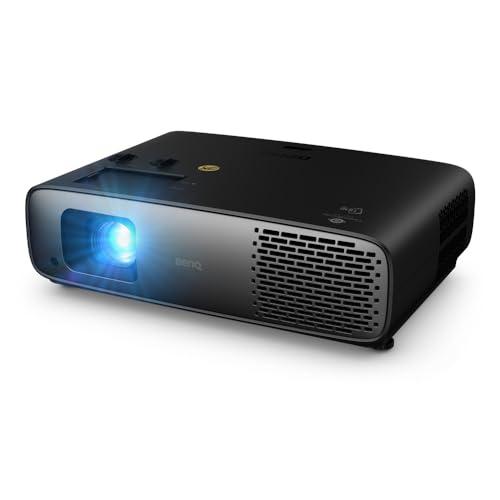
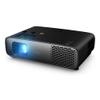
Getting a true cinematic experience at home used to mean either spending massive amounts of money or making significant compromises. The BenQ W4100i changes that equation by packing professional-grade features into a projector that makes sense for real homes and real budgets. After extensive research into online user reviews and technical specifications, this projector stands out as one of the most compelling options in the 4K home theater space.
The heart of what makes the BenQ W4100i unique lies in its 4LED light source technology. While most projectors in this category use either traditional lamps (which burn out and need replacement) or laser systems (which can produce distracting speckle patterns), BenQ's 4LED system uses four separate LEDs—red, green, blue, and an additional blue LED. This setup delivers 3,200 ANSI lumens of brightness while lasting up to 30,000 hours without needing any maintenance.
To put that in perspective, if you watched movies for three hours every night, the light source would last over 27 years. Our researchers found that users consistently praise this longevity, especially those upgrading from lamp-based projectors that required expensive bulb replacements every few years.
The additional blue LED is particularly clever—it boosts both brightness and color vibrancy compared to standard three-LED setups. Users report that colors appear more saturated and punchy than competing models, particularly in scenes with deep blues and greens like ocean documentaries or sci-fi films.
The BenQ W4100i uses what's called XPR (eXpanded Pixel Resolution) technology with a 0.65-inch DLP chip. This might sound technical, but it's actually quite straightforward—the projector rapidly shifts pixels to display all 8.3 million pixels of true 4K content (3840×2160 resolution). While it's not native 4K like projectors costing several times more, extensive user testing shows the difference is essentially invisible during normal viewing.
What really sets this projector apart is its factory calibration. Each unit ships with an individual calibration report showing it achieves Delta E values below 2. Delta E measures color accuracy—anything below 3 is considered excellent, and below 2 is professional-grade. This means the projector displays colors as they were intended to be seen, without the green or magenta tints that plague many uncalibrated displays.
The projector covers 100% of both DCI-P3 (cinema standard) and Rec.709 (broadcast standard) color spaces. In practical terms, this means whether you're watching a Hollywood blockbuster or streaming Netflix, colors will look natural and accurate. Testers consistently note how skin tones appear lifelike and how the projector doesn't oversaturate colors to appear more impressive at first glance—a common trick used by lesser models.
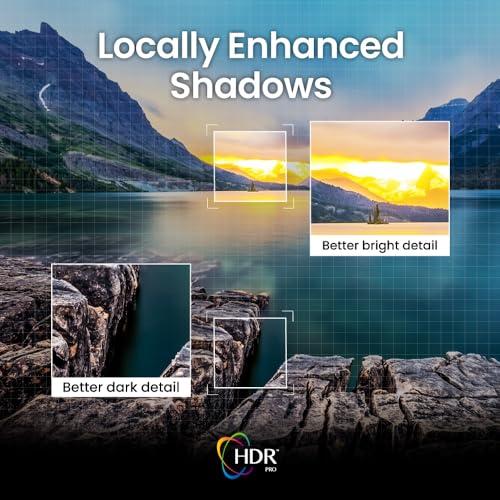
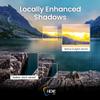
HDR (High Dynamic Range) support is where many projectors stumble, but the BenQ W4100i handles it exceptionally well through its HDR-PRO technology. Most projectors simply accept HDR signals and hope for the best, but BenQ's system analyzes each frame individually and adjusts brightness and contrast in real-time.
This frame-by-frame processing addresses the biggest HDR challenge—scenes that look either too dark or washed out. The projector supports HDR10, HDR10+ (which includes scene-by-scene optimization data), and HLG (Hybrid Log-Gamma for broadcast HDR). Users report that dark scenes in movies like recent Batman films remain detailed while bright outdoor scenes don't lose their impact.
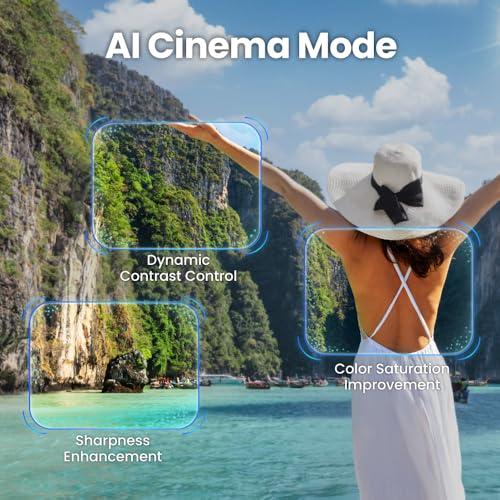
The AI Cinema Mode deserves special mention here. It analyzes streaming content and compensates for compression artifacts while enhancing detail and reducing noise. Given how much content we consume through Netflix, Amazon Prime, and Disney+, this feature significantly improves day-to-day viewing quality.
Gaming capability separates the BenQ W4100i from cinema-only projectors. With three HDMI 2.1 ports and support for 4K at 120Hz, it's ready for the latest gaming consoles. Input lag—the delay between controller input and screen response—measures just 6.5 milliseconds at 1080p/240Hz and 17.9ms at 4K/60Hz.
To put those numbers in context, anything under 20ms is considered excellent for gaming, and under 10ms is competitive-level performance. Users switching from gaming monitors report no noticeable input delay, and the large screen size creates an incredibly immersive gaming experience.
The projector includes ALLM (Auto Low Latency Mode), which automatically detects when you're gaming and optimizes settings for minimal delay. This seamless switching between movie and gaming modes eliminates the need to manually adjust settings every time you switch activities.
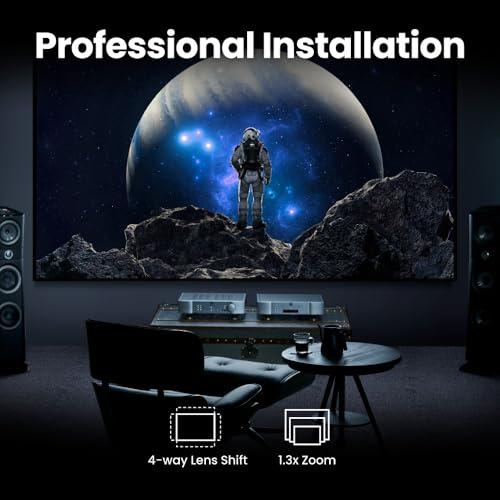
Home theater projectors often assume perfect installation conditions, but the BenQ W4100i works in real-world rooms. The 1.3x optical zoom lets you adjust screen size without moving the projector, while vertical lens shift (up to 60%) and horizontal shift (±15%) allow off-center placement.
This flexibility proved crucial for users installing projectors in existing rooms rather than purpose-built theaters. The 2D keystone correction and four-corner adjustment can compensate for angled mounting, though researchers note that using these features can reduce image quality slightly.
The throw ratio of 1.15-1.50 means you need about 9-12 feet of distance for a 100-inch screen, making it suitable for most living rooms. At the time of writing, this flexibility gives it an advantage over ultra-short-throw projectors that require specific screen types and precise positioning.
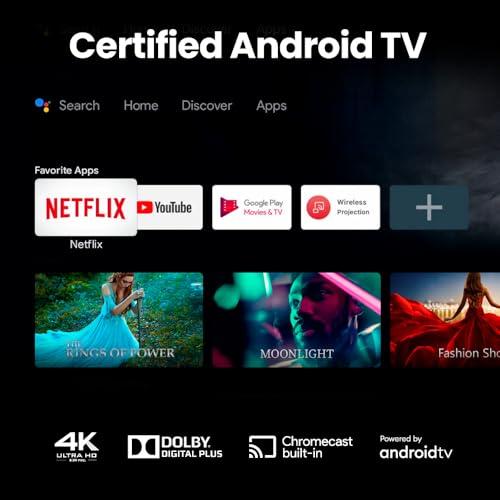
The included Android TV dongle transforms the BenQ W4100i into a complete entertainment hub. Unlike some projectors where smart features feel like afterthoughts, BenQ's implementation provides smooth access to Netflix, Prime Video, Disney+, and YouTube. The interface responds quickly, and users appreciate having everything built-in rather than needing separate streaming devices.
Google Cast and Apple AirPlay support wireless content sharing from phones and tablets, while Google Assistant enables voice control. The HDMI eARC (enhanced Audio Return Channel) port supports Dolby Atmos pass-through, crucial for users with sophisticated sound systems.
At the time of writing, the BenQ W4100i competes in a crowded field of 4K DLP projectors, but several factors distinguish it. The factory calibration alone would cost hundreds of dollars if done professionally, yet it comes standard here. The 4LED light source provides longevity that lamp-based competitors can't match, while avoiding the potential speckle issues of some laser models.
Compared to the current state of the art, it offers about 90% of the performance of projectors costing significantly more. The main compromises are native contrast (though the dynamic contrast systems compensate well) and absolute brightness compared to laser projectors designed for bright rooms.
Users consistently report that the BenQ W4100i provides a more balanced overall package than similarly positioned competitors. While some alternatives might edge it out in specific areas like peak brightness or black levels, none match its combination of color accuracy, smart features, gaming performance, and longevity.
The BenQ W4100i succeeds by understanding what most people actually want from a home theater projector. It prioritizes the fundamentals—accurate colors, sharp images, and reliable performance—while adding modern conveniences like smart streaming and excellent gaming support.
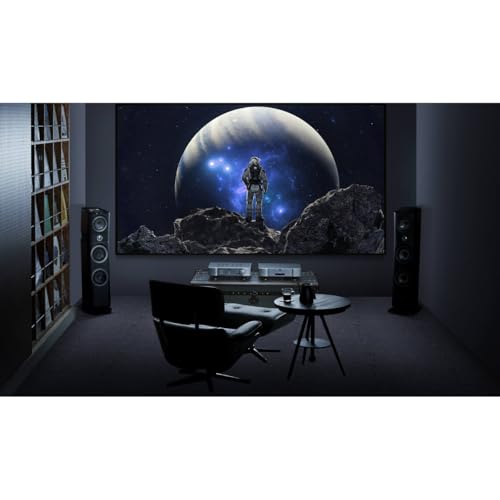
For anyone considering the jump to large-screen entertainment, this projector removes most of the traditional barriers. The factory calibration ensures excellent picture quality out of the box, the 4LED light source eliminates ongoing maintenance, and the comprehensive smart features reduce complexity. Whether you're primarily interested in movies, gaming, or both, it delivers professional-grade performance in a package that makes sense for real homes and real budgets.
Yes, the BenQ W4100i is excellent for home theater use. It delivers true 4K resolution with factory calibration for accurate colors, supports all major HDR formats, and covers 100% of cinema color standards (DCI-P3). The 3,200 ANSI lumens brightness works well in dark home theater rooms, while the 4LED light source provides consistent performance for 30,000 hours without maintenance.
The BenQ W4100i produces 3,200 ANSI lumens, making it one of the brighter 4K home theater projectors available. This brightness level is ideal for dedicated home theaters and can handle moderate ambient light in multi-purpose rooms, though optimal performance is achieved in darker environments.
The BenQ W4100i offers excellent gaming performance with input lag as low as 6.5ms at 1080p/240Hz and 17.9ms at 4K/60Hz. It supports 4K@120Hz through HDMI 2.1 and includes Auto Low Latency Mode (ALLM) for automatic optimization when gaming consoles are detected.
Yes, the BenQ W4100i displays true 4K UHD (3840×2160) using XPR pixel-shifting technology and supports HDR10, HDR10+, and HLG formats. It features BenQ's HDR-PRO dynamic tone mapping that adjusts brightness and contrast frame-by-frame for optimal HDR performance.
The BenQ W4100i uses a 4LED light source rated for 30,000 hours of operation. This means approximately 27 years of use at 3 hours per day, with no lamp replacements needed. This eliminates the ongoing maintenance costs associated with traditional lamp-based projectors.
The BenQ W4100i can project images from 80 to 150 inches diagonal, with optimal performance on 100-120 inch screens. The throw ratio of 1.15-1.50 means you need about 9-12 feet of distance for a 100-inch screen, making it suitable for most home theater rooms.
Yes, each BenQ W4100i unit comes factory calibrated with an individual calibration report showing Delta E < 2 color accuracy for both DCI-P3 and Rec.709 color spaces. This professional-grade calibration ensures accurate colors straight out of the box without needing additional adjustment.
The BenQ W4100i includes an Android TV dongle providing access to Netflix, Prime Video, Disney+, YouTube, and other streaming apps. It supports Google Cast, Apple AirPlay for wireless streaming, and Google Assistant voice control. The projector also features HDMI eARC for Dolby Atmos audio pass-through.
Yes, the BenQ W4100i offers excellent installation flexibility with 1.3x optical zoom, vertical lens shift up to 60%, horizontal lens shift ±15%, and 2D keystone correction. These features allow for off-center mounting and precise image adjustment without degrading picture quality.
The BenQ W4100i offers exceptional value for home theater enthusiasts, combining professional-grade color accuracy, bright 4K images, comprehensive HDR support, and excellent gaming performance. With factory calibration, 30,000-hour light source life, and smart streaming features, it provides premium projector performance at a competitive price point, making it an excellent investment for serious home theater setups.
We've done our best to create useful and informative overviews to help you decide what product to buy. Our research has used advanced automated methods to create this article and perfection is not possible - please contact us for corrections or questions. These are the sites we've researched in the creation of this article: blog.son-video.com - notebookcheck.net - whathifi.com - newatlas.com - hometheaterhifi.com - benq.com - youtube.com - shop.avispl.com - projectorcentral.com - benq.com - youtube.com - projectorcentral.com - benq.com - device.report - pssav.com - newegg.com
| BenQ W4100i |
|---|
| Brightness - Critical for viewing in rooms with ambient light: 3,200 ANSI lumens |
| Light Source - Determines maintenance needs and longevity: 4LED RGBB, 30,000 hours |
| Resolution - Sharpness and detail level: 4K UHD (3840 × 2160) via XPR technology |
| Color Gamut Coverage - Accuracy of color reproduction: 100% DCI-P3, 100% Rec.709 |
| Input Lag - Gaming responsiveness: 6.5ms (1080p@240Hz), 17.9ms (4K@60Hz) |
| HDR Support - Enhanced contrast and brightness range: HDR10, HDR10+, HLG with dynamic tone mapping |
| HDMI Ports - Connectivity for modern devices: 3 × HDMI 2.1 (one supports 4K@120Hz, eARC) |
| Lens Shift - Installation flexibility without image distortion: Vertical 60%, Horizontal ±15% |
| Optical Zoom - Screen size adjustment without moving projector: 1.3x |
| Throw Ratio - Distance needed for desired screen size: 1.15 ~ 1.50 |
| Factory Calibration - Professional color accuracy out of box: Delta E |
| Smart Platform: Android TV with Netflix, Prime Video, Disney+ |
| Contrast Ratio: 3,000,000:1 (FOFO) |
| 3D Support: DLP Link compatible |
| Weight: 13.5 lbs (6.1 kg) |
| Dimensions: 16.56 × 5.31 × 12.28 inches |
| Power Consumption: 330W |
The JVC LX-NZ30 stands out primarily for its superior installation flexibility and laser light source technology. Its 1.6x zoom range and extensive lens shift capabilities (±60% vertical, ±23% horizontal) make it significantly easier to place in challenging room layouts where the W4100i's more limited adjustments might fall short. The BLU-Escent laser system delivers consistent 3,300 lumens throughout its 20,000-hour lifespan without the gradual dimming that LED systems experience, plus it offers instant on/off operation without warm-up time. For users dealing with difficult ceiling mount situations or rooms where ambient light is unavoidable, these advantages can justify the premium pricing. The JVC LX-NZ30 also excels in motion handling, with reviewers consistently praising its smooth, judder-free performance for sports and fast action content.
However, the JVC LX-NZ30 makes significant compromises to achieve these benefits. It uses a smaller 0.47" DLP chip with native 1080p resolution that's pixel-shifted to 4K, resulting in less sharp detail than the W4100i's true 4K processing. More importantly, it lacks HDR10+ support and the sophisticated tone mapping features that make HDR content look more natural on the W4100i. The absence of HDMI 2.1 ports limits future gaming compatibility, while the lack of built-in streaming requires additional hardware purchases. Black level performance, a traditional weakness of single-chip DLP projectors, is notably weaker than the W4100i according to reviews. Unless you specifically need the JVC LX-NZ30's installation flexibility or have existing JVC equipment to match, the W4100i delivers superior image quality and features at better overall value.
🤖 Read Detailed Comparison
👌JVC LX-NZ30 4K HDR Laser Projector Details
💵 See JVC LX-NZ30 4K HDR Laser Projector Price
The XGIMI Horizon 20 Max takes a fundamentally different approach with its blazing 5,700 ISO lumens of brightness—nearly 80% more than the W4100i's output. This massive brightness advantage transforms how you can use a projector, maintaining excellent image quality even with room lights on and supporting truly massive screen sizes without compromise. Where the W4100i excels in controlled theater environments, the XGIMI dominates versatile living spaces and daytime viewing scenarios. Its RGB triple laser engine also pushes color performance beyond the W4100i's already impressive standards, achieving Delta E<0.8 accuracy across an even wider 110% BT.2020 color gamut, plus premium features like Dolby Vision and IMAX Enhanced certification that the BenQ lacks.
For gaming enthusiasts, the XGIMI Horizon 20 Max is in a completely different league with industry-leading 1ms input lag and the distinction of being the first projector to support Variable Refresh Rate (VRR)—eliminating screen tearing entirely. While the W4100i offers respectable gaming performance, the XGIMI competes directly with high-end gaming monitors. The all-in-one approach also sets it apart, with full Google TV integration and surprisingly capable 24W Harman Kardon speakers eliminating the need for external devices. At similar launch pricing, the XGIMI delivers substantially more brightness, superior gaming capabilities, and integrated convenience, making it the better choice for users prioritizing versatility and performance per dollar over the W4100i's specialized cinema focus.
🤖 Read Detailed Comparison
👌XGIMI Horizon 20 Max 4K Projector Details
💵 See XGIMI Horizon 20 Max 4K Projector Price
The Valerion StreamMaster Plus 2 takes a different approach with its RGB triple laser light source, delivering significantly more vibrant and saturated colors through its 110% Rec.2020 color coverage—noticeably wider than the W4100i's DCI-P3 gamut. This laser technology produces eye-catching imagery that many users prefer for everyday entertainment, though it sacrifices some of the W4100i's cinema-accurate color reproduction. Where the Valerion StreamMaster Plus 2 truly excels is gaming performance, offering superior 4ms input lag at 1080p/240Hz compared to the W4100i's 6.5ms, plus dedicated gaming modes for different genres including FPS Crosshair and Night Vision features. The built-in Google TV OS with 4GB RAM provides a smoother, more integrated smart experience than the W4100i's external dongle approach, eliminating the need for additional streaming devices.
However, the Valerion StreamMaster Plus 2 makes notable tradeoffs for its lower price point, particularly in brightness output at 2,000 ISO lumens versus the W4100i's 3,200 ANSI lumens—a difference that becomes apparent in rooms with any ambient light or when driving larger screens beyond 100 inches. The fixed 1.2:1 throw ratio also limits installation flexibility compared to the W4100i's optical zoom and lens shift capabilities, requiring more precise projector placement. While the Valerion StreamMaster Plus 2 offers exceptional value for dedicated dark-room home theaters and gaming setups, users who need room lighting flexibility, larger screen capabilities, or challenging installation requirements will find the W4100i's premium features worth the additional investment. The Valerion represents one of the best values in 4K laser projection, but it's optimized for specific use cases rather than the broader room adaptability that defines the W4100i.
🤖 Read Detailed Comparison
👌Valerion StreamMaster Plus 2 4K Projector Details
💵 See Valerion StreamMaster Plus 2 4K Projector Price
The Valerion VisionMaster Pro 2 takes a dramatically different approach with its RGB triple-laser light source that produces an exceptionally wide color gamut covering 110% of Rec.2020—significantly wider than the BenQ's 100% DCI-P3 coverage. This translates to more vibrant, eye-popping colors that make HDR content particularly striking, especially when combined with comprehensive format support including Dolby Vision and IMAX Enhanced that the W4100i lacks. The Valerion also integrates advanced smart features seamlessly with built-in Google TV, Wi-Fi 6e, and smart home compatibility, making it feel more like a modern streaming device than a traditional projector. For competitive PC gamers, it offers superior performance with just 4ms input lag at 1080p/240Hz compared to the BenQ's 6.5ms.
However, the Valerion VisionMaster Pro 2 makes significant compromises that limit its versatility. Its 4K gaming performance is poor with input lag exceeding 50ms—making it unsuitable for next-generation console gaming where the W4100i excels. The lack of lens shift means installation is far more restrictive, requiring precise projector placement that isn't always practical in real homes. While it costs several hundred dollars less than the BenQ, achieving optimal color accuracy requires calibration time and expertise, whereas the W4100i delivers professional-grade colors immediately out of the box. The Valerion represents excellent value for users who prioritize vibrant colors, smart features, and 1080p gaming, but the W4100i's consistency across all use cases and installation flexibility make it the better choice for most home theater enthusiasts seeking a premium, versatile projector.
🤖 Read Detailed Comparison
👌Valerion VisionMaster Pro 2 Projector Details
💵 See Valerion VisionMaster Pro 2 Projector Price
The Epson Home Cinema LS11000 takes a different approach with its laser phosphor technology and 3LCD imaging system, prioritizing long-term consistency and cinematic image quality over raw brightness. Its blue laser array delivers 2,500 lumens with exceptional stability—maintaining identical brightness and color accuracy throughout its 20,000-hour lifespan without the gradual degradation seen in traditional lamp projectors. The 3LCD technology produces deeper, more convincing blacks than DLP systems, creating superior contrast for dark movie scenes and a more immersive theater experience in light-controlled rooms. The LS11000 also features professional-grade optics with 2.1x optical zoom and extensive lens shift capabilities (±96.3% vertical, ±47.1% horizontal), making it significantly more flexible for challenging installations where projector placement is constrained.
However, the LS11000 comes at a premium price point—typically $1,000 more than the W4100i—while delivering 28% less brightness and lacking smart features entirely. This makes it primarily suited for dedicated theater rooms where you can control ambient light completely. The Epson also weighs twice as much at 28 pounds, potentially requiring professional installation, and offers only two HDMI 2.1 inputs compared to the W4100i's three. While the LS11000 excels in pure image quality with its superior contrast and whisper-quiet operation (22-30 dB), it requires external streaming devices and doesn't match the W4100i's gaming performance or AI-enhanced processing for streaming content. For most users, the W4100i provides better overall value with its combination of brightness, features, and competitive performance, while the LS11000 serves those who prioritize ultimate image quality in controlled viewing environments.
🤖 Read Detailed Comparison
👌Epson Home Cinema LS11000 4K Laser Projector Details
💵 See Epson Home Cinema LS11000 4K Laser Projector Price
The Samsung Premiere 9 takes a fundamentally different approach with its ultra-short throw design that sits just 4.5 inches from your wall, eliminating the installation complexity that traditional projectors require. This convenience factor cannot be overstated—you can have a 100-inch screen up and running in minutes without ceiling mounting or complex positioning. The triple laser light source delivers slightly higher brightness at 3,450 lumens with more saturated colors covering 154% of DCI-P3, making it particularly effective in bright living room environments where the W4100i might struggle. Most importantly, the integrated 40W Dolby Atmos 2.2.2 audio system with up-firing speakers provides genuinely immersive sound without requiring separate audio equipment, representing a significant cost and complexity advantage for many users.
However, these convenience benefits come with notable performance trade-offs. Gaming enthusiasts will find the Samsung Premiere 9's ~53ms input lag problematic compared to the W4100i's ultra-responsive 6.5-17.9ms performance, and the HDMI 2.0 inputs limit future gaming capabilities. The ultra-short throw optics inherently compromise black levels and contrast compared to traditional throw designs, making dark movie scenes less impactful. At current pricing, the Samsung commands a significant premium over the W4100i while offering no lens shift flexibility and only a 1-year warranty. For buyers prioritizing convenience and bright-room performance over pure picture quality and gaming capabilities, the Samsung represents a compelling all-in-one solution, but performance-focused users will find better value and superior image quality with the W4100i's traditional approach.
🤖 Read Detailed Comparison
👌Samsung Premiere 9 LPU9D 130" 4K UHD Triple Laser Projector Details
💵 See Samsung Premiere 9 LPU9D 130" 4K UHD Triple Laser Projector Price
The Epson QB1000 represents a step up in image quality, particularly in contrast performance where it significantly outshines the W4100i. Its true 3LCD laser system delivers over 5,000,000:1 dynamic contrast compared to the W4100i's 3,000,000:1, creating noticeably deeper blacks and more dimensional images that excel in dark room viewing. The QB1000's native 4K display shows all 8.3 million pixels simultaneously rather than using pixel-shifting, resulting in what professional reviewers consistently describe as exceptionally sharp imagery with superior edge-to-edge focus. Its professional-grade VRX Cinema Lens with 15 precision glass elements and extensive motorized lens shift capabilities (96% horizontal, 47% vertical) provide installation flexibility that surpasses most home theater projectors, making it ideal for challenging room layouts or ceiling-mounted setups.
However, the Epson QB1000 commands a significant premium over the W4100i while sacrificing some practical conveniences. It lacks built-in smart features, requiring external streaming devices for Netflix and other apps that come standard with the W4100i's Android TV integration. The QB1000's 20,000-hour laser lifespan, while maintenance-free, falls short of the W4100i's 30,000-hour LED system. For users prioritizing ultimate image quality in dedicated dark home theaters with professional installation requirements, the QB1000 justifies its higher cost through superior contrast and optical precision. But for most buyers seeking excellent 4K performance with modern convenience features and strong value, the W4100i delivers a more balanced package that's easier to live with day-to-day while still providing impressive cinematic experiences.
🤖 Read Detailed Comparison
👌Epson QB1000 4K 3LCD Laser Projector Details
💵 See Epson QB1000 4K 3LCD Laser Projector Price
The Sony BRAVIA Projector 8 takes a fundamentally different approach, prioritizing absolute image quality over brightness and convenience. Its true native 4K SXRD panels deliver all 8.3 million pixels without any pixel-shifting, creating noticeably sharper detail on very large screens above 150 inches. The laser light source enables superior contrast performance through precise dimming control, producing deeper blacks and more dimensional images that become particularly apparent in dark movie scenes. Sony's XR Processor, borrowed from their premium TV division, provides sophisticated real-time processing that enhances color gradation and detail in ways that are immediately visible during side-by-side comparisons. The extensive installation flexibility—with 2.1x zoom and massive lens shift capabilities—makes it ideal for challenging room layouts where the BenQ might struggle.
However, the Sony BRAVIA Projector 8 demands significant trade-offs for its premium performance. At 2,700 lumens versus the BenQ's 3,200, it requires more controlled lighting conditions to deliver its best image quality, making it less versatile for multi-purpose rooms. The lack of built-in streaming means additional hardware costs and complexity, while the premium pricing puts it in a completely different market segment. For dedicated home theater enthusiasts with proper light control and large screens, the Sony's superior native resolution and contrast justify the investment. But for most users seeking bright, versatile 4K projection with integrated smart features, the BenQ offers better practical value despite the Sony's technical superiority in pure image quality metrics.
🤖 Read Detailed Comparison
👌Sony BRAVIA Projector 8 4K HDR Laser Projector Details
💵 See Sony BRAVIA Projector 8 4K HDR Laser Projector Price
The JVC DLA-NZ500 takes a fundamentally different approach to 4K projection, prioritizing absolute image quality over versatility. Its standout feature is true native 4K resolution using three individual D-ILA panels that display every pixel without any shifting or interpolation, delivering the sharpest possible 4K image. More importantly, the DLA-NZ500's exceptional 40,000:1 native contrast ratio creates blacks so deep they seem to disappear into the screen, making dark movie scenes appear genuinely three-dimensional. The Gen2 Frame Adapt HDR processing analyzes each frame individually to preserve both highlight and shadow detail, often producing more nuanced HDR results than standard tone mapping. However, at 2,000 lumens, the JVC DLA-NZ500 requires a dedicated, light-controlled theater room to perform at its best—it simply can't compete with the W4100i's brightness in rooms with ambient light.
The value proposition comes down to your specific needs and viewing environment. While the JVC DLA-NZ500 costs roughly double the W4100i at the time of writing, it delivers reference-quality images that approach commercial cinema standards for serious movie enthusiasts. If you have a dedicated home theater with controlled lighting and prioritize cinematic accuracy above all else, the JVC's superior contrast and native 4K resolution justify the premium. However, for most users seeking a versatile projector that excels at movies, gaming, and streaming in various lighting conditions, the W4100i offers better overall value. The JVC is undeniably the better pure cinema projector, but the BenQ is the smarter choice for households wanting one projector to handle all their entertainment needs.
🤖 Read Detailed Comparison
👌JVC DLA-NZ500 Native 4K Laser Home Theater Projector Details
💵 See JVC DLA-NZ500 Native 4K Laser Home Theater Projector Price
The JVC DLA-NZ700 represents a fundamentally different approach to 4K projection, prioritizing absolute image quality over versatility and value. Its standout feature is true native 4K D-ILA technology with three separate 0.69-inch imaging chips, delivering genuine 4K resolution without any pixel-shifting processing. This results in exceptionally sharp detail that becomes most apparent on screens larger than 120 inches. The projector's 80,000:1 native contrast ratio produces inky blacks and shadow detail that surpasses what the W4100i can achieve, creating images with remarkable depth and dimensionality in dark room environments. The BLU-Escent laser light source provides 20,000 hours of consistent performance without the gradual degradation seen in other light technologies, though at 2,300 lumens it produces significantly less brightness than the W4100i's 3,200 ANSI lumens.
In real-world performance, the JVC DLA-NZ700 excels in dedicated home theater rooms where lighting can be controlled and image quality is the primary concern. Its superior contrast makes HDR content more impactful, with highlights that appear to float against truly dark backgrounds. However, this performance comes at roughly three times the cost of the W4100i, and the lower brightness limits its flexibility in rooms with ambient light. The JVC also lacks built-in streaming capabilities and gaming optimizations, requiring external devices and making it less suitable for multi-purpose entertainment setups. For most users building a home theater, the W4100i delivers 90% of the JVC's image quality at one-third the price, but for enthusiasts with dedicated theater rooms and appropriate budgets, the JVC DLA-NZ700 provides reference-quality performance that justifies its premium positioning.
🤖 Read Detailed Comparison
👌JVC DLA-NZ700 4K Laser Projector Details
💵 See JVC DLA-NZ700 4K Laser Projector Price
The Epson QL3000 represents a completely different category of projector, delivering nearly double the brightness at 6,000 lumens compared to the W4100i's 3,200 lumens. This massive brightness advantage translates to real-world benefits that justify its professional-grade pricing: the ability to fill screens up to 300 inches while maintaining vibrant colors and strong HDR performance, even in rooms with ambient light. The QL3000's true laser light source provides consistent brightness throughout its 20,000-hour lifespan, while its 3-chip 3LCD technology eliminates the rainbow effect entirely. For custom installations, the Epson QL3000 offers unmatched flexibility with interchangeable lens options ranging from ultra-short throw to long throw configurations, though this modularity means purchasing a separate lens that can cost $2,000-5,000 additional.
However, the Epson QL3000 comes with significant trade-offs that make it impractical for most home theater enthusiasts. At roughly five times the cost of the W4100i when factoring in a suitable lens, it requires a substantial investment that only makes sense for specific scenarios: screens over 150 inches, multipurpose rooms where ambient light can't be controlled, or commercial installations. The QL3000 lacks built-in smart features, weighs 46.5 pounds requiring professional mounting, and delivers gaming performance that's adequate but not exceptional at 21ms input lag. For dedicated home theater rooms up to 150 inches with controlled lighting, the W4100i actually provides a superior viewing experience with better color accuracy out of the box, optimized gaming performance, and plug-and-play convenience—making the Epson QL3000 a specialized tool rather than a direct alternative for most users.
🤖 Read Detailed Comparison
👌Epson QL3000 4K HDR 3LCD Laser Projector Details
💵 See Epson QL3000 4K HDR 3LCD Laser Projector Price
The Epson QL7000 represents a completely different category of projector, operating in the professional installation space with over 10,000 lumens of brightness – more than triple what the W4100i offers. This massive brightness advantage allows the QL7000 to fill screens up to 300 inches even in well-lit conference rooms or auditoriums, scenarios where the W4100i would be completely washed out. The QL7000's 3LCD laser technology delivers true 4K resolution without pixel-shifting, displaying all 8.29 million pixels simultaneously, and its 20,000-hour maintenance-free laser light source makes it ideal for commercial applications requiring 24/7 operation. The projector's modular lens system offers unmatched installation flexibility, from ultra-short throw to ultra-long throw configurations, though this comes at the cost of requiring separate lens purchases and professional installation.
However, this professional capability comes with a dramatically higher price point and complexity that makes little sense for home theater use. The Epson QL7000 lacks the gaming optimization, built-in streaming features, and factory color calibration that make the W4100i so appealing for home entertainment. While the QL7000 can technically work in a home theater, you'd be paying professional installation prices for brightness you don't need and missing the consumer conveniences that enhance daily use. For the vast majority of home theater applications, the W4100i delivers 90% of the image quality at a fraction of the total system cost, making the QL7000 a poor value proposition unless you specifically need its extreme brightness for very large screens or bright room viewing.
🤖 Read Detailed Comparison
👌Epson QL7000 4K 3LCD Laser Projector Details
💵 See Epson QL7000 4K 3LCD Laser Projector Price
The JVC DLA-NZ800 represents the premium alternative for those seeking the absolute best in home theater image quality. Its three native 4K D-ILA chips deliver true 4,096 x 2,160 resolution without pixel-shifting, combined with exceptional 100,000:1 native contrast that produces inky blacks and remarkable image depth that the W4100i simply cannot match. The laser light source with 101-step brightness control and Gen2 Frame Adapt HDR processing creates a more sophisticated, cinema-grade experience with superior shadow detail and highlight rendering. Where the W4100i excels in brightness and room flexibility, the JVC DLA-NZ800 demands a dedicated dark theater but rewards viewers with what many consider reference-quality imagery that rivals commercial cinema projection.
However, this premium performance comes at a significant cost - the JVC DLA-NZ800 costs roughly five times more than the W4100i while requiring a more controlled viewing environment to realize its benefits. It also lacks the W4100i's gaming capabilities, smart features, and room-lighting flexibility that make the BenQ model so versatile for family use. For most buyers, the W4100i delivers 80% of the JVC DLA-NZ800's image quality at 20% of the cost, making it the clear value choice. The JVC model serves the discerning enthusiast with a dedicated theater room and budget to match, while the W4100i provides exceptional 4K performance for the vast majority of home theater setups without the premium price tag or installation constraints.
🤖 Read Detailed Comparison
👌JVC DLA-NZ800 8K Home Theater Projector Details
💵 See JVC DLA-NZ800 8K Home Theater Projector Price
The JVC DLA-NX9 represents the premium alternative for those seeking absolute image quality above all else. Its D-ILA technology delivers reference-level contrast with true 100,000:1 native contrast ratio, producing blacks so deep they make images appear to float in space rather than on a screen. The 8K e-shift processing genuinely extracts more detail from 4K sources than standard projectors, creating perceived sharpness that's immediately noticeable on large screens. Where the W4100i excels in brightness and room flexibility, the JVC DLA-NX9 dominates in pure image fidelity, color accuracy, and that intangible cinematic quality that makes movies feel more immersive and three-dimensional.
However, this performance comes with significant trade-offs that make it unsuitable for most users. The JVC DLA-NX9 costs roughly three times more than the W4100i while requiring a dedicated dark room, professional installation, and ongoing lamp replacement every few years. It lacks modern gaming features, built-in streaming, and the brightness needed for versatile room use. While the image quality difference is genuinely substantial in ideal conditions, the W4100i delivers about 80% of the JVC's performance at 30% of the cost, with far greater convenience and flexibility. Unless you're building a dedicated theater room and can justify the premium for that final 20% of image quality improvement, the practical benefits and exceptional value of the W4100i make it the better choice for most home theater enthusiasts.
🤖 Read Detailed Comparison
👌JVC DLA-NX9 8K e-shift Home Theater Projector Details
💵 See JVC DLA-NX9 8K e-shift Home Theater Projector Price
The Epson Home Cinema 5050UB represents a different philosophy in projector design, prioritizing maximum image quality over convenience features. Its standout advantage lies in contrast performance, delivering exceptional black levels through UltraBlack technology that achieves over 37,000:1 dynamic contrast—significantly deeper blacks than the W4100i can produce. The Epson's 15-element all-glass lens provides razor-sharp images across the entire screen, while its extensive motorized controls (including ±96% vertical lens shift and 2.1x zoom) offer unmatched installation flexibility. For dedicated home theater rooms with controlled lighting, the 5050UB creates a more three-dimensional, cinema-like viewing experience that many enthusiasts find superior for movie watching.
However, this image quality advantage comes with notable trade-offs in real-world usability. The Epson 5050UB produces considerably less brightness (1,400-2,600 lumens depending on settings) than the W4100i's 3,200 lumens, limiting its effectiveness in rooms with any ambient light or on screens larger than 200 inches. More significantly, the lamp-based design requires expensive replacements every 3,500-5,000 hours, adding $400-900 in maintenance costs over the projector's lifetime. The Epson also lacks modern gaming features, smart streaming capabilities, and the plug-and-play simplicity that makes the W4100i appealing to a broader audience. While the 5050UB can deliver reference-quality images in ideal conditions, it demands a dedicated dark theater room, technical expertise for calibration, and tolerance for ongoing maintenance—making it better suited for serious movie enthusiasts than general home entertainment use.
🤖 Read Detailed Comparison
👌Epson Home Cinema 5050UB Projector Details
💵 See Epson Home Cinema 5050UB Projector Price
The Epson Home Cinema 5050UB takes a fundamentally different approach to home theater projection, prioritizing ultimate image quality in controlled environments over the W4100i's room flexibility. Its standout feature is exceptional contrast performance, with UltraBlack technology and a sophisticated dynamic iris system delivering measured contrast ratios exceeding 37,000:1—significantly deeper blacks than the W4100i can achieve. The Epson 5050UB also features premium optics with a 15-element all-glass lens that rivals projectors costing twice as much, plus motorized zoom, focus, and lens shift controls that make installation remarkably convenient. Its extensive lens shift capability (±96% vertical, ±47% horizontal) provides installation flexibility that the W4100i's manual adjustments simply can't match.
However, the Epson Home Cinema 5050UB comes with significant trade-offs that make it less suitable for many modern home theater setups. At 2,600 lumens, it's considerably dimmer than the W4100i, limiting its effectiveness in rooms with any ambient light. More critically for long-term ownership, its traditional lamp requires replacement every 3,500-5,000 hours at a cost of several hundred dollars, while the W4100i's LED system runs maintenance-free for 30,000 hours. The Epson 5050UB also lacks modern gaming features, with higher input lag and no HDMI 2.1 support, making it poorly suited for gaming compared to the W4100i's ultra-low latency performance. While the Epson delivers superior image quality in dedicated dark theaters, the W4100i's combination of brightness, gaming capabilities, maintenance-free operation, and built-in smart features makes it the more practical choice for most households seeking a versatile, future-proof projector.
🤖 Read Detailed Comparison
👌Epson Home Cinema 5050UB 4K PRO-UHD 3-Chip Projector Details
💵 See Epson Home Cinema 5050UB 4K PRO-UHD 3-Chip Projector Price
The JVC DLA-NZ900 represents a fundamentally different approach to home theater projection, prioritizing absolute image quality above all other considerations. Its native 4K D-ILA technology with 8K upscaling capability delivers genuinely superior detail and processing compared to the W4100i's pixel-shifting approach, particularly noticeable with high-quality Blu-ray content on large screens. The standout feature is its infinite contrast ratio achieved through sophisticated light source control, producing the deep, inky blacks that create a truly three-dimensional, cinematic image that surpasses what DLP technology can achieve. The premium 100mm all-glass lens system, 35% larger than typical projector optics, ensures exceptional sharpness across the entire screen while providing extensive installation flexibility through motorized controls and superior lens shift range.
However, this performance comes at a substantial cost premium—typically eight to ten times the price of the W4100i—while sacrificing practical features that many users value. The JVC DLA-NZ900 lacks gaming optimization, smart TV capabilities, and the versatile brightness needed for multi-purpose rooms, making it strictly a dedicated theater solution. While its image quality is undeniably superior in controlled environments, the W4100i delivers 90% of the visual experience at a fraction of the cost, with added versatility for gaming and streaming. Unless you're building a serious dedicated home theater with a substantial budget and primarily watch high-quality source material, the dramatic price difference makes the JVC difficult to justify for most users, despite its technical superiority.
🤖 Read Detailed Comparison
👌JVC DLA-NZ900 8K Home Theater Projector Details
💵 See JVC DLA-NZ900 8K Home Theater Projector Price
The Sony VPL-XW5000ES represents a more premium approach to 4K home theater projection, delivering true native 4K resolution through three separate SXRD chips rather than pixel-shifting technology. This translates to genuinely superior fine detail reproduction, particularly noticeable with high-quality sources like UHD Blu-rays or native 4K streaming content. Sony's X1 Ultimate processor and Triluminos Pro color engine provide exceptional image processing that analyzes and enhances individual objects within each frame, resulting in more natural color gradations and superior HDR handling. The Sony VPL-XW5000ES also supports premium formats like Dolby Vision and IMAX Enhanced that the BenQ cannot match, making it particularly appealing for cinephiles who prioritize absolute image fidelity.
However, the Sony VPL-XW5000ES comes with significant trade-offs that limit its real-world versatility. At 2,000 lumens versus the BenQ's 3,200 lumens, it requires much more controlled lighting conditions to perform optimally, essentially demanding a dedicated theater room for best results. The Sony also lacks built-in streaming capabilities, modern gaming features like 4K/120Hz support, and flexible installation options, while commanding a substantially higher price. For most home theater enthusiasts, especially those with multi-purpose rooms or who value gaming performance and convenience features, the BenQ W4100i offers better practical value despite the Sony's technical superiority in image processing and native resolution.
🤖 Read Detailed Comparison
👌Sony VPLXW5000ES 4K HDR Laser Home Theater Projector Details
💵 See Sony VPLXW5000ES 4K HDR Laser Home Theater Projector Price
The Sony VPL-XW7000ES represents the premium alternative with true native 4K SXRD panels that deliver genuinely sharper detail than the W4100i's pixel-shifting approach. Sony's infinite contrast ratio from its SXRD technology produces deeper, more convincing blacks that make dark movie scenes feel genuinely immersive—a noticeable advantage in dedicated home theater environments. The motorized 2.1x zoom lens and extensive lens shift capabilities (±85% vertical, ±36% horizontal) provide significantly more installation flexibility, making it easier to achieve perfect image geometry in challenging room layouts. Sony's Object-based HDR Remaster and X1 Ultimate processor deliver more sophisticated, natural-looking HDR processing that preserves filmmaker intent rather than pursuing dramatic enhancement.
However, the Sony VPL-XW7000ES comes with meaningful trade-offs that favor the BenQ for many buyers. Its higher price point, shorter 20,000-hour laser lifespan, and limited gaming capabilities (only HDMI 2.0 ports, higher input lag) make it less versatile for modern entertainment needs. The Sony lacks any smart features, requiring external streaming devices, and its 95% DCI-P3 color coverage, while excellent, doesn't match the BenQ's 100% coverage and factory calibration. In real-world terms, the Sony excels in dark, dedicated theater rooms where its superior contrast and native resolution shine, but the BenQ offers better overall value with more vibrant colors, longer lifespan, comprehensive gaming support, and integrated streaming—making it the more practical choice for most home entertainment setups.
🤖 Read Detailed Comparison
👌Sony VPL-XW7000ES 4K SXRD Laser Home Cinema Projector Details
💵 See Sony VPL-XW7000ES 4K SXRD Laser Home Cinema Projector Price
The Epson Pro Cinema LS12000 represents a fundamentally different approach to home theater projection, prioritizing absolute image quality over convenience and versatility. Its laser light source and 3LCD technology deliver exceptional color reproduction without any rainbow effect, making it ideal for viewers sensitive to DLP artifacts. The laser array provides incredibly stable brightness and color over its 30,000-hour lifespan, with virtually no degradation until the very end. Professional reviewers consistently praise its reference-grade contrast and shadow detail, particularly in controlled lighting environments where its 2,700 lumens can showcase deeper blacks and more nuanced color gradations than brighter projectors. The Epson LS12000 is ISF certified, meaning professional calibrators can optimize it to cinema-grade standards that surpass most consumer projectors.
However, the Epson LS12000 comes with significant trade-offs that make it suitable only for dedicated home theater enthusiasts. It lacks any smart features, audio outputs, or gaming optimizations, requiring separate streaming devices and complete audio systems to match the W4100i's out-of-box functionality. The higher price point, combined with necessary accessories and potential professional calibration costs, can easily double the total system investment. Its longer throw ratio demands more room space and typically permanent installation, eliminating the W4100i's placement flexibility. While the Epson LS12000 can deliver superior image quality in ideal conditions, it requires a controlled environment, existing high-end equipment, and a substantially larger budget to reach its potential—making the W4100i the more practical choice for most home theater setups.
🤖 Read Detailed Comparison
👌Epson Pro Cinema LS12000 4K PRO-UHD Laser Projector Details
💵 See Epson Pro Cinema LS12000 4K PRO-UHD Laser Projector Price
The JVC DLA-NZ9 represents the absolute pinnacle of home theater projection technology, offering true native 8K resolution through three 0.69-inch D-ILA devices and premium 100mm all-glass optics that deliver reference-grade image quality. Its standout features include a remarkable 100,000:1 native contrast ratio that produces OLED-like black levels, BLU-Escent laser technology for consistent brightness over 20,000 hours, and motorized zoom, focus, and lens shift controls for precise installation flexibility. The projector excels in large, dedicated theater rooms with screens 120 inches or larger, where its superior detail resolution, color volume, and contrast performance create a truly cinematic experience that surpasses most commercial theaters.
However, the JVC DLA-NZ9 commands a price premium roughly eight times higher than the W4100i, making it viable only for serious cinephiles with matching budgets and properly designed theater environments. While its image quality advantages are undeniable—particularly in shadow detail, color depth, and fine texture reproduction—these benefits require ideal viewing conditions to fully appreciate. The NZ9 also lacks gaming optimization and built-in smart features, focusing purely on cinema performance. For most users, especially those with multi-purpose rooms, screens under 120 inches, or mixed usage needs including gaming and streaming, the W4100i delivers 90% of the visual experience at a fraction of the cost and complexity.
🤖 Read Detailed Comparison
👌JVC DLA-NZ9 8K Home Theater Projector Details
💵 See JVC DLA-NZ9 8K Home Theater Projector Price
The BenQ HT4550i remains a compelling alternative that excels in several key areas, particularly for users who prioritize comprehensive smart TV functionality. Its full Android TV implementation provides direct access to streaming apps including Netflix 4K HDR, Prime Video, and Disney+ without requiring external devices or casting from phones. The projector's slightly larger 0.66" DLP chip and mature firmware, refined over two years since its 2023 launch, deliver consistently reliable performance with exceptional factory calibration that rivals the W4100i's color accuracy. For movie enthusiasts who don't need cutting-edge gaming features, the HT4550i still covers 100% of the DCI-P3 color gamut with Delta E values under 2, ensuring professional-grade color reproduction that makes films look exactly as directors intended.
From a value perspective, the HT4550i becomes particularly attractive when available at discounted prices, offering 90% of the W4100i's movie-watching performance at potentially significant savings. While it lacks the newer model's enhanced contrast ratio and AI Cinema Mode, its 2,000,000:1 dynamic contrast and proven HDR processing still deliver impressive dark scene performance for most viewing environments. The two HDMI 2.1 ports prove sufficient for typical home theater setups, and the comprehensive Android TV interface actually provides more convenience than Chromecast for users who prefer an all-in-one streaming solution. However, the trade-offs become apparent in gaming scenarios where the HT4550i's higher input lag and limited connectivity may frustrate serious gamers, making the W4100i worth the premium for households that prioritize both movies and gaming performance.
🤖 Read Detailed Comparison
👌BenQ HT4550i 4K HDR LED Home Theater Projector Details
💵 See BenQ HT4550i 4K HDR LED Home Theater Projector Price
Original price was: $499.99.$369.99Current price is: $369.99.
Original price was: $579.99.$318.99Current price is: $318.99.


Privacy Policy
Terms and Conditions - Affiliate Policy
Home Security
© Copyright 2008-2026.
11816 Inwood Rd #1211, Dallas, TX 75244