$20.96
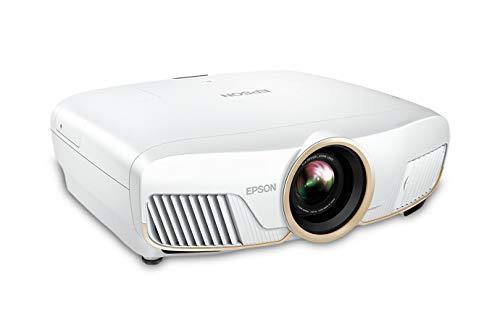
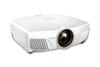
The Epson Home Cinema 5050UB has earned its reputation as one of the most compelling home theater projectors in its class, and after extensive research into user experiences and technical performance, it's easy to see why. This isn't just another projector—it's a carefully engineered piece of equipment that brings genuine cinema-quality visuals to your living room.
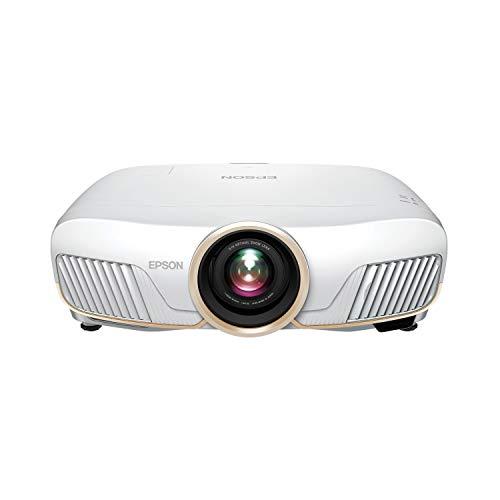
At its core, the 5050UB represents Epson's commitment to delivering professional-grade features without the astronomical price tag typically associated with commercial cinema equipment. The standout feature that immediately catches your attention is the fully motorized lens system. Unlike cheaper projectors that require you to physically move the unit to adjust image size or position, this system lets you fine-tune everything electronically—zoom, focus, and lens shift—all from your seat.
But the real magic happens with something called "lens memory." This feature stores different lens positions, allowing you to instantly switch between screen formats. One moment you're watching a standard 16:9 Netflix show, and with a button press, the projector automatically adjusts for a cinematic 2.35:1 widescreen movie. Our researchers consistently highlight this as a game-changer for serious movie enthusiasts who want that authentic theater experience at home.
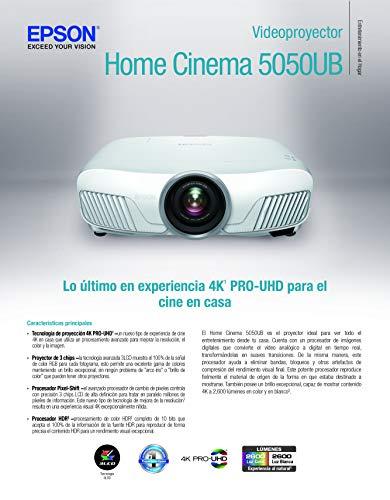
While many projectors use a single chip with a spinning color wheel, the 5050UB employs Epson's three-chip 3LCD technology. This means separate LCD panels handle red, green, and blue light simultaneously rather than sequentially. The practical benefit? You'll never see those annoying rainbow artifacts—brief flashes of separated colors—that some people notice with single-chip projectors, especially when looking away from the screen quickly.
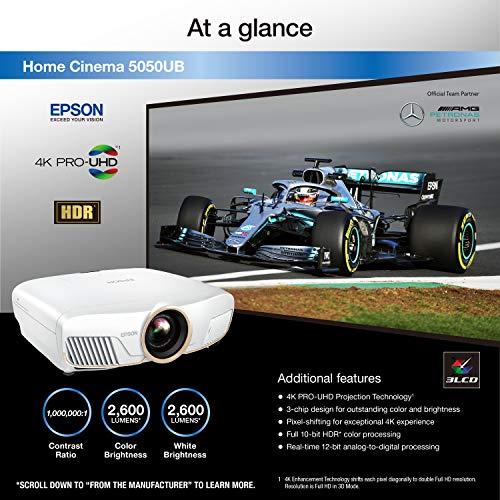
This parallel processing also ensures that color brightness matches white brightness at 2,600 lumens. Many competing projectors might claim high brightness numbers, but their colors often appear washed out because the color output is actually much lower than the white light output. With the 5050UB, you get vibrant, saturated colors that remain consistent across all brightness levels.
The projector uses what Epson calls "4K PRO-UHD" technology, which deserves some explanation. This isn't native 4K—the LCD panels are actually 1080p resolution. Instead, the system uses pixel-shifting, rapidly moving each pixel diagonally by half a pixel width to effectively double the resolution information displayed.
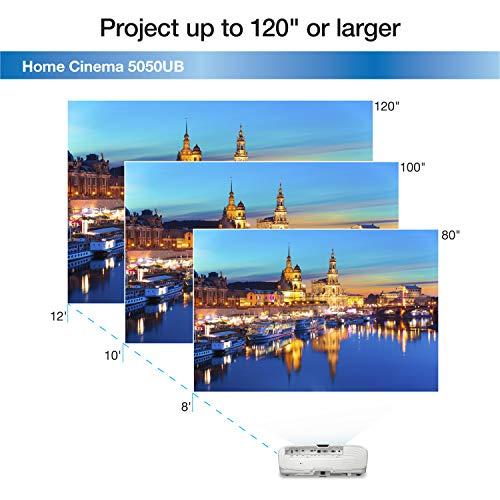
Online user reviews consistently report that while this doesn't match the absolute sharpness of native 4K projectors when viewed extremely close, the difference becomes negligible at normal viewing distances. For a 100-inch screen viewed from 10-12 feet away—typical home theater setups—the enhanced detail is clearly visible and highly satisfying. The system can accept true 4K content from Ultra HD Blu-ray players and streaming services, processing it beautifully for display.
Perhaps the most impressive technical achievement in the 5050UB is Epson's UltraBlack technology. This proprietary system uses specialized optical filters and compensation techniques to dramatically reduce light leakage within the projector. The result is an exceptional contrast ratio—up to 1,000,000:1 with the dynamic iris engaged.
What this means in practical terms is immediately apparent when watching dark movie scenes. Space movies, horror films, and dramatic thrillers benefit enormously from the deep blacks this projector can produce. Our researchers noted that shadow detail remains visible even in very dark scenes, while the black levels stay impressively deep. This is where the 5050UB consistently outperforms comparable single-chip DLP projectors, which often struggle with elevated black floors that make dark scenes appear washed out.
High Dynamic Range (HDR) support has become standard, but implementation quality varies dramatically between projectors. The 5050UB handles both HDR10 and HLG formats with 10-bit color processing, ensuring smooth color gradations without banding artifacts.
The standout feature here is the 16-step precision HDR adjustment. Rather than forcing you to accept the projector's interpretation of HDR content, you can fine-tune the tone mapping curve in real time. This proves invaluable because HDR content varies significantly in mastering brightness—some Netflix shows look perfect with one setting, while certain Ultra HD Blu-rays require different adjustments for optimal viewing.
Researchers consistently praise this flexibility, noting that many projectors lock you into their HDR interpretation whether it looks good or not. The 5050UB puts you in control, letting you optimize performance for each piece of content.
The 2,600-lumen output strikes an excellent balance between image quality and versatility. In a dedicated home theater with proper light control, this projector can easily fill a 120-inch screen with bright, engaging images. Even in rooms with some ambient light—family rooms with controlled lighting—it maintains good visibility on screens up to 100 inches.
The motorized iris system works continuously to optimize contrast, closing down during dark scenes to deepen blacks and opening up for bright sequences. This dynamic adjustment happens smoothly without drawing attention to itself, contributing to the overall cinematic experience.
Fan noise does require consideration. At full brightness, the cooling fans are audible—measuring around 31 decibels according to specifications. In eco mode, this drops to a much quieter 20 decibels, but you sacrifice some brightness. Most users find the eco mode perfectly adequate for dark room viewing while maintaining acceptably quiet operation.
While the 5050UB excels at movie content, gaming performance requires some qualification. Input lag measures around 22-30 milliseconds, which works fine for casual gaming and single-player adventures but may feel sluggish for competitive online gaming where every millisecond counts. The projector is also limited to 60Hz refresh rates, ruling out high-frame-rate gaming that newer consoles and PCs can deliver.
For movie-focused home theaters, these limitations rarely matter. For multi-purpose rooms where serious gaming is important, these factors deserve consideration.
At the time of writing, the projector landscape has evolved significantly toward laser light sources and native 4K chips. Newer laser projectors offer longer life and often quieter operation, while native 4K DLP projectors provide absolute sharpness advantages. However, the 5050UB continues to hold its ground through superior contrast performance and color accuracy.
The lamp-based design, while requiring eventual replacement every 3,500-5,000 hours, also means predictable operating costs and proven reliability. Laser projectors may seem maintenance-free, but when they do require service, costs can be significantly higher.
What makes this projector compelling isn't any single feature—it's the combination of capabilities typically found only in much more expensive equipment. The motorized lens system alone would be a premium feature on most projectors. Add the excellent contrast performance, accurate colors, and flexible HDR processing, and you have a package that delivers genuine cinema-quality results.
For home theater enthusiasts ready to commit to projection, the 5050UB represents a sweet spot where performance meets accessibility. It brings professional-grade features to serious hobbyists without requiring commercial equipment budgets. While newer technologies continue advancing, the fundamental image quality achievements here remain highly competitive and deeply satisfying for movie-focused applications.
The lack of smart features—no built-in streaming, no wireless connectivity—might seem limiting, but many users prefer dedicated streaming devices for better performance and regular updates anyway. This projector focuses entirely on being an exceptional display device, and in that role, it continues to excel.
Yes, the Epson Home Cinema 5050UB is excellent for home theater use. It delivers cinema-quality performance with deep blacks, accurate colors, and bright 2,600-lumen output. The motorized lens system with memory settings makes it perfect for switching between different movie formats, while the UltraBlack technology provides exceptional contrast for dark room viewing.
No, the Epson Home Cinema 5050UB uses 4K PRO-UHD pixel-shifting technology rather than native 4K panels. It accepts 4K content and uses advanced processing to enhance the 1080p image, creating noticeably sharper detail than standard 1080p projectors. At normal viewing distances, the difference from native 4K is minimal.
The Epson Home Cinema 5050UB produces 2,600 lumens of both color and white brightness. This output level works well for screens up to 120 inches in dark rooms and 80-100 inches in rooms with controlled ambient lighting, making it versatile for various home theater setups.
The Epson Home Cinema 5050UB achieves up to 1,000,000:1 contrast ratio with its dynamic Auto Iris system engaged. The UltraBlack technology produces exceptionally deep blacks, significantly outperforming most competing projectors in its class for dark room home theater viewing.
Yes, the Epson Home Cinema 5050UB supports both HDR10 and HLG formats with full 10-bit color processing. It features 16-step precision HDR adjustment, allowing you to fine-tune the HDR tone mapping for different content sources and optimize the viewing experience.
The lamp in the Epson Home Cinema 5050UB lasts up to 5,000 hours in ECO mode, 4,000 hours in Medium mode, and 3,500 hours in High mode. This translates to several years of typical home theater use before requiring replacement.
The Epson Home Cinema 5050UB works for casual gaming with input lag around 22-30ms, but it's not ideal for competitive gaming. It's limited to 60Hz refresh rates and lacks advanced gaming features. The projector excels primarily at movie and TV content rather than gaming applications.
The Epson Home Cinema 5050UB can project images from 50 to 300 inches diagonal. For optimal home theater performance, most users choose 100-120 inch screens in dark rooms or 80-100 inches in rooms with some ambient light.
Yes, the Epson Home Cinema 5050UB features motorized lens shift with ±96% vertical and ±47% horizontal adjustment. This allows flexible installation without image distortion and includes lens memory for saving different zoom, focus, and shift settings for various content formats.
The Epson Home Cinema 5050UB offers exceptional value for serious home theater enthusiasts. It delivers professional-grade features like motorized optics, superior contrast performance, and accurate colors typically found in much more expensive projectors. While it uses pixel-shifting rather than native 4K, the image quality, installation flexibility, and overall performance make it a worthwhile investment for dedicated movie viewing spaces.
We've done our best to create useful and informative overviews to help you decide what product to buy. Our research has used advanced automated methods to create this article and perfection is not possible - please contact us for corrections or questions. These are the sites we've researched in the creation of this article: rtings.com - audiogurus.com - hometechnologyreview.com - projectorscreen.com - youtube.com - thesmarthomehookup.com - techgearlab.com - rtings.com - projectorreviews.com - projectorreviews.com - projectorreviews.com - projectorcentral.com - avsforum.com - avsforum.com - rtings.com - avsforum.com - audiogeneral.com - hifiheaven.net - manuals.plus - crutchfield.com - mediaserver.goepson.com - projectorcentral.com - epson.com - bestbuy.com - projectorreviews.com - projectorcentral.com
| Epson Home Cinema 5050UB |
|---|
| Brightness - Critical for image visibility in various lighting conditions: 2,600 lumens |
| Contrast Ratio - Determines black depth and overall image quality: Up to 1,000,000:1 with Auto Iris |
| Resolution Enhancement - Provides 4K-like detail from enhanced 1080p: 4K PRO-UHD pixel-shifting technology |
| Display Technology - Eliminates rainbow effects and ensures color accuracy: 3LCD, 3-chip optical engine |
| Lens Shift - Enables flexible installation without image distortion: Vertical ±96%, Horizontal ±47% (motorized) |
| Zoom Range - Allows screen size adjustment without moving projector: 2.1x motorized zoom |
| HDR Support - Essential for modern streaming and UHD Blu-ray content: HDR10, HLG with 16-step precision adjustment |
| Color Processing - Ensures smooth gradations without banding: Full 10-bit color processing |
| Lamp Life - Affects long-term operating costs: Up to 5,000 hours (ECO mode) |
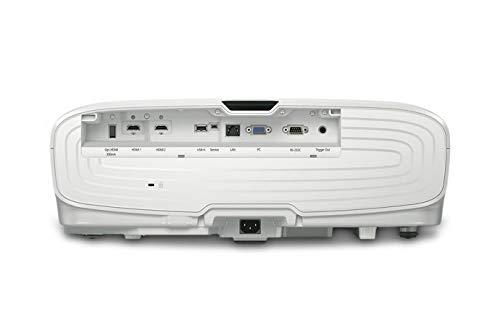
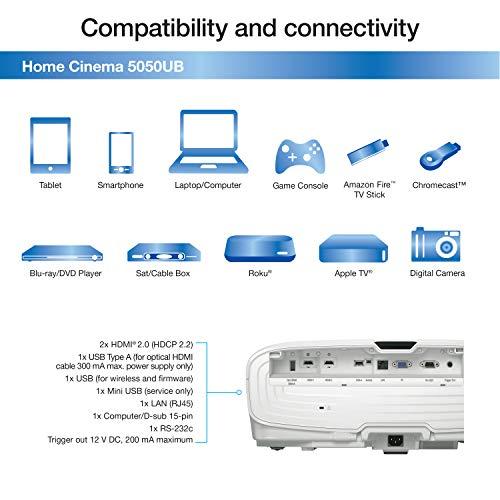
| HDMI Connectivity - Supports modern 4K sources: Two HDMI 2.0 ports (HDCP 2.2) |
| 3D Support - For 3D Blu-ray and gaming content: Active 3D with RF glasses compatibility |
| Throw Ratio - Determines required distance for screen size: 1.35 to 2.84 |
| Image Size Range: 50 to 300 inches diagonal |
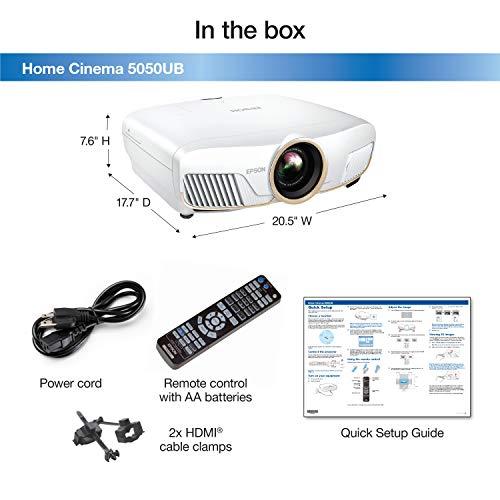
| Dimensions: 20.5" x 17.7" x 7.6" (including feet) |
| Weight: 24.7 pounds |
| Fan Noise: 20-31 dB depending on lamp mode |
The Valerion StreamMaster Plus 2 takes a fundamentally different approach, prioritizing modern features and versatility over pure image quality. Its RGB triple laser system delivers a significantly wider color gamut at 110% of Rec.2020 coverage, making HDR content from streaming services appear more vibrant and impactful than what the 5050UB can achieve. The comprehensive HDR format support—including Dolby Vision, HDR10+, and IMAX Enhanced—ensures compatibility with virtually any premium content you'll encounter, while the built-in Google TV OS eliminates the need for external streaming devices entirely. For gaming enthusiasts, the Valerion's 4ms input lag at 1080p and gaming-specific features make it a compelling choice that the 5050UB simply cannot match.
Where the Valerion StreamMaster Plus 2 truly shines is in overall value and convenience. While it can't match the 5050UB's exceptional contrast performance, it delivers very respectable image quality alongside features that transform it into a complete entertainment hub. The RGB laser technology eliminates lamp replacement costs over its 25,000-hour lifespan, and the automatic setup features make installation significantly easier than the 5050UB's manual controls. At a substantially lower price point, the Valerion offers about 80-90% of the 5050UB's image quality while excelling in areas the Epson ignores entirely—smart streaming, gaming performance, and modern HDR formats. For most buyers seeking a versatile projector that handles movies, gaming, and streaming equally well, the Valerion represents superior overall value despite the 5050UB's advantages in pure contrast performance.
🤖 Read Detailed Comparison
👌Valerion StreamMaster Plus 2 4K Projector Details
💵 See Valerion StreamMaster Plus 2 4K Projector Price
The Valerion VisionMaster Pro 2 takes a fundamentally different approach with its triple-laser DLP technology and comprehensive smart features, offering 3,000 ISO lumens brightness and an impressive 110% Rec.2020 color gamut that produces exceptionally vibrant images. Where it truly distinguishes itself is in modern convenience and gaming performance—the integrated Google TV OS eliminates the need for external streaming devices, while its 4ms input lag at high refresh rates and support for up to 240Hz make it a genuine gaming powerhouse. The projector also supports advanced HDR formats including Dolby Vision and HDR10+, providing superior HDR performance compared to the Epson's HDR10-only support. Its 25,000+ hour laser light source means no lamp replacements over the projector's lifetime, significantly reducing long-term ownership costs.
However, the Valerion VisionMaster Pro 2 makes trade-offs to achieve its feature-rich design. Its contrast performance, while respectable at 4,000:1 native, cannot match the Epson's exceptional black levels, particularly suffering from the typical DLP limitation where blacks become elevated during bright scenes. The lack of lens shift also makes installation more challenging, requiring precise placement compared to the Epson's flexible motorized lens system. While the Valerion's vibrant colors are stunning for animated content and HDR material, achieving reference-quality color accuracy requires calibration, whereas the Epson delivers exceptional accuracy out of the box. For buyers prioritizing convenience, gaming, and modern features over pure image quality, the Valerion offers compelling value, but those seeking the ultimate dark room cinema experience will find the Epson's superior contrast and color accuracy worth the premium.
🤖 Read Detailed Comparison
👌Valerion VisionMaster Pro 2 Projector Details
💵 See Valerion VisionMaster Pro 2 Projector Price
The Epson Home Cinema 5050UB Projector delivers identical performance to what we've already covered because it's the exact same device with a shortened product name. You'll get the same exceptional 1,000,000:1 contrast ratio with UltraBlack technology, identical 2,600 lumens of brightness for versatile room placement, and the same professional-grade 97% DCI-P3 color coverage that makes this projector such a standout in its category. The pixel-shifting 4K enhancement, motorized lens system with extensive shift capabilities, and 16-step HDR adjustment remain unchanged regardless of which product listing you choose.
From a value perspective, the Epson Home Cinema 5050UB Projector represents the same investment with identical long-term benefits and operating costs. You're getting the same lamp life ratings of 3,500-5,000 hours, the same installation flexibility that eliminates costly room modifications, and the same cinema-quality image that has kept this 2019 model competitive against much newer releases. The real-world benefit is simple: your decision should focus entirely on retailer factors like warranty terms, customer service quality, and shipping policies rather than worrying about performance differences that simply don't exist between these two identical projectors.
🤖 Read Detailed Comparison
👌Epson Home Cinema 5050UB Projector Details
💵 See Epson Home Cinema 5050UB Projector Price
The Epson LS11000 represents the newer generation of projector technology with its maintenance-free laser light source rated for 20,000 hours—potentially eliminating bulb replacements for the projector's entire useful life. This laser system also enables more advanced pixel-shifting technology that creates 8.3 million pixels on screen compared to the 5050UB's 4 million, resulting in noticeably sharper images that better approach native 4K quality. For gaming enthusiasts, the LS11000 delivers dual HDMI 2.1 connectivity with 4K/120Hz support and slightly lower input lag at 20ms, making it significantly more capable with PlayStation 5, Xbox Series X, and high-end PC gaming. The projector also runs quieter at 45dB versus the 5050UB's 48dB and consumes less power, reducing long-term operating costs.
However, the LS11000 makes meaningful image quality compromises that become apparent in dark room viewing. Its native contrast ratio of 2,019:1 is nearly four times lower than the 5050UB's exceptional 8,000:1 performance, resulting in grayer blacks and less dramatic shadow detail. The laser model also lacks the UltraBlack technology that gives the 5050UB its superior contrast advantage, and covers a narrower 90% DCI-P3 color gamut compared to 97% on the older model. While the LS11000 offers better calibrated brightness for rooms with ambient light and includes modern conveniences like HDR10+ support, dedicated home theater enthusiasts prioritizing pure image quality will find the 5050UB's deeper blacks and wider color reproduction create a more engaging cinematic experience. The choice ultimately depends on whether you value cutting-edge features and convenience or prioritize the fundamental image quality elements that make movies truly immersive.
🤖 Read Detailed Comparison
👌Epson Home Cinema LS11000 4K Laser Projector Details
💵 See Epson Home Cinema LS11000 4K Laser Projector Price
The Samsung Premiere 9 represents a fundamentally different approach to home projection, designed as a living room TV replacement rather than a dedicated theater projector. Its standout feature is the ultra-short throw design that sits just inches from your wall, eliminating installation complexity while delivering significantly brighter 3,450-lumen output from its RGB triple laser system. This makes it exceptional for bright rooms where the Epson would struggle, and the integrated Tizen OS with built-in streaming apps plus 40W Dolby Atmos speakers creates an all-in-one entertainment solution that requires no additional components.
However, the Samsung Premiere 9 makes notable compromises for this convenience. Despite costing substantially more, it delivers inferior contrast performance with grayer blacks that can't match the Epson's cinematic depth in dark scenes. The lack of lens shift means precise placement is critical, and you're limited to 130-inch maximum screen sizes compared to the Epson's 300-inch capability. While the Samsung excels as a bright-room lifestyle product that simplifies setup and eliminates maintenance with its 20,000-hour laser life, it can't deliver the pure image quality that makes the Epson such a compelling choice for serious home theater enthusiasts who prioritize contrast and cinematic performance over convenience features.
🤖 Read Detailed Comparison
👌Samsung Premiere 9 LPU9D 130" 4K UHD Triple Laser Projector Details
💵 See Samsung Premiere 9 LPU9D 130" 4K UHD Triple Laser Projector Price
The JVC DLA-NZ700 represents a significant step up in projection technology, offering true native 4K resolution with 8.8 million physical pixels compared to the 5050UB's pixel-shifting enhancement. Its standout feature is the BLU-Escent laser light source, which delivers 20,000+ hours of maintenance-free operation—essentially eliminating the ongoing lamp replacement costs and gradual brightness degradation that come with traditional lamp-based projectors. The JVC's 80,000:1 native contrast ratio produces genuinely deeper blacks and better shadow detail than the Epson's dynamic contrast system, while its D-ILA technology delivers smoother color gradations through 12-bit processing. Advanced HDR support includes HDR10+ with dynamic scene-by-scene optimization, providing more accurate tone mapping than static HDR adjustments.
In real-world use, the JVC DLA-NZ700 excels in dedicated home theater environments where its superior contrast and whisper-quiet operation (around 20 dB) create a more cinematic experience. However, this performance comes at roughly 2.5 times the cost of the 5050UB, making it a premium investment that's harder to justify for casual viewers or multi-purpose rooms. The JVC's slightly lower brightness (2,300 vs 2,600 lumens) and more limited installation flexibility—with less lens shift range and maximum 200-inch screen size versus the Epson's 300-inch capability—mean it's more demanding of room conditions and setup requirements. While the JVC delivers measurably better image quality for serious enthusiasts, the 5050UB offers exceptional value by delivering roughly 85% of that premium performance at a much more accessible price point.
🤖 Read Detailed Comparison
👌JVC DLA-NZ700 4K Laser Projector Details
💵 See JVC DLA-NZ700 4K Laser Projector Price
The JVC DLA-NZ800 represents a significant step up in home theater projection technology, featuring true native 4K D-ILA panels rather than the Epson's pixel-shifting approach. Its third-generation imaging chips deliver exceptional native contrast of 100,000:1 without any dynamic adjustments, while the BLU-Escent laser light source provides 20,000 hours of maintenance-free operation—eliminating the lamp replacement costs that the 5050UB requires every few years. The JVC's advanced Gen2 Frame Adapt HDR processing analyzes content in real-time, providing tone mapping that rivals dedicated video processors costing thousands of dollars. This translates to HDR content that maintains detail in both bright highlights and deep shadows simultaneously, something that becomes immediately apparent when watching demanding content like "Dune" or "Blade Runner 2049."
However, this premium performance comes at a substantial cost—the JVC NZ800 typically sells for about five times the price of the Epson 5050UB. While the native 4K resolution and superior HDR processing are undeniably impressive, the real-world viewing difference may not justify the price premium for most home theater enthusiasts. The JVC excels in dedicated, light-controlled theater rooms where its exceptional black levels and razor-sharp detail can be fully appreciated, but it requires that level of commitment to realize its full potential. For viewers seeking reference-quality projection and willing to invest significantly more, the JVC delivers uncompromising performance. But for those building a home theater on a more practical budget, the 5050UB provides 90% of the cinematic experience at 20% of the cost, making it the more sensible choice for most installations.
🤖 Read Detailed Comparison
👌JVC DLA-NZ800 8K Home Theater Projector Details
💵 See JVC DLA-NZ800 8K Home Theater Projector Price
The Epson QB1000 represents Epson's flagship laser technology with several compelling advantages over the 5050UB, most notably its maintenance-free 20,000-hour laser light source that eliminates bulb replacements entirely. With 3,300 lumens of brightness compared to the 5050UB's 2,600 lumens, it delivers significantly better performance on large screens over 150 inches and handles rooms with ambient light more effectively. The QB1000 also features modern HDMI 2.1 connectivity with 4K/120Hz support for next-generation gaming consoles, dynamic HDR tone mapping through its advanced QZX processor, and HDR10+ compatibility – all technologies the 5050UB lacks. These features make it genuinely future-proof for evolving content standards and gaming requirements.
However, the QB1000 comes with trade-offs that matter for pure home theater performance. Its laser-based design cannot achieve the exceptional native contrast and deep black levels that make the 5050UB so compelling in dark rooms, exhibiting a noticeable blueish black floor that reduces shadow detail compared to the 5050UB's inky blacks. At roughly 2.5 times the cost, the value proposition becomes more complex – while the laser eliminates ongoing bulb costs and the convenience factor is undeniable, the 5050UB's superior contrast performance in dedicated dark theaters may be more important than the QB1000's brightness and feature advantages for serious movie enthusiasts. The choice ultimately comes down to whether you prioritize the 5050UB's exceptional contrast and value, or the QB1000's convenience, brightness, and modern connectivity for a more versatile, future-ready installation.
🤖 Read Detailed Comparison
👌Epson QB1000 4K 3LCD Laser Projector Details
💵 See Epson QB1000 4K 3LCD Laser Projector Price
The Epson QL3000 represents a dramatically different approach to home projection, prioritizing raw brightness and installation flexibility over the 5050UB's emphasis on dark-room contrast performance. With 6,000 lumens of output—more than double the 5050UB's brightness—the QL3000 can maintain vibrant, saturated colors even in rooms with significant ambient light, making it suitable for multipurpose family spaces where the 5050UB would struggle. Its laser light source eliminates lamp replacements entirely over its 20,000-hour lifespan, while the modular lens system allows for ultra-short throw installations or extreme long-throw setups that would be impossible with the 5050UB's fixed lens. For gaming enthusiasts, the QL3000's HDMI 2.1 ports support 4K at 120Hz with modern consoles, future-proofing the investment in ways the 5050UB's HDMI 2.0 connectivity cannot match.
However, this professional-grade capability comes at a substantial cost premium—roughly five times the 5050UB's price when factoring in the required separate lens purchase. While the QL3000 excels in challenging environments and massive screen sizes over 200 inches, its black levels and contrast performance in dark rooms don't surpass the 5050UB's UltraBlack technology. For dedicated home theater rooms with proper light control, the 5050UB actually delivers a more cinematic experience with deeper blacks and more natural shadow detail. The QL3000 makes sense when brightness is the limiting factor—bright rooms, commercial installations, or screens so large that the 5050UB simply lacks the light output to maintain image quality. But for traditional home theater setups prioritizing movie watching in controlled environments, the 5050UB provides 90% of the image quality at a fraction of the cost.
🤖 Read Detailed Comparison
👌Epson QL3000 4K HDR 3LCD Laser Projector Details
💵 See Epson QL3000 4K HDR 3LCD Laser Projector Price
The Epson QL7000 represents a completely different class of projector, delivering over 10,000 lumens of brightness – nearly four times what the 5050UB produces. This massive brightness advantage fundamentally changes where and how you can use the projector, allowing it to create stunning images on screens up to 300 inches even in rooms with ambient light. The QL7000's laser light source provides 20,000 hours of maintenance-free operation, eliminating the lamp replacement cycle entirely, while its dual HDMI 2.1 ports support 4K at 120Hz with significantly lower input lag for serious gaming. However, this professional-grade projector is sold body-only without a lens, requiring additional investment in Epson's precision optics that can cost several thousand dollars more.
From a value perspective, the QL7000 commands roughly ten times the price of the 5050UB, placing it firmly in professional installation territory rather than consumer home theater. While it offers superior brightness, gaming performance, and long-term reliability, most home theater enthusiasts will find the 5050UB delivers 80-90% of the visual experience at a fraction of the cost. The QL7000 makes sense for users who need extreme brightness for challenging lighting conditions, massive screen sizes, or who prioritize cutting-edge gaming features and maintenance-free operation above all else. For dedicated dark-room home theaters where the 5050UB excels, the additional brightness of the QL7000 may actually be excessive, making the more affordable option the smarter choice for pure cinematic viewing.
🤖 Read Detailed Comparison
👌Epson QL7000 4K 3LCD Laser Projector Details
💵 See Epson QL7000 4K 3LCD Laser Projector Price
The Sony BRAVIA Projector 8 takes a fundamentally different approach with true native 4K SXRD panels that display all 8.3 million pixels without any enhancement processing. Its Z-Phosphor laser light source delivers 20,000 hours of maintenance-free operation—roughly 10-15 years of typical home use—eliminating the ongoing lamp replacement costs and gradual brightness degradation that affect the Epson. Sony's XR Dynamic Tone Mapping uses cognitive processing to automatically optimize HDR content frame-by-frame, while the laser's precise modulation achieves nearly infinite dynamic contrast. For gaming enthusiasts, the Sony BRAVIA Projector 8 excels with Auto Low Latency Mode, delivering input lag under 12ms at 4K/120Hz compared to the Epson's 22-30ms limitation at 60Hz maximum.
However, this technical superiority comes at a substantial premium—the Sony BRAVIA Projector 8 costs roughly five times more than the Epson at the time of writing. While the laser's longevity can offset some of this cost difference over a decade of ownership, the initial investment places it firmly in luxury territory. The Sony also offers less installation flexibility with more limited lens shift capabilities, though its more compact design and professional-grade build quality appeal to custom installation scenarios. For buyers prioritizing absolute image quality, native 4K resolution, and long-term reliability regardless of cost, the Sony BRAVIA Projector 8 represents the pinnacle of home theater projection technology.
🤖 Read Detailed Comparison
👌Sony BRAVIA Projector 8 4K HDR Laser Projector Details
💵 See Sony BRAVIA Projector 8 4K HDR Laser Projector Price
The JVC DLA-NZ500 represents a significant step up in projection technology, offering true native 4K resolution through its D-ILA imaging chips rather than the Epson's pixel-shifting enhancement. This translates to noticeably sharper detail, particularly on screens larger than 120 inches or when viewing fine textures and text. More importantly, the JVC delivers exceptional contrast performance with a 40,000:1 native contrast ratio that produces visibly deeper blacks and superior shadow detail in dark movie scenes - an area where it clearly outperforms the 5050UB. The laser light source provides 20,000 hours of maintenance-free operation with consistent brightness and color accuracy throughout its lifespan, eliminating the ongoing lamp replacement costs that add up over time with the Epson.
However, this premium performance comes at roughly double the cost of the 5050UB, making it a more specialized choice for dedicated home theater environments. The JVC DLA-NZ500 produces 600 fewer lumens than the Epson, limiting its versatility in rooms with ambient light or for driving very large screens beyond 150 inches. It also lacks 3D support and offers less lens shift flexibility for challenging installations. While the JVC excels in pure image quality with its superior black levels, advanced HDR processing, and native 4K clarity, the 5050UB remains the better value proposition for users who need maximum brightness, installation flexibility, or want excellent performance without the premium price tag. The choice ultimately depends on whether you prioritize the JVC's reference-quality image performance or the Epson's versatility and proven value.
🤖 Read Detailed Comparison
👌JVC DLA-NZ500 Native 4K Laser Home Theater Projector Details
💵 See JVC DLA-NZ500 Native 4K Laser Home Theater Projector Price
The JVC DLA-NZ900 represents a significant step up in native resolution and light source technology, featuring genuine 4K D-ILA panels that deliver true pixel-for-pixel 4K reproduction rather than pixel-shifting enhancement. Its BLU-Escent laser system produces 3,300 lumens of brightness that remains consistent over a 20,000-hour lifespan, eliminating the need for costly lamp replacements that the 5050UB requires every few years. The JVC's native contrast ratio of 150,000:1 delivers measurably deeper blacks and superior shadow detail, particularly noticeable in dark movie scenes where the D-ILA technology reveals subtle gradations that can appear crushed on the Epson. Advanced HDR processing with Frame Adapt HDR and HDR10+ support provides automatic scene-by-scene optimization that surpasses the 5050UB's manual adjustment system.
However, this performance leap comes at a substantial premium—the JVC DLA-NZ900 costs approximately eight times more than the 5050UB while delivering what most viewers would consider incremental rather than revolutionary improvements. The differences become most apparent on very large screens (over 180 inches) and in completely light-controlled environments where the superior contrast can be fully appreciated. For the majority of home theater setups with screens under 150 inches, the 5050UB delivers 85% of the JVC's image quality at a fraction of the cost. The JVC is undeniably the superior projector technically, but the 5050UB represents far better value for most users, making the JVC primarily worthwhile for dedicated home theater enthusiasts with unlimited budgets who demand absolute reference-quality performance.
🤖 Read Detailed Comparison
👌JVC DLA-NZ900 8K Home Theater Projector Details
💵 See JVC DLA-NZ900 8K Home Theater Projector Price
The Leica Cine 1 takes a fundamentally different approach to home projection, prioritizing convenience and modern integration over the 5050UB's installation flexibility and maximum performance. Its ultra-short throw design eliminates the need for ceiling mounting entirely, sitting just 14 inches from your screen like an oversized soundbar. This laser-powered projector delivers 3,000 lumens of brightness compared to the Epson's 2,600, making it notably better for living rooms with ambient light. The maintenance-free laser light source rated for 25,000 hours means you'll never need to replace a lamp, while integrated Google TV, Wi-Fi 6, and Dolby Atmos speakers create an all-in-one entertainment system that requires minimal external components.
However, these conveniences come with significant trade-offs that highlight why the 5050UB remains compelling for serious home theater enthusiasts. The Leica Cine 1 is strictly limited to 120-inch screens versus the Epson's massive 300-inch capability, and its ultra-short throw design can't match the 5050UB's exceptional contrast performance and deep black levels that make dark movie scenes truly cinematic. While the Leica offers superior brightness and lifestyle-friendly features, it typically costs more than double the Epson's price point, making the 5050UB a clear winner for performance per dollar. The Leica excels as a premium living room solution where convenience trumps ultimate image quality, but the 5050UB delivers superior cinematic performance for dedicated theater spaces where you can properly optimize the viewing environment.
🤖 Read Detailed Comparison
👌Leica Cine 1 120" UST Projector Details
💵 See Leica Cine 1 120" UST Projector Price
The Sony BRAVIA Projector 9 represents a fundamentally different approach to home theater projection, delivering true native 4K resolution without any pixel-shifting alongside a maintenance-free laser light source that lasts over 20,000 hours. Where it truly distinguishes itself is brightness output at 3,400 lumens—800 more than the 5050UB—enabling superior HDR performance with less tone mapping compression and the ability to drive larger screens effectively in rooms with ambient light. The Sony's XR Processor, borrowed from their flagship televisions, provides frame-by-frame dynamic tone mapping and sophisticated image analysis that requires minimal user intervention while delivering reference-quality results. For gaming enthusiasts, the Sony offers next-generation capabilities with 4K/120Hz support via HDMI 2.1 and an exceptional 12ms input lag that rivals dedicated gaming monitors.
However, the performance advantages come at a dramatic cost premium—roughly ten times the price of the 5050UB at the time of writing. While the Sony BRAVIA Projector 9 delivers measurably superior performance in brightness, true 4K detail, and gaming capabilities, the real-world viewing experience gap is much smaller than the price difference suggests. The 5050UB's outstanding contrast performance through UltraBlack technology actually matches or exceeds the Sony's black levels in many scenarios, and its 97% DCI-P3 color coverage rivals the Sony's processing prowess. For most home theater enthusiasts, the Sony's advantages—while genuine—don't justify spending ten times more when the Epson delivers such exceptional cinematic performance. The Sony makes sense for no-compromise installations, commercial applications, or enthusiasts who demand absolute reference quality regardless of cost, but represents diminishing returns for typical home theater use.
🤖 Read Detailed Comparison
👌Sony BRAVIA Projector 9 4K HDR Laser Projector Details
💵 See Sony BRAVIA Projector 9 4K HDR Laser Projector Price
The JVC LX-NZ30 represents the next generation of home theater projection with its BLU-Escent laser technology delivering 3,300 lumens of maintenance-free brightness over a 20,000-hour lifespan. This significant brightness advantage makes it far more versatile than the Epson for mixed-use spaces where complete light control isn't always practical – you can enjoy movies with some ambient light without the washed-out colors that would plague lower-brightness projectors. The laser system also enables true infinite dynamic contrast through real-time brightness modulation, instantly adjusting output based on scene content to enhance both bright highlights and dark shadows. For gaming enthusiasts, the JVC's capabilities are in a different league entirely, supporting 1080p at 240Hz with just 6.25ms of input lag, making it one of the most responsive projectors available for modern console and PC gaming.
From a practical ownership standpoint, the JVC LX-NZ30 eliminates the ongoing maintenance burden that lamp-based projectors require. While the Epson demands periodic lamp replacements and gradually loses brightness over time, the JVC maintains consistent performance throughout its entire lifespan with zero additional costs or service interruptions. This makes it particularly valuable for heavy users who watch content daily or families who want a "set it and forget it" solution. The instant-on laser operation and dynamic brightness adjustments also provide a more modern user experience compared to traditional lamp projectors. However, buyers should understand they're paying a premium for this convenience and versatility – the JVC's higher upfront cost reflects its advanced laser technology and broader feature set, making it most worthwhile for users who will actually benefit from its superior brightness, gaming capabilities, and maintenance-free operation.
🤖 Read Detailed Comparison
👌JVC LX-NZ30 4K HDR Laser Projector Details
💵 See JVC LX-NZ30 4K HDR Laser Projector Price
The BenQ HT4550i represents the latest evolution in projector technology with its 4-LED light engine that eliminates the maintenance headaches and ongoing costs associated with traditional lamp-based systems. This modern approach delivers consistent 3,200 ANSI lumens throughout its 20,000-30,000 hour lifespan, making it significantly brighter than the 5050UB and better suited for rooms with ambient light or multi-purpose spaces. The HT4550i's gaming performance is exceptional with just 8.7ms input lag at high refresh rates and support for 240Hz gaming, far surpassing what the 5050UB can offer. Additionally, the integrated Android TV system provides direct access to Netflix 4K HDR and other streaming services without requiring external devices, creating a more streamlined entertainment setup.
While the BenQ HT4550i can't match the 5050UB's superior black levels and contrast performance in dark rooms, it offers compelling long-term value through its maintenance-free operation. The upfront price premium is typically offset within 3-4 years when you factor in lamp replacement costs, and the consistent brightness means no performance degradation over time. The HT4550i's compact, lightweight design also makes DIY installation more manageable, though it lacks the 5050UB's extensive lens adjustment capabilities. For users who want modern convenience, gaming capability, and worry-free long-term ownership, the BenQ HT4550i delivers excellent all-around performance, but those with dedicated dark theaters who prioritize absolute contrast and cinematic black levels will find the 5050UB's image quality advantages worth the ongoing maintenance requirements.
🤖 Read Detailed Comparison
👌BenQ HT4550i 4K HDR LED Home Theater Projector Details
💵 See BenQ HT4550i 4K HDR LED Home Theater Projector Price
The XGIMI Horizon 20 Max represents the cutting edge of laser projection technology, delivering an impressive 5,700 ISO lumens that makes it usable in bright rooms where the Epson would struggle. Its RGB triple laser engine provides maintenance-free operation for 20,000+ hours, eliminating the ongoing lamp replacement costs that add $200-300 every few years with traditional projectors. The XGIMI's all-in-one design includes Google TV with Wi-Fi 6, quality 24W Harman Kardon speakers, and ISA 5.0 automatic setup that handles focus, keystone correction, and screen alignment without manual intervention. For gamers, it delivers exceptional performance with 1ms input lag at 1080p/240Hz and variable refresh rate support—capabilities the Epson simply can't match with its 22.5ms lag and 60Hz limitation.
While the XGIMI Horizon 20 Max typically commands a premium price over the Epson, its long-term value proposition becomes compelling when factoring in zero maintenance costs and integrated smart features that eliminate the need for separate streaming devices and potentially sound systems. The trade-off comes in contrast performance, where the XGIMI's 20,000:1 ratio can't match the Epson's deep blacks and shadow detail that make dark movie scenes truly atmospheric. However, for most users who want a versatile projector that works well in various lighting conditions, handles modern gaming demands, and offers plug-and-play convenience, the XGIMI's laser technology and comprehensive feature set provide better real-world utility than the Epson's more specialized home theater focus.
🤖 Read Detailed Comparison
👌XGIMI Horizon 20 Max 4K Projector Details
💵 See XGIMI Horizon 20 Max 4K Projector Price
The BenQ W4100i represents the modern evolution of home theater projection, emphasizing versatility and cutting-edge technology over the 5050UB's traditional approach. Its standout feature is exceptional brightness at 3,200 ANSI lumens combined with a maintenance-free 4LED light source rated for 30,000 hours—eliminating the lamp replacement costs that plague traditional projectors like the 5050UB. The BenQ W4100i also excels in gaming performance with ultra-low input lag of just 6.5ms at 1080p and three HDMI 2.1 ports supporting 4K@120Hz, making it ideal for modern gaming consoles. Its factory calibration achieves Delta E<2 color accuracy right out of the box, while AI Cinema Mode automatically optimizes streaming content in real-time—features that make it immediately impressive without the extensive setup the 5050UB demands.
However, the BenQ W4100i makes compromises in areas where the 5050UB excels, particularly in ultimate image quality for dedicated theater rooms. Its DLP technology can't match the 5050UB's exceptional contrast performance and deep blacks, especially in completely dark environments where the Epson's UltraBlack technology truly shines. The BenQ W4100i also lacks the premium 15-element all-glass lens and motorized controls that make the 5050UB so convenient to install and adjust. While the W4100i's compact design and manual lens adjustments work adequately, they require more hands-on setup effort and don't offer the precise, remote-controlled positioning that the 5050UB provides. For users with dedicated home theaters who prioritize absolute image quality and don't mind ongoing lamp costs, the 5050UB remains superior, but the BenQ W4100i delivers better overall value for most households seeking a versatile, future-proof projector that works well in various room conditions.
🤖 Read Detailed Comparison
👌BenQ W4100i 4K Home Theater Projector Details
💵 See BenQ W4100i 4K Home Theater Projector Price
Original price was: $1,498.00.$1,298.00Current price is: $1,298.00.
Original price was: $499.99.$369.99Current price is: $369.99.
Original price was: $579.99.$318.99Current price is: $318.99.


Privacy Policy
Terms and Conditions - Affiliate Policy
Home Security
© Copyright 2008-2026.
11816 Inwood Rd #1211, Dallas, TX 75244