

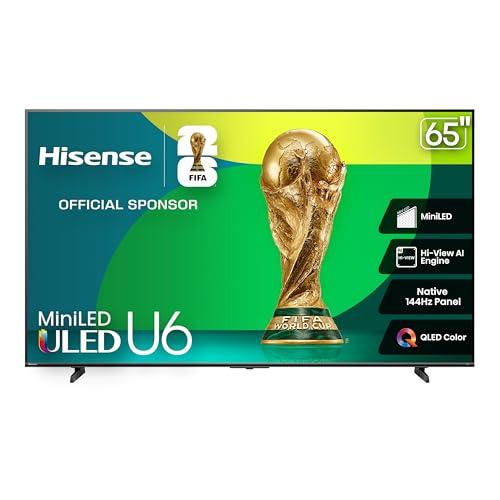
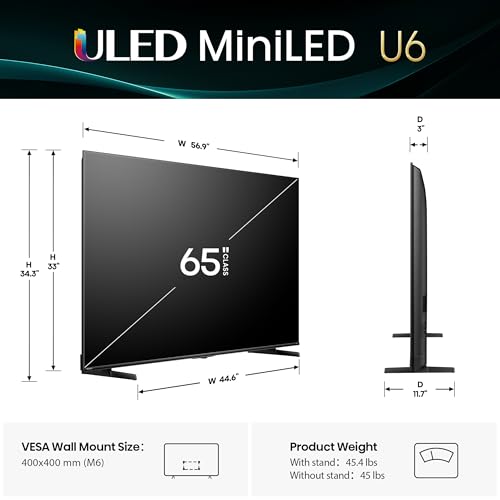
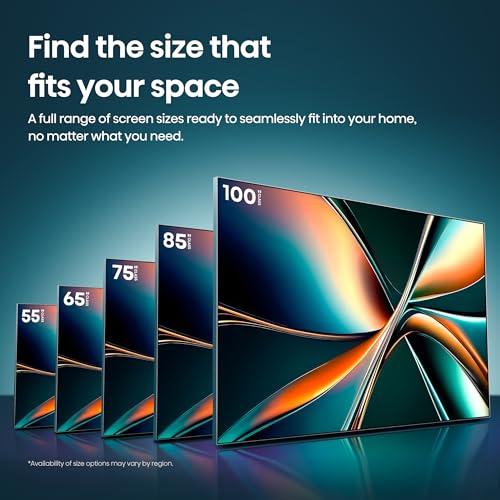
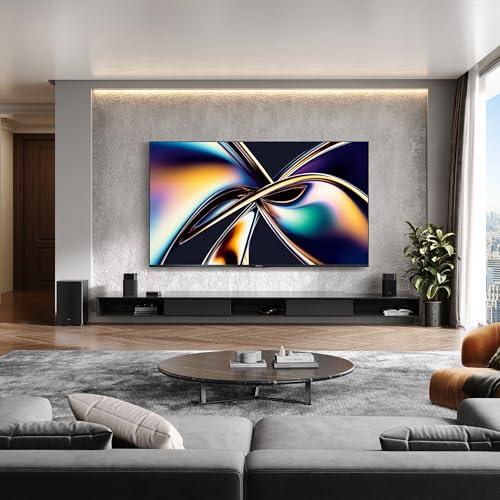
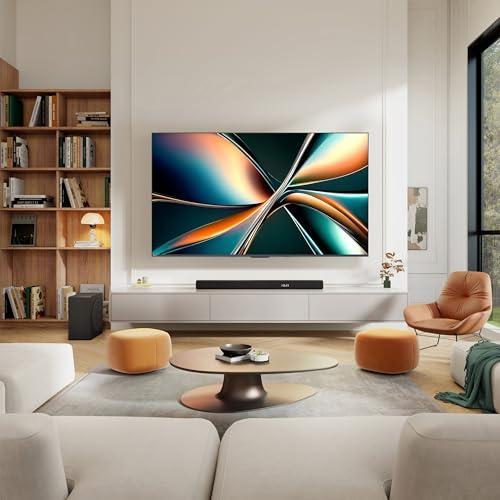
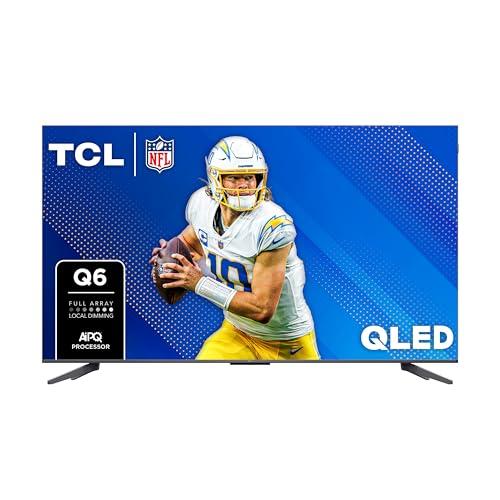

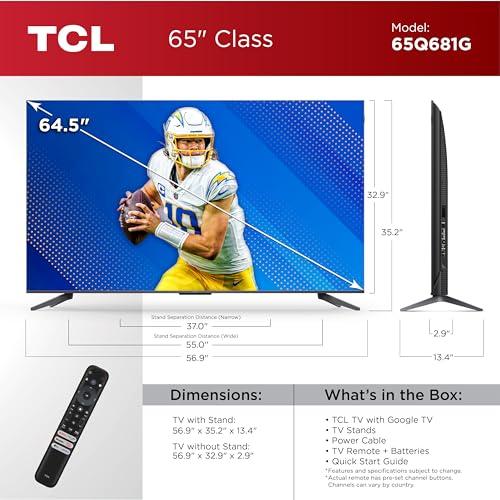
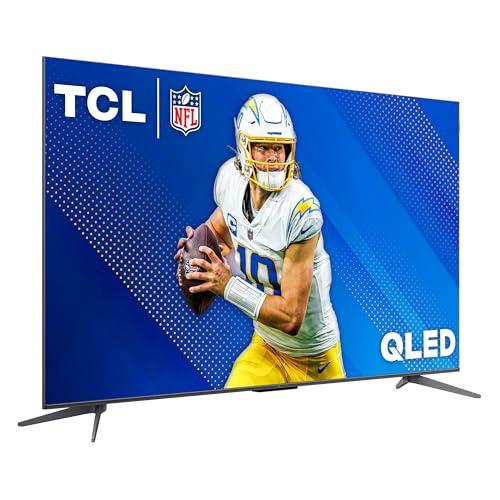
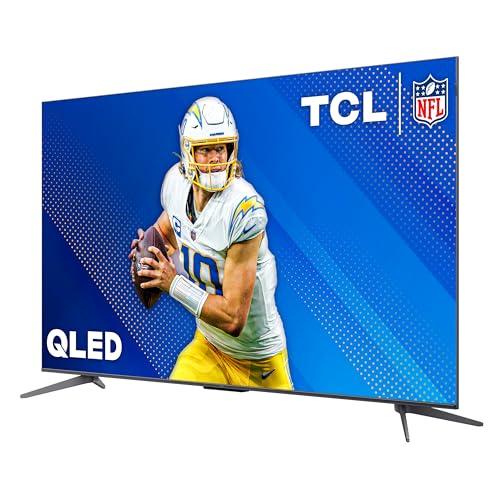
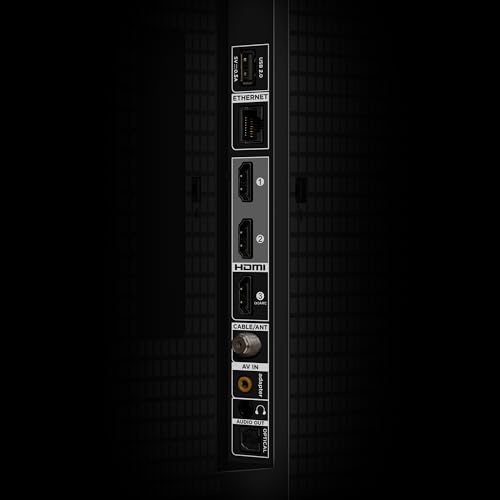
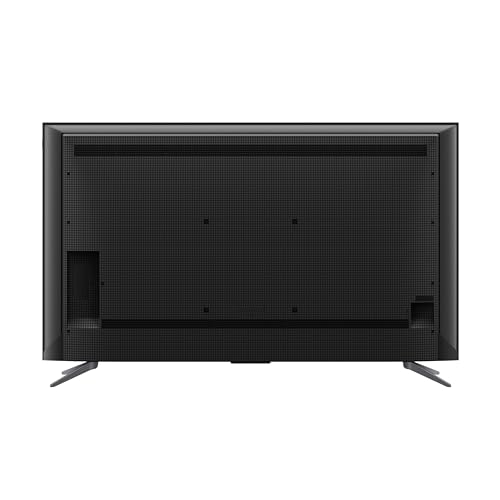
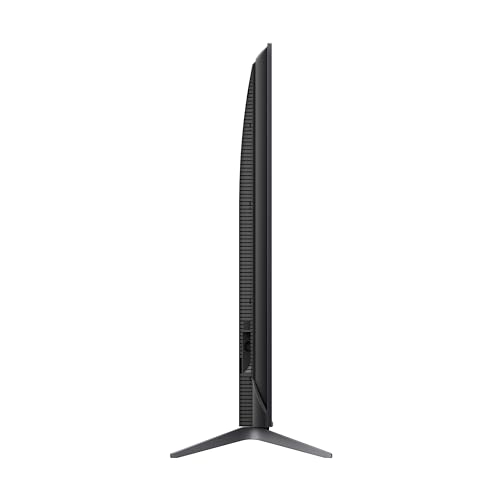
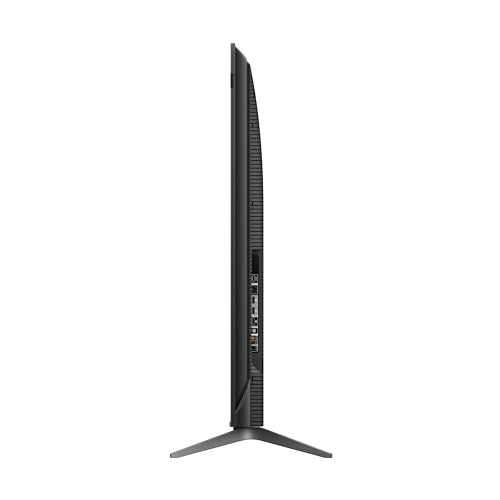
Choosing a 65-inch 4K TV shouldn't feel like deciphering rocket science, but with all the technical jargon and marketing buzzwords flying around, it often does. The good news? Two standout models have emerged that deliver serious performance without requiring a second mortgage: the Hisense 65" U6 Series Mini-LED QLED 4K Fire TV and the TCL 65" Q68 QLED 4K UHD Smart TV Display.
Both TVs target that sweet spot where premium features meet reasonable pricing, but they take notably different approaches to get there. The Hisense U6 represents 2025's latest display technology, packing Mini-LED backlighting into a surprisingly affordable package. Meanwhile, the TCL Q68 from 2024 focuses on proven QLED technology with smart platform excellence. At the time of writing, you're looking at roughly a $150 price difference between them, but that gap tells only part of the story.
Before diving into specifics, let's establish what actually matters when you're dropping several hundred dollars on a centerpiece for your living room. The 65-inch size hits that perfect balance – large enough to feel cinematic from typical viewing distances (8-12 feet), yet not so massive that it overwhelms most rooms.
Your primary considerations should focus on how the TV handles different types of content. Can it make your Netflix shows pop with vibrant colors? Does it deliver smooth, blur-free sports action? Will it showcase the latest video games without lag or screen tearing? And perhaps most importantly – does it perform well in your specific room's lighting conditions?
The display technology underneath determines most of these capabilities. Traditional LED TVs use a backlight behind the LCD panel, but newer technologies like Mini-LED and QLED (Quantum Dot Light Emitting Diode) enhance this basic formula in different ways. Mini-LED uses thousands of tiny LEDs for incredibly precise brightness control, while QLED adds a quantum dot layer that produces purer, more vibrant colors.
Smart platform choice also deserves serious consideration. This determines your daily interaction experience – how you find content, navigate menus, and integrate with your existing devices and services.
Here's where these two TVs truly diverge, and understanding the difference will help you make the right choice for your situation.
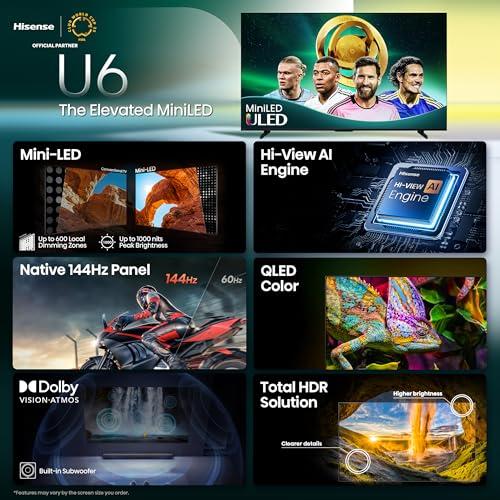
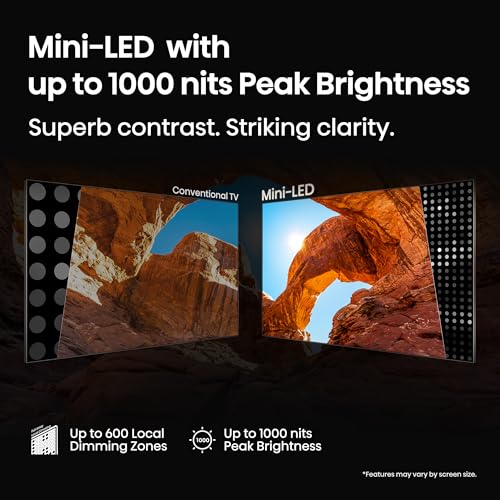
The Hisense U6 employs Mini-LED backlighting, a technology that has trickled down from TVs costing twice as much just a few years ago. Instead of using dozens of larger LED zones like traditional TVs, Mini-LED systems pack hundreds or thousands of tiny LEDs behind the screen. The U6 features over 600 individual dimming zones, each capable of independent brightness control.
This creates what's called Full Array Local Dimming (FALD) on steroids. When you're watching a movie scene with bright stars against a dark sky, the TV can make those stars blazingly bright while keeping the surrounding space truly dark. Traditional LED TVs would create a halo effect around bright objects, but Mini-LED virtually eliminates this blooming.
The practical impact? You get contrast ratios that approach OLED performance (OLED being the premium display technology where each pixel produces its own light) without the potential burn-in concerns or premium pricing. Dark movie scenes reveal shadow details you've never noticed, while HDR (High Dynamic Range) content delivers the punchy highlights and deep blacks that directors intended.
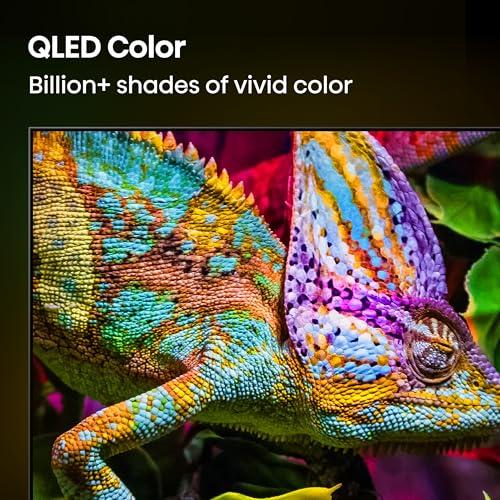
The TCL Q68 takes a different approach with traditional QLED technology. QLED adds a quantum dot layer between the backlight and LCD panel – these microscopic crystals convert blue LED light into precise red and green wavelengths, resulting in colors that cover nearly 100% of the DCI-P3 color space (the standard used in movie theaters).
Where QLED truly shines is color volume – the ability to maintain vibrant, accurate colors even at high brightness levels. This makes the TCL Q68 particularly appealing for bright living rooms where you need the TV to compete with afternoon sunlight streaming through windows.
The trade-off comes in contrast performance. Without Mini-LED's precise zone control, the Q68 can't achieve the deep blacks of its Hisense competitor. You'll notice this most in dark room viewing, where black levels appear more like dark gray, especially when bright elements appear on screen simultaneously.
Motion performance separates good TVs from great ones, and this represents perhaps the largest performance gap between these models.
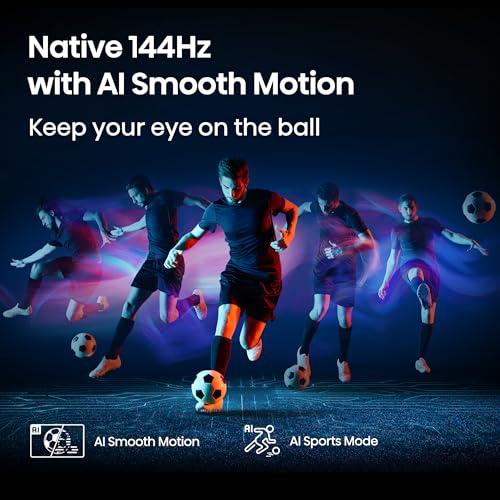
The Hisense U6 features a native 144Hz refresh rate – meaning the panel physically updates 144 times per second. This isn't marketing fluff like "motion rate" numbers; it's the actual panel refresh capability. For comparison, most content streams at 24fps (movies), 30fps (most TV), or 60fps (sports and gaming), so 144Hz provides substantial headroom for smooth motion processing.
This high refresh rate particularly benefits gaming. Modern gaming consoles and PCs can output 120fps content, which the U6 handles natively without any artificial processing that might introduce lag. The TV also includes Variable Refresh Rate (VRR) technology, which synchronizes the display refresh with the gaming device's output, eliminating screen tearing and stuttering.
The TCL Q68 operates with a 60Hz native panel but compensates with Motion Rate 240 processing. This technology interpolates additional frames between the original content frames, creating smoother motion artificially. While effective for movies and TV shows, this processing adds slight input lag that competitive gamers might notice.
For sports viewing, both TVs handle typical broadcasts well, but the Hisense U6 maintains better clarity during fast pans and quick action sequences. If you're a serious sports fan or gamer, this difference becomes immediately apparent.
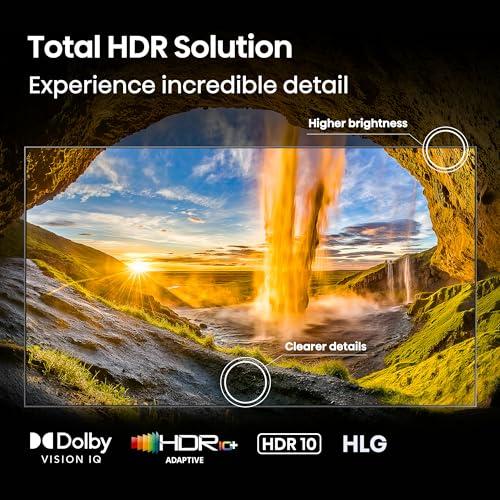
HDR represents one of the most significant improvements in TV technology over the past decade. Instead of the limited brightness range of standard content, HDR can reproduce everything from candlelight shadows to sunlit snow, creating more lifelike images.
Both TVs support all major HDR formats – Dolby Vision, HDR10+, HDR10, and HLG – but they implement HDR differently. The Hisense U6 achieves peak brightness around 1000 nits (a measurement of luminance), while the TCL Q68 reaches approximately 600 nits.
Those extra 400 nits make a meaningful difference. HDR content mastered for 1000+ nits can showcase bright highlights like sun reflections on water or explosion flashes with proper impact. The Q68 still displays HDR content beautifully, but bright highlights get compressed, losing some of the format's dramatic range.
The U6's Mini-LED zones also enable better HDR shadow detail. When a scene contains both bright and dark elements – like a campfire scene with people's faces illuminated against a dark forest – the precise local dimming maintains detail in both areas simultaneously.
Both TVs utilize quantum dot technology for wide color gamut coverage, but they implement it differently. The TCL Q68 tends toward more saturated, punchy colors out of the box – great for grabbing attention in store displays but sometimes oversaturating skin tones and natural elements.
The Hisense U6 aims for more accurate color reproduction, though it may appear less vibrant initially. However, this accuracy pays dividends with properly mastered content, where colors appear as the content creators intended.
For home theater enthusiasts who plan to calibrate their display, the U6 provides more adjustment flexibility and maintains color accuracy across different brightness levels better than the Q68.
Your daily interaction with the TV depends heavily on the smart platform, and these models offer distinctly different approaches.
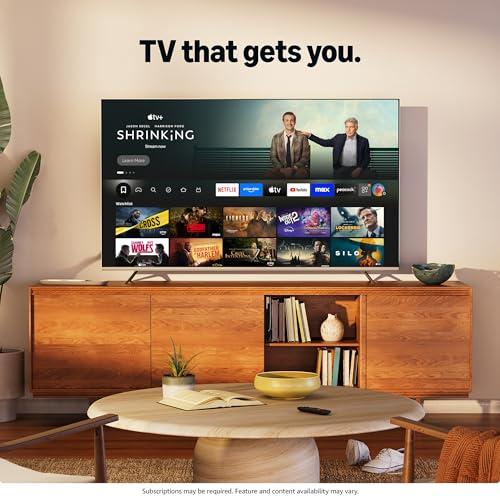
The Hisense U6 runs Fire TV, Amazon's streaming platform that integrates seamlessly with the company's broader ecosystem. If you're already invested in Amazon Prime, use Alexa devices throughout your home, or frequently shop on Amazon, Fire TV feels like a natural extension.
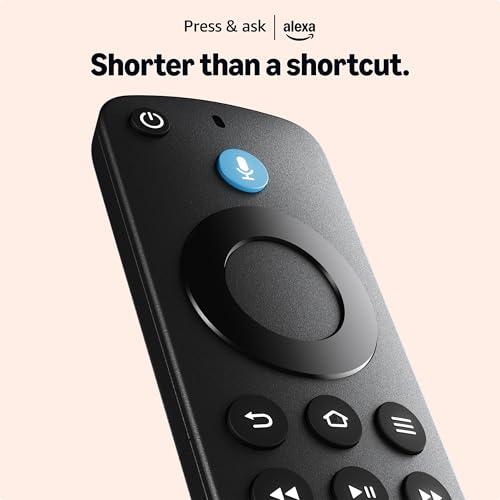
Fire TV's strength lies in content discovery and voice control. The interface learns your viewing habits and surfaces relevant content across multiple streaming services. Alexa integration allows natural voice commands – you can dim smart lights, check weather, or control other connected devices without switching remotes.
The downside? Fire TV includes prominent advertising on the home screen, and you can't completely eliminate it. Some users find this intrusive, especially given the TV's purchase price.
The TCL Q68 runs Google TV, which excels at content aggregation and personalized recommendations. Rather than forcing you to remember which streaming service hosts which show, Google TV presents unified recommendations based on your interests across all installed apps.
Google TV integrates naturally with Android phones, Chromecast functionality, and Google's various services. The interface feels cleaner and more customizable than Fire TV, though it can occasionally feel overwhelming with recommendation overload.
Voice search through Google Assistant tends to understand natural language queries better than Alexa, particularly for finding specific content across multiple services.
Gaming performance has become increasingly important as TVs replace dedicated gaming monitors for many users.
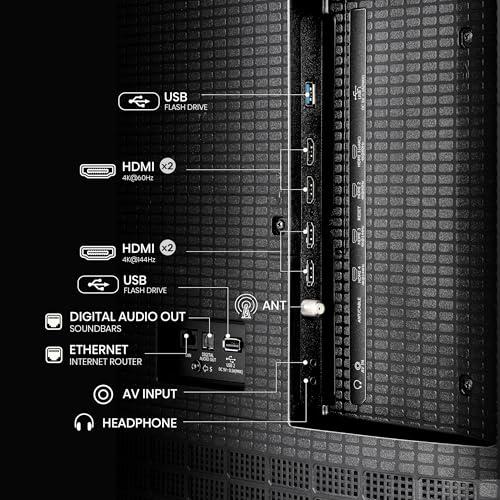
The Hisense U6 clearly targets gamers with two HDMI 2.1 ports supporting 4K@144Hz, VRR, and Auto Low Latency Mode (ALLM). These ports handle the full bandwidth modern gaming devices can output, including the latest PlayStation and Xbox consoles and high-end gaming PCs.
Input lag measures around 15-20 milliseconds in game mode, which competitive gamers will appreciate. The high native refresh rate means no artificial processing that could introduce additional delay.
The TCL Q68 includes gaming features like VRR and ALLM, but HDMI bandwidth limitations cap performance at 4K@60Hz. For current console gaming, this handles everything available today, but it won't support future high-refresh console updates or high-end PC gaming scenarios.
Both TVs include dedicated game modes that optimize picture settings and disable processing that could increase input lag.
TV audio rarely receives adequate attention until you're actually using the TV daily. Both models include respectable built-in audio systems.
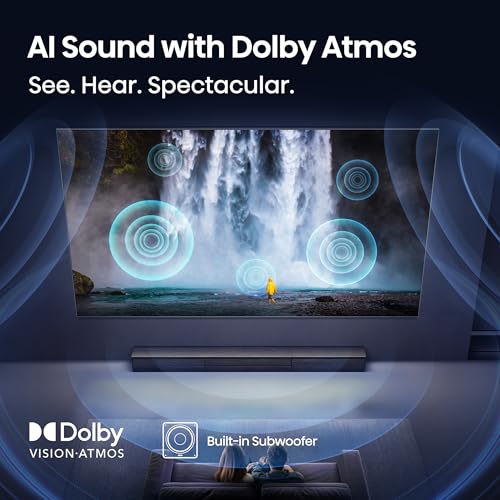
The Hisense U6 provides 40W of total output with dedicated subwoofer drivers for enhanced bass response. Dolby Atmos processing creates a sense of height and spatial audio that works surprisingly well for built-in speakers.
The TCL Q68 offers 30W output with DTS Virtual:X processing for simulated surround sound. While adequate for casual viewing, the reduced power becomes noticeable during action sequences or when trying to fill larger rooms.
Neither TV replaces a dedicated soundbar or home theater system, but the U6's audio system reduces the urgency of that additional purchase.
For dedicated home theater setups, several factors become crucial beyond basic picture quality.
The Hisense U6 includes multiple picture modes designed for different viewing environments, including a Filmmaker Mode that disables processing to display content as directors intended. The Mini-LED backlighting provides the contrast necessary for proper HDR reproduction in dark-room viewing.
eARC (enhanced Audio Return Channel) support on both TVs enables high-quality audio passthrough to compatible sound systems, supporting formats like Dolby Atmos without compression.
The U6's superior local dimming makes it more suitable for critical viewing where contrast accuracy matters. The Q68's brighter overall output might actually work better in media rooms where some ambient light is unavoidable.
After extensive research into user and professional reviews, clear patterns emerge for ideal use cases.
Choose the Hisense U6 Mini-LED if you:
The U6 represents exceptional value for display technology that typically costs significantly more. Its Mini-LED implementation rivals TVs costing twice as much from just two years ago.
Choose the TCL Q68 QLED if you:
The Q68 delivers solid QLED performance with excellent smart features at a more accessible price point. Its Google TV implementation surpasses many competitors' smart platforms.
At the time of writing, the roughly $150 price difference between these models essentially purchases Mini-LED technology, gaming future-proofing, and superior contrast performance. This represents remarkable value given that Mini-LED TVs cost $800-1200+ just a few years ago.
For most users prioritizing picture quality and gaming performance, the Hisense U6 justifies its premium through tangible performance advantages. However, budget-conscious buyers who emphasize smart features and vibrant colors will find excellent value in the TCL Q68.
Both TVs punch significantly above their weight class, delivering performance that would have cost twice as much in previous generations. Your choice ultimately depends on whether you prioritize cutting-edge display technology or maximum value with proven performance.
The TV market continues evolving rapidly, but these models represent the current sweet spot where advanced features meet reasonable pricing. Choose based on your specific needs, and either option will deliver years of excellent viewing experience.
| Hisense 65" U6 Series Mini-LED QLED 4K Fire TV | TCL 65" Q68 QLED 4K UHD Smart TV Display |
|---|---|
| Display Technology - The foundation that determines contrast and picture quality | |
| Mini-LED with 600+ local dimming zones | Traditional QLED with direct-lit LED backlight |
| Peak Brightness - Critical for HDR impact and bright room viewing | |
| Up to 1000 nits (superior HDR highlights) | Up to 600 nits (adequate but limited HDR punch) |
| Native Refresh Rate - Real panel refresh capability, not marketing numbers | |
| 144Hz (future-proof for high-refresh gaming) | 60Hz (handles current content well) |
| Smart Platform - Your daily interaction experience | |
| Fire TV with Alexa (Amazon ecosystem integration) | Google TV (superior content discovery) |
| HDMI 2.1 Ports - Essential for next-gen gaming and high bandwidth content | |
| 2 ports supporting 4K@144Hz | Limited HDMI 2.0 bandwidth (4K@60Hz max) |
| Gaming Features - Performance for console and PC gaming | |
| VRR, ALLM, 144Hz support, ~15ms input lag | VRR, ALLM, 60Hz cap, competitive input lag |
| Local Dimming Zones - Controls blooming and contrast accuracy | |
| 600+ Mini-LED zones (near-OLED contrast) | Traditional zones (some blooming in dark scenes) |
| Audio Output - Built-in speaker performance | |
| 40W with dedicated subwoofer | 30W with DTS Virtual:X processing |
| Model Year - Impacts feature set and software support longevity | |
| 2025 (latest features and longer support) | 2024 (proven stability, shorter update cycle) |
| HDR Format Support - Compatibility with premium content | |
| Dolby Vision, HDR10+, HDR10, HLG | Dolby Vision, HDR10+, HDR10, HLG |
| Best Use Case - Who should prioritize this model | |
| Gamers, dark room viewing, home theaters | Budget-conscious, bright rooms, casual viewing |
The Hisense 65" U6 Series Mini-LED QLED 4K Fire TV delivers superior picture quality in dark rooms thanks to its Mini-LED technology with 600+ local dimming zones. This creates deeper blacks and better contrast compared to the TCL 65" Q68 QLED 4K UHD Smart TV Display, which uses traditional LED backlighting that can produce some light bleeding in dark scenes.
Mini-LED in the Hisense U6 uses thousands of tiny LEDs for precise brightness control in specific screen areas, while the TCL Q68 uses fewer, larger LED zones. This means the Hisense U6 can make stars bright against a truly dark sky, while the TCL Q68 might create a halo effect around bright objects.
The Hisense 65" U6 Series Mini-LED QLED 4K Fire TV is significantly better for gaming with its 144Hz refresh rate and two HDMI 2.1 ports supporting 4K at 144Hz. The TCL 65" Q68 QLED 4K UHD Smart TV Display caps at 60Hz and lacks full HDMI 2.1 bandwidth, making the Hisense U6 more future-proof for next-gen consoles and PC gaming.
Yes, both the Hisense U6 and TCL Q68 support all major HDR formats including Dolby Vision, HDR10+, HDR10, and HLG. However, the Hisense U6 displays HDR content with more impact due to its higher peak brightness of 1000 nits versus the TCL Q68's 600 nits.
This depends on your ecosystem preference. The Hisense U6 with Fire TV integrates seamlessly with Amazon services and Alexa devices, while the TCL Q68 with Google TV offers superior content discovery and works better with Android phones and Google services. Both platforms provide access to all major streaming apps.
The Hisense 65" U6 Series Mini-LED QLED 4K Fire TV offers superior audio with 40W output and a dedicated subwoofer for better bass response. The TCL 65" Q68 QLED 4K UHD Smart TV Display provides 30W output with DTS Virtual:X processing, which is adequate but less powerful than the Hisense U6.
The TCL 65" Q68 QLED 4K UHD Smart TV Display may perform slightly better in very bright rooms due to its QLED technology producing more saturated colors at high brightness levels. However, the Hisense U6 reaches higher peak brightness overall, so both handle bright room viewing well with the Hisense U6 having a slight edge.
The Hisense 65" U6 Series Mini-LED QLED 4K Fire TV is better suited for dedicated home theater use due to its superior contrast from Mini-LED technology and higher peak brightness for proper HDR reproduction. The TCL Q68 works well for casual home theater setups but lacks the contrast performance serious enthusiasts prefer.
Both TVs offer competitive input lag around 15-20ms in game mode, but the Hisense U6 provides additional gaming advantages with its 144Hz refresh rate and full HDMI 2.1 support. The TCL Q68 handles current gaming well but the Hisense U6 offers better future-proofing for high-refresh gaming.
Yes, both the Hisense U6 and TCL Q68 support Variable Refresh Rate (VRR) and Auto Low Latency Mode (ALLM). However, the Hisense 65" U6 Series Mini-LED QLED 4K Fire TV supports VRR up to 144Hz while the TCL 65" Q68 QLED 4K UHD Smart TV Display is limited to 60Hz VRR.
The TCL Q68 offers excellent value for budget-conscious buyers who want QLED color performance and smart features. The Hisense U6 provides better value for those prioritizing picture quality and gaming performance, as Mini-LED technology typically costs much more. Your choice depends on whether you value cutting-edge display tech or maximum affordability.
The Hisense 65" U6 Series Mini-LED QLED 4K Fire TV with native 144Hz provides noticeably smoother motion for sports and gaming compared to the TCL 65" Q68 QLED 4K UHD Smart TV Display with 60Hz. While the TCL Q68 uses motion processing to help smooth movement, the Hisense U6's higher native refresh rate delivers superior clarity without artificial processing artifacts.
We've done our best to create useful and informative comparisons to help you decide what product to buy. Our research uses advanced automated methods to create this comparison and perfection is not possible - please contact us for corrections or questions. These are the sites we've researched in the creation of this article: youtube.com - bestbuy.com - rtings.com - youtube.com - tomsguide.com - rtings.com - static.pcrichard.com - hisense-usa.com - pcguide.com - hisense-usa.com - manuals.plus - costco.com - pcrichard.com - beverlycenter.com - hisense-usa.com - rtings.com - device.report - tvsbook.com - youtube.com - rtings.com - tcl.com - bestbuy.com - rtings.com - youtube.com - rcwilley.com - youtube.com - tvsbook.com - tcl.com - sellout.woot.com - tcl.com - tcl.com

Privacy Policy
Terms and Conditions - Affiliate Policy
Home Security
© Copyright 2008-2026.
11816 Inwood Rd #1211, Dallas, TX 75244