

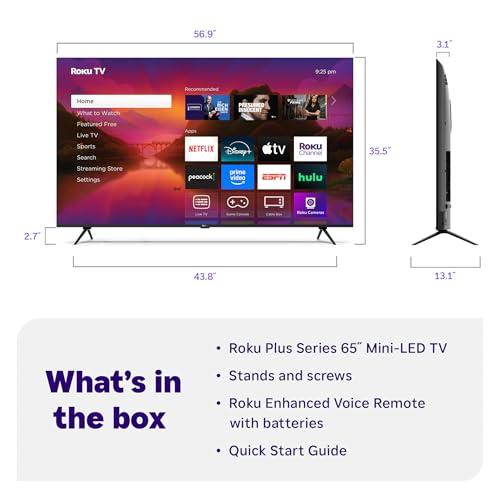
The 65-inch premium Mini-LED TV market got a major shake-up in 2025, with both Hisense's U6 Series and the Roku Plus Series delivering impressive upgrades over their predecessors. These aren't your average TVs—they represent the sweet spot where cutting-edge display technology meets mainstream pricing, offering features that used to be reserved for TVs costing twice as much.
At the time of writing, both models sit in similar price ranges, though the Hisense U6 typically comes in slightly less expensive than the Roku Plus Series. But price alone doesn't tell the whole story. These TVs take fundamentally different approaches to what makes a great viewing experience, and understanding those differences is crucial to making the right choice for your living room.
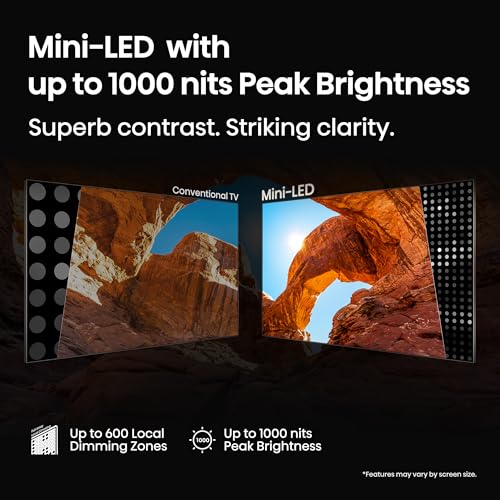
Before diving into the comparison, let's talk about what makes Mini-LED special. Traditional LED TVs use larger LEDs positioned around the edges or directly behind the screen. Mini-LED technology uses thousands of tiny LEDs—sometimes over 1,000 in a 65-inch screen—that can be controlled individually or in small groups called "zones." Think of it like having thousands of tiny flashlights behind your screen instead of just a few big ones.
This precision control creates what's called "local dimming," where dark parts of the image can go nearly black while bright parts remain brilliant. The result? You get the deep blacks and bright highlights that make HDR (High Dynamic Range) content really pop, whether you're watching a movie with dramatic shadow detail or a bright, colorful animated film.
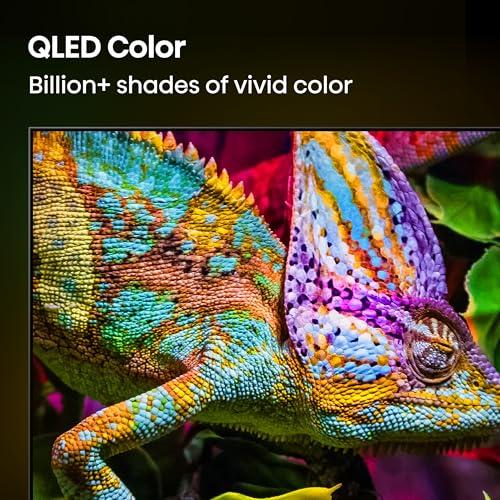
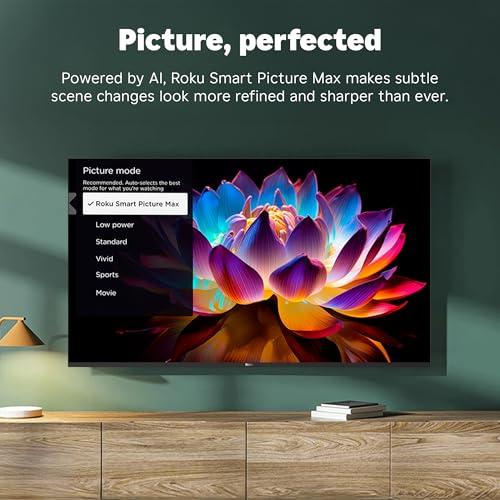
Both the Hisense U6 and Roku Plus Series pair this Mini-LED backlighting with QLED (Quantum Dot Light Emitting Diode) technology. QLED uses microscopic particles called quantum dots to convert light into pure, saturated colors. It's like having a color filter that makes reds redder, blues bluer, and greens more vibrant without looking artificial.
This is where the Hisense U6 absolutely dominates. If you own a PlayStation 5, Xbox Series X, or game on PC, the differences are night and day.
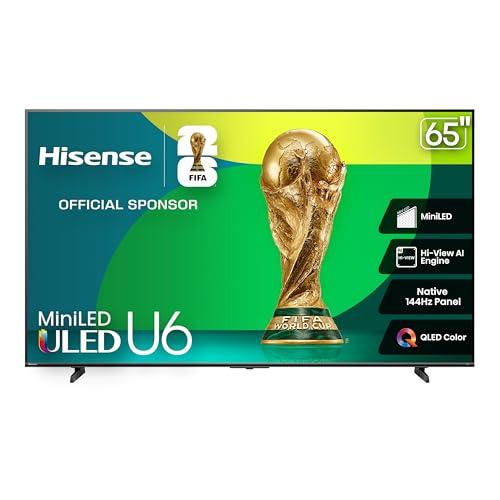
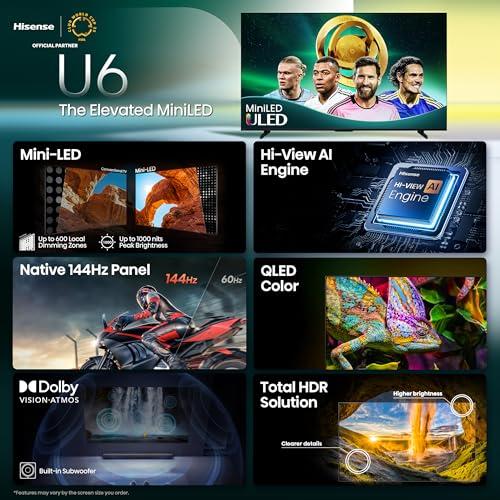
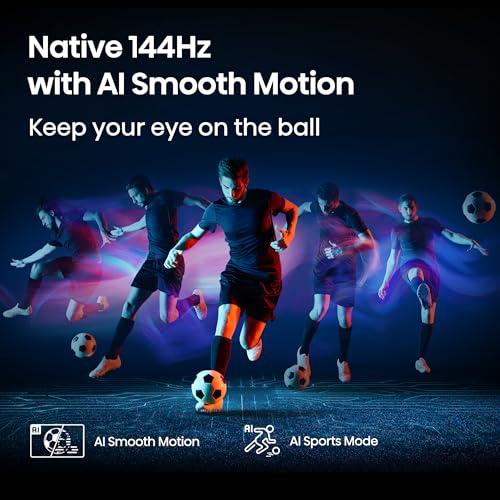
The Hisense U6 features a native 144Hz refresh rate, which means it can display up to 144 individual frames per second. Compare this to the Roku Plus Series at 60Hz, and you're looking at more than twice the smoothness during fast action. When you're playing a racing game and taking a sharp turn, or tracking enemies in a shooter, that extra smoothness translates directly to better performance and less eye strain.
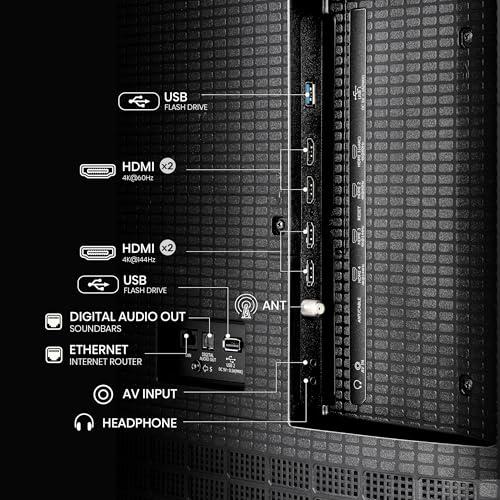
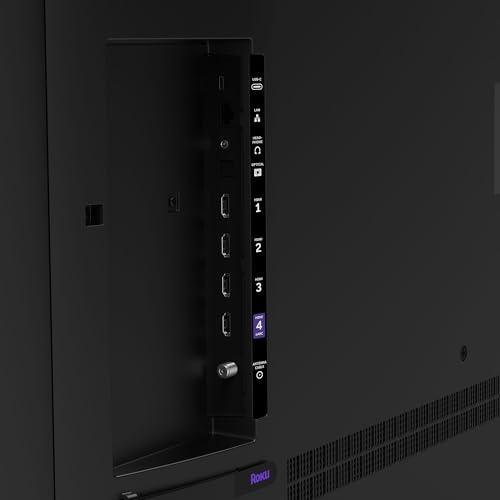
But refresh rate is just the beginning. The Hisense includes HDMI 2.1 ports, which provide the bandwidth needed to push 4K resolution at those high frame rates. It also supports Variable Refresh Rate (VRR), a technology that synchronizes the TV's refresh with your gaming device to eliminate screen tearing—those annoying horizontal lines that appear when the TV and console get out of sync.
The Hisense also includes FreeSync Premium, AMD's implementation of VRR technology, and supports ALLM (Auto Low Latency Mode). ALLM automatically switches the TV into its lowest-lag gaming mode when it detects a gaming device, cutting input lag—the delay between pressing a button and seeing the action on screen—to around 11 milliseconds. For context, anything under 20ms is considered excellent for gaming.
The Roku Plus Series, while offering similar input lag performance, lacks these advanced gaming features entirely. It's stuck at 60Hz with HDMI 2.0 ports, meaning you can't take advantage of the high frame rate modes that modern consoles offer. If gaming is important to you, this limitation is hard to overlook.
Both TVs deliver excellent color reproduction thanks to their QLED technology, but they differ significantly in brightness capabilities. The Hisense U6 achieves up to 1,000 nits of peak brightness with over 600 local dimming zones, while the Roku Plus Series manages around 459 nits in HDR mode with fewer dimming zones.
Peak brightness matters more than you might think. In a bright living room with windows, a brighter TV maintains better contrast and color saturation. More importantly for HDR content, higher peak brightness allows the TV to display the full range of brightness that content creators intended. When you're watching a movie scene with bright sunlight or explosions, those highlights should genuinely pop off the screen—something the Hisense handles much better.
The difference in local dimming zones is equally important. More zones mean more precise control over which parts of the screen are bright or dark. The Hisense U6's 600+ zones provide better contrast control and reduce "blooming"—the halo effect you sometimes see around bright objects against dark backgrounds.
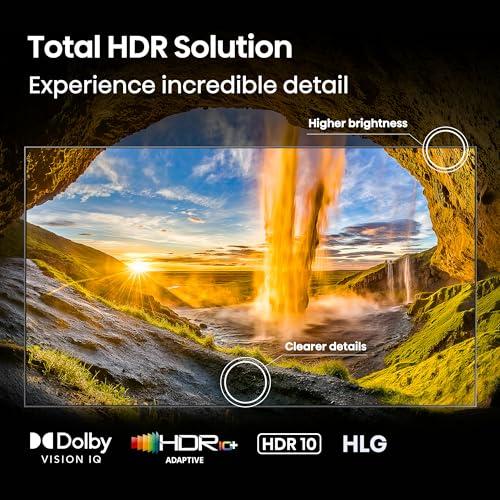
Both TVs support comprehensive HDR formats including Dolby Vision, HDR10+, and standard HDR10. Dolby Vision is particularly important as it provides scene-by-scene optimization, telling the TV exactly how to display each moment for maximum impact.
Here's where personal preference really comes into play, and both TVs have compelling but different approaches.
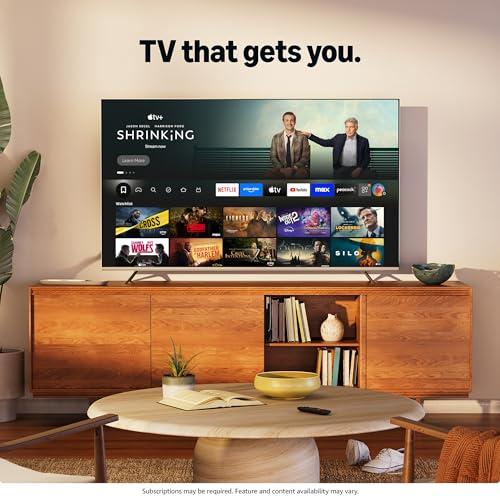
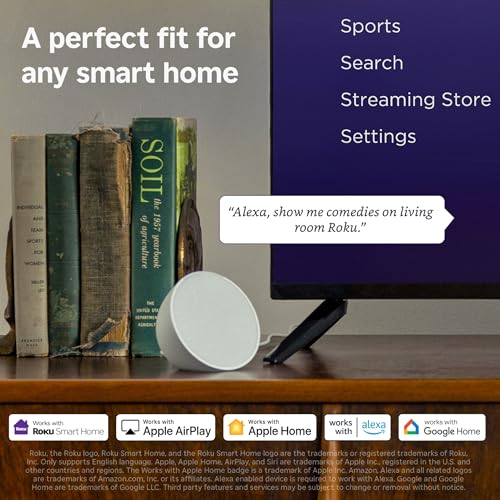
The Hisense U6 runs Amazon's Fire TV platform, which offers an incredibly comprehensive app selection and deep integration with Amazon's ecosystem. If you're already an Amazon Prime subscriber or use Alexa smart home devices, the integration is seamless. You can ask Alexa to find content, control playback, or even manage other smart home devices right from the TV.
However, Fire TV has one significant drawback that consistently frustrates users: persistent advertising on the home screen. Every time you turn on the TV, you're greeted with large promotional tiles for Amazon's content and partners. While you can minimize this somewhat, you can't eliminate it entirely.
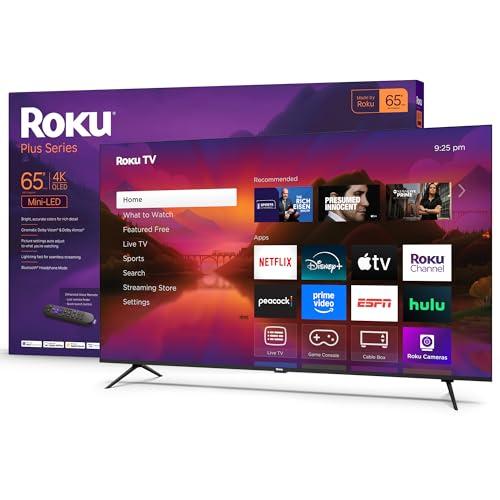
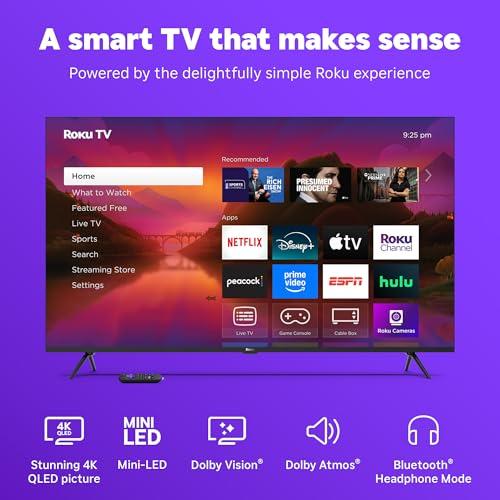
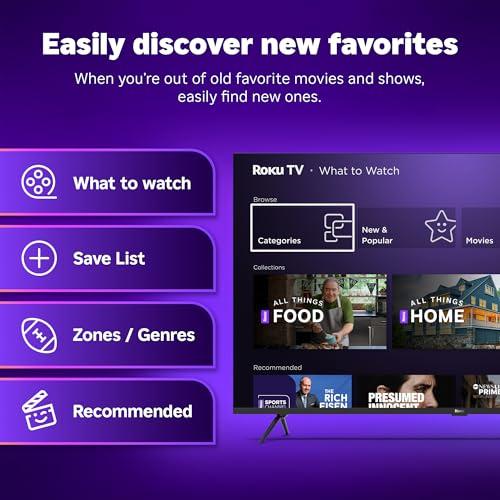
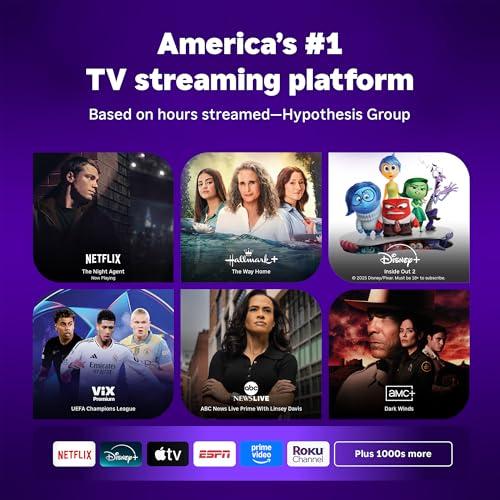
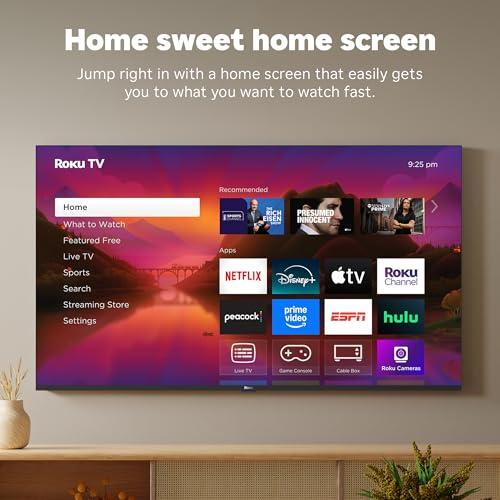
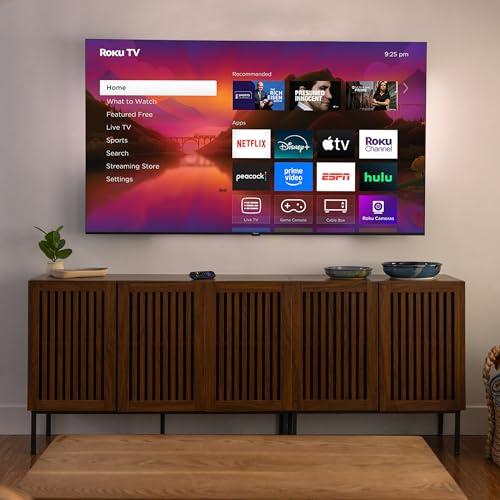
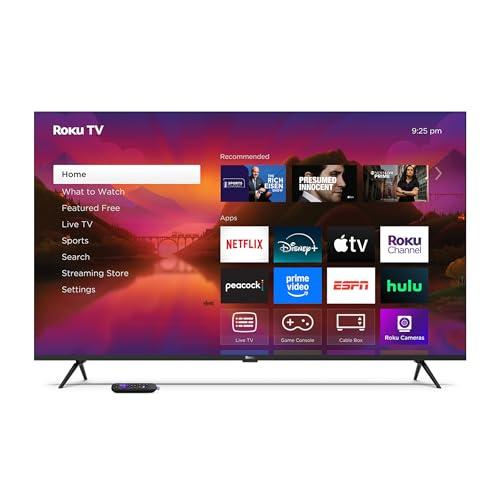
The Roku Plus Series takes a cleaner approach with Roku OS, widely considered one of the best smart TV platforms available. The interface is intuitive, fast, and mercifully free of intrusive advertising. Content discovery is excellent, with a universal search that works across hundreds of apps. The platform also includes over 500 free channels, many featuring live TV and original content you won't find elsewhere.
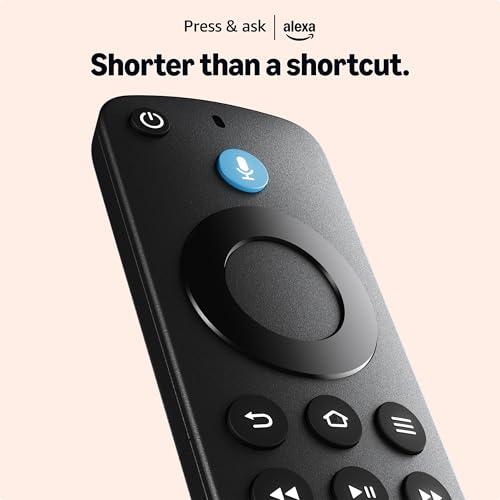
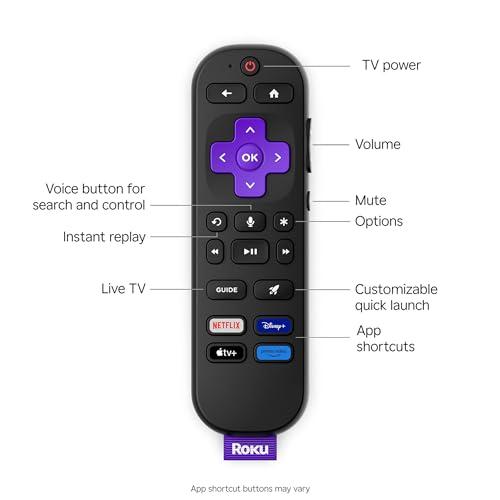
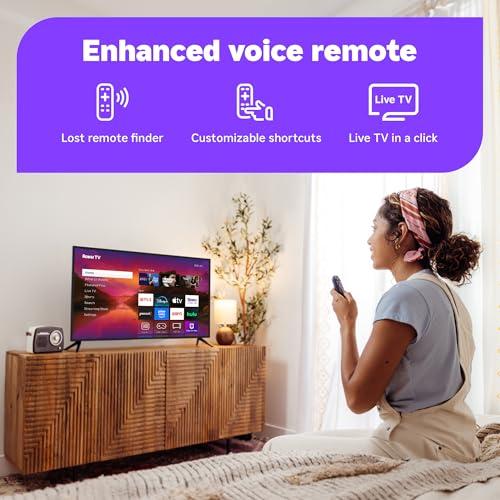
Roku's 2025 Enhanced Voice Remote Pro deserves special mention. It's rechargeable, includes hands-free voice control, and features a lost remote finder—press a button on the TV and the remote beeps. These might seem like small details, but they add up to a noticeably better daily experience.
TV audio has improved dramatically in recent years, and both models deliver solid performance that reduces the immediate need for a soundbar. However, the Hisense U6 has a clear advantage with its built-in subwoofer.
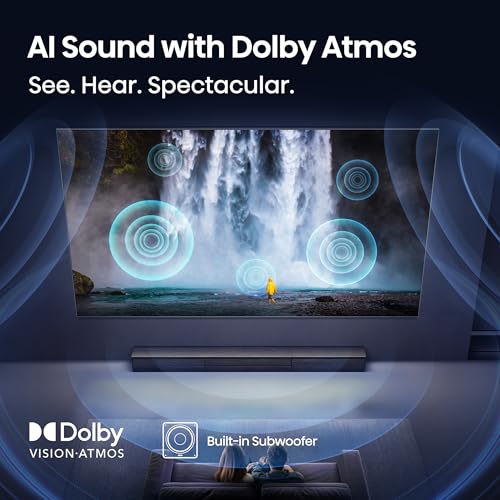
The Hisense's 40-watt 2.1 channel system with dedicated subwoofer provides noticeable bass response that enhances action movies, music, and gaming. Users consistently praise its ability to deliver room-filling sound without the muddiness common in TV speakers. The built-in subwoofer handles low-frequency effects that would typically require an external sound system.
The Roku Plus Series offers competent audio with Dolby Atmos support and the ability to expand to 4.1 channels wirelessly, but lacks the bass response of the Hisense. While dialogue clarity is good and overall sound quality is above average for built-in TV speakers, it doesn't provide the same full-range audio experience.
Both TVs support Dolby Atmos, which creates a more immersive sound field by bouncing audio off your ceiling to simulate height channels. While this works better with dedicated Atmos speakers, even TV implementations provide noticeable improvement over standard stereo audio.
For dedicated home theater use, both TVs have strengths and limitations. The Hisense U6's superior brightness and contrast make it excellent for rooms with some ambient light, while its comprehensive HDR support ensures compatibility with virtually any content source.
However, both TVs share a common limitation: narrow viewing angles. The QLED technology, while excellent for color and brightness, suffers from color shifting and brightness loss when viewed from the side. This makes them less ideal for very wide seating arrangements where people might be viewing from extreme angles.
For serious home theater enthusiasts, the Hisense U6's Filmmaker Mode deserves mention. This setting automatically activates for supported content and displays movies as the director intended, without motion smoothing or excessive processing that can make films look artificial.
At the time of writing, the Hisense U6 typically offers better value, providing more advanced features at a lower price point. The combination of superior gaming capabilities, higher peak brightness, better audio, and comprehensive connectivity makes it a compelling choice for most buyers.
The Roku Plus Series, while more expensive, justifies its price for users who prioritize the software experience above hardware capabilities. The cleaner interface, better remote, and superior content discovery create a more pleasant daily interaction with the TV.
User reviews consistently highlight the Hisense U6's impressive picture quality and gaming performance, though some complain about Fire TV's advertising. The Roku Plus Series receives praise for its user-friendly interface and reliability, but criticism for its limited gaming features and lower brightness output.
The Hisense U6 is the clear winner for gaming enthusiasts, bright room viewing, and anyone who wants maximum features for their money. Its 144Hz refresh rate and HDMI 2.1 connectivity make it genuinely future-proof for next-generation gaming, while its superior brightness ensures excellent performance in various lighting conditions.
Choose the Hisense if you:
The Roku Plus Series excels for streaming-focused households that value interface quality and simplicity over raw performance. Its superior software experience and excellent content discovery make it ideal for users who primarily watch movies and TV shows from streaming services.
Choose the Roku if you:
Both TVs represent significant improvements over their predecessors and deliver genuine value in the premium Mini-LED category. However, the Hisense U6 provides better overall value for most buyers, combining superior hardware performance with a lower price point.
The choice ultimately comes down to priorities: Do you value maximum performance and features, or do you prioritize software refinement and ease of use? For most households, especially those with any interest in gaming or bright room viewing, the Hisense U6 is the smarter choice. The Roku Plus Series serves a specific niche of users who prioritize streaming experience above all else and are willing to pay extra for that privilege.
In either case, you're getting a significant upgrade over standard LED TVs, with Mini-LED technology providing the enhanced contrast and color performance that makes modern HDR content truly shine. The 2025 models represent a maturation of this technology, offering premium features at increasingly accessible price points.
| Hisense 65" U6 Series Mini-LED QLED 4K Fire TV | Roku Plus Series 65" 4K QLED Mini-LED Smart TV 2025 |
|---|---|
| Display Technology - Mini-LED + QLED provides superior contrast and color over standard LED | |
| Mini-LED backlighting with QLED, 600+ local dimming zones | Mini-LED backlighting with QLED, fewer local dimming zones |
| Peak Brightness - Critical for HDR performance and bright room viewing | |
| Up to 1,000 nits (excellent for daytime viewing and HDR highlights) | 459 nits HDR (moderate performance in bright rooms) |
| Refresh Rate - Essential for gaming and sports smoothness | |
| Native 144Hz (excellent for PS5/Xbox Series X gaming) | 60Hz (standard for streaming, limited for gaming) |
| Gaming Features - Important for console and PC gamers | |
| HDMI 2.1, VRR, FreeSync Premium, ALLM (fully next-gen ready) | HDMI 2.0 only, no VRR or advanced gaming features |
| Input Lag - Lower is better for responsive gaming | |
| ~11ms (excellent for competitive gaming) | ~11.5ms (good, but lacks other gaming advantages) |
| Audio System - Better built-in audio reduces need for soundbar | |
| 40W 2.1 system with built-in subwoofer, Dolby Atmos | Standard speakers with Dolby Atmos, 4.1 expandable |
| Smart TV Platform - Daily user experience varies significantly | |
| Fire TV with extensive apps but persistent home screen ads | Roku OS with clean interface, 500+ free channels, no ads |
| Voice Control - Convenience and smart home integration | |
| Alexa built-in, Apple AirPlay support | Multi-assistant (Roku/Siri/Alexa/Google), hands-free remote |
| HDR Format Support - Ensures compatibility with premium content | |
| Dolby Vision, HDR10+, HDR10, HLG (comprehensive support) | Dolby Vision, HDR10+ (good coverage of major formats) |
| Remote Control - Daily usability factor | |
| Standard Fire TV remote with voice control | Enhanced Voice Remote Pro (rechargeable, lost remote finder) |
| Viewing Angles - Important for wide seating arrangements | |
| Narrow viewing angles with color/brightness loss off-center | Narrow viewing angles, similar QLED limitations |
| Typical Pricing - Value proposition comparison | |
| Generally less expensive with more premium features | Typically costs more for refined software experience |
The Hisense U6 Series is significantly better for gaming. It features a native 144Hz refresh rate, HDMI 2.1 ports, Variable Refresh Rate (VRR), and FreeSync Premium support, making it ideal for PlayStation 5 and Xbox Series X gaming. The Roku Plus Series is limited to 60Hz with HDMI 2.0 ports and lacks advanced gaming features entirely.
The Hisense U6 runs Amazon's Fire TV platform, which offers extensive app selection and Alexa integration but includes persistent home screen advertisements. The Roku Plus Series uses Roku OS, which provides a cleaner, ad-free interface with excellent content discovery and over 500 free channels, though with slightly fewer total apps available.
The Hisense U6 Series is much brighter with up to 1,000 nits peak brightness, making it excellent for bright rooms and HDR content. The Roku Plus Series reaches only 459 nits in HDR mode, which may struggle in very bright environments but is adequate for most viewing conditions.
Both TVs support the major HDR formats including Dolby Vision and HDR10+. The Hisense U6 offers slightly more comprehensive HDR support with additional formats like HLG and HDR10+ Gaming, while the Roku Plus Series covers the essential formats most streaming content uses.
The Hisense U6 Series has superior audio with a 40W 2.1 system that includes a built-in subwoofer, providing better bass response for movies and music. The Roku Plus Series offers decent sound quality with Dolby Atmos support but lacks the bass depth and overall richness of the Hisense's audio system.
Neither TV is ideal for very wide seating arrangements. Both the Hisense U6 and Roku Plus Series use QLED technology, which suffers from narrow viewing angles with color shifting and brightness loss when viewed from the side. They work best for straight-on viewing or moderate angles.
The Hisense U6 Series typically offers better value, providing more premium features like 144Hz refresh rate, HDMI 2.1, superior brightness, and built-in subwoofer at a lower price point. The Roku Plus Series costs more but justifies the premium for users who prioritize the superior Roku software experience.
Yes, both the Hisense U6 and Roku Plus Series excel at 4K streaming content. Both feature Mini-LED backlighting with QLED color technology and comprehensive HDR support, delivering excellent picture quality for Netflix, Disney+, Amazon Prime Video, and other 4K streaming services.
For dedicated home theaters, the Hisense U6 Series is generally superior due to its higher peak brightness, better contrast control with more local dimming zones, and Filmmaker Mode for accurate movie reproduction. However, both TVs work well for home theater use when viewed straight-on in controlled lighting.
Both TVs offer voice control but with different approaches. The Hisense U6 has Alexa built-in for smart home integration and content control. The Roku Plus Series supports multiple voice assistants (Roku Voice, Siri, Alexa, Google Assistant) and includes a hands-free Enhanced Voice Remote Pro.
The Roku Plus Series excels for streaming with its intuitive Roku OS interface, excellent content discovery across apps, and 500+ free channels. While the Hisense U6 offers more apps through Fire TV, the Roku provides a cleaner, more user-friendly streaming experience without intrusive advertising.
The Hisense U6 Series is much better suited for bright living rooms with its 1,000 nits peak brightness, maintaining good contrast and color saturation even with windows and ambient lighting. The Roku Plus Series with 459 nits may appear washed out in very bright conditions but works adequately in moderately lit rooms.
We've done our best to create useful and informative comparisons to help you decide what product to buy. Our research uses advanced automated methods to create this comparison and perfection is not possible - please contact us for corrections or questions. These are the sites we've researched in the creation of this article: youtube.com - bestbuy.com - rtings.com - youtube.com - tomsguide.com - rtings.com - static.pcrichard.com - hisense-usa.com - pcguide.com - hisense-usa.com - manuals.plus - costco.com - pcrichard.com - beverlycenter.com - hisense-usa.com - rtings.com - device.report - bestbuy.com - tomsguide.com - rtings.com - youtube.com - rtings.com - youtube.com - roku.com - walmart.com - youtube.com - bestbuy.com - roku.com - tvsbook.com

Privacy Policy
Terms and Conditions - Affiliate Policy
Home Security
© Copyright 2008-2026.
11816 Inwood Rd #1211, Dallas, TX 75244