


Smart speakers have revolutionized how we interact with our homes, but choosing the right one can feel overwhelming. The market splits into two distinct camps: budget-friendly voice assistants that happen to play music, and premium audio devices that include smart features as a bonus. Today we're comparing two speakers that perfectly represent these different philosophies—the Google Nest Mini (2nd Gen) and the Denon Home 250.
Released in 2019, the Nest Mini arrived as Google's answer to Amazon's Echo Dot dominance, focusing on affordability and smart home integration. The Denon Home 250, launched in 2020, took a different approach entirely—prioritizing audiophile-quality sound while incorporating modern smart features. Both have received firmware updates and ecosystem improvements since launch, but their core DNA remains unchanged.
Think of smart speakers as existing on a spectrum. At one end, you have devices primarily designed for voice commands, timers, and basic music playback—these prioritize convenience and cost. At the other end sit speakers that deliver serious audio performance while offering smart features as added value.
The key considerations when choosing involve understanding your priorities: Are you looking for background music and voice control, or do you want your smart speaker to be your primary music system? Your answer determines which category makes sense for your needs and budget.
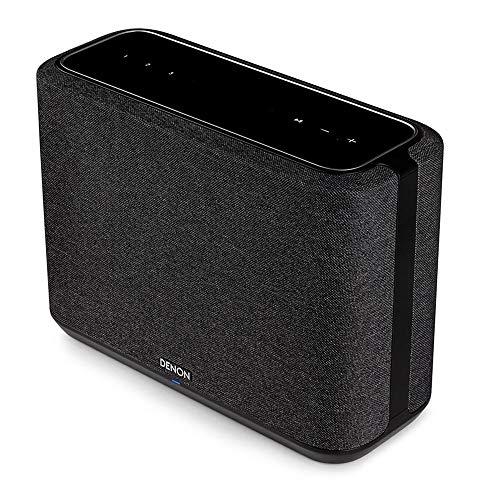
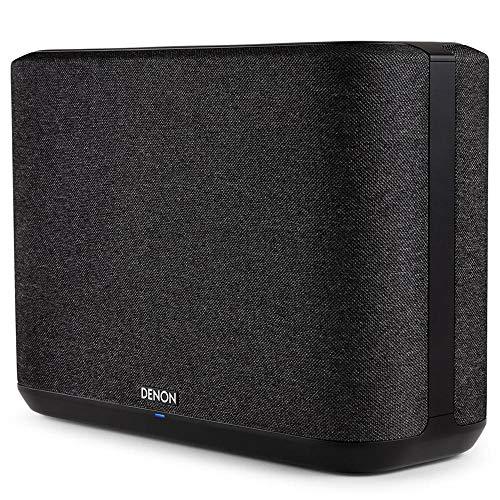
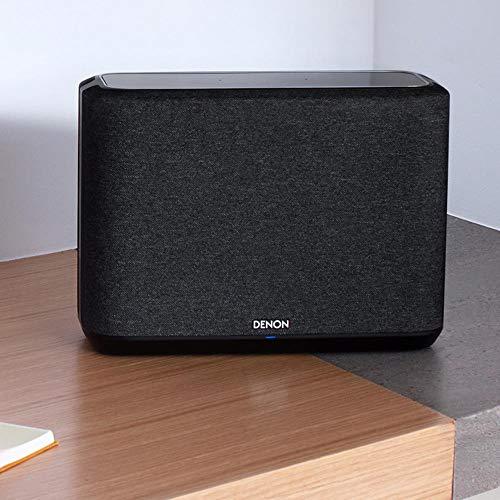
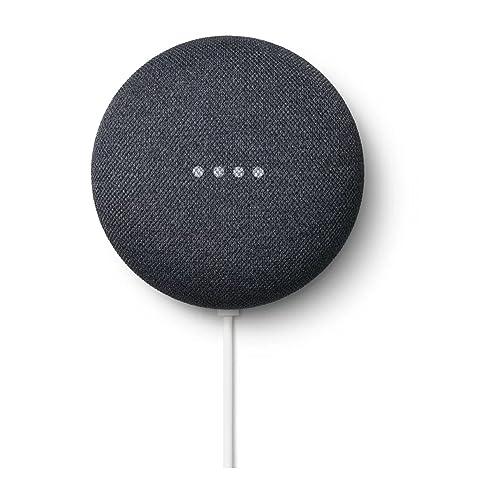
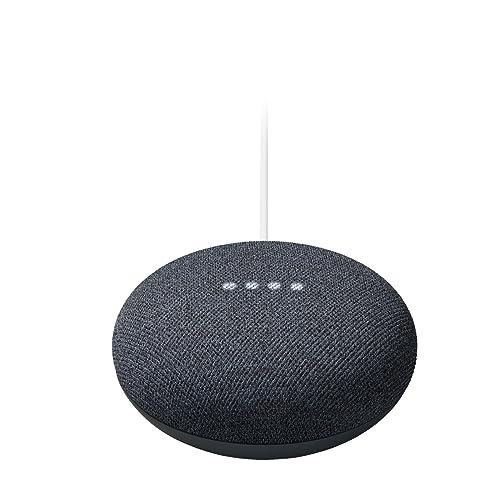
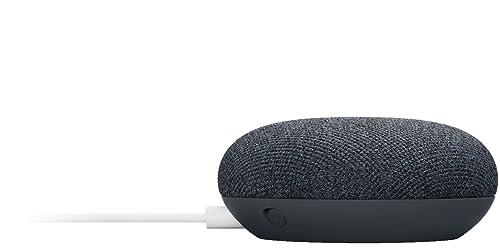
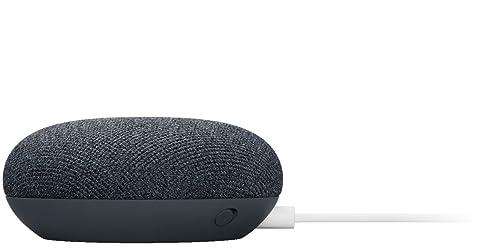
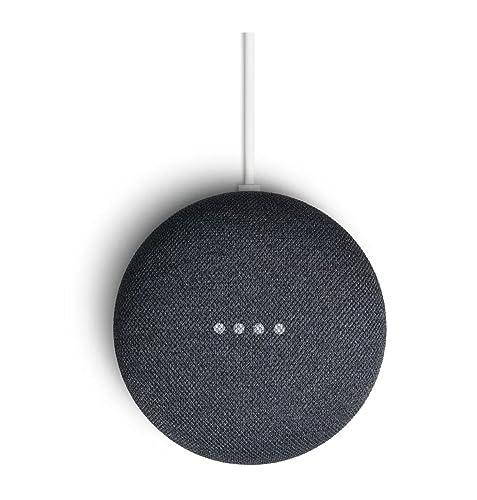
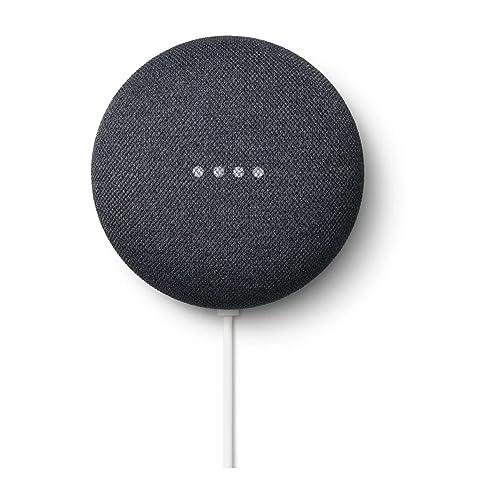
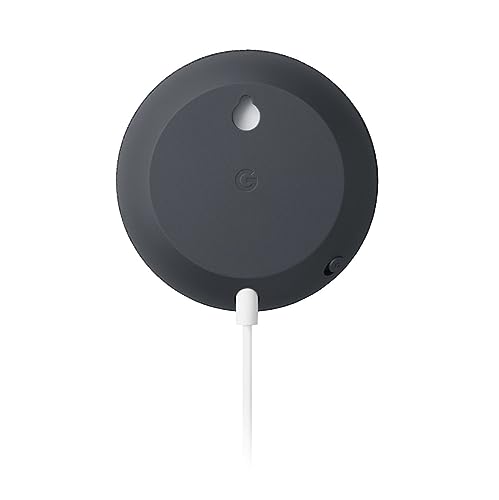
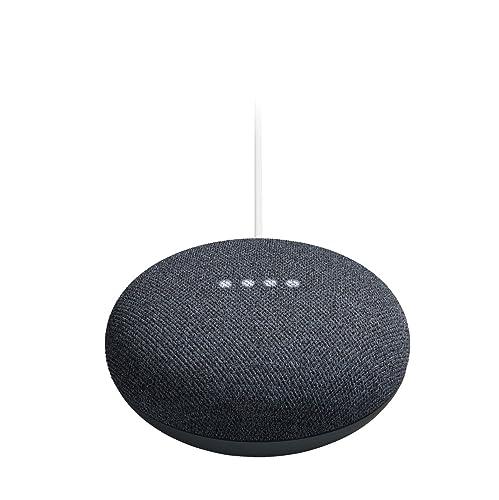
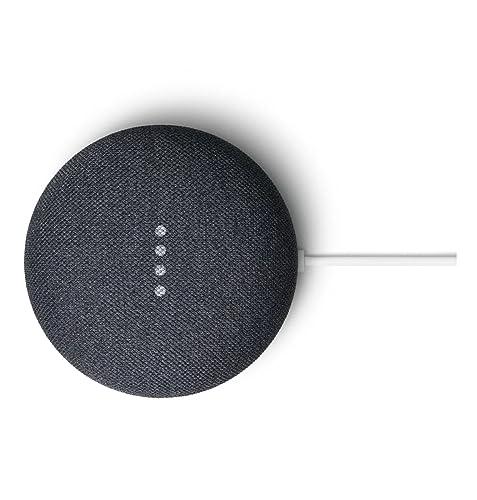
At the time of writing, the Google Nest Mini costs roughly one-tenth the price of the Denon Home 250—a price gap that immediately signals their different target audiences. The Nest Mini measures just under 4 inches in diameter and weighs less than half a pound, designed to disappear into your living space. Meanwhile, the Denon Home 250 commands attention with its substantial 10.5-pound presence and premium fabric-wrapped enclosure.
This size difference isn't arbitrary—it reflects fundamental physics. Quality audio reproduction requires space for larger drivers (the components that create sound), amplifiers, and acoustic chambers. The Nest Mini's compact form factor inherently limits its audio capabilities, while the Denon's larger chassis enables sophisticated audio engineering.
The Denon Home 250 employs what's called a 2-way stereo driver configuration—essentially two separate audio systems in one enclosure. It features dual 0.75-inch soft dome tweeters (specialized drivers for high frequencies like cymbals and vocals), paired with dual 4-inch woofers (larger drivers handling mid-range frequencies). A rear-firing 5.25-inch passive bass radiator (a specialized component that moves air to enhance low frequencies without requiring additional power) rounds out the system.
Each driver gets its own dedicated Class-D amplifier—a modern, efficient amplifier design that delivers clean power without generating excessive heat. This means the tweeters and woofers can operate independently, preventing the muddy sound that occurs when a single amplifier tries to handle all frequencies simultaneously.
The result is genuinely impressive audio performance. Our research into user and professional reviews consistently highlights the Denon's ability to fill medium to large rooms with balanced, dynamic sound. The bass response is particularly noteworthy—deep enough to feel in your chest during action movie scenes, yet controlled enough to avoid the boomy, one-note bass that plagues many wireless speakers.
More importantly for audiophiles, the Denon Home 250 supports high-resolution audio formats up to 24-bit/192kHz. Think of this like the difference between standard definition and 4K video—these higher-quality audio files contain more musical information, revealing subtle details in recordings that lower-resolution formats compress away.
The Google Nest Mini takes a fundamentally different approach with its single 40mm driver and 360-degree sound design. The 360-degree concept aims to distribute sound evenly in all directions rather than focusing it toward the listener—useful for voice responses and background music, but less ideal for focused listening.
Professional reviews and user feedback consistently describe the Nest Mini's audio as adequate for its intended purposes but disappointing for serious music listening. The improvement over the original Home Mini is real—Google doubled the bass response and improved overall clarity—but physics still applies. A single small driver simply cannot reproduce the frequency range and dynamic impact of a larger, more complex speaker system.
The Nest Mini works best with spoken content like podcasts, audiobooks, and voice assistant responses. For background music while cooking or casual listening, it suffices. But if you've ever experienced quality speakers, you'll immediately notice the compressed dynamics, limited bass response, and lack of stereo imaging (the ability to perceive instruments positioned across a soundstage).
Both speakers deliver competent voice assistant functionality, though they approach it differently. The Google Nest Mini offers native Google Assistant integration with three far-field microphones and Voice Match technology—a system that recognizes individual users' voices to provide personalized responses.
Google Assistant excels at general knowledge queries, calendar management, and integration with Google services. The search capabilities feel more natural and conversational than competitors, though the ecosystem supports fewer third-party smart home devices compared to Amazon's Alexa platform.
The Denon Home 250 takes a more flexible approach, supporting Amazon Alexa natively while also working with Google Assistant and Apple's Siri through connected devices. This multi-ecosystem compatibility proves valuable if you're not fully committed to one smart home platform or if family members prefer different assistants.
Both speakers handle standard smart home tasks—controlling lights, setting timers, checking weather—with similar competence. The Nest Mini responds slightly faster to Google-specific queries, but the difference rarely matters in practical use.
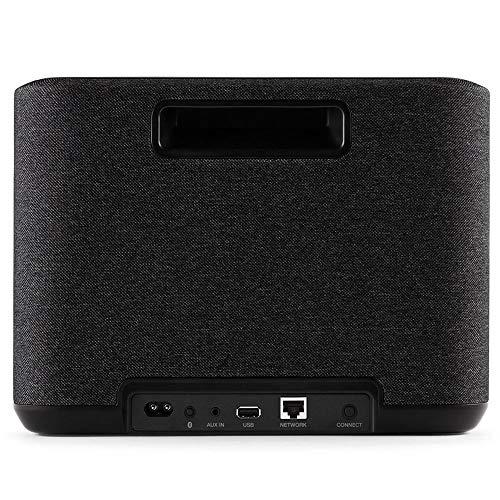
Here's where the Denon Home 250 demonstrates its premium positioning. Beyond standard Wi-Fi and Bluetooth, it offers Ethernet connectivity for rock-solid network connections, USB-A input for direct file playback, and a 3.5mm auxiliary input for connecting non-wireless devices. These wired connections provide reliability that wireless protocols can't always guarantee.
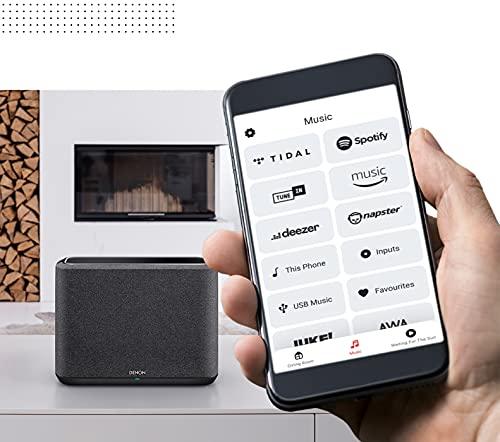
The Denon also supports advanced streaming protocols like AirPlay 2 (Apple's high-quality wireless streaming standard) and is "Roon Ready"—certified to work with Roon's sophisticated music library management system favored by serious audiophiles. The HEOS multi-room system allows up to 32 speakers throughout your home, all synchronized for whole-house audio.
The Google Nest Mini keeps things simpler with Wi-Fi, Bluetooth, and Chromecast built-in. This streamlined approach reduces complexity but limits flexibility. You cannot connect external audio sources directly, and local music file playback requires streaming from another device rather than direct connection.
The Google Nest Mini represents exceptional value for its primary use case. At its price point (approximately 1/10th the cost of the Denon at the time of writing), it delivers full Google Assistant functionality, basic music playback, and smart home control. For users wanting to experiment with smart speakers or add voice control to secondary rooms, the value proposition is compelling.
However, that value calculation changes if music quality matters to you. The Nest Mini cannot replace a decent stereo system, and attempting to use it as your primary music speaker will likely disappoint anyone accustomed to quality audio reproduction.
The Denon Home 250's value lies in consolidation—it replaces what would traditionally require separate components. A comparable traditional setup might include a wireless streaming device, amplifier, and bookshelf speakers, easily totaling more than the Denon's asking price while occupying more space and requiring more cables.
For this higher investment, you get genuinely impressive sound quality, extensive connectivity options, and the flexibility to serve as either a standalone music system or part of a larger multi-room setup. The build quality justifies the premium—this feels like a piece of audio equipment that will function reliably for years, not a disposable tech gadget.
Neither speaker serves as an ideal home theater solution alone, but they approach the challenge differently. The Google Nest Mini lacks the dynamic range and bass response necessary for movie soundtracks. Dialogue remains clear enough for casual viewing, but action sequences and musical scores suffer from the speaker's inherent limitations.
The Denon Home 250 performs significantly better for video content. The strong bass response brings impact to explosions and musical scores, while the stereo separation helps with dialogue clarity. However, it still cannot match a proper home theater system for surround sound effects and the wide dynamic range of movie soundtracks.
Interestingly, the Denon can integrate into larger home theater setups. You can pair two units for true stereo separation or use them as wireless surround speakers with compatible Denon soundbars and subwoofers. This expandability makes it a potential building block for a more sophisticated system.
The Google Nest Mini excels in specific scenarios. It's perfect for bedrooms, offices, kitchens, or anywhere you want voice control and basic audio without significant space requirements or investment. Multiple units throughout a home provide comprehensive voice assistant coverage at a reasonable total cost.
The Nest Mini also works well as a smart home hub, controlling compatible devices through voice commands. Its unobtrusive design means it can live on nightstands, kitchen counters, or mounted on walls without dominating the space.
The Denon Home 250 offers broader flexibility but requires more thoughtful placement. It works beautifully as a kitchen speaker where you want quality audio while cooking, as a bedroom speaker for those who enjoy bedtime music, or as a primary system in apartments or smaller homes where space limitations prevent traditional stereo setups.
The Denon's multi-room capabilities really shine in larger homes. You can start with one unit and gradually build a whole-house audio system, with each room capable of playing different music or all rooms synchronized for parties. This scalability makes it future-proof in ways the Nest Mini cannot match.
Choose the Google Nest Mini if you're primarily interested in smart home functionality and don't particularly care about audio quality. It's ideal for first-time smart speaker buyers, secondary room coverage, or anyone whose music listening consists mainly of background audio while doing other activities. Students, renters, or anyone wanting to experiment with voice assistants will find excellent value here.
The Nest Mini also makes sense if you're already invested in Google's ecosystem—using Gmail, Google Calendar, Google Photos, and Android devices. The native integration provides a seamless experience that competitors struggle to match.
Choose the Denon Home 250 if you value audio quality and want a smart speaker that can serve as your primary music system. It's perfect for music enthusiasts who've resisted smart speakers because of poor sound quality, homeowners wanting to build a sophisticated multi-room system, or anyone whose living situation requires a single speaker to handle both casual background listening and serious music enjoyment.
The Denon particularly suits households with diverse technology preferences—its multi-ecosystem support means family members can use their preferred voice assistants while everyone benefits from quality audio reproduction.
Since their respective launches, both speakers have received meaningful updates. The Google Nest Mini has gained additional streaming service support and improved voice recognition algorithms. Google's regular software updates continue expanding functionality without requiring hardware replacement.
The Denon Home 250 has similarly benefited from firmware updates that improved network stability, added streaming services, and enhanced the HEOS multi-room experience. Denon's commitment to long-term software support means early adopters continue receiving new features.
Both manufacturers have expanded their ecosystems significantly. Google now offers the Nest Audio for improved sound quality while maintaining ecosystem compatibility. Denon has built out the Home series with larger and smaller options, plus soundbars and subwoofers that work together seamlessly.
These speakers serve different needs so well that comparing them almost seems unfair. The Google Nest Mini succeeds brilliantly at being an affordable, unobtrusive smart home interface that happens to play music adequately. The Denon Home 250 excels as a high-quality music system that includes smart features as added value.
Your choice depends entirely on whether you're buying a voice assistant that plays music or a music system that responds to voice commands. Both approaches have merit, but understanding the distinction will help you choose the speaker that actually matches your priorities and expectations.
For most people reading this comparison, the decision point comes down to how much you value audio quality and whether your budget allows for the premium that quality commands. There's no wrong choice—just different priorities and different definitions of value.
| Denon Home 250 | Google Nest Mini 2nd Gen |
|---|---|
| Audio Configuration - Determines sound quality and room-filling capability | |
| 2-way stereo with dual tweeters, dual woofers, passive bass radiator + 4 Class-D amplifiers | Single 40mm driver with 360-degree sound design |
| High-Resolution Audio Support - Important for audiophiles with quality music files | |
| 24-bit/192kHz PCM, DSD up to 5.6MHz from network/USB sources | Standard resolution only, no high-res file support |
| Physical Connectivity - Flexibility for wired sources and reliability | |
| Ethernet, USB-A, 3.5mm aux input, Wi-Fi, Bluetooth | Wi-Fi and Bluetooth only, no physical inputs |
| Multi-Room Capabilities - Building whole-house audio systems | |
| HEOS Built-in supports up to 32 speakers, stereo pairing possible | Google Home ecosystem, basic multi-room grouping |
| Voice Assistant Integration - Smart home control and queries | |
| Built-in Alexa, supports Google Assistant and Siri via connected devices | Native Google Assistant with 3 far-field microphones |
| Size and Weight - Space requirements and portability | |
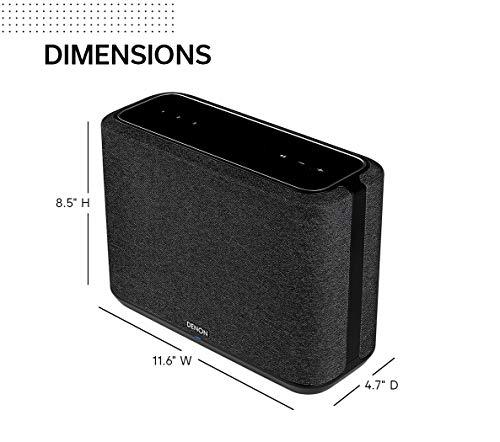
| 11.6" × 8.6" × 5.9", 10.5 lbs (requires dedicated space) | 3.85" diameter × 1.65" height, 6.3 oz (fits anywhere) |
| Power Requirements - Placement flexibility | |
| AC power required, detachable cord | AC power required, 1.5m attached cord |
| Smart Home Ecosystem Compatibility - Works with your existing devices | |
| Multi-platform (Alexa, Google, Apple), Roon Ready, AirPlay 2 | Google ecosystem focused, Chromecast built-in, Matter support |
| Build Materials and Sustainability - Long-term value and environmental impact | |
| Premium fabric wrap, solid construction for durability | 100% recycled plastic bottles fabric, 35% post-consumer plastic body |
| Room Size Suitability - Where each speaker performs best | |
| Medium to large rooms, can fill 200+ sq ft spaces effectively | Personal/near-field use, small rooms up to 100 sq ft |
The Denon Home 250 delivers significantly better sound quality with its 2-way stereo design featuring dual tweeters, dual woofers, and a passive bass radiator. The Google Nest Mini has a single small driver that's adequate for voice responses and background music but cannot match the Denon's audio performance for serious music listening.
The Google Nest Mini costs approximately one-tenth the price of the Denon Home 250, making it a budget-friendly option for basic smart speaker functionality. The Denon commands a premium price that reflects its superior audio engineering and build quality.
The Google Nest Mini is ideal for small spaces due to its compact 4-inch diameter size and adequate sound output for personal listening. While the Denon Home 250 would work in a bedroom, its larger size and higher output are better suited for medium to large rooms.
The Denon Home 250 can serve as wireless surround speakers when paired with compatible Denon soundbars, and two units can create a stereo pair for better movie audio. The Google Nest Mini lacks the dynamic range and bass response needed for effective home theater use.
The Google Nest Mini offers native Google Assistant integration with excellent search capabilities and Google service integration. The Denon Home 250 includes built-in Alexa but also supports Google Assistant and Siri, giving you more flexibility across different smart home ecosystems.
The Denon Home 250 uses HEOS Built-in technology to support up to 32 speakers in a whole-house system with high-quality synchronized playback. The Google Nest Mini can group with other Google speakers but offers more basic multi-room functionality without the audiophile-grade performance.
The Google Nest Mini offers simpler setup through the Google Home app and straightforward daily use with just Wi-Fi connectivity. The Denon Home 250 has more setup options due to its multiple connectivity methods but may require more initial configuration for optimal performance.
The Denon Home 250 includes a 3.5mm aux input, USB port, and Ethernet connection for various external sources. The Google Nest Mini only supports wireless connections through Wi-Fi and Bluetooth, with no physical input options for external devices.
The Denon Home 250 supports high-resolution audio up to 24-bit/192kHz and DSD formats, making it ideal for audiophiles with quality music collections. The Google Nest Mini only supports standard resolution streaming and cannot play high-resolution audio files directly.
The Google Nest Mini measures just under 4 inches in diameter and can fit on small shelves, nightstands, or be wall-mounted discreetly. The Denon Home 250 is substantially larger at nearly 12 inches wide and requires dedicated shelf or table space due to its 10.5-pound weight.
The Google Nest Mini provides exceptional value for basic smart speaker functionality, voice control, and casual music listening at its budget-friendly price point. The Denon Home 250 offers better value for serious music listeners who want audiophile-quality sound with smart features, justifying its premium pricing through superior audio performance.
Both the Denon Home 250 and Google Nest Mini require internet connectivity for most smart features and streaming services. However, the Denon can play music from USB drives or aux-connected devices without internet, while the Google Nest Mini needs constant connectivity for almost all functions except basic Bluetooth playback.
We've done our best to create useful and informative comparisons to help you decide what product to buy. Our research uses advanced automated methods to create this comparison and perfection is not possible - please contact us for corrections or questions. These are the sites we've researched in the creation of this article: dxomark.com - hometechnologyreview.com - crutchfield.com - versus.com - stereoguide.com - versus.com - whathifi.com - techgearlab.com - youtube.com - crutchfield.com - consumerreports.org - blog.son-video.com - crutchfield.com - skybygramophone.com - audiolab.com - theaudiotailor.com.au - youtube.com - scribd.com - bestbuy.com - pocket-lint.com - goodhousekeeping.com - rtings.com - rtings.com - versus.com - tomsguide.com - versus.com - youtube.com - youtube.com - techradar.com - homedepot.com - support.google.com - gadgetconnect.co.ke - store.google.com - multitronic.fi - bestbuy.com - store.google.com - neweggbusiness.com - store.google.com - support.google.com - versus.com - youtube.com - adiglobaldistribution.us - aboonehomes.com

Privacy Policy
Terms and Conditions - Affiliate Policy
Home Security
© Copyright 2008-2026.
11816 Inwood Rd #1211, Dallas, TX 75244