

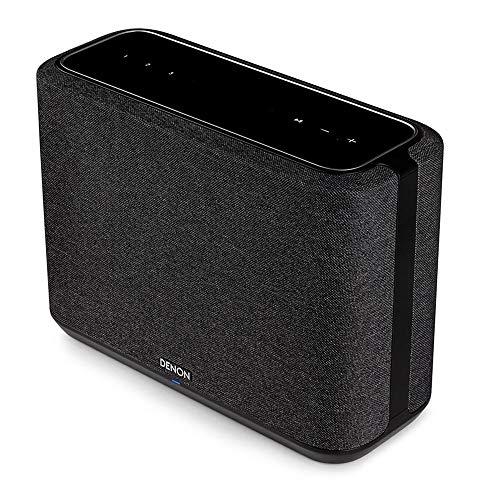
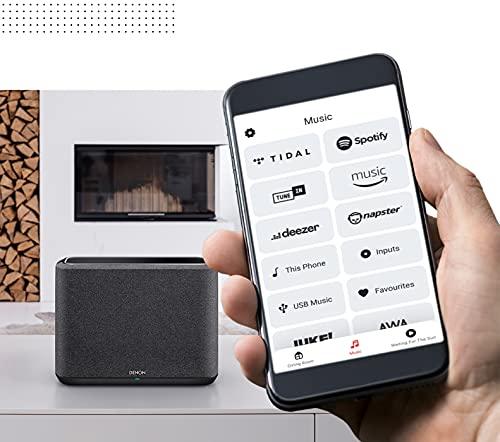
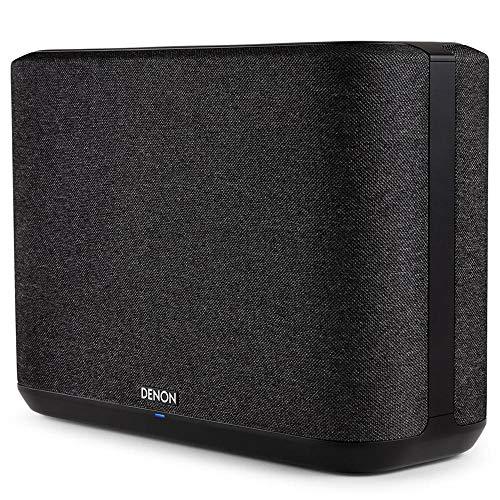

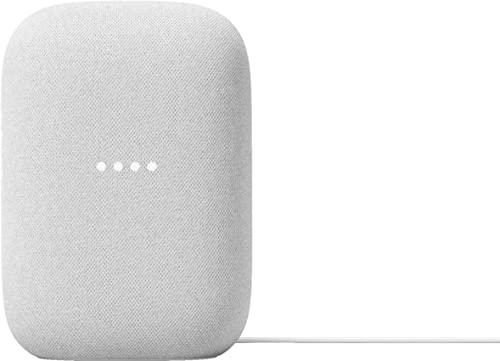
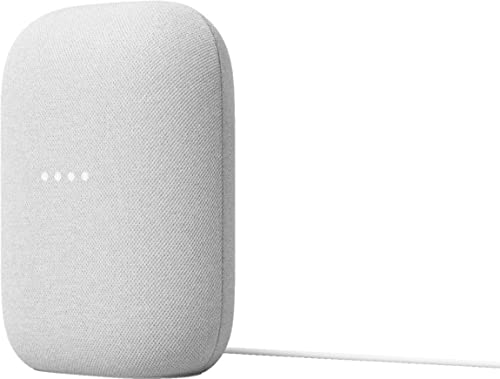
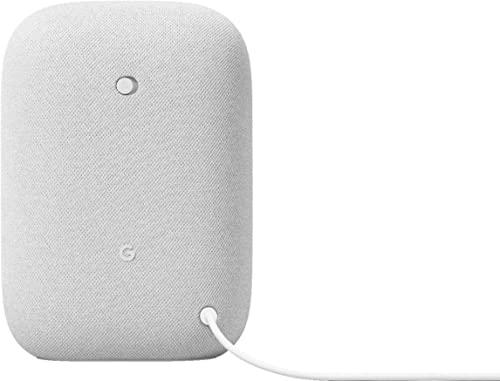
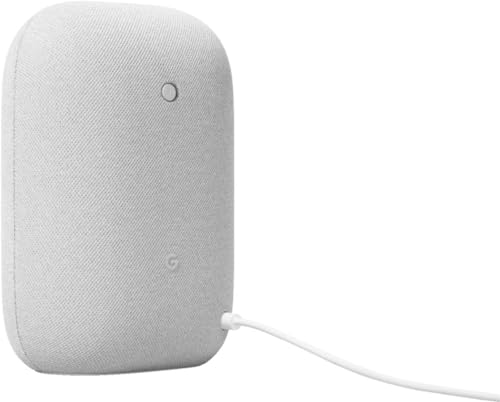
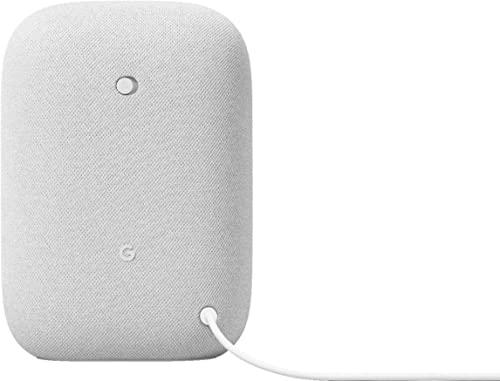
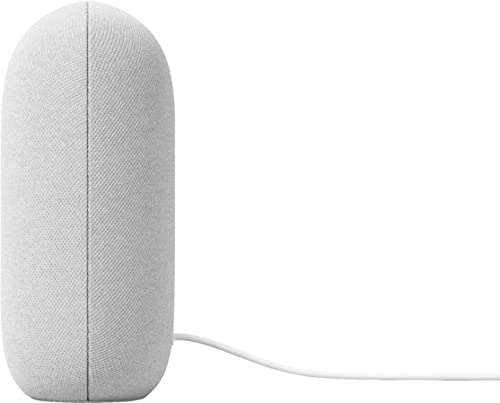
When shopping for a wireless smart speaker in 2025, you're essentially choosing between two philosophies: audio-first design or assistant-first functionality. The Denon Home 250, released in 2019, represents the premium approach where sound quality takes center stage. The Google Nest Audio, launched in 2020 as Google's successor to the original Home speaker, prioritizes smart home integration and voice interaction while delivering respectable audio performance.
At the time of writing, these speakers sit in dramatically different price tiers—the Google Nest Audio costs roughly eight times less than the Denon Home 250. This isn't just about brand positioning; it reflects fundamentally different engineering priorities and target audiences.
Smart speakers have evolved beyond simple Bluetooth alternatives. Today's devices serve as central hubs for smart homes, streaming endpoints for high-quality audio, and voice-controlled assistants that manage everything from your calendar to your thermostat. The challenge lies in finding the right balance between these competing priorities within your budget.
The most critical performance factors include driver configuration (the speakers inside that actually produce sound), amplification power (how loud and clear the audio remains at higher volumes), frequency response (how well the speaker handles different pitches from deep bass to crisp highs), and digital signal processing (the computer algorithms that optimize sound quality in real-time).
For smart features, voice recognition accuracy becomes crucial—there's nothing more frustrating than repeating commands multiple times. Ecosystem integration determines how well your speaker works with existing smart home devices, while multi-room capabilities affect whether you can expand your system seamlessly throughout your home.
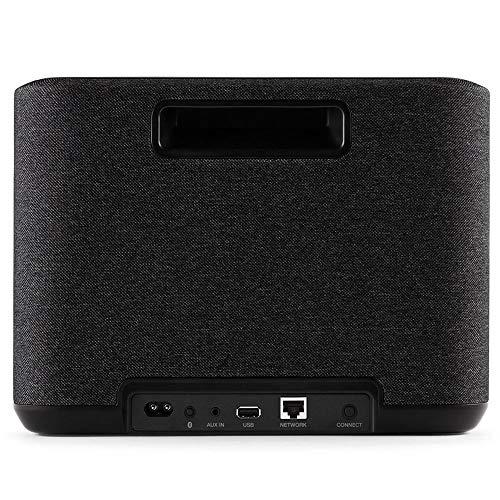
The Denon Home 250 employs a sophisticated 2-way stereo configuration with dual 19mm silk dome tweeters (small speakers optimized for high frequencies), dual 100mm woofers (larger speakers that handle mid and low frequencies), and a rear-firing 133mm passive bass radiator. This passive radiator acts like a subwoofer without requiring its own amplifier—it uses air pressure from the main drivers to enhance bass response.
Each driver gets its own dedicated Class-D amplifier, which means the electronic components powering each speaker are optimized specifically for that driver's needs. This approach delivers cleaner sound with less distortion compared to shared amplification systems. The angled placement of the tweeters creates a wide stereo soundstage that mimics having two separate speakers, even though everything's contained in one enclosure.
The Google Nest Audio takes a more modest approach with a single 75mm woofer and 19mm tweeter in a front-firing configuration. This means sound projects primarily forward rather than dispersing in multiple directions. While simpler, Google's engineers focused on optimizing this configuration for vocal clarity—particularly important since many people use smart speakers primarily for podcasts, news, and voice assistant responses.
Based on extensive research into professional reviews and user feedback, the performance gap becomes clear in everyday use. The Denon Home 250 delivers what reviewers consistently describe as "mature" and "room-filling" sound. Its bass response extends deeper and remains controlled even at higher volumes, making it suitable for everything from jazz to electronic music. The dual-tweeter design creates genuine stereo separation, so instruments appear to come from different positions rather than a single point source.
However, this bass emphasis can become overwhelming at lower volumes, where some users report the sound feeling "dark" or overly warm. The Denon's internal processing works hard to manage all that bass power, which can compress dynamic range—the difference between quiet and loud passages in music.
The Google Nest Audio prioritizes different strengths. Its frequency response favors midrange clarity, making voices and lead instruments sound present and articulate. Google's Ambient IQ technology automatically adjusts volume based on background noise, which proves particularly useful for podcast listening in kitchens or busy households. When room noise increases, the speaker subtly boosts volume to maintain clarity without user intervention.
At moderate volumes, the Nest Audio delivers balanced sound that avoids harshness. But push it hard, and the limitations become apparent—bass lacks the depth and impact of the Denon, and high-frequency content can sound compressed or strained.
Here's where the Denon Home 250 demonstrates its audiophile credentials. It supports high-resolution audio formats up to 24-bit/192kHz for PCM files and DSD (Direct Stream Digital) up to 5.6MHz. These formats contain more audio information than standard MP3 or CD-quality files, potentially delivering more detail and nuance in recordings.
The speaker also supports FLAC, ALAC (Apple's lossless format), and WAV files from network sources, USB drives, or streaming services that offer high-resolution content. For music enthusiasts with carefully curated libraries or subscriptions to services like Tidal Masters or Amazon Music HD, this capability matters significantly.
The Google Nest Audio focuses instead on streaming optimization. While it doesn't support high-resolution formats directly, its Chromecast built-in technology ensures stable, high-quality streaming from popular services. For most users streaming Spotify or YouTube Music, this approach proves more practical than high-resolution support they might never use.
Google's expertise in artificial intelligence shows clearly in the Nest Audio's voice recognition capabilities. Its three far-field microphones use sophisticated noise filtering to isolate voice commands even in noisy environments. The on-device processing means faster response times—commands execute noticeably quicker than systems that rely entirely on cloud processing.
The Nest Audio excels at conversational interaction. You can ask follow-up questions without repeating the wake word, and it understands context better than most alternatives. Voice Match technology recognizes different household members and provides personalized responses, accessing individual calendars and preferences automatically.
The Denon Home 250 takes a more flexible approach, supporting Amazon Alexa, Google Assistant, and Apple Siri (via AirPlay 2). This multi-platform compatibility prevents ecosystem lock-in but means it doesn't achieve the same deep integration as Google's native solution. Voice recognition relies on external devices or cloud processing, which can introduce slight delays.
Interestingly, the Denon includes proximity-sensing touch controls—capacitive buttons that illuminate as your hand approaches. This provides intuitive physical control when voice commands aren't practical, with three customizable preset buttons for instant access to favorite stations or playlists.
The Google Nest Audio serves as a comprehensive smart home hub, supporting the emerging Matter standard that enables interoperability between different brands of smart devices. Its integration with Google's services feels seamless—asking about calendar appointments, controlling Nest thermostats, or managing smart lights happens naturally within conversation flow.
The Denon Home 250 works across multiple ecosystems but lacks the depth of native integration. It can control smart devices through connected assistants, but the experience feels more fragmented compared to Google's unified approach.
The Denon Home 250 builds on the company's HEOS (Home Entertainment Operating System) platform, which supports up to 32 devices across a single network. This isn't just marketing—HEOS delivers professional-grade synchronization that maintains perfect timing across multiple rooms, essential for whole-home audio systems where even tiny delays become noticeable.
Two Home 250s can pair for true wireless stereo, with each speaker handling distinct left and right channels. The system also integrates with Denon's soundbars and subwoofers, enabling wireless surround sound configurations. This expandability matters for users planning comprehensive home entertainment systems.
The Google Nest Audio offers simpler multi-room functionality through Google's smart speaker ecosystem. Setup involves grouping devices through the Google Home app, and synchronization works well for casual listening. However, the system prioritizes convenience over audiophile-grade precision.
For home theater use, the Denon Home 250 provides genuine advantages. Its powerful bass response and wide soundstage enhance movie soundtracks, while the ability to integrate with dedicated home theater components offers upgrade paths. The speaker can serve as wireless rear surrounds in a proper surround sound setup, something most smart speakers can't accommodate.
The Google Nest Audio works adequately for casual TV audio, especially in bedrooms or secondary rooms. Its vocal clarity helps with dialogue, and the compact size allows flexible placement. However, it lacks the power and bass extension needed for immersive movie experiences in main living spaces.
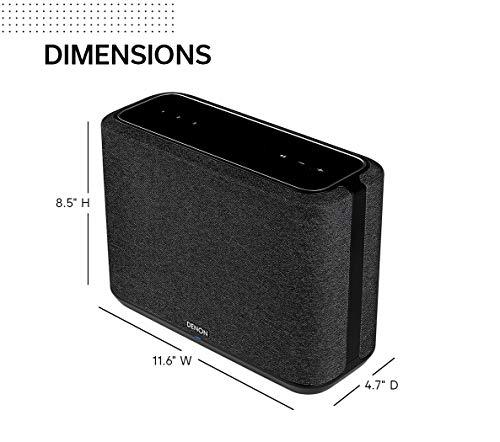
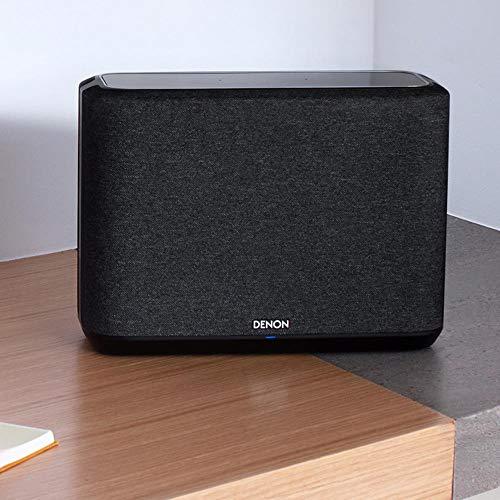
The Denon Home 250 measures 295 × 216 × 120 mm and weighs 4.8 kg—substantial dimensions that reflect serious internal components. The fabric-wrapped enclosure feels premium and includes wall-mounting provisions for flexible installation. This speaker demands dedicated placement and makes its presence known.
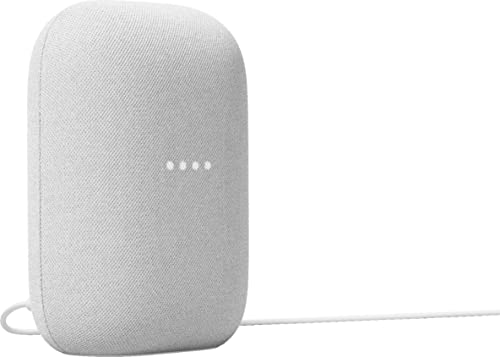
The Google Nest Audio embraces minimalism at 175 × 124 × 78 mm and just 1.2 kg. Made from 70% recycled plastic with fabric covering, it blends discretely into home décor. The compact footprint allows placement almost anywhere, from kitchen counters to bedroom nightstands.
Since their respective launches, both products have received significant software updates that demonstrate long-term support commitments. The Denon Home 250 has gained additional streaming service support and voice assistant compatibility through firmware updates, maintaining relevance despite its 2019 release.
The Google Nest Audio benefits from Google's continuous platform improvements, regularly gaining new Assistant features and smart home capabilities. However, its more modest hardware means it may face limitations as software demands increase over time.
Choose the Denon Home 250 if audio quality ranks as your primary concern. This speaker excels in medium to large rooms where its power advantage becomes apparent. Music enthusiasts who appreciate high-resolution audio formats and plan to build comprehensive multi-room systems will find the investment worthwhile.
The Denon also suits users who prefer avoiding ecosystem lock-in. Its multi-assistant compatibility provides flexibility as smart home standards evolve, and the HEOS platform offers professional-grade expandability for serious home entertainment systems.
For home theater applications, the Denon's bass response and soundstage width enhance movie experiences significantly compared to typical smart speakers. Its integration capabilities with dedicated audio components provide clear upgrade paths.
The Google Nest Audio makes sense for users prioritizing smart home functionality and voice interaction over pure audio performance. Its exceptional value proposition delivers capable sound quality alongside best-in-class assistant features at a fraction of the Denon's cost.
Compact living spaces favor the Nest Audio's discrete footprint and placement flexibility. Its optimized vocal performance suits users who primarily listen to podcasts, audiobooks, or news content rather than dedicating serious time to music listening.
Budget-conscious users building multi-room systems can deploy several Nest Audio speakers for less than the cost of a single Denon Home 250, providing wider coverage with acceptable audio quality in each room.
These speakers represent different philosophies rather than direct competitors. The Denon Home 250 targets audio enthusiasts willing to invest significantly in sound quality and system flexibility. The Google Nest Audio focuses on delivering smart home functionality and respectable audio performance at an accessible price point.
At the time of writing, the price difference reflects genuine engineering distinctions. The Denon employs premium components and sophisticated driver configurations that cost substantially more to manufacture. The Google achieves remarkable value through volume production and focus on essential features rather than audiophile refinements.
Consider your primary use cases honestly. If you frequently host gatherings where music quality matters, plan to build a serious home entertainment system, or simply value exceptional audio reproduction, the Denon Home 250 justifies its premium pricing. If smart home control, voice interaction, and good-enough audio meet your needs while preserving budget for other priorities, the Google Nest Audio delivers outstanding value.
Neither choice is wrong—they simply serve different needs and priorities in the evolving smart speaker landscape.
| Denon Home 250 | Google Nest Audio |
|---|---|
| Driver Configuration - Determines audio quality and power | |
| 2 x 19mm tweeters, 2 x 100mm woofers, 1 x 133mm passive radiator with dedicated Class-D amplifiers | Single 75mm woofer and 19mm tweeter in front-firing configuration |
| High-Resolution Audio Support - Important for audiophiles with lossless music libraries | |
| Up to 24-bit/192kHz PCM and DSD 5.6MHz support | Standard streaming formats only (no high-res support) |
| Physical Size and Weight - Affects placement flexibility | |
| 295 × 216 × 120 mm, 4.8 kg (requires dedicated placement) | 175 × 124 × 78 mm, 1.2 kg (fits anywhere discretely) |
| Voice Assistant Compatibility - Determines smart home ecosystem flexibility | |
| Amazon Alexa, Google Assistant, Apple Siri via AirPlay 2 | Google Assistant only (native integration) |
| Multi-Room System Capability - Scalability for whole-home audio | |
| HEOS platform supports up to 32 devices with professional-grade sync | Google Home ecosystem with basic multi-room grouping |
| Connectivity Options - Flexibility for different audio sources | |
| Wi-Fi, Bluetooth, Ethernet, USB-A, 3.5mm aux input | Wi-Fi, Bluetooth, Chromecast built-in (no physical inputs) |
| Voice Recognition Hardware - Affects command accuracy and response | |
| Relies on connected devices or cloud processing | 3 far-field microphones with on-device processing |
| Home Theater Integration - Expandability for entertainment systems | |
| Can pair for stereo or integrate with Denon soundbars/subwoofers | Basic stereo pairing with other Nest Audio units |
| Target Room Size - Optimal performance environment | |
| Medium to large rooms (powerful enough to fill substantial spaces) | Small to medium rooms (compact but adequate coverage) |
| Build Materials and Design - Durability and aesthetics | |
| Premium fabric wrap with wall-mount options, substantial construction | 70% recycled plastic with fabric cover, minimalist design |
| Smart Features - Advanced functionality beyond basic voice control | |
| Proximity-sensing touch controls with 3 customizable presets | Ambient IQ auto-volume adjustment, Voice Match for multiple users |
| Value Proposition - Cost relative to features and performance | |
| Premium pricing for audiophile-grade components and flexibility | Exceptional value for smart home integration and decent audio |
The Denon Home 250 delivers significantly better sound quality with its dual tweeters, dual woofers, and passive bass radiator configuration. It provides deeper bass, clearer highs, and wider stereo imaging compared to the Google Nest Audio, which focuses more on vocal clarity and podcast listening. For serious music enjoyment, the Denon Home 250 is the clear winner.
The Denon Home 250 excels in home theater applications, offering wireless surround sound integration with compatible Denon soundbars and subwoofers. It can also pair with another unit for true stereo sound. The Google Nest Audio provides basic TV audio enhancement but lacks the power and integration capabilities needed for proper home theater setups.
The Google Nest Audio is ideal for smaller spaces due to its compact size and placement flexibility. It delivers balanced sound without overwhelming small rooms, while the Denon Home 250 may produce too much bass in confined spaces and requires more dedicated placement due to its larger size.
The Google Nest Audio offers superior voice recognition with built-in Google Assistant, faster response times, and better conversational AI. The Denon Home 250 supports multiple assistants (Alexa, Google Assistant, Siri) but relies on external processing, making it less responsive for voice commands but more flexible across different smart home ecosystems.
Both speakers support multi-room audio, but with different approaches. The Denon Home 250 uses the professional HEOS platform supporting up to 32 devices with precise synchronization. The Google Nest Audio offers simpler multi-room grouping through the Google Home ecosystem, which works well for basic needs but lacks the precision of the Denon system.
The Google Nest Audio provides exceptional value for users prioritizing smart home features and decent audio quality. The Denon Home 250 justifies its premium pricing for audiophiles who want superior sound quality, high-resolution audio support, and professional multi-room capabilities. Value depends on whether you prioritize audio performance or smart features.
The Denon Home 250 supports high-resolution audio formats up to 24-bit/192kHz and works with audiophile streaming services like Tidal Masters. The Google Nest Audio focuses on standard streaming quality but offers seamless integration with popular services through Chromecast. For audiophiles with high-quality music libraries, the Denon is essential.
The Denon Home 250 can achieve much higher volume levels while maintaining sound quality, making it suitable for parties or large gatherings. The Google Nest Audio handles moderate volumes well but may show compression and harshness when pushed to maximum levels, making it better suited for personal or small group listening.
The Google Nest Audio wins for ease of use with simple setup through the Google Home app and intuitive voice controls. The Denon Home 250 requires more complex setup through the HEOS app and multiple assistant configurations, though it offers proximity-sensing touch controls and customizable presets once configured properly.
The Denon Home 250 offers more connectivity flexibility with USB, auxiliary input, and Bluetooth options, allowing offline music playback. The Google Nest Audio relies primarily on WiFi streaming and Bluetooth, with limited offline capabilities. For users wanting multiple input options, the Denon provides better versatility.
The Google Nest Audio excels at spoken content with optimized vocal clarity and Ambient IQ technology that automatically adjusts volume based on background noise. While the Denon Home 250 can handle podcasts well, its bass-heavy tuning and higher cost make it overkill for primarily voice content consumption.
The Denon Home 250 offers better long-term value for expanding audio systems with its professional multi-room capabilities and home theater integration options. The Google Nest Audio provides ongoing value through regular software updates and expanding Google Assistant features, making it a solid long-term choice for smart home functionality rather than audio system building.
We've done our best to create useful and informative comparisons to help you decide what product to buy. Our research uses advanced automated methods to create this comparison and perfection is not possible - please contact us for corrections or questions. These are the sites we've researched in the creation of this article: dxomark.com - hometechnologyreview.com - crutchfield.com - versus.com - stereoguide.com - versus.com - whathifi.com - techgearlab.com - youtube.com - crutchfield.com - consumerreports.org - blog.son-video.com - crutchfield.com - skybygramophone.com - audiolab.com - theaudiotailor.com.au - youtube.com - scribd.com - rtings.com - pocket-lint.com - whathifi.com - store.google.com - sypnotix.com - store.google.com - techradar.com - rtings.com - audiosciencereview.com - youtube.com - soundguys.com - audioholics.com - store.google.com - store.google.com - youtube.com - support.google.com - soundguys.com - dxomark.com - thenextweb.com - support.google.com - dimensions.com - store.google.com - store.google.com - bestbuy.com - en.wikipedia.org - store.google.com - cybershack.com.au - matteralpha.com

Privacy Policy
Terms and Conditions - Affiliate Policy
Home Security
© Copyright 2008-2026.
11816 Inwood Rd #1211, Dallas, TX 75244