

When Amazon first introduced the Echo in 2014, it changed how we think about controlling our homes. Google followed with its own smart speakers, and by 2019, when the Google Nest Mini 2nd Gen launched, the smart home revolution was in full swing. Now, with devices like the 2023 Amazon Echo Show 8 3rd Gen, we're seeing the next evolution: smart displays that combine voice control with visual interfaces.
But here's the thing – these two products represent fundamentally different philosophies about how we should interact with our smart homes. One focuses purely on voice commands and staying out of your way, while the other puts a screen front and center, turning your smart home into something you can see and touch. Understanding which approach works better for your lifestyle is crucial to making the right choice.
The smart home category has evolved rapidly over the past few years, splitting into distinct approaches. Traditional smart speakers like the Nest Mini focus on what's called "ambient computing" – technology that responds to your voice but otherwise blends into the background. Smart displays like the Echo Show 8 take a different approach, making the technology more visible and interactive.
When evaluating these devices, the key considerations go beyond just features and specs. You need to think about how you actually live in your space. Do you prefer minimal visual clutter, or do you find screens helpful for quick information? Are you comfortable talking to your devices, or do you sometimes prefer touching and swiping? These usage patterns matter more than most people realize.
The technology improvements since 2019 have been significant. Smart speakers have gotten better at understanding natural speech patterns and responding faster. Meanwhile, smart displays have evolved to include more powerful processors, better cameras for video calls, and most importantly, built-in smart home hubs that can directly control devices without needing separate hardware.
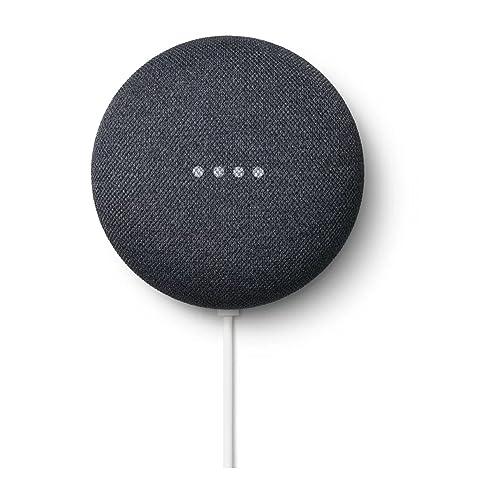
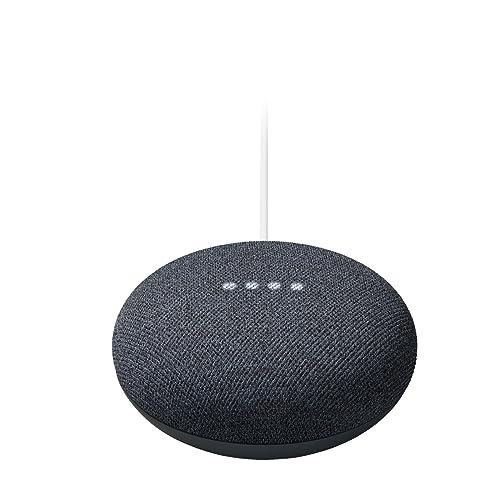
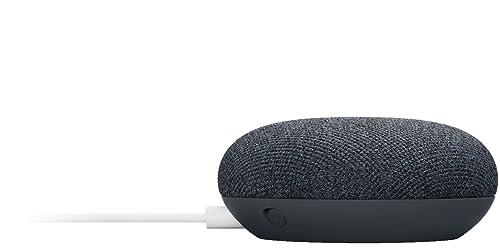
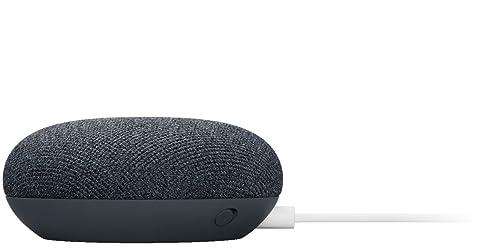
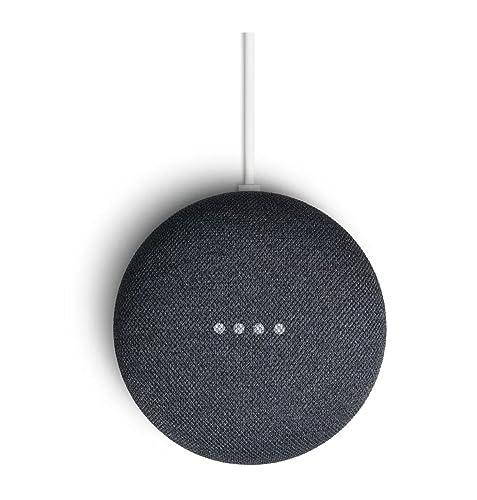
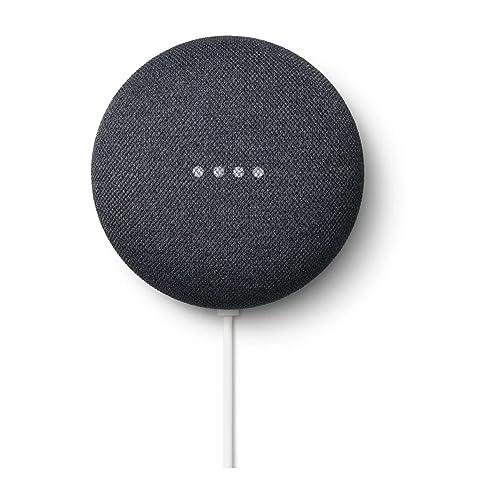
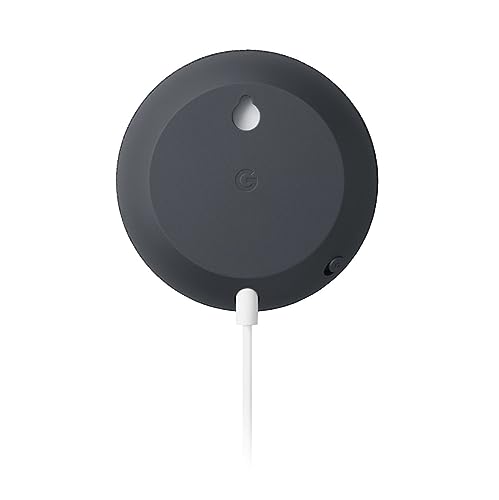
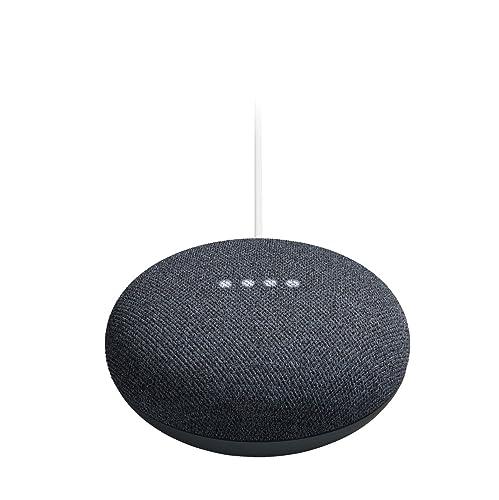
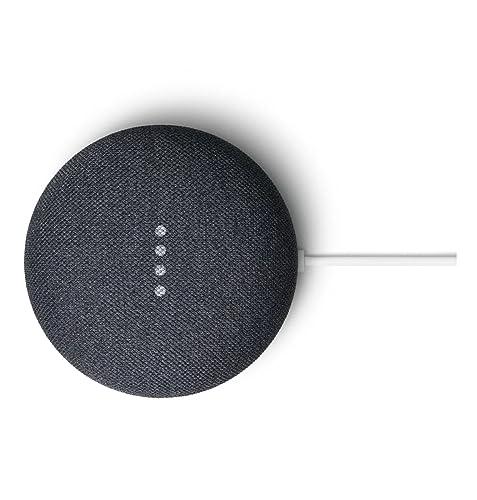
The Google Nest Mini embodies minimalist design thinking. At just 98mm across and 42mm tall, it's designed to disappear into your décor. The fabric top is made from recycled plastic bottles, and the whole device weighs less than 200 grams. You can wall-mount it, tuck it on a bookshelf, or place it anywhere you need voice control without drawing attention.
This minimalist approach extends to how you interact with it. The device has basic touch controls for volume, but everything else happens through voice commands. There are LED indicators that light up when you're speaking to it, but no screen means no visual distractions when you're trying to focus on other activities.
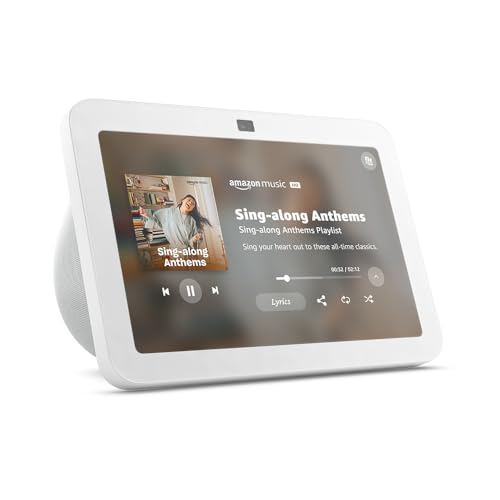
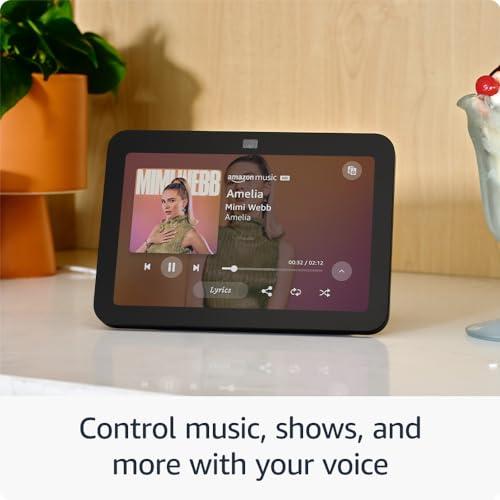
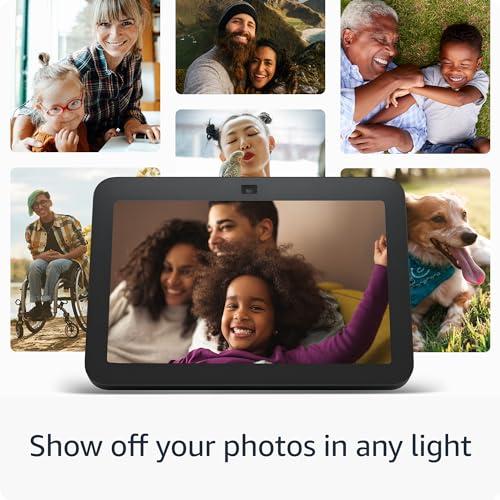
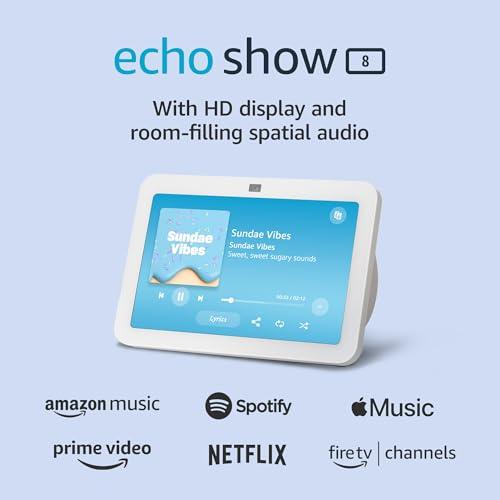
The Amazon Echo Show 8 takes the opposite approach – it's meant to be a focal point. The 8-inch display dominates the device, surrounded by a modern design with edge-to-edge glass. At over 1kg, it's clearly meant to claim permanent real estate on your counter or desk. The screen shows information even when you're not actively using it, displaying weather, calendar events, or photos.
This design difference matters for practical reasons. The compact Nest Mini works well in bedrooms, bathrooms, or smaller spaces where you want voice control without visual presence. The Echo Show 8 is better suited for kitchens, home offices, or main living areas where the screen information adds value rather than distraction.
Audio quality represents one of the most significant performance differences between these devices. The Google Nest Mini uses a 40mm driver in a carefully tuned enclosure that produces 360-degree sound. For its size, the audio quality is impressive – reviewers consistently note that it delivers twice the bass of the original Google Home Mini, with clear midrange frequencies that make voice responses and podcasts sound natural.
However, physics still matters. A small speaker in a compact enclosure simply can't move as much air as larger drivers. The Nest Mini handles background music, voice responses, and casual listening well, but it won't fill a large room or deliver the kind of bass response you'd want for serious music listening.
The Echo Show 8 benefits from having more internal space for audio components. It features dual 2-inch neodymium speakers – that's significantly larger drivers than what you'll find in the Nest Mini. More importantly, it includes a passive bass radiator, which is essentially a secondary speaker cone that vibrates sympathetically to enhance low-frequency response without requiring additional power.
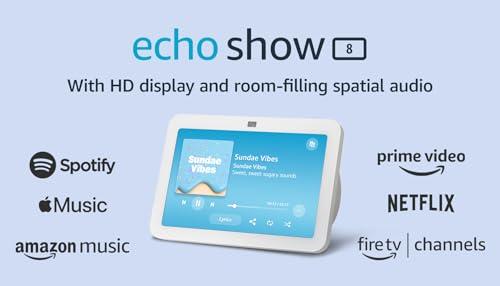
Amazon has also implemented what they call "spatial audio" processing, which analyzes your room's acoustics and adjusts the sound accordingly. This room adaptation technology makes a noticeable difference – the device automatically compensates for hard surfaces that might create harsh reflections or soft furnishings that absorb too much sound.
In practical terms, the Echo Show 8 can serve as your primary speaker for casual music listening, while the Nest Mini is better as a supplementary device or for voice-focused tasks. If you're thinking about using either device in a home theater setup, the Echo Show 8 could work as a dialogue enhancer when watching shows, though neither device is really designed for serious home theater use.
Both devices excel at understanding natural speech, but they achieve this through different technological approaches. The Google Nest Mini uses three far-field microphones – these are specially designed microphones that can pick up speech from across a room, even with background noise. Google's voice recognition has gotten significantly better since 2019, with improved natural language processing that understands context and handles follow-up questions more naturally.
The Echo Show 8 also uses multiple microphones, but pairs them with Amazon's AZ2 Neural Network Engine. This is specialized hardware designed specifically for voice processing tasks. The result is notably faster response times – Amazon claims 40% faster processing for common smart home commands compared to previous generations.
This speed difference is noticeable in daily use. When you ask the Echo Show 8 to turn off lights or adjust temperature, the response feels nearly instantaneous. The Nest Mini responds quickly too, but there's often a slight pause as it processes your request through Google's cloud servers.
However, the Google Nest Mini has an advantage in voice recognition accuracy, particularly for users with accents or speech patterns that differ from standard American English. Google's vast data from search queries and Android devices helps it understand diverse speech patterns more reliably.
This is where the biggest functional difference emerges. The Google Nest Mini can control smart home devices, but it does so primarily by sending commands to other hubs or directly to Wi-Fi connected devices. It supports Matter (the new universal smart home standard), but for older devices using protocols like Zigbee or Z-Wave, you'll need separate hubs.
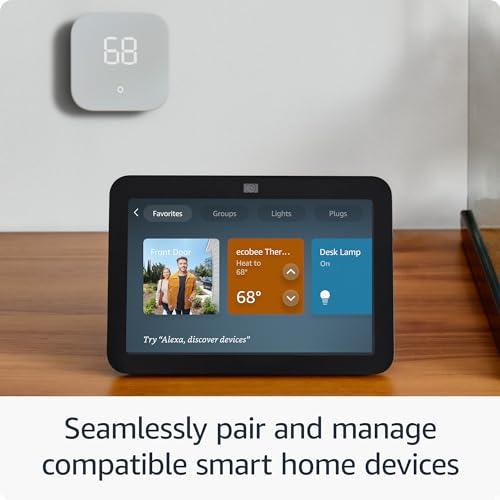
The Echo Show 8 changes this equation by including built-in support for Zigbee, Thread, and Matter protocols. In technical terms, this means it can directly communicate with a huge range of smart home devices without requiring additional hardware. Zigbee is used by many popular smart bulbs, switches, and sensors. Thread is a newer protocol that creates mesh networks for more reliable connections. Matter is the industry's attempt at a universal standard that will work across all major ecosystems.
Having these protocols built-in eliminates what's often called "hub fatigue" – the problem where different smart home devices require different hubs, creating a cluttered setup with multiple devices that need power and Wi-Fi connections. With the Echo Show 8, you can often eliminate several separate hubs and control everything through one device.
This integration advantage becomes more valuable as you add more smart home devices. Starting with just a few smart bulbs? The Nest Mini will handle them fine. But if you're planning to add sensors, smart locks, window shades, and other devices over time, the hub capabilities of the Echo Show 8 become increasingly valuable.
The 8-inch, 1280 x 800 pixel display on the Echo Show 8 transforms how you interact with your smart home. Instead of asking "What's the weather like?" you can see the forecast at a glance. Rather than saying "Show me my calendar," your upcoming appointments are already visible on the screen.
Amazon has implemented something called "Adaptive Content" that changes what you see based on how close you are to the device. From across the room, it shows large, easily readable information like time and weather. As you get closer, more detailed widgets appear with calendar events, reminders, and controls for your smart home devices.
This visual interface is particularly valuable in kitchens, where you might want to see recipe steps, cooking timers, or shopping lists without having to ask questions out loud. The screen also makes it easier to control multiple smart home devices – instead of remembering the exact names for each light or switch, you can see them laid out visually and tap what you want to control.
The Google Nest Mini relies entirely on voice feedback and simple LED indicators. While this creates a cleaner, less distracting experience, it means you need to remember more commands and wait for audio responses to confirm actions.
The 13MP camera on the Echo Show 8 opens up capabilities that the Nest Mini simply can't match. Video calling has become much more important since 2020, and having a dedicated device for family calls can be genuinely useful. The camera includes auto-framing, which means it can track and follow you as you move around, keeping you centered in the frame.
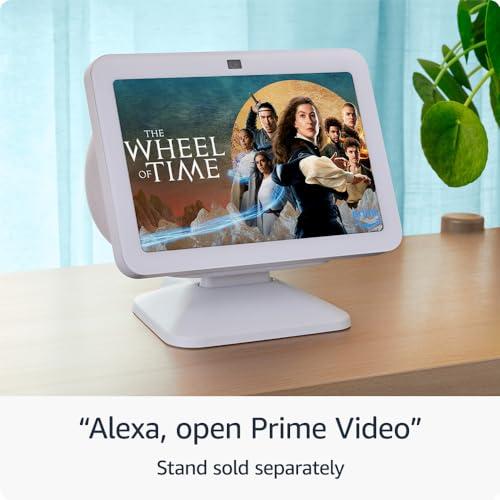
Beyond calls, the Echo Show 8 can stream video content from various services. While you probably won't use it as your main TV, it's convenient for watching cooking videos while preparing meals, catching up on news, or letting kids watch shows while you work nearby.
The camera also enables home monitoring features. Through the Alexa app, you can check in on your space remotely, which adds security value that the Nest Mini can't provide. However, some users prefer devices without cameras for privacy reasons, making this either a valuable feature or a concerning drawback depending on your perspective.
In kitchen environments, the Echo Show 8 clearly excels. The screen is perfect for following recipes, setting visible timers, and controlling smart appliances. The superior audio means you can hear responses clearly over cooking noise, and the larger size means it won't get lost among other appliances.
For bedrooms or bathrooms, the Nest Mini often works better. Its compact size means it won't dominate smaller spaces, and the lack of a screen reduces light pollution that might interfere with sleep. The softer volume levels are also more appropriate for quieter environments.
In home offices, the choice depends on your work style. If you frequently take video calls, the Echo Show 8 can serve double duty as your calling device. If you prefer minimal distractions while working, the Nest Mini provides voice control without visual interruptions.
For whole-home coverage, the economics favor the Nest Mini. At the time of writing, you could outfit multiple rooms with Nest Mini speakers for less than the cost of a single Echo Show 8. However, if you only need one central control point, the Echo Show 8 offers significantly more functionality for the price difference.
The decision ultimately comes down to how you want to interact with your smart home technology. The Google Nest Mini excels as an invisible assistant that responds when called but otherwise stays out of your way. It's perfect for users who prefer voice-only interaction, have limited space, or want to add smart home control to multiple rooms affordably.
The Amazon Echo Show 8 works better as a smart home command center that you actively use throughout the day. The visual interface makes it more approachable for less tech-savvy family members, while the hub capabilities future-proof your smart home setup as you add more devices.
Consider your ecosystem preferences too. If you're heavily invested in Google services like Gmail, Google Photos, or Google Calendar, the Nest Mini integrates more seamlessly with those services. If you use Amazon Prime, have Fire TV devices, or prefer Alexa's smart home ecosystem, the Echo Show 8 makes more sense.
For most people setting up their first smart home device, I'd recommend the Echo Show 8 if budget allows. The visual interface reduces the learning curve, the hub capabilities eliminate the need for additional hardware, and the superior audio makes it more versatile for entertainment. However, if you're specifically looking for a discrete, voice-only experience or need to outfit multiple rooms, the Google Nest Mini remains an excellent choice that punches well above its weight class.
The smart home landscape continues evolving rapidly, but both devices represent mature, reliable approaches to different user needs. Your choice should depend more on your interaction preferences and space requirements than on minor feature differences – both will serve you well within their intended use cases.
| Google Nest Mini 2nd Gen Smart Speaker | Amazon Echo Show 8 3rd Gen Smart Display |
|---|---|
| Display - Critical for visual smart home control and media consumption | |
| No display (voice-only interaction) | 8-inch HD touchscreen (1280 x 800) with adaptive content |
| Audio Performance - Key factor for music quality and room filling sound | |
| Single 40mm driver with 360-degree sound | Dual 2-inch neodymium speakers with passive bass radiator and spatial audio |
| Smart Home Hub Capabilities - Determines how many separate hubs you need | |
| Basic connectivity, requires separate hubs for most devices | Built-in Zigbee, Thread, and Matter support - eliminates need for additional hubs |
| Voice Assistant & Processing Speed - Affects responsiveness and accuracy | |
| Google Assistant with 3 far-field mics | Alexa with AZ2 Neural Network Engine (40% faster processing) |
| Physical Size & Placement Flexibility - Important for room aesthetics and space constraints | |
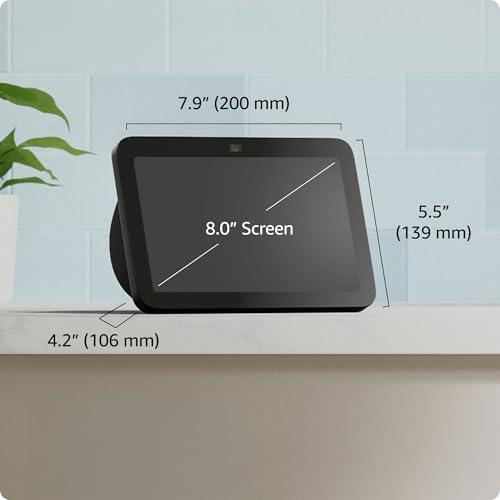
| Compact: 98mm diameter, 183g, wall-mountable | Larger: 200 x 139 x 106mm, 1.04kg, requires counter space |
| Camera & Video Capabilities - Essential for video calls and home monitoring | |
| No camera (better privacy, no video features) | 13MP centered camera with auto-framing for video calls |
| Multi-room Audio - Important for whole-home sound systems | |
| Google Cast built-in for seamless multi-room setup | Works with Echo multi-room but requires multiple Echo devices |
| Ecosystem Integration - Determines compatibility with your existing services | |
| Optimized for Google services (Gmail, Photos, Calendar) | Deep Amazon integration (Prime Video, Alexa Skills, Fire TV) |
| Connectivity Protocols - Affects smart home device compatibility | |
| Wi-Fi 802.11ac, Bluetooth 5.0, Matter support | Wi-Fi 802.11ac, Bluetooth, Zigbee, Thread, Matter support |
| Privacy Features - Important for households concerned about always-listening devices | |
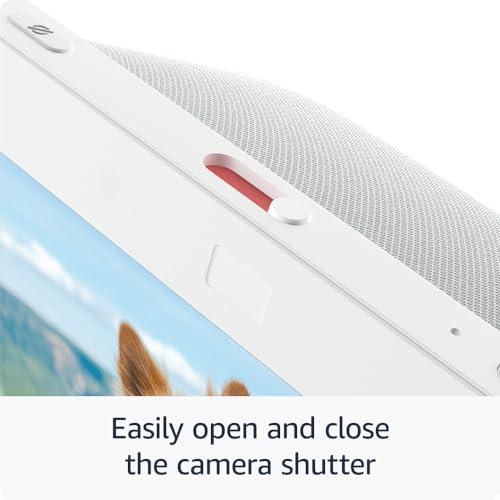
| Physical mic mute, no camera concerns | Physical mic mute and camera shutter for complete privacy control |
| Power Requirements - Affects placement options and energy costs | |
| 15W power adapter, always plugged in | 18V DC power, always plugged in, higher power consumption |
| Sustainable Materials - Relevant for environmentally conscious buyers | |
| Fabric top from 100% recycled plastic bottles | Uses some recycled materials but less emphasis on sustainability |
The Amazon Echo Show 8 3rd Gen is significantly better for comprehensive smart home control. It includes built-in Zigbee, Thread, and Matter support, acting as a central hub that can directly control most smart devices without needing separate hubs. The Google Nest Mini 2nd Gen provides basic smart home control but typically requires additional hubs for many devices. The Echo Show 8's visual interface also makes it easier to see and control multiple devices at once.
The primary difference is that the Google Nest Mini 2nd Gen is a compact, voice-only smart speaker, while the Amazon Echo Show 8 3rd Gen is a smart display with an 8-inch touchscreen. The Echo Show 8 offers visual controls, video calling capabilities, better audio quality, and comprehensive smart home hub functionality. The Nest Mini focuses on minimalist design, voice interaction, and seamless Google ecosystem integration.
The Amazon Echo Show 8 3rd Gen delivers superior sound quality with dual 2-inch neodymium speakers, a passive bass radiator, and spatial audio technology. The Google Nest Mini 2nd Gen has decent audio for its compact size but cannot match the Echo Show 8's fuller sound, better bass response, and higher volume levels. For serious music listening, the Echo Show 8 is the clear winner.
Only the Amazon Echo Show 8 3rd Gen supports video calls with its 13MP centered camera and auto-framing technology. The Google Nest Mini 2nd Gen has no camera and only supports voice calls through connected phones or other devices. If video calling is important for staying in touch with family, the Echo Show 8 is your only option between these two devices.
The Google Nest Mini 2nd Gen is better suited for small spaces due to its compact 98mm diameter design and wall-mounting capability. It blends into any room without dominating the space or creating visual distractions. The Amazon Echo Show 8 3rd Gen requires counter space and its always-on display may create unwanted light in bedrooms or other quiet spaces.
While smartphones can perform many similar functions, the Amazon Echo Show 8 3rd Gen offers always-available voice control, better smart home integration, and hands-free operation that's particularly useful in kitchens or while multitasking. The Google Nest Mini 2nd Gen provides similar hands-free benefits at a lower cost if you don't need the visual interface or video calling features.
The Google Nest Mini 2nd Gen integrates more seamlessly with Google services like Gmail, Google Photos, Google Calendar, and YouTube Music. While the Amazon Echo Show 8 3rd Gen can access some Google services, it's primarily designed for Amazon's ecosystem including Prime Video, Amazon Music, and Alexa Skills.
Neither device is designed for serious home theater use, but the Amazon Echo Show 8 3rd Gen could serve as a dialogue enhancer or secondary speaker for casual viewing due to its superior audio quality. The Google Nest Mini 2nd Gen lacks the power and audio range needed for home theater applications. For dedicated home theater audio, you'd need purpose-built speakers or soundbars.
Both devices offer similar privacy controls with physical microphone mute switches. However, the Google Nest Mini 2nd Gen has no camera, eliminating video privacy concerns entirely. The Amazon Echo Show 8 3rd Gen includes a physical camera shutter for when you want video privacy but still want to use other features.
Both Google Assistant on the Nest Mini and Alexa on the Echo Show 8 are highly capable, but they excel in different areas. Google Assistant typically provides better search results and natural language understanding, while Alexa offers more smart home device compatibility and third-party skills. The Echo Show 8 also processes common commands 40% faster thanks to its dedicated AI processing chip.
This depends on your needs. The Google Nest Mini 2nd Gen offers excellent value as an affordable entry point to smart home control, especially if you want multiple units throughout your home. The Amazon Echo Show 8 3rd Gen provides significantly more functionality including the display, better audio, hub capabilities, and video calling, making it better value if you'll use these additional features.
If you want whole-home voice control, multiple Google Nest Mini speakers create better coverage and multi-room audio capabilities. However, if you prefer one central command station with visual controls and comprehensive smart home management, a single Amazon Echo Show 8 in your main living area might be more practical and cost-effective than multiple smart displays.
We've done our best to create useful and informative comparisons to help you decide what product to buy. Our research uses advanced automated methods to create this comparison and perfection is not possible - please contact us for corrections or questions. These are the sites we've researched in the creation of this article: bestbuy.com - pocket-lint.com - goodhousekeeping.com - rtings.com - rtings.com - versus.com - tomsguide.com - versus.com - youtube.com - youtube.com - techradar.com - homedepot.com - support.google.com - gadgetconnect.co.ke - store.google.com - multitronic.fi - bestbuy.com - store.google.com - neweggbusiness.com - store.google.com - support.google.com - versus.com - youtube.com - adiglobaldistribution.us - aboonehomes.com - techradar.com - techradar.com - youtube.com - tomsguide.com - thedisconnekt.com - androidcentral.com - bestbuy.com - versus.com - versus.com - dimensions.com - ifixit.com - bestbuy.com - dell.com - youtube.com - youtube.com

Privacy Policy
Terms and Conditions - Affiliate Policy
Home Security
© Copyright 2008-2026.
11816 Inwood Rd #1211, Dallas, TX 75244