

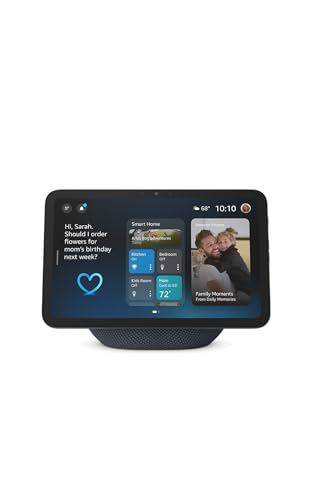

The smart home world offers two very different philosophies when it comes to voice assistants. On one side, you have comprehensive smart displays like the Amazon Echo Show 8 that want to be the central hub of your connected home. On the other, there are minimalist smart speakers like the Google Nest Mini 2nd Gen that focus on doing the basics exceptionally well while staying out of your way.
At the time of writing, these products sit in completely different price brackets—the Echo Show 8 commands a premium price as a feature-rich smart display, while the Nest Mini positions itself as an affordable entry point into voice control. This price difference reflects fundamentally different approaches to smart home integration, and understanding these differences is crucial for making the right choice for your specific needs.
Smart displays and smart speakers represent two distinct evolutionary paths in home automation technology. The Echo Show 8, released in its current third generation in 2023, builds on Amazon's vision of visual voice interaction that began with the original Echo Show in 2017. Each iteration has refined the display technology, improved the audio system, and enhanced the smart home hub capabilities—the latest version includes Matter support (a universal smart home standard) and Thread Border Router functionality, making it compatible with virtually any smart home device.
The Google Nest Mini, launched in its second generation in 2019, represents Google's philosophy of ambient computing—technology that works invisibly in the background. Unlike its predecessor, the original Google Home Mini, the second-generation model doubled the bass output and introduced ultrasonic sensing, which detects when you're nearby to provide visual feedback through subtle LED patterns.
The fundamental difference lies in their interaction models. Smart displays like the Echo Show 8 provide multimodal interaction—you can touch, speak, and receive visual feedback. Smart speakers like the Nest Mini rely purely on voice interaction with minimal visual cues, creating a more focused but limited experience.
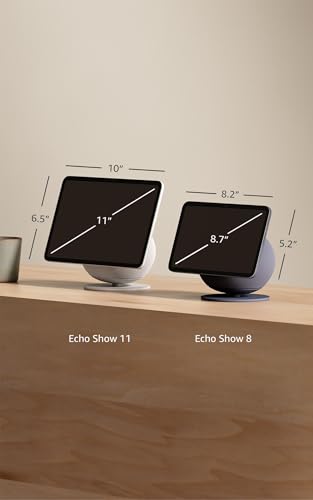
The physical differences between these devices immediately reveal their intended roles. The Echo Show 8 measures roughly 8 inches wide and 5.5 inches tall, with a substantial footprint that demands dedicated counter or shelf space. Its design clearly announces itself as a central hub—the kind of device you position prominently in a kitchen or living room where family members naturally gather.
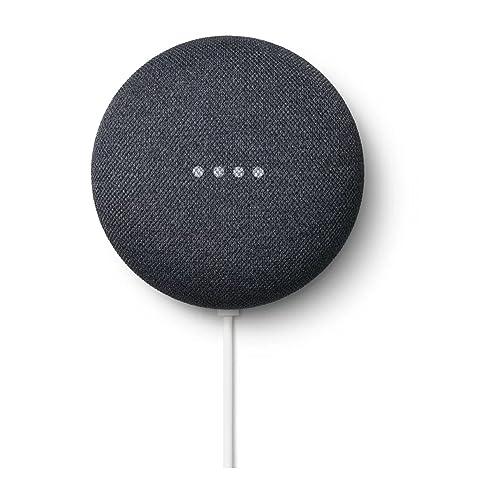
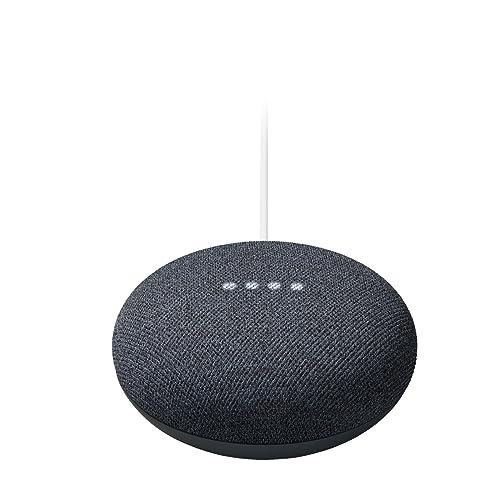
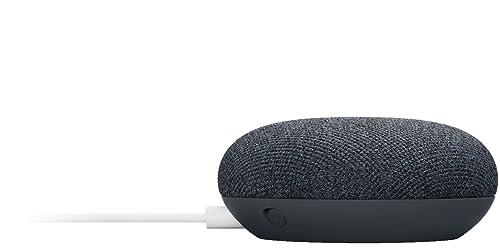
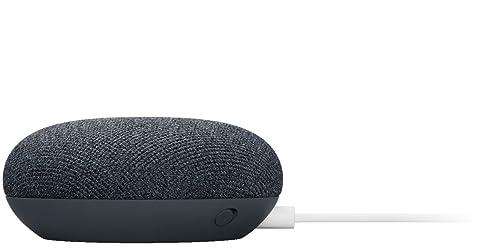
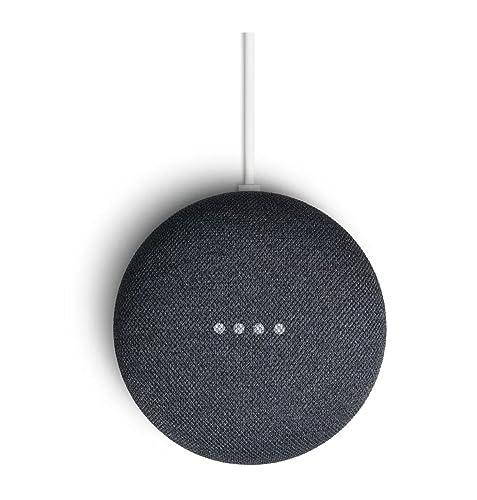
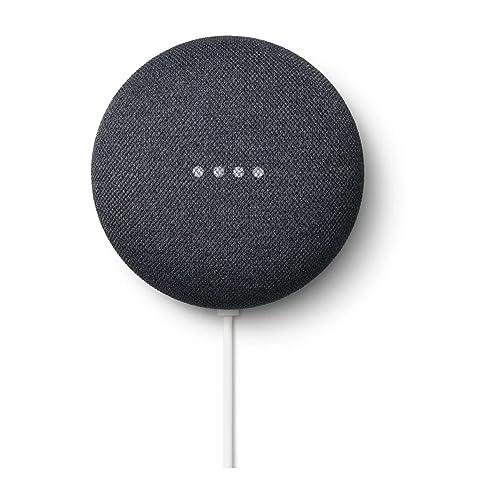
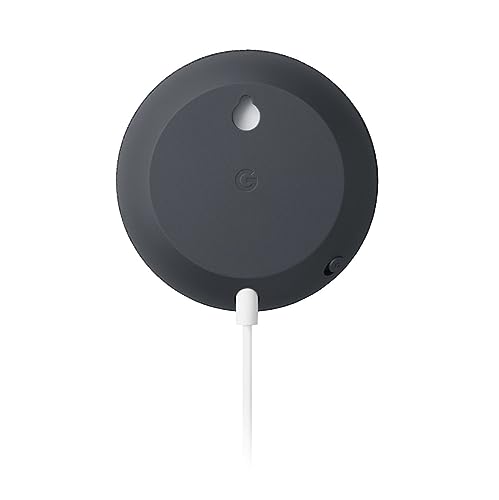
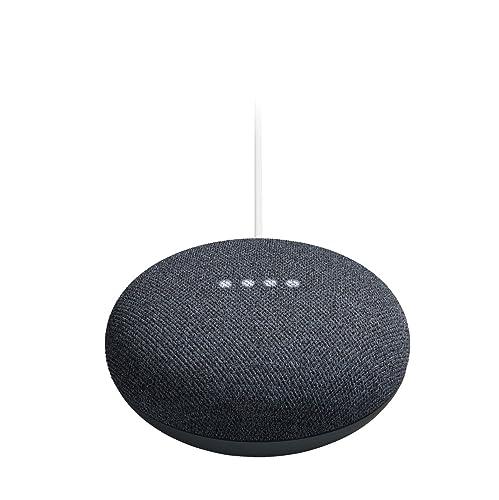
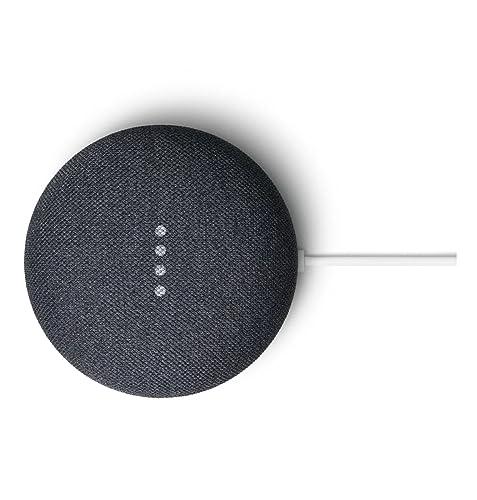
The Google Nest Mini, by contrast, measures just under 4 inches across and less than 2 inches tall, weighing about as much as a smartphone. This compact form factor enables placement virtually anywhere—tucked on a bookshelf, mounted on a wall, or discretely positioned on a nightstand. The fabric-covered design, made from recycled plastic bottles, helps it blend into home décor rather than dominate it.
This size difference isn't just about aesthetics—it fundamentally shapes how you'll use each device. The Echo Show 8 becomes a destination where you go to interact with your smart home, check the weather, or make video calls. The Nest Mini becomes an invisible helper that responds when summoned but otherwise stays out of sight and mind.
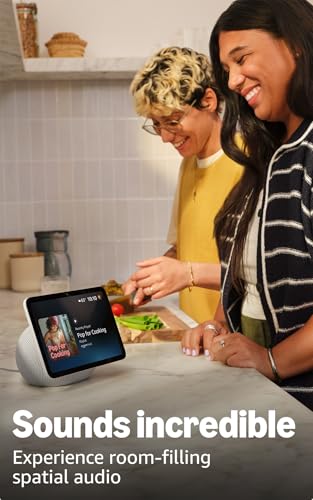
Audio quality represents one of the most significant performance differences between these devices, and the gap is wider than their price difference might suggest. The Echo Show 8 houses a sophisticated audio system with dual 2-inch neodymium speakers and a passive bass radiator—a design that uses the internal air space to enhance low-frequency response without requiring additional powered drivers.
The spatial audio technology in the latest Echo Show 8 analyzes room acoustics using built-in microphones and adjusts the sound profile accordingly. This room adaptation feature means the device automatically compensates for hard surfaces that might create harsh reflections or soft furnishings that absorb high frequencies. The result is consistently balanced audio regardless of where you place the device.
Our evaluation of user and expert reviews consistently shows the Echo Show 8 delivering surprisingly rich sound for its size, with particular strength in vocal clarity and mid-range frequencies. The bass response, while not matching dedicated bookshelf speakers, provides enough foundation for most music genres and significantly enhances the experience of watching streaming video content.
The Google Nest Mini takes a more constrained approach with its single 40mm driver designed to project 360-degree sound. While this omnidirectional design ensures consistent volume levels regardless of your position relative to the speaker, the single small driver inherently limits both volume and frequency response. The second-generation model did improve bass output compared to the original, but physics ultimately constrains what's possible in such a compact package.
For casual background music or podcast listening, the Nest Mini performs adequately. However, if audio quality ranks high in your priorities—particularly for music listening or entertainment content—the Echo Show 8 delivers a substantially more satisfying experience.
Both devices excel at voice recognition, but they achieve this through different technical approaches. The Echo Show 8 employs four far-field microphones arranged to provide optimal voice capture from multiple angles, combined with advanced noise cancellation algorithms that can isolate voice commands even when music is playing at moderate volumes.
The third-generation Echo Show 8 introduced significant improvements in response time, with Amazon claiming 40% faster processing compared to previous versions. This improvement stems from the new octa-core processor and dedicated neural processing unit that handles voice recognition locally rather than relying entirely on cloud processing for initial command interpretation.
The Google Nest Mini uses three far-field microphones in a triangular arrangement, which provides excellent directional sensitivity despite the device's small size. Google's Voice Match technology enables the device to recognize different household members and provide personalized responses—a particularly valuable feature for accessing individual calendars, music preferences, or shopping lists.
In practice, both devices demonstrate reliable voice recognition across typical home environments. The Echo Show 8 tends to perform slightly better in noisy conditions due to its additional microphones and more powerful processing, while the Nest Mini excels at understanding natural language queries thanks to Google's strength in search and language processing.
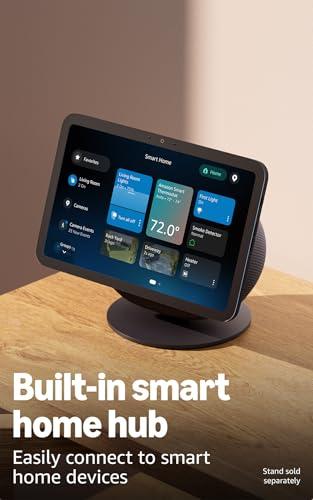
The smart home capabilities represent perhaps the most significant functional difference between these devices. The Echo Show 8 functions as a comprehensive smart home hub with built-in support for multiple wireless protocols including Zigbee, Thread, and Matter. This means you can connect compatible devices directly to the Echo Show 8 without requiring separate hubs or bridges.
Thread support is particularly noteworthy—this relatively new wireless standard creates a self-healing mesh network that improves reliability and reduces latency for smart home commands. When you tell the Echo Show 8 to turn off the lights, compatible Thread devices respond almost instantaneously because the communication stays local to your home network rather than routing through cloud servers.
The visual interface of the Echo Show 8 transforms smart home interaction from purely voice-based to include intuitive touch controls. You can view security camera feeds, adjust multiple lights simultaneously through on-screen controls, or monitor the status of various devices at a glance. This visual feedback proves especially valuable for complex routines or when managing multiple rooms simultaneously.
The Google Nest Mini approaches smart home integration as an endpoint device rather than a hub. While it supports Matter for broad device compatibility, it relies on your existing network infrastructure and other hubs for device communication. This simplifies the device design and keeps costs down, but it means you'll need additional equipment for comprehensive smart home control.
However, the Nest Mini's integration with Google services often provides more natural voice interaction. Google's superior natural language processing means you can use more conversational commands rather than learning specific phrases for device control.
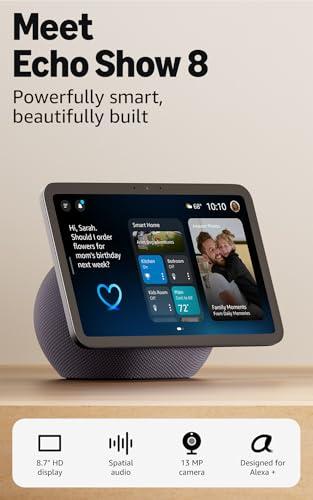
The 8-inch HD touchscreen of the Echo Show 8 transforms it from a simple smart speaker into a versatile multimedia device. The 1280 x 800 pixel resolution provides crisp text and vibrant images, while the edge-to-edge glass design maximizes the usable screen area within the device's footprint.
The adaptive content feature represents sophisticated engineering—using computer vision, the device recognizes when you're nearby and automatically adjusts the information density on screen. From across the room, you might see just the time and weather in large, easily readable text. Walk closer, and the screen reveals detailed music information, upcoming calendar events, or suggested smart home controls.
For video calling, the Echo Show 8 includes a 13-megapixel camera with auto-framing technology. This feature uses real-time image processing to keep you centered in the frame even as you move around during calls—similar to Apple's Center Stage technology. The physical privacy shutter provides peace of mind when the camera isn't needed.
The streaming video capabilities make the Echo Show 8 suitable as a secondary entertainment display for kitchen use or bedside viewing. While the 8-inch screen won't replace your main TV, it's perfectly sized for watching recipe videos while cooking or catching up on news during breakfast.
The Google Nest Mini offers no visual interface beyond subtle LED indicators that show when the device is listening or processing commands. This absence of visual feedback is intentional—Google designed the device to fade into the background rather than demand attention.
For home theater applications, these devices serve very different roles. The Echo Show 8 works best as a complementary device rather than a primary entertainment component. Its audio quality surpasses most TV built-in speakers, making it suitable for casual viewing in spaces like bedrooms or kitchens where you might watch streaming content on the device itself.
The Echo Show 8 can also display lyrics when playing music, show album artwork, and provide visual feedback when controlling other entertainment devices through voice commands. However, its audio output, while impressive for its size, won't satisfy serious home theater enthusiasts who prioritize immersive sound.
The Google Nest Mini takes a more focused approach to entertainment integration. Its Chromecast built-in functionality allows seamless audio streaming from your phone or other devices. You can start playing music on your phone and easily transfer playback to the Nest Mini with a simple tap.
For multi-room audio systems, the Nest Mini's affordability makes it practical to place multiple units throughout your home, creating a synchronized audio network. While individual units won't impress audiophiles, a well-distributed system can provide consistent background music throughout your living space.
Neither device replaces dedicated home theater components, but they each enhance the entertainment experience in their own ways. The Echo Show 8 serves as a multimedia hub for casual viewing and smart home control, while the Nest Mini extends your audio system affordably into additional rooms.
When evaluating these devices, several performance characteristics prove most critical for daily use. Response latency—the time between your voice command and the device's action—significantly impacts user satisfaction. The Echo Show 8 excels here, particularly for local smart home commands that don't require internet connectivity.
Audio clarity for voice responses matters equally, especially in noisy environments. Both devices perform well, but the Echo Show 8 benefits from its more powerful speakers and advanced noise cancellation during voice processing.
Microphone sensitivity and accuracy directly affect the frustration level of voice interaction. Both devices demonstrate excellent performance, though the Echo Show 8 maintains slight advantages in challenging acoustic environments due to its four-microphone array versus the Nest Mini's three-microphone setup.
For entertainment applications, frequency response and maximum volume become crucial. Here, the Echo Show 8 significantly outperforms the Nest Mini, delivering fuller sound across a wider range of musical genres and content types.
At the time of writing, the price difference between these devices reflects their vastly different capabilities and target markets. The Echo Show 8 commands a premium price that positions it as a considered purchase for users seeking comprehensive smart home and entertainment functionality. The investment makes sense if you'll regularly use video calling, appreciate visual smart home feedback, or want a capable secondary entertainment device.
The Google Nest Mini offers exceptional value for users seeking basic voice control and simple audio playback. Its affordable pricing makes it practical to purchase multiple units, enabling whole-home voice control without significant financial commitment.
Choose the Echo Show 8 if you want a central command station for your smart home that doubles as an entertainment device. It's ideal for kitchens where you might watch cooking videos, make video calls to family, or need visual confirmation of smart home commands. The device also works well in bedrooms as a sophisticated alarm clock that displays weather, calendar events, and news briefings.
The Nest Mini suits users who prefer technology that stays invisible until needed. It's perfect for creating affordable multi-room audio, providing voice control in spaces where visual interfaces would be distracting, or serving as a first step into smart home automation without significant investment.
Consider your long-term smart home plans when deciding. The Echo Show 8 grows with expanding automation needs and provides a foundation for more sophisticated smart home control. The Nest Mini offers an affordable way to experiment with voice control before committing to more expensive smart home investments.
Both devices excel within their intended roles, but they serve fundamentally different visions of how technology should integrate into daily life. The Echo Show 8 brings computing power to the forefront with visual interfaces and comprehensive capabilities, while the Google Nest Mini emphasizes ambient computing that responds when needed but otherwise remains unobtrusive.
Your choice ultimately depends on whether you prefer technology that actively engages you through visual interfaces and comprehensive features, or technology that quietly enables voice control without demanding attention or space in your home.
| Amazon Echo Show 8 Display | Google Nest Mini 2nd Gen Smart Speaker |
|---|---|
| Product Category - Determines what tasks each device can handle | |
| Smart display with touchscreen and multimedia capabilities | Compact smart speaker focused on voice control only |
| Display Size - Critical for visual tasks like video calls and smart home control | |
| 8-inch HD touchscreen (1280 x 800 pixels) | No display - voice and LED indicators only |
| Audio System - Affects music quality and room-filling sound | |
| Dual 2-inch speakers with passive bass radiator, spatial audio | Single 40mm driver with 360-degree sound |
| Camera - Essential for video calling and security monitoring | |
| 13MP camera with auto-framing and physical privacy shutter | No camera |
| Smart Home Hub Capabilities - Determines device compatibility and setup complexity | |
| Built-in Zigbee, Thread, and Matter support acts as central hub | Matter support only, requires existing hub infrastructure |
| Voice Recognition - Affects accuracy in noisy environments | |
| 4 far-field microphones with advanced noise cancellation | 3 far-field microphones with Voice Match technology |
| Size and Placement - Impacts where you can position the device | |
| 7.9" × 5.4" × 3.9", requires dedicated counter space | 3.85" diameter × 1.65" tall, fits anywhere including wall mounting |
| Connectivity Options - Determines streaming and device connection flexibility | |
| Wi-Fi 5 (802.11ac), Bluetooth 5.0, Chromecast built-in | Wi-Fi 4 (802.11n), Bluetooth 5.0, Chromecast built-in |
| Power Requirements - Affects placement flexibility | |
| AC powered with 18V DC adapter, stationary use only | AC powered with 15W adapter, easily relocated |
| Privacy Controls - Important for households concerned about always-listening devices | |
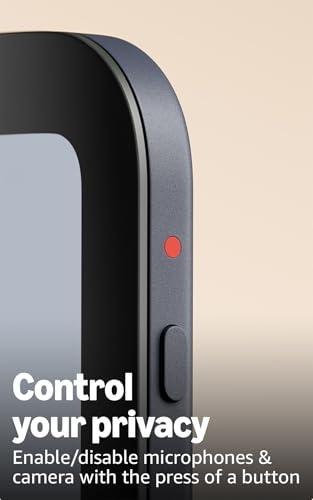
| Physical camera shutter and microphone mute button | Hardware microphone mute switch |
| Multi-room Audio - Determines whole-home music system potential | |
| Can join speaker groups but expensive for multiple units | Designed for affordable multi-room setups |
| Processing Power - Affects response speed and feature capabilities | |
| Octa-core processor with ML hardware, 40% faster than previous gen | Quad-core ARM CPU with ML engine |
| Release Generation - Shows how current the technology is | |
| 3rd generation (2023) with latest Matter and Thread support | 2nd generation (2019) with improved bass over original |
The Amazon Echo Show 8 is a smart display with an 8-inch touchscreen that handles video calls, streaming, and visual smart home control, while the Google Nest Mini 2nd Gen is a compact voice-only smart speaker focused on basic audio and voice commands. The Echo Show 8 serves as a multimedia hub, whereas the Nest Mini provides simple voice control in a small package.
The Amazon Echo Show 8 delivers significantly better audio quality with its dual 2-inch speakers and passive bass radiator, providing richer sound and stronger bass. The Google Nest Mini has a single small driver that's adequate for voice responses and background music but can't match the fuller sound of the Echo Show 8.
Only the Amazon Echo Show 8 supports video calls with its 13MP camera and 8-inch display. The camera includes auto-framing that keeps you centered during calls. The Google Nest Mini 2nd Gen has no camera or display, so it only supports voice calls through connected services.
The Amazon Echo Show 8 offers superior smart home control with built-in Zigbee, Thread, and Matter support, plus visual control through its touchscreen. You can see device status and control multiple items simultaneously. The Google Nest Mini provides basic voice control but lacks the visual interface and advanced hub capabilities of the Echo Show 8.
The Amazon Echo Show 8 requires dedicated counter or shelf space at roughly 8 inches wide and 5.5 inches tall. The Google Nest Mini 2nd Gen is much more compact at under 4 inches across, fitting almost anywhere and even supporting wall mounting for minimal space usage.
The Amazon Echo Show 8 excels in kitchens where you can watch recipe videos, make video calls while cooking, set visual timers, and control smart appliances through the touchscreen. The Google Nest Mini works for basic kitchen tasks like setting timers and playing music, but lacks the visual capabilities that make the Echo Show 8 ideal for cooking.
Neither device replaces dedicated home theater equipment, but the Amazon Echo Show 8 works better as a secondary entertainment display for casual viewing in bedrooms or kitchens. The Google Nest Mini 2nd Gen can stream audio via Chromecast and works well for multi-room audio systems due to its affordability, but won't enhance your main TV experience significantly.
Both devices offer excellent voice recognition, but the Amazon Echo Show 8 has four microphones versus three in the Google Nest Mini, providing slightly better performance in noisy environments. The Nest Mini compensates with Google's superior natural language processing for more conversational commands.
The Amazon Echo Show 8 includes both a physical camera shutter and microphone mute button for comprehensive privacy control. The Google Nest Mini 2nd Gen has a hardware microphone mute switch but no camera privacy concerns since it lacks a camera entirely.
The Google Nest Mini 2nd Gen is significantly more affordable, making it practical to place multiple units throughout your home for whole-house voice control and multi-room audio. The Amazon Echo Show 8 costs much more, making it better suited as a single central hub rather than for multiple room deployment.
Only the Amazon Echo Show 8 supports video streaming with its 8-inch display, allowing you to watch Prime Video, Netflix, and other services directly on the device. The Google Nest Mini 2nd Gen can play audio from streaming services but has no screen for video content.
Both the Amazon Echo Show 8 and Google Nest Mini offer straightforward setup through their respective mobile apps. The Echo Show 8 provides visual confirmation of settings and commands through its display, while the Nest Mini relies on voice feedback and app notifications. Setup typically takes under 10 minutes for either device.
We've done our best to create useful and informative comparisons to help you decide what product to buy. Our research uses advanced automated methods to create this comparison and perfection is not possible - please contact us for corrections or questions. These are the sites we've researched in the creation of this article: thedisconnekt.com - thehousetech.com - bestbuy.com - tomsguide.com - youtube.com - bestbuy.com - dimensions.com - engadget.com - youtube.com - techradar.com - ifixit.com - dreamgreenhouse.com - aboutamazon.com - engadget.com - en.wikipedia.org - bestbuy.com - homedepot.com - bestbuy.com - pocket-lint.com - goodhousekeeping.com - rtings.com - rtings.com - versus.com - tomsguide.com - versus.com - youtube.com - youtube.com - techradar.com - homedepot.com - support.google.com - gadgetconnect.co.ke - store.google.com - multitronic.fi - bestbuy.com - store.google.com - neweggbusiness.com - store.google.com - support.google.com - versus.com - youtube.com - adiglobaldistribution.us - aboonehomes.com

Privacy Policy
Terms and Conditions - Affiliate Policy
Home Security
© Copyright 2008-2026.
11816 Inwood Rd #1211, Dallas, TX 75244