


When it comes to smart speakers, you're essentially choosing between two different philosophies. Some speakers prioritize being your helpful digital assistant, while others focus on delivering serious audio performance with smart features as a bonus. The Google Nest Audio and Denon Home 250 perfectly illustrate this divide—and understanding which approach fits your needs will save you from buyer's regret.
The smart speaker market has evolved dramatically since Amazon kicked things off with the original Echo in 2014. What started as voice-controlled novelties have become essential home devices, but they've split into distinct categories. At the time of writing, you'll find budget options starting around $50, mid-range speakers in the $100-200 range, and premium models pushing $400 or more.
The key question isn't just about price—it's about purpose. Do you want a speaker that happens to be smart, or a smart device that happens to play music? This fundamental difference shapes everything from internal components to user experience.
Smart speakers rely on always-listening microphones, cloud-based processing for voice recognition, and wireless connectivity to stream music and control other devices. The "smart" part comes from AI assistants like Google Assistant, Amazon Alexa, or Apple's Siri, which interpret your commands and respond accordingly.
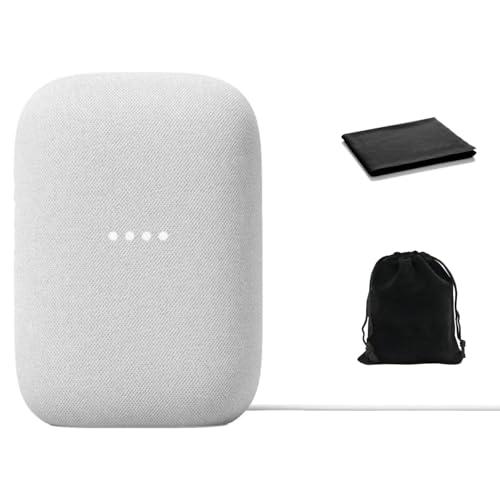
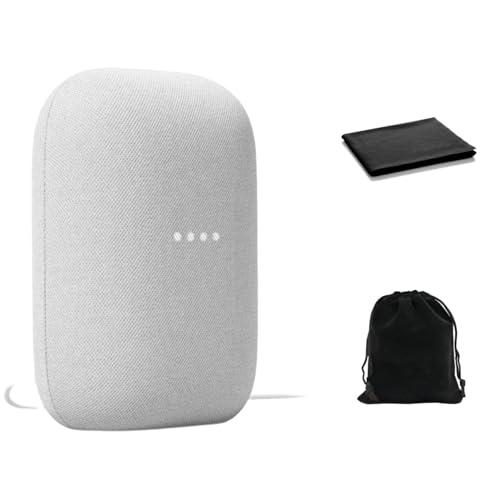
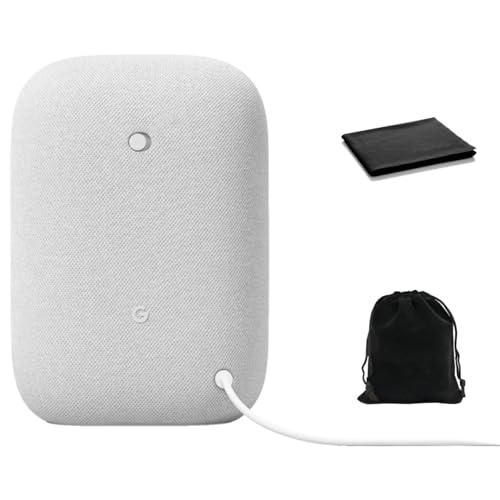
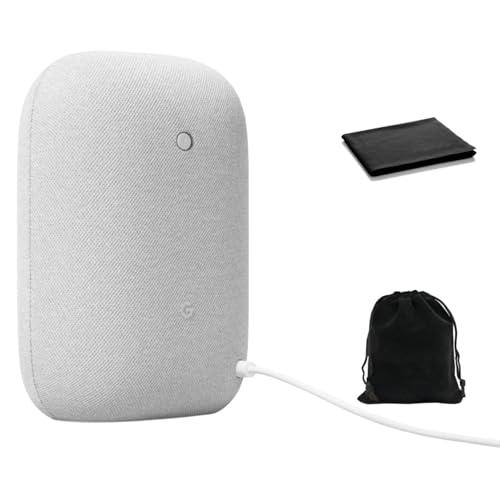
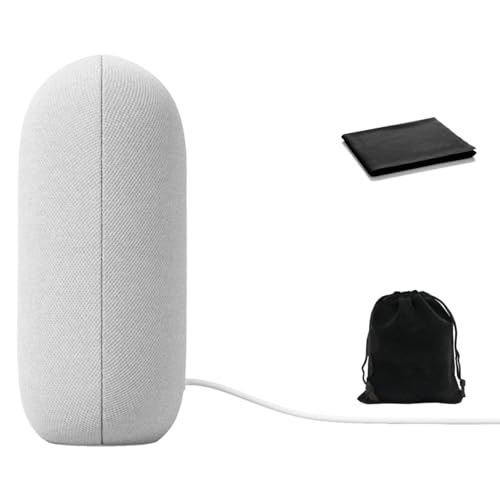
Released in 2020, the Google Nest Audio replaced the original Google Home with significant improvements in sound quality and processing power. Google's approach centers on making voice interaction as natural and reliable as possible, while delivering respectable audio performance at an accessible price point.
The Nest Audio houses a 75mm woofer (the driver that handles bass and midrange) paired with a 19mm tweeter (responsible for high frequencies like cymbals and vocal clarity). This two-driver setup is fairly standard for speakers in this price range. What's less common is Google's dedicated machine learning chip—specialized hardware that processes voice commands locally rather than always sending them to Google's servers. This means faster response times and better privacy for routine commands.
The speaker's fabric-wrapped design measures about 7 inches tall and 5 inches wide, making it compact enough for most surfaces while still providing reasonable bass response. Google claims the Nest Audio delivers 75% more volume and 50% stronger bass than its predecessor—meaningful improvements that address the original Google Home's weaknesses.
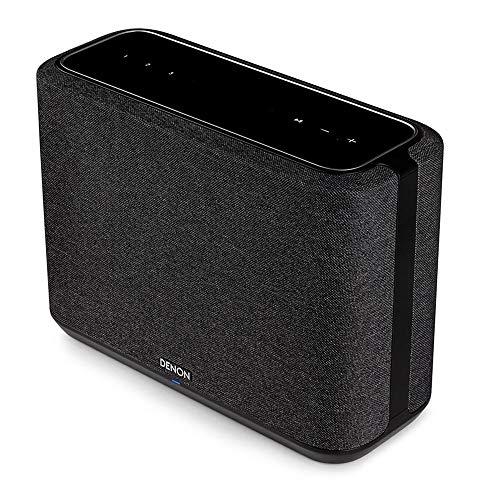
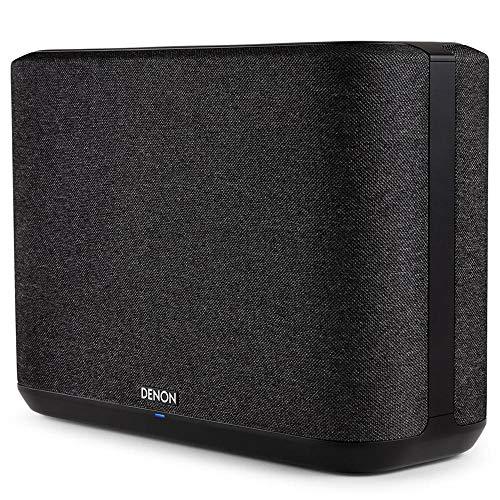
Denon took a fundamentally different path with the Home 250, launched in 2019. As a company with decades of experience building high-end audio equipment, Denon prioritized sound quality first, then added smart features. At the time of writing, it typically costs roughly three times more than the Google Nest Audio, but that premium buys you substantially more sophisticated audio engineering.
The Denon Home 250 features what's called a 2-way stereo configuration: two 19mm tweeters, two 100mm mid-bass drivers, and a 133mm passive bass radiator (a driver without its own amplifier that moves sympathetically with the active drivers to extend bass response). More importantly, each driver gets its own dedicated Class-D amplifier—think of these as individual power supplies that prevent the drivers from interfering with each other.
This multi-amplifier approach is typically found in much more expensive speakers and delivers cleaner sound at higher volumes. The Home 250 also supports high-resolution audio formats up to 24-bit/192kHz—essentially CD quality and beyond—while the Nest Audio is limited to standard streaming quality.
When evaluating speaker performance, frequency response (how evenly the speaker reproduces different pitches) and dynamic range (the difference between the quietest and loudest sounds) matter most. Power handling and distortion levels determine how loud a speaker can play while maintaining quality.
The Google Nest Audio delivers surprisingly balanced sound for its size and price. The 75mm woofer provides adequate bass for most casual listening, while the tweeter handles vocals clearly. Google's tuning emphasizes vocal clarity—crucial for a voice-controlled device—and the speaker includes adaptive EQ that automatically adjusts based on content type. Music gets one tuning profile, while podcasts get another optimized for speech intelligibility.
However, physics imposes limits. The Nest Audio's single woofer in a relatively small enclosure can't move enough air for deep bass or room-filling volume without distortion. Push it to maximum volume and you'll hear compression—a protective mechanism that reduces dynamic range to prevent damage but makes music sound flat and lifeless.
The Denon Home 250 operates in a different league entirely. Those dual woofers and passive radiator can move significantly more air, producing bass that you feel as much as hear. More importantly, the separate amplifiers mean each driver operates in its optimal range without interference. At moderate volumes, this translates to cleaner, more detailed sound across all frequencies.
The stereo tweeter arrangement creates genuine spatial separation—instruments and voices appear to come from different locations rather than a single point source. This stereo imaging makes a surprising difference for music enjoyment, especially with well-recorded albums where instruments are deliberately placed in the stereo field.
Based on our research into professional reviews and user feedback, the Home 250 maintains its composure at volumes that would send the Nest Audio into distortion. This headroom (the ability to play louder without strain) proves crucial for larger rooms or when you want to feel the full impact of movie soundtracks.
Voice recognition relies on microphone sensitivity, background noise rejection, and processing power. The best systems can distinguish your voice from across the room, even with music playing or other household noise.
The Google Nest Audio excels here with its three far-field microphones arranged to capture sound from multiple directions. Google's years of voice recognition development show—the Nest Audio consistently picks up commands even from across typical rooms, and its response times are impressively fast thanks to that onboard machine learning chip.
Google Assistant's conversational abilities have improved significantly since 2020. You can ask follow-up questions without repeating the wake word, and the system understands context better than most competitors. Need to know the weather, set multiple timers, and control your smart lights? The Nest Audio handles these tasks seamlessly.
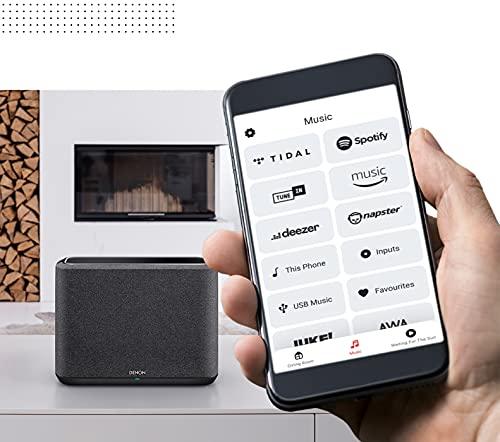
The Denon Home 250 takes a more complicated approach. It supports multiple voice assistants—Amazon Alexa is built-in, while Google Assistant and Siri work through connected devices. This flexibility appeals to households with mixed ecosystems, but the experience isn't as polished as Google's native implementation. Voice recognition is decent but not exceptional, and response times lag behind the Nest Audio.
Multi-room audio synchronizes playback across multiple speakers, allowing you to play the same music throughout your home or different tracks in each room. The implementation varies dramatically between manufacturers.
Google's multi-room system works well for basic functionality. You can group Nest Audio speakers through the Google Home app, and synchronization is reliable for casual listening. However, the system prioritizes simplicity over audiophile precision—there's no way to fine-tune delay compensation or account for room acoustics.
The Denon Home 250 employs HEOS Built-in technology, which supports up to 32 speakers across your network. More importantly, you can pair two Home 250 units for true wireless stereo, with each speaker handling distinct left and right channels. This creates a much wider soundstage and better imaging than any single speaker can achieve.
HEOS also integrates with other Denon products. Add a Denon soundbar and subwoofer, and your Home 250 units become wireless surround speakers. This expandability matters significantly if you're planning a comprehensive home entertainment system.
For bedside voice control, the Google Nest Audio makes perfect sense. Its compact footprint fits on most nightstands, and the voice recognition works reliably for setting alarms, checking the weather, or playing white noise. The audio quality suffices for personal listening—podcasts sound clear, and music is pleasant if not spectacular.
The Denon Home 250 would be overkill here. Its larger size demands dedicated space, and that powerful bass could disturb others. Plus, you'd be paying for audio capabilities you won't fully utilize in a small room at low volumes.
This is where the Home 250 truly shines. Its room-filling capabilities and bass response transform music listening from background ambiance to genuine entertainment. Jazz recordings reveal instrumental separation you can't hear on the Nest Audio, while rock music delivers the punch and energy that makes you want to turn it up.
The Nest Audio works in living rooms but shows its limitations with complex music at higher volumes. It's perfectly adequate for background listening but won't satisfy when music is the main event.
Neither speaker is designed as a primary soundbar replacement, but they handle different secondary roles well. The Google Nest Audio works fine for bedroom TV audio or casual YouTube viewing. Its vocal clarity helps with dialogue, though action scenes lack impact.
The Denon Home 250 delivers much better TV and movie audio. That extended bass response adds weight to explosions and musical scores, while the stereo separation improves dialogue clarity and sound effects positioning. Two Home 250 units flanking a TV create a surprisingly immersive experience for the money.
More importantly, the Home 250 integrates into proper home theater systems as wireless surround speakers when paired with compatible Denon equipment. This flexibility matters if you're building a system over time.
For comprehensive multi-room audio, the choice depends on your priorities and budget. Multiple Nest Audio speakers cost less initially and provide consistent voice control throughout your home. Setup is straightforward, and performance is reliable if unspectacular.
The HEOS system built into the Home 250 offers superior audio quality and more sophisticated features, but at a significant cost premium. If audio quality matters more than budget, and you're planning a long-term investment, HEOS provides a more satisfying foundation.
The Denon Home 250 supports audio files with more digital information than standard CDs—up to 24-bit/192kHz for PCM files and DSD formats up to 5.6MHz. These high-resolution files contain more musical detail, particularly in dynamic recordings like classical or jazz music.
The Google Nest Audio is limited to standard resolution audio from streaming services. For most listeners using Spotify or Apple Music, this limitation won't matter. But if you have high-resolution music collections or subscribe to services like Tidal Hi-Fi, the Home 250 can take advantage of that extra quality.
The Nest Audio relies entirely on wireless connections—Wi-Fi for streaming and Bluetooth for direct device pairing. This simplicity reduces clutter but limits flexibility.
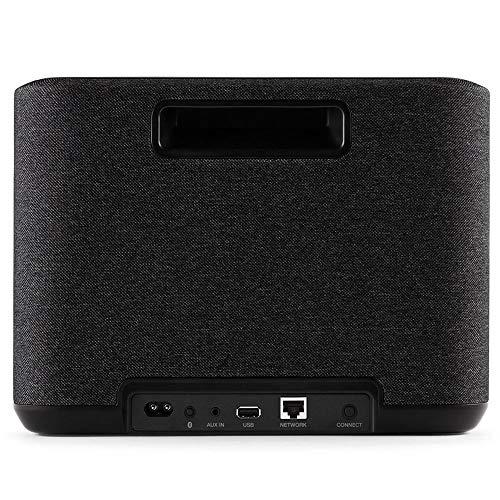
The Home 250 includes Ethernet for rock-solid network connections, USB-A for direct playback from drives, and a 3.5mm auxiliary input for any analog source. These options prove valuable for unstable Wi-Fi environments or when you want to play local music files.
You prioritize smart home integration and voice control over pure audio quality. The Nest Audio excels as a digital assistant that happens to play music well enough for most situations. Its compact size, reliable voice recognition, and accessible price make it ideal for bedrooms, offices, and kitchens where convenience matters more than sonic impact.
The Nest Audio also makes sense if you want multiple speakers throughout your home without breaking the budget. Three Nest Audio units for whole-house coverage cost less than a single Home 250 at the time of writing.
Audio quality is your primary concern, and you want smart features as a bonus rather than the main attraction. The Home 250 justifies its premium pricing with substantially better sound quality, high-resolution audio support, and serious expandability options.
This speaker makes sense for dedicated listening spaces, larger rooms, or as the foundation of a growing multi-room system. If you appreciate the difference between good and great audio reproduction—and your budget allows—the Home 250 delivers value through superior performance and longevity.
Both speakers succeed at their intended purposes, but they're designed for fundamentally different users and use cases. The Google Nest Audio democratizes smart home technology with excellent voice recognition and decent audio at an accessible price. The Denon Home 250 brings high-end audio engineering to the smart speaker category, with a price tag that reflects its superior components and capabilities.
At the time of writing, the price difference is substantial—roughly three to four times more for the Home 250. But that premium buys you components and performance that will remain satisfying for years, while the Nest Audio might leave serious music listeners wanting more as their tastes and expectations evolve.
The choice ultimately comes down to your priorities, budget, and long-term plans. For most people wanting reliable smart home control with adequate audio, the Google Nest Audio delivers exceptional value. For those who consider audio quality non-negotiable and plan to build a serious system over time, the Denon Home 250 provides a foundation that won't disappoint.
| Google Nest Audio Smart Speaker | Denon Home 250 Wireless Smart Speaker |
|---|---|
| Audio Configuration - Core difference in sound quality approach | |
| Single 75mm woofer + 19mm tweeter | Dual 19mm tweeters + dual 100mm woofers + 133mm passive radiator |
| Amplification - Affects power and sound clarity | |
| Integrated amplification | 4 dedicated Class-D amplifiers (one per driver) |
| High-Resolution Audio Support - Matters for audiophiles with quality music files | |
| Standard resolution streaming only | Up to 24-bit/192kHz PCM and DSD 5.6MHz |
| Voice Assistant Integration - Primary smart functionality | |
| Native Google Assistant with 3 far-field mics | Amazon Alexa built-in, Google Assistant/Siri via connected devices |
| Physical Dimensions - Room placement flexibility | |
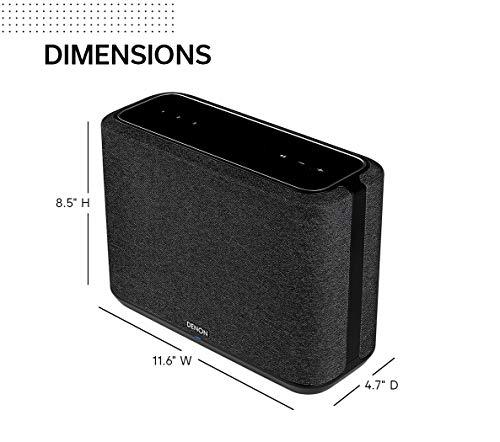
| 6.89" × 4.89" × 3.07", 2.65 lbs | 11.6" × 8.5" × 4.7", 10.5 lbs |
| Connectivity Options - Flexibility for different audio sources | |
| Wi-Fi, Bluetooth 5.0, Chromecast | Wi-Fi, Bluetooth, Ethernet, USB-A, 3.5mm aux input |
| Multi-Room Capabilities - Building whole-house audio systems | |
| Basic Google Home grouping | HEOS Built-in (up to 32 speakers), stereo pairing |
| Smart Home Integration - Ecosystem compatibility | |
| Deep Google ecosystem integration, Matter support | Multi-platform support (Alexa, Google, Siri) |
| Adaptive Audio Features - Automatic sound optimization | |
| Ambient IQ volume adjustment, Media EQ content optimization | HEOS room compensation and manual EQ controls |
| Power Requirements - Installation considerations | |
| 30W external adapter, must stay plugged in | AC power cord, must stay plugged in |
| Home Theater Integration - Expandability for TV audio | |
| Basic TV audio via Bluetooth/Chromecast | Can serve as wireless surrounds with compatible Denon Home 250 soundbars |
| Target Room Size - Where each performs best | |
| Small to medium rooms, personal listening spaces | Medium to large rooms, dedicated listening areas |
The Denon Home 250 delivers significantly better sound quality with its dual tweeters, dual woofers, and passive bass radiator configuration. It provides deeper bass, clearer stereo separation, and can handle higher volumes without distortion. The Google Nest Audio offers decent sound for its price range but is primarily designed for voice interaction rather than serious music listening.
The Denon Home 250 works much better for TV audio with its powerful bass and stereo separation, making dialogue clearer and action scenes more impactful. It can also integrate with compatible Denon soundbars as wireless surround speakers. The Google Nest Audio is adequate for casual TV viewing in bedrooms but lacks the power and bass response needed for immersive home theater experiences.
The Google Nest Audio excels at voice recognition with its three far-field microphones and native Google Assistant integration. It responds faster to commands and offers deeper smart home integration. The Denon Home 250 supports multiple voice assistants but the experience isn't as seamless, making the Google Nest Audio the clear winner for voice-first users.
The Denon Home 250 offers superior multi-room capabilities through HEOS technology, supporting up to 32 speakers with true stereo pairing options. The Google Nest Audio provides basic multi-room grouping that works well for casual listening but lacks the advanced features and audio quality of the Denon Home 250 system.
The Google Nest Audio is ideal for small rooms with its compact 7-inch height and adequate sound output for personal listening. Its size allows flexible placement on nightstands or shelves. The Denon Home 250 is oversized for most bedrooms and its powerful bass could disturb others, making it better suited for larger spaces.
The Denon Home 250 supports high-resolution audio up to 24-bit/192kHz and DSD formats, making it excellent for audiophiles with quality music collections. The Google Nest Audio is limited to standard streaming resolution, which is perfectly adequate for most users streaming from Spotify or Apple Music.
The Denon Home 250 provides more connectivity flexibility with Ethernet, USB-A, and 3.5mm auxiliary inputs alongside Wi-Fi and Bluetooth. The Google Nest Audio relies solely on wireless connections (Wi-Fi and Bluetooth), which keeps things simple but limits flexibility for different audio sources.
Yes, two Denon Home 250 speakers can pair for true wireless stereo with each handling left and right channels separately. The Google Nest Audio can be grouped with other Google speakers but doesn't offer dedicated stereo pairing, so you won't get the same level of stereo separation and imaging.
The Google Nest Audio offers exceptional value for users prioritizing smart home features and voice control, delivering solid performance at an accessible price point. The Denon Home 250 costs significantly more but justifies the premium with superior audio quality, high-resolution support, and expandability options for serious music listeners.
The Google Nest Audio works well in small to medium rooms but struggles to fill larger spaces with quality sound. The Denon Home 250 excels in medium to large rooms where its power advantage becomes apparent, maintaining clean sound at volumes that would cause the Google Nest Audio to distort.
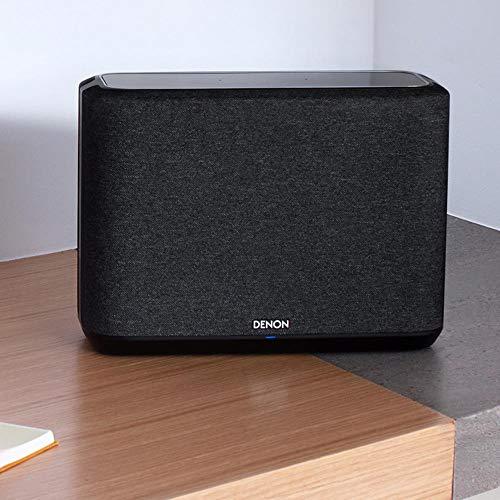
Both speakers feature quality construction, but the Denon Home 250 uses premium materials and a more substantial build weighing over 10 pounds compared to the Google Nest Audio's 2.6 pounds. The Google Nest Audio offers a more compact, minimalist design that fits easily into any decor, while the Denon Home 250 makes more of a visual statement.
The Google Nest Audio integrates deeply with Google's ecosystem, offering seamless control of Google services and Matter-compatible smart home devices. The Denon Home 250 takes a more flexible approach, supporting multiple voice assistants and working across different smart home platforms, making it better for households with mixed ecosystems.
We've done our best to create useful and informative comparisons to help you decide what product to buy. Our research uses advanced automated methods to create this comparison and perfection is not possible - please contact us for corrections or questions. These are the sites we've researched in the creation of this article: rtings.com - soundguys.com - bestbuy.com - androidcentral.com - whathifi.com - rtings.com - thenextweb.com - youtube.com - audiosciencereview.com - youtube.com - sypnotix.com - rtings.com - audioholics.com - youtube.com - store.google.com - store.google.com - youtube.com - support.google.com - cdn.adiglobaldistribution.us - dxomark.com - store.google.com - crutchfield.com - soundguys.com - soundguys.com - support.google.com - store.google.com - bestbuy.com - en.wikipedia.org - store.google.com - youtube.com - dxomark.com - hometechnologyreview.com - crutchfield.com - versus.com - stereoguide.com - versus.com - whathifi.com - techgearlab.com - youtube.com - crutchfield.com - consumerreports.org - blog.son-video.com - crutchfield.com - skybygramophone.com - audiolab.com - theaudiotailor.com.au - youtube.com - scribd.com

Privacy Policy
Terms and Conditions - Affiliate Policy
Home Security
© Copyright 2008-2026.
11816 Inwood Rd #1211, Dallas, TX 75244