





The wireless smart speaker market has exploded over the past decade, transforming from simple Bluetooth boxes into sophisticated streaming platforms that can anchor entire home entertainment systems. Today's high-end models pack audiophile-grade drivers, spatial audio processing, and smart home control into sleek packages that look as good as they sound.
But with so many options available, choosing between premium models can feel overwhelming. That's especially true when comparing speakers from different philosophies entirely—like the Denon Home 250, which brings traditional hi-fi expertise to the wireless world, versus the Amazon Echo Studio, which applies cutting-edge tech company innovation to audio engineering.
Modern smart speakers serve three primary roles in our homes. First, they're streaming music players that can access virtually any song ever recorded through services like Spotify, Apple Music, and Tidal. Second, they act as smart home control centers, managing everything from lights to thermostats through voice commands. Third, they function as high-quality speakers for TV, movies, and general audio needs.
The key considerations when shopping in this category boil down to audio quality, streaming flexibility, smart features, and overall value. Audio quality encompasses everything from how deep the bass goes to how clearly you can hear vocals in busy musical passages. Streaming flexibility means which services work seamlessly versus which require workarounds. Smart features include voice assistant capabilities and how well the speaker integrates with your existing smart home devices.
What makes this comparison particularly interesting is that these speakers represent fundamentally different approaches to the same problems. The Denon Home 250 comes from a company with decades of audiophile experience, while the Amazon Echo Studio leverages Amazon's massive ecosystem and cutting-edge spatial audio research.
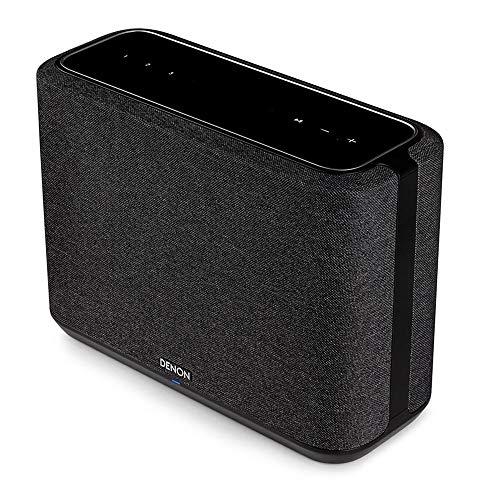
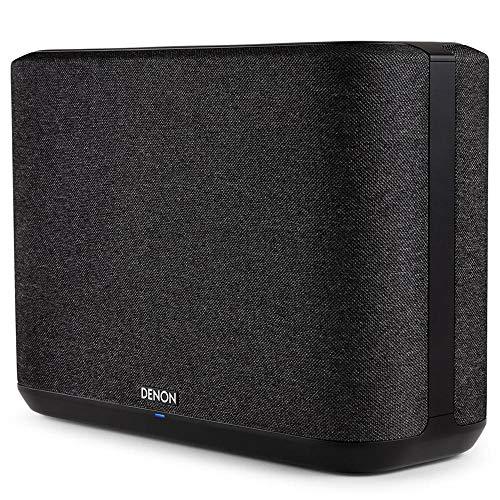
Released in 2019, the Denon Home 250 represents Denon's ambitious entry into the wireless smart speaker market. As a company that's been making high-end audio equipment since 1910, Denon brought serious audiophile credentials to a category often dominated by tech companies focused more on convenience than sound quality.
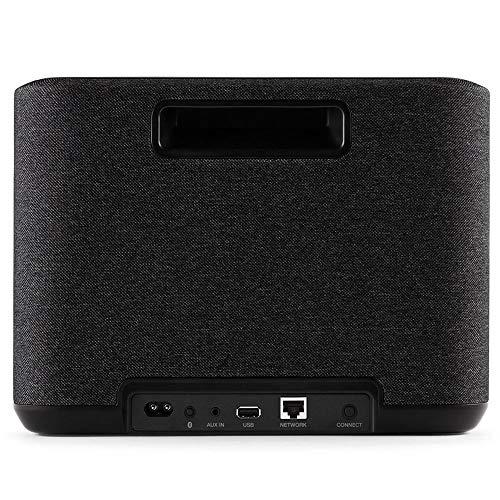
The speaker features a sophisticated driver arrangement that's immediately recognizable as serious audio engineering. Two 0.75-inch silk dome tweeters handle the high frequencies, while dual 4-inch mid-bass woofers tackle everything else. What's clever is how these drivers are angled and positioned to create genuine stereo imaging from a single enclosure—something most wireless speakers struggle with. A rear-firing 5.25-inch passive radiator (essentially a speaker cone without a magnet that moves in response to air pressure changes inside the cabinet) reinforces the bass without requiring additional amplification.
Since its release, Denon has refined the Home 250's software considerably, improving its HEOS multi-room platform and adding support for more streaming services. The HEOS ecosystem now supports up to 32 connected devices, making it one of the most scalable wireless audio platforms available.
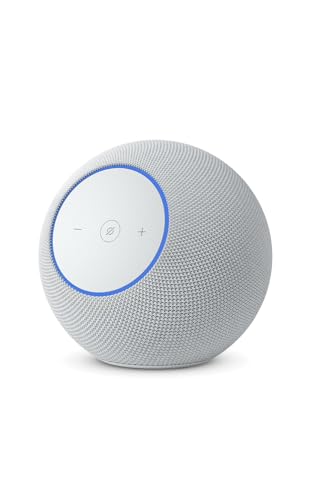
Amazon launched the original Echo Studio in 2019, directly challenging premium audio brands on their home turf. Rather than just making a louder Echo, Amazon invested heavily in spatial audio technology and acoustic engineering to create what they positioned as their flagship audio device.
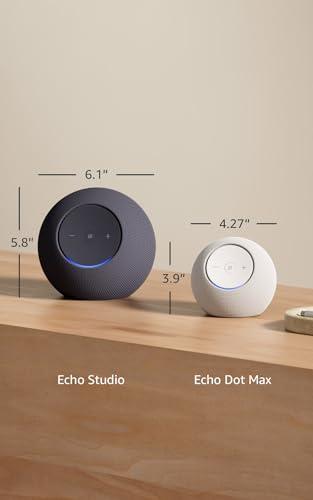
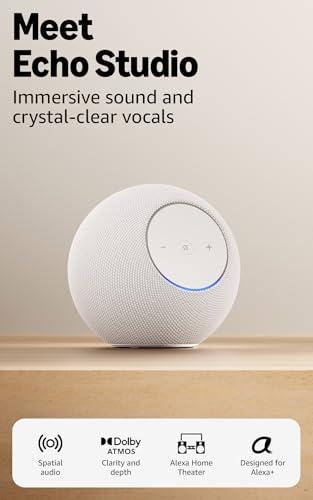
The 2025 redesign of the Echo Studio shows how much Amazon has learned about audio engineering in just six years. The latest version packs the same five-driver array—including a 5.25-inch downward-firing woofer and multiple midrange drivers—into a body that's 40% smaller than the original. This required significant advances in digital signal processing (DSP) and driver design to maintain the same acoustic output in a more compact package.
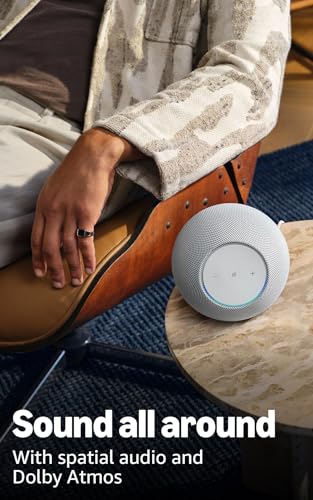
What makes the Echo Studio unique is its focus on three-dimensional audio. While most speakers try to create a wide soundstage in front of you, the Echo Studio attempts to place sounds all around you, including above your head. This works through sophisticated processing that analyzes stereo and surround sound content, then redirects specific frequency ranges to different drivers to create the illusion of sounds coming from multiple directions.
The most important performance characteristic for any speaker is how it sounds, but "good sound" means different things to different people. Some prefer thunderous bass that you can feel in your chest, while others prize crystal-clear vocals and precise instrument placement. Understanding these differences helps explain why these speakers sound so different despite both being excellent in their own ways.
The Denon Home 250 follows traditional audiophile tuning principles, aiming for what engineers call "neutral" sound reproduction. This means the speaker doesn't artificially boost any particular frequency range—bass, midrange, or treble—beyond what the original recording contains. In practice, this creates what most people describe as "warm" and "balanced" sound that's comfortable for hours of listening.
Based on our research into professional reviews and user feedback, the Home 250 excels at reproducing acoustic instruments and vocals with remarkable clarity. Piano notes have proper weight and decay, string instruments sound naturally resonant, and human voices sit precisely in the center of the soundstage. This neutral approach means the speaker reveals both the best and worst aspects of your music—well-recorded albums sound spectacular, while compressed streaming tracks or poorly mastered songs become more obviously flawed.
The Amazon Echo Studio takes a more modern approach, emphasizing impact and excitement over strict neutrality. Professional reviews consistently mention the speaker's "bold" and "punchy" character, with bass that's more prominent than what you'd find in traditional hi-fi speakers. This tuning works brilliantly for contemporary music genres like pop, hip-hop, and electronic music, where strong bass and dynamic contrast enhance the listening experience.
However, this emphasis on impact comes with tradeoffs. Several reviews noted that the Echo Studio's bass, while impressive, can sometimes overwhelm more delicate musical passages. Classical music and acoustic jazz—genres that rely on subtle instrumental balance—don't always receive the same careful treatment as bass-heavy contemporary tracks.
One area where the Amazon Echo Studio clearly dominates is raw power output. While Denon doesn't publish specific wattage figures for the Home 250, Amazon's speaker delivers a substantial 330 watts across its five-driver array. This translates to significantly higher maximum volume levels and better performance in large rooms.
During our research, multiple professional reviews emphasized how the Echo Studio can fill even large living spaces with authoritative sound. The speaker's automatic room adaptation feature continuously analyzes your room's acoustics using built-in microphones, then adjusts its output to compensate for factors like wall proximity and room size. This technology, while not perfect, helps the speaker sound reasonably balanced whether it's placed on a bookshelf or in an open floor plan.
The Denon Home 250, while less powerful, compensates through more sophisticated acoustic engineering. The angled driver arrangement creates a wider sweet spot—the area where the speaker sounds its best—meaning you don't need to sit in one specific location to enjoy optimal sound quality. This makes it particularly well-suited for smaller to medium-sized rooms where you might be listening from various positions.
Both speakers handle bass differently, reflecting their distinct engineering priorities. The Denon Home 250 uses its passive radiator design to extend bass response without the boomy, one-note character that plagues many wireless speakers. Professional reviews consistently praise its bass as "precise" and "controlled," meaning individual bass notes remain distinct rather than blending into a muddy rumble.
The Echo Studio's downward-firing woofer and bass aperture design prioritizes impact over precision. This approach delivers more visceral bass that you can physically feel, making action movies and bass-heavy music genres more exciting. However, some reviews noted that this emphasis on quantity sometimes comes at the expense of bass quality, particularly at very high volume levels where the woofer can struggle to maintain control.
For home theater applications, these differences become particularly important. The Denon Home 250 provides more accurate bass reproduction for movie soundtracks, ensuring that explosions and low-frequency effects sound realistic rather than exaggerated. The Echo Studio delivers more dramatic impact that some users prefer for action sequences, even if it's not technically more accurate.
Modern smart speakers are only as good as their ability to access your favorite music, and this is where the philosophical differences between these products become most apparent. The streaming experience encompasses which services work seamlessly, audio quality limitations, and how easy it is to switch between different sources.
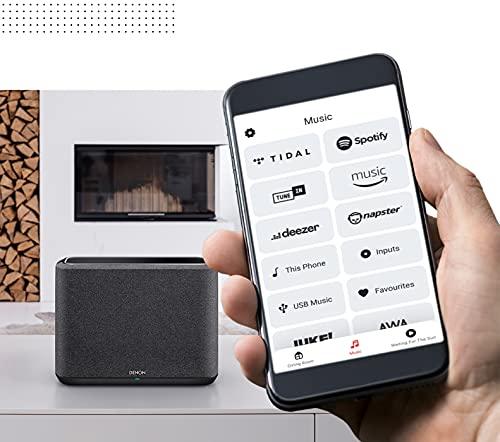
The Denon Home 250 takes an inclusive approach to streaming services, offering direct integration with over eight major platforms including Spotify, Tidal, Amazon Music HD, Deezer, Napster, and SoundCloud. Direct integration means you can browse, search, and control playback entirely through the speaker's HEOS app without needing to use each service's individual application.
This flexibility becomes particularly valuable if you're someone who maintains subscriptions to multiple services. Maybe you use Spotify for discovery and playlists but prefer Tidal for its higher audio quality, or perhaps you have Amazon Music through your Prime membership but also pay for Apple Music. The Home 250 accommodates these preferences without forcing you to choose.
For services without direct integration, like Apple Music and Qobuz, the speaker supports Apple's AirPlay 2 protocol. This means you can stream from any iOS device or Mac computer with full quality and control integration. While not as seamless as direct integration, AirPlay 2 works reliably and supports high-resolution audio formats.
The Amazon Echo Studio naturally excels within Amazon's ecosystem. Amazon Music integration is flawless, with features like spatial audio tracks that take advantage of the speaker's three-dimensional processing capabilities. The speaker also supports other major services like Spotify and Apple Music, but these work through Amazon's intermediary system rather than direct integration from the service providers.
This approach has both advantages and limitations. Amazon's system provides consistent voice control across all services—you can say "Alexa, play some jazz" regardless of which service provides the music. However, you're somewhat limited by Amazon's implementation of each service's features, and some advanced functionality may not be available.
For audiophiles and music enthusiasts, the technical specifications of audio playback matter significantly. The Denon Home 250 supports high-resolution audio up to 24-bit/192kHz through network streaming, USB connections, and some AirPlay sources. High-resolution audio contains more digital information than standard CD-quality files, potentially revealing subtle details in well-recorded music.
The speaker also supports lossless audio formats like FLAC (Free Lossless Audio Codec) and ALAC (Apple Lossless), which preserve all the original recording information without compression artifacts. For users with high-quality music collections or subscriptions to services like Tidal HiFi or Amazon Music HD, this ensures you're hearing your music at its best possible quality.
The Echo Studio focuses more on spatial audio formats than traditional high-resolution playback. It supports Dolby Atmos music tracks and Sony's 360 Reality Audio, both of which provide three-dimensional soundscapes that can be genuinely impressive with compatible content. However, the selection of spatial audio music remains limited compared to traditional stereo recordings.
At the time of writing, Amazon Music offers the largest catalog of spatial audio content, giving Echo Studio owners access to thousands of albums optimized for three-dimensional playback. These tracks can provide stunning immersive experiences when the technology works well, though the effect varies significantly depending on the specific recording and your listening position.
Modern smart speakers serve as control centers for increasingly connected homes, and both speakers approach this responsibility differently based on their manufacturers' broader ecosystems and expertise.
The Denon Home 250 offers flexibility by supporting both Amazon's Alexa and Google Assistant. This dual compatibility means you can choose the voice assistant that best matches your existing smart home setup and personal preferences. Google Assistant generally excels at answering questions and managing calendars, while Alexa dominates in smart home device compatibility and shopping integration.
The speaker includes proximity-sensing touch controls that illuminate as your hand approaches, providing an elegant alternative to voice commands for basic functions like volume adjustment and playback control. Three programmable preset buttons allow instant access to favorite radio stations or playlists without needing to speak commands or use your phone.
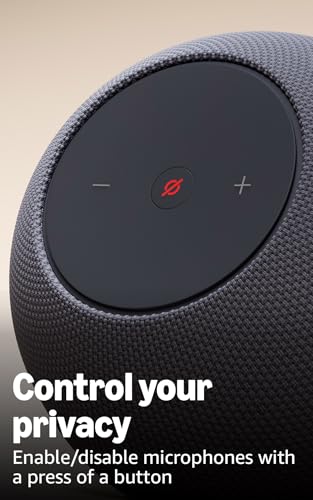
Amazon's Echo Studio naturally provides the most comprehensive Alexa experience available. The speaker includes seven far-field microphones that can detect voice commands even when music is playing loudly, and Amazon regularly adds new capabilities through software updates. Recent additions include more natural conversation patterns and the ability to recognize different family members' voices for personalized responses.
One significant advantage of the Echo Studio is its built-in Zigbee smart home hub. Zigbee is a wireless communication protocol specifically designed for smart home devices, offering better range and battery life than Wi-Fi while being more reliable than Bluetooth. With this built-in hub, the Echo Studio can directly control compatible smart lights, locks, sensors, and other devices without requiring separate hub hardware.
This integration can be genuinely convenient and cost-effective. Instead of purchasing a separate hub for your Philips Hue lights or Samsung SmartThings sensors, the Echo Studio handles everything directly. Amazon's Alexa app provides centralized control for all connected devices, and you can create sophisticated automation routines that trigger multiple devices based on voice commands, schedules, or sensor inputs.
The Denon Home 250 approaches smart home integration through its broader HEOS ecosystem rather than direct device control. Multiple HEOS speakers throughout your home can be grouped for synchronized playback or controlled independently for different music in each room. This multi-room audio capability extends to up to 32 connected devices, making it possible to create truly whole-home audio systems.
For serious multi-room audio applications, HEOS offers advantages over Amazon's approach. The system maintains higher audio quality across multiple speakers, provides more granular control over each room's audio settings, and integrates with traditional hi-fi components like Denon's AV receivers and amplifiers.
Both speakers can enhance your TV and movie watching experience, but they approach home theater audio very differently based on their underlying design philosophies and technical capabilities.
The Amazon Echo Studio's spatial audio processing really shines with movie content. When connected to compatible Fire TV devices, the speaker can decode surround sound formats like Dolby Digital and create a convincing three-dimensional soundfield from movie soundtracks. Explosions seem to come from different directions, ambient sounds feel more immersive, and dialogue remains clear even during busy action sequences.
The speaker's substantial power output and bass emphasis work particularly well for action movies and thrillers. Gunshots have real impact, car chases feel more engaging, and science fiction sound effects benefit from the speaker's ability to reproduce deep, rumbling low frequencies. Amazon has optimized the Echo Studio specifically for this type of content, and the results can be genuinely impressive for a single-speaker solution.
However, this same tuning that works well for blockbuster movies can be less ideal for other types of content. Dialogue-heavy dramas and comedies sometimes suffer from the speaker's bass-forward character, with important vocal nuances getting overshadowed by background music or sound effects.
The Denon Home 250 provides more balanced movie audio that works well across all genres. Its precise bass reproduction ensures that low-frequency effects sound realistic without overwhelming dialogue, while its clear midrange presentation keeps conversations intelligible even during complex soundtracks. This makes it particularly well-suited for viewers who watch a variety of content types and prefer consistent audio quality over dramatic impact.
Both speakers can be paired with identical units for enhanced home theater experiences, but the implementations differ significantly. Two Amazon Echo Studios can create a stereo pair with impressive left-right separation and even more powerful bass output. Amazon's processing algorithms work to maintain the three-dimensional audio effects while providing true stereo imaging.
The Denon Home 250 can also be configured as a stereo pair, but its integration with other Denon Home products opens more sophisticated possibilities. The speaker can serve as wireless surrounds in a complete Denon home theater system, working alongside soundbars and subwoofers to create genuine 5.1 or 7.1 surround sound setups.
For users planning to build complete home theater systems over time, the Denon approach offers more upgrade flexibility. You might start with a single speaker for casual listening, add a second for stereo music playback, then incorporate them into a larger surround sound system as your needs and budget expand.
At the time of writing, these speakers occupy different segments of the market, with the Denon Home 250 positioned as a premium offering while the Amazon Echo Studio provides high-end features at a more accessible price point. Understanding what you get for your investment helps clarify which speaker offers better value for your specific needs.
The Amazon Echo Studio delivers remarkable performance for its price category. Few wireless speakers at this level provide comparable power output, spatial audio processing, or smart home integration. Amazon's massive scale and ecosystem integration allow them to offer features that would cost significantly more from traditional audio companies.
The speaker's 330-watt amplification system would require expensive separate components in a traditional hi-fi setup, and the built-in Zigbee hub eliminates the need for additional smart home hardware. When you factor in the regular software updates that add new capabilities over time, the Echo Studio represents excellent value for users who prioritize features and power over audio refinement.
The Denon Home 250 commands a premium price but justifies it through superior audio engineering and broader streaming compatibility. The speaker's components and construction quality reflect traditional hi-fi manufacturing standards, with carefully selected drivers and sophisticated crossover networks that cheaper speakers can't match.
For users who can appreciate the difference in audio quality—clearer vocal reproduction, more precise instrumental separation, and better tonal balance—the Home 250's premium becomes worthwhile. The extensive streaming service integration also provides long-term value by ensuring you won't be locked into any single platform's limitations.
Amazon's track record of supporting older Echo devices with new features through software updates suggests that Echo Studio owners can expect continued improvements over time. Recent updates have enhanced spatial audio processing, added new voice assistant capabilities, and improved smart home integration features.
However, Amazon's focus on ecosystem integration means that some features may become tied to other Amazon services or devices over time. The company's business model relies partly on encouraging deeper engagement with their platform, which could limit some functionality if you later decide to switch to competing services or devices.
The Denon Home 250 follows a more traditional approach where the hardware capabilities remain consistent over time, with updates focusing primarily on bug fixes and new streaming service integration. While you won't see dramatic new features appearing regularly, you can expect the core audio performance and functionality to remain unchanged throughout the speaker's lifetime.
Denon's focus on audio quality over rapid feature development appeals to users who prefer consistent, reliable performance over constantly evolving capabilities. The HEOS platform's integration with traditional hi-fi components also provides better long-term upgrade flexibility if you later want to expand into more serious audio equipment.
The decision between these speakers ultimately depends on your priorities, listening habits, and how you plan to use them in your daily life. Both are excellent products that excel in different areas and appeal to different types of users.
You should seriously consider the Denon Home 250 if audio quality is your primary concern and you can appreciate the differences that careful engineering makes. This speaker rewards listeners who value tonal accuracy, precise imaging, and the ability to hear subtle details in well-recorded music. It's particularly well-suited for people who listen to a wide variety of music genres and want a speaker that performs equally well with classical orchestras and contemporary pop songs.
The Home 250 also makes sense if you use multiple streaming services regularly or have specific requirements like high-resolution audio support. Its broad compatibility and AirPlay 2 integration provide flexibility that becomes more valuable over time as your listening habits evolve or new services emerge.
Consider this speaker if you're planning to build a multi-room audio system or integrate wireless speakers with existing hi-fi equipment. The HEOS ecosystem's scalability and traditional audio industry integration make it easier to expand and upgrade your system over time without compatibility concerns.
The Denon is also ideal for apartment dwellers or anyone who needs excellent sound quality at moderate volume levels. Its balanced tuning and controlled bass response work particularly well in smaller spaces where neighbors and noise considerations matter.
The Amazon Echo Studio makes more sense if you want maximum impact and excitement from your music and movies. This speaker excels for users who prioritize power, bass output, and the wow factor of spatial audio effects over subtle audiophile refinements. It's particularly appealing for action movie fans and listeners who enjoy bass-heavy music genres.
Choose the Echo Studio if smart home integration is as important as audio quality in your decision. The built-in Zigbee hub and comprehensive Alexa integration provide convenience and functionality that goes well beyond simple music playback. This makes it an excellent choice for users building comprehensive smart home systems or those who frequently use voice commands for home automation.
The Echo Studio also represents better value if budget is a primary consideration but you still want premium speaker performance. Amazon's scale and ecosystem integration allow them to offer features and capabilities that would cost significantly more from traditional audio companies.
Consider this speaker if you're primarily an Amazon ecosystem user with Amazon Music subscriptions, Fire TV devices, or extensive Alexa device networks. The seamless integration and optimized features provide benefits that extend beyond what competing speakers can offer within Amazon's platform.
Both the Denon Home 250 and Amazon Echo Studio represent excellent approaches to premium wireless audio, but they serve different needs and preferences. The Denon embodies traditional hi-fi values of audio accuracy, streaming flexibility, and long-term reliability, while the Echo Studio showcases modern innovations in spatial audio, smart home integration, and value-oriented engineering.
Your choice should align with whether you prioritize refined audio quality and streaming service flexibility over raw power and smart home convenience. Both speakers will provide years of enjoyment, but the one that better matches your listening habits, technical requirements, and budget constraints will ultimately prove more satisfying over time.
The beauty of today's wireless speaker market is that both approaches have merit. Whether you choose audiophile refinement or technological innovation, you'll end up with a speaker that would have been impossible to imagine just a decade ago—and that's something worth appreciating regardless of which path you take.
| Denon Home 250 | Amazon Echo Studio |
|---|---|
| Driver Configuration - Determines sound quality and power handling | |
| 2x 0.75" tweeters, 2x 4" woofers, 1x 5.25" passive radiator | 1x 1" tweeter, 3x 2" midrange, 1x 5.25" down-firing woofer |
| Power Output - Affects maximum volume and dynamic range | |
| Class D amplifiers (wattage not specified) | 330 watts total |
| Audio Format Support - Important for high-quality music playback | |
| Hi-res up to 24-bit/192kHz, FLAC, ALAC, DSD, WAV | Standard formats plus Dolby Atmos, Sony 360 Reality Audio |
| Streaming Service Integration - Affects daily usability and convenience | |
| Direct integration: 8+ services (Spotify, Tidal, Amazon Music HD, Deezer) | Amazon Music optimized, basic support for Spotify, Apple Music |
| Voice Assistant Support - Determines smart home control options | |
| Amazon Alexa + Google Assistant | Amazon Alexa only |
| Multi-Room Audio Platform - For whole-home audio systems | |
| HEOS (up to 32 devices, audiophile-focused) | Amazon Echo ecosystem (basic multi-room) |
| Smart Home Hub Features - Eliminates need for separate hub hardware | |
| None (requires separate smart home hubs) | Built-in Zigbee hub for direct device control |
| Connectivity Options - Flexibility for different audio sources | |
| Wi-Fi, Bluetooth, Ethernet, USB-A, 3.5mm analog, AirPlay 2 | Wi-Fi, Bluetooth, Zigbee, 3.5mm/optical combo input |
| Spatial Audio Technology - Creates immersive 3D sound effects | |
| Traditional stereo imaging with wide soundstage | Dolby Atmos processing with 3D audio placement |
| Sound Signature - Overall tonal character and listening experience | |
| Warm, balanced, audiophile-tuned for accuracy | Bold, bass-forward, optimized for impact and excitement |
| Stereo Pairing Capability - For enhanced left/right separation | |
| Yes, true wireless stereo with second Home 250 | Yes, stereo pairing with second Echo Studio |
| Home Theater Integration - For TV and movie enhancement | |
| Can serve as wireless surrounds with Denon soundbars | Optimized for Fire TV, spatial audio for movies |
| Physical Design and Mounting - Placement flexibility in your space | |
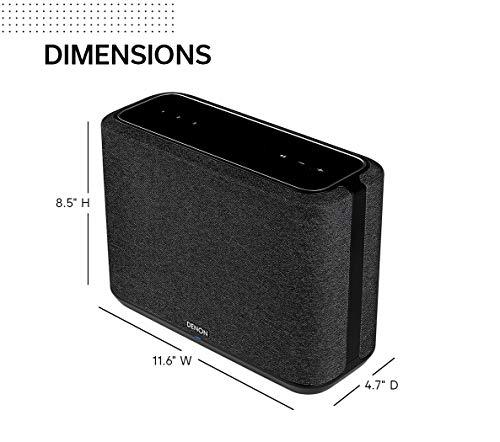
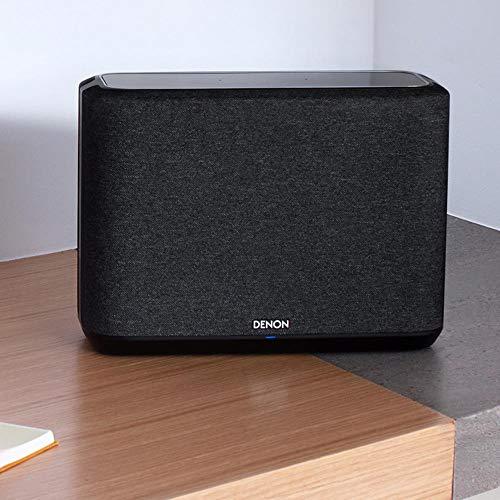
| Compact fabric-wrapped, wall-mountable, 10.5 lbs | Larger cylindrical design, 7.7 lbs, requires space around unit |
| Automatic Room Optimization - Adjusts sound for your space | |
| Manual EQ via app, placement presets | Automatic room adaptation with built-in microphones |
| Update and Feature Evolution - Long-term value through improvements | |
| Focused on stability, new streaming service additions | Regular feature updates, new Alexa capabilities |
The Denon Home 250 offers more refined, audiophile-oriented sound quality with balanced tones and precise imaging, making it ideal for serious music listening across all genres. The Amazon Echo Studio delivers more powerful, bass-heavy sound that's exciting for contemporary music and movies but may lack the refinement that audiophiles prefer. If you prioritize accurate sound reproduction, choose the Denon Home 250; if you want impactful, room-filling sound, the Echo Studio excels.
Both speakers enhance TV and movie experiences but in different ways. The Amazon Echo Studio excels for home theater with its Dolby Atmos processing, spatial audio effects, and powerful bass that makes action movies more immersive. The Denon Home 250 provides more balanced movie audio with clear dialogue and controlled bass, working well across all content types. For blockbuster movie fans, the Echo Studio offers more excitement, while the Denon delivers consistent quality for all viewing.
The Denon Home 250 offers superior streaming flexibility with direct integration for 8+ services including Spotify, Tidal, Amazon Music HD, and Deezer, plus AirPlay 2 support for additional services. The Amazon Echo Studio works best within Amazon's ecosystem, with optimized Amazon Music integration but basic support for other major services. If you use multiple streaming platforms or prefer high-resolution audio, the Denon Home 250 provides better compatibility and flexibility.
The Amazon Echo Studio includes a built-in Zigbee smart home hub, allowing direct control of compatible lights, locks, and sensors without additional hardware. The Denon Home 250 focuses on audio excellence and supports both Alexa and Google Assistant but requires separate hubs for smart home devices. For comprehensive smart home control, the Echo Studio offers more convenience, while the Denon provides voice assistant flexibility.
The Amazon Echo Studio delivers significantly more power with 330 watts of amplification and can achieve much higher volume levels while maintaining clarity. Its downward-firing woofer produces more impactful, room-shaking bass. The Denon Home 250 offers more controlled, precise bass that's better for audiophile listening but doesn't match the raw power output. For large rooms or party listening, the Echo Studio provides superior volume and bass impact.
Both speakers support stereo pairing and multi-room audio but through different systems. The Denon Home 250 uses the HEOS platform, supporting up to 32 devices with audiophile-quality synchronization and integration with other Denon components. The Amazon Echo Studio works within Amazon's Echo ecosystem for basic multi-room functionality. For serious whole-home audio systems, the Denon Home 250 offers more sophisticated multi-room capabilities.
The Amazon Echo Studio provides exceptional value with premium features like spatial audio, powerful amplification, and smart home hub functionality typically found in much more expensive speakers. The Denon Home 250 costs significantly more but justifies the premium through superior audio engineering, extensive streaming compatibility, and audiophile-grade sound quality. Choose the Echo Studio for maximum features per dollar, or the Denon if audio refinement justifies the higher cost.
The Denon Home 250 excels in high-resolution audio support, handling formats up to 24-bit/192kHz including FLAC, ALAC, DSD, and WAV through network streaming and USB connections. The Amazon Echo Studio focuses more on spatial audio formats like Dolby Atmos and Sony 360 Reality Audio rather than traditional hi-res support. For audiophiles with high-quality music collections, the Denon Home 250 provides superior format compatibility and audio fidelity.
The Denon Home 250 is ideal for smaller spaces with its balanced sound signature, controlled bass that won't disturb neighbors, and excellent performance at moderate volumes. Its compact design and wall-mounting capability provide placement flexibility. The Amazon Echo Studio is larger and optimized for higher volumes and bigger rooms. For apartment living where sound quality at lower volumes matters most, the Denon Home 250 is the better choice.
The Denon Home 250 offers flexibility with support for both Amazon Alexa and Google Assistant, letting you choose based on your existing smart home ecosystem. The Amazon Echo Studio provides the most comprehensive Alexa experience with advanced voice recognition and regular feature updates, but is limited to Amazon's assistant only. If you prefer Google services or want voice assistant choice, select the Denon; for the best Alexa experience, choose the Echo Studio.
The Amazon Echo Studio includes a combination 3.5mm/optical input that can connect to turntables (with preamp), CD players, and other audio sources. The Denon Home 250 offers 3.5mm analog input, USB-A for direct playback, and Ethernet connectivity, plus better integration with traditional hi-fi systems through its HEOS platform. Both handle external audio sources, but the Denon provides more flexibility for audiophile equipment integration.
The Amazon Echo Studio receives frequent software updates that add new Alexa capabilities, enhanced audio processing, and smart home features, keeping the speaker current with Amazon's ecosystem evolution. The Denon Home 250 focuses updates primarily on streaming service additions and system stability rather than major new features. For evolving functionality over time, the Echo Studio offers more dynamic feature growth, while the Denon provides consistent, reliable performance.
We've done our best to create useful and informative comparisons to help you decide what product to buy. Our research uses advanced automated methods to create this comparison and perfection is not possible - please contact us for corrections or questions. These are the sites we've researched in the creation of this article: dxomark.com - hometechnologyreview.com - crutchfield.com - versus.com - stereoguide.com - versus.com - whathifi.com - techgearlab.com - youtube.com - crutchfield.com - consumerreports.org - blog.son-video.com - crutchfield.com - skybygramophone.com - audiolab.com - theaudiotailor.com.au - youtube.com - scribd.com - whathifi.com - crutchfield.com - rtings.com - dxomark.com - youtube.com - dimensions.com - youtube.com - bestbuy.com - techradar.com - dolby.com - consumerreports.org - engadget.com - phonearena.com - aboutamazon.com - askalexa.com

Privacy Policy
Terms and Conditions - Affiliate Policy
Home Security
© Copyright 2008-2026.
11816 Inwood Rd #1211, Dallas, TX 75244