

Smart speakers have become essential home devices, but choosing the right one can be confusing when products serve vastly different purposes. Today we're comparing two popular options that represent completely different approaches: the premium Bose Portable Smart Speaker and the budget-friendly Google Nest Mini 2nd Gen. While both technically qualify as "smart speakers," they're designed for entirely different users and situations.
Before diving into specifics, it's important to understand that smart speakers fall into distinct categories based on their primary purpose. Stationary smart speakers like the Google Nest Mini prioritize affordability and smart home integration—they're designed to stay plugged into the wall as permanent fixtures in your home. Premium portable speakers like the Bose Portable Smart Speaker focus on audio quality and mobility while adding smart features as a bonus.
The key considerations when choosing between these categories include audio performance (how good they sound), portability requirements (can you take them places), smart home integration (how well they control other devices), and value proposition (what you get for your money). Understanding which category fits your needs will help narrow down your decision significantly.
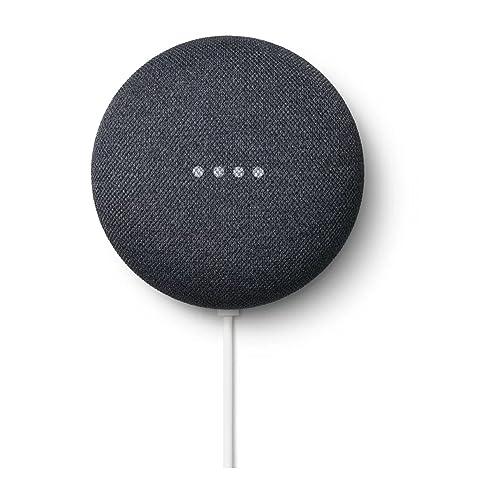
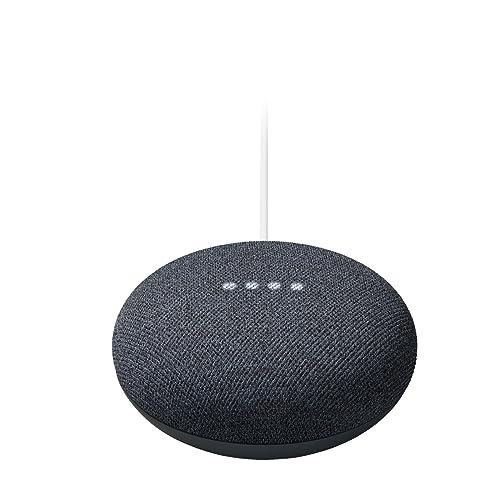
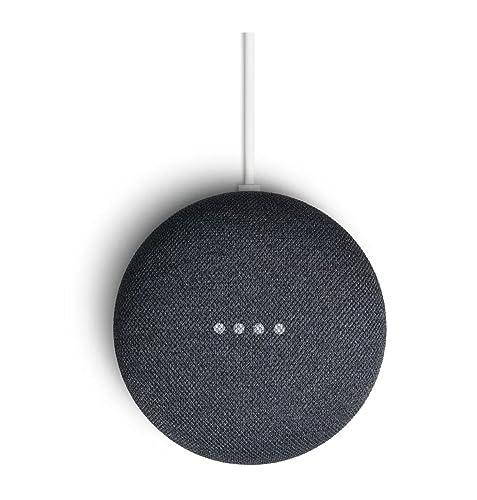
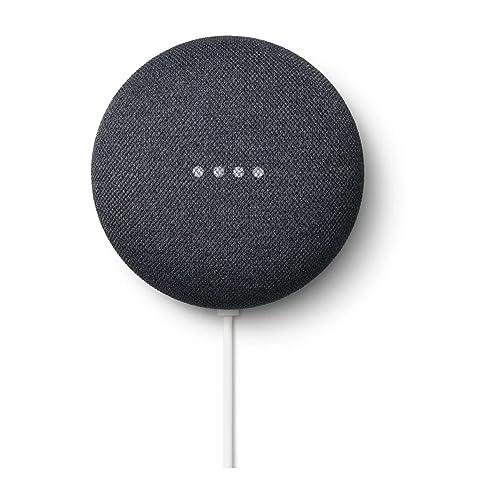
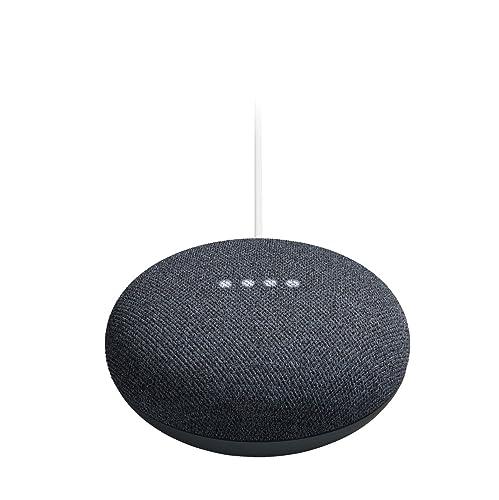
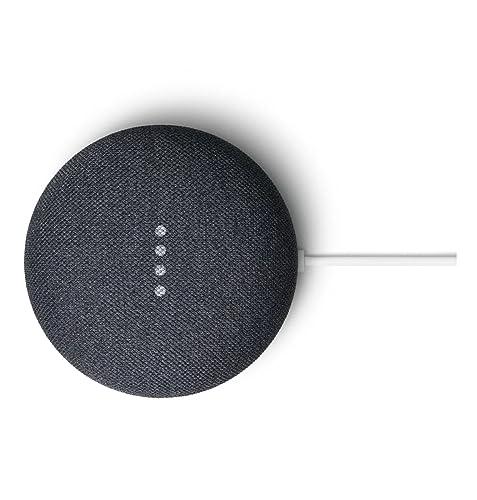
Released in 2019, the Google Nest Mini 2nd Gen represents Google's effort to make smart home technology accessible to everyone. At roughly the price of a nice dinner out (at the time of writing), this ultra-compact device measures just under four inches across and requires constant wall power through a 15-watt adapter.
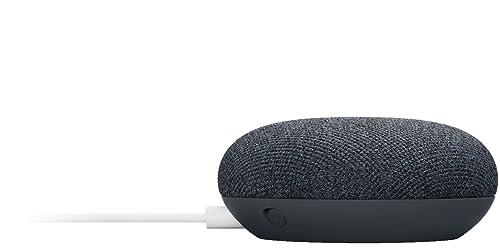
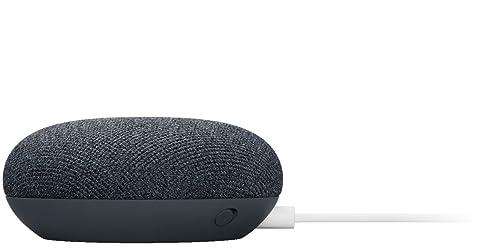
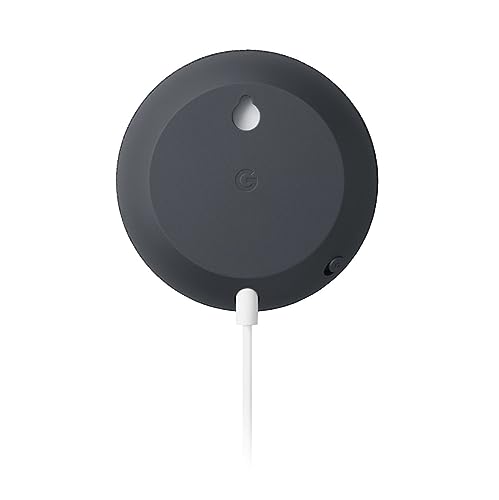
The 2nd generation brought meaningful improvements over the original 2017 Mini, including better microphone sensitivity for voice recognition, a physical mute button for privacy concerns, and notably stronger bass response—though "stronger" is relative when dealing with such a small device. Google also added an underside mounting point, letting you screw it directly to walls for better voice pickup and space savings.
The Nest Mini uses a quad-core ARM processor running at 1.4 GHz with dedicated machine learning hardware for faster voice processing. This might sound impressive, but the real-world benefit is simply quicker response times when you ask questions or give commands.
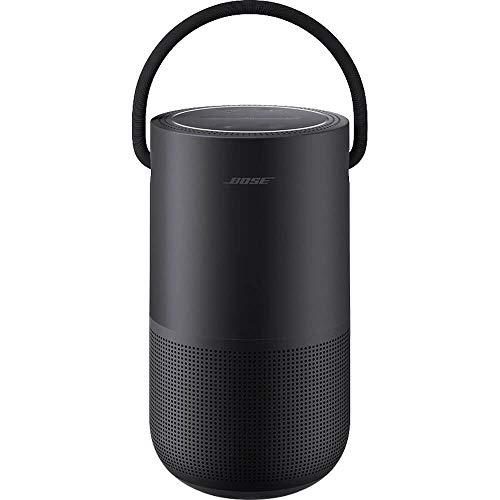
The Bose Portable Smart Speaker, released in 2019, takes a fundamentally different approach. Rather than prioritizing affordability, Bose focused on delivering their signature audio quality in a truly portable package. At several times the price of the Nest Mini (at the time of writing), this device targets users who refuse to compromise on sound quality.
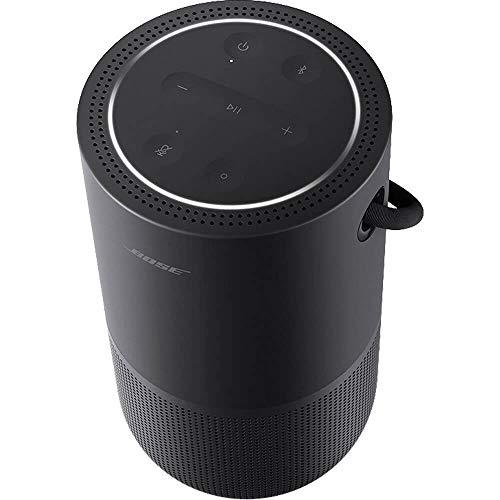
What makes this speaker unique is its combination of genuine portability—featuring a 12-hour battery and integrated carrying handle—with premium audio engineering. The cylindrical design uses an acoustic deflector (a curved surface that redirects sound waves) to create 360-degree sound dispersion, meaning it sounds good no matter where you're sitting relative to the speaker.
The Bose speaker also offers something rare: dual voice assistant support. You can choose between Google Assistant and Amazon Alexa, or even switch between them, giving you flexibility that most smart speakers don't offer.
This is where the two products diverge most dramatically. The Bose Portable Smart Speaker uses what Bose calls a "high-excursion transducer"—essentially a driver that can move more air than typical speakers its size. This driver fires downward into an acoustic deflector that spreads sound evenly in all directions, eliminating the "sweet spot" problem that plagues most directional speakers.
More importantly, the Bose speaker incorporates three passive radiators—these are essentially speakers without magnets that vibrate in response to the active driver, effectively tripling the vibrating surface area. This technique allows a small speaker to produce surprisingly deep bass by moving more air than would otherwise be possible.
Our research into user and expert reviews consistently shows the Bose speaker delivers what most describe as "excellent" audio quality with particular strength in vocal clarity and bass response. The 360-degree design means you get consistent sound quality whether you're directly in front of the speaker or off to the side.
The Google Nest Mini, by contrast, uses a single 40mm driver—about the size of a large coin. While Google improved the bass response in the 2nd generation, physics ultimately limits what such a small driver can accomplish. User reviews consistently describe the audio as "adequate for the price" but note obvious limitations in volume, bass response, and overall dynamics.
Volume capabilities reveal another crucial difference. The Bose Portable Smart Speaker can genuinely fill a room or provide background music for outdoor gatherings. Expert reviews suggest it's suitable for small parties and can power through ambient noise effectively.
The Google Nest Mini is designed for personal listening and small rooms. While it's fine for podcasts, news, or quiet background music, it simply doesn't have the power to compete with larger speakers or handle demanding music genres that rely on deep bass or high volume levels.
Bass performance particularly highlights the engineering differences. The Bose speaker's three passive radiators create what users describe as surprisingly powerful low-end response, especially when placed near walls or corners where bass can reinforce itself. However, our analysis of reviews suggests the bass can struggle at the absolute highest volumes, indicating some limitation in the driver's power handling.
The Google Nest Mini offers what Google calls "40% stronger bass" compared to the original Mini, but this improvement starts from a very low baseline. The small driver simply cannot move enough air to create meaningful bass response, making it unsuitable for music genres that depend on low-frequency impact.
This represents perhaps the most practical difference between these devices. The Bose Portable Smart Speaker offers genuine portability with up to 12 hours of battery life, depending on volume levels and usage patterns. This means you can start your day with music in the bedroom, move to the kitchen for cooking, take it outside for yard work, and still have power for evening entertainment.
The integrated carrying handle isn't just decorative—it's designed for frequent transport and feels sturdy enough for daily use. The speaker charges via USB-C, the modern standard that's becoming ubiquitous across devices.
The Google Nest Mini, conversely, requires constant 15-watt AC power through a wall adapter. While it's lightweight and compact enough to move easily, it can only function where electrical outlets are available. This limitation makes it ideal for permanent installation but useless for outdoor activities, travel, or situations where wall power isn't available.
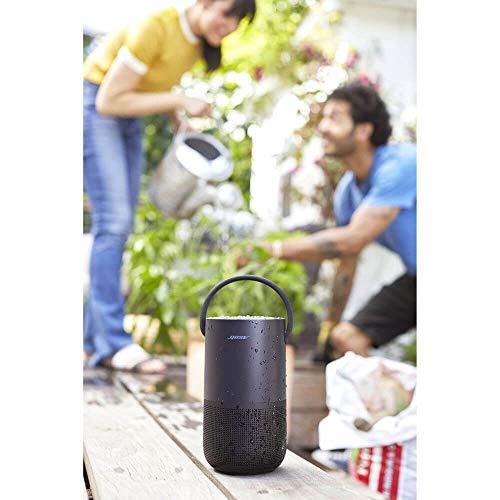
The Bose Portable Smart Speaker carries an IPX4 water resistance rating, meaning it can handle splashes from any direction but shouldn't be submerged. This makes it suitable for poolside use, bathroom placement, or light rain exposure—scenarios where the Nest Mini would be damaged.
The Nest Mini lacks any official water protection rating and is clearly designed for indoor use only. However, its stationary nature means it's less likely to encounter harsh conditions in the first place.
Both devices offer competent voice assistant functionality, but with different approaches. The Google Nest Mini provides deeper integration with Google's ecosystem, including Voice Match technology that recognizes different family members' voices and provides personalized responses accordingly.
The three far-field microphones in the Nest Mini are specifically tuned for voice pickup, with advanced noise cancellation that helps the device hear you even when music is playing. This represents a clear improvement over the original Mini's two-microphone array.
The Bose Portable Smart Speaker takes a different approach by supporting both Google Assistant and Amazon Alexa. You can choose your preferred assistant during setup or even switch between them later. This flexibility is unusual in the smart speaker world, where most devices lock you into one ecosystem.
For smart home control, the Google Nest Mini has a clear advantage through native integration with Google's ecosystem. It supports Matter (a new smart home standard that ensures different brands work together), Chromecast built-in for audio streaming, and seamless control of compatible devices.
The Bose speaker offers smart home functionality as a secondary feature. While it can control compatible devices through either Google Assistant or Alexa, its primary purpose remains audio reproduction rather than home automation.
Both devices support multi-room audio, but through different systems. The Google Nest Mini integrates with Google's casting technology, allowing you to group multiple Google speakers for synchronized playback throughout your home.
The Bose Portable Smart Speaker supports Bose SimpleSync, which can pair with other Bose speakers and even certain Bose headphones for private listening. However, the ecosystem is smaller and more limited compared to Google's extensive partner network.
At the time of writing, these products occupy vastly different price tiers, with the Bose Portable Smart Speaker costing roughly eight times more than the Google Nest Mini. This dramatic price difference reflects their different target markets and engineering priorities.
The Nest Mini offers exceptional value for users seeking basic smart functionality and casual audio. At its price point, few devices can match its smart home integration and voice control capabilities. The value proposition becomes even stronger if you want multiple speakers throughout your home, as the low cost makes whole-home coverage affordable.
The Bose speaker justifies its premium pricing through superior audio engineering, genuine portability, and build quality. For users who prioritize sound quality and mobility, the additional cost delivers meaningful benefits that cheaper alternatives can't match.
Consider how you'll use these devices over their lifetime. The Google Nest Mini excels as a permanent fixture for smart home control, basic audio needs, and voice assistance. If you primarily need help with timers, weather updates, smart home control, and occasional podcast listening, its capabilities align well with these use cases.
The Bose Portable Smart Speaker serves users who want a single device that can function as both a quality music speaker and a smart assistant. If you frequently move between rooms, spend time outdoors, or prioritize music listening alongside smart features, the additional cost may be justified.
Neither device is designed for serious home theater applications, but they serve different roles in entertainment setups. The Google Nest Mini works well for voice control of home theater equipment and can provide basic audio for casual video content, though you wouldn't want it as your primary audio source for movies or shows.
The Bose Portable Smart Speaker could serve as a temporary or secondary audio solution for smaller spaces, but it's not designed to compete with dedicated home theater speakers or soundbars. Its strength lies in portable entertainment rather than fixed home theater installations.
The Google Nest Mini makes the most sense for budget-conscious users who want to explore smart home technology without a significant investment. It's ideal if you primarily need voice control for basic tasks like setting timers, checking weather, controlling smart lights, or playing podcasts and news.
This device particularly suits users who want multiple speakers throughout their home for whole-house voice control and casual audio. The low cost makes it practical to place one in every major room, creating a comprehensive smart home network without breaking the budget.
The Nest Mini also works well for users new to smart speakers who want to test the technology before committing to more expensive options. Its simplicity and integration with Google's ecosystem provide a gentle introduction to smart home concepts.
The Bose Portable Smart Speaker targets users who prioritize audio quality and refuse to compromise on sound reproduction. If you regularly listen to music and want a speaker that can serve both entertainment and smart assistant roles, this device makes more sense despite its higher cost.
Portability is another key factor. If you want to take your speaker outdoors, move it between rooms regularly, or use it in environments where water resistance matters, the Bose speaker provides capabilities the Nest Mini simply cannot match.
Users who want flexibility in voice assistants will also appreciate the dual Google Assistant and Alexa support. This feature provides options if you're already invested in Amazon's ecosystem but want Bose's audio quality.
These products represent fundamentally different approaches to smart speakers, and your choice should align with your primary needs and budget constraints. The Google Nest Mini 2nd Gen excels as an affordable smart home hub with adequate audio for basic needs. The Bose Portable Smart Speaker delivers premium audio quality with smart features as a valuable addition.
For most users, the decision comes down to priorities: choose affordability and smart home focus with the Nest Mini, or invest in superior audio quality and portability with the Bose speaker. Both products excel in their intended roles, making either a solid choice when matched to appropriate expectations and use cases.
The key is understanding that despite both being labeled "smart speakers," these devices solve different problems for different users. Choose based on your primary use case, and you'll be satisfied with either option.
| Bose Portable Smart Speaker | Google Nest Mini 2nd Gen Smart Speaker |
|---|---|
| Audio Quality - The biggest differentiator between these speakers | |
| 360-degree sound with powerful bass from three passive radiators, suitable for music listening | Basic 40mm driver with improved bass over Gen 1, adequate for podcasts and voice responses |
| Portability - Determines where and how you can use the speaker | |
| 12-hour battery life with carrying handle, truly portable | Requires constant AC power, stationary use only |
| Water Resistance - Important for outdoor or bathroom use | |
| IPX4 splash resistant, safe for poolside and bathroom use | No water protection, indoor use only |
| Voice Assistants - Affects smart home ecosystem compatibility | |
| Dual support: Google Assistant OR Amazon Alexa (user choice) | Google Assistant only with deep ecosystem integration |
| Volume Capability - Impacts room size and outdoor use | |
| Room-filling volume suitable for parties and outdoor gatherings | Personal listening volume, best for small rooms |
| Smart Home Integration - How well it controls other devices | |
| Basic smart features, primarily an audio device with assistant capabilities | Excellent Google ecosystem integration with Matter support |
| Multi-Room Audio - For whole-home sound systems | |
| Bose SimpleSync with other Bose speakers and headphones | Google Cast with extensive partner device compatibility |
| Physical Controls - Convenience for manual operation | |
| Touch controls on device plus app control | Capacitive touch controls with volume adjustment |
| Microphone Array - Voice pickup quality and range | |
| Built-in microphones with mute capability | Three far-field microphones optimized for voice recognition |
| Connectivity Options - Wireless standards and casting support | |
| Wi-Fi, Bluetooth 4.2, Apple AirPlay 2, Spotify Connect | Wi-Fi 802.11ac, Bluetooth 5.0, Chromecast built-in |
| Value Proposition - What you get for the significant price difference | |
| Premium audio quality and true portability at luxury pricing | Exceptional smart home value at entry-level pricing |
The Bose Portable Smart Speaker delivers significantly better audio quality with 360-degree sound, powerful bass from three passive radiators, and room-filling volume. The Google Nest Mini 2nd Gen offers basic sound suitable for podcasts and voice responses but isn't designed for serious music listening.
Only the Bose Portable Smart Speaker is truly portable with 12-hour battery life and IPX4 water resistance for outdoor use. The Google Nest Mini requires constant wall power and isn't water-resistant, making it suitable only for stationary indoor use.
The Google Nest Mini 2nd Gen excels at smart home control with deep Google ecosystem integration, Matter support, and optimized voice recognition. While the Bose Portable Smart Speaker offers smart features, it's primarily designed as an audio device with assistant capabilities as a secondary function.
The Bose Portable Smart Speaker uniquely supports both Google Assistant and Amazon Alexa, letting you choose your preferred assistant. The Google Nest Mini only works with Google Assistant but offers deeper integration with Google's ecosystem.
This depends on your priorities. The Google Nest Mini 2nd Gen provides exceptional value for basic smart home control and casual listening at an entry-level price. The Bose Portable Smart Speaker costs significantly more but delivers premium audio quality and true portability.
Neither speaker is designed for serious home theater use. The Google Nest Mini can provide basic audio for casual video content and voice control of TV equipment. The Bose Portable Smart Speaker offers better sound quality but still isn't a replacement for dedicated home theater speakers.
The Bose Portable Smart Speaker produces much higher volume levels suitable for outdoor gatherings and small parties. The Google Nest Mini 2nd Gen has limited volume output designed for personal listening and quiet background music in small rooms.
Both speakers offer Wi-Fi and Bluetooth connectivity. The Google Nest Mini includes Bluetooth 5.0 and Chromecast built-in, while the Bose Portable Smart Speaker features Bluetooth 4.2, Apple AirPlay 2, and Spotify Connect for more streaming options.
The Bose Portable Smart Speaker is superior for music streaming due to its premium audio quality, powerful bass, and support for multiple streaming protocols. The Google Nest Mini handles streaming services adequately but is better suited for spoken content than music.
Yes, both support multi-room setups but through different systems. The Google Nest Mini 2nd Gen uses Google Cast for grouping with other compatible speakers. The Bose Portable Smart Speaker uses Bose SimpleSync to pair with other Bose devices.
The Google Nest Mini features three far-field microphones specifically optimized for voice pickup with advanced noise cancellation. The Bose Portable Smart Speaker has capable microphones but prioritizes audio output over voice input quality.
Choose the Bose Portable Smart Speaker if you prioritize audio quality, need portability, or want flexibility between voice assistants. Choose the Google Nest Mini 2nd Gen if you want affordable smart home control, don't need portability, or are building a multi-room Google ecosystem.
We've done our best to create useful and informative comparisons to help you decide what product to buy. Our research uses advanced automated methods to create this comparison and perfection is not possible - please contact us for corrections or questions. These are the sites we've researched in the creation of this article: bestbuy.com - assets.bose.com - bestbuy.com - bestbuy.com - bose.com - techforless.com - soundguys.com - youtube.com - youtube.com - newegg.com - youtube.com - dell.com - nfm.com - staples.com - bose.com - sweetwater.com - focuscamera.com - bestbuy.com - pocket-lint.com - goodhousekeeping.com - rtings.com - rtings.com - versus.com - tomsguide.com - versus.com - youtube.com - youtube.com - techradar.com - homedepot.com - support.google.com - gadgetconnect.co.ke - store.google.com - multitronic.fi - bestbuy.com - store.google.com - neweggbusiness.com - store.google.com - support.google.com - versus.com - youtube.com - adiglobaldistribution.us - aboonehomes.com

Privacy Policy
Terms and Conditions - Affiliate Policy
Home Security
© Copyright 2008-2026.
11816 Inwood Rd #1211, Dallas, TX 75244