



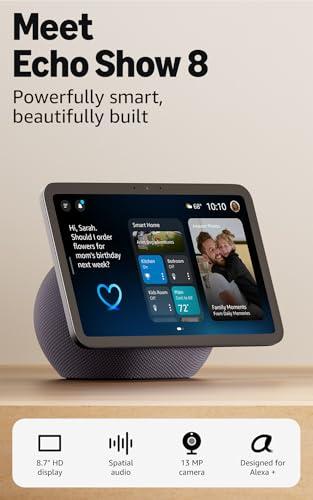
When shopping for smart speakers in 2024, you'll quickly discover that not all "smart speakers" are created equal. The Denon Home 250 and Amazon Echo Show 8 represent two fundamentally different philosophies in the smart home audio space, and understanding these differences is crucial for making the right choice for your needs and budget.
Smart speakers have evolved significantly since Amazon launched the original Echo in 2015. What started as simple voice-controlled devices have branched into specialized categories, each serving different priorities. The Denon Home 250, released in 2020, belongs to the premium wireless speaker category that emphasizes audio quality while incorporating smart features. The Amazon Echo Show 8, in its third generation as of 2023, represents the smart display category where visual interaction and smart home control take precedence over pure audio performance.
The key considerations when choosing between these approaches include your primary use case (serious music listening versus multi-modal smart home control), your audio quality expectations, how extensively you want to integrate smart home devices, whether you need visual feedback, and of course, your budget constraints.
The most important thing to understand is that these devices solve different problems. The Denon Home 250 is fundamentally an audiophile-grade wireless speaker that happens to be smart. Every design decision prioritizes sound quality first, with connectivity and voice control serving as modern conveniences. The Amazon Echo Show 8 takes the opposite approach – it's a smart home hub and information display that includes decent speakers to support its primary functions.
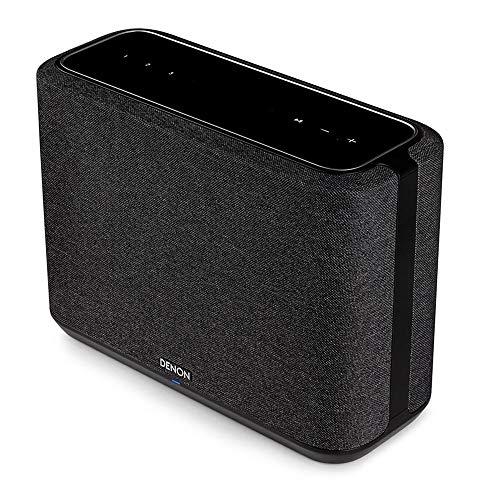
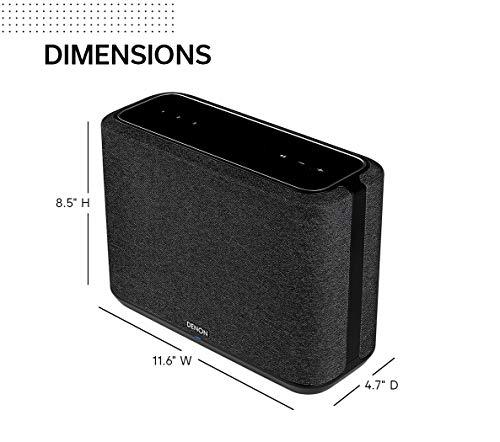
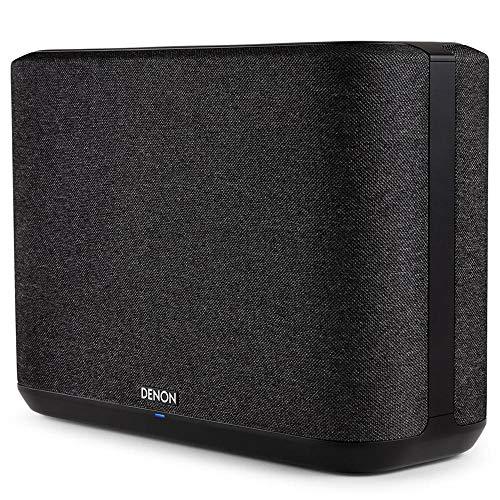
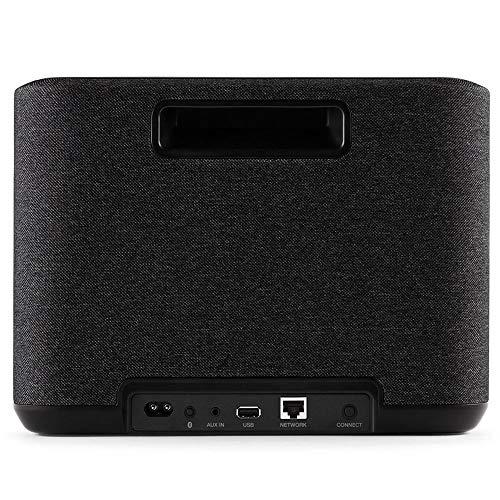
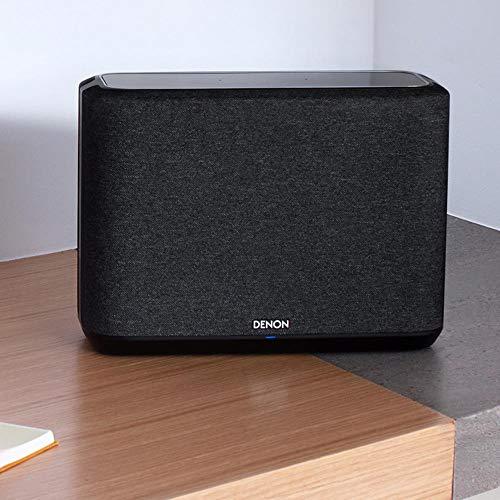
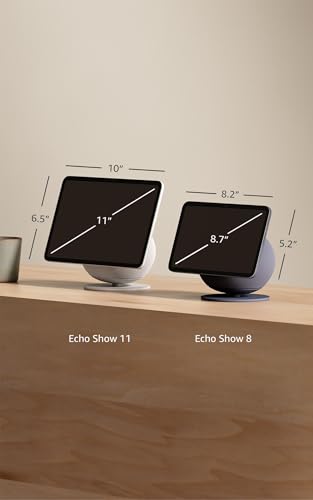
This philosophical difference shows up immediately in their physical design. The Denon Home 250 is a substantial piece of audio equipment, measuring nearly 12 inches wide and weighing over 10 pounds. Its fabric-wrapped exterior and premium build quality signal that this is furniture-grade audio equipment. The Echo Show 8 is compact and utilitarian, designed to blend into kitchens, bedrooms, and offices without dominating the space.
Here's where the differences become most apparent. The Denon Home 250 employs a sophisticated five-driver configuration that would make many traditional bookshelf speakers jealous. It features two ¾-inch soft dome tweeters (the small speakers that handle high frequencies like cymbals and vocals), two 4-inch mid-bass drivers (handling the meat of most music), and a rear-firing 5¼-inch passive bass radiator (which uses the air movement from the other speakers to generate deep bass without requiring its own amplifier).
Each of these drivers is powered by its own dedicated Class D amplifier, which means the speaker can precisely control each frequency range independently. This setup creates what audio engineers call "stereo imaging" – the ability to place instruments and voices in specific locations across an invisible soundstage, even from a single speaker cabinet.
The technical specifications tell the story: the Denon Home 250 supports high-resolution audio files up to 192kHz/24-bit (compared to CD quality's 44.1kHz/16-bit) and even DSD files up to 5.6MHz. For context, most streaming services deliver compressed audio that loses detail compared to the original recording. High-resolution audio preserves those subtle details that make the difference between "sounds good" and "sounds like the musician is in the room."
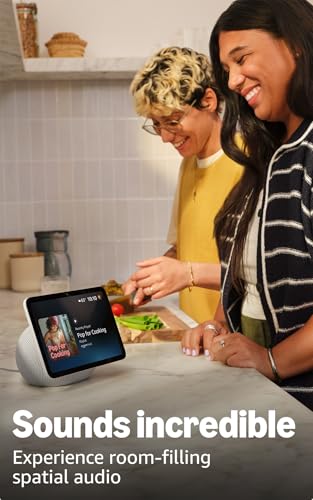
In contrast, the Echo Show 8 uses two 2-inch drivers and a passive bass radiator – a configuration optimized for clear speech and adequate music reproduction rather than audiophile-grade performance. While Amazon has incorporated spatial audio processing (which uses digital signal processing to create a wider soundstage), it's working with fundamentally limited hardware.
Our research into professional reviews and user feedback consistently shows that the Denon Home 250 delivers room-filling sound that can satisfy even in larger living spaces, while the Echo Show 8 works best for near-field listening or smaller rooms. The Denon can produce bass that you feel as much as hear, while the Echo Show 8's bass, though present, lacks the depth and impact that makes music truly engaging.
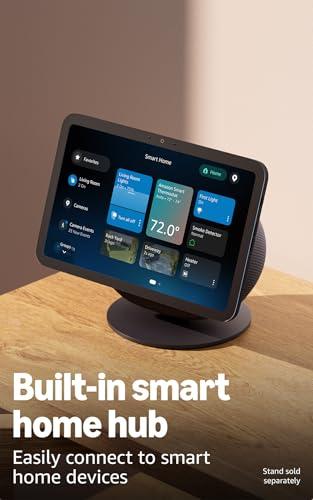
The smart home integration story reveals another crucial difference in approach. The Amazon Echo Show 8 includes built-in Zigbee, Matter, and Thread protocols, making it a true smart home hub. Zigbee is a low-power wireless protocol used by many smart home devices like Philips Hue bulbs and smart switches. Matter is a new industry standard designed to make smart home devices work together regardless of manufacturer. Thread is a mesh networking protocol that creates more reliable connections between devices.
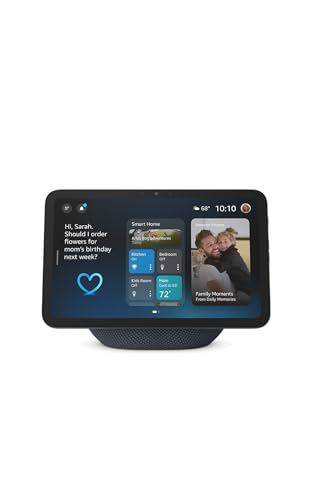
This means the Echo Show 8 can directly control compatible smart home devices without requiring additional hubs. You can ask it to dim lights, lock doors, or adjust thermostats, and it communicates directly with those devices. The 8-inch touchscreen provides visual feedback and control options that pure voice interfaces can't match.
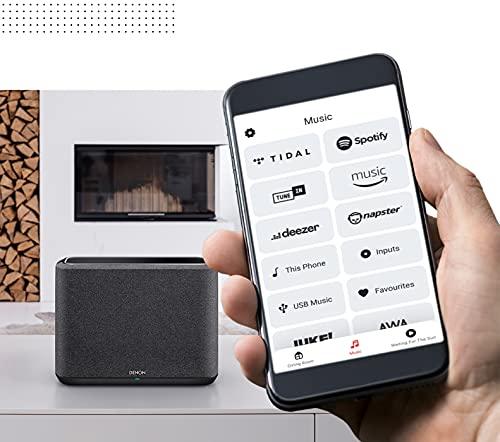
The Denon Home 250 takes a different approach to "smart." It focuses on audio ecosystem integration through HEOS (Denon's multi-room audio platform), AirPlay 2 (Apple's wireless audio standard), and support for voice assistants like Alexa and Google Assistant. However, it relies on other devices to actually control smart home gadgets – it's smart about audio, not smart home control.
This difference becomes crucial when considering whole-home integration. If you want to build a multi-room audio system, the Denon Home 250 can pair with other HEOS speakers throughout your house, maintaining audio sync and allowing different music in different rooms. You can even pair two units for true stereo separation or use them as wireless surround speakers with compatible Denon soundbars.
The Echo Show 8 works within Amazon's ecosystem, allowing multi-room audio with other Echo devices, but it's primarily designed as a standalone smart home control point rather than part of a distributed audio system.
Both devices support major streaming services, but with different emphases. The Denon Home 250 works with audiophile-focused services like TIDAL (which offers lossless and high-resolution streaming), Amazon Music HD, and Apple Music's lossless tiers. It also supports direct streaming protocols like Spotify Connect and TIDAL Connect, which bypass your phone's processing and stream directly from the service to the speaker for better audio quality.
The Echo Show 8 integrates deeply with Amazon's services but also supports third-party options like Spotify and Apple Music. However, it's primarily designed around Amazon Music, Prime Video, and the broader Amazon ecosystem. The visual interface adds capabilities that pure audio devices can't match – you can watch recipe videos, see lyrics scroll by, or browse album artwork while listening.
Connectivity options differ significantly. The Denon Home 250 includes both Wi-Fi and Ethernet connections (wired connections often provide more stable streaming for high-resolution audio), plus a USB port for playing music directly from flash drives. The Echo Show 8 relies primarily on Wi-Fi but adds the convenience of video calling through its 13-megapixel camera with auto-framing technology that keeps you centered in the frame even as you move around.
The Echo Show 8's 8-inch touchscreen fundamentally changes how you interact with a smart speaker. Instead of relying solely on voice commands, you can see weather forecasts, browse music visually, control smart home devices with touch, and even watch streaming video. The display uses adaptive brightness to adjust to room lighting and can serve as a digital photo frame when not actively in use.
For kitchen use, this visual interface proves invaluable. You can follow recipe videos step-by-step, set multiple timers with visual feedback, and control music without shouting voice commands over cooking sounds. The camera enables hands-free video calls, which became increasingly important during and after the pandemic.
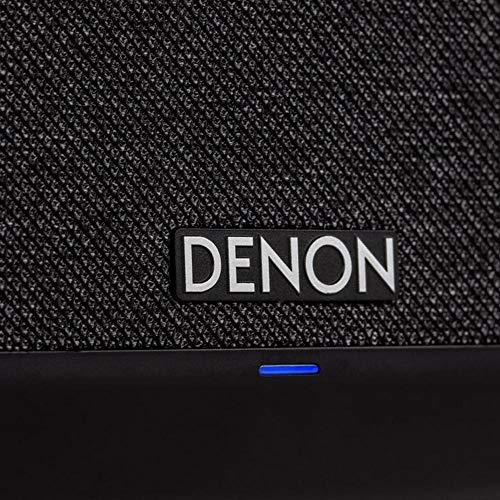
The Denon Home 250 compensates for its lack of display with proximity-sensing touch controls that illuminate as your hand approaches. While elegant, this interface is limited to basic playback controls and three preset buttons for quickly accessing favorite stations or playlists.
For home theater use, these devices serve different roles. The Denon Home 250 can function as wireless surround speakers when paired with compatible Denon soundbars and subwoofers. Two units can create a true stereo pair for music listening or serve as rear surround speakers in a 4.1 or 5.1 setup. The audio quality is sufficient for this application, though dedicated home theater speakers might still provide better dynamic range and precision.
The Echo Show 8 isn't designed for home theater surround duty, but it excels as a bedside or kitchen entertainment hub where you might watch streaming content on its screen. The spatial audio processing helps create a more immersive experience than you'd expect from such a compact device, though it can't compete with dedicated home theater audio equipment.
When evaluating these devices, several performance characteristics stand out as most important:
Audio Quality: The Denon Home 250 delivers significantly better frequency response, dynamic range, and soundstage width. Our research suggests it can fill rooms up to 400 square feet effectively, while the Echo Show 8 works best in spaces under 200 square feet.
Smart Home Response Time: The Echo Show 8 processes local smart home commands faster thanks to its built-in hub capabilities, while the Denon Home 250 requires cloud processing for most smart features.
Streaming Reliability: Both devices perform well with stable Wi-Fi, but the Denon Home 250's Ethernet option provides more consistent high-resolution streaming, particularly important for audiophile-quality sources.
Voice Recognition Accuracy: The Echo Show 8 benefits from Amazon's extensive voice training data and can distinguish between different users for personalized responses. The Denon Home 250 relies on connected voice assistants and may not be as accurate, especially in noisy environments.
At the time of writing, the Echo Show 8 costs significantly less than the Denon Home 250 – roughly one-third the price. This difference reflects their different target markets and capabilities. The Echo Show 8 offers tremendous value as an entry point into smart home automation, providing hub functionality, visual interface, and adequate audio performance at a budget-friendly price.
The Denon Home 250 represents a premium investment in audio quality and multi-room capability. When compared to traditional hi-fi bookshelf speakers plus separate streaming hardware, its pricing becomes more reasonable, especially considering its wireless convenience and modern connectivity options.
Choose the Denon Home 250 if you're building around music as your primary use case. It's ideal for listeners who can hear the difference between compressed and high-quality audio, who want to create a multi-room audio system, or who have larger living spaces that need powerful, room-filling sound. The investment makes sense if you're replacing traditional stereo components or if audio quality significantly impacts your daily enjoyment.
The Echo Show 8 makes more sense for users who want smart home convenience with adequate audio performance. It's perfect for kitchens, bedrooms, or offices where you need quick access to information, want to control smart devices, or appreciate the convenience of video calling. The visual interface adds functionality that audio-only devices simply can't provide.
Consider your space, usage patterns, and priorities carefully. If you find yourself primarily asking smart speakers for weather updates, controlling lights, or playing background music while cooking, the Echo Show 8 will serve you better. If you sit down for dedicated listening sessions, have high-quality music sources, or want to build a serious audio system, the Denon Home 250 justifies its higher cost through superior performance.
The beauty of today's smart speaker market is that both approaches can coexist in the same home, each serving their optimal use cases. Many users find that a Denon Home 250 in the main living area paired with Echo Show 8 devices in functional spaces like kitchens and bedrooms creates the best of both worlds.
| Denon Home 250 Wireless Smart Speaker | Amazon Echo Show 8 Display |
|---|---|
| Primary Design Purpose - Defines what each device does best | |
| Premium wireless speaker with smart features | Smart home hub with integrated display and speakers |
| Audio Driver Configuration - Determines sound quality and room-filling capability | |
| 5-driver setup: 2x ¾" tweeters, 2x 4" mid-bass, 1x 5¼" passive radiator with separate amplifiers | 2x 2" speakers with passive bass radiator |
| High-Resolution Audio Support - Critical for audiophiles and premium streaming services | |
| Yes, up to 192kHz/24-bit PCM and DSD 5.6MHz | No, standard resolution only |
| Display Screen - Essential for visual smart home control and media viewing | |
| None (proximity-sensing touch controls only) | 8-inch touchscreen (1280×800 pixels) |
| Smart Home Hub Capabilities - Determines direct device control without additional hubs | |
| Limited (requires separate hubs for most devices) | Built-in Zigbee, Matter, and Thread support |
| Multi-Room Audio System - Important for whole-home audio setups | |
| HEOS platform with stereo pairing and surround capability | Amazon Echo ecosystem only |
| Streaming Service Integration - Affects audio quality and service compatibility | |
| HEOS, AirPlay 2, Spotify Connect, TIDAL Connect, direct USB playback | Amazon Music optimized, Spotify, Apple Music via app |
| Physical Size and Weight - Impacts placement flexibility | |
| Large: 11.6" × 8.6" × 5.9", 10.5 lbs | Compact: 7.9" × 5.4" × 3.9", 2.3 lbs |
| Connectivity Options - Determines streaming reliability and setup flexibility | |
| Wi-Fi, Ethernet, Bluetooth, USB-A, 3.5mm aux | Wi-Fi, Bluetooth (no wired audio options) |
| Video Calling Capability - Important for remote communication | |
| None | 13MP camera with auto-framing |
| Voice Assistant Integration - Affects smart feature responsiveness | |
| Alexa and Google Assistant (requires separate device for activation) | Built-in Alexa with individual user recognition |
| Optimal Room Size - Determines effective coverage area | |
| Medium to large rooms (up to 400+ sq ft) | Small to medium rooms (up to 200 sq ft) |
| Price Category - Significant factor in purchase decision | |
| Premium audio equipment investment | Budget-friendly smart home starter |
The Denon Home 250 is significantly better for music listening. It features a sophisticated 5-driver audio system with dedicated amplifiers that delivers room-filling sound and supports high-resolution audio up to 192kHz/24-bit. The Amazon Echo Show 8 has basic 2-inch speakers designed primarily for voice and casual listening rather than serious music enjoyment.
The Amazon Echo Show 8 excels at smart home control with built-in Zigbee, Matter, and Thread support, allowing direct control of lights, locks, and thermostats without additional hubs. The Denon Home 250 has limited smart home capabilities and typically requires separate hubs or devices to control most smart home equipment.
The Echo Show 8 is ideal for kitchens and bedrooms due to its compact size, visual display for recipes and timers, video calling capability, and smart home controls. The Denon Home 250 is quite large for these spaces and lacks the visual interface that makes daily tasks more convenient.
The Denon Home 250 can function as wireless surround speakers when paired with compatible Denon soundbars, and two units can create a stereo pair for enhanced TV audio. The Echo Show 8 isn't designed for home theater use but works well as a bedside entertainment device for streaming video content on its screen.
The Denon Home 250 delivers significantly superior sound quality with its multi-driver configuration, separate amplifiers, and high-resolution audio support. It can fill large rooms with rich, detailed sound. The Echo Show 8 has adequate sound for its size but cannot match the audio performance of a dedicated premium speaker.
Only the Amazon Echo Show 8 supports video calls with its 13MP camera and auto-framing technology that keeps you centered during calls. The Denon Home 250 has no camera or video calling capabilities - it's purely an audio device with smart features.
The Denon Home 250 offers superior streaming with support for high-quality services like TIDAL Connect, Spotify Connect, and Apple Music lossless, plus direct USB playback. The Echo Show 8 works with major streaming services but is optimized for Amazon Music and doesn't support the highest audio quality tiers.
Both support voice assistants, but differently. The Echo Show 8 has built-in Alexa with individual user recognition and fast response times. The Denon Home 250 works with Alexa and Google Assistant but requires activation through connected devices and may have slower response times.
The Amazon Echo Show 8 is much more compact and portable at under 2.5 pounds, making it easy to move between rooms. The Denon Home 250 weighs over 10 pounds and measures nearly 12 inches wide, requiring a dedicated space and making it essentially a stationary piece of audio furniture.
The Denon Home 250 excels at multi-room audio through the HEOS platform, allowing synchronized music throughout your home and stereo pairing capabilities. The Echo Show 8 supports basic multi-room audio with other Echo devices but lacks the advanced audio synchronization and quality of dedicated audio systems.
This depends on your priorities. The Echo Show 8 offers exceptional value as an affordable smart home hub with decent audio, visual interface, and video calling. The Denon Home 250 provides better value for audio enthusiasts who prioritize sound quality and want a long-term investment in premium wireless audio equipment.
The fundamental difference is purpose: the Denon Home 250 is a premium wireless speaker that happens to be smart, prioritizing exceptional audio quality and multi-room capabilities. The Amazon Echo Show 8 is a smart home control hub with an integrated display that includes adequate speakers to support its primary smart home and visual interface functions.
We've done our best to create useful and informative comparisons to help you decide what product to buy. Our research uses advanced automated methods to create this comparison and perfection is not possible - please contact us for corrections or questions. These are the sites we've researched in the creation of this article: dxomark.com - hometechnologyreview.com - crutchfield.com - versus.com - stereoguide.com - versus.com - whathifi.com - techgearlab.com - youtube.com - crutchfield.com - consumerreports.org - blog.son-video.com - crutchfield.com - skybygramophone.com - audiolab.com - theaudiotailor.com.au - youtube.com - scribd.com - thedisconnekt.com - thehousetech.com - bestbuy.com - tomsguide.com - youtube.com - bestbuy.com - dimensions.com - engadget.com - youtube.com - techradar.com - ifixit.com - dreamgreenhouse.com - aboutamazon.com - engadget.com - en.wikipedia.org - bestbuy.com - homedepot.com

Privacy Policy
Terms and Conditions - Affiliate Policy
Home Security
© Copyright 2008-2026.
11816 Inwood Rd #1211, Dallas, TX 75244