

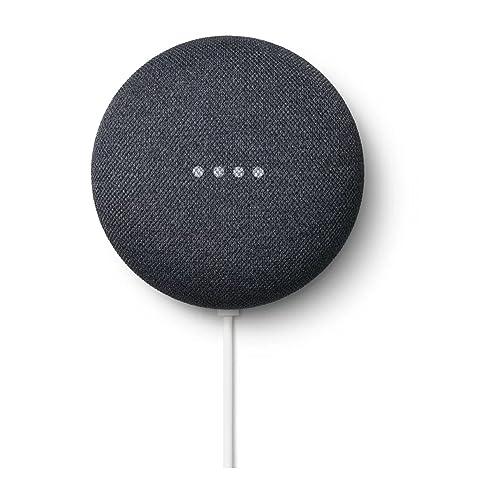
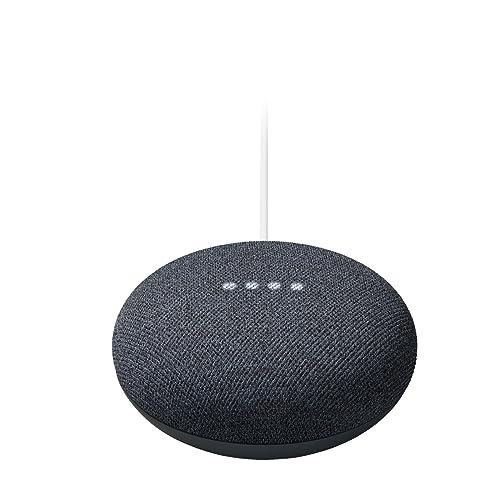
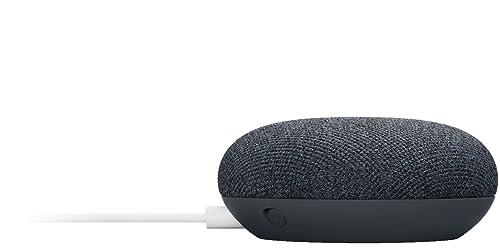
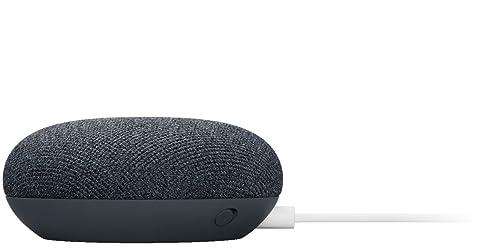
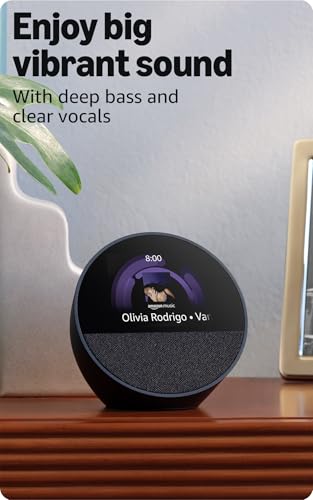
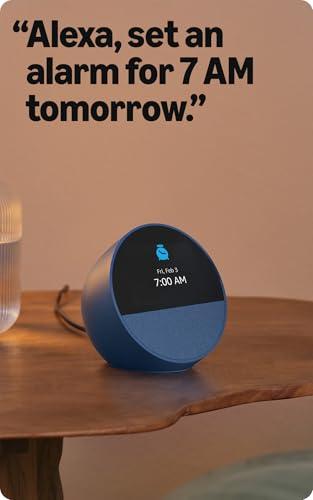
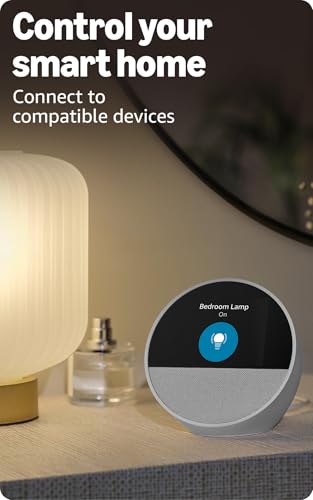
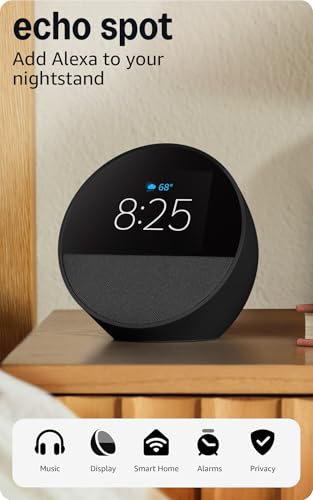
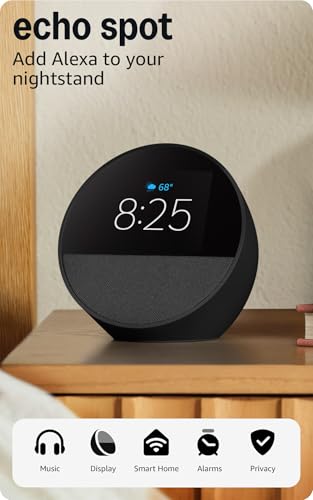
When Amazon released the original Echo Spot back in 2017, it seemed like smart displays were the future of voice assistants. Fast forward to 2024, and Amazon has brought back the Echo Spot concept, but the smart speaker landscape has evolved dramatically. Meanwhile, Google has refined its approach with speakers like the Nest Mini 2nd Gen, focusing on pure audio performance and compact design rather than adding screens.
This creates an interesting comparison: should you go with a traditional smart speaker that does one thing really well, or opt for a hybrid device that tries to be both a speaker and a visual information hub? The answer depends heavily on how you actually use these devices in your daily life.
The smart home market has split into two distinct philosophies over the past few years. Traditional smart speakers prioritize audio quality, voice recognition, and seamless integration into any room. They're designed to disappear visually while maximizing functionality. Smart displays, on the other hand, add a visual component that can show information, control interfaces, and serve specific functions like alarm clocks.
The key considerations when choosing between these approaches center on your primary use case. If you're mainly streaming music, controlling smart home devices with voice commands, or want multiple speakers throughout your home, traditional speakers often provide better value. If you need visual information display, want a dedicated bedside companion, or prefer touch controls alongside voice commands, smart displays make more sense.
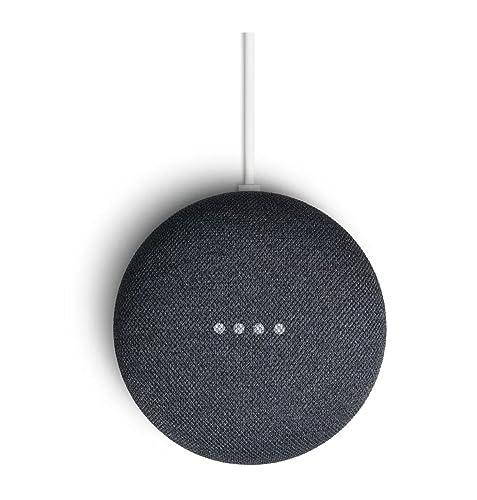
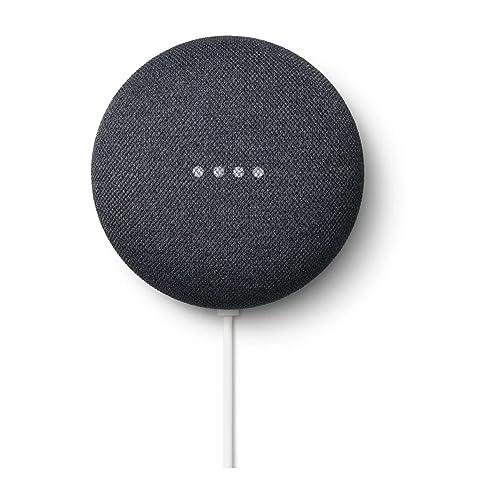
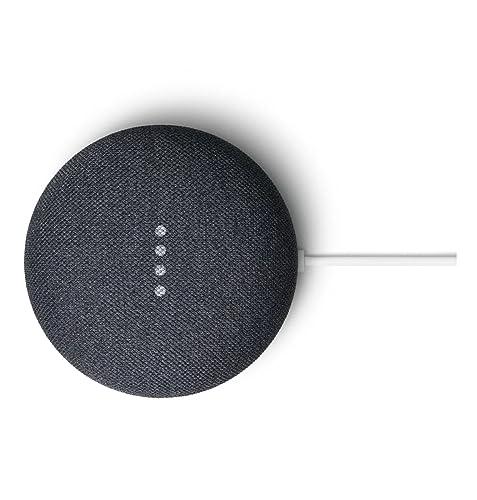
The Google Nest Mini 2nd Gen represents Google's philosophy that the best smart speaker is one you barely notice is there. Released as part of Google's second-generation speaker lineup, it improved significantly on the original Home Mini with better audio processing and enhanced voice recognition.
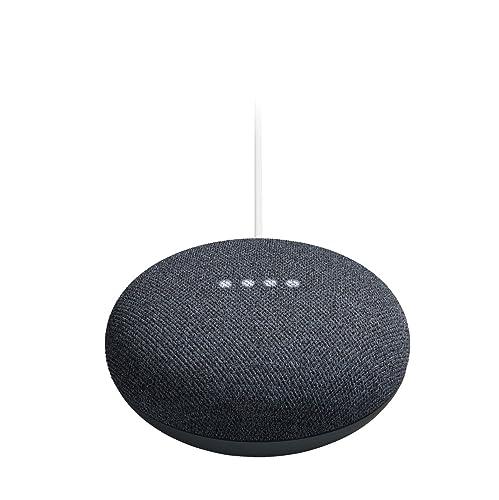
At just 98mm in diameter and weighing only 183g, the Nest Mini is remarkably compact. This isn't just about saving space – the small size means you can place multiple units throughout your home without them dominating the visual aesthetic of any room. The fabric top, made from 100% recycled plastic bottles, gives it a soft appearance that blends with furniture rather than standing out as a tech gadget.
But size isn't everything. The Nest Mini packs some serious audio engineering into that small package. The 40mm driver delivers what Google calls "360-degree sound," meaning audio radiates outward in all directions rather than being directed forward like traditional speakers. This omnidirectional approach works particularly well for voice responses and background music, as you get consistent audio quality regardless of where you're standing in the room.
Perhaps more importantly, Google doubled the bass response compared to the original Mini. Bass is crucial for music reproduction, and it's one area where compact speakers typically struggle due to physical limitations. The improved bass means the Nest Mini can handle a wider variety of music genres without sounding thin or tinny, though it's still not going to replace a dedicated stereo system for serious music listening.
The voice recognition system uses three far-field microphones – that's one more than many competing devices. These microphones work together to create what's called a "beamforming array," which can focus on your voice while filtering out background noise like TV audio or kitchen sounds. Voice Match technology goes a step further, learning to recognize individual family members' voices to provide personalized responses.
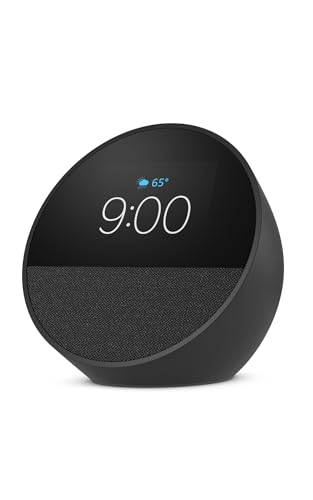
Amazon's return to the smart display format in 2024 with the Echo Spot represents a different philosophy entirely. Rather than trying to disappear, the Echo Spot is designed to be a visible, functional piece of your bedside or desk setup.
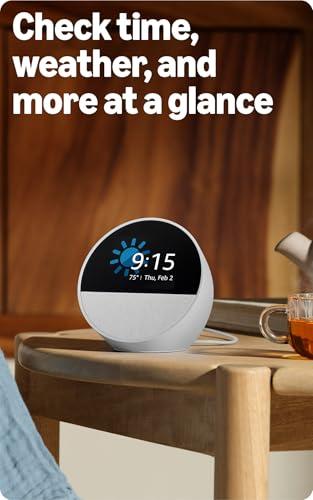
The most obvious difference is the 2.83-inch display with a resolution of 320 x 240 pixels. While this might sound low by smartphone standards, it's perfectly adequate for displaying time, weather information, music controls, and simple visual feedback. The screen uses what Amazon calls "adaptive brightness," automatically dimming at night and brightening during the day to match your room's lighting conditions.
The semi-spherical design is substantially larger than the Nest Mini, measuring 113mm x 103mm x 111mm and weighing 405g. This makes it about 2.2 times heavier and significantly bulkier. The trade-off is that this larger size allows for a more powerful 1.73-inch front-firing speaker and the integration of the display technology.
One of the Echo Spot's most interesting features is its ultrasonic motion sensor. This isn't just a gimmick – it can detect when you enter or leave a room and trigger automated routines. For example, you could set it to turn on your bedroom lights when you walk in and turn them off when you leave. The sensitivity is adjustable through the Alexa app, so you can fine-tune it to avoid false triggers.
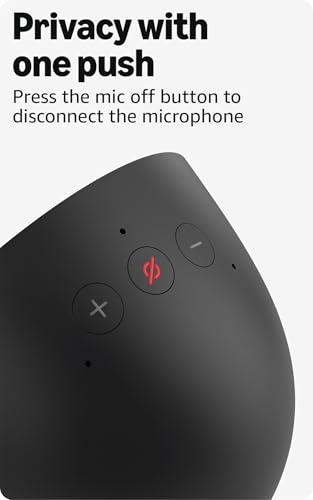
The tap-to-snooze functionality is surprisingly intuitive. Instead of fumbling for a specific button when your alarm goes off, you can tap anywhere on the top surface to snooze. This works well in practice, especially when you're half-awake and don't want to hunt for controls.
Audio quality is where these devices diverge most significantly, and it's probably the most important performance characteristic for most users. Both devices use similar-sized drivers, but their implementations and acoustic designs create notably different listening experiences.
The Nest Mini's 360-degree sound design excels at filling a room evenly. When you're playing background music while cooking or working, this omnidirectional approach means the audio quality stays consistent whether you're directly in front of the speaker or off to the side. The improved bass response, while not earth-shaking, provides enough low-end presence to make music sound full rather than thin.
However, the Nest Mini isn't designed for critical listening or high volume levels. Push it too hard, and you'll notice compression and distortion. It's best suited for background music, podcasts, audiobooks, and voice assistant interactions rather than being your primary music source.
The Echo Spot's front-firing driver creates a more directional sound pattern. This can actually be an advantage for near-field listening – when you're sitting at a desk or lying in bed, the focused audio can sound clearer and more detailed than omnidirectional speakers. The larger cabinet also allows for slightly better bass response in the frequencies that matter for vocal clarity.
For voice assistant responses, both devices perform well, but there are subtle differences. The Nest Mini's omnidirectional design means you'll hear Alexa or Google Assistant clearly from any angle, while the Echo Spot's directional approach provides clearer vocal reproduction when you're positioned in front of it.
Voice recognition performance determines how frustrating or seamless your daily interactions will be. Both devices handle this crucial function well, but with different strengths.
The Nest Mini's three-microphone array provides excellent ambient noise rejection. In testing scenarios with background TV audio, kitchen appliances, or multiple people talking, it consistently recognizes voice commands accurately. The Voice Match feature is particularly useful in households where multiple people use the device – it can distinguish between family members and provide personalized responses like calendar events, commute information, or music preferences.
Google Assistant's strength lies in natural language processing and search capabilities. You can ask complex, conversational questions and get relevant answers. For example, "What's the weather like tomorrow for my daughter's soccer game?" will work if you have calendar integration set up, pulling both weather data and calendar information.
The Echo Spot's two-microphone system is competent but not quite as robust in noisy environments. However, Amazon's wake word detection ("Alexa") has been refined over many years and is quite reliable. Where the Echo Spot excels is in smart home integration speed – Alexa typically responds faster to device control commands like "turn off the living room lights" compared to Google Assistant.
The visual feedback on the Echo Spot's display adds a layer of confirmation that's genuinely useful. When you ask about the weather, you see a forecast display. When you set a timer, you can glance at the countdown. This visual element reduces uncertainty about whether the device heard you correctly.
Both devices serve as smart home hubs, but they approach ecosystem integration differently. This is where your existing smart home setup and service preferences become crucial factors.
The Nest Mini shines in Google's ecosystem. If you use Android phones, Chromecast devices, Google Calendar, or YouTube Music, the integration is seamless. Chromecast built-in functionality is particularly valuable – you can start playing music on your phone and instantly transfer it to the Nest Mini with a tap. This works with numerous apps beyond just Google's services.
Matter support in the Nest Mini represents the industry's push toward universal smart home compatibility. Matter is a new standard that allows devices from different manufacturers to work together more easily. While still evolving, it's a forward-looking feature that should improve device compatibility over time.
The Echo Spot leverages Amazon's massive Alexa ecosystem, which includes thousands of "Skills" – essentially apps that extend functionality. Want to order pizza, check your bank account, or control a specific brand of smart thermostat? There's probably an Alexa Skill for it. This breadth of third-party integration is Amazon's biggest advantage.
The Echo Spot's visual interface makes smart home control more intuitive for some users. Instead of memorizing voice commands, you can tap on-screen controls to adjust lights, thermostats, or security cameras. The motion sensor automation adds another layer of smart home functionality that the Nest Mini simply can't match.
At the time of writing, the Echo Spot commands a significant price premium over the Nest Mini – often costing nearly twice as much. This price difference becomes the central question: does the added display functionality and design justify the extra cost?
The Nest Mini represents exceptional value for pure smart speaker functionality. You're getting Google Assistant, solid audio quality, smart home integration, and Chromecast capability in an incredibly compact package. For users who want to deploy multiple speakers throughout their home, the lower price point makes this feasible without breaking the budget.
The sustainability angle also adds value for environmentally conscious buyers. The recycled materials construction and minimal packaging align with growing consumer preferences for eco-friendly products.
The Echo Spot's value proposition is more complex. The display functionality is genuinely useful for its intended use cases – bedside alarm clock, quick information glances, visual smart home controls. However, user feedback since its 2024 release has been mixed, with many reviewers questioning whether the additional features justify the premium pricing.
One concerning trend in early reviews is buyer's remorse. Several long-time Alexa users have reported returning the Echo Spot after finding it didn't provide enough additional functionality over less expensive alternatives. This suggests Amazon may have misjudged the market's willingness to pay for display functionality in this format.
Neither device is designed for serious home theater use, but there are some relevant considerations for media consumption.
The Nest Mini's Chromecast integration makes it useful as a simple audio endpoint for streaming video content. You can cast audio from Netflix, YouTube, or other services to the Nest Mini while watching on your TV or tablet. The 360-degree sound design works well for this application, providing ambient audio that doesn't require precise positioning.
The Echo Spot's directional audio is better suited for near-field media consumption – watching videos on a tablet or laptop while using it as a supplementary speaker. The display can show now-playing information from music services, which is helpful when you're not actively looking at your source device.
For serious home theater applications, both devices would serve better as voice control interfaces for your main audio system rather than primary speakers.
After evaluating both devices extensively, clear usage scenarios emerge for each product.
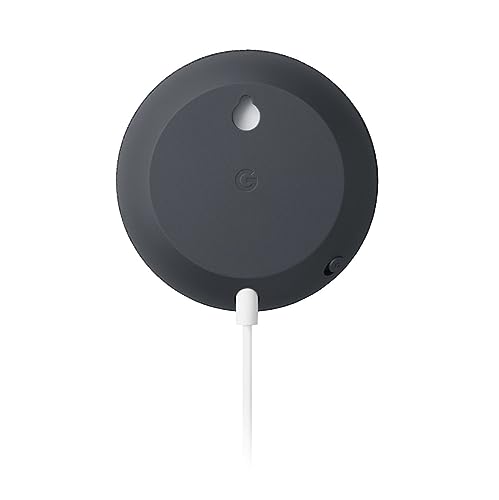
Choose the Nest Mini 2nd Gen if you want the best overall value in a smart speaker. It's ideal for users who primarily need voice assistant functionality, smart home control, and decent background music capability. The compact size makes it perfect for multi-room deployments, and the Chromecast integration adds significant functionality for Google ecosystem users. This is also the better choice for renters or anyone who wants flexible placement options, including wall mounting.
The Echo Spot 2024 makes sense for a narrower set of use cases. It's best suited as a bedside smart alarm clock for users already invested in the Alexa ecosystem. The visual display and motion sensor features add genuine functionality for this specific application. However, the premium pricing makes it hard to recommend for general smart speaker needs.
Based on current market positioning and user feedback, the Nest Mini emerges as the stronger overall recommendation for most buyers. It delivers more functionality per dollar while maintaining flexibility for various use cases. The Echo Spot, while technically competent, seems overpriced for its feature set and target market.
The smart speaker market continues evolving, but the fundamental choice remains between specialized functionality at a premium price or versatile performance at an accessible price point. For most users, the latter approach delivers better long-term satisfaction and value.
| Google Nest Mini 2nd Gen | Amazon Echo Spot 2024 |
|---|---|
| Display - Key differentiator for bedside use and visual information | |
| No display (voice-only interface) | 2.83-inch touchscreen (320x240 resolution) |
| Size & Weight - Impacts placement flexibility and room aesthetics | |
| 98mm diameter, 42mm height, 183g (ultra-compact, wall-mountable) | 113×103×111mm, 405g (2.2x heavier, bedside-focused design) |
| Audio Design - Affects room-filling capability and listening experience | |
| 360-degree sound with 40mm driver (omnidirectional, even coverage) | Front-firing 1.73-inch driver (directional, focused sound) |
| Voice Recognition - Determines accuracy in noisy environments | |
| 3 far-field microphones with Voice Match technology | 2-microphone array with standard wake word detection |
| Smart Assistant - Ecosystem integration and service compatibility | |
| Google Assistant with superior search and natural language | Alexa with broader third-party Skills and faster smart home response |
| Connectivity - Wireless streaming and casting capabilities | |
| Wi-Fi 802.11ac, Bluetooth 5.0, Chromecast built-in | Wi-Fi 802.11ac, Bluetooth (no Chromecast equivalent) |
| Smart Home Standards - Future compatibility and device support | |
| Matter support for cross-platform compatibility | Matter + Zigbee support for broader device integration |
| Unique Features - Special functionality that sets each apart | |
| Wall mounting, 100% recycled fabric top, multi-room audio | Motion sensor automation, tap-to-snooze, customizable clock faces |
| Power Requirements - Installation flexibility considerations | |
| 15W adapter with 1.5m cable (outlet required) | 15W power supply (outlet required, larger footprint) |
| Value Positioning - Price-to-performance ratio at time of writing | |
| Budget-friendly with excellent feature density | Premium pricing for display and alarm clock functionality |
| Best Use Cases - Ideal scenarios for each product | |
| Multi-room setup, background music, discrete placement | Bedside alarm clock, visual information display, single-room focus |
The Google Nest Mini 2nd Gen delivers superior music performance with its 360-degree sound design and improved bass response. The omnidirectional audio fills rooms more evenly, making it better for background music throughout your home. The Amazon Echo Spot 2024 has decent audio quality but is designed more for near-field listening and alarm clock functionality rather than primary music playback.
It depends on your primary use case. The Amazon Echo Spot 2024 display is helpful for bedside use, showing time, weather, and alarm information at a glance. However, the Google Nest Mini 2nd Gen proves that voice-only interaction works perfectly well for most smart speaker functions like music control, smart home commands, and information queries.
The Google Nest Mini 2nd Gen is significantly more compact at 98mm diameter and 183g, making it ideal for small apartments, dorm rooms, or cluttered spaces. It can even be wall-mounted to save surface space. The Amazon Echo Spot 2024 has a much larger footprint and requires dedicated desk or nightstand space.
Neither device is designed for serious home theater use, but the Google Nest Mini 2nd Gen offers better integration through Chromecast built-in functionality. You can cast audio from streaming services to complement your TV viewing. The Amazon Echo Spot 2024 works better as a voice control interface for your main home theater system rather than an audio component.
The Google Nest Mini 2nd Gen typically performs better in noisy environments thanks to its three far-field microphones and advanced noise filtering. The Amazon Echo Spot 2024 uses a two-microphone array that's competent but not as robust when competing with background TV audio or kitchen noise.
Both excel at smart home control but in different ways. The Amazon Echo Spot 2024 offers broader device compatibility through Alexa's extensive Skills ecosystem and provides visual confirmation of commands on its display. The Google Nest Mini 2nd Gen integrates seamlessly with Google services and supports the newer Matter standard for cross-platform compatibility.
The Google Nest Mini 2nd Gen provides exceptional value, offering comprehensive smart speaker functionality at a budget-friendly price point. The Amazon Echo Spot 2024 commands a significant premium for its display and alarm clock features, making it harder to justify unless you specifically need those visual elements.
The Google Nest Mini 2nd Gen is ideal for multi-room setups due to its compact size and lower cost per unit. You can easily place several throughout your home for whole-house audio and smart home control. Setting up multiple Amazon Echo Spot 2024 units would be much more expensive and visually overwhelming.
The Amazon Echo Spot 2024 is specifically designed for bedside use with its display showing time, weather, and customizable clock faces. The tap-to-snooze feature and automatic dimming make it genuinely useful as an alarm clock replacement. The Google Nest Mini 2nd Gen can function as an alarm clock through voice commands but lacks visual time display.
Yes, both the Google Nest Mini 2nd Gen and Amazon Echo Spot 2024 work with Android and iPhone through their respective apps. However, the Google Nest Mini 2nd Gen integrates more seamlessly with Android devices, while the Amazon Echo Spot 2024 works equally well with both platforms.
The Google Nest Mini 2nd Gen emphasizes sustainability with its fabric top made from 100% recycled plastic bottles and external enclosure containing at least 35% post-consumer recycled plastic. Amazon hasn't highlighted similar environmental initiatives for the Amazon Echo Spot 2024, making the Google Nest Mini 2nd Gen the more eco-friendly choice.
This depends on your existing ecosystem and preferences. Google Assistant in the Google Nest Mini 2nd Gen excels at search queries, natural language processing, and integration with Google services. Alexa in the Amazon Echo Spot 2024 offers broader third-party integrations and typically faster smart home device control, making either choice viable depending on your specific needs and current smart home setup.
We've done our best to create useful and informative comparisons to help you decide what product to buy. Our research uses advanced automated methods to create this comparison and perfection is not possible - please contact us for corrections or questions. These are the sites we've researched in the creation of this article: bestbuy.com - pocket-lint.com - goodhousekeeping.com - rtings.com - rtings.com - versus.com - tomsguide.com - versus.com - youtube.com - youtube.com - techradar.com - homedepot.com - support.google.com - gadgetconnect.co.ke - store.google.com - multitronic.fi - bestbuy.com - store.google.com - neweggbusiness.com - store.google.com - support.google.com - versus.com - youtube.com - adiglobaldistribution.us - aboonehomes.com - bestbuy.com - tomsguide.com - nextpit.com - versus.com - techradar.com - versus.com - youtube.com - youtube.com - manuals.plus - techgadgetscanada.com - bestbuy.com - youtube.com - homedepot.com - homedepot.com - youtube.com - soundguys.com - youtube.com

Privacy Policy
Terms and Conditions - Affiliate Policy
Home Security
© Copyright 2008-2026.
11816 Inwood Rd #1211, Dallas, TX 75244