


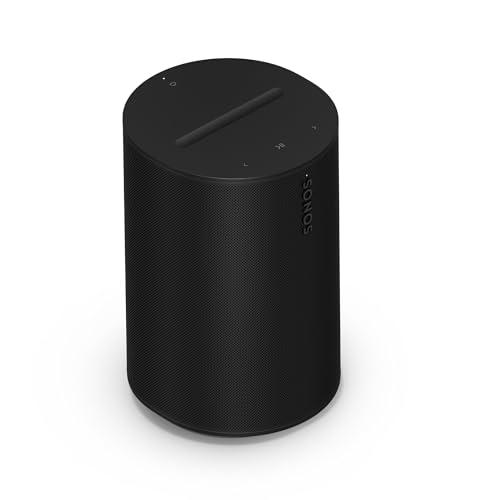
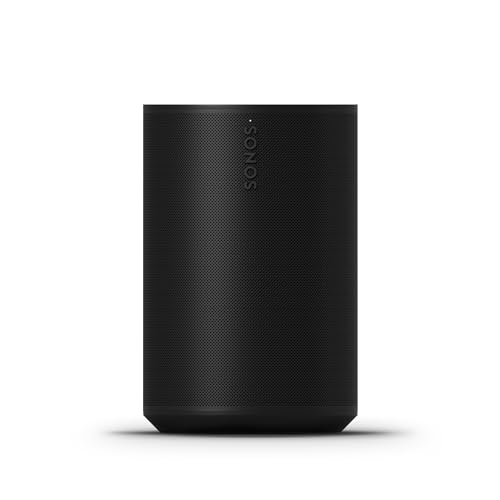
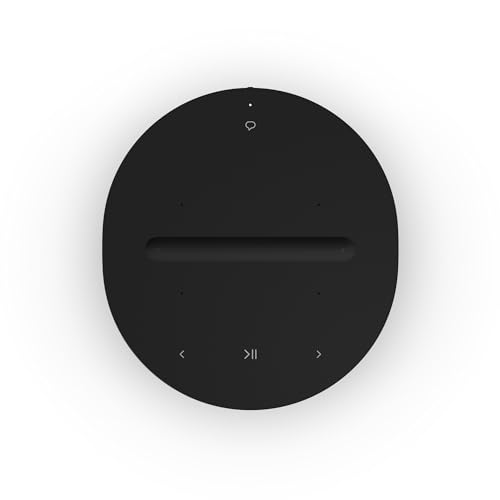
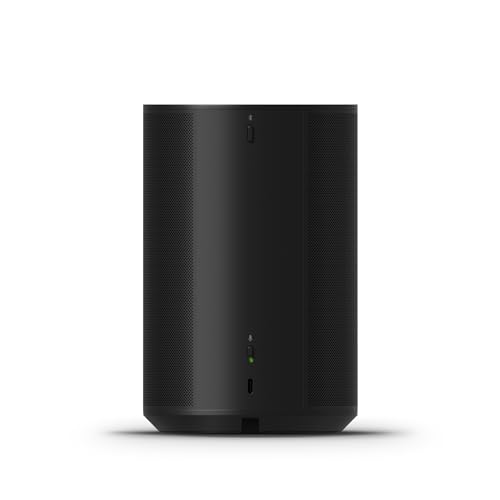
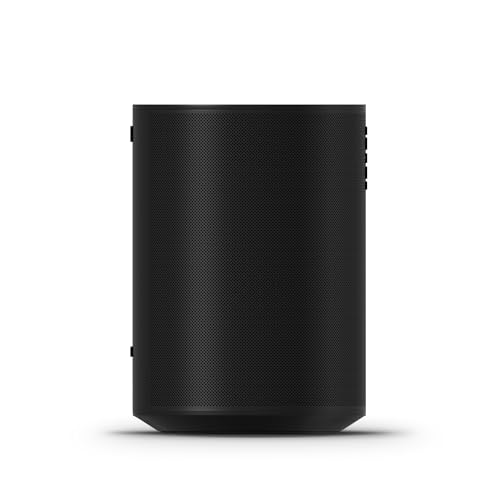
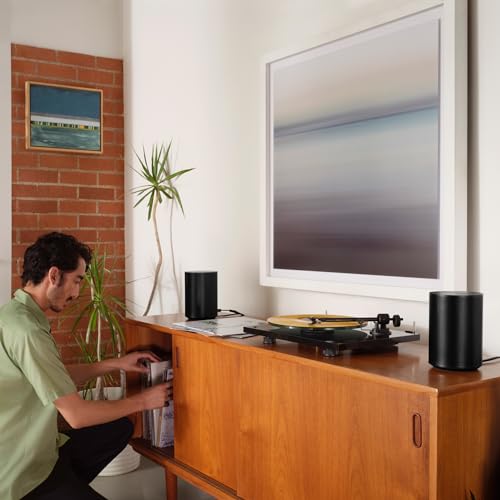
Choosing the right wireless smart speaker can transform how you experience music, podcasts, and even home theater audio. The market offers dozens of options, but two speakers that consistently earn praise from both audiophiles and everyday listeners are the Denon Home 250 and the Sonos Era 100. These speakers take notably different approaches to delivering quality audio, and understanding their strengths will help you make the right choice for your specific needs and budget.
At first glance, both are wireless smart speakers that stream music, respond to voice commands, and integrate with modern smart homes. However, dig deeper and you'll find they target different audiences with distinct priorities. The Denon Home 250, released in 2019, positions itself as a premium option for serious listeners who want deep bass and audiophile features. The Sonos Era 100, launched in 2023, focuses on delivering exceptional value and user-friendly operation without breaking the bank.
Before diving into specifics, it's worth understanding what makes a great wireless smart speaker. These devices have evolved far beyond simple Bluetooth speakers to become sophisticated audio hubs that connect to your Wi-Fi network, stream music from dozens of services, and integrate with voice assistants like Alexa and Siri.
The most important considerations include sound quality across different volume levels, connectivity options for various audio sources, smart home integration capabilities, and multi-room audio features that let you play synchronized music throughout your home. Price-to-performance ratio ultimately determines which speaker makes sense for your situation, but understanding these technical aspects helps you evaluate what you're actually getting for your money.
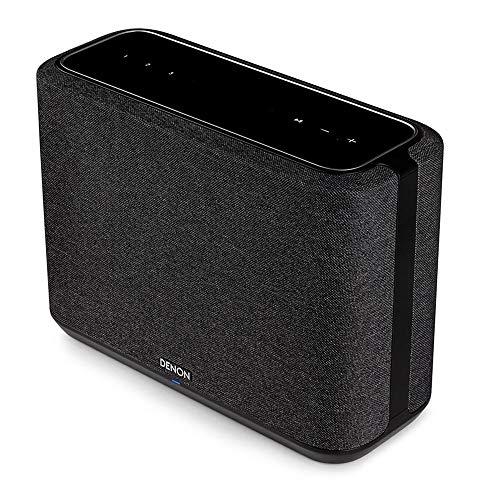
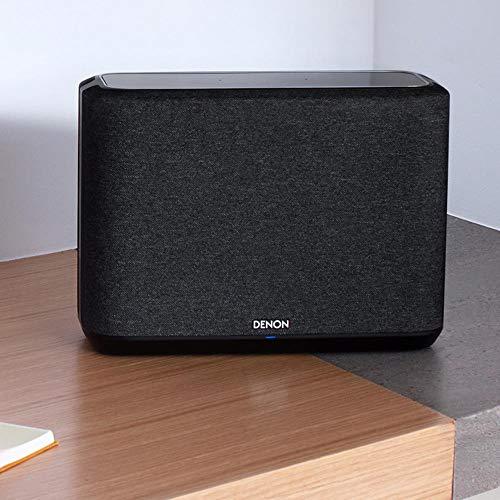
The most dramatic difference between these speakers lies in their approach to bass reproduction. The Denon Home 250 employs a sophisticated driver configuration with two 4-inch mid-bass woofers plus a dedicated 5.25-inch passive bass radiator mounted on the rear. This passive radiator acts like a subwoofer, using the internal air pressure from the active drivers to move back and forth, effectively extending bass response much lower than the speaker's size would normally allow.
This design choice pays dividends for anyone who enjoys electronic music, hip-hop, or movie soundtracks where deep, impactful bass adds emotional weight to the experience. During our research into user feedback, the consistent theme was that the Denon Home 250 delivers surprisingly powerful bass that can fill medium to large rooms without distortion, even at higher volumes.
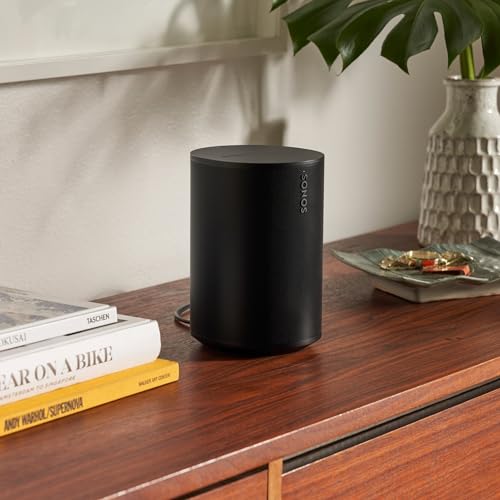
The Sonos Era 100, by comparison, uses a single larger woofer (25% bigger than its predecessor, the Sonos One) but lacks a dedicated bass radiator. This approach delivers cleaner, more balanced bass that doesn't overpower vocals or midrange instruments. For listeners who primarily enjoy acoustic music, jazz, or vocal-heavy content like podcasts and audiobooks, this more restrained bass response often sounds more natural and pleasant for extended listening sessions.
Both speakers handle the critical midrange frequencies where most vocals and instruments live, but with different philosophies. The Sonos Era 100 excels at presenting clear, natural-sounding voices. Its engineering team specifically tuned the speaker to avoid the muddy, unclear vocals that plague many budget wireless speakers. This makes it particularly effective for podcast listening, conference calls, and music where lyrics matter.
The Denon Home 250 takes a different approach, emphasizing a fuller, more mature sound signature that some listeners describe as "warm." While vocals come through clearly, they're presented within a wider, more enveloping soundstage that can sometimes make precise vocal placement less defined than the Era 100's more direct presentation.
Here's where both speakers showcase interesting engineering solutions. The Sonos Era 100 uses two angled tweeters (the small drivers responsible for high frequencies like cymbals and vocal details) to create genuine stereo separation from a single speaker cabinet. This angled tweeter design mimics having two separate speakers, with different sounds coming from slightly different directions to create a wider, more spacious listening experience.
The Denon Home 250 also employs two tweeters, but uses additional signal processing and custom waveguides (specially shaped chambers that direct sound waves) to create an even wider soundstage. However, this processing can sometimes make the sound feel artificially widened, where instruments seem to float in unnatural positions rather than being precisely located in the stereo field.
For most listeners, both approaches work well, but the Era 100's more natural stereo imaging tends to fatigue the ears less during long listening sessions, while the Denon's wider presentation creates more dramatic, room-filling sound that impresses during shorter demonstrations.
Room size matters significantly when choosing between these speakers. The Denon Home 250 can play louder while maintaining better sound quality at high volumes, thanks to its larger driver complement and more powerful amplification. If you regularly host gatherings or have a large living room, the Denon's ability to fill space with clean, undistorted sound becomes a major advantage.
The Sonos Era 100 is designed for smaller spaces and more intimate listening. While it sounds excellent at moderate volumes, pushing it to maximum output reveals some compression and harshness that the better-engineered Denon avoids. This isn't necessarily a weakness – it's a design choice that prioritizes cost-effectiveness and compact size over maximum output capability.
The release timing difference between these speakers shows up clearly in their wireless capabilities. The Sonos Era 100, launching in 2023, incorporates Wi-Fi 6 (also called 802.11ax), the latest wireless standard that provides faster data transfer and better performance in homes with many connected devices. This translates to more reliable streaming, faster song loading, and better performance when multiple family members are using the network simultaneously.
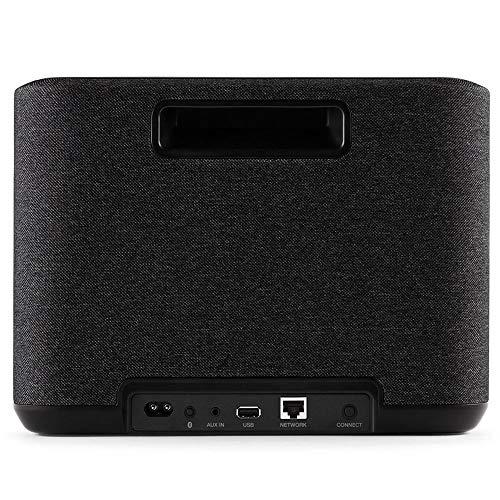
The Denon Home 250, from 2019, uses the older Wi-Fi 5 standard, which still works perfectly well for audio streaming but lacks some of the efficiency improvements of the newer technology. However, Denon compensated by including Ethernet connectivity – a wired network connection that many audiophiles prefer for its absolute reliability and freedom from wireless interference.
This is where the Denon Home 250 truly shines for users with diverse audio sources. Beyond wireless streaming, it includes a 3.5mm analog input for connecting devices like turntables, CD players, or older audio equipment that lacks wireless capabilities. The USB-A port allows direct playback from flash drives or external hard drives containing your personal music collection.
These physical connections matter more than you might initially think. If you own vinyl records, have a collection of high-quality music files, or want to connect a TV or computer directly, the Denon's flexibility proves invaluable. The Sonos Era 100 requires purchasing a separate USB-C adapter for any wired connections, and it lacks a traditional analog input entirely.
For listeners who care about audio quality beyond typical streaming services, the Denon Home 250 supports high-resolution audio files up to 24-bit/192kHz, significantly higher than the 16-bit/44.1kHz quality of CDs. It also handles DSD (Direct Stream Digital) files, a specialized high-quality format used by some audiophile labels.
This technical capability only matters if you actually have high-resolution music files, which typically means purchasing albums from services like Qobuz or HDTracks, or ripping SACDs (Super Audio CDs). For most listeners streaming from Spotify, Apple Music, or Amazon Music, this feature provides no benefit, but for dedicated music enthusiasts, it's a significant advantage.
The approach to voice control reveals each company's priorities. The Sonos Era 100 focuses heavily on Amazon Alexa integration, with a 4-microphone array designed for reliable voice recognition even with music playing. The "far-field" microphones use beamforming technology to focus on your voice while filtering out other sounds, and the built-in echo cancellation prevents the speaker from responding to its own audio output.
The Denon Home 250 takes a more platform-agnostic approach, supporting both Alexa and Apple's HomeKit/Siri ecosystem. This matters significantly if you're already invested in Apple's smart home products, as the Denon can integrate directly with HomeKit automation and respond to Siri commands from your iPhone, iPad, or Apple Watch.
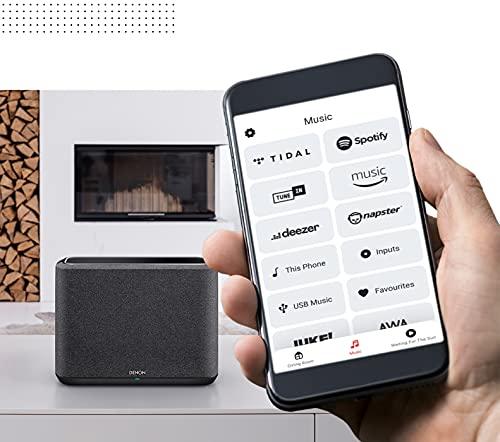
Both speakers excel at multi-room audio, but through different ecosystems. The Sonos Era 100 benefits from Sonos's mature, well-established platform that's widely considered the gold standard for whole-home audio. The Sonos app is intuitive, reliable, and supports an enormous range of streaming services. You can easily group multiple Sonos speakers for synchronized playback or play different music in each room.
The Denon Home 250 uses the HEOS (Home Entertainment Operating System) platform, which works well but has a smaller ecosystem of compatible products, primarily limited to Denon and Marantz brands. However, HEOS does offer some technical advantages, including support for higher-quality audio codecs and better integration with traditional home theater receivers.
The Sonos Era 100 includes Trueplay, an automatic room calibration system that uses your smartphone's microphone to analyze your room's acoustics and adjust the speaker's frequency response accordingly. This technology genuinely improves sound quality by compensating for how your room's size, shape, and furnishings affect audio reproduction.
The Denon Home 250 offers manual room positioning adjustments through its app, allowing you to tell the speaker whether it's placed against a wall, in a corner, or in free space. While less sophisticated than Trueplay, these adjustments help prevent the boomy bass that can occur when speakers are placed near walls or in corners.
At the time of writing, the pricing difference between these speakers is substantial – the Sonos Era 100 costs approximately 60% less than the Denon Home 250. This price gap reflects their different target markets and feature sets, but it also highlights the Era 100's exceptional value proposition.
The Sonos Era 100 delivers genuinely impressive sound quality that competes with much more expensive speakers, along with modern conveniences like Wi-Fi 6 and reliable voice control, all in a compact package that fits easily into any room. For most listeners, it provides everything they need in a smart speaker without unnecessary complexity or premium pricing.
The Denon Home 250 justifies its higher cost through superior bass performance, audiophile features like hi-res audio support, and greater connectivity flexibility. However, these advantages primarily benefit specific use cases – large rooms, bass-heavy music preferences, or users with diverse audio sources who need those extra input options.
Both speakers can integrate into home theater setups, but with different approaches. The Sonos Era 100 can serve as rear surround speakers when paired with Sonos soundbars, creating a wireless 5.1 surround system. Two Era 100s provide convincing surround effects for movies and TV shows, and their compact size makes them easy to position without dominating your living room décor.
The Denon Home 250 can also function as rear surrounds with compatible Denon soundbars, but its larger size and more powerful bass response make it equally suitable as a standalone speaker for TV audio. If you don't want a traditional soundbar, a single Home 250 positioned near your TV can provide significantly better dialogue clarity and bass impact than most TV speakers.
For dedicated home theater enthusiasts, the Denon's analog input allows connection to older receivers or source components that lack wireless capabilities, providing more flexibility in complex audio setups.
The decision between these speakers ultimately depends on matching their strengths to your specific needs and priorities. The Sonos Era 100 makes sense for most people most of the time – it delivers excellent sound quality, modern features, and reliable operation at a price that won't strain your budget. Its balanced sound signature works well with all types of music, and the compact size fits comfortably in any room.
Choose the Sonos Era 100 if you want exceptional value, prioritize voice control and smart home integration, prefer balanced sound without overwhelming bass, or plan to build a multi-room system where per-speaker cost matters.
The Denon Home 250 appeals to a more specific audience willing to pay premium pricing for enhanced performance and flexibility. Its superior bass response and louder maximum output make it ideal for larger rooms and bass-heavy music genres. The additional connectivity options and audiophile features justify the higher cost for users who actually need these capabilities.
Choose the Denon Home 250 if you have a medium to large room requiring powerful sound, enjoy bass-heavy music genres, need multiple input options for various audio sources, or prioritize hi-res audio playback and audiophile features.
Both speakers represent excellent engineering and deliver on their respective promises. The Era 100 proves that exceptional value and performance can coexist, while the Home 250 demonstrates that premium pricing can be justified through superior capabilities and build quality. Your choice should align with your room size, listening preferences, and budget priorities – there's no universally "better" option, only the right option for your specific situation.
| Denon Home 250 | Sonos Era 100 |
|---|---|
| Bass Performance - Critical for room-filling sound and music genres like electronic/hip-hop | |
| Dedicated 5.25" passive bass radiator + dual 4" woofers deliver deep, powerful bass that can fill large rooms | Single larger woofer provides balanced bass without overwhelming vocals - better for smaller spaces |
| Maximum Volume - Determines suitability for parties and large rooms | |
| Higher output with maintained sound quality at loud volumes | Designed for small-medium rooms, shows compression at maximum volume |
| Connectivity Options - Flexibility for different audio sources | |
| Ethernet, 3.5mm analog input, USB-A port, Wi-Fi 5, Bluetooth with aptX | Wi-Fi 6, Bluetooth 5.0, USB-C (adapter required for wired connections) |
| High-Resolution Audio Support - Only matters if you have audiophile music files | |
| Up to 24-bit/192kHz PCM and DSD support for premium audio quality | Standard resolution streaming (sufficient for most users) |
| Voice Assistant Integration - Smart home compatibility varies significantly | |
| Amazon Alexa + Apple HomeKit/Siri support (broader ecosystem compatibility) | Amazon Alexa focused with reliable 4-microphone array |
| Room Calibration - Automatic sound optimization for your space | |
| Manual positioning adjustments via app (wall, corner, free space settings) | Trueplay automatic room correction using smartphone microphone |
| Multi-Room Ecosystem - Important for whole-home audio expansion | |
| HEOS platform (limited to Denon/Marantz products but high audio quality) | Mature Sonos ecosystem with extensive third-party compatibility |
| Physical Size - Impacts placement flexibility and room aesthetics | |
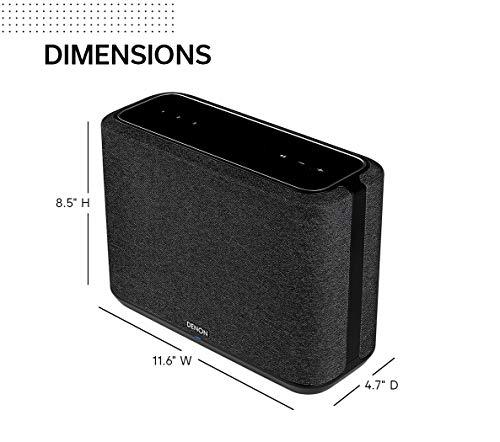
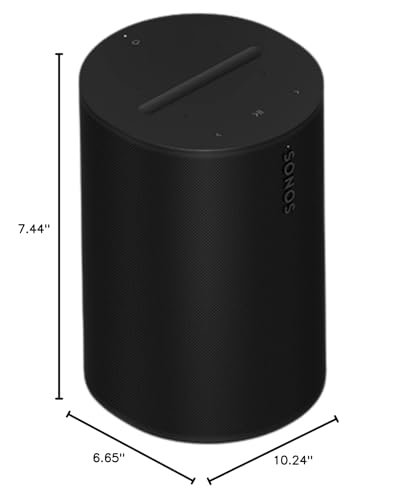
| Larger footprint (11.6" x 8.6" x 5.9") and heavier at 10.5 lbs | Compact design (7.2" x 4.7" x 5.1") at 4.45 lbs - easier placement |
| Wireless Technology - Affects streaming reliability and future-proofing | |
| Wi-Fi 5 (adequate for audio) plus Ethernet backup for ultimate reliability | Wi-Fi 6 for improved performance in crowded network environments |
| Stereo Imaging - How spacious and wide the sound feels | |
| Wide soundstage through processing (can sound artificially widened) | Natural stereo separation via angled tweeters (more precise instrument placement) |
| Price Category - Fundamental value proposition difference | |
| Premium pricing targeting audiophiles and large room applications | Exceptional value positioning for mainstream users and smaller spaces |
The Denon Home 250 delivers significantly more powerful bass thanks to its dedicated 5.25-inch passive bass radiator and dual woofers. This makes it ideal for electronic music, hip-hop, and movie soundtracks. The Sonos Era 100 offers more balanced bass that won't overpower vocals, making it better for acoustic music and podcasts.
The Denon Home 250 produces a wider, more room-filling sound with deeper bass, while the Sonos Era 100 focuses on clear, natural vocals and balanced audio. The Denon suits larger rooms and bass-heavy music, while the Era 100 excels in smaller spaces with vocal-centric content.
The Sonos Era 100 is specifically designed for small to medium rooms with its compact size and balanced sound signature. The Denon Home 250 can overwhelm smaller spaces with its powerful bass and is better suited for medium to large rooms.
Yes, but differently. The Sonos Era 100 focuses on Amazon Alexa with a 4-microphone array for reliable voice recognition. The Denon Home 250 supports both Alexa and Apple HomeKit/Siri, offering broader smart home compatibility.
The Denon Home 250 provides more connection flexibility with Ethernet, 3.5mm analog input, USB-A port, and Bluetooth with aptX codec. The Sonos Era 100 offers Wi-Fi 6 and Bluetooth but requires separate adapters for wired connections.
Both can serve as rear surround speakers when paired with their respective brand soundbars. The Sonos Era 100 integrates seamlessly with Sonos soundbars for 5.1 surround sound. The Denon Home 250 can work with Denon soundbars or function as a standalone TV speaker due to its powerful output.
The Sonos Era 100 offers exceptional value, delivering impressive sound quality and modern features at a significantly lower price point. The Denon Home 250 costs considerably more but justifies this with superior bass, audiophile features, and additional connectivity options.
The Denon Home 250 supports high-resolution audio up to 24-bit/192kHz and DSD files, appealing to audiophiles with premium music collections. The Sonos Era 100 focuses on standard resolution streaming, which is sufficient for most users and streaming services.
Both excel at multi-room audio but through different ecosystems. The Sonos Era 100 benefits from Sonos's mature, widely-compatible platform. The Denon Home 250 uses HEOS, which offers fewer compatible products but potentially higher audio quality within the Denon/Marantz family.
The Denon Home 250 includes a 3.5mm analog input that can connect turntables (with preamp) or CD players directly. The Sonos Era 100 lacks analog inputs and would require additional equipment or wireless streaming to play from these sources.
The Denon Home 250 can play louder while maintaining sound quality, making it better for parties and large gatherings. The Sonos Era 100 is designed for moderate volumes and may show compression when pushed to maximum output.
Choose the Sonos Era 100 if you want excellent value, have a small to medium room, prefer balanced sound, or plan to build an affordable multi-room system. Choose the Denon Home 250 if you have a large room, enjoy bass-heavy music, need multiple input options, or want audiophile features and are willing to pay premium pricing.
We've done our best to create useful and informative comparisons to help you decide what product to buy. Our research uses advanced automated methods to create this comparison and perfection is not possible - please contact us for corrections or questions. These are the sites we've researched in the creation of this article: dxomark.com - hometechnologyreview.com - crutchfield.com - versus.com - stereoguide.com - versus.com - whathifi.com - techgearlab.com - youtube.com - crutchfield.com - consumerreports.org - blog.son-video.com - crutchfield.com - skybygramophone.com - audiolab.com - theaudiotailor.com.au - youtube.com - scribd.com - smarthomesounds.co.uk - whathifi.com - rtings.com - smarthomesounds.co.uk - whathifi.com - rtings.com - audioadvice.com - loudnwireless.com - sonos.com - rtings.com - youtube.com - sonos.com - redsharknews.com - hometechnologyreview.com - bestbuy.com - sonos.com - trysonos.sg - sonos.com - youtube.com - bestbuy.com - audiolab.com - costco.com - surrounds.com.au - bestbuy.com

Privacy Policy
Terms and Conditions - Affiliate Policy
Home Security
© Copyright 2008-2026.
11816 Inwood Rd #1211, Dallas, TX 75244